

The DOI matches its Crossref record; 24 of the 27 references it cites were found in a registry or an index.
Lithium battery reusing and recycling: A circular economy insight
Open accessPublished version of a preprint
Abstract
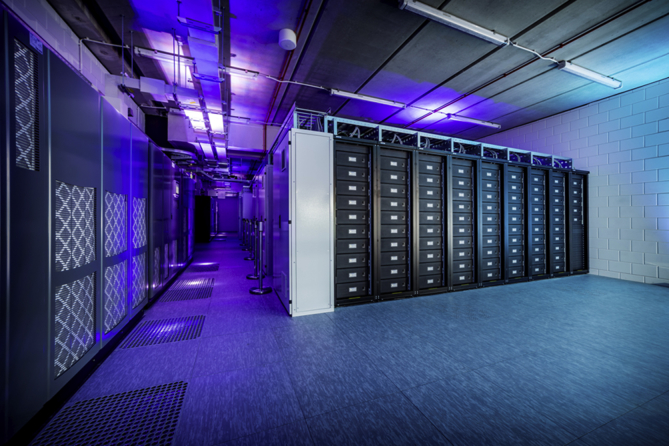
Driven by the rapid uptake of battery electric vehicles, Li-ion power batteries are increasingly reused in stationary energy storage systems, and eventually recycled to recover all the valued components. Offering an updated global perspective, this study provides a circular economy insight on lithium-ion battery reuse and recycling.
Overview
The claims and statistics of this paper haven’t been checked yet.
Run the check — free, no account needed. It reads the open-access text and checks the sources it cites.
Integrity signals
Registry
Cites
Statistics
Figures

Verification
Claims the paper makes
The claims and statistics of this paper haven’t been checked yet.
Run the check — free, no account needed. It reads the open-access text and checks the sources it cites.
Claims other papers make about this one
Each is checked against this paper’s own text: does it say what the citing paper says it does?
The cited source says what the claim attributes to it.
In the citing paper
“Furthermore, seven of the components (cobalt, lithium, copper, graphite, nickel, aluminum, and manganese) have been reported to comprise >90% of the economic value of a spent lithium-ion battery: Co (39%) and Li (16%, as LCE equivalent) followed by Cu (12%), graphite (10%), Ni (9%), Al (5%), and Mn(2%) [56].”
From Lithium Supply Chain Optimization: A Global Analysis of Critical Minerals for Batteries (2024) · cites this paper as [56]
Self-check
Percentages, sums and reported differences re-computed from the paper’s own numbers.
The self-check needs the paper’s full text.
Citations
Cites
Ageing mechanisms in lithium-ion batteries
Vetter, J., Novák, P., Wagner, M. R., Veit, C., Möller, K.-C., Besenhard, J. O., Winter, M., Wohlfahrt-Mehrens, M., Vogler, C., & Hammouche, A. (2005) · Journal of Power Sources · doi:10.1016/j.jpowsour.2005.01.006 · Cited by 3,987
Materials for lithium-ion battery safety
Liu, K., Liu, Y., Lin, D., Pei, A., & Cui, Y. (2018) · Science Advances · doi:10.1126/sciadv.aas9820 · Cited by 1,677
Comparative Environmental Life Cycle Assessment of Conventional and Electric Vehicles
Hawkins, T. R., Singh, B., Majeau‐Bettez, G., & Strømman, A. H. (2013) · Journal of Industrial Ecology · doi:10.1111/j.1530-9290.2012.00532.x · Cited by 1,670
A Critical Review and Analysis on the Recycling of Spent Lithium-Ion Batteries
Lv, W., Wang, Z.-H., Cao, H., Sun, Y., Zhang, Y., & Sun, Z. H. I. (2017) · ACS Sustainable Chemistry & Engineering · doi:10.1021/acssuschemeng.7b03811 · Cited by 1,196
Li, L., Fan, E., Guan, Y., Zhang, X., Xue, Q. Z., Wei, L., Wu, F., & Chen, R. (2017) · ACS Sustainable Chemistry & Engineering · doi:10.1021/acssuschemeng.7b00571 · Cited by 486
Lithium-ion battery aging mechanisms and life model under different charging stresses
Gao, Y., Jiang, J., Zhang, C., Zhang, W., Ma, Z., & Jiang, Y. (2017) · Journal of Power Sources · doi:10.1016/j.jpowsour.2017.04.084 · Cited by 398
Zhang, J., Hu, J., Liu, Y., Jing, Q., Yang, C., Chen, Y., & Wang, C. (2019) · ACS Sustainable Chemistry & Engineering · doi:10.1021/acssuschemeng.9b00404 · Cited by 364
Quantifying EV battery end-of-life through analysis of travel needs with vehicle powertrain models
Saxena, S., Le Floch, C., MacDonald, J., & Moura, S. (2015) · Journal of Power Sources · doi:10.1016/j.jpowsour.2015.01.072 · Cited by 363
Sustainable Recovery of Metals from Spent Lithium-Ion Batteries: A Green Process
Chen, X., Luo, C., Zhang, J., Kong, J., & Zhou, T. (2015) · ACS Sustainable Chemistry & Engineering · doi:10.1021/acssuschemeng.5b01000 · Cited by 349
Citric acid: emerging applications of key biotechnology industrial product
Ciriminna, R., Meneguzzo, F., Delisi, R., & Pagliaro, M. (2017) · Chemistry Central Journal · doi:10.1186/s13065-017-0251-y · Cited by 311
Self-citation
Cited by
Sorted by citations
Pyrometallurgical options for recycling spent lithium-ion batteries: A comprehensive review
Makuza, B., Tian, Q., Guo, X., Chattopadhyay, K., & Yu, D. (2021) · Journal of Power Sources · doi:10.1016/j.jpowsour.2021.229622 · Cited by 1,059
A Critical Review of Lithium-Ion Battery Recycling Processes from a Circular Economy Perspective
Velázquez-Martínez, O., Valio, J., Santasalo-Aarnio, A., Reuter, M. A., & Serna-Guerrero, R. (2019) · Batteries · doi:10.3390/batteries5040068 · Cited by 664
The Materials Science behind Sustainable Metals and Alloys
Raabe, D. (2023) · Chemical Reviews · doi:10.1021/acs.chemrev.2c00799 · Cited by 596
Tabelin, C. B., Dallas, J., Casanova, S., Pelech, T., Bournival, G., Saydam, S., & Canbulat, I. (2021) · Minerals Engineering · doi:10.1016/j.mineng.2020.106743 · Cited by 533
A review on second-life of Li-ion batteries: prospects, challenges, and issues
Shahjalal, M., Roy, P. K., Shams, T., Fly, A., Chowdhury, J. I., Ahmed, M. R., & Liu, K. (2021) · Energy · doi:10.1016/j.energy.2021.122881 · Cited by 520
Metadata
- Authors
- Pagliaro, M., & Meneguzzo, F.
- Affiliations
- Institute of Nanostructured Materials (IT)
- Istituto di Biometeorologia (IT)
- Corresponding author
- Pagliaro, Mario
- Venue
- Heliyon
- Publisher
- Elsevier BV
- Published
- 2019-06
- Volume
- 5
- Issue
- 6
- Pages
- e01866
- ISSN
- 2405-8440 (ISSN-L)
- PMC
- PMC6582158
- OpenAlex
- W2951116083
- Cited by
- 321
- References
- 27
- Citations by year
- 2026: 30 · 2025: 31 · 2024: 49 · 2023: 50 · 2022: 70 · 2021: 52 · 2020: 35 · 2019: 4
- FWCI
- 3.59
- Type
- journal article
- Language
- en
- Open access
- gold
- doi.org
- Licence
- Locations
- Heliyon (publishedVersion, cc-by)
- Preprints.org (acceptedVersion, cc-by)
- PubMed Central (publishedVersion, cc-by)
- PubMed (publishedVersion)
- DOAJ (DOAJ: Directory of Open Access Journals) (submittedVersion, cc-by-sa)
- Funders
- National Natural Science Foundation of China
- Topics
- Physical Sciences › Materials Science › Metals and Alloys › Extraction and Separation Processes
- Social Sciences › Business, Management and Accounting › Strategy and Management › Sustainable Supply Chain Management
- Physical Sciences › Engineering › Automotive Engineering › Battery Modeling and Management
- Keywords
- lithium-ion batteries, battery reuse, battery recycling, circular economy, battery electric vehicles, stationary energy storage, valuable component recovery
About these checks
Registry, retraction, Cites and statistics results are computed, not judged, with one exception: a printed reference that no index lists is read once by a model before it counts as a citation error. Claims are extracted by a model and kept only when their quote appears verbatim in the text; each cited source is then checked, with a model’s help, for whether it says what the claim relies on. Those verdicts can be wrong — read the claim’s quote and the cited source before relying on one.
Statistics and arithmetic are recomputed, not judged.
Confidence bands are shown only for fields calibrated on our annotated test set. None is calibrated yet, so no band is shown.
What counts as a claim ›How we measure confidence ›How we check this ›
Are you an author, or do you see a problem with this page? Request a review
