

Napping restores working memory and brain activation impaired by sleep deprivation
Open accessThe DOI matches its Crossref record; 56 of the 56 references it cites were found in a registry or an index; none of the 54 sources its claims cite is checked for support yet.
Abstract
Background: Sleep deprivation (SD) impairs working memory (WM), yet the restorative potential of brief daytime naps remains underexplored. This study examines how naps counteract SD-induced WM deficits through behavioral and neuroimaging mechanisms, focusing on task-positive networks and default mode network (DMN) dynamics. Method: A within-subject fMRI study employed 2-back WM tasks in 50 participants under three conditions: baseline wakefulness, post-30h SD, and post-nap recovery. Behavioral metrics (reaction times, accuracy) and fMRI activation patterns were analyzed using repeated-measures ANOVA and mixed-effects models to assess SD and nap effects. Result: Naps partially restored SD-induced WM declines, improving reaction times and accuracy. Post-SD, reduced activation in the cerebellum, insula, and thalamus (attention/executive regions) rebounded post-nap. SD weakened DMN suppression (middle frontal gyrus, precuneus, superior temporal gyrus), with maximal DMN suppression post-nap. Improved WM performance correlated with reactivated task-positive networks. Conclusion: Daytime naps mitigate SD-related WM deficits by rebalancing task-positive network activation (cerebellum, thalamus) and enhancing DMN suppression. These findings elucidate neurophysiological mechanisms of sleep-cognition interactions, supporting naps as a practical intervention for SD-induced cognitive impairment.
Overview
CoChat Summary
TL;DR
In a within-subject fMRI study of 50 male cadets, 30 h sleep deprivation worsened 2-back working memory and altered task-related brain activation, while a 30-min nap partially restored performance and activation. Naps improved reaction time and accuracy relative to sleep deprivation and rebalanced task-positive regions (cerebellum, insula, thalamus) and default mode network suppression.
Key findings
- 2-back reaction time increased from resting wakefulness (710.73 ± 145.72 ms) to post-30 h sleep deprivation (860.32 ± 157.48 ms) and improved after nap (822.17 ± 160.78 ms; F = 70.33, p < 0.001); accuracy fell from 0.89 ± 0.09 to 0.83 ± 0.15 and recovered to 0.86 ± 0.11 (F = 7.36, p < 0.001). Pairwise results: nap reaction time was significantly lower than sleep deprivation but still higher than resting wakefulness; nap accuracy was significantly higher than sleep deprivation but still lower than resting wakefulness.
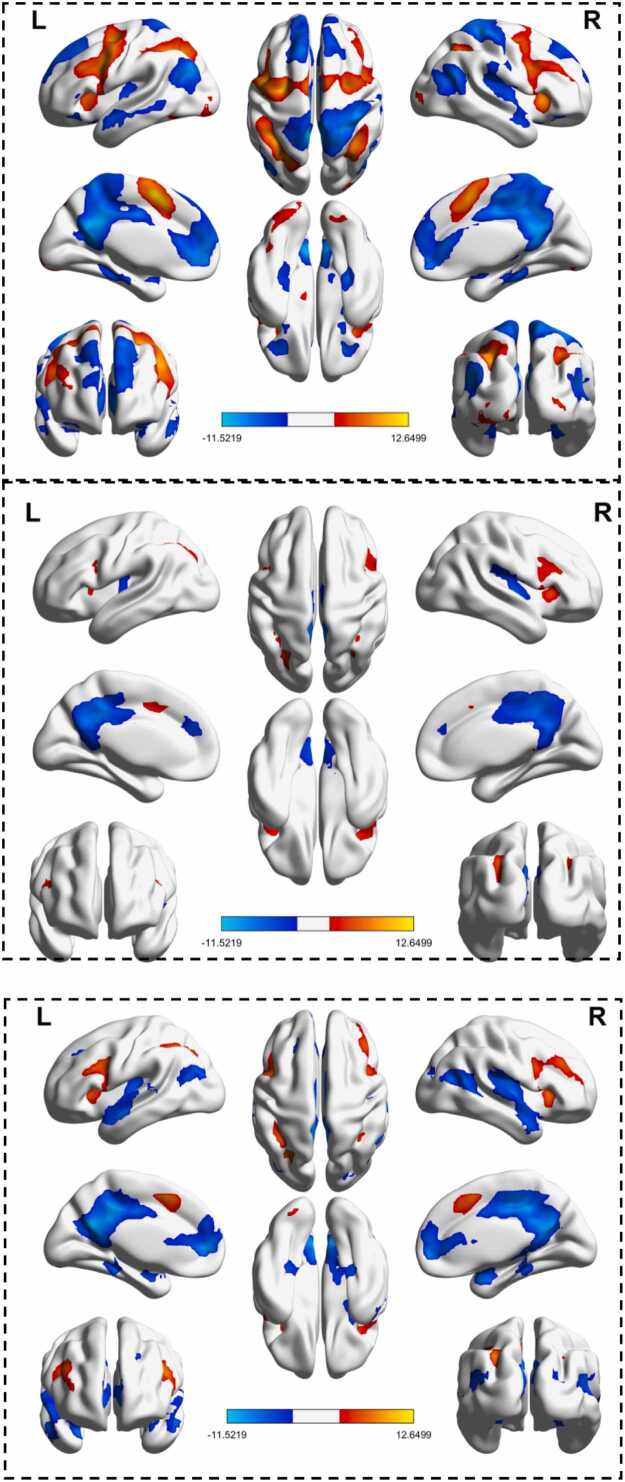
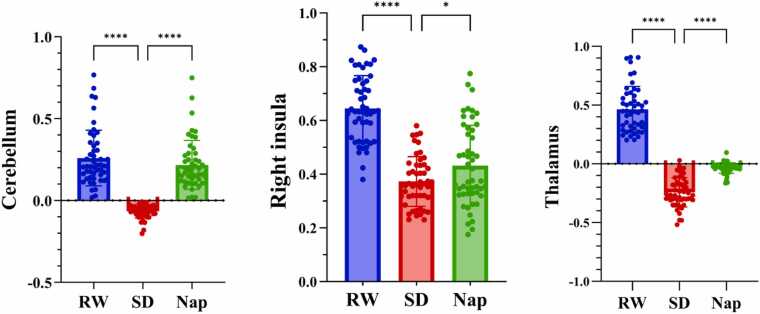
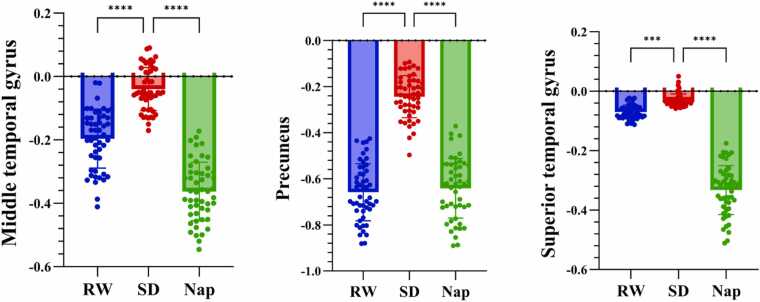
- Brain regions with significant differences across conditions included cerebellum, right insula, left thalamus, precuneus, right superior temporal gyrus, and left middle temporal gyrus (F values 5.65–9.41). Activity in cerebellum, insula, and thalamus was significantly reduced after sleep deprivation and largely returned to normal waking levels after the daytime nap.
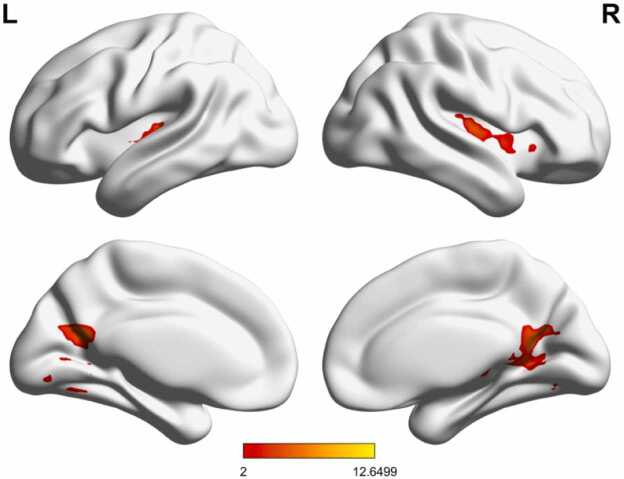
- Middle frontal gyrus, precuneus, and superior temporal gyrus showed negative activation during resting wakefulness, weaker negative activation after sleep deprivation, and maximal negative activation after the nap.
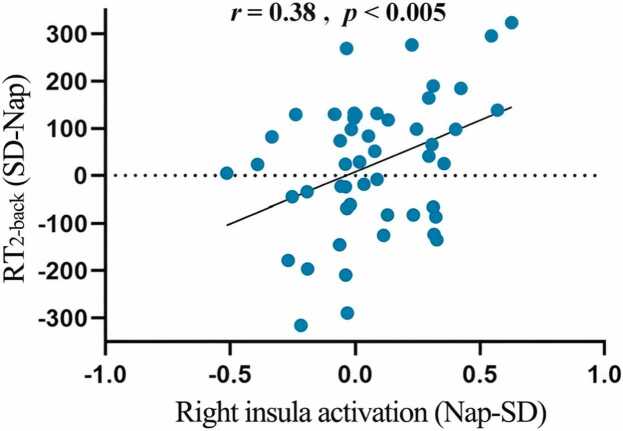
- Improved working memory reaction time after nap positively correlated with increased right insula activation (r = 0.38, p < 0.005).
Methods
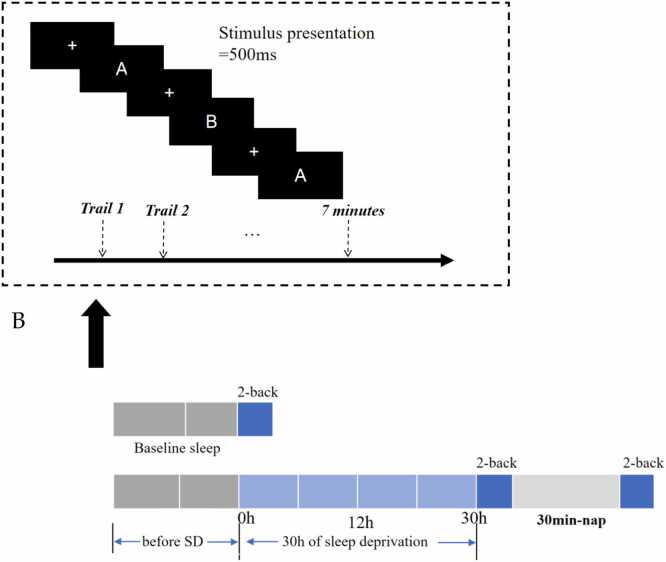
- Within-subject fMRI study; 50 right-handed male cadets aged 18–25 (mean age 20 ± 1.86 years; mean BMI 23.48 ± 2.42), with PSQI ≤ 5 and normal sleep routine. Three conditions: resting wakefulness, after 30 h sleep deprivation, and after a 30-min nap; the latter two visits were randomized and separated by at least 1 week.
- 2-back letter-matching task during 3T MRI; 210 images acquired (TR/TE 2000/30 ms). Preprocessing discarded the first 10 time points, then layer-time corrected, realigned, normalized to MNI, and smoothed with a 6 mm FWHM Gaussian kernel; Friston-24, cerebrospinal fluid, and white matter signals were regressed.
- Analyses used one-way repeated-measures ANOVA for behavioral and imaging data, post hoc pairwise comparisons, mixed-effects models/general linear model for task fMRI, FDR correction, and Pearson correlation between activation changes and reaction time improvement (FDR p < 0.05).
Limitations
- Stated: the cohort was exclusively young male college students, limiting generalizability; the three-phase cross-sectional design cannot characterize temporal dynamics; nap architecture is influenced by circadian rhythm; task-based fMRI cannot establish causal network-level mechanisms; the study did not assess NREM vs. REM contributions or genetic modulators.
- Evident from the text: the sample was all male cadets, and no polysomnography was used to verify sleep stages; the Discussion mentions ALFF changes while the Methods describe task fMRI GLM activation, so the imaging metric is not fully consistent.
Model-written summary. Check it against the paper before relying on it.
Integrity signals
Registry
Cites
Statistics
Figures
Verification
Claims the paper makes
0 Valid · 0 Not valid · 41 Not checked · 70 Own results and interpretations
A result the paper reports from its own data — it cites no other source for it, so there is none to check. The quote shows it is in the paper.
In the paper
“One-way repeated measures ANOVA showed that the average response time (F(2,98) = 70.33, p < 0.001) and accuracy (F(2,98) = 7.36, p < 0.001) had significant time differences.”
§ Napping restores working memory and brain activation impaired by sleep deprivation > Results > 2-back behavioral analysis
plainstates an association- Asserted: passes — The authors put it forward as true.
- Checkable: passes — It can be checked against evidence.
- Load-bearing: passes — The paper’s conclusions depend on it.
- Based: passes — The paper gives a reason why it holds.
A result the paper reports from its own data — it cites no other source for it, so there is none to check. The quote shows it is in the paper.
In the paper
“Fig. 2 shows statistically significant changes in brain responses in bilateral middle frontal gyrus, bilateral supplementary motor area, bilateral inferior frontal gyrus, left cingulate gyrus, right insula, and bilateral inferior parietal gyrus.”
§ Napping restores working memory and brain activation impaired by sleep deprivation > Results > 2-back imaging analysis
plainstates an association- Asserted: passes — The authors put it forward as true.
- Checkable: passes — It can be checked against evidence.
- Load-bearing: passes — The paper’s conclusions depend on it.
- Based: passes — The paper gives a reason why it holds.
A result the paper reports from its own data — it cites no other source for it, so there is none to check. The quote shows it is in the paper.
In the paper
“correct rates of Nap being significantly higher than SD”
§ Napping restores working memory and brain activation impaired by sleep deprivation > Results > 2-back behavioral analysis
plain- Asserted: passes — The authors put it forward as true.
- Checkable: passes — It can be checked against evidence.
- Load-bearing: passes — The paper’s conclusions depend on it.
- Based: passes — The paper gives a reason why it holds.
A result the paper reports from its own data — it cites no other source for it, so there is none to check. The quote shows it is in the paper.
In the paper
“correct rates of Nap being significantly higher than SD but still lower than RW”
§ Napping restores working memory and brain activation impaired by sleep deprivation > Results > 2-back behavioral analysis
plain- Asserted: passes — The authors put it forward as true.
- Checkable: passes — It can be checked against evidence.
- Load-bearing: passes — The paper’s conclusions depend on it.
- Based: passes — The paper gives a reason why it holds.
A result the paper reports from its own data — it cites no other source for it, so there is none to check. The quote shows it is in the paper.
In the paper
“RT of Nap being significantly lower than SD but still higher than RW”
§ Napping restores working memory and brain activation impaired by sleep deprivation > Results > 2-back behavioral analysis
plain- Asserted: passes — The authors put it forward as true.
- Checkable: passes — It can be checked against evidence.
- Load-bearing: unclear — It is unclear whether the paper’s conclusions depend on it.
- Based: passes — The paper gives a reason why it holds.
44 more claims
Create a free account to see all 111 claims and to verify the 45 references still open.
- It may state two separate claims as one. 31
- Probably not a substantial claim. 43
Statistics that don’t add up
Each reported p-value recomputed from its test statistic and degrees of freedom, each partial η² from its F, and each ratio, mean difference or B printed with a p checked against its own confidence interval.
Rated minor: it would not touch a result — a value no result rests on, a p-value that stays on the same side of the significance level, or a conflict that is clerical, resolved elsewhere in the paper, or outside its own findings.
In the paper
“F(2,98) = 7.36, p < 0.001”
§ Napping restores working memory and brain activation impaired by sleep deprivation > Results > 2-back behavioral analysis
Reported p < .001 · recomputed p = .001
Statistics recomputed
Every reported test result, recomputed from its test statistic and degrees of freedom. A result shows as not adding up only once an independent check has confirmed it.
- Doesn’t add upF(2, 98) = 7.36reported p < .001 · recomputed p = .001
“F(2,98) = 7.36, p < .001”
- ConsistentF(2, 98) = 70.33reported p < .001 · recomputed p < .001
“F(2,98) = 70.33, p < .001”
Self-check
Percentages, sums and reported differences re-computed from the paper’s own numbers.
Each contradiction between two passages listed here was confirmed by an independent check.
Rated minor: it would not touch a result — a value no result rests on, a p-value that stays on the same side of the significance level, or a conflict that is clerical, resolved elsewhere in the paper, or outside its own findings.
In the paper
§ Napping restores working memory and brain activation impaired by sleep deprivation > Subjects and methods > Study protocol
“followed by a 30-minute nap, which was immediately followed by a third n-back task test and MRI scan.”
§ Napping restores working memory and brain activation impaired by sleep deprivation > Subjects and methods > Study protocol
“Prior to the scan, participants were provided with a 20-minute rest period to allow subjects to recover.”
Rated minor: it would not touch a result — a value no result rests on, a p-value that stays on the same side of the significance level, or a conflict that is clerical, resolved elsewhere in the paper, or outside its own findings.
In the paper
§ Napping restores working memory and brain activation impaired by sleep deprivation > Results > 2-back imaging analysis
“There was also another pattern, as shown in Fig. 5, where the middle frontal gyrus, precuneus, and superior temporal gyrus belonged to the negative activation pattern during normal wakefulness”
§ Napping restores working memory and brain activation impaired by sleep deprivation > Discussion
“During working memory tasks in the awake state, the middle temporal gyrus, superior temporal gyrus, and precuneus exhibit negative activation (deactivation).”
Citations
Cites
Saliency, switching, attention and control: a network model of insula function
Menon, V., & Uddin, L. Q. (2010) · Brain Structure and Function · doi:10.1007/s00429-010-0262-0 · Cited by 5,592
Working Memory: Theories, Models, and Controversies
Baddeley, A. (2012) · Annual Review of Psychology · doi:10.1146/annurev-psych-120710-100422 · Cited by 4,271
(1976) · PubMed · Cited by 3,979
Tononi, G., & Cirelli, C. (2014) · Neuron · doi:10.1016/j.neuron.2013.12.025 · Cited by 2,356
Sleep function and synaptic homeostasis
Tononi, G., & Cirelli, C. (2006) · Sleep Medicine Reviews · doi:10.1016/j.smrv.2005.05.002 · Cited by 2,151
Salience processing and insular cortical function and dysfunction
Uddin, L. Q. (2015) · Nature Reviews Neuroscience · doi:10.1038/nrn3857 · Cited by 2,083
Belenky, G., Wesensten, N. J., Thorne, D. R., Thomas, M. L., Sing, H. C., Redmond, D. P., Russo, M. B., & Balkin, T. J. (2003) · Journal of Sleep Research · doi:10.1046/j.1365-2869.2003.00337.x · Cited by 1,436
Odor cues during slow-wave sleep prompt declarative memory consolidation
Rasch, B., Büchel, C., Gais, S., & Born, J. (2007) · Science · doi:10.1126/science.1138581 · Cited by 1,181
20 years of the default mode network: A review and synthesis.
Menon, V. (2023) · Neuron · doi:10.1016/j.neuron.2023.04.023 · Cited by 934 · cited 1×
“These regions are integral components of the default mode network (DMN), a brain system typically more active during rest or internally directed cognition (Menon, 2023).”
Functional connectivity of the insula in the resting brain
Cauda, F., D'Agata, F., Sacco, K., Duca, S., Geminiani, G., & Vercelli, A. (2011) · NeuroImage · doi:10.1016/j.neuroimage.2010.11.049 · Cited by 793 · cited 1×
“As a core hub of the SN, the right insula plays a pivotal role in dynamically monitoring behavioral performance and mediating neurocognitive processes, particularly in higher-order cognitive control and attentional regulation (Cauda et al., 2011; Uddin, 2015; Menon and Uddin, 2010).”
Association between sleep duration and cognitive decline
Ma, Y., Liang, L., Zheng, F., Shi, L., Zhong, B., & Xie, W. (2020) · JAMA Network Open · doi:10.1001/jamanetworkopen.2020.13573 · Cited by 535
Functional Imaging of Working Memory after 24 Hr of Total Sleep Deprivation
Chee, M. W. L., & Choo, W. C. (2004) · The Journal of Neuroscience · doi:10.1523/jneurosci.0007-04.2004 · Cited by 509 · cited 1×
“Professor Chee was the first to explore the behavioral and neuroimaging effects of SD on working memory (Chee and Choo, 2004), showing that when performing a working memory task in the normal waking state, the central brain regions activated included the frontal, parietal, and thalamus bilaterally;…”
Wang, C., Bangdiwala, S. I., Rangarajan, S., Lear, S. A., AlHabib, K. F., Mohan, V., Teo, K., Poirier, P., TSE, L. A., Liu, Z., et al. (2019) · European Heart Journal · doi:10.1093/eurheartj/ehy695 · Cited by 385 · cited 1×
“In addition, napping can help overcome some of the adverse emotional, physical, and cognitive effects of SD (Wang et al., 2019).”
An ultra short episode of sleep is sufficient to promote declarative memory performance
LAHL, O., WISPEL, C., WILLIGENS, B., & PIETROWSKY, R. (2008) · Journal of Sleep Research · doi:10.1111/j.1365-2869.2008.00622.x · Cited by 277
Albouy, G., King, B. R., Maquet, P., & Doyon, J. (2013) · Hippocampus · doi:10.1002/hipo.22183 · Cited by 270
Jones, B. E. (2020) · Neuropsychopharmacology · doi:10.1038/s41386-019-0444-2 · Cited by 261
Chee, M. W. L., Chuah, L. Y. M., Venkatraman, V., Chan, W. Y., Philip, P., & Dinges, D. F. (2006) · NeuroImage · doi:10.1016/j.neuroimage.2005.12.001 · Cited by 257
Fatigue on the flight deck: The consequences of sleep loss and the benefits of napping
Hartzler, B. M. (2014) · Accident Analysis & Prevention · doi:10.1016/j.aap.2013.10.010 · Cited by 166 · cited 1×
“These findings provide a valuable basis for understanding how SD affects cognitive It has been well-established that daytime napping serves as an effective countermeasure against cognitive decline induced by SD (Hartzler, 2014; Leong et al., 2022).”
Acute and chronic sleep deprivation in residents: Cognition and stress biomarkers
Choshen‐Hillel, S., Ishqer, A., Mahameed, F., Reiter, J. M., Gozal, D., Gileles‐Hillel, A., & Berger, I. (2020) · Medical Education · doi:10.1111/medu.14296 · Cited by 137
Daytime naps improve procedural motor memory
Backhaus, J., & Junghanns, K. (2006) · Sleep Medicine · doi:10.1016/j.sleep.2006.04.002 · Cited by 128
Short Sleep Duration in Working American Adults, 2010–2018
Khubchandani, J., & Price, J. H. (2019) · Journal of Community Health · doi:10.1007/s10900-019-00731-9 · Cited by 126
Faraut, B., Nakib, S., Drogou, C., Elbaz, M., Sauvet, F., De Bandt, J.-P., & Léger, D. (2015) · The Journal of Clinical Endocrinology & Metabolism · doi:10.1210/jc.2014-2566 · Cited by 117
Working memory development: A 50-year assessment of research and underlying theories
Cowan, N. (2022) · Cognition · doi:10.1016/j.cognition.2022.105075 · Cited by 106
Bandyopadhyay, A., & Sigua, N. L. (2019) · American Journal of Respiratory and Critical Care Medicine · doi:10.1164/rccm.1996p11 · Cited by 105
Sleep, plasticity, and sensory neurodevelopment
Blumberg, M. S., Dooley, J. C., & Tiriac, A. (2022) · Neuron · doi:10.1016/j.neuron.2022.08.005 · Cited by 93
The impact of sleep deprivation on declarative memory
Cousins, J. N., & Fernández, G. (2019) · Progress in Brain Research · doi:10.1016/bs.pbr.2019.01.007 · Cited by 92
Sleep deprivation increases formation of false memory
Lo, J. C., Chong, P. L. H., Ganesan, S., Leong, R. L. F., & Chee, M. W. L. (2016) · Journal of Sleep Research · doi:10.1111/jsr.12436 · Cited by 85
The sleep relay--the role of the thalamus in central and decentral sleep regulation
Coulon, P., Budde, T., & Pape, H.-C. (2012) · Pflügers Archiv - European Journal of Physiology · doi:10.1007/s00424-011-1014-6 · Cited by 82
A Short Nap and Natural Bright Light Exposure Improve Positive Mood Status
KAIDA, K., TAKAHASHI, M., & OTSUKA, Y. (2007) · Industrial Health · doi:10.2486/indhealth.45.301 · Cited by 74
Vocabulary learning benefits from REM after slow-wave sleep
Batterink, L. J., Westerberg, C. E., & Paller, K. A. (2017) · Neurobiology of Learning and Memory · doi:10.1016/j.nlm.2017.07.001 · Cited by 74
Effect of sleep deprivation on emotional working memory
Gerhardsson, A., Åkerstedt, T., Axelsson, J., Fischer, H., Lekander, M., & Schwarz, J. (2018) · Journal of Sleep Research · doi:10.1111/jsr.12744 · Cited by 69
Cross, N., Paquola, C., Pomares, F. B., Perrault, A. A., Jegou, A., Nguyen, A., Aydin, U., Bernhardt, B. C., Grova, C., & Dang-Vu, T. T. (2021) · NeuroImage · doi:10.1016/j.neuroimage.2020.117547 · Cited by 66
Event-based control of autonomic and emotional states by the anterior cingulate cortex
Seamans, J. K., & Floresco, S. B. (2022) · Neuroscience & Biobehavioral Reviews · doi:10.1016/j.neubiorev.2021.12.026 · Cited by 62
Anterior cingulate cortex signals attention in a social paradigm that manipulates reward and shock
Schneider, K. N., Sciarillo, X. A., Nudelman, J. L., Cheer, J. F., & Roesch, M. R. (2020) · Current Biology · doi:10.1016/j.cub.2020.07.039 · Cited by 56
Systematic review and meta-analyses on the effects of afternoon napping on cognition
Leong, R. L. F., Lo, J. C., & Chee, M. W. L. (2022) · Sleep Medicine Reviews · doi:10.1016/j.smrv.2022.101666 · Cited by 51
Cai, Y., Mai, Z., Li, M., Zhou, X., & Ma, N. (2021) · Journal of Sleep Research · doi:10.1111/jsr.13329 · Cited by 41
Souissi, M., Souissi, Y., Bayoudh, A., Knechtle, B., Nikolaidis, P. T., & Chtourou, H. (2020) · Journal of Sports Sciences · doi:10.1080/02640414.2020.1793651 · Cited by 41
Norepinephrine system at the interface of attention and reward
Zhang, Y., Chen, Y., Xin, Y., Peng, B., & Liu, S. (2023) · Progress in Neuro-Psychopharmacology and Biological Psychiatry · doi:10.1016/j.pnpbp.2023.110751 · Cited by 39
Heterogeneous pericoerulear neurons tune arousal and exploratory behaviours
Luskin, A. T., Li, L., Fu, X., Martin, M. M., Barcomb, K., Girven, K. S., Blackburn, T., Wells, B. A., Thai, S. T., Li, E. M., et al. (2025) · Nature · doi:10.1038/s41586-025-08952-w · Cited by 36
Guo, Z., Jiang, Z., Jiang, B., McClure, M. A., & Mu, Q. (2019) · Neural Plasticity · doi:10.1155/2019/7030286 · Cited by 33
NREM sleep improves behavioral performance by desynchronizing cortical circuits
Kharas, N., Chelaru, M. I., Eagleman, S. L., Parajuli, A., & Dragoi, V. (2024) · Science · doi:10.1126/science.adr3339 · Cited by 32
Insula-cingulate structural and functional connectivity: an ultra-high field MRI study
Cormie, M. A., Kaya, B., Hadjis, G. E., Mouseli, P., & Moayedi, M. (2023) · Cerebral Cortex · doi:10.1093/cercor/bhad244 · Cited by 31
Cerebellar cognitive affective syndrome after acute cerebellar stroke
Abderrakib, A., Ligot, N., & Naeije, G. (2022) · Frontiers in Neurology · doi:10.3389/fneur.2022.906293 · Cited by 29
Facilitated Recall Following RFM And NREM Naps
Schoen, L. S., & Badia, P. (1984) · Psychophysiology · doi:10.1111/j.1469-8986.1984.tb02937.x · Cited by 28
Development of the brain network control theory and its implications
Wu, Z., Huang, L., Wang, M., & He, X. (2024) · Psychoradiology · doi:10.1093/psyrad/kkae028 · Cited by 28
The influence of Match-Day napping in elite female netball athletes
O’Donnell, S., Beaven, C. M., & Driller, M. (2018) · International Journal of Sports Physiology and Performance · doi:10.1123/ijspp.2017-0793 · Cited by 27
A daytime nap enhances visual working memory performance and alters event-related delay activity
MacDonald, K. J., Lockhart, H. A., Storace, A. C., Emrich, S. M., & Côté, K. A. (2018) · Cognitive Affective & Behavioral Neuroscience · doi:10.3758/s13415-018-0625-1 · Cited by 25
Santisteban, J. A., Brown, T. G., Ouimet, M. C., & Gruber, R. (2019) · Sleep Health · doi:10.1016/j.sleh.2018.09.007 · Cited by 25
Norbury, A., Seeley, S. H., Perez-Rodriguez, M. M., & Feder, A. (2023) · Psychological Medicine · doi:10.1017/s0033291723001162 · Cited by 22
Zhang, L., Shao, Y., Jin, X., Cai, X., & Du, F. (2021) · Behavioural Brain Research · doi:10.1016/j.bbr.2021.113263 · Cited by 22
Xu, Z., Chang, Y., Guo, F., Wang, C., Chai, N., Zheng, M., Fang, P., & Zhu, Y. (2023) · CNS Neuroscience & Therapeutics · doi:10.1111/cns.14413 · Cited by 20
Self-citationWeak task synchronization of default mode network in task based paradigms
Tripathi, V., & Garg, R. (2022) · NeuroImage · doi:10.1016/j.neuroimage.2022.118940 · Cited by 13
Montalto, A., Park, H. R. P., Williams, L. M., Korgaonkar, M. S., Chilver, M. R., Jamshidi, J., Schofield, P. R., & Gatt, J. M. (2023) · Psychological Medicine · doi:10.1017/s0033291721005262 · Cited by 11
Enhanced attention-related alertness following right anterior insular cortex neurofeedback training
Popovova, J., Mazloum, R., Macauda, G., Stämpfli, P., Vuilleumier, P., Frühholz, S., Scharnowski, F., Menon, V., & Michels, L. (2024) · iScience · doi:10.1016/j.isci.2024.108915 · Cited by 11
Effect of Jet Lag on Brain White Matter Functional Connectivity
Zhang, F., Yang, Z., Qin, K., Sweeney, J. A., Roberts, N., Jia, Z., & Gong, Q. (2020) · Psychoradiology · doi:10.1093/psyrad/kkaa003 · Cited by 5
Sleep deprivation disrupts memory: here’s why
Kozlov, M. (2024) · Nature · doi:10.1038/d41586-024-01732-y · Cited by 3
Research works printed but not linked: 3
- Chee M.W. Chuah L.Y. Venkatraman V. Chan W.Y. Philip P. Dinges D.F. Functional imaging of working memory following normal sleep and after 24 and 35h of sleep deprivation: correlations of fronto-parietal activation with performance Neuroimage 31 1 2006 419 428 10.1016/j.neuroimage.2005.12.001 16427321 · DOI · Paper page
- Kharas N. Chelaru M.I. Eagleman S. Parajuli A. Dragoi V. NREM sleep improves behavioral performance by desynchronizing cortical circuits Science 386 6724 2024 892 897 10.1126/science.adr3339 39571022 · DOI
- MacDonald K.J. Lockhart H.A. Storace A.C. Emrich S.M. Cote K.A. A daytime nap enhances visual working memory performance and alters event-related delay activity Cogn. Affect Behav. Neurosci. 18 6 2018 1105 1120 10.3758/s13415-018-0625-1 30051361 · DOI
Cited by
Rapid Restoration: How 15–30 Minute Naps Influence Attention, Memory, and Executive Function
Ezgin, N. (2026) · OSMANGAZİ JOURNAL OF MEDICINE · doi:10.20515/otd.1841077
Liao, Q., Zhu, H., Ma, L., Yang, D., Xiong, J., Tong, Z., & Ukai, M. (2026) · Building and Environment · doi:10.1016/j.buildenv.2026.115411
BDNF-mediated amelioration of sleep disruption–induced behavioral disorders by Ginkgo biloba
Hasandoust, N., Hassanpour, R., Bahrami, F., Mohammadi, A., Shankayi, Z., & Farrokhpour, Y. (2026) · IBRO Neuroscience Reports · doi:10.1016/j.ibneur.2026.10.017
Vanscoy, E. (2026) · Brock University Digital Repository (Brock University)
Nocturnal sleep duration and incident slow gait in a cohort of Chinese older adults over 4 years
Kong, Q., Li, J., Lan, L., Wang, Z., Zhou, X., Zhang, Y., Xie, Y., Yu, Z., Huang, H., & Luo, X. (2026) · Discover Public Health · doi:10.1186/s12982-026-03322-x
Metadata
- Authors
- Ouyang, A., Jiang, J., Wu, L., Lin, X., Wang, L., Yan, Q., Diao, X., Li, Y., Zhu, Y., Zeng, L., Peng, J., Dong, Q., He, W., & Fang, P.
- Affiliations
- Air Force Medical University (CN)
- Air Force Engineering University (CN)
- Tsinghua University (CN)
- Xijing Hospital (CN)
- Chengdu University (CN)
- Xi'an Jiaotong University (CN)
- Corresponding author
- Dong, Qianqian
- He, Wei
- Fang, Peng
- ORCID
- Venue
- IBRO Neuroscience Reports
- Publisher
- Elsevier BV
- Published
- 2025-12
- Volume
- 19
- Pages
- 709-717
- ISSN
- 2667-2421 (ISSN-L)
- PMC
- PMC12546891
- OpenAlex
- W4414516509
- Cited by
- 5
- References
- 56
- Citations by year
- 2026: 5
- FWCI
- 1.57
- Type
- journal article
- Language
- en
- Open access
- gold
- doi.org
- Licence
- cc-by-nc-nd
- www.elsevier.com/tdm/userlicense/1.0/ (tdm)
- www.elsevier.com/legal/tdmrep-license (tdm)
- creativecommons.org/licenses/by-nc-nd/4.0/ (vor)
- Locations
- IBRO Neuroscience Reports (publishedVersion, cc-by-nc-nd)
- Europe PMC (PubMed Central) (publishedVersion, cc-by-nc-nd)
- PubMed Central (publishedVersion, cc-by-nc-nd)
- PubMed (publishedVersion)
- Funders
- Key Laboratory of Unmanned Aerial Vehicle Telemetry (WR202420\u20132)
- National Natural Science Foundation of China (32471081)
- Natural Science Basic Research Program of Shaanxi Province (2024JC-YBQN-0209)
- Topics
- Life Sciences › Neuroscience › Cognitive Neuroscience › Sleep and Wakefulness Research
- Social Sciences › Psychology › Experimental and Cognitive Psychology › Sleep and Work-Related Fatigue
- Life Sciences › Neuroscience › Cognitive Neuroscience › Functional Brain Connectivity Studies
- Keywords
- sleep deprivation, daytime napping, working memory, default mode network, task-positive network, cognitive recovery, cerebellum, thalamus, insula, precuneus, 2-back task
About these checks
Registry, retraction, Cites and statistics results are computed, not judged, with one exception: a printed reference that no index lists is read once by a model before it counts as a citation error. Claims are extracted by a model and kept only when their quote appears verbatim in the text; each cited source is then checked, with a model’s help, for whether it says what the claim relies on. Those verdicts can be wrong — read the claim’s quote and the cited source before relying on one.
A language model drew the claims from the paper on 2026-11-24, under version 3 of the claim definition (model deepseek-v4.1-flash, prompt extract-v3).
A second model labelled each claim on 2026-11-24 (model jev-1.13-20260917, definition revision gold-guideline-v0.2).
Statistics and arithmetic are recomputed, not judged.
Confidence bands are shown only for fields calibrated on our annotated test set. None is calibrated yet, so no band is shown.
What counts as a claim ›How we measure confidence ›How we check this ›
Are you an author, or do you see a problem with this page? Request a review
Data sources
Bibliographic data: Semantic Scholar, OpenAlex, Crossref.
Contains information from the Semantic Scholar Academic Graph Datasets, made available under the ODC Attribution License (ODC-BY 1.0).
Semantic Scholar’s data is described in: Kinney, R., et al. (2023). The Semantic Scholar Open Data Platform. arXiv:2301.10140.
