

The DOI matches its Crossref record; 12 of the 12 references it cites were found in a registry or an index.
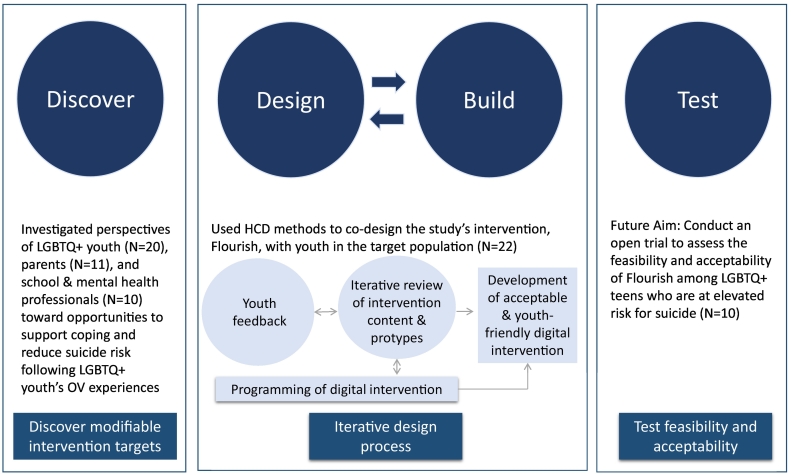
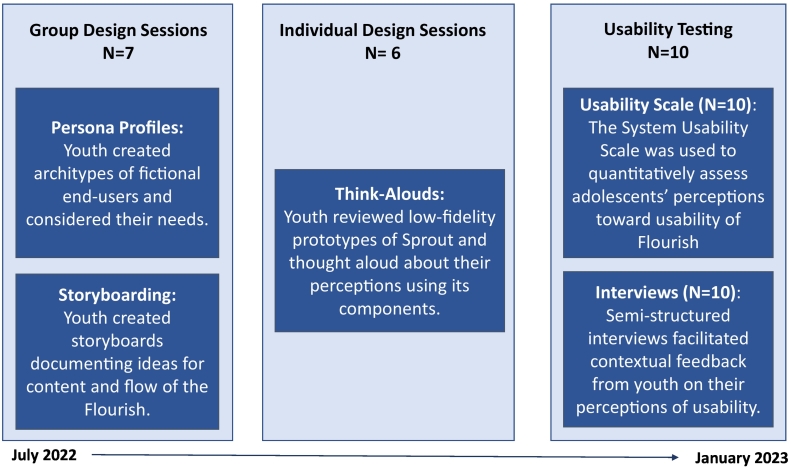
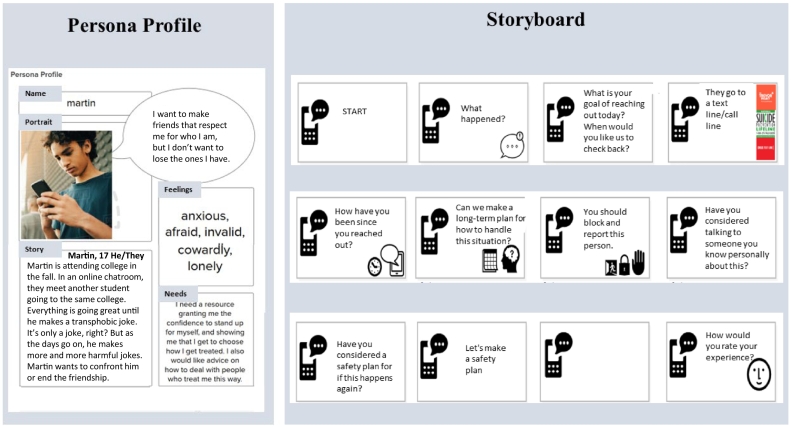
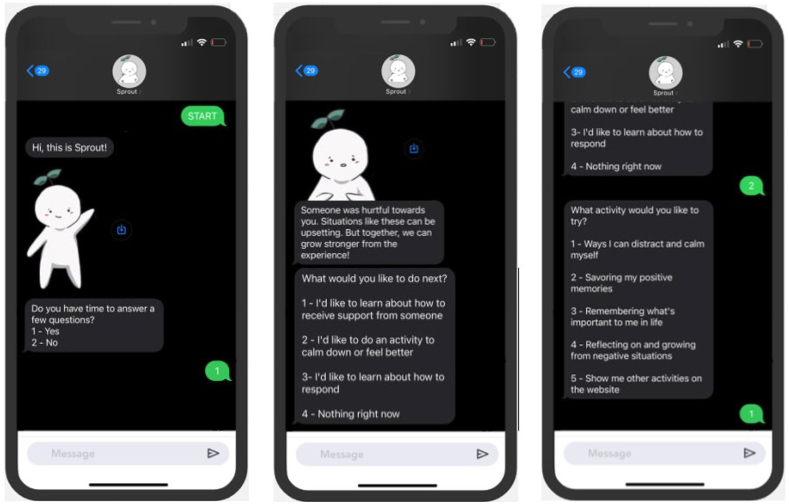
Development and codesign of flourish: A digital suicide prevention intervention for LGBTQ+ youth who have experienced online victimization
Overview
The claims and statistics of this paper haven’t been checked yet.
Run the check — free, no account needed. It reads the open-access text and checks the sources it cites.
Integrity signals
Registry
Cites
Statistics
Figures
Verification
Claims the paper makes
The claims and statistics of this paper haven’t been checked yet.
Run the check — free, no account needed. It reads the open-access text and checks the sources it cites.
Claims other papers make about this one
Each is checked against this paper’s own text: does it say what the citing paper says it does?
In the citing paper
“Biernesser et al. (2023) took a similar route with Flourish, a text-message intervention for LGBTQ+ adolescents aged 13-18 with a history of suicidal thoughts or behaviors who had experienced online victimization.”
From Artificial intelligence and immersive technologies for LGBTQ+ youth: a narrative review (2026) · cites this paper as Biernesser et al., 2023
In the citing paper
“Flourish (Biernesser et al., 2023), co-designed with LGBTQ+ adolescents with a history of suicidality, adds a further example from suicide prevention, though it too has not yet been compared with a conventionally developed tool.”
From Artificial intelligence and immersive technologies for LGBTQ+ youth: a narrative review (2026) · cites this paper as Biernesser et al., 2023
In the citing paper
“Biernesser et al. (2023) built procedures to avoid outing adolescents to their parents into every stage of their study.”
From Artificial intelligence and immersive technologies for LGBTQ+ youth: a narrative review (2026) · cites this paper as Biernesser et al. (2023)
In the citing paper
“Asked how far the tool should be automated, 19 of 20 young people preferred a fully or partially automated design, most of them one that could hand over to a human when needed; the resulting prototype, delivered through a conversational character, was rated as highly usable.”
From Artificial intelligence and immersive technologies for LGBTQ+ youth: a narrative review (2026) · cites this paper as Biernesser et al., 2023
In the citing paper
“The team also took deliberate steps to avoid outing participants to their parents, a point we return to in Section 5.5.”
From Artificial intelligence and immersive technologies for LGBTQ+ youth: a narrative review (2026) · cites this paper as Biernesser et al., 2023
In the citing paper
“the resulting prototype, delivered through a conversational character, was rated as highly usable.”
From Artificial intelligence and immersive technologies for LGBTQ+ youth: a narrative review (2026) · cites this paper as Biernesser et al., 2023
Self-check
Percentages, sums and reported differences re-computed from the paper’s own numbers.
The self-check needs the paper’s full text.
Citations
Cites
Kowalski, R. M., Giumetti, G. W., Schroeder, A. N., & Lattanner, M. R. (2014) · Psychological Bulletin · doi:10.1037/a0035618 · Cited by 3,266
The Significance of Saturation
Morse, J. M. (1995) · Qualitative Health Research · doi:10.1177/104973239500500201 · Cited by 2,663
O.Nyumba, T., Wilson, K., Derrick, C. J., & Mukherjee, N. (2018) · Methods in Ecology and Evolution · doi:10.1111/2041-210x.12860 · Cited by 2,619
Nevedal, A. L., Reardon, C. M., Opra Widerquist, M. A., Jackson, G. L., Cutrona, S. L., White, B. S., & Damschroder, L. J. (2021) · Implementation Science · doi:10.1186/s13012-021-01111-5 · Cited by 708
Evidence-Based Psychosocial Treatments for Self-Injurious Thoughts and Behaviors in Youth
Glenn, C. R., Franklin, J. C., & Nock, M. K. (2015) · Journal of Clinical Child & Adolescent Psychology · doi:10.1080/15374416.2014.945211 · Cited by 288
Use of Digital Mental Health for Marginalized and Underserved Populations
Schueller, S. M., Hunter, J. F., Figueroa, C., & Aguilera, A. (2019) · Current Treatment Options in Psychiatry · doi:10.1007/s40501-019-00181-z · Cited by 268
Social Media Use and Self-Injurious Thoughts and Behaviors: A Systematic Review and Meta-Analysis
Nesi, J., Burke, T. A., Bettis, A. H., Kudinova, A. Y., Thompson, E. C., MacPherson, H. A., Fox, K. A., Lawrence, H. R., Thomas, S. A., Wolff, J. C., et al. (2021) · Clinical Psychology Review · doi:10.1016/j.cpr.2021.102038 · Cited by 186
Witt, K., Spittal, M. J., Carter, G., Pirkis, J., Hetrick, S., Currier, D., Robinson, J., & Milner, A. (2017) · BMC Psychiatry · doi:10.1186/s12888-017-1458-0 · Cited by 179
Bergin, A. D., Vallejos, E. P., Davies, E. B., Daley, D., Ford, T., Harold, G., Hetrick, S., Kidner, M., Long, Y., Merry, S., et al. (2020) · npj Digital Medicine · doi:10.1038/s41746-020-00339-7 · Cited by 157
Cooper, R. M., & Blumenfeld, W. J. (2012) · Journal of LGBT Youth · doi:10.1080/19361653.2011.649616 · Cited by 99
Research works printed but not linked: 29
- Aboujaoude, 2015, Cyberbullying: review of an old problem gone viral, J. Adolesc. Health, 57, 10, 10.1016/j.jadohealth.2015.04.011 · DOI · Paper page
- Bevan Jones, 2020, Practitioner review: co-design of digital mental health technologies with children and young people, J. Child Psychol. Psychiatry, 61, 928, 10.1111/jcpp.13258 · DOI · Paper page
- Birkett, 2015, Does it get better? A longitudinal analysis of psychological distress and victimization in lesbian, gay, bisexual, transgender, and questioning youth, J. Adolesc. Health, 56, 280, 10.1016/j.jadohealth.2014.10.275 · DOI
- Bishop, 2022, A systematic review to determine how service provider practises impact effective service provision to lesbian, gay and bisexual consumers in a mental health setting, Clin. Psychol. Psychother., 29, 874, 10.1002/cpp.2699 · DOI
- Brent, 2013, Protecting adolescents from self-harm: a critical review of intervention studies, JAACAP., 52, 1260
- Cohen, 2022, The promise of digital mental health for LGBTQ+ youths, Psychiatr. Serv., 73, 1069, 10.1176/appi.ps.202100569 · DOI · Paper page
- Coppersmith, 2022, Just-in-time adaptive interventions for suicide prevention: promise, challenges, and future directions, Psychiatry., 85, 317, 10.1080/00332747.2022.2092828 · DOI
- Craig, 2021, Can social media participation enhance LGBTQ+ youth well-being? Development of the social media benefits scale, Soc. Med. Soc., 7, 1
- Damschroder, 2022, Conceptualizing outcomes for use with the Consolidated Framework for Implementation Research (CFIR): the CFIR outcomes addendum, Implement. Sci., 17, 7, 10.1186/s13012-021-01181-5 · DOI · Paper page
- Hatzenbuehler, 2016, Stigma and minority stress as social determinants of health among lesbian, gay, bisexual, and transgender youth: research evidence and clinical implications, Pediatr. Clin. N. Am., 63, 985, 10.1016/j.pcl.2016.07.003 · DOI · Paper page
- Hinduja, 2010, Bullying, cyberbullying and suicide, Arch. Suicide Res., 14, 206, 10.1080/13811118.2010.494133 · DOI · Paper page
- Hinduja, 2011, Cyberbullying: a review of the legal issues facing educators, Prev. Sch. Fail., 55, 71, 10.1080/1045988X.2011.539433 · DOI · Paper page
- Hodson, 2019, Co-design in mental health; mellow: a self-help holistic crisis planning mobile application by youth, for youth, Des. J., 22, 1529
- Horowitz, 2020, Validation and feasibility of the ASQ among pediatric medical and surgical inpatients, Hosp. Pediatr., 10.1542/hpeds.2020-0087 · DOI
- Leyro, 2010, Distress tolerance and psychopathological symptoms and disorders: a review of the empirical literature among adults, Psychol. Bull., 136, 576, 10.1037/a0019712 · DOI · Paper page
- Lyon, 2019, Use of human-centered design to improve implementation of evidence-based psychotherapies in low-resource communities: protocol for studies applying a framework to assess usability, JMIR Res. Protoc., 8, 10.2196/14990 · DOI
- Marshall, 2016, Suicide prevention interventions for sexual & gender minority youth: an unmet need, Yale J. Biol. Med., 89, 205
- McDermott, 2018, Norms and normalisation: understanding lesbian, gay, bisexual, transgender and queer youth, suicidality and help-seeking, Cult. Health Sex., 20, 156, 10.1080/13691058.2017.1335435 · DOI
- Meyer, 2003, Prejudice, social stress, and mental health in lesbian, gay, and bisexual populations: conceptual issues and research evidence, Psychol. Bull., 129, 674, 10.1037/0033-2909.129.5.674 · DOI · Paper page
- Neal, 2015, Expediting the analysis of qualitative data in evaluation: a procedure for the rapid identification of themes from audio recordings (RITA), Am. J. Eval., 36, 118, 10.1177/1098214014536601 · DOI
- Pettit, 2018, Assessment and management of suicide risk in children and adolescents, Cogn. Behav. Pract., 25, 460, 10.1016/j.cbpra.2018.04.001 · DOI
- Quintana-Orts, 2022, Beyond cyberbullying: investigating when and how cybervictimization predicts suicidal ideation, J. Interpers. Violence, 37, 935, 10.1177/0886260520913640 · DOI
- Raifman, 2020, Sexual orientation and suicide attempt disparities among US adolescents: 2009-2017, Pediatrics., 145, 10.1542/peds.2019-1658 · DOI · Paper page
- Sandelowski, 2000, Whatever happened to qualitative description?, Res. Nurs. Health, 23, 334, 10.1002/1098-240X(200008)23:4<334::AID-NUR9>3.0.CO;2-G · DOI
- Sandelowski, 2010, What's in a name? Qualitative description revisited, Res. Nurs. Health, 33, 77, 10.1002/nur.20362 · DOI · Paper page
- Schueller, 2020, Scaling evidence-based treatments through digital mental health, Am. Psychol., 75, 1093, 10.1037/amp0000654 · DOI
- Tindall, 2021, A first-hand experience of co-design in mental health service design: opportunities, challenges, and lessons, IJMHNI., 30, 1693
- Tynes, 2010, The development and validation of the online victimization scale for adolescents, Cyberpsychology., 4
- Whaibeh, 2020, Reducing the treatment gap for LGBT mental health needs: the potential of telepsychiatry, J. Behav. Health Serv. Res., 47, 424, 10.1007/s11414-019-09677-1 · DOI
Cited by
Sorted by citations
Artificial intelligence and immersive technologies for LGBTQ+ youth: a narrative review
Shekarchi, R., Eleuteri, S., Saladino, V., Calaresi, D., Giordano, F., & Prunas, A. (2026) · Frontiers in Psychology · doi:10.3389/fpsyg.2026.2002054
Metadata
- Authors
- Biernesser, C., Win, E., Escobar-Viera, C., Farzan, R., Rose, M., & Goldstein, T.
- Venue
- Internet Interventions
- Publisher
- Elsevier BV
- Published
- 2023-12
- Volume
- 34
- Pages
- 100663
- ISSN
- 2214-7829
- PMC
- PMC10491770
- Cited by
- 21
- References
- 12
- Language
- en
- Licence
- Funders
- National Institutes of Health (UL1 TR001857)
- National Institute of Mental Health (K23 MH131759, P50 MH115838, T32 MH018951)
- American Foundation for Suicide Prevention (YIG-0-021-20)
- University of Pittsburgh
About these checks
Registry, retraction, Cites and statistics results are computed, not judged, with one exception: a printed reference that no index lists is read once by a model before it counts as a citation error. Claims are extracted by a model and kept only when their quote appears verbatim in the text; each cited source is then checked, with a model’s help, for whether it says what the claim relies on. Those verdicts can be wrong — read the claim’s quote and the cited source before relying on one.
Statistics and arithmetic are recomputed, not judged.
Confidence bands are shown only for fields calibrated on our annotated test set. None is calibrated yet, so no band is shown.
What counts as a claim ›How we measure confidence ›How we check this ›
Are you an author, or do you see a problem with this page? Request a review
How to cite
Cite CoChat for the checks on this page, and the paper for its own findings.
- This page
- CoChat. (2026). Citation check: Development and codesign of flourish: A digital suicide prevention intervention for LGBTQ+ youth who have experienced online victimization. https://app.cochat.ai/papers/10.1016/j.invent.2023.100663
- The paper
- Biernesser, C., Win, E., Escobar-Viera, C., Farzan, R., Rose, M., & Goldstein, T. (2023). Development and codesign of flourish: A digital suicide prevention intervention for LGBTQ+ youth who have experienced online victimization. Internet Interventions. https://doi.org/10.1016/j.invent.2023.100663
