

The DOI matches its Crossref record; 40 of the 40 references it cites were found in a registry or an index; none of the 16 sources its claims cite is checked for support yet.
MutaBind2: Predicting the Impacts of Single and Multiple Mutations on Protein-Protein Interactions
Open accessAbstract
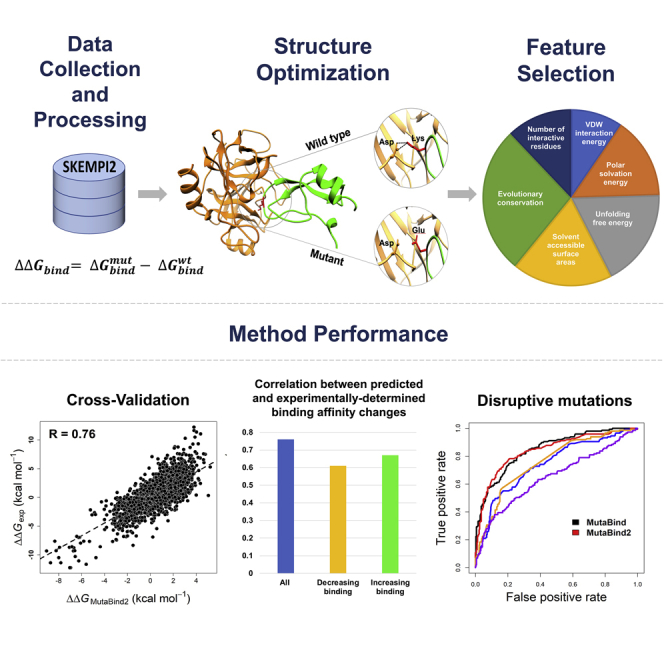
Missense mutations may affect proteostasis by destabilizing or over-stabilizing protein complexes and changing the pathway flux. Predicting the effects of stabilizing mutations on protein-protein interactions is notoriously difficult because existing experimental sets are skewed toward mutations reducing protein-protein binding affinity and many computational methods fail to correctly evaluate their effects. To address this issue, we developed a method MutaBind2, which estimates the impacts of single as well as multiple mutations on protein-protein interactions. MutaBind2 employs only seven features, and the most important of them describe interactions of proteins with the solvent, evolutionary conservation of the site, and thermodynamic stability of the complex and each monomer. This approach shows a distinct improvement especially in evaluating the effects of mutations increasing binding affinity. MutaBind2 can be used for finding disease driver mutations, designing stable protein complexes, and discovering new protein-protein interaction inhibitors.
Overview
AI snapshot
Written from the paper’s full text.
TL;DR
MutaBind2 is a structure-based method that predicts the effects of single and multiple mutations on protein-protein binding affinity using a seven-term scoring function. It improves performance especially for mutations that increase binding affinity, while requiring a 3D structure of the protein-protein complex.
Key findings
- MutaBind2 uses only seven features, with the most important describing protein-solvent interactions, evolutionary conservation of the site, and thermodynamic stability of the complex and each monomer.
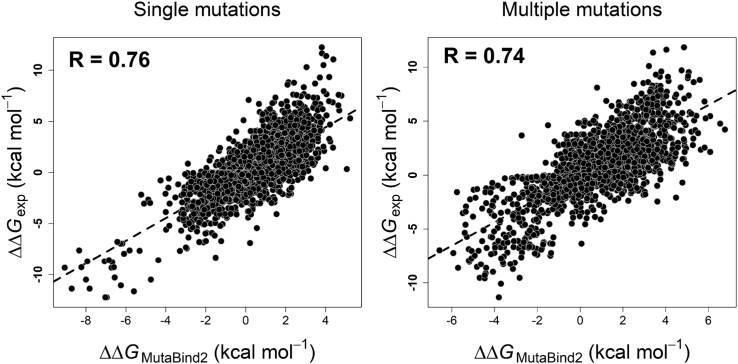
- In cross-validation, MutaBind2 achieved Pearson R = 0.76 for single mutations and R = 0.74 for multiple mutations under leave-one-complex-out (CV4); under leave-one-binding-site-out (CV5), R = 0.69 for single and R = 0.71 for multiple mutations.
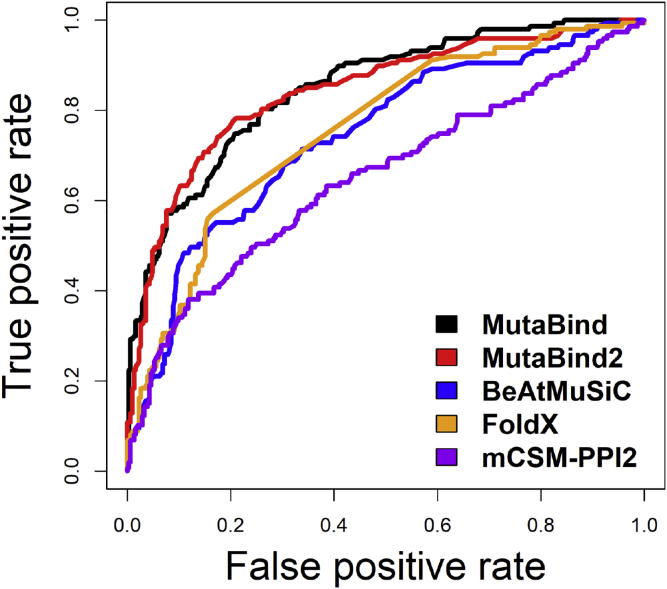
- On the independent S1748 set, retraining on the SKEMPI set enriched with reverse mutations improved R from 0.38 to 0.63 and reduced RMSE from 1.51 to 1.25 kcal mol−1; for highly increasing mutations, MutaBind2 reached AUC = 0.86 versus MutaBind 0.65, BeAtMuSiC 0.56, and FoldX 0.74.
- For multiple mutations, the worst performance was for three or more mutations on the same chain (R = 0.61 in CV4), and the best was for double mutations on multiple chains (R = 0.85 in CV4).
Methods
- MutaBind2 employs a new minimization protocol and a scoring function with seven terms, trained on a larger SKEMPI2 dataset containing 1.7 times more mutations and 3.3 times more complexes than SKEMPI, and enriched with structural models of reverse mutations to balance mutations increasing binding affinity.
- Performance was assessed with five cross-validation procedures (CV1–CV5), independent test sets including S1748, S4191, M1707, S487, and S8338, and comparisons with BeAtMuSiC, FoldX, iSEE, and mCSM-PPI2.
- The paper also evaluated predictions against yeast two-hybrid data covering 4,797 mutation-interaction pairs, of which 451 mutations could be mapped to known 3D structures and 147 were interaction-disruptive; main metrics included Pearson R, RMSE, slope, ROC/AUC, MCC, sensitivity, and specificity.
Limitations
- Stated: MutaBind2 requires the 3D structure of a protein-protein complex; six of seven features are calculated from that structure, limiting application to mutations that cannot be mapped to a structural complex.
- Stated: multiple-mutation instances with more than 10 mutations are not supported because such cases are rare in the training data and prediction accuracy is low.
- Evident from the text: outliers are more likely in complexes with higher protein-protein binding affinity and at mutated sites with more hydrogen bonds, and performance improves significantly after removing 5% outliers.
Model-written summary. Check it against the paper before relying on it.
Integrity signals
Registry
Cites
Statistics
Figures
Verification
Claims the paper makes
20 Own result · 10 Not checked yet · 3 No basis given · 2 Own interpretation
A result the paper reports from its own data — it cites no other source for it, so there is none to check. The quote shows it is in the paper.
In the paper
“This approach shows a distinct improvement especially in evaluating the effects of mutations increasing binding affinity.”
- Also stated in: § Validation of MutaBind2 on Independent Test Sets · boosted
“predictions for mutations increasing binding affinity were significantly improved without compromising the accuracy for predicting mutations decreasing binding affinity (Table 1).”
§ MutaBind2: Predicting the Impacts of Single and Multiple Mutations on Protein-Protein Interactions > Abstract
boosteddirect- Asserted: passes — The authors put it forward as true.
- Checkable: passes — It can be checked against evidence.
- Load-bearing: passes — The paper’s conclusions depend on it.
- Based: passes — The paper gives a reason why it holds.
- Also stated in: § Validation of MutaBind2 on Independent Test Sets · boosted
In the paper
“Consistent with the observation of Pires et al. (Pires et al., 2016), the outliers usually correspond to those mutations with extreme experimental values (highly decreasing/increasing binding affinity)”
§ MutaBind2: Predicting the Impacts of Single and Multiple Mutations on Protein-Protein Interactions > Results and Discussion > Evaluating the Performance of MutaBind2 Using Cross-Validation
What the sources say
- Not checked yetcites Pires et al., 2016 source
plaincorrelational- Asserted: passes — The authors put it forward as true.
- Checkable: passes — It can be checked against evidence.
- Load-bearing: unclear — It is unclear whether the paper’s conclusions depend on it.
- Based: passes — The paper gives a reason why it holds.
The paper states this without a source or data behind it here, so there is nothing to check it against. The quote shows it is in the paper.
In the paper
“MutaBind2 employs only seven features”
- Also stated in: § Results and Discussion · plain
“we designed a scoring function with seven terms instead of 10 used in the previous MutaBind version”
§ MutaBind2: Predicting the Impacts of Single and Multiple Mutations on Protein-Protein Interactions > Abstract
plain- Asserted: passes — The authors put it forward as true.
- Checkable: passes — It can be checked against evidence.
- Load-bearing: passes — The paper’s conclusions depend on it.
- Based: passes — The paper gives a reason why it holds.
- Also stated in: § Results and Discussion · plain
A result the paper reports from its own data — it cites no other source for it, so there is none to check. The quote shows it is in the paper.
In the paper
“Figures 3 and S5 show excellent performance of MutaBind and MutaBind2 in distinguishing interaction-disruptive from other mutations.”
§ MutaBind2: Predicting the Impacts of Single and Multiple Mutations on Protein-Protein Interactions > Results and Discussion > Validation of MutaBind2 on Independent Test Sets
plaincorrelational- Asserted: passes — The authors put it forward as true.
- Checkable: passes — It can be checked against evidence.
- Load-bearing: passes — The paper’s conclusions depend on it.
- Based: passes — The paper gives a reason why it holds.
A result the paper reports from its own data — it cites no other source for it, so there is none to check. The quote shows it is in the paper.
In the paper
“Figure S11A shows that the performance is improved significantly after removing 5% outliers.”
§ MutaBind2: Predicting the Impacts of Single and Multiple Mutations on Protein-Protein Interactions > Results and Discussion > Evaluating the Performance of MutaBind2 Using Cross-Validation
plaindirect- Asserted: passes — The authors put it forward as true.
- Checkable: passes — It can be checked against evidence.
- Load-bearing: unclear — It is unclear whether the paper’s conclusions depend on it.
- Based: passes — The paper gives a reason why it holds.
In the paper
“We obtained comparable correlation coefficients with mCSM-PPI2 using the CV4 and CV5 cross-validations (Table 2)”
§ MutaBind2: Predicting the Impacts of Single and Multiple Mutations on Protein-Protein Interactions > Results and Discussion > Validation of MutaBind2 on Independent Test Sets
What the sources say
- Not checked yetcites Rodrigues et al., 2019 source
plain- Asserted: passes — The authors put it forward as true.
- Checkable: passes — It can be checked against evidence.
- Load-bearing: unclear — It is unclear whether the paper’s conclusions depend on it.
- Based: passes — The paper gives a reason why it holds.
A result the paper reports from its own data — it cites no other source for it, so there is none to check. The quote shows it is in the paper.
In the paper
“the MutaBind2 model parameterized on this training set shows the best performance on S487 compared with other methods (more comparisons can be found in Table S5).”
§ MutaBind2: Predicting the Impacts of Single and Multiple Mutations on Protein-Protein Interactions > Results and Discussion > Validation of MutaBind2 on Independent Test Sets
plain- Asserted: passes — The authors put it forward as true.
- Checkable: passes — It can be checked against evidence.
- Load-bearing: passes — The paper’s conclusions depend on it.
- Based: passes — The paper gives a reason why it holds.
A result the paper reports from its own data — it cites no other source for it, so there is none to check. The quote shows it is in the paper.
In the paper
“which points to a slightly better performance for MutaBind2 in terms of the slope of the regression line indicating that predicted and experimental values are on the same scale.”
§ MutaBind2: Predicting the Impacts of Single and Multiple Mutations on Protein-Protein Interactions > Results and Discussion > Validation of MutaBind2 on Independent Test Sets
hedgedcorrelational- Asserted: passes — The authors put it forward as true.
- Checkable: passes — It can be checked against evidence.
- Load-bearing: unclear — It is unclear whether the paper’s conclusions depend on it.
- Based: passes — The paper gives a reason why it holds.
A result the paper reports from its own data — it cites no other source for it, so there is none to check. The quote shows it is in the paper.
In the paper
“we developed a method MutaBind2, which estimates the impacts of single as well as multiple mutations on protein-protein interactions.”
- Also stated in: § Introduction · plain
“In addition to single mutations, it can predict the effects of multiple mutations on protein binding affinity.”
§ MutaBind2: Predicting the Impacts of Single and Multiple Mutations on Protein-Protein Interactions > Abstract
plain- Asserted: passes — The authors put it forward as true.
- Checkable: passes — It can be checked against evidence.
- Load-bearing: passes — The paper’s conclusions depend on it.
- Based: passes — The paper gives a reason why it holds.
- Rests on an assumption: Large-scale rapid experimental assays that would allow the assessment of thousands of variants are still limited.
- Also stated in: § Introduction · plain
A result the paper reports from its own data — it cites no other source for it, so there is none to check. The quote shows it is in the paper.
In the paper
“Table 3 and Figure S6 demonstrate the high performance of MutaBind2 in predicting mutations highly decreasing and highly increasing binding affinity (see Methods for details).”
§ MutaBind2: Predicting the Impacts of Single and Multiple Mutations on Protein-Protein Interactions > Results and Discussion > Prediction of Mutations Highly Decreasing and Increasing Binding Affinity
boosted- Asserted: passes — The authors put it forward as true.
- Checkable: passes — It can be checked against evidence.
- Load-bearing: passes — The paper’s conclusions depend on it.
- Based: passes — The paper gives a reason why it holds.
- It may state two separate claims as one. 14
A result the paper reports from its own data — it cites no other source for it, so there is none to check. The quote shows it is in the paper.
In the paper
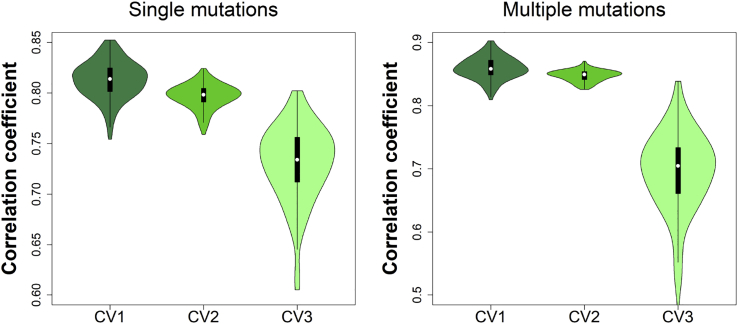
“The correlation coefficients of each cross-validation round exceed 0.80 for “CV1” and “CV2” and about 0.70 for “CV3” cross-validation for both single and multiple mutations.”
§ MutaBind2: Predicting the Impacts of Single and Multiple Mutations on Protein-Protein Interactions > Results and Discussion > Evaluating the Performance of MutaBind2 Using Cross-Validation
plaincorrelational- Asserted: passes — The authors put it forward as true.
- Checkable: passes — It can be checked against evidence.
- Load-bearing: passes — The paper’s conclusions depend on it.
- Based: passes — The paper gives a reason why it holds.
It may state two separate claims as one.
The paper states this without a source or data behind it here, so there is nothing to check it against. The quote shows it is in the paper.
In the paper
“Importantly, MutaBind and MutaBind2, unlike other methods mentioned earlier, estimate interactions of a protein with the solvent, which is one of the most important terms together with the site evolutionary conservation and thermodynamic stability of a protein complex and each binding partner (Table S2).”
§ MutaBind2: Predicting the Impacts of Single and Multiple Mutations on Protein-Protein Interactions > Results and Discussion > Prediction of Mutations Highly Decreasing and Increasing Binding Affinity
plain- Asserted: passes — The authors put it forward as true.
- Checkable: passes — It can be checked against evidence.
- Load-bearing: passes — The paper’s conclusions depend on it.
- Based: passes — The paper gives a reason why it holds.
It may state two separate claims as one.
A result the paper reports from its own data — it cites no other source for it, so there is none to check. The quote shows it is in the paper.
In the paper
“we found that the outliers are more likely to appear in complexes with higher protein-protein binding affinity and at the mutated sites with higher number of hydrogen bonds (Figure S11B).”
§ MutaBind2: Predicting the Impacts of Single and Multiple Mutations on Protein-Protein Interactions > Results and Discussion > Evaluating the Performance of MutaBind2 Using Cross-Validation
hedgedcorrelational- Asserted: passes — The authors put it forward as true.
- Checkable: passes — It can be checked against evidence.
- Load-bearing: unclear — It is unclear whether the paper’s conclusions depend on it.
- Based: passes — The paper gives a reason why it holds.
It may state two separate claims as one.
A result the paper reports from its own data — it cites no other source for it, so there is none to check. The quote shows it is in the paper.
In the paper
“The Pearson correlation coefficient between experimental and computed ΔΔG values using the “leave-one-complex-out” (“CV4”) procedure reaches 0.76 for single mutations and 0.74 for multiple mutations (Table 1 and Figure 2).”
§ MutaBind2: Predicting the Impacts of Single and Multiple Mutations on Protein-Protein Interactions > Results and Discussion > Evaluating the Performance of MutaBind2 Using Cross-Validation
plaincorrelational- Asserted: passes — The authors put it forward as true.
- Checkable: passes — It can be checked against evidence.
- Load-bearing: passes — The paper’s conclusions depend on it.
- Based: passes — The paper gives a reason why it holds.
It may state two separate claims as one.
A result the paper reports from its own data — it cites no other source for it, so there is none to check. The quote shows it is in the paper.
In the paper
“We found that MutaBind2 performed well for almost all categories; the worst performance was observed for three or more mutations introduced on the same chain (R = 0.61 in CV4 validation), and the best performance was achieved for double mutations on multiple chains (R = 0.85 in CV4 validation).”
§ MutaBind2: Predicting the Impacts of Single and Multiple Mutations on Protein-Protein Interactions > Results and Discussion > Prediction of Mutations Highly Decreasing and Increasing Binding Affinity
plaincorrelational- Asserted: passes — The authors put it forward as true.
- Checkable: passes — It can be checked against evidence.
- Load-bearing: passes — The paper’s conclusions depend on it.
- Based: passes — The paper gives a reason why it holds.
It may state two separate claims as one.
A result the paper reports from its own data — it cites no other source for it, so there is none to check. The quote shows it is in the paper.
In the paper
“the correlation coefficient remained statistically significant, being equal to 0.69 for single mutations and 0.71 for multiple mutations (Table 1 and Figure S4D).”
§ MutaBind2: Predicting the Impacts of Single and Multiple Mutations on Protein-Protein Interactions > Results and Discussion > Evaluating the Performance of MutaBind2 Using Cross-Validation
plaincorrelational- Asserted: passes — The authors put it forward as true.
- Checkable: passes — It can be checked against evidence.
- Load-bearing: passes — The paper’s conclusions depend on it.
- Based: passes — The paper gives a reason why it holds.
It may state two separate claims as one.
A result the paper reports from its own data — it cites no other source for it, so there is none to check. The quote shows it is in the paper.
In the paper
“MutaBind2 further improves the performance for both interfacial and non-interfacial mutations compared with the previous version and outperforms other methods on the S1748 set (Figure S7).”
§ MutaBind2: Predicting the Impacts of Single and Multiple Mutations on Protein-Protein Interactions > Results and Discussion > Prediction of Mutations Highly Decreasing and Increasing Binding Affinity
plaindirect- Asserted: passes — The authors put it forward as true.
- Checkable: passes — It can be checked against evidence.
- Load-bearing: passes — The paper’s conclusions depend on it.
- Based: passes — The paper gives a reason why it holds.
It may state two separate claims as one.
A result the paper reports from its own data — it cites no other source for it, so there is none to check. The quote shows it is in the paper.
In the paper
“we trained our models on a much larger dataset from SKEMPI2, which encompassed 1.7 times more mutations and 3.3 times more complexes compared with SKEMPI used for training of MutaBind.”
§ MutaBind2: Predicting the Impacts of Single and Multiple Mutations on Protein-Protein Interactions > Results and Discussion
plain- Asserted: passes — The authors put it forward as true.
- Checkable: passes — It can be checked against evidence.
- Load-bearing: passes — The paper’s conclusions depend on it.
- Based: passes — The paper gives a reason why it holds.
It may state two separate claims as one.
A result the paper reports from its own data — it cites no other source for it, so there is none to check. The quote shows it is in the paper.
In the paper
“the most important of them describe interactions of proteins with the solvent, evolutionary conservation of the site, and thermodynamic stability of the complex and each monomer.”
- Also stated in: § Prediction of Mutations Highly Decreasing and Increasing Binding Affinity · plain
“MutaBind and MutaBind2, unlike other methods mentioned earlier, estimate interactions of a protein with the solvent, which is one of the most important terms together with the site evolutionary conservation and thermodynamic stability of a protein complex and each binding partner (Table S2).”
§ MutaBind2: Predicting the Impacts of Single and Multiple Mutations on Protein-Protein Interactions > Abstract
plain- Asserted: passes — The authors put it forward as true.
- Checkable: passes — It can be checked against evidence.
- Load-bearing: passes — The paper’s conclusions depend on it.
- Based: passes — The paper gives a reason why it holds.
It may state two separate claims as one.
- Also stated in: § Prediction of Mutations Highly Decreasing and Increasing Binding Affinity · plain
A result the paper reports from its own data — it cites no other source for it, so there is none to check. The quote shows it is in the paper.
In the paper
“the performance on an independent S1748 set improved considerably (the correlation coefficient increased from 0.38 to 0.63, and root-mean-square error decreased from 1.51 to 1.25 kcal mol−1).”
§ MutaBind2: Predicting the Impacts of Single and Multiple Mutations on Protein-Protein Interactions > Results and Discussion > Validation of MutaBind2 on Independent Test Sets
plaindirect- Asserted: passes — The authors put it forward as true.
- Checkable: passes — It can be checked against evidence.
- Load-bearing: passes — The paper’s conclusions depend on it.
- Based: passes — The paper gives a reason why it holds.
It may state two separate claims as one.
- Rests on an assumption: The methodologies of training procedures employed by many computational methods rely on experimental sets enriched with mutations that decrease binding.
A result the paper reports from its own data — it cites no other source for it, so there is none to check. The quote shows it is in the paper.
In the paper
“Moreover, predictions for mutations increasing binding affinity were significantly improved without compromising the accuracy for predicting mutations decreasing binding affinity (Table 1).”
§ MutaBind2: Predicting the Impacts of Single and Multiple Mutations on Protein-Protein Interactions > Results and Discussion > Validation of MutaBind2 on Independent Test Sets
plaindirect- Asserted: passes — The authors put it forward as true.
- Checkable: passes — It can be checked against evidence.
- Load-bearing: passes — The paper’s conclusions depend on it.
- Based: passes — The paper gives a reason why it holds.
It may state two separate claims as one.
- Rests on an assumption: The methodologies of training procedures employed by many computational methods rely on experimental sets enriched with mutations that decrease binding.
None of the sources cited for this claim have been checked yet.
In the paper
“Missense mutations may affect proteostasis by destabilizing or over-stabilizing protein complexes and changing the pathway flux.”
- Also stated in: § Introduction · hedged
“However, the latter may also have important consequences leading to disruption of proteostasis by over-stabilizing transient protein complexes (Nishi et al., 2013, Stefl et al., 2013, Rutten et al., 2018, Shoichet et al., 1995, Nagatani et al., 2007, Witham et al., 2011, Jubb et al., 2016) and changing the pathway flux.”
§ MutaBind2: Predicting the Impacts of Single and Multiple Mutations on Protein-Protein Interactions > Abstract
What the sources say
- Not checked yetcites Nishi et al., 2013
- Not checked yetcites Stefl et al., 2013
- Not checked yetcites Rutten et al., 2018
hedgedconditional- Asserted: passes — The authors put it forward as true.
- Checkable: passes — It can be checked against evidence.
- Load-bearing: passes — The paper’s conclusions depend on it.
- Based: passes — The paper gives a reason why it holds.
It may state two separate claims as one.
- Also stated in: § Introduction · hedged
In the paper
“MutaBind2 can be used for finding disease driver mutations, designing stable protein complexes, and discovering new protein-protein interaction inhibitors.”
- Also stated in: § Introduction · plain
“MutaBind2 can be applied to a large number of tasks, including, but not limited to, finding disease driver mutations and understanding their molecular mechanisms, assessing the effects of sequence variants on protein fitness, structural modeling of mutant complexes, and designing protein interaction inhibitors (Goncearenco et al., 2017).”
§ MutaBind2: Predicting the Impacts of Single and Multiple Mutations on Protein-Protein Interactions > Abstract
What the sources say
- Not checked yetcites Goncearenco et al., 2017
plain- Asserted: passes — The authors put it forward as true.
- Checkable: passes — It can be checked against evidence.
- Load-bearing: passes — The paper’s conclusions depend on it.
- Based: passes — The paper gives a reason why it holds.
It may state two separate claims as one.
- Rests on an assumption: Large-scale rapid experimental assays that would allow the assessment of thousands of variants are still limited.
- Also stated in: § Introduction · plain
In the paper
“The previous version, MutaBind, could predict single mutations highly decreasing binding affinity relatively well but failed to annotate mutations highly increasing affinity.”
§ MutaBind2: Predicting the Impacts of Single and Multiple Mutations on Protein-Protein Interactions > Results and Discussion > Prediction of Mutations Highly Decreasing and Increasing Binding Affinity
What the sources say
- Not checked yetcites Li et al., 2016b
hedged- Asserted: passes — The authors put it forward as true.
- Checkable: passes — It can be checked against evidence.
- Load-bearing: passes — The paper’s conclusions depend on it.
- Based: passes — The paper gives a reason why it holds.
It may state two separate claims as one.
- Rests on an assumption: The methodologies of training procedures employed by many computational methods rely on experimental sets enriched with mutations that decrease binding.
The paper relies on this without support.
Proteins and their binding interfaces tend to be optimized in evolution with regard to their stability.
“proteins and their binding interfaces tend to be optimized in evolution with regard to their stability”
The paper relies on this without support.
The methodologies of training procedures employed by many computational methods rely on experimental sets enriched with mutations that decrease binding.
“the methodologies of training procedures employed by many computational methods rely on these experimental sets”
The paper relies on this without support.
Large-scale rapid experimental assays that would allow the assessment of thousands of variants are still limited.
“large-scale rapid experimental assays that would allow the assessment of thousands of variants are still limited”
The paper relies on this without support.
The majority of mutations produce rather subtle effects with unclear clinical significance.
“the majority of mutations produce rather subtle effects with unclear clinical significance”
Claims other papers make about this one
Each is checked against this paper’s own text: does it say what the citing paper says it does?
In the citing paper
“Considering that the seven features used in MutaBind2 are manually designed, these features may not comprehensively characterize the impacts of mutations.”
From Deep geometric representations for modeling effects of mutations on protein-protein binding affinity (2021) · cites this paper as [15]
In the citing paper
“These poor results of MutaBind2 were consistent with the previous report that MutaBind2 does not generalize to the cases with large-number mutations [15].”
From Deep geometric representations for modeling effects of mutations on protein-protein binding affinity (2021) · cites this paper as [15]
Citations
Cites
DeLong, E. R., DeLong, D. M., & Clarke-Pearson, D. L. (1988) · Biometrics · doi:10.2307/2531595 · Cited by 22,649
Guerois, R., Nielsen, J. E., & Serrano, L. (2002) · Journal of Molecular Biology · doi:10.1016/s0022-2836(02)00442-4 · Cited by 1,728
mCSM: Predicting the effects of mutations in proteins using graph-based signatures
Pires, D. E. V., Ascher, D. B., & Blundell, T. L. (2014) · Bioinformatics · doi:10.1093/bioinformatics/btt691 · Cited by 1,066
A relationship between protein stability and protein function.
Shoichet, B. K., Baase, W. A., Kuroki, R., & Matthews, B. W. (1995) · Proceedings of the National Academy of Sciences · doi:10.1073/pnas.92.2.452 · Cited by 712
Widespread macromolecular interaction perturbations in human genetic disorders
Sahni, N., Yi, S., Taipale, M., Fuxman Bass, J. I., Coulombe-Huntington, J., Yang, F., Peng, J., Weile, J., Karras, G. I., Wang, Y., et al. (2015) · Cell · doi:10.1016/j.cell.2015.04.013 · Cited by 594
Jankauskaitė, J., Jiménez-García, B., Dapkūnas, J., Fernández-Recio, J., & Moal, I. H. (2019) · Bioinformatics · doi:10.1093/bioinformatics/bty635 · Cited by 389 · cited 2×
“In addition, a “CV5” cross-validation accounted for similarities between binding sites of different complexes (the definition of similar binding sites is taken from (Jankauskaite et al., 2019; Moal and Fernandez-Recio, 2012)).”
BackgroundThree-dimensional reconstruction of protein networks provides insight into human genetic disease
Wang, X., Wei, X., Thijssen, B., Das, J., Lipkin, S. M., & Yu, H. (2012) · Nature Biotechnology · doi:10.1038/nbt.2106 · Cited by 385
mCSM-PPI2: predicting the effects of mutations on protein–protein interactions
Rodrigues, C. H. M., Myung, Y., Pires, D. E. V., & Ascher, D. B. (2019) · Nucleic Acids Research · doi:10.1093/nar/gkz383 · Cited by 369
Molecular Mechanisms of Disease-Causing Missense Mutations
Stefl, S. K., Nishi, H., Petukh, M. G., Panchenko, A. R., & Alexov, E. (2013) · Journal of Molecular Biology · doi:10.1016/j.jmb.2013.07.014 · Cited by 345
Self-citationBeAtMuSiC: prediction of changes in protein–protein binding affinity on mutations
Dehouck, Y., Kwasigroch, J. M., Rooman, M., & Gilis, D. (2013) · Nucleic Acids Research · doi:10.1093/nar/gkt450 · Cited by 338
Cited by
Sorted by citations
Items 101–200 of 202
Nikam, R., Jemimah, S., & Gromiha, M. M. (2024) · Bioinformatics · doi:10.1093/bioinformatics/btae309 · Cited by 7
“…et al. 2005), MutaBind (Li et al. 2016), BindProfX (Xiong et al. 2017), mCSM-PPI2 (Rodrigues et al. 2019), iSee (Geng et al. 2019), MutaBind2 (Zhang et al. 2020), SAAMBE-3D (Pahari et al. 2020), and DLA-Mutation (Behbahani et al. 2023) use the structural properties from protein complexes to…”
BackgroundPLXNB1 mutations in the etiology of idiopathic hypogonadotropic hypogonadism
Welch, B. A., Cho, H.-J., Uçaktürk, S. A., Farmer, S. M., Çetinkaya, S. Ç., Abacı, A., Akkuş, G., Şimşek, E., Kotan, L. D., Turan, İ., et al. (2022) · Journal of Neuroendocrinology · doi:10.1111/jne.13103 · Cited by 7
Rezaei, S., Pereira, F., Uversky, V. N., & Sefidbakht, Y. (2022) · Molecular Simulation · doi:10.1080/08927022.2022.2075546 · Cited by 6
“MutaBind2 [20] was used to evaluate the effects of mutations on Nsp1ribosome interactions.”
MethodWells, N. G. M., & Smith, C. A. (2023) · Proteins Structure Function and Bioinformatics · doi:10.1002/prot.26477 · Cited by 6
“Recently, machine learning algorithms and artificial intelligence have also been applied to score-based approaches, improving the prediction of interfaceadjacent mutations.(7,18,19) However, despite this progress, current scoring methods are almost exclusively limited to predicting the energetic effects of mutations a…”
MethodDiplock, N., Baudin, M., Harden, L. A., Silva, C. J., Erickson‐Beltran, M. L., Hassan, J. A., & Lewis, J. D. (2023) · Plant Cell & Environment · doi:10.1111/pce.14603 · Cited by 6
Harmak, H., Charoute, H., Redouane, S., Filali, O. A., Barakat, A., & Rouba, H. (2022) · BioMed Research International · doi:10.1155/2022/1664825 · Cited by 6
“In order to estimate the impacts of single mutations on protein-protein interactions (PPI), we performed computational analysis on the human crystal structure of TERB1-TERB2 and TERB2-MAJIN complexes using MutaBind2 [33].”
Accurate Prediction of Antibody Function and Structure Using Bio-Inspired Antibody Language ModelPreprint
Jing, H., Gao, Z., Xu, S. Y., Shen, T., Peng, Z., He, S., You, T., Ye, S., Lin, W., & Sun, S. (2023) · bioRxiv (Cold Spring Harbor Laboratory) · doi:10.1101/2023.08.30.555473 · Cited by 6
Bi, X.-P., Ma, W.-J., Jiang, H.-S., Lu, W.-G., Wei, Z.-Q., & Zhang, S.-G. (2025) · IEEE Transactions on Neural Networks and Learning Systems · doi:10.1109/tnnls.2025.3599927 · Cited by 5
“For example, MutaBind2 [28] calculated six types of physicochemical features (such as van der Waals interaction energy, solvation energy changes, etc.) from the 3-”
De N ovo -Designed Miniprotein Inhibits the Enzymatic Activity of the SARS-CoV-2 Main Protease
de Lima, T. E., Moreira, E. G., Coêlho, D. F., da Cruz, C. H. B., Dhália, R., Leite, B. H. S., Xavier, L. S. S., Pérez-Illana, M., Wallau, G. L., Viana, I. F. T., et al. (2025) · Journal of Chemical Information and Modeling · doi:10.1021/acs.jcim.5c01708 · Cited by 5
Khan, A. S., Akter, M., Enni, M. A., & Khan, S. F. (2025) · Journal of Bangladesh Academy of Sciences · doi:10.3329/jbas.v49i1.71914 · Cited by 22
“For MutaBind2, SAAMBE3D and BeAtMuSic V1.”
InfluentialÇam, B. E., Akçeşme, B., Çoban, A., & Korkut, Ş. V. (2022) · Multiple Sclerosis and Related Disorders · doi:10.1016/j.msard.2022.104253 · Cited by 5
Zhang, C., Sun, Y., & Hu, P. (2025) · Journal of Cheminformatics · doi:10.1186/s13321-025-00979-5 · Cited by 5
“Con-spicuously, the test of GeoPPI [10] on the M1707 [7] dataset can reach a Pearson correlation of 0.74, which is the best performance of the benchmark methods on multi-point mutation datasets.”
InfluentialComprehensive mapping of mutations in the C9ORF72 that affect folding and binding to SMCR8 protein
Xue, B., Li, R., Ma, H., Rahaman, A., & Kumar, V. (2022) · Process Biochemistry · doi:10.1016/j.procbio.2022.07.013 · Cited by 5
Olivero, N. B., Zappia, V. E., Gargantini, P. R., Human-Gonzalez, C., Raya-Plasencia, L., Marquez, J., Ortiz, L., Hernandez-Morfa, M., Cortes, P. R., Ceschin, D. G., et al. (2024) · Viruses · doi:10.3390/v16121877 · Cited by 4
“…located in the receptor-binding domain (RBD) of Spike (Table S1), we performed in silico analyses using MutaBind2 online tool to assess the impact of these amino acid substitutions on the protein–protein interaction between Spike and the human ACE2 receptor [23]. and the human ACE2 receptor [23].”
Li, C.-F., Yan, Z., Ge, F., Yu, X., Zhang, J., Zhang, M., & Yu, D.-J. (2025) · Journal of Chemical Information and Modeling · doi:10.1021/acs.jcim.5c00478 · Cited by 5
VariBench, new variation benchmark categories and data sets
Shirvanizadeh, N., & Vihinen, M. (2023) · Frontiers in Bioinformatics · doi:10.3389/fbinf.2023.1248732 · Cited by 4
Fazekas, Z., Nagy‐Fazekas, D., Shilling-Tóth, B. M., Ecsédi, P., Stráner, P., Nyitray, L., & Perczel, A. (2024) · Journal of Chemical Information and Modeling · doi:10.1021/acs.jcim.4c01023 · Cited by 4
“15 After expression, the size and purity of the nanobodies were validated by SDS-PAGE (SFigures 7 − 8).”
BackgroundInfluentialConstitutively Activating GNAS Somatic Mutation in Right Ventricular Outflow Tract Tachycardia
Ip, J. E., Xu, L., Dai, J., Steegborn, C., Jaffré, F., Evans, T., Cheung, J. W., Basson, C. T., Panaghie, G., Krogh‐Madsen, T., et al. (2021) · Circulation Arrhythmia and Electrophysiology · doi:10.1161/circep.121.010082 · Cited by 4
The impacts of 13 novel mutations of SARS-CoV-2 on protein dynamics: In silico analysis from Turkey
Ünlü, S., Güçlü, A. Ü., & Cela, I. (2022) · Human Gene · doi:10.1016/j.humgen.2022.201040 · Cited by 4
Come la famiglia sostiene il mondo del lavoro
Mazzucchelli, S. (2012) · Cited by 4
Wang, H., Rizvi, S. R. A., Dong, D., Lou, J., Wang, Q., Sopipong, W., Su, Y., Najar, F. Z., Agarwal, P. K., Kozielski, F., et al. (2022) · bioRxiv (Cold Spring Harbor Laboratory) · doi:10.1101/2022.12.23.521761 · Cited by 4
Positive selection at core genes may underlie niche adaptation in Fusobacterium animalis
Forni, D., Sivertsen, A., Cagliani, R., Mozzi, A., Molteni, C., Kommedal, Ø., & Sironi, M. (2025) · Gut Pathogens · doi:10.1186/s13099-025-00740-1 · Cited by 3
“Positively selected sites in Fa Prp were analyzed for their effects on binding affinity to L27 using the MutaBind2 tool [39], by comparing amino acid states in Fa Prp with the ones in F. paranimalis .”
Zhang, L., Zhou, X., Liang, L., & Lin, J. (2025) · ACS Omega · doi:10.1021/acsomega.5c08777 · Cited by 4
Computational design of protein complexes: influence of binding affinity
Ridha, F., Harini, K., Shanmugam, N. R. S., Nikam, R., & Gromiha, M. M. (2025) · Chemical Communications · doi:10.1039/d5cc04821d · Cited by 4
An interpretable molecular framework for predicting cancer driver missense mutations
Yang, Y., Sun, W., Liu, Y., Zhang, J., & Li, M. (2026) · Proceedings of the National Academy of Sciences · doi:10.1073/pnas.2524289123 · Cited by 3
“…enrichment patterns of carefully selected molecular features can improve driver prioritization and help identify potential driver mutations, we systematically stratified recurrent somatic mutations by cancer - type recurrence patterns and gene - level categories and performed enrichment analyses.”
Self-citationLi, J., Chen, X., Huang, H., Zeng, M., Yu, J., Gong, X., & Ye, Q. (2025) · Briefings in Bioinformatics · doi:10.1093/bib/bbaf120 · Cited by 4
Ahsan, T., & Sajib, A. A. (2022) · Journal of Genetic Engineering and Biotechnology · doi:10.1186/s43141-021-00288-y · Cited by 3
Paine, S. K., Das, S., Bhattacharyya, C., Biswas, N. K., Rao, R. A., De, A., & Basu, A. (2022) · Molecular Genetics and Genomics · doi:10.1007/s00438-022-01941-y · Cited by 3
Ashoor, D., Marzouq, M., Trabelsi, K., Chlif, S., Abotalib, N., Khalaf, N. B., Ramadan, A. R., & Fathallah, M. D. (2022) · Frontiers in Cellular and Infection Microbiology · doi:10.3389/fcimb.2022.868205 · Cited by 3
Li, W., Bano, F., Khan, A., Wei, D., Alshammari, A., Xu, B., & Wang, Y. (2023) · Computers in Biology and Medicine · doi:10.1016/j.compbiomed.2023.107257 · Cited by 3
In silico tracking of SARS-CoV-2 Nsp1 structural variants in helix-turn-helix motifPreprint
Rezaei, S., Pereira, F., & Sefidbakht, Y. (2021) · doi:10.22541/au.161659301.15541515/v1 · Cited by 3
Convergent evolution of the G3BP1-binding motif in betacoronavirus nucleocapsid proteins
Borgogna, C., Cislaghi, I., Turati, S., Mozzi, A., Forni, D., Cagliani, R., Sironi, M., & Gariglio, M. (2025) · Virus Evolution · doi:10.1093/ve/veaf063 · Cited by 2
“:3) xFG motif, identified in β -CoV N proteins, were analyzed for their effects on binding affinity using the MutaBind2 tool (Zhang et al .”
Martínez-Fresneda, M., Lizano, E., Echeverría‐Garcés, G., Herrera-Yela, A., Feijóo, D., Vivas-Colmenares, G. V., López-Zaplana, A., Pedelini, L., Mendoza, M., Navarro, J. C., et al. (2025) · International Journal of Molecular Sciences · doi:10.3390/ijms262311750 · Cited by 2
“In MutaBind2 outputs, positive and negative ∆∆ G values correspond to mutations decreasing and increasing binding affinity, respectively, and we considered the cutoff ± 1.5 kcal/mol classifying a meaningful effect, which is the server criterion [54].”
InfluentialOzden, B., Şamiloğlu, E., Özsan, A., Erguven, M., Yükrük, C., Koşaca, M., Oktayoğlu, M., Menteş, M., Arslan, N., Karakülah, G., et al. (2023) · Proteins Structure Function and Bioinformatics · doi:10.1002/prot.26645 · Cited by 2
A benchmark for evaluation of structure-based online tools for antibody-antigen binding affinity
Jiayi, X., Gong, J., Bo, X., Tong, Y., Ren, Z., & Ni, M. (2024) · Biophysical Chemistry · doi:10.1016/j.bpc.2024.107253 · Cited by 2
FLI1 and GATA1 govern TLN1 transcription: new insights into FLI1-related platelet disorders
Gabinaud, E., Hannouche, L., Veneziano-Broccia, M., Agthoven, J. F. V., Suffit, J., Maurizio, J., Potier, D., Payet‐Bornet, D., Bastelica, D., Andersen, E., et al. (2025) · Haematologica · doi:10.3324/haematol.2024.286372 · Cited by 2
Extremophilic hemoglobins: The structure of Shewanella benthica truncated hemoglobin N
Grundman, J. E. M., Schultz, T. D., Schlessman, J. L., Johnson, E. A., Gillilan, R. E., & Lecomte, J. T. J. (2025) · Journal of Biological Chemistry · doi:10.1016/j.jbc.2025.108223 · Cited by 2
Mapping the interaction surface between CaVβ and actin and its role in calcium channel clearance
Castilla, F., Lugo, V., Miranda‐Laferte, E., Jordan, N., Huesgen, P. F., Santiago‐Schübel, B., Alfonso‐Prieto, M., & Hidalgo, P. (2025) · Nature Communications · doi:10.1038/s41467-025-59548-x · Cited by 2
“…V β 2 /actin interaction interface Computational alanine scanning was used to predict which Ca V β 2 residues contribute most to the protein-protein binding energy (so-called hotspots) using six different webservers (Anchor, BeAtMuSiC, BUDE Alanine Scan, Mutabind2, Robetta, and SAAMBE-3D) 67 – 73 .”
Peka, M., & Balatsky, V. (2025) · PLoS ONE · doi:10.1371/journal.pone.0325023 · Cited by 2
Liu, Y., Armstrong, G., Tam, J. Z., & Chen, B. (2023) · bioRxiv · doi:10.1101/2023.10.26.564257 · Cited by 1
FS-mutant: A Few-shot Learning Benchmark for Protein Mutants MiningPreprint
Li, M., Yu, H., Fan, G., Zhou, Z., Tan, P., & Hong, L. (2024) · Research Square · doi:10.21203/rs.3.rs-3987561/v1 · Cited by 2
Self-citationYe, Q., li, J., Chen, X., Huang, H., Zeng, M., Yu, J., & Gong, X. (2024) · Research Square · doi:10.21203/rs.3.rs-4647798/v1 · Cited by 2
Zhu, Y., Xiong, H., Liu, S., Wu, D., Zhang, X., Shi, X., Qu, J. T., Chen, L., Liu, Z., Peng, B., et al. (2023) · Viruses · doi:10.3390/v15071565 · Cited by 1
“Numerous scholars have proposed various methods to forecast the changes in binding free energy (BFE) resulting from mutations, including the TopNetTree model [5], MutaBind2 method [6], SAAMBE-SEQ method [7], SAAMBE-3D method [8], and so on.”
MethodBülbül, A., Timuçin, E., Timuçin, A. C., Sezerman, O. U., & Turanlı, E. T. (2024) · PeerJ · doi:10.7717/peerj.17297 · Cited by 1
Predicting Antibody Affinity Changes upon Mutation Based on Unbound Protein Structures
Chen, Z., He, S., Chi, X., & Bo, X. (2025) · International Journal of Molecular Sciences · doi:10.3390/ijms26031343 · Cited by 1
“The SKEMPI 2.0 dataset and several subsets (e.g., S645 [16], S1131 [27], S4169 [11], M1707 [28]) are widely used in ∆∆ G prediction tasks.”
InfluentialWang, Y., Zhu, Y., Shi, X., & Wang, L. (2025) · Proteins Structure Function and Bioinformatics · doi:10.1002/prot.26837 · Cited by 1
Investigating Errors in Alchemical Free Energy Predictions Using Random Forest Models and GaMD
Sastry, S., & Kim, M. T.-J. (2025) · Journal of Chemical Information and Modeling · doi:10.1021/acs.jcim.5c01135 · Cited by 1
Zhao, S., Wang, S., Wang, Y., Liu, X., Yang, N., Zhu, X., Duan, Y., Fan, H., & Chen, L. (2026) · BMC Plant Biology · doi:10.1186/s12870-026-08196-4 · Cited by 1
“The binding affinity of flg22 Pf or flg22 Ps to FLS2 or BAK1 was calculated using the MutaBind2 server [20].”
Blanco, F. L., Vázquez, C. L., Bigi, M. M., Rocha, R. V., García, E. A., & Bigi, F. (2026) · International Journal of Molecular Sciences · doi:10.3390/ijms27094099 · Cited by 1
“The three-dimensional model of the T63A mutant was generated using the BuildModel module of FoldX as implemented in MutaBind2 [44].”
Zhou, L., Yang, Y., Kang, L., You, J., Wang, Y., Xu, A., Tu, G., Huang, R., Zhou, Z., Li, M., et al. (2026) · Microorganisms · doi:10.3390/microorganisms14051148 · Cited by 1
“0) [28] and BeAtMuSiC (BeAtMuSiC v1.”
Self-citationExploring the viral protease inhibitor space driven by consensus scoring-based virtual screening
Mushtaq, M., Naz, S., Ashraf, S., Doerksen, R. J., Nur‐e‐Alam, M., & Ul‐Haq, Z. (2023) · In Silico Pharmacology · doi:10.1007/s40203-023-00174-0 · Cited by 1
“Likewise, Tyr23, Arg24 and Lys26 are suggested as the hot-spot residues of NS3pro, required for proper interaction with the NS2B with the binding affinity differences of − 2.74, − 2.74, − 2.45 and 2.22, 2.69, 3.71 kcal/mol predicted by mCSM-PPI2 and Mutabind2 respectively as depicted in Fig.”
MethodInfluentialVashisht, S., Parisi, C., & Winata, C. L. (2025) · BMC Genomics · doi:10.1186/s12864-025-11232-6 · Cited by 2
“Changes in binding energy, a measure to assess protein complex stability ( 𝛥𝛥 𝐺 ) was computed for 15 distinct mutations (exonic CHD-SNPs) and assessed their impact on protein binding stability using MutaBind2 (64) ( Table 2 ).”
Peka, M., & Balatsky, V. (2023) · Veterinary and Animal Science · doi:10.1016/j.vas.2023.100303 · Cited by 1
Carvalho, P. P. D. (2021) · Digital Library of Theses and Dissertations (Universidade de São Paulo) · doi:10.11606/d.59.2021.tde-24082021-145318 · Cited by 2
abCAN: a Practical and Novel Attention Network for Predicting Mutant Antibody AffinityPreprint
Gong, C., Shen, Y., Liu, H., & Ming, W. (2024) · bioRxiv (Cold Spring Harbor Laboratory) · doi:10.1101/2024.12.02.625958 · Cited by 1
Zhuang, J., Li, Z., Wang, S., Zheng, R., & Zhang, G. (2025) · bioRxiv (Cold Spring Harbor Laboratory) · doi:10.1101/2025.11.15.688659 · Cited by 1
Hacisuleyman, A., Gul, A., & Erman, B. (2025) · Proteins: Structure, Function, and Bioinformatics · doi:10.1002/prot.26795 · Cited by 1
“…e d t o d e c r e a s e ( ΔΔ G B i n d > 0 ) a n d i n c r e a s e ( ΔΔ G B i n d < 0 ) b i n d i n g a ff i n i t y c o rr e s p o n d i n g l y [ 28 ] . f D y n a M u t 2 p r e d i c t s s t a b i l i z i n g a n d d e s t a b i l i z i n g m u t a t i o n s p r e d i c t e d t o i n c r e a s…”
Carvalho, P. P. D., & Alves, N. A. (2021) · LA Referencia (Red Federada de Repositorios Institucionales de Publicaciones Científicas) · doi:10.6084/m9.figshare.16574441
Molecular Dynamics of SARS-CoV-2 Nsp1 Structural Changes Associated with Variant MutationsPreprint
Rezaei, S., Sefidbakht, Y., & Pereira, F. (2021) · Research Square · doi:10.21203/rs.3.rs-781636/v1
(2021) · Molecular Plant-Microbe Interactions · doi:10.1094/mpmi-34-5
Mahdiyah, S., Ahsan, T., Fatema, K., Shoily, S. S., & Sajib, A. (2022) · Dhaka University Journal of Biological Sciences · doi:10.3329/dujbs.v30i3.59032
Khan, A. S., Parvez, N., Ahsan, T., Shoily, S. S., & Sajib, A. A. (2022) · Bulletin of the National Research Centre/Bulletin of the National Research Center · doi:10.1186/s42269-022-00917-7
Effects of Mutations in Proteins on Their Interactions
Greß, A., & Kalinina, O. V. (2022) · Wiley eBooks · doi:10.1002/9783527830503.ch15
Liu, Z., Qian, W., Cai, W., Song, W., Wang, W., Maharjan, D. T., Cheng, W., Chen, J., Xu, F., Wang, H., et al. (2022) · Research Square · doi:10.21203/rs.3.rs-2300902/v1
Structural basis for the mutation-induced dysfunction of the human IL-15/IL-15α receptor complex
Batool, Z., Qureshi, U., Mushtaq, M., Ahmed, S., Nur‐e‐Alam, M., & Ul‐Haq, Z. (2022) · Physical Chemistry Chemical Physics · doi:10.1039/d2cp03012h
Computational Prediction Approaches for Predicting Mutation Impact on Protein-Protein Interactions
Ping, Y., Hoekstra, L., & Feenstra, K. A. (2023) · Lecture notes on data engineering and communications technologies · doi:10.1007/978-3-031-28893-7_48
Geometric and topological AI for molecular sciences
Wee, J. (2023) · DR-NTU (Nanyang Technological University) · doi:10.32657/10356/165903
Wang, H., Rizvi, S. R. A., Dong, D., Lou, J., Wang, Q., Sopipong, W., Su, Y., Najar, F. Z., Agarwal, P. K., Kozielski, F., et al. (2023) · eLife · doi:10.7554/elife.87884.1
Wang, H., Rizvi, S. R. A., Dong, D., Lou, J., Wang, Q., Sopipong, W., Su, Y., Najar, F. Z., Agarwal, P. K., Kozielski, F., et al. (2023) · eLife · doi:10.7554/elife.87884.2
Lin, Y.-J., Menon, A. S., Hu, Z., & Brenner, S. E. (2024) · bioRxiv (Cold Spring Harbor Laboratory) · doi:10.1101/2024.06.25.600283
Software for Predicting Binding Free Energy of Protein–Protein Complexes and Their Mutants
Jarończyk, M. (2024) · Methods in molecular biology · doi:10.1007/978-1-0716-3985-6_9
Deciphering GB1’s Single Mutational Landscape: Insights from MuMi Analysis
Guclu, T. F., Atilgan, A. R., & Atilgan, C. (2024) · The Journal of Physical Chemistry B · doi:10.1021/acs.jpcb.4c04916
Ranking protein-peptide binding affinities with protein language modelsPreprint
Chahla, C., & Dunne, M. P. (2024) · bioRxiv (Cold Spring Harbor Laboratory) · doi:10.1101/2024.11.14.623613
Pan-cancer analysis reveals age-associated genetic alterations in protein domains
Zou, H., Li, S., Guo, J., Wen, L., Lv, C., Leng, F., Chen, Z., Zeng, M., Xu, J., Li, Y., et al. (2024) · The American Journal of Human Genetics · doi:10.1016/j.ajhg.2024.11.011
An Antigen Design Method Based on Molecular Dynamics and Deep Learning
Li, H., & Zhou, S. (2024) · IEEE International Conference on Medical Artificial Intelligence (MedAI) · doi:10.1109/medai62885.2024.00084
In silico analysis of IL7RA missense mutations in lung, breast and skin cancers
Keskin, Z. T. (2025) · Trakya University Journal of Natural Sciences · doi:10.23902/trkjnat.1545678
Zhang, J., & Xiong, Y. (2025) · Protein Science · doi:10.1002/pro.70110
“…subtle variations in protein structural changes (Ammar et al., 2023; Berber et al., 2023; Jiang et al., 2023; Liu et al., 2021; Rana & Nguyen, 2023; Rodrigues et al., 2021; Siebenmorgen & Zacharias, 2020; Wang, Ou-Yang, et al., 2020; Yue et al., 2023; Zhang et al., 2020; Zhao et al., 2023).”
Toward accurate in silico prediction of antigen binding affinities for antibody engineering
Uluçay, T., Arslan, M., Döşeme, H., Kalyoncu, S., & Kale, S. (2025) · Advances in protein chemistry and structural biology · doi:10.1016/bs.apcsb.2024.11.006
Enhancing Clinical Classification of Protein Variants using ESM2 and UMAPPreprint
Lomoio, U., Veltri, P., & Guzzi, P. H. (2025) · bioRxiv (Cold Spring Harbor Laboratory) · doi:10.1101/2025.07.26.666924
“However, not all mutations have severe damaging impacts, and most produce subtle effects with unclear clinical significance, necessitating accurate measurement of changes in binding affinity induced by mutations [15].”
Multiscale Computational Dissection of CCRL2-Mediated Chemerin Presentation
Migliorini, A., Cristofano, S. D., Dishnica, K., Marchetto, A., Ribeiro, R. P., Laffranchi, M., Cerioni, E., Quilli, F., Bonanni, E., Giorgetti, A., et al. (2025) · Journal of Chemical Information and Modeling · doi:10.1021/acs.jcim.5c01871
“Additional ΔΔ G values for the CCRL2 − chemerin complex were obtained using Muta-bind2, 70 DynaMut2, 71 and DDMut-PI 72 tools.”
Martinez-Mayer, J., Brinkmeier, M. L., O’Connell, S. P., Ukagwu, A. E., Marti, M. A., Miras, M. B., Forclaz, M. V., Benzrihen, M. G., Cheung, L., Camper, S. A., et al. (2024) · Figshare · doi:10.6084/m9.figshare.26728075
Martinez-Mayer, J., Brinkmeier, M. L., O’Connell, S. P., Ukagwu, A. E., Marti, M. A., Miras, M. B., Forclaz, M. V., Benzrihen, M. G., Cheung, L., Camper, S. A., et al. (2024) · Figshare · doi:10.6084/m9.figshare.26728084
Martinez-Mayer, J., Brinkmeier, M. L., O’Connell, S. P., Ukagwu, A. E., Marti, M. A., Miras, M. B., Forclaz, M. V., Benzrihen, M. G., Cheung, L., Camper, S. A., et al. (2024) · Figshare · doi:10.6084/m9.figshare.26728066
Martinez-Mayer, J., Brinkmeier, M. L., O’Connell, S. P., Ukagwu, A. E., Marti, M. A., Miras, M. B., Forclaz, M. V., Benzrihen, M. G., Cheung, L., Camper, S. A., et al. (2024) · Figshare · doi:10.6084/m9.figshare.26728069
Martinez-Mayer, J., Brinkmeier, M. L., O’Connell, S. P., Ukagwu, A. E., Marti, M. A., Miras, M. B., Forclaz, M. V., Benzrihen, M. G., Cheung, L., Camper, S. A., et al. (2024) · Figshare · doi:10.6084/m9.figshare.25951837
Martinez-Mayer, J., Brinkmeier, M. L., O’Connell, S. P., Ukagwu, A. E., Marti, M. A., Miras, M. B., Forclaz, M. V., Benzrihen, M. G., Cheung, L., Camper, S. A., et al. (2024) · Figshare · doi:10.6084/m9.figshare.26728081
Martinez-Mayer, J., Brinkmeier, M. L., O’Connell, S. P., Ukagwu, A. E., Marti, M. A., Miras, M. B., Forclaz, M. V., Benzrihen, M. G., Cheung, L., Camper, S. A., et al. (2024) · Figshare · doi:10.6084/m9.figshare.26728072
Martinez-Mayer, J., Brinkmeier, M. L., O’Connell, S. P., Ukagwu, A. E., Marti, M. A., Miras, M. B., Forclaz, M. V., Benzrihen, M. G., Cheung, L., Camper, S. A., et al. (2024) · Figshare · doi:10.6084/m9.figshare.26728078
Martinez-Mayer, J., Brinkmeier, M. L., O’Connell, S. P., Ukagwu, A. E., Marti, M. A., Miras, M. B., Forclaz, M. V., Benzrihen, M. G., Cheung, L., Camper, S. A., et al. (2024) · Figshare · doi:10.6084/m9.figshare.25951920
Sharma, A., Islam, A., Prakash, H., & Kumar, V. (2025) · Computational and Theoretical Chemistry · doi:10.1016/j.comptc.2025.115492
Zhang, H., Liu, Y., Yu, L., Wang, Z., Liu, Y., & Guo, M. (2025) · IEEE International Conference on Bioinformatics and Biomedicine (BIBM) · doi:10.1109/bibm66473.2025.11356932
“We compare MFFN with several baseline models, including several competitive ML methods, structure-based methods (MutaBind2 [24] and SAAMBE-3D [25]), and sequence-based methods (SAAMBE-SEQ [17] and SAAMBE-MEM [18]).”
Deng, J., Gu, M., Zhang, P., Liu, T., Hu, G., Dong, M., Zhang, Y., Song, Y., Zhang, Y., Liu, M., et al. (2026) · Briefings in Bioinformatics · doi:10.1093/bib/bbag105
“Traditional machine-learning approaches instead rely on handcrafted features to train regression or classification models [21–23].”
Wu, S., Xu, N., Xin, X., Zhang, M., Liu, H., Zhu, H., Wei, Z., Zhao, C., Yu, L., & Feng, W. (2026) · Bioinformatics · doi:10.1093/bioinformatics/btag150
“For multiple mutations, 1,337 variants and their reverses form M1707 (1,707 entries) (Zhang et al. 2020).”
Zhou, H., Wang, Y., Shi, X., & Ma, Y. (2026) · Journal of Computer-Aided Molecular Design · doi:10.1007/s10822-026-00867-6
Rawat, P., Kyte, J. A., Greiff, V., & Dorraji, E. (2026) · bioRxiv (Cold Spring Harbor Laboratory) · doi:10.64898/2026.07.07.736817
Liu, Y., Zhang, J., & Li, M. (2026) · Protein Science · doi:10.1002/pro.70728
Self-citationThe sweet spot in protein design—Where deep learning meets first principles
Cia, G., Orlando, G., Cianferoni, D., van der Kant, R., Delgado, J., Verschueren, E., Rousseau, F., Serrano, L. G., & Schymkowitz, J. W. H. (2026) · FEBS Letters · doi:10.1002/1873-3468.70429
TAL1 is indispensable in ETV2-primed human endothelial cell fate determination
Zhao, Y., Sun, M. J., Hong, Z., Yi, J., Yu, D., Ma, X., Tian, L., Hong, Y., Sun, L., Li, X., et al. (2026) · Science Advances · doi:10.1126/sciadv.aef9769
“To identify the key residues contributing to the stability of the ETV2-TAL1 complex, computational alanine scanning was performed using the MutaBind2 server ( 61 ).”
Jiang, H., Bi, X., Ma, W., Huang, X., Nie, J., Wei, Z., & Zhang, S. (2026) · Pattern Recognition · doi:10.1016/j.patcog.2026.114908
The prevalence of protein misfolding as a mechanism for hereditary deafness
Gogal, R. A., Cox, G. M., Kolbe, D. L., Odell, A. D., Ovel, C., McCormick, K., Hong, B., Azaiez, H., Casavant, T. L., Smith, R. J., et al. (2026) · PLoS Genetics · doi:10.1371/journal.pgen.1012085
“Each of these structures has different quantifiable evidence ( e.g. , like ΔΔG Fold for misfolding) that can be used to evaluate the mechanism of disease for missense variants [62,63].”
Metadata
- Authors
- Zhang, N., Chen, Y., Lu, H., Zhao, F., Alvarez, R. V., Goncearenco, A., Panchenko, A. R., & Li, M.
- Affiliations
- Soochow University (CN)
- National Institutes of Health (US)
- Corresponding author
- Panchenko, Anna R.
- Li, Minghui
- ORCID
- Venue
- iScience
- Publisher
- Elsevier BV
- Published
- 2020-03
- Volume
- 23
- Issue
- 3
- Pages
- 100939
- ISSN
- 2589-0042 (ISSN-L)
- PMC
- PMC7068639
- OpenAlex
- W3007500173
- Semantic Scholar
- 5faf5bb301204d9c646e0e1108a5e0d0424aa099
- Cited by
- 199
- References
- 40
- Citations by year
- 2026: 15 · 2025: 35 · 2024: 41 · 2023: 45 · 2022: 29 · 2021: 25 · 2020: 8
- FWCI
- 8.68
- Type
- journal article
- Language
- en
- Open access
- gold
- doi.org
- Licence
- Locations
- iScience (publishedVersion, cc-by-nc-nd)
- Europe PMC (PubMed Central) (publishedVersion, cc-by-nc-nd)
- PubMed Central (publishedVersion, cc-by-nc-nd)
- PubMed (publishedVersion)
- DOAJ (DOAJ: Directory of Open Access Journals) (submittedVersion, cc-by-sa)
- Funders
- Natural Science Foundation of Jiangsu Province
- National Natural Science Foundation of China
- Topics
- Life Sciences › Biochemistry, Genetics and Molecular Biology › Molecular Biology › Machine Learning in Bioinformatics
- Life Sciences › Biochemistry, Genetics and Molecular Biology › Molecular Biology › Protein Structure and Dynamics
- Life Sciences › Biochemistry, Genetics and Molecular Biology › Genetics › Genomics and Rare Diseases
- Keywords
- protein-protein interaction, missense mutations, binding affinity prediction, stabilizing mutations, multiple mutations, protein complex stability, evolutionary conservation, solvent accessibility, protein-protein interaction inhibitors, proteostasis
About these checks
Registry, retraction, Cites and statistics results are computed, not judged, with one exception: a printed reference that no index lists is read once by a model before it counts as a citation error. Claims are extracted by a model and kept only when their quote appears verbatim in the text; each cited source is then checked, with a model’s help, for whether it says what the claim relies on. Those verdicts can be wrong — read the claim’s quote and the cited source before relying on one.
A language model drew the claims from the paper on 2026-10-10, under version 3 of the claim definition (model deepseek-v4.1-flash, prompt extract-v3).
A second model labelled each claim on 2026-10-10 (model jev-1.13-20260917, definition revision gold-guideline-v0.2).
Statistics and arithmetic are recomputed, not judged.
Confidence bands are shown only for fields calibrated on our annotated test set. None is calibrated yet, so no band is shown.
What counts as a claim ›How we measure confidence ›How we check this ›
Are you an author, or do you see a problem with this page? Request a review
