

ABO blood group antigens and differential glycan expression: Perspective on the evolution of common human enzyme deficiencies
Open accessThe DOI matches its Crossref record; 317 of the 318 references it cites were found in a registry or an index; none of the 336 sources its claims cite is checked for support yet.
Abstract
Enzymes catalyze biochemical reactions and play critical roles in human health and disease. Enzyme variants and deficiencies can lead to variable expression of glycans, which can affect physiology, influence predilection for disease, and/or directly contribute to disease pathogenesis. Although certain well-characterized enzyme deficiencies result in overt disease, some of the most common enzyme deficiencies in humans form the basis of blood groups. These carbohydrate blood groups impact fundamental areas of clinical medicine, including the risk of infection and severity of infectious disease, bleeding risk, transfusion medicine, and tissue/organ transplantation. In this review, we examine the enzymes responsible for carbohydrate-based blood group antigen biosynthesis and their expression within the human population. We also consider the evolutionary selective pressures, e.g. malaria, that may account for the variation in carbohydrate structures and the implications of this biology for human disease.
Overview
CoChat Summary
TL;DR
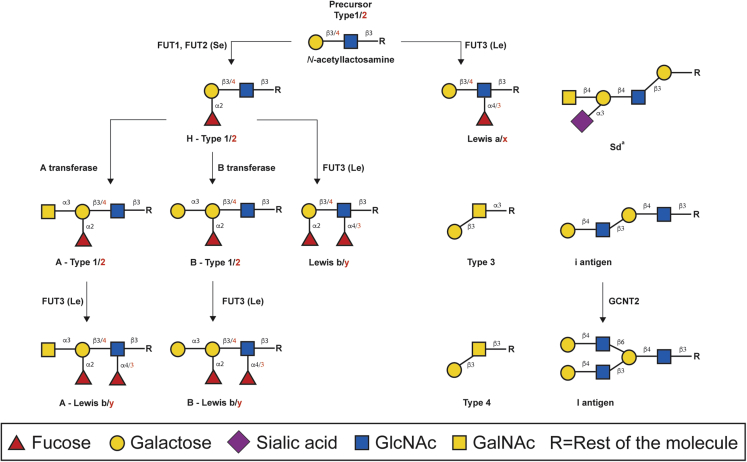
This review synthesizes carbohydrate-based blood group systems and common human enzyme deficiencies, emphasizing how ABO(H), Lewis, I, Globoside/P1PK, FORS, and SID antigens arise from glycosyltransferase variation and affect transfusion, transplantation, infection, and thrombosis. It argues that common enzyme deficiencies, especially blood group O and FUT2 non-secretor status, reflect evolutionary trade-offs with pathogens such as *Plasmodium falciparum* and cholera.
Key findings
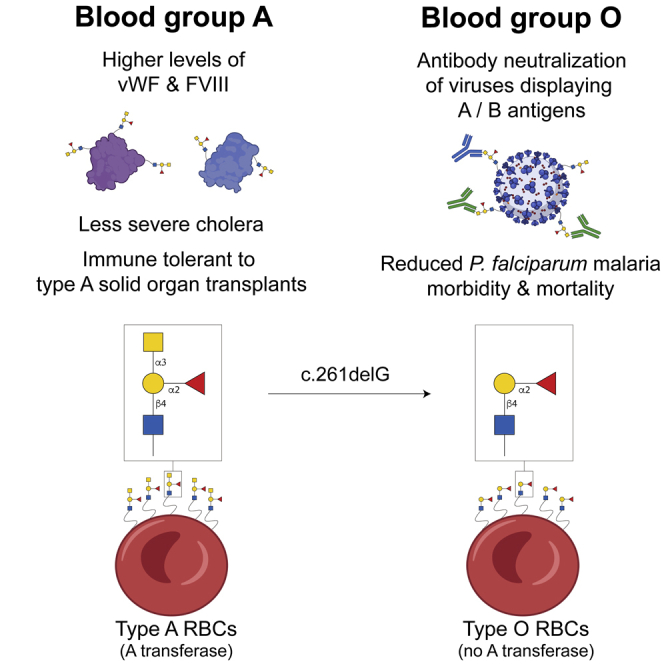
- The review covers eight carbohydrate-based blood group systems (H, ABO, Lewis, I, Globoside, P1PK, FORS, SID) and notes that blood group O results from deficiency of A and B glycosyltransferases; blood group O is estimated at ≥30% of the world population (≥2.4 billion), with regional prevalence from 29% in India to 80% in parts of Central and South America.
- Blood group O is associated with protection against severe *P. falciparum* malaria but increased severe cholera and 20%–30% lower von Willebrand factor and factor VIII levels (∼25% less vWF/FVIII); non-secretors (FUT2 deficiency, about 20%–25% globally) have resistance to norovirus, rotavirus, and *H. pylori*, with one cited case-control study reporting 98% protection against severe rotavirus gastroenteritis.
- Other common enzyme deficiencies reviewed include G6PD deficiency (∼500 million people, 6.3%), ALDH2 deficiency (∼8% of the world population), NAT2 slow acetylators (>50%), lactase deficiency (∼65% or 5.1 billion), CYP3A5 intermediate/poor metabolizers (>75%), caspase 12 deficiency (>95%), Forssman synthase deficiency (99.99%), and CMAH/GGTA1 deficiency (100%).
- ABO(H) antibodies are naturally occurring, can cause acute hemolytic transfusion reactions, hemolytic disease of the fetus/newborn, and graft rejection; ABO-incompatible transplantation often requires anti-ABO(H) titers ≤1:8, and enzymatic conversion of A RBCs to O (ECO-RBCs) remains limited by incomplete/inefficient reactions, agglutination, and cost.
Methods
- Design: narrative review; the authors state they examine the enzymes responsible for carbohydrate-based blood group antigen biosynthesis, their expression in the human population, and evolutionary selective pressures such as malaria.
- Data/sample: no primary cohort; evidence is drawn from cited literature, ISBT/ClinVar/OMIM allele tables, GWAS/meta-analyses, and prevalence studies, with tables summarizing blood group systems, selected rsIDs, phenotypes, and common enzyme deficiencies.
- Main analysis: qualitative synthesis of biosynthesis, anti-carbohydrate antibodies, prevalence, evolution/health implications, and a proposed perspective on common human enzyme deficiencies; no systematic search or meta-analysis is described.
Limitations
- Stated: the review does not cover all enzyme deficiencies affecting glycan structure; the authors could not evaluate all enzymes and could not always obtain estimated global prevalence for enzyme-deficiency phenotypes; they note a lack of consensus on the most common human enzyme deficiency.
- Stated: race is recognized as a social construct, and reported blood group distributions likely reflect ancestry and selection patterns but may not be attributable to race as defined in each cited study.
- Evident: as a narrative review, it relies on heterogeneous cited studies and does not perform systematic screening or quantitative pooling; some cited associations (e.g., ABO and COVID-19 severity) are described as conflicting or not definitively determined.
Model-written summary. Check it against the paper before relying on it.
Integrity signals
Registry
Cites
Statistics
Figures
Verification
Claims the paper makes
0 Valid · 5 Not valid · 232 Not checked · 52 Own results and interpretations
A conclusion the paper draws from its own results — it cites no other source for it, so there is none to check. The quote shows it is in the paper.
In the paper
“These carbohydrate blood groups impact fundamental areas of clinical medicine, including the risk of infection and severity of infectious disease, bleeding risk, transfusion medicine, and tissue/organ transplantation.”
§ ABO blood group antigens and differential glycan expression: Perspective on the evolution of common human enzyme deficiencies > Abstract
plainstates an association- Asserted: passes — The authors put it forward as true.
- Checkable: passes — It can be checked against evidence.
- Load-bearing: passes — The paper’s conclusions depend on it.
- Based: passes — The paper gives a reason why it holds.
A conclusion the paper draws from its own results — it cites no other source for it, so there is none to check. The quote shows it is in the paper.
In the paper
“These carbohydrate blood groups impact fundamental areas of clinical medicine, including the risk of infection and severity of infectious disease, bleeding risk, transfusion medicine, and tissue/organ transplantation.”
§ ABO blood group antigens and differential glycan expression: Perspective on the evolution of common human enzyme deficiencies > Abstract
plainstates a cause- Asserted: passes — The authors put it forward as true.
- Checkable: passes — It can be checked against evidence.
- Load-bearing: passes — The paper’s conclusions depend on it.
- Based: passes — The paper gives a reason why it holds.
A conclusion the paper draws from its own results — it cites no other source for it, so there is none to check. The quote shows it is in the paper.
In the paper
“Enzyme variants and deficiencies can lead to variable expression of glycans, which can affect physiology, influence predilection for disease, and/or directly contribute to disease pathogenesis.”
§ ABO blood group antigens and differential glycan expression: Perspective on the evolution of common human enzyme deficiencies > Abstract
plainstates a possible cause- Asserted: passes — The authors put it forward as true.
- Checkable: passes — It can be checked against evidence.
- Load-bearing: passes — The paper’s conclusions depend on it.
- Based: passes — The paper gives a reason why it holds.
A statement the paper makes itself — it cites no source for it, so there is none to check. The quote shows it is in the paper.
In the paper
“Enzyme variants and deficiencies can lead to variable expression of glycans, which can affect physiology, influence predilection for disease, and/or directly contribute to disease pathogenesis.”
§ ABO blood group antigens and differential glycan expression: Perspective on the evolution of common human enzyme deficiencies > Abstract
plainstates a cause- Asserted: passes — The authors put it forward as true.
- Checkable: passes — It can be checked against evidence.
- Load-bearing: passes — The paper’s conclusions depend on it.
- Based: passes — The paper gives a reason why it holds.
A conclusion the paper draws from its own results — it cites no other source for it, so there is none to check. The quote shows it is in the paper.
In the paper
“Enzyme variants and deficiencies can lead to variable expression of glycans, which can affect physiology, influence predilection for disease, and/or directly contribute to disease pathogenesis.”
§ ABO blood group antigens and differential glycan expression: Perspective on the evolution of common human enzyme deficiencies > Abstract
plainstates a cause- Asserted: passes — The authors put it forward as true.
- Checkable: passes — It can be checked against evidence.
- Load-bearing: passes — The paper’s conclusions depend on it.
- Based: passes — The paper gives a reason why it holds.
132 more claims
Create a free account to see all 289 claims and to verify the 288 references still open.
- Probably not a substantial claim. 90
- It may state two separate claims as one. 93
Self-check
Percentages, sums and reported differences re-computed from the paper’s own numbers.
Each contradiction between two passages listed here was confirmed by an independent check.
Rated major: it would touch a result — a value a result rests on, reported and recomputed p-values on opposite sides of the significance level, two passages that conflict with no sign which is right, or a cited work retracted before this paper was published.
In the paper
§ ABO blood group antigens and differential glycan expression: Perspective on the evolution of common human enzyme deficiencies > Common human enzyme deficiencies
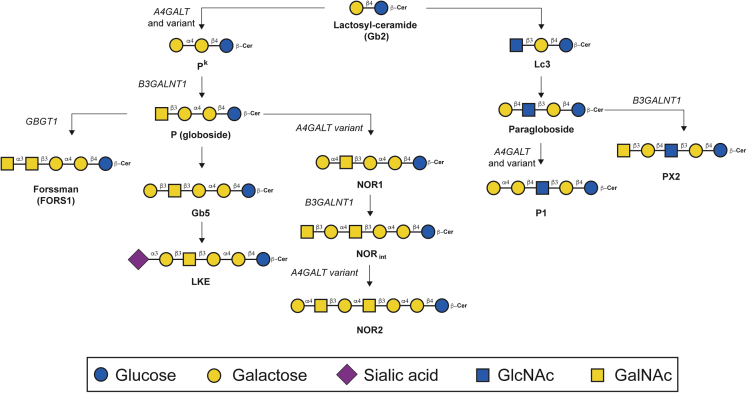
“Forssman synthase deficiency (FORS1 antigen negative) | 0% | Pseudogene, until activating mutations discovered | Possible ↑ resistance to Shiga toxin | Possible ↑ susceptibility to E. coli”
§ ABO blood group antigens and differential glycan expression: Perspective on the evolution of common human enzyme deficiencies > FORS blood group system > Evolution and health
“P-fimbriated strains of E. coli can bind to FORS1, which may increase susceptibility to infection. In contrast, FORS1 expressing cells are less susceptible to Shiga toxin (Cohn et al., 2020; Hult and Olsson, 2017).”
Rated minor: it would not touch a result — a value no result rests on, a p-value that stays on the same side of the significance level, or a conflict that is clerical, resolved elsewhere in the paper, or outside its own findings.
In the paper
§ ABO blood group antigens and differential glycan expression: Perspective on the evolution of common human enzyme deficiencies > Introduction
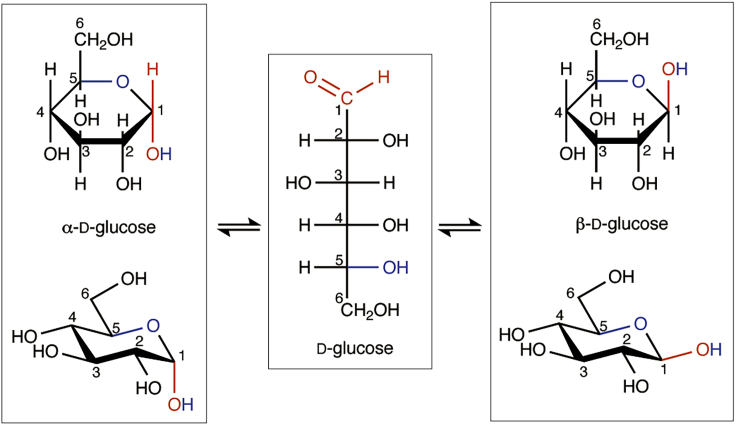
“The alpha anomer refers to the configuration where the hydroxyl attached to the anomeric carbon is on the opposite face of the ring compared with the substituent on the other carbon flanking the ring oxygen.”
§ ABO blood group antigens and differential glycan expression: Perspective on the evolution of common human enzyme deficiencies > Introduction
“In contrast, if these two substituents are on opposite faces of the ring, this is called the beta anomer.”
Citations
Cites
Items 201–317 of 317
The Lewis blood group--a new genetic marker of ischaemic heart disease
HEIN, H. O., SØRENSEN, H., SUADICANI, P., & GYNTELBERG, F. (1992) · Journal of Internal Medicine · doi:10.1111/j.1365-2796.1992.tb00620.x · Cited by 32
Bell, C. A., Zwicker, H., & Rosenbaum, D. L. (1973) · Transfusion · doi:10.1111/j.1537-2995.1973.tb05460.x · Cited by 32
Lee, H., Choe, G., Kim, W., Kim, H., Song, J., & Park, K. (2006) · The Journal of Pathology · doi:10.1002/path.1949 · Cited by 32
Liepkalns, J. S., Cadwell, C. M., Stowell, S. R., Hod, E. A., Spitalnik, S. L., & Zimring, J. C. (2012) · Transfusion · doi:10.1111/j.1537-2995.2012.03910.x · Cited by 32
Self-citationGutiérrez‐Valencia, M., Leache, L., Librero, J., Jericó, C., Enguita Germán, M., & García‐Erce, J. A. (2022) · Transfusion · doi:10.1111/trf.16748 · Cited by 32
Padmanabhan, A., Ratner, L. E., Jhang, J. S., Duong, J., Markowitz, G. S., Vasilescu, E. R., Crew, R. J., & Schwartz, J. E. (2009) · Transplantation · doi:10.1097/tp.0b013e3181a76ae1 · Cited by 31
Role of A and B blood group antigens in the expression of adhesive activity of von Willebrand factor
Sarode, R., Goldstein, J., Sussman, I. I., Nagel, R. L., & Tsai, H. (2000) · British Journal of Haematology · doi:10.1046/j.1365-2141.2000.02113.x · Cited by 31
Design of the blood group AB glycotope
Korchagina, E., Pochechueva, T. V., Obukhova, P. S., Formanovsky, A. A., Imberty, A., Rieben, R., & Bovin, N. V. (2005) · Glycoconjugate Journal · doi:10.1007/s10719-005-0508-x · Cited by 29
Relative Susceptibilities of ABO Blood Groups to Plasmodium falciparum Malaria in Ghana
Afoakwah, R., Aubyn, E., Prah, J., Nwaefuna, E. K., & Boampong, J. N. (2016) · Advances in Hematology · doi:10.1155/2016/5368793 · Cited by 29
Jash, A., Usaneerungrueng, C., Howie, H. L., Qiu, A., Luckey, C. J., Zimring, J. C., & Hudson, K. E. (2021) · Frontiers in Immunology · doi:10.3389/fimmu.2021.629608 · Cited by 29
Cooper, D. K. C., Habibabady, Z., Kinoshita, K., Hara, H., & Pierson, R. N. (2023) · Human Immunology · doi:10.1016/j.humimm.2022.06.003 · Cited by 29
Intentional ABO-incompatible heart transplantation: A case report of 2 adult patients
Tydén, G., Hagerman, I., Grinnemo, K., Svenarud, P. K., van der Linden, J., Kumlien, G., & Wernerson, A. M. (2012) · The Journal of Heart and Lung Transplantation · doi:10.1016/j.healun.2012.09.011 · Cited by 28
Easier said than done: ABO compatibility and D matching in apheresis platelet transfusions
Dunbar, N. M., Katus, M. C., Freeman, C. M., & Szczepiorkowski, Z. M. (2015) · Transfusion · doi:10.1111/trf.13077 · Cited by 28
The etiology of ABO hemolytic disease of the newborn
Grundbacher, F. J. (1980) · Transfusion · doi:10.1046/j.1537-2995.1980.20581034512.x · Cited by 28
Association of FUT2 and ABO with Crohn 's disease in Koreans
Ye, B. D., Kim, B. M., Jung, S., Lee, H., Hong, M., Kım, K., Moon, J. W., Baek, J., Oh, E. H., Hwang, S. W., et al. (2019) · Journal of Gastroenterology and Hepatology · doi:10.1111/jgh.14766 · Cited by 28
Role of complement in alloimmunization and hyperhemolysis
Chonat, S., Mener, A., Verkerke, H., & Stowell, S. R. (2020) · Current Opinion in Hematology · doi:10.1097/moh.0000000000000610 · Cited by 28
Self-citationArthur, C. M., Allen, J. W. L., Verkerke, H., Yoo, J., Jajosky, R. P., Girard-Pierce, K., Chonat, S., Zerra, P., Maier, C., Rha, J., et al. (2021) · Blood Advances · doi:10.1182/bloodadvances.2020002695 · Cited by 28
Self-citationABO and Rh (D) blood groups distribution in Pakistan: a systematic review
Rehman, G. U. (2020) · Forensic Research & Criminology International Journal · doi:10.15406/frcij.2020.08.00334 · Cited by 28
Comprehensive analysis of platelet glycoprotein Ibα ectodomain glycosylation
Hollenhorst, M., Tiemeyer, K. H., Mahoney, K. E., Aoki, K., Ishihara, M., Lowery, S. C., Rangel-Angarita, V., Bertozzi, C., & Malaker, S. (2023) · Journal of Thrombosis and Haemostasis · doi:10.1016/j.jtha.2023.01.009 · Cited by 28
Self-citationKaczmarek, R., Duk, M., Szymczak, K., Korchagina, E., Tyborowska, J., Mikolajczyk, K., Bovin, N., Szewczyk, B., Jaskiewicz, E., & Czerwinski, M. (2016) · Biochemical and Biophysical Research Communications · doi:10.1016/j.bbrc.2016.01.017 · Cited by 27
WAGNER, M. (1955) · PubMed · Cited by 26
Rodriguez, Z., Shane, A. L., Verkerke, H., Lough, C. M., Zimmerman, M. G., Suthar, M. S., Wrammert, J., MacDonald, H. R., Wolf, M., Clarke, S. A., et al. (2020) · Blood Advances · doi:10.1182/bloodadvances.2020002507 · Cited by 26
Self-citationYamamoto, T., Bikhet, M. H., Marques, M. B., Nguyen, H. Q., Cui, Y., Javed, M., Raza, S. S., Ayares, D., Iwase, H., Cooper, D. K. C., et al. (2021) · Transfusion · doi:10.1111/trf.16667 · Cited by 26
Tahata, S., Raymond, K., Quade, M., Barnes, S., Boyer, S., League, S., Kumanovics, A., Abraham, R., Jacob, E., Menon, P., et al. (2022) · American Journal of Medical Genetics Part A · doi:10.1002/ajmg.a.62737 · Cited by 26
Balbuena-Merle, R. I., West, F. B., Tormey, C. A., & Hendrickson, J. E. (2019) · Transfusion · doi:10.1111/trf.15240 · Cited by 25
Nucleocapsid Antigenemia Is a Marker of Acute SARS-CoV-2 Infection
Verkerke, H., Damhorst, G. L., Graciaa, D. S., McLendon, K. B., O’Sick, W., Robichaux, C. J., Cheedarla, N., Potlapalli, S., Wu, S., Harrington, K. R. V., et al. (2022) · The Journal of Infectious Diseases · doi:10.1093/infdis/jiac225 · Cited by 25
Self-citationHooijkaas, H., van der Linde-Preesman, A. A., Comans-Bitter, W. M., Benner, R., Pleasants, J. R., & Wöstmann, B. S. J. (1985) · The Journal of Immunology · doi:10.4049/jimmunol.134.4.2223 · Cited by 24
Westman, J. S., Benktander, J., Storry, J. R., Peyrard, T., Hult, A. K., Hellberg, Å., Teneberg, S., & Olsson, M. L. (2015) · Journal of Biological Chemistry · doi:10.1074/jbc.m115.655308 · Cited by 24
Chonat, S., Arthur, C. M., Zerra, P. E., Maier, C. L., Jajosky, R. P., Yee, M. E. M., Miller, M. J., Josephson, C. D., Roback, J. D., Fasano, R. M., et al. (2019) · Transfusion Clinique et Biologique · doi:10.1016/j.tracli.2019.03.002 · Cited by 24
Self-citationPrevalence of A2 and A2B Subgroups and Anti-A1 Antibody in Blood Donors in Jazan, Saudi Arabia
Saboor, M., Zehra, A., Hamali, H. A., Halawani, A. J., Mobarki, A. A., Madkhali, A. M., & Abdullah, S. M. (2020) · International Journal of General Medicine · doi:10.2147/ijgm.s272698 · Cited by 24
ABO blood group incompatibility protects against SARS-CoV-2 transmission
Boukhari, R., Breiman, A., Jazat, J., Ruvoën-Clouet, N., Martinez, S., Damais-Cepitelli, A., Le Niger, C., Devie-Hubert, I., Penasse, F., Mauriere, D., et al. (2022) · Frontiers in Microbiology · doi:10.3389/fmicb.2021.799519 · Cited by 24
Donath‐Landsteiner hemolytic anemia due to an anti‐Pr‐like biphasic hemolysin
Judd, W. J., Wilkinson, S. L., ISSITT, P. D., Johnson, T. L., Keren, D. F., & Steiner, E. A. (1986) · Transfusion · doi:10.1046/j.1537-2995.1986.26587020116.x · Cited by 23
Fan, Y.-Y., Yu, S.-Y., Ito, H., Kameyama, A., Sato, T., Lin, C.-H., Yu, L.-C., Narimatsu, H., & Khoo, K.-H. (2008) · Journal of Biological Chemistry · doi:10.1074/jbc.m707274200 · Cited by 23
Johansson, Å., Alfredsson, J., Eriksson, N., Wallentin, L., & Siegbahn, A. (2015) · PLOS ONE · doi:10.1371/journal.pone.0142518 · Cited by 23
ABO Blood Grouping Mismatch in Hematopoietic Stem Cell Transplantation and Clinical Guides
Shokrgozar, N., & Tamaddon, G. (2018) · International Journal of Hematology-Oncology and Stem Cell Research · doi:10.18502/ijhoscr.v12i4.112 · Cited by 23
An anti‐i biphasic hemolysin in chronic paroxysmal cold hemoglobinuria
Shirey, R. S., Park, K., Ness, P. M., Kickler, T. S., Rones, J., Dawson, R. B., & Jiji, R. M. (1986) · Transfusion · doi:10.1046/j.1537-2995.1986.26186124034.x · Cited by 22
Pushing the boundaries: The current status of ABO-incompatible cardiac transplantation
Irving, C. A., Gennery, A. R., & Kirk, R. (2012) · The Journal of Heart and Lung Transplantation · doi:10.1016/j.healun.2012.03.007 · Cited by 22
Cholera and ABO blood group: understanding an ancient association
Harris, J. B., & LaRocque, R. C. (2016) · The American Society of Tropical Medicine and Hygiene · doi:10.4269/ajtmh.16-0440 · Cited by 22
Clodronate inhibits alloimmunization against distinct red blood cell alloantigens in mice
Arthur, C. M., Patel, S. R., Sharma, A., Zerra, P. E., Chonat, S., Jajosky, R. P., Fasano, R. M., Patel, R. M., Bennett, A. L., Zhou, G., et al. (2022) · Transfusion · doi:10.1111/trf.16872 · Cited by 22
Self-citationDuconge-Soler, J., Cadilla, C. L., Windemuth, A., Kocherla, M., Gorowski, K., Seip, R. L., Bogaard, K., Renta, J. Y., Piovanetti, P., D'Agostino, D. C., et al. (2009) · PubMed · Cited by 21
Exploring the relationship between lifestyles, diets and genetic adaptations in humans
Valente, C., Alvarez, L., Marks, S. J., Lopez-Parra, A. M., Parson, W., Oosthuizen, O., Oosthuizen, E., Amorim, A., Capelli, C., Arroyo-Pardo, E., et al. (2015) · BMC Genetics · doi:10.1186/s12863-015-0212-1 · Cited by 20
Gene frequencies of ABO and Rh blood groups in Nigeria: a review
Anifowoshe, A. T., Owolodun, O. A., Akinseye, K. M., Iyiola, O. A., & Oyeyemi, B. F. (2017) · Egyptian Journal of Medical Human Genetics · doi:10.1016/j.ejmhg.2016.10.004 · Cited by 20
Is It Time to Reconsider the Concepts of “Universal Donor” and “ABO Compatible” Transfusions?
Refaai, M. A., Cahill, C. M., Masel, D., Schmidt, A. E., Heal, J. M., Kirkley, S. A., & Blumberg, N. (2017) · Anesthesia & Analgesia · doi:10.1213/ane.0000000000002600 · Cited by 20
Bullock, T., Win, N., Jackson, B., Sivarajan, S., Penny, J., & Mir, N. (2018) · Transfusion · doi:10.1111/trf.14906 · Cited by 20
Are We Forgetting About IgA? A Re‐examination of Coronavirus Disease 2019 Convalescent Plasma
Verkerke, H., Saeedi, B. J., Boyer, D., Allen, J. W. L., Owens, J. A., Shin, S., Horwath, M. C., Patel, K., Paul, A., Wu, S., et al. (2021) · Transfusion · doi:10.1111/trf.16435 · Cited by 20
Self-citationUkita, M., Takahashi, A., Nunotani, T., Kihana, T., Watanabe, S., & Yamada, N. (1989) · Vox Sanguinis · doi:10.1111/j.1423-0410.1989.tb02023.x · Cited by 20
Leong, A., Lim, V. J. Y., Wang, C., Chai, J.-F., Dorajoo, R., Heng, C.-K., van Dam, R. M., Koh, W.-P., Yuan, J.-M., Jonas, J. B., et al. (2020) · BMJ Open Diabetes Research & Care · doi:10.1136/bmjdrc-2019-001091 · Cited by 19
Survey and characterization of nonfunctional alleles of FUT2 in a database
Soejima, M., & Koda, Y. (2021) · Scientific Reports · doi:10.1038/s41598-021-82895-w · Cited by 19
Aspects of histocompatibility testing in xenotransplantation
Ladowski, J. M., Houp, J. A., Hauptfeld‐Dolejsek, V., Javed, M., Hara, H., & Cooper, D. K. C. (2021) · Transplant Immunology · doi:10.1016/j.trim.2021.101409 · Cited by 19
B4GALNT2 Controls Sda and SLex Antigen Biosynthesis in Healthy and Cancer Human Colon
Groux‐Degroote, S., Vicogne, D., Cogez, V., Schulz, C., & Harduin‐Lepers, A. (2021) · ChemBioChem · doi:10.1002/cbic.202100363 · Cited by 19
Dean, C. L., Sullivan, H. C., Stowell, S. R., Fasano, R. M., West, L. J., Robitaille, N., & Josephson, C. D. (2018) · Transfusion · doi:10.1111/trf.14775 · Cited by 18
Self-citationFc gamma receptors and complement component 3 facilitate anti-fVIII antibody formation
Zerra, P. E., Arthur, C. M., Chonat, S., Maier, C. L., Mener, A., Shin, S., Allen, J. W. L., Baldwin, W. H., Cox, C., Verkerke, H., et al. (2020) · Frontiers in Immunology · doi:10.3389/fimmu.2020.00905 · Cited by 18
Self-citationABO O blood group as a risk factor for platelet reactivity in heparin-induced thrombocytopenia
Karnes, J. H., Rollin, J., Giles, J. B., Martinez, K. L., Steiner, H. E., Shaffer, C. M., Momozawa, Y., Inai, C., Bombin, A., Shi, M., et al. (2022) · Blood · doi:10.1182/blood.2021014240 · Cited by 18
Cold agglutinin disease: improved understanding of pathogenesis helps define targets for therapy
Berentsen, S., D’Sa, S., Randen, U., Małecka, A., & Vos, J. M. I. (2022) · Hemato · doi:10.3390/hemato3040040 · Cited by 18
Lewis blood group system review
Combs, M. R. (2009) · Immunohematology · doi:10.21307/immunohematology-2019-243 · Cited by 17
Cunnion, K. M., Hair, P. S., Krishna, N. K., Sass, M. A., Enos, C., Whitley, P. H., Maes, L. Y., & Goldberg, C. L. (2016) · Transfusion · doi:10.1111/trf.13948 · Cited by 17
ABO incompatible blood transfusion
Bacon, J. M., & Young, I. F. (1989) · Pathology · doi:10.3109/00313028909061055 · Cited by 16
Association of recurrent candidal vaginitis with inheritance of Lewis blood group antigens
Hilton, E., Chandrasekaran, V., Rindos, P., & Isenberg, H. D. (1995) · Journal of Infectious Diseases · doi:10.1093/infdis/172.6.1616 · Cited by 16
Transfusion Medicine and Hemostasis
Hillyer, C. D. (2009) · Elsevier eBooks · doi:10.1016/b978-0-12-374432-6.x0001-2 · Cited by 16
A new variant of blood group A
Stamps, R., Sokol, R. J., Leach, M., Herron, R., & Smith, G. A. (1987) · Transfusion · doi:10.1046/j.1537-2995.1987.27487264737.x · Cited by 15
Prevalence of Bombay Group Blood in Southern Bengal Population
Talukder, B., Datta, S. S., Mukherjee, S., & Mukherjee, K. (2013) · Indian Journal of Hematology and Blood Transfusion · doi:10.1007/s12288-013-0292-x · Cited by 15
Stenfelt, L., Hellberg, Å., Möller, M., Thornton, N., Larson, G., & Olsson, M. L. (2019) · Biochemistry and Biophysics Reports · doi:10.1016/j.bbrep.2019.100659 · Cited by 15
MacDonald, J., Groome, M. J., Mans, J., & Page, N. (2020) · Pathogens · doi:10.3390/pathogens9100795 · Cited by 15
McRae, H. L., Millar, M. W., Slavin, S. A., Blumberg, N., Rahman, A., & Refaai, M. A. (2021) · Biomedicines · doi:10.3390/biomedicines9121851 · Cited by 15
Clinically significant allo-anti-I in an I-negative patient with massive hemorrhage
Chaplin, H., Hunter, V. L., Malecek, A. C., Kilzer, P., & Rosche, M. E. (1986) · Transfusion · doi:10.1046/j.1537-2995.1986.26186124032.x · Cited by 14
Chattopadhyay, D., Rayner, J. C., McHenry, A. M., & Adams, J. H. (2006) · Trends in Parasitology · doi:10.1016/j.pt.2006.02.007 · Cited by 14
Two case studies and a review of paroxysmal cold hemoglobinuria
Slemp, S. N., Davisson, S. M., Slayten, J., Cipkala, D. A., & Waxman, D. A. (2014) · Laboratory Medicine · doi:10.1309/lmwd51b2kifsblbj · Cited by 14
Kaczmarek, R., Szymczak-Kulus, K., Bereźnicka, A., Mikołajczyk, K., Duk, M., Majorczyk, E., Krop-Watorek, A., Klausa, E., Skowrońska, J., Michalewska, B., et al. (2018) · PLOS ONE · doi:10.1371/journal.pone.0196627 · Cited by 14
Ho, A. D., Wu, S., Kamili, N. A., Blenda, A. V., Cummings, R. D., Stowell, S. R., & Arthur, C. M. (2022) · Frontiers in Molecular Biosciences · doi:10.3389/fmolb.2022.893185 · Cited by 14
Self-citationAn update on the GLOB blood group system and collection
Hellberg, Å., Westman, J. S., & Olsson, M. L. (2013) · Immunohematology · doi:10.21307/immunohematology-2019-119 · Cited by 13
Sahai, T., Henrichs, K. F., Refaai, M. A., Heal, J. M., Kirkley, S. A., Schmidt, A. E., Mendler, J. H., Masel, D., Liesveld, J. L., Aquina, C. T., et al. (2017) · Leukemia Research · doi:10.1016/j.leukres.2017.09.011 · Cited by 13
Beyond drugs: the evolution of genes involved in human response to medications
Fuselli, S. (2019) · Proceedings of the Royal Society B: Biological Sciences · doi:10.1098/rspb.2019.1716 · Cited by 13
A Para-Bombay Blood Group Case Associated with a Novel FUT1 Mutation c.361G>A
Lei, H., Shen, Y., Wang, Y., Su, N., Wang, X., & Cai, X. (2021) · Transfusion Medicine and Hemotherapy · doi:10.1159/000513318 · Cited by 13
The FORS awakens: review of a blood group system reborn
Hult, A. K., & Olsson, M. L. (2017) · Immunohematology · doi:10.21307/immunohematology-2019-010 · Cited by 12
Satyagraha, A. W., Sadhewa, A., Panggalo, L. V., Subekti, D., Elyazar, I., Soebianto, S., Mahpud, N., Harahap, A. R., & Baird, J. K. (2021) · PLOS Neglected Tropical Diseases · doi:10.1371/journal.pntd.0009610 · Cited by 12
Dewan, G. (2015) · Egyptian Journal of Medical Human Genetics · doi:10.1016/j.ejmhg.2015.01.002 · Cited by 11
Agaronov, M., DiBattista, A., Christenson, E., Miller-Murphy, R., Strauss, D., & Shaz, B. H. (2016) · Transfusion and Apheresis Science · doi:10.1016/j.transci.2016.05.018 · Cited by 11
SialoGlyco Chemistry and Biology I: Biosynthesis, structural diversity and sialoglycopathologies
Delannoy, P. (2015) · Cited by 11
Uno, Y., Kawakami, S., Ochiai, K., & Omi, T. (2019) · Canine Genetics and Epidemiology · doi:10.1186/s40575-019-0076-1 · Cited by 11
The P1PK blood group system: revisited and resolved
Stenfelt, L., Hellberg, Å., Westman, J. S., & Olsson, M. L. (2020) · Immunohematology · doi:10.21307/immunohematology-2020-048 · Cited by 11
ABO(H) and Lewis blood group substances and disease treatment
Liu, J., & Wang, D. (2022) · Transfusion Medicine · doi:10.1111/tme.12820 · Cited by 11
Wolford, B. N., Zhao, Y., Wu, K.-H., Yu, X., Richter, C. E., Bhatta, L., Brumpton, B. M., Desch, K. C., Thibord, F., Klarin, D. M., et al. (2025) · Blood Advances · doi:10.1182/bloodadvances.2024015790 · Cited by 11
Lomas-Francis, C. (2018) · Immunohematology · doi:10.21307/immunohematology-2018-007 · Cited by 10
Harm, S. K., & Dunbar, N. M. (2019) · Transfusion · doi:10.1111/trf.15168 · Cited by 10
Jajosky, R. P., Jajosky, A. N., & Jajosky, P. G. (2019) · Transfusion and Apheresis Science · doi:10.1016/j.transci.2019.04.024 · Cited by 10
Self-citationComplement Plays a Critical Role in Inflammation-Induced Immunoprophylaxis Failure in Mice
Escamilla‐Rivera, V., Santhanakrishnan, M., Liu, J., Gibb, D. R., Forsmo, J. E., Foxman, E. F., Eisenbarth, S. C., Luckey, C. J., Zimring, J. C., Hudson, K. E., et al. (2021) · Frontiers in Immunology · doi:10.3389/fimmu.2021.704072 · Cited by 10
Self-citationWells, J. C. K., Pomeroy, E., & Stock, J. T. (2021) · Frontiers in Physiology · doi:10.3389/fphys.2021.696516 · Cited by 10
The loss of functional caspase-12 in Europe is a pre-neolithic event
Hervella, M., Plantinga, T. S., Alonso, S., Ferwerda, B., Izagirre, N., Fontecha, L., Fregel, R., van der Meer, J. W. M., de-la-Rúa, C., & Netea, M. G. (2012) · PLoS ONE · doi:10.1371/journal.pone.0037022 · Cited by 9
A Novel Variant B Allele of the ABO Blood Group Gene Associated with Lack of B Antigen Expression
Bugert, P., Scharberg, E. A., Janetzko, K., Rink, G., Panter, K., Richter, E., & ter, H. K. U. (2008) · Transfusion Medicine and Hemotherapy · doi:10.1159/000141640 · Cited by 9
Yamamoto, M., Tarasco, M. C., Cid, E., Kobayashi, H., & Yamamoto, F. (2019) · Scientific Reports · doi:10.1038/s41598-019-46029-7 · Cited by 9
Toward functional assays for assessing the significance of anti‐ABO(H) alloantibodies
Stowell, S. R. (2017) · Transfusion · doi:10.1111/trf.14030 · Cited by 8
Self-citationChang, Y.-S., Hsiao, L.-Y., Lin, C.-Y., Shih, M.-C., Hsieh, M.-C., & Chang, J.-G. (2020) · Clinica Chimica Acta · doi:10.1016/j.cca.2020.03.010 · Cited by 8
Marchese, M. (2017) · Immunohematology · doi:10.21307/immunohematology-2019-017 · Cited by 8
Towards universally acceptable blood
Clausen, H., & Olsson, M. L. (2019) · Nature Microbiology · doi:10.1038/s41564-019-0548-9 · Cited by 7
Glucose-6-phosphate dehydrogenase deficiency: a review
Ravikumar, N., & Greenfield, G. (2020) · International Journal of Medical Students · doi:10.5195/ijms.2020.637 · Cited by 7
Non-Human Leukocyte Antigen Antibody-Mediated Lung Transplant Rejection: The Other Anti-A
Vinson, A. D., Rampolla-Selles, R., Cooper, E. S., & Alquist, C. R. (2018) · Ochsner Journal · doi:10.31486/toj.17.0068 · Cited by 6
Isoagglutinin Titers in ABO-Incompatible Kidney Transplant
Rivera, C. F., Rodríguez, M. C., Hermida, T. F., Jarrín, D. A., Muñíz, A. L., Saavedra, C. A., García, A. G., & Hernández, Á. A. (2021) · Transplantation Proceedings · doi:10.1016/j.transproceed.2021.07.059 · Cited by 6
Della Valle, A. G., Khakharia, S., Glueck, C. J., Taveras, N., Wang, P., Fontaine, R. N., & Salvati, E. A. (2009) · Clinical Orthopaedics & Related Research · doi:10.1007/s11999-008-0641-5 · Cited by 5
A Family of “Bombay” Blood Type with Suppression of Blood Group Substance A1
Aust, C. H., Hocker, N. D., Keller, Z. G., & Arbogast, J. L. (1962) · American Journal of Clinical Pathology · doi:10.1093/ajcp/37.6.579 · Cited by 5
Zhao, M., Adnan, A., Rakha, A., Nazir, S., Tian, M., Zhang, S., & Pang, H. (2020) · Scientific Reports · doi:10.1038/s41598-020-62524-8 · Cited by 5
Yang, Y.-J., Lu, C.-L., & Sheu, B.-S. (2022) · Frontiers in Immunology · doi:10.3389/fimmu.2022.849512 · Cited by 5
FURUHATA, T. (1969) · PubMed · Cited by 4
Caspase-12 and diabetic nephropathy: from mice to men?
Sanchez-Niño, M. D., Sanz, A. B., & Ortiz, A. (2010) · Journal of the American Society of Nephrology · doi:10.1681/asn.2010040394 · Cited by 3
Cheong, S.-S., Hull, S., Jones, B., Chana, R., Thornton, N., Plagnol, V., Moore, A. T., & Hardcastle, A. J. (2017) · Human Genome Variation · doi:10.1038/hgv.2017.4 · Cited by 3
The precautionary principle and use of Group A plasma in recipients of unknown ABO blood group
Blumberg, N., Heal, J. M., Masel, D., & Refaai, M. A. (2018) · Transfusion · doi:10.1111/trf.14466 · Cited by 3
Jajosky, R. P., Jajosky, A. N., & Jajosky, P. G. (2020) · Transfusion Clinique et Biologique · doi:10.1016/j.tracli.2020.03.008 · Cited by 3
Self-citationCampbell, B., & Palmer, R. N. (1980) · Transfusion · doi:10.1046/j.1537-2995.1980.20480260284.x · Cited by 2
May the FORS be with you: a system sequel
Hult, A. K., & Olsson, M. L. (2020) · Immunohematology · doi:10.21307/immunohematology-2020-037 · Cited by 2
Wolford, B. N., Zhao, Y., Surakka, I., Wu, K.-H. H., Yu, X., Richter, C. E., Bhatta, L., Brumpton, B., Desch, K., Thibord, F., et al. (2022) · doi:10.1101/2022.06.21.22276721 · Cited by 2
Reid, M. E., Lomas-Francis, C., & Olsson, M. L. (2012) · The Blood Group Antigen FactsBook · doi:10.1016/b978-0-12-415849-8.00033-8 · Cited by 1
An update on the Lewis blood group system
Combs, M. R. (2019) · Immunohematology · doi:10.21307/immunohematology-2020-016 · Cited by 1
A virtuosic CADENZA played by sutimlimab
Chonat, S., & Stowell, S. R. (2022) · Blood · doi:10.1182/blood.2022017284 · Cited by 1
Self-citationComprehensive analysis of platelet glycoprotein Ibα glycosylation
Hollenhorst, M. A., Tiemeyer, K. H., Mahoney, K. E., Aoki, K., Ishihara, M., Lowery, S. C., Rangel-Angarita, V., Bertozzi, C. R., & Malaker, S. A. (2022) · doi:10.1101/2022.07.19.500646 · Cited by 1
Self-citation(2005) · PubMed
(2005)
(1990) · PubMed
(1952) · PubMed
Research works printed but not linked: 10
- F S Zur Kenntnis der Blutantigene des Shigabacillus Z. Immunitatsforsch. 82 1934
- Bernstein F. Zusammenfassende Beobachtungen uber die erblichen Blutstructuren des Menschen Z. Indukt. Abstammungs Vererbungsl. 37 1925 237
- Landsteiner K. Zur Kenntnis der antifermativen, lytischen und agglutinierenden Wirkungendes Blutserums und der Lymphe. Zentbl. Bakt. Parasitkde Abt. 27 1900 357 363
- NCBI NM_000511.6(FUT2):c.461G>A (p.Trp154Ter) https://www.ncbi.nlm.nih.gov/clinvar/RCV000013810/ 2008
- NCBI CMAHP cytidine monophospho-N-acetylneuraminic acid hydroxylase, pseudogene [ Homo sapiens (human) ] https://www.ncbi.nlm.nih.gov/gene/8418#gene-expression 2022
- NCBI NM_000690.4(ALDH2):c.1510G>A (p.Glu504Lys) https://www.ncbi.nlm.nih.gov/clinvar/variation/18390/?new_evidence=false 2022
- NCBI NM_017436.7(A4GALT):c.631C>G (p.Gln211Glu) https://www.ncbi.nlm.nih.gov/clinvar/RCV000032632/ 2022
- NCBI NM_020469.2(ABO):c.261delG (p.Thr88Profs) https://www.ncbi.nlm.nih.gov/clinvar/variation/17735/?oq=%22NM_020469.2(ABO):c.261delG%20(p.Thr88Profs)%22%5Bvarname%5D&m=NM_020469.2(ABO):c.261delG%20(p.Thr88Profs) 2022
- NCBI N.C.f.B.I. GGTA1 Glycoprotein Alpha-Galactosyltransferase 1 (Inactive) [ Homo sapiens (Human) ] 2022 https://www.ncbi.nlm.nih.gov/gene?Db=gene&Cmd=DetailsSearch&Term=2681
- Varki A. Esko J.D. Stanley P. Hart G.W. Aebi M. Mohnen D. Kinoshita T. Packer N.H. Prestegard J.H. Schnaar R.L. Essentials of Glycobiology 4th edition 2022
Cited by
Carbohydrate-active enzymes from Akkermansia muciniphila break down mucin O-glycans to completion
Bakshani, C. R., Ojuri, T. O., Pilgaard, B., Holck, J., McInnes, R. S., Kozak, R. P., Zakhour, M. I., Çakaj, S., Kerouedan, M., Newton, E., et al. (2025) · Nature Microbiology · doi:10.1038/s41564-024-01911-7 · Cited by 111
Biochemical and structural basis of sialic acid utilization by gut microbes
Bell, A., Severi, E., Owen, C. D., Latousakis, D., & Juge, N. (2023) · Journal of Biological Chemistry · doi:10.1016/j.jbc.2023.102989 · Cited by 62
Genetics of glycosylation in mammalian development and disease
Stanley, P. (2024) · Nature Reviews Genetics · doi:10.1038/s41576-024-00725-x · Cited by 55
Reading and Writing the Human Glycocode
de Haan, N., Nielsen, M. I., & Wandall, H. H. (2024) · Annual Review of Biochemistry · doi:10.1146/annurev-biochem-030122-044347 · Cited by 37
Crouch, L. I., Rodrigues, C. S., Bakshani, C. R., Tavares-Gomes, L., Gaifem, J., & Pinho, S. S. (2024) · Seminars in Immunology · doi:10.1016/j.smim.2024.101891 · Cited by 31
Metadata
- Authors
- Jajosky, R. P., Wu, S.-C., Zheng, L., Jajosky, A. N., Jajosky, P. G., Josephson, C. D., Hollenhorst, M. A., Sackstein, R., Cummings, R. D., Arthur, C. M., & Stowell, S. R.
- Affiliations
- Brigham and Women's Hospital (US)
- University of Rochester Medicine (US)
- Johns Hopkins University (US)
- Stanford Medicine (US)
- Florida International University (US)
- Beth Israel Deaconess Medical Center (US)
- Corresponding author
- Stowell, Sean R.
- ORCID
- Venue
- iScience
- Publisher
- Elsevier BV
- Published
- 2023-01
- Volume
- 26
- Issue
- 1
- Pages
- 105798
- ISSN
- 2589-0042 (ISSN-L)
- PMC
- PMC9860303
- OpenAlex
- W4311301885
- Cited by
- 110
- References
- 318
- Citations by year
- 2026: 39 · 2025: 35 · 2024: 23 · 2023: 13
- FWCI
- 3.08
- Type
- journal article
- Language
- en
- Open access
- gold
- doi.org
- Licence
- cc-by-nc-nd
- www.elsevier.com/tdm/userlicense/1.0/ (tdm)
- www.elsevier.com/legal/tdmrep-license (tdm)
- creativecommons.org/licenses/by-nc-nd/4.0/ (vor)
- Locations
- iScience (publishedVersion, cc-by-nc-nd)
- PubMed (publishedVersion)
- PubMed Central (publishedVersion, cc-by-nc-nd)
- DOAJ (DOAJ: Directory of Open Access Journals) (submittedVersion, cc-by-sa)
- Funders
- National Institutes of Health (DP5 OD019892, U01CA242109)
- Burroughs Wellcome Fund (R01 HL138714, R01 HL154034, R24GM137763)
- National Blood Foundation (1K99HL156029-01)
- Topics
- Health Sciences › Medicine › Hematology › Blood groups and transfusion
- Life Sciences › Biochemistry, Genetics and Molecular Biology › Molecular Biology › Glycosylation and Glycoproteins Research
- Physical Sciences › Chemistry › Organic Chemistry › Carbohydrate Chemistry and Synthesis
- Keywords
- ABO blood group system, blood group antigens, glycan expression, enzyme deficiency, glycosyltransferases, malaria, transfusion medicine, organ transplantation, infection risk
About these checks
Registry, retraction, Cites and statistics results are computed, not judged, with one exception: a printed reference that no index lists is read once by a model before it counts as a citation error. Claims are extracted by a model and kept only when their quote appears verbatim in the text; each cited source is then checked, with a model’s help, for whether it says what the claim relies on. Those verdicts can be wrong — read the claim’s quote and the cited source before relying on one.
A language model drew the claims from the paper on 2026-11-17, under version 3 of the claim definition (model deepseek-v4.1-flash, prompt extract-v3).
A second model labelled each claim on 2026-11-17 (model jev-1.13-20260917, definition revision gold-guideline-v0.2).
Statistics and arithmetic are recomputed, not judged.
Confidence bands are shown only for fields calibrated on our annotated test set. None is calibrated yet, so no band is shown.
What counts as a claim ›How we measure confidence ›How we check this ›
Are you an author, or do you see a problem with this page? Request a review
Data sources
Bibliographic data: Semantic Scholar, OpenAlex, Crossref.
Contains information from the Semantic Scholar Academic Graph Datasets, made available under the ODC Attribution License (ODC-BY 1.0).
Semantic Scholar’s data is described in: Kinney, R., et al. (2023). The Semantic Scholar Open Data Platform. arXiv:2301.10140.
