

Comprehensive assessment of alternative splicing analysis methods for single-cell RNA-seq
Open accessThe DOI matches its Crossref record; 69 of the 69 references it cites were found in a registry or an index; 1 of the 20 sources its claims cite were checked for support.
Abstract
Alternative splicing expands transcriptomic and proteomic diversity and contributes to cell identity and function. Advances in single-cell RNA sequencing enable transcriptome profiling at cellular resolution, yet their performance across biologically relevant tasks has not been systematically evaluated. Here, we benchmark six representative alternative splicing analysis methods across multiple full-length, short-read scRNA-seq datasets, focusing on biologically relevant tasks including cell clustering and differential splicing detection. Among these methods, scQuint achieves robust performance across datasets and tasks. Application of scQuint to stem cell differentiation and tumor-associated immune cell datasets identifies cell type-specific splicing programs with biological significance. These results provide guidance for method selection and highlight the value of single-cell splicing analysis for uncovering regulatory mechanisms beyond gene expression.
Overview
CoChat Summary
TL;DR
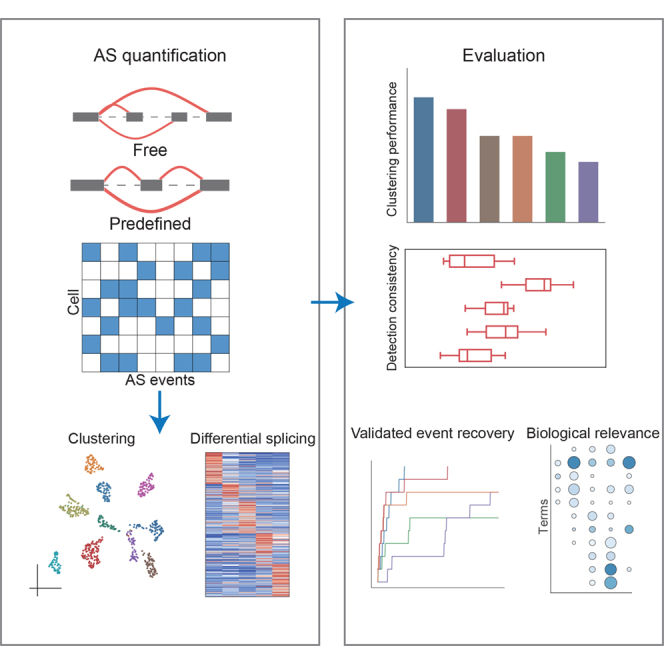
This paper benchmarks six alternative splicing analysis methods for single-cell RNA-seq across multiple Smart-seq datasets and biologically relevant tasks. scQuint consistently performed best for splicing-based cell clustering and differential splicing detection, and its application revealed cell-type-specific splicing programs in stem cell differentiation and tumor-associated immune cells.
Key findings
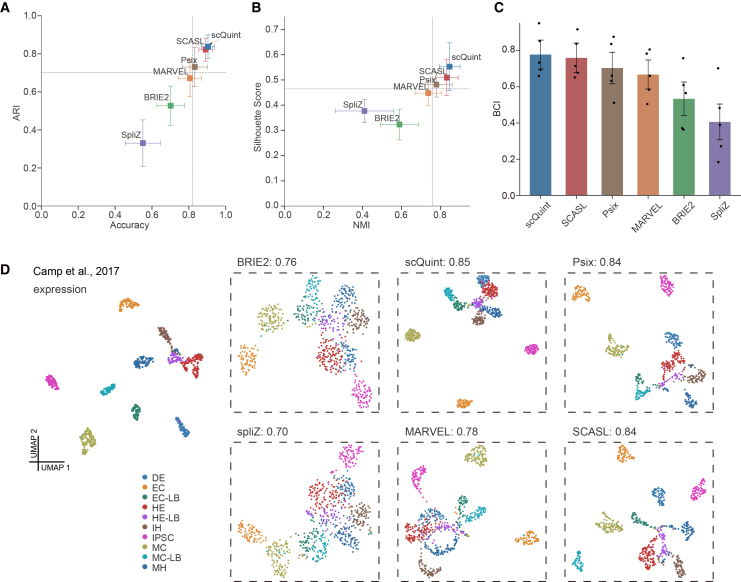
- Across five clustering datasets totaling 7,167 cells and 46 cell types, scQuint and SCASL had the highest average accuracy (0.89/0.88), ARI (0.82/0.81), NMI (0.85/0.83), and silhouette score (0.55/0.51); their average BCI scores were 0.78 and 0.76, versus MARVEL 0.67, BRIE2 0.53, Psix 0.70, and SpliZ 0.41.
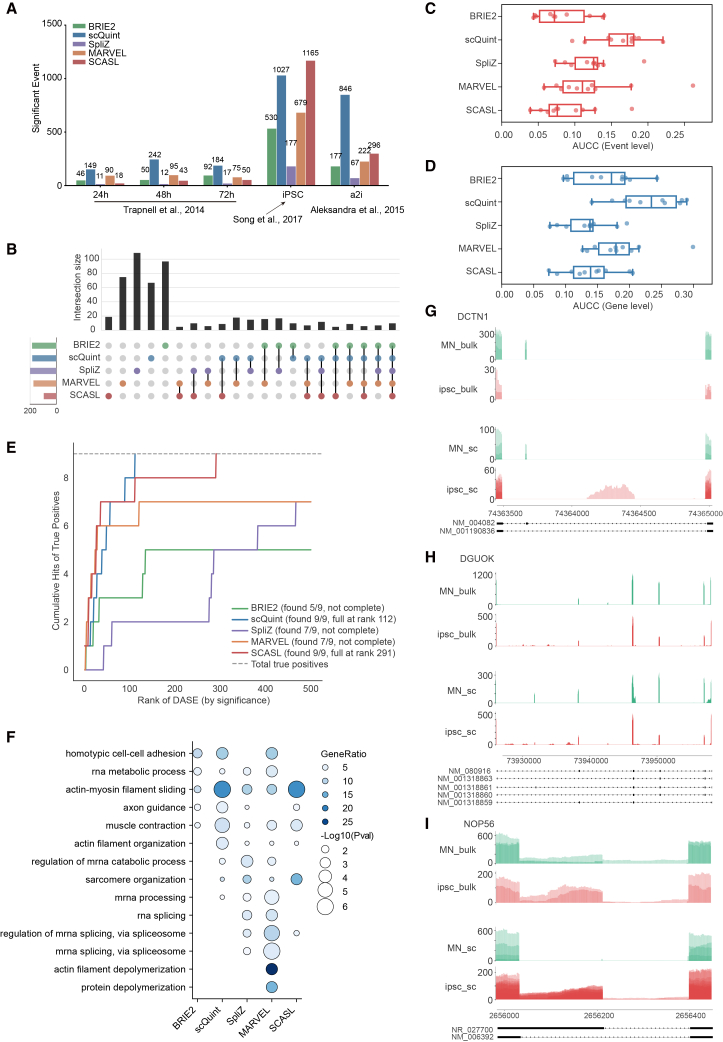
- For differential alternative splicing event (DASE) detection, scQuint achieved significantly higher AUCCs at both event and gene levels than other methods; it recovered all nine experimentally validated events within its top 112 ranked DASEs, while SCASL did so within its top 291, and BRIE2, SpliZ, and MARVEL recovered only 5, 7, and 7 within their top 500.
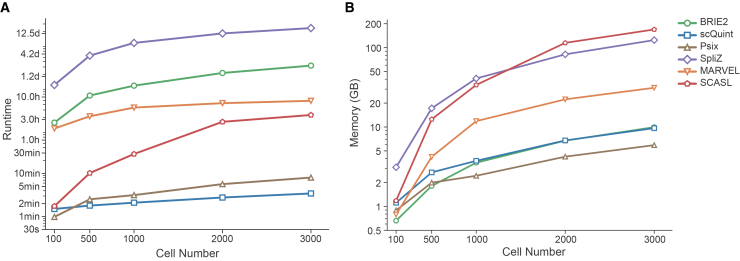
- scQuint and Psix processed 3,000 cells within minutes, whereas SCASL required over 3.8 h, BRIE2 took 53 h, and SpliZ required approximately 16 days; peak memory at 3,000 cells was around 9 GB for BRIE2, scQuint, and Psix, about 30 GB for MARVEL, 124 GB for SpliZ, and 169 GB for SCASL.
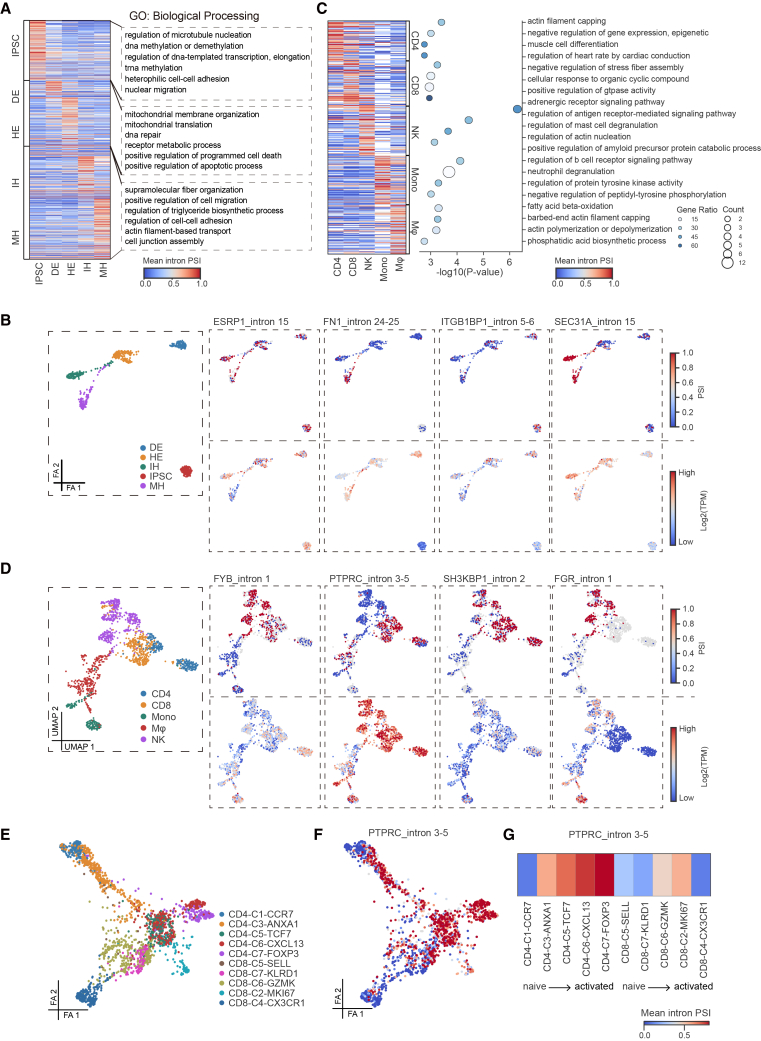
- Applying scQuint to hepatocyte differentiation and leukocyte datasets identified cell-type-specific splicing programs, including ESRP1 alternative intron PSI changing from ∼40% before differentiation to ∼70% at the end, ITGB1BP1 introns 5–6 mean PSI decreasing from ∼40% in iPSCs to 0, and PTPRC intron 3–5 PSI increasing from naive to activated T cells.
Methods
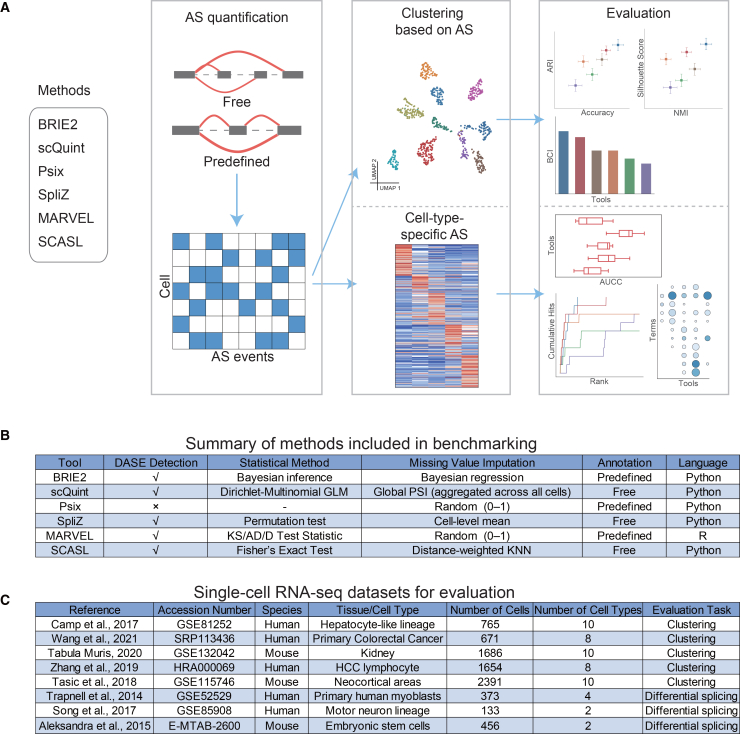
- The authors benchmarked six methods—BRIE2, scQuint, Psix, SpliZ, MARVEL, and SCASL—on public full-length Smart-seq2 scRNA-seq datasets; five datasets were used for clustering evaluation and five datasets from three studies, all with matched bulk RNA-seq, were used for DASE evaluation.
- Clustering performance was assessed with accuracy, ARI, NMI, silhouette score, and a composite BCI score; DASE performance was assessed by AUCC concordance with matched bulk RNA-seq, recovery of nine experimentally validated splicing events, and GO enrichment, with parameter sweeps over variable events, PCA components, neighbors, and clustering resolution.
- Raw reads were adapter-trimmed with Trimmomatic and aligned with STAR or STARsolo; bulk AS analysis used rMATS-turbo and LeafCutter, and scalability was measured on a specified CPU cluster.
Limitations
- The paper states that benchmarking focuses on full-length scRNA-seq datasets generated with Smart-seq-based protocols, so performance on droplet-based platforms such as 10× Genomics is not evaluated.
- The paper states that clustering was assessed with the BCI score, a concordance-based metric emphasizing agreement with expression-derived cell-type annotations, which may underestimate cases where AS captures biologically meaningful populations not well represented by those annotations; scQuint also cannot distinguish splicing event types such as SE, A3SS, and alternative 5′ splice sites, and groups events sharing the same 3′ end, sometimes requiring Sashimi plots for detailed interpretation.
- The paper notes that the Tasic et al. dataset used a randomly selected subset of cell types, which may affect separability, and that sex information was not consistently available across datasets, so sex-specific effects were not evaluated; the text also makes evident that the benchmark emphasizes real-data biological utility rather than controlled simulation settings.
Model-written summary. Check it against the paper before relying on it.
Integrity signals
Registry
Cites
Statistics
Figures
Verification
Claims the paper makes
1 Valid · 1 Not valid · 13 Not checked · 109 Own results and interpretations
The cited sources support only part of this claim — read each source’s verdict below.
In the paper
“This is consistent with previous studies showing that incorporating intronic reads alleviates sparsity in both gene-level and splicing analyses.61”
§ Comprehensive assessment of alternative splicing analysis methods for single-cell RNA-seq > Discussion
What the sources say
- Partly supportedcites [61] Bakken T.E. Hodge R.D. Miller J.A. Yao Z. Nguyen T.N. Aevermann B. Barkan E. Bertagnolli D. Casper T. Dee N. Single-nucleus and single-cell transcriptomes compared in matched cortical cell types PLoS One 13 2018 e0209648 PMC6306246 30586455 sourceExperimental — accuracy not yet measured
Our copy supports the gene-level half of the claim: Results 'Comparison of nuclear and whole cell transcriptomes' reports that including intronic plus exonic reads raised gene detection from ~5,000 to ~7,000 genes per nucleus, and 'Intronic reads are required for high-resolution cell type identification from snRNA-seq' (Fig 3C) shows intronic reads increased cluster cohesion, separation and the number of clusters detected for nuclei, i.e. alleviated sparsity/dropout at the gene level. The splicing-analysis half is not in our copy: the paper quantifies gene-level counts only (summarizeOverlaps exonic/intronic/intergenic counts, limma DE on introns+exons vs exons), and the sole mention of splicing is the generic statement that STAR identifies alternative splice junctions during alignment — no splice-junction, exon-usage or isoform analysis is performed. The supported part is also restricted to mouse visual cortex snRNA-seq/scRNA-seq rather than the general setting the citing sentence implies. (LLM, conf=0.78)
plainstates a cause- Asserted: passes — The authors put it forward as true.
- Checkable: passes — It can be checked against evidence.
- Load-bearing: passes — The paper’s conclusions depend on it.
- Based: passes — The paper gives a reason why it holds.
- Partly supported
A result the paper reports from its own data — it cites no other source for it, so there is none to check. The quote shows it is in the paper.
In the paper
“We compared the changes in AS and gene expression of several representative genes during hepatocyte differentiation and found a weak correlation between the two, suggesting that AS operates independently of gene expression (Figure 4B).”
§ Comprehensive assessment of alternative splicing analysis methods for single-cell RNA-seq > Results > Exploring biological insights through single-cell AS analysis
plainstates an association- Asserted: passes — The authors put it forward as true.
- Checkable: passes — It can be checked against evidence.
- Load-bearing: unclear — It is unclear whether the paper’s conclusions depend on it.
- Based: passes — The paper gives a reason why it holds.
A result the paper reports from its own data — it cites no other source for it, so there is none to check. The quote shows it is in the paper.
In the paper
“We showed highly cell type-specific AS events in leukocytes (Figure S5B), with AS in representative genes showing weak correlation with expression levels (Figure 4D).”
§ Comprehensive assessment of alternative splicing analysis methods for single-cell RNA-seq > Results > Exploring biological insights through single-cell AS analysis
boostedstates an association- Asserted: passes — The authors put it forward as true.
- Checkable: passes — It can be checked against evidence.
- Load-bearing: unclear — It is unclear whether the paper’s conclusions depend on it.
- Based: passes — The paper gives a reason why it holds.
A result the paper reports from its own data — it cites no other source for it, so there is none to check. The quote shows it is in the paper.
In the paper
“scQuint and SCASL show the highest BCI scores across all benchmark datasets (Figure S2B) and maintain strong performance even when cell types are not easily separated based on gene expression, as demonstrated in the Wang et al., 2021 and Zhang et al., 2019 datasets (Figures S3A and S3B).”
§ Comprehensive assessment of alternative splicing analysis methods for single-cell RNA-seq > Results > Performance evaluation of splicing-based clustering
plain- Asserted: passes — The authors put it forward as true.
- Checkable: passes — It can be checked against evidence.
- Load-bearing: passes — The paper’s conclusions depend on it.
- Based: passes — The paper gives a reason why it holds.
A result the paper reports from its own data — it cites no other source for it, so there is none to check. The quote shows it is in the paper.
In the paper
“scQuint and SCASL show the highest BCI scores across all benchmark datasets (Figure S2B) and maintain strong performance even when cell types are not easily separated based on gene expression, as demonstrated in the Wang et al., 2021 and Zhang et al., 2019 datasets (Figures S3A and S3B).”
§ Comprehensive assessment of alternative splicing analysis methods for single-cell RNA-seq > Results > Performance evaluation of splicing-based clustering
boosted- Asserted: passes — The authors put it forward as true.
- Checkable: passes — It can be checked against evidence.
- Load-bearing: passes — The paper’s conclusions depend on it.
- Based: passes — The paper gives a reason why it holds.
64 more claims
Create a free account to see all 124 claims and to verify the 19 references still open.
- It may state two separate claims as one. 35
- Probably not a substantial claim. 30
Self-check
Percentages, sums and reported differences re-computed from the paper’s own numbers.
Each contradiction between two passages listed here was confirmed by an independent check.
Rated minor: it would not touch a result — a value no result rests on, a p-value that stays on the same side of the significance level, or a conflict that is clerical, resolved elsewhere in the paper, or outside its own findings.
In the paper
§ Comprehensive assessment of alternative splicing analysis methods for single-cell RNA-seq > Results > Exploring biological insights through single-cell AS analysis
“the PSI values of PTPRC intron 3–5 increased from naive T cells to activated T cells, especially in CD4 T cells”
§ Comprehensive assessment of alternative splicing analysis methods for single-cell RNA-seq > Results > Exploring biological insights through single-cell AS analysis
“observing the same trend of transition from the skipped isoform to the full-length isoform, with a clear progression from naive to activated T cells”
Citations
Cites
Alternative isoform regulation in human tissue transcriptomes
Wang, E. T., Sandberg, R., Luo, S., Khrebtukova, I., Zhang, L., Mayr, C., Kingsmore, S. F., Schroth, G. P., & Burge, C. B. (2008) · Nature · doi:10.1038/nature07509 · Cited by 5,181
Smart-seq2 for sensitive full-length transcriptome profiling in single cells
Picelli, S., Björklund, Å. K., Faridani, O. R., Sagasser, S., Winberg, G., & Sandberg, R. (2013) · Nature Methods · doi:10.1038/nmeth.2639 · Cited by 2,358
Shared and distinct transcriptomic cell types across neocortical areas
Tasic, B., Yao, Z., Graybuck, L. T., Smith, K. A., Nguyen, T. N., Bertagnolli, D., Goldy, J., Garren, E., Economo, M. N., Viswanathan, S., et al. (2018) · Nature · doi:10.1038/s41586-018-0654-5 · Cited by 1,746
Landscape and Dynamics of Single Immune Cells in Hepatocellular Carcinoma
Zhang, Q., He, Y., Luo, N., Patel, S. J., Han, Y., Gao, R., Modak, M., Carotta, S., Haslinger, C., Kind, D., et al. (2019) · Cell · doi:10.1016/j.cell.2019.10.003 · Cited by 1,624
Full-length mRNA-Seq from single-cell levels of RNA and individual circulating tumor cells
Ramsköld, D., Luo, S., Wang, Y.-C., Li, R., Deng, Q., Faridani, O. R., Daniels, G. A., Khrebtukova, I., Loring, J. F., Laurent, L. C., et al. (2012) · Nature Biotechnology · doi:10.1038/nbt.2282 · Cited by 1,609
Comparative Analysis of Single-Cell RNA Sequencing Methods
Ziegenhain, C., Vieth, B., Parekh, S., Reinius, B., Guillaumet-Adkins, A., Smets, M., Leonhardt, H., Heyn, H., Hellmann, I., & Enard, W. (2017) · Molecular Cell · doi:10.1016/j.molcel.2017.01.023 · Cited by 1,494
Alternative splicing as a regulator of development and tissue identity
Baralle, F. E., & Giudice, J. (2017) · Nature Reviews Molecular Cell Biology · doi:10.1038/nrm.2017.27 · Cited by 1,333
A single-cell transcriptomic atlas characterizes ageing tissues in the mouse
The Tabula Muris Consortium, Almanzar, N., Antony, J., Baghel, A. S., Bakerman, I., Bansal, I., Barres, B. A., Beachy, P. A., Berdnik, D., Bilen, B., et al. (2020) · Nature · doi:10.1038/s41586-020-2496-1 · Cited by 1,247
Self-citationConfronting false discoveries in single-cell differential expression
Squair, J. W., Gautier, M., Kathe, C., Anderson, M. A., James, N. D., Hutson, T. H., Hudelle, R., Qaiser, T., Matson, K. J. E., Barraud, Q., et al. (2021) · doi:10.1101/2021.03.12.435024 · Cited by 1,086
Bias, robustness and scalability in single-cell differential expression analysis
Soneson, C., & Robinson, M. D. (2018) · Nature Methods · doi:10.1038/nmeth.4612 · Cited by 770
Single-cell RNA counting at allele and isoform resolution using Smart-seq3
Hagemann-Jensen, M., Ziegenhain, C., Chen, P., Ramsköld, D., Hendriks, G.-J., Larsson, A. J. M., Faridani, O. R., & Sandberg, R. (2020) · Nature Biotechnology · doi:10.1038/s41587-020-0497-0 · Cited by 700
Neutrophil cell surface receptors and their intracellular signal transduction pathways
Futosi, K., Fodor, S., & Mócsai, A. (2013) · International Immunopharmacology · doi:10.1016/j.intimp.2013.06.034 · Cited by 642
Single-nucleus and single-cell transcriptomes compared in matched cortical cell types
Bakken, T. E., Hodge, R. D., Miller, J. A., Yao, Z., Nguyen, T. N., Aevermann, B., Barkan, E., Bertagnolli, D., Casper, T., Dee, N., et al. (2018) · PLoS ONE · doi:10.1371/journal.pone.0209648 · Cited by 608 · cited 1×
“61 For DASE detection, scQuint consistently outperformed the other methods.”
The physiology of alternative splicing
Marasco, L. E., & Kornblihtt, A. R. (2023) · Nature Reviews Molecular Cell Biology · doi:10.1038/s41580-022-00545-z · Cited by 505
Alternative splicing and cancer: a systematic review
Zhang, Y., Qian, J., Gu, C., & Yang, Y. (2021) · Signal Transduction and Targeted Therapy · doi:10.1038/s41392-021-00486-7 · Cited by 497
Kaminow, B., Yunusov, D., & Dobin, A. (2021) · bioRxiv (Cold Spring Harbor Laboratory) · doi:10.1101/2021.05.05.442755 · Cited by 427
New insights into form and function of fibronectin splice variants
White, E., Baralle, F., & Muro, A. (2008) · The Journal of Pathology · doi:10.1002/path.2388 · Cited by 323
Direct Comparative Analyses of 10X Genomics Chromium and Smart-Seq2
Wang, X., He, Y., Zhang, Q., Ren, X., & Zhang, Z. (2021) · Genomics, Proteomics & Bioinformatics · doi:10.1016/j.gpb.2020.02.005 · Cited by 320
Waterman-Storer, C. M., Karki, S., & Holzbaur, E. L. (1995) · Proceedings of the National Academy of Sciences · doi:10.1073/pnas.92.5.1634 · Cited by 314
Krause, M., Sechi, A. S., Konradt, M., Monner, D., Gertler, F. B., & Wehland, J. (2000) · The Journal of Cell Biology · doi:10.1083/jcb.149.1.181 · Cited by 296
Alternative splicing during mammalian organ development
Mazin, P. V., Khaitovich, P., Cardoso-Moreira, M., & Kaessmann, H. (2021) · Nature Genetics · doi:10.1038/s41588-021-00851-w · Cited by 220
Regulation of CD45 Alternative Splicing by Heterogeneous Ribonucleoprotein, hnRNPLL
Oberdoerffer, S., Moita, L. F., Neems, D., Freitas, R. P., Hacohen, N., & Rao, A. (2008) · Science · doi:10.1126/science.1157610 · Cited by 205
Song, Y., Botvinnik, O. B., Lovci, M. T., Kakaradov, B., Liu, P., Xu, J. L., & Yeo, G. W. (2017) · Molecular Cell · doi:10.1016/j.molcel.2017.06.003 · Cited by 204
Alternative splicing in neurodegenerative disease and the promise of RNA therapies
Nikom, D., & Zheng, S. (2023) · Nature Reviews Neuroscience · doi:10.1038/s41583-023-00717-6 · Cited by 190
Single-cell RNAseq for the study of isoforms—how is that possible?
Arzalluz-Luque, Á., & Conesa, A. (2018) · Genome biology · doi:10.1186/s13059-018-1496-z · Cited by 155
Auto-regulatory feedback by RNA-binding proteins
Müller-McNicoll, M., Rossbach, O., Hui, J., & Medenbach, J. (2019) · Journal of Molecular Cell Biology · doi:10.1093/jmcb/mjz043 · Cited by 139
Specific Phosphorylation of p120-Catenin Regulatory Domain Differently Modulates Its Binding to RhoA
Castaño, J., Solanas, G., Casagolda, D., Raurell, I., Villagrasa, P., Bustelo, X. R., de Herreros, A. G., & Duñach, M. (2007) · Molecular and Cellular Biology · doi:10.1128/mcb.01974-06 · Cited by 134
Alternative Splicing: A New Cause and Potential Therapeutic Target in Autoimmune Disease
Ren, P., Lu, L., Cai, S., Chen, J., Lin, W., & Han, F. (2021) · Frontiers in Immunology · doi:10.3389/fimmu.2021.713540 · Cited by 123
Frameworks for transformational breakthroughs in RNA-based medicines
Androsavich, J. R. (2024) · Nature Reviews Drug Discovery · doi:10.1038/s41573-024-00943-2 · Cited by 108
DCTN1-related neurodegeneration: Perry syndrome and beyond
Konno, T., Ross, O. A., Teive, H. A. G., Sławek, J. W., Dickson, D. W., & Wszołek, Z. K. (2017) · Parkinsonism & Related Disorders · doi:10.1016/j.parkreldis.2017.06.004 · Cited by 105
ESRP2 controls an adult splicing programme in hepatocytes to support postnatal liver maturation
Bhate, A., Parker, D. J., Bebee, T. W., Ahn, J., Arif, W., Rashan, E. H., Chorghade, S., Chau, A., Lee, J.-H., Anakk, S., et al. (2015) · Nature Communications · doi:10.1038/ncomms9768 · Cited by 103 · cited 1×
“57 In immune cells, we further identified the splicing dynamics of PTPRC during T cell activation, a process that bulk RNA-seq cannot resolve at the cell-type level.”
Nip, K. M., Chiu, R., Yang, C., Chu, J., Mohamadi, H., Warren, R. L., & Birol, İ. (2020) · Genome Research · doi:10.1101/gr.260174.119 · Cited by 98
Dynactin Subunit p150Glued Is a Neuron-Specific Anti-Catastrophe Factor
Lazarus, J. E., Moughamian, A. J., Tokito, M. K., & Holzbaur, E. L. F. (2013) · PLoS Biology · doi:10.1371/journal.pbio.1001611 · Cited by 96
Feng, H., Moakley, D. F., Chen, S., McKenzie, M. G., Menon, V., & Zhang, C. (2021) · Proceedings of the National Academy of Sciences · doi:10.1073/pnas.2013056118 · Cited by 87
Differential splicing across immune system lineages
Ergun, A., Doran, G., Costello, J. C., Paik, H. H., Collins, J. J., Mathis, D., Benoist, C., ImmGen Consortium, Blair, D. A., Dustin, M. L., et al. (2013) · Proceedings of the National Academy of Sciences · doi:10.1073/pnas.1311839110 · Cited by 83
Self-citationIntegrins as a drug target in liver fibrosis
Rahman, S. R., Roper, J. A., Grove, J. I., Aithal, G. P., Pun, K. T., & Bennett, A. J. (2022) · Liver International · doi:10.1111/liv.15157 · Cited by 74
Coelho, P., Fão, L., Mota, S. I., & Rego, A. C. (2022) · Ageing Research Reviews · doi:10.1016/j.arr.2022.101667 · Cited by 65
Obstacles to detecting isoforms using full-length scRNA-seq data
Westoby, J., Artemov, P., Hemberg, M., & Ferguson‐Smith, A. C. (2020) · Genome biology · doi:10.1186/s13059-020-01981-w · Cited by 59
Coverage-dependent bias creates the appearance of binary splicing in single cells
Buen Abad Najar, C. F., Yosef, N., & Lareau, L. F. (2020) · eLife · doi:10.7554/elife.54603 · Cited by 58
Robust detection of alternative splicing in a population of single cells
Welch, J. D., Hu, Y., & Prins, J. F. (2016) · Nucleic Acids Research · doi:10.1093/nar/gkv1525 · Cited by 57
History of development of the life-saving drug “Nusinersen” in spinal muscular atrophy
Qiu, J., Wu, L., Qu, R., Jiang, T., Bai, J., Sheng, L., Feng, P., & Sun, J. (2022) · Frontiers in Cellular Neuroscience · doi:10.3389/fncel.2022.942976 · Cited by 52
Self-citationHuang, Y., & Sanguinetti, G. (2021) · Genome Biology · doi:10.1186/s13059-021-02461-5 · Cited by 50
Tian, C., Zhang, Y., Tong, Y., Kock, K. H., Sim, D. Y., Liu, F., Dong, J., Jing, Z., Wang, W., Gao, J., et al. (2024) · Nature Genetics · doi:10.1038/s41588-024-02019-8 · Cited by 48
MARVEL: an integrated alternative splicing analysis platform for single-cell RNA sequencing data
Wen, W. X., Mead, A. J., & Thongjuea, S. (2023) · Nucleic Acids Research · doi:10.1093/nar/gkac1260 · Cited by 47
The SpliZ generalizes ‘percent spliced in’ to reveal regulated splicing at single-cell resolution
Olivieri, J. E., Dehghannasiri, R., & Salzman, J. (2022) · Nature Methods · doi:10.1038/s41592-022-01400-x · Cited by 47
Advances in long-read single-cell transcriptomics
Kumari, P., Kaur, M., Dindhoria, K., Ashford, B., Amarasinghe, S. L., & Thind, A. S. (2024) · Human Genetics · doi:10.1007/s00439-024-02678-x · Cited by 42
Mitochondrial DNA homeostasis impairment and dopaminergic dysfunction: A trembling balance
Manini, A., Abati, E., Comi, G. P., Corti, S. P., & Ronchi, D. (2022) · Ageing Research Reviews · doi:10.1016/j.arr.2022.101578 · Cited by 40
Differential transcript usage analysis of bulk and single-cell RNA-seq data with DTUrtle
Tekath, T., & Dugas, M. (2021) · Bioinformatics · doi:10.1093/bioinformatics/btab629 · Cited by 39
Lin, K., Ma, W. K., Scharner, J., Liu, Y., & Krainer, A. R. (2018) · Genome Research · doi:10.1101/gr.227181.117 · Cited by 35
Liu, S., Zhou, B., Wu, L., Sun, Y., Chen, J., & Liu, S. (2021) · Scientific Reports · doi:10.1038/s41598-021-84693-w · Cited by 28
Hu, Y., Wang, K., & Li, M. (2020) · PLOS Computational Biology · doi:10.1371/journal.pcbi.1007925 · Cited by 28
Robust and annotation-free analysis of alternative splicing across diverse cell types in mice
Benegas, G., Fischer, J., & Song, Y. S. (2022) · eLife · doi:10.7554/elife.73520 · Cited by 25
Xiang, X., He, Y., Zhang, Z., & Yang, X. (2024) · Nature Communications · doi:10.1038/s41467-024-46480-9 · Cited by 24
Qiu, J., Wu, L., Chang, Y. Z., Sun, H., & Sun, J. (2020) · Journal of Cellular Physiology · doi:10.1002/jcp.30167 · Cited by 23
Self-citationInhibition of T cell activation and function by the adaptor protein CIN85
Kong, M. S., Hashimoto, A. S., Kawashima, Y., Sakuma, M., Yokosuka, T., Kometani, K., Onishi, R. M., Carpino, N., Ohara, O., Kurosaki, T., et al. (2019) · Science Signaling · doi:10.1126/scisignal.aav4373 · Cited by 23
VALERIE: Visual-based inspection of alternative splicing events at single-cell resolution
Wen, W. X., Mead, A. J., & Thongjuea, S. (2020) · PLoS Computational Biology · doi:10.1371/journal.pcbi.1008195 · Cited by 21
RhoG’s Role in T Cell Activation and Function
Mokhtar, A. M. A., Salikin, N. H., Haron, A. S., Nordin, S. A., Hashim, I. F., Makhtar, M. M. Z., Zulfigar, S. B., & Ismail, N. I. (2022) · Frontiers in Immunology · doi:10.3389/fimmu.2022.845064 · Cited by 21
Identifying cell state–associated alternative splicing events and their coregulation
Najar, C. F. B. A., Burra, P., Yosef, N., & Lareau, L. F. (2022) · Genome Research · doi:10.1101/gr.276109.121 · Cited by 20
Sasanuma, H., Tatsuno, A., Hidano, S., Ohshima, K., Matsuzaki, Y., Hayashi, K., Lowell, C. A., Kitamura, D., & Goitsuka, R. (2006) · Blood · doi:10.1182/blood-2005-10-4102 · Cited by 18
Song, Y., Chen, M., Zhang, K., Reddy, A. S. N., Cao, F., & Zhu, F. (2023) · New Phytologist · doi:10.1111/nph.19193 · Cited by 18
Studying protein isoforms of the adaptor SETA/CIN85/Ruk with monoclonal antibodies
Finniss, S., Movsisyan, A., Billecke, C., Schmidt, M. H. H., Randazzo, L., Chen, B., & Bögler, O. (2004) · Biochemical and Biophysical Research Communications · doi:10.1016/j.bbrc.2004.10.007 · Cited by 17
The discovery, function, and regulation of epithelial splicing regulatory proteins (ESRP) 1 and 2
Derham, J. M., & Kalsotra, A. (2023) · Biochemical Society Transactions · doi:10.1042/bst20221124 · Cited by 16 · cited 1×
“ESRP1 encodes an RNA-binding protein (RBP) that is involved in maintaining the epithelial phenotype of hepatocytes 41 through AS.”
Wang, J., Wen, S., Chen, M., Xie, J., Lou, X., Zhao, H., Chen, Y., Zhao, M., & Shi, G. (2024) · Communications Biology · doi:10.1038/s42003-024-06475-0 · Cited by 15
FN1 shapes the behavior of papillary thyroid carcinoma through alternative splicing of EDB region
Liu, M., Chen, P., Wei, B., Tan, H., Zhao, Y., Ai, L., Li, N., Jiang, Y.-K., Lin, J., Li, S., et al. (2025) · Scientific Reports · doi:10.1038/s41598-024-83369-5 · Cited by 14
Peart, N. J., Hwang, J. Y., Quesnel-Vallières, M., Sears, M. J., Yang, Y., Stoilov, P., Barash, Y., Park, J. W., Lynch, K. W., & Carstens, R. P. (2022) · iScience · doi:10.1016/j.isci.2022.105205 · Cited by 13
Link, D. C., Gutkind, J. S., Robbins, K. C., & Ley, T. J. (1992) · PubMed · Cited by 12
Xia, B., Shen, J., Zhang, H., Chen, S., Zhang, X., Song, M., & Wang, J. (2024) · Scientific Data · doi:10.1038/s41597-024-03998-3 · Cited by 9
Mapping the splicing landscape of the human immune system
Ner-Gaon, H., Peleg, R., Gazit, R., Reiner-Benaim, A., & Shay, T. (2023) · Frontiers in Immunology · doi:10.3389/fimmu.2023.1116392 · Cited by 8
Tissue-specific SEC31A alternative splicing is regulated by RBM47 and controls lipid transport
Ostwaldt, F., Plößner, S., Dimos‐Röhl, B., Preußner, M., & Heyd, F. (2025) · RNA · doi:10.1261/rna.080572.125 · Cited by 5
Cited by
A framework for designing splice-junction experiments in deep 3’ single-cell RNA sequencingPreprint
Saferali, A., Liu, C., Vendrame, A. S., Bankoti, K., Cabrera, J. S., Tesfaigzi, Y., & Castaldi, P. (2026) · bioRxiv (Cold Spring Harbor Laboratory) · doi:10.64898/2026.09.22.753522
Metadata
- Authors
- Jiang, Q., Li, G., Xing, L., Zhang, D., & Sun, J.
- Affiliations
- Southeast University (CN)
- Nantong University (CN)
- Second Affiliated Hospital of Nantong University (CN)
- Corresponding author
- Jiang, Quanlong
- Zhang, Dongmei
- Sun, Junjie
- Venue
- iScience
- Publisher
- Elsevier BV
- Published
- 2026-06
- Volume
- 29
- Issue
- 6
- Pages
- 116090
- ISSN
- 2589-0042 (ISSN-L)
- PMC
- PMC13217931
- OpenAlex
- W7162082526
- Cited by
- 1
- References
- 69
- Citations by year
- 2026: 1
- FWCI
- 1.13
- Type
- journal article
- Language
- en
- Open access
- gold
- doi.org
- Licence
- cc-by
- www.elsevier.com/tdm/userlicense/1.0/ (tdm)
- www.elsevier.com/legal/tdmrep-license (tdm)
- creativecommons.org/licenses/by/4.0/ (vor)
- Locations
- iScience (publishedVersion, cc-by)
- PubMed Central (publishedVersion, cc-by)
- PubMed (publishedVersion)
- Funders
- Natural Science Foundation of Nantong Municipality
- Science and Technology Project of Nantong City (JC2024024, JC2023114)
- Topics
- Life Sciences › Biochemistry, Genetics and Molecular Biology › Molecular Biology › Single-cell and spatial transcriptomics
- Life Sciences › Biochemistry, Genetics and Molecular Biology › Molecular Biology › RNA Research and Splicing
- Life Sciences › Biochemistry, Genetics and Molecular Biology › Molecular Biology › Genomics and Phylogenetic Studies
- Keywords
- alternative splicing, single-cell RNA sequencing, cell clustering, full-length transcriptome, stem cell differentiation, tumor-infiltrating immune cells
About these checks
Registry, retraction, Cites and statistics results are computed, not judged, with one exception: a printed reference that no index lists is read once by a model before it counts as a citation error. Claims are extracted by a model and kept only when their quote appears verbatim in the text; each cited source is then checked, with a model’s help, for whether it says what the claim relies on. Those verdicts can be wrong — read the claim’s quote and the cited source before relying on one.
The claim verdicts this report counts are experimental: their accuracy is not yet measured.
A language model drew the claims from the paper on 2026-11-22, under version 3 of the claim definition (model deepseek-v4.1-flash, prompt extract-v3).
A second model labelled each claim on 2026-11-22 (model jev-1.13-20260917, definition revision gold-guideline-v0.2).
Cited sources are checked with a language model’s help (qwen3.8-omni-flash).
Statistics and arithmetic are recomputed, not judged.
Confidence bands are shown only for fields calibrated on our annotated test set. None is calibrated yet, so no band is shown.
What counts as a claim ›How we measure confidence ›How we check this ›
Are you an author, or do you see a problem with this page? Request a review
Data sources
Bibliographic data: Semantic Scholar, OpenAlex, Crossref.
Contains information from the Semantic Scholar Academic Graph Datasets, made available under the ODC Attribution License (ODC-BY 1.0).
Semantic Scholar’s data is described in: Kinney, R., et al. (2023). The Semantic Scholar Open Data Platform. arXiv:2301.10140.
