

The DOI matches its Crossref record; 100 of the 101 references it cites were found in a registry or an index.
Prospective associations between peer functioning and social anxiety in adolescents: A systematic review and meta-analysis
Open accessAbstract
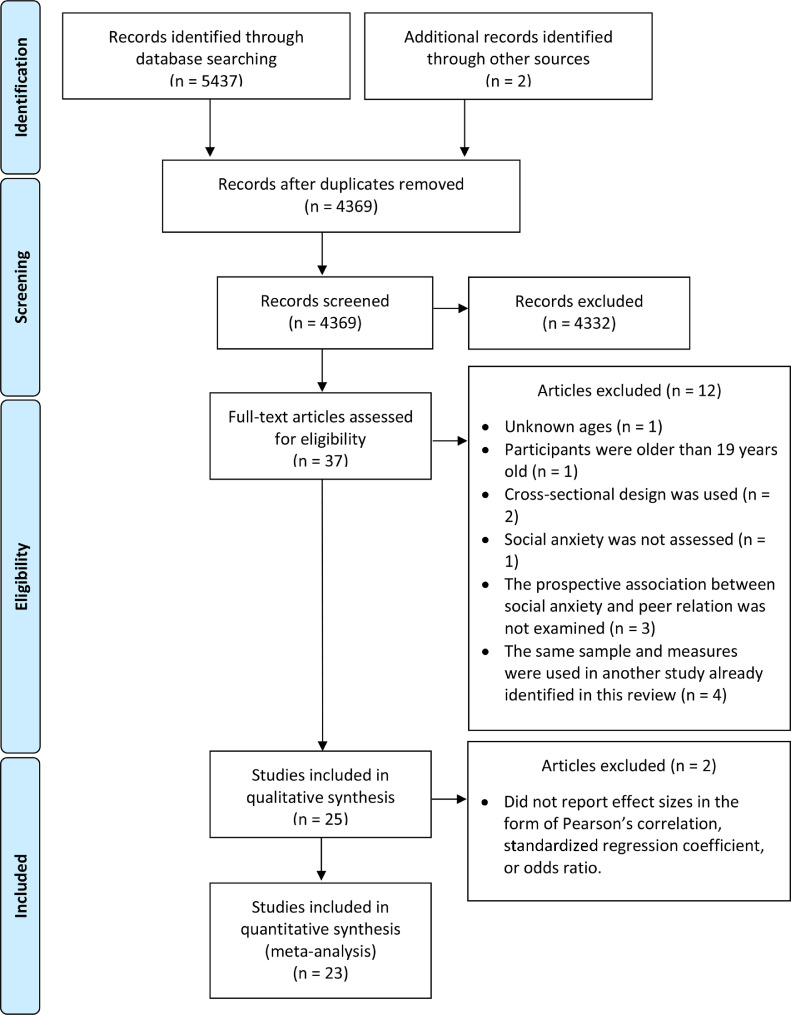
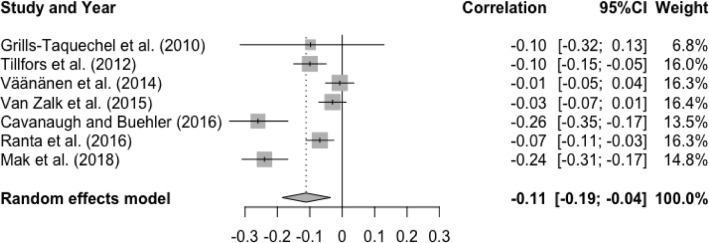
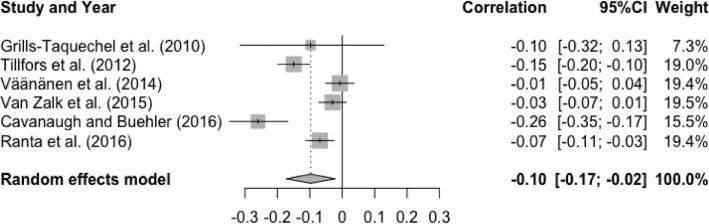
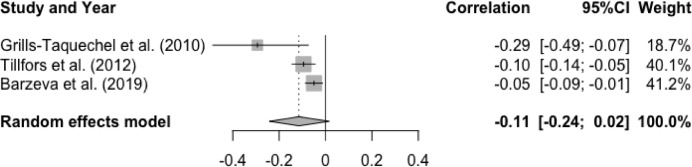
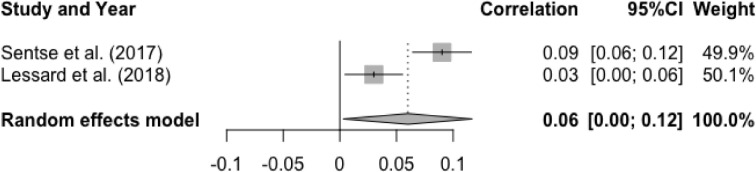
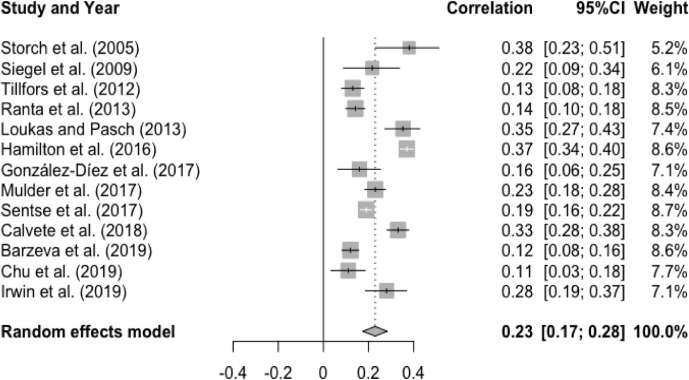
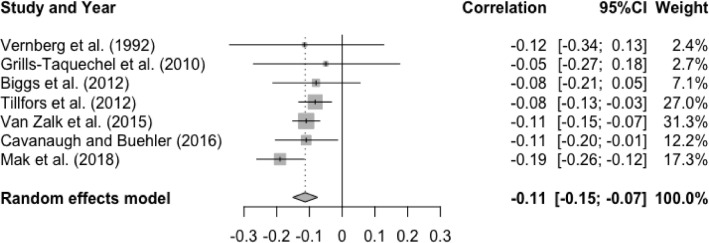
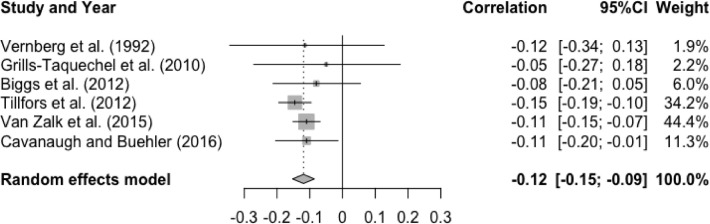
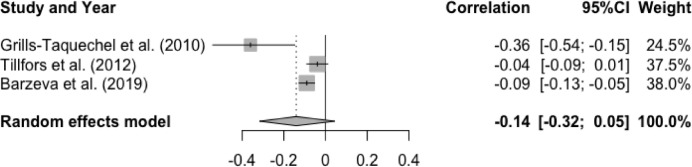
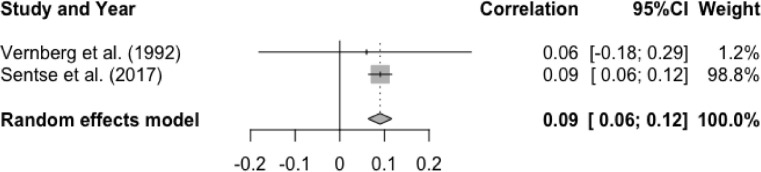
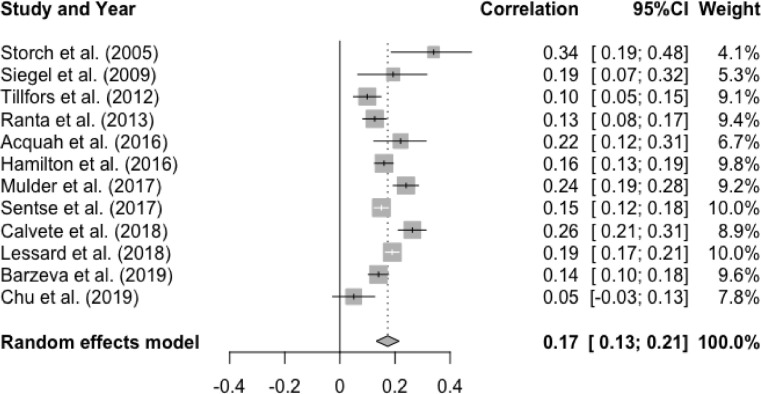
BACKGROUND: During adolescence, peer relationships take precedence and there is a normative increase in social anxiety. Although prospective studies have suggested peer functioning and social anxiety can influence each other, their findings have not been examined systematically. We performed a systematic review and meta-analysis of prospective studies to examine the bidirectional relationship between peer functioning and social anxiety in adolescence. METHODS: EMBASE, PsycINFO, Medline, and PubMed were searched to identify relevant articles. Meta-analysis was conducted to examine the mean effect sizes of prospective associations between social anxiety and four dimensions of peer functioning. Moderator analysis was performed, with age, gender, time interval between baseline and follow-up assessment, and publication year as moderators. RESULTS: Meta-analyses of 23 studies showed that friendship quality (r =-.11), peer rejection (r =-.06), and peer victimization (r =.23) were each associated with later social anxiety, but peer acceptance was not (r =-.11). Social anxiety at baseline was associated with prospective levels of friendship quality (r =-.11), peer rejection (r=.09), and peer victimization (r =.17), but not peer acceptance (r =-.14). Age moderated the association between friendship quality and prospective social anxiety. Other moderator effects were statistically non-significant. LIMITATIONS: Limitations include different classifications of peer functioning, the use of self-report measures, heterogeneity between studies, and underrepresentation of clinical samples. CONCLUSIONS: A significant bidirectional association was found with social anxiety across three dimensions of peer functioning. Psychological prevention and intervention targeting peer functioning and social anxiety are indicated.
Overview
The claims and statistics of this paper haven’t been checked yet.
Run the check — free, no account needed. It reads the open-access text and checks the sources it cites.
Integrity signals
Registry
Cites
Statistics
Figures
Verification
Claims the paper makes
The claims and statistics of this paper haven’t been checked yet.
Run the check — free, no account needed. It reads the open-access text and checks the sources it cites.
Claims other papers make about this one
Each is checked against this paper’s own text: does it say what the citing paper says it does?
The source backs part of the claim, not all of it — or backs it for a different population, condition or comparison.
In the citing paper
“causing significant and persistent impairments in various life domains (e.g., Acquah et al., 2015; Chiu et al., 2021; Hebert et al., 2012; Soohinda & Sampath, 2016).”
From Psychological inflexibility explains social anxiety over time: a mediation analyses with a clinical adolescent sample (2024) · cites this paper as Chiu et al., 2021
Experimental — accuracy not yet measured
Self-check
Percentages, sums and reported differences re-computed from the paper’s own numbers.
The self-check needs the paper’s full text.
Citations
Cites
R: A Language and Environment for Statistical Computing
R Core Team (2000) · doi:10.32614/r.manuals · Cited by 355,893
Preferred Reporting Items for Systematic Reviews and Meta-Analyses: the PRISMA statement
Moher, D., Liberati, A., Tetzlaff, J., Altman, D. G., & for the PRISMA Group (2009) · BMJ · doi:10.1136/bmj.b2535 · Cited by 83,823
Measuring inconsistency in meta-analyses
Higgins, J. P. T., Thompson, S. G., Deeks, J. J., & Altman, D. G. (2003) · BMJ · doi:10.1136/bmj.327.7414.557 · Cited by 63,139
Bias in meta-analysis detected by a simple, graphical test
Egger, M., Smith, G. D., Schneider, M., & Minder, C. (1997) · BMJ · doi:10.1136/bmj.315.7109.629 · Cited by 56,722
Preferred reporting items for systematic reviews and meta-analyses: the PRISMA Statement.
(2009) · PubMed Central · Cited by 44,859
Preferred reporting items for systematic reviews and meta-analyses: The PRISMA statement
Moher, D., Liberati, A., Tetzlaff, J., Altman, D. G., & the PRISMA Group* (2009) · Annals of Internal Medicine · doi:10.7326/0003-4819-151-4-200908180-00135 · Cited by 37,554
Kessler, R. C., Berglund, P., Demler, O., Jin, R., Merikangas, K. R., & Walters, E. E. (2005) · Archives of General Psychiatry · doi:10.1001/archpsyc.62.6.593 · Cited by 20,391
Wang, G., Ma, R., Qiao, G., Wada, K., Aizawa, Y., & Satoh, T. (2015) · Integrative Medicine International · doi:10.1159/000368408 · Cited by 18,762
Diagnostic and Statistical Manual of Mental Disorders, 5th ed.
Carter, M. J. (2014) · Therapeutic Recreation Journal · Cited by 15,154
Borenstein, M., Hedges, L. V., Higgins, J. P. T., & Rothstein, H. R. (2009) · doi:10.1002/9780470743386 · Cited by 14,225
Cited by
Sorted by citations
Shao, Y., & Kang, S. (2022) · Frontiers in Psychology · doi:10.3389/fpsyg.2022.938756 · Cited by 124
“It not only reduces adolescents’ social anxiety, shapes their moral cognition and behaviors, but also enhances their engagement, which contributes to their academic successes (Fredricks, 2011; Tillfors et al., 2012; Zulfiqar, 2020; Chiu et al., 2021).”
BackgroundBrumariu, L. E., Waslin, S. M., Gastelle, M., Kochendorfer, L. B., & Kerns, K. A. (2022) · Development and Psychopathology · doi:10.1017/s0954579422000323 · Cited by 103
Social Anxiety and Suicidality in Youth: A Systematic Review and Meta-analysis
Leigh, E., Chiu, K., & Ballard, E. D. (2023) · Research on Child and Adolescent Psychopathology · doi:10.1007/s10802-022-00996-0 · Cited by 51
Self-citationLeigh, E., & Clark, D. M. (2022) · Journal of Child Psychology and Psychiatry · doi:10.1111/jcpp.13680 · Cited by 39
Self-citationA meta-analytic review of the relations between anxiety and empathy
Nair, T. K., Waslin, S. M., Rodrigues, G. A., Datta, S., Moore, M., & Brumariu, L. E. (2023) · Journal of Anxiety Disorders · doi:10.1016/j.janxdis.2023.102795 · Cited by 38
Lei, Y., Wang, Y.-Y., Wan, J.-M., Patel, C., & Li, H. (2023) · Journal of Anxiety Disorders · doi:10.1016/j.janxdis.2023.102771 · Cited by 33
Zhou, J., Wang, L., Zhu, D., & Gong, X. (2023) · Journal of Youth and Adolescence · doi:10.1007/s10964-023-01920-5 · Cited by 32
“…of adolescents revealed that peer victimization at baseline signi fi cantly predicted an increase of social anxiety (r = 0.23; 95% CI [0.17, 0.28]), and social anxiety at baseline also signi fi cantly predicted an increase of peer victimization (r = 0.17; 95% CI [0.13, 0.21]) (Chiu et al., 2021).”
InfluentialComorbidity of loneliness and social anxiety in adolescents: Bridge symptoms and peer relationships
Chen, J., Wang, Q., Liang, Y., Chen, B., & Ren, P. (2023) · Social Science & Medicine · doi:10.1016/j.socscimed.2023.116195 · Cited by 29
Chadaga, K., Prabhu, S., Sampathila, N., Chadaga, R., Bhat, D., Sharma, A., & Swathi, K. S. (2024) · SLAS TECHNOLOGY · doi:10.1016/j.slast.2024.100129 · Cited by 28
Győri, D., Farkas, B. F., Horváth, L. O., Komáromy, D., Mészáros, G., Szentiványi, D., & Balázs, J. (2021) · International Journal of Environmental Research and Public Health · doi:10.3390/ijerph18041840 · Cited by 29
“A systematic review and meta-analysis in adolescents reveal that friendship quality, peer rejection, and victimisation is associated with later social anxiety, and there is a bidirectional relationship between peer functioning and social anxiety [103].”
BackgroundShah, E. N., Szwedo, D. E., & Allen, J. P. (2024) · Frontiers in Developmental Psychology · doi:10.3389/fdpys.2024.1435727 · Cited by 40
“The development and maintenance of social anxiety can be explained through a psychosocial perspective, which aims to conceptualize the ways that individual and environmental social experiences can influence behavior (Chiu et al., 2021).”
BackgroundCheng, Q., Shi, C., Yan, C., Ren, Z., Chan, S. H.-W., Xiong, S., Zhang, T., & Zheng, H. (2022) · Anxiety, Stress, & Coping · doi:10.1080/10615806.2021.1955864 · Cited by 24
“Supplemental data for this article can be accessed https://doi.org/10.1080/10615806.2021.1955864. such as curtailed academic attainment, poor social relations, and difficult day-to-day life (Chiu et al., 2021; Leigh & Clark, 2018).”
BackgroundInfluentialYang, Y., & Xiao-zhou, L. (2022) · Frontiers in Psychology · doi:10.3389/fpsyg.2022.836461 · Cited by 22
Brustad, I. J., Haugan, T., Bjerkeset, O. A., Sund, E. R., & Vaag, J. R. (2021) · Frontiers in Psychology · doi:10.3389/fpsyg.2021.727529 · Cited by 28
Sousa, V., Silva, P., Romão, A. M., & Coelho, V. (2023) · Journal of Youth and Adolescence · doi:10.1007/s10964-023-01840-4 · Cited by 17
“, 2013), and higher levels of peer victimization and cybervictimization (Chiu et al., 2021; Coelho et al., 2022).”
BackgroundZhang, J., Yang, Y.-K., Ge, J., Liang, X., & An, Z. (2023) · BMC Psychology · doi:10.1186/s40359-023-01479-7 · Cited by 26
“Research has found that classmate relationships have certain effects on students’ psychosocial development, engagement in learning, and academic achievement [80, 81].”
BackgroundChiu, K., Stringaris, A. K., & Leigh, E. (2024) · JCPP Advances · doi:10.1002/jcv2.12249 · Cited by 22
“Even when they do engage socially, their social anxiety may impact their performance due to the unintended effects of safety behaviours (Leigh et al., 2021b), making them more susceptible to receive negative feedback from peers (Leigh et al., 2021b) or experience peer rejection (Chiu et al., 2021).”
Self-citationHabibi, M., Steinsbekk, S., & Wichstrøm, L. (2023) · Journal of Child Psychology and Psychiatry · doi:10.1111/jcpp.13787 · Cited by 18
Adolescents' social anxiety dynamics in a latent transition analysis and its psychosocial effects
Camacho, A., Ruiz, R. O., & Romera, E. M. (2022) · International Journal of Clinical and Health Psychology · doi:10.1016/j.ijchp.2022.100311 · Cited by 18
“These findings are consistent with previous research in which the stable nature of social anxiety during adolescence was emphasized (Chiu et al., 2021).”
BackgroundResultInfluentialNostalgia Counteracts Social Anxiety and Enhances Interpersonal Competence
Dai, Y., Jiang, T., Wildschut, T., & Sedikides, C. (2023) · Social Psychological and Personality Science · doi:10.1177/19485506231187680 · Cited by 14
“Individuals with social anxiety struggle in social interactions due to deficits in interpersonal competence (Alden & Taylor, 2004; Chiu et al., 2021; Rodebaugh, 2009).”
BackgroundFigueiredo, D. V., Alves, F., & Vagos, P. (2024) · Current Psychology · doi:10.1007/s12144-023-04650-w · Cited by 13
“…2015; Kessler et al., 2005) and adolescents with this disorder often experience significant negative impairments in several areas of life such as romantic relationships (Hebert et al., 2012), friendships (Acquah et al., 2015; Chiu et al., 2021), and academic performance (Soohinda & Sampath, 2016).”
Li, X., Ya, Z., & Shi, X. (2024) · Journal of Affective Disorders · doi:10.1016/j.jad.2024.01.218 · Cited by 17
Comer, J. S., Conroy, K., Cornacchio, D., Furr, J. M., Norman, S. B., & Stein, M. B. (2021) · Journal of Affective Disorders · doi:10.1016/j.jad.2021.12.113 · Cited by 13
Bizhong, C. H. E. N., HUANG, X., Niu, G., Sun, X., & Cai, Z. (2023) · Acta Psychologica Sinica · doi:10.3724/sp.j.1041.2023.01637 · Cited by 12
“00 92 5v 1 2 Guardia, 2000),对儿童青少年的社会适应有着广泛的负面影响,如提高孤独感(Maes et al., 2019)、削弱同伴关系质量(Chiu et al, 2021)等。鉴于社交焦虑的高患病率和广泛的不良后效, 明晰其在人生中各阶段的发展具有一定的现实意义。 社交焦虑并非稳定不变的人格特征,它既能呈现出 10 年以上的曲线变化(Ladd et al., 2019),也能在以日为单位的观测期间内上下波动(Kashdan & Steger, 2006)。目前已有大量纵 向研究直接或间接地涉及了社交焦虑的发展趋势,但相应的理论和实证证据存在不一致甚至…”
InfluentialEtkin, R. G., Silverman, W. K., & Lebowitz, E. R. (2022) · Research on Child and Adolescent Psychopathology · doi:10.1007/s10802-021-00884-z · Cited by 13
“This finding is important because, while a substantial body of research links SoAD to poor social outcomes (Chiu et al., 2020), only a few studies have directly compared indices of social functioning across anxiety disorders.”
BackgroundAdolescents’ Online Communication and Self-Disclosure to Online and Offline Acquaintances
Mýlek, V., Dědková, L., & Schouten, A. P. (2023) · Journal of Media Psychology Theories Methods and Applications · doi:10.1027/1864-1105/a000383 · Cited by 9
Farrell, B. J., Emmerton, R. W., Camilleri, C., & Sammut, S. (2024) · Sleep Science and Practice · doi:10.1186/s41606-024-00113-8 · Cited by 10
“…in social cue processing (Gilboa-Schechtman and Shachar-Lavie, 2013; Ruz and Tudela, 2011), can also subsequently influence interpersonal functioning (defined as intimacy and empathy; DSM-5) and the formation and maintenance of relationships (Albers, 2012; Chiu et al., 2021; Crocker et al., 2017).”
BackgroundParvopassu, A., Oggiano, M., Festucci, F., Curcio, G., Alleva, E., & Adriani, W. (2021) · Neuroscience Letters · doi:10.1016/j.neulet.2021.136090 · Cited by 9
Galán-Vera, I. Z., Bello, M. A. R., Sarhani-Robles, A., & Naranjo, N. V. (2025) · Archives of Psychiatric Nursing · doi:10.1016/j.apnu.2025.151864 · Cited by 8
Miers, A. C., & Warner, C. M. (2023) · Elsevier eBooks · doi:10.1016/b978-0-323-85757-4.00042-0 · Cited by 10
Bidirectional relationships between interpretation biases, safety behaviors, and social anxiety
Prieto-Fidalgo, Á., & Calvete, E. (2023) · Current Psychology · doi:10.1007/s12144-023-04461-z · Cited by 8
“SA is associated with impairment in social and academic functioning (Chiu et al., 2021a; de Lijster et al., 2018).”
Coyle, S., Escobar, M., Wimmer, J., Lindsey, M. A., Thompson, J., & Warner, C. M. (2024) · Bulletin of the Menninger Clinic · doi:10.1521/bumc.2024.88.2.171 · Cited by 9
Öztekin, G. G., Hurızat Hande, T. U. R. P., Alshehri, N. A., Alkhulayfi, A. M. A., Alkhulayfi, A., & Yıldırım, M. (2025) · Scientific Reports · doi:10.1038/s41598-025-24035-2 · Cited by 9
Harrewijn, A., Mulder, R. H., van IJzendoorn, M. H., Wieser, M. J., & Jansen, P. W. (2024) · JCPP Advances · doi:10.1002/jcv2.12254 · Cited by 7
“The second measure is friendship quality, which seems to be mostly related to social anxiety (Chiu et al., 2021; Pickering et al., 2020), but also improves treatment outcome in children with any anxiety disorder (Baker & Hudson, 2013).”
Peng, C., Liu, Y., Zhou, Y., & Zhang, Z. (2024) · Psychology Research and Behavior Management · doi:10.2147/prbm.s467290 · Cited by 8
Associations Between Peer Relationships and Cyber Aggression: A Three-Level Meta-Analysis
Ran, G., Ren, J., Zhang, Q., & Fan, H. (2023) · Journal of School Violence · doi:10.1080/15388220.2023.2186421 · Cited by 6
“Friendship quality encompasses multiple positive and negative features (Chiu et al., 2021).”
BackgroundXiao, H., Chen, P., Xiao, H., Zhong, P., He, J., & Nie, Y. (2025) · Child and Adolescent Psychiatry and Mental Health · doi:10.1186/s13034-025-00943-z · Cited by 5
“Similarly, social anxiety has a bidirectional relationship with friend-ship quality, peer rejection, and victimization [75].”
Xing, S., Yang, Y., Wu, J., Shao, Y., & Zang, W. (2026) · Frontiers in Psychology · doi:10.3389/fpsyg.2026.1780759 · Cited by 5
“However, this benefit may be moderated by individual personality traits, exercise frequency, and team dynamics, as introverted adolescents may derive less positive feedback from team interactions (Chiu et al., 2021).”
Yuan, Q. E., Feurer, C., Zhou, Q. F., Carrión, R. E., Addington, J., Bearden, C. E., Cadenhead, K. S., Cannon, T. D., Cornblatt, B. A., Keshavan, M. S., et al. (2025) · Schizophrenia Bulletin · doi:10.1093/schbul/sbaf192 · Cited by 5
Hu, W., & Zhao, B. (2025) · BMC Psychology · doi:10.1186/s40359-025-03188-9 · Cited by 4
“This absence of peer support can contribute to the onset of social anxiety [24, 25].”
Baez, L. M., McAlister, K. L., Newton, D. A., Seiniger, S., Woodhouse, A., & Huberty, J. (2025) · JMIR Pediatrics and Parenting · doi:10.2196/81444 · Cited by 3
“Depression and anxiety symptoms can deeply impact how adolescents function in their daily lives, affecting their relationships, academic performance, and overall well-being [2,3].”
Maçãs-Carvalho, I., Brazão, N., Pereira, M., Canavarro, M. C., & Rijo, D. (2025) · Clinical Psychology & Psychotherapy · doi:10.1002/cpp.70196 · Cited by 4
Risk profiles of social anxiety for interpersonal difficulties in a sample of Spanish adolescents
Urbán, D. J. A., García-Fernández, J. M., & Inglés, C. J. (2023) · Revista de Psicodidáctica (English ed ) · doi:10.1016/j.psicoe.2023.11.001 · Cited by 4
Fatemi, M., Bakhtiarpour, S., & Hafezi, F. (2024) · Journal of Psychologists and Counsellors in Schools · doi:10.1177/20556365241239130 · Cited by 4
“Research suggests that many intrapersonal, family, and social factors can affect social anxiety (Bayrami & Mohebbi, 2016; Chiu et al., 2021; Ghazanfari & Nadr, 2019; Nanda et al., 2012; Nelemans et al., 2020; Pontillo et al., 2019).”
BackgroundYang, Y., Li, Q., & Chu, X. (2025) · Journal of Affective Disorders · doi:10.1016/j.jad.2025.120081 · Cited by 5
Social Anxiety Profiles and Psychopathological Symptom Differences in Spanish Adolescents
Urbán, D. J. A., García-Fernández, J. M., & Inglés, C. J. (2024) · Child Psychiatry & Human Development · doi:10.1007/s10578-024-01756-5 · Cited by 4
“This often results in increased loneliness [27] and compromised friendship quality, although the latter can sometimes serve as a protective factor [5].”
Quality of friendships and well-being in adolescence: daily life study
Šutić, L., van Roekel, E., & Novak, M. (2025) · International Journal of Adolescence and Youth · doi:10.1080/02673843.2025.2467112 · Cited by 3
“Over the years, these processes could lead to cumulative effects that result in more depressive symptoms, greater loneliness, and more social anxiety symptoms (Chiu et al., 2021; Schwartz-Mette et al., 2020).”
Wang, Y., Zhang, Y., Li, X., Yi, L., & Zhang, J. (2025) · Anxiety Stress & Coping · doi:10.1080/10615806.2025.2548254 · Cited by 3
“In addition to encountering difficulties in social interactions, individuals with SAD have been confirmed to struggle in almost all aspects of daily life, including interpersonal relationships, work, and studies (Archbell & Coplan, 2022; Chiu et al., 2021; Gan et al., 2023).”
The relationship between physical activity and social anxiety in adolescents: a cross-lagged study
Zhou, S., & Yang, W. (2026) · Frontiers in Public Health · doi:10.3389/fpubh.2025.1752588 · Cited by 3
Silva, K., Viana, A. G., Trent, E. S., Raines, E. M., Conroy, H. E., Ortiz, J. H., Cotton, M. R., Zvolensky, M. J., & Storch, E. A. (2023) · Cognitive Therapy and Research · doi:10.1007/s10608-023-10380-x · Cited by 3
Derks, L. M., Becker, E. S., Rinck, M., Holtmann, M., Legenbauer, T., & Lange, W. (2024) · Child and Adolescent Psychiatry and Mental Health · doi:10.1186/s13034-024-00831-y · Cited by 3
“For example, SA is linked to relational as well as reactive aggression [12], lower friendship quality, greater peer rejection and peer victimisation [13], and social performance deficits [14].”
Prieto-Fidalgo, Á., & Calvete, E. (2024) · Mindfulness · doi:10.1007/s12671-024-02493-5 · Cited by 3
“SA affects a high percentage of adolescents and young adults (between 27 and 36%; Jefferies & Ungar, 2020; Mekuria et al., 2017) and is associated with poorer social, academic, and work performance (Chiu et al., 2021; de Lijster et al., 2018).”
Blackburn, M., Puffer, H., Molnar, D. S., & Zinga, D. (2025) · Journal of Applied Developmental Psychology · doi:10.1016/j.appdev.2025.101769 · Cited by 5
Chen, Y., Wei, J., Wang, H., Zhang, J., Peng, H., & Li, Q. (2025) · Journal of Youth and Adolescence · doi:10.1007/s10964-025-02267-9 · Cited by 3
王, 亚. (2022) · Advances in Psychology · doi:10.12677/ap.2022.125189 · Cited by 3
Guo, D., & Li, C. (2022) · Current Psychology · doi:10.1007/s12144-022-03867-5 · Cited by 3
“Peer status is a key peer relationship, influencing performance and negative emotions among adolescents (Chiu et al., 2021).”
BackgroundPeer victimization and social confidence in youth with disabilities
Tone, E. B., & Henrich, C. C. (2023) · Journal of Applied Developmental Psychology · doi:10.1016/j.appdev.2023.101519 · Cited by 3
Peer Attachment and Self-Control: Implication on Social Anxiety in Young Adults
Mota, C. P., Mateus, D., Relva, I. C., & Costa, M. (2024) · Social Sciences · doi:10.3390/socsci13090445 · Cited by 7
“Less predisposition to physical activity may be associated with less secure peer relationships, potentiating more inhibiting behaviors and anxiety and less tendency to take risks (Chiu et al. 2021; Gillespie et al. 2015).”
Nicola, E., Mastroyannopoulou, K., Reeves, H., & Pass, L. (2024) · Aggression and Violent Behavior · doi:10.1016/j.avb.2024.102013 · Cited by 3
Experiences of appearance conversations among young people living with a visible difference
Kling, J., & Feragen, K. B. (2024) · Body Image · doi:10.1016/j.bodyim.2024.101699 · Cited by 2
Tomczak, T., & Rogalski, J. K. (2024) · Current Problems of Psychiatry · doi:10.12923/2353-8627/2024-0009 · Cited by 2
Kang, Y., Li, Q., Liu, W., Hu, Y., Liu, Z., Xie, S., Ma, C., Zhang, L., Zhang, X., Hu, Z., et al. (2024) · European Child & Adolescent Psychiatry · doi:10.1007/s00787-024-02548-x · Cited by 3
Leigh, E., Clark, D. M., & Chiu, K. (2025) · Journal of Behavior Therapy and Experimental Psychiatry · doi:10.1016/j.jbtep.2025.102020 · Cited by 2
Self-citationLi, Q., Shen, X., Tu, Y., Zhou, Z., & Wang, J. (2025) · Journal of Youth and Adolescence · doi:10.1007/s10964-025-02170-3 · Cited by 3
“Furthermore, evidence from a systematic review and meta-analysis found that peer victimization was associated with later increased social anxiety during adolescence (Chiu et al., 2021).”
Chen, Y., & Lei, F. (2025) · Journal of Contextual Behavioral Science · doi:10.1016/j.jcbs.2025.100934 · Cited by 2
Galán-Vera, I. Z., Lievore, R., Moscardino, U. M. M., & Mammarella, I. C. (2025) · Frontiers in Psychology · doi:10.3389/fpsyg.2025.1680963 · Cited by 2
“At the same time, engaging in social interactions can trigger symptoms of social anxiety for children and adolescents who face diÿculties with social skills (Beidel et al., 2014; Chiu et al., 2021; She et al., 2023).”
Zhang, Y., & Liu, L. (2025) · BMC Public Health · doi:10.1186/s12889-025-25465-3 · Cited by 2
“Unlike earlier research that emphasised peer influences [20], our findings demonstrate that parents remain vital in fostering resilience.”
Guan, Y., Lin, B., Wang, H. Y., Zhao, B., & Lin, Y. (2026) · Frontiers in Public Health · doi:10.3389/fpubh.2026.1823055 · Cited by 2
Kotarska, K., Nowak, M. A., & Timoszyk-Tomczak, C. (2024) · Acta kinesiologica · doi:10.51371/issn.1840-2976.2024.18.1.2 · Cited by 2
Peng, C., Zhang, Z., Wang, Y., Liu, Y., Li, X., Yao, Y., Zheng, X., & Fan, H. (2024) · Psychology Research and Behavior Management · doi:10.2147/prbm.s492138 · Cited by 3
“67 On the other hand, adolescents often assess their self-worth through comparisons with peers, 68 which may trigger competitive behaviors.”
Walder, N., Berger, T., Hürzeler, D., McDougal, E., Edbrooke-Childs, J. H., & Schmidt, S. J. (2025) · Scientific Reports · doi:10.1038/s41598-025-10193-w · Cited by 2
Castañeda, A. L., Valdés‐Cuervo, A. A., Sánchez, P. A., & Noriega, J. Á. V. (2022) · Revista de Psicología de la Universidad Autónoma del Estado de México · doi:10.36677/rpsicologia.v11i26.19079 · Cited by 2
PENGARUH INTERNALIZED WEIGHT STIGMA TERHADAP KECEMASAN SOSIAL PADA MAHASISWA
Ivana, I. (2022) · Jurnal Muara Medika dan Psikologi Klinis · doi:10.24912/jmmpk.v2i1.18511 · Cited by 2
Prevalência de ansiedade e fatores associados em adolescentes Uma Revisão Integrativa da Literatura
Castro, Y. M., Peres, T. G., & Dutra, R. P. (2022) · Instituto Multiprofissional de Ensino eBooks · doi:10.51161/editoraime/105/77 · Cited by 2
Musicaro, R. M., & Silverman, W. K. (2022) · Elsevier eBooks · doi:10.1016/b978-0-12-818872-9.00086-8 · Cited by 2
Núñez, D. E., Villacura-Herrera, C., Gaete, J., Meza, D., Andaur, J., Wigman, J. T. W., & Robinson, J. (2023) · Health and Quality of Life Outcomes · doi:10.1186/s12955-023-02163-5 · Cited by 1
“By contrast, poor psychosocial functioning has been associated with school refusal [9], loneliness [10], emotion dysregulation [11], social anxiety and depression [12, 13], psychotic experiences [14], psychotic disorders [15–17], as well as with suicidal risk [18].”
吴, 佳. (2023) · Advances in Psychology · doi:10.12677/ap.2023.1310559 · Cited by 1
Akyol, N. A., Karaman, N. G., Yılmaz, A., & Essau, C. A. (2024) · Child Psychiatry & Human Development · doi:10.1007/s10578-024-01773-4 · Cited by 1
“Research has also established correlations between peer relationships and anxiety [35–38], anger [26, 39, 40], self-control [41–43], and social competence [10, 29].”
Dalmandong, R., & Matalubos, L. J. (2025) · Psychology and Education A Multidisciplinary Journal · doi:10.70838/pemj.360204 · Cited by 1
Kardash, O. L., Ohana, H., Arden, A., & Benish‐Weisman, M. (2025) · Youth & Society · doi:10.1177/0044118x251363275 · Cited by 3
“Given the bidirectional link between social anxiety and peer functioning, supportive peer relationships may buffer the negative effects of social anxiety on identity development (Chiu et al., 2021; Tillfors et al., 2012).”
Chia, J. M. X., Choo, C., Vijayakumar, S., Fu, C. S. L., Chung, Y. J., & Lee, J. (2025) · Child & Youth Care Forum · doi:10.1007/s10566-025-09897-x · Cited by 1
“Studies have also shown that children who face peer rejection had more internalising and externalising difficulties (Chiu et al., 2021; Ladd, 2006), while peer acceptance was associated with lower externalising problems, and better prosocial behaviours (Oberle, 2018; Salerni & Messetti, 2025).”
Unveiling Students’ Voices: An Exploratory Study of Portuguese Students’ Feelings
Serra, L., Alves, J. M., & Pinheiro, G. (2025) · Education Sciences · doi:10.3390/educsci15101403 · Cited by 1
“…characteristics, when marked by empathy, encouragement, and support, can have positive effects on students’ psychosocial development, engagement in learning, and academic performance (Chiu et al., 2021; Shao & Kang, 2022), stimulating active thinking and influencing creativity (Zhang et al., 2023).”
Religious Moderation Education as a Means to Prevent Bullying in Schools
Syafii, I., Harjanto, M. A. D., Purnomo, P., & Syifaulhanani, I. (2025) · Tadris Jurnal Keguruan dan Ilmu Tarbiyah · doi:10.24042/tadris.v10i1.27672 · Cited by 1
Cui, B., Peng, H., Cui, K., & Wei, C. L. (2025) · Applied Research in Quality of Life · doi:10.1007/s11482-025-10527-w · Cited by 1
Basque, D., Yessis, J. L., Leatherdale, S. T., & Ferro, M. A. (2026) · Health and Quality of Life Outcomes · doi:10.1186/s12955-025-02471-y · Cited by 1
“Symptoms of psychopathology interfere with social engagement and the quality of peer relationships [77, 78].”
Interpretable analysis of social anxiety status and influencing factors among college students
Deng, Q., & Zhang, X. (2026) · Frontiers in Psychiatry · doi:10.3389/fpsyt.2026.1776296 · Cited by 1
Weiss, M. H., Gutzeit, J., Jachnik, A., Lampe, E. C., Rothbauer, F., Gründahl, M., Unterecker, S., Kittel‐Schneider, S., & Hein, G. (2026) · Translational Psychiatry · doi:10.1038/s41398-026-03990-y · Cited by 1
“Thus, the absence of signi fi cant two-way and three-way interactions on HR and HRV has to be interpreted with caution because of insuf fi cient statistical power.”
Differential susceptibility to peer rejection and acceptance: A within-child experiment
Liu, D., van Dijk, A., Tian, Z., Deković, M., & Dubas, J. S. (2026) · Development and Psychopathology · doi:10.1017/s0954579426101382 · Cited by 1
Fang, M., & Wang, Z. (2026) · Behavioral Sciences · doi:10.3390/bs16060900 · Cited by 1
“Social anxiety has a wide range of negative effects on children’s and adolescents’ social adaptation, such as increasing loneliness (Maes et al., 2019) and impairing the quality of peer relationships (Chiu et al., 2021).”
Hu, C., Liu, W., Wang, X., Li, X., & Xu, K. (2026) · Frontiers in Psychology · doi:10.3389/fpsyg.2026.1805256 · Cited by 1
“From an SDT perspective, SA shifts adolescents from autonomous engagement to fear-based, controlled motivation (Ryan and Deci, 2020, 2022), fostering anticipatory concerns about judgment and discouraging authentic participation in peer interactions (Chiu et al., 2021).”
Fang, T., Wang, A., Wang, Y., & Li, H. (2026) · Frontiers in Psychology · doi:10.3389/fpsyg.2026.1829202 · Cited by 2
“Interpersonal Anxiety and Self-Blame Tendency are closely related to peer relationships, social evaluation, failure experiences, and self-related emotional responses (Chiu et al., 2021; Higgins, 1987; Watson and Friend, 1969).”
Screening Social Anxiety in Adolescents Through the Eyes of Their Carers
López, L. J. G., Fernández, L. E., Muela-Martínez, J. A., & Piqueras, J. A. (2021) · Frontiers in Psychology · doi:10.3389/fpsyg.2021.769006 · Cited by 1
“Social anxiety disorder is one of the most prevalent childhood psychiatric disorders and tends to be a chronic, stable condition that severely disrupts social and academic functioning (Lijster et al., 2018; Chiu et al., 2021).”
BackgroundDevelopment and Initial Validation of the Neglectful Experiences and Deprivation Scale
Bounoua, N., Church, L. D., & Sadeh, N. (2022) · Assessment · doi:10.1177/10731911211072906 · Cited by 1
“, and psychopathology symptoms (e.g., Chiu et al., 2021; Platt et al., 2013).”
The impact of child anxiety and overinvolvement on peer relations: a moderation model
Wilton, E. P., Gladstone, T. R., Lahoud, A. A., Clark, S. D. B., Fredrickson, C. G., & Flessner, C. A. (2022) · Children s Health Care · doi:10.1080/02739615.2022.2117179 · Cited by 1
“The current study’s results are inconsistent with previous literature that suggests impaired peer relationships among those with anxiety disorders (Albano et al., 2003; Chansky & Kendall, 1997; Chiu et al., 2020; Kingery et al., 2010; Motoca et al., 2012; Scharfstein et al., 2011; Tan et al., 2020) and those with over…”
BackgroundResultCírculo de cultura no suporte ao processo identitário de adolescentes: uma pesquisa-ação
Bonelli, M. A., Petruccelli, G., Melo, L. S., Felice, M. D. S. B. S., Carlos, D. M., & Wernet, M. (2023) · Revista gaúcha de enfermagem · doi:10.1590/1983-1447.2023.20220246.pt · Cited by 1
Urbán, D. J. A., García-Fernández, J. M., & Inglés, C. J. (2023) · Revista de Psicodidáctica · doi:10.1016/j.psicod.2023.11.003 · Cited by 1
Ansiedad social en la adolescencia: un estudio transnacional entre Francia y España
Delgado, B., Martínez, M., Martínez-Monteagudo, M. C., & Sória, I. N. (2024) · European Journal of Education and Psychology · doi:10.32457/ejep.v17i1.2426 · Cited by 7
Franzen, M., de Jong, P. J., Veenstra, R., & Rot, M. A. H. (2024) · Edward Elgar Publishing eBooks · doi:10.4337/9781035301362.00013 · Cited by 1
Preparing Students For Teaching And Education: The Existential-Logotherapeutic Approach
Ulyanova, I. V., Erofeeva, M. A., & Куликова, Л. Г. (2021) · The European Proceedings of Social & Behavioural Sciences · doi:10.15405/epsbs.2021.07.02.53 · Cited by 1
“Taking a positive attitude to life and realizing its meaningfulness is difficult in the study environment, which is largely characterized by ostracism (Mlika et al., 2017), anxiety (Chiu et al., 2020), digital transformation (Serditova & Belotserkovsky, 2020), and others.”
Jones, R. (2023) · Cronfa (Swansea University) · doi:10.23889/suthesis.63767 · Cited by 1
Metadata
- Authors
- Chiu, K., Clark, D. M., & Leigh, E.
- Affiliations
- King's College London (GB)
- University of Oxford (GB)
- Corresponding author
- Leigh, Eleanor
- Venue
- Journal of Affective Disorders
- Publisher
- Elsevier BV
- Published
- 2021-01
- Volume
- 279
- Pages
- 650-661
- ISSN
- 0165-0327 (ISSN-L)
- PMC
- PMC7758784
- OpenAlex
- W3095027428
- Cited by
- 155
- References
- 97
- Citations by year
- 2026: 40 · 2025: 38 · 2024: 26 · 2023: 26 · 2022: 17 · 2021: 8
- FWCI
- 1.01
- Type
- journal article
- Language
- en
- Open access
- hybrid
- doi.org
- Licence
- Locations
- Journal of Affective Disorders (publishedVersion, cc-by)
- Europe PMC (PubMed Central) (publishedVersion, cc-by)
- PubMed Central (publishedVersion, cc-by)
- PubMed (publishedVersion)
- Research Portal (King's College London) (publishedVersion, other-oa)
- UEA Digital Repository (University of East Anglia) (submittedVersion)
- Funders
- King's College London
- Wellcome Trust (102176/Z/13/Z, WT069777)
- National Institute for Health and Care Research (NF-SI-0512-10132)
- Topics
- Social Sciences › Psychology › Clinical Psychology › Child and Adolescent Psychosocial and Emotional Development
- Social Sciences › Psychology › Social Psychology › Bullying, Victimization, and Aggression
- Social Sciences › Psychology › Experimental and Cognitive Psychology › Anxiety, Depression, Psychometrics, Treatment, Cognitive Processes
- Keywords
- social anxiety, peer functioning, adolescents, friendship quality, peer rejection, peer victimization, peer acceptance, bidirectional relationship, prospective associations, age moderation
- MeSH terms
- Adolescent, Anxiety, Humans, Peer Group, Prospective Studies, Crime Victims, Bullying
About these checks
Registry, retraction, Cites and statistics results are computed, not judged, with one exception: a printed reference that no index lists is read once by a model before it counts as a citation error. Claims are extracted by a model and kept only when their quote appears verbatim in the text; each cited source is then checked, with a model’s help, for whether it says what the claim relies on. Those verdicts can be wrong — read the claim’s quote and the cited source before relying on one.
Statistics and arithmetic are recomputed, not judged.
Confidence bands are shown only for fields calibrated on our annotated test set. None is calibrated yet, so no band is shown.
What counts as a claim ›How we measure confidence ›How we check this ›
Are you an author, or do you see a problem with this page? Request a review
