

The DOI matches its Crossref record; 100 of the 101 references it cites were found in a registry or an index.
Prospective associations between peer functioning and social anxiety in adolescents: A systematic review and meta-analysis
Open accessAbstract
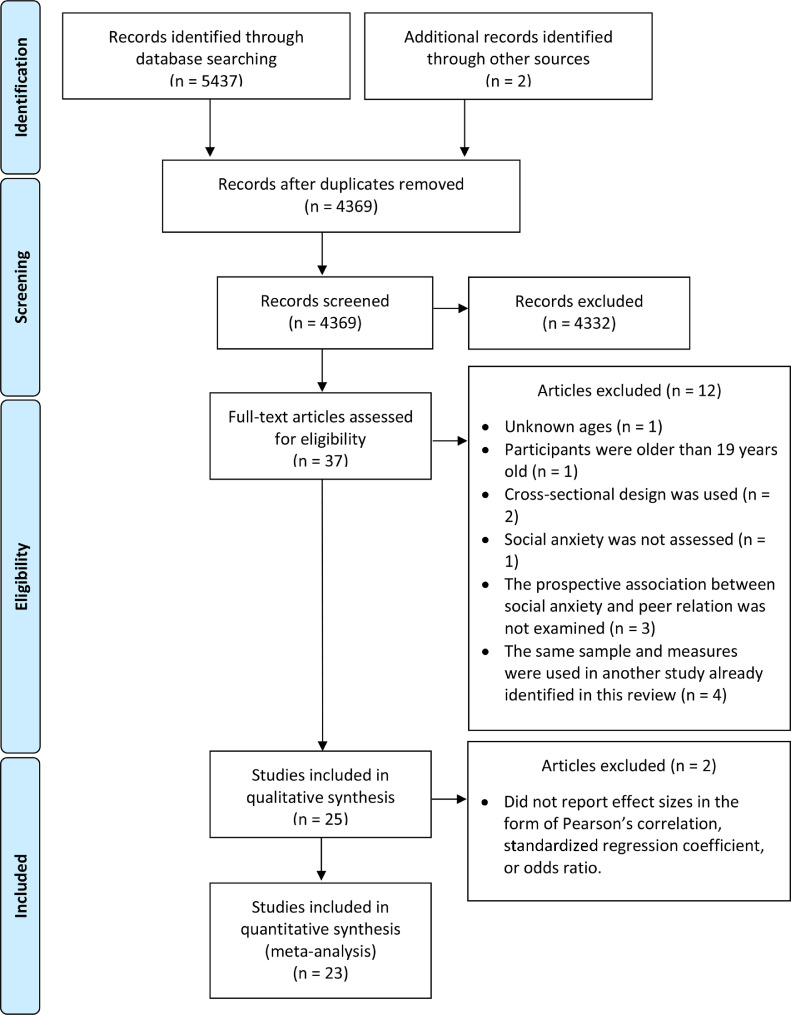
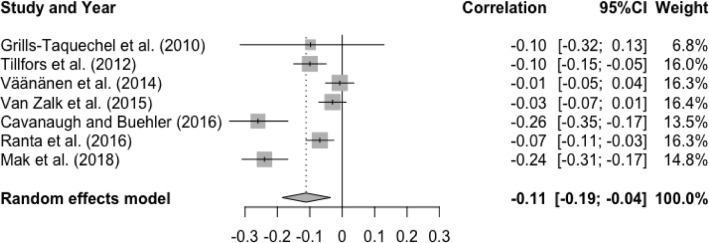
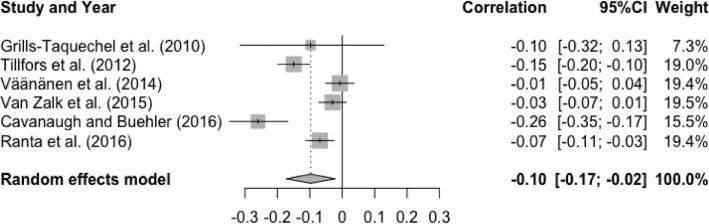
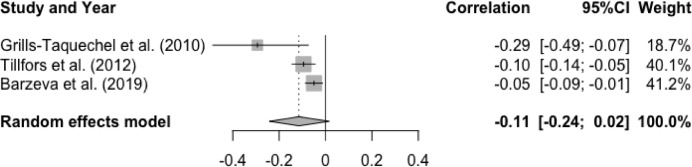
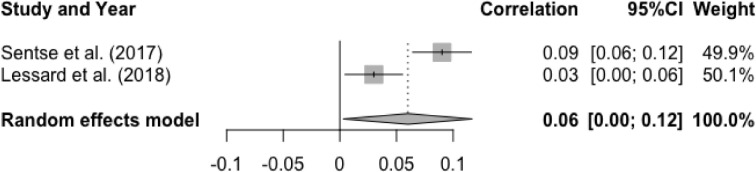
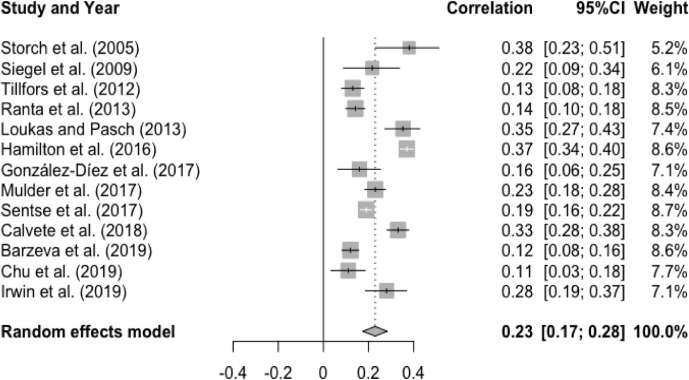
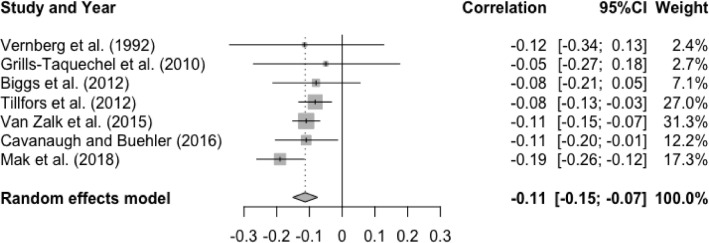
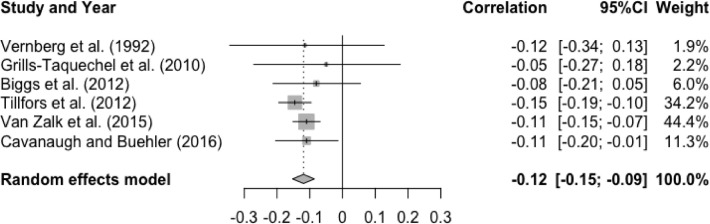
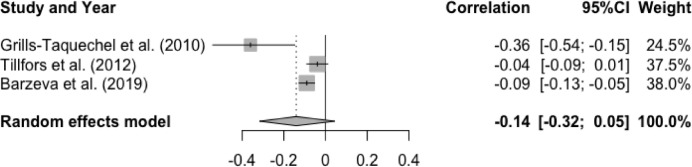
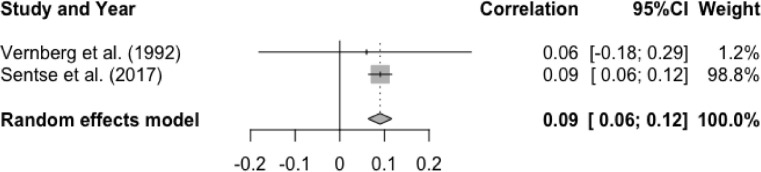
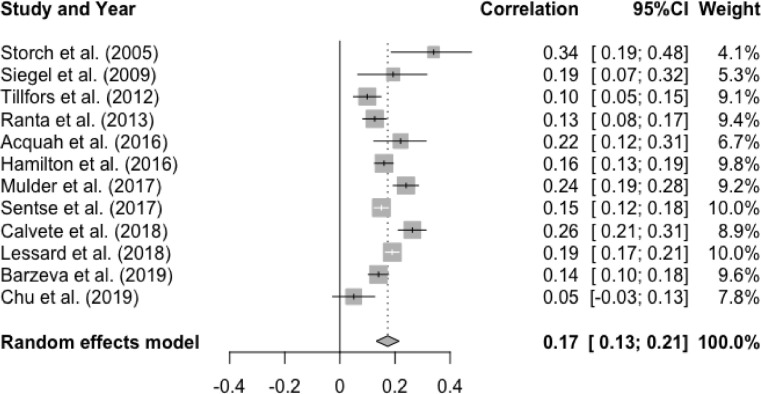
BACKGROUND: During adolescence, peer relationships take precedence and there is a normative increase in social anxiety. Although prospective studies have suggested peer functioning and social anxiety can influence each other, their findings have not been examined systematically. We performed a systematic review and meta-analysis of prospective studies to examine the bidirectional relationship between peer functioning and social anxiety in adolescence. METHODS: EMBASE, PsycINFO, Medline, and PubMed were searched to identify relevant articles. Meta-analysis was conducted to examine the mean effect sizes of prospective associations between social anxiety and four dimensions of peer functioning. Moderator analysis was performed, with age, gender, time interval between baseline and follow-up assessment, and publication year as moderators. RESULTS: Meta-analyses of 23 studies showed that friendship quality (r =-.11), peer rejection (r =-.06), and peer victimization (r =.23) were each associated with later social anxiety, but peer acceptance was not (r =-.11). Social anxiety at baseline was associated with prospective levels of friendship quality (r =-.11), peer rejection (r=.09), and peer victimization (r =.17), but not peer acceptance (r =-.14). Age moderated the association between friendship quality and prospective social anxiety. Other moderator effects were statistically non-significant. LIMITATIONS: Limitations include different classifications of peer functioning, the use of self-report measures, heterogeneity between studies, and underrepresentation of clinical samples. CONCLUSIONS: A significant bidirectional association was found with social anxiety across three dimensions of peer functioning. Psychological prevention and intervention targeting peer functioning and social anxiety are indicated.
Overview
The claims and statistics of this paper haven’t been checked yet.
Run the check — free, no account needed. It reads the open-access text and checks the sources it cites.
Integrity signals
Registry
Cites
Statistics
Figures
Verification
Claims the paper makes
The claims and statistics of this paper haven’t been checked yet.
Run the check — free, no account needed. It reads the open-access text and checks the sources it cites.
Claims other papers make about this one
Each is checked against this paper’s own text: does it say what the citing paper says it does?
The source backs part of the claim, not all of it — or backs it for a different population, condition or comparison.
In the citing paper
“causing significant and persistent impairments in various life domains (e.g., Acquah et al., 2015; Chiu et al., 2021; Hebert et al., 2012; Soohinda & Sampath, 2016).”
From Psychological inflexibility explains social anxiety over time: a mediation analyses with a clinical adolescent sample (2024) · cites this paper as Chiu et al., 2021
Experimental — accuracy not yet measured
Self-check
Percentages, sums and reported differences re-computed from the paper’s own numbers.
The self-check needs the paper’s full text.
Citations
Cites
R: A Language and Environment for Statistical Computing
R Core Team (2000) · doi:10.32614/r.manuals · Cited by 355,893
Preferred Reporting Items for Systematic Reviews and Meta-Analyses: the PRISMA statement
Moher, D., Liberati, A., Tetzlaff, J., Altman, D. G., & for the PRISMA Group (2009) · BMJ · doi:10.1136/bmj.b2535 · Cited by 83,823
Measuring inconsistency in meta-analyses
Higgins, J. P. T., Thompson, S. G., Deeks, J. J., & Altman, D. G. (2003) · BMJ · doi:10.1136/bmj.327.7414.557 · Cited by 63,139
Bias in meta-analysis detected by a simple, graphical test
Egger, M., Smith, G. D., Schneider, M., & Minder, C. (1997) · BMJ · doi:10.1136/bmj.315.7109.629 · Cited by 56,722
Preferred reporting items for systematic reviews and meta-analyses: the PRISMA Statement.
(2009) · PubMed Central · Cited by 44,859
Preferred reporting items for systematic reviews and meta-analyses: The PRISMA statement
Moher, D., Liberati, A., Tetzlaff, J., Altman, D. G., & the PRISMA Group* (2009) · Annals of Internal Medicine · doi:10.7326/0003-4819-151-4-200908180-00135 · Cited by 37,554
Kessler, R. C., Berglund, P., Demler, O., Jin, R., Merikangas, K. R., & Walters, E. E. (2005) · Archives of General Psychiatry · doi:10.1001/archpsyc.62.6.593 · Cited by 20,391
Wang, G., Ma, R., Qiao, G., Wada, K., Aizawa, Y., & Satoh, T. (2015) · Integrative Medicine International · doi:10.1159/000368408 · Cited by 18,762
Diagnostic and Statistical Manual of Mental Disorders, 5th ed.
Carter, M. J. (2014) · Therapeutic Recreation Journal · Cited by 15,154
Borenstein, M., Hedges, L. V., Higgins, J. P. T., & Rothstein, H. R. (2009) · doi:10.1002/9780470743386 · Cited by 14,225
Borenstein, M., Hedges, L. V., Higgins, J. P. T., & Rothstein, H. R. (2021) · doi:10.1002/9781119558378 · Cited by 9,799
Relational Aggression, Gender, and Social-Psychological Adjustment
Crick, N. R., & Grotpeter, J. K. (1995) · Child Development · doi:10.1111/j.1467-8624.1995.tb00900.x · Cited by 3,954
A cognitive-behavioral model of anxiety in social phobia
Rapee, R. M., & Heimberg, R. G. (1997) · Behaviour Research and Therapy · doi:10.1016/s0005-7967(97)00022-3 · Cited by 2,987 · cited 2×
“…for Children (Harter, 1986), FQQ = Friendship Quality Questionnaire (Parker & Asher, 1993), FQQ-SF = Friendship Quality Questionnaire-Short Form (Tu et al., 2014), PSSS-R = Perceived Social Support Scale-Revised (Blumenthal et al., 1987), FSS = Friendship Support Scale (Richman & Bowen, 2004).”
A cognitive model of social phobia
Adrian Wells, A. (1995) · Research Explorer (The University of Manchester) · Cited by 2,701
Relational Aggression, Gender, and Social-Psychological Adjustment
Crick, N. R., & Grotpeter, J. K. (1995) · Child Development · doi:10.2307/1131945 · Cited by 2,373
The Multidimensional Anxiety Scale for Children (MASC): factor structure, reliability, and validity
MARCH, J. S., PARKER, J. D. A., SULLIVAN, K., STALLINGS, P., & CONNERS, C. K. (1997) · Journal of the American Academy of Child & Adolescent Psychiatry · doi:10.1097/00004583-199704000-00019 · Cited by 2,236
Parker, J. G., & Asher, S. R. (1993) · Developmental Psychology · doi:10.1037/0012-1649.29.4.611 · Cited by 2,204
Age and Sex Differences in Perceptions of Networks of Personal Relationships
Furman, W. C., & Buhrmester, D. (1992) · Child Development · doi:10.1111/j.1467-8624.1992.tb03599.x · Cited by 2,096
Chorpita, B. F., Yim, L., Moffitt, C., Umemoto, L. A., & Francis, S. E. (2000) · Behaviour Research and Therapy · doi:10.1016/s0005-7967(99)00130-8 · Cited by 1,966 · cited 2×
“…for Adolescents (Dekking, 1983), RCADS = Revised Children’s Anxiety and Depression Scale (Chorpita et al., 2000), SCS = Self-Consciousness Scale (Chu et al., 2019), SEQ = Social Experience Questionnaire-Self Report Form (Crick & Grotpeter, 1995), RPEQ = Revised Peer Experience Questionnaire…”
BackgroundInfluentialSocial Anxiety among Adolescents: Linkages with Peer Relations and Friendships
La Greca, A. M., & Lopez, N. (1998) · Journal of Abnormal Child Psychology · doi:10.1023/a:1022684520514 · Cited by 1,656
Ma, L.-L., Wang, Y.-Y., Yang, Z.-H., Huang, D., Weng, H., & Zeng, X.-T. (2020) · Military Medical Research · doi:10.1186/s40779-020-00238-8 · Cited by 1,648
On the Use of Beta Coefficients in Meta-Analysis.
Peterson, R. A., & Brown, S. P. (2005) · Journal of Applied Psychology · doi:10.1037/0021-9010.90.1.175 · Cited by 1,643
Psychometric properties of the Social Phobia Inventory (SPIN): New self-rating scale
Connor, K. M., Davidson, J. R. T., Churchill, L. E., Sherwood, A., Weisler, R. H., & Foa, E. (2000) · British Journal of Psychiatry · doi:10.1192/bjp.176.4.379 · Cited by 1,624 · cited 4×
“…al., 1997), SPSQ-C = Social Phobia Screening Questionnaire for Children and Adolescents (Gren-Landell et al., 2009), SPIN = Social Phobia Inventory (Connor et al., 2000), SAS-A = Social Anxiety Scale for Adolescents (La Greca & Lopez, 1998), FI = Friendship Interview (Berndt & Perry, 1986), SSSC =…”
BackgroundInfluentialJones, H. E. (2010) · Paediatric and Perinatal Epidemiology · doi:10.1111/j.1365-3016.2010.01108.x · Cited by 1,447
Adult psychiatric outcomes of bullying and being bullied by peers in childhood and adolescence
Copeland, W. E., Wolke, D., Angold, A., & Costello, E. J. (2013) · JAMA Psychiatry · doi:10.1001/jamapsychiatry.2013.504 · Cited by 1,247
Age and Sex Differences in Perceptions of Networks of Personal Relationships
Furman, W. C., & Buhrmester, D. (1992) · Child Development · doi:10.2307/1130905 · Cited by 1,190
NELSON, E. E., LEIBENLUFT, E., McCLURE, E. B., & PINE, D. S. (2005) · Psychological Medicine · doi:10.1017/s0033291704003915 · Cited by 1,075
Psychometric properties of the revised child anxiety and depression scale in a clinical sample
Chorpita, B. F., Moffitt, C. E., & Gray, J. (2005) · Behaviour Research and Therapy · doi:10.1016/j.brat.2004.02.004 · Cited by 905
Social Anxiety Scale for Children-Revised: Factor Structure and Concurrent Validity
Greca, A. M. L., & Stone, W. L. (1993) · Journal of Clinical Child Psychology · doi:10.1207/s15374424jccp2201_2 · Cited by 891
Research strategies for capturing transactional models of development: The limits of the possible
SAMEROFF, A. J., & MACKENZIE, M. J. (2003) · Development and Psychopathology · doi:10.1017/s0954579403000312 · Cited by 888
WITTCHEN, H.-U., STEIN, M. B., & KESSLER, R. C. (1999) · Psychological Medicine · doi:10.1017/s0033291798008174 · Cited by 745 · cited 1×
“…and social anxiety because youth who develop extreme and persistent fear and avoidance of social situations (i.e. SAD) are at greater risk of developing subsequent depression (Beesdo et al., 2007), alcohol use (Black et al., 2016), and other types of anxiety disorders (Wittchen et al., 1999).”
BackgroundBeesdo, K., Bittner, A., Pine, D. S., Stein, M. B., Höfler, M., Lieb, R., & Wittchen, H.-U. (2007) · Archives of General Psychiatry · doi:10.1001/archpsyc.64.8.903 · Cited by 731
Bias in meta-analysis detected by a simple, graphical
Stuck, A. E., Rubenstein, L. Z., Wieland, D., Vandenbroucke, J. P., Irwig, L., Macaskill, P., Berry, G., Glasziou, P., Seagroatt, V., Stratton, I., et al. (1998) · BMJ · doi:10.1136/bmj.316.7129.469 · Cited by 699
Social support, type A behavior, and coronary artery disease.
Blumenthal, J., Burg, M. M., Barefoot, J. C., Williams, R. B., Haney, T. L., & Zimet, G. D. (1987) · Psychosomatic Medicine · doi:10.1097/00006842-198707000-00002 · Cited by 645
Cautionary Statement for Forensic Use of DSM-5
(2014) · Diagnostic and Statistical Manual of Mental Disorders, 5th Edition · doi:10.1176/appi.books.9780890425596.744053 · Cited by 624
Rigby, K., & Slee, P. T. (1993) · The Journal of Social Psychology · doi:10.1080/00224545.1993.9712116 · Cited by 512
Interpersonal processes in social phobia
Alden, L. E., & Taylor, C. T. (2004) · Clinical Psychology Review · doi:10.1016/j.cpr.2004.07.006 · Cited by 471
A Cognitive Behavioral Model of Social Anxiety Disorder
Heimberg, R. G., Brozovich, F. A., & Rapee, R. M. (2010) · Social Anxiety · doi:10.1016/b978-0-12-375096-9.00015-8 · Cited by 407 · cited 1×
“…mechanism is via social beliefs; specifically, cognitive behavioral models suggest cognitions are central to social anxiety (Clark & Wells, 1995; Heimberg et al., 2010; Rapee & Heimberg, 1997), and it may be that positive peer interactions serve as evidence for positive (e.g. “I am acceptable”)…”
BackgroundChildren's perceptions of friendships as supportive relationships.
Berndt, T. J., & Perry, T. B. (1986) · Developmental Psychology · doi:10.1037/0012-1649.22.5.640 · Cited by 370
Peer Victimization and Social Anxiety in Adolescents: Prospective and Reciprocal Relationships
Siegel, R. S., Greca, A. M. L., & Harrison, H. M. (2009) · Journal of Youth and Adolescence · doi:10.1007/s10964-009-9392-1 · Cited by 358
Kingery, J. N., Erdley, C. A., & Marshall, K. C. (2011) · Merrill-palmer Quarterly · doi:10.1353/mpq.2011.0012 · Cited by 324
Schwartz-Mette, R. A., Shankman, J., Dueweke, A. R., Borowski, S., & Rose, A. J. (2020) · Psychological Bulletin · doi:10.1037/bul0000239 · Cited by 314
Peer victimization and social anxiety in adolescence: a prospective study
Storch, E. A., Masia‐Warner, C., Crisp, H., & Klein, R. G. (2005) · Aggressive Behavior · doi:10.1002/ab.20093 · Cited by 299
Social anxiety and peer relationships in early adolescence: a prospective analysis
Vernberg, E. M., Abwender, D. A., Ewell, K. K., & Beery, S. H. (1992) · Journal of Clinical Child Psychology · doi:10.1207/s15374424jccp2102_11 · Cited by 291
Wong, Q. J. J., & Rapee, R. M. (2016) · Journal of Affective Disorders · doi:10.1016/j.jad.2016.05.069 · Cited by 277
Social and academic functioning in adolescents with anxiety disorders: A systematic review
de Lijster, J. M., Dieleman, G. C., Utens, E. M. W. J., Dierckx, B., Wierenga, M., Verhulst, F. C., & Legerstee, J. S. (2018) · Journal of Affective Disorders · doi:10.1016/j.jad.2018.01.008 · Cited by 273
SELF-PERCEPTION PROFILE FOR CHILDREN: MANUAL AND QUESTIONNAIRES
Harter, S. (2012) · Cited by 270
Prinstein, M. J., Boergers, J., Spirito, A., Little, T. D., & GRAPENTINE, W. L. (2000) · Journal of Clinical Child Psychology · doi:10.1207/s15374424jccp2903_10 · Cited by 268
Leigh, E., & Clark, D. M. (2018) · Clinical Child and Family Psychology Review · doi:10.1007/s10567-018-0258-5 · Cited by 260
Self-citationEpkins, C. C., & Heckler, D. R. (2011) · Clinical Child and Family Psychology Review · doi:10.1007/s10567-011-0101-8 · Cited by 233
Comorbid Anxiety and Depressive Symptoms in Children and Adolescents
Melton, T., Croarkin, P. E., Strawn, J. R., & McClintock, S. M. (2016) · Journal of Psychiatric Practice · doi:10.1097/pra.0000000000000132 · Cited by 231
Quality of life and social production functions: A framework for understanding health effects
Ormel, J., Lindenberg, S. M., Steverink, N., & VonKorff, M. (1997) · Social Science & Medicine · doi:10.1016/s0277-9536(97)00032-4 · Cited by 219
Applying Depression-Distortion Hypotheses to the Assessment of Peer Victimization in Adolescents
Reyes, A. D. L., & Prinstein, M. J. (2004) · Journal of Clinical Child & Adolescent Psychology · doi:10.1207/s15374424jccp3302_14 · Cited by 204 · cited 2×
“…(Chu et al., 2019), SEQ = Social Experience Questionnaire-Self Report Form (Crick & Grotpeter, 1995), RPEQ = Revised Peer Experience Questionnaire (de Los Reyes & Prinstein, 2004), PVQ = Peer Victimization Questionnaire (Kaltiala-Heino et al., 1999), PRQ = Peer Relations Questionnaire for…”
BackgroundInfluentialStapinski, L. A., Bowes, L., Dieter Wolke, C., Pearson, R. M., Mahedy, L., Button, K. S., Lewis, G., & Araya, R. (2014) · Depression and Anxiety · doi:10.1002/da.22270 · Cited by 202
Bowes, L., Joinson, C. J., Dieter Wolke, C., & Lewis, G. (2015) · BMJ · doi:10.1136/bmj.h2469 · Cited by 194
Vernberg, E. M. (1990) · Research on Child and Adolescent Psychopathology · doi:10.1007/bf00910730 · Cited by 194 · cited 2×
“…Scale (Garcia-Lopez et al., 2001), SAS-A = Social Anxiety Scale for Adolescents (La Greca & Lopez, 1998), SASC-R = Social Anxiety Scale for Children-Revised (La Greca & Stone, 1993), REQ = Rejection Experiences Questionnaire (Vernberg, 1990), FN = Friendship Nomination (Kerr et al., 2007).”
Tuisku, V., Kiviruusu, O. H., Pelkonen, M. U. I., Karlsson, L., Strandholm, T., & MARTTUNEN, M. J. (2013) · Journal of Affective Disorders · doi:10.1016/j.jad.2013.09.031 · Cited by 170
Prospective links between social anxiety and adolescent peer relations
Tillfors, M., Persson, S., Willén, M., & Burk, W. J. (2012) · Journal of Adolescence · doi:10.1016/j.adolescence.2012.04.008 · Cited by 165
López, L. J. G., Olivares, J., Montesinos, M. D. H., Beidel, D. C., & Turner, S. M. (2001) · Journal of Psychopathology and Behavioral Assessment · doi:10.1023/a:1011043607878 · Cited by 164
Adolescent loneliness and social anxiety
Cavanaugh, A. M., & Buehler, C. A. (2015) · Journal of Social and Personal Relationships · doi:10.1177/0265407514567837 · Cited by 149
Adolescent loneliness and social anxiety as predictors of bullying victimisation
Acquah, E. O., Topalli, P.-Z., Wilson, M. L., Junttila, N., & Niemi, P. M. (2016) · International Journal of Adolescence and Youth · doi:10.1080/02673843.2015.1083449 · Cited by 148
Sentse, M., Prinzie, P., & Salmivalli, C. (2016) · Research on Child and Adolescent Psychopathology · doi:10.1007/s10802-016-0216-y · Cited by 148
Westenberg, P. M., Gullone, E., Bokhorst, C. L., Heyne, D. A., & King, N. J. (2007) · British Journal of Developmental Psychology · doi:10.1348/026151006x173099 · Cited by 132
Chu, X., Fan, C., Lian, S.-L., & Zhou, Z. (2018) · Journal of Affective Disorders · doi:10.1016/j.jad.2018.12.103 · Cited by 129 · cited 2×
“One possible mechanism is via social beliefs; specifically, cognitive behavioral models suggest cognitions are central to social anxiety (Clark & Wells, 1995; Heimberg et al., 2010; Rapee & Heimberg, 1997), and it may be that positive peer interactions serve as evidence for positive (e.g. “I am…”
BackgroundFuture Directions in Peer Relations Research
Prinstein, M. J., & Giletta, M. (2020) · Journal of Clinical Child & Adolescent Psychology · doi:10.1080/15374416.2020.1756299 · Cited by 122 · cited 1×
“Some studies reported standardized regression coefficients (Biggs et al., 2012; Grills-Taquechel et al., 2010; Hamilton et al., 2016; Storch et al., 2005), or odds ratios (Ranta et al., 2013, 2016; Väänänen et al., 2014).”
BackgroundA longitudinal examination of factors predicting anxiety during the transition to middle school
Grills, A. E., Norton, P. J., & Ollendick, T. H. (2010) · Anxiety Stress & Coping · doi:10.1080/10615800903494127 · Cited by 121
Hamilton, J. L., Potter, C. M., Olino, T. M., Abramson, L. Y., Heimberg, R. G., & Alloy, L. B. (2015) · Research on Child and Adolescent Psychopathology · doi:10.1007/s10802-015-0049-0 · Cited by 111
Silvestre, J. S., Nadal, R. A., S, M. A. P., & Ferr�, N. (1997) · Depression and Anxiety · doi:10.1002/(sici)1520-6394(1997)5:1 · Cited by 110
Continued Bullying Victimization in Adolescents: Maladaptive Schemas as a Mediational Mechanism
Calvete, E., Fernández‐González, L., González‐Cabrera, J. M., & Gámez‐Guadix, M. (2017) · Journal of Youth and Adolescence · doi:10.1007/s10964-017-0677-5 · Cited by 105 · cited 2×
“…Van Zalk & Van Zalk, 2015; Vernberg et al., 1992), intimacy (Biggs et al., 2012; Mak et al., 2018; Van Zalk & Van Zalk, 2015; Vernberg et al., 1992), and peer support (Cavanaugh & Buehler, 2016; Grills-Taquechel et al., 2010; Ranta et al., 2016; Tillfors et al., 2012; Väänänen et al., 2014).”
BackgroundPeer victimization and social phobia: a follow-up study among adolescents
Ranta, K., Kaltiala‐Heino, R., Fröjd, S. A., & MARTTUNEN, M. J. (2012) · Social Psychiatry and Psychiatric Epidemiology · doi:10.1007/s00127-012-0583-9 · Cited by 100
Barzeva, S. A., Richards, J. S., Meeus, W. H. J., & Oldehinkel, A. J. (2020) · Development and Psychopathology · doi:10.1017/s0954579419001354 · Cited by 95
Social Anxiety and Adolescents’ Friendships: The Role of Social Withdrawal
Biggs, B. K., Vernberg, E. M., & Wu, Y. P. (2012) · The Journal of Early Adolescence · doi:10.1177/0272431611426145 · Cited by 90
Positive peer relationships and academic achievement across early and midadolescence
Gallardo, L. O., Barrasa, Á., & Guevara-Viejó, F. (2016) · Social Behavior and Personality An International Journal · doi:10.2224/sbp.2016.44.10.1637 · Cited by 86
Loukas, A., & Pasch, K. E. (2012) · The Journal of Early Adolescence · doi:10.1177/0272431611435117 · Cited by 85
Caballo, V. E., Salazar, I. C., Muñiz, M. J. I., Martínez, B. A., & Hofmann, S. G. (2011) · Behavior Therapy · doi:10.1016/j.beth.2011.07.001 · Cited by 74
Alink, L. R. A., Cyr, C. P., & Madigan, S. L. (2019) · Development and Psychopathology · doi:10.1017/s0954579418001517 · Cited by 71
Cognitive Therapy for Social Anxiety Disorder in Adolescents: A Development Case Series
Leigh, E., & Clark, D. M. (2016) · Behavioural and Cognitive Psychotherapy · doi:10.1017/s1352465815000715 · Cited by 64
Self-citationDemol, K., Leflot, G., Verschueren, K., & Colpin, H. (2020) · Journal of Youth and Adolescence · doi:10.1007/s10964-020-01269-z · Cited by 62
Allen, J. P., Uchino, B. N., & Hafen, C. A. (2015) · Psychological Science · doi:10.1177/0956797615594118 · Cited by 61
Hager, A. D., & Leadbeater, B. J. R. (2015) · Journal of Adolescent Health · doi:10.1016/j.jadohealth.2015.10.014 · Cited by 60
La Greca, A. M., Ehrenreich-May, J., Mufson, L., & Chan, S. (2016) · Child & Youth Care Forum · doi:10.1007/s10566-016-9363-0 · Cited by 58
The Role of Shame in the Relation Between Peer Victimization and Mental Health Outcomes
Irwin, A., Li, J., Craig, W., & Hollenstein, T. (2016) · Journal of Interpersonal Violence · doi:10.1177/0886260516672937 · Cited by 58
The role of family for youth friendships: examining a social anxiety mechanism
Mak, H. W., Fosco, G. M., & Feinberg, M. E. (2018) · Journal of Youth and Adolescence · doi:10.1007/s10964-017-0738-9 · Cited by 58
Low perceived social support predicts later depression but not social phobia in middle adolescence
Väänänen, J.-M., MARTTUNEN, M. J., Helminen, M., & Kaltiala‐Heino, R. (2014) · Health Psychology and Behavioral Medicine · doi:10.1080/21642850.2014.966716 · Cited by 50
Zalk, N. V., & van Zalk, M. H. W. (2014) · Journal of Personality · doi:10.1111/jopy.12108 · Cited by 49 · cited 2×
“…(Biggs et al., 2012; Mak et al., 2018; Van Zalk & Van Zalk, 2015; Vernberg et al., 1992), intimacy (Biggs et al., 2012; Mak et al., 2018; Van Zalk & Van Zalk, 2015; Vernberg et al., 1992), and peer support (Cavanaugh & Buehler, 2016; Grills-Taquechel et al., 2010; Ranta et al., 2016;…”
BackgroundDion, J., Matte‐Gagné, C., Daigneault, I., Blackburn, M.-È., Hébert, M., McDuff, P., Auclair, J., Veillette, S., & Perron, M. (2015) · Journal of Affective Disorders · doi:10.1016/j.jad.2015.08.074 · Cited by 41
Gren‐Landell, M., Björklind, A., Tillfors, M., Furmark, T., Svedin, C. G., & Andersson, G. (2009) · Child and Adolescent Psychiatry and Mental Health · doi:10.1186/1753-2000-3-36 · Cited by 38
Students' Perceptions of the Impact of the College English Test
Li, H., Zhong, Q., & Suen, H. K. (2012) · Language Testing in Asia · doi:10.1186/2229-0443-2-3-77 · Cited by 37
Social phobia and educational and interpersonal impairments in adolescence: a prospective study
Ranta, K., La Greca, A. M., Kaltiala-Heino, R., & Marttunen, M. (2016) · Child Psychiatry & Human Development · doi:10.1007/s10578-015-0600-9 · Cited by 36 · cited 2×
“…beliefs; specifically, cognitive behavioral models suggest cognitions are central to social anxiety (Clark & Wells, 1995; Heimberg et al., 2010; Rapee & Heimberg, 1997), and it may be that positive peer interactions serve as evidence for positive (e.g. “I am acceptable”) and against negative…”
BackgroundPeers and Problem Behavior: Have We Missed Something?
Kerr, M., Stattin, H., & Kiesner, J. (2006) · doi:10.1002/9780470713211.ch8 · Cited by 35
Lessard, L. M., & Juvonen, J. (2018) · Journal of Research on Adolescence · doi:10.1111/jora.12388 · Cited by 35
Viechtbauer, W. (2015) · Cited by 34
González-Díez, Z., Orue, I., & Calvete, E. (2016) · Anxiety Stress & Coping · doi:10.1080/10615806.2016.1188920 · Cited by 31
Peer Rejection and Physical Health Problems in Early Adolescence
Brendgen, M. R., & Vitaro, F. (2008) · Journal of Developmental & Behavioral Pediatrics · doi:10.1097/dbp.0b013e318168be15 · Cited by 30
Brigidi, B. D., Achenbach, T. M., Dumenci, L., & NEWHOUSE, P. A. (2010) · International Journal of Geriatric Psychiatry · doi:10.1002/gps.2459 · Cited by 23
Freitas, M., dos Santos, A. J., Ribeiro, O., Daniel, J. R., & Rubin, K. H. (2019) · Frontiers in Psychology · doi:10.3389/fpsyg.2018.02783 · Cited by 21
Peer rejection as a precursor of romantic dysfunction in adolescence: Can friendships protect?
Schacter, H. L., Lessard, L. M., & Juvonen, J. (2019) · Journal of Adolescence · doi:10.1016/j.adolescence.2019.10.004 · Cited by 19
Tu, K. M., Erath, S. A., Pettit, G. S., & El‐Sheikh, M. (2014) · Developmental Psychology · doi:10.1037/a0038263 · Cited by 16
Mulder, S. F., Hutteman, R., & van Aken, M. A. G. (2016) · International Journal of Behavioral Development · doi:10.1177/0165025416662344 · Cited by 9
(2001) · Medical Entomology and Zoology
Moher (2009) · doi:10.1371/journal.pmed1000097
Cited by
Sorted by citations
Shao, Y., & Kang, S. (2022) · Frontiers in Psychology · doi:10.3389/fpsyg.2022.938756 · Cited by 124
“It not only reduces adolescents’ social anxiety, shapes their moral cognition and behaviors, but also enhances their engagement, which contributes to their academic successes (Fredricks, 2011; Tillfors et al., 2012; Zulfiqar, 2020; Chiu et al., 2021).”
BackgroundBrumariu, L. E., Waslin, S. M., Gastelle, M., Kochendorfer, L. B., & Kerns, K. A. (2022) · Development and Psychopathology · doi:10.1017/s0954579422000323 · Cited by 103
Social Anxiety and Suicidality in Youth: A Systematic Review and Meta-analysis
Leigh, E., Chiu, K., & Ballard, E. D. (2023) · Research on Child and Adolescent Psychopathology · doi:10.1007/s10802-022-00996-0 · Cited by 51
Self-citationLeigh, E., & Clark, D. M. (2022) · Journal of Child Psychology and Psychiatry · doi:10.1111/jcpp.13680 · Cited by 39
Self-citationA meta-analytic review of the relations between anxiety and empathy
Nair, T. K., Waslin, S. M., Rodrigues, G. A., Datta, S., Moore, M., & Brumariu, L. E. (2023) · Journal of Anxiety Disorders · doi:10.1016/j.janxdis.2023.102795 · Cited by 38
Metadata
- Authors
- Chiu, K., Clark, D. M., & Leigh, E.
- Affiliations
- King's College London (GB)
- University of Oxford (GB)
- Corresponding author
- Leigh, Eleanor
- Venue
- Journal of Affective Disorders
- Publisher
- Elsevier BV
- Published
- 2021-01
- Volume
- 279
- Pages
- 650-661
- ISSN
- 0165-0327 (ISSN-L)
- PMC
- PMC7758784
- OpenAlex
- W3095027428
- Cited by
- 155
- References
- 97
- Citations by year
- 2026: 40 · 2025: 38 · 2024: 26 · 2023: 26 · 2022: 17 · 2021: 8
- FWCI
- 1.01
- Type
- journal article
- Language
- en
- Open access
- hybrid
- doi.org
- Licence
- Locations
- Journal of Affective Disorders (publishedVersion, cc-by)
- Europe PMC (PubMed Central) (publishedVersion, cc-by)
- PubMed Central (publishedVersion, cc-by)
- PubMed (publishedVersion)
- Research Portal (King's College London) (publishedVersion, other-oa)
- UEA Digital Repository (University of East Anglia) (submittedVersion)
- Funders
- King's College London
- Wellcome Trust (102176/Z/13/Z, WT069777)
- National Institute for Health and Care Research (NF-SI-0512-10132)
- Topics
- Social Sciences › Psychology › Clinical Psychology › Child and Adolescent Psychosocial and Emotional Development
- Social Sciences › Psychology › Social Psychology › Bullying, Victimization, and Aggression
- Social Sciences › Psychology › Experimental and Cognitive Psychology › Anxiety, Depression, Psychometrics, Treatment, Cognitive Processes
- Keywords
- social anxiety, peer functioning, adolescents, friendship quality, peer rejection, peer victimization, peer acceptance, bidirectional relationship, prospective associations, age moderation
- MeSH terms
- Adolescent, Anxiety, Humans, Peer Group, Prospective Studies, Crime Victims, Bullying
About these checks
Registry, retraction, Cites and statistics results are computed, not judged, with one exception: a printed reference that no index lists is read once by a model before it counts as a citation error. Claims are extracted by a model and kept only when their quote appears verbatim in the text; each cited source is then checked, with a model’s help, for whether it says what the claim relies on. Those verdicts can be wrong — read the claim’s quote and the cited source before relying on one.
Statistics and arithmetic are recomputed, not judged.
Confidence bands are shown only for fields calibrated on our annotated test set. None is calibrated yet, so no band is shown.
What counts as a claim ›How we measure confidence ›How we check this ›
Are you an author, or do you see a problem with this page? Request a review
