

The DOI matches its Crossref record; 100 of the 101 references it cites were found in a registry or an index.
Prospective associations between peer functioning and social anxiety in adolescents: A systematic review and meta-analysis
Open accessAbstract
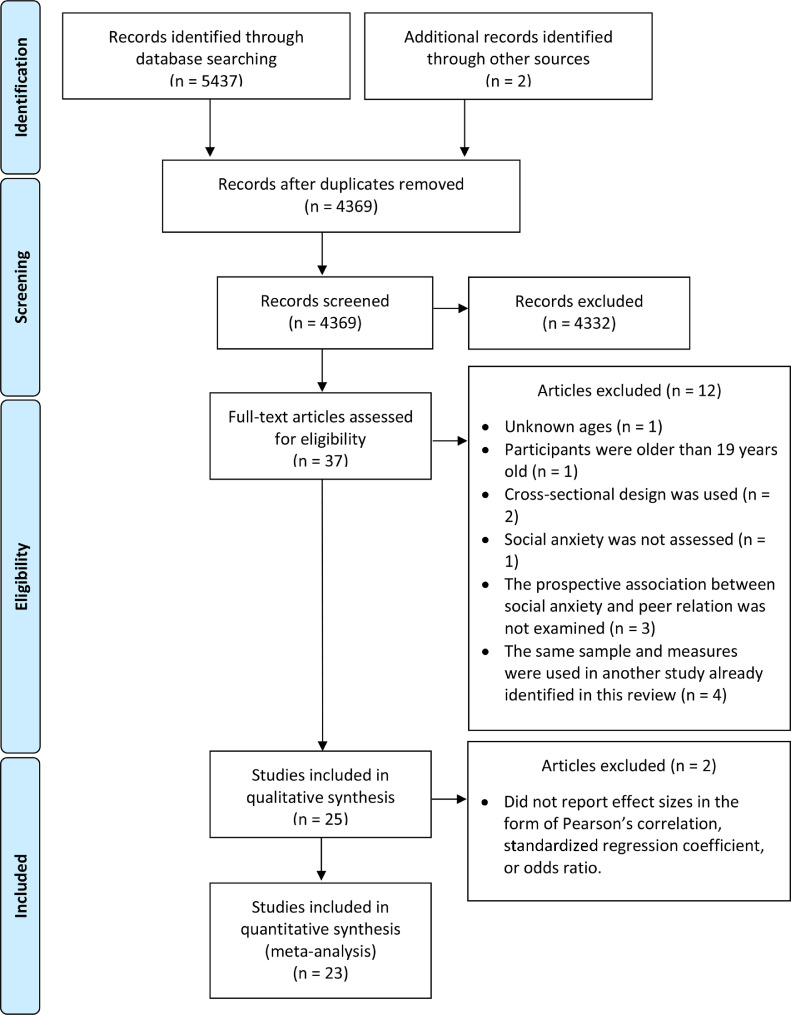
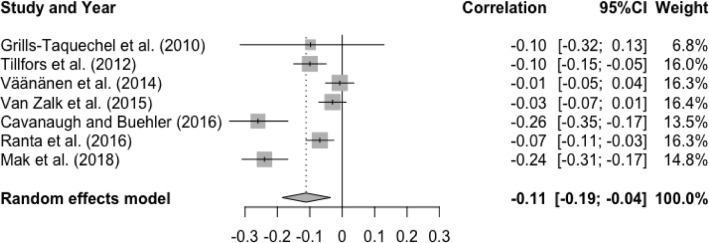
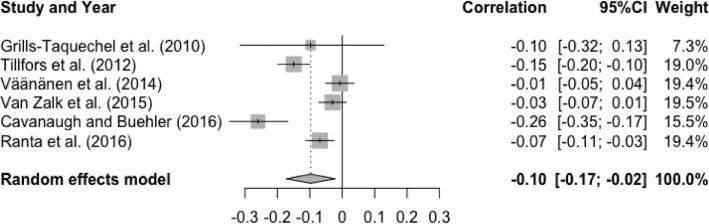
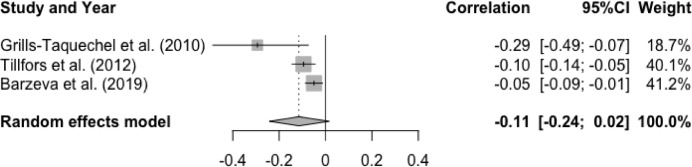
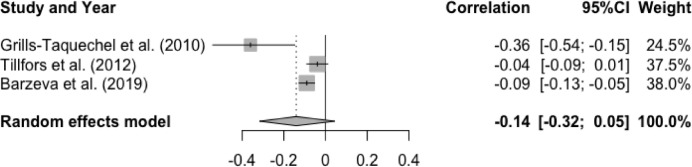
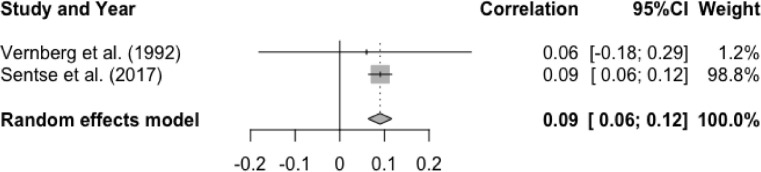
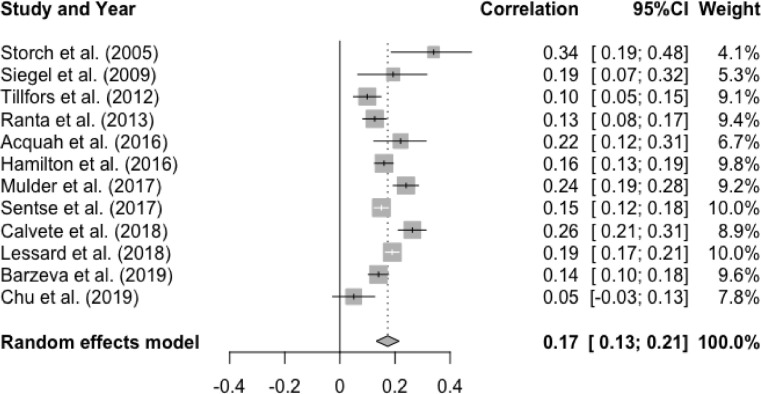
BACKGROUND: During adolescence, peer relationships take precedence and there is a normative increase in social anxiety. Although prospective studies have suggested peer functioning and social anxiety can influence each other, their findings have not been examined systematically. We performed a systematic review and meta-analysis of prospective studies to examine the bidirectional relationship between peer functioning and social anxiety in adolescence. METHODS: EMBASE, PsycINFO, Medline, and PubMed were searched to identify relevant articles. Meta-analysis was conducted to examine the mean effect sizes of prospective associations between social anxiety and four dimensions of peer functioning. Moderator analysis was performed, with age, gender, time interval between baseline and follow-up assessment, and publication year as moderators. RESULTS: Meta-analyses of 23 studies showed that friendship quality (r =-.11), peer rejection (r =-.06), and peer victimization (r =.23) were each associated with later social anxiety, but peer acceptance was not (r =-.11). Social anxiety at baseline was associated with prospective levels of friendship quality (r =-.11), peer rejection (r=.09), and peer victimization (r =.17), but not peer acceptance (r =-.14). Age moderated the association between friendship quality and prospective social anxiety. Other moderator effects were statistically non-significant. LIMITATIONS: Limitations include different classifications of peer functioning, the use of self-report measures, heterogeneity between studies, and underrepresentation of clinical samples. CONCLUSIONS: A significant bidirectional association was found with social anxiety across three dimensions of peer functioning. Psychological prevention and intervention targeting peer functioning and social anxiety are indicated.
Overview
The claims and statistics of this paper haven’t been checked yet.
Run the check — free, no account needed. It reads the open-access text and checks the sources it cites.
Integrity signals
Registry
Cites
Statistics
Figures
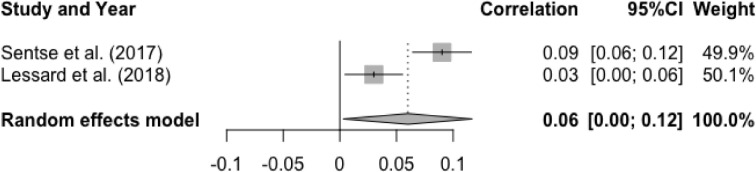
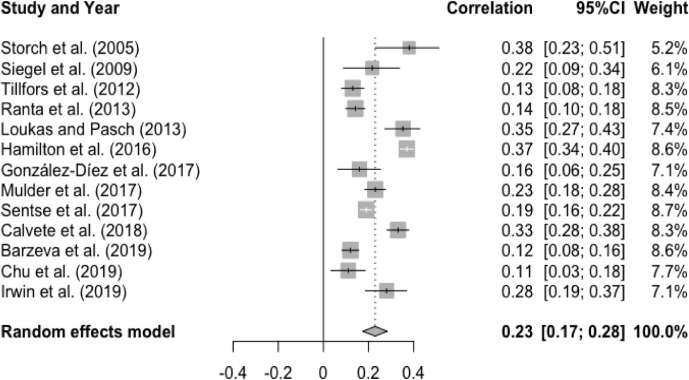
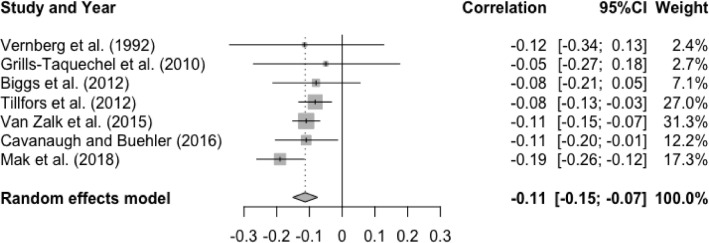
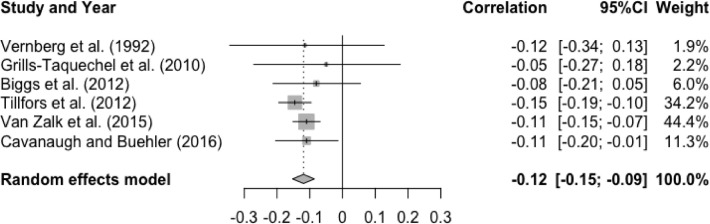
Verification
Claims the paper makes
The claims and statistics of this paper haven’t been checked yet.
Run the check — free, no account needed. It reads the open-access text and checks the sources it cites.
Claims other papers make about this one
Each is checked against this paper’s own text: does it say what the citing paper says it does?
The source backs part of the claim, not all of it — or backs it for a different population, condition or comparison.
In the citing paper
“causing significant and persistent impairments in various life domains (e.g., Acquah et al., 2015; Chiu et al., 2021; Hebert et al., 2012; Soohinda & Sampath, 2016).”
From Psychological inflexibility explains social anxiety over time: a mediation analyses with a clinical adolescent sample (2024) · cites this paper as Chiu et al., 2021
Experimental — accuracy not yet measured
Self-check
Percentages, sums and reported differences re-computed from the paper’s own numbers.
The self-check needs the paper’s full text.
Citations
Cites
R: A Language and Environment for Statistical Computing
R Core Team (2000) · doi:10.32614/r.manuals · Cited by 355,893
Preferred Reporting Items for Systematic Reviews and Meta-Analyses: the PRISMA statement
Moher, D., Liberati, A., Tetzlaff, J., Altman, D. G., & for the PRISMA Group (2009) · BMJ · doi:10.1136/bmj.b2535 · Cited by 83,823
Measuring inconsistency in meta-analyses
Higgins, J. P. T., Thompson, S. G., Deeks, J. J., & Altman, D. G. (2003) · BMJ · doi:10.1136/bmj.327.7414.557 · Cited by 63,139
Bias in meta-analysis detected by a simple, graphical test
Egger, M., Smith, G. D., Schneider, M., & Minder, C. (1997) · BMJ · doi:10.1136/bmj.315.7109.629 · Cited by 56,722
Preferred reporting items for systematic reviews and meta-analyses: the PRISMA Statement.
(2009) · PubMed Central · Cited by 44,859
Preferred reporting items for systematic reviews and meta-analyses: The PRISMA statement
Moher, D., Liberati, A., Tetzlaff, J., Altman, D. G., & the PRISMA Group* (2009) · Annals of Internal Medicine · doi:10.7326/0003-4819-151-4-200908180-00135 · Cited by 37,554
Kessler, R. C., Berglund, P., Demler, O., Jin, R., Merikangas, K. R., & Walters, E. E. (2005) · Archives of General Psychiatry · doi:10.1001/archpsyc.62.6.593 · Cited by 20,391
Wang, G., Ma, R., Qiao, G., Wada, K., Aizawa, Y., & Satoh, T. (2015) · Integrative Medicine International · doi:10.1159/000368408 · Cited by 18,762
Diagnostic and Statistical Manual of Mental Disorders, 5th ed.
Carter, M. J. (2014) · Therapeutic Recreation Journal · Cited by 15,154
Borenstein, M., Hedges, L. V., Higgins, J. P. T., & Rothstein, H. R. (2009) · doi:10.1002/9780470743386 · Cited by 14,225
Cited by
Sorted by citations
Shao, Y., & Kang, S. (2022) · Frontiers in Psychology · doi:10.3389/fpsyg.2022.938756 · Cited by 124
“It not only reduces adolescents’ social anxiety, shapes their moral cognition and behaviors, but also enhances their engagement, which contributes to their academic successes (Fredricks, 2011; Tillfors et al., 2012; Zulfiqar, 2020; Chiu et al., 2021).”
BackgroundBrumariu, L. E., Waslin, S. M., Gastelle, M., Kochendorfer, L. B., & Kerns, K. A. (2022) · Development and Psychopathology · doi:10.1017/s0954579422000323 · Cited by 103
Social Anxiety and Suicidality in Youth: A Systematic Review and Meta-analysis
Leigh, E., Chiu, K., & Ballard, E. D. (2023) · Research on Child and Adolescent Psychopathology · doi:10.1007/s10802-022-00996-0 · Cited by 51
Self-citationLeigh, E., & Clark, D. M. (2022) · Journal of Child Psychology and Psychiatry · doi:10.1111/jcpp.13680 · Cited by 39
Self-citationA meta-analytic review of the relations between anxiety and empathy
Nair, T. K., Waslin, S. M., Rodrigues, G. A., Datta, S., Moore, M., & Brumariu, L. E. (2023) · Journal of Anxiety Disorders · doi:10.1016/j.janxdis.2023.102795 · Cited by 38
Metadata
- Authors
- Chiu, K., Clark, D. M., & Leigh, E.
- Affiliations
- King's College London (GB)
- University of Oxford (GB)
- Corresponding author
- Leigh, Eleanor
- Venue
- Journal of Affective Disorders
- Publisher
- Elsevier BV
- Published
- 2021-01
- Volume
- 279
- Pages
- 650-661
- ISSN
- 0165-0327 (ISSN-L)
- PMC
- PMC7758784
- OpenAlex
- W3095027428
- Cited by
- 155
- References
- 97
- Citations by year
- 2026: 40 · 2025: 38 · 2024: 26 · 2023: 26 · 2022: 17 · 2021: 8
- FWCI
- 1.01
- Type
- journal article
- Language
- en
- Open access
- hybrid
- doi.org
- Licence
- Locations
- Journal of Affective Disorders (publishedVersion, cc-by)
- Europe PMC (PubMed Central) (publishedVersion, cc-by)
- PubMed Central (publishedVersion, cc-by)
- PubMed (publishedVersion)
- Research Portal (King's College London) (publishedVersion, other-oa)
- UEA Digital Repository (University of East Anglia) (submittedVersion)
- Funders
- King's College London
- Wellcome Trust (102176/Z/13/Z, WT069777)
- National Institute for Health and Care Research (NF-SI-0512-10132)
- Topics
- Social Sciences › Psychology › Clinical Psychology › Child and Adolescent Psychosocial and Emotional Development
- Social Sciences › Psychology › Social Psychology › Bullying, Victimization, and Aggression
- Social Sciences › Psychology › Experimental and Cognitive Psychology › Anxiety, Depression, Psychometrics, Treatment, Cognitive Processes
- Keywords
- social anxiety, peer functioning, adolescents, friendship quality, peer rejection, peer victimization, peer acceptance, bidirectional relationship, prospective associations, age moderation
- MeSH terms
- Adolescent, Anxiety, Humans, Peer Group, Prospective Studies, Crime Victims, Bullying
About these checks
Registry, retraction, Cites and statistics results are computed, not judged, with one exception: a printed reference that no index lists is read once by a model before it counts as a citation error. Claims are extracted by a model and kept only when their quote appears verbatim in the text; each cited source is then checked, with a model’s help, for whether it says what the claim relies on. Those verdicts can be wrong — read the claim’s quote and the cited source before relying on one.
Statistics and arithmetic are recomputed, not judged.
Confidence bands are shown only for fields calibrated on our annotated test set. None is calibrated yet, so no band is shown.
What counts as a claim ›How we measure confidence ›How we check this ›
Are you an author, or do you see a problem with this page? Request a review
