

The DOI matches its Crossref record; 45 of the 45 references it cites were found in a registry or an index.
CSF biomarkers of Alzheimer's disease concord with amyloid‐β PET and predict clinical progression: A study of fully automated immunoassays in BioFINDER and ADNI cohorts
Open accessAbstract
Introduction: We studied whether fully automated Elecsys cerebrospinal fluid (CSF) immunoassay results were concordant with positron emission tomography (PET) and predicted clinical progression, even with cutoffs established in an independent cohort. Methods: Cutoffs for Elecsys amyloid‐β 1–42 (Aβ), total tau/Aβ(1–42), and phosphorylated tau/Aβ(1–42) were defined against [18 F]flutemetamol PET in Swedish BioFINDER (n = 277) and validated against [18 F]florbetapir PET in Alzheimer's Disease Neuroimaging Initiative (n = 646). Clinical progression in patients with mild cognitive impairment (n = 619) was studied. Results: CSF total tau/Aβ(1–42) and phosphorylated tau/Aβ(1–42) ratios were highly concordant with PET classification in BioFINDER (overall percent agreement: 90%; area under the curve: 94%). The CSF biomarker statuses established by predefined cutoffs were highly concordant with PET classification in Alzheimer's Disease Neuroimaging Initiative (overall percent agreement: 89%–90%; area under the curves: 96%) and predicted greater 2‐year clinical decline in patients with mild cognitive impairment. Strikingly, tau/Aβ ratios were as accurate as semiquantitative PET image assessment in predicting visual read–based outcomes. Discussion: Elecsys CSF biomarker assays may provide reliable alternatives to PET in Alzheimer's disease diagnosis.
Overview
The claims and statistics of this paper haven’t been checked yet.
Run the check — free, no account needed. It reads the open-access text and checks the sources it cites.
Integrity signals
Registry
Cites
Statistics
Figures

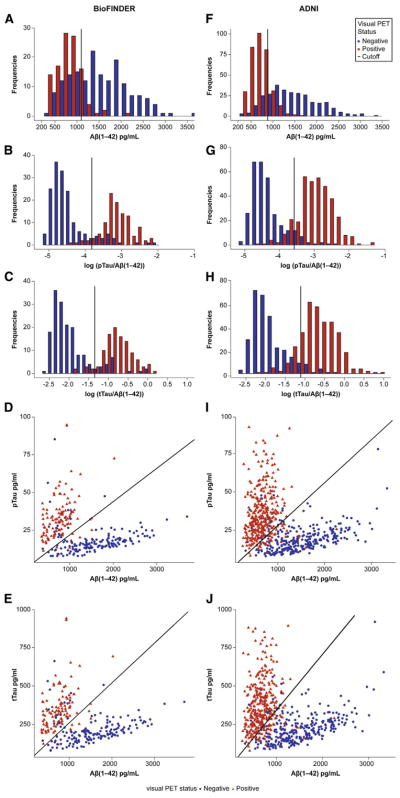
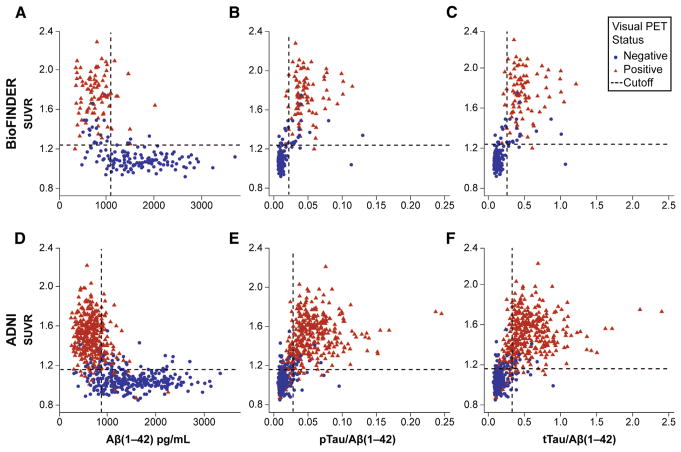
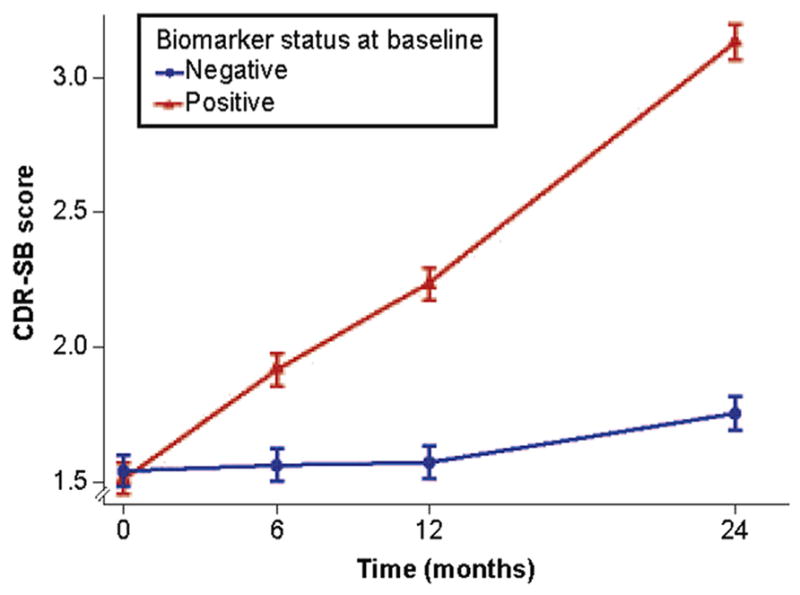
Verification
Claims the paper makes
The claims and statistics of this paper haven’t been checked yet.
Run the check — free, no account needed. It reads the open-access text and checks the sources it cites.
Claims other papers make about this one
Each is checked against this paper’s own text: does it say what the citing paper says it does?
The source backs part of the claim, not all of it — or backs it for a different population, condition or comparison.
In the citing paper
“For instance, the FDA-approved Elecsys CSF p-tau181/Aβ42 test has, in previous studies, classified Aβ PET status with overall accuracies of 89–90% (refs. 39–41), which was replicated in the present study.”
From Highly accurate blood test for Alzheimer's disease is similar or superior to clinical cerebrospinal fluid tests (2024) · cites this paper as [39]
Experimental — accuracy not yet measuredIn the citing paper
“An extracellular deposition of amyloid-β (Aβ) protein and aggregated form of hyper phosphorylated tau protein in the brain are two main pathological characteristics of AD [41].”
From Recent Advancements in Pathogenesis, Diagnostics and Treatment of Alzheimer’s Disease (2020) · cites this paper as [41]
In the citing paper
“For example, for the Elecsys immunoassays (Roche Diagnostics), it has been shown that CSF cutoffs established in one European cohort could be applied to another independent cohort in the United States to determine amyloid PET status with high accuracy.24”
From Performance of Fully Automated Plasma Assays as Screening Tests for Alzheimer Disease–Related β-Amyloid Status (2019) · cites this paper as [24]
In the citing paper
“Recently, fully automated immunoassays have been developed by several different vendors with improved reliability and precision for CSF Aβ and tau species.23,24,25”
From Performance of Fully Automated Plasma Assays as Screening Tests for Alzheimer Disease–Related β-Amyloid Status (2019) · cites this paper as [24]
In the citing paper
“This robust result is similar to what has been shown when using the Elecsys assays for CSF to establish a cutoff in one cohort and replicating it in a second cohort.24”
From Performance of Fully Automated Plasma Assays as Screening Tests for Alzheimer Disease–Related β-Amyloid Status (2019) · cites this paper as [24]
In the citing paper
“Plasma tau increased the AUC slightly, and provided a better model fit (ΔAIC –27), but clinically this is not comparable with the contribution CSF tau has combined with CSF Aβ42,24 and improved plasma tau assays are probably needed in the future, such as measurement of specifically phosphorylated tau,46 to increase the added value of plasma tau to plasma Aβ42 and Aβ40.”
From Performance of Fully Automated Plasma Assays as Screening Tests for Alzheimer Disease–Related β-Amyloid Status (2019) · cites this paper as [24]
Self-check
Percentages, sums and reported differences re-computed from the paper’s own numbers.
The self-check needs the paper’s full text.
Citations
Cites
McKhann, G. M., Knopman, D. S., Chertkow, H., Hyman, B. T., Jack, C. R., Kawas, C. H., Klunk, W. E., Koroshetz, W. J., Manly, J. J., Mayeux, R., et al. (2011) · Alzheimer's & Dementia · doi:10.1016/j.jalz.2011.03.005 · Cited by 18,657
Albert, M. S., DeKosky, S. T., Dickson, D., Dubois, B., Feldman, H. H., Fox, N. C., Gamst, A., Holtzman, D. M., Jagust, W. J., Petersen, R. C., et al. (2011) · Alzheimer's & Dementia · doi:10.1016/j.jalz.2011.03.008 · Cited by 10,152
Sperling, R. A., Aisen, P. S., Beckett, L. A., Bennett, D. A., Craft, S., Fagan, A. M., Iwatsubo, T., Jack, C. R., Kaye, J., Montine, T. J., et al. (2011) · Alzheimer's & Dementia · doi:10.1016/j.jalz.2011.03.003 · Cited by 7,155
Hypothetical model of dynamic biomarkers of the Alzheimer's pathological cascade
Jack, C. R., Knopman, D. S., Jagust, W. J., Shaw, L. M., Aisen, P. S., Weiner, M. W., Petersen, R. C., & Trojanowski, J. Q. (2010) · The Lancet Neurology · doi:10.1016/s1474-4422(09)70299-6 · Cited by 4,806
Self-citationAdvancing research diagnostic criteria for Alzheimer's disease: the IWG-2 criteria
Dubois, B., Feldman, H. H., Jacova, C., Hampel, H., Molinuevo, J. L., Blennow, K., DeKosky, S. T., Gauthier, S., Selkoe, D., Bateman, R., et al. (2014) · The Lancet Neurology · doi:10.1016/s1474-4422(14)70090-0 · Cited by 3,321
Self-citationScheltens, P., Blennow, K., Breteler, M. M. B., de Strooper, B., Frisoni, G. B., Salloway, S., & Van der Flier, W. M. (2016) · The Lancet · doi:10.1016/s0140-6736(15)01124-1 · Cited by 3,125
Self-citationAlbert, M., DeKosky, S. T., Dickson, D. W., Dubois, B., Feldman, H., Fox, N. C., Gamst, A. C., Holtzman, D. M., Jagust, W. J., Petersen, R. C., et al. (2013) · FOCUS The Journal of Lifelong Learning in Psychiatry · doi:10.1176/appi.focus.11.1.96 · Cited by 2,643
Cerebrospinal fluid biomarker signature in Alzheimer's disease neuroimaging initiative subjects
Shaw, L. M., Vanderstichele, H., Knapik‐Czajka, M., Clark, C. M., Aisen, P. S., Petersen, R. C., Blennow, K., Soares, H., Simon, A., Lewczuk, P., et al. (2009) · Annals of Neurology · doi:10.1002/ana.21610 · Cited by 2,065
Self-citationOlsson, B., Lautner, R., Andreasson, U., Öhrfelt, A., Portelius, E., Bjerke, M., Hölttä, M., Rosén, C., Olsson, C., Strobel, G., et al. (2016) · The Lancet Neurology · doi:10.1016/s1474-4422(16)00070-3 · Cited by 2,049
Self-citationTwo Phase 3 Trials of Bapineuzumab in Mild-to-Moderate Alzheimer's Disease
Salloway, S., Sperling, R., Fox, N. C., Blennow, K., Klunk, W., Raskind, M., Sabbagh, M., Honig, L. S., Porsteinsson, A. P., Ferris, S., et al. (2014) · New England Journal of Medicine · doi:10.1056/nejmoa1304839 · Cited by 1,960
Self-citation
Cited by
Sorted by citations
Items 401–500 of 809
Kim, H., Initiative, O. B. O. T. A. D. N., Levine, A., Cohen, D., Gehrman, P., Zhu, X., Devanand, D. P., Lee, S., & Goldberg, T. E. (2022) · Journal of Alzheimer s Disease · doi:10.3233/jad-215417 · Cited by 14
Waschkies, K. F., Soch, J., Darna, M., Richter, A., Altenstein, S., Beyle, A., Brosseron, F., Buchholz, F., Butryn, M., Dobisch, L., et al. (2023) · International Journal of Geriatric Psychiatry · doi:10.1002/gps.6007 · Cited by 11
Contributions of Molecular and Optical Techniques to the Clinical Diagnosis of Alzheimer’s Disease
Bistaffa, E., Tagliavini, F., Matteini, P., & Moda, F. (2020) · Brain Sciences · doi:10.3390/brainsci10110815 · Cited by 11
Jansson, D., Wang, M., Thomas, R. G., Erickson, M. A., Peskind, E. R., Li, G., & Iliff, J. (2022) · Journal of Alzheimer s Disease · doi:10.3233/jad-215400 · Cited by 11
Dídac Vidal-piñeiro, A., Sørensen, Ø., Blennow, K., Capogna, E., Halaas, N. B., Idland, A., Mowinckel, A. M., Pereira, J. B., Watne, L. O., Zetterberg, H., et al. (2022) · Neurobiology of Aging · doi:10.1016/j.neurobiolaging.2022.04.010 · Cited by 11
Self-citationWang, Y. H., Luo, P. P., Geng, A., Li, X., Liu, T., He, Y. J., Huang, L., & Tang, Y. Q. (2023) · Frontiers in Aging Neuroscience · doi:10.3389/fnagi.2023.1183119 · Cited by 13
Biskaduros, A., Glodzik, L., Louis, L. A. S., Rusinek, H., Pirraglia, E., Osorio, R. S., Butler, T., Li, Y., Xi, K., Tanzi, E. B., et al. (2024) · Alzheimer s & Dementia · doi:10.1002/alz.13800 · Cited by 9
Self-citationMRI Signature of α-Synuclein Pathology in Asymptomatic Stages and a Memory Clinic Population
Wisse, L. E. M., Spotorno, N., Rossi, M., Grothe, M. J., Mammana, A., Tideman, P., Baiardi, S., Strandberg, O. T., Ticca, A., van Westen, D., et al. (2024) · JAMA Neurology · doi:10.1001/jamaneurol.2024.2713 · Cited by 10
Self-citationBlood‐based biomarkers of Alzheimer's disease: Standardization and comprehensiveness
Liu, Y., Guo, Y., & Yu, J. (2024) · Neuroprotection/Neuroprotection (Chichester, England. Print) · doi:10.1002/nep3.58 · Cited by 10
Huszár, Z., Solomon, A., Engh, M. A., Koszovácz, V., Terebessy, T., Molnár, Z., Hegyi, P., Horvath, A. A., Mangialasche, F., Kivipelto, M., et al. (2024) · Alzheimer s Research & Therapy · doi:10.1186/s13195-024-01602-9 · Cited by 12
Cacciaglia, R., Shekari, M., Salvadó, G., Milà‐Alomà, M., Falcón, C., Sánchez‐Benavides, G., Minguillón, C., Fauria, K., Grau‐Rivera, O., Molinuevo, J. L., et al. (2024) · Brain Communications · doi:10.1093/braincomms/fcae451 · Cited by 13
Self-citationFischer, L., Adams, J. N., Molloy, E. N., Vockert, N., Tremblay‐Mercier, J., Remz, J., Binette, A. P., Villeneuve, S., & Maaß, A. (2025) · Alzheimer s Research & Therapy · doi:10.1186/s13195-025-01742-6 · Cited by 11
Leon, R., Ghahremani, M., Guan, D. X., Smith, E. E., Zetterberg, H., & Ismail, Z. (2025) · Journal of Geriatric Psychiatry and Neurology · doi:10.1177/08919887251366634 · Cited by 11
Self-citationNeuroinflammation modulates the association of PGRN with cerebral amyloid-β burden
Xu, W., Tan, C., Cao, X., & Tan, L. (2021) · Neurobiology of Aging · doi:10.1016/j.neurobiolaging.2021.02.016 · Cited by 11
Practical Considerations in the Administration of Aducanumab for the Neurologist
Coerver, K. A., Yu, M. M., D’Abreu, A., Wasserman, M., & Nair, K. V. (2021) · Neurology Clinical Practice · doi:10.1212/cpj.0000000000001144 · Cited by 10
Zhang, J., Lu, H., Zhu, L., Ren, H., Dang, G., Su, X., Lan, X., Jiang, X., Zhang, X., Feng, J., et al. (2021) · Frontiers in Aging Neuroscience · doi:10.3389/fnagi.2021.804384 · Cited by 10
Guha, D., Misra, V., Chettimada, S., Yin, J., & Gabuzda, D. H. (2023) · Viruses · doi:10.3390/v16010072 · Cited by 11
Stirland, L., Russ, T. C., Ritchie, C. W., & Terrera, G. M. (2019) · Journal of Alzheimer s Disease · doi:10.3233/jad-190222 · Cited by 10
Trammell, A. R., McDaniel, D. J., Obideen, M., Okafor, M. O., Thomas, T., Goldstein, F. C., Shaw, L. M. J., & Hajjar, I. M. (2020) · Journal of Alzheimer s Disease · doi:10.3233/jad-200089 · Cited by 11
Self-citationChronic PPARγ Stimulation Shifts Amyloidosis to Higher Fibrillarity but Improves Cognition
Blume, T., Deussing, M., Biechele, G., Peters, F., Zott, B., Schmidt, C., Franzmeier, N., Wind, K., Eckenweber, F., Sacher, C., et al. (2022) · Frontiers in Aging Neuroscience · doi:10.3389/fnagi.2022.854031 · Cited by 10
Cheng, Y., Jian, J.-M., He, C.-Y., Ren, J.-R., Xu, M., Jin, W., Tan, C., Zeng, G., Shen, Y., Chen, D., et al. (2022) · Journal of Alzheimer s Disease · doi:10.3233/jad-220126 · Cited by 10
Avants, B., Hutchison, R. M., Mikulskis, A., Salinas-Valenzuela, C., Hargreaves, R., Beaver, J. D., & Chiao, P. (2018) · Neurobiology of Aging · doi:10.1016/j.neurobiolaging.2018.10.002 · Cited by 11
Hale, M. R., Langhough, R. E., Du, L., Hermann, B. P., Hulle, C. A. V., Carboni, M., Kollmorgen, G., Basche, K. E., Bruno, D., Sanson‐Miles, L., et al. (2023) · Neurobiology of Aging · doi:10.1016/j.neurobiolaging.2023.09.018 · Cited by 9
Self-citationMa, Z., Zhang, Z., Lv, X., Zhang, H., Lu, K., Su, G., Huang, B., & Chen, H. (2024) · Talanta · doi:10.1016/j.talanta.2024.126111 · Cited by 9
Maranzano, A., Verde, F., Dubini, A., Torre, S., Colombo, E., Doretti, A., Gentile, F., Manini, A., Milone, I., Brusati, A., et al. (2024) · European Journal of Neurology · doi:10.1111/ene.16374 · Cited by 9
Diagnosis and therapy of Alzheimer's disease: Light-driven heterogeneous redox processes
Chen, W., Li, J., Guo, J., Li, L., & Wu, H. (2024) · Advances in Colloid and Interface Science · doi:10.1016/j.cis.2024.103253 · Cited by 10
Lumipulse-Measured Cerebrospinal Fluid Biomarkers for the Early Detection of Alzheimer Disease
Safransky, M., Groh, J. R., Blennow, K., Zetterberg, H., Tripodis, Y., Martin, B. M., Weller, J. L., Asken, B. M., Rabinovici, G. D., Qiu, W. W. Q., et al. (2024) · Neurology · doi:10.1212/wnl.0000000000209866 · Cited by 10
Self-citationBrendel, M., Parvizi, T., Gnörich, J. S., Topfstedt, C. E., Büerger, K., Janowitz, D., Rauchmann, B., Perneczky, R., Kurz, C., Mehrens, D., et al. (2024) · Alzheimer s & Dementia Diagnosis Assessment & Disease Monitoring · doi:10.1002/dad2.70031 · Cited by 13
Mieling, M., Yousuf, M., Bunzeck, N., Initiative, A. D. N., Weiner, M. W., Aisen, P., Petersen, R. C., Jack, C. R., Jagust, W., Landau, S., et al. (2025) · GeroScience · doi:10.1007/s11357-025-01626-5 · Cited by 11
Self-citationmiR-423-5p and miR-92a-3p in Alzheimer’s disease: relationship with pathology and cognition
Han, S., Park, Y. H., Pyun, J., Bice, P. J., Kim, S., Saykin, A. J., & Nho, K. T. (2025) · Frontiers in Aging Neuroscience · doi:10.3389/fnagi.2025.1637368 · Cited by 11
Proteostasis and Neuroinflammation in Alzheimer’s Disease
Potokiri, A., & Wang, H. (2025) · Journal of Integrative Neuroscience · doi:10.31083/jin39826 · Cited by 9
Zhang, P.-F., Wang, Z.-T., Liu, Y., Hu, H., Sun, Y., Hu, H.-Y., Ma, Y.-H., Tan, L., & Yu, J.-T. (2022) · Journal of Alzheimer s Disease · doi:10.3233/jad-220057 · Cited by 9
Kerrebijn, I., Wainberg, M., Zhukovsky, P., Chen, Y., Davie, M., Felsky, D., & Tripathy, S. J. (2023) · NeuroImage · doi:10.1016/j.neuroimage.2023.120177 · Cited by 7
Ta, M., Blauwendraat, C., Antar, T., Leonard, H. L., Singleton, A., Nalls, M. A., Iwaki, H., Initiative, A. D. N., & Biomarkers, T. F. I. F. N. D. O. (2023) · Movement Disorders · doi:10.1002/mds.29511 · Cited by 9
Self-citationCSF 14-3-3β is associated with progressive cognitive decline in Alzheimer’s disease
Qiang, Q., Skudder‐Hill, L., Toyota, T., Huang, Z., Wei, W., Adachi, H., & Initiative, A. D. N. (2023) · Brain Communications · doi:10.1093/braincomms/fcad312 · Cited by 9
Self-citationQiang, Q., Skudder‐Hill, L., Toyota, T., Huang, Z., Wei, W., & Adachi, H. (2024) · Journal of the Neurological Sciences · doi:10.1016/j.jns.2023.122861 · Cited by 10
Novel ELISAs to measure total and phosphorylated tau in cerebrospinal fluid
Kawarabayashi, T., Nakamura, T., Miyashita, K., Fukamachi, I., Seino, Y., & Shoji, M. (2020) · Neuroscience Letters · doi:10.1016/j.neulet.2020.134826 · Cited by 9
Prognostic value of complementary biomarkers of neurodegeneration in a mixed memory clinic cohort
Gramkow, M. H., Gjerum, L., Koikkalainen, J. R., Lötjönen, J. M. P., Law, I. G., Hasselbalch, S. G., Waldemar, G., & Frederiksen, K. S. (2020) · PeerJ · doi:10.7717/peerj.9498 · Cited by 9
Chen, Q., Baran, T. M., Rooks, B., O’Banion, M. K., Mapstone, M. E., Zhang, Z., & Lin, F. V. (2020) · NeuroImage Clinical · doi:10.1016/j.nicl.2020.102413 · Cited by 9
Monfared, A. A. T., Houghton, K., Zhang, Q., Mauskopf, J., & Initiative, A. D. N. (2022) · Neurology and Therapy · doi:10.1007/s40120-022-00326-y · Cited by 9
Self-citationOrtner, M., Goldhardt, O., Diehl‐Schmid, J., Yakushev, I. Y., Lanz, K., Hedderich, D. M., Manuilova, E., Simon, M., Weinberger, J.-P., & Grimmer, T. (2022) · The Journal of Prevention of Alzheimer s Disease · doi:10.14283/jpad.2022.27 · Cited by 10
Categorical predictive and disease progression modeling in the early stage of Alzheimer’s disease
Platero, C. A. (2022) · Journal of Neuroscience Methods · doi:10.1016/j.jneumeth.2022.109581 · Cited by 8
Ferrer, R., Zhu, N., Arranz, J., Porcel, I., Bounasri, S. E., Sànchez, O., Torres, S., Julve, J., Lleó, A., Blanco‐Vaca, F., et al. (2022) · Clinical Chemistry and Laboratory Medicine (CCLM) · doi:10.1515/cclm-2022-0134 · Cited by 9
Zou, Y., Yu, S., Ma, X., Ma, C., Mao, C., Mu, D., Li, L., Gao, J., & Qiu, L. (2022) · Clinical Biochemistry · doi:10.1016/j.clinbiochem.2022.11.013 · Cited by 9
Chun, M. Y., Jang, H., Kim, H. J., Kim, J. P., Gallacher, J., Allué, J. A., Sarasa, L., Castillo, S., Pascual‐Lucas, M., Na, D. L., et al. (2023) · Frontiers in Aging Neuroscience · doi:10.3389/fnagi.2023.1126799 · Cited by 9
Wu, L., Arvai, S., Wang, S. J., Liu, A., & Xu, B. (2024) · Frontiers in Molecular Neuroscience · doi:10.3389/fnmol.2023.1288930 · Cited by 9
Brain structural indicators of β-amyloid neuropathology
Jang, I., Li, B., Rashid, B., Jacoby, J. R., Huang, S. Y., Dickerson, B. C., & Salat, D. H. (2024) · Neurobiology of Aging · doi:10.1016/j.neurobiolaging.2024.01.005 · Cited by 8
CSF Biomarkers in Longitudinal Alzheimer Disease Cohorts: Pre-Analytic Challenges
Jonaitis, E. M., Jeffers, B., VandenLangenberg, M., Ma, Y., Hulle, C. V., Langhough, R. E., Du, L., Chin, N. A., Przybelski, R. J., Hogan, K. J., et al. (2024) · Clinical Chemistry · doi:10.1093/clinchem/hvad221 · Cited by 8
Brikou, D., Dimopoulou, M.-A., Drouka, A., Ntanasi, E., Mamalaki, E., Gu, Y., Scarmeas, N., & Yannakoulia, M. (2024) · Journal of Nutrition · doi:10.1016/j.tjnut.2024.05.025 · Cited by 8
Exercise to Counteract Alzheimer’s Disease: What Do Fluid Biomarkers Say?
Bonanni, R., Cariati, I., Cifelli, P., Frank, C., Annino, G., Tancredi, V., & D’Arcangelo, G. (2024) · International Journal of Molecular Sciences · doi:10.3390/ijms25136951 · Cited by 8
Kang, S., Kim, S.-W., & Seong, J. (2024) · NeuroImage · doi:10.1016/j.neuroimage.2024.120737 · Cited by 12
Chen, J., Yang, J., Shen, D., Wang, X., Lin, Z., Chen, H., Cui, G., Zhang, Z., & Initiative, T. A. D. N. (2024) · Journal of Alzheimer s Disease · doi:10.3233/jad-240523 · Cited by 8
Neuroimaging Predictors of Cognitive Resilience against Alzheimer's Disease Pathology
Williams, M. E., Fennema‐Notestine, C., Bell, T. R., Lin, S., Glatt, S. J., Kremen, W. S., Elman, J. A., & Initiative, A. D. N. (2025) · Annals of Neurology · doi:10.1002/ana.27186 · Cited by 9
Self-citationCerebrospinal fluid VGF is associated with the onset and progression of Alzheimer's disease
Lu, Y., Li, D., Yu, Y., Wang, Q., Li, A., Quan, Y., Xing, Y., & Initiative, A. D. N. (2025) · Journal of Alzheimer s Disease · doi:10.1177/13872877251323002 · Cited by 8
Self-citationBurton, J. K., Brothers, H. M., Hutchison, R. M., Murphy, J. M., Sun, T., Dent, G. W., Curiale, G. G., & Kowalski, K. (2025) · The Journal of Prevention of Alzheimer s Disease · doi:10.1016/j.tjpad.2025.100202 · Cited by 9
Gunasekaran, T. I., Sanchez, D. L., Reyes‐Dumeyer, D., Ventura, R., Morales, C. D., Alshikho, M. J., Lee, A., Lantigua, R., Gu, Y., Honig, L. S., et al. (2025) · Annals of Neurology · doi:10.1002/ana.70006 · Cited by 8
Deng, B., Zheng, Y., Gao, Y., Zhuang, Y., Ma, L., & Cao, L. (2025) · Frontiers in Neurology · doi:10.3389/fneur.2025.1667402 · Cited by 9
Cerman, J., Škorvagová, A., Vyhnálek, M., Veverová, K., Dvořák, K., Kozák, Š., Kavka, A., & Hort, J. (2025) · Scientific Reports · doi:10.1038/s41598-025-23759-5 · Cited by 9
Marco, M. D., Manca, R., Kirby, J., Hautbergue, G. M., Blackburn, D. J., Wharton, S. B., Venneri, A., & Initiative, A. D. N. (2020) · Current Alzheimer Research · doi:10.2174/1567205017666201006161800 · Cited by 8
Self-citationZhu, Y., Wu, Y. H., Lv, X., Wu, J., Shen, C., Tang, Q., Wang, G., & Initiative, A. D. N. (2023) · CNS Neuroscience & Therapeutics · doi:10.1111/cns.14401 · Cited by 7
Self-citationData-Driven Thresholding Statistically Biases ATN Profiling across Cohort Datasets
Salimi, Y., Domingo‐Fernándéz, D., Hofmann‐Apitius, M., & Birkenbihl, C. J. (2023) · The Journal of Prevention of Alzheimer s Disease · doi:10.14283/jpad.2023.100 · Cited by 8
Karelina, T., Lerner, S., Stepanov, A. A., Meerson, M., & Demin, O. O. (2021) · CPT Pharmacometrics & Systems Pharmacology · doi:10.1002/psp4.12628 · Cited by 8
Interaction of CSF α‐synuclein and amyloid beta in cognition and cortical atrophy
Lee, Y., Jeon, S., Kang, S. W., Park, M.-C., Baik, K., Yoo, H. S., Chung, S. J., Jeong, S. H., Jung, J. H., Lee, P. H., et al. (2021) · Alzheimer s & Dementia Diagnosis Assessment & Disease Monitoring · doi:10.1002/dad2.12177 · Cited by 8
Self-citationPavlik, V. N., for the CONCORD-AD investigators, Burnham, S. C., Kass, J. S., Helmer, C., Palmqvist, S., Vassilaki, M., Dartigues, J., Hansson, O., Masters, C. L., et al. (2021) · Journal of Alzheimer s Disease · doi:10.3233/jad-210525 · Cited by 8
Self-citationPezzoli, S., Manca, R., Cagnin, A., Venneri, A., & Initiative, A. D. N. (2022) · Journal of Alzheimer s Disease · doi:10.3233/jad-215107 · Cited by 8
Self-citationManca, R., Jones, S. A., & Venneri, A. (2022) · Brain Sciences · doi:10.3390/brainsci12101383 · Cited by 8
Shi, X., Zhong, X., Zhou, H., Zhou, N., Hu, Y., Ning, Y., & Initiative, A. D. N. (2022) · Frontiers in Neurology · doi:10.3389/fneur.2022.961842 · Cited by 8
Self-citationWu, C., Initiative, A. D. N., Ma, Y., Hu, H., Zhao, B. T., & Tan, L. (2023) · Journal of Alzheimer s Disease · doi:10.3233/jad-220731 · Cited by 8
Self-citationSerum triglycerides in Alzheimer’s disease: Relation to neuroimaging and CSF biomarkersPreprint
Bernath, M. M., Bhattacharyya, S., Nho, K. T., Barupal, D. K., Fiehn, O., Baillie, R., Risacher, S. L., Arnold, M., Jacobson, T. Y., Trojanowski, J. Q., et al. (2018) · bioRxiv (Cold Spring Harbor Laboratory) · doi:10.1101/441394 · Cited by 8
Self-citationShand, C., Markiewicz, P. J., Cash, D. M., Alexander, D. C., Donohue, M., Barkhof, F., Oxtoby, N. P., & Initiative, T. A. D. N. (2023) · medRxiv · doi:10.1101/2023.02.07.23285572 · Cited by 10
Alzheimer’s: Epidemiology, Pathophysiology, Diagnosis, and Treatments
Rahman, A. T. F., Jaiswal, A., Keshari, P., & Singh, D. K. (2025) · Springer eBooks · doi:10.1007/978-981-96-6202-9_2 · Cited by 9
Foley, T., Perry, M., & Robinson, L. A. (2025) · The Lancet Primary Care · doi:10.1016/j.lanprc.2025.100061 · Cited by 7
Proteomic signatures of the APOE ε4 and APOE ε2 genetic variants and Alzheimer’s disease
Lu, L., Binette, A. P., Hristovska, I., Janelidze, S., Smets, B., Cumplido-Mayoral, I., Vasanthakumar, A., Milkovich, B., An, L., Ossenkoppele, R., et al. (2026) · Nature Aging · doi:10.1038/s43587-026-01123-0 · Cited by 10
Self-citationRecent diagnostic techniques for the detection of Alzheimer’s disease: a short review
Bhujbal, S. S., Kad, M. M., & Patole, V. (2022) · Irish Journal of Medical Science (1971 -) · doi:10.1007/s11845-022-03244-y · Cited by 7
Longitudinal trajectories of cognitive reserve in hypometabolic subtypes of Alzheimer's disease
Levin, F., Grothe, M. J., Dyrba, M., Franzmeier, N., & Teipel, S. J. (2023) · Neurobiology of Aging · doi:10.1016/j.neurobiolaging.2023.12.003 · Cited by 7
Thomson, D., Rosenich, E., Maruff, P. T., Lim, Y. Y., & Initiative, A. D. N. (2024) · Archives of Clinical Neuropsychology · doi:10.1093/arclin/acae014 · Cited by 7
Self-citationLiu, X., Yu, G.-X., Xue, M., Huang, L., Fu, Y., Wang, Z.-T., Tan, L., & Ou, Y. (2024) · Alzheimer s Research & Therapy · doi:10.1186/s13195-024-01550-4 · Cited by 8
Seligmann, B. E., Camiolo, S., Hernandez, M., Yeakley, J. M., Sahagian, G. A., & McComb, J. (2024) · Journal of Alzheimer s Disease · doi:10.3233/jad-240174 · Cited by 7
Howlett, J., Hill, S. M., Ritchie, C. W., & Tom, B. D. M. (2021) · Frontiers in Big Data · doi:10.3389/fdata.2021.676168 · Cited by 9
Diagnostic Cut-offs for CSF β-amyloid and tau proteins in a Danish dementia clinic
Abildgaard, A. M., Parkner, T., Knudsen, C. S., Gottrup, H., & Klit, H. (2022) · Clinica Chimica Acta · doi:10.1016/j.cca.2022.12.023 · Cited by 7
Sheikh, W. G. E., Sleem, B., Kobeissy, F. H., & Bizri, M. (2023) · Biomarkers in Neuropsychiatry · doi:10.1016/j.bionps.2023.100064 · Cited by 10
Molecular Design of Magnetic Resonance Imaging Agents Binding to Amyloid Deposits
Nikiforova, A. A., & Sedov, I. A. (2023) · International Journal of Molecular Sciences · doi:10.3390/ijms241311152 · Cited by 7
Detection of APP gene recombinant in human blood plasma
Mitsunaga, S., Fujito, N. T., Nakaoka, H., Imazeki, R., Nagata, E., & Inoue, I. (2023) · Scientific Reports · doi:10.1038/s41598-023-48993-7 · Cited by 6
Kim, S., Kim, K., Nho, K. T., Myung, W., & Won, H. (2021) · Journal of Alzheimer s Disease · doi:10.3233/jad-200671 · Cited by 7
Thomas, K. R., Weigand, A. J., Cota, I. H., Edmonds, E. C., Wierenga, C. E., Bondi, M. W., Bangen, K. J., & Initiative, A. D. N. (2021) · Brain Imaging and Behavior · doi:10.1007/s11682-021-00495-8 · Cited by 8
Self-citationFrank, B. E., Walsh, M., Hurley, L., Groh, J. R., Blennow, K., Zetterberg, H., Tripodis, Y., Budson, A. E., O’Connor, M. K., Martin, B. M., et al. (2024) · Journal of Alzheimer s Disease · doi:10.3233/jad-240125 · Cited by 7
Self-citationBlood-based biomarkers of Alzheimer’s disease—A guideline for clinical use
Shi, J., Ou, Q., & Chen, X. (2024) · Medicine Plus · doi:10.1016/j.medp.2024.100057 · Cited by 8
Park, S. A., An, Y., Park, Y.-J., Lee, J.-Y., Jeon, H., Kim, Y. S., Lee, K., Sun, K., Lee, S. M., & Moon, S. Y. (2025) · Journal of Alzheimer s Disease · doi:10.1177/13872877251314886 · Cited by 6
Gaetani, L., Agnello, L., Pilotto, A., Benussi, A., Cagnin, A. C., Parnetti, L., Bozzali, M., Padovani, A., Ciaccio, M., the Italian Society of Neurology (SIN) Study Group on Biomarkers in Neurology, et al. (2026) · Neurological Sciences · doi:10.1007/s10072-026-08931-7 · Cited by 6
Puig‐Pijoan, A., García‐Escobar, G., Fernández‐Lebrero, A., Borràs, R. M. M., Sánchez‐Benavides, G., Navalpotro‐Gómez, I., Cascales‐Lahoz, D., Suárez‐Calvet, M., Grau‐Rivera, O., Boltes, A., et al. (2022) · Neurología · doi:10.1016/j.nrl.2022.05.005 · Cited by 6
Integrative network analysis reveals novel moderators of Aβ-Tau interaction in Alzheimer's disease
Kitani, A., Matsui, Y., & Initiative, F. T. A. D. N. (2025) · Alzheimer's Research & Therapy · doi:10.1186/s13195-025-01705-x · Cited by 6
Kim, H., Kulshreshtha, A., Alonso, Á., Goldstein, F. C., Johnson, E. C. B., Gold, M. E., Quyyumi, A. A., & Lah, J. J. (2025) · Journal of Alzheimer s Disease · doi:10.1177/13872877251331235 · Cited by 6
Kim, T. H., Head, E., Stark, C. E. L., Sordo, L., Kirby, K. A., Corona, M. G., McDonnell, M., Grill, J. D., & Sultzer, D. L. (2025) · Alzheimer s & Dementia · doi:10.1002/alz.70619 · Cited by 8
Autocorrection if→of function words in reading aloud: A novel marker of Alzheimer’s risk.
Gollan, T. H., Stasenko, A., Li, C., Smirnov, D. S., Galasko, D. R., & Salmon, D. P. (2022) · Neuropsychology · doi:10.1037/neu0000829 · Cited by 7
Longitudinal hippocampal subfields, CSF biomarkers, and cognition in patients with Parkinson disease
Erhardt, E. B., Horner, A., Shaff, N. A., Wertz, C., Nitschke, S. R., Vakhtin, A. A., Mayer, A. R., Adair, J. C., Knoefel, J. E., Rosenberg, G. A., et al. (2023) · Clinical Parkinsonism & Related Disorders · doi:10.1016/j.prdoa.2023.100199 · Cited by 6
Arenare, G., Manca, R., Caffarra, P., Venneri, A., & Initiative, O. B. O. T. A. D. N. (2023) · Brain Sciences · doi:10.3390/brainsci13081195 · Cited by 6
Improving Alzheimer’s Disease Detection with Transfer Learning
Dar, S. A., Rather, A. A., Araibi, M. I. A., Elbatal, I., Almetwally, E. M., Gemeay, A. M., Shukla, S., Danish, F., & Dar, Q. F. (2025) · International Journal of Statistics in Medical Research · doi:10.6000/1929-6029.2025.14.39 · Cited by 6
Lin, L., Sun, Y., Wang, X., Su, L., Wang, X.-N., & Han, Y. (2021) · Frontiers in Aging Neuroscience · doi:10.3389/fnagi.2021.610755 · Cited by 6
Wang, Q., Li, Y., Zheng, C., & Xu, R. (2020) · PubMed Central · Cited by 6
Neural network training with highly incomplete medical datasets
Chang, Y.-W., Natali, L., Jamialahmadi, O., Romeo, S., Pereira, J. B., & Volpe, G. (2022) · Machine Learning Science and Technology · doi:10.1088/2632-2153/ac7b69 · Cited by 6
Metadata
- Authors
- Hansson, O., Seibyl, J., Stomrud, E., Zetterberg, H., Trojanowski, J. Q., Bittner, T., Lifke, V., Corradini, V., Eichenlaub, U., Batrla, R., Buck, K., Zink, K., Rabe, C., Blennow, K., Shaw, L. M., for the Swedish BioFINDER study group, & Initiative, A. D. N.
- Affiliations
- Lund University (SE)
- Institute for Neurodegenerative Disorders (US)
- Sahlgrenska University Hospital (SE)
- University of Pennsylvania (US)
- Former Employee of Roche Diagnostics GmbH Penzberg Germany
- Roche Diagnostics GmbH Penzberg Germany
- F. Hoffmann-La Roche AG (CH)
- Alzheimer’s Disease Neuroimaging Initiative (US)
- Corresponding author
- Hansson, Oskar
- Blennow, Kaj
- Shaw, Leslie M.
- ORCID
- Venue
- Alzheimer's & Dementia
- Publisher
- Wiley
- Published
- 2018-02-27
- Volume
- 14
- Issue
- 11
- Pages
- 1470-1481
- ISSN
- 1552-5260 (ISSN-L)
- 1552-5279
- PMC
- PMC6119541
- OpenAlex
- W2789976306
- Cited by
- 808
- References
- 45
- Citations by year
- 2026: 84 · 2025: 117 · 2024: 146 · 2023: 96 · 2022: 98 · 2021: 95 · 2020: 97 · 2019: 56 · 2018: 15
- FWCI
- 51.74
- Type
- journal article
- Language
- en
- Open access
- hybrid
- doi.org
- Licence
- Locations
- Alzheimer s & Dementia (publishedVersion, cc-by-nc-nd)
- PubMed (publishedVersion)
- Europe PMC (PubMed Central) (acceptedVersion, cc-by-nc-nd)
- PubMed Central (acceptedVersion, cc-by-nc-nd)
- UCL Discovery (University College London) (submittedVersion)
- Lund University Publications (Lund University) (submittedVersion)
- Funders
- Michael J. Fox Foundation for Parkinson's Research
- Eli Lilly and Company
- Göteborgs Universitet
- National Institutes of Health
- National Institute on Aging (P30AG010124)
- Topics
- Health Sciences › Medicine › Psychiatry and Mental health › Dementia and Cognitive Impairment Research
- Life Sciences › Neuroscience › Cellular and Molecular Neuroscience › Alzheimer's disease research and treatments
- Health Sciences › Medicine › Clinical Neurology › Cerebrospinal fluid and hydrocephalus
- Keywords
- Alzheimer's disease, cerebrospinal fluid biomarkers
- MeSH terms
- Aged, Alzheimer Disease, Aniline Compounds, Ethylene Glycols, Female, Humans, Immunoassay, Male, Cohort Studies, Biomarkers, Amyloid beta-Peptides, tau Proteins, Disease Progression, Radiopharmaceuticals, Positron-Emission Tomography, Automation, Laboratory, Cognitive Dysfunction
About these checks
Registry, retraction, Cites and statistics results are computed, not judged, with one exception: a printed reference that no index lists is read once by a model before it counts as a citation error. Claims are extracted by a model and kept only when their quote appears verbatim in the text; each cited source is then checked, with a model’s help, for whether it says what the claim relies on. Those verdicts can be wrong — read the claim’s quote and the cited source before relying on one.
Statistics and arithmetic are recomputed, not judged.
Confidence bands are shown only for fields calibrated on our annotated test set. None is calibrated yet, so no band is shown.
What counts as a claim ›How we measure confidence ›How we check this ›
Are you an author, or do you see a problem with this page? Request a review
