

The DOI matches its Crossref record; 159 of the 167 references it cites were found in a registry or an index.
Are Wnt/β-Catenin and PI3K/AKT/mTORC1 Distinct Pathways in Colorectal Cancer?
Open accessAbstract
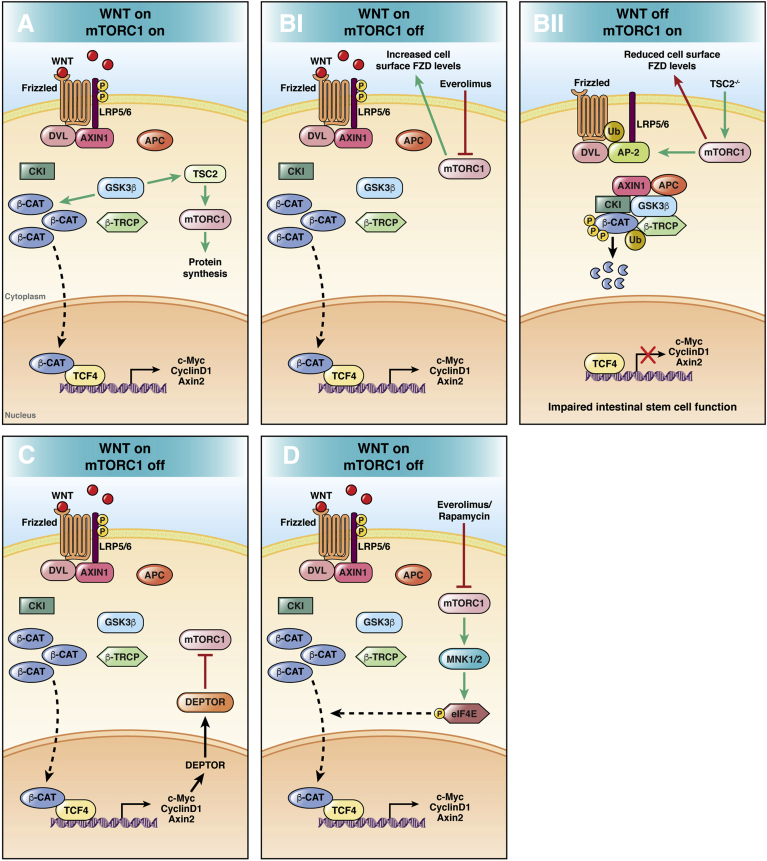
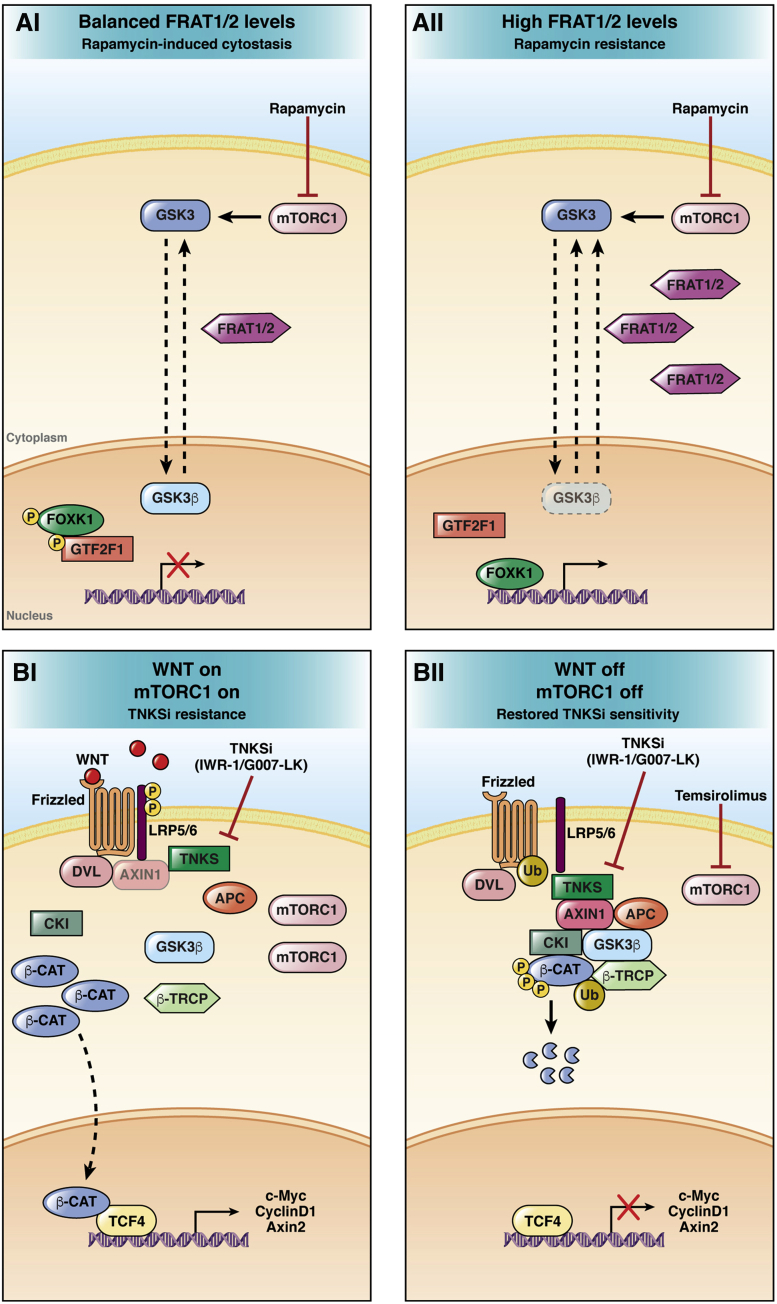
Wnt/β-catenin and phosphatidylinositol-3-kinase/protein kinase B/mammalian target of rapamycin complex 1 (PI3K/AKT/mTORC1) pathways both are critically involved in colorectal cancer (CRC) development, although they are implicated in the modulation of distinct oncogenic mechanisms. In homeostatic and pathologic conditions, these pathways show a fine regulation based mainly on feedback mechanisms, and are connected at multiple levels involving both upstream and downstream common effectors. The ability of the Wnt/β-catenin and PI3K/AKT/mTORC1 pathways to reciprocally control themselves represents one of the main resistance mechanisms to selective inhibitors in CRC, leading to the hypothesis that in specific settings, particularly in cancer driven by genetic alterations in Wnt/β-catenin signaling, the relationship between Wnt/β-catenin and PI3K/AKT/mTORC1 pathways could be so close that they should be considered as a unique therapeutic target. This review provides an update on the Wnt/β-catenin and PI3K/AKT/mTORC1 pathway interconnections in CRC, describing the main molecular players and the potential implications of combined inhibitors as an approach for CRC chemoprevention and treatment.
Overview
The claims and statistics of this paper haven’t been checked yet.
Run the check — free, no account needed. It reads the open-access text and checks the sources it cites.
Integrity signals
Registry
Cites
Statistics
Figures
Verification
Claims the paper makes
The claims and statistics of this paper haven’t been checked yet.
Run the check — free, no account needed. It reads the open-access text and checks the sources it cites.
Claims other papers make about this one
Each is checked against this paper’s own text: does it say what the citing paper says it does?
The source backs part of the claim, not all of it — or backs it for a different population, condition or comparison.
In the citing paper
“the ability of the Wnt/β‐catenin and PI3K/AKT/mTORC1 pathways to compensate for one another is one of the main mechanisms of chemoresistance [51]”
From Pyrvinium Pamoate Alone and With Gemcitabine Exhibits Anti‐Pancreatic Cancer Activity in 2D and 3D Cell Culture Models (2024) · cites this paper as [51]
Experimental — accuracy not yet measured
Self-check
Percentages, sums and reported differences re-computed from the paper’s own numbers.
The self-check needs the paper’s full text.
Citations
Cites
Siegel, R. L., Miller, K. D., & Jemal, A. (2020) · CA: A Cancer Journal for Clinicians · doi:10.3322/caac.21590 · Cited by 20,444
mTOR Signaling in Growth Control and Disease
Laplante, M., & Sabatini, D. M. (2012) · Cell · doi:10.1016/j.cell.2012.03.017 · Cited by 8,509
mTOR Signaling in Growth, Metabolism, and Disease
Saxton, R. A., & Sabatini, D. M. (2017) · Cell · doi:10.1016/j.cell.2017.02.004 · Cited by 7,555
Wnt/β-catenin signaling and disease
Clevers, H., & Nusse, R. (2012) · Cell · doi:10.1016/j.cell.2012.05.012 · Cited by 5,554
Inhibition of glycogen synthase kinase-3 by insulin mediated by protein kinase B
Cross, D. A. E., Alessi, D. R., Cohen, P., Andjelkovich, M., & Hemmings, B. A. (1995) · Nature · doi:10.1038/378785a0 · Cited by 5,244
Lessons from hereditary colorectal cancer
Kinzler, K. W., & Vogelstein, B. (1996) · Cell · doi:10.1016/s0092-8674(00)81333-1 · Cited by 4,919
Identification of c- MYC as a Target of the APC Pathway
He, T.-C., Sparks, A. B., Rago, C., Hermeking, H., Zawel, L., da Costa, L. T., Morin, P. J., Vogelstein, B., & Kinzler, K. W. (1998) · Science · doi:10.1126/science.281.5382.1509 · Cited by 4,566
β-Catenin regulates expression of cyclin D1 in colon carcinoma cells
Tetsu, O., & McCormick, F. (1999) · Nature · doi:10.1038/18884 · Cited by 3,601
High Frequency of Mutations of the PIK3CA Gene in Human Cancers
Samuels, Y., Wang, Z., Bardelli, A., Silliman, N., Ptak, J., Szabo, S., Yan, H., Gazdar, A. F., Powell, S. M., Riggins, G. J., et al. (2004) · Science · doi:10.1126/science.1096502 · Cited by 3,448
TSC2 is phosphorylated and inhibited by Akt and suppresses mTOR signalling
Inoki, K., Li, Y., Zhu, T., Wu, J., & Guan, K.-L. (2002) · Nature Cell Biology · doi:10.1038/ncb839 · Cited by 3,083
Kim, D., Sarbassov, D. D., Ali, S. M., King, J. E., Latek, R. R., Erdjument‐Bromage, H., Tempst, P., & Sabatini, D. M. (2002) · Cell · doi:10.1016/s0092-8674(02)00808-5 · Cited by 3,051
Functional interaction of β-catenin with the transcription factor LEF-1
Behrens, J., von Kries, J. P., Kühl, M., Bruhn, L., Wedlich, D., Grosschedl, R., & Birchmeier, W. (1996) · Nature · doi:10.1038/382638a0 · Cited by 2,912
Alessi, D. R., James, S. R., Downes, C. P., Holmes, A. B., Gaffney, P. R. J., Reese, C. B., & Cohen, P. (1997) · Current Biology · doi:10.1016/s0960-9822(06)00122-9 · Cited by 2,874
Sarbassov, D. D., Ali, S. M., Kim, D.-H., Guertin, D. A., Latek, R. R., Erdjument-Bromage, H., Tempst, P., & Sabatini, D. M. (2004) · Current Biology · doi:10.1016/j.cub.2004.06.054 · Cited by 2,665
β‐catenin is a target for the ubiquitin–proteasome pathway
Aberle, H., Bauer, A., Stappert, J., Kispert, A., & Kemler, R. (1997) · The EMBO Journal · doi:10.1093/emboj/16.13.3797 · Cited by 2,586
Identification of FAP Locus Genes from Chromosome 5q21
Kinzler, K. W., Nilbert, M. C., Su, L.-K., Vogelstein, B., Bryan, T. M., Levy, D. B., Smith, K. J., Preisinger, A. C., Hedge, P., McKechnie, D., et al. (1991) · Science · doi:10.1126/science.1651562 · Cited by 2,331
The cyclin D1 gene is a target of the β-catenin/LEF-1 pathway
Shtutman, M., Zhurinsky, J., Simcha, I., Albanese, C., D’Amico, M., Pestell, R., & Ben-Ze’ev, A. (1999) · Proceedings of the National Academy of Sciences · doi:10.1073/pnas.96.10.5522 · Cited by 2,230
Control of β-Catenin Phosphorylation/Degradation by a Dual-Kinase Mechanism
Liu, C., Li, Y., Semënov, M. V., Han, C., Baeg, G., Tan, Y., Zhang, Z., Lin, X., & He, X. (2002) · Cell · doi:10.1016/s0092-8674(02)00685-2 · Cited by 2,152
De Roock, W., Claes, B., Bernasconi, D., De Schutter, J., Biesmans, B., Fountzilas, G., Kalogeras, K. T., Kotoula, V., Papamichael, D., Laurent-Puig, P., et al. (2010) · The Lancet Oncology · doi:10.1016/s1470-2045(10)70130-3 · Cited by 2,144
eIF4 Initiation Factors: Effectors of mRNA Recruitment to Ribosomes and Regulators of Translation
Gingras, A., Raught, B., & Sonenberg, N. (1999) · Annual Review of Biochemistry · doi:10.1146/annurev.biochem.68.1.913 · Cited by 2,103
Tankyrase inhibition stabilizes axin and antagonizes Wnt signalling
Huang, S.-M. A., Mishina, Y., Liu, S.-M., Cheung, A. K., Stegmeier, F., Michaud, G., Charlat, O., Wiellette, E., Zhang, Y., Wiessner, S., et al. (2009) · Nature · doi:10.1038/nature08356 · Cited by 2,077
Rheb GTPase is a direct target of TSC2 GAP activity and regulates mTOR signaling
Inoki, K., Li, Y., Xu, T., & Guan, K.-L. (2003) · Genes & Development · doi:10.1101/gad.1110003 · Cited by 1,911
Mutations of Chromosome 5q21 Genes in FAP and Colorectal Cancer Patients
Nishisho, I., Nakamura, Y., Miyoshi, Y., Miki, Y., Ando, H., Horii, A., Koyama, K., Utsunomiya, J., Baba, S., Hedge, P., et al. (1991) · Science · doi:10.1126/science.1651563 · Cited by 1,891
XTcf-3 Transcription Factor Mediates β-Catenin-Induced Axis Formation in Xenopus Embryos
Molenaar, M., van de Wetering, M., Oosterwegel, M., Peterson-Maduro, J., Godsave, S., Korinek, V., Roose, J., Destrée, O., & Clevers, H. (1996) · Cell · doi:10.1016/s0092-8674(00)80112-9 · Cited by 1,824
Manning, B. D., Tee, A. R., Logsdon, M. N., Blenis, J., & Cantley, L. C. (2002) · Molecular Cell · doi:10.1016/s1097-2765(02)00568-3 · Cited by 1,555
A new member of the frizzled family from Drosophila functions as a Wingless receptor
Bhanot, P., van den Brink, M. R. M., Samos, C. H., Hsieh, J.-C., Wang, Y., Macke, J. P., Andrew, D. J., Nathans, J., & Nusse, R. (1996) · Nature · doi:10.1038/382225a0 · Cited by 1,504
Binding of GSK3β to the APC-β-Catenin Complex and Regulation of Complex Assembly
Rubinfeld, B., Albert, I., Porfiri, E., Fiol, C. J., Munemitsu, S. M., & Polakis, P. G. (1996) · Science · doi:10.1126/science.272.5264.1023 · Cited by 1,420
Small molecule–mediated disruption of Wnt-dependent signaling in tissue regeneration and cancer
Chen, B., Dodge, M. E., Tang, W., Lü, J., Ma, Z., Fan, C.-W., Wei, S., Hao, W., Kilgore, J. A., Williams, N. S., et al. (2009) · Nature Chemical Biology · doi:10.1038/nchembio.137 · Cited by 1,402
Inoki, K., Ouyang, H., Zhu, T., Lindvall, C., Wang, Y., Zhang, X., Yang, Q., Bennett, C., Harada, Y., Stankunas, K., et al. (2006) · Cell · doi:10.1016/j.cell.2006.06.055 · Cited by 1,377
A transforming mutation in the pleckstrin homology domain of AKT1 in cancer
Carpten, J. D., Faber, A. L., Horn, C. L., Donoho, G. P., Briggs, S., Robbins, C. M., Hostetter, G. H., Boguslawski, S. J., Moses, T. Y., Savage, S., et al. (2007) · Nature · doi:10.1038/nature05933 · Cited by 1,322
Holz, M. K., Ballif, B. A., Gygi, S. P., & Blenis, J. (2005) · Cell · doi:10.1016/j.cell.2005.10.024 · Cited by 1,262
Ikeda, S., Kishida, S., Yamamoto, H., Murai, H., Koyama, S., & Kikuchi, A. (1998) · The EMBO Journal · doi:10.1093/emboj/17.5.1371 · Cited by 1,248
Insulin signalling to mTOR mediated by the Akt/PKB substrate PRAS40
Haar, E. V., Lee, S.-I., Bandhakavi, S., Griffin, T. J., & Kim, D. (2007) · Nature Cell Biology · doi:10.1038/ncb1547 · Cited by 1,227
Association of the APC Gene Product with β-Catenin
Rubinfeld, B., Souza, B., Albert, I., Müller, O., Chamberlain, S. H., Masiarz, F. R., Munemitsu, S. M., & Polakis, P. G. (1993) · Science · doi:10.1126/science.8259518 · Cited by 1,223
Peterson, T. R., Laplante, M., Thoreen, C. C., Sancak, Y., Kang, S. A., Kuehl, W. M., Gray, N. S., & Sabatini, D. M. (2009) · Cell · doi:10.1016/j.cell.2009.03.046 · Cited by 1,202
Lustig, B., Jerchow, B., Sachs, M., Weiler, S., Pietsch, T., Karsten, U., van de Wetering, M., Clevers, H., Schlag, P., Birchmeier, W., et al. (2002) · Molecular and Cellular Biology · doi:10.1128/mcb.22.4.1184-1193.2002 · Cited by 1,198
LDL-receptor-related proteins in Wnt signal transduction
Tamai, K., Semenov, M., Kato, Y., Spokony, R., Liu, C., Katsuyama, Y., Hess, F., Saint-Jeannet, J.-P., & He, X. (2000) · Nature · doi:10.1038/35035117 · Cited by 1,128
The LKB1 tumor suppressor negatively regulates mTOR signaling
Shaw, R. J., Bardeesy, N. M., Manning, B. D., Lopez, L. V., Kosmatka, M., DePinho, R. A., & Cantley, L. C. (2004) · Cancer Cell · doi:10.1016/j.ccr.2004.06.007 · Cited by 1,107
YAP/TAZ incorporation in the β-catenin destruction complex orchestrates the Wnt response
Azzolin, L., Panciera, T., Soligo, S., Enzo, E., Bicciato, S., Dupont, S., Bresolin, S., Frasson, C., Basso, G., Guzzardo, V., et al. (2014) · Cell · doi:10.1016/j.cell.2014.06.013 · Cited by 1,094
Clonal evolution and resistance to EGFR blockade in the blood of colorectal cancer patients
Siravegna, G., Mussolin, B., Buscarino, M., Corti, G., Cassingena, A., Crisafulli, G., Ponzetti, A., Cremolini, C., Amatu, A., Lauricella, C., et al. (2015) · Nature Medicine · doi:10.1038/nm.3870 · Cited by 1,088
An LDL-receptor-related protein mediates Wnt signalling in mice
Pinson, K. I., Brennan, J., Monkley, S. J., Avery, B. J., & Skarnes, W. C. (2000) · Nature · doi:10.1038/35035124 · Cited by 1,086
Tee, A. R., Manning, B. D., Roux, P. P., Cantley, L. C., & Blenis, J. (2003) · Current Biology · doi:10.1016/s0960-9822(03)00506-2 · Cited by 1,080
The emerging roles of forkhead box (Fox) proteins in cancer
Myatt, S. S., & Lam, E. W. ‐. (2007) · Nature reviews. Cancer · doi:10.1038/nrc2223 · Cited by 1,077
The -Catenin Destruction Complex
Stamos, J. L., & Weis, W. I. (2013) · Cold Spring Harbor Perspectives in Biology · doi:10.1101/cshperspect.a007898 · Cited by 1,062
Kim, D., Sarbassov, D. D., Ali, S. M., Latek, R. R., Guntur, K., Erdjument‐Bromage, H., Tempst, P., & Sabatini, D. M. (2003) · Molecular Cell · doi:10.1016/s1097-2765(03)00114-x · Cited by 992
Tumour suppressor RNF43 is a stem-cell E3 ligase that induces endocytosis of Wnt receptors
Koo, B.-K., Spit, M., Jordens, I., Low, T. Y., Stange, D. E., van de Wetering, M., van Es, J. H., Mohammed, S., Heck, A. J. R., Maurice, M. M., et al. (2012) · Nature · doi:10.1038/nature11308 · Cited by 980
ZNRF3 promotes Wnt receptor turnover in an R-spondin-sensitive manner
Hao, H.-X., Xie, Y., Zhang, Y., Charlat, O., Oster, E., Avello, M., Lei, H., Mickanin, C., Liu, D., Ruffner, H., et al. (2012) · Nature · doi:10.1038/nature11019 · Cited by 962
Wnt Signaling through Inhibition of β-Catenin Degradation in an Intact Axin1 Complex
Li, V. S. W., Ng, S. S., Boersema, P. J., Low, T. Y., Karthaus, W. R., Gerlach, J. P., Mohammed, S., Heck, A. J. R., Maurice, M. M., Mahmoudi, T., et al. (2012) · Cell · doi:10.1016/j.cell.2012.05.002 · Cited by 889
Gingras, A., Kennedy, S. G., O'Leary, M., Sonenberg, N., & Hay, N. (1998) · Genes & Development · doi:10.1101/gad.12.4.502 · Cited by 885
A dual-kinase mechanism for Wnt co-receptor phosphorylation and activation
Zeng, X., Tamai, K., Doble, B. W., Li, S., Huang, H., Habas, R., Okamura, H., Woodgett, J. R., & He, X. (2005) · Nature · doi:10.1038/nature04185 · Cited by 872
Targeting Wnt-driven cancer through the inhibition of Porcupine by LGK974
Liu, J., Pan, S., Hsieh, M. H., Ng, N., Sun, F., Wang, T., Kasibhatla, S., Schuller, A. G., Li, A. G., Cheng, D., et al. (2013) · Proceedings of the National Academy of Sciences · doi:10.1073/pnas.1314239110 · Cited by 851
Hart, M. J., Santos, R. D. L., Albert, I., Rubinfeld, B., & Polakis, P. G. (1998) · Current Biology · doi:10.1016/s0960-9822(98)70226-x · Cited by 850
Monounsaturated Fatty Acid Modification of Wnt Protein: Its Role in Wnt Secretion
Takada, R., Satomi, Y., Kurata, T., Ueno, N., Norioka, S., Kondoh, H., Takao, T., & Takada, S. (2006) · Developmental Cell · doi:10.1016/j.devcel.2006.10.003 · Cited by 809
Sun, S., Rosenberg, L. M., Wang, X., Zhou, Z., Yue, P., Fu, H., & Khuri, F. R. (2005) · Cancer Research · doi:10.1158/0008-5472.can-05-0917 · Cited by 800
Alternative Wnt Signaling Activates YAP/TAZ
Park, H. W., Kim, Y. C., Yu, B., Moroishi, T., Mo, J., Plouffe, S. W., Meng, Z., Lin, K. C., Yu, F., Alexander, C. M., et al. (2015) · Cell · doi:10.1016/j.cell.2015.07.013 · Cited by 724
Frame, S., Cohen, P., & Biondi, R. M. (2001) · Molecular Cell · doi:10.1016/s1097-2765(01)00253-2 · Cited by 724
The Roles of APC and Axin Derived from Experimental and Theoretical Analysis of the Wnt Pathway
Lee, E., Salic, A., Krüger, R., Heinrich, R., & Kirschner, M. W. (2003) · PLoS Biology · doi:10.1371/journal.pbio.0000010 · Cited by 708
mSin1 Is Necessary for Akt/PKB Phosphorylation, and Its Isoforms Define Three Distinct mTORC2s
Frías, M. A., Thoreen, C. C., Jaffe, J. D., Schroder, W. A., Sculley, T. B., Carr, S. A., & Sabatini, D. M. (2006) · Current Biology · doi:10.1016/j.cub.2006.08.001 · Cited by 690
Rapamycin blocks the phosphorylation of 4E‐BP1 and inhibits cap‐dependent initiation of translation.
Beretta, L., Gingras, A., Svitkin, Y. V., Hall, M. N., & Sonenberg, N. (1996) · The EMBO Journal · doi:10.1002/j.1460-2075.1996.tb00398.x · Cited by 673
The Hippo Pathway Regulates Wnt/β-Catenin Signaling
Varelas, X., Miller, B. W., Sopko, R., Song, S., Gregorieff, A., Fellouse, F. A., Sakuma, R., Pawson, T. J., Hunziker, W., McNeill, H., et al. (2010) · Developmental Cell · doi:10.1016/j.devcel.2010.03.007 · Cited by 597
Role that phosphorylation of GSK3 plays in insulin and Wnt signalling defined by knockin analysis
McManus, E. J., Sakamoto, K., Armit, L. J., Ronaldson, L., Shpiro, N., Marquez, R., & Alessi, D. R. (2005) · The EMBO Journal · doi:10.1038/sj.emboj.7600633 · Cited by 594
An F‐box protein, FWD1, mediates ubiquitin‐dependent proteolysis of β‐catenin
Kitagawa, M., Hatakeyama, S., Shirane, M., Matsumoto, M., Ishida, N., Hattori, K., Nakamichi, I., Kikuchi, A., Nakayama, K.-I., & Nakayama, K. (1999) · The EMBO Journal · doi:10.1093/emboj/18.9.2401 · Cited by 529
GSK-3: Functional Insights from Cell Biology and Animal Models
Kaidanovich‐Beilin, O., & Woodgett, J. R. (2011) · Frontiers in Molecular Neuroscience · doi:10.3389/fnmol.2011.00040 · Cited by 505
Insights into Wnt binding and signalling from the structures of two Frizzled cysteine-rich domains
Dann, C. E., Hsieh, J.-C., Rattner, A., Sharma, D., Nathans, J., & Leahy, D. J. (2001) · Nature · doi:10.1038/35083601 · Cited by 473
Doble, B. W., Patel, S., Wood, G. A., Kockeritz, L. K., & Woodgett, J. R. (2007) · Developmental Cell · doi:10.1016/j.devcel.2007.04.001 · Cited by 458
PI3K Pathway Activation Mediates Resistance to MEK Inhibitors in KRAS Mutant Cancers
Wee, S., Jagani, Z., Xiang, K. X., Loo, A., Dorsch, M., Yao, Y.-M., Sellers, W. R., Lengauer, C., & Stegmeier, F. (2009) · Cancer Research · doi:10.1158/0008-5472.can-08-4765 · Cited by 455
Differential Regulation of Glycogen Synthase Kinase 3β by Insulin and Wnt Signaling
Ding, V. W., Chen, R., & McCormick, F. P. (2000) · Journal of Biological Chemistry · doi:10.1074/jbc.m005342200 · Cited by 429
Therapeutic potential of targeting the Wnt/β-catenin signaling pathway in colorectal cancer
Cheng, X., Xu, X., Chen, D., Zhao, F., & Wang, W. (2018) · Biomedicine & Pharmacotherapy · doi:10.1016/j.biopha.2018.11.082 · Cited by 427
Akt-dependent and -independent mechanisms of mTOR regulation in cancer
Memmott, R. M., & Dennis, P. A. (2009) · Cellular Signalling · doi:10.1016/j.cellsig.2009.01.004 · Cited by 392
Tenbaum, S. P., Ordóñez‐Morán, P., Puig, I., Chicote, I., Arqués, O., Landolfi, S., Fernández, Y., Herance, J. R., Gispert, J. D., Mendizabal, L., et al. (2012) · Nature Medicine · doi:10.1038/nm.2772 · Cited by 390
Wnt signaling in adult intestinal stem cells and cancer
Krausová, M., & Kořínek, V. (2013) · Cellular Signalling · doi:10.1016/j.cellsig.2013.11.032 · Cited by 380
Activation of AXIN2 Expression by β-Catenin-T Cell Factor
Leung, J. Y., Kolligs, F. T., WU, R. T., Zhai, Y., Kuick, R. D., Hanash, S., Cho, K. R., & Fearon, E. R. (2002) · Journal of Biological Chemistry · doi:10.1074/jbc.m200139200 · Cited by 355
Barault, L., Veyrie, N., Jooste, V., Corre, D. L., Chapusot, C., Ferraz, J., Lièvre, A., Cortet, M., Bouvier, A., Rat, P., et al. (2008) · International Journal of Cancer · doi:10.1002/ijc.23388 · Cited by 352
Wnt addiction of genetically defined cancers reversed by PORCN inhibition
Madan, B., Ke, Z., Harmston, N., Ho, S. Y., Frois, A. O., Alam, J., Jeyaraj, D. A., Pendharkar, V. V., Ghosh, K., Virshup, I., et al. (2015) · Oncogene · doi:10.1038/onc.2015.280 · Cited by 343
Gavin, P. G., Colangelo, L. H., Fumagalli, D., Tanaka, N., Remillard, M. Y., Yothers, G., Kim, C., Taniyama, Y., Kim, S. I., Choi, H. J., et al. (2012) · Clinical Cancer Research · doi:10.1158/1078-0432.ccr-12-0605 · Cited by 320
Cong, F., Schweizer, L., & Varmus, H. (2004) · Development · doi:10.1242/dev.01318 · Cited by 317
A Novel Tankyrase Small-Molecule Inhibitor Suppresses APC Mutation–Driven Colorectal Tumor Growth
Lau, T., Chan, E., Callow, M., Waaler, J., Boggs, J., Blake, R. A., Magnuson, S., Sambrone, A., Schutten, M., Firestein, R., et al. (2013) · Cancer Research · doi:10.1158/0008-5472.can-12-4562 · Cited by 316
mTORC1-mediated translational elongation limits intestinal tumour initiation and growth
Faller, W. J., Jackson, T. J., Knight, J. R. P., Ridgway, R. A., Jamieson, T. J., Karim, S. A., Jones, C., Radulescu, S., Huels, D. J., Myant, K., et al. (2014) · Nature · doi:10.1038/nature13896 · Cited by 315
S6K1 Regulates GSK3 under Conditions of mTOR-Dependent Feedback Inhibition of Akt
Zhang, H. H., Lipovsky, A. I., Dibble, C. C., Şahin, M., & Manning, B. D. (2006) · Molecular Cell · doi:10.1016/j.molcel.2006.09.019 · Cited by 309
Goel, A., Arnold, C. N., Niedzwiecki, D., Carethers, J. M., Dowell, J. M., Wasserman, L., Compton, C., Mayer, R. J., Bertagnolli, M. M., & Boland, C. R. (2004) · Cancer Research · doi:10.1158/0008-5472.can-2401-2 · Cited by 302
Zheng, X.-F., Fiorentino, D. F., Chen, J., Crabtree, G. R., & Schreiber, S. L. (1995) · Cell · doi:10.1016/0092-8674(95)90058-6 · Cited by 300
Raup‐Konsavage, W. M., Kyler, S. L., Rennoll, S. A., Jin, G., & Yochum, G. S. (2012) · Journal of Biological Chemistry · doi:10.1074/jbc.m111.327767 · Cited by 277
Jhanwar-Uniyal, M., Wainwright, J. V., Mohan, A. L., Tobias, M. E., Murali, R., Gandhi, C. D., & Schmidt, M. H. (2019) · Advances in Biological Regulation · doi:10.1016/j.jbior.2019.03.003 · Cited by 268
Topisirovic, I., Ruiz-Gutierrez, M., & Borden, K. (2004) · Cancer Research · doi:10.1158/0008-5472.can-04-2677 · Cited by 267
Prognostic Role of PIK3CA Mutation in Colorectal Cancer: Cohort Study and Literature Review
Liao, X., Morikawa, T., Lochhead, P., Imamura, Y., Kuchiba, A., Yamauchi, M., Nosho, K., Qian, Z. R., Nishihara, R., Meyerhardt, J. A., et al. (2012) · Clinical Cancer Research · doi:10.1158/1078-0432.ccr-11-2410 · Cited by 258
Tti1 and Tel2 Are Critical Factors in Mammalian Target of Rapamycin Complex Assembly
Kaizuka, T., Hara, T., Oshiro, N., Kikkawa, U., Yonezawa, K., Takehana, K., Iemura, S.-I., Natsume, T., & Mizushima, N. (2010) · Journal of Biological Chemistry · doi:10.1074/jbc.m110.121699 · Cited by 255
Resistance to Targeted Therapies: Refining Anticancer Therapy in the Era of Molecular Oncology
Ellis, L. M., & Hicklin, D. J. (2009) · Clinical Cancer Research · doi:10.1158/1078-0432.ccr-09-1070 · Cited by 254
WLS-dependent secretion of WNT3A requires Ser209 acylation and vacuolar acidification
Coombs, G. S., Yu, J., Canning, C. A., Veltri, C. A., Covey, T. M., Cheong, J. K., Utomo, V., Banerjee, N., Zhang, Z. H., Jadulco, R. C., et al. (2010) · Journal of Cell Science · doi:10.1242/jcs.072132 · Cited by 214
Piao, S., Lee, S., Kim, H., Yum, S., Stamos, J. L., Xu, Y., Lee, S. J., Lee, J., Oh, S., Han, J., et al. (2008) · PLoS ONE · doi:10.1371/journal.pone.0004046 · Cited by 212
Jiang, X., Charlat, O., Zamponi, R., Yang, Y., & Cong, F. (2015) · Molecular Cell · doi:10.1016/j.molcel.2015.03.015 · Cited by 199
Fearnhead, N. S., Wilding, J. L., WINNEY, B. J., Tonks, S., Bartlett, S., Bicknell, D., Tomlinson, I. P. M., Mortensen, N. J. M., & Bodmer, W. F. (2004) · Proceedings of the National Academy of Sciences · doi:10.1073/pnas.0407187101 · Cited by 196
Protor-1 is required for efficient mTORC2-mediated activation of SGK1 in the kidney
Pearce, L. R., Sommer, E. M., Sakamoto, K., Wullschleger, S., & Alessi, D. R. (2011) · Biochemical Journal · doi:10.1042/bj20102103 · Cited by 189
Zhou, X.-P., Loukola, A., Salovaara, R., Nyström, M., Peltomäki, P., de la Chapelle, A., Aaltonen, L. A., & Eng, C. (2002) · American Journal Of Pathology · doi:10.1016/s0002-9440(10)64200-9 · Cited by 185
Duval, A., Gayet, J., Zhou, X., Iacopetta, B. M., Thomas, G. D., & Hamelin, R. (1999) · PubMed · Cited by 182
Arqués, O., Chicote, I., Puig, I., Tenbaum, S. P., Argilés, G., Dienstmann, R., Fernández, N., Caratù, G., Matito, J., Silberschmidt, D., et al. (2015) · Clinical Cancer Research · doi:10.1158/1078-0432.ccr-14-3081 · Cited by 179
Cai, J., Maitra, A., Anders, R. A., Taketo, M. M., & Pan, D. (2015) · Genes & Development · doi:10.1101/gad.264515.115 · Cited by 176
Site-Specific mTOR Phosphorylation Promotes mTORC1-Mediated Signaling and Cell Growth
Acosta-Jaquez, H. A., Keller, J. A., Foster, K. G., Üstünel, B. E., Soliman, G. A., Feener, E. P., Ballif, B. A., & Fingar, D. C. (2009) · Molecular and Cellular Biology · doi:10.1128/mcb.01665-08 · Cited by 171
Fujishita, T., Aoki, K., Lane, H. A., Aoki, M., & Taketo, M. M. (2008) · Proceedings of the National Academy of Sciences · doi:10.1073/pnas.0800041105 · Cited by 167
Novel Synthetic Antagonists of Canonical Wnt Signaling Inhibit Colorectal Cancer Cell Growth
Waaler, J., Machoň, O., von Kries, J. P., Wilson, S. R., Lundenes, E., Wedlich, D., Gradl, D., Paulsen, J. E., Machoňová, O., Dembinski, J. L., et al. (2011) · Cancer Research · doi:10.1158/0008-5472.can-10-1282 · Cited by 167
Larsson, O. S., Li, S., Issaenko, O. A., Avdulov, S. V., Peterson, M., Smith, K. A., Bitterman, P. B., & Polunovsky, V. A. (2007) · Cancer Research · doi:10.1158/0008-5472.can-07-0752 · Cited by 165
Rosty, C., Young, J. P., Walsh, M. D., Clendenning, M., Sanderson, K., Walters, R., Parry, S., Jenkins, M. A., Win, A. K., Southey, M. C., et al. (2013) · PLoS ONE · doi:10.1371/journal.pone.0065479 · Cited by 152
Wang, X., Yue, P., Chan, C. B., Ye, K., Ueda, T., Watanabe‐Fukunaga, R., Fukunaga, R., Fu, H., Khuri, F. R., & Sun, S. (2007) · Molecular and Cellular Biology · doi:10.1128/mcb.00760-07 · Cited by 149
mTORC1 Promotes Metabolic Reprogramming by the Suppression of GSK3-dependent Foxk1 Phosphorylation
He, L., Gomes, A. P., Wang, X., Yoon, S. O., Lee, G., Nagiec, M. J., Cho, S., Chavez, A., Islam, T., Yu, Y., et al. (2018) · Molecular Cell · doi:10.1016/j.molcel.2018.04.024 · Cited by 145
Lim, S., Saw, T. Y., Zhang, M., Janes, M. R., Nacro, K., Hill, J., Lim, A. Q., Chang, C.-T., Fruman, D. A., Rizzieri, D. A., et al. (2013) · Proceedings of the National Academy of Sciences · doi:10.1073/pnas.1301838110 · Cited by 145
Hinoi, T., Yamamoto, H., Kishida, M., Takada, S., Kishida, S., & Kikuchi, A. (2000) · Journal of Biological Chemistry · doi:10.1074/jbc.m003997200 · Cited by 136
Kinetic Responses of β-Catenin Specify the Sites of Wnt Control
Hernandez, A., Klein, A. M., & Kirschner, M. W. (2012) · Science · doi:10.1126/science.1228734 · Cited by 134
Pivotal role for glycogen synthase kinase–3 in hematopoietic stem cell homeostasis in mice
Huang, J. Y., Zhang, Y., Bersenev, A., O’Brien, W. T., Tong, W., Emerson, S. G., & Klein, P. S. (2009) · Journal of Clinical Investigation · doi:10.1172/jci40572 · Cited by 131
Berg, M., Danielsen, S. A., Ahlquist, T. C., Merok, M. A., Ågesen, T. H., Vatn, M. H., Mala, T., Sjo, O. H., Bakka, A. O., Moberg, I. O., et al. (2010) · PLoS ONE · doi:10.1371/journal.pone.0013978 · Cited by 129
Precise Regulation of Porcupine Activity Is Required for Physiological Wnt Signaling
Proffitt, K. D., & Virshup, D. M. (2012) · Journal of Biological Chemistry · doi:10.1074/jbc.m112.381970 · Cited by 127
Day, F. L., Jorissen, R. N., Lipton, L. R., Mouradov, D., Sakthianandeswaren, A., Christie, M., Li, S., Tsui, C., Tie, J., Desai, J., et al. (2013) · Clinical Cancer Research · doi:10.1158/1078-0432.ccr-12-3614 · Cited by 125
Shapiro, G. I., Bell‐McGuinn, K. M., Molina, J. R., Bendell, J. C., Spicer, J. F., Kwak, E. L., Pandya, S. S., Millham, R., Borzillo, G. V., Pierce, K. J., et al. (2015) · Clinical Cancer Research · doi:10.1158/1078-0432.ccr-14-1306 · Cited by 123
Involvement of PTEN mutations in the genetic pathways of colorectal cancerogenesis
Guanti, G. (2000) · Human Molecular Genetics · doi:10.1093/hmg/9.2.283 · Cited by 123
Targeting PI3K Signaling as a Therapeutic Approach for Colorectal Cancer
Zhang, J., Roberts, T. M., & Shivdasani, R. A. (2011) · Gastroenterology · doi:10.1053/j.gastro.2011.05.010 · Cited by 122
The Oncogene eIF4E: Using Biochemical Insights to Target Cancer
Carroll, M. P., & Borden, K. L. B. (2013) · Journal of Interferon & Cytokine Research · doi:10.1089/jir.2012.0142 · Cited by 115
Bendell, J. C., Varghese, A. M., Hyman, D. M., Bauer, T. M., Pant, S., Callies, S., Lin, J., Martínez, R., Wickremsinhe, E. R., Fink, A. A., et al. (2018) · Clinical Cancer Research · doi:10.1158/1078-0432.ccr-17-3421 · Cited by 110
Tankyrase Inhibition Causes Reversible Intestinal Toxicity in Mice with a Therapeutic Index < 1
Zhong, Y., Katavolos, P., Nguyen, T., Lau, T., Boggs, J. W., Sambrone, A., Kan, D., Merchant, M. A., Harstad, E. B., Diaz, D., et al. (2015) · Toxicologic Pathology · doi:10.1177/0192623315621192 · Cited by 107
Bendell, J. C., Kurkjian, C. D., Infante, J. R., Bauer, T. M., Burris, H. A., Greco, F. A., Shih, K. C., Thompson, D. S., Lane, C. M., Finney, L. H., et al. (2015) · Investigational New Drugs · doi:10.1007/s10637-015-0218-6 · Cited by 101
Somatic mutations in LKB1 are rare in sporadic colorectal and testicular tumors.
Avizienyte, E., Roth, S., Loukola, A., Hemminki, A., Lothe, R. A., Stenwig, A. E., Fosså, S. D., Salovaara, R., & Aaltonen, L. A. (1998) · PubMed · Cited by 101
Valvezan, A. J., Zhang, F., Diehl, J. A., & Klein, P. S. (2011) · Journal of Biological Chemistry · doi:10.1074/jbc.m111.323337 · Cited by 100
APC Inhibits Ligand-Independent Wnt Signaling by the Clathrin Endocytic Pathway
Saito‐Diaz, K., Benchabane, H., Tiwari, A., Tian, A., Li, B., Thompson, J. J., Hyde, A. S., Sawyer, L. M., Jodoin, J. N., Santos, E., et al. (2018) · Developmental Cell · doi:10.1016/j.devcel.2018.02.013 · Cited by 97
Papadopoulos, K. P., Tabernero, J. M., Markman, B., Patnaik, A., Tolcher, A. W., Baselga, J. M., Shi, W., Égile, C., Ruiz-Soto, R., Laird, A., et al. (2014) · Clinical Cancer Research · doi:10.1158/1078-0432.ccr-13-2403 · Cited by 96
Deptor Is a Novel Target of Wnt/β-Catenin/c-Myc and Contributes to Colorectal Cancer Cell Growth
Wang, Q., Zhou, Y., Rychahou, P. G., Harris, J. W., Zaytseva, Y. Y., Liu, J., Wang, C., Weiss, H. L., Liu, C., Lee, E. Y., et al. (2018) · Cancer Research · doi:10.1158/0008-5472.can-17-3107 · Cited by 95
Dong, S. M., Kim, K. M., Kim, S. Y., Shin, M. S., Na, E. Y., Lee, S. H., Park, W. S., Yoo, N. J., Jang, J. J., Yoon, C. Y., et al. (1998) · PubMed · Cited by 89
Expression of the translation initiation factor eIF4E in the polyp-cancer sequence in the colon.
Berkel, H. J., Turbat‐Herrera, E. A., Shi, R., & Benedetti, A. D. (2001) · PubMed · Cited by 87
PORCN inhibition synergizes with PI3K/mTOR inhibition in Wnt-addicted cancers
Zhong, Z., Sepramaniam, S., Chew, X. H., Wood, K. C., Lee, M. A., Madan, B., & Virshup, D. M. (2019) · Oncogene · doi:10.1038/s41388-019-0908-1 · Cited by 86
PIK3CA and APC mutations are synergistic in the development of intestinal cancers
Deming, D. A., Leystra, A. A., Nettekoven, L. A., Sievers, C. K., Miller, D. L., Middlebrooks, M., Clipson, L. J., Albrecht, D. M., Bacher, J. W., Washington, M. K., et al. (2013) · Oncogene · doi:10.1038/onc.2013.167 · Cited by 83
Zeng, H., Lu, B., Zamponi, R., Yang, Z., Wetzel, K., Loureiro, J., Mohammadi, S., Beibel, M., Bergling, S., Reece-Hoyes, J. S., et al. (2018) · Proceedings of the National Academy of Sciences · doi:10.1073/pnas.1808575115 · Cited by 82
Ng, K., Tabernero, J. M., Hwang, J. J., Bajetta, E., Sharma, S., Prete, S. A. D., Arrowsmith, E. R., Ryan, D. P., Šedová, M., Jin, J., et al. (2013) · Clinical Cancer Research · doi:10.1158/1078-0432.ccr-13-0027 · Cited by 75
Wnt pathway activation by ADP-ribosylation
Yang, E., Tacchelly‐Benites, O., Wang, Z., Randall, M. P., Tian, A., Benchabane, H., Freemantle, S. J., Pikielny, C. W., Tolwinski, N. S., Lee, E. N., et al. (2016) · Nature Communications · doi:10.1038/ncomms11430 · Cited by 69
Detection of point mutations of the Axin1 gene in colorectal cancers
Jin, L., Shao, Q., Luo, W., Ye, Z., Li, Q., & Lin, S. (2003) · International Journal of Cancer · doi:10.1002/ijc.11435 · Cited by 68
mTOR complex 1 controls the nuclear localization and function of glycogen synthase kinase 3β
Bautista, S. J., Boras, I., Vissa, A., Mecica, N., Yip, C. M., Kim, P. K., & Antonescu, C. N. (2018) · Journal of Biological Chemistry · doi:10.1074/jbc.ra118.002800 · Cited by 67
Park, Y., Kim, H., Cho, Y., Min, D., Cheon, S., Lim, Y., Song, S., Kim, S. J., Han, S., Park, K. J., et al. (2018) · International Journal of Cancer · doi:10.1002/ijc.31662 · Cited by 66
Zimmerli, D., Hausmann, G., Cantù, C., & Basler, K. (2017) · British Journal of Pharmacology · doi:10.1111/bph.13864 · Cited by 65
Dual PI3K/mTOR Inhibition in Colorectal Cancers with APC and PIK3CA Mutations
Foley, T. M., Payne, S. N., Pasch, C. A., Yueh, A. E., Hey, D. R. V. D., Korkos, D. P., Clipson, L. J., Maher, M. E., Matkowskyj, K. A., Newton, M. A., et al. (2017) · Molecular Cancer Research · doi:10.1158/1541-7786.mcr-16-0256 · Cited by 64
Picco, G., Petti, C., Centonze, A., Torchiaro, E., Crisafulli, G., Novara, L., Acquaviva, A., Bardelli, A., & Médico, E. (2017) · EMBO Molecular Medicine · doi:10.15252/emmm.201606773 · Cited by 62
Rapamycin inhibits oncogenic intestinal ion channels and neoplasia in APCMin/+ mice
Koehl, G. E., Spitzner, M., Ousingsawat, J., Schreiber, R., Geissler, E. K., & Kunzelmann, K. (2009) · Oncogene · doi:10.1038/onc.2009.435 · Cited by 59
PTEN gene mutations in colorectal cancers displaying microsatellite instability
Shin, K. (2001) · Cancer Letters · doi:10.1016/s0304-3835(01)00691-7 · Cited by 59
Spindler, K. G., Mau‐Sørensen, M., Pallisgaard, N., Andersen, R. F., Havelund, B. M., Pløen, J., Lassen, U., & Jakobsen, A. K. M. (2013) · Acta Oncologica · doi:10.3109/0284186x.2013.776175 · Cited by 59
Frequent alterations of the PI3K/AKT/mTOR pathways in hereditary nonpolyposis colorectal cancer
Isinger-Ekstrand, A., Jönsson, M., Lindblom, A., Borg, Å., & Nilbert, M. C. (2009) · Familial Cancer · doi:10.1007/s10689-009-9293-1 · Cited by 55
Brandt, M., Grazioso, T. P., Fawal, M.-A., Tummala, K. S., Torres-Ruiz, R., Rodríguez, S., Perna, C., & Djouder, N. (2017) · Cell Metabolism · doi:10.1016/j.cmet.2017.11.006 · Cited by 53
Solberg, N. T., Waaler, J., Lund, K., Mygland, L., Olsen, P. A., & Krauss, S. J. K. (2017) · Molecular Cancer Research · doi:10.1158/1541-7786.mcr-17-0362 · Cited by 53
Colorectal carcinomas and PTEN/MMAC1 gene mutations.
Dicuonzo, G., Angeletti, S., García‐Foncillas, J., Brugarolas, A., Okrouzhnov, Y., Santini, D., Tonini, G., Lorino, G., Cesaris, M. D., & Baldi, A. (2001) · PubMed · Cited by 53
Koo, J., Yue, P., Gal, A. A., Khuri, F. R., & Sun, S. (2014) · Cancer Research · doi:10.1158/0008-5472.can-13-2946 · Cited by 49
Kim, I.-J., Kang, H. C., Park, J.-H., Shin, Y. S., Ku, J., Lim, S., Park, S. Y., Jung, S. Y., Kim, H. K., & Park, J. (2003) · PubMed · Cited by 49
Li, Z., Sun, Y., Qu, M., Wan, H., Cai, F., & Zhang, P. (2016) · Oncotarget · doi:10.18632/oncotarget.13772 · Cited by 45
Quackenbush, K. S., Bagby, S. M., Tai, W. M. D., Messersmith, W. A., Schreiber, A., Greene, J., Kim, J., Wang, G., Purkey, A., Pitts, T. M., et al. (2016) · Oncotarget · doi:10.18632/oncotarget.8626 · Cited by 43
Danielsen, S. A., Lind, G. E., Bjørnslett, M., Meling, G. I., Rognum, T. O., Heim, S., & Lothe, R. A. (2008) · Human Mutation · doi:10.1002/humu.20860 · Cited by 42
Rapamycin Inhibition of Polyposis and Progression to Dysplasia in a Mouse Model
Hardiman, K. M., Liu, J., Feng, Y., Greenson, J. K., & Fearon, E. R. (2014) · PLoS ONE · doi:10.1371/journal.pone.0096023 · Cited by 41
GSK-3 modulates cellular responses to a broad spectrum of kinase inhibitors
Thorne, C. A., Wichaidit, C., Coster, A. D., Posner, B. A., Wu, L. F., & Altschuler, S. J. (2014) · Nature Chemical Biology · doi:10.1038/nchembio.1690 · Cited by 40
MTORC1/2 Inhibition as a Therapeutic Strategy for PIK3CA Mutant Cancers
Fricke, S. L., Payne, S. N., Favreau, P. F., Kratz, J. D., Pasch, C. A., Foley, T. M., Yueh, A. E., Hey, D. R. V. D., Depke, M. G., Korkos, D. P., et al. (2018) · Molecular Cancer Therapeutics · doi:10.1158/1535-7163.mct-18-0510 · Cited by 40
Moon, J.-H., Hong, S., Kim, J. E., Shin, J.-S., Kim, J.-S., Jung, S.-A., Ha, S. H., Lee, S., Kim, J., Lee, D. H., et al. (2019) · British Journal of Cancer · doi:10.1038/s41416-019-0434-5 · Cited by 34
Valvezan, A. J., Huang, J. Y., Lengner, C. J., Pack, M. A., & Klein, P. S. (2013) · Disease Models & Mechanisms · doi:10.1242/dmm.012625 · Cited by 31
mTOR signaling mediates resistance to tankyrase inhibitors in Wnt-driven colorectal cancer
Mashima, T., Taneda, Y., Jang, M.-K., Mizutani, A., Muramatsu, Y., Yoshida, H., Sato, A., Tanaka, N., Sugimoto, Y., & Seimiya, H. (2017) · Oncotarget · doi:10.18632/oncotarget.18146 · Cited by 31
Overexpression of eIF4E in colorectal cancer patients is associated with liver metastasis
Li, L., Xu, T., Zong, Y., Peng, L., Kong, S., Zhou, M., Zou, J., Liu, J., Miao, R., & Sun, X. (2016) · OncoTargets and Therapy · doi:10.2147/ott.s98330 · Cited by 29
Ruckert, S., Hiendlmeyer, E., Brueckl, W. M., Oswald, U., Beyser, K., Dietmaier, W., Haynl, A., Koch, C., Rüschoff, J., Brabletz, T., et al. (2002) · PubMed · Cited by 28
He, L., Fei, D. L., Nagiec, M. J., Mutvei, A. P., Lamprakis, A. A., Kim, B. Y., & Blenis, J. (2019) · Proceedings of the National Academy of Sciences · doi:10.1073/pnas.1902397116 · Cited by 25
Understanding How Wnt Influences Destruction Complex Activity and β-Catenin Dynamics
Mukherjee, A., Dhar, N., Stathos, M., Schaffer, D. V., & Kane, R. S. (2018) · iScience · doi:10.1016/j.isci.2018.07.007 · Cited by 24
Russo, M., Lamba, S., Lorenzato, A., Sogari, A., Corti, G., Rospo, G., Mussolin, B., Montone, M., Lazzari, L., Arena, S., et al. (2018) · Nature Communications · doi:10.1038/s41467-018-04506-z · Cited by 20
APC Moonlights to Prevent Wnt Signalosome Assembly
McGough, I. J., & Vincent, J. (2018) · Developmental Cell · doi:10.1016/j.devcel.2018.02.018 · Cited by 9
Cited by
Sorted by citations
Singh, V., Lee, G., Son, H., Koh, H., Kim, E. S., Unno, T., & Shin, J. (2023) · Frontiers in Microbiology · doi:10.3389/fmicb.2022.1103836 · Cited by 784
Signaling pathways involved in colorectal cancer: pathogenesis and targeted therapy
Li, Q., Geng, S., Luo, H., Wang, W., Mo, Y.-Q., Luo, Q., Wang, L., Song, G.-B., Sheng, J.-P., & Xu, B. (2024) · Signal Transduction and Targeted Therapy · doi:10.1038/s41392-024-01953-7 · Cited by 546
Chen, H., Gao, S., Liu, W., Wong, C.-C., Wu, J., Wu, J., Liu, D., Gou, H., Kang, W., Zhai, J., et al. (2020) · Gastroenterology · doi:10.1053/j.gastro.2020.11.013 · Cited by 308
PI3K/Akt/mTOR Signaling Pathway as a Target for Colorectal Cancer Treatment
Leiphrakpam, P., & Are, C. (2024) · International Journal of Molecular Sciences · doi:10.3390/ijms25063178 · Cited by 193
Crosstalk between miRNA and PI3K/AKT/mTOR signaling pathway in cancer
Akbarzadeh, M., Mihanfar, A., Akbarzadeh, S., Yousefi, B., & Majidinia, M. (2021) · Life Sciences · doi:10.1016/j.lfs.2021.119984 · Cited by 112
Metadata
- Authors
- Prossomariti, A., Piazzi, G., Alquati, C., & Ricciardiello, L.
- Affiliations
- IRCCS Azienda Ospedliero-Universitaria di Bologna Policlinico di Sant'Orsola (IT)
- Corresponding author
- Prossomariti, Anna
- Ricciardiello, Luigi
- Venue
- Cellular and Molecular Gastroenterology and Hepatology
- Publisher
- Elsevier BV
- Published
- 2020
- Volume
- 10
- Issue
- 3
- Pages
- 491-506
- ISSN
- 2352-345X (ISSN-L)
- PMC
- PMC7369353
- OpenAlex
- W3017979273
- Cited by
- 155
- References
- 167
- Citations by year
- 2026: 20 · 2025: 30 · 2024: 36 · 2023: 25 · 2022: 19 · 2021: 20 · 2020: 5
- FWCI
- 1.65
- Type
- journal article
- Language
- en
- Open access
- gold
- doi.org
- Licence
- Locations
- Cellular and Molecular Gastroenterology and Hepatology (publishedVersion, cc-by-nc-nd)
- PubMed Central (publishedVersion, cc-by-nc-nd)
- PubMed (publishedVersion)
- Archivio istituzionale della ricerca (Alma Mater Studiorum Università di Bologna) (submittedVersion, cc-by-nc-nd)
- DOAJ (DOAJ: Directory of Open Access Journals) (submittedVersion, cc-by-sa)
- Funders
- Associazione Italiana per la Ricerca sul Cancro
- Topics
- Life Sciences › Biochemistry, Genetics and Molecular Biology › Molecular Biology › PI3K/AKT/mTOR signaling in cancer
- Life Sciences › Biochemistry, Genetics and Molecular Biology › Molecular Biology › Wnt/β-catenin signaling in development and cancer
- Health Sciences › Medicine › Oncology › Colorectal Cancer Treatments and Studies
- Keywords
- Wnt/β-catenin signaling, PI3K/Akt/mTORC1 pathway, colorectal cancer, pathway crosstalk, intestinal tumorigenesis, drug resistance, chemoprevention, feedback regulation
- MeSH terms
- Mechanistic Target of Rapamycin Complex 1, Phosphoinositide-3 Kinase Inhibitors, Animals, Antineoplastic Combined Chemotherapy Protocols, Disease Models, Animal, Humans, Colorectal Neoplasms, Signal Transduction, Gene Expression Regulation, Neoplastic, Drug Resistance, Neoplasm, Phosphatidylinositol 3-Kinases, Cell Line, Tumor, Cell Proliferation, Proto-Oncogene Proteins c-akt, Wnt Proteins, beta Catenin
About these checks
Registry, retraction, Cites and statistics results are computed, not judged, with one exception: a printed reference that no index lists is read once by a model before it counts as a citation error. Claims are extracted by a model and kept only when their quote appears verbatim in the text; each cited source is then checked, with a model’s help, for whether it says what the claim relies on. Those verdicts can be wrong — read the claim’s quote and the cited source before relying on one.
Statistics and arithmetic are recomputed, not judged.
Confidence bands are shown only for fields calibrated on our annotated test set. None is calibrated yet, so no band is shown.
What counts as a claim ›How we measure confidence ›How we check this ›
Are you an author, or do you see a problem with this page? Request a review
