

The DOI matches its Crossref record; 228 of the 231 references it cites were found in a registry or an index.
From NASH to diabetes and from diabetes to NASH: Mechanisms and treatment options
Open accessAbstract
The worldwide prevalence of non-alcoholic fatty liver disease (NAFLD) is estimated to have reached 25% or more in adults. NAFLD is prevalent in obese individuals, but may also affect non-obese insulin-resistant individuals. NAFLD is associated with a 2- to 3-fold increased risk of developing type 2 diabetes (T2D), which may be higher in patients with more severe liver disease - fibrosis increases this risk. In NAFLD, not only the close association with obesity, but also the impairment of many metabolic pathways, including decreased hepatic insulin sensitivity and insulin secretion, increase the risk of developing T2D and related comorbidities. Conversely, patients with diabetes have a higher prevalence of steatohepatitis, liver fibrosis and end-stage liver disease. Genetics and mechanisms involving dysfunctional adipose tissue, lipotoxicity and glucotoxicity appear to play a role. In this review, we discuss the altered pathophysiological mechanisms that underlie the development of T2D in NAFLD and vice versa. Although there is no approved therapy for the treatment of NASH, we discuss pharmacological agents currently available to treat T2D that could potentially be useful for the management of NASH.
Overview
The claims and statistics of this paper haven’t been checked yet.
Run the check — free, no account needed. It reads the open-access text and checks the sources it cites.
Integrity signals
Registry
Cites
Statistics
Figures
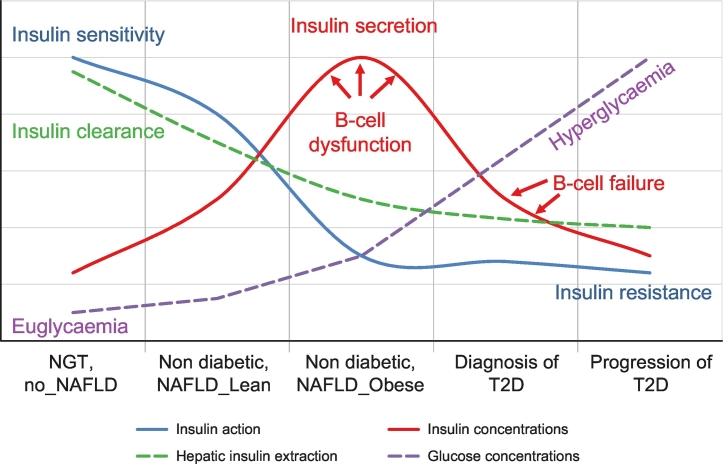
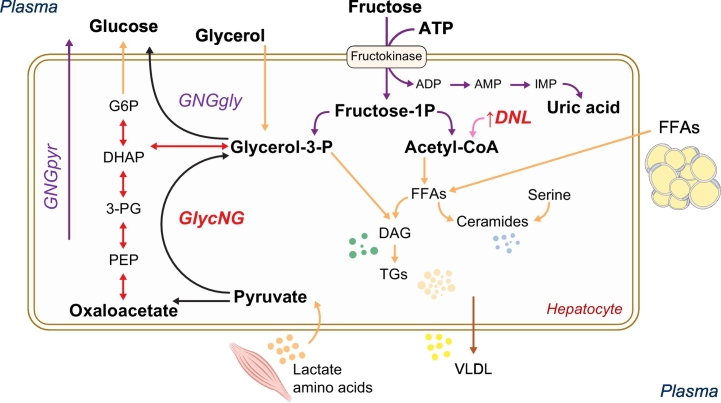
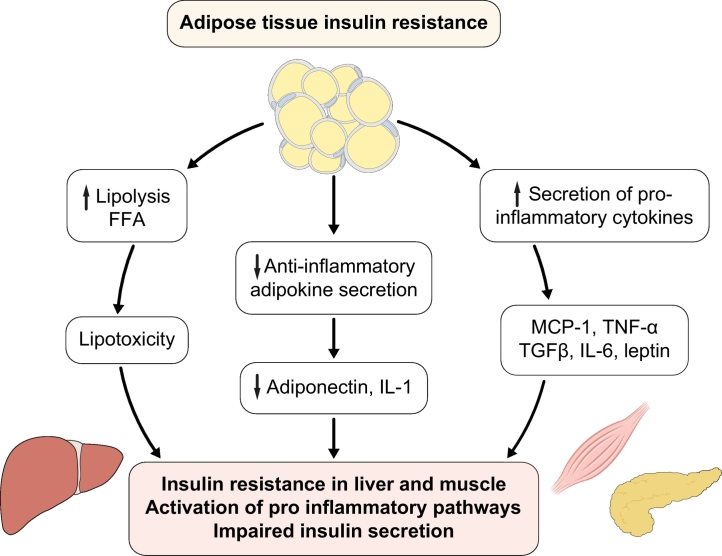
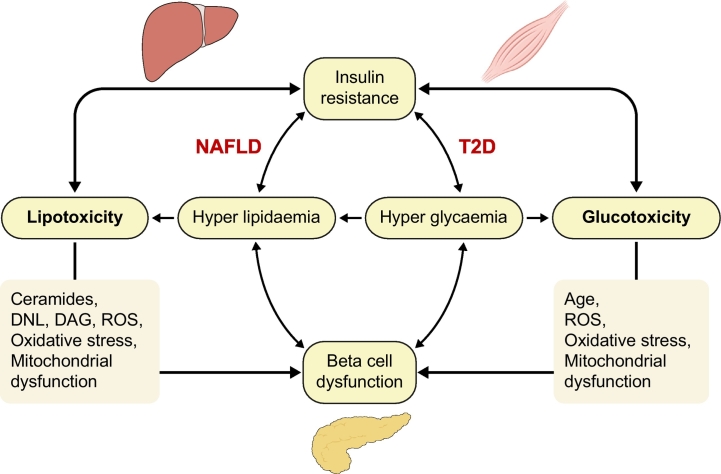
Verification
Claims the paper makes
The claims and statistics of this paper haven’t been checked yet.
Run the check — free, no account needed. It reads the open-access text and checks the sources it cites.
Claims other papers make about this one
Each is checked against this paper’s own text: does it say what the citing paper says it does?
The source backs part of the claim, not all of it — or backs it for a different population, condition or comparison.
In the citing paper
“which however could be part of the therapeutic action (lipid partitioning with the expansion of subcutaneous adipose tissue) [36].”
From Current treatment of non‐alcoholic fatty liver disease (2022) · cites this paper as [36]
Experimental — accuracy not yet measured
Self-check
Percentages, sums and reported differences re-computed from the paper’s own numbers.
The self-check needs the paper’s full text.
Citations
Cites
Younossi, Z. M., Koenig, A. B., Abdelatif, D., Fazel, Y., Henry, L., & Wymer, M. (2016) · Hepatology · doi:10.1002/hep.28431 · Cited by 10,781
Chalasani, N., Younossi, Z., Lavine, J. E., Charlton, M., Cusi, K., Rinella, M., Harrison, S. A., Brunt, E. M., & Sanyal, A. J. (2018) · Hepatology · doi:10.1002/hep.29367 · Cited by 7,239
Self-citationEASL–EASD–EASO Clinical Practice Guidelines for the management of non-alcoholic fatty liver disease
(2016) · Journal of Hepatology · doi:10.1016/j.jhep.2015.11.004 · Cited by 4,836
Dormandy, J. A., Charbonnel, B., Eckland, D. J., Erdmann, E., Massi-Benedetti, M., Moules, I. K., Skene, A. M., Tan, M. H., Lefèbvre, P. J., Murray, G. D., et al. (2005) · The Lancet · doi:10.1016/s0140-6736(05)67528-9 · Cited by 4,129
β-Cell Deficit and Increased β-Cell Apoptosis in Humans With Type 2 Diabetes
Butler, A. E., Janson, J., Bonner-Weir, S., Ritzel, R., Rizza, R. A., & Butler, P. C. (2003) · Diabetes · doi:10.2337/diabetes.52.1.102 · Cited by 4,011
Donnelly, K. L., Smith, C. I., Schwarzenberg, S. J., Jessurun, J., Boldt, M. D., & Parks, E. J. (2005) · Journal of Clinical Investigation · doi:10.1172/jci23621 · Cited by 3,604
Davies, M. J., D’Alessio, D. A., Fradkin, J., Kernan, W. N., Mathieu, C., Mingrone, G., Rossing, P., Tsapas, A., Wexler, D. J., & Buse, J. B. (2018) · Diabetes Care · doi:10.2337/dci18-0033 · Cited by 3,518
Pioglitazone, Vitamin E, or Placebo for Nonalcoholic Steatohepatitis
Sanyal, A. J., Chalasani, N., Kowdley, K. V., McCullough, A., Diehl, A. M., Bass, N. M., Neuschwander-Tetri, B. A., Lavine, J. E., Tonascia, J., Unalp, A., et al. (2010) · New England Journal of Medicine · doi:10.1056/nejmoa0907929 · Cited by 3,327
2. Classification and Diagnosis of Diabetes: Standards of Medical Care in Diabetes—2018
American Diabetes Association (2018) · Diabetes Care · doi:10.2337/dc18-s002 · Cited by 3,159
Vernon, G. C., Baranova, A. V., & Younossi, Z. M. (2011) · Alimentary Pharmacology & Therapeutics · doi:10.1111/j.1365-2036.2011.04724.x · Cited by 3,116
Research works printed but not linked: 1
- Gastaldelli, 2014, Chapter 3: Pathophysiology of Prediabetes: Role of Lipotoxicity?, Volume 1, 31
Cited by
Sorted by citations
A Placebo-controlled trial of subcutaneous semaglutide in nonalcoholic steatohepatitis
Newsome, P. N., Buchholtz, K., Cusi, K., Linder, M., Okanoue, T., Ratziu, V., Sanyal, A. J., Sejling, A.-S., & Harrison, S. A. (2021) · New England Journal of Medicine · doi:10.1056/nejmoa2028395 · Cited by 2,039
Self-citationCusi, K., Isaacs, S., Barb, D., Basu, R., Caprio, S., Garvey, W. T., Kashyap, S., Mechanick, J. I., Mouzaki, M., Nadolsky, K., et al. (2022) · Endocrine Practice · doi:10.1016/j.eprac.2022.03.010 · Cited by 1,021
Self-citationA Randomized, Controlled Trial of the Pan-PPAR Agonist Lanifibranor in NASH
Francque, S. M., Bedossa, P., Ratziu, V., Anstee, Q. M., Bugianesi, E., Sanyal, A. J., Loomba, R., Harrison, S. A., Balabanska, R., Mateva, L., et al. (2021) · New England Journal of Medicine · doi:10.1056/nejmoa2036205 · Cited by 801
Metabolic dysfunction-associated steatotic liver disease (MASLD): a state-of-the-art review
Chan, W.-K., Chuah, K.-H., Rajaram, R. B., Lim, L.-L., Ratnasingam, J., & Vethakkan, S. R. (2023) · Journal of Obesity & Metabolic Syndrome · doi:10.7570/jomes23052 · Cited by 776
Quek, J., Chan, K. E., Wong, Z. Y., Tan, C., Tan, B., Lim, W. H., Tan, D. J. H., Tang, A. S. P., Tay, P., Xiao, J., et al. (2023) · The Lancet Gastroenterology & Hepatology · doi:10.1016/s2468-1253(22)00317-x · Cited by 749
Duell, P. B., Welty, F. K., Miller, M., Chait, A., Hammond, G., Ahmad, Z., Cohen, D. E., Horton, J. D., Pressman, G. S., Toth, P. P., et al. (2022) · Arteriosclerosis, Thrombosis, and Vascular Biology · doi:10.1161/atv.0000000000000153 · Cited by 727
Kanwal, F., Shubrook, J. H., Adams, L. A., Pfotenhauer, K., Wai-Sun Wong, V., Wright, E., Abdelmalek, M. F., Harrison, S. A., Loomba, R., Mantzoros, C. S., et al. (2021) · Gastroenterology · doi:10.1053/j.gastro.2021.07.049 · Cited by 618
Self-citationA Global View of the Interplay between Non-Alcoholic Fatty Liver Disease and Diabetes
Stefan, N., & Cusi, K. (2022) · The Lancet Diabetes & Endocrinology · doi:10.1016/s2213-8587(22)00003-1 · Cited by 593
Self-citationTargher, G., Tilg, H., & Byrne, C. D. (2021) · The Lancet Gastroenterology & Hepatology · doi:10.1016/s2468-1253(21)00020-0 · Cited by 586
Modulation of Insulin Resistance in Nonalcoholic Fatty Liver Disease
Khan, R. S., Bril, F., Cusi, K. J., & Newsome, P. N. (2018) · Hepatology · doi:10.1002/hep.30429 · Cited by 552
Self-citationGLP-1 Receptor Agonists: Beyond Their Pancreatic Effects
Zhao, X., Wang, M., Wen, Z., Lu, Z., Cui, L., Fu, C., Xue, H., Liu, Y., & Zhang, Y. (2021) · Frontiers in Endocrinology · doi:10.3389/fendo.2021.721135 · Cited by 463
Neeland, I. J., Lim, S., Tchernof, A., Gastaldelli, A., Rangaswami, J., Ndumele, C. E., Powell-Wiley, T. M., & Després, J.-P. (2024) · Nature Reviews Disease Primers · doi:10.1038/s41572-024-00563-5 · Cited by 463
Self-citationMetabolomics and lipidomics in NAFLD: biomarkers and non-invasive diagnostic tests
Masoodi, M., Gastaldelli, A., Hyötyläinen, T., Arretxe, E., Alonso, C., Gaggini, M., Brosnan, J., Anstee, Q. M., Millet, O., Ortiz, P., et al. (2021) · Nature Reviews Gastroenterology & Hepatology · doi:10.1038/s41575-021-00502-9 · Cited by 451
Self-citationStefan, N., Yki‐Järvinen, H., & Neuschwander‐Tetri, B. A. (2024) · The Lancet Diabetes & Endocrinology · doi:10.1016/s2213-8587(24)00318-8 · Cited by 470
Cusi, K. J., Abdelmalek, M. F., Apovian, C. M., Balapattabi, K., Bannuru, R. R., Barb, D., Bardsley, J. K., Beverly, E. A., Corbin, K. D., ElSayed, N. A., et al. (2025) · Diabetes Care · doi:10.2337/dci24-0094 · Cited by 417
Self-citationLomonaco, R., Godinez Leiva, E., Bril, F., Shrestha, S., Mansour, L., Budd, J., Portillo Romero, J., Schmidt, S., Chang, K.-L., Samraj, G., et al. (2021) · Diabetes Care · doi:10.2337/dc20-1997 · Cited by 354
Self-citationNahra, R., Wang, T., Gadde, K. M., Oscarsson, J., Stumvoll, M., Jermutus, L., Hirshberg, B., & Ambery, P. (2021) · Diabetes Care · doi:10.2337/dc20-2151 · Cited by 323
Nonalcoholic steatohepatitis: the role of peroxisome proliferator-activated receptors
Francque, S., Szabo, G., Abdelmalek, M. F., Byrne, C. D., Cusi, K., Dufour, J.-F., Roden, M., Sacks, F., & Tacke, F. (2021) · Nature Reviews Gastroenterology & Hepatology · doi:10.1038/s41575-020-00366-5 · Cited by 316
Self-citationCurrent treatment of non‐alcoholic fatty liver disease
Paternostro, R., & Trauner, M. (2022) · Journal of Internal Medicine · doi:10.1111/joim.13531 · Cited by 305
Nevola, R., Epifani, R., Imbriani, S., Tortorella, G., Aprea, C., Galiero, R., Rinaldi, L., Marfella, R., & Sasso, F. C. (2023) · International Journal of Molecular Sciences · doi:10.3390/ijms24021703 · Cited by 286
Non-alcoholic fatty liver disease: A patient guideline
Francque, S. M., Marchesini, G., Kautz, A., Walmsley, M., Dorner, R., Lazarus, J. V., Zelber-Sagi, S., Hallsworth, K., Busetto, L., Frühbeck, G., et al. (2021) · JHEP Reports · doi:10.1016/j.jhepr.2021.100322 · Cited by 264
Metabolic (dysfunction)-associated fatty liver disease in individuals of normal weight
Eslam, M., El‐Serag, H. B., Francque, S., Sarin, S. K., Wei, L., Bugianesi, E., & George, J. (2022) · Nature Reviews Gastroenterology & Hepatology · doi:10.1038/s41575-022-00635-5 · Cited by 251
Heyens, L. J. M., Busschots, D., Koek, G. H., Robaeys, G., & Francque, S. (2021) · Frontiers in Medicine · doi:10.3389/fmed.2021.615978 · Cited by 258
ElSayed, N. A., Aleppo, G., Aroda, V. R., Bannuru, R. R., Brown, F. M., Bruemmer, D., Collins, B. S., Cusi, K. J., Hilliard, M. E., Isaacs, D. M., et al. (2022) · Diabetes Care · doi:10.2337/dc23-s004 · Cited by 242
Self-citationElSayed, N. A., McCoy, R. G., Aleppo, G., Bajaj, M. S., Balapattabi, K., Beverly, E. A., Early, K. B., Bruemmer, D., Cusi, K. J., Echouffo-Tcheugui, J. B., et al. (2024) · Diabetes Care · doi:10.2337/dc25-s004 · Cited by 226
Self-citationA researcher’s guide to preclinical mouse NASH models
Gallage, S., Avila, J. E. B., Ramadori, P., Focaccia, E., Rahbari, M., Ali, A., Malek, N. P., Anstee, Q. M., & Heikenwälder, M. F. (2022) · Nature Metabolism · doi:10.1038/s42255-022-00700-y · Cited by 212
Xiao, H., Sun, X., Lin, Z., Yang, Y., Zhang, M., Xu, Z., Liu, P., Liu, Z., & Huang, H. (2022) · Acta Pharmaceutica Sinica B · doi:10.1016/j.apsb.2021.12.023 · Cited by 198
Negi, C. K., Babica, P., Bajard, L., Vašků, J. B., & Tarantino, G. (2021) · Metabolism · doi:10.1016/j.metabol.2021.154925 · Cited by 196
Vitamin D and Metabolic Dysfunction-Associated Fatty Liver Disease (MAFLD): An Update
Barchetta, I., Cimini, F. A., & Cavallo, M. G. (2020) · Nutrients · doi:10.3390/nu12113302 · Cited by 198
Govaere, O., Petersen, S. K., Martínez-López, N., Wouters, J., Haele, M. V., Mancina, R. M., Jamialahmadi, O., Bilkei‐Gorzo, O., Lassen, P. B., Darlay, R., et al. (2021) · Journal of Hepatology · doi:10.1016/j.jhep.2021.12.012 · Cited by 180
The Emerging Role of Glucagon-like Peptide-1 Receptor Agonists for the Management of NAFLD
Chavez, C. P., Cusi, K. J., & Kadiyala, S. (2021) · The Journal of Clinical Endocrinology & Metabolism · doi:10.1210/clinem/dgab578 · Cited by 165
Self-citationMetabolic liver disease in diabetes – From mechanisms to clinical trials
Dewidar, B., KAHL, S., Pafili, K., & Roden, M. (2020) · Metabolism · doi:10.1016/j.metabol.2020.154299 · Cited by 167
ElSayed, N. A., Aleppo, G., Bannuru, R. R., Bruemmer, D., Collins, B. S., Cusi, K. J., Ekhlaspour, L., Fleming, T. K., Hilliard, M. E., Johnson, E. L., et al. (2023) · Diabetes Care · doi:10.2337/dc24-s004 · Cited by 173
Self-citationBarb, D., Repetto, E., Stokes, M. E., Shankar, S. S., & Cusi, K. J. (2021) · Obesity · doi:10.1002/oby.23263 · Cited by 148
Self-citationTherapeutic management of metabolic dysfunction associated steatotic liver disease
Zeng, J., Fan, J., & Francque, S. (2024) · United European Gastroenterology Journal · doi:10.1002/ueg2.12525 · Cited by 142
Byrne, C. D., & Targher, G. (2021) · Diabetes Obesity and Metabolism · doi:10.1111/dom.14484 · Cited by 125
Preparing for the NASH Epidemic: A Call to Action
Kanwal, F., Shubrook, J. H., Younossi, Z. M., Natarajan, Y., Bugianesi, E., Rinella, M. E., Harrison, S. A., Mantzoros, C. S., Pfotenhauer, K. M., Klein, S., et al. (2021) · Gastroenterology · doi:10.1053/j.gastro.2021.04.074 · Cited by 127
Self-citationNogueira, J. P., & Cusi, K. J. (2024) · Diabetes Spectrum · doi:10.2337/dsi23-0013 · Cited by 132
Self-citationNonalcoholic fatty liver disease and type 2 diabetes: where do Diabetologists stand?
Tomah, S., Alkhouri, N., & Hamdy, O. (2020) · Clinical Diabetes and Endocrinology · doi:10.1186/s40842-020-00097-1 · Cited by 122
Jara, M., Norlin, J., Kjær, M. S., Almholt, K., Bendtsen, K. M., Bugianesi, E., Cusi, K. J., Galsgaard, E. D., Geybels, M. S., Gluud, L. L., et al. (2025) · Nature Medicine · doi:10.1038/s41591-025-03799-0 · Cited by 114
Self-citationYoneda, M., Honda, Y., Ogawa, Y., Kessoku, T., Kobayashi, T., Imajo, K., Ozaki, A., Nogami, A., Taguri, M., Yamanaka, T., et al. (2021) · BMJ Open Diabetes Research & Care · doi:10.1136/bmjdrc-2020-001990 · Cited by 100
Harrison, S. A., Thang, C., Bolze, S., Dewitt, S., Hallakou-Bozec, S., Dubourg, J., Bedossa, P., Cusi, K., Ratziu, V., Grouin, J.-M., et al. (2023) · Journal of Hepatology · doi:10.1016/j.jhep.2023.02.004 · Cited by 96
Self-citationAbushamat, L. A., Shah, P. A., Eckel, R. H., Harrison, S. A., & Barb, D. (2024) · Clinical Gastroenterology and Hepatology · doi:10.1016/j.cgh.2024.01.032 · Cited by 103
Ghosal, S., Datta, D., & Sinha, B. (2021) · Scientific Reports · doi:10.1038/s41598-021-01663-y · Cited by 98
Harnessing Muscle–Liver Crosstalk to Treat Nonalcoholic Steatohepatitis
Chakravarthy, M. V., Siddiqui, M. S., Forsgren, M. F., & Sanyal, A. J. (2020) · Frontiers in Endocrinology · doi:10.3389/fendo.2020.592373 · Cited by 96
Targeting Mitochondria in Diabetes
Jakovljevic, N. K., Pavlović, K., Jotić, A., Lalic, K. S., Stoiljkovic, M. M., Lukić, L., Milicic, T. J., Macesic, M. V., Gajović, J. S., & Lalic, N. M. (2021) · International Journal of Molecular Sciences · doi:10.3390/ijms22126642 · Cited by 91
The metabolic basis of nonalcoholic steatohepatitis
Chakravarthy, M. V., & Neuschwander‐Tetri, B. A. (2020) · Endocrinology Diabetes & Metabolism · doi:10.1002/edm2.112 · Cited by 93
Della Pepa, G., Russo, M., Vitale, M., Carli, F., Vetrani, C., Masulli, M., Riccardi, G., Vaccaro, O., Gastaldelli, A., Rivellese, A. A., et al. (2021) · Diabetes Research and Clinical Practice · doi:10.1016/j.diabres.2021.108984 · Cited by 84
Self-citationDiabetes and cirrhosis: Current concepts on diagnosis and management
Castéra, L., & Cusi, K. J. (2023) · Hepatology · doi:10.1097/hep.0000000000000263 · Cited by 87
Self-citationManagement of NAFLD in primary care settings
Wong, V. W., Zelber‐Sagi, S., Cusi, K. J., Carrieri, P., Wright, E. E., Crespo, J., & Lazarus, J. V. (2022) · Liver International · doi:10.1111/liv.15404 · Cited by 84
Self-citationPPAR-Targeted Therapies in the Treatment of Non-Alcoholic Fatty Liver Disease in Diabetic Patients
Lange, N. F., Graf, V., Caussy, C., & Dufour, J. (2022) · International Journal of Molecular Sciences · doi:10.3390/ijms23084305 · Cited by 84
Francque, S., Bédossa, P., Abdelmalek, M. F., Anstee, Q. M., Bugianesi, E., Ratziu, V., Huot-Marchand, P., Bruno, S., Junien, J., Broqua, P., et al. (2020) · Contemporary Clinical Trials · doi:10.1016/j.cct.2020.106170 · Cited by 78
Cusi, K. J., Alkhouri, N., Harrison, S. A., Fouqueray, P., Moller, D. E., Hallakou‐Bozec, S., Bolze, S., Grouin, J., Megnien, S. J., Dubourg, J., et al. (2021) · The Lancet. Gastroenterology & hepatology · doi:10.1016/s2468-1253(21)00300-9 · Cited by 80
Self-citationIndole-3-Propionic Acid, a Gut-Derived Tryptophan Metabolite, Associates with Hepatic Fibrosis
Sehgal, R., Ilha, M., Vaittinen, M., Kamińska, D., Männistö, V., Kärjä, V. J., Tuomainen, M. H., Hanhineva, K., Romeo, S., Pajukanta, P., et al. (2021) · Nutrients · doi:10.3390/nu13103509 · Cited by 82
Elsaid, M. I., Li, N., Firkins, S. A., Rustgi, V. K., Paskett, E. D., Acharya, C., Reddy, K. R., Chiang, C. W., & Mumtaz, K. (2024) · Alimentary Pharmacology & Therapeutics · doi:10.1111/apt.17925 · Cited by 77
Steatotic Liver Disease: Pathophysiology and Emerging Pharmacotherapies
Kokkorakis, M., Muzurović, E. M., Volčanšek, Š., Chakhtoura, M., Hill, M. A., Mikhailidis, D. P., & Mantzoros, C. S. (2024) · Pharmacological Reviews · doi:10.1124/pharmrev.123.001087 · Cited by 79
Insulin Clearance in Health and Disease
Najjar, S. M., Caprio, S., & Gastaldelli, A. (2022) · Annual Review of Physiology · doi:10.1146/annurev-physiol-031622-043133 · Cited by 79
Self-citationPharmacological Approaches to Nonalcoholic Fatty Liver Disease: Current and Future Therapies
Genua, I., & Cusi, K. J. (2024) · Diabetes Spectrum · doi:10.2337/dsi23-0012 · Cited by 74
Self-citationCooreman, M. P., Butler, J., Giugliano, R. P., Zannad, F. M., Dzen, L., Huot-Marchand, P., Baudin, M., Beard, D. R., Junien, J., Broqua, P., et al. (2024) · Nature Communications · doi:10.1038/s41467-024-47919-9 · Cited by 75
Bajaj, M. S., McCoy, R. G., Balapattabi, K., Bannuru, R. R., Bellini, N. J., Bennett, A. K., Beverly, E. A., Early, K. B., ChallaSivaKanaka, S., Echouffo-Tcheugui, J. B., et al. (2025) · Diabetes Care · doi:10.2337/dc26-s004 · Cited by 90
Non-alcoholic fatty liver disease in women – Current knowledge and emerging concepts
Eng, P. C., Forlano, R., Tan, T., Manousou, P., Dhillo, W. S., & Izzi‐Engbeaya, C. N. (2023) · JHEP Reports · doi:10.1016/j.jhepr.2023.100835 · Cited by 75
Autoimmune responses and inflammation in type 2 diabetes
Prasad, M., Chen, E. W., Toh, S.-A. E. S., & Gascoigne, N. R. J. (2020) · Journal of Leukocyte Biology · doi:10.1002/jlb.3mr0220-243r · Cited by 68
Kalavalapalli, S., Leiva, E. G., Lomonaco, R., Chi, X., Shrestha, S., Dillard, R., Budd, J., Romero, J. P., Li, C., Bril, F., et al. (2023) · The Journal of Clinical Endocrinology & Metabolism · doi:10.1210/clinem/dgac660 · Cited by 64
Self-citationImplementation of a liver health check in people with type 2 diabetes
Abeysekera, K. W. M., Valenti, L., Younossi, Z., Dillon, J. F., Allen, A. M., Noureddin, M., Rinella, M. E., Tacke, F., Francque, S., Ginès, P., et al. (2024) · The Lancet Gastroenterology & Hepatology · doi:10.1016/s2468-1253(23)00270-4 · Cited by 63
Self-citationChandran, V. I., Wernberg, C. W., Lauridsen, M. M., Skytthe, M. K., Bendixen, S. M., Larsen, F. T., Hansen, C. D., Grønkjær, L. L., Siersbæk, M. S., Caterino, T. D., et al. (2022) · Hepatology · doi:10.1002/hep.32620 · Cited by 64
Jalali, M., Rahimlou, M., Mahmoodi, M., Moosavian, S. P., Symonds, M. E., Jalali, R., Zare, M., Imanieh, M. H., & Stasi, C. (2020) · Pharmacological Research · doi:10.1016/j.phrs.2020.104799 · Cited by 63
Frietze, K. K., Brown, A., Das, D., Franks, R. G., Cunningham, J. L., Hayward, M. D., & Nickels, J. T. (2021) · Autophagy · doi:10.1080/15548627.2021.1920818 · Cited by 62
Nonalcoholic Fatty Liver Disease: What Does the Primary Care Physician Need to Know?
Budd, J. T., & Cusi, K. J. (2020) · The American Journal of Medicine · doi:10.1016/j.amjmed.2020.01.007 · Cited by 63
Self-citationGuerra, S., Mocciaro, G., & Gastaldelli, A. (2021) · European Journal of Clinical Investigation · doi:10.1111/eci.13695 · Cited by 61
Self-citationAhmed, E. S. A., Mohamed, H. E., & Farrag, M. A. (2022) · International Journal of Immunopathology and Pharmacology · doi:10.1177/03946320221137435 · Cited by 59
Role of Agents for the Treatment of Diabetes in the Management of Nonalcoholic Fatty Liver Disease
Budd, J. T., & Cusi, K. J. (2020) · Current Diabetes Reports · doi:10.1007/s11892-020-01349-1 · Cited by 62
Self-citationThe therapeutic landscape of hepatocellular carcinoma
Gallage, S., Beccaria, M. G., Szydlowska, M., Rahbari, M., Mohr, R. U., Tacke, F., & Heikenwälder, M. F. (2021) · Med · doi:10.1016/j.medj.2021.03.002 · Cited by 61
GLP-1 and Underlying Beneficial Actions in Alzheimer’s Disease, Hypertension, and NASH
Li, Q.-X., Gao, H., Guo, Y.-X., Wang, B.-Y., Hua, R.-X., Gao, L., Shang, H.-W., Lu, X., & Xu, J.-D. (2021) · Frontiers in Endocrinology · doi:10.3389/fendo.2021.721198 · Cited by 56
Dewidar, B., Mastrototaro, L., Englisch, C., Ress, C., Granata, C., Rohbeck, E., Pesta, D. H., Heilmann, G., Wolkersdorfer, M. F., Esposito, I., et al. (2023) · EBioMedicine · doi:10.1016/j.ebiom.2023.104714 · Cited by 57
Singh, A., Sohal, A., & Batta, A. (2024) · World Journal of Gastroenterology · doi:10.3748/wjg.v30.i48.5205 · Cited by 52
Fouqueray, P., Bolze, S., Dubourg, J., Hallakou‐Bozec, S., Theurey, P., Grouin, J., Chevalier, C., Dagorn, P. G., Moller, D. E., & Cusi, K. J. (2021) · Cell Reports Medicine · doi:10.1016/j.xcrm.2021.100474 · Cited by 52
Self-citationCusi, K. J. (2020) · Liver International · doi:10.1111/liv.14350 · Cited by 53
Self-citationJin, Z., Yuan, Y., Chen, Z., Liu, S., & Weng, H. (2023) · Journal of Diabetes and its Complications · doi:10.1016/j.jdiacomp.2023.108558 · Cited by 49
Dennis, A., Mouchti, S., Kelly, M., Fallowfield, J. A., Hirschfield, G. M., Pavlides, M., & Banerjee, R. (2020) · Scientific Reports · doi:10.1038/s41598-020-71995-8 · Cited by 49
Cardoso, C. R. L., Villela‐Nogueira, C. A., Leite, N. C., & Salles, G. F. (2021) · Cardiovascular Diabetology · doi:10.1186/s12933-021-01388-2 · Cited by 52
Yao, T., Gu, X., Liang, X., Fall, F. N., Cao, A., Zhang, S., Guan, Y., Sun, B., & Xue, M. (2021) · Aquaculture · doi:10.1016/j.aquaculture.2021.737012 · Cited by 48
Wang, Y., Zhou, Y., Wang, Z., Ni, Y., Prud’homme, G. J., & WANG, Q. (2025) · The Journal of Clinical Endocrinology & Metabolism · doi:10.1210/clinem/dgaf336 · Cited by 52
Preparing for the NASH Epidemic: A Call to Action
Kanwal, F., Shubrook, J. H., Younossi, Z. M., Natarajan, Y., Bugianesi, E., Rinella, M. E., Harrison, S. A., Mantzoros, C. S., Pfotenhauer, K. M., Klein, S., et al. (2021) · Diabetes Care · doi:10.2337/dci21-0020 · Cited by 47
Self-citationMertens, J., Block, C. E. M. D., Spinhoven, M. J., Driessen, A. L. C., Francque, S., & Kwanten, W. J. (2021) · Frontiers in Pharmacology · doi:10.3389/fphar.2021.768576 · Cited by 48
Liver-targeting drugs and their effect on blood glucose and hepatic lipids
Gastaldelli, A., Stefan, N., & Häring, H. (2021) · Diabetologia · doi:10.1007/s00125-021-05442-2 · Cited by 48
Self-citationNascè, A., Gariani, K., Jornayvaz, F. R., & Szántó, I. (2022) · Antioxidants · doi:10.3390/antiox11061131 · Cited by 49
The future of incretins in the treatment of obesity and non-alcoholic fatty liver disease
Andreasen, C. R., Andersen, A., & Vilsbøll, T. (2023) · Diabetologia · doi:10.1007/s00125-023-05966-9 · Cited by 44
Nonalcoholic Fatty Liver Disease: Review of Management for Primary Care Providers
Basu, R., Noureddin, M., & Clark, J. M. (2022) · Mayo Clinic Proceedings · doi:10.1016/j.mayocp.2022.04.005 · Cited by 45
Iwasaki, K., Abarca, C., & Aguayo‐Mazzucato, C. (2023) · Diabetes & Metabolism Journal · doi:10.4093/dmj.2022.0416 · Cited by 48
Soto‐Catalán, M., Opazo-Ríos, L., Quiceno, H., Lázaro, I., Moreno, J. A., Gómez‐Guerrero, C., Egido, J., & Mas, S. (2024) · International Journal of Molecular Sciences · doi:10.3390/ijms25052961 · Cited by 50
Tirzepatide against obesity and insulin-resistance: pathophysiological aspects and clinical evidence
Corrao, S., Pollicino, C., Maggio, D., Torres, A., & Argano, C. (2024) · Frontiers in Endocrinology · doi:10.3389/fendo.2024.1402583 · Cited by 53
Lambrecht, J., & Tacke, F. (2021) · Frontiers in Immunology · doi:10.3389/fimmu.2020.634409 · Cited by 46
Metabolic Dysfunction-associated Steatotic Liver Disease and Type 2 Diabetes: A Deadly Synergy
Leith, D., Lin, Y., & Brennan, P. (2024) · touchREVIEWS in Endocrinology · doi:10.17925/ee.2024.20.2.2 · Cited by 49
López, Y. O. N., Iliuk, A. B., Petrilli, A. M., Glass, C. E., Casu, A., & Pratley, R. E. (2022) · International Journal of Molecular Sciences · doi:10.3390/ijms23105779 · Cited by 44
Abdelmalek, M. F., Harrison, S. A., & Sanyal, A. J. (2024) · Diabetes Obesity and Metabolism · doi:10.1111/dom.15524 · Cited by 45
de Mello, V. D., Sehgal, R., Männistö, V., Klåvus, A., Nilsson, E., Perfilyev, A., Kamińska, D., Miao, Z., Pajukanta, P., Ling, C., et al. (2020) · Liver International · doi:10.1111/liv.14743 · Cited by 43
Preparing for the NASH epidemic: A call to action
Kanwal, F., Shubrook, J. H., Younossi, Z. M., Natarajan, Y., Bugianesi, E., Rinella, M. E., Harrison, S. A., Mantzoros, C. S., Pfotenhauer, K. M., Klein, S., et al. (2021) · Metabolism · doi:10.1016/j.metabol.2021.154822 · Cited by 46
Self-citationNon-alcoholic Steatohepatitis Pathogenesis, Diagnosis, and Treatment
Zhu, B., Chan, S., Li, J., Li, K. S., Wu, H., Cui, K., & Chen, H. (2021) · Frontiers in Cardiovascular Medicine · doi:10.3389/fcvm.2021.742382 · Cited by 47
NAFLD in type 1 diabetes: overrated or underappreciated?
Mertens, J., Gaal, L. F. V., Francque, S., & Block, C. E. M. D. (2021) · Therapeutic Advances in Endocrinology and Metabolism · doi:10.1177/20420188211055557 · Cited by 44
Hepatocyte and immune cell crosstalk in non-alcoholic fatty liver disease
Trejo, A. M. C., Větvička, V., Vištějnová, L., Králíčková, M., & Montúfar, E. B. (2021) · Expert Review of Gastroenterology & Hepatology · doi:10.1080/17474124.2021.1887730 · Cited by 41
Metadata
- Authors
- Gastaldelli, A., & Cusi, K.
- Affiliations
- Istituto di Fisiologia Clinica (IT)
- University of Florida (US)
- Corresponding author
- Gastaldelli, Amalia
- Cusi, Kenneth
- Venue
- JHEP Reports
- Publisher
- Elsevier BV
- Published
- 2019-10
- Volume
- 1
- Issue
- 4
- Pages
- 312-328
- ISSN
- 2589-5559 (ISSN-L)
- PMC
- PMC7001557
- OpenAlex
- W2963543751
- Cited by
- 455
- References
- 231
- Citations by year
- 2026: 48 · 2025: 69 · 2024: 85 · 2023: 74 · 2022: 62 · 2021: 78 · 2020: 34 · 2019: 3
- FWCI
- 6.46
- Type
- journal article
- Language
- en
- Open access
- gold
- doi.org
- Licence
- Locations
- JHEP Reports (publishedVersion, cc-by-nc-nd)
- PubMed Central (publishedVersion, cc-by-nc-nd)
- PubMed (publishedVersion)
- DOAJ (DOAJ: Directory of Open Access Journals) (submittedVersion, cc-by-sa)
- Funders
- Horizon H2020 (634413)
- Topics
- Health Sciences › Medicine › Hepatology › Liver Disease Diagnosis and Treatment
- Health Sciences › Medicine › Endocrinology, Diabetes and Metabolism › Diabetes, Cardiovascular Risks, and Lipoproteins
- Health Sciences › Medicine › Endocrinology, Diabetes and Metabolism › Diet, Metabolism, and Disease
- Keywords
- non-alcoholic fatty liver disease, nonalcoholic steatohepatitis, type 2 diabetes, insulin resistance, hepatic insulin sensitivity, insulin secretion, liver fibrosis, end-stage liver disease, lipotoxicity, glucotoxicity, adipose tissue dysfunction, obesity, antidiabetic drugs
About these checks
Registry, retraction, Cites and statistics results are computed, not judged, with one exception: a printed reference that no index lists is read once by a model before it counts as a citation error. Claims are extracted by a model and kept only when their quote appears verbatim in the text; each cited source is then checked, with a model’s help, for whether it says what the claim relies on. Those verdicts can be wrong — read the claim’s quote and the cited source before relying on one.
Statistics and arithmetic are recomputed, not judged.
Confidence bands are shown only for fields calibrated on our annotated test set. None is calibrated yet, so no band is shown.
What counts as a claim ›How we measure confidence ›How we check this ›
Are you an author, or do you see a problem with this page? Request a review
