

The DOI matches its Crossref record; 112 of the 115 references it cites were found in a registry or an index.
Alexithymia in eating disorders: Systematic review and meta-analyses of studies using the Toronto Alexithymia Scale
Open accessAbstract
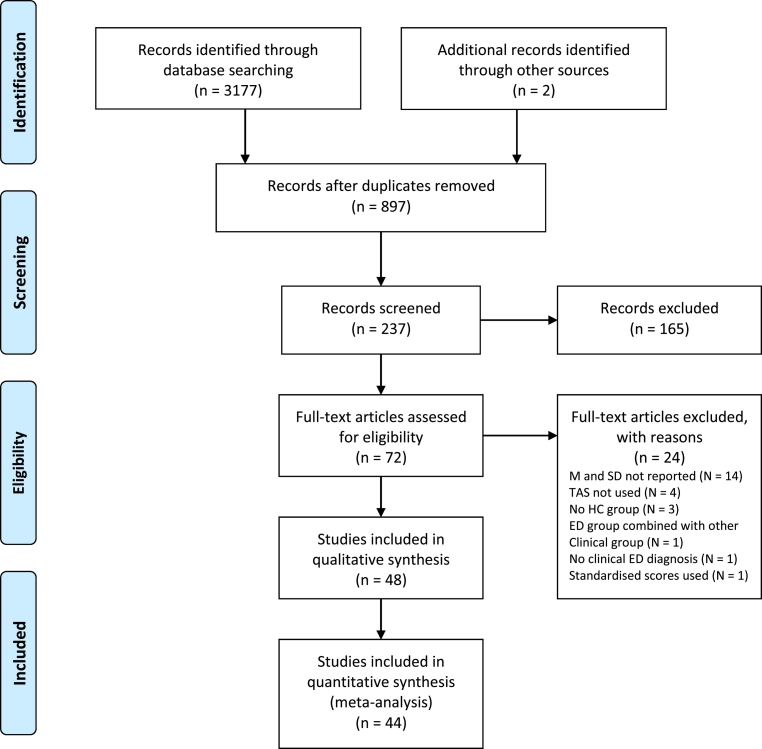
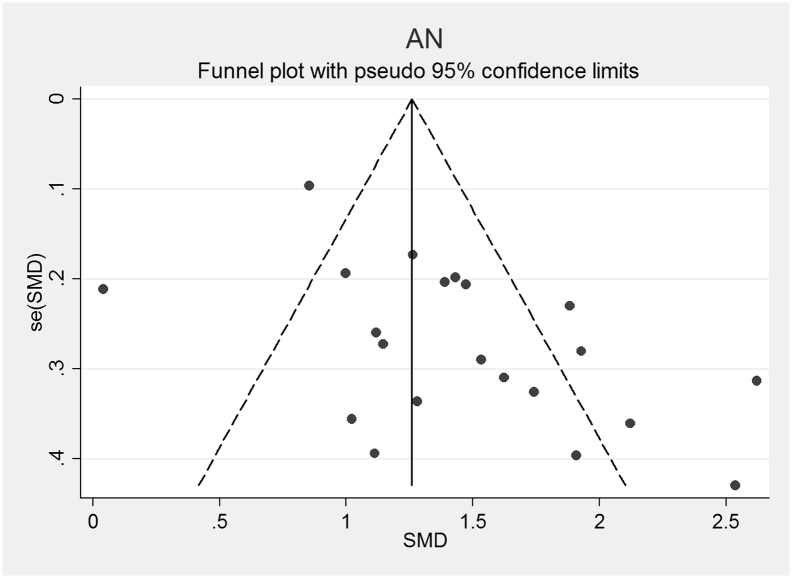
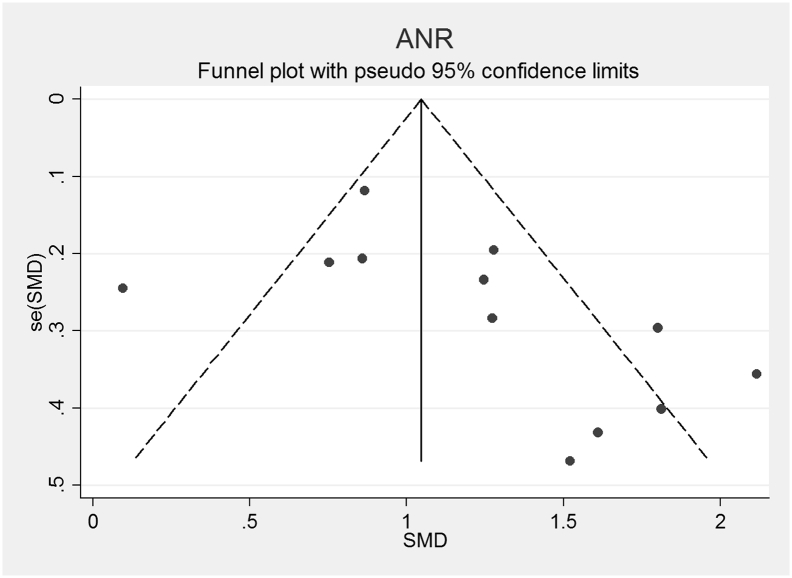
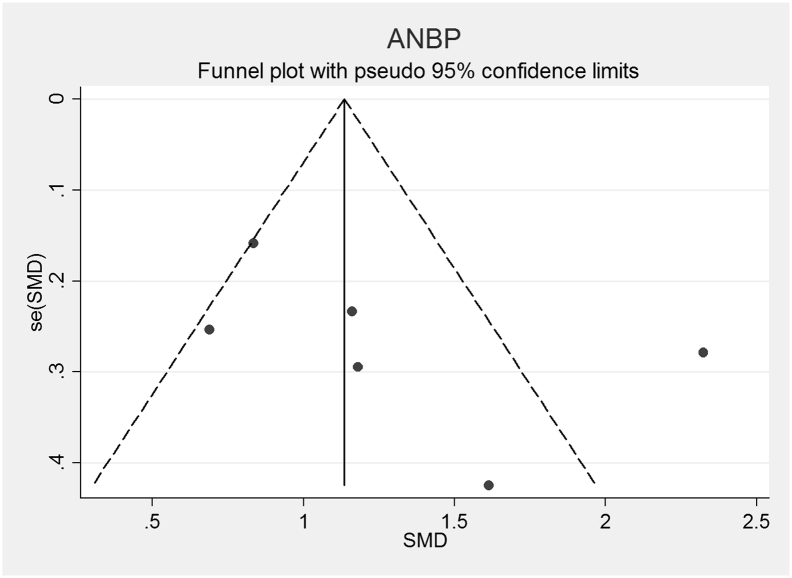
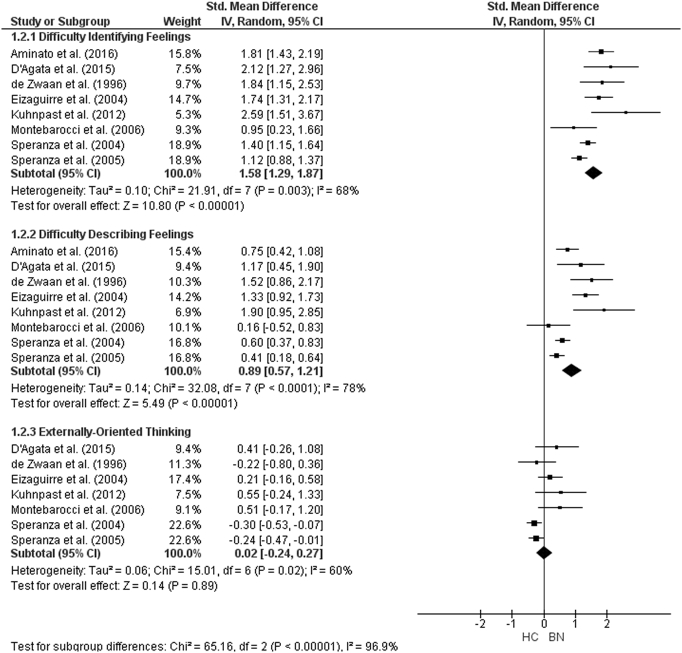
OBJECTIVE: The aim of this review was to synthesise the literature on the use of the Toronto Alexithymia Scale (TAS) in eating disorder populations and Healthy Controls (HCs) and to compare TAS scores in these groups. METHOD: Electronic databases were searched systematically for studies using the TAS and meta-analyses were performed to statistically compare scores on the TAS between individuals with eating disorders and HCs. RESULTS: Forty-eight studies using the TAS with both a clinical eating disorder group and HCs were identified. Of these, 44 were included in the meta-analyses, separated into: Anorexia Nervosa; Anorexia Nervosa, Restricting subtype; Anorexia Nervosa, Binge-Purge subtype, Bulimia Nervosa and Binge Eating Disorder. For all groups, there were significant differences with medium or large effect sizes between the clinical group and HCs, with the clinical group scoring significantly higher on the TAS, indicating greater difficulty with identifying and labelling emotions. CONCLUSION: Across the spectrum of eating disorders, individuals report having difficulties recognising or describing their emotions. Given the self-report design of the TAS, research to develop and evaluate treatments and clinician-administered assessments of alexithymia is warranted.
Overview
The claims and statistics of this paper haven’t been checked yet.
Run the check — free, no account needed. It reads the open-access text and checks the sources it cites.
Integrity signals
Registry
Cites
Statistics
Figures
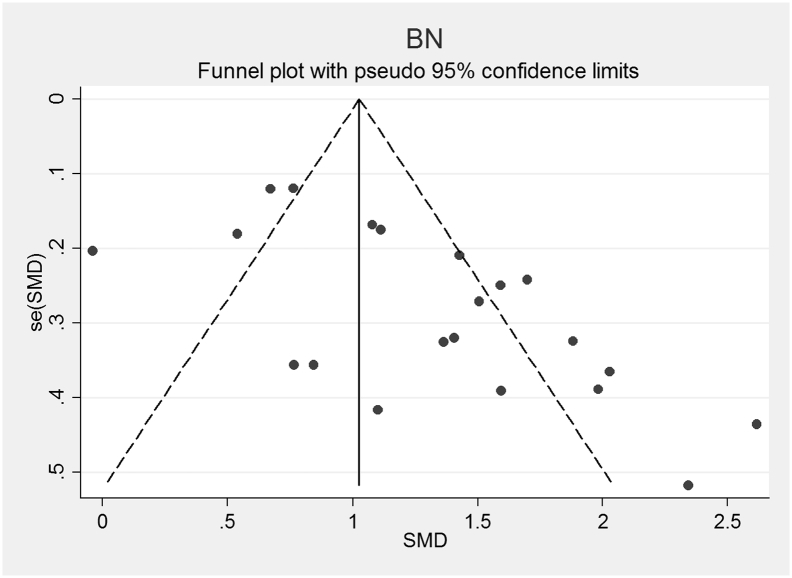
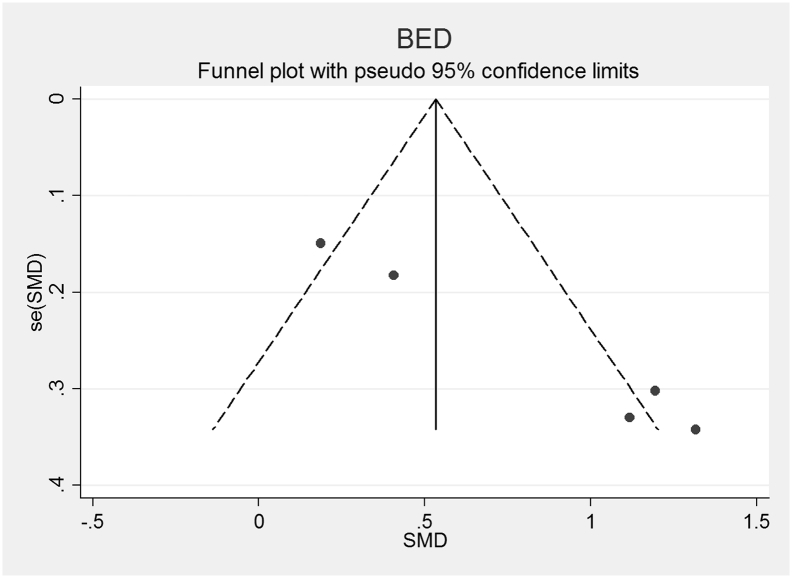
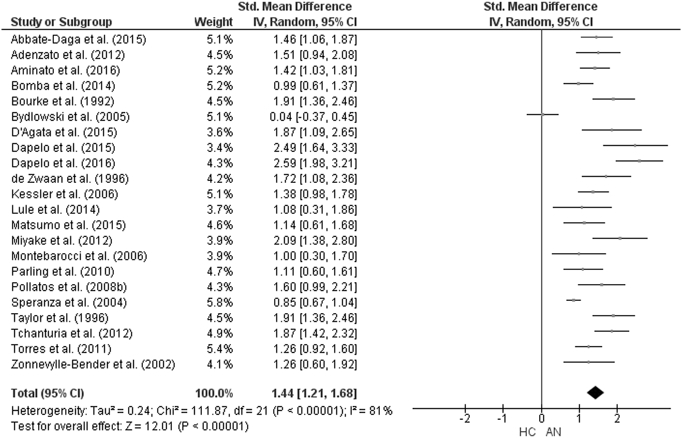
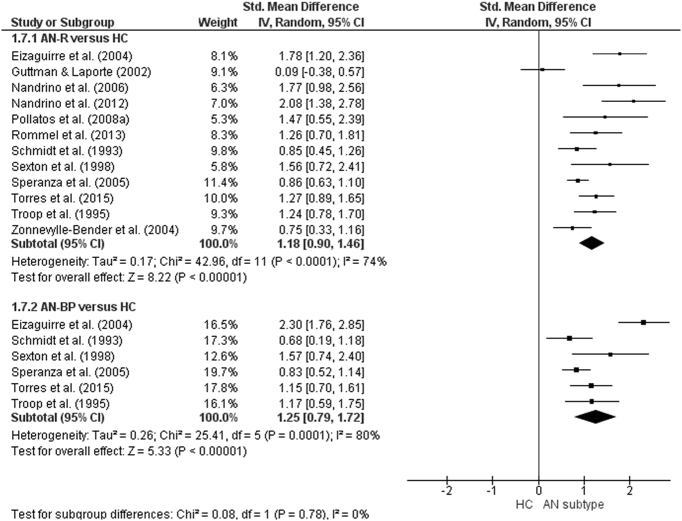
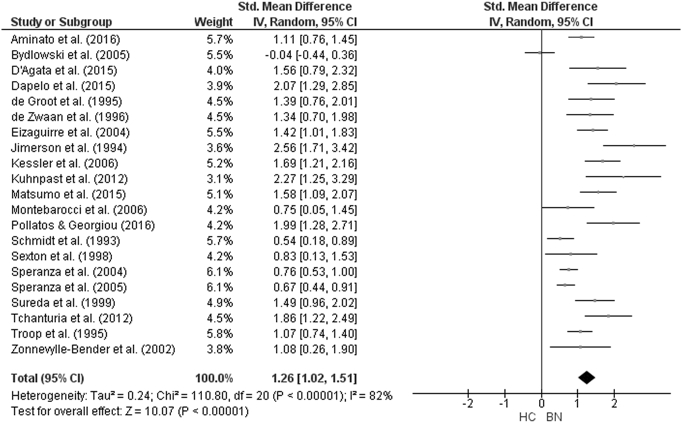
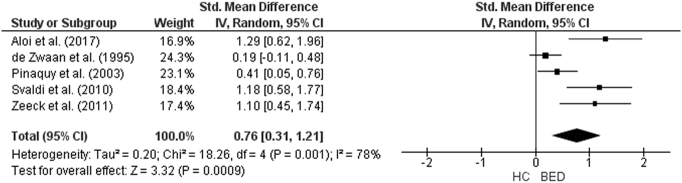
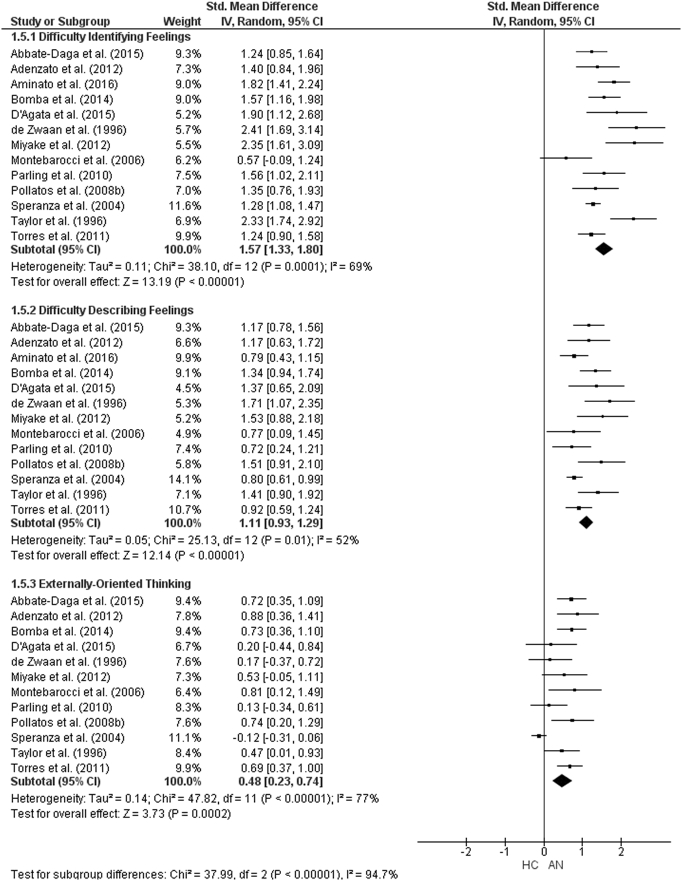
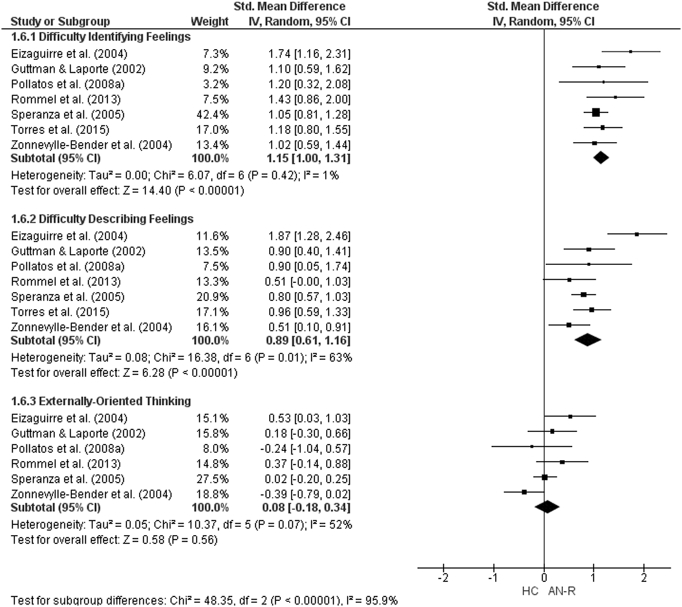
Verification
Claims the paper makes
The claims and statistics of this paper haven’t been checked yet.
Run the check — free, no account needed. It reads the open-access text and checks the sources it cites.
Claims other papers make about this one
Each is checked against this paper’s own text: does it say what the citing paper says it does?
In the citing paper
“Many of us with AN experience alexithymia [93, 94] and suppress our emotions as an emotional coping strategy [22, 95].”
From A lived experience response to the proposed diagnosis of terminal anorexia nervosa: learning from iatrogenic harm, ambivalence and enduring hope (2023) · cites this paper as [93]
Self-check
Percentages, sums and reported differences re-computed from the paper’s own numbers.
The self-check needs the paper’s full text.
Citations
Cites
Statistical Power Analysis for the Behavioral Sciences
Muller, K. E., & Cohen, J. (1989) · Technometrics · doi:10.2307/1270020 · Cited by 99,603
Preferred Reporting Items for Systematic Reviews and Meta-Analyses: the PRISMA statement
Moher, D., Liberati, A., Tetzlaff, J., Altman, D. G., & for the PRISMA Group (2009) · BMJ · doi:10.1136/bmj.b2535 · Cited by 83,823
Statistical power analysis for the behavioral sciences
Cohen, J. (1990) · Computers Environment and Urban Systems · doi:10.1016/0198-9715(90)90050-4 · Cited by 65,417
Measuring inconsistency in meta-analyses
Higgins, J. P. T., Thompson, S. G., Deeks, J. J., & Altman, D. G. (2003) · BMJ · doi:10.1136/bmj.327.7414.557 · Cited by 63,139
Preferred reporting items for systematic reviews and meta-analyses: the PRISMA Statement.
(2009) · PubMed Central · Cited by 44,859
Preferred Reporting Items for Systematic Reviews and Meta-Analyses: The PRISMA Statement
Moher, D., Liberati, A., Tetzlaff, J., & Altman, D. G. (2009) · Journal of Clinical Epidemiology · doi:10.1016/j.jclinepi.2009.06.005 · Cited by 19,575
Duval, S., & Tweedie, R. (2000) · Biometrics · doi:10.1111/j.0006-341x.2000.00455.x · Cited by 14,099
Gratz, K. L., & Roemer, L. (2004) · Journal of Psychopathology and Behavioral Assessment · doi:10.1023/b:joba.0000007455.08539.94 · Cited by 8,942 · cited 1×
“The model [98] outlines four dimensions theorised to contribute to the development or maintenance of psychopathology: use of adaptive and situationally appropriate emotion regulation strategies; impulse inhibition and behavioural control when distressed; emotional awareness, clarity, and acceptance; and emotional appr…”
Bagby, R. M., Parker, J. D. A., & Taylor, G. J. (1994) · Journal of Psychosomatic Research · doi:10.1016/0022-3999(94)90005-1 · Cited by 5,293
(1997) · Medical Entomology and Zoology · Cited by 1,407
Research works printed but not linked: 3
- Deborde, 2008, The Bermond-Vorst Alexithymia Questionnaire cutoff scores: a study in eating-disordered and control subjects, Psychopathology, 41, 43, 10.1159/000109955 · DOI · Paper page
- Pollatos, 2008, Reduced perception of bodily signals in anorexia nervosa, Eat. Behav., 9, 381, 10.1016/j.eatbeh.2008.02.001 · DOI · Paper page
- Pollatos, 2008, Impaired central processing of emotional faces in anorexia nervosa, Psychosom. Med., 70, 701, 10.1097/PSY.0b013e31817e41e6 · DOI
Cited by
Sorted by citations
Items 101–200 of 352
Emotion recognition, alexithymia, empathy, and emotion regulation in women with anorexia nervosa
Saure, E., Raevuori, A., Laasonen, M. R., & Lepistö‐Paisley, T. (2022) · Eating and Weight Disorders - Studies on Anorexia Bulimia and Obesity · doi:10.1007/s40519-022-01496-2 · Cited by 17
Lysaker, P. H., Владимирович, Ч. Н., Moiseeva, T., Sozinova, M. V., Dmitryeva, N., Makarova, A., Kukla, M., Myers, E. J., Karpenko, O., & Kostyuk, G. P. (2023) · The Journal of Nervous and Mental Disease · doi:10.1097/nmd.0000000000001612 · Cited by 18
Mazidi, M., Azizi, A., Becerra, R., Gross, J. J., Zarei, M., Mirshafiei, M., & Preece, D. A. (2023) · Australian Psychologist · doi:10.1080/00050067.2023.2217325 · Cited by 18
Alexithymia and eating disorder symptoms: the mediating role of emotion regulation
Muir, X., Preece, D. A., & Becerra, R. (2023) · Australian Psychologist · doi:10.1080/00050067.2023.2236280 · Cited by 19
Kucharska, K., Kot, E., Biernacka, K., Zimowski, J. G., Rogoza, R., Rybakowski, F., Kostecka, B., & Bednarska‐Makaruk, M. (2019) · European Eating Disorders Review · doi:10.1002/erv.2698 · Cited by 17
Alexithymia and binge eating: Maladaptive emotion regulation strategy or deficient interoception?
Lyvers, M., Kelahroodi, M., Udodzik, E., Stapleton, P., & Thorberg, F. A. (2022) · Appetite · doi:10.1016/j.appet.2022.106073 · Cited by 16
Li, Z., Hutchings-Hay, C., Byford, S., & Tchanturia, K. (2022) · Frontiers in Psychiatry · doi:10.3389/fpsyt.2022.1016287 · Cited by 16
Self-citationMeneguzzo, P., Meregalli, V., Collantoni, E., Cardi, V., Tenconi, E., & Favaro, A. (2023) · Nutrients · doi:10.3390/nu15041021 · Cited by 18
Lyvers, M., & Thorberg, F. A. (2023) · Journal of Psychopathology and Behavioral Assessment · doi:10.1007/s10862-023-10034-y · Cited by 16
Alexithymia and metabolic syndrome: the mediating role of binge eating
Conti, C. M., Francesco, G. D., Severo, M., Lanzara, R., Richards, K. L., Guagnano, M. T., & Porcelli, P. (2020) · Eating and Weight Disorders - Studies on Anorexia Bulimia and Obesity · doi:10.1007/s40519-020-00964-x · Cited by 16
Interoceptive Awareness and Anorexia Nervosa
Wollast, R., Fossion, P., Kotsou, I., Rebrassé, A., & Leys, C. (2022) · The Journal of Nervous and Mental Disease · doi:10.1097/nmd.0000000000001458 · Cited by 20
Silveira, S., Godara, M., Faschinger, A., & Singer, T. (2023) · Journal of Affective Disorders · doi:10.1016/j.jad.2023.08.093 · Cited by 16
Williams, Z. J., & Gotham, K. O. (2021) · Molecular Autism · doi:10.1186/s13229-021-00427-9 · Cited by 15
RetractedHow Our Caregivers Shape Who We Are: The Seven Dimensions of Attachment at the Core of Personality
Gagliardi, M. (2021) · Frontiers in Psychology · doi:10.3389/fpsyg.2021.657628 · Cited by 23
Mestre‐Bach, G., Granero, R., Fernández‐Aranda, F., Potenza, M. N., & Jiménez‐Múrcia, S. (2022) · Journal of Gambling Studies · doi:10.1007/s10899-022-10164-0 · Cited by 15
Is it the Taste or the Buzz? Alexithymia, Caffeine, and Emotional Eating
Lyvers, M., Brown, T., & Thorberg, F. A. (2018) · Substance Use & Misuse · doi:10.1080/10826084.2018.1524490 · Cited by 15
Barberis, N., Cannavò, M., Calaresi, D., & Verrastro, V. (2022) · Psychology Health & Medicine · doi:10.1080/13548506.2022.2045331 · Cited by 16
Reilly, E. E., Brown, T. A., Arunagiri, V., Kaye, W. H., & Wierenga, C. E. (2022) · European Eating Disorders Review · doi:10.1002/erv.2887 · Cited by 14
Longhurst, P., & Swami, V. (2023) · Journal of Affective Disorders · doi:10.1016/j.jad.2023.04.142 · Cited by 14
Torres, S., Vieira, A., Vieira, F. M., Miller, K. M., Guerra, M. P., Lencastre, L., Reis, A. C., Timóteo, S., Nunes, P., & Barbosa, R. (2024) · Nutrients · doi:10.3390/nu16111787 · Cited by 14
Participant Use of Artificial Intelligence in Online Focus Groups: An Experiential Account
Stafford, L., Preston, C., & Pike, A. C. (2024) · International Journal of Qualitative Methods · doi:10.1177/16094069241286417 · Cited by 19
Krug, I., Dang, A. B., Lu, E., Ooi, W. L., Portingale, J., & Miles, S. (2024) · Nutrients · doi:10.3390/nu16244418 · Cited by 16
Pilot data from the Self-Blame and Perspective-Taking Intervention for eating disorders
Hunt, B. J., Hagan, W. S., Pelfrey, S. E., Mericle, S., Harper, J. A., Palka, J. M., & McAdams, C. J. (2021) · Journal of Behavioral and Cognitive Therapy · doi:10.1016/j.jbct.2020.11.002 · Cited by 14
Problem gambling during Covid-19
Frisone, F., Alibrandi, A., & Settineri, S. (2020) · Mediterranean Journal of Clinical Psychology · doi:10.6092/2282-1619/mjcp-2457 · Cited by 30
Li, S., Cui, G., Yin, Y., Tang, K., Chen, L., & Liu, X. (2022) · Frontiers in Public Health · doi:10.3389/fpubh.2022.857246 · Cited by 17
Aljaffer, M. A., Almadani, A. H., Alghamdi, S. A., Alabdulkarim, I. M., Albabtain, M. A., Altameem, R. M., Almugren, A., Alomairy, A. F., & Alghofaily, A. A. (2022) · Neurosciences · doi:10.17712/nsj.2022.4.20220049 · Cited by 13
Introducing a Smart Toy in Eating Disorder Treatment: A Pilot Study
Chubinidze, D., Li, Z., Slovák, P., Baudinet, J., Dufour, E., & Tchanturia, K. (2024) · Nutrients · doi:10.3390/nu16040467 · Cited by 15
Self-citationEating disorder symptoms and profiles of emotion regulation strategy use
Salias, C., Gross, J. J., Petrova, K., Forbush, K. T., & Preece, D. A. (2025) · Journal of Affective Disorders · doi:10.1016/j.jad.2025.03.050 · Cited by 13
Alexithymia and cortisol awakening response in people with eating disorders
Cascino, G., Monteleone, A. M., Marciello, F., Pellegrino, F., Ruzzi, V., & Monteleone, P. (2020) · The World Journal of Biological Psychiatry · doi:10.1080/15622975.2020.1844291 · Cited by 14
Petersson, S., Gullbing, L., & Perseius, K. (2021) · Journal of Eating Disorders · doi:10.1186/s40337-021-00371-2 · Cited by 14
The emotional face of anorexia nervosa: The neural correlates of emotional processing
Halls, D., Leslie, M. R., Leppänen, J., Sedgewick, F., Surguladze, S., Fonville, L., Lang, K., Simic, M., Nicholls, D., Williams, S., et al. (2021) · Human Brain Mapping · doi:10.1002/hbm.25417 · Cited by 13
Self-citationWallis, D. J., & Ridout, N. (2022) · Frontiers in Psychiatry · doi:10.3389/fpsyt.2022.994024 · Cited by 13
The cognitive‐interpersonal model of disordered eating: A test of the mediating role of alexithymia
Giles, S., Hughes, E. K., Fuller‐Tyszkiewicz, M., & Krug, I. (2020) · European Eating Disorders Review · doi:10.1002/erv.2720 · Cited by 12
Eik‐Nes, T. T., Vrabel, K. R., Raman, J., Clark, M. R., & Berg, K. H. (2021) · Frontiers in Endocrinology · doi:10.3389/fendo.2021.738856 · Cited by 14
Seidel, M., Pauligk, S., Fürtjes, S., King, J. A., Schlief, S.-M., Geisler, D., Walter, H., Goschke, T., & Ehrlich, S. (2022) · Translational Psychiatry · doi:10.1038/s41398-022-01797-1 · Cited by 13
Keeler, J. L., Konyn, C. Y., Treasure, J. L., Cardi, V., Himmerich, H., Tchanturia, K., & Mycroft, H. (2022) · Journal of Eating Disorders · doi:10.1186/s40337-022-00723-6 · Cited by 12
Self-citationAtila, C., Beck, J., Refardt, J. C., Erlic, Z., Drummond, J., Sailer, C. O., Liechti, M. E., Rocha, B. S. S., Beuschlein, F., Winzeler, B. F., et al. (2024) · European Journal of Endocrinology · doi:10.1093/ejendo/lvae040 · Cited by 12
Robin, M., Belbèze, J., Pham‐Scottez, A., Shadili, G., Peres, V., Silva, J., Corcos, M., & Speranza, M. (2021) · Frontiers in Psychiatry · doi:10.3389/fpsyt.2021.735615 · Cited by 12
Rice, A. J., Lavender, J. M., Shank, L. M., Neyland, M. K. H., Markos, B., Repke, H. E., Haynes, H. E., Gallagher-Teske, J. H., Schvey, N. A., Sbrocco, T., et al. (2022) · Eating and Weight Disorders - Studies on Anorexia Bulimia and Obesity · doi:10.1007/s40519-022-01429-z · Cited by 18
Liquid Youth Generation? The New Psychopathological Trajectories of the Post-Modern Society
Orsolini, L., Ricci, L., Cicolini, A., & Volpe, U. (2023) · Journal of Psychology and Psychotherapy Research · doi:10.12974/2313-1047.2023.10.04 · Cited by 11
Fazia, G., Carbone, E. A., Rania, M., Quirino, D., Aloi, M., de Filippis, R., Fazio, P. D., Colloca, L., & Segura‐Garcìa, C. (2023) · European Eating Disorders Review · doi:10.1002/erv.3020 · Cited by 11
Li, Z., Chubinidze, D., Croft, P., Webb, J., Sarpong, A., Zesch, E., & Tchanturia, K. (2024) · Neuropsychiatrie · doi:10.1007/s40211-024-00501-7 · Cited by 11
Self-citationBrewerton, T. D., Kopland, M. C. G., Gavidia, I., Suro, G., & Perlman, M. M. (2024) · European Eating Disorders Review · doi:10.1002/erv.3136 · Cited by 12
Emotions in play: young people’s and clinicians’ experience of ‘Thinking about Emotions’ group
Giombini, L., Nesbitt, S., Leppänen, J., Cox, H., Foxall, A., Easter, A., & Tchanturia, K. (2019) · Eating and Weight Disorders - Studies on Anorexia Bulimia and Obesity · doi:10.1007/s40519-019-00646-3 · Cited by 11
Self-citationAlexithymia Mediates the Relationship Between Insecure Attachment and Eating Disorder Symptoms
Redondo, I., & Luyten, P. (2020) · Journal of Rational-Emotive & Cognitive-Behavior Therapy · doi:10.1007/s10942-020-00381-0 · Cited by 13
Dinçer, B., Ayaz, E. Y., & Oğuz, A. (2021) · Sexuality and Disability · doi:10.1007/s11195-021-09693-0 · Cited by 13
THE LEVEL OF RUMINATIVE THOUGHT AND ALEXITHYMIA OF PEOPLE IN THE COVID-19 PANDEMIC PROCESS
Sultan Abdulhamid Han Training and Research Hospital, D. O. I. M., Yıldırım Ayaz, E., Dincer, B., & Istanbul Medeniyet University, F. O. H. S. (2021) · Psychiatria Danubina · doi:10.24869/psyd.2021.240 · Cited by 10
Alexithymia, body image and disordered eating in fashion models and student athletes
Zancu, S. A., Dafinoiu, I., & Enea, V. (2021) · Eating and Weight Disorders - Studies on Anorexia Bulimia and Obesity · doi:10.1007/s40519-021-01207-3 · Cited by 10
Cook‐Cottone, C. P., Harriger, J. A., Tylka, T. L., & Wood-Barcalow, N. L. (2023) · Eating Disorders · doi:10.1080/10640266.2023.2261762 · Cited by 10
Impact of emotional abuse on eating disorder psychopathology: A multiple mediation analysis
Barone, E., Carfagno, M., Marafioti, N., Bello, R., Arsenio, E., Marone, L., Volpicelli, A., Cascino, G., & Monteleone, A. M. (2024) · Comprehensive Psychiatry · doi:10.1016/j.comppsych.2024.152515 · Cited by 15
Ingrosso, G., Nisticò, V., Lombardi, F., Morlacchi, B., Cigognini, A. C., Oresti, M., Faggioli, R., Mottaran, A., Redaelli, C. A., Tramontano, M., et al. (2024) · Scientific Reports · doi:10.1038/s41598-024-74984-3 · Cited by 10
Fioravanti, G., MacBeth, A. M., Popolo, R., Travagnin, F., Nicolis, M., & Dimaggio, G. (2025) · International Journal of Eating Disorders · doi:10.1002/eat.24408 · Cited by 10
The Role of Alexithymia and Coping Strategies in Eating Disorders: a Pilot Study
Marchiol, F., Penolazzi, B., Cavallero, C., & Luxardi, G. L. (2020) · Activitas Nervosa Superior · doi:10.1007/s41470-019-00066-9 · Cited by 10
Fioravanti, G., Nicolis, M., MacBeth, A. M., Dimaggio, G., & Popolo, R. (2023) · Research in Psychotherapy Psychopathology Process and Outcome · doi:10.4081/ripppo.2023.690 · Cited by 9
Telléus, G. K., Simonsen, C. B., Jakobsen, A. G., Dalgaard, M. K., Rasmussen, S., & Nilsson, K. K. (2023) · Nordic Journal of Psychiatry · doi:10.1080/08039488.2023.2291177 · Cited by 10
Gori, A., Topino, E., Gioia, F., & Casale, S. (2024) · Cyberpsychology Behavior and Social Networking · doi:10.1089/cyber.2023.0386 · Cited by 12
Depboylu, G. Y., & Fındık, B. E. (2024) · Appetite · doi:10.1016/j.appet.2024.107536 · Cited by 9
Meneguzzo, P., Mico, A. D., Maragno, L., Marzotto, A., Conti, F., Maggi, L., Mezzani, B., & Todisco, P. (2025) · Child Abuse & Neglect · doi:10.1016/j.chiabu.2025.107445 · Cited by 9
Ramzi, N. H., AUVINEN, J. P., Veijola, J., Miettunen, J., Ala‐Mursula, L., Sebert, S. P., Keinanen-Kiukaanniemi, S. M., Svento, R., Jokelainen, J. J., Drenos, F., et al. (2023) · Journal of Affective Disorders · doi:10.1016/j.jad.2023.03.026 · Cited by 9
Gagliardi, M. (2024) · Frontiers in Psychology · doi:10.3389/fpsyg.2023.1259415 · Cited by 8
Early evaluation of a DBT-informed online intervention for people with eating disorders
Vuillier, L., Greville-Harris, M., Talbot, C. V., May, L., & Moseley, R. L. (2024) · Journal of Eating Disorders · doi:10.1186/s40337-024-00974-5 · Cited by 9
Wal, J. S. V., Kauffman, A. A., & Soulliard, Z. A. (2020) · Journal of Eating Disorders · doi:10.1186/s40337-020-00304-5 · Cited by 9
Is Alexithymia a Trait or a State? Temporal Stability in a Three-Wave Longitudinal Study
Larionow, P., Mudło‐Głagolska, K., & Preece, D. A. (2025) · Journal of Clinical Medicine · doi:10.3390/jcm14082628 · Cited by 10
Zeiler, M. D., Wittek, T., Truttmann, S., Klang, J., Kopp, K., Krauss, H., Auer‐Welsbach, E., Ohmann, S., Sackl‐Pammer, P., Werneck‐Rohrer, S., et al. (2025) · European Eating Disorders Review · doi:10.1002/erv.70005 · Cited by 9
Conti, C. M., Nardo, M. D., Lanzara, R., Guagnano, M. T., Cardi, V., & Porcelli, P. (2023) · Eating and Weight Disorders - Studies on Anorexia Bulimia and Obesity · doi:10.1007/s40519-023-01560-5 · Cited by 8
Meshkova, T. A., Mitina, O. V., & Aleksandrova, R. V. (2023) · Consortium Psychiatricum · doi:10.17816/cp6132 · Cited by 8
Weaker connectivity in resting state networks is associated with disinhibited eating in older adults
Brennan, A., Marstaller, L., Burianová, H., Benton, D., Hanley, C., Newstead, S., & Young, H. A. (2022) · International Journal of Obesity · doi:10.1038/s41366-021-01056-1 · Cited by 8
Lyvers, M., Truncali, J., Stapleton, P., & Thorberg, F. A. (2022) · Current Psychology · doi:10.1007/s12144-022-03511-2 · Cited by 8
Les troubles du comportement alimentaire
Turgon, R., & Shankland, R. (2020) · Presses universitaires de Provence eBooks · doi:10.4000/books.pup.38585 · Cited by 8
Abjection,Traumatic Themes,and Alexithymia in Anorexia Nervosa
Wooldridge, T. (2021) · Contemporary Psychoanalysis · doi:10.1080/00107530.2021.1943706 · Cited by 7
Chubinidze, D., Zesch, E., Sarpong, A., Li, Z., Baillie, C., & Tchanturia, K. (2024) · Journal of Clinical Medicine · doi:10.3390/jcm13237172 · Cited by 7
Self-citationCheng, C., & Yang, Y. (2023) · Eating and Weight Disorders - Studies on Anorexia Bulimia and Obesity · doi:10.1007/s40519-023-01623-7 · Cited by 8
The risk of believing that emotions are bad and uncontrollable: association with orthorexia nervosa
Vuillier, L., Greville-Harris, M., & Moseley, R. L. (2025) · Eating and Weight Disorders - Studies on Anorexia Bulimia and Obesity · doi:10.1007/s40519-024-01710-3 · Cited by 7
Fioravanti, G., Popolo, R., & Dimaggio, G. (2025) · Journal of Clinical Psychology · doi:10.1002/jclp.23800 · Cited by 7
Wu, C., Shi, C., Dong, W., Li, B., & Wu, R. (2020) · The Journal of Nervous and Mental Disease · doi:10.1097/nmd.0000000000001133 · Cited by 7
The Explanation of Eating Disorders: A Critical Analysis
Hawkins-Elder, H., & Ward, T. J. (2020) · Behaviour Change · doi:10.1017/bec.2020.6 · Cited by 7
Alexithymia and its relation with eating disorders and obesity
Berkovskaya, M. A., Тарасенко, А. А., Fadeev, V. V., & Gurova, O. Y. (2020) · Problems of Endocrinology · doi:10.14341/probl12416 · Cited by 7
Masselman, I., de Jong, P. J., & Glashouwer, K. A. (2022) · European Eating Disorders Review · doi:10.1002/erv.2940 · Cited by 7
Ramzi, N. H., Yiorkas, A. M., Sebert, S. P., Keinanen-Kiukaanniemi, S. M., Ala‐Mursula, L., Svento, R., Jokelainen, J. J., Veijola, J. M., AUVINEN, J. P., Miettunen, J., et al. (2018) · PLoS ONE · doi:10.1371/journal.pone.0203660 · Cited by 7
Jarvers, I., Kormann, E., Schleicher, D., Ecker, A., Kandsperger, S., & Brunner, R. M. (2024) · PLoS ONE · doi:10.1371/journal.pone.0310244 · Cited by 8
Internalizing Symptoms in Men: The Role of Masculine Norms, Alexithymia, and Emotion Regulation
Mancini, V. O., Ditzer, J., Brett, J. D., Gross, J. J., & Preece, D. A. (2025) · Sex Roles · doi:10.1007/s11199-025-01615-0 · Cited by 6
Childhood language development and alexithymia in adolescence: an 8-year longitudinal study
Lee, K. S., Catmur, C., & Bird, G. (2024) · Development and Psychopathology · doi:10.1017/s0954579424001007 · Cited by 6
Rzeszutek, M., Kowalkowska, J., Dragan, M., Schier, K., Lis‐Turlejska, M., Holas, P., Drabarek, K., Hoy, A. V., Maison, D. A., Wdowczyk, G., et al. (2024) · Eating and Weight Disorders - Studies on Anorexia Bulimia and Obesity · doi:10.1007/s40519-024-01694-0 · Cited by 7
Arunagiri, V., & Reilly, E. E. (2020) · Eating Disorders · doi:10.1080/10640266.2020.1814987 · Cited by 6
Arënliu, A., Krasniqi, B., Kelmendi, K., & Statovci, S. (2021) · SAGE Open · doi:10.1177/2158244020988726 · Cited by 8
Parental-Bonding and Alexithymia in Adolescents with Anorexia Nervosa, Their Parents, and Siblings
Mannarini, S., & Kleinbub, J. R. (2022) · Behavioral Sciences · doi:10.3390/bs12050123 · Cited by 7
Influence of Identity Development on Weight Gain in Adolescent Anorexia Nervosa
Budde, L. I., Wilms, S., Föcker, M., Dalhoff, A. W., Müller, J. M., & Wessing, I. (2022) · Frontiers in Psychiatry · doi:10.3389/fpsyt.2022.887588 · Cited by 6
ten Napel‐Schutz, M. C., Karbouniaris, S., Mares, S. H. W., Arntz, A. R., & Abma, T. (2022) · Journal of Eating Disorders · doi:10.1186/s40337-022-00712-9 · Cited by 6
The impact of alexithymia on autism diagnostic assessmentsPreprint
Hobson, H., Westwood, H., Conway, J. R., McEwen, F. S., Colvert, E., Catmur, C., Bird, G., & Happe, F. G. E. (2018) · doi:10.31234/osf.io/8na9q · Cited by 6
Self-citationPapa, C., D’Olimpio, F., Zaccari, V., Consiglio, M. D., Mancini, F., & Couyoumdjian, A. (2024) · Current Psychology · doi:10.1007/s12144-024-06653-7 · Cited by 5
Riva, A., Arienti, G., Zuin, G., Spini, L., Sansotta, N., Cavanna, A. E., & Nacinovich, R. (2025) · Nutrients · doi:10.3390/nu17101706 · Cited by 5
Identifying therapies to effectively reduce alexithymia: A systematic review and meta-analysis
Mazza, A. D., Davis, P., Johnson, L., Larkin, F., & Cole, S. N. (2026) · Journal of Affective Disorders · doi:10.1016/j.jad.2026.121167 · Cited by 7
Portingale, J., Butler, D. L., & Krug, I. (2024) · Journal of Eating Disorders · doi:10.1186/s40337-024-01026-8 · Cited by 6
Wilson, S., Lapadat, L., Zhu, L. Y., & Racine, S. E. (2025) · International Journal of Eating Disorders · doi:10.1002/eat.24473 · Cited by 5
Petersson, S., Årestedt, K., & Birgegård, A. (2022) · Journal of Eating Disorders · doi:10.1186/s40337-022-00596-9 · Cited by 5
Alexithymia in Eating Disorders: A Narrative Review
Pace, C. S., Muzi, S., & Morganti, W. (2023) · Springer eBooks · doi:10.1007/978-3-031-16691-4_20 · Cited by 5
Goshen, D., Stein, D., Kurman, J., Farbstein, D., Enoch‐Levy, A., Aival‐Naveh, E., Gur, E., Yoeli, N., Bretler, T., Koren, D., et al. (2023) · Journal of Eating Disorders · doi:10.1186/s40337-023-00836-6 · Cited by 6
Marazzi, F., Marika, O., GIORGIS, V. D., Borgatti, R., & Mensi, M. M. (2023) · Child and Adolescent Psychiatry and Mental Health · doi:10.1186/s13034-023-00692-x · Cited by 6
“I’m Not Hungry:” Bodily Representations and Bodily Experiences in Anorexia Nervosa
Floris, M., & Panero, M. (2024) · Review of Philosophy and Psychology · doi:10.1007/s13164-024-00735-y · Cited by 6
Westwood, H., Mandy, W., & Brewer, R. (2025) · Journal of Autism and Developmental Disorders · doi:10.1007/s10803-024-06708-5 · Cited by 5
Self-citation
Metadata
- Authors
- Westwood, H., Kerr-Gaffney, J., Stahl, D., & Tchanturia, K.
- Affiliations
- King's College London (GB)
- Ilia State University (GE)
- Corresponding author
- Westwood, Heather
- Venue
- Journal of Psychosomatic Research
- Publisher
- Elsevier BV
- Published
- 2017-08
- Volume
- 99
- Pages
- 66-81
- ISSN
- 0022-3999 (ISSN-L)
- PMC
- PMC5986724
- OpenAlex
- W2624833759
- Cited by
- 354
- References
- 115
- Citations by year
- 2026: 34 · 2025: 41 · 2024: 49 · 2023: 42 · 2022: 44 · 2021: 55 · 2020: 43 · 2019: 20 · 2018: 21 · 2017: 5
- FWCI
- 3.71
- Type
- journal article
- Language
- en
- Open access
- hybrid
- doi.org
- Locations
- Journal of Psychosomatic Research (publishedVersion, cc-by)
- Europe PMC (PubMed Central) (publishedVersion, cc-by)
- PubMed Central (publishedVersion, cc-by)
- PubMed (publishedVersion)
- Research Portal (King's College London) (submittedVersion, cc-by-nc-nd)
- Funders
- South London and Maudsley NHS Foundation Trust
- Psychiatry Research Trust
- National Institute for Health and Care Research
- King's College London
- Institute of Psychiatry, Psychology and Neuroscience, King’s College London
- Medical Research Council
- Economic and Social Research Council
- Topics
- Social Sciences › Psychology › Clinical Psychology › Eating Disorders and Behaviors
- Health Sciences › Medicine › Psychiatry and Mental health › Psychosomatic Disorders and Their Treatments
- Social Sciences › Psychology › Experimental and Cognitive Psychology › Anxiety, Depression, Psychometrics, Treatment, Cognitive Processes
- Keywords
- alexithymia, eating disorders, Toronto Alexithymia Scale, anorexia nervosa, bulimia nervosa, binge eating disorder, emotional awareness, emotion recognition, healthy controls
- MeSH terms
- Adult, Affective Symptoms, Feeding and Eating Disorders, Canada, Emotions, Female, Humans, Male
About these checks
Registry, retraction, Cites and statistics results are computed, not judged, with one exception: a printed reference that no index lists is read once by a model before it counts as a citation error. Claims are extracted by a model and kept only when their quote appears verbatim in the text; each cited source is then checked, with a model’s help, for whether it says what the claim relies on. Those verdicts can be wrong — read the claim’s quote and the cited source before relying on one.
Statistics and arithmetic are recomputed, not judged.
Confidence bands are shown only for fields calibrated on our annotated test set. None is calibrated yet, so no band is shown.
What counts as a claim ›How we measure confidence ›How we check this ›
Are you an author, or do you see a problem with this page? Request a review
