

The DOI matches its Crossref record; 112 of the 115 references it cites were found in a registry or an index.
Alexithymia in eating disorders: Systematic review and meta-analyses of studies using the Toronto Alexithymia Scale
Open accessAbstract
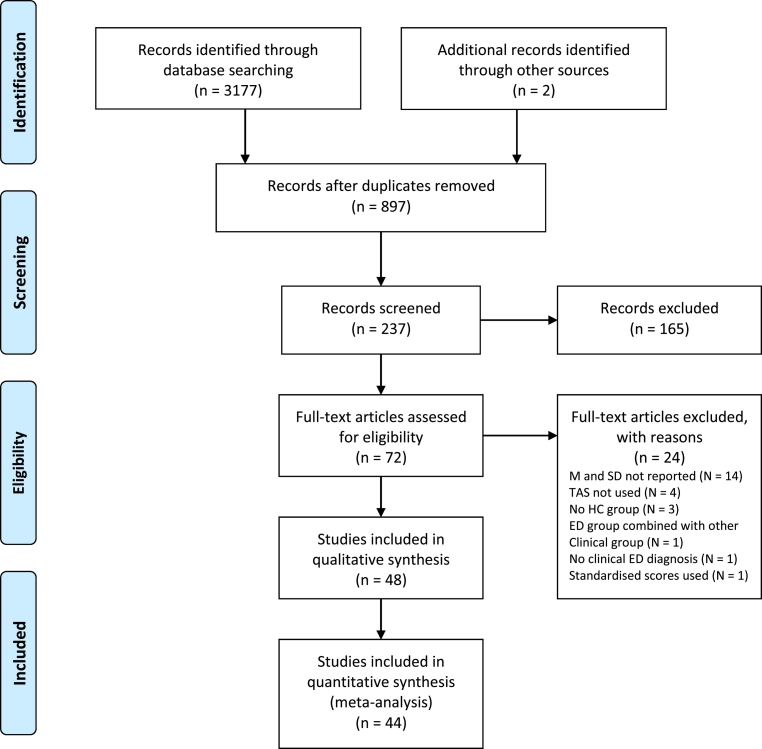
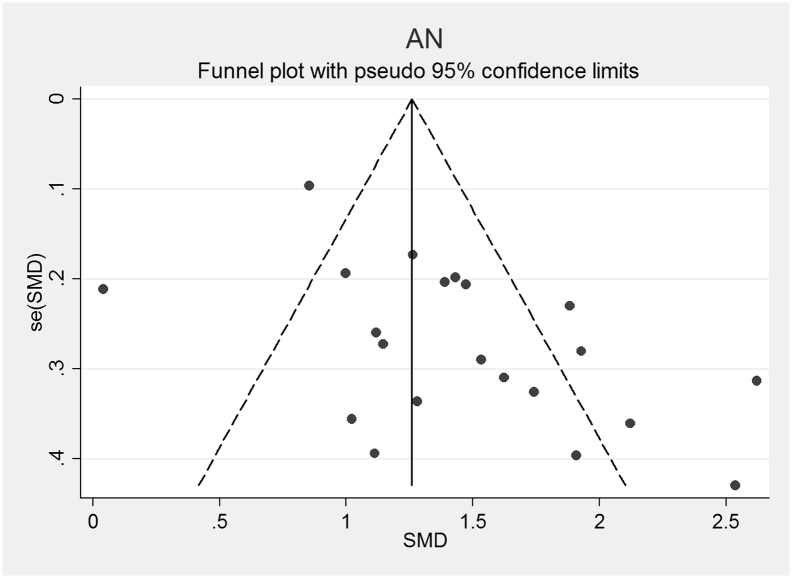
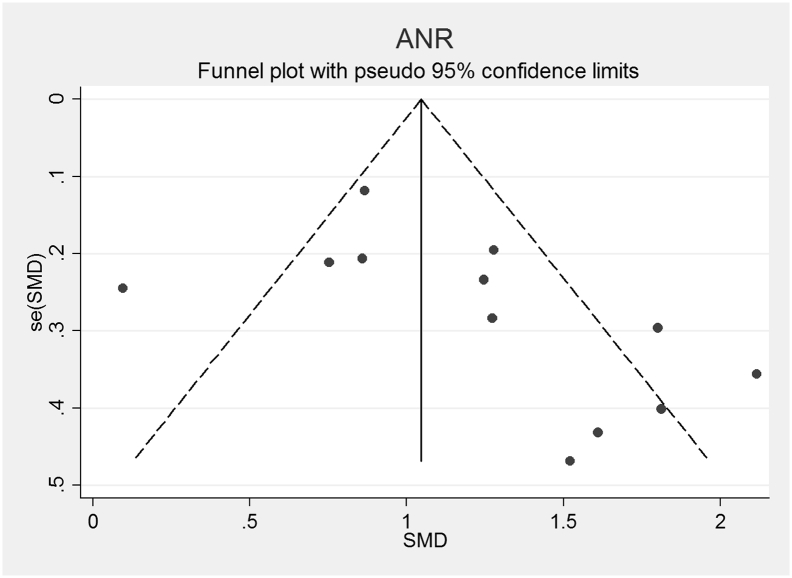
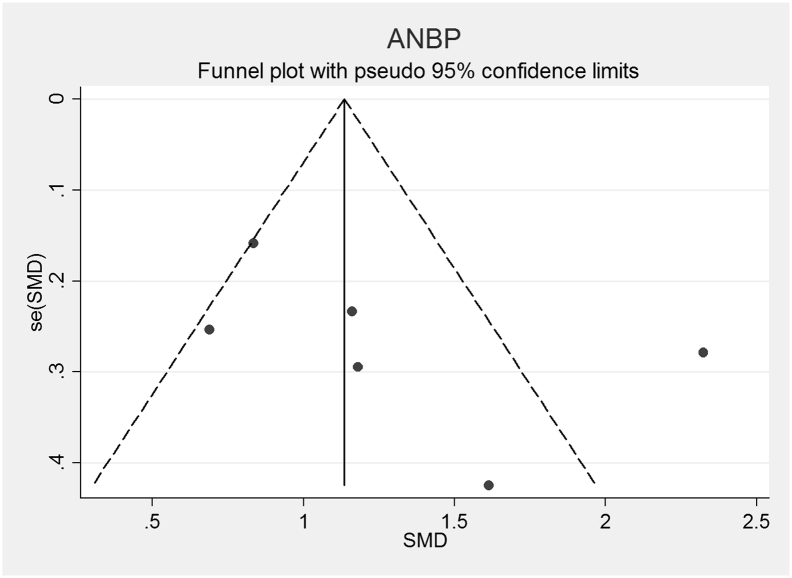
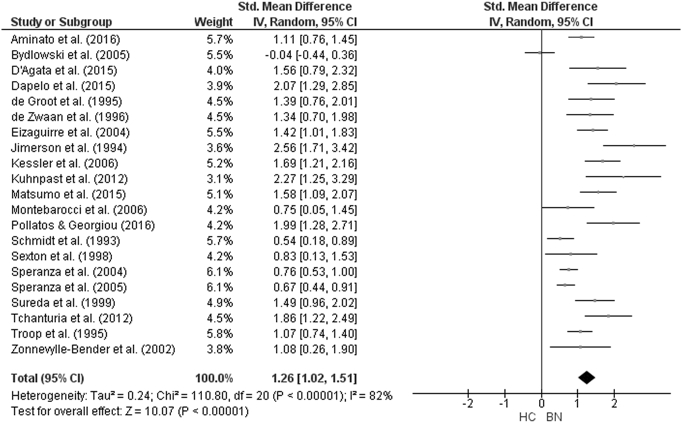
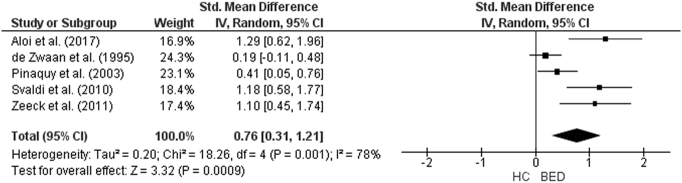
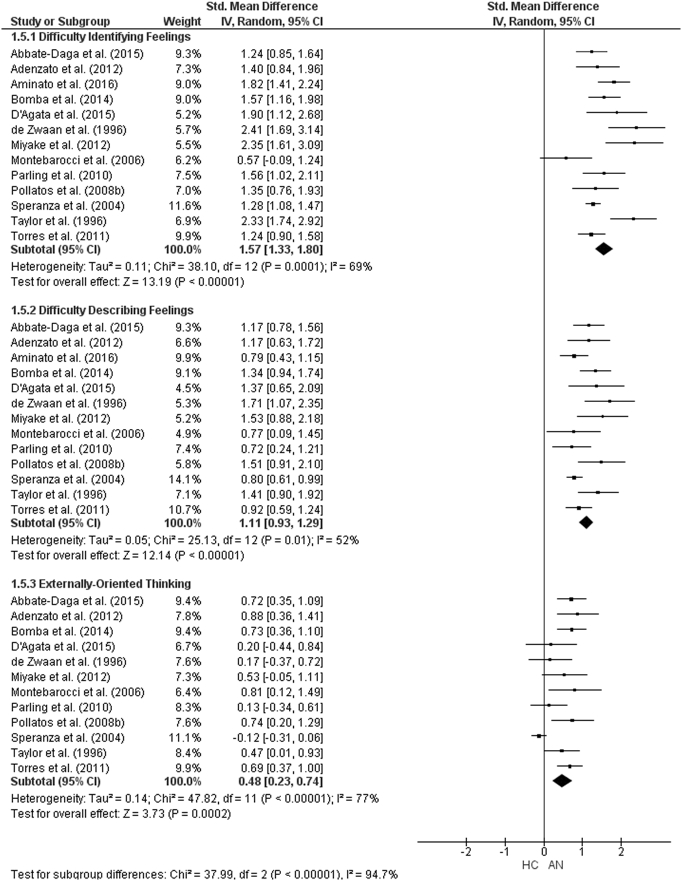
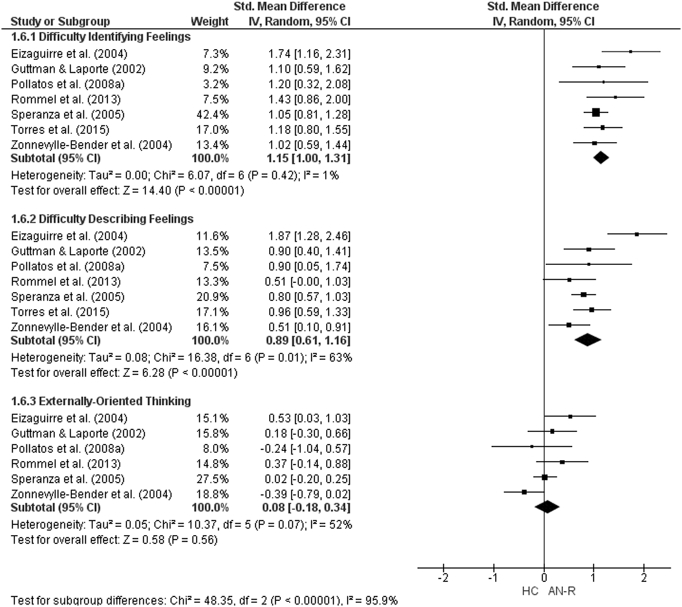
OBJECTIVE: The aim of this review was to synthesise the literature on the use of the Toronto Alexithymia Scale (TAS) in eating disorder populations and Healthy Controls (HCs) and to compare TAS scores in these groups. METHOD: Electronic databases were searched systematically for studies using the TAS and meta-analyses were performed to statistically compare scores on the TAS between individuals with eating disorders and HCs. RESULTS: Forty-eight studies using the TAS with both a clinical eating disorder group and HCs were identified. Of these, 44 were included in the meta-analyses, separated into: Anorexia Nervosa; Anorexia Nervosa, Restricting subtype; Anorexia Nervosa, Binge-Purge subtype, Bulimia Nervosa and Binge Eating Disorder. For all groups, there were significant differences with medium or large effect sizes between the clinical group and HCs, with the clinical group scoring significantly higher on the TAS, indicating greater difficulty with identifying and labelling emotions. CONCLUSION: Across the spectrum of eating disorders, individuals report having difficulties recognising or describing their emotions. Given the self-report design of the TAS, research to develop and evaluate treatments and clinician-administered assessments of alexithymia is warranted.
Overview
The claims and statistics of this paper haven’t been checked yet.
Run the check — free, no account needed. It reads the open-access text and checks the sources it cites.
Integrity signals
Registry
Cites
Statistics
Figures
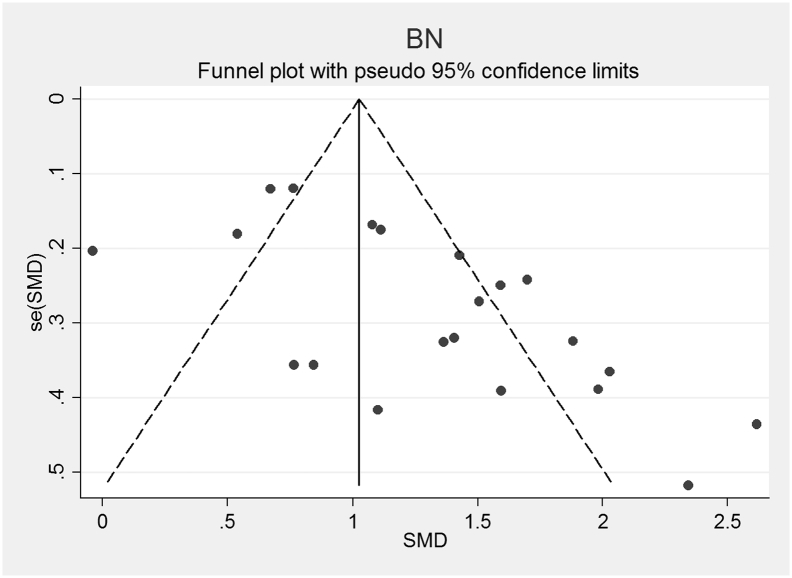
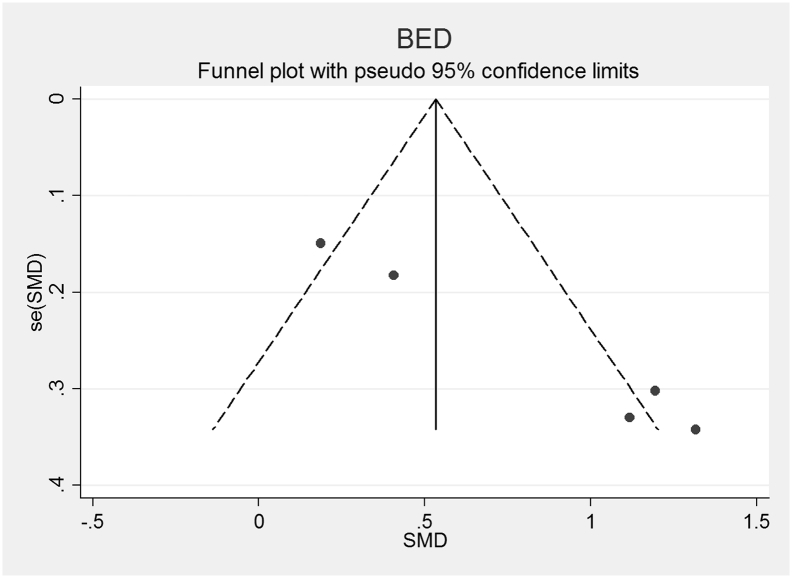
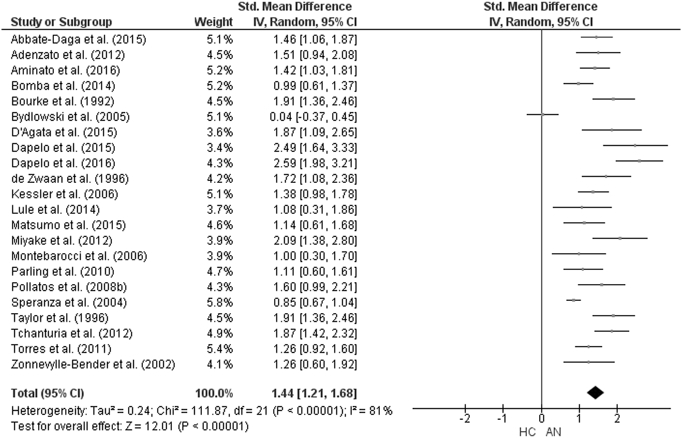
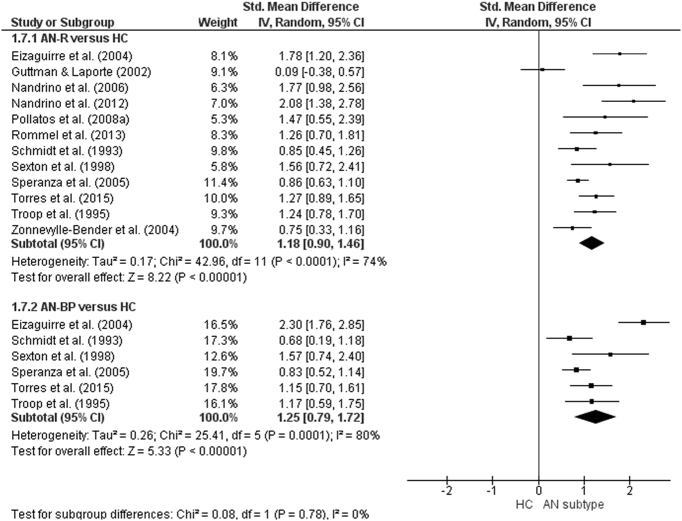
Verification
Claims the paper makes
The claims and statistics of this paper haven’t been checked yet.
Run the check — free, no account needed. It reads the open-access text and checks the sources it cites.
Claims other papers make about this one
Each is checked against this paper’s own text: does it say what the citing paper says it does?
In the citing paper
“Many of us with AN experience alexithymia [93, 94] and suppress our emotions as an emotional coping strategy [22, 95].”
From A lived experience response to the proposed diagnosis of terminal anorexia nervosa: learning from iatrogenic harm, ambivalence and enduring hope (2023) · cites this paper as [93]
Self-check
Percentages, sums and reported differences re-computed from the paper’s own numbers.
The self-check needs the paper’s full text.
Citations
Cites
Statistical Power Analysis for the Behavioral Sciences
Muller, K. E., & Cohen, J. (1989) · Technometrics · doi:10.2307/1270020 · Cited by 99,603
Preferred Reporting Items for Systematic Reviews and Meta-Analyses: the PRISMA statement
Moher, D., Liberati, A., Tetzlaff, J., Altman, D. G., & for the PRISMA Group (2009) · BMJ · doi:10.1136/bmj.b2535 · Cited by 83,823
Statistical power analysis for the behavioral sciences
Cohen, J. (1990) · Computers Environment and Urban Systems · doi:10.1016/0198-9715(90)90050-4 · Cited by 65,417
Measuring inconsistency in meta-analyses
Higgins, J. P. T., Thompson, S. G., Deeks, J. J., & Altman, D. G. (2003) · BMJ · doi:10.1136/bmj.327.7414.557 · Cited by 63,139
Preferred reporting items for systematic reviews and meta-analyses: the PRISMA Statement.
(2009) · PubMed Central · Cited by 44,859
Preferred Reporting Items for Systematic Reviews and Meta-Analyses: The PRISMA Statement
Moher, D., Liberati, A., Tetzlaff, J., & Altman, D. G. (2009) · Journal of Clinical Epidemiology · doi:10.1016/j.jclinepi.2009.06.005 · Cited by 19,575
Duval, S., & Tweedie, R. (2000) · Biometrics · doi:10.1111/j.0006-341x.2000.00455.x · Cited by 14,099
Gratz, K. L., & Roemer, L. (2004) · Journal of Psychopathology and Behavioral Assessment · doi:10.1023/b:joba.0000007455.08539.94 · Cited by 8,942 · cited 1×
“The model [98] outlines four dimensions theorised to contribute to the development or maintenance of psychopathology: use of adaptive and situationally appropriate emotion regulation strategies; impulse inhibition and behavioural control when distressed; emotional awareness, clarity, and acceptance; and emotional appr…”
Bagby, R. M., Parker, J. D. A., & Taylor, G. J. (1994) · Journal of Psychosomatic Research · doi:10.1016/0022-3999(94)90005-1 · Cited by 5,293
(1997) · Medical Entomology and Zoology · Cited by 1,407
The 20-Item Toronto Alexithymia Scale
Parker, J. D. A., Taylor, G. J., & Bagby, R. M. (2003) · Journal of Psychosomatic Research · doi:10.1016/s0022-3999(02)00578-0 · Cited by 1,036
The Levels of Emotional Awareness Scale: A Cognitive-Developmental Measure of Emotion
Lane, R. D., Quinlan, D. M., SCHWARTZ, G. E. R., Walker, P. A., & Zeitlin, S. B. (1990) · Journal of Personality Assessment · doi:10.1080/00223891.1990.9674052 · Cited by 797
The 20-Item Toronto Alexithymia Scale
Taylor, G. J., Bagby, R. M., & Parker, J. D. A. (2003) · Journal of Psychosomatic Research · doi:10.1016/s0022-3999(02)00601-3 · Cited by 673
New Trends in Alexithymia Research
Taylor, G. J., & Bagby, R. M. (2004) · Psychotherapy and Psychosomatics · doi:10.1159/000075537 · Cited by 653
Treasure, J., & Schmidt, U. (2013) · Journal of Eating Disorders · doi:10.1186/2050-2974-1-13 · Cited by 646
Harrison, A., Sullivan, S. A., Tchanturia, K., & Treasure, J. L. (2010) · Psychological Medicine · doi:10.1017/s0033291710000036 · Cited by 535
Self-citationLavender, J. M., Wonderlich, S. A., Engel, S. G., Gordon, K. H., Kaye, W. H., & Mitchell, J. E. (2015) · Clinical Psychology Review · doi:10.1016/j.cpr.2015.05.010 · Cited by 512 · cited 1×
“For example, a review [97] used a multidimensional framework to map out emotion regulation difficulties in AN and BN.”
Kooiman, C. G., Spinhoven, P., & Trijsburg, R. W. (2002) · Journal of Psychosomatic Research · doi:10.1016/s0022-3999(02)00348-3 · Cited by 452
Reduced perception of bodily signals in anorexia nervosa
Pollatos, O., Kurz, A.-L., Albrecht, J., Schreder, T., Kleemann, A. M., Schöpf, V., Kopietz, R., Wiesmann, M., & Schandry, R. (2008) · Eating Behaviors · doi:10.1016/j.eatbeh.2008.02.001 · Cited by 449
Disorders of affect regulation: Alexithymia in medical and psychiatric illness.
Deary, I. J. (1998) · Journal of Psychosomatic Research · Cited by 431
Berthoz, S., & Hill, E. L. (2005) · European Psychiatry · doi:10.1016/j.eurpsy.2004.06.013 · Cited by 400
Age is strongly associated with alexithymia in the general population
Mattila, A. K., Salminen, J. K., Nummi, T., & Joukamaa, M. (2006) · Journal of Psychosomatic Research · doi:10.1016/j.jpsychores.2006.04.013 · Cited by 384
Bagby, R. M., Taylor, G. J., Parker, J. D. A., & Dickens, S. E. (2005) · Psychotherapy and Psychosomatics · doi:10.1159/000089224 · Cited by 359
Li, S., Zhang, B., Guo, Y., & Zhang, J. (2015) · Psychiatry Research · doi:10.1016/j.psychres.2015.02.006 · Cited by 350
Emotion-processing deficits in eating disorders
Bydlowski, S., Corcos, M., Jeammet, P., Paterniti, S., Berthoz, S., Laurier, C., Chambry, J., & Consoli, S. M. (2005) · International Journal of Eating Disorders · doi:10.1002/eat.20132 · Cited by 348
Alexithymia and eating disorders: a critical review of the literature
Nowakowski, M. E., McFarlane, T., & Cassin, S. E. (2013) · Journal of Eating Disorders · doi:10.1186/2050-2974-1-21 · Cited by 315
O’Driscoll, C., Laing, J., & Mason, O. J. (2014) · Clinical Psychology Review · doi:10.1016/j.cpr.2014.07.002 · Cited by 302
Relationships between alexithymia and psychological characteristics associated with eating disorders
Taylor, G. J., Parker, J. D. A., Bagby, R. M., & Bourke, M. P. (1996) · Journal of Psychosomatic Research · doi:10.1016/s0022-3999(96)00224-3 · Cited by 297
A controlled study of alexithymia in eating disorders
Schmidt, U. H., Jiwany, A., & Treasure, J. L. (1993) · Comprehensive Psychiatry · doi:10.1016/0010-440x(93)90036-4 · Cited by 292
The socio-emotional processing stream in Anorexia Nervosa
Oldershaw, A., Hambrook, D. G., Stahl, D. R., Tchanturia, K., Treasure, J. L., & Schmidt, U. H. (2010) · Neuroscience & Biobehavioral Reviews · doi:10.1016/j.neubiorev.2010.11.001 · Cited by 286
Self-citationEmotional Eating, Alexithymia, and Binge‐Eating Disorder in Obese Women
Pinaquy, S., Chabrol, H., Simon, C., Jp, L., & Barbe, P. (2003) · Obesity Research · doi:10.1038/oby.2003.31 · Cited by 283
Meta‐analysis of alexithymia in posttraumatic stress disorder
Frewen, P., Dozois, D. J. A., Neufeld, R. W. J., & Lanius, R. A. (2008) · Journal of Traumatic Stress · doi:10.1002/jts.20320 · Cited by 264
Body image and steroid use in male bodybuilders
Blouin, A. G., & Goldfield, G. S. (1995) · International Journal of Eating Disorders · doi:10.1002/1098-108x(199509)18:2 · Cited by 262
A Review of the Alexithymia Concept
Lesser, I. M. (1981) · Psychosomatic Medicine · doi:10.1097/00006842-198112000-00009 · Cited by 231
Alexithymia, empathy, and psychological symptoms in a family context
Guttman, H. A., & Laporte, L. (2002) · Comprehensive Psychiatry · doi:10.1053/comp.2002.35905 · Cited by 230
Alexithymia in Women with Anorexia Nervosa: A Preliminary Investigation
Bourke, M. P., Taylor, G. J., Parker, J. D. A., & Bagby, R. M. (1992) · British Journal of Psychiatry · doi:10.1192/bjp.161.2.240 · Cited by 225
Predictive value of alexithymia in patients with eating disorders: A 3-year prospective study
Speranza, M., Loas, G., Wallier, J., & Corcos, M. (2007) · Journal of Psychosomatic Research · doi:10.1016/j.jpsychores.2007.03.008 · Cited by 204
Sharp, S. J. (1998) · Stata technical bulletin · Cited by 198
An Observer Scale to Measure Alexithymia
Haviland, M. G., Warren, W. L., & Riggs, M. L. (2000) · Psychosomatics · doi:10.1176/appi.psy.41.5.385 · Cited by 197
Emotional Theory of Mind and Emotional Awareness in Recovered Anorexia Nervosa Patients
Oldershaw, A., Hambrook, D. G., Tchanturia, K., Treasure, J. L., & Schmidt, U. H. (2009) · Psychosomatic Medicine · doi:10.1097/psy.0b013e3181c6c7ca · Cited by 197
Self-citationEmotion and eating in binge eating disorder and obesity
Zeeck, A., Stelzer, N., Linster, H. W., Joos, A. A. B., & Hartmann, A. (2010) · European Eating Disorders Review · doi:10.1002/erv.1066 · Cited by 185
Alexithymia and facial emotion recognition in patients with eating disorders
Kessler, H., Schwarze, M., Filipic, S., Traue, H. C., & von Wietersheim, J. (2006) · International Journal of Eating Disorders · doi:10.1002/eat.20228 · Cited by 177
Alexithymia, depression, and treatment outcome in bulimia nervosa
de Groot, J. M., Rodin, G., & Olmsted, M. P. (1995) · Comprehensive Psychiatry · doi:10.1016/0010-440x(95)90099-h · Cited by 171
Altered social hedonic processing in eating disorders
Tchanturia, K., Davies, H. A., Harrison, A., Fox, J. R. E., Treasure, J. L., & Schmidt, U. H. (2012) · International Journal of Eating Disorders · doi:10.1002/eat.22032 · Cited by 170
Self-citationDo adolescent anorexia nervosa patients have deficits in emotional functioning?
Zonnevijlle-Bender (2002) · European Child & Adolescent Psychiatry · doi:10.1007/s007870200006 · Cited by 162
Bora, E., & Köse, S. (2016) · International Journal of Eating Disorders · doi:10.1002/eat.22572 · Cited by 152
Starvation and emotion regulation in anorexia nervosa
Brockmeyer, T., Holtforth, M. G., Bents, H., Kämmerer, A., Herzog, W., & Friederich, H. (2011) · Comprehensive Psychiatry · doi:10.1016/j.comppsych.2011.09.003 · Cited by 147
Alexithymia and its relationships with anxiety and depression in eating disorders
Eizaguirre, A. E., Ortego, A., de Apellániz, I. O. D. A. M., Olariaga, L. J., & Juaniz, M. (2003) · Personality and Individual Differences · doi:10.1016/s0191-8869(03)00099-0 · Cited by 143
Alexithymia ratings in bulimia nervosa: clinical correlates
Jimerson, D. C., Wolfe, B. E., Franko, D. L., Covino, N. A., & Sifneos, P. E. (1994) · Psychosomatic Medicine · doi:10.1097/00006842-199403000-00002 · Cited by 138
Strigo, I. A., Matthews, S. C., Simmons, A. N., Oberndorfer, T. A., Klabunde, M., Reinhardt, L. E., & Kaye, W. H. (2012) · International Journal of Eating Disorders · doi:10.1002/eat.22045 · Cited by 137
Is there a reliable factorial structure in the 20-item Toronto Alexithymia Scale?
Müller, J. M., Bühner, M., & Ellgring, H. (2003) · Journal of Psychosomatic Research · doi:10.1016/s0022-3999(03)00033-3 · Cited by 131
Depressive personality dimensions and alexithymia in eating disorders
Speranza, M., Corcos, M., Loas, G., Stéphan, P., Guilbaud, O., Pérez-Díaz, F., Vénisse, J.-L., Bizouard, P., Halfon, O., Flament, M. F., et al. (2005) · Psychiatry Research · doi:10.1016/j.psychres.2005.04.001 · Cited by 129
Alexithymia: Its prevalence and correlates in a British undergraduate sample
Mason, O. J., Tyson, M. C., Jones, C. J., & Potts, S. (2005) · Psychology and Psychotherapy Theory Research and Practice · doi:10.1348/147608304x21374 · Cited by 120
Marchesi, C., Ossola, P., Tonna, M., & Panfilis, C. D. (2013) · Comprehensive Psychiatry · doi:10.1016/j.comppsych.2013.12.008 · Cited by 118
Parling, T., Mortazavi, M., & Ghaderi, A. (2010) · Eating Behaviors · doi:10.1016/j.eatbeh.2010.04.001 · Cited by 106
Impaired Central Processing of Emotional Faces in Anorexia Nervosa
Pollatos, O., Herbert, B. M., Schandry, R., & Gramann, K. (2008) · Psychosomatic Medicine · doi:10.1097/psy.0b013e31817e41e6 · Cited by 104
Well-being and morbid obesity in women: A controlled therapy evaluation
Tanco, S. A., Linden, W., & Earle, T. L. (1998) · International Journal of Eating Disorders · doi:10.1002/(sici)1098-108x(199804)23:3 · Cited by 103
Emotion recognition deficits in eating disorders are explained by co-occurring alexithymia
Brewer, R., Cook, R., Cardi, V., Treasure, J. L., & Bird, G. (2015) · Royal Society Open Science · doi:10.1098/rsos.140382 · Cited by 97
Emotional functioning in anorexia nervosa patients: Adolescents compared to adults
Zonnevylle-Bender, M. J. S., van Goozen, S. H. M., Cohen‐Kettenis, P. T., Elburg, A. A. V., de Wildt, M., Stevelmans, E., & van Engeland, H. (2004) · Depression and Anxiety · doi:10.1002/da.10145 · Cited by 88
Alexithymia, obesity, and binge eating disorder
de Zwaan, M., Bach, M., Mitchell, J. E., Ackard, D. M., Specker, S. M., Pyle, R. L., & Pakesch, G. (1995) · International Journal of Eating Disorders · doi:10.1002/1098-108x(199503)17:2 · Cited by 88
Martínez‐Sánchez, F., Ato‐García, M., & Soria, B. O. (2003) · The Spanish Journal of Psychology · doi:10.1017/s1138741600005205 · Cited by 86
Adenzato, M., Todisco, P., & Ardito, R. B. (2012) · PLoS ONE · doi:10.1371/journal.pone.0044414 · Cited by 85
Svaldi, J., Caffier, D., & Tuschen‐Caffier, B. (2010) · Psychotherapy and Psychosomatics · doi:10.1159/000296138 · Cited by 84
Body Image Disturbance, Parental Bonding and Alexithymia in Patients with Eating Disorders
Panfilis, C. D., Rabbaglio, P., Rossi, C., Zita, G., & Maggini, C. (2003) · Psychopathology · doi:10.1159/000073449 · Cited by 83
Tchanturia, K., Doris, E., Mountford, V., & Fleming, C. (2015) · BMC Psychiatry · doi:10.1186/s12888-015-0434-9 · Cited by 83
Self-citationBerthoz, S., Perdereau, F., Godart, N. T., Corcos, M., & Haviland, M. G. (2007) · Journal of Psychosomatic Research · doi:10.1016/j.jpsychores.2006.10.008 · Cited by 80
Nandrino, J., Doba, K., Lesne, A., Christophe, V., & Pezard, L. (2006) · Journal of Psychosomatic Research · doi:10.1016/j.jpsychores.2006.02.008 · Cited by 80
Alexithymia, emotional empathy, and self-regulation in anorexia nervosa
Beadle, J. N., Paradiso, S., Salerno, A., & McCormick, L. M. (2013) · Annals of Clinical Psychiatry · doi:10.1177/104012371302500205 · Cited by 80
Emotion recognition and alexithymia in females with non-clinical disordered eating
Ridout, N., Thom, C., & Wallis, D. J. (2009) · Eating Behaviors · doi:10.1016/j.eatbeh.2009.07.008 · Cited by 79
Tchanturia, K., Doris, E., & Fleming, C. (2014) · European Eating Disorders Review · doi:10.1002/erv.2287 · Cited by 77
Self-citationPain sensitivity, alexithymia, and depression in patients with eating disorders: Are they related?
de Zwaan, M., Biener, D., Bach, M., Wiesnagrotzki, S., & Stacher, G. (1996) · Journal of Psychosomatic Research · doi:10.1016/0022-3999(96)00088-8 · Cited by 76
Lulé, D., Schulze, U. M. E., Bauer, K., Schöll, F., Müller, S., Fladung, A.-K., & Uttner, I. (2014) · Eating and Weight Disorders - Studies on Anorexia, Bulimia and Obesity · doi:10.1007/s40519-014-0101-z · Cited by 74
Alexithymia, depressive experiences and dependency in addictive disorders
Speranza, M., Corcos, M., Stéphan, P., Loas, G., Pérez-Diaz, F., Lang, F., Venisse, J. L., Bizouard, P., Flament, M., Halfon, O., et al. (2004) · Substance Use & Misuse · doi:10.1081/ja-120030058 · Cited by 74
An Experimental Investigation of Verbal Expression of Emotion in Anorexia and Bulimia Nervosa
Davies, H. A., Swan, N., Schmidt, U. H., & Tchanturia, K. (2011) · European Eating Disorders Review · doi:10.1002/erv.1157 · Cited by 73
Self-citationAlexithymia in female patients with eating disorders
Montebarocci, O., Codispoti, M., Surcinelli, P., Franzonı, E., Baldaro, B., & Rossi, N. C. F. (2006) · Eating and Weight Disorders - Studies on Anorexia Bulimia and Obesity · doi:10.1007/bf03327739 · Cited by 67
Alexithymia, a compounding factor for eating and social avoidance symptoms in anorexia nervosa
Courty, A., Godart, N. T., Lalanne, C., & Berthoz, S. (2014) · Comprehensive Psychiatry · doi:10.1016/j.comppsych.2014.09.011 · Cited by 62
Emotion acceptance behavior therapy for anorexia nervosa: A pilot study
Wildes, J. E., Marcus, M. D., Cheng, Y., McCabe, E. B., & Gaskill, J. A. (2014) · International Journal of Eating Disorders · doi:10.1002/eat.22241 · Cited by 62
Normal interoceptive accuracy in women with bulimia nervosa
Pollatos, O., & Georgiou, E. (2016) · Psychiatry Research · doi:10.1016/j.psychres.2016.04.072 · Cited by 60
Tull, M. T., Medaglia, E., & Roemer, L. (2005) · Journal of Psychosomatic Research · doi:10.1016/j.jpsychores.2005.02.016 · Cited by 56
Suslow, T., Donges, U., Kersting, A., & Arolt, V. (2000) · Scandinavian Journal of Psychology · doi:10.1111/1467-9450.00205 · Cited by 56
Alexithymia in eating disorders: therapeutic implications
Carpiniello, B., Pinna, F., & Sanna, L. (2014) · Psychology Research and Behavior Management · doi:10.2147/prbm.s52656 · Cited by 55
Emotion Recognition in Blended Facial Expressions in Women with Anorexia Nervosa.
Dapelo, M. M., Surguladze, S., Morris, R., & Tchanturia, K. (2016) · European eating disorders review · doi:10.1002/erv.2403 · Cited by 54
Self-citationSocial Cognition and Emotional Functioning in Patients with Binge Eating Disorder
Aloi, M., Rania, M., Caroleo, M., Fazio, P. D., & Segura‐Garcìa, C. (2017) · European Eating Disorders Review · doi:10.1002/erv.2504 · Cited by 54
Psychometric Properties of the Observer Alexithymia Scale in a Clinical Sample
Haviland, M. G., Warren, W. L., Riggs, M. L., & Gallacher, M. (2001) · Journal of Personality Assessment · doi:10.1207/s15327752jpa7701_12 · Cited by 53
Alexithymia in anorexia nervosa: the mediating role of depression.
Torres, S., Guerra, M., Lencastre, L., Miller, K. M., Vieira, F., Roma-Torres, A., Brandão, I., & Costa, P. (2015) · Psychiatry Research · doi:10.1016/j.psychres.2014.10.023 · Cited by 53
Nandrino, J.-L., Berna, G., Hot, P., Dodin, V., Latrée, J., Decharles, S., & Sequeira, H. (2012) · Journal of Psychosomatic Research · doi:10.1016/j.jpsychores.2011.11.003 · Cited by 52
Deborde, A.-S., Berthoz, S., Wallier, J. M., Fermanian, J., Falissard, B., Jeammet, P., & Corcos, M. (2008) · Psychopathology · doi:10.1159/000109955 · Cited by 52
Autobiographical Memory in Adolescent Girls with Anorexia Nervosa
Bomba, M., Marfone, M., Brivio, E., Oggiano, S., Broggi, F., Neri, F., & Nacinovich, R. (2014) · European Eating Disorders Review · doi:10.1002/erv.2321 · Cited by 51
Brockmeyer, T., Pellegrino, J., Münch, H. M., Herzog, W., Dziobek, I., & Friederich, H. (2016) · International Journal of Eating Disorders · doi:10.1002/eat.22574 · Cited by 51
Anger expression in eating disorders: Clinical, psychopathological and personality correlates
Krug, I., Bulik, C. M., Vall-Llovera, O. N., Granero, R., Agüera, Z., Villarejo, C., Jiménez‐Múrcia, S., & Fernández‐Aranda, F. (2008) · Psychiatry Research · doi:10.1016/j.psychres.2007.10.003 · Cited by 50
Alexithymia in Obsessive-Compulsive Disorder: Clinical Correlates and Symptom Dimensions
Roh, D., Kim, W.-J., & Kim, C.-H. (2011) · Journal of Nervous & Mental Disease · doi:10.1097/nmd.0b013e318229d209 · Cited by 47
Gramaglia, C. M., Ressico, F. V., Gambaro, E., Palazzolo, A., Mazzarino, M., Bert, F., Siliquini, R., & Zeppegno, P. (2016) · Eating Behaviors · doi:10.1016/j.eatbeh.2016.03.028 · Cited by 45
Facial Affect Recognition in Anorexia Nervosa: Is Obsessionality a Missing Piece of the Puzzle?
de Castro, L. C., Davies, H. A., Hale, L. S., Surguladze, S., & Tchanturia, K. (2010) · Australian & New Zealand Journal of Psychiatry · doi:10.3109/00048674.2010.524625 · Cited by 42
Self-citationThe Relationship between Alexithymia and Intolerance of Uncertainty in Anorexia Nervosa
Daga, G. A., Quaranta, M., Marzola, E., Amianto, F., & Fassino, S. (2015) · Psychopathology · doi:10.1159/000381587 · Cited by 41
Mannarini, S., Nacinovich, R., Bomba, M., & Balottin, L. (2014) · Neuropsychiatric Disease and Treatment · doi:10.2147/ndt.s67642 · Cited by 38
Miyake, Y., Okamoto, Y., Onoda, K., Shirao, N., Okamoto, Y., & Yamawaki, S. (2012) · Psychiatry Research Neuroimaging · doi:10.1016/j.pscychresns.2011.07.014 · Cited by 38
Facial expression of positive emotions in individuals with eating disorders
Dapelo, M. M., Hart, S., Hale, C., Morris, R. G., Lynch, T. R., & Tchanturia, K. (2015) · Psychiatry Research · doi:10.1016/j.psychres.2015.08.019 · Cited by 35
Self-citationCognitive processing of emotions in anorexia nervosa
Torres, S., Guerra, M. P., Lencastre, L., Roma‐Torres, A., Brandão, I., Queirós, C. M. L., & Vieira, F. M. (2010) · European Eating Disorders Review · doi:10.1002/erv.1046 · Cited by 33
Nonparametric trim and fill analysis of publication bias in meta-analysis: erratum
Steichen, T. J. (2001) · Stata technical bulletin · Cited by 32
Brain correlates of alexithymia in eating disorders: A voxel‐based morphometry study
D’Agata, F., Caroppo, P., Amianto, F., Spalatro, A. V., Caglio, M., Bergui, M., Lavagnino, L., Righi, D., Daga, G. A., Pinessi, L., et al. (2015) · Psychiatry and Clinical Neurosciences · doi:10.1111/pcn.12318 · Cited by 30
Speranza, M., Loas, G., Guilbaud, O., & Corcos, M. (2010) · Biomedicine & Pharmacotherapy · doi:10.1016/j.biopha.2010.01.009 · Cited by 29
Wise, T. N., Simpson, N., & Sheridan, M. J. (2000) · Psychological Reports · doi:10.2466/pr0.2000.87.1.127 · Cited by 29
Deliberately generated and imitated facial expressions of emotions in people with eating disorders
Dapelo, M. M., Bodas, S., Morris, R. G., & Tchanturia, K. (2015) · Journal of Affective Disorders · doi:10.1016/j.jad.2015.10.044 · Cited by 29
Self-citationThe Observer Alexithymia Scale: A Reliable and Valid Alternative for Alexithymia Measurement?
Meganck, R., Vanheule, S., Desmet, M., & Inslegers, R. (2010) · Journal of Personality Assessment · doi:10.1080/00223890903510449 · Cited by 25
Kühnpast, N., Gramann, K., & Pollatos, O. (2012) · Psychosomatic Medicine · doi:10.1097/psy.0b013e31825ca15a · Cited by 25
Expression of positive emotions differs in illness and recovery in anorexia nervosa
Dapelo, M. M., Hart, S., Hale, C., Morris, R. G., & Tchanturia, K. (2016) · Psychiatry Research · doi:10.1016/j.psychres.2016.09.014 · Cited by 23
Self-citationEmotional differentiation and parental bonding in inpatients suffering from eating disorders
Rommel, D., Nandrino, J., Antoine, P., & Dodin, V. (2012) · British Journal of Clinical Psychology · doi:10.1111/bjc.12010 · Cited by 22
Swift, L., Stephenson, R., & Royce, J. (2006) · Psychology and Psychotherapy Theory Research and Practice · doi:10.1348/147608305x42875 · Cited by 22
Alexithymia, type A behaviour and bulimia nervosa
Sureda, B., Valdés, M., Jódar, I., & de Pablo, J. (1999) · European Eating Disorders Review · doi:10.1002/(sici)1099-0968(199908)7:4 · Cited by 22
Matsumoto, J., Hirano, Y., Numata, N., Matzuzawa, D., Murano, S., Yokote, K., Iyo, M., Shimizu, E., & Nakazato, M. (2015) · Journal of Eating Disorders · doi:10.1186/s40337-015-0050-6 · Cited by 21
Alexithymia in anorexia and bulimia: Ubiquitous and primary trait?
Amianto, F., Bertorello, A., Migliore, F., Daga, G. A., & Fassino, S. (2016) · Cogent Psychology · doi:10.1080/23311908.2016.1185994 · Cited by 17
Alexithymia in eating disorders: therapeutic implications
Pinna, F., Sanna, L., & Carpiniello, B. (2014) · Dove Medical Press (Taylor and Francis Group) · Cited by 13
Research works printed but not linked: 3
- Deborde, 2008, The Bermond-Vorst Alexithymia Questionnaire cutoff scores: a study in eating-disordered and control subjects, Psychopathology, 41, 43, 10.1159/000109955 · DOI · Paper page
- Pollatos, 2008, Reduced perception of bodily signals in anorexia nervosa, Eat. Behav., 9, 381, 10.1016/j.eatbeh.2008.02.001 · DOI · Paper page
- Pollatos, 2008, Impaired central processing of emotional faces in anorexia nervosa, Psychosom. Med., 70, 701, 10.1097/PSY.0b013e31817e41e6 · DOI
Cited by
Sorted by citations
Investigating alexithymia in autism: A systematic review and meta-analysis
Kinnaird, E., Stewart, C., & Tchanturia, K. (2019) · European Psychiatry · doi:10.1016/j.eurpsy.2018.09.004 · Cited by 545
Self-citationEmotion regulation across eating pathology: A meta-analysis
Prefit, A.-B., Cândea, D. M., & Szentagotai-Tătar, A. (2019) · Appetite · doi:10.1016/j.appet.2019.104438 · Cited by 341
Jenkinson, P. M., Taylor, L., & Laws, K. R. (2018) · Journal of Psychosomatic Research · doi:10.1016/j.jpsychores.2018.04.005 · Cited by 227
Mallorquí‐Bagué, N., Vintró‐Alcaraz, C., Sánchez, I., Riesco, N., Agüera, Z., Granero, R., Jiménez‐Múrcia, S., Menchón, J. M., Treasure, J. L., & Fernández‐Aranda, F. (2017) · European Eating Disorders Review · doi:10.1002/erv.2570 · Cited by 177
fMRI neurofeedback in emotion regulation: A literature review
Linhartová, P., Látalová, A., Kóša, B., Kašpárek, T., Schmahl, C. G., & Paret, C. (2019) · NeuroImage · doi:10.1016/j.neuroimage.2019.03.011 · Cited by 162
Metadata
- Authors
- Westwood, H., Kerr-Gaffney, J., Stahl, D., & Tchanturia, K.
- Affiliations
- King's College London (GB)
- Ilia State University (GE)
- Corresponding author
- Westwood, Heather
- Venue
- Journal of Psychosomatic Research
- Publisher
- Elsevier BV
- Published
- 2017-08
- Volume
- 99
- Pages
- 66-81
- ISSN
- 0022-3999 (ISSN-L)
- PMC
- PMC5986724
- OpenAlex
- W2624833759
- Cited by
- 354
- References
- 115
- Citations by year
- 2026: 34 · 2025: 41 · 2024: 49 · 2023: 42 · 2022: 44 · 2021: 55 · 2020: 43 · 2019: 20 · 2018: 21 · 2017: 5
- FWCI
- 3.71
- Type
- journal article
- Language
- en
- Open access
- hybrid
- doi.org
- Locations
- Journal of Psychosomatic Research (publishedVersion, cc-by)
- Europe PMC (PubMed Central) (publishedVersion, cc-by)
- PubMed Central (publishedVersion, cc-by)
- PubMed (publishedVersion)
- Research Portal (King's College London) (submittedVersion, cc-by-nc-nd)
- Funders
- South London and Maudsley NHS Foundation Trust
- Psychiatry Research Trust
- National Institute for Health and Care Research
- King's College London
- Institute of Psychiatry, Psychology and Neuroscience, King’s College London
- Medical Research Council
- Economic and Social Research Council
- Topics
- Social Sciences › Psychology › Clinical Psychology › Eating Disorders and Behaviors
- Health Sciences › Medicine › Psychiatry and Mental health › Psychosomatic Disorders and Their Treatments
- Social Sciences › Psychology › Experimental and Cognitive Psychology › Anxiety, Depression, Psychometrics, Treatment, Cognitive Processes
- Keywords
- alexithymia, eating disorders, Toronto Alexithymia Scale, anorexia nervosa, bulimia nervosa, binge eating disorder, emotional awareness, emotion recognition, healthy controls
- MeSH terms
- Adult, Affective Symptoms, Feeding and Eating Disorders, Canada, Emotions, Female, Humans, Male
About these checks
Registry, retraction, Cites and statistics results are computed, not judged, with one exception: a printed reference that no index lists is read once by a model before it counts as a citation error. Claims are extracted by a model and kept only when their quote appears verbatim in the text; each cited source is then checked, with a model’s help, for whether it says what the claim relies on. Those verdicts can be wrong — read the claim’s quote and the cited source before relying on one.
Statistics and arithmetic are recomputed, not judged.
Confidence bands are shown only for fields calibrated on our annotated test set. None is calibrated yet, so no band is shown.
What counts as a claim ›How we measure confidence ›How we check this ›
Are you an author, or do you see a problem with this page? Request a review
