

The DOI matches its Crossref record; 112 of the 115 references it cites were found in a registry or an index.
Alexithymia in eating disorders: Systematic review and meta-analyses of studies using the Toronto Alexithymia Scale
Open accessAbstract
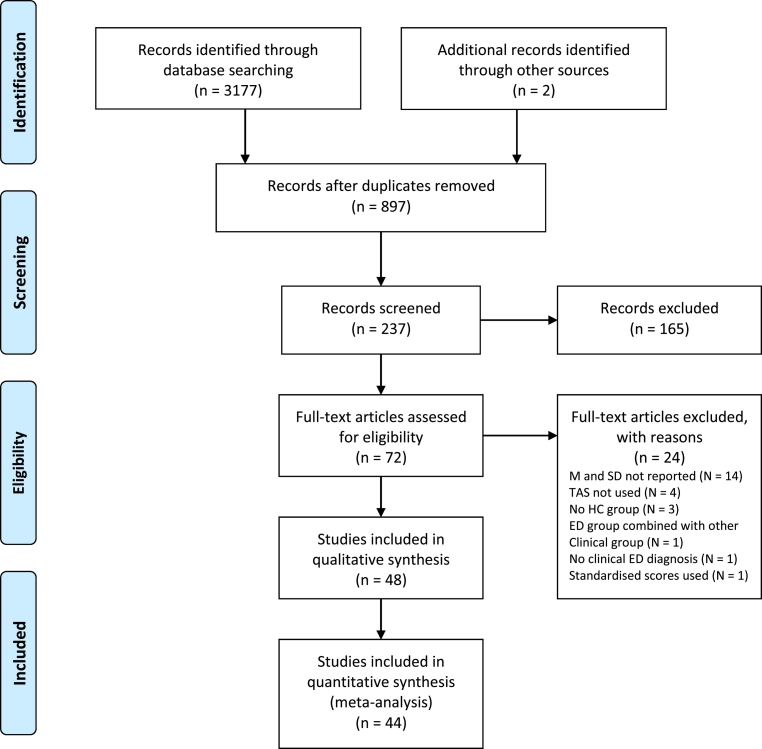
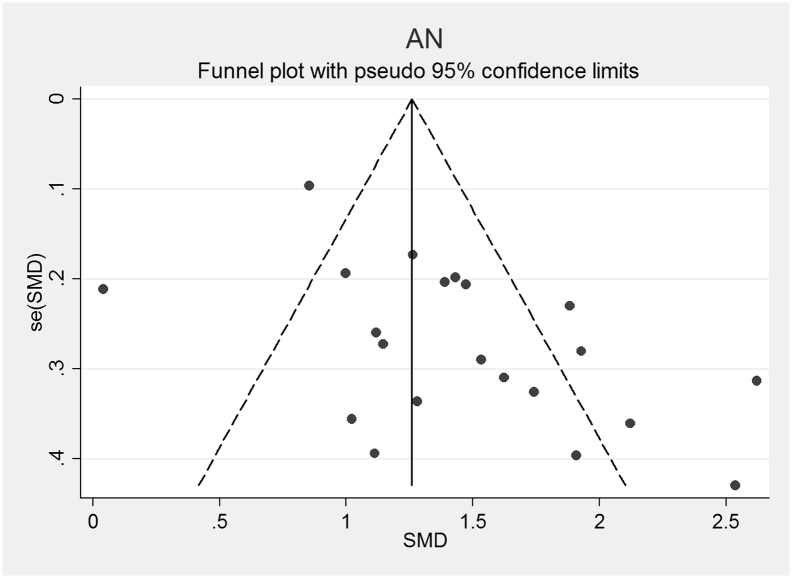
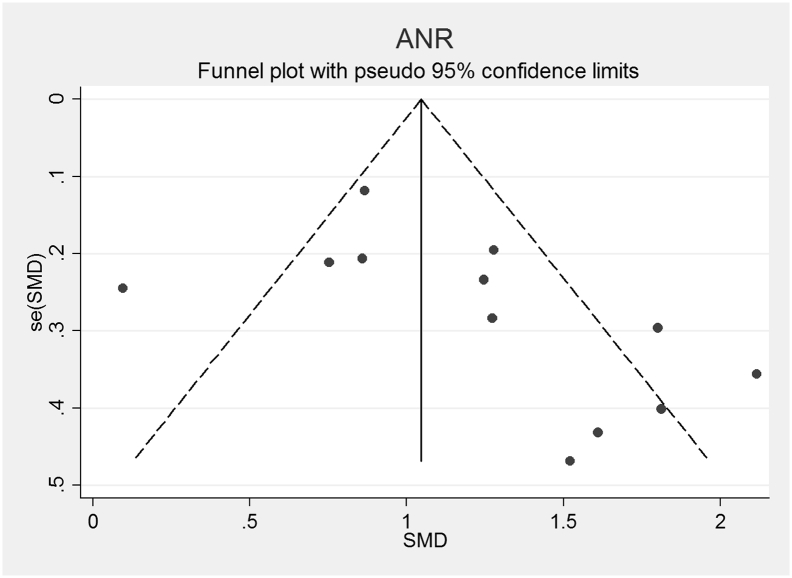
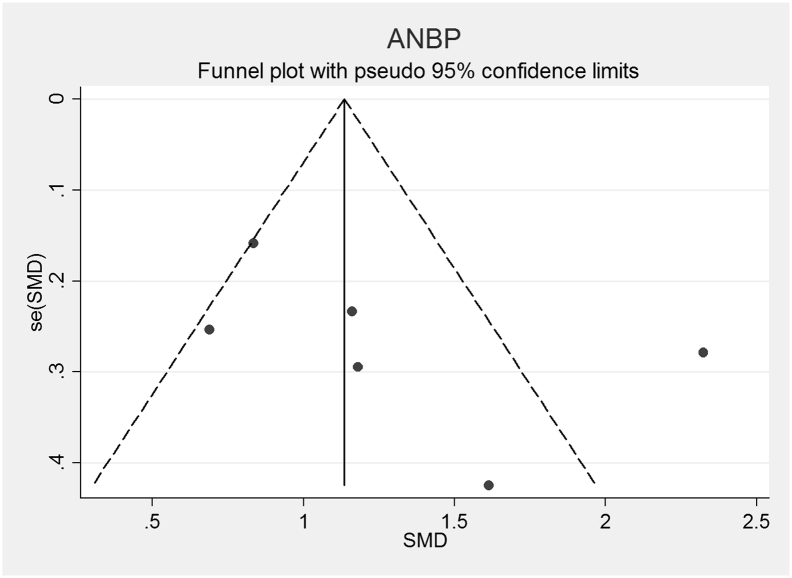
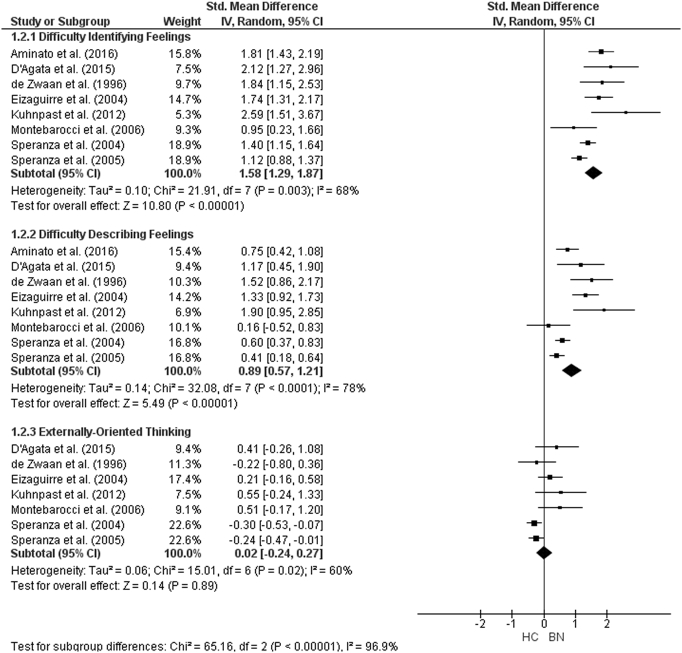
OBJECTIVE: The aim of this review was to synthesise the literature on the use of the Toronto Alexithymia Scale (TAS) in eating disorder populations and Healthy Controls (HCs) and to compare TAS scores in these groups. METHOD: Electronic databases were searched systematically for studies using the TAS and meta-analyses were performed to statistically compare scores on the TAS between individuals with eating disorders and HCs. RESULTS: Forty-eight studies using the TAS with both a clinical eating disorder group and HCs were identified. Of these, 44 were included in the meta-analyses, separated into: Anorexia Nervosa; Anorexia Nervosa, Restricting subtype; Anorexia Nervosa, Binge-Purge subtype, Bulimia Nervosa and Binge Eating Disorder. For all groups, there were significant differences with medium or large effect sizes between the clinical group and HCs, with the clinical group scoring significantly higher on the TAS, indicating greater difficulty with identifying and labelling emotions. CONCLUSION: Across the spectrum of eating disorders, individuals report having difficulties recognising or describing their emotions. Given the self-report design of the TAS, research to develop and evaluate treatments and clinician-administered assessments of alexithymia is warranted.
Overview
The claims and statistics of this paper haven’t been checked yet.
Run the check — free, no account needed. It reads the open-access text and checks the sources it cites.
Integrity signals
Registry
Cites
Statistics
Figures
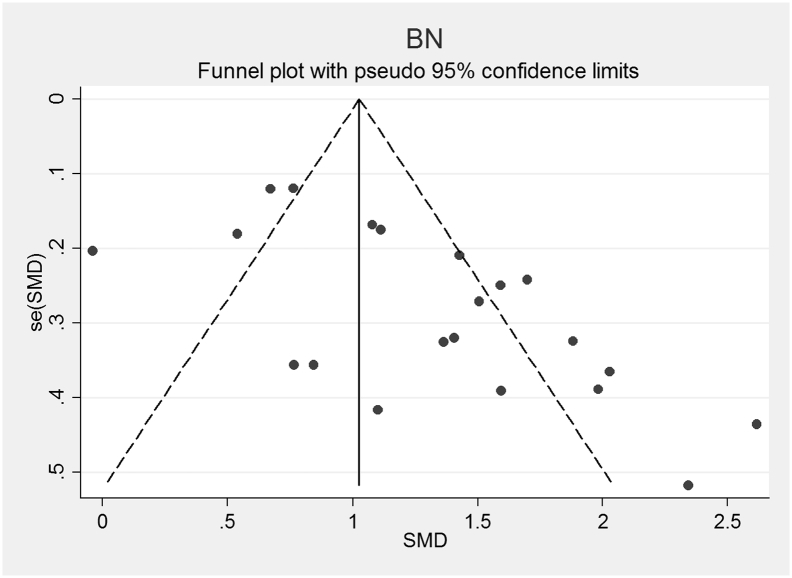
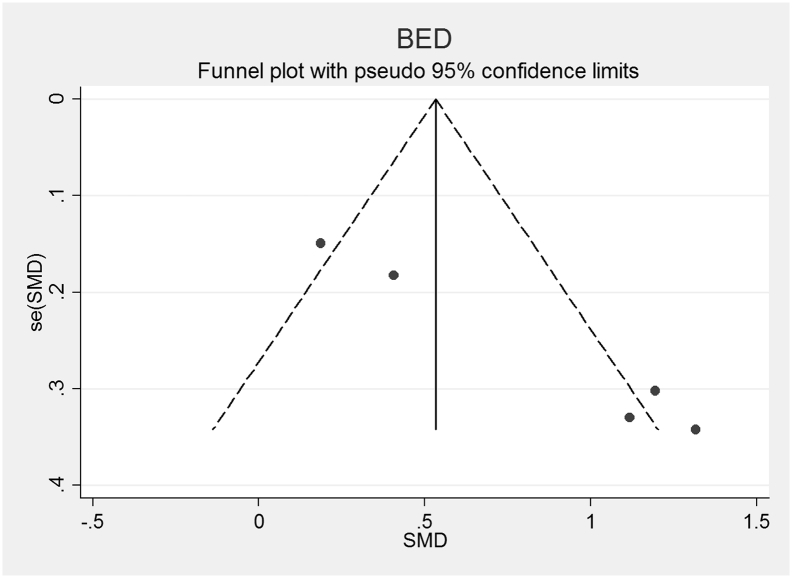
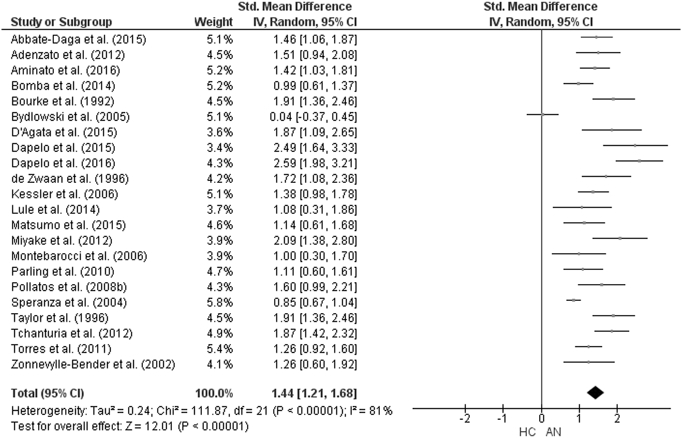
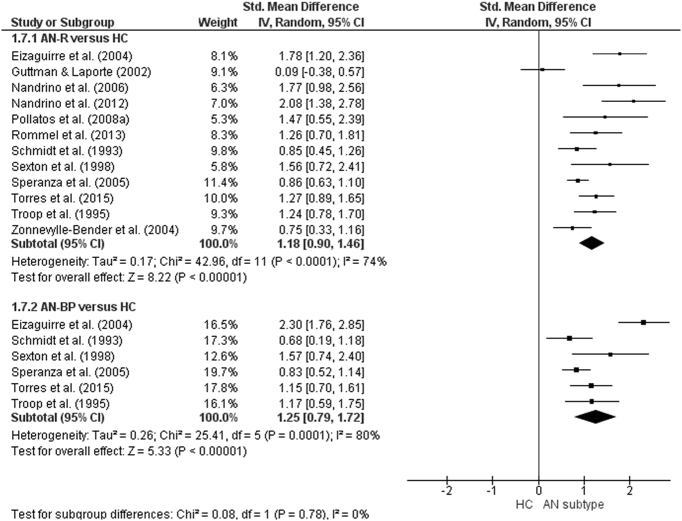
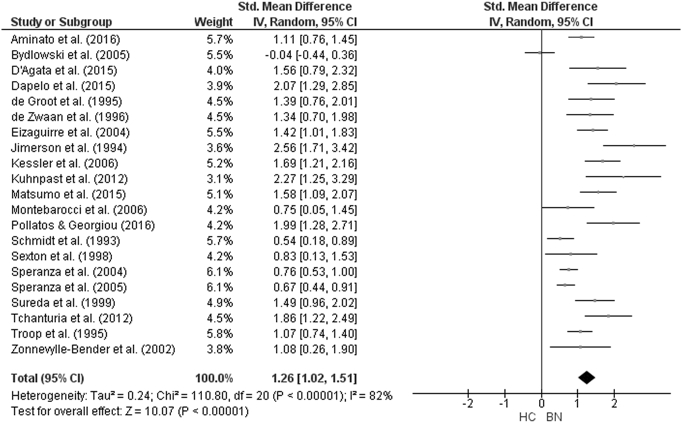
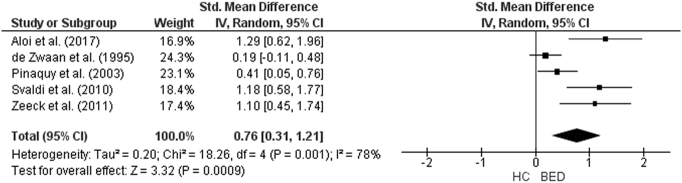
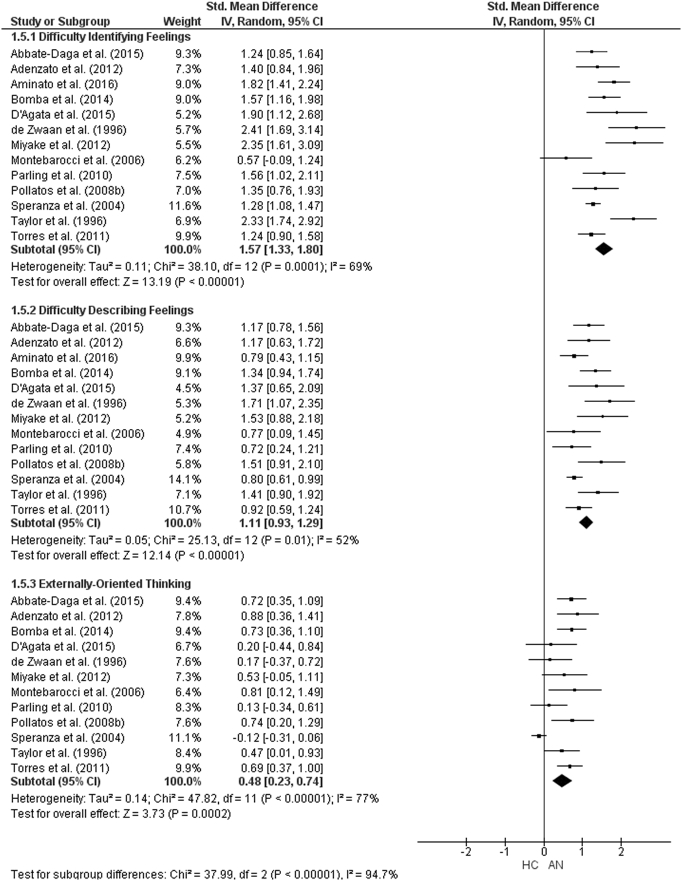
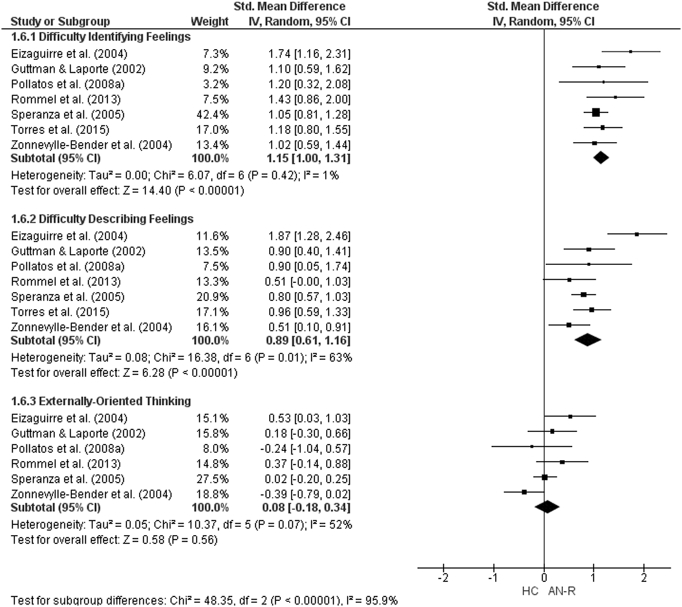
Verification
Claims the paper makes
The claims and statistics of this paper haven’t been checked yet.
Run the check — free, no account needed. It reads the open-access text and checks the sources it cites.
Claims other papers make about this one
Each is checked against this paper’s own text: does it say what the citing paper says it does?
In the citing paper
“Many of us with AN experience alexithymia [93, 94] and suppress our emotions as an emotional coping strategy [22, 95].”
From A lived experience response to the proposed diagnosis of terminal anorexia nervosa: learning from iatrogenic harm, ambivalence and enduring hope (2023) · cites this paper as [93]
Self-check
Percentages, sums and reported differences re-computed from the paper’s own numbers.
The self-check needs the paper’s full text.
Citations
Cites
Statistical Power Analysis for the Behavioral Sciences
Muller, K. E., & Cohen, J. (1989) · Technometrics · doi:10.2307/1270020 · Cited by 99,603
Preferred Reporting Items for Systematic Reviews and Meta-Analyses: the PRISMA statement
Moher, D., Liberati, A., Tetzlaff, J., Altman, D. G., & for the PRISMA Group (2009) · BMJ · doi:10.1136/bmj.b2535 · Cited by 83,823
Statistical power analysis for the behavioral sciences
Cohen, J. (1990) · Computers Environment and Urban Systems · doi:10.1016/0198-9715(90)90050-4 · Cited by 65,417
Measuring inconsistency in meta-analyses
Higgins, J. P. T., Thompson, S. G., Deeks, J. J., & Altman, D. G. (2003) · BMJ · doi:10.1136/bmj.327.7414.557 · Cited by 63,139
Preferred reporting items for systematic reviews and meta-analyses: the PRISMA Statement.
(2009) · PubMed Central · Cited by 44,859
Preferred Reporting Items for Systematic Reviews and Meta-Analyses: The PRISMA Statement
Moher, D., Liberati, A., Tetzlaff, J., & Altman, D. G. (2009) · Journal of Clinical Epidemiology · doi:10.1016/j.jclinepi.2009.06.005 · Cited by 19,575
Duval, S., & Tweedie, R. (2000) · Biometrics · doi:10.1111/j.0006-341x.2000.00455.x · Cited by 14,099
Gratz, K. L., & Roemer, L. (2004) · Journal of Psychopathology and Behavioral Assessment · doi:10.1023/b:joba.0000007455.08539.94 · Cited by 8,942 · cited 1×
“The model [98] outlines four dimensions theorised to contribute to the development or maintenance of psychopathology: use of adaptive and situationally appropriate emotion regulation strategies; impulse inhibition and behavioural control when distressed; emotional awareness, clarity, and acceptance; and emotional appr…”
Bagby, R. M., Parker, J. D. A., & Taylor, G. J. (1994) · Journal of Psychosomatic Research · doi:10.1016/0022-3999(94)90005-1 · Cited by 5,293
(1997) · Medical Entomology and Zoology · Cited by 1,407
Research works printed but not linked: 3
- Deborde, 2008, The Bermond-Vorst Alexithymia Questionnaire cutoff scores: a study in eating-disordered and control subjects, Psychopathology, 41, 43, 10.1159/000109955 · DOI · Paper page
- Pollatos, 2008, Reduced perception of bodily signals in anorexia nervosa, Eat. Behav., 9, 381, 10.1016/j.eatbeh.2008.02.001 · DOI · Paper page
- Pollatos, 2008, Impaired central processing of emotional faces in anorexia nervosa, Psychosom. Med., 70, 701, 10.1097/PSY.0b013e31817e41e6 · DOI
Cited by
Sorted by citations
Investigating alexithymia in autism: A systematic review and meta-analysis
Kinnaird, E., Stewart, C., & Tchanturia, K. (2019) · European Psychiatry · doi:10.1016/j.eurpsy.2018.09.004 · Cited by 545
Self-citationEmotion regulation across eating pathology: A meta-analysis
Prefit, A.-B., Cândea, D. M., & Szentagotai-Tătar, A. (2019) · Appetite · doi:10.1016/j.appet.2019.104438 · Cited by 341
Jenkinson, P. M., Taylor, L., & Laws, K. R. (2018) · Journal of Psychosomatic Research · doi:10.1016/j.jpsychores.2018.04.005 · Cited by 227
Mallorquí‐Bagué, N., Vintró‐Alcaraz, C., Sánchez, I., Riesco, N., Agüera, Z., Granero, R., Jiménez‐Múrcia, S., Menchón, J. M., Treasure, J. L., & Fernández‐Aranda, F. (2017) · European Eating Disorders Review · doi:10.1002/erv.2570 · Cited by 177
fMRI neurofeedback in emotion regulation: A literature review
Linhartová, P., Látalová, A., Kóša, B., Kašpárek, T., Schmahl, C. G., & Paret, C. (2019) · NeuroImage · doi:10.1016/j.neuroimage.2019.03.011 · Cited by 162
Social anxiety in the eating disorders: a systematic review and meta-analysis
Kerr‐Gaffney, J., Harrison, A., & Tchanturia, K. (2018) · Psychological Medicine · doi:10.1017/s0033291718000752 · Cited by 147
Self-citationTang, W., Hu, T., Yang, L., & Xu, J. (2020) · Personality and Individual Differences · doi:10.1016/j.paid.2020.110131 · Cited by 128
Schaumberg, K., Reilly, E. E., Gorrell, S., Levinson, C. A., Farrell, N. R., Brown, T. A., Smith, K. M., Schaefer, L. M., Essayli, J. H., Haynos, A. F., et al. (2021) · Clinical Psychology Review · doi:10.1016/j.cpr.2020.101952 · Cited by 121
Vuillier, L., May, L., Greville-Harris, M., Surman, R., & Moseley, R. L. (2021) · Journal of Eating Disorders · doi:10.1186/s40337-020-00362-9 · Cited by 140
Effects of Mindfulness-Based Interventions on Alexithymia: A Systematic Review
Norman, H., Marzano, L., Coulson, M., & Oskis, A. (2019) · Evidence Based Mental Health · doi:10.1136/ebmental-2018-300029 · Cited by 128
Eye‐tracking research in eating disorders: A systematic review
Kerr‐Gaffney, J., Harrison, A., & Tchanturia, K. (2018) · International Journal of Eating Disorders · doi:10.1002/eat.22998 · Cited by 126
Self-citationCognitive and Affective Empathy in Eating Disorders: A Systematic Review and Meta-Analysis
Kerr-Gaffney, J., Harrison, A., & Tchanturia, K. (2019) · Frontiers in Psychiatry · doi:10.3389/fpsyt.2019.00102 · Cited by 100
Self-citationCardi, V., Tchanturia, K., & Treasure, J. (2018) · Current Neuropharmacology · doi:10.2174/1570159x16666180118100028 · Cited by 98
Self-citationCooper, D. D. J., Yap, K., & Batalha, L. (2018) · Journal of Affective Disorders · doi:10.1016/j.jad.2018.04.018 · Cited by 95
Hoemann, K., Nielson, C., Yuen, A., Gurera, J. W., Quigley, K. S., & Barrett, L. F. (2021) · Psychological Bulletin · doi:10.1037/bul0000327 · Cited by 83
Greene, D., Boyes, M. E., & Hasking, P. A. (2019) · Journal of Affective Disorders · doi:10.1016/j.jad.2019.08.088 · Cited by 94
The relationship between self‐harm and alexithymia: A systematic review and meta‐analysis
Norman, H., Oskis, A., Marzano, L., & Coulson, M. (2020) · Scandinavian Journal of Psychology · doi:10.1111/sjop.12668 · Cited by 68
Neurodivergence, intersectionality, and eating disorders: a lived experience-led narrative review
Cobbaert, L., Millichamp, A., Elwyn, R., Silverstein, S., Schweizer, K., Thomas, E., & Miskovic‐Wheatley, J. (2024) · Journal of Eating Disorders · doi:10.1186/s40337-024-01126-5 · Cited by 88
Elwyn, R. (2023) · Journal of Eating Disorders · doi:10.1186/s40337-022-00729-0 · Cited by 61
The association between alexithymia and eating behavior in children and adolescents
Shank, L. M., Tanofsky‐Kraff, M., Kelly, N. R., Jaramillo, M., Rubin, A., Altman, D. R., Byrne, M. E., LeMay‐Russell, S., Schvey, N. A., Broadney, M. M., et al. (2019) · Appetite · doi:10.1016/j.appet.2019.104381 · Cited by 59
Hasking, P. A., & Claes, L. (2019) · Journal of American College Health · doi:10.1080/07448481.2019.1583661 · Cited by 55
The mentalization profile in patients with eating disorders: a systematic review and meta-analysis
Simonsen, C. B., Jakobsen, A. G., Grøntved, S., & Telléus, G. K. (2020) · Nordic Journal of Psychiatry · doi:10.1080/08039488.2019.1707869 · Cited by 53
The process of emotion identification: Considerations for psychiatric disorders
Morie, K. P., Crowley, M. J., Mayes, L. C., & Potenza, M. N. (2022) · Journal of Psychiatric Research · doi:10.1016/j.jpsychires.2022.01.053 · Cited by 63
Alexithymia may explain the relationship between autistic traits and eating disorder psychopathology
Vuillier, L., Carter, Z., Teixeira, A. R., & Moseley, R. L. (2020) · Molecular Autism · doi:10.1186/s13229-020-00364-z · Cited by 48
The Impact of Alexithymia on Emotion Dysregulation in Anorexia Nervosa and Bulimia Nervosa over Time
Brown, T. A., Avery, J. C., Jones, M. D., Anderson, L. K., Wierenga, C. E., & Kaye, W. H. (2017) · European Eating Disorders Review · doi:10.1002/erv.2574 · Cited by 50
Aaron, R. V., Snodgress, M. A., Blain, S. D., & Park, S. (2018) · Psychiatry Research · doi:10.1016/j.psychres.2018.02.014 · Cited by 49
Kerr‐Gaffney, J., Halls, D., Harrison, A., & Tchanturia, K. (2020) · Frontiers in Psychiatry · doi:10.3389/fpsyt.2020.00401 · Cited by 50
Self-citationMeneguzzo, P., Garolla, A., Bonello, E., & Todisco, P. (2021) · Clinical Psychology & Psychotherapy · doi:10.1002/cpp.2665 · Cited by 49
Psychological Predictors of Unhealthy Eating Attitudes in Young Adults
Izydorczyk, B., Sitnik‐Warchulska, K., Lizińczyk, S., & Lipiarz, A. (2019) · Frontiers in Psychology · doi:10.3389/fpsyg.2019.00590 · Cited by 49
Mentalizing Self and Other and Affect Regulation Patterns in Anorexia and Depression
Rothschild‐Yakar, L., Stein, D. J., Goshen, D., Shoval, G., Yacobi, A., Eger, G., Kartin, B., & Gur, E. (2019) · Frontiers in Psychology · doi:10.3389/fpsyg.2019.02223 · Cited by 50
Interoception in Anorexia Nervosa: Exploring Associations With Alexithymia and Autistic Traits
Kinnaird, E., Stewart, C. S., & Tchanturia, K. (2020) · Frontiers in Psychiatry · doi:10.3389/fpsyt.2020.00064 · Cited by 47
Self-citationOrthorexic tendencies are linked with difficulties with emotion identification and regulation
Vuillier, L., Robertson, S., & Greville-Harris, M. (2020) · Journal of Eating Disorders · doi:10.1186/s40337-020-00291-7 · Cited by 46
Khosravi, M. (2020) · Journal of Eating Disorders · doi:10.1186/s40337-020-00314-3 · Cited by 46
Emotion Recognition Abilities in Adults with Anorexia Nervosa are Associated with Autistic Traits
Kerr‐Gaffney, J., Mason, L., Jones, E. J. H., Hayward, H., Ahmad, J., Harrison, A., Loth, E., Murphy, D., & Tchanturia, K. (2020) · Journal of Clinical Medicine · doi:10.3390/jcm9041057 · Cited by 45
Self-citationPuttevils, L., Vanderhasselt, M., Horczak, P., & Vervaet, M. (2021) · Comprehensive Psychiatry · doi:10.1016/j.comppsych.2021.152262 · Cited by 52
Williams, Z. J., & Gotham, K. O. (2021) · Molecular Autism · doi:10.1186/s13229-021-00463-5 · Cited by 49
Potential mechanisms underlying the association between feeding and eating disorders and autism
Adams, K. L., Mandy, W., Catmur, C., & Bird, G. (2024) · Neuroscience & Biobehavioral Reviews · doi:10.1016/j.neubiorev.2024.105717 · Cited by 49
Simon, J. J., Stopyra, M. A., & Friederich, H. (2019) · Journal of Clinical Medicine · doi:10.3390/jcm8071047 · Cited by 46
Furthering the language hypothesis of alexithymia: An integrated review and meta-analysis
Lee, K. S., Murphy, J., Catmur, C., Bird, G., & Hobson, H. (2022) · Neuroscience & Biobehavioral Reviews · doi:10.1016/j.neubiorev.2022.104864 · Cited by 45
Sfärlea, A., Dehning, S., Keller, L. K., & Schulte‐Körne, G. (2019) · Journal of Eating Disorders · doi:10.1186/s40337-019-0271-1 · Cited by 40
Obeïd, S., Hallit, S. R., Akel, M., & Brytek‐Matera, A. (2021) · Eating and Weight Disorders - Studies on Anorexia Bulimia and Obesity · doi:10.1007/s40519-021-01112-9 · Cited by 43
Looking beneath the surface: Distinguishing between common features in autism and anorexia nervosa
Kinnaird, E., & Tchanturia, K. (2020) · Journal of Behavioral and Cognitive Therapy · doi:10.1016/j.jbct.2020.09.001 · Cited by 41
Self-citationAloi, M., Rania, M., Carbone, E. A., Caroleo, M., Calabrò, G., Zaffino, P., Nicolò, G., Carcione, A., Coco, G. L., Cosentino, C., et al. (2021) · Journal of Eating Disorders · doi:10.1186/s40337-021-00376-x · Cited by 44
Sivathasan, S., Fernandes, T. P., Burack, J. A., & Quintin, E. (2020) · Research in Autism · doi:10.1016/j.rasd.2020.101608 · Cited by 42
Karaca-Dinç, P., Oktay, S., & Batıgün, A. D. (2021) · BMC Psychiatry · doi:10.1186/s12888-021-03532-4 · Cited by 54
Gawęda, Ł., & Krężołek, M. (2018) · Psychiatry Research · doi:10.1016/j.psychres.2018.12.023 · Cited by 40
Adamson, J., Leppanen, J., Murin, M., & Tchanturia, K. (2018) · European Eating Disorders Review · doi:10.1002/erv.2594 · Cited by 38
Self-citationNeuropsychological and Cognitive Correlates of Recovery in Anorexia Nervosa
Harper, J. A., Brodrick, B. B., Enkevort, E. A. V., & McAdams, C. J. (2017) · European Eating Disorders Review · doi:10.1002/erv.2539 · Cited by 38
Central Sensitization in Chronic Pain and Eating Disorders: A Potential Shared Pathogenesis
Sim, L., Harbeck Weber, C., Harrison, T., & Peterson, C. (2021) · Journal of Clinical Psychology in Medical Settings · doi:10.1007/s10880-019-09685-5 · Cited by 41
Is alexithymia associated with sleep problems? A systematic review and meta-analysis
Alimoradi, Z., Majd, N. R., Broström, A., Tsang, H. W. H., Singh, P., Ohayon, M. M., Lin, C., & Pakpour, A. H. (2021) · Neuroscience & Biobehavioral Reviews · doi:10.1016/j.neubiorev.2021.12.036 · Cited by 37
Aaron, R. V., Blain, S. D., Snodgress, M. A., & Park, S. (2020) · Frontiers in Psychiatry · doi:10.3389/fpsyt.2020.00132 · Cited by 34
Kerr‐Gaffney, J., Harrison, A., & Tchanturia, K. (2020) · European Eating Disorders Review · doi:10.1002/erv.2736 · Cited by 40
Self-citationRadetzki, P. A., Wrath, A. J., Le, T., & Adams, G. C. (2021) · Journal of Affective Disorders · doi:10.1016/j.jad.2021.08.057 · Cited by 40
Gori, A., & Topino, E. (2023) · Journal of Personalized Medicine · doi:10.3390/jpm13010152 · Cited by 37
Archi, S. E., Brunault, P., Luca, A. D., Cortese, S., Hankard, R., Bourbao-Tournois, C., Ballon, N., Réveillère, C., & Barrault, S. (2021) · Frontiers in Psychology · doi:10.3389/fpsyg.2021.745857 · Cited by 33
Behrens, S. C., Tesch, J., Sun, P. J. B., Starke, S., Black, M. J., Schneider, H., Pruccoli, J., Zipfel, S., & Giel, K. E. (2023) · Psychotherapy and Psychosomatics · doi:10.1159/000530932 · Cited by 41
The Neuropeptide Hormone Oxytocin in Eating Disorders
Plessow, F., Eddy, K. T., & Lawson, E. A. (2018) · Current Psychiatry Reports · doi:10.1007/s11920-018-0957-0 · Cited by 34
Reyno, S. M., Simmons, M., & Kinley, J. (2020) · Research in Psychotherapy Psychopathology Process and Outcome · doi:10.4081/ripppo.2020.439 · Cited by 30
Bang, L., Bahrami, S., Hindley, G., Smeland, O. B., Rødevand, L. N., Jaholkowski, P. P., Shadrin, A. A., Connell, K. S. O., Frei, O., Lin, A., et al. (2023) · Translational Psychiatry · doi:10.1038/s41398-023-02585-1 · Cited by 33
de Vroege, L., Emons, W. H. M., Sijtsma, K., & Feltz-Cornelis, C. M. V. D. (2018) · Frontiers in Psychiatry · doi:10.3389/fpsyt.2018.00111 · Cited by 29
Larsson, K. H., Lowén, A., Hellerstedt, L., Bergcrona, L., Salerud, M., & Zetterqvist, M. (2020) · Journal of Eating Disorders · doi:10.1186/s40337-020-00289-1 · Cited by 35
Dinkler, L., Dobrescu, S. R., Råstam, M., Gillberg, I. C., Gillberg, C., Wentz, E., & Hadjikhani, N. K. (2019) · International Journal of Eating Disorders · doi:10.1002/eat.23066 · Cited by 31
Hobson, H., Westwood, H., Conway, J. R., McEwen, F. S., Colvert, E., Catmur, C., Bird, G., & Happe, F. G. E. (2020) · Research in Autism · doi:10.1016/j.rasd.2020.101531 · Cited by 27
Self-citationEmerging Psychological Treatments in Eating Disorders
Pisetsky, E. M., Schaefer, L. M., Wonderlich, S. A., & Peterson, C. B. (2019) · Psychiatric Clinics of North America · doi:10.1016/j.psc.2019.01.005 · Cited by 28
Emotional Intelligence: Relevance and Implications for Addiction
Henning, C. T., Crane, A. G., Taylor, R. N., & Parker, J. D. A. (2021) · Current Addiction Reports · doi:10.1007/s40429-021-00356-w · Cited by 27
Examining emotion regulation in binge-eating disorder
Walenda, A., Kostecka, B., Santangelo, P., & Kucharska, K. (2021) · Borderline Personality Disorder and Emotion Dysregulation · doi:10.1186/s40479-021-00166-6 · Cited by 18
Strahler, J., Wachten, H., Neuhofer, S., & Zimmermann, P. (2022) · Frontiers in Nutrition · doi:10.3389/fnut.2022.817047 · Cited by 27
Aloi, M., Rania, M., Carbone, E. A., Calabrò, G., Caroleo, M., Carcione, A., Nicolò, G., Semerari, A., & Segura‐Garcìa, C. (2020) · European Eating Disorders Review · doi:10.1002/erv.2742 · Cited by 26
Are Autistic and Alexithymic Traits Distinct? A Factor-Analytic and Network Approach
Cuve, H. C., Murphy, J., Hobson, H., Ichijo, E., Catmur, C., & Bird, G. (2021) · Journal of Autism and Developmental Disorders · doi:10.1007/s10803-021-05094-6 · Cited by 27
Alexithymia and Emotion Regulation: the Role of Emotion Intensity
Mehta, A., Moeck, E. K., Preece, D. A., Koval, P., & Gross, J. J. (2024) · Affective Science · doi:10.1007/s42761-024-00278-6 · Cited by 30
Redondo, I., & Herrero‐Fernández, D. (2018) · Cognitive Neuropsychiatry · doi:10.1080/13546805.2018.1461618 · Cited by 29
Conti, C. M., Francesco, G. D., Lanzara, R., Severo, M., Fumagalli, L., Guagnano, M. T., & Porcelli, P. (2019) · European Eating Disorders Review · doi:10.1002/erv.2696 · Cited by 24
Voica, S. A., Kling, J., Frisén, A., & Piran, N. (2021) · Body Image · doi:10.1016/j.bodyim.2021.06.006 · Cited by 23
Emotional processing in recovered anorexia nervosa patients: A 15 year longitudinal study
Castro, T. F., Miller, K. M., Araújo, M., Brandão, I., & Torres, S. (2021) · European Eating Disorders Review · doi:10.1002/erv.2858 · Cited by 24
Alexithymia Predicts Attrition and Outcome in Weight-Loss Obesity Treatment
Altamura, M., Porcelli, P., Fairfield, B., Malerba, S., Carnevale, R., Balzotti, A., Rossi, G., Vendemiale, G., & Bellomo, A. (2018) · Frontiers in Psychology · doi:10.3389/fpsyg.2018.02432 · Cited by 28
Sensor technology in eating disorders research: A systematic review
Presseller, E. K., Patarinski, A. G. G., Fan, S. C., Lampe, E. W., & Juarascio, A. S. (2022) · International Journal of Eating Disorders · doi:10.1002/eat.23715 · Cited by 23
Visual Attention to Ambiguous Emotional Faces in Eating Disorders: Role of Alexithymia
Fujiwara, E., Kube, V. L., Rochman, D., Macrae‐Korobkov, A. K., & Peynenburg, V. A. (2017) · European Eating Disorders Review · doi:10.1002/erv.2535 · Cited by 22
Aloi, M., Liuzza, M. T., Rania, M., Carbone, E. A., de Filippis, R., Gearhardt, A. N., & Segura‐Garcìa, C. (2024) · Journal of Behavioral Addictions · doi:10.1556/2006.2023.00074 · Cited by 22
Autistic Traits Mediate Reductions in Social Attention in Adults with Anorexia Nervosa
Kerr‐Gaffney, J., Mason, L., Jones, E. J. H., Hayward, H., Harrison, A., Murphy, D., & Tchanturia, K. (2020) · Journal of Autism and Developmental Disorders · doi:10.1007/s10803-020-04686-y · Cited by 23
Self-citationMapping alexithymia: Level of emotional awareness differentiates emotion-specific somatosensory maps
Lloyd, C., Stafford, E., McKinnon, M. C., Rabellino, D., D'Andrea, W. M., Densmore, M., Thome, J., Neufeld, R. W. J., & Lanius, R. A. (2021) · Child Abuse & Neglect · doi:10.1016/j.chiabu.2020.104919 · Cited by 22
Vuillier, L., Joseph, J., Somerville, M. P., & Harrison, A. (2021) · Journal of Eating Disorders · doi:10.1186/s40337-021-00395-8 · Cited by 22
Torunsky, N. T., Knauz, S., Vilares, I., Marcoulides, K. M., & Koutstaal, W. (2023) · Personality and Individual Differences · doi:10.1016/j.paid.2023.112308 · Cited by 23
Night Eating Syndrome: A Review of Etiology, Assessment, and Suggestions for Clinical Treatment
Bargagna, M., & Casu, M. (2024) · Psychiatry International · doi:10.3390/psychiatryint5020020 · Cited by 23
Smirni, D., Beadle, J. N., & Paradiso, S. (2018) · The Journal of Nervous and Mental Disease · doi:10.1097/nmd.0000000000000853 · Cited by 22
Benau, E. M., Wiatrowski, R., & Timko, C. A. (2020) · Frontiers in Psychology · doi:10.3389/fpsyg.2020.01646 · Cited by 25
Linking Pavlovian Disgust Conditioning and Eating Disorder Symptoms: An Analogue Study
Olatunji, B. O. (2019) · Behavior Therapy · doi:10.1016/j.beth.2019.06.002 · Cited by 21
Lukas, L., Buhl, C., Schulte‐Körne, G., & Sfärlea, A. (2022) · Journal of Eating Disorders · doi:10.1186/s40337-022-00661-3 · Cited by 24
Miraglia, L., Peretti, G., Manzi, F., Dio, C. D., Massaro, D., & Marchetti, A. (2023) · Frontiers in Psychology · doi:10.3389/fpsyg.2023.999921 · Cited by 21
Torres, S., Guerra, M. P., Miller, K. M., Costa, P., Cruz, I., Vieira, F. M., Brandão, I., Roma‐Torres, A., & Rocha, M. (2018) · Journal of Clinical Psychology in Medical Settings · doi:10.1007/s10880-018-9562-y · Cited by 21
Lock, J., & Nicholls, D. (2020) · Frontiers in Psychiatry · doi:10.3389/fpsyt.2019.00968 · Cited by 21
Attachment representations and alexithymia in community adolescents with binge-eating attitudes
Pace, C., Muzi, S., Calugi, S., & Grave, R. D. (2020) · Eating and Weight Disorders · doi:10.1007/s40519-020-00897-5 · Cited by 19
A Pilot Open Trial of a Digital Mindfulness-Based Intervention for Anorexia Nervosa
Sala, M., Levinson, C. A., Kober, H., & Roos, C. R. (2023) · Behavior Therapy · doi:10.1016/j.beth.2023.01.003 · Cited by 19
Barberis, N., Cannavò, M., Cuzzocrea, F., & Verrastro, V. (2022) · Journal of Child and Family Studies · doi:10.1007/s10826-022-02303-3 · Cited by 26
A systematic review of the relationship between alexithymia and emotional eating in adults
McAtamney, K., Mantzios, M., Egan, H. H., & Wallis, D. J. (2022) · Appetite · doi:10.1016/j.appet.2022.106279 · Cited by 20
Vuillier, L., Joseph, J., Greville-Harris, M., May, L., Somerville, M. P., Harrison, A., & Moseley, R. L. (2022) · Journal of Eating Disorders · doi:10.1186/s40337-022-00715-6 · Cited by 23
“Our similarities are different” The relationship between alexithymia and depression
Kieraité, M., Bättig, J. J., Novoselac, A., Noboa, V., Seifritz, E., Rufer, M., Egger, S. T., & Weidt, S. (2024) · Psychiatry Research · doi:10.1016/j.psychres.2024.116099 · Cited by 19
Young, H. A., Gaylor, C. M., de‐Kerckhove, D., & Benton, D. (2021) · Scientific Reports · doi:10.1038/s41598-021-89417-8 · Cited by 19
Kafalı, H. Y., Altınok, Y. A., Özbaran, B., Özen, S., Köse, S., Tahıllıoğlu, A., Darcan, Ş., & Gökşen, D. (2020) · Journal of Psychosomatic Research · doi:10.1016/j.jpsychores.2020.109960 · Cited by 19
Hobson, H., & van den Bedem, N. P. (2021) · International Journal of Environmental Research and Public Health · doi:10.3390/ijerph18168309 · Cited by 25
Alexithymia and Self Differentiation: The Role of Fear of Intimacy and Insecure Adult Attachment
Ścigała, D. K., Fabris, M. A., Badenes‐Ribera, L., Zdankiewicz-Ścigała, E., & Longobardi, C. (2021) · Contemporary Family Therapy · doi:10.1007/s10591-021-09567-9 · Cited by 18
Metadata
- Authors
- Westwood, H., Kerr-Gaffney, J., Stahl, D., & Tchanturia, K.
- Affiliations
- King's College London (GB)
- Ilia State University (GE)
- Corresponding author
- Westwood, Heather
- Venue
- Journal of Psychosomatic Research
- Publisher
- Elsevier BV
- Published
- 2017-08
- Volume
- 99
- Pages
- 66-81
- ISSN
- 0022-3999 (ISSN-L)
- PMC
- PMC5986724
- OpenAlex
- W2624833759
- Cited by
- 354
- References
- 115
- Citations by year
- 2026: 34 · 2025: 41 · 2024: 49 · 2023: 42 · 2022: 44 · 2021: 55 · 2020: 43 · 2019: 20 · 2018: 21 · 2017: 5
- FWCI
- 3.71
- Type
- journal article
- Language
- en
- Open access
- hybrid
- doi.org
- Locations
- Journal of Psychosomatic Research (publishedVersion, cc-by)
- Europe PMC (PubMed Central) (publishedVersion, cc-by)
- PubMed Central (publishedVersion, cc-by)
- PubMed (publishedVersion)
- Research Portal (King's College London) (submittedVersion, cc-by-nc-nd)
- Funders
- South London and Maudsley NHS Foundation Trust
- Psychiatry Research Trust
- National Institute for Health and Care Research
- King's College London
- Institute of Psychiatry, Psychology and Neuroscience, King’s College London
- Medical Research Council
- Economic and Social Research Council
- Topics
- Social Sciences › Psychology › Clinical Psychology › Eating Disorders and Behaviors
- Health Sciences › Medicine › Psychiatry and Mental health › Psychosomatic Disorders and Their Treatments
- Social Sciences › Psychology › Experimental and Cognitive Psychology › Anxiety, Depression, Psychometrics, Treatment, Cognitive Processes
- Keywords
- alexithymia, eating disorders, Toronto Alexithymia Scale, anorexia nervosa, bulimia nervosa, binge eating disorder, emotional awareness, emotion recognition, healthy controls
- MeSH terms
- Adult, Affective Symptoms, Feeding and Eating Disorders, Canada, Emotions, Female, Humans, Male
About these checks
Registry, retraction, Cites and statistics results are computed, not judged, with one exception: a printed reference that no index lists is read once by a model before it counts as a citation error. Claims are extracted by a model and kept only when their quote appears verbatim in the text; each cited source is then checked, with a model’s help, for whether it says what the claim relies on. Those verdicts can be wrong — read the claim’s quote and the cited source before relying on one.
Statistics and arithmetic are recomputed, not judged.
Confidence bands are shown only for fields calibrated on our annotated test set. None is calibrated yet, so no band is shown.
What counts as a claim ›How we measure confidence ›How we check this ›
Are you an author, or do you see a problem with this page? Request a review
