

The DOI matches its Crossref record; 109 of the 110 references it cites were found in a registry or an index.
Endurance exercise and gut microbiota: A review
Open accessAbstract
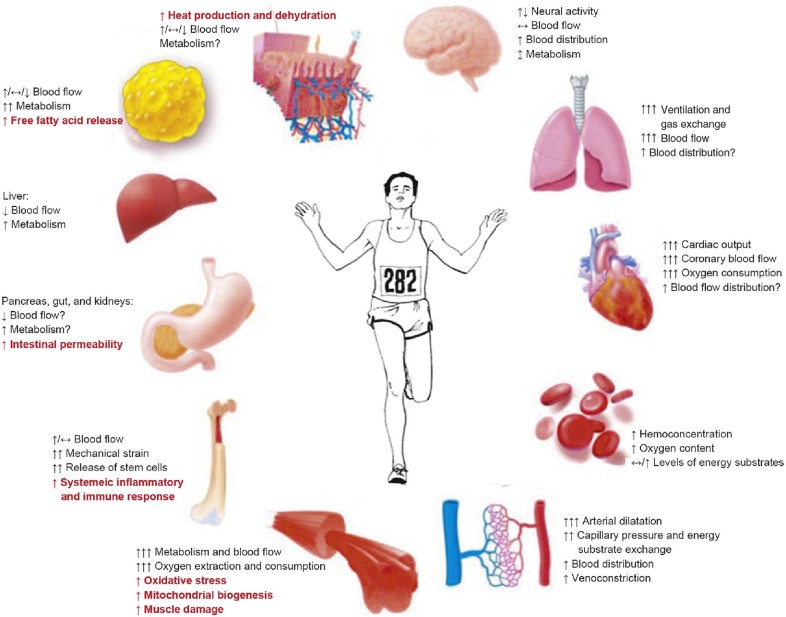
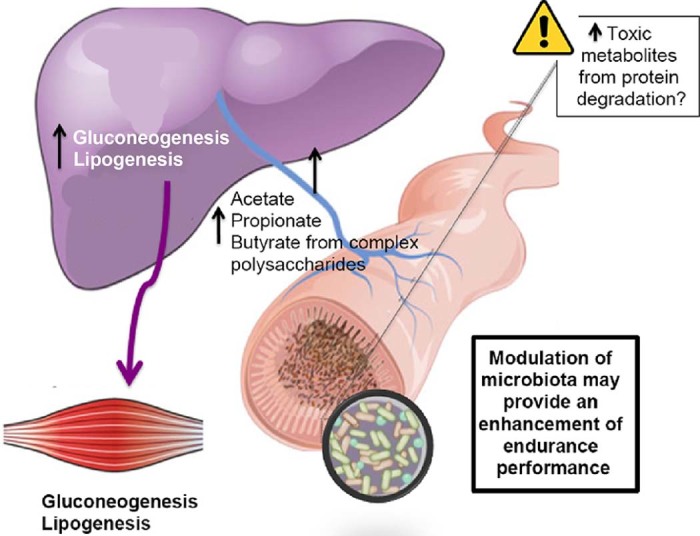
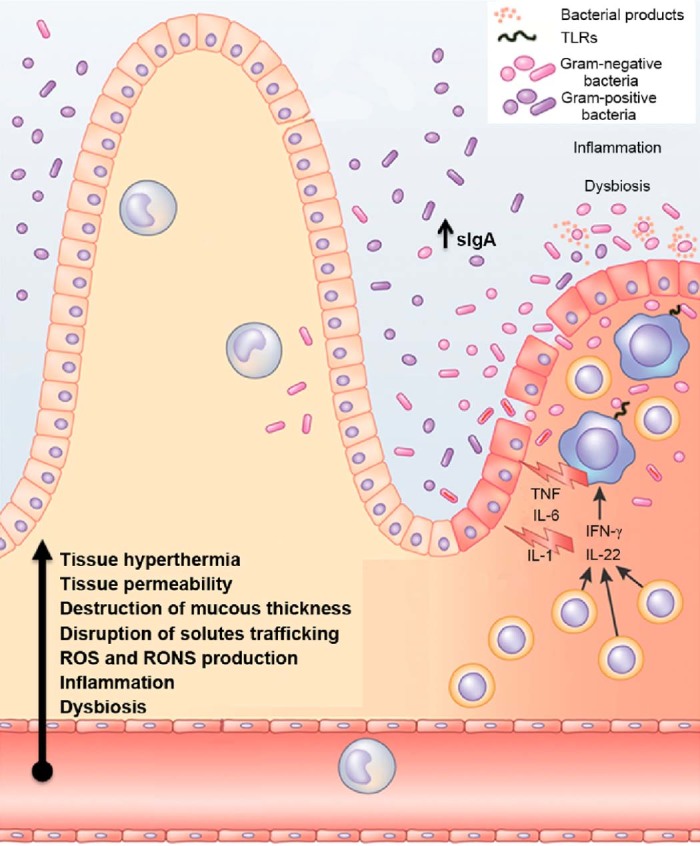
BACKGROUND: The physiological and biochemical demands of intense exercise elicit both muscle-based and systemic responses. The main adaptations to endurance exercise include the correction of electrolyte imbalance, a decrease in glycogen storage and the increase of oxidative stress, intestinal permeability, muscle damage, and systemic inflammatory response. Adaptations to exercise might be influenced by the gut microbiota, which plays an important role in the production, storage, and expenditure of energy obtained from the diet as well as in inflammation, redox reactions, and hydration status. METHODS: A systematic and comprehensive search of electronic databases, including MEDLINE, Scopus, ClinicalTrials.gov, ScienceDirect, Springer Link, and EMBASE was done. The search process was completed using the keywords: "endurance", "exercise", "immune response", "microbiota", "nutrition", and "probiotics". RESULTS: Reviewed literature supports the hypothesis that intestinal microbiota might be able to provide a measureable, effective marker of an athlete's immune function and that microbial composition analysis might also be sensitive enough to detect exercise-induced stress and metabolic disorders. The review also supports the hypothesis that modifying the microbiota through the use of probiotics could be an important therapeutic tool to improve athletes' overall general health, performance, and energy availability while controlling inflammation and redox levels. CONCLUSION: The present review provides a comprehensive overview of how gut microbiota may have a key role in controlling the oxidative stress and inflammatory responses as well as improving metabolism and energy expenditure during intense exercise.
Overview
The claims and statistics of this paper haven’t been checked yet.
Run the check — free, no account needed. It reads the open-access text and checks the sources it cites.
Integrity signals
Registry
Cites
Statistics
Figures
Verification
Claims the paper makes
The claims and statistics of this paper haven’t been checked yet.
Run the check — free, no account needed. It reads the open-access text and checks the sources it cites.
Claims other papers make about this one
Each is checked against this paper’s own text: does it say what the citing paper says it does?
The cited source says what the claim attributes to it.
In the citing paper
“Research examining the reciprocal relationship between exercise and gut microbiota composition is still in its infancy, as such little is known about how the gut microbiota may contribute to an individual's exercise performance (Mach and Fuster-Botella, 2017).”
From The Microbiota-Gut-Brain Axis (2019) · cites this paper as Mach and Fuster-Botella, 2017
In the citing paper
“Due to the great diversity of the human microbiome, there have not been specific established dietary recommendations for probiotic supplementation for athletes.”
From Exercise-induced stress behavior, gut-microbiota-brain axis and diet: a systematic review for athletes (2016) · cites this paper as [23]
In the citing paper
“Yogurt supplemented with beneficial bacterial strains are already being used to help treat some GI disorders such as inflammation and epithelial barrier function restoring [23].”
From Exercise-induced stress behavior, gut-microbiota-brain axis and diet: a systematic review for athletes (2016) · cites this paper as [23]
Self-check
Percentages, sums and reported differences re-computed from the paper’s own numbers.
The self-check needs the paper’s full text.
Citations
Cites
Shamseer, L., Moher, D., Clarke, M., Ghersi, D., Liberati, A., Petticrew, M., Shekelle, P., Stewart, L. A., & the PRISMA-P Group (2015) · BMJ · doi:10.1136/bmj.g7647 · Cited by 13,120
De Filippo, C., Cavalieri, D., Di Paola, M., Ramazzotti, M., Poullet, J. B., Massart, S., Collini, S., Pieraccini, G., & Lionetti, P. (2010) · Proceedings of the National Academy of Sciences · doi:10.1073/pnas.1005963107 · Cited by 5,579
Role of the microbiota in immunity and inflammation.
Belkaid, Y., & Hand, T. W. (2014) · Cell · doi:10.1016/j.cell.2014.03.011 · Cited by 5,385
Host-gut microbiota metabolic interactions
Nicholson, J. K., Holmes, E., Kinross, J., Burcelin, R., Gibson, G., Jia, W., & Pettersson, S. (2012) · Science · doi:10.1126/science.1223813 · Cited by 4,760
Richness of human gut microbiome correlates with metabolic markers
Le Chatelier, E., Nielsen, T., Qin, J., Prifti, E., Hildebrand, F., Falony, G., Almeida, M., Arumugam, M., Batto, J.-M., Kennedy, S., et al. (2013) · Nature · doi:10.1038/nature12506 · Cited by 4,662
Functional interactions between the gut microbiota and host metabolism
Tremaroli, V., & Bäckhed, F. (2012) · Nature · doi:10.1038/nature11552 · Cited by 4,387
Colonic Health: Fermentation and Short Chain Fatty Acids
Wong, J. M. W., de Souza, R., Kendall, C. W. C., Emam, A., & Jenkins, D. J. A. (2006) · Journal of Clinical Gastroenterology · doi:10.1097/00004836-200603000-00015 · Cited by 2,739
Oxidative Stress: An Essential Factor in the Pathogenesis of Gastrointestinal Mucosal Diseases
Bhattacharyya, A., Chattopadhyay, R., Mitra, S., & Crowe, S. E. (2014) · Physiological Reviews · doi:10.1152/physrev.00040.2012 · Cited by 2,484
Commensal Host-Bacterial Relationships in the Gut
Hooper, L. V., & Gordon, J. I. (2001) · Science · doi:10.1126/science.1058709 · Cited by 2,362
The gut microbiota and host health: a new clinical frontier
Marchesi, J. R., Adams, D. H., Fava, F., Hermes, G. D. A., Hirschfield, G. M., Hold, G., Quraishi, M. N., Kinross, J., Smidt, H., Tuohy, K. M., et al. (2016) · Gut · doi:10.1136/gutjnl-2015-309990 · Cited by 2,302
Research works printed but not linked: 1
- Gleeson, 2007, Immune function in sport and exercise, Appl Physiol, 103, 693, 10.1152/japplphysiol.00008.2007 · DOI · Paper page
Cited by
Sorted by citations
Cryan, J. F., O'Riordan, K. J., Cowan, C. S. M., Sandhu, K. V., Bastiaanssen, T. F. S., Boehme, M., Codagnone, M. G., Cussotto, S., Fulling, C., Golubeva, A. V., et al. (2019) · Physiological Reviews · doi:10.1152/physrev.00018.2018 · Cited by 5,286
Health and disease markers correlate with gut microbiome composition across thousands of people
Manor, O., Dai, C. L., Kornilov, S. A., Smith, B., Price, N. D., Lovejoy, J. C., Gibbons, S. M., & Magis, A. T. (2020) · Nature Communications · doi:10.1038/s41467-020-18871-1 · Cited by 850
Clark, A., & Mach, N. (2016) · Journal of the International Society of Sports Nutrition · doi:10.1186/s12970-016-0155-6 · Cited by 583
“Mach N, Berri M, Estelle J, et al. Early-life establishment of the swine gut microbiome and impact on host phenotypes.”
BackgroundInfluentialSelf-citationEffects of Psychological, Environmental and Physical Stressors on the Gut Microbiota
Karl, J. P., Hatch‐McChesney, A., Arcidiacono, S. M., Pearce, S., Pantoja-Feliciano, I. G., Doherty, L. A., & Soares, J. W. (2018) · Frontiers in Microbiology · doi:10.3389/fmicb.2018.02013 · Cited by 563
Thirty Years of Lactobacillus rhamnosus GG
Capurso, L. (2019) · Journal of Clinical Gastroenterology · doi:10.1097/mcg.0000000000001170 · Cited by 400
Metadata
- Authors
- Mach, N., & Fuster-Botella, D.
- Affiliations
- Universitat Oberta de Catalunya (ES)
- Corresponding author
- Mach, Núria
- ORCID
- Mach, Núria
- Venue
- Journal of Sport and Health Science
- Publisher
- Elsevier BV
- Published
- 2017-06
- Volume
- 6
- Issue
- 2
- Pages
- 179-197
- ISSN
- 2213-2961 (ISSN-L)
- 2095-2546
- PMC
- PMC6188999
- OpenAlex
- W2354159866
- Cited by
- 361
- References
- 110
- Citations by year
- 2026: 39 · 2025: 37 · 2024: 38 · 2023: 40 · 2022: 56 · 2021: 35 · 2020: 56 · 2019: 34 · 2018: 13 · 2017: 8
- FWCI
- 1.78
- Type
- journal article
- Language
- en
- Open access
- diamond
- doi.org
- Licence
- Locations
- Journal of sport and health science/Journal of Sport and Health Science (publishedVersion, cc-by-nc-nd)
- Europe PMC (PubMed Central) (publishedVersion, cc-by-nc-nd)
- PubMed Central (publishedVersion, cc-by-nc-nd)
- PubMed (publishedVersion)
- The Oberta in Open Access (Universitat Oberta de Catalunya) (publishedVersion, cc-by-nc-nd)
- HAL (submittedVersion, other-oa)
- LA Referencia (Red Federada de Repositorios Institucionales de Publicaciones Científicas) (submittedVersion, cc-by-nc-nd)
- DOAJ (DOAJ: Directory of Open Access Journals) (submittedVersion, cc-by-sa)
- The Oberta in Open Access (Universitat Oberta de Catalunya) (submittedVersion, cc-by-nc-nd)
- Funders
- Universitat Oberta de Catalunya
- Topics
- Life Sciences › Biochemistry, Genetics and Molecular Biology › Molecular Biology › Gut microbiota and health
- Health Sciences › Medicine › Physiology (medical) › Exercise and Physiological Responses
- Life Sciences › Agricultural and Biological Sciences › Food Science › Probiotics and Fermented Foods
- Keywords
- endurance exercise, gut microbiota, athletes, probiotics, oxidative stress, inflammation, intestinal permeability, immune function, energy metabolism, energy availability, exercise adaptation, redox homeostasis
About these checks
Registry, retraction, Cites and statistics results are computed, not judged, with one exception: a printed reference that no index lists is read once by a model before it counts as a citation error. Claims are extracted by a model and kept only when their quote appears verbatim in the text; each cited source is then checked, with a model’s help, for whether it says what the claim relies on. Those verdicts can be wrong — read the claim’s quote and the cited source before relying on one.
Statistics and arithmetic are recomputed, not judged.
Confidence bands are shown only for fields calibrated on our annotated test set. None is calibrated yet, so no band is shown.
What counts as a claim ›How we measure confidence ›How we check this ›
Are you an author, or do you see a problem with this page? Request a review
