

The DOI matches its Crossref record; 58 of the 60 references it cites were found in a registry or an index.
Impact of built environment on physical activity and obesity among children and adolescents in China: A narrative systematic review
Open accessAbstract
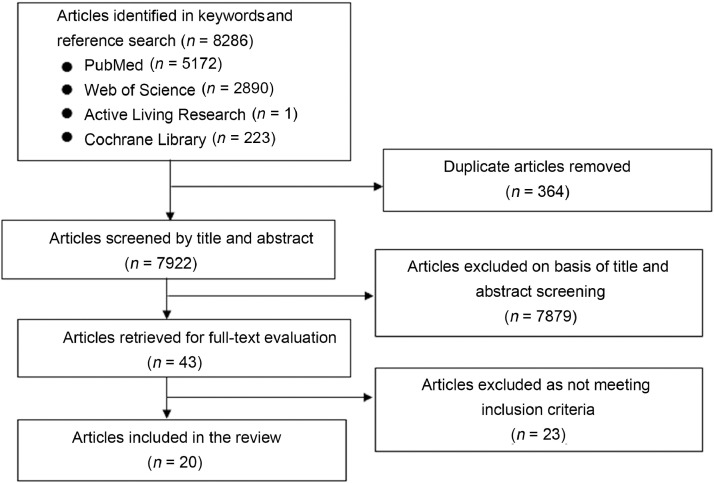
BACKGROUND: Neighborhood built environment may profoundly influence children's physical activity (PA) and body weight. This study systematically reviewed scientific evidence regarding the impact of built environment on PA and obesity among children and adolescents in China. METHODS: A keyword and reference search was conducted in Active Living Research, Cochrane Library, PubMed, and Web of Science. Studies that met all of the following criteria were included in the review: (1) study designs-experimental studies, observational studies, and qualitative studies; (2) study subjects-Chinese children and/or adolescents aged ≤17 years; (3) exposures-neighborhood built environment; (4) outcomes-PA and/or body weight status; (5) article type-peer-reviewed publications; (6) time window of search-from the inception of an electronicbibliographic database to May 31, 2018; (7) country-China; and (8) language-articles written in English. RESULTS: A total of 20 studies, including 16 cross-sectional studies, 3 longitudinal studies, and 1 descriptive study, met the predetermined selection criteria and were included in the review. A total of 13 studies adopted subjective built environment measures reported by parents and/or children,2 adopted objective measures (e.g., geographical information system, field observations), and 5 adopted both objective and subjective measures. PA behaviors included PA, physical inactivity, sedentary behavior, active/passive commuting from/to school, and park visits. Among the 16 studies that provided some quantitative estimates of the influence of built environment on PA and body weight status, all reported a statistically significant relationship in the expected direction. Availability and accessibility in proximity to greenspaces, parks, recreational facilities, and sidewalks were found to be associated with increased PA levels, reduced sedentary behaviors, and/or active commuting among Chinese childrenand adolescents. In contrast, the absence of bike lanes and living in higher density residential areas were associated with increased likelihood of childhood overweight and obesity. CONCLUSION: Neighborhood built environment plays an important role in Chinese children's PA engagement and weight outcomes. Building new exercise facilities and enhancing the accessibility of existing facilities hold the potential to enhance PA engagement among Chinese children and adolescents. In addition, urban designs that incorporate sidewalks, bike lanes, walking paths, less motorized traffic, and lower residential density are likely to promote PA and prevent childhood obesity in China.
Overview
The claims and statistics of this paper haven’t been checked yet.
Run the check — free, no account needed. It reads the open-access text and checks the sources it cites.
Integrity signals
Registry
Cites
Statistics
Figures
Verification
Claims the paper makes
The claims and statistics of this paper haven’t been checked yet.
Run the check — free, no account needed. It reads the open-access text and checks the sources it cites.
Claims other papers make about this one
Each is checked against this paper’s own text: does it say what the citing paper says it does?
In the citing paper
“Evidence from China indicates that built environmental features in the community, such as availability and accessibility of open space, recreational facilities and walkable sidewalks, are likely to facilitate increased physical activity and active commuting, as well as reduced sedentary behaviours among Chinese children and adolescents.”
From Physical activity and health in Chinese children and adolescents: expert consensus statement (2020) (2020) · cites this paper as [109]
In the citing paper
“There is consistent evidence of various environmental influences on the physical activity levels of children and adolescents.109–112”
From Physical activity and health in Chinese children and adolescents: expert consensus statement (2020) (2020) · cites this paper as [109]
In the citing paper
“Commonly reported factors influencing physical activity levels include socioeconomic status (income and education), the physical environment (ambient air and water) and the built environment (neighbourhood design, parks and recreational facilities, green space, safety, access to physical activity facilities and street connectivity).”
From Physical activity and health in Chinese children and adolescents: expert consensus statement (2020) (2020) · cites this paper as [109]
In the citing paper
“In contrast, features such as the lack of bike lanes and high residential density are likely to be associated with childhood overweight and obesity.109”
From Physical activity and health in Chinese children and adolescents: expert consensus statement (2020) (2020) · cites this paper as [109]
Self-check
Percentages, sums and reported differences re-computed from the paper’s own numbers.
The self-check needs the paper’s full text.
Citations
Cites
Child abuse: Adolescent records vs. adult recall
Femina, D. D., Yeager, C. A., & Lewis, D. O. (1990) · Child Abuse & Neglect · doi:10.1016/0145-2134(90)90033-p · Cited by 8,820
Lee, I.-M., Shiroma, E. J., Lobelo, F., Puska, P., Blair, S. N., & Katzmarzyk, P. T. (2012) · The Lancet · doi:10.1016/s0140-6736(12)61031-9 · Cited by 8,215
Correlates of physical activity: why are some people physically active and others not?
Bauman, A. E., Reis, R. S., Sallis, J. F., Wells, J. C., Loos, R. J., & Martin, B. W. (2012) · The Lancet · doi:10.1016/s0140-6736(12)60735-1 · Cited by 4,151 · cited 1×
“The relationship between built environment and PA among children in general has been extensively documented.(16,17) Accumulating evidence suggests that the availability of parks, playgrounds, gyms, and other facilities, as well as other neighborhood features such as walkability and safety, profoundly shape children’s…”
BackgroundAnnual Medical Spending Attributable To Obesity: Payer-And Service-Specific Estimates
Finkelstein, E. A., Trogdon, J. G., Cohen, J. W., & Dietz, W. H. (2009) · Health Affairs · doi:10.1377/hlthaff.28.5.w822 · Cited by 2,956
Danaei, G., Ding, E. L., Mozaffarian, D., Taylor, B., Rehm, J., Murray, C. J. L., & Ezzati, M. (2009) · PLoS Medicine · doi:10.1371/journal.pmed.1000058 · Cited by 2,860
Fit Yourself and Take Your Lungs to Heart
Palange, P., & Bonini, M. (2013) · Respiration · doi:10.1159/000350831 · Cited by 2,780
Global prevalence and trends of overweight and obesity among preschool children
de Onis, M., Blössner, M., & Borghi, E. (2010) · The American Journal of Clinical Nutrition · doi:10.3945/ajcn.2010.29786 · Cited by 2,182 · cited 1×
“In 2010, 43 million children worldwide (35 million in developing countries) were estimated to be overweight or obese.(7) By 2020, the prevalence of childhood overweight/obesity is projected to reach 9%, or 60 million children worldwide.”
BackgroundDavison, K. K., & Lawson, C. T. (2006) · International Journal of Behavioral Nutrition and Physical Activity · doi:10.1186/1479-5868-3-19 · Cited by 966
Neighborhood Environment and Physical Activity Among Youth
Ding, D., Sallis, J. F., Kerr, J., Lee, S., & Rosenberg, D. E. (2011) · American Journal of Preventive Medicine · doi:10.1016/j.amepre.2011.06.036 · Cited by 914 · cited 1×
“Accumulating evidence suggests that the availability of parks, playgrounds, gyms, and other facilities, as well as other neighborhood features such as walkability and safety, profoundly shape children’s daily PA patterns.(18,19) Roemmich et al.”
BackgroundThe Role of Built Environments in Physical Activity, Eating, and Obesity in Childhood
Sallis, J. F., & Glanz, K. (2006) · The Future of Children · doi:10.1353/foc.2006.0009 · Cited by 755 · cited 1×
“Two systematic reviews have investigated the associations between various built environment attributes and childhood obesity.(56,58) Neighborhood features such as walkability, bikeability, and proximity to parks and recreational facilities were found to be associated with increased PA and active commuting.”
Background
Research works printed but not linked: 1
- PubMed Help. Available at: https://www.ncbi.nlm.nih.gov/books/NBK3827/; [accessed 26.07.2018].
Cited by
Sorted by citations
Physical activity and health in Chinese children and adolescents: expert consensus statement (2020)
Chen, P., Wang, D., Shen, H., Yu, L., Gao, Q., Mao, L., Jiang, F., Luo, Y., Xie, M., Zhang, Y., et al. (2020) · British Journal of Sports Medicine · doi:10.1136/bjsports-2020-102261 · Cited by 225
“109”
Zhu, Z., Tang, Y., Zhuang, J., Liu, Y., Wu, X., Cai, Y., Wang, L., Cao, Z., & Chen, P. (2019) · BMC Public Health · doi:10.1186/s12889-019-6515-9 · Cited by 209
Dixon, B. N., Ugwoaba, U. A., Brockmann, A. N., & Ross, K. M. (2020) · Obesity Reviews · doi:10.1111/obr.13171 · Cited by 159
Yang, L., Yang, H., Yu, B., Lü, Y., Cui, J., & Lin, D. (2023) · Travel Behaviour and Society · doi:10.1016/j.tbs.2023.100673 · Cited by 149
Liu, H., Zhang, M., Ma, Q., Tian, B., Nie, C., Chen, Z., & Li, J. (2020) · Food & Function · doi:10.1039/d0fo00855a · Cited by 123
Sakhvidi, M. J. Z., Mehrparvar, A. H., Sakhvidi, F. Z., & Dadvand, P. (2023) · Current Opinion in Environmental Science & Health · doi:10.1016/j.coesh.2023.100445 · Cited by 92
Zhang, Y., Koene, M., Reijneveld, S. A., Tuinstra, J., Broekhuis, M., van der Spek, S., & Wagenaar, C. (2022) · International Journal of Behavioral Nutrition and Physical Activity · doi:10.1186/s12966-022-01399-6 · Cited by 87
Does street greenery always promote active travel? Evidence from Beijing
Wu, J., Wang, B., Ta, N., Zhou, K., & Chai, Y. (2020) · Urban forestry & urban greening · doi:10.1016/j.ufug.2020.126886 · Cited by 80
Travert, A.-S., Annerstedt, K. S., & Daivadanam, M. (2019) · International Journal of Environmental Research and Public Health · doi:10.3390/ijerph16081454 · Cited by 67
“However, it is important to note that the model was developed predominantly from evidence drawn from studies in high-income settings, and only limited evidence from low-and middle-income countries [58,60,70].”
BackgroundEquity in the built environment: A systematic review
Seyedrezaei, M., Becerik-Gerber, B., Awada, M., Contreras, S. L., & Boeing, G. (2023) · Building and Environment · doi:10.1016/j.buildenv.2023.110827 · Cited by 69
Ding, Y., Lee, C., Chen, X., Song, Y. H., Newman, G., Lee, R., Lee, S., Li, D., & Sohn, W. (2023) · Urban forestry & urban greening · doi:10.1016/j.ufug.2023.128168 · Cited by 78
Campos-Garzón, P., Sevil‐Serrano, J., García‐Hermoso, A., Chillón, P., & Barranco-Ruíz, Y. (2023) · Scandinavian Journal of Medicine and Science in Sports · doi:10.1111/sms.14450 · Cited by 69
“62 Researchers should collaborate closely with schools and municipalities to advocate for initiatives that support ACS, such as implementing bike racks, creating pedestrian-friendly routes, organizing Walking School Bus or walking groups 63– 65 or e conducting Safe Routes to School.”
BackgroundNon-linear associations between the built environment and the physical activity of children
Huang, X., Lu, G., Yin, J., & Tan, W. (2021) · Transportation Research Part D Transport and Environment · doi:10.1016/j.trd.2021.102968 · Cited by 58
Petrunoff, N., Edney, S. M., Yi, N. X., Dickens, B. S. L., Koo, J. R., Xin, W. N., Sia, A., Leong, D. Y. W., van Dam, R. M., Cook, A. R., et al. (2022) · Health & Place · doi:10.1016/j.healthplace.2022.102790 · Cited by 61
Zeng, E., Dong, Y., Li, Y., & Lin, A. (2022) · Buildings · doi:10.3390/buildings13010002 · Cited by 71
“While other specific environment variables, such as aesthetics [56] and accessibility [57], which were widely documented in previous studies, may still appear as strong influencing factors on physical activity.”
BackgroundMotomura, M., Koohsari, M. J., Lin, C., Ishii, K., Shibata, A., Nakaya, T., Kaczynski, A. T., Veitch, J., & Oka, K. (2022) · Health & Place · doi:10.1016/j.healthplace.2022.102816 · Cited by 56
Zhang, Y., Koene, M., Chen, C., Wagenaar, C., & Reijneveld, S. A. (2024) · Preventive Medicine · doi:10.1016/j.ypmed.2024.107856 · Cited by 55
Akpınar, A. (2019) · International Journal of Environmental Research and Public Health · doi:10.3390/ijerph16214281 · Cited by 55
“This finding is in line with previous studies [31,32,34] and proximity seems to play a greater role in promoting GE among adolescents.”
BackgroundResultSedentary Behavior Research in the Chinese Population: A Systematic Scoping Review
Bao, R., Chen, S., Wang, Y., Xu, J., Wang, L., Zou, L., & Cai, Y. (2020) · International Journal of Environmental Research and Public Health · doi:10.3390/ijerph17103576 · Cited by 51
“, insufficient exercise facilities [40]) and an obesogenic environment (e.”
BackgroundNanomaterials for the theranostics of obesity
Li, J., Cha, R., Luo, H., Hao, W., Zhang, Y., & Jiang, X. (2019) · Biomaterials · doi:10.1016/j.biomaterials.2019.119474 · Cited by 48
How street greenery facilitates active travel for university students
Bai, Y., Cao, M., Wang, R., Liu, Y., & Wang, S. (2022) · Journal of Transport & Health · doi:10.1016/j.jth.2022.101393 · Cited by 47
“Active travel (AT) can prevent health risks by increasing physical activity (Passi-Solar et al., 2020; Wang et al., 2022a), and the relationship between the built environment and AT has received growing attention in recent years (An et al., 2019; Ding and Gebel, 2012; Yang et al., 2021a).”
Guo, S., Zhao, H., Ma, Z., Zhang, S., Li, M., Zheng, Z., Ren, X., Ho, C., & Bai, N. (2020) · Molecules · doi:10.3390/molecules25174001 · Cited by 44
“5 million children will suffer from obesity, adversely affecting their physical and intellectual development [7,8].”
BackgroundUrban greenspace and visual acuity in schoolchildren: a large prospective cohort study in China
Bao, W.-W., Zhao, Y., Dadvand, P., Jiang, N., Chen, G., Yang, B., Huang, W., Xiao, X., Liang, J., Chen, Y., et al. (2024) · Environment International · doi:10.1016/j.envint.2024.108423 · Cited by 49
Investigating the barriers preventing adolescents from physical activities in urban green spaces
Akpınar, A. (2020) · Urban forestry & urban greening · doi:10.1016/j.ufug.2020.126724 · Cited by 41
Physical activity and prevention of chronic disease in Chinese youth: a public health approach
Li, F., Mao, L., & Chen, P. (2019) · Journal of Sport and Health Science · doi:10.1016/j.jshs.2019.06.008 · Cited by 34
Zhang, R., Zhang, C., Lai, P., & Kwan, M. (2022) · Urban forestry & urban greening · doi:10.1016/j.ufug.2022.127479 · Cited by 43
Access to public transport and childhood obesity: A systematic review
Xu, F., Jin, L., Qin, Z., Chen, X., Xu, Z., He, J. N., Wang, Z., Ji, W., Ren, F., Du, Q., et al. (2020) · Obesity Reviews · doi:10.1111/obr.12987 · Cited by 35
Hui, S. S., Zhang, R., Suzuki, K., Naıto, H., Balasekaran, G., Song, J.-K., Park, S. Y., Liou, Y. M., Lu, D., Poh, B. K., et al. (2020) · Scandinavian Journal of Medicine and Science in Sports · doi:10.1111/sms.13893 · Cited by 35
Carbohydrate-based functional ingredients derived from starch: Current status and future prospects
Yang, Z., McClements, D. J., Xu, Z., Meng, M., Li, C., Chen, L., Qiu, C., Long, J., & Jin, Z. (2022) · Food Hydrocolloids · doi:10.1016/j.foodhyd.2022.107729 · Cited by 34
Luo, P., Yu, B., Li, P., & Liang, P. (2022) · Frontiers in Environmental Science · doi:10.3389/fenvs.2022.1021081 · Cited by 32
“Existing research has extensively explored the relationship between PA and the built environment and reached mixed conclusions (Ewing and Cervero, 2001; An et al., 2019).”
BackgroundSharma, T., & Jain, S. (2023) · Journal of Cleaner Production · doi:10.1016/j.jclepro.2023.137744 · Cited by 25
Sun, Y. L., He, C., Zhang, X., & Zhu, W. (2020) · International Journal of Environmental Research and Public Health · doi:10.3390/ijerph17144940 · Cited by 25
Chen, Y., Liu, Y., Grekousis, G., Qian, Z. M., Vaughn, M. G., Bingheim, E., Yang, B., Chen, G., & Dong, G. (2023) · Cities · doi:10.1016/j.cities.2023.104674 · Cited by 25
He, H., Li, T., Yu, Y., & Lin, X. (2020) · Frontiers in Public Health · doi:10.3389/fpubh.2020.577140 · Cited by 24
Molina‐Cando, M. J., Escandón, S., Dyck, D. V., Cardon, G., Salvo, D., Fiebelkorn, F., Andrade, S., Ochoa‐Avilés, C., García, A. A. G., Brito, J., et al. (2021) · PLoS ONE · doi:10.1371/journal.pone.0251972 · Cited by 27
“Particularly, sedentary lifestyle reduction in children has been associated with availability and accessibility in proximity to green spaces, parks, and recreational facilities [47].”
BackgroundWang, W., Cai, Y., Xiong, X., & Xu, G. (2025) · Buildings · doi:10.3390/buildings15101640 · Cited by 23
Lu, C., Shen, T., Huang, G., & Corpeleijn, E. (2020) · Journal of sport and health science/Journal of Sport and Health Science · doi:10.1016/j.jshs.2020.02.010 · Cited by 23
“31 Furthermore, in present-day China, the neighborhood’s built environment may influence children’s PA behaviors, 32,33 especially for those with reduced access to public spaces (such as sports areas, parks, and open recreational fields) suitable for leisure-time activities.”
BackgroundToledo-Vargas, M., Perez-Contreras, P., Chandía-Poblete, D., & Aguilar-Farías, N. (2020) · Journal of Physical Activity and Health · doi:10.1123/jpah.2019-0672 · Cited by 22
Predictive Analysis of Health/Physical Fitness in Health-Promoting Lifestyle of Adolescents
Liu, H., Liu, Y., & Li, B. (2021) · Frontiers in Public Health · doi:10.3389/fpubh.2021.691669 · Cited by 25
Lotfata, A., Georganos, S., Kalogirou, S., & Helbich, M. (2022) · ISPRS International Journal of Geo-Information · doi:10.3390/ijgi11110550 · Cited by 21
Zordan, M., Talamini, G., & Villani, C. (2019) · International Journal of Environmental Research and Public Health · doi:10.3390/ijerph16244934 · Cited by 20
Xiang, C., Zhao, J., Kamalden, T. F. T., Dong, W., Luo, H., & Ismail, N. (2023) · Humanities and Social Sciences Communications · doi:10.1057/s41599-023-02466-4 · Cited by 21
Melo, J., Ribeiro, A. I., Aznar, S., Pizarro, A. I. N., & Santos, M. P. (2021) · International Journal of Environmental Research and Public Health · doi:10.3390/ijerph18126588 · Cited by 18
“Among recreational facilities, urban green spaces (UGS) in particular have been attracting attention [22].”
BackgroundSchroeder, K., Dumenci, L., Sarwer, D. B., Noll, J. G., Henry, K., Suglia, S. F., Forke, C. M., & Wheeler, D. C. (2022) · International Journal of Environmental Research and Public Health · doi:10.3390/ijerph19137819 · Cited by 19
Identifying the Antecedents of University Students’ Usage Behaviour of Fitness Apps
Yu, J., Ku, G. C.-M., Lo, Y.-C., Chen, C., & Hsu, C.-H. (2021) · Sustainability · doi:10.3390/su13169043 · Cited by 18
“The government expects obese teenagers will reach 49.5 million in 2030 [18].”
BackgroundInfluentialBuli, B. G., Tillander, A., Fell, T., & Bälter, K. A. (2022) · International Journal of Environmental Research and Public Health · doi:10.3390/ijerph19073784 · Cited by 16
Effect of marriage on overweight and obesity: evidence from China
Tang, F., Pan, Y.-H., & Deng, H. (2024) · BMC Public Health · doi:10.1186/s12889-024-21184-3 · Cited by 16
Jiang, Y., Zhuo, B. M. K., Guo, B., Zeng, P., Guo, Y., Chen, G., Wei, J., He, R., Li, Z., Zhang, X., et al. (2022) · The Science of The Total Environment · doi:10.1016/j.scitotenv.2022.155393 · Cited by 15
Lu, P., & van Ameijde, J. (2025) · Cities & Health · doi:10.1080/23748834.2024.2441554 · Cited by 15
Lotfata, A., & Georganos, S. (2023) · Journal of Geographical Systems · doi:10.1007/s10109-023-00415-y · Cited by 15
“…2021; Passi-Solar et al. 2020; Feng and Astell-Burt 2019; Andersen et al. 2018) have received increased attention due to their associations with PI, obesity, and cardiovascular disease (Adlakha et al. 2021; Sims et al. 2020; An et al. 2019; Lenhart et al. 2017; Xu et al. 2015; Unger et al. 2014).”
Hu, D., Zhou, S., Crowley‐McHattan, Z. J., & Liu, Z. (2024) · Frontiers in Public Health · doi:10.3389/fpubh.2024.1421843 · Cited by 23
Dong, Y., Chen, M., Chen, L., Wen, B., Yang, Y., Wang, Z., Ma, Y., Song, Y., Ma, J., & Lau, W. C. (2021) · Frontiers in Nutrition · doi:10.3389/fnut.2021.684286 · Cited by 15
Tesler, R., Endevelt, R., & Plaut, P. (2021) · Health Promotion International · doi:10.1093/heapro/daab145 · Cited by 20
He, G., Huang, Y., Salmon, J., & Wong, S. H. (2021) · BMC Public Health · doi:10.1186/s12889-021-10530-4 · Cited by 14
“The results of this study provide evidence of psychometric properties that support the NEWS-CC to assess PA-related neighborhood environment among children in China cities that share similar urban forms with Hong Kong.”
BackgroundInfluentialAnalysis of Urban Built Environment Impacts on Outdoor Physical Activities—A Case Study in China
Li, B., Liu, Q., Wang, T., He, H., Peng, Y., & Feng, T. (2022) · Frontiers in Public Health · doi:10.3389/fpubh.2022.861456 · Cited by 14
“Urban Built Environment Factors and Activity Analysis Angels Identification Based on the existing research results, the most identified factors which influence the urban walking and running activities in Changsha China are given in Table 1, together with the abbreviations (10, 11, 43, 54).”
BackgroundAdeomi, A. A., Fatusi, A., & Klipstein‐Grobusch, K. (2022) · Public Health Nutrition · doi:10.1017/s1368980022000258 · Cited by 13
Adebusoye, B., Chattopadhyay, K., Ekezie, W. C., Phalkey, R. K., & Leonardi‐Bee, J. (2022) · JBI Evidence Synthesis · doi:10.11124/jbies-21-00295 · Cited by 13
Padmapriya, N., Fogel, A. M., Tan, S. Y. X., Goh, C. M. J. L., Tan, S. L., Chia, A., Chu, A. H. Y., Chong, Y. S., Tan, K. H., Chan, S., et al. (2024) · International Journal of Behavioral Nutrition and Physical Activity · doi:10.1186/s12966-024-01574-x · Cited by 13
“Research indicates that children in neighborhoods with recreational facilities and safe infrastructure for walking and cycling tend to be more active and less sedentary [25–27].”
BackgroundAnalyzing the link between built environment and physical activity: a spatial study in suburban area
Iamtrakul, P., & Chayphong, S. (2024) · Frontiers in Built Environment · doi:10.3389/fbuil.2024.1420020 · Cited by 12
Wang, X., Huang, J., Qin, Z., Gan, W., He, Z., & Li, X. (2025) · Buildings · doi:10.3390/buildings15020248 · Cited by 12
Hohmann, A., Yuan, X., Schmitt, M., Zhang, H., Pietzonka, M., & Siener, M. (2021) · Children · doi:10.3390/children8050391 · Cited by 12
Zhang, R., Zhang, C., Lai, P., Cheng, W., Schüz, B., & Kwan, M. (2021) · International Journal of Health Geographics · doi:10.1186/s12942-021-00289-7 · Cited by 12
“Therefore, objectively-measured park environmental characteristics influencing park use for PA have not been thoroughly examined in high-density cities and warrant further research [34].”
BackgroundTian, Y., Ning, H., Ren, H., Liu, J., Wang, K., & Hong, B. (2022) · Land · doi:10.3390/land11060889 · Cited by 11
Preschool children's indoor and outdoor playground HSV color preferences
Samimi, P. M., & Tabatabaei, N. S. (2021) · Color Research & Application · doi:10.1002/col.22759 · Cited by 11
Built environment and childhood obesity
Sridhar, G. R., & Gumpeny, L. (2024) · World Journal of Clinical Pediatrics · doi:10.5409/wjcp.v13.i3.93729 · Cited by 10
Cheng, J., & Yu, H. (2021) · Journal of Public Health · doi:10.1007/s10389-021-01547-5 · Cited by 10
Ogunmayowa, O., & Baker, C. (2022) · Injury Epidemiology · doi:10.1186/s40621-022-00370-0 · Cited by 9
“reported that the availability of recreational facilities was positively associated with physical activity (An et al. 2019).”
BackgroundTan, W., Xiao-cong, L., & Xiao, T. (2023) · Frontiers in Public Health · doi:10.3389/fpubh.2023.1168077 · Cited by 9
“used a systematic literature review and found that the built environment has a significant impact on childhood and adolescent obesity in China, as well as that residential and surrounding sidewalks and parks are all relevant to the healthy development of children and adolescents (29).”
MethodRocliffe, P., O’Keeffe, B. T., Sherwin, I., McNamara, P., & MacDonncha, C. (2023) · Education Sciences · doi:10.3390/educsci13070699 · Cited by 9
Kuhn, A. P., Cockerham, A., O’Reilly, N., Bustad, J. J., Miranda, V., Loboda, T. V., Black, M. M., & Hager, E. R. (2021) · International Journal of Environmental Research and Public Health · doi:10.3390/ijerph18095003 · Cited by 9
“5c Residential PA Location – Y(1)/N(0) All residential PA locations (gyms, fitness centers, health clubs, and pools) [20,49,50]”
BackgroundInfluentialSparks, J. R., Wang, X., Lavie, C. J., & Sui, X. (2024) · Reviews in Cardiovascular Medicine · doi:10.31083/j.rcm2508291 · Cited by 9
“The availability of safe and accessible spaces for PA, such as parks, sidewalks, and recreational facilities, varies across local, regional, national, and international locations [91,92].”
BackgroundZhang, H., Yu, J., Dong, X., & Shen, J. (2024) · Environmental Research · doi:10.1016/j.envres.2024.120264 · Cited by 8
Zhang, R., Zhang, C., & Gu, D. (2023) · Scandinavian Journal of Medicine and Science in Sports · doi:10.1111/sms.14530 · Cited by 8
“4,17,18 In addition, studies have highlighted the detrimental impact of the presence of electronic devices at home on recreational screen time and sleep duration among adolescents.”
BackgroundUrban green space and mental well-being of Aotearoa New Zealand adolescents: A path analysis
Zhang, Y., Zhao, J., Mavoa, S., Ikeda, E., Clark, T. C., Crengle, S. M., & Smith, M. (2022) · Wellbeing Space and Society · doi:10.1016/j.wss.2022.100085 · Cited by 11
“For instance, the time spent in, and the proximity of green space to the residence was positively related to increased PA levels (An et al., 2019; Ward et al., 2016).”
Marriage and Its Influence on Overweight and Obesity: Insights from China
Chen, X., Hu, X., Shi, S., & Tian, Q. (2025) · Bulletin of pioneering researches of medical and clinical science · doi:10.51847/bpwloexjj4 · Cited by 7
Arif, I., & Ullah, F. (2025) · Sustainability · doi:10.3390/su17209159 · Cited by 9
Zhang, X., Jee, S., Fu, J., Wang, B., Zhu, L., Tu, Y., Cheng, L., Liu, G., Li, R., & Moore, J. B. (2021) · Journal of Physical Activity and Health · doi:10.1123/jpah.2020-0397 · Cited by 7
Obesidad Infantil: repercusiones post-pandemia y el factor escuela
Almonacid-Fierro, A., & Almonacid, J. G. (2022) · Andes pediatrica · doi:10.32641/andespediatr.v93i3.4349 · Cited by 7
Pintos-Toledo, E., Fernández-Giménez, S., Hino, A. A. F., Olivares, P. R., & Brazo‐Sayavera, J. (2024) · Health & Place · doi:10.1016/j.healthplace.2024.103278 · Cited by 6
Sedentary Lifestyle and the Threat of Obesity Among Young People
Sukatemin, S., Muhalla, H. I., Muarrofah, M., Utari, D. A., & Fitriani, V. Y. (2025) · The journal of academic science. · doi:10.59613/3cjm3157 · Cited by 6
Lv, H., & Wang, R. (2023) · BMC Public Health · doi:10.1186/s12889-023-16243-0 · Cited by 10
“Some studies have shown that higher residential density is associated with a decrease in time spent participating in physical activity and an increase in sedentary time and is positively correlated with leisuretime MVPA in adolescents [17].”
BackgroundKawalec, A., Mozrzymas, R., Domżol, A., Zachurzok, A., Szczepańska, M., Noczyńska, A., & Zwołińska, D. (2024) · Healthcare · doi:10.3390/healthcare12020260 · Cited by 6
“However, this requires confirmation in a larger group of pediatric patients.”
BackgroundThe Intersection of Neighborhood Environments, Adverse Childhood Experiences, and Health Equity
Schroeder, K., Noll, J. G., Suglia, S. F., Hall, A., & Sarwer, D. B. (2025) · PEDIATRICS · doi:10.1542/peds.2024-069605 · Cited by 5
Huang, S., Sha, S., Du, W., Zhang, H., Wu, X., Jiang, C., Zhao, Y., & Yang, J. (2021) · BMC Pediatrics · doi:10.1186/s12887-021-03054-8 · Cited by 5
“It was worthy to note that China, a nation with a highly authoritative government, has equipped with the fastgrowing food delivery industry, the prosperity of sports marketing, full capacity running transportation system; this has resulted in different opportunities to access to healthy food or changing citizens’ life…”
BackgroundGeospatial analytics for promoting a healthy peri-urban city: A health-cartographic perspective
Iamtrakul, P., Chayphong, S., & Gao, W. (2025) · Journal of Urban Management · doi:10.1016/j.jum.2025.05.013 · Cited by 6
Rossi, C. E., de Pinho, M. G. M., Corrêa, E. N., de Abreu, Â. H., Rech, C. R., Ferreira, J., & de Vasconcelos, F. D. A. G. (2023) · Food and Nutrition Bulletin · doi:10.1177/03795721221146215 · Cited by 5
“Likewise, the absence of bike paths and living in higher density areas were associated with a higher likelihood of being overweight and obese in Chinese children.(22) Evidence from Brazil suggests that higher perceived availability of facilities of the food, physical activity, and social-assistance environments near h…”
BackgroundActive commuting to school by Chinese school-age children
Lin, L., & He, L. (2019) · Elsevier eBooks · doi:10.1016/b978-0-12-814694-1.00018-x · Cited by 5
La influencia del espacio físico en el proceso de enseñanza-aprendizaje de la Educación Física
Bores‐García, D., Rojas, A. L. M., & Polo-Recuero, B. (2020) · Revista de Estilos de Aprendizaje · doi:10.55777/rea.v13i25.1490 · Cited by 5
Obesity in Children : Long-Term Causes and Consequences
Fitriliani, A., Pramesona, B. A., & Nareswari, S. (2023) · Medical Profession Journal of Lampung · doi:10.53089/medula.v13i1.605 · Cited by 5
Han, L., Yu, B., Fang, H., Jiang, Y., Yang, Y., & Qiu, H. (2025) · Land · doi:10.3390/land14122424 · Cited by 4
“The trajectories of its users are logged and visually represented as heat maps on its platform [29], where highlighted areas indicate high concentrations of human activity, and lighter shades correspond to lower activity levels.”
Hu, J., Xie, J., Liu, B., Peng, W. X., Liu, B., Yan, Y., Zhang, L., Wang, X., Xi, Y., Ma, Y., et al. (2026) · The Lancet Regional Health - Western Pacific · doi:10.1016/j.lanwpc.2026.101833 · Cited by 4
“47 This rapid transition leads to many changes in living and working environment, 48–53 for example, the development of food processing industry and fast food retailing business exposed people to marketing for mass-produced, ultra-processed foods and beverages; the inactive design of major Chinese…”
Salameh, A. B., El‐hneiti, M., Omari, O. A., AlBashtawy, M., Karavasileiadou, S., Alabbasi, Y., Bubshait, K., & Malak, M. Z. (2024) · Food & Nutrition Research · doi:10.29219/fnr.v68.9582 · Cited by 4
“Other studies have focused on enhancing external factors, such as the availability of the environment and necessary facilities to promote physical activities, including the availability of gyms, landscapes, sidewalks, and/or footways (23–25).”
BackgroundAl-Nuaim, A. A., Bursais, A. K., Hassan, M. M., Alaqil, A. I., Collins, P., & Safi, A. (2024) · Healthcare · doi:10.3390/healthcare12111120 · Cited by 6
The Innovation and Development of College English Blended Teaching Model in the Network Environment
Song, L. (2021) · IEEE International Conference on Information Systems and Computer Aided Education (ICISCAE) · doi:10.1145/3482632.3483156 · Cited by 4
“The traditional teaching habit as the center has fully mobilized the role of the cognitive subject of the students, and cultivated the students’ innovative thinking and innovative ability [7-8].”
BackgroundImpact of Park Redesign and Renovation on Children’s Health-Related Quality of Life
Hong, H., Kodali, H., Dunlap, A. F., Wyka, K., Thorpe, L. E., Evenson, K. R., & Huang, T. T. ‐. (2025) · Journal of Urban Health · doi:10.1007/s11524-024-00954-9 · Cited by 5
Toward Active Transport as a Utilitarian and Recreational Form of Sustainable Urban Mobility
Arbab, P., Martínez, J. A., Amer, S., & Pfeffer, K. (2020) · Advances in intelligent systems and computing · doi:10.1007/978-3-030-61075-3_62 · Cited by 4
La actividad física para prevenir el sobrepeso en adolescentes
Mancheno, F. D. B. (2023) · MENTOR revista de investigación educativa y deportiva · doi:10.56200/mried.v2i6.6024 · Cited by 6
A Review of the Role of Built Environment and Temperature in the Development of Childhood Obesity
Jabeen, A., Afzal, M. S., & Pathan, S. A. (2023) · Cureus · doi:10.7759/cureus.49657 · Cited by 4
“Some recent reviews studying the effect of the built environment on obesity were identified [2,3,10,20-26].”
BackgroundMethodResultInfluentialEDUCATIONAL INTERVENTION: PROMOTING PHYSICAL ACTIVITY TO CONTROL AND PREVENT CHILDHOOD OBESITY
Soares, J. M., Queiróga, M. R., Novello, D., & da Silva, C. C. (2026) · Revista Multidisciplinar do Nordeste Mineiro · doi:10.66104/z9y4m435 · Cited by 3
Chaudhary, A., Mahmood, S., Jamil, M., Khan, A., & Butt, M. Z. I. (2022) · Pakistan Journal of Health Sciences · doi:10.54393/pjhs.v3i07.372 · Cited by 3
Metadata
- Authors
- An, R., Shen, J., Yang, Q., & Yang, Y.
- Affiliations
- University of Illinois Urbana-Champaign (US)
- Beijing Sport University (CN)
- East China Normal University (CN)
- Corresponding author
- An, Ruopeng
- Venue
- Journal of Sport and Health Science
- Publisher
- Elsevier BV
- Published
- 2019-03
- Volume
- 8
- Issue
- 2
- Pages
- 153-169
- ISSN
- 2213-2961 (ISSN-L)
- 2095-2546
- PMC
- PMC6451055
- OpenAlex
- W2901880988
- Cited by
- 172
- References
- 60
- Citations by year
- 2026: 19 · 2025: 24 · 2024: 31 · 2023: 26 · 2022: 22 · 2021: 25 · 2020: 18 · 2019: 7
- FWCI
- 2.30
- Type
- journal article
- Language
- en
- Open access
- diamond
- doi.org
- Licence
- Locations
- Journal of sport and health science/Journal of Sport and Health Science (publishedVersion, cc-by-nc-nd)
- PubMed Central (publishedVersion, cc-by-nc-nd)
- PubMed (publishedVersion)
- DOAJ (DOAJ: Directory of Open Access Journals) (submittedVersion, cc-by-sa)
- Topics
- Social Sciences › Transportation › Urban Transport and Accessibility
- Social Sciences › Urban Studies › Urban Green Space and Health
- Health Sciences › Medicine › Public Health, Environmental and Occupational Health › Physical Activity and Health
- Keywords
- built environment, physical activity, childhood obesity, adolescents, sedentary behavior, active commuting, park accessibility, green spaces, recreational facilities, bicycle lanes, housing density, urban design, China
About these checks
Registry, retraction, Cites and statistics results are computed, not judged, with one exception: a printed reference that no index lists is read once by a model before it counts as a citation error. Claims are extracted by a model and kept only when their quote appears verbatim in the text; each cited source is then checked, with a model’s help, for whether it says what the claim relies on. Those verdicts can be wrong — read the claim’s quote and the cited source before relying on one.
Statistics and arithmetic are recomputed, not judged.
Confidence bands are shown only for fields calibrated on our annotated test set. None is calibrated yet, so no band is shown.
What counts as a claim ›How we measure confidence ›How we check this ›
Are you an author, or do you see a problem with this page? Request a review
