

The DOI matches its Crossref record; 78 of the 79 references it cites were found in a registry or an index.
The impact of exercise on mitochondrial dynamics and the role of Drp1 in exercise performance and training adaptations in skeletal muscle
Open accessAbstract
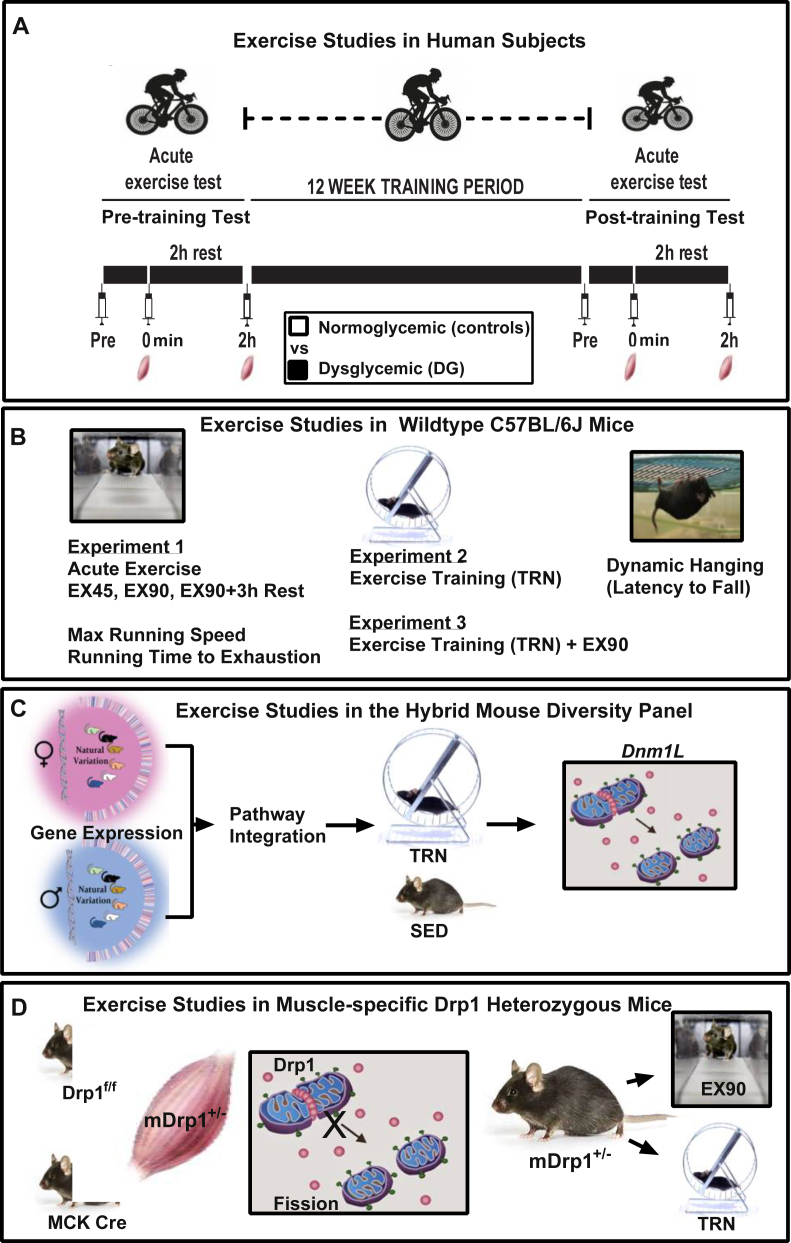
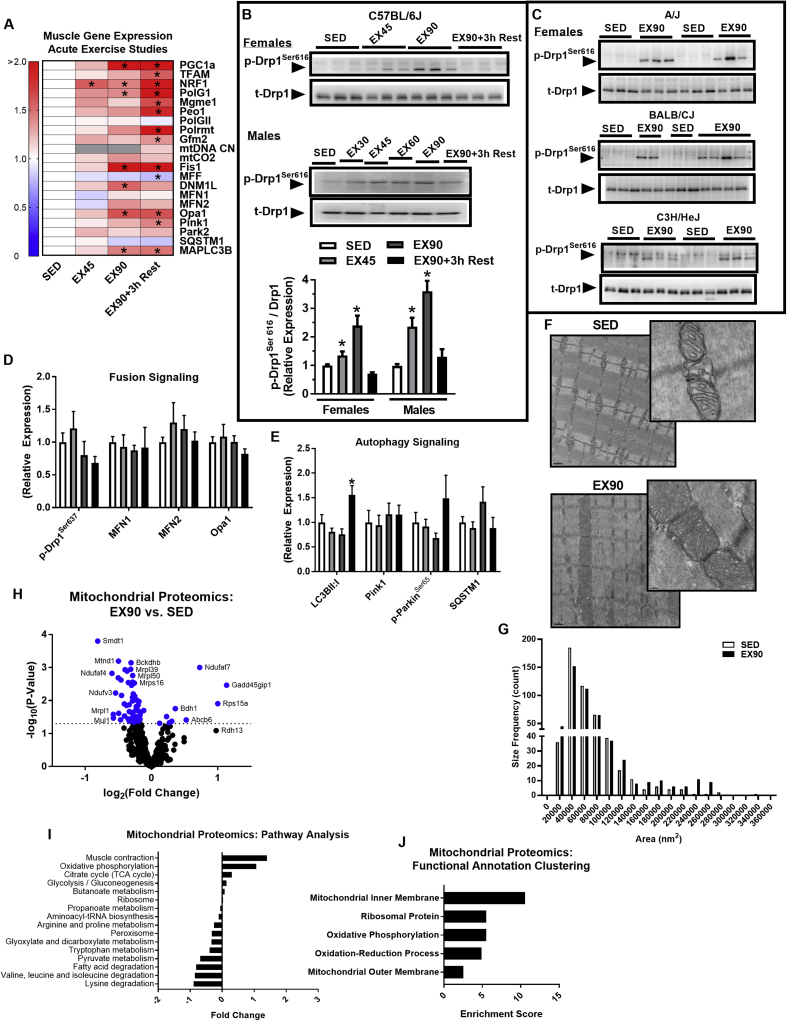
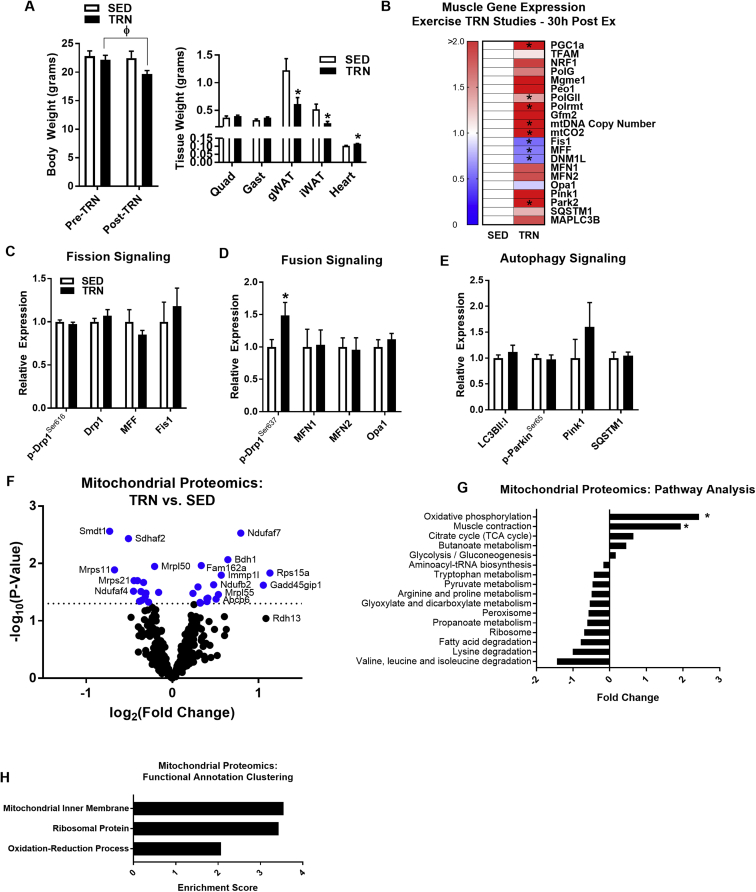
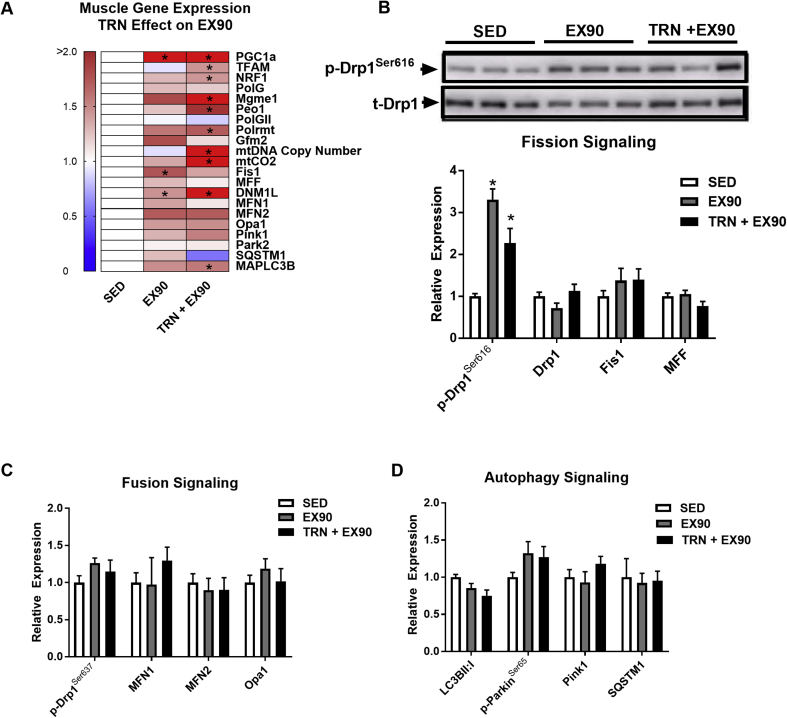
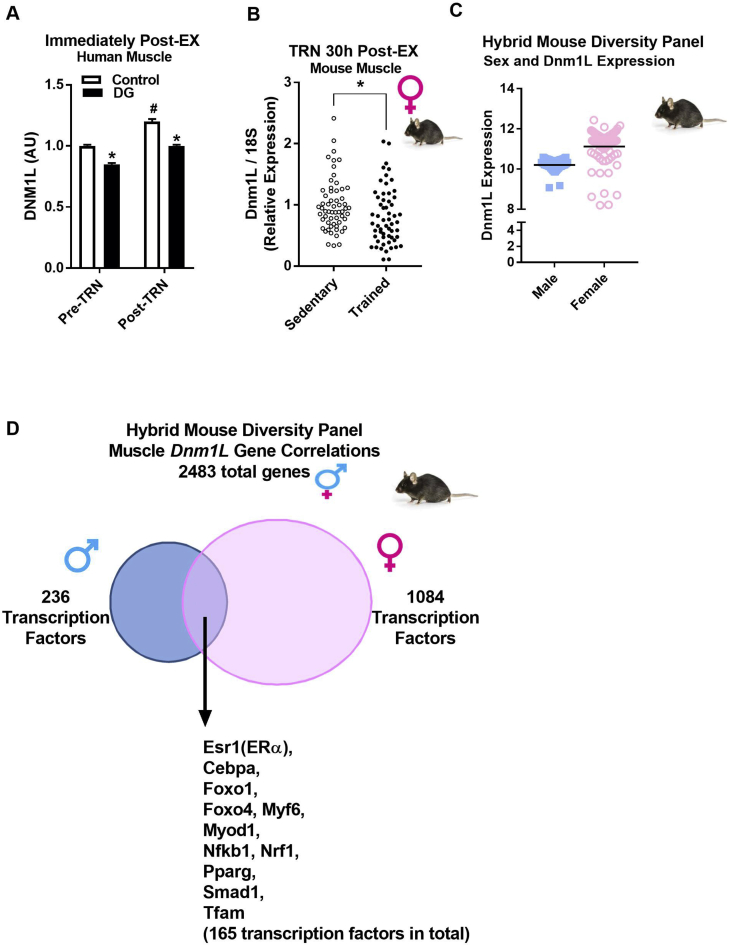
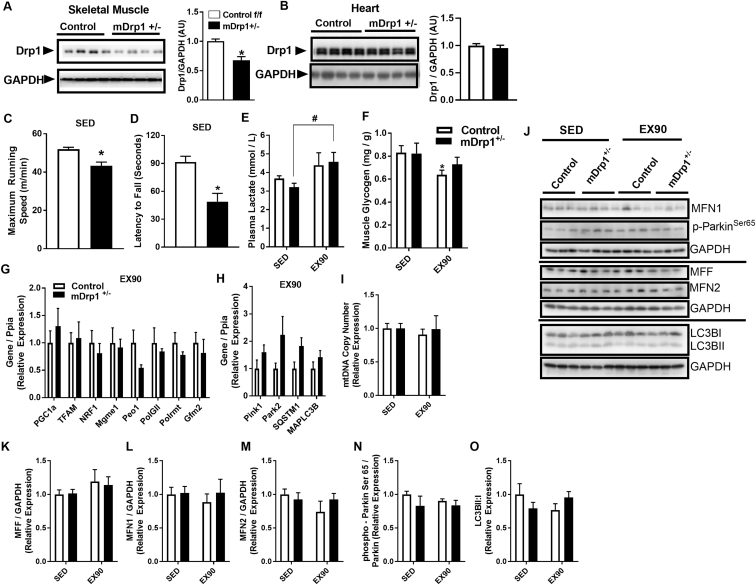
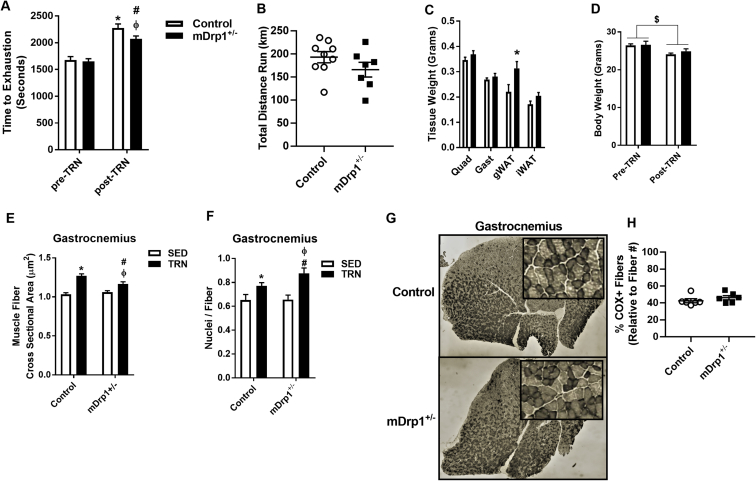
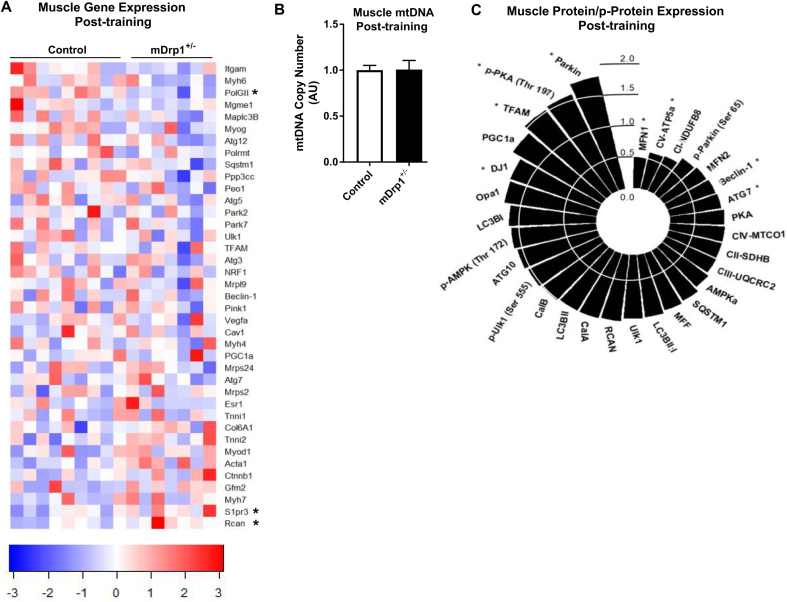
Objective Mitochondria are organelles primarily responsible for energy production, and recent evidence indicates that alterations in size, shape, location, and quantity occur in response to fluctuations in energy supply and demand. We tested the impact of acute and chronic exercise on mitochondrial dynamics signaling and determined the impact of the mitochondrial fission regulator Dynamin related protein (Drp)1 on exercise performance and muscle adaptations to training. Methods Wildtype and muscle-specific Drp1 heterozygote (mDrp1 +/− ) mice, as well as dysglycemic (DG) and healthy normoglycemic men (control) performed acute and chronic exercise. The Hybrid Mouse Diversity Panel, including 100 murine strains of recombinant inbred mice , was used to identify muscle Dnm1L (encodes Drp1)-gene relationships. Results Endurance exercise impacted all aspects of the mitochondrial life cycle , i.e. fission-fusion, biogenesis, and mitophagy . Dnm1L gene expression and Drp1 Ser616 phosphorylation were markedly increased by acute exercise and declined to baseline during post-exercise recovery. Dnm1L expression was strongly associated with transcripts known to regulate mitochondrial metabolism and adaptations to exercise. Exercise increased the expression of DNM1L in skeletal muscle of healthy control and DG subjects, despite a 15% ↓( P = 0.01) in muscle DNM1L expression in DG at baseline. To interrogate the role of Dnm1L further, we exercise trained male mDrp1 +/− mice and found that Drp1 deficiency reduced muscle endurance and running performance, and altered muscle adaptations in response to exercise training. Conclusion Our findings highlight the importance of mitochondrial dynamics, specifically Drp1 signaling, in the regulation of exercise performance and adaptations to endurance exercise training.
Overview
The claims and statistics of this paper haven’t been checked yet.
Run the check — free, no account needed. It reads the open-access text and checks the sources it cites.
Integrity signals
Registry
Cites
Statistics
Figures
Verification
Claims the paper makes
The claims and statistics of this paper haven’t been checked yet.
Run the check — free, no account needed. It reads the open-access text and checks the sources it cites.
Claims other papers make about this one
Each is checked against this paper’s own text: does it say what the citing paper says it does?
In the citing paper
“There is strong evidence in skeletal muscle that supports a causal link between the dysregulation of mitochondrial fission and alterations in muscle maintenance [152, 196, 197, 210, 211].”
From The connection between the dynamic remodeling of the mitochondrial network and the regulation of muscle mass (2021) · cites this paper as [211]
In the citing paper
“Another study using muscle-specific DRP1 heterozygote mice showed reduced muscle endurance and running performance, and altered muscle adaptations in response to exercise training [211].”
From The connection between the dynamic remodeling of the mitochondrial network and the regulation of muscle mass (2021) · cites this paper as [211]
Self-check
Percentages, sums and reported differences re-computed from the paper’s own numbers.
The self-check needs the paper’s full text.
Citations
Cites
Sequence and organization of the human mitochondrial genome
Anderson, S., Bankier, A. T., Barrell, B. G., de Bruijn, M. H. L., Coulson, A. R., Drouin, J., Eperon, I. C., Nierlich, D. P., Roe, B. A., Sanger, F., et al. (1981) · Nature · doi:10.1038/290457a0 · Cited by 9,740
Rappsilber, J., Mann, M., & Ishihama, Y. (2007) · Nature Protocols · doi:10.1038/nprot.2007.261 · Cited by 4,641
Parkin is recruited selectively to impaired mitochondria and promotes their autophagy
Narendra, D., Tanaka, A., Suen, D.-F., & Youle, R. J. (2008) · The Journal of Cell Biology · doi:10.1083/jcb.200809125 · Cited by 4,026
Fission and selective fusion govern mitochondrial segregation and elimination by autophagy
Twig, G., Elorza, A., Molina, A. J. A., Mohamed, H., Wikstrom, J. D., Walzer, G., Stiles, L., Haigh, S. E., Katz, S., Las, G., et al. (2008) · The EMBO Journal · doi:10.1038/sj.emboj.7601963 · Cited by 3,082
Self-citationA colorimetric method for the determination of sugars
DUBOIS, M., GILLES, K., HAMILTON, J. K., REBERS, P. A., & SMITH, F. (1951) · Nature · doi:10.1038/168167a0 · Cited by 2,504
Mitochondrial fusion and fission in cell life and death
Westermann, B. (2010) · Nature Reviews Molecular Cell Biology · doi:10.1038/nrm3013 · Cited by 2,002
Dynamin-related Protein Drp1 Is Required for Mitochondrial Division in Mammalian Cells
Smirnova, E., Griparić, L., Shurland, D., & van der Bliek, A. M. (2001) · Molecular Biology of the Cell · doi:10.1091/mbc.12.8.2245 · Cited by 1,938
The pathways of mitophagy for quality control and clearance of mitochondria
Ashrafi, G., & Schwarz, T. L. (2013) · Cell Death & Differentiation · doi:10.1038/cdd.2012.81 · Cited by 1,900
The mitochondrial genome: structure, transcription, translation and replication
Taanman, J.-W. (1999) · Biochimica et Biophysica Acta (BBA) - Bioenergetics · doi:10.1016/s0005-2728(98)00161-3 · Cited by 1,635
Sequence and gene organization of mouse mitochondrial DNA.
Bibb, M., Etten, R. V., Wright, C. T., Walberg, M. W., & Clayton, D. A. (1981) · Cell · doi:10.1016/0092-8674(81)90300-7 · Cited by 1,619
Cited by
Sorted by citations
Items 101–130 of 130
Resilience of the mitochondrial reticulum in aging
Leija, R. G., Vázquez‐Medina, J. P., & Brooks, G. A. (2025) · American Journal of Physiology-Endocrinology and Metabolism · doi:10.1152/ajpendo.00110.2025 · Cited by 4
Mao, X., Meng, Q., Han, J., Shen, L., Sui, X., Gu, Y., & Wu, G. (2021) · Translational Cancer Research · doi:10.21037/tcr-21-751 · Cited by 4
Gandhi, S., & Perry, C. G. R. (2020) · The Journal of Physiology · doi:10.1113/jp280316 · Cited by 3
Nakano, D., & Machida, S. (2022) · Physiological Reports · doi:10.14814/phy2.15281 · Cited by 3
Systems modeling of mitochondrial dynamics in different exercise regimesPreprint
Khalilimeybodi, A., Qiao, L., Leung, A., McCulloch, A. D., Schenk, S., & Rangamani, P. (2025) · bioRxiv (Cold Spring Harbor Laboratory) · doi:10.1101/2025.10.27.684912 · Cited by 3
Takakura, H., Banba, H., Yamada, T., Koma, R., Shibaguchi, T., Nonaka, Y., & Masuda, K. (2025) · The Journal of Physical Fitness and Sports Medicine · doi:10.7600/jpfsm.14.9 · Cited by 2
Ma, M., Li, J., Pang, W., Zhang, Z., Zhang, Y., & Hai, B. (2026) · Cells · doi:10.3390/cells15121091 · Cited by 3
The role of Drp1 in adult skeletal muscle physiology
Dablainville, V., & Sanchez, A. M. J. (2020) · The Journal of Physiology · doi:10.1113/jp280423 · Cited by 1
Moore, T. M., Lin, A. J., Strumwasser, A. R., Cory, K., Whitney, K. A., Ho, T., Ho, T., Lee, J. L., Rucker, D. H., Nguyen, C. Q., et al. (2020) · doi:10.21203/rs.2.23961/v1 · Cited by 2
Self-citationVidyadharan, V. A., Betancourt, A., Smith, C., Blesson, C. S., & Yallampalli, C. (2024) · Research Square · doi:10.21203/rs.3.rs-4103233/v1 · Cited by 1
Exercise preserves fitness capacity during aging through AMPK and mitochondrial dynamicsPreprint
Campos, J. C., Bozi, L. H. M., Traa, A., van der Bliek, A. M., Raamsdonk, J. M. V., Blackwell, T. K., & Ferreira, J. C. B. (2022) · bioRxiv (Cold Spring Harbor Laboratory) · doi:10.1101/2022.06.20.496837
Exercise to Promote Healthy Mitochondria and Improve Lifestyle of Aging Society
Ling, N. X. Y. (2023) · The Asian Journal of Kinesiology · doi:10.15758/ajk.2023.25.2.1
Pavarotti, M. A., & Rodríguez, M. (2023) · Revista de la Sociedad Argentina de Diabetes · doi:10.47196/diab.v57i3.725
A constricted mitochondrial morphology optimizes respirationPreprint
Singh, M. K., Cavellini, L., Kunz, C., Lelek, M., Bomme, P., Belgareh‐Touzé, N., Mallet, A., Dietrich, L., Zimmer, C., & Cohen, M. M. (2024) · bioRxiv (Cold Spring Harbor Laboratory) · doi:10.1101/2024.03.21.582105
Aminizadeh, S., Najafipour, H., Masoumi‐Ardakani, Y., Shahouzehi, B., & Pourranjbar, M. (2024) · Journal of Clinical and Translational Research · doi:10.36922/jctr.24.00044
Gene Manipulation of Muscle Phenotype
Chou, C., & Booth, F. W. (2025) · Advances in experimental medicine and biology · doi:10.1007/978-3-031-88361-3_18
Wang, Z., Liu, W., Sim, H., Lee, J., Kook, S., & Kim, S. H. (2025) · Journal of Cachexia Sarcopenia and Muscle · doi:10.1002/jcsm.70047
Self-citationIntermittent AP-1 activation in muscles contributes to exercise-induced health benefitsPreprint
Choubey, A., Kumar, S. U., Yang, T., Jager, J., Hong, S., Damle, M., Yin, H., Zhao, R., Song, C., Oturmaz, E. S., et al. (2026) · bioRxiv (Cold Spring Harbor Laboratory) · doi:10.64898/2026.01.05.696542
The Role of Exercise in Fat Oxidation and Its Impact on Adolescent Metabolism
Engin, A., & Engin, A. B. (2026) · Advances in experimental medicine and biology · doi:10.1007/978-981-95-7000-3_17
Zhang, L., Li, H., Wei, Q., Xiao, Y., & Gao, Q. (2026) · Frontiers in Physiology · doi:10.3389/fphys.2026.1810393
МЕТАБОЛИТЫ ОБМЕНА АМИНОКИСЛОТ И ГОРМОНОВ КАК МАРКЕРЫ ЭФФЕКТИВНОСТИ ТРЕНИРОВОК У ДЕТЕЙ-СПОРТСМЕНОВ
Мурач, Е., & Анашкина, А. (2026) · Cifra LLC Journals · doi:10.60797/irj.2026.167.74
Systems modelling of mitochondrial dynamics in different exercise regimes
Khalilimeybodi, A., Qiao, L., Leung, A., McCulloch, A. D., Schenk, S., & Rangamani, P. (2026) · The Journal of Physiology · doi:10.1113/jp290424 · Cited by 4
Zhao, H., & Chen, M. (2026) · Biology · doi:10.3390/biology15151240
Csikós, V., Hauger, B. M., Strope, T. A., Lysaker, C. R., Smith, K., Allen, J., McCoin, C. S., Thyfault, J. P., & Wilkins, H. (2026) · Cellular Signalling · doi:10.1016/j.cellsig.2026.112774
Ritenis, E. J., Stathis, C. G., Cooke, M. B., Keenan, S. J., Philp, A., & CAMERA, D. M. (2026) · Experimental Physiology · doi:10.1113/ep093336
Ran, P., & Yang, L. (2026) · IUBMB Life · doi:10.1002/iub.70127
Yuan, Y., An, Z., Hu, M., Li, X., Wang, J., Liu, X., Zhang, W., Xu, Z., & Zhao, X. (2026) · Antioxidants · doi:10.3390/antiox15091102
Ma, M., Tian, J., Wang, Z., Zhang, Z., Zhang, Y., & Hai, B. (2026) · Free Radical Biology and Medicine · doi:10.1016/j.freeradbiomed.2026.09.003
Falcone, A., Demir, S., Hendlinger, M., Schrauwen, P., Lipaeva, P., Piribauer, M., Heilmann, G., Trenkamp, S., Roden, M., & Mastrototaro, L. (2026) · Journal of Cellular Physiology · doi:10.1002/jcp.70240
Li, X., Wang, X., Fang, C., Yan, Z., Liu, L., Han, J., Zhao, L., & Wu, X. (2026) · Frontiers in Endocrinology · doi:10.3389/fendo.2026.1969901
Metadata
- Authors
- Moore, T. M., Zhou, Z., Cohn, W., Norheim, F., Lin, A. J., Kalajian, N., Strumwasser, A. R., Cory, K., Whitney, K., Ho, T., Ho, T., Lee, J. L., Rucker, D. H., Shirihai, O., van der Bliek, A. M., Whitelegge, J. P., Seldin, M. M., Lusis, A. J., Lee, S., Drevon, C. A., Mahata, S. K., Turcotte, L. P., & Hevener, A. L.
- Affiliations
- University of Southern California (US)
- University of California, Los Angeles (US)
- University of Oslo (NO)
- University of California San Diego (US)
- Corresponding author
- Hevener, Andrea L.
- ORCID
- Venue
- Molecular Metabolism
- Publisher
- Elsevier BV
- Published
- 2019-03
- Volume
- 21
- Pages
- 51-67
- ISSN
- 2212-8778 (ISSN-L)
- PMC
- PMC6407367
- OpenAlex
- W2902937014
- Cited by
- 131
- References
- 79
- Citations by year
- 2026: 16 · 2025: 20 · 2024: 14 · 2023: 17 · 2022: 17 · 2021: 16 · 2020: 22 · 2019: 9
- FWCI
- 4.18
- Type
- journal article
- Language
- en
- Open access
- gold
- doi.org
- Licence
- Locations
- Molecular Metabolism (publishedVersion, cc-by-nc-nd)
- Europe PMC (PubMed Central) (publishedVersion, cc-by-nc-nd)
- PubMed Central (publishedVersion, cc-by-nc-nd)
- PubMed (publishedVersion)
- DOAJ (DOAJ: Directory of Open Access Journals) (submittedVersion)
- eScholarship (California Digital Library) (submittedVersion, cc-by)
- NORA - Norwegian Open Research Archives (submittedVersion, cc-by-nc-nd)
- Funders
- Institute of Basic Medical Sciences
- National Institute on Aging (5P30AG028748)
- National Aeronautics and Space Administration
- Norges Forskningsråd
- American College of Sports Medicine
- National Institutes of Health (P30DK063491, U24DK097748, F31DK108657, DK109724, 5T32HD007228)
- U.S. Department of Veterans Affairs (NCT01803568, I01BX000323, HL28481, HL30568)
- Seventh Framework Programme (289511)
- Clinical and Translational Science Institute, University of California, Los Angeles (ULTR000124)
- Topics
- Life Sciences › Biochemistry, Genetics and Molecular Biology › Molecular Biology › Mitochondrial Function and Pathology
- Health Sciences › Medicine › Physiology (medical) › Cardiovascular and exercise physiology
- Health Sciences › Medicine › Physiology (medical) › Adipose Tissue and Metabolism
- Keywords
- mitochondrial dynamics, Drp1, mitochondrial fission, mitochondrial fusion, mitophagy, mitochondrial biogenesis, exercise training, endurance exercise, skeletal muscle, exercise performance, dysglycemia, Hybrid Mouse Diversity Panel, mitochondrial metabolism
- MeSH terms
- Physical Functional Performance, Adaptation, Physiological, Adult, Aged, Animals, Blood Glucose, Female, Humans, Male, Mice, Inbred BALB C, Mice, Inbred C3H, Mice, Inbred C57BL, Microtubule-Associated Proteins, Middle Aged, Mitochondria, Phosphorylation, Physical Conditioning, Animal, Physical Endurance, Gene Deletion, Muscle, Skeletal, GTP Phosphohydrolases, Mitochondrial Proteins, Dynamins, Mice, Mitochondrial Dynamics
About these checks
Registry, retraction, Cites and statistics results are computed, not judged, with one exception: a printed reference that no index lists is read once by a model before it counts as a citation error. Claims are extracted by a model and kept only when their quote appears verbatim in the text; each cited source is then checked, with a model’s help, for whether it says what the claim relies on. Those verdicts can be wrong — read the claim’s quote and the cited source before relying on one.
Statistics and arithmetic are recomputed, not judged.
Confidence bands are shown only for fields calibrated on our annotated test set. None is calibrated yet, so no band is shown.
What counts as a claim ›How we measure confidence ›How we check this ›
Are you an author, or do you see a problem with this page? Request a review
