

The DOI matches its Crossref record; 111 of the 112 references it cites were found in a registry or an index.
Earlier versus later cognitive event-related potentials (ERPs) in attention-deficit/hyperactivity disorder (ADHD): A meta-analysis
Open accessAbstract
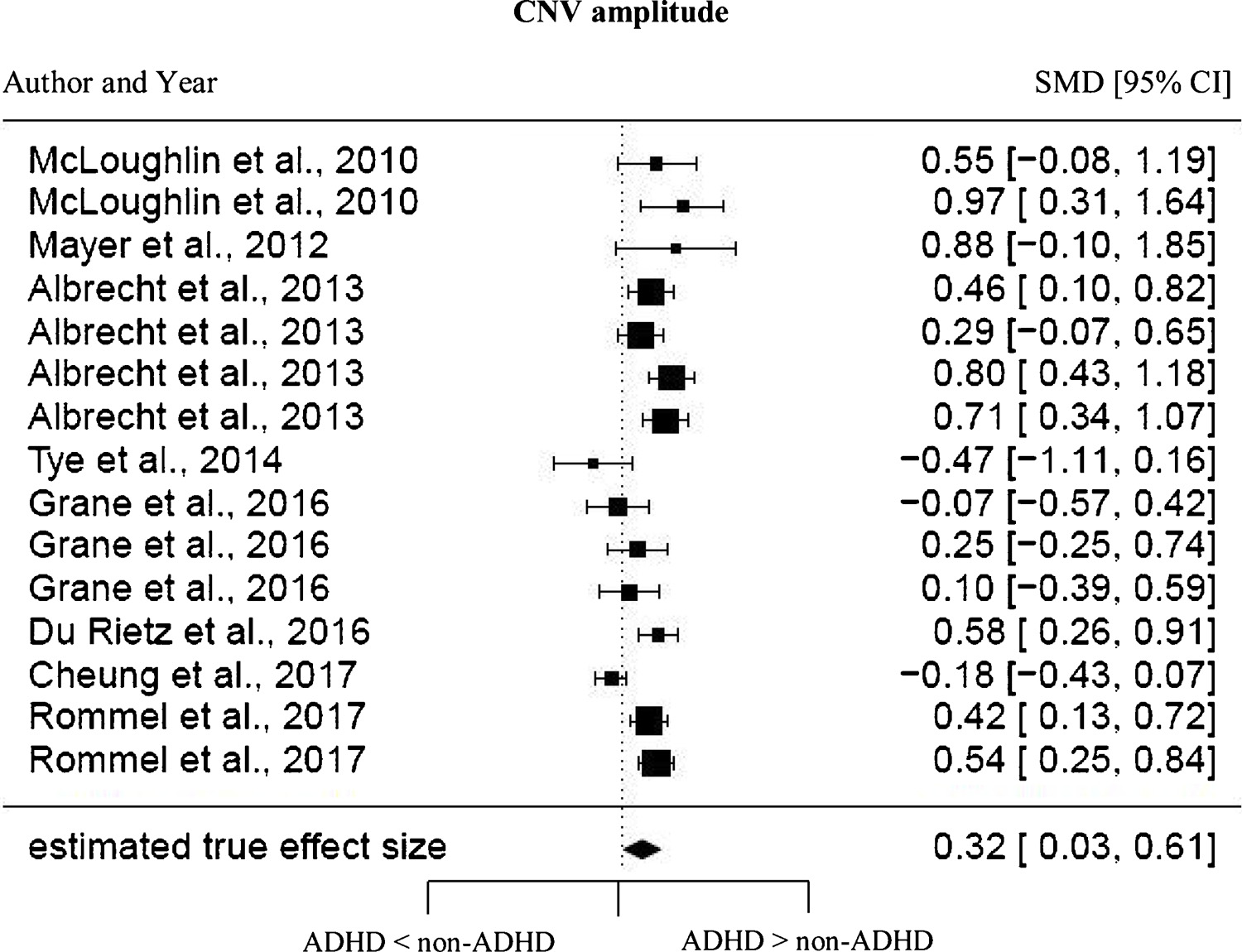
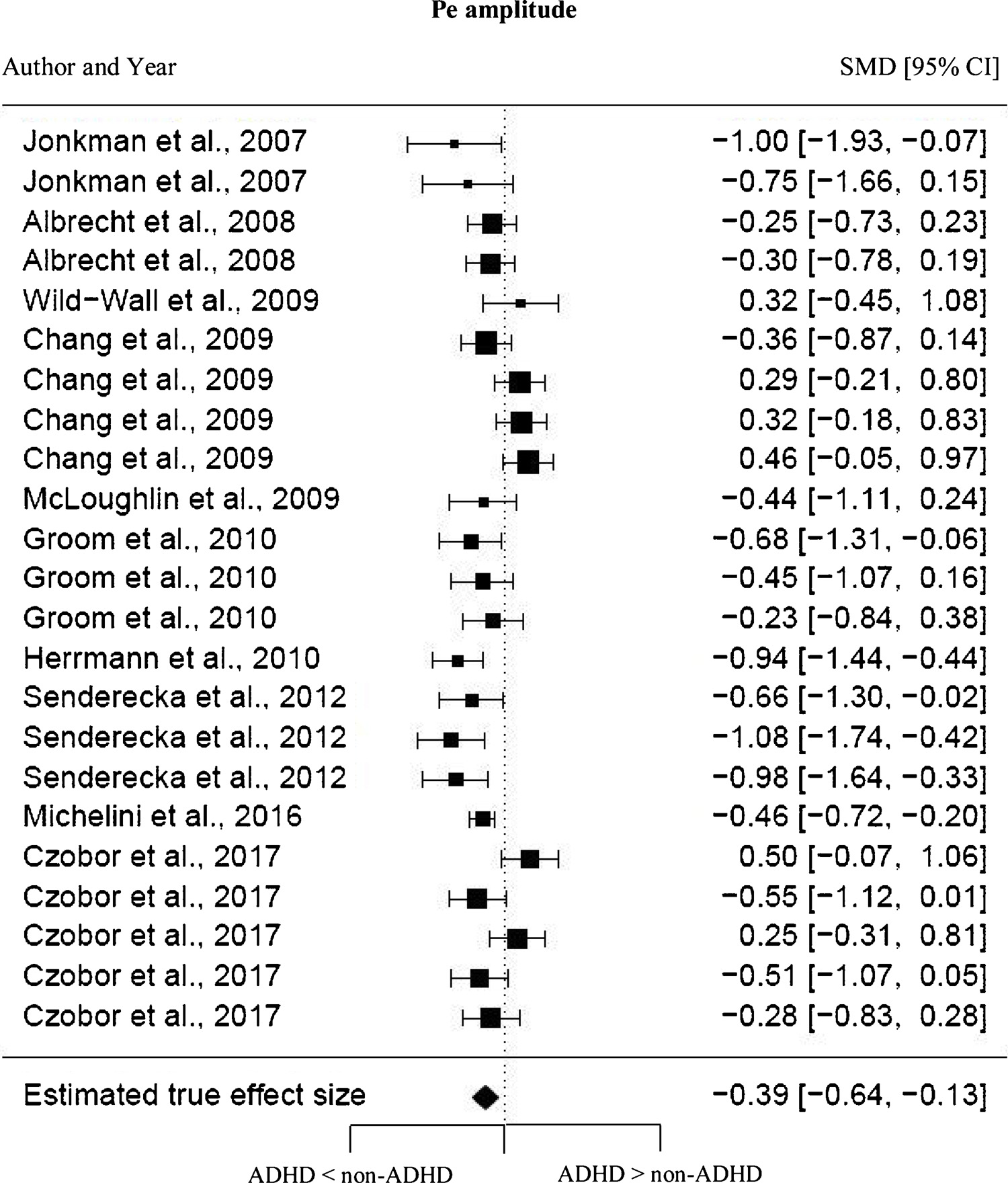
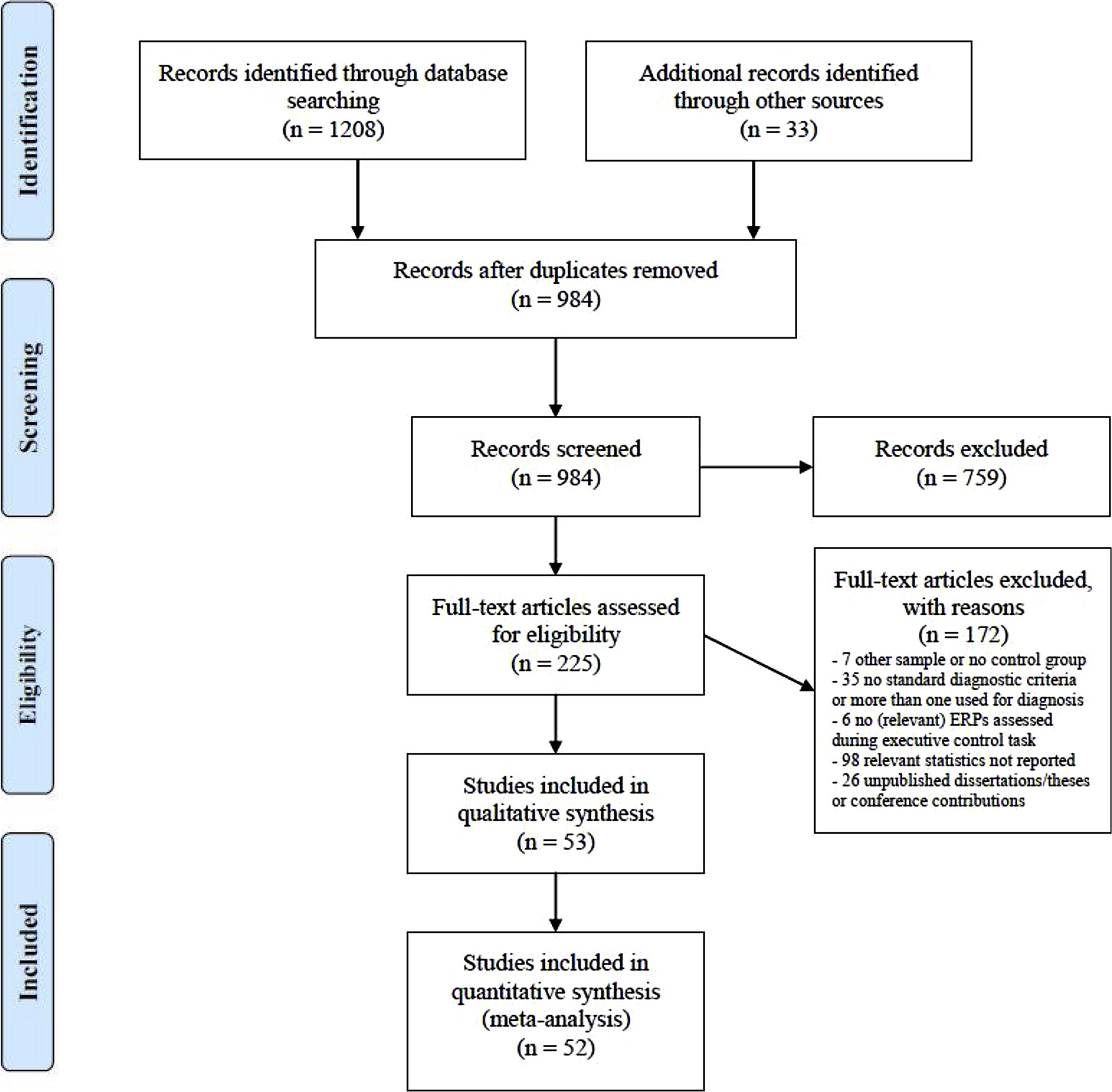
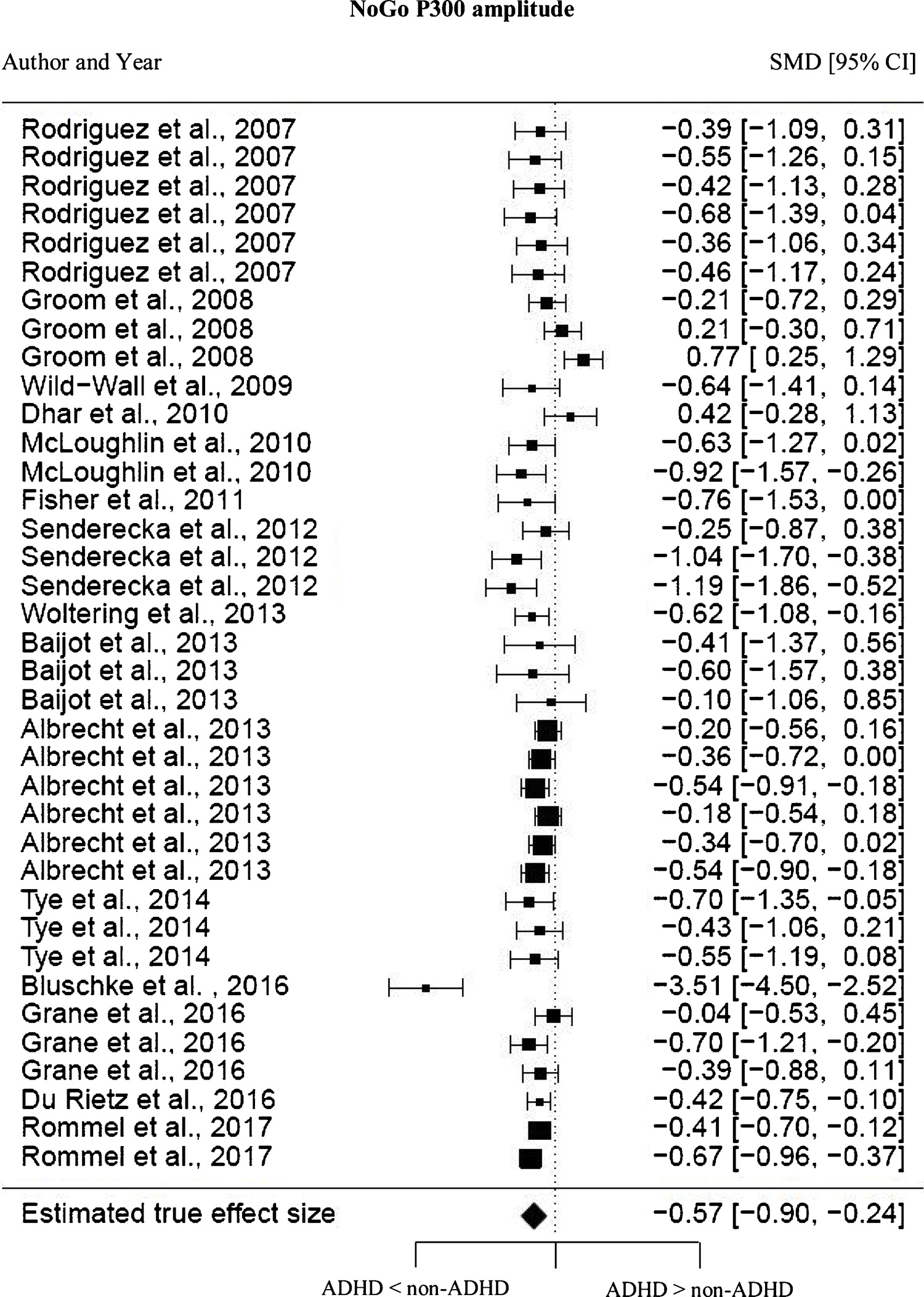
The current meta-analysis summarizes relevant literature on earlier (P100, N100, P200, N200, ERN/Ne) versus later (P300, Pe, CNV) cognitive Event-Related Potential (ERP) differences between children, adolescents, and adults with Attention-Deficit/Hyperactivity Disorder (ADHD) and without ADHD (non-ADHD). Furthermore, the heterogeneity in previous research is addressed by analyzing potentially relevant demographic and methodological moderators (age group, IQ, medication, comorbidity, task, cognitive function, modality, inter-stimulus-interval, number of electrodes). Via database search 52 relevant articles were identified including n = 1576 ADHD and n = 1794 non-ADHD. Using multilevel-models, pooled effect sizes were calculated. For earlier components, individuals with ADHD showed shorter Go-P100-latencies than non-ADHD. For later ERPs, individuals with ADHD showed smaller Cue-P300-amplitudes, longer Go-P300-latencies, smaller NoGo-P300-amplitudes, longer NoGo-P300-latencies, smaller CNV-amplitudes, and smaller Pe-amplitudes. The substantial heterogeneity identified for most of the ERP components could be explained by the demographic and methodological moderators of interest. This meta-analysis identified relevant moderate group differences (-0.32<d<-0.57), mainly regarding later cognitive ERPs. Nevertheless, results are characterized by substantial heterogeneity and the moderate effect sizes (d<0.6) limit the use for clinical application.
Overview
The claims and statistics of this paper haven’t been checked yet.
Run the check — free, no account needed. It reads the open-access text and checks the sources it cites.
Integrity signals
Registry
Cites
Statistics
Figures
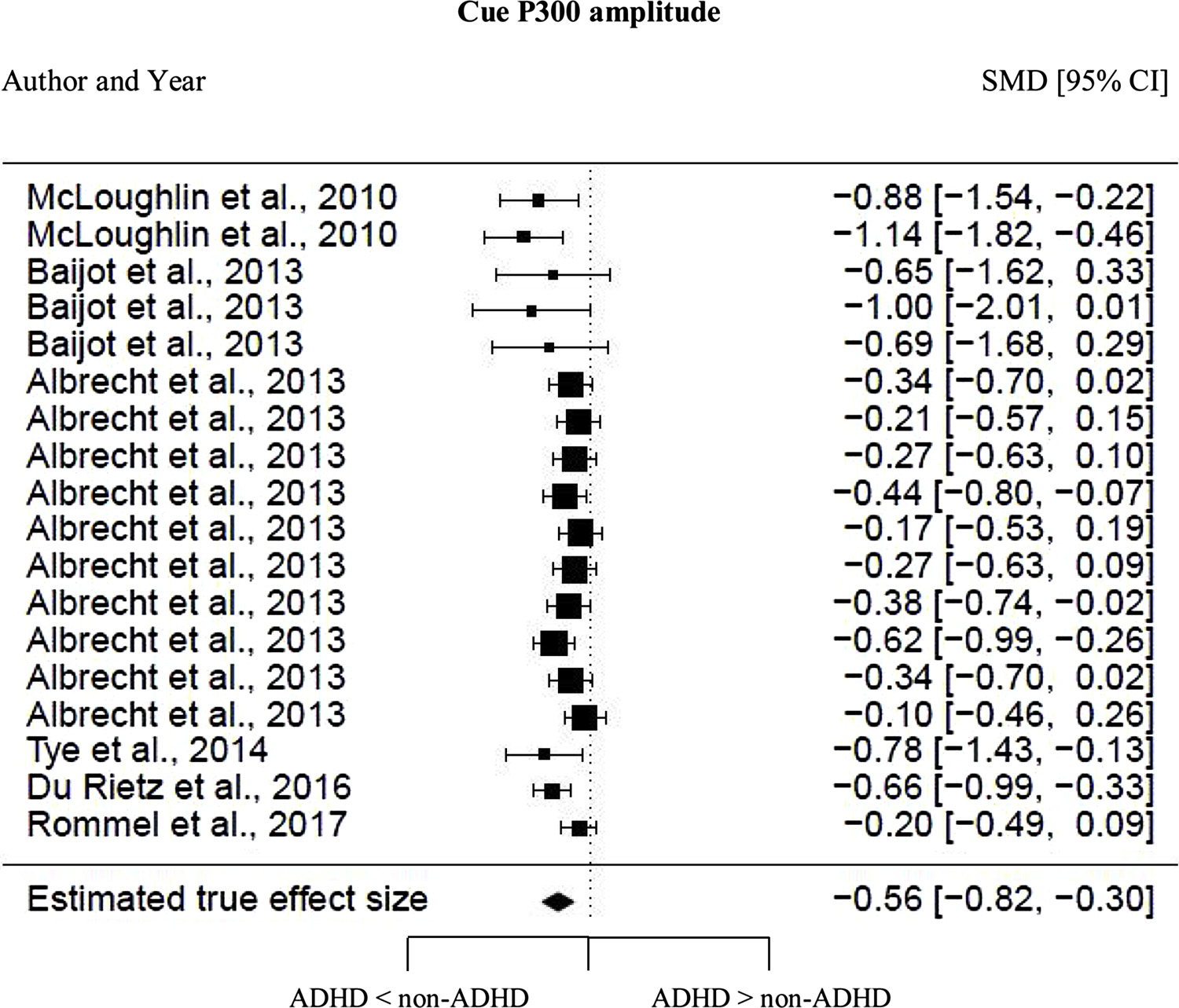
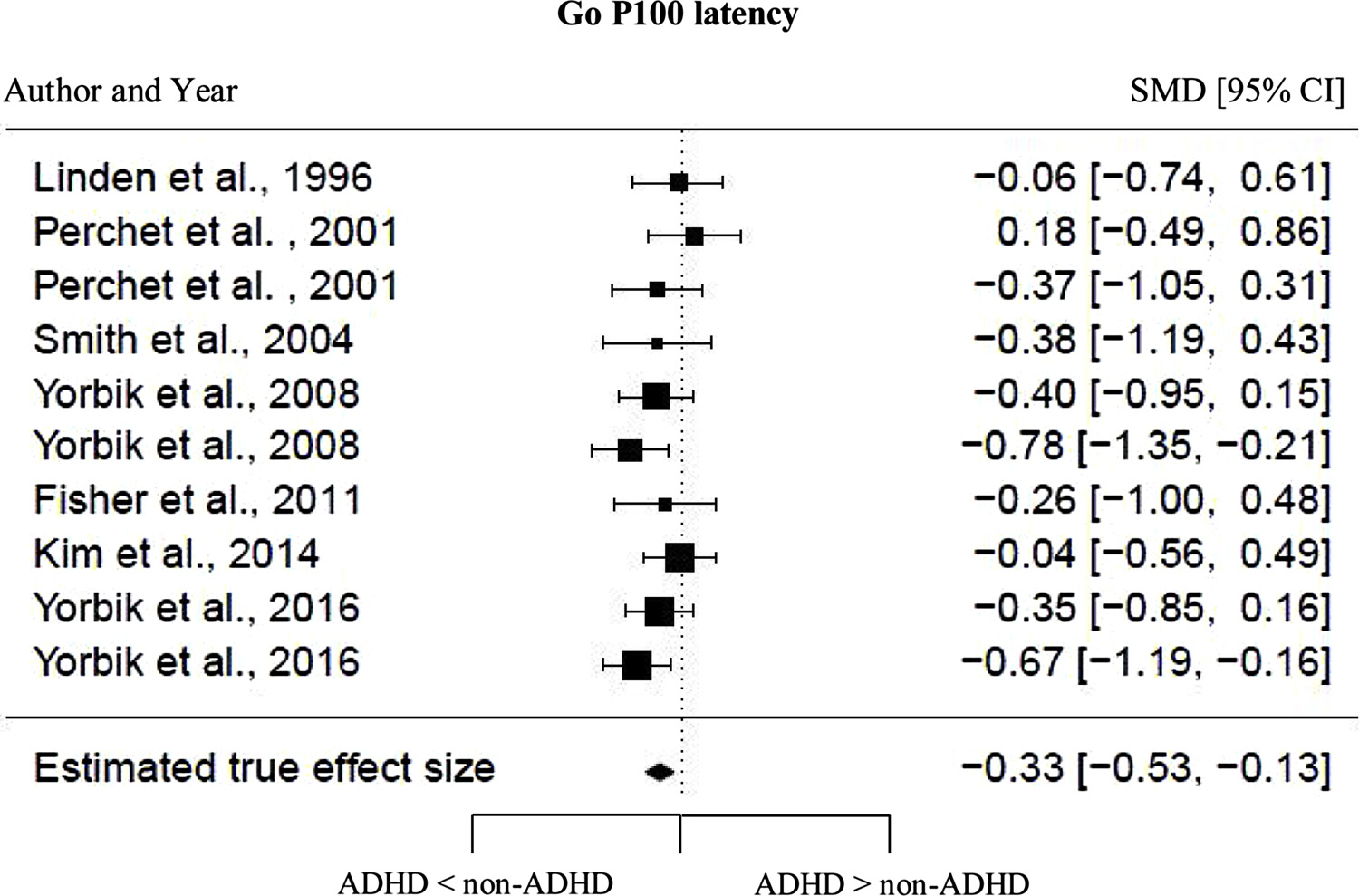
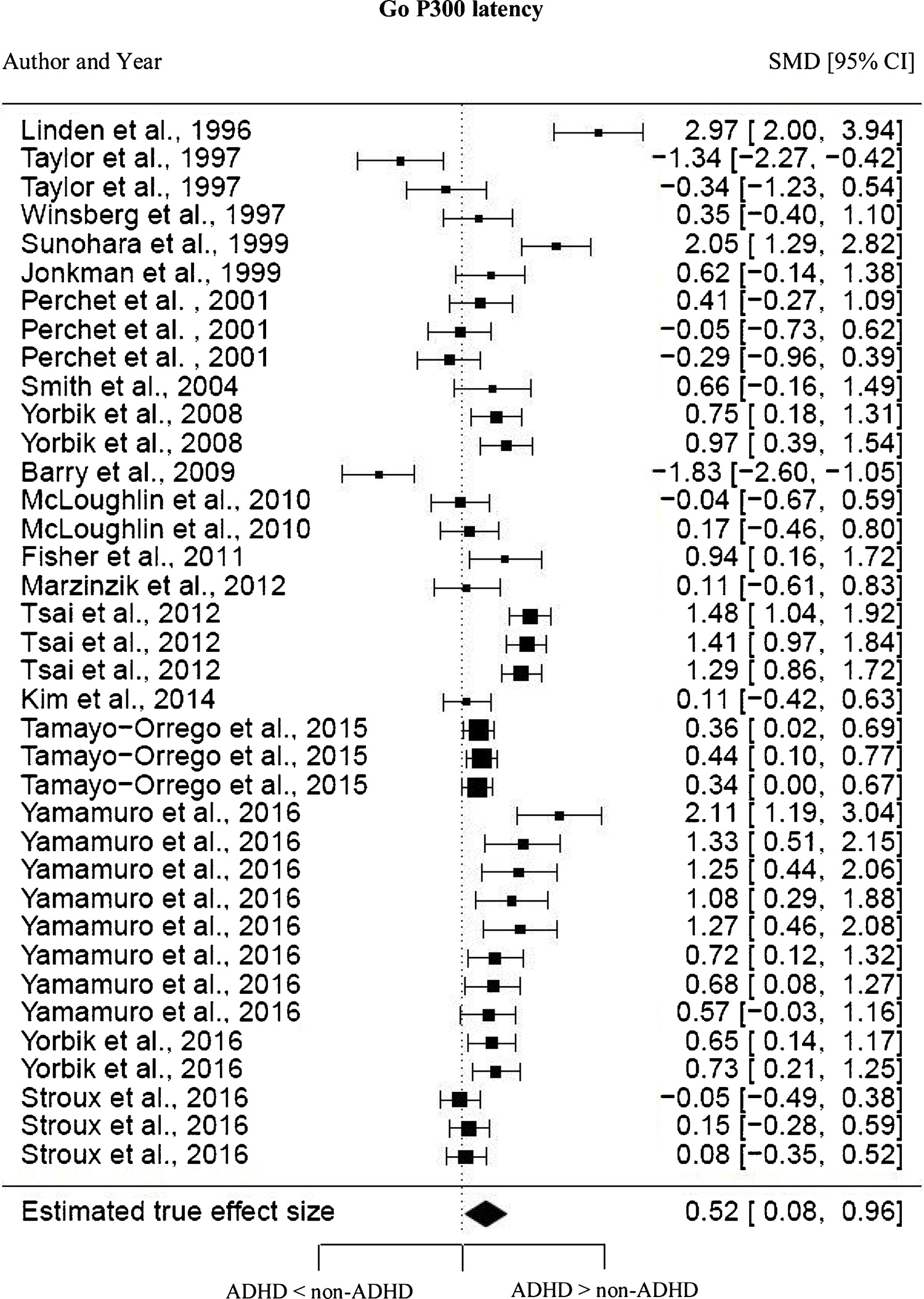
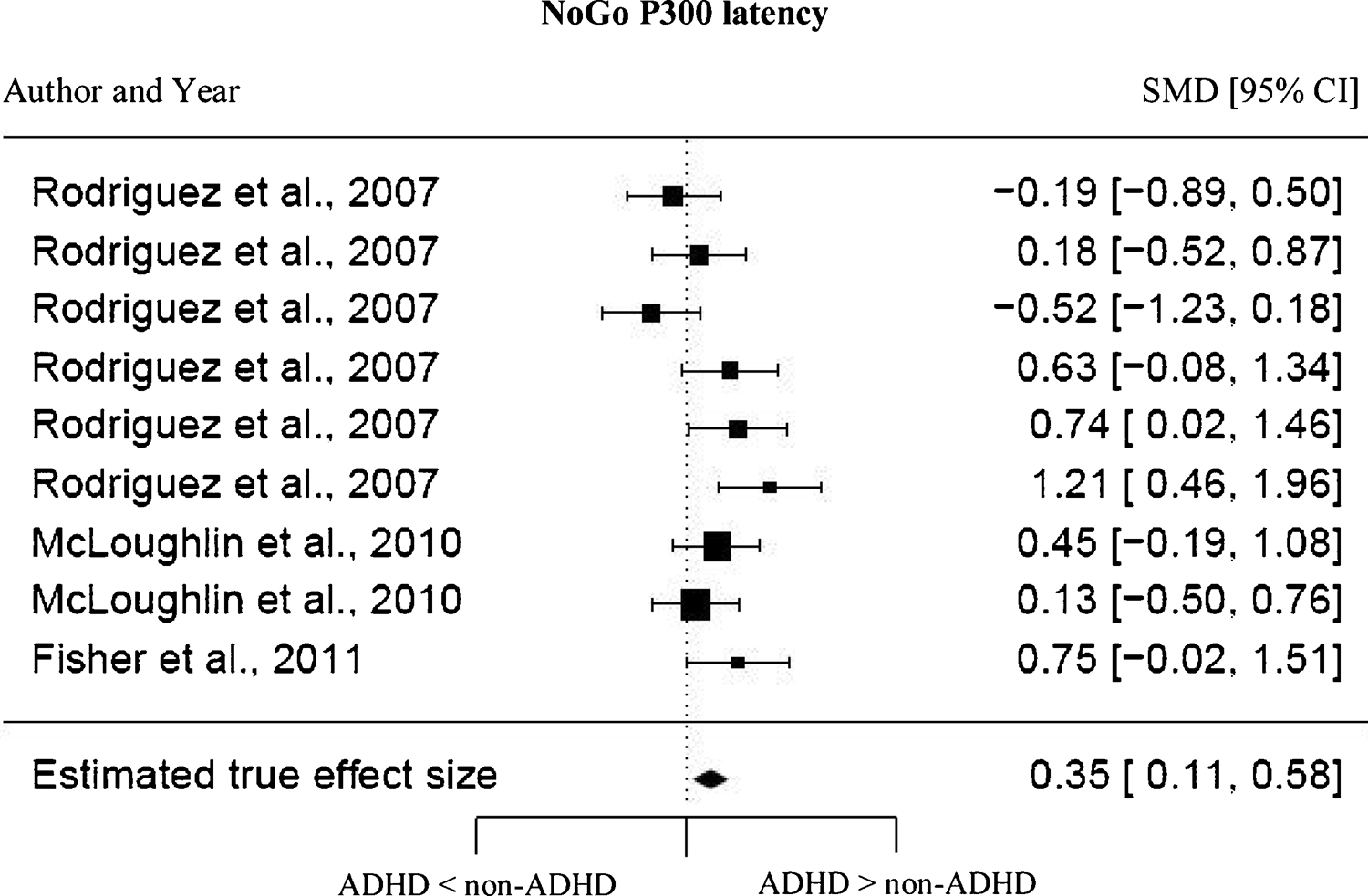
Verification
Claims the paper makes
The claims and statistics of this paper haven’t been checked yet.
Run the check — free, no account needed. It reads the open-access text and checks the sources it cites.
Claims other papers make about this one
Each is checked against this paper’s own text: does it say what the citing paper says it does?
The source backs part of the claim, not all of it — or backs it for a different population, condition or comparison.
In the citing paper
“ADHD and OCD are common psychiatric disorders that may be differentiated by neurocognitive measures and neural indices of error monitoring (Figuracion et al. 2024; Hanna et al. 2026; Kaiser et al. 2020; Kofler et al. 2013; Lamothe et al. 2025; Liu et al. 2020; Lutz et al. 2021; Tamm et al. 2012).”
From Reaction Time Variability and Electrophysiological Indices of Performance Monitoring in Youths With Attention-Deficit/Hyperactivity Disorder and Obsessive-Compulsive Disorder (2026) · cites this paper as Kaiser et al. 2020
Experimental — accuracy not yet measuredThe cited source says what the claim attributes to it.
In the citing paper
“However, one meta‐analysis noted a blunted Pe was associated more consistently with ADHD than a blunted ERN (Kaiser et al. 2020).”
From Reaction Time Variability and Electrophysiological Indices of Performance Monitoring in Youths With Attention-Deficit/Hyperactivity Disorder and Obsessive-Compulsive Disorder (2026) · cites this paper as Kaiser et al. 2020
The cited source says what the claim attributes to it.
In the citing paper
“Our Pe results are consistent with a meta‐analysis that concluded a reduced Pe is associated more reliably with ADHD than a reduced ERN (Kaiser et al. 2020) and with the recent finding of a blunted Pe in a large study of adolescents with ADHD (Figuracion et al. 2024).”
From Reaction Time Variability and Electrophysiological Indices of Performance Monitoring in Youths With Attention-Deficit/Hyperactivity Disorder and Obsessive-Compulsive Disorder (2026) · cites this paper as Kaiser et al. 2020
Self-check
Percentages, sums and reported differences re-computed from the paper’s own numbers.
The self-check needs the paper’s full text.
Citations
Cites
R: A Language and Environment for Statistical Computing
R Core Team (2000) · doi:10.32614/r.manuals · Cited by 355,893
Preferred reporting items for systematic reviews and meta-analyses: the PRISMA Statement.
(2009) · PubMed Central · Cited by 44,859
Preferred reporting items for systematic reviews and meta-analyses: The PRISMA statement
Moher, D., Liberati, A., Tetzlaff, J., Altman, D. G., & the PRISMA Group* (2009) · Annals of Internal Medicine · doi:10.7326/0003-4819-151-4-200908180-00135 · Cited by 37,554
Conducting Meta-Analyses in R with the metafor Package
Viechtbauer, W. (2010) · Journal of Statistical Software · doi:10.18637/jss.v036.i03 · Cited by 20,464
Wasserman, S. S., Hedges, L. V., & Olkin, I. (1988) · Journal of Educational Statistics · doi:10.2307/1164953 · Cited by 10,377
Updating P300: An integrative theory of P3a and P3b
Polich, J. (2007) · Clinical Neurophysiology · doi:10.1016/j.clinph.2007.04.019 · Cited by 7,919
A basic introduction to fixed-effect and random-effects models for meta-analysis
Borenstein, M., Hedges, L. V., Higgins, J. P. T., & Rothstein, H. R. (2010) · Research Synthesis Methods · doi:10.1002/jrsm.12 · Cited by 6,793
The worldwide prevalence of ADHD: a systematic review and metaregression analysis
Polanczyk, G., de Lima, M. S., Horta, B. L., Biederman, J., & Rohde, L. A. (2007) · American Journal of Psychiatry · doi:10.1176/ajp.2007.164.6.942 · Cited by 5,346
Statistical Methods for Meta-Analysis.
Freeman, P. R., Hedges, L. V., & Olkin, I. (1986) · Biometrics · doi:10.2307/2531069 · Cited by 4,840
Polanczyk, G. V., Salum, G. A., Sugaya, L. S., Caye, A., & Rohde, L. A. (2015) · Journal of Child Psychology and Psychiatry · doi:10.1111/jcpp.12381 · Cited by 3,990
Cited by
Sorted by citations
Attention-deficit/hyperactivity disorder
Faraone, S. V., Bellgrove, M. A., Brikell, I., Cortese, S., Hartman, C. A., Hollis, C., Newcorn, J. H., Philipsen, A., Polanczyk, G. V., Rubia, K., et al. (2024) · Nature Reviews Disease Primers · doi:10.1038/s41572-024-00495-0 · Cited by 355
McLoughlin, G., Gyurkovics, M., Palmer, J. A., & Makeig, S. (2021) · Biological Psychiatry · doi:10.1016/j.biopsych.2021.08.020 · Cited by 112
Michelini, G., Carlisi, C. O., Eaton, N. R., Elison, J. T., Haltigan, J. D., Kotov, R., Krueger, R. F., Latzman, R. D., Li, J. J., Levin-Aspenson, H. F., et al. (2024) · World Psychiatry · doi:10.1002/wps.21225 · Cited by 109
Neurotherapeutics for Attention Deficit/Hyperactivity Disorder (ADHD): A Review
Rubia, K., Westwood, S. J., Aggensteiner, P.-M., & Brandeis, D. (2021) · Cells · doi:10.3390/cells10082156 · Cited by 91
Self-citationToward Precision Medicine in ADHD
Buitelaar, J. K., Bölte, S., Brandeis, D., Caye, A., Christmann, N., Cortese, S., Coghill, D., Faraone, S. V., Franke, B., Gleitz, M., et al. (2022) · Frontiers in Behavioral Neuroscience · doi:10.3389/fnbeh.2022.900981 · Cited by 83
Self-citationJi, H., Wu, S., Won, J., Weng, S., Lee, S., Seo, S., & Park, J.-J. (2023) · JMIR Serious Games · doi:10.2196/40438 · Cited by 61
Michelini, G., Salmastyan, G., Vera, J. D., & Lenartowicz, A. (2022) · International Journal of Psychophysiology · doi:10.1016/j.ijpsycho.2022.01.014 · Cited by 58
Treatment biomarkers for ADHD: Taking stock and moving forward
Michelini, G., Norman, L. J., Shaw, P., & Loo, S. K. (2022) · Translational Psychiatry · doi:10.1038/s41398-022-02207-2 · Cited by 65
Bellato, A., Norman, L., Idrees, I., Ogawa, C. Y., Waitt, A., Zuccolo, P. F., Tye, C., Radua, J., Groom, M. J., & Shephard, E. (2021) · Neuroscience & Biobehavioral Reviews · doi:10.1016/j.neubiorev.2021.10.018 · Cited by 49
Peisch, V. D., Rutter, T. M., Wilkinson, C. L., & Arnett, A. B. (2021) · Clinical Neurophysiology · doi:10.1016/j.clinph.2021.01.015 · Cited by 43
Lee, D. Y., Shin, Y., Park, R. W., Cho, S.-M., Han, S., Yoon, C., Choo, J., Shim, J. M., Kim, K., Jeon, S. W., et al. (2023) · Scientific Reports · doi:10.1038/s41598-023-41654-9 · Cited by 48
Dubreuil-Vall, L., Gomez-Bernal, F., Villegas, A. C., Cirillo, P., Surman, C. B. H., Ruffini, G., Widge, A. S., & Camprodon, J. A. (2020) · Biological Psychiatry Cognitive Neuroscience and Neuroimaging · doi:10.1016/j.bpsc.2020.11.006 · Cited by 42
Perrottelli, A., Giordano, G. M., Brando, F., Giuliani, L., Pezzella, P., Mucci, A., & Galderisi, S. (2022) · Diagnostics · doi:10.3390/diagnostics12092193 · Cited by 44
Mendes, A. J., Pacheco‐Barrios, K., Lema, A., Gonçalves, Ó. F., Fregni, F., Leite, J., & Carvalho, S. (2021) · Neuroscience & Biobehavioral Reviews · doi:10.1016/j.neubiorev.2021.11.002 · Cited by 36
Andrikopoulos, D., Vassiliou, G., Fatouros, P., Tsirmpas, C., Pehlivanidis, A., & Papageorgiou, C. (2024) · BMC Psychiatry · doi:10.1186/s12888-024-05987-7 · Cited by 44
Bozhilova, N., Cooper, R., Kuntsi, J., Asherson, P., & Michelini, G. (2020) · Behavioural Brain Research · doi:10.1016/j.bbr.2020.112632 · Cited by 32
Breitling-Ziegler, C., Zaehle, T., Wellnhofer, C., Dannhauer, M., Tegelbeckers, J., Baumann, V., Flechtner, H., & Krauel, K. (2021) · Progress in brain research · doi:10.1016/bs.pbr.2021.01.014 · Cited by 33
Pei, G., Xiao, Q., Pan, Y., Li, T., & Jin, J. K. (2023) · Neuroscience & Biobehavioral Reviews · doi:10.1016/j.neubiorev.2023.105283 · Cited by 33
Arnett, A. B., Peisch, V. D., & Levin, A. R. (2022) · Journal of Neurophysiology · doi:10.1152/jn.00295.2022 · Cited by 31
Bel‐Bahar, T., Khan, A. A., Shaik, R., & Parvaz, M. A. (2022) · Frontiers in Human Neuroscience · doi:10.3389/fnhum.2022.995534 · Cited by 31
Münger, M., Candrian, G., Kasper, J., Rehim, H. A., Eich, D., Müller, A. F., & Jäncke, L. (2021) · Clinical EEG and Neuroscience · doi:10.1177/1550059421993340 · Cited by 35
Ludyga, S., Pühse, U., Gerber, M., & Kamijo, K. (2021) · Neuroscience & Biobehavioral Reviews · doi:10.1016/j.neubiorev.2021.04.039 · Cited by 28
Breitling-Ziegler, C., Tegelbeckers, J., Flechtner, H., & Krauel, K. (2020) · Frontiers in Human Neuroscience · doi:10.3389/fnhum.2020.00322 · Cited by 25
Bellato, A., Arora, I., Kochhar, P., Hollis, C. P., & Groom, M. J. (2021) · Journal of Attention Disorders · doi:10.1177/1087054720972793 · Cited by 26
Altered Functional Connectivity in Children with ADHD Revealed by Scalp EEG: An ERP Study
Chen, C., Yang, H., Du, Y., Zhai, G., Xiong, H., Yao, D., Xu, P., Gong, J., Yin, G., & Li, F. (2021) · Neural Plasticity · doi:10.1155/2021/6615384 · Cited by 23
Lutz, M. C., Kok, R., & Franken, I. H. A. (2021) · International Journal of Psychophysiology · doi:10.1016/j.ijpsycho.2021.06.002 · Cited by 25
Kannen, K., Aslan, B., Boetzel, C., Herrmann, C. S., Lux, S., Rosén, H., Selaskowski, B., Wiebe, A., Philipsen, A., & Braun, N. (2022) · Frontiers in Psychiatry · doi:10.3389/fpsyt.2022.928145 · Cited by 22
Forester, G., Schaefer, L. M., Johnson, J. S., Amponsah, T., Dvorak, R. D., & Wonderlich, S. A. (2023) · Appetite · doi:10.1016/j.appet.2023.107151 · Cited by 22
Häger, L. A., Johnels, J. Å., Kropotov, J. D., Weidle, B., Hollup, S., Zehentbauer, P. G., Gillberg, C., Billstedt, E., & Øgrim, G. (2021) · Psychiatry Research · doi:10.1016/j.psychres.2021.113879 · Cited by 22
Aydın, Ü., Simone, J., Tye, C., Colvert, E., Lau‐Zhu, A., Rijsdijk, F. V., Palmer, J. A., & McLoughlin, G. (2022) · JCPP Advances · doi:10.1002/jcv2.12090 · Cited by 21
Deiber, M., Ammann, C., Hasler, R., Colin, J., Perroud, N. A., & Ros, T. (2021) · Clinical Neurophysiology · doi:10.1016/j.clinph.2021.05.017 · Cited by 19
Right prefrontal activation predicts ADHD and its severity: A TMS-EEG study in young adults
Hadas, I., Hadar, A. A., Lazarovits, A., Daskalakis, Z. J., & Zangen, A. (2021) · Progress in Neuro-Psychopharmacology and Biological Psychiatry · doi:10.1016/j.pnpbp.2021.110340 · Cited by 18
Morand‐Beaulieu, S., Smith, S. D., Ibrahim, K., Wu, J., Leckman, J. F., Crowley, M. J., & Sukhodolsky, D. G. (2021) · Cortex · doi:10.1016/j.cortex.2021.12.006 · Cited by 20
Face processing in young adults with autism and ADHD: An event related potentials study
Aydın, Ü., Cañigueral, R., Tye, C., & McLoughlin, G. (2023) · Frontiers in Psychiatry · doi:10.3389/fpsyt.2023.1080681 · Cited by 17
Biačková, N., Adamová, A., & Klírová, M. (2023) · European Archives of Psychiatry and Clinical Neuroscience · doi:10.1007/s00406-023-01687-7 · Cited by 17
Kaiser, A., Aggensteiner, P.-M., Holtmann, M. H., Fallgatter, A. J., Romanos, M., Abenova, K., Alm, B., Becker, K., Döpfner, M., Ethofer, T., et al. (2021) · Brain Sciences · doi:10.3390/brainsci11020214 · Cited by 15
Self-citationWiwatowska, E., Pietruch, M., Katafoni, P., & Michałowski, J. M. (2023) · Learning and Individual Differences · doi:10.1016/j.lindif.2023.102364 · Cited by 22
Mlandu, N., McCormick, S. A., Davel, L., Zieff, M. R., Bradford, L. E., Herr, D., Jacobs, C. A., Khumalo, A., Knipe, C., Madi, Z., et al. (2024) · Developmental Cognitive Neuroscience · doi:10.1016/j.dcn.2024.101396 · Cited by 15
Aggensteiner, P., Albrecht, B., Strehl, U., Wörz, S., Ruckes, C., Freitag, C., Rothenberger, A., Gevensleben, H., Millenet, S., Hohmann, S., et al. (2021) · Biological Psychology · doi:10.1016/j.biopsycho.2021.108169 · Cited by 12
Self-citationDelfin, C., Ruzich, E., Wallinius, M., Björnsdotter, M., & Andiné, P. (2020) · Frontiers in Psychiatry · doi:10.3389/fpsyt.2020.577491 · Cited by 17
Ziegler, M., Kaiser, A., Igel, C., Geissler, J. M., Mechler, K., Holz, N. E., Becker, K., Döpfner, M., Romanos, M., Brandeis, D., et al. (2021) · Brain Sciences · doi:10.3390/brainsci11121564 · Cited by 15
Self-citationLiu, C., Liang, X., Yang, Y., Liu, R., Arbour‐Nicitopoulos, K. P., & Sit, C. H. P. (2024) · American Journal of Preventive Medicine · doi:10.1016/j.amepre.2024.05.022 · Cited by 14
Bozhilova, N., Kuntsi, J., Rubia, K., Michelini, G., & Asherson, P. (2021) · NeuroImage: Clinical · doi:10.1016/j.nicl.2020.102547 · Cited by 13
Zarka, D., Cebolla, A. M., Cevallos, C., Palmero‐Soler, E., Dan, B., & Cheron, G. A. (2021) · European Journal of Neuroscience · doi:10.1111/ejn.15198 · Cited by 15
Zhao, J., Bao, M., Ruan, W., Kuang, R., Li, H., Wang, Y., & Yao, L. (2025) · IEEE Transactions on Neural Systems and Rehabilitation Engineering · doi:10.1109/tnsre.2025.3564608 · Cited by 13
Aydın, Ü., Gyurkovics, M., Ginestet, C. E., Simone, J., Greven, C. U., Palmer, J. A., & McLoughlin, G. (2023) · Biological Psychiatry · doi:10.1016/j.biopsych.2023.05.006 · Cited by 12
Berchio, C., Kumar, S. S., Narzisi, A., & Fabbri‐Destro, M. (2025) · Psychophysiology · doi:10.1111/psyp.14762 · Cited by 12
Cognitive assessment using ERP in child and adolescent psychiatry: Difficulties and opportunities
Berchio, C., & Micali, N. (2021) · Psychiatry Research Neuroimaging · doi:10.1016/j.pscychresns.2021.111424 · Cited by 11
What Has Been Learned from Using EEG Methods in Research of ADHD?
McLoughlin, G., Gyurkovics, M., & Aydın, Ü. (2022) · Current topics in behavioral neurosciences · doi:10.1007/7854_2022_344 · Cited by 11
Forester, G., Schaefer, L. M., Dodd, D. R., & Johnson, J. S. (2022) · International Journal of Eating Disorders · doi:10.1002/eat.23821 · Cited by 12
Peisch, V. D., & Arnett, A. B. (2022) · Development and Psychopathology · doi:10.1017/s095457942200116x · Cited by 11
Event-Related Potential Markers of Suicidality in Adolescents
Camsari, D. D., Lewis, C. P., Sonmez, A. I., Özger, C., Fatih, P., Yuruk, D., Shekunov, J., Voort, J. L. V., & Croarkin, P. E. (2023) · The International Journal of Neuropsychopharmacology · doi:10.1093/ijnp/pyad039 · Cited by 10
Einziger, T., Devor, T., Ben‐Shachar, M. S., Arazi, A., Dinstein, I., Klein, C., Auerbach, J. G., & Berger, A. (2023) · Cortex · doi:10.1016/j.cortex.2023.06.007 · Cited by 11
Yazıcı, M. S., Serdengeçti, N., Dikmen, M., Koyuncu, Z., Sandıkçı, B., Arslan, B., Acar, M., Kara, E., Tarakçıoğlu, M. C., & Kadak, M. T. (2023) · Psychiatry Research Neuroimaging · doi:10.1016/j.pscychresns.2023.111688 · Cited by 12
Zhang, K., Yeh, S., Wu, E. H., Xu, X., Tsai, H.-J., & Chen, C. (2024) · IEEE Journal of Translational Engineering in Health and Medicine · doi:10.1109/jtehm.2024.3435553 · Cited by 11
Münger, M., Sele, S., Candrian, G., Kasper, J., Rehim, H. A., Eich‐Höchli, D., Müller, A. F., & Jäncke, L. (2022) · Frontiers in Human Neuroscience · doi:10.3389/fnhum.2022.767789 · Cited by 17
Berchio, C., Annen, L. C., Bouamoud, Y., & Micali, N. (2023) · European Journal of Neuroscience · doi:10.1111/ejn.15921 · Cited by 11
Brown, A., Pinto, D., Burgart, K., Zvilichovsky, Y., & Golumbic, E. Z. (2023) · Journal of Neuroscience · doi:10.1523/jneurosci.1731-22.2023 · Cited by 13
Kannen, K., Rasbach, J., Fantazi, A., Wiebe, A., Selaskowski, B., Asché, L., Aslan, B., Lux, S., Herrmann, C. S., Philipsen, A., et al. (2024) · Frontiers in Psychology · doi:10.3389/fpsyg.2023.1280397 · Cited by 11
Music literacy improves reading skills via bilateral orthographic development
Pantaleo, M. M., Arcuri, G., Manfredi, M., & Proverbio, A. M. (2024) · Scientific Reports · doi:10.1038/s41598-024-54204-8 · Cited by 11
Brown, L. E., Tallon, M. M., Bellgrove, M. A., Rudaizky, D., Kendall, G. E., Boyes, M. E., & MYERS, B. J. (2025) · Child Psychiatry & Human Development · doi:10.1007/s10578-025-01815-5 · Cited by 12
ERP-aligned delta transcranial alternating current stimulation modulates the P3 amplitude
Boetzel, C., Stecher, H. I., & Herrmann, C. S. (2023) · International Journal of Psychophysiology · doi:10.1016/j.ijpsycho.2023.112247 · Cited by 9
“My Brain Can Stop”: An ERP Study of Longitudinal Prediction of Inhibitory Control in Adolescence
Einziger, T., Ben‐Shachar, M. S., Devor, T., Shmueli, M., Auerbach, J. G., & Berger, A. (2021) · Brain Sciences · doi:10.3390/brainsci11010100 · Cited by 9
Predicting adult Attention Deficit Hyperactivity Disorder (ADHD) using vocal acoustic featuresPreprint
von Polier, G. G., Ahlers, E., Amunts, J., Langner, J., Patil, K. R., Eickhoff, S. B., Helmhold, F., & Langner, D. (2021) · medRxiv · doi:10.1101/2021.03.18.21253108 · Cited by 10
Bocharov, A. V., Savostyanov, A. N., Slobodskaya, H. R., Tamozhnikov, S. S., Levin, E. A., Сапрыгин, А. Е., Proshina, E. A., Astakhova, T., Алексеевна, М. Е., & Knyazev, G. G. (2021) · Biology · doi:10.3390/biology10100946 · Cited by 8
Wang, A., Yang, H., Yang, Y. X., Yang, J., Yang, X., Wen, Q., Wang, Q., Liu, H., & Luo, R. (2025) · Frontiers in Psychiatry · doi:10.3389/fpsyt.2025.1475889 · Cited by 7
ERPs Studies of Short- and Long-Term Habituation in Humans: A Systematic Review
Pinto, J. A. P., Vogel, E. H., Aylwin, M. D. L. L., & Kreither, J. (2022) · Psykhe (Santiago) · doi:10.7764/psykhe.2021.36885 · Cited by 8
Sun, Y., Duan, M., Li, A., Liu, S., & Ming, D. (2023) · Frontiers in Psychiatry · doi:10.3389/fpsyt.2023.1118602 · Cited by 6
Translating Decades of Neuroscience Research into Diagnostic and Treatment Biomarkers for ADHD
Loo, S. K., Lenartowicz, A., Norman, L. J., & Michelini, G. (2024) · Advances in neurobiology · doi:10.1007/978-3-031-69491-2_20 · Cited by 8
Barg, G., Menéndez, J. A., Friedl, J. A., Hoyos, S., Queirolo, E. I., Mañáy, N., Ghazal, D., & Kordas, K. (2025) · NeuroToxicology · doi:10.1016/j.neuro.2025.03.009 · Cited by 6
Peisch, V. D., Rutter, T. M., Sargent, C., Oommen, R., Stein, M. A., & Arnett, A. B. (2023) · Journal of Attention Disorders · doi:10.1177/10870547231214983 · Cited by 6
Matsuoka, T., Shimode, T., Ota, T., & Matsuo, K. (2021) · Frontiers in Human Neuroscience · doi:10.3389/fnhum.2020.570279 · Cited by 6
Cui, N., Raine, A., Connolly, C., Richmond, T. S., Hanlon, A. L., McDonald, C. C., & Liu, J. (2021) · Frontiers in Psychology · doi:10.3389/fpsyg.2021.720094 · Cited by 6
Zhang, S., Yu, S., Cui, X., Liang, L., & Li, X. (2025) · Journal of Attention Disorders · doi:10.1177/10870547251405008 · Cited by 5
Fu, Z., Tian, J., Kang, S., Qin, Z., Cao, Q., Wang, Y., Deng, J., & Yang, L. (2025) · Molecular Psychiatry · doi:10.1038/s41380-025-03407-0 · Cited by 7
Marsh, C. L., Groves, N. B., Mehra, L. M., Black, K. E., Irwin Harper, L. N., Meyer, A., & Kofler, M. J. (2023) · Child Neuropsychology · doi:10.1080/09297049.2023.2166029 · Cited by 5
“In contrast, a more recent meta-analysis found the Pe to be blunted in ADHD groups compared to non-ADHD groups ( d = −0.39), while no significant group differences were found in the ERN ( d = 0.21; Kaiser et al., 2020).”
BackgroundResultInfluentialÖğütlü, H., Kütük, Ö. M., Tufan, A. E., Akay, A. P., Gündoğdu, Ö. Y., & Ercan, E. S. (2024) · Frontiers in Psychiatry · doi:10.3389/fpsyt.2024.1372341 · Cited by 5
Liu, B., Liu, X., Wei, J., Sun, S., Chen, W., & Deng, Y. (2024) · Medicine · doi:10.1097/md.0000000000039668 · Cited by 5
Devor, T., Einziger, T., Ben-Shachar, M. S., Klein, C., Auerbach, J. G., & Berger, A. (2025) · Psychophysiology · doi:10.1111/psyp.14764 · Cited by 5
Osborn, M., Shankar, S., Szymanski, O., Gunningham, K., Caldwell, B., Perera, M. P. N., Michael, J. A., Wang, M., Fitzgerald, P. B., & Bailey, N. W. (2022) · Mindfulness · doi:10.1007/s12671-022-02009-z · Cited by 5
Meggs, J., Young, S., & McKeown, A. (2023) · Mental Health Review Journal · doi:10.1108/mhrj-07-2022-0045 · Cited by 5
Recent Advances in Clinical Applications of P300 and MMN
Falkenstein, M. (2023) · Neuromethods · doi:10.1007/978-1-0716-3545-2_1 · Cited by 5
Härpfer, K., Carsten, H. P., Kausche, F. M., & Riesel, A. (2025) · Depression and Anxiety · doi:10.1155/da/9505414 · Cited by 5
Selective attention and sensitivity to auditory disturbances in a virtually real classroom
Levy, O., Hackmon, S. L., Zvilichovsky, Y., Korisky, A., Bidet‐Caulet, A., Schweitzer, J. B., & Golumbic, E. Z. (2025) · eLife · doi:10.7554/elife.103235.3 · Cited by 5
Enriquez‐Geppert, S., Krc, J., van Dijk, H., DeBeus, R. J., Arnold, L. E., & Arns, M. (2024) · Applied Psychophysiology and Biofeedback · doi:10.1007/s10484-024-09675-w · Cited by 7
The Impact of Motivation on Sustained Attention in Very Preterm and Term-born Children: An ERP Study
Retzler, J., Groom, M. J., Johnson, S. J., & Cragg, L. (2025) · Journal of Attention Disorders · doi:10.1177/10870547251313888 · Cited by 5
Pranjić, M., Peisch, V., Gourdet, G., Zimon, M., & Arnett, A. B. (2025) · Clinical Neurophysiology · doi:10.1016/j.clinph.2025.03.045 · Cited by 4
Tan, C., Zhou, H., Yang, M., Li, C., Chen, H., He, L., Yang, T., Chen, J., Zhang, J., & Li, T. (2025) · Scientific Reports · doi:10.1038/s41598-025-94156-1 · Cited by 6
Pranjić, M., Peisch, V. D., Vukšić, N., Subedi, S., & Arnett, A. B. (2025) · Journal of Developmental & Behavioral Pediatrics · doi:10.1097/dbp.0000000000001403 · Cited by 5
Dziemian, S., Bujía, G., Prasse, P., Baranczuk‐Turska, Z., Jäger, L. A., Kamienkowski, J. E., & Langer, N. (2024) · JAACAP Open · doi:10.1016/j.jaacop.2024.03.001 · Cited by 6
Routier, L., Querné, L., Fontaine, C., Berquin, P. C., & Moing, A. G. L. (2024) · European Journal of Paediatric Neurology · doi:10.1016/j.ejpn.2024.05.016 · Cited by 4
Classification of auditory ERPs for ADHD detection in children
Mercado-Aguirre, I. M., Gutiérrez-Ruiz, K., & Contreras-Ortiz, S. H. (2025) · Journal of Medical Engineering & Technology · doi:10.1080/03091902.2025.2477506 · Cited by 4
Mendes, A. J., Galdo‐Álvarez, S., Lema, A., Carvalho, S., & Leite, J. (2024) · Brain Sciences · doi:10.3390/brainsci14020168 · Cited by 5
Boetzel, C., Stecher, H. I., & Herrmann, C. S. (2024) · Brain Topography · doi:10.1007/s10548-024-01055-1 · Cited by 3
Gair, S. L., Brown, H. R., Breaux, R., Lugo-Candelas, C. I., McDermott, J. M., & Harvey, E. A. (2022) · Journal of Attention Disorders · doi:10.1177/10870547221092171 · Cited by 4
Münger, M., Sele, S., Candrian, G., Müller, A. F., & Jäncke, L. (2022) · International Journal of Psychophysiology · doi:10.1016/j.ijpsycho.2022.11.003 · Cited by 3
Boer, O. D., Wiker, T., Bukhari, S. H., Kjelkenes, R., Timpe, C. M. F., Voldsbekk, I., Skaug, K., Bøen, R., Karl, V., Moberget, T., et al. (2024) · Developmental Cognitive Neuroscience · doi:10.1016/j.dcn.2024.101500 · Cited by 3
Barroso, B. C. R., Mendonça, F., Mazer, P., Prata, C., & Pinto, J. O. (2025) · International Journal of Psychophysiology · doi:10.1016/j.ijpsycho.2025.112553 · Cited by 3
Gerez-Malo, M., Tello, A., Martin-Salas, M. J., Castanedo, L., Mendizábal, A., Luna, Ó. M., Quintanar, L., & Acosta, C. (2025) · Exploration of Neuroprotective Therapy · doi:10.37349/ent.2025.100499 · Cited by 3
Selective attention and sensitivity to auditory disturbances in a virtually real classroomPreprint
Levy, O., Hackmon, S. L., Zvilichovsky, Y., Korisky, A., Bidet-Caulet, A., Schweitzer, J. B., & Golumbic, E. Z. (2025) · eLife · doi:10.7554/elife.103235 · Cited by 1
Metadata
- Authors
- Kaiser, A., Aggensteiner, P.-M., Baumeister, S., Holz, N. E., Banaschewski, T., & Brandeis, D.
- Affiliations
- Heidelberg University (DE)
- University of Zurich (CH)
- Corresponding author
- Kaiser, Anna
- Venue
- Neuroscience & Biobehavioral Reviews
- Publisher
- Elsevier BV
- Published
- 2020-05
- Volume
- 112
- Pages
- 117-134
- ISSN
- 0149-7634 (ISSN-L)
- OpenAlex
- W3002747956
- Cited by
- 171
- References
- 112
- Citations by year
- 2026: 24 · 2025: 37 · 2024: 29 · 2023: 27 · 2022: 21 · 2021: 28 · 2020: 5
- FWCI
- 3.36
- Type
- journal article
- Language
- en
- Open access
- hybrid
- doi.org
- Licence
- Locations
- Neuroscience & Biobehavioral Reviews (publishedVersion, cc-by-nc-nd)
- PubMed (publishedVersion)
- Zurich Open Repository and Archive (University of Zurich) (acceptedVersion, cc-by-nc-nd)
- Repository for Publications and Research Data (ETH Zurich) (submittedVersion, cc-by-nc-nd)
- Zurich Open Repository and Archive (University of Zurich) (submittedVersion, cc-by-nc-nd)
- ETH Zürich Research Collection
- Zurich Open Repository and Archive (University of Zurich)
- Funders
- Bundesministerium für Bildung und Forschung (FKZ 01EE1408E)
- Topics
- Health Sciences › Medicine › Psychiatry and Mental health › Attention Deficit Hyperactivity Disorder
- Life Sciences › Neuroscience › Cognitive Neuroscience › Neural and Behavioral Psychology Studies
- Social Sciences › Psychology › Neuropsychology and Physiological Psychology › Developmental and Educational Neuropsychology
- Keywords
- attention deficit hyperactivity disorder, event-related potentials, P300, P100, N2 component, P200, contingent negative variation, P300 latency, P300 amplitude, error-related negativity, ERP components, children and adolescents
- MeSH terms
- Adolescent, Adult, Attention Deficit Disorder with Hyperactivity, Child, Cognition, Evoked Potentials, Humans, Psychomotor Performance, Executive Function
About these checks
Registry, retraction, Cites and statistics results are computed, not judged, with one exception: a printed reference that no index lists is read once by a model before it counts as a citation error. Claims are extracted by a model and kept only when their quote appears verbatim in the text; each cited source is then checked, with a model’s help, for whether it says what the claim relies on. Those verdicts can be wrong — read the claim’s quote and the cited source before relying on one.
Statistics and arithmetic are recomputed, not judged.
Confidence bands are shown only for fields calibrated on our annotated test set. None is calibrated yet, so no band is shown.
What counts as a claim ›How we measure confidence ›How we check this ›
Are you an author, or do you see a problem with this page? Request a review
