

The DOI matches its Crossref record; 55 of the 56 references it cites were found in a registry or an index.
High-fat diet-induced memory impairment in triple-transgenic Alzheimer’s disease (3xTgAD) mice is independent of changes in amyloid and tau pathology.
Open accessAbstract
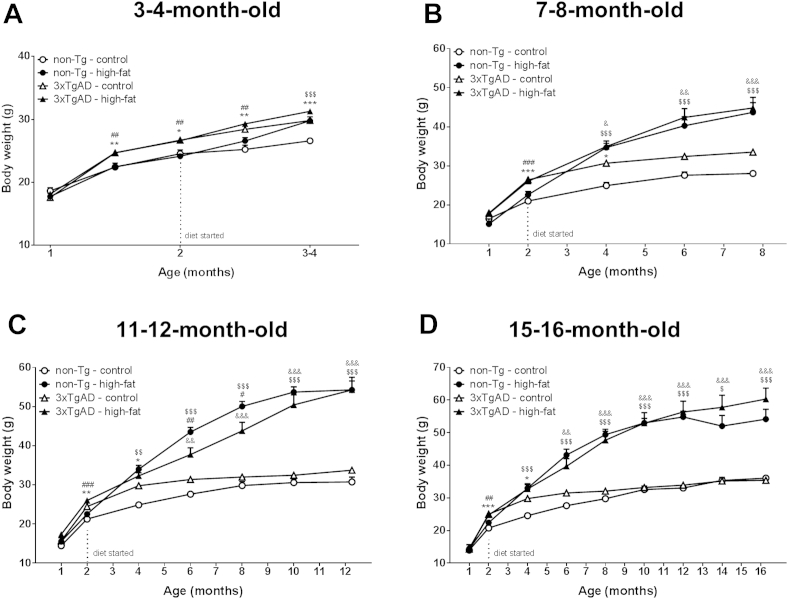
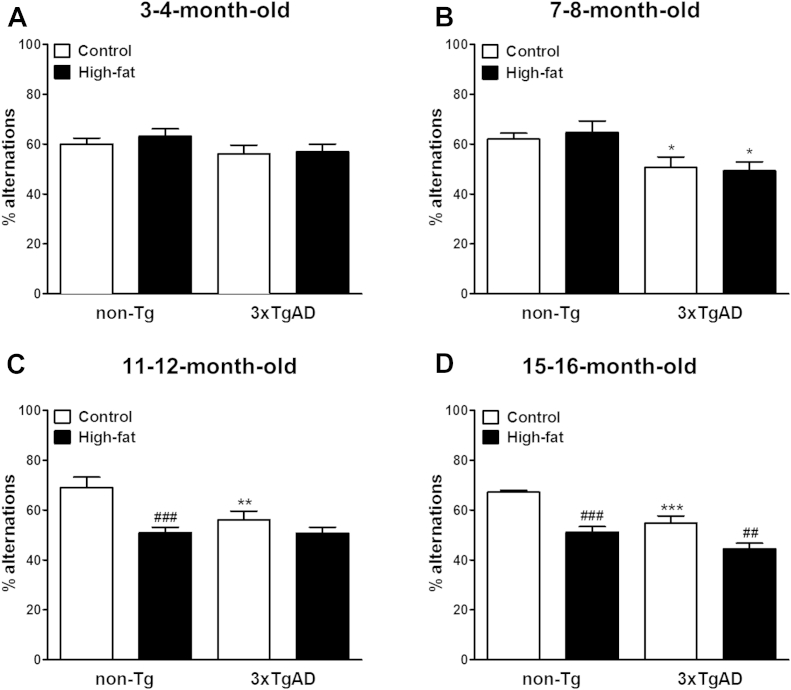
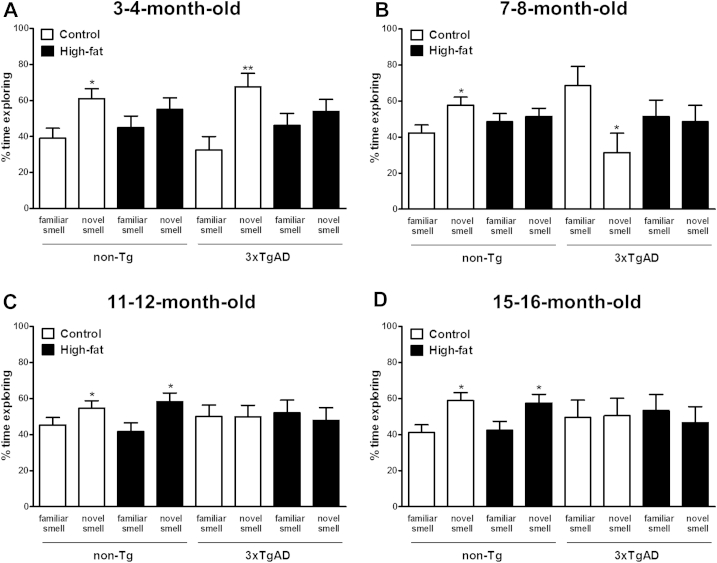
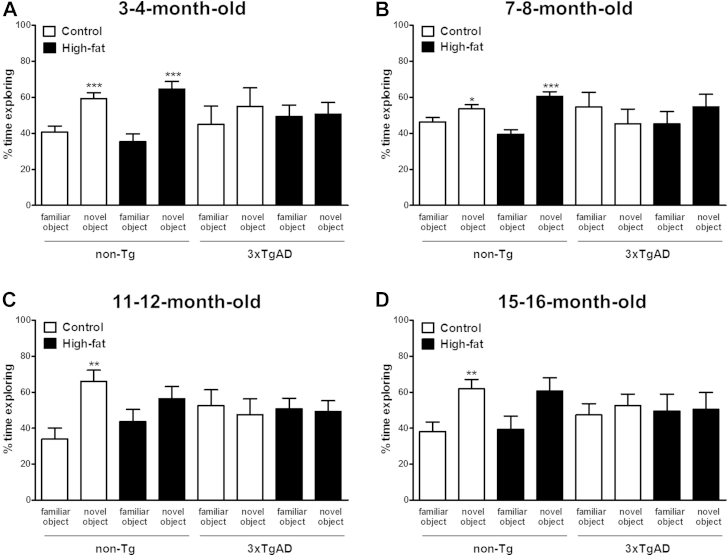
Obesity and consumption of a high-fat diet are known to increase the risk of Alzheimer's disease (AD). Diets high in fat also increase disease neuropathology and/or cognitive deficits in AD mouse models. However, the effect of a high-fat diet on both the neuropathology and memory impairments in the triple-transgenic mouse model of AD (3xTgAD) is unknown. Therefore, groups of 2-month-old male 3xTgAD and control (non-Tg) mice were maintained on a high-fat or control diet and memory was assessed at the age of 3-4, 7-8, 11-12, and 15-16 months using a series of behavioral tests. A comparable increase in body weight was observed in non-Tg and 3xTgAD mice after high-fat feeding at all ages tested but a significantly greater increase in epididymal adipose tissue was observed in 3xTgAD mice at the age of 7-8, 11-12, and 15-16 months. A high-fat diet caused memory impairments in non-Tg control mice as early as the age of 3-4 months. In 3xTgAD mice, high-fat consumption led to a reduction in the age of onset and an increase in the extent of memory impairments. Some of these effects of high-fat diet on cognition in non-Tg and 3xTgAD mice were transient, and the age at which cognitive impairment was detected depended on the behavioral test. The effect of high-fat diet on memory in the 3xTgAD mice was independent of changes in AD neuropathology as no significant differences in (plaques, oligomers) or tau neuropathology were observed. An acute increase in microglial activation was seen in high-fat fed 3xTgAD mice at the age of 3-4 months but in non-Tg control mice microglial activation was not observed until the age of 15-16 months. These data indicate therefore that a high-fat diet has rapid and long-lasting negative effects on memory in both control and AD mice that are associated with neuroinflammation, but independent of changes in beta amyloid and tau neuropathology in the AD mice.
Overview
The claims and statistics of this paper haven’t been checked yet.
Run the check — free, no account needed. It reads the open-access text and checks the sources it cites.
Integrity signals
Registry
Cites
Statistics
Figures
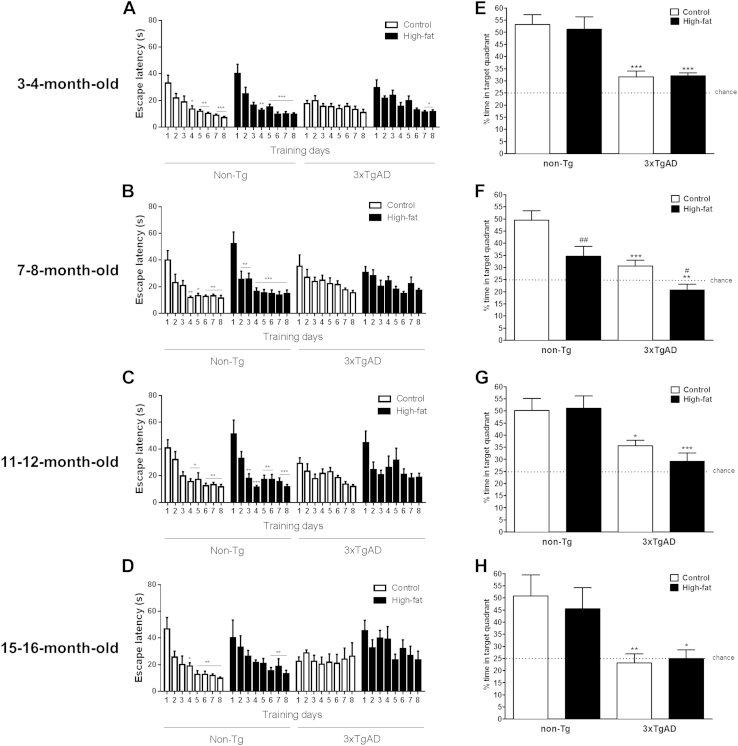
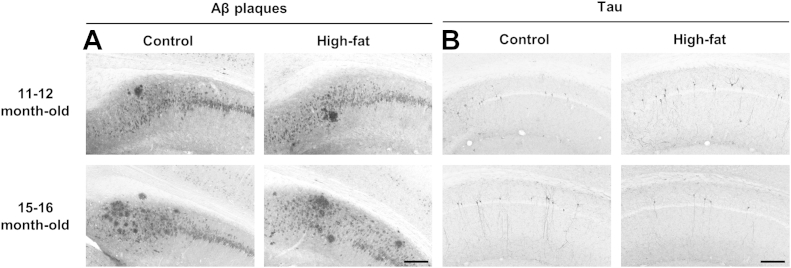
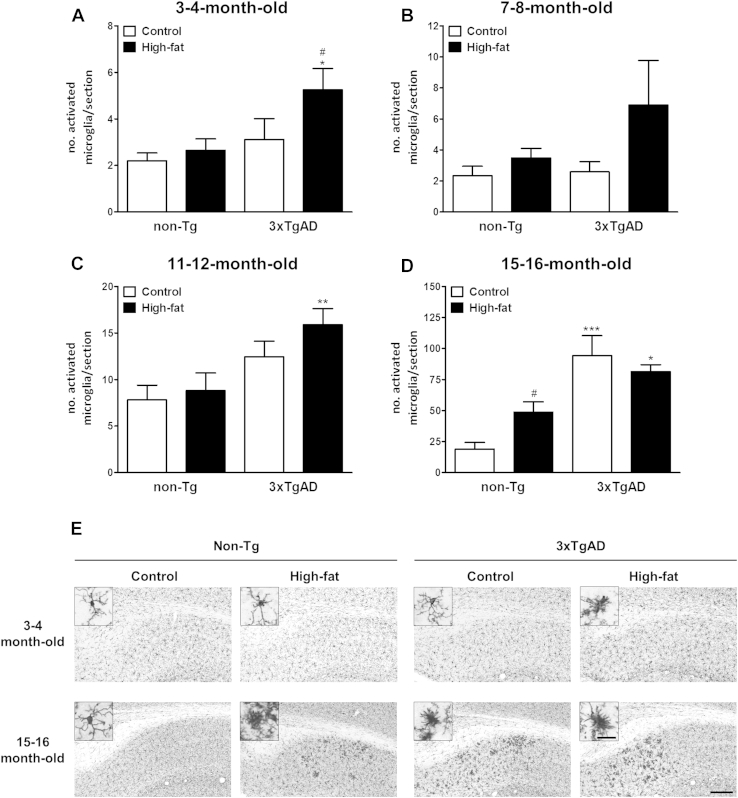
Verification
Claims the paper makes
The claims and statistics of this paper haven’t been checked yet.
Run the check — free, no account needed. It reads the open-access text and checks the sources it cites.
Claims other papers make about this one
Each is checked against this paper’s own text: does it say what the citing paper says it does?
The source backs part of the claim, not all of it — or backs it for a different population, condition or comparison.
In the citing paper
“Also, the addition of an HFD exacerbated AD phenotypes in mouse models relevant to early-onset AD (Knight et al., 2014; Jones et al., 2019; Bracko et al., 2020; Robison et al., 2020; Jones et al., 2021).”
From Plcg2M28L Interacts With High Fat/High Sugar Diet to Accelerate Alzheimer’s Disease-Relevant Phenotypes in Mice (2022) · cites this paper as Knight et al., 2014
Experimental — accuracy not yet measured
Self-check
Percentages, sums and reported differences re-computed from the paper’s own numbers.
The self-check needs the paper’s full text.
Citations
Cites
1 retracted
RETRACTED ARTICLE: A specific amyloid-β protein assembly in the brain impairs memory
Lesné, S., Koh, M. T., Kotilinek, L., Kayed, R., Glabe, C. G., Yang, A., Gallagher, M., & Ashe, K. H. (2006) · Nature · doi:10.1038/nature04533 · Cited by 2,769 · cited 1×
“Ab oligomers are currently thought to be the key species involved in Ab toxicity (Lesne et al., 2006; Shankar et al., 2008; Walsh et al., 2002) but in the present study no change in expression of soluble oligomers was detected in the hippocampus of 3xTgAD mice on a high-fat diet at any time point.”
RetractedMorris water maze: procedures for assessing spatial and related forms of learning and memory
Vorhees, C. V., & Williams, M. T. (2006) · Nature Protocols · doi:10.1038/nprot.2006.116 · Cited by 4,629 · cited 1×
“During the MWM test, mice were given 2 days of visual platform training followed by 8 days of hidden platform training and a 1 day probe trial (based on protocol by Vorhees and Williams (2006)).”
Walsh, D. M., Klyubin, I., Fadeeva, J. V., Cullen, W. K., Anwyl, R., Wolfe, M. S., Rowan, M. J., & Selkoe, D. J. (2002) · Nature · doi:10.1038/416535a · Cited by 4,291 · cited 1×
“Ab oligomers are currently thought to be the key species involved in Ab toxicity (Lesne et al., 2006; Shankar et al., 2008; Walsh et al., 2002) but in the present study no change in expression of soluble oligomers was detected in the hippocampus of 3xTgAD mice on a high-fat diet at any time point.”
Triple-Transgenic Model of Alzheimer’s Disease with Plaques and Tangles
Oddo, S., Caccamo, A., Shepherd, J. D., Murphy, M. P., Golde, T. E., Kayed, R., Metherate, R., Mattson, M. P., Akbari, Y., & LaFerla, F. M. (2003) · Neuron · doi:10.1016/s0896-6273(03)00434-3 · Cited by 4,126
Shankar, G. M., Li, S., Mehta, T. H., Garcia-Munoz, A., Shepardson, N. E., Smith, I., Brett, F. M., Farrell, M. A., Rowan, M. J., Lemere, C. A., et al. (2008) · Nature Medicine · doi:10.1038/nm1782 · Cited by 3,685 · cited 1×
“Ab oligomers are currently thought to be the key species involved in Ab toxicity (Lesne et al., 2006; Shankar et al., 2008; Walsh et al., 2002) but in the present study no change in expression of soluble oligomers was detected in the hippocampus of 3xTgAD mice on a high-fat diet at any time point.”
Neuropathological alterations in Alzheimer disease
Serrano-Pozo, A., Frosch, M. P., Masliah, E., & Hyman, B. T. (2011) · Cold Spring Harbor Perspectives in Medicine · doi:10.1101/cshperspect.a006189 · Cited by 3,345 · cited 1×
“In humans, the severity of AD-related neuropathology especially Ab plaque burden, does not always correlate with, or is predictive of, cognitive deficits, and memory impairments can occur in mouse AD models in advance of overt Ab plaque (and tangle) pathology (Billings et al., 2005; Oddo et al., 2003b; Serrano-Pozo et…”
Billings, L. M., Oddo, S., Green, K. N., McGaugh, J. L., & LaFerla, F. M. (2005) · Neuron · doi:10.1016/j.neuron.2005.01.040 · Cited by 1,294 · cited 3×
“The 3xTgAD mouse does not present with an aggressive pathology, as we do not observe Ab plaques and tangle-like pathology until approximately at the age of 12 months, which is after cognitive deficits are detected (Billings et al., 2005; Knight et al., 2012, 2013).”
Obesity and Vascular Risk Factors at Midlife and the Risk of Dementia and Alzheimer Disease
Kivipelto, M., Ngandu, T., Fratiglioni, L., Viitanen, M., Kåreholt, I., Winblad, B., Helkala, E.-L., Tuomilehto, J., Soininen, H., & Nissinen, A. (2005) · Archives of Neurology · doi:10.1001/archneur.62.10.1556 · Cited by 1,291 · cited 2×
“However, obesity atmidlife can also increase the risk of dementia and AD later in life (Beydoun et al., 2008; Fitzpatrick et al., 2009; Gustafson et al., 2003; Hassing et al., 2009; Kivipelto et al., 2005; Profenno et al., 2009; Rosengren et al., 2005; Whitmer et al., 2005, 2007, 2008), an effect that is independent o…”
Obesity in middle age and future risk of dementia: a 27 year longitudinal population based study
Whitmer, R. A., Gunderson, E. P., Barrett-Connor, E., Quesenberry, C. P., & Yaffe, K. (2005) · BMJ · doi:10.1136/bmj.38446.466238.e0 · Cited by 1,090
Amyloid deposition precedes tangle formation in a triple transgenic model of Alzheimer's disease
Oddo, S. (2003) · Neurobiology of Aging · doi:10.1016/j.neurobiolaging.2003.08.012 · Cited by 980
Cited by
Sorted by citations
Mitochondria and Reactive Oxygen Species in Aging and Age-Related Diseases
Giorgi, C., Marchi, S., Simões, I. C. M., Ren, Z., Morciano, G., Perrone, M., Patalas‐Krawczyk, P., Borchard, S., Jędrak, P., Pierzynowska, K., et al. (2018) · International review of cytology · doi:10.1016/bs.ircmb.2018.05.006 · Cited by 484
Daniels, M. J. D., Rivers‐Auty, J., Schilling, T., Spencer, N. G., Watremez, W., Fasolino, V., Booth, S., White, C., Baldwin, A. G., Freeman, S., et al. (2016) · Nature Communications · doi:10.1038/ncomms12504 · Cited by 453
Self-citationYin, F. (2023) · The FEBS Journal · doi:10.1111/febs.16344 · Cited by 441
Daulatzai, M. A. (2016) · Journal of Neuroscience Research · doi:10.1002/jnr.23777 · Cited by 440
Alzheimer’s disease: insights into pathology, molecular mechanisms, and therapy
Zheng, Q., & Wang, X. (2024) · Protein & Cell · doi:10.1093/procel/pwae026 · Cited by 483
Metadata
- Authors
- Knight, E. M., Martins, I. V. A., Gümüsgöz, S., Allan, S. M., & Lawrence, C. B.
- Affiliations
- University of Manchester (GB)
- Corresponding author
- Lawrence, Catherine B.
- Venue
- Neurobiology of Aging
- Publisher
- Elsevier BV
- Published
- 2014-08
- Volume
- 35
- Issue
- 8
- Pages
- 1821-1832
- ISSN
- 0197-4580 (ISSN-L)
- PMC
- PMC4024197
- OpenAlex
- W1994083528
- Cited by
- 232
- References
- 56
- Citations by year
- 2026: 11 · 2025: 14 · 2024: 14 · 2023: 19 · 2022: 23 · 2021: 20 · 2020: 21 · 2019: 26 · 2018: 24 · 2017: 18 · 2016: 30 · 2015: 7 · 2014: 5
- FWCI
- 13.33
- Type
- journal article
- Language
- en
- Open access
- hybrid
- doi.org
- Locations
- Neurobiology of Aging (publishedVersion, cc-by)
- PubMed Central (publishedVersion, cc-by)
- PubMed (publishedVersion)
- Research Explorer (The University of Manchester) (submittedVersion)
- Funders
- Medical Research Council
- Topics
- Life Sciences › Neuroscience › Cellular and Molecular Neuroscience › Alzheimer's disease research and treatments
- Health Sciences › Medicine › Psychiatry and Mental health › Dementia and Cognitive Impairment Research
- Life Sciences › Neuroscience › Neurology › Neurological Disease Mechanisms and Treatments
- Keywords
- high-fat diet, Alzheimer's disease, 3xTg-AD mice, memory impairment, obesity, amyloid plaques, tau pathology, microglial activation, neuroinflammation, adipose tissue, cognitive aging
- MeSH terms
- Adipose Tissue, Alzheimer Disease, Animals, Brain, Cognition, Disease Models, Animal, Epididymis, Male, Memory, Mice, Transgenic, Risk, Amyloid beta-Peptides, tau Proteins, Mice, Diet, High-Fat
About these checks
Registry, retraction, Cites and statistics results are computed, not judged, with one exception: a printed reference that no index lists is read once by a model before it counts as a citation error. Claims are extracted by a model and kept only when their quote appears verbatim in the text; each cited source is then checked, with a model’s help, for whether it says what the claim relies on. Those verdicts can be wrong — read the claim’s quote and the cited source before relying on one.
Statistics and arithmetic are recomputed, not judged.
Confidence bands are shown only for fields calibrated on our annotated test set. None is calibrated yet, so no band is shown.
What counts as a claim ›How we measure confidence ›How we check this ›
Are you an author, or do you see a problem with this page? Request a review
