

The DOI matches its Crossref record; 55 of the 56 references it cites were found in a registry or an index.
High-fat diet-induced memory impairment in triple-transgenic Alzheimer’s disease (3xTgAD) mice is independent of changes in amyloid and tau pathology.
Open accessAbstract
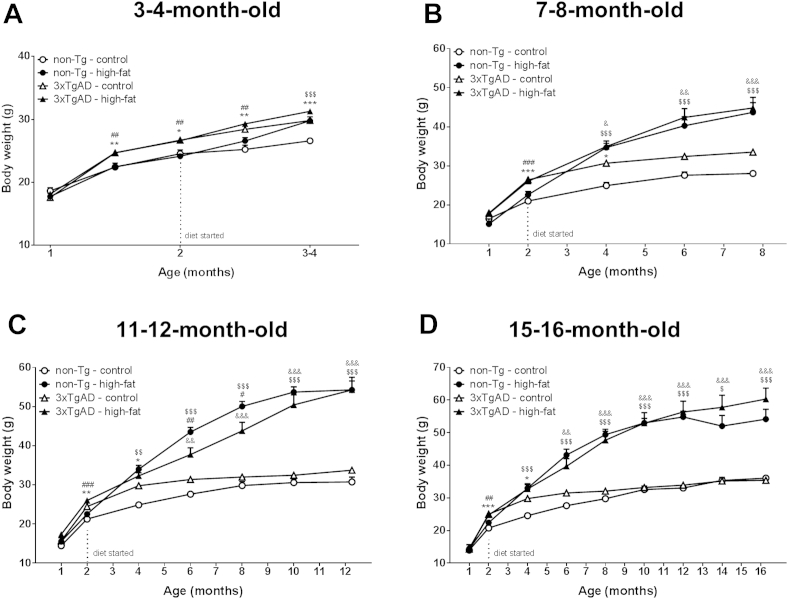
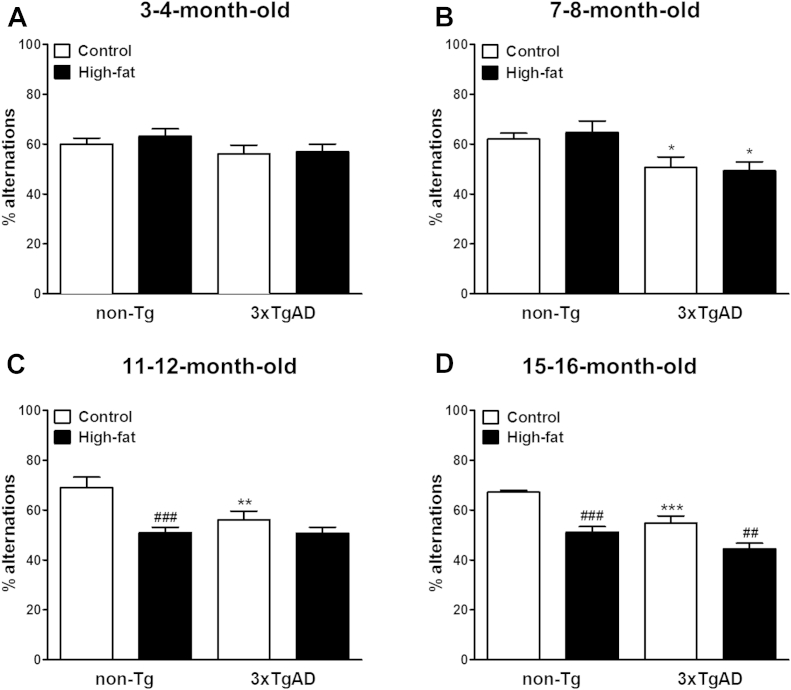
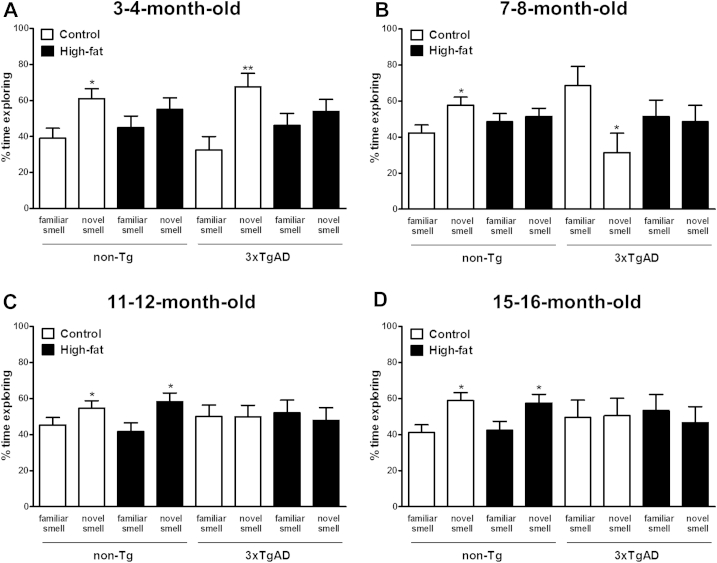
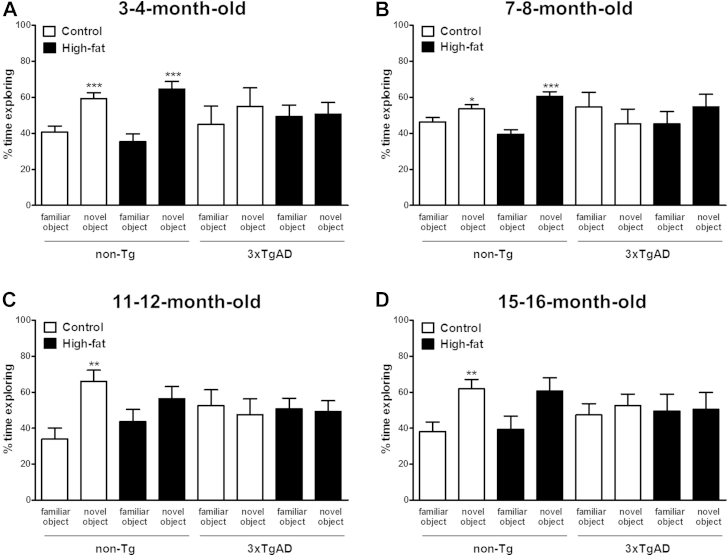
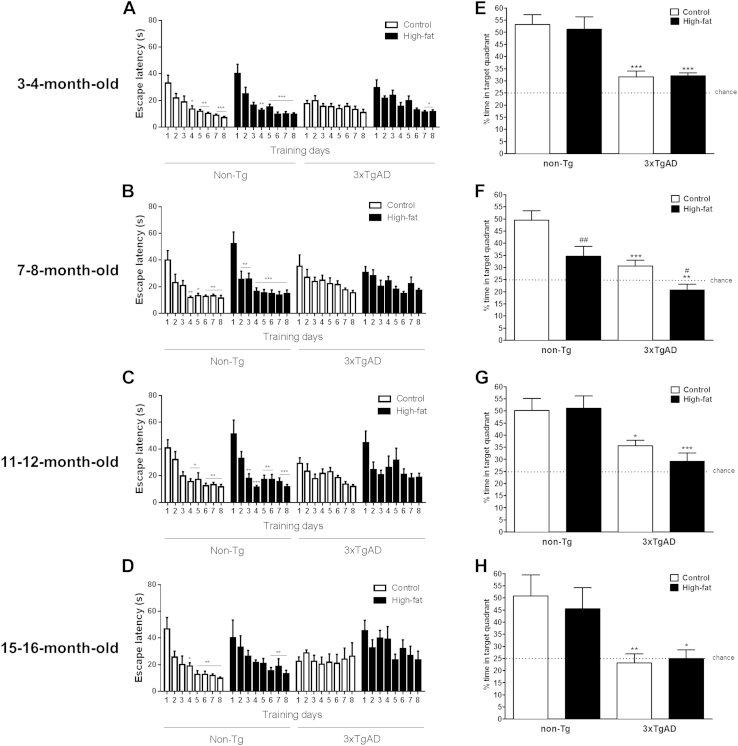
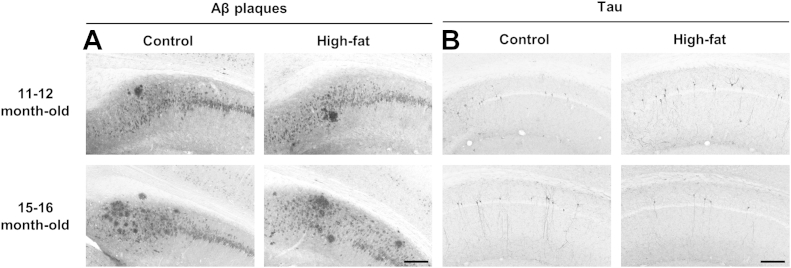
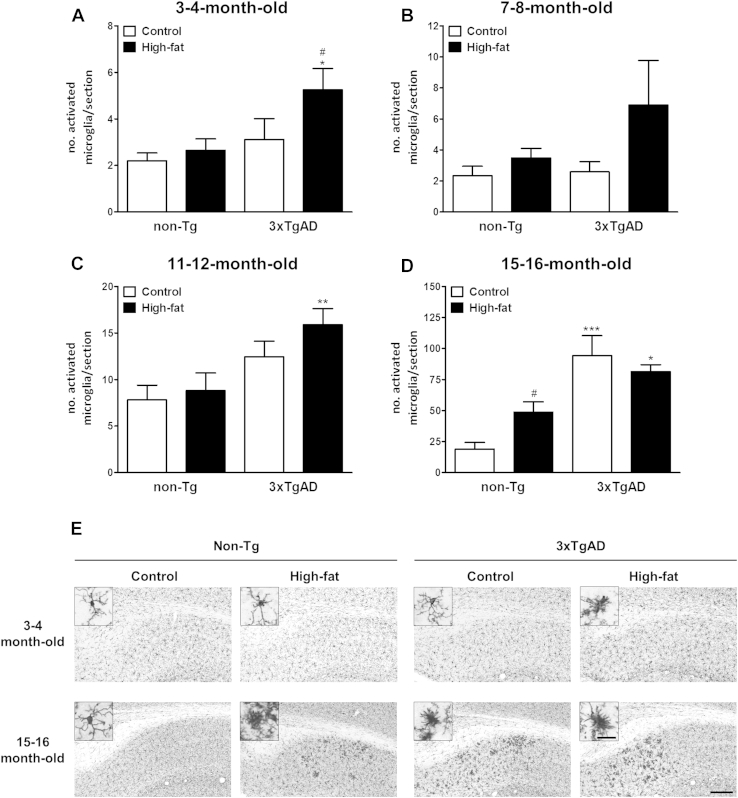
Obesity and consumption of a high-fat diet are known to increase the risk of Alzheimer's disease (AD). Diets high in fat also increase disease neuropathology and/or cognitive deficits in AD mouse models. However, the effect of a high-fat diet on both the neuropathology and memory impairments in the triple-transgenic mouse model of AD (3xTgAD) is unknown. Therefore, groups of 2-month-old male 3xTgAD and control (non-Tg) mice were maintained on a high-fat or control diet and memory was assessed at the age of 3-4, 7-8, 11-12, and 15-16 months using a series of behavioral tests. A comparable increase in body weight was observed in non-Tg and 3xTgAD mice after high-fat feeding at all ages tested but a significantly greater increase in epididymal adipose tissue was observed in 3xTgAD mice at the age of 7-8, 11-12, and 15-16 months. A high-fat diet caused memory impairments in non-Tg control mice as early as the age of 3-4 months. In 3xTgAD mice, high-fat consumption led to a reduction in the age of onset and an increase in the extent of memory impairments. Some of these effects of high-fat diet on cognition in non-Tg and 3xTgAD mice were transient, and the age at which cognitive impairment was detected depended on the behavioral test. The effect of high-fat diet on memory in the 3xTgAD mice was independent of changes in AD neuropathology as no significant differences in (plaques, oligomers) or tau neuropathology were observed. An acute increase in microglial activation was seen in high-fat fed 3xTgAD mice at the age of 3-4 months but in non-Tg control mice microglial activation was not observed until the age of 15-16 months. These data indicate therefore that a high-fat diet has rapid and long-lasting negative effects on memory in both control and AD mice that are associated with neuroinflammation, but independent of changes in beta amyloid and tau neuropathology in the AD mice.
Overview
The claims and statistics of this paper haven’t been checked yet.
Run the check — free, no account needed. It reads the open-access text and checks the sources it cites.
Integrity signals
Registry
Cites
Statistics
Figures
Verification
Claims the paper makes
The claims and statistics of this paper haven’t been checked yet.
Run the check — free, no account needed. It reads the open-access text and checks the sources it cites.
Claims other papers make about this one
Each is checked against this paper’s own text: does it say what the citing paper says it does?
The source backs part of the claim, not all of it — or backs it for a different population, condition or comparison.
In the citing paper
“Also, the addition of an HFD exacerbated AD phenotypes in mouse models relevant to early-onset AD (Knight et al., 2014; Jones et al., 2019; Bracko et al., 2020; Robison et al., 2020; Jones et al., 2021).”
From Plcg2M28L Interacts With High Fat/High Sugar Diet to Accelerate Alzheimer’s Disease-Relevant Phenotypes in Mice (2022) · cites this paper as Knight et al., 2014
Experimental — accuracy not yet measured
Self-check
Percentages, sums and reported differences re-computed from the paper’s own numbers.
The self-check needs the paper’s full text.
Citations
Cites
1 retracted
RETRACTED ARTICLE: A specific amyloid-β protein assembly in the brain impairs memory
Lesné, S., Koh, M. T., Kotilinek, L., Kayed, R., Glabe, C. G., Yang, A., Gallagher, M., & Ashe, K. H. (2006) · Nature · doi:10.1038/nature04533 · Cited by 2,769 · cited 1×
“Ab oligomers are currently thought to be the key species involved in Ab toxicity (Lesne et al., 2006; Shankar et al., 2008; Walsh et al., 2002) but in the present study no change in expression of soluble oligomers was detected in the hippocampus of 3xTgAD mice on a high-fat diet at any time point.”
RetractedMorris water maze: procedures for assessing spatial and related forms of learning and memory
Vorhees, C. V., & Williams, M. T. (2006) · Nature Protocols · doi:10.1038/nprot.2006.116 · Cited by 4,629 · cited 1×
“During the MWM test, mice were given 2 days of visual platform training followed by 8 days of hidden platform training and a 1 day probe trial (based on protocol by Vorhees and Williams (2006)).”
Walsh, D. M., Klyubin, I., Fadeeva, J. V., Cullen, W. K., Anwyl, R., Wolfe, M. S., Rowan, M. J., & Selkoe, D. J. (2002) · Nature · doi:10.1038/416535a · Cited by 4,291 · cited 1×
“Ab oligomers are currently thought to be the key species involved in Ab toxicity (Lesne et al., 2006; Shankar et al., 2008; Walsh et al., 2002) but in the present study no change in expression of soluble oligomers was detected in the hippocampus of 3xTgAD mice on a high-fat diet at any time point.”
Triple-Transgenic Model of Alzheimer’s Disease with Plaques and Tangles
Oddo, S., Caccamo, A., Shepherd, J. D., Murphy, M. P., Golde, T. E., Kayed, R., Metherate, R., Mattson, M. P., Akbari, Y., & LaFerla, F. M. (2003) · Neuron · doi:10.1016/s0896-6273(03)00434-3 · Cited by 4,126
Shankar, G. M., Li, S., Mehta, T. H., Garcia-Munoz, A., Shepardson, N. E., Smith, I., Brett, F. M., Farrell, M. A., Rowan, M. J., Lemere, C. A., et al. (2008) · Nature Medicine · doi:10.1038/nm1782 · Cited by 3,685 · cited 1×
“Ab oligomers are currently thought to be the key species involved in Ab toxicity (Lesne et al., 2006; Shankar et al., 2008; Walsh et al., 2002) but in the present study no change in expression of soluble oligomers was detected in the hippocampus of 3xTgAD mice on a high-fat diet at any time point.”
Neuropathological alterations in Alzheimer disease
Serrano-Pozo, A., Frosch, M. P., Masliah, E., & Hyman, B. T. (2011) · Cold Spring Harbor Perspectives in Medicine · doi:10.1101/cshperspect.a006189 · Cited by 3,345 · cited 1×
“In humans, the severity of AD-related neuropathology especially Ab plaque burden, does not always correlate with, or is predictive of, cognitive deficits, and memory impairments can occur in mouse AD models in advance of overt Ab plaque (and tangle) pathology (Billings et al., 2005; Oddo et al., 2003b; Serrano-Pozo et…”
Billings, L. M., Oddo, S., Green, K. N., McGaugh, J. L., & LaFerla, F. M. (2005) · Neuron · doi:10.1016/j.neuron.2005.01.040 · Cited by 1,294 · cited 3×
“The 3xTgAD mouse does not present with an aggressive pathology, as we do not observe Ab plaques and tangle-like pathology until approximately at the age of 12 months, which is after cognitive deficits are detected (Billings et al., 2005; Knight et al., 2012, 2013).”
Obesity and Vascular Risk Factors at Midlife and the Risk of Dementia and Alzheimer Disease
Kivipelto, M., Ngandu, T., Fratiglioni, L., Viitanen, M., Kåreholt, I., Winblad, B., Helkala, E.-L., Tuomilehto, J., Soininen, H., & Nissinen, A. (2005) · Archives of Neurology · doi:10.1001/archneur.62.10.1556 · Cited by 1,291 · cited 2×
“However, obesity atmidlife can also increase the risk of dementia and AD later in life (Beydoun et al., 2008; Fitzpatrick et al., 2009; Gustafson et al., 2003; Hassing et al., 2009; Kivipelto et al., 2005; Profenno et al., 2009; Rosengren et al., 2005; Whitmer et al., 2005, 2007, 2008), an effect that is independent o…”
Obesity in middle age and future risk of dementia: a 27 year longitudinal population based study
Whitmer, R. A., Gunderson, E. P., Barrett-Connor, E., Quesenberry, C. P., & Yaffe, K. (2005) · BMJ · doi:10.1136/bmj.38446.466238.e0 · Cited by 1,090
Amyloid deposition precedes tangle formation in a triple transgenic model of Alzheimer's disease
Oddo, S. (2003) · Neurobiology of Aging · doi:10.1016/j.neurobiolaging.2003.08.012 · Cited by 980
Cited by
Sorted by citations
Mitochondria and Reactive Oxygen Species in Aging and Age-Related Diseases
Giorgi, C., Marchi, S., Simões, I. C. M., Ren, Z., Morciano, G., Perrone, M., Patalas‐Krawczyk, P., Borchard, S., Jędrak, P., Pierzynowska, K., et al. (2018) · International review of cytology · doi:10.1016/bs.ircmb.2018.05.006 · Cited by 484
Daniels, M. J. D., Rivers‐Auty, J., Schilling, T., Spencer, N. G., Watremez, W., Fasolino, V., Booth, S., White, C., Baldwin, A. G., Freeman, S., et al. (2016) · Nature Communications · doi:10.1038/ncomms12504 · Cited by 453
Self-citationYin, F. (2023) · The FEBS Journal · doi:10.1111/febs.16344 · Cited by 441
Daulatzai, M. A. (2016) · Journal of Neuroscience Research · doi:10.1002/jnr.23777 · Cited by 440
Alzheimer’s disease: insights into pathology, molecular mechanisms, and therapy
Zheng, Q., & Wang, X. (2024) · Protein & Cell · doi:10.1093/procel/pwae026 · Cited by 483
Alzheimer’s disease and gut microbiota
Hu, X., Wang, T., & Jin, F. (2016) · Science China Life Sciences · doi:10.1007/s11427-016-5083-9 · Cited by 371
Więckowska-Gacek, A., Mietelska-Porowska, A., Wydrych, M., & Wojda, U. (2021) · Ageing Research Reviews · doi:10.1016/j.arr.2021.101397 · Cited by 343
“Mice fed with HFD demonstrated weight gains associated with enhanced level of hippocampal Aβ, decreased hippocampal neurogenesis and deficits in cognitive tasks (Barron et et al., 2013; Graham et al., 2016; Haleem and Mahmood, 2021; Knight et al., 2014; Nissankara Rao et al., 2021; Niu et al., 2016; Więckowska-Gacek e…”
The gut microbiome in Alzheimer’s disease: what we know and what remains to be explored
Chandra, S., Sisodia, S. S., & Vassar, R. J. (2023) · Molecular Neurodegeneration · doi:10.1186/s13024-023-00595-7 · Cited by 278
Alzheimer's disease and type 2 diabetes: a critical assessment of the shared pathological traits
Chatterjee, S., & Mudher, A. (2018) · Frontiers in Neuroscience · doi:10.3389/fnins.2018.00383 · Cited by 270
Diabetes and Alzheimer’s disease crosstalk
Baglietto‐Vargas, D., Shi, J. J., Yaeger, D. M., Ager, R. R., & LaFerla, F. M. (2016) · Neuroscience & Biobehavioral Reviews · doi:10.1016/j.neubiorev.2016.03.005 · Cited by 263
Therapies for Prevention and Treatment of Alzheimer’s Disease
Mendiola-Precoma, J., Berumen, L. C., Padilla, K., & García‐Alcocer, G. (2016) · BioMed Research International · doi:10.1155/2016/2589276 · Cited by 262
Cunningham, C., & Hennessy, E. (2015) · Alzheimer's Research & Therapy · doi:10.1186/s13195-015-0117-2 · Cited by 211
“A HFD in the 3xTg AD model induced memory deficits and exacerbated neuro-inflammation, but these effects were independent of alterations in Aβ or Tau pathology [89].”
BackgroundBharadwaj, P., Wijesekara, N., Liyanapathirana, M., Newsholme, P., Ittner, L. M., Fraser, P. E., & Verdile, G. (2017) · Journal of Alzheimer s Disease · doi:10.3233/jad-161192 · Cited by 209
Tarantini, S., Valcarcel‐Ares, M. N., Yabluchanskiy, A., Tucsek, Z., Hertelendy, P., Kiss, T., Gautam, T., Zhang, X. A., Sonntag, W. E., de Cabo, R., et al. (2017) · The Journals of Gerontology Series A · doi:10.1093/gerona/glx177 · Cited by 163
“Experimental and clinical studies suggest that obesity promotes BBB breakdown and activates inflammatory processes, which contribute to obesity-related impairment of cognitive function (13,14).”
BackgroundWahl, D., Solon‐Biet, S. M., Cogger, V. C., Fontana, L., Simpson, S. J., Couteur, D. G. L., & Ribeiro, R. V. (2019) · Neurobiology of Disease · doi:10.1016/j.nbd.2019.104481 · Cited by 155
Almeida-Suhett, C. P., Graham, A. M., Chen, Y., & Deuster, P. A. (2016) · Physiology & Behavior · doi:10.1016/j.physbeh.2016.11.016 · Cited by 146
“Evidence from rodent studies show that intake of a high-fat diet leads to disruption of cerebral vascular function [30,31], activation of microglia and astrocytes [32,33], and increased expression of cytokines [34,35] in different brain regions.”
BackgroundMelo, H. M., Seixas da Silva, G. D. S., Sant’Ana, M. R., Teixeira, C. V. L., Clarke, J. R., Miya Coreixas, V. S., de Melo, B. C., Fortuna, J. T. S., Forny-Germano, L., Ledo, J. H., et al. (2020) · Cell Reports · doi:10.1016/j.celrep.2020.01.072 · Cited by 140
Cognitive Decline in Preclinical Alzheimer’s Disease: Amyloid-Beta versus Tauopathy
Huber, C. M., Yee, C., May, T., Dhanala, A., & Mitchell, C. S. (2017) · Journal of Alzheimer s Disease · doi:10.3233/jad-170490 · Cited by 136
“MWM versus Total A [33, 34, 39–42, 44, 47, 50, 59, 60, 62, 63, 65, 67–69, 76–80] 22 259 MWM versus Soluble A 40 [33, 34, 39–41, 47, 60–63, 68, 69, 72, 77, 78] 15 148 MWM versus Soluble A 42 [33, 34, 39–41, 50, 60, 61, 63, 68, 69, 72, 77–79] 16 148 MWM versus Insoluble A 40 [33, 34, 39–41, 47, 60–63, 68, 69, 72, 77, 78…”
Inflammasomes as therapeutic targets for A lzheimer's disease
White, C., Lawrence, C. B., Brough, D., & Rivers‐Auty, J. (2016) · Brain Pathology · doi:10.1111/bpa.12478 · Cited by 136
“This is supported by research demonstrating that chronic inflammation induced by head trauma (26, 67), infection (44), obesity (77, 97) or bacterial toxins (121, 126) accelerates amyloid deposition and memory deficits (112) (Figure 1).”
BackgroundSelf-citationGannon, O. J., Robison, L. S., Salinero, A. E., Abi-Ghanem, C., Mansour, F. M., Kelly, R. D., Tyagi, A., Brawley, R. R., Ogg, J. D., & Zuloaga, K. L. (2022) · Journal of Neuroinflammation · doi:10.1186/s12974-022-02466-2 · Cited by 127
Sah, S. K., Lee, C. M., Jang, J., & Park, G. H. (2017) · Biochemical and Biophysical Research Communications · doi:10.1016/j.bbrc.2017.08.122 · Cited by 126
Findley, C. A., Bartke, A., Hascup, K. N., & Hascup, E. R. (2019) · ASN NEURO · doi:10.1177/1759091419855541 · Cited by 133
High fat diet exacerbates Alzheimer's disease-related pathology in APPswe/PS1 mice
Thériault, P., ElAli, A., & Rivest, S. (2016) · Oncotarget · doi:10.18632/oncotarget.12179 · Cited by 120
“While our results are in line with a number of previously published reports [20, 39], others demonstrated an increase in insoluble and soluble Aβ loads in the brain parenchyma following an high fat diet, namely in 3xTg-AD mice [40].”
ResultObesity-induced cognitive impairment in older adults: a microvascular perspective
Balasubramanian, P., Kiss, T., Tarantini, S., Nyúl‐Tóth, Á., Ahire, C., Yabluchanskiy, A., Csípő, T., Lipécz, Á., Tabák, Á. G., Institóris, Á., et al. (2020) · American Journal of Physiology-Heart and Circulatory Physiology · doi:10.1152/ajpheart.00736.2020 · Cited by 116
Sanguinetti, E., Collado, M. C., Marrachelli, V. G., Monleón, D., Selma‐Royo, M., Pardo-Tendero, M., Burchielli, S., & Iozzo, P. (2018) · Scientific Reports · doi:10.1038/s41598-018-23261-1 · Cited by 117
Phytosterols: Potential Metabolic Modulators in Neurodegenerative Diseases
Sharma, N., Tan, M. A., & An, S. S. A. (2021) · International Journal of Molecular Sciences · doi:10.3390/ijms222212255 · Cited by 118
Graham, L. C., Harder, J. M., Soto, I., de Vries, W. N., John, S. W. M., & Howell, G. R. (2016) · Scientific Reports · doi:10.1038/srep21568 · Cited by 113
Nrf2/ARE Pathway Modulation by Dietary Energy Regulation in Neurological Disorders
Vasconcelos, A. R., dos Santos, N. B., Scavone, C., & Munhoz, C. D. (2019) · Frontiers in Pharmacology · doi:10.3389/fphar.2019.00033 · Cited by 113
“…also lead to neurological disorders through microglia activation and BBB disruption, which can trigger neuroinflammation and synaptic impairment, thereby resulting in cognitive decline and neurodegeneration (Pistell et al., 2010; Zlokovic, 2011; Knight et al., 2014; Tucsek et al., 2014) (Figure 3).”
BackgroundWalker, J. M., Dixit, S., Saulsberry, A. C., May, J. M., & Harrison, F. E. (2017) · Neurobiology of Disease · doi:10.1016/j.nbd.2017.01.004 · Cited by 110
“…that HFD induces deficits in learning and memory, although experimental design strongly impacts the severity of deficits, and whether changes are observed in both control animals and the disease model (Knight et al., 2014; Pistell et al., 2010; Ramos-Rodriguez et al., 2014; Yeh et al., 2015).”
BackgroundThe complex relationship between obesity and neurodegenerative diseases: an updated review
Neto, A., Fernandes, A. M. A., & Barateiro, A. P. (2023) · Frontiers in Cellular Neuroscience · doi:10.3389/fncel.2023.1294420 · Cited by 120
Jayaraj, R. L., Azimullah, S., & Beiram, R. (2019) · Saudi Journal of Biological Sciences · doi:10.1016/j.sjbs.2019.12.028 · Cited by 107
“Similarly, 3xTg AD mice raised with high fat diet had enhanced cerebrovascular inflammation and cognitive deficits, although no significant difference in NPs and NFTs were observed (Knight et al., 2014).”
BackgroundAsadbegi, M., Yaghmaei, P., Salehi, I., Komaki, A., & Ebrahim‐Habibi, A. (2017) · Metabolic Brain Disease · doi:10.1007/s11011-017-9960-0 · Cited by 101
Medrano-Jiménez, E., Jiménez-Ferrer, I., Pedraza‐Escalona, M., Ramírez-Serrano, C. E., Álvarez‐Arellano, L., Cortés‐Mendoza, J., Herrera-Ruiz, M. L., Jiménez‐Ferrer, E., Zamilpa, A., Tortoriello, J., et al. (2019) · Journal of Neuroinflammation · doi:10.1186/s12974-019-1515-3 · Cited by 100
“In contrast with previous studies showing that a HFD had no effect on the Aβ plaque burden in the hippocampus from old 3xTgAD mice [59], we found that HFD increases the deposition of hippocampal β-amyloid plaques in the 5XFAD mice model.”
ResultSex differences in the metabolic effects of diet-induced obesity vary by age of onset
Salinero, A. E., Anderson, B. M., & Zuloaga, K. L. (2018) · International Journal of Obesity · doi:10.1038/s41366-018-0023-3 · Cited by 95
Paul, R. K., Choudhury, A., Kumar, S., Giri, A., Sandhir, R., & Borah, A. (2017) · PLoS ONE · doi:10.1371/journal.pone.0171285 · Cited by 93
Obesity and sex interact in the regulation of Alzheimer's disease
Moser, V. A., & Pike, C. J. (2015) · Neuroscience & Biobehavioral Reviews · doi:10.1016/j.neubiorev.2015.08.021 · Cited by 91
Gali, C. C., Fanaee‐Danesh, E., Zandl‐Lang, M., Albrecher, N. M., Tam‐Amersdorfer, C., Stracke, A., Sachdev, V., Reichmann, F., Sun, Y., Avdili, A., et al. (2019) · Molecular and Cellular Neuroscience · doi:10.1016/j.mcn.2019.103390 · Cited by 87
Asadbegi, M., Yaghmaei, P., Salehi, I., Ebrahim‐Habibi, A., & Komaki, A. (2016) · Brain Research Bulletin · doi:10.1016/j.brainresbull.2016.02.005 · Cited by 87
L-Norvaline Reverses Cognitive Decline and Synaptic Loss in a Murine Model of Alzheimer’s Disease
Polis, B., Srikanth, K. D., Elliott, E., Gil-Henn, H., & Samson, A. (2018) · Neurotherapeutics · doi:10.1007/s13311-018-0669-5 · Cited by 79
“An arm entry was counted when the hind paws of the mouse were entirely within the arm [39].”
MethodLaws, S. M., Gaskin, S., Woodfield, A., Srikanth, V. K., Bruce, D. G., Fraser, P. E., Porter, T., Newsholme, P., Wijesekara, N., Burnham, S. C., et al. (2017) · Scientific Reports · doi:10.1038/s41598-017-09577-4 · Cited by 98
Brain‐targeted stem cell gene therapy corrects mucopolysaccharidosis type II via multiple mechanisms
Gleitz, H. F. E., Liao, A. Y., Cook, J. R., Rowlston, S., Forte, G. M. A., D’Souza, Z., O’Leary, C., Holley, R. J., & Bigger, B. (2018) · EMBO Molecular Medicine · doi:10.15252/emmm.201708730 · Cited by 85
“…test, which exploits the mouse’s innate preference to explore novel arms over recently explored arms over 10 min and has been used extensively to characterize mouse models of schizophrenia, Alzheimer’s disease, and MPS II (Fig 6H; Gleitz et al , 2017; Knight et al , 2014; O’Leary et al , 2014).”
Bracko, O., Vinarcsik, L. K., Cruz Hernández, J. C., Ruiz-Uribe, N. E., Haft-Javaherian, M., Falkenhain, K., Ramanauskaite, E. M., Ali, M., Mohapatra, A., Swallow, M. A., et al. (2020) · Scientific Reports · doi:10.1038/s41598-020-65908-y · Cited by 85
Broderick, T. L., Rasool, S., Li, R., Zhang, Y., Anderson, M., Al‐Nakkash, L., Plochocki, J. H., Geetha, T., & Babu, J. R. (2020) · International Journal of Molecular Sciences · doi:10.3390/ijms21197337 · Cited by 89
Cheng, D., Yang, S., Zhao, X., & Wang, G. (2022) · Drug Design, Development and Therapy · doi:10.2147/dddt.s348055 · Cited by 84
“[3xTgAD]) a high-fat diet may increase the activation of microglia.(168) These studies suggest that diabetes mellitus and a high-fat diet may exacerbate AD inflammation.”
Background27-Hydroxycholesterol impairs neuronal glucose uptake through an IRAP/GLUT4 system dysregulation
Ismail, M.-A.-M., Mateos, L., Maioli, S., Merino‐Serrais, P., Ali, Z., Lodeiro, M., Westman, E., Leitersdorf, E., Gulyás, B. Z., Wahlund, L., et al. (2017) · The Journal of Experimental Medicine · doi:10.1084/jem.20160534 · Cited by 84
“In animal models for AD and aging, cognitive decline was evident when subjected to a highcholesterol diet (HCD; Pancani et al., 2013; Knight et al., 2014).”
Obesity Accelerates Alzheimer-Related Pathology inAPOE4but notAPOE3Mice
Moser, V. A., & Pike, C. J. (2017) · eNeuro · doi:10.1523/eneuro.0077-17.2017 · Cited by 85
Rollins, C. P. E., Gallino, D., Kong, V., Ayranci, G., Devenyi, G. A., Germann, J., & Chakravarty, M. M. (2019) · NeuroImage: Clinical · doi:10.1016/j.nicl.2018.11.016 · Cited by 79
“, 2010), but these findings are not consistent between groups, with some studies reporting no change in levels of Aβ or tau (Knight et al., 2014; Gratuze et al., 2016).”
Plant sterols: Friend or foe in CNS disorders?
Vanmierlo, T., Bogie, J. F. J., Mailleux, J., Vanmol, J., Lütjohann, D., Mulder, M. T., & Hendriks, J. J. A. (2015) · Progress in Lipid Research · doi:10.1016/j.plipres.2015.01.003 · Cited by 80
“Second, a diet high in cholesterol was found to accelerate Aβ generation in APP transgenic mice [130, 131].”
BackgroundHigh-Fat Diet-Induced Obesity Causes Sex-Specific Deficits in Adult Hippocampal Neurogenesis in Mice
Robison, L. S., Albert, N. M., Camargo, L. A., Anderson, B. M., Salinero, A. E., Riccio, D. A., Abi‐Ghanem, C., Gannon, O. J., & Zuloaga, K. L. (2019) · eNeuro · doi:10.1523/eneuro.0391-19.2019 · Cited by 90
“Poor diet and metabolic disease are also associated with cognitive impairment, increased risk/ severity of Alzheimer’s disease, and anxiety and depression (Jacka et al., 2010; Xu et al., 2011; Boitard et al., 2012; Spauwen et al., 2013; Boitard et al., 2014; Knight et al., 2014; Chatterjee et al., 2016; Klein et al.,…”
BackgroundMacklin, L. N., Griffith, C. M., Cai, Y., Rose, G. M., Yan, X., & Patrylo, P. R. (2016) · Experimental Gerontology · doi:10.1016/j.exger.2016.12.019 · Cited by 86
“…of AD-related lesions and/or cognitive performance in mouse models of AD, although contradictory data has been reported with behavioral outcomes (Knight et al., 2014, Mehla et al., 2014; Cao et al., 2007, Orr et al., 2014 Lannert and Hoyer, 1998; Lester-Coll et al., 2006; Heo et al., 2011; Du…”
BackgroundA Crosstalk Between Brain Cholesterol Oxidation and Glucose Metabolism in Alzheimer’s Disease
Gamba, P., Staurenghi, E., Testa, G., Giannelli, S., Sottero, B., & Leonarduzzi, G. (2019) · Frontiers in Neuroscience · doi:10.3389/fnins.2019.00556 · Cited by 77
“In this connection, in AD and aging animal models it has been observed that HFD induces cognitive decline (Pancani et al., 2013; Knight et al., 2014).”
BackgroundObesity and stroke: Can we translate from rodents to patients?
Haley, M., & Lawrence, C. B. (2016) · Journal of Cerebral Blood Flow & Metabolism · doi:10.1177/0271678x16670411 · Cited by 79
Self-citationGut Microbiota in Neurological Disorders
Grochowska, M., Laskus, T., & Radkowski, M. (2019) · Archivum Immunologiae et Therapiae Experimentalis · doi:10.1007/s00005-019-00561-6 · Cited by 76
Alzheimer’s Disease and Diabetes: Role of Diet, Microbiota and Inflammation in Preclinical Models
Carranza-Naval, M. J., Vargas-Soria, M., Hierro‐Bujalance, C., Baena‐Nieto, G., García-Alloza, M., Infante‐Garcia, C., & del Marco, À. (2021) · Biomolecules · doi:10.3390/biom11020262 · Cited by 77
Krashia, P., Nobili, A., & D’Amelio, M. (2019) · Frontiers in Molecular Neuroscience · doi:10.3389/fnmol.2019.00123 · Cited by 70
“Conversely, active social engagement, physical exercise, balanced diet, and mentally-stimulating activity have been suggested as beneficial for delaying the clinical manifestation of AD (Kivipelto et al., 2001; Qiu et al., 2009; Mayeux and Stern, 2012; Knight et al., 2014; Winblad et al., 2016).”
BackgroundMartins, I. V. A., Rivers‐Auty, J., Allan, S. M., & Lawrence, C. B. (2016) · Journal of Alzheimer s Disease · doi:10.3233/jad-160640 · Cited by 70
“As the onset of negative effects of a high-fat diet on memory in male Non-Tg mice depends on the behavioral test used [47], a sex difference may have been seen if additional tests had been used here.”
BackgroundMethodInfluentialSelf-citationState of the science on brain insulin resistance and cognitive decline due to Alzheimer's disease
Rhea, E. M., Leclerc, M., Yassine, H. N., Capuano, A. W., Tong, H., Petyuk, V. A., Macauley, S. L., Fioramonti, X., Carmichael, O., Calon, F., et al. (2023) · Aging and disease · doi:10.14336/ad.2023.0814 · Cited by 70
27-Hydroxycholesterol Induces Aberrant Morphology and Synaptic Dysfunction in Hippocampal Neurons
Merino‐Serrais, P., Loera‐Valencia, R., Rodriguez‐Rodriguez, P., Parrado‐Fernández, C., Ismail, M. A. M., Maioli, S., Matute, E., Jimenez-Mateos, E. M., Björkhem, I., DeFelipe, J., et al. (2018) · Cerebral Cortex · doi:10.1093/cercor/bhy274 · Cited by 73
“Hypercholesterolemia in middle age is considered a risk factor for the development of AD and dementia (Kivipelto et al. 2001; Pancani et al. 2013; Knight et al. 2014).”
Wang, C., Guo, Y., Zhou, M., Xue, C., Chang, Y., Zhang, T., & Wang, Y. (2019) · Food & Function · doi:10.1039/c8fo01822g · Cited by 69
Asadbegi, M., Komaki, A., Salehi, I., Yaghmaei, P., Ebrahim‐Habibi, A., Shahidi, ., Sarihi, A., Asl, S. S., & Golipoor, Z. (2018) · Brain Research Bulletin · doi:10.1016/j.brainresbull.2018.01.008 · Cited by 64
“HFD can also increase the disease neuropathology and cognitive deficits in AD mouse models (Knight et al., 2014).”
Sobesky, J. L., D’Angelo, H. M., Weber, M. D., Anderson, N. D., Frank, M. G., Watkins, L. R., Maier, S. F., & Barrientos, R. M. (2016) · eNeuro · doi:10.1523/eneuro.0113-16.2016 · Cited by 64
“…such as the present one), suggests that hippocampal cells are primed by HFD consumption, and that a secondary challenge must occur before neuroinflammatory cytokines are detected or memory impairments are observed (Boitard et al., 2014; Cai et al., 2014; Knight et al., 2014; Sobesky et al., 2014).”
BackgroundBomba, M., Granzotto, A., Castelli, V., ONOFRJ, M. C., Lattanzio, R., Cimini, A., & Sensi, S. L. (2018) · Journal of Alzheimer s Disease · doi:10.3233/jad-190237 · Cited by 65
Diabetes and Alzheimer’s Disease: A Link not as Simple as it Seems
Salas, I. H., & Strooper, B. D. (2018) · Neurochemical Research · doi:10.1007/s11064-018-2690-9 · Cited by 68
Sharma, S. (2021) · Physiology & Behavior · doi:10.1016/j.physbeh.2021.113528 · Cited by 70
Ettcheto, M., Petrov, D., Pedrós, I., Alva, N., Carbonell, T., Beas‐Zárate, C., Pallàs, M., Auladell, C., Folch, J., & Camins, A. (2016) · Journal of Alzheimer s Disease · doi:10.3233/jad-160150 · Cited by 64
He, S., Xu, Z., & Han, X. (2025) · Molecular Neurodegeneration · doi:10.1186/s13024-025-00803-6 · Cited by 62
Beyond Diabetes: Does Obesity-Induced Oxidative Stress Drive the Aging Process?
Salmon, A. B. (2016) · Antioxidants · doi:10.3390/antiox5030024 · Cited by 62
“For example, several reports have shown high fat diets, or metabolic dysfunction, can accelerate learning and memory loss as well as neurodegeneration in different mouse models of Alzheimer’s disease [107–111].”
Prediabetes-induced vascular alterations exacerbate central pathology in APPswe/PS1dE9 mice
Ramos‐Rodríguez, J. J., Ortiz-Barajas, O., Gamero-Carrasco, C., de la Rosa, P. R., Infante‐Garcia, C., Zopeque-Garcia, N., Lechuga-Sancho, A. M., & Garcı́a-Alloza, M. (2014) · Psychoneuroendocrinology · doi:10.1016/j.psyneuen.2014.06.005 · Cited by 61
Hascup, E. R., Broderick, S. O., Russell, M. K., Fang, Y., Bartke, A., Boger, H. A., & Hascup, K. N. (2018) · Journal of Neurochemistry · doi:10.1111/jnc.14634 · Cited by 62
Jew, K., Herr, D., Wong, C., Kennell, A., Morris‐Schaffer, K., Oberdörster, G., O’Banion, M. K., Cory‐Slechta, D. A., & Elder, A. C. P. (2019) · Particle and Fibre Toxicology · doi:10.1186/s12989-019-0323-3 · Cited by 55
“icits as early as 3-months, while another describes deficits beginning at ~ 9-months of age [71, 72].”
BackgroundUngvari, Z. I., Fekete, M., Varga, P., Lehoczki, A., Fekete, J. T., Ungvari, A., & Győrffy, B. (2024) · GeroScience · doi:10.1007/s11357-024-01375-x · Cited by 74
Ivanova, N., Liu, Q., Agca, C., Ağca, Y., Noble, E. G., Whitehead, S. N., & Cechetto, D. F. (2020) · Journal of Neuroinflammation · doi:10.1186/s12974-020-1698-7 · Cited by 51
“Interestingly, a triple-transgenic AD mouse just on a high-fat diet did not exhibit increase in amyloid plaque deposition or tau-pathology, rather a significantly increased number of activated microglia associated with plaques in the hippocampal region that was suggested to be the primary mediating pathology to an obs…”
BackgroundThe Synergistic Effects of APOE Genotype and Obesity on Alzheimer’s Disease Risk
Jones, N. S., & Rebeck, G. W. (2018) · International Journal of Molecular Sciences · doi:10.3390/ijms20010063 · Cited by 51
Metabolic disturbances of a high-fat diet are dependent on APOE genotype and sex.
Jones, N. S., Watson, K. Q., & Rebeck, G. W. (2019) · eneuro · doi:10.1523/eneuro.0267-19.2019 · Cited by 54
“…memory deficits and deficits in other cognitive task including novel object recognition and fear condoning in wild type mouse models (Hwang et al., 2010; Kesby et al., 2015) and AD mouse models (Barron et al., 2013; Knight et al., 2014; Kesby et al., 2015; Lin et al., 2016; Johnson et al., 2017).”
BackgroundKoga, S., Kojima, A., Ishikawa, C., Kuwabara, S., Arai, K., & Yoshiyama, Y. (2014) · Neurobiology of Disease · doi:10.1016/j.nbd.2014.08.015 · Cited by 48
Duarte, A. I., Santos, M. S., Oliveira, C. R., & Moreira, P. I. (2018) · Neuropharmacology · doi:10.1016/j.neuropharm.2018.01.044 · Cited by 49
Effective anti-Alzheimer Aβ therapy involves depletion of specific Aβ oligomer subtypes
Knight, E. M., Kim, S. H., Kottwitz, J., Hatami, A., Albay, R., Suzuki, A. Z., Lublin, A. L., Alberini, C. M., Klein, W. L., Szabo, P., et al. (2016) · Neurology Neuroimmunology & Neuroinflammation · doi:10.1212/nxi.0000000000000237 · Cited by 47
“Memory was assessed in the novel object recognition (NOR), Y-maze spontaneous alternation (SA), and contextual/ cued FC tests and anxiety-like behavior assessed in the elevated plus maze (EPM) as previously described.(17,18)”
MethodSelf-citationMa, W., Yuan, L., Yu, H., Xi, Y., & Xiao, R. (2014) · Life Sciences · doi:10.1016/j.lfs.2014.07.018 · Cited by 49
“/ diets were reported to increase brain expression of beta-amyloid associated with memory impairment (Thirumangalakudi et al., 2008; Knight et al., 2014; Pistell et al., 2010).”
BackgroundNiu, L., Han, D. W., Xu, R. L., Han, B., Zhou, X., Wu, H., Li, S. H., Qu, C. X., & Liu, M. (2015) · The journal of nutrition health & aging · doi:10.1007/s12603-015-0601-1 · Cited by 48
“To explore the correlation between SAD and MS, in rats, we measured various hallmarks of AD found in humans at different time points (6, 9, and 12 months).”
InfluentialSalas, I. H., Weerasekera, A., Ahmed, T., Callaerts‐Vegh, Z., Himmelreich, U., D’Hooge, R., Balschun, D., Saido, T. C., Strooper, B. D., & Dotti, C. G. (2018) · Neurobiology of Disease · doi:10.1016/j.nbd.2018.02.001 · Cited by 46
“15 Because microglia activation is also associated with changes in cell morphology (irregular cell 16 bodies, thickened, partial or complete loss of processes) (Knight et al. 2014), we searched for 17 possible morphological changes in the Iba1-stained sections.”
BackgroundInfluentialTherapeutic Targeting of Casein Kinase 1δ/ε in an Alzheimer’s Disease Mouse Model
Adler, P., Mayne, J., Walker, K., Ning, Z., & Figeys, D. (2019) · Journal of Proteome Research · doi:10.1021/acs.jproteome.9b00312 · Cited by 45
Webberley, T. S., Masetti, G., Bevan, R. J., Kerry-Smith, J., Jack, A. A., Michael, D. R., Thomas, S., Glymenaki, M., Li, J., McDonald, J. A. K., et al. (2022) · Frontiers in Neuroscience · doi:10.3389/fnins.2022.843105 · Cited by 46
“The HFD was provided to promote AD pathologies in these mice (Julien et al., 2010; Knight et al., 2014; Kim et al., 2017) and comprised 21% (w/w) pork lard with 0.15% (w/w) cholesterol (Special Diets Services, Witham, United Kingdom; product code: 821424).”
BackgroundMethodInfluentialMardini, F., Tang, J. X., Li, J. C., Arroliga, M. J., Eckenhoff, R. G., & Eckenhoff, M. F. (2016) · British Journal of Anaesthesia · doi:10.1093/bja/aew397 · Cited by 43
Mechanisms Associated with Type 2 Diabetes as a Risk Factor for Alzheimer-Related Pathology
Su, M., Nadéri, K., Samson-Desvignes, N., Youssef, I., Fülöp, L., Bozsó, Z., Laroche, S., Delatour, B., & Davis, S. (2019) · Molecular Neurobiology · doi:10.1007/s12035-019-1475-8 · Cited by 42
Fu, X., Qin, T., Yu, J., Jiao, J., Ma, Z., Fu, Q., Deng, X., & Ma, S. (2019) · CNS & Neurological Disorders - Drug Targets · doi:10.2174/1871527318666190807160137 · Cited by 42
Mazzei, G., Ikegami, R., Abolhassani, N., Haruyama, N., Sakumi, K., Saito, T., Saido, T. C., & Nakabeppu, Y. (2021) · Aging Cell · doi:10.1111/acel.13429 · Cited by 40
“Other studies with 3xTg- AD mice found an exacerbated cognitive decline without alteration of the Aβ levels (Knight et al., 2014; Sah et al., 2017).”
BackgroundUnified theory of Alzheimer’s disease (UTAD): implications for prevention and curative therapy
Nehls, M. (2016) · Journal of Molecular Psychiatry · doi:10.1186/s40303-016-0018-8 · Cited by 41
Rivera, O., McHan, L., Konadu, B. D., Patel, S., Jago, S. S., & Talbert, M. E. (2019) · Journal of Comparative Physiology B · doi:10.1007/s00360-019-01209-9 · Cited by 43
“A hallmark of certain neurodegenerative diseases, such as Alzheimer’s disease, is the impairment of short -term memory (Grady et al. 1988; Knight et al. 2014).”
Glajch, K. E., Moors, T. E., Chen, Y., Bechade, P. A., Nam, A. Y., Rajsombath, M. M., McCaffery, T. D., Dettmer, U., Weihofen, A., Hirst, W. D., et al. (2021) · Proceedings of the National Academy of Sciences · doi:10.1073/pnas.2103425118 · Cited by 43
The effect of dietary fat consumption on Alzheimer’s disease pathogenesis in mouse models
Amelianchik, A., Sweetland-Martin, L., & Norris, E. H. (2022) · Translational Psychiatry · doi:10.1038/s41398-022-02067-w · Cited by 44
Acute high-fat feeding leads to disruptions in glucose homeostasis and worsens stroke outcome
Haley, M., Krishnan, S., Burrows, D., de Hoog, L., Thakrar, J., Schießl, I., Allan, S. M., & Lawrence, C. B. (2017) · Journal of Cerebral Blood Flow & Metabolism · doi:10.1177/0271678x17744718 · Cited by 42
Self-citationMartin, S. A. L., Jameson, C. H., Allan, S. M., & Lawrence, C. B. (2014) · PLoS ONE · doi:10.1371/journal.pone.0099226 · Cited by 38
Self-citationAdami, P. V. M., Galeano, P., Wallinger, M. L., Quijano, C., Rabossi, A., Pagano, E. S., Olivar, N., Toso, C. R., Cardinali, D. P., Brusco, L. I., et al. (2016) · Biochimica et Biophysica Acta (BBA) - Molecular Basis of Disease · doi:10.1016/j.bbadis.2016.12.014 · Cited by 39
“early neuroinflammation while in non-Tg mice, neuroinflammation appears at advanced age [34].”
BackgroundResultInflammation as a Possible Link Between Dyslipidemia and Alzheimer’s Disease
Oliveira, B. C. D. L., Bellozi, P. M. Q., Reis, H. J., & de Oliveira, A. C. P. (2018) · Neuroscience · doi:10.1016/j.neuroscience.2018.02.012 · Cited by 39
Hohsfield, L. A., Daschil, N., Orädd, G., Strömberg, I., & Humpel, C. (2014) · Molecular and Cellular Neuroscience · doi:10.1016/j.mcn.2014.10.006 · Cited by 37
“A recent study by Knight et al. report that non-Tg and 3xTg-AD mice gain comparable body weight when fed a high-fat diet, in which animals receive 13% saturated fatty acids (Knight et al., 2014).”
BackgroundResultInfluentialExercise Attenuates High-Fat Diet–induced Disease Progression in 3xTg-AD Mice
Kim, D., Cho, J., Lee, I., Jin, Y., & Kang, H. (2016) · Medicine & Science in Sports & Exercise · doi:10.1249/mss.0000000000001166 · Cited by 37
“In contrast to the current findings, however, HFD-induced cognitive impairments were found in 3xTg-AD male mice (19) and other AD mice (30) accompanying no changes in A-amyloid and tau pathology, suggesting that the HFDinduced cognitive impairments are independent of changes in AD neuropathology.”
BackgroundResultChaney, A. M., Bauer, M., Bochicchio, D., Smigova, A., Kassiou, M., Davies, K. E., Williams, S. R., & Boutin, H. (2017) · Journal of Neurochemistry · doi:10.1111/jnc.14251 · Cited by 38
Valentin‐Escalera, J., Leclerc, M., & Calon, F. (2024) · Journal of Alzheimer s Disease · doi:10.3233/jad-230118 · Cited by 37
“Additional studies in models carrying both APP and tau mutations show that tau phosphorylation is not markedly affected by HFD consumption or is even decreased (Table 1) [120, 178, 195, 223, 252– 254].”
BackgroundInfluentialEsteve, C., Jones, E. A., Kell, D. B., Boutin, H., & McDonnell, L. A. (2017) · Biochimica et Biophysica Acta (BBA) - Proteins and Proteomics · doi:10.1016/j.bbapap.2017.04.002 · Cited by 36
Christensen, A., & Pike, C. J. (2017) · PLoS ONE · doi:10.1371/journal.pone.0178490 · Cited by 37
“A similar effect has been seen with long-term HFD in 3xTg-AD males, in which microglial activation was increased in younger but not aged mice maintained on HFD [57].”
Influential
Metadata
- Authors
- Knight, E. M., Martins, I. V. A., Gümüsgöz, S., Allan, S. M., & Lawrence, C. B.
- Affiliations
- University of Manchester (GB)
- Corresponding author
- Lawrence, Catherine B.
- Venue
- Neurobiology of Aging
- Publisher
- Elsevier BV
- Published
- 2014-08
- Volume
- 35
- Issue
- 8
- Pages
- 1821-1832
- ISSN
- 0197-4580 (ISSN-L)
- PMC
- PMC4024197
- OpenAlex
- W1994083528
- Cited by
- 232
- References
- 56
- Citations by year
- 2026: 11 · 2025: 14 · 2024: 14 · 2023: 19 · 2022: 23 · 2021: 20 · 2020: 21 · 2019: 26 · 2018: 24 · 2017: 18 · 2016: 30 · 2015: 7 · 2014: 5
- FWCI
- 13.33
- Type
- journal article
- Language
- en
- Open access
- hybrid
- doi.org
- Locations
- Neurobiology of Aging (publishedVersion, cc-by)
- PubMed Central (publishedVersion, cc-by)
- PubMed (publishedVersion)
- Research Explorer (The University of Manchester) (submittedVersion)
- Funders
- Medical Research Council
- Topics
- Life Sciences › Neuroscience › Cellular and Molecular Neuroscience › Alzheimer's disease research and treatments
- Health Sciences › Medicine › Psychiatry and Mental health › Dementia and Cognitive Impairment Research
- Life Sciences › Neuroscience › Neurology › Neurological Disease Mechanisms and Treatments
- Keywords
- high-fat diet, Alzheimer's disease, 3xTg-AD mice, memory impairment, obesity, amyloid plaques, tau pathology, microglial activation, neuroinflammation, adipose tissue, cognitive aging
- MeSH terms
- Adipose Tissue, Alzheimer Disease, Animals, Brain, Cognition, Disease Models, Animal, Epididymis, Male, Memory, Mice, Transgenic, Risk, Amyloid beta-Peptides, tau Proteins, Mice, Diet, High-Fat
About these checks
Registry, retraction, Cites and statistics results are computed, not judged, with one exception: a printed reference that no index lists is read once by a model before it counts as a citation error. Claims are extracted by a model and kept only when their quote appears verbatim in the text; each cited source is then checked, with a model’s help, for whether it says what the claim relies on. Those verdicts can be wrong — read the claim’s quote and the cited source before relying on one.
Statistics and arithmetic are recomputed, not judged.
Confidence bands are shown only for fields calibrated on our annotated test set. None is calibrated yet, so no band is shown.
What counts as a claim ›How we measure confidence ›How we check this ›
Are you an author, or do you see a problem with this page? Request a review
