

Memory reconsolidation and the crisis of mechanism in psychotherapy
Open accessThe DOI matches its Crossref record; 90 of the 92 references it cites were found in a registry or an index, and 1 are not checked yet; none of the 111 sources its claims cite is checked for support yet.
Abstract
Internal mechanisms of lasting therapeutic change have eluded empirical identification despite decades of outcome research. A breakthrough may be at hand in neurobiological research on memory reconsolidation (MR), which has identified (a) a fundamental mechanism of the brain capable of targeted, profound unlearning and nullification of subcortical emotional learnings and the behaviors and states of mind they generate, and (b) the specific experiences required by the brain for such unlearning. We review the empirically identified process of annulment of emotional learnings, show that it fulfills clinical theorists' criteria for a mechanism of change, and define an empirical study to validate or falsify this MR mechanism's hypothesized clinical occurrence and causal role in therapeutic change. Extensive preliminary clinical observations of transformational change, also described, strongly support the causal role of the mechanism. The MR framework could significantly advance psychotherapy effectiveness and unification, and resolve longstanding clinical conundrums and controversies.
Checked 2026-11-28 · 1 reference not checked yet
Overview
CoChat Summary
TL;DR
The paper argues that memory reconsolidation (MR), specifically the empirically confirmed process of annulment (ECPA), is a candidate internal mechanism of lasting psychotherapeutic change and that it fulfills Kazdin’s criteria for a mechanism in laboratory studies. It proposes an empirical RMC study to test whether ECPA experiences precede transformational change in therapy and cites preliminary uncontrolled clinical observations and a case vignette as support.
Key findings
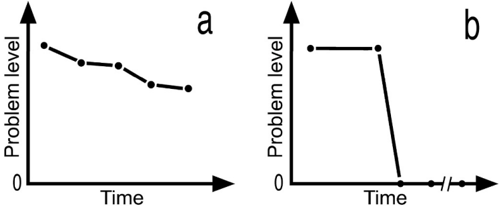
- Psychotherapy outcome research has not identified an internal mechanism of change; RCT/meta-analytic improvement averages about one standard deviation on outcome measures, typically a 20%–25% reduction in symptom strength, and evidence-based treatments show small to moderate effect sizes with gains that may not persist.
- MR research since 1997–2000 identifies a brain mechanism for updating consolidated memory: reactivation of a target learning plus a prediction-error/mismatch experience destabilizes it; the destabilized “reconsolidation window” lasts about 5 h, with restabilization by 6 h, and counter-learning during that window can functionally annul subcortical emotional learning.
- The ECPA consists of three experiences: reactivation of the target emotional learning, a contradictory/disconfirming prediction-error experience, and repetitions of their juxtaposition; laboratory studies show that omitting one component prevents the outcome, and the paper argues this fulfills Kazdin’s six criteria for a mechanism of change.
- Preliminary clinical observations include ECPA detection in ten cases of transformational change from ten different therapy systems, many published cases of intentional ECPA facilitation (Table 2 lists symptoms ended), and a case vignette (“Norina”) in which anger/resentment ceased and markers persisted 8 months later; a proposed RMC study would use blind raters to test causal timing.
Methods
- Conceptual/review article synthesizing psychotherapy outcome literature and neuroscientific MR research; it distinguishes counteractive/competitive encoding change from transformational/MR change.
- Uses Kazdin’s six criteria to evaluate MR/ECPA as a mechanism; presents a de-identified case vignette and cites preliminary published/uncontrolled clinical observations.
- Proposes the RMC study: neutral, blind raters use two reliability-tested coding systems on session video to detect ECPA components and transformational-change markers, with separate raters and precise timing; the study is described as in preparation.
Limitations
- Stated: clinical causal role of the ECPA remains to be empirically confirmed; proof would require direct detection of neurophysiological deconsolidation/reconsolidation components; preliminary clinical observations are uncontrolled; MR lab replication failures exist (online compendium: 20 successful nullification, 14 replication failures), and variables such as gender and biological phenotype may contribute.
- Stated: whether the original engram survives annulment is not clear, so the authors use “annulment” rather than “erasure”; clinical translation obstacles identified by neuroscientists are discussed but argued not to apply when experiences rather than procedures are replicated.
- Evident: support for clinical efficacy rests largely on case reports, preliminary observations, and a proposed study rather than controlled clinical trials; authors disclose a potential competing interest (Ecker is an unpaid co-director of the Coherence Psychology Institute, which provides training in the described methodology).
Model-written summary. Check it against the paper before relying on it.
Integrity signals
Registry
Cites
Statistics
Figures

Verification
Claims the paper makes
0 Valid · 12 Not valid · 67 Not checked · 89 Own results and interpretations
In the paper
“The manualization of clinical procedures, intended to deliver consistently better outcomes than nonmanualized treatments, has not done so (Truijens, Zühlke-van Hulzen, & Vanheule, 2019).”
§ Memory reconsolidation and the crisis of mechanism in psychotherapy > 1. Introduction: The challenge of identifying a mechanism of change
What the sources say
- Not checked yetcites Truijens, Zühlke-van Hulzen, & Vanheule, 2019 matched to “To manualize, or not to manualize: Is that still the question? A systematic review of empirical evidence for manual superiority in psychological treatment” (2019) source
plain- Asserted: passes — The authors put it forward as true.
- Checkable: passes — It can be checked against evidence.
- Load-bearing: passes — The paper’s conclusions depend on it.
- Based: passes — The paper gives a reason why it holds.
The paper states this without a source or data behind it here, so there is nothing to check it against. The quote shows it is in the paper.
In the paper
“The altered state of emotional activation (ego state, self state, emotional schema) that had accompanied the symptom no longer reactivates.”
§ Memory reconsolidation and the crisis of mechanism in psychotherapy > 2.2. Transformational, stable change through the mechanism of memory reconsolidation
plain- Asserted: passes — The authors put it forward as true.
- Checkable: passes — It can be checked against evidence.
- Load-bearing: passes — The paper’s conclusions depend on it.
- Based: unclear — It is unclear why the paper says it holds.
A result the paper states — it cites no source for it, so there is none to check. The quote shows it is in the paper.
In the paper
“It is a ubiquitous clinical observation that partial, incremental change results from methods that guide the new learning of a preferred behavior and/ or state of mind to adhere to instead of the problem pattern.”
§ Memory reconsolidation and the crisis of mechanism in psychotherapy > 2.1. Incremental, unstable change through the mechanism of competitive encoding
plainstates a cause- Asserted: passes — The authors put it forward as true.
- Checkable: passes — It can be checked against evidence.
- Load-bearing: passes — The paper’s conclusions depend on it.
- Based: passes — The paper gives a reason why it holds.
None of the sources cited for this claim have been checked yet.
In the paper
“even as other research has demonstrated that dramatic and lasting “sudden gains” do occur in psychotherapy (e.g., Hayes, Laurenceau, Feldman, Strauss, & Cardaciotto, 2007;Lutz et al., 2013).”
§ Memory reconsolidation and the crisis of mechanism in psychotherapy > 1. Introduction: The challenge of identifying a mechanism of change
What the sources say
- Not checked yetcites Hayes et al., 2007 matched to “Change is not always linear: The study of nonlinear and discontinuous patterns of change in psychotherapy” (2007) source
- Not checked yetcites Lutz et al., 2013 matched to “The ups and downs of psychotherapy: Sudden gains and sudden losses identified with session reports” (2013) source
boosted- Asserted: passes — The authors put it forward as true.
- Checkable: passes — It can be checked against evidence.
- Load-bearing: passes — The paper’s conclusions depend on it.
- Based: passes — The paper gives a reason why it holds.
None of the sources cited for this claim have been checked yet.
In the paper
“The consistency of RCT measurements of efficacy across time, across bona-fide therapy models, and across client conditions is one of the major findings (e.g., Luborsky et al., 2002;Miller, Wampold, & Varhely, 2008;Wampold et al., 1997).”
§ Memory reconsolidation and the crisis of mechanism in psychotherapy > 1. Introduction: The challenge of identifying a mechanism of change
What the sources say
- Not checked yetcites Luborsky et al., 2002 matched to “The Dodo bird verdict is alive and well-mostly.” (2002) source
- Not checked yetcites Miller, Wampold, & Varhely, 2008 matched to “Direct comparisons of treatment modalities for youth disorders: a meta-analysis” (2008) source
- Not checked yetcites Wampold et al., 1997 matched to “A meta-analysis of outcome studies comparing bona fide psychotherapies: Empiricially, "all must have prizes."” (1997) source
plain- Asserted: passes — The authors put it forward as true.
- Checkable: passes — It can be checked against evidence.
- Load-bearing: passes — The paper’s conclusions depend on it.
- Based: passes — The paper gives a reason why it holds.
77 more claims
Create a free account to see all 168 claims and to verify the 102 references still open.
- Probably not a substantial claim. 57
- It may state two separate claims as one. 40
Claims other papers make about this one
Each is checked against this paper’s own text: does it say what the citing paper says it does?
In the citing paper
“It is therefore that set of three experiences, not any particular procedure, that warrants being identified as the necessary mediator for recruiting the MR mechanism to produce annulment of emotional memory”
In the citing paper
“Full annulment of problematic emotional responses would be far above the standard of effectiveness of the mainstream clinical field, where partial, mild, incremental degrees of symptom”
In the citing paper
“and (b) the optimal clinical translation of MR research findings consists of inducing that set of three experiences in therapy sessions using any suitable techniques or procedures to do so.”
In the citing paper
“Ecker (2018) and Ecker and Vaz (2022) recognized that all successful studies of MR behavioral annulment of emotional memory induced the same set of three experiences in subjects (here termed the EIPA) despite using widely different experimental procedures, and proposed that (a) that set of experiences, not any particular procedure, should be understood to be what the brain”
In the citing paper
“the EIPA is the mediator, or operational condition, that engages the internal mechanism of MR to produce the outcome of transformational change, i.e., full annulment of a specific emotional learning and its behavioral, somatic, and state-of-mind manifestations.”
3 more claims about this paper
Create a free account to see every claim other papers make about this one.
Self-check
Percentages, sums and reported differences re-computed from the paper’s own numbers.
Each contradiction between two passages listed here was confirmed by an independent check.
Rated minor: it would not touch a result — a value no result rests on, a p-value that stays on the same side of the significance level, or a conflict that is clerical, resolved elsewhere in the paper, or outside its own findings.
In the paper
§ Memory reconsolidation and the crisis of mechanism in psychotherapy > References
“Björkstrand, J., Agren, T., Frick, A., Engman, J., Larsson, E. M., Furmark, T., et al. (2015). Disruption of memory reconsolidation erases a fear memory trace in the human amygdala: An 18-month follow-up. PLoS One, 10(7), Article e0129393. https://doi. org/10.1126/science.1223006”
§ Memory reconsolidation and the crisis of mechanism in psychotherapy > References
“Agren, T., Engman, J., Frick, A., Björkstrand, J., Larsson, E. M., Furmark, T., et al. (2012). Disruption of reconsolidation erases a fear memory trace in the human amygdala. Science, 337, 1550-1552. https://doi.org/10.1126/science.1223006”
Citations
Cites
Baron, R. M., & Kenny, D. A. (1986) · Journal of Personality and Social Psychology · doi:10.1037/0022-3514.51.6.1173 · Cited by 91,532
Mediators and Mechanisms of Change in Psychotherapy Research
Kazdin, A. E. (2007) · Annual Review of Clinical Psychology · doi:10.1146/annurev.clinpsy.3.022806.091432 · Cited by 2,504
Meta-analysis of psychotherapy outcome studies.
Smith, M. L., & Glass, G. V. (1977) · American Psychologist · doi:10.1037/0003-066x.32.9.752 · Cited by 2,154
Context and Behavioral Processes in Extinction: Table 1.
Bouton, M. E. (2004) · Learning & Memory · doi:10.1101/lm.78804 · Cited by 1,808
The Great Psychotherapy Debate: The Evidence for What Makes Psychotherapy Work
Wampold, B. E. (2015) · doi:10.4324/9780203582015 · Cited by 1,773
Preventing the return of fear in humans using reconsolidation update mechanisms
Schiller, D., Monfils, M.-H., Raio, C. M., Johnson, D. C., LeDoux, J. E., & Phelps, E. A. (2010) · Nature · doi:10.1038/nature08637 · Cited by 1,248
Wampold, B. E., Mondin, G. W., Moody, M., Stich, F., Benson, K., & Ahn, H.-N. (1997) · Psychological Bulletin · doi:10.1037/0033-2909.122.3.203 · Cited by 1,091
Dissociable stages of human memory consolidation and reconsolidation
Walker, M. P., Brakefield, T., Allan Hobson, J., & Stickgold, R. (2003) · Nature · doi:10.1038/nature01930 · Cited by 1,025
The Future of Intervention Science: Process-Based Therapy
Hofmann, S. G., & Hayes, S. C. (2019) · Clinical Psychological Science · doi:10.1177/2167702618772296 · Cited by 888
Molecular mechanisms of memory reconsolidation
Tronson, N. C., & Taylor, J. R. (2007) · Nature Reviews Neuroscience · doi:10.1038/nrn2090 · Cited by 784
Research works printed but not linked: 4
- Baldwin, S. A., & Imel, Z. E. (2013). Therapist effects: Findings and methods. In M. J. Lambert (Ed.), Bergin and Garfield's handbook of psychotherapy and behavior change (6 th ed., pp. 258-297). San Francisco: John Wiley & Sons.
- Castonguay, L. G., & Beutler, L. E. (Eds.). (2006). Principles of therapeutic change that work. Oxford, UK: Oxford University Press.
- Lambert, M. J. (2013). The efficacy and effectiveness of psychotherapy. In M. J. Lambert (Ed.), Bergin and Garfield's handbook of psychotherapy and behavior change (6 th ed., pp. 169-218). San Francisco: John Wiley & Sons.
- Manfield, P. (2003). EMDR Casebook (2nd ed.). New York: W. W. Norton.
Cited by
Lernia, D. D., Serino, S., Tuena, C., Cacciatore, C., Polli, N., & Riva, G. (2023) · International Journal of Clinical and Health Psychology · doi:10.1016/j.ijchp.2023.100383 · Cited by 26
Ecker, B. (2024) · Journal of Psychiatry and Psychiatric Disorders · doi:10.26502/jppd.2572-519x0226 · Cited by 9
Self-citationKapil, M., & Hadwin, A. F. (2026) · Frontiers in Education · doi:10.3389/feduc.2026.1714552 · Cited by 7
Reconsolidation: A paradigm shift
Schiller, D. (2022) · Brain Research Bulletin · doi:10.1016/j.brainresbull.2022.09.008 · Cited by 7
Hudson, M., & Johnson, M. I. (2023) · Frontiers in Pain Research · doi:10.3389/fpain.2023.1244390 · Cited by 5
Hudson, M., Chaudhary, N. I., & Johnson, M. I. (2025) · Healthcare and Rehabilitation · doi:10.1016/j.hcr.2025.100037 · Cited by 4
Hidden family rules: perspective on a dysfunctional paternalistic system and the persistence of pain
Hudson, M., & Johnson, M. I. (2023) · Frontiers in Pain Research · doi:10.3389/fpain.2023.1303853 · Cited by 4
Hope-focused Therapy: A Framework Outline
O’Hara, D. (2025) · Psychotherapy and Counselling Journal of Australia · doi:10.59158/001c.143300 · Cited by 4
Schwarz, R., & Stapleton, P. (2026) · Frontiers in Psychology · doi:10.3389/fpsyg.2026.1672132 · Cited by 3
Predictors of the Effectiveness of Psychedelics in Treating Depression—A Scoping Review
Chmiel, J., & Rybakowski, F. (2026) · International Journal of Molecular Sciences · doi:10.3390/ijms27052202 · Cited by 3
Creative embodiment and the arts therapies relational neuroscience (ATR-N) approach
Hass‐Cohen, N., & Vaisvaser, S. (2026) · The Arts in Psychotherapy · doi:10.1016/j.aip.2026.102472 · Cited by 3
Rubinstein, D., Korem, N., Bullard, D. G., & Harpaz‐Rotem, I. (2025) · Journal of Anxiety Disorders · doi:10.1016/j.janxdis.2025.103107 · Cited by 3
Fostering Creative Dialogues Through Imagery and Body Work in Metacognitive Interpersonal Therapy
Dimaggio, G., & Passarella, T. (2026) · Journal of Constructivist Psychology · doi:10.1080/10720537.2026.2639431 · Cited by 3
Moscovitch, D. A., & Huppert, J. D. (2025) · Elsevier eBooks · doi:10.1016/b978-0-443-14146-1.00010-3 · Cited by 2
Psychedelic Use and Psychological Healing Among Gender Exploring Clients: Clinicians’ Perspectives
Cassidy, E. K., Riccardi, J., Healy, B., Golakoti, S. S. M., & Farvid, P. (2026) · Women & Therapy · doi:10.1080/02703149.2026.2667141 · Cited by 1
Kapil, M., Rostampour, R., Hadwin, A. F., Miller, M., & Lawrence, B. C. (2025) · Canadian Journal of School Psychology · doi:10.1177/08295735251395628 · Cited by 1
Averill, L. A., & Neitzke‐Spruill, L. (2026) · FOCUS The Journal of Lifelong Learning in Psychiatry · doi:10.1176/appi.focus.20260006
Time-Limited Dynamic Psychotherapy (TLDP) in the Twenty-First Century
Binder, J. L. (2026) · Elsevier eBooks · doi:10.1016/b978-0-443-29009-1.00061-5
Week 7: Improving Relationships with Interpersonal Mindfulness
DPsych, B. A. C., & MD, A. D. G. (2025) · Wiley eBooks · doi:10.1002/9781394215645.ch7
Editorial: Memories for the future
Boeckle, M., Kramer, U., & Clayton, N. S. (2024) · Frontiers in Psychology · doi:10.3389/fpsyg.2024.1502718
Côté, S., & Cousineau, P. (2026) · Santé mentale au Québec · doi:10.7202/1129193ar
Procedural Memory Reconsolidation Following Multiple Reminders
Flint, R. W., Morehouse, J., Chown, A. E., Dickens, K. H., & Flint, E. (2026) · Psychological Reports · doi:10.1177/00332941261438074
Why Trauma Does Not Respond to Talk Therapy: A Symbolic–Somatic Account of Change
Ow, G. (2026) · African Journal of Social Sciences and Humanities Research · doi:10.52589/ajsshr-i6pqdb38
Memory Reconsolidation and Fear Extinction as Treatment of Trauma and PTSD: A Review
Du, G. (2026) · Scholarly review . · doi:10.70121/001c.154950
Trauma processing therapy: An integrated psychotherapy approach to process traumatic memories
Ardian, J., Ismaya, M. D. R. D., Octaviani, I. D., & Deazara, K. (2025) · Edelweiss Applied Science and Technology · doi:10.55214/2576-8484.v9i8.9294
How Psychotherapy Works: Navigating the Therapeutic Space with Confidence
Smith, J. (2026) · Routledge eBooks · doi:10.4324/9781003619659
Week 8: Improving Relationships with Mindful Communication
DPsych, B. A. C., & MD, A. D. G. (2025) · Wiley eBooks · doi:10.1002/9781394215645.ch8
Editorial: Memories for the future
Clayton, N. S. (2024) · Apollo (University of Cambridge) · doi:10.17863/cam.112424
Y, N. T. S. (2026) · Journal of Contemporary Approaches in Psychology and Psychotherapy. · doi:10.57017/jcapp.v4.i4.02
Velykodna, M., Романов, І., Marchetti, I., & Deputatov, V. (2026) · European Psychologist · doi:10.1027/1016-9040/a000601
Metadata
- Authors
- Ecker, B., & Vaz, A.
- Affiliations
- ISPA - Instituto Universitário (PT)
- Corresponding author
- Ecker, Bruce
- Venue
- New Ideas in Psychology
- Publisher
- Elsevier BV
- Published
- 2022-08
- Volume
- 66
- Pages
- 100945
- ISSN
- 0732-118X (ISSN-L)
- OpenAlex
- W4225087509
- Cited by
- 30
- References
- 91
- Citations by year
- 2026: 15 · 2025: 8 · 2024: 3 · 2023: 3 · 2022: 1
- FWCI
- 2.36
- Type
- journal article
- Language
- en
- Open access
- hybrid
- doi.org
- Licence
- cc-by-nc-nd
- www.elsevier.com/tdm/userlicense/1.0/ (tdm)
- www.elsevier.com/legal/tdmrep-license (tdm)
- creativecommons.org/licenses/by-nc-nd/4.0/ (vor)
- Locations
- New Ideas in Psychology (publishedVersion, cc-by-nc-nd)
- Topics
- Social Sciences › Psychology › Clinical Psychology › Psychotherapy Techniques and Applications
- Life Sciences › Neuroscience › Cognitive Neuroscience › Memory and Neural Mechanisms
- Life Sciences › Neuroscience › Cognitive Neuroscience › Memory Processes and Influences
- Keywords
- memory reconsolidation, mechanisms of change, psychotherapy outcome, emotional learning, unlearning, transformative change, psychotherapy effectiveness, neurobiology of psychotherapy
About these checks
Registry, retraction, Cites and statistics results are computed, not judged, with one exception: a printed reference that no index lists is read once by a model before it counts as a citation error. Claims are extracted by a model and kept only when their quote appears verbatim in the text; each cited source is then checked, with a model’s help, for whether it says what the claim relies on. Those verdicts can be wrong — read the claim’s quote and the cited source before relying on one.
A language model drew the claims from the paper on 2026-11-28, under version 3 of the claim definition (model deepseek-v4.1-flash, prompt extract-v3).
A second model labelled each claim on 2026-11-28 (model jev-1.13-20260917, definition revision gold-guideline-v0.2).
Statistics and arithmetic are recomputed, not judged.
Confidence bands are shown only for fields calibrated on our annotated test set. None is calibrated yet, so no band is shown.
What counts as a claim ›How we measure confidence ›How we check this ›
Are you an author, or do you see a problem with this page? Request a review
Data sources
Bibliographic data: Semantic Scholar, OpenAlex, Crossref.
Contains information from the Semantic Scholar Academic Graph Datasets, made available under the ODC Attribution License (ODC-BY 1.0).
Semantic Scholar’s data is described in: Kinney, R., et al. (2023). The Semantic Scholar Open Data Platform. arXiv:2301.10140.
