

Memory reconsolidation and the crisis of mechanism in psychotherapy
Open accessThe DOI matches its Crossref record; 90 of the 92 references it cites were found in a registry or an index, and 1 are not checked yet; none of the 111 sources its claims cite is checked for support yet.
Abstract
Internal mechanisms of lasting therapeutic change have eluded empirical identification despite decades of outcome research. A breakthrough may be at hand in neurobiological research on memory reconsolidation (MR), which has identified (a) a fundamental mechanism of the brain capable of targeted, profound unlearning and nullification of subcortical emotional learnings and the behaviors and states of mind they generate, and (b) the specific experiences required by the brain for such unlearning. We review the empirically identified process of annulment of emotional learnings, show that it fulfills clinical theorists' criteria for a mechanism of change, and define an empirical study to validate or falsify this MR mechanism's hypothesized clinical occurrence and causal role in therapeutic change. Extensive preliminary clinical observations of transformational change, also described, strongly support the causal role of the mechanism. The MR framework could significantly advance psychotherapy effectiveness and unification, and resolve longstanding clinical conundrums and controversies.
Checked 2026-11-28 · 1 reference not checked yet
Overview
CoChat Summary
TL;DR
The paper argues that memory reconsolidation (MR), specifically the empirically confirmed process of annulment (ECPA), is a candidate internal mechanism of lasting psychotherapeutic change and that it fulfills Kazdin’s criteria for a mechanism in laboratory studies. It proposes an empirical RMC study to test whether ECPA experiences precede transformational change in therapy and cites preliminary uncontrolled clinical observations and a case vignette as support.
Key findings
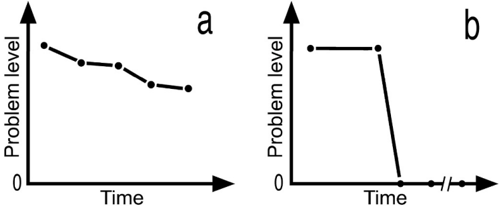
- Psychotherapy outcome research has not identified an internal mechanism of change; RCT/meta-analytic improvement averages about one standard deviation on outcome measures, typically a 20%–25% reduction in symptom strength, and evidence-based treatments show small to moderate effect sizes with gains that may not persist.
- MR research since 1997–2000 identifies a brain mechanism for updating consolidated memory: reactivation of a target learning plus a prediction-error/mismatch experience destabilizes it; the destabilized “reconsolidation window” lasts about 5 h, with restabilization by 6 h, and counter-learning during that window can functionally annul subcortical emotional learning.
- The ECPA consists of three experiences: reactivation of the target emotional learning, a contradictory/disconfirming prediction-error experience, and repetitions of their juxtaposition; laboratory studies show that omitting one component prevents the outcome, and the paper argues this fulfills Kazdin’s six criteria for a mechanism of change.
- Preliminary clinical observations include ECPA detection in ten cases of transformational change from ten different therapy systems, many published cases of intentional ECPA facilitation (Table 2 lists symptoms ended), and a case vignette (“Norina”) in which anger/resentment ceased and markers persisted 8 months later; a proposed RMC study would use blind raters to test causal timing.
Methods
- Conceptual/review article synthesizing psychotherapy outcome literature and neuroscientific MR research; it distinguishes counteractive/competitive encoding change from transformational/MR change.
- Uses Kazdin’s six criteria to evaluate MR/ECPA as a mechanism; presents a de-identified case vignette and cites preliminary published/uncontrolled clinical observations.
- Proposes the RMC study: neutral, blind raters use two reliability-tested coding systems on session video to detect ECPA components and transformational-change markers, with separate raters and precise timing; the study is described as in preparation.
Limitations
- Stated: clinical causal role of the ECPA remains to be empirically confirmed; proof would require direct detection of neurophysiological deconsolidation/reconsolidation components; preliminary clinical observations are uncontrolled; MR lab replication failures exist (online compendium: 20 successful nullification, 14 replication failures), and variables such as gender and biological phenotype may contribute.
- Stated: whether the original engram survives annulment is not clear, so the authors use “annulment” rather than “erasure”; clinical translation obstacles identified by neuroscientists are discussed but argued not to apply when experiences rather than procedures are replicated.
- Evident: support for clinical efficacy rests largely on case reports, preliminary observations, and a proposed study rather than controlled clinical trials; authors disclose a potential competing interest (Ecker is an unpaid co-director of the Coherence Psychology Institute, which provides training in the described methodology).
Model-written summary. Check it against the paper before relying on it.
Integrity signals
Registry
Cites
Statistics
Figures

Verification
Claims the paper makes
0 Valid · 12 Not valid · 67 Not checked · 89 Own results and interpretations
In the paper
“The manualization of clinical procedures, intended to deliver consistently better outcomes than nonmanualized treatments, has not done so (Truijens, Zühlke-van Hulzen, & Vanheule, 2019).”
§ Memory reconsolidation and the crisis of mechanism in psychotherapy > 1. Introduction: The challenge of identifying a mechanism of change
What the sources say
- Not checked yetcites Truijens, Zühlke-van Hulzen, & Vanheule, 2019 matched to “To manualize, or not to manualize: Is that still the question? A systematic review of empirical evidence for manual superiority in psychological treatment” (2019) source
plain- Asserted: passes — The authors put it forward as true.
- Checkable: passes — It can be checked against evidence.
- Load-bearing: passes — The paper’s conclusions depend on it.
- Based: passes — The paper gives a reason why it holds.
The paper states this without a source or data behind it here, so there is nothing to check it against. The quote shows it is in the paper.
In the paper
“The altered state of emotional activation (ego state, self state, emotional schema) that had accompanied the symptom no longer reactivates.”
§ Memory reconsolidation and the crisis of mechanism in psychotherapy > 2.2. Transformational, stable change through the mechanism of memory reconsolidation
plain- Asserted: passes — The authors put it forward as true.
- Checkable: passes — It can be checked against evidence.
- Load-bearing: passes — The paper’s conclusions depend on it.
- Based: unclear — It is unclear why the paper says it holds.
A result the paper states — it cites no source for it, so there is none to check. The quote shows it is in the paper.
In the paper
“It is a ubiquitous clinical observation that partial, incremental change results from methods that guide the new learning of a preferred behavior and/ or state of mind to adhere to instead of the problem pattern.”
§ Memory reconsolidation and the crisis of mechanism in psychotherapy > 2.1. Incremental, unstable change through the mechanism of competitive encoding
plainstates a cause- Asserted: passes — The authors put it forward as true.
- Checkable: passes — It can be checked against evidence.
- Load-bearing: passes — The paper’s conclusions depend on it.
- Based: passes — The paper gives a reason why it holds.
None of the sources cited for this claim have been checked yet.
In the paper
“even as other research has demonstrated that dramatic and lasting “sudden gains” do occur in psychotherapy (e.g., Hayes, Laurenceau, Feldman, Strauss, & Cardaciotto, 2007;Lutz et al., 2013).”
§ Memory reconsolidation and the crisis of mechanism in psychotherapy > 1. Introduction: The challenge of identifying a mechanism of change
What the sources say
- Not checked yetcites Hayes et al., 2007 matched to “Change is not always linear: The study of nonlinear and discontinuous patterns of change in psychotherapy” (2007) source
- Not checked yetcites Lutz et al., 2013 matched to “The ups and downs of psychotherapy: Sudden gains and sudden losses identified with session reports” (2013) source
boosted- Asserted: passes — The authors put it forward as true.
- Checkable: passes — It can be checked against evidence.
- Load-bearing: passes — The paper’s conclusions depend on it.
- Based: passes — The paper gives a reason why it holds.
None of the sources cited for this claim have been checked yet.
In the paper
“The consistency of RCT measurements of efficacy across time, across bona-fide therapy models, and across client conditions is one of the major findings (e.g., Luborsky et al., 2002;Miller, Wampold, & Varhely, 2008;Wampold et al., 1997).”
§ Memory reconsolidation and the crisis of mechanism in psychotherapy > 1. Introduction: The challenge of identifying a mechanism of change
What the sources say
- Not checked yetcites Luborsky et al., 2002 matched to “The Dodo bird verdict is alive and well-mostly.” (2002) source
- Not checked yetcites Miller, Wampold, & Varhely, 2008 matched to “Direct comparisons of treatment modalities for youth disorders: a meta-analysis” (2008) source
- Not checked yetcites Wampold et al., 1997 matched to “A meta-analysis of outcome studies comparing bona fide psychotherapies: Empiricially, "all must have prizes."” (1997) source
plain- Asserted: passes — The authors put it forward as true.
- Checkable: passes — It can be checked against evidence.
- Load-bearing: passes — The paper’s conclusions depend on it.
- Based: passes — The paper gives a reason why it holds.
77 more claims
Create a free account to see all 168 claims and to verify the 102 references still open.
- Probably not a substantial claim. 57
- It may state two separate claims as one. 40
Claims other papers make about this one
Each is checked against this paper’s own text: does it say what the citing paper says it does?
In the citing paper
“It is therefore that set of three experiences, not any particular procedure, that warrants being identified as the necessary mediator for recruiting the MR mechanism to produce annulment of emotional memory”
In the citing paper
“Full annulment of problematic emotional responses would be far above the standard of effectiveness of the mainstream clinical field, where partial, mild, incremental degrees of symptom”
In the citing paper
“and (b) the optimal clinical translation of MR research findings consists of inducing that set of three experiences in therapy sessions using any suitable techniques or procedures to do so.”
In the citing paper
“Ecker (2018) and Ecker and Vaz (2022) recognized that all successful studies of MR behavioral annulment of emotional memory induced the same set of three experiences in subjects (here termed the EIPA) despite using widely different experimental procedures, and proposed that (a) that set of experiences, not any particular procedure, should be understood to be what the brain”
In the citing paper
“the EIPA is the mediator, or operational condition, that engages the internal mechanism of MR to produce the outcome of transformational change, i.e., full annulment of a specific emotional learning and its behavioral, somatic, and state-of-mind manifestations.”
3 more claims about this paper
Create a free account to see every claim other papers make about this one.
Self-check
Percentages, sums and reported differences re-computed from the paper’s own numbers.
Each contradiction between two passages listed here was confirmed by an independent check.
Rated minor: it would not touch a result — a value no result rests on, a p-value that stays on the same side of the significance level, or a conflict that is clerical, resolved elsewhere in the paper, or outside its own findings.
In the paper
§ Memory reconsolidation and the crisis of mechanism in psychotherapy > References
“Björkstrand, J., Agren, T., Frick, A., Engman, J., Larsson, E. M., Furmark, T., et al. (2015). Disruption of memory reconsolidation erases a fear memory trace in the human amygdala: An 18-month follow-up. PLoS One, 10(7), Article e0129393. https://doi. org/10.1126/science.1223006”
§ Memory reconsolidation and the crisis of mechanism in psychotherapy > References
“Agren, T., Engman, J., Frick, A., Björkstrand, J., Larsson, E. M., Furmark, T., et al. (2012). Disruption of reconsolidation erases a fear memory trace in the human amygdala. Science, 337, 1550-1552. https://doi.org/10.1126/science.1223006”
Citations
Cites
Baron, R. M., & Kenny, D. A. (1986) · Journal of Personality and Social Psychology · doi:10.1037/0022-3514.51.6.1173 · Cited by 91,532
Mediators and Mechanisms of Change in Psychotherapy Research
Kazdin, A. E. (2007) · Annual Review of Clinical Psychology · doi:10.1146/annurev.clinpsy.3.022806.091432 · Cited by 2,504
Meta-analysis of psychotherapy outcome studies.
Smith, M. L., & Glass, G. V. (1977) · American Psychologist · doi:10.1037/0003-066x.32.9.752 · Cited by 2,154
Context and Behavioral Processes in Extinction: Table 1.
Bouton, M. E. (2004) · Learning & Memory · doi:10.1101/lm.78804 · Cited by 1,808
The Great Psychotherapy Debate: The Evidence for What Makes Psychotherapy Work
Wampold, B. E. (2015) · doi:10.4324/9780203582015 · Cited by 1,773
Preventing the return of fear in humans using reconsolidation update mechanisms
Schiller, D., Monfils, M.-H., Raio, C. M., Johnson, D. C., LeDoux, J. E., & Phelps, E. A. (2010) · Nature · doi:10.1038/nature08637 · Cited by 1,248
Wampold, B. E., Mondin, G. W., Moody, M., Stich, F., Benson, K., & Ahn, H.-N. (1997) · Psychological Bulletin · doi:10.1037/0033-2909.122.3.203 · Cited by 1,091
Dissociable stages of human memory consolidation and reconsolidation
Walker, M. P., Brakefield, T., Allan Hobson, J., & Stickgold, R. (2003) · Nature · doi:10.1038/nature01930 · Cited by 1,025
The Future of Intervention Science: Process-Based Therapy
Hofmann, S. G., & Hayes, S. C. (2019) · Clinical Psychological Science · doi:10.1177/2167702618772296 · Cited by 888
Molecular mechanisms of memory reconsolidation
Tronson, N. C., & Taylor, J. R. (2007) · Nature Reviews Neuroscience · doi:10.1038/nrn2090 · Cited by 784
The Role of Common Factors in Psychotherapy Outcomes
Cuijpers, P., Reijnders, M., & Huibers, M. J. H. (2019) · Annual Review of Clinical Psychology · doi:10.1146/annurev-clinpsy-050718-095424 · Cited by 748
Understanding how and why psychotherapy leads to change
Kazdin, A. E. (2009) · Psychotherapy Research · doi:10.1080/10503300802448899 · Cited by 728
Lane, R. D., Ryan, L., Nadel, L., & Greenberg, L. (2015) · Behavioral and Brain Sciences · doi:10.1017/s0140525x14000041 · Cited by 686
Fear Extinction and Relapse: State of the Art
Vervliet, B., Craske, M. G., & Hermans, D. (2013) · Annual Review of Clinical Psychology · doi:10.1146/annurev-clinpsy-050212-185542 · Cited by 671
The Dodo bird verdict is alive and well-mostly.
Luborsky, L., Rosenthal, R., Diguer, L., Andrusyna, T. P., Berman, J. S., Levitt, J. T., Seligman, D. A., & Krause, E. D. (2002) · Clinical Psychology: Science and Practice · doi:10.1093/clipsy.9.1.2 · Cited by 581
Bidirectional switch of the valence associated with a hippocampal contextual memory engram
Redondo, R. L., Kim, J., Arons, A. L., Ramirez, S., Liu, X., & Tonegawa, S. (2014) · Nature · doi:10.1038/nature13725 · Cited by 512
Hayes, A. M., Laurenceau, J.-P., Feldman, G., Strauss, J. L., & Cardaciotto, L. (2007) · Clinical Psychology Review · doi:10.1016/j.cpr.2007.01.008 · Cited by 508
Calcium-Permeable AMPA Receptor Dynamics Mediate Fear Memory Erasure
Clem, R. L., & Huganir, R. L. (2010) · Science · doi:10.1126/science.1195298 · Cited by 493
Toward the delineation of therapeutic change principles.
Goldfried, M. R. (1980) · American Psychologist · doi:10.1037/0003-066x.35.11.991 · Cited by 451
Synaptic Protein Degradation Underlies Destabilization of Retrieved Fear Memory
Lee, S.-H., Choi, J.-H., Lee, N., Lee, H.-R., Kim, J.-I., Yu, N.-K., Choi, S.-L., Lee, S.-H., Kim, H., & Kaang, B.-K. (2008) · Science · doi:10.1126/science.1150541 · Cited by 409
Psychotherapy Relationships that Work: Volume 1: Evidence-Based Therapist Contributions
(2019) · Oxford University Press eBooks · doi:10.1093/med-psych/9780190843953.001.0001 · Cited by 401
Disruption of Reconsolidation Erases a Fear Memory Trace in the Human Amygdala
Agren, T., Engman, J., Frick, A., Björkstrand, J., Larsson, E.-M., Furmark, T., & Fredrikson, M. (2012) · Science · doi:10.1126/science.1223006 · Cited by 376
Pedreira, M. E., Pérez-Cuesta, L. M., & Maldonado, H. (2004) · Learning & Memory · doi:10.1101/lm.76904 · Cited by 367
Waiting for supershrink: an empirical analysis of therapist effects
Okiishi, J., Lambert, M. J., Nielsen, S. L., & Ogles, B. M. (2003) · Clinical Psychology & Psychotherapy · doi:10.1002/cpp.383 · Cited by 330
Indelibility of Subcortical Emotional Memories
LeDoux, J. E., Romanski, L., & Xagoraris, A. (1989) · Journal of Cognitive Neuroscience · doi:10.1162/jocn.1989.1.3.238 · Cited by 321
Retrieval per se is not sufficient to trigger reconsolidation of human fear memory
Sevenster, D., Beckers, T., & Kindt, M. (2012) · Neurobiology of Learning and Memory · doi:10.1016/j.nlm.2012.01.009 · Cited by 238
Does professional training make a therapist more effective?
Berman, J. S., & Norton, N. C. (1985) · Psychological Bulletin · doi:10.1037//0033-2909.98.2.401 · Cited by 218
Pedreira, M. E., Pérez-Cuesta, L. M., & Maldonado, H. (2002) · The Journal of Neuroscience · doi:10.1523/jneurosci.22-18-08305.2002 · Cited by 213
Updating memories—The role of prediction errors in memory reconsolidation
Exton-McGuinness, M. T. J., Lee, J. L. C., & Reichelt, A. C. (2015) · Behavioural Brain Research · doi:10.1016/j.bbr.2014.10.011 · Cited by 203
The ups and downs of psychotherapy: Sudden gains and sudden losses identified with session reports
Lutz, W., Ehrlich, T., Rubel, J., Hallwachs, N., Röttger, M.-A., Jorasz, C., Mocanu, S., Vocks, S., Schulte, D., & Tschitsaz-Stucki, A. (2013) · Psychotherapy Research · doi:10.1080/10503307.2012.693837 · Cited by 189
Beckers, T., & Kindt, M. (2017) · Annual Review of Clinical Psychology · doi:10.1146/annurev-clinpsy-032816-045209 · Cited by 171
Detection of a Temporal Error Triggers Reconsolidation of Amygdala-Dependent Memories
Díaz-Mataix, L., Ruiz Martinez, R. C., Schafe, G. E., LeDoux, J. E., & Doyère, V. (2013) · Current Biology · doi:10.1016/j.cub.2013.01.053 · Cited by 168
Emotion-Focused Therapy: A Clinical Synthesis
Greenberg, L. S. (2010) · Focus · doi:10.1176/foc.8.1.foc32 · Cited by 159
Improving Outcome of Psychosocial Treatments by Enhancing Memory and Learning
Harvey, A. G., Lee, J., Williams, J., Hollon, S. D., Walker, M. P., Thompson, M. A., & Smith, R. (2014) · Perspectives on Psychological Science · doi:10.1177/1745691614521781 · Cited by 159
Conceptual and design essentials for evaluating mechanisms of change
Nock, M. K. (2007) · Alcoholism: Clinical and Experimental Research · doi:10.1111/j.1530-0277.2007.00488.x · Cited by 158
Memory Reconsolidation Mediates the Updating of Hippocampal Memory Content
Lee, J. L. C. (2010) · Frontiers in Behavioral Neuroscience · doi:10.3389/fnbeh.2010.00168 · Cited by 153
Reconsolidation in humans opens up declarative memory to the entrance of new information
Forcato, C., Rodríguez, M. L. C., Pedreira, M. E., & Maldonado, H. (2010) · Neurobiology of Learning and Memory · doi:10.1016/j.nlm.2009.08.006 · Cited by 147
Prediction error and memory reactivation: How incomplete reminders drive reconsolidation
Sinclair, A. H., & Barense, M. D. (2019) · Trends in Neurosciences · doi:10.1016/j.tins.2019.08.007 · Cited by 147
Human reconsolidation: A reactivation and update
Agren, T. (2014) · Brain Research Bulletin · doi:10.1016/j.brainresbull.2013.12.010 · Cited by 129
Direct comparisons of treatment modalities for youth disorders: a meta-analysis
Miller, S., Wampold, B., & Varhely, K. (2008) · Psychotherapy Research · doi:10.1080/10503300701472131 · Cited by 126
Oyarzún, J. P., Lopez-Barroso, D., Fuentemilla, L., Cucurell, D., Pedraza, C., Rodriguez-Fornells, A., & de Diego-Balaguer, R. (2012) · PLoS ONE · doi:10.1371/journal.pone.0038849 · Cited by 125
Reconsolidation: A brief history, a retrieval view, and some recent issues
Riccio, D. C., Millin, P. M., & Bogart, A. R. (2006) · Learning & Memory · doi:10.1101/lm.290706 · Cited by 118
Obtaining consensus in psychotherapy: What holds us back?
Goldfried, M. R. (2019) · American Psychologist · doi:10.1037/amp0000365 · Cited by 110
De Oliveira Alvares, L., Crestani, A. P., Cassini, L. F., Haubrich, J., Santana, F., & Quillfeldt, J. A. (2013) · Neuroscience · doi:10.1016/j.neuroscience.2013.04.005 · Cited by 100
Haubrich, J., Crestani, A. P., Cassini, L. F., Santana, F., Sierra, R. O., Alvares, L. D. O., & Quillfeldt, J. A. (2015) · Neuropsychopharmacology · doi:10.1038/npp.2014.174 · Cited by 100
Erasing fear for an imagined threat event
Soeter, M., & Kindt, M. (2012) · Psychoneuroendocrinology · doi:10.1016/j.psyneuen.2012.03.011 · Cited by 95
New learning and unlearning: strangers or accomplices in threat memory attenuation?
Clem, R. L., & Schiller, D. (2016) · Trends in Neurosciences · doi:10.1016/j.tins.2016.03.003 · Cited by 90
Where Is the Evidence for “Evidence-Based” Therapy?
Shedler, J. (2018) · Psychiatric Clinics of North America · doi:10.1016/j.psc.2018.02.001 · Cited by 90
Human fear reconsolidation and allelic differences in serotonergic and dopaminergic genes
Agren, T., Furmark, T., Eriksson, E., & Fredrikson, M. (2012) · Translational Psychiatry · doi:10.1038/tp.2012.5 · Cited by 74
Reconsolidation and psychopathology: Moving towards reconsolidation-based treatments
Dunbar, A. B., & Taylor, J. R. (2017) · Neurobiology of Learning and Memory · doi:10.1016/j.nlm.2016.11.005 · Cited by 66
Translational Approaches Targeting Reconsolidation
Kroes, M. C. W., Schiller, D., LeDoux, J. E., & Phelps, E. A. (2015) · Current Topics in Behavioral Neurosciences · doi:10.1007/7854_2015_5008 · Cited by 66
Truijens, F., Zühlke‐van Hulzen, L., & Vanheule, S. (2019) · Journal of Clinical Psychology · doi:10.1002/jclp.22712 · Cited by 66
Björkstrand, J., Agren, T., Frick, A., Engman, J., Larsson, E.-M., Furmark, T., & Fredrikson, M. (2015) · PLOS ONE · doi:10.1371/journal.pone.0129393 · Cited by 65
Memory destabilization is critical for the success of the reactivation–extinction procedure
Piñeyro, M. E., Ferrer Monti, R. I., Alfei, J. M., Bueno, A. M., & Urcelay, G. P. (2014) · Learning & Memory · doi:10.1101/lm.032714.113 · Cited by 64
Chalkia, A., Schroyens, N., Leng, L., Vanhasbroeck, N., Zenses, A.-K., Van Oudenhove, L., & Beckers, T. (2020) · Cortex · doi:10.1016/j.cortex.2020.04.017 · Cited by 63
Tackling maladaptive memories through reconsolidation: From neural to clinical science
Elsey, J. W. B., & Kindt, M. (2017) · Neurobiology of Learning and Memory · doi:10.1016/j.nlm.2017.03.007 · Cited by 60
Strengthening a consolidated memory: The key role of the reconsolidation process
Forcato, C., Fernandez, R. S., & Pedreira, M. E. (2014) · Journal of Physiology-Paris · doi:10.1016/j.jphysparis.2014.09.001 · Cited by 60
The essence of the engram: Cellular or synaptic?
Han, D. H., Park, P., Choi, D. I., Bliss, T. V. P., & Kaang, B.-K. (2022) · Seminars in Cell & Developmental Biology · doi:10.1016/j.semcdb.2021.05.033 · Cited by 58
Counterconditioning during reconsolidation prevents relapse of cocaine memories
Goltseker, K., Bolotin, L., & Barak, S. (2017) · Neuropsychopharmacology · doi:10.1038/npp.2016.140 · Cited by 58
Diaz-Mataix, L., Debiec, J., LeDoux, J. E., & Doyere, V. (2011) · Journal of Neuroscience · doi:10.1523/jneurosci.5808-10.2011 · Cited by 57
Function and mechanisms of memory destabilization and reconsolidation after retrieval
KIDA, S. (2020) · Proceedings of the Japan Academy, Series B · doi:10.2183/pjab.96.008 · Cited by 53
Asthana, M. K., Brunhuber, B., Mühlberger, A., Reif, A., Schneider, S., & Herrmann, M. J. (2015) · International Journal of Neuropsychopharmacology · doi:10.1093/ijnp/pyv137 · Cited by 52
Jarome, T. J., Kwapis, J. L., Werner, C. T., Parsons, R. G., Gafford, G. M., & Helmstetter, F. J. (2012) · Learning & Memory · doi:10.1101/lm.024901.111 · Cited by 51
Haubrich, J., Bernabo, M., Baker, A. G., & Nader, K. (2020) · Annual Review of Neuroscience · doi:10.1146/annurev-neuro-091319-024636 · Cited by 41
Ecker, B., & Bridges, S. K. (2020) · Clinical Social Work Journal · doi:10.1007/s10615-020-00754-z · Cited by 38
Self-citationLipton, B., & Fosha, D. (2011) · Journal of Psychotherapy Integration · doi:10.1037/a0025421 · Cited by 38
Five types of clinical difference to monitor in practice.
Langkaas, T. F., Wampold, B. E., & Hoffart, A. (2018) · Psychotherapy · doi:10.1037/pst0000194 · Cited by 33
Meyer, F., & Louilot, A. (2014) · Frontiers in Behavioral Neuroscience · doi:10.3389/fnbeh.2013.00118 · Cited by 32
Chen, W., Li, J., Zhang, X., Dong, Y., Shi, P., Luo, P., & Zheng, X. (2021) · Behaviour Research and Therapy · doi:10.1016/j.brat.2021.103831 · Cited by 30
Behavioral disruption of memory reconsolidation: From bench to bedside and back again.
Drexler, S. M., & Wolf, O. T. (2018) · Behavioral Neuroscience · doi:10.1037/bne0000231 · Cited by 30
Limited replicability of drug-induced amnesia after contextual fear memory retrieval in rats
Schroyens, N., Alfei, J. M., Schnell, A. E., Luyten, L., & Beckers, T. (2019) · Neurobiology of Learning and Memory · doi:10.1016/j.nlm.2019.107105 · Cited by 29
Ecker, B. (2018) · International Journal of Neuropsychotherapy · doi:10.12744/ijnpt.2018.0001-0092 · Cited by 27
Self-citationUpdating Procedures Can Reorganize the Neural Circuit Supporting a Fear Memory
Kwapis, J. L., Jarome, T. J., Ferrara, N. C., & Helmstetter, F. J. (2017) · Neuropsychopharmacology · doi:10.1038/npp.2017.23 · Cited by 27
Toward the delineation of therapeutic change principles
Goldfried, M. R. (2009) · Applied and Preventive Psychology · doi:10.1016/j.appsy.2009.10.015 · Cited by 26
A comparison of behavioral and pharmacological interventions to attenuate reactivated fear memoriesPreprint
Monti, R. I. F., Alfei, J. M., Mugnaini, M., Bueno, A. M., Beckers, T., Urcelay, G. P., & Molina, V. A. (2017) · Learning & Memory · doi:10.1101/lm.045385.117 · Cited by 25
Emotional memory expression is misleading: Delineating transitions between memory processes
Faliagkas, L., Rao-Ruiz, P., & Kindt, M. (2018) · Current Opinion in Behavioral Sciences · doi:10.1016/j.cobeha.2017.12.018 · Cited by 24
Maximizing Effectiveness in Dynamic Psychotherapy
Coughlin, P. (2016) · Routledge eBooks · doi:10.4324/9781315740249 · Cited by 24
The good, the bad, and the ugly: A 50-year perspective on the outcome problem
Wampold, B. E. (2013) · Psychotherapy · doi:10.1037/a0030570 · Cited by 23
Depotentiation of symptom-producing implicit memory in coherence therapy.
Ecker, B., & Toomey, B. (2008) · Journal of Constructivist Psychology · doi:10.1080/10720530701853685 · Cited by 21
Self-citationCampos-Arteaga, G., Forcato, C., Wainstein, G., Lagos, R., Palacios-García, I., Artigas, C., Morales, R., Pedreira, M. E., & Rodríguez, E. (2020) · Neurobiology of Learning and Memory · doi:10.1016/j.nlm.2020.107279 · Cited by 19
Emotional processing in the treatment of psychosomatic disorders
Coughlin Della Selva, P. (2006) · Journal of Clinical Psychology · doi:10.1002/jclp.20247 · Cited by 16
Transformative emotional sequence: Towards a common principle of change.
Welling, H. (2012) · Journal of Psychotherapy Integration · doi:10.1037/a0027786 · Cited by 15
Ecker, B., Hulley, L., & Ticic, R. (2015) · Behavioral and Brain Sciences · doi:10.1017/s0140525x14000168 · Cited by 10
Self-citationAffect regulation and affect reconsolidation as organizing principles in psychotherapy.
Stevens, F. L. (2019) · Journal of Psychotherapy Integration · doi:10.1037/int0000130 · Cited by 9
Memory reconsolidation in psychotherapy for severe perfectionism within borderline personality
Vaz, A., & Ecker, B. (2020) · Journal of Clinical Psychology · doi:10.1002/jclp.23058 · Cited by 6
Self-citationUnconscious learning of likes and dislikes is persistent, resilient, and reconsolidates
Pine, A., Mendelsohn, A., & Dudai, Y. (2014) · Frontiers in Psychology · doi:10.3389/fpsyg.2014.01051 · Cited by 6
Gender difference in retrieval-extinction of conditioned fear memory
CHEN, W., LIN, X., LI, J., ZHANG, W., SUN, N., & ZHENG, X. (2021) · Acta Psychologica Sinica · doi:10.3724/sp.j.1041.2021.01082 · Cited by 4
Recent developments and future directions of clinical psychology.
Norcross, J. C., VandenBos, G. R., & Freedheim, D. K. (2016) · American Psychological Association eBooks · doi:10.1037/14774-029 · Cited by 1
(2012)
Self-citation(2011)
Research works printed but not linked: 4
- Baldwin, S. A., & Imel, Z. E. (2013). Therapist effects: Findings and methods. In M. J. Lambert (Ed.), Bergin and Garfield's handbook of psychotherapy and behavior change (6 th ed., pp. 258-297). San Francisco: John Wiley & Sons.
- Castonguay, L. G., & Beutler, L. E. (Eds.). (2006). Principles of therapeutic change that work. Oxford, UK: Oxford University Press.
- Lambert, M. J. (2013). The efficacy and effectiveness of psychotherapy. In M. J. Lambert (Ed.), Bergin and Garfield's handbook of psychotherapy and behavior change (6 th ed., pp. 169-218). San Francisco: John Wiley & Sons.
- Manfield, P. (2003). EMDR Casebook (2nd ed.). New York: W. W. Norton.
Cited by
Lernia, D. D., Serino, S., Tuena, C., Cacciatore, C., Polli, N., & Riva, G. (2023) · International Journal of Clinical and Health Psychology · doi:10.1016/j.ijchp.2023.100383 · Cited by 26
Ecker, B. (2024) · Journal of Psychiatry and Psychiatric Disorders · doi:10.26502/jppd.2572-519x0226 · Cited by 9
Self-citationKapil, M., & Hadwin, A. F. (2026) · Frontiers in Education · doi:10.3389/feduc.2026.1714552 · Cited by 7
Reconsolidation: A paradigm shift
Schiller, D. (2022) · Brain Research Bulletin · doi:10.1016/j.brainresbull.2022.09.008 · Cited by 7
Hudson, M., & Johnson, M. I. (2023) · Frontiers in Pain Research · doi:10.3389/fpain.2023.1244390 · Cited by 5
Metadata
- Authors
- Ecker, B., & Vaz, A.
- Affiliations
- ISPA - Instituto Universitário (PT)
- Corresponding author
- Ecker, Bruce
- Venue
- New Ideas in Psychology
- Publisher
- Elsevier BV
- Published
- 2022-08
- Volume
- 66
- Pages
- 100945
- ISSN
- 0732-118X (ISSN-L)
- OpenAlex
- W4225087509
- Cited by
- 30
- References
- 91
- Citations by year
- 2026: 15 · 2025: 8 · 2024: 3 · 2023: 3 · 2022: 1
- FWCI
- 2.36
- Type
- journal article
- Language
- en
- Open access
- hybrid
- doi.org
- Licence
- cc-by-nc-nd
- www.elsevier.com/tdm/userlicense/1.0/ (tdm)
- www.elsevier.com/legal/tdmrep-license (tdm)
- creativecommons.org/licenses/by-nc-nd/4.0/ (vor)
- Locations
- New Ideas in Psychology (publishedVersion, cc-by-nc-nd)
- Topics
- Social Sciences › Psychology › Clinical Psychology › Psychotherapy Techniques and Applications
- Life Sciences › Neuroscience › Cognitive Neuroscience › Memory and Neural Mechanisms
- Life Sciences › Neuroscience › Cognitive Neuroscience › Memory Processes and Influences
- Keywords
- memory reconsolidation, mechanisms of change, psychotherapy outcome, emotional learning, unlearning, transformative change, psychotherapy effectiveness, neurobiology of psychotherapy
About these checks
Registry, retraction, Cites and statistics results are computed, not judged, with one exception: a printed reference that no index lists is read once by a model before it counts as a citation error. Claims are extracted by a model and kept only when their quote appears verbatim in the text; each cited source is then checked, with a model’s help, for whether it says what the claim relies on. Those verdicts can be wrong — read the claim’s quote and the cited source before relying on one.
A language model drew the claims from the paper on 2026-11-28, under version 3 of the claim definition (model deepseek-v4.1-flash, prompt extract-v3).
A second model labelled each claim on 2026-11-28 (model jev-1.13-20260917, definition revision gold-guideline-v0.2).
Statistics and arithmetic are recomputed, not judged.
Confidence bands are shown only for fields calibrated on our annotated test set. None is calibrated yet, so no band is shown.
What counts as a claim ›How we measure confidence ›How we check this ›
Are you an author, or do you see a problem with this page? Request a review
Data sources
Bibliographic data: Semantic Scholar, OpenAlex, Crossref.
Contains information from the Semantic Scholar Academic Graph Datasets, made available under the ODC Attribution License (ODC-BY 1.0).
Semantic Scholar’s data is described in: Kinney, R., et al. (2023). The Semantic Scholar Open Data Platform. arXiv:2301.10140.
