

Balancing recreation and flood safety for integrated coastal management: understanding beach visitors’ types of attitude and behaviour in sandy anthropogenic shores
The DOI matches its Crossref record; 77 of the 77 references it cites were found in a registry or an index.
Abstract
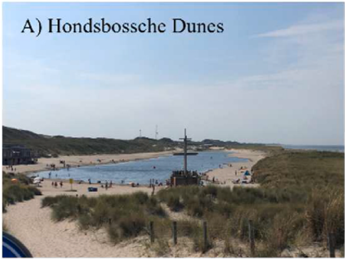
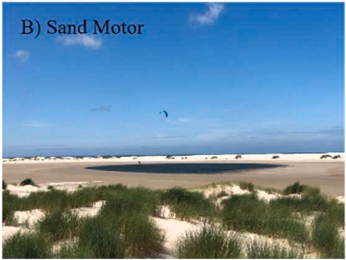
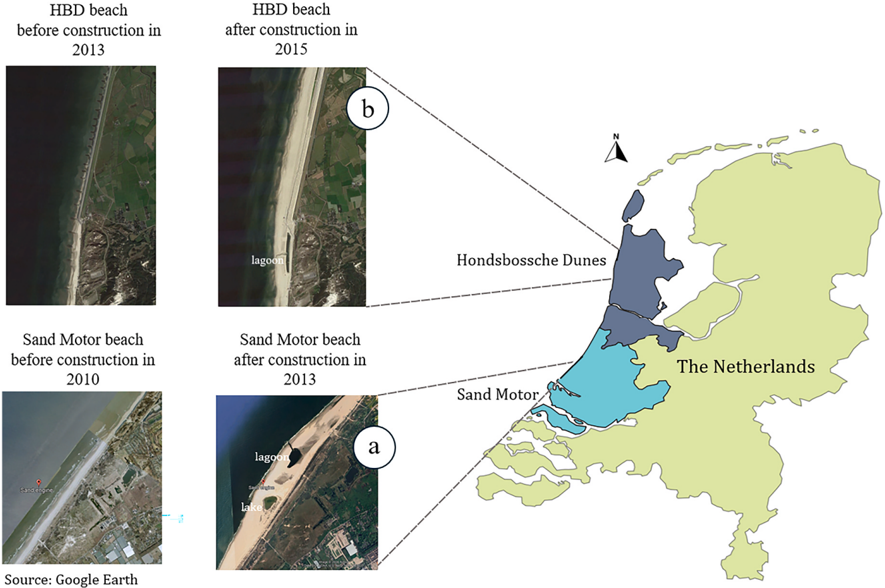
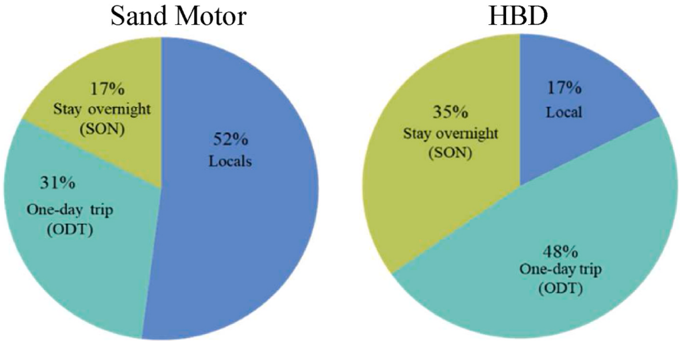
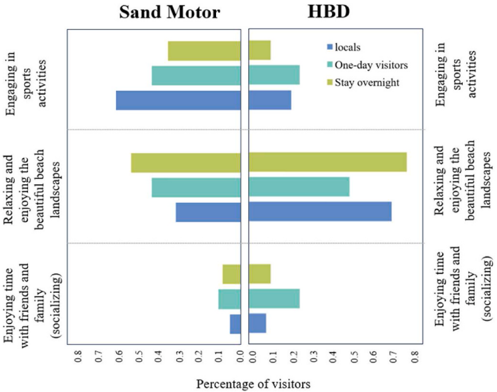
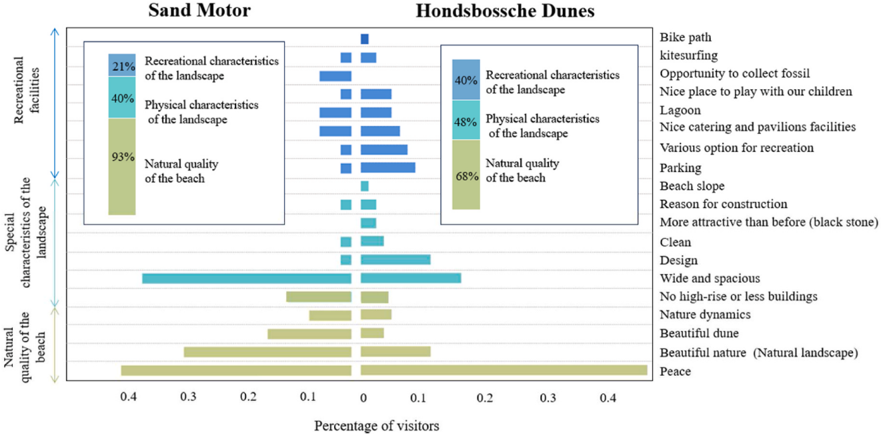
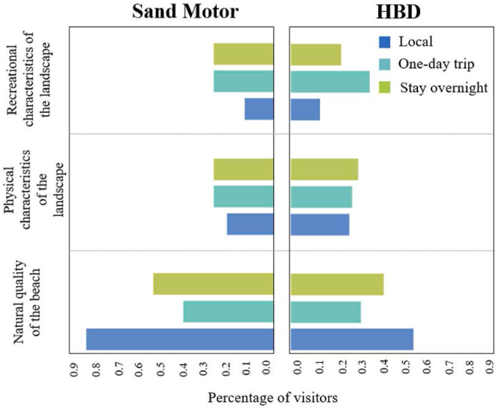
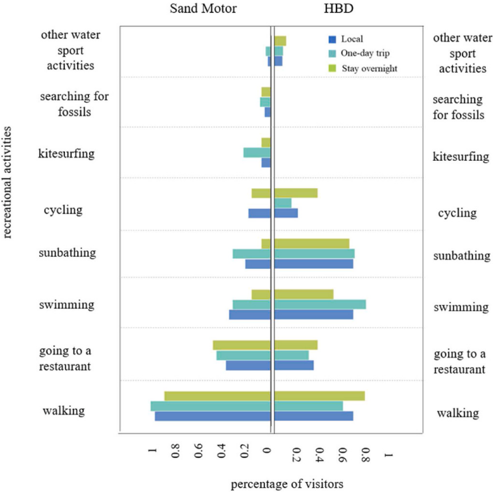
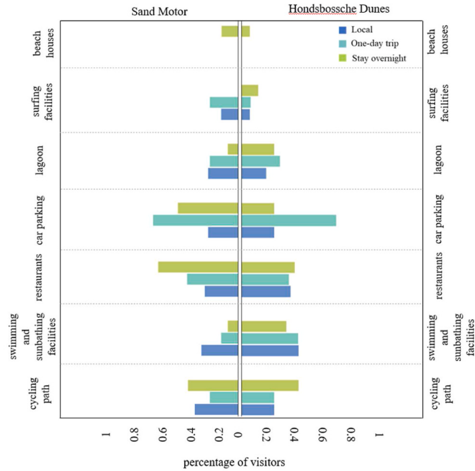
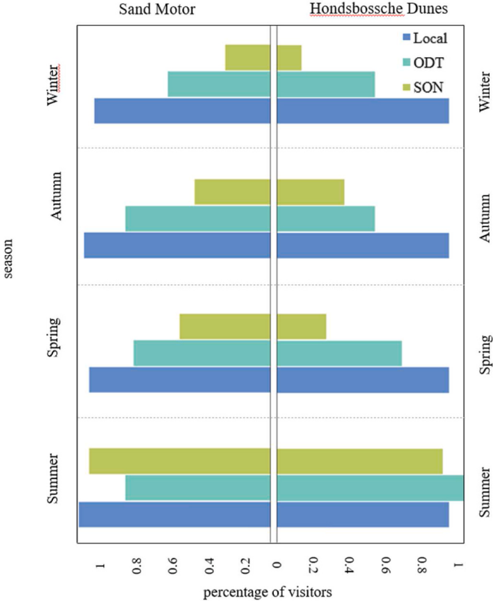
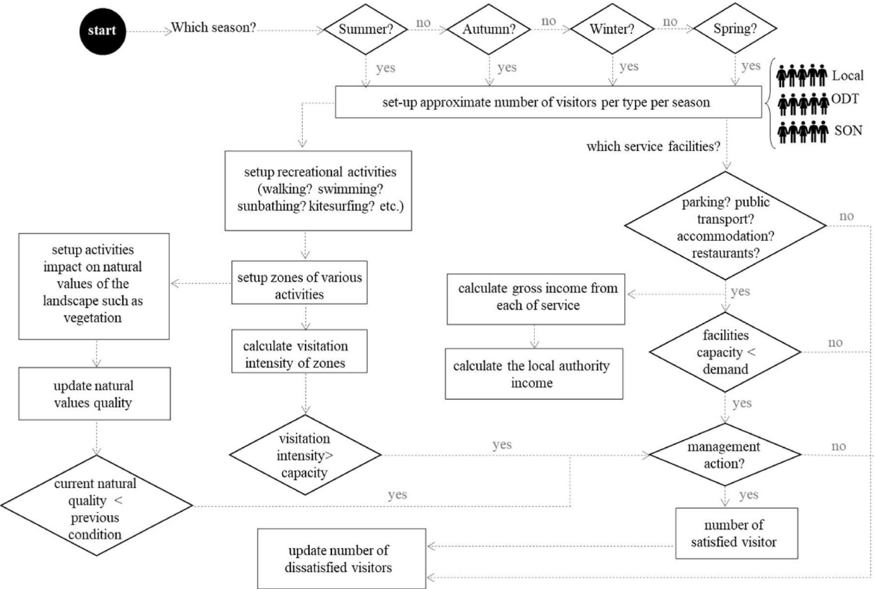
In the Netherlands, with its coastal lowlands, coastal management is performed through sand nourishment and dune utilisation. While policy aims for multifunctionality, coastal management studies predominantly emphasise flood safety, neglecting the recreational function and its interplay with flood safety measures. This study aims to investigate beach visitors' views and behaviour at two reinforced sandy shores in the Netherlands, namely Sand Motor and Hondsbossche Dunes. As the magnitude of the sand-based reinforcements completely changed the original beach landscape, we refer to these as sandy anthropogenic shores (SAS). We conducted surveys to assess SAS visitors' profiles, attitudes (visit motivations, landscape attractiveness), and recreational behaviour (facility preferences, activities, visitation patterns, spatial distribution). We examined differences between SAS and non-SAS beach visitors and compared their perspectives with management expectations. In our analysis, we categorised visitors into three types: local, one-day, and overnight visitors. Our analysis identified three distinct visitor motivation clusters: socialising, relaxation while appreciating beach landscapes, and engaging in sports activities. Natural landscape quality and quietness were the top attractions for SAS visitors. Despite significant human intervention in the design and alteration of the SAS landscape, visitors still appreciate its natural dynamics and beauty. Our analysis indicates that users perceive the SAS as either natural or semi-natural beaches, as intended by their designers and managers. We also developed a conceptual framework of the SAS recreation model based on survey data, forming the foundation for a quantitative model of SAS socio-environmental dynamics in the next phase of our research. Moreover, considering the similarities between SAS and natural shores, we anticipate that our findings will have broad applicability well beyond the specific SAS we have studied. • In-depth analysis compares SAS visitor behaviour and attitudes to those of non-SAS beaches. • Natural landscape quality and quietness were the top attractions for SAS visitors. • The initial design of the SAS landscape successfully attracts the target visitors. • The SAS dynamic landscape is expected to change recreational activity patterns.
Overview
The claims and statistics of this paper haven’t been checked yet.
Free: it reads the open-access text and checks the first 5 claims that cite a source we can check. Create a free account to check every claim.
Integrity signals
Registry
Cites
Statistics
Figures

Verification
Claims the paper makes
The claims and statistics of this paper haven’t been checked yet.
Free: it reads the open-access text and checks the first 5 claims that cite a source we can check. Create a free account to check every claim.
Claims other papers make about this one
Each is checked against this paper’s own text: does it say what the citing paper says it does?
In the citing paper
“Due to lack of field data on visitation intensity for specific periods in the study areas, we assessed model performance by comparing the visitation intensity map generated by the ABM during summer with one derived from a study by (Bakhshianlamouki et al 2024), which utilised GPS points collected during interviews with beach visitors in summer periods.”
From Agent-based modelling of beach visitation patterns: insights for sustainable coastal design and management (2025) · cites this paper as Bakhshianlamouki et al 2024
Self-check
Percentages, sums and reported differences re-computed from the paper’s own numbers.
The self-check needs the paper’s full text.
Citations
Cites
The impact of tourism and personal leisure transport on coastal environments: A review
Davenport, J., & Davenport, J. L. (2006) · Estuarine Coastal and Shelf Science · doi:10.1016/j.ecss.2005.11.026 · Cited by 1,037
Modeling human decisions in coupled human and natural systems: Review of agent-based models
An, L. (2012) · Ecological Modelling · doi:10.1016/j.ecolmodel.2011.07.010 · Cited by 797
Sustainable tourist behaviour – a discussion of opportunities for change
Budeanu, A. (2007) · International Journal of Consumer Studies · doi:10.1111/j.1470-6431.2007.00606.x · Cited by 439
van Rijn, L. C. (2011) · Ocean & Coastal Management · doi:10.1016/j.ocecoaman.2011.05.004 · Cited by 331
Schlüter, M., & Pahl-Wostl, C. (2007) · Ecology and Society · doi:10.5751/es-02069-120204 · Cited by 205
Public perceptions for evaluating beach quality in urban and semi-natural environments
Bosch, E. R., & Junyent, M. V. (2007) · Ocean & Coastal Management · doi:10.1016/j.ocecoaman.2007.09.001 · Cited by 183
Bosch, E. R., Junyent, M. V., & Ortego, M. I. (2009) · Tourism Management · doi:10.1016/j.tourman.2008.10.015 · Cited by 177
Users’ perception analysis for sustainable beach management in Italy
Marín, V., Palmisani, F., Ivaldi, R., Dursi, R., & Fabiano, M. (2009) · Ocean & Coastal Management · doi:10.1016/j.ocecoaman.2009.02.001 · Cited by 171
Methods for translating narrative scenarios into quantitative assessments of land use change
Mallampalli, V. R., Mavrommati, G., Thompson, J., Duveneck, M., Meyer, S., Ligmann-Zielinska, A., Druschke, C. G., Hychka, K., Kenney, M. A., Kok, K., et al. (2016) · Environmental Modelling & Software · doi:10.1016/j.envsoft.2016.04.011 · Cited by 159
‘Exceptional Visitors’: Dimensions of Tourist Responsibility in the Context of New Zealand
Stanford, D. (2008) · Journal of Sustainable Tourism · doi:10.1080/09669580802154082 · Cited by 121
Living with Sea-Level Rise and Climate Change: A Case Study of the Netherlands
VanKoningsveld, M., Mulder, J. P. M., Stive, M. J. F., VanDerValk, L., & VanDerWeck, A. W. (2008) · Journal of Coastal Research · doi:10.2112/07a-0010.1 · Cited by 119
An evolving research agenda for human–coastal systems
Lazarus, E. D., Ellis, M. A., Murray, A. B., & Hall, D. M. (2015) · Geomorphology · doi:10.1016/j.geomorph.2015.07.043 · Cited by 114
Beach Recreation, Cultural Diversity and Attitudes toward Nature
Wolch, J. R., & Zhang, J. (2004) · Journal of Leisure Research · doi:10.1080/00222216.2004.11950030 · Cited by 110
Gray, S., Voinov, A., Paolisso, M., Jordan, R., BenDor, T., Bommel, P., Glynn, P., Hedelin, B., Hubacek, K., Introne, J., et al. (2018) · Ecological Applications · doi:10.1002/eap.1627 · Cited by 106
Self-citationRecreational visits to marine and coastal environments in England: Where, what, who, why, and when?
Elliott, L. R., White, M. P., Grellier, J., Rees, S. E., Waters, R. D., & Fleming, L. E. (2018) · Marine Policy · doi:10.1016/j.marpol.2018.03.013 · Cited by 106
Mavromatidi, A., Briche, É., & Claeys, C. (2017) · Cities · doi:10.1016/j.cities.2017.08.007 · Cited by 101
Coastal Erosion Studies—A Review
Prasad, D. H., & Kumar, N. D. (2014) · International Journal of Geosciences · doi:10.4236/ijg.2014.53033 · Cited by 100
Rezapouraghdam, H., Akhshik, A., & Ramkissoon, H. R. (2021) · Journal of Sustainable Tourism · doi:10.1080/09669582.2021.1887878 · Cited by 99
A rationale for beach selection by the public on the coast of Wales, UK
Tudor, D. T., & Williams, A. T. (2006) · Area · doi:10.1111/j.1475-4762.2006.00684.x · Cited by 97
Determining factors of tourists’ loyalty to beach tourism destinations: a structural model
Hasan, M. K., Abdullah, S. K., Lew, T. Y., & Islam, M. F. (2019) · Asia Pacific Journal of Marketing and Logistics · doi:10.1108/apjml-08-2018-0334 · Cited by 92
Nature‐based solutions for coastal adaptation management, concepts and scope, an overview
van der Meulen, F., Ijff, S. D., & van Zetten, R. (2022) · Nordic Journal of Botany · doi:10.1111/njb.03290 · Cited by 92
Velando, A., & Munilla, I. (2011) · Biological Conservation · doi:10.1016/j.biocon.2011.01.004 · Cited by 91
Dutch experience with sand nourishments for dynamic coastline conservation – An operational overview
Brand, E., Ramaekers, G., & Lodder, Q. (2022) · Ocean & Coastal Management · doi:10.1016/j.ocecoaman.2021.106008 · Cited by 91
Visitor Preferences for Public Beach Amenities and Beach Restoration in South Florida
Shivlani, M. P., Letson, D., & Theis, M. A. (2003) · Coastal Management · doi:10.1080/08920750390232974 · Cited by 90
Comparing resident and tourist preferences for public beach access and related amenities
Oh, C., Draper, J., & Dixon, A. W. (2010) · Ocean & Coastal Management · doi:10.1016/j.ocecoaman.2010.04.007 · Cited by 89
Tanim, A. H., Goharian, E., & Moradkhani, H. (2022) · Scientific Reports · doi:10.1038/s41598-022-15237-z · Cited by 88
Recreational impacts on the fauna of Australian coastal marine ecosystems
Hardiman, N., & Burgin, S. (2010) · Journal of Environmental Management · doi:10.1016/j.jenvman.2010.06.012 · Cited by 87
‘Building with nature’: the new Dutch approach to coastal and river works
de Vriend, H. J., van Koningsveld, M., & Aarninkhof, S. (2014) · Proceedings of the Institution of Civil Engineers - Civil Engineering · doi:10.1680/cien.13.00003 · Cited by 85
Profiling the segments of visitors to Portuguese protected areas
Marques, C. M. V. A., Reis, E. A., & Menezes, J. (2010) · Journal of Sustainable Tourism · doi:10.1080/09669582.2010.497222 · Cited by 83
Beach Management Tools - Concepts, Methodologies and Case Studies
(2017) · Coastal research library · doi:10.1007/978-3-319-58304-4 · Cited by 81
The English Beach: Experiences and Values
Tunstall, S. M., & Penning‐Rowsell, E. C. (1998) · Geographical Journal · doi:10.2307/3060620 · Cited by 77
Is There a Bulldozer in your Model?
Lazarus, E. D., & Goldstein, E. B. (2019) · Journal of Geophysical Research Earth Surface · doi:10.1029/2018jf004957 · Cited by 76
Impact of trampling on sandy beach macrofauna
Moffett, M. D., McLachlan, A., Winter, P. E. D., & Ruyck, A. M. C. D. (1998) · Journal of Coastal Conservation · doi:10.1007/bf02806494 · Cited by 74
Beach tourists; what factors satisfy them and drive them to return
Dodds, R., & Holmes, M. R. (2019) · Ocean & Coastal Management · doi:10.1016/j.ocecoaman.2018.10.034 · Cited by 72
Reasons for beach choice: European and Caribbean perspectives
Botero, C., Anfuso, G., Williams, A. T., Zielinski, S., da Silva, C. P., Cervantes, O., Silva, L., & Cabrera, J. A. (2013) · Journal of Coastal Research · doi:10.2112/si65-149.1 · Cited by 71
Lukoseviciute, G., & Panagopoulos, T. (2021) · Ocean & Coastal Management · doi:10.1016/j.ocecoaman.2021.105646 · Cited by 70
Rapid migration of mainland China's coastal erosion vulnerability due to anthropogenic changes
Cai, F., Cao, C., Qi, H., Xian-ze, S., Lei, G., Liu, J., Zhao, S., Liu, G., & Zhu, K. (2022) · Journal of Environmental Management · doi:10.1016/j.jenvman.2022.115632 · Cited by 68
Visitor Satisfaction: An Analysis of Mainland Chinese Tourists on the Australian Gold Coast
Li, J. W. J., & Carr, N. (2004) · International Journal of Hospitality & Tourism Administration · doi:10.1300/j149v05n03_03 · Cited by 67
Allington, G. R. H., Li, W., & Brown, D. G. (2016) · Environmental Science & Policy · doi:10.1016/j.envsci.2016.11.005 · Cited by 66
Users’ Perception as a Tool to Improve Urban Beach Planning and Management
Cervantes, O., Espejel, I., Arellano, E., & Delhumeau, S. (2008) · Environmental Management · doi:10.1007/s00267-008-9104-8 · Cited by 64
Lucrezi, S., & van der Walt, M. F. (2015) · Journal of Coastal Conservation · doi:10.1007/s11852-015-0419-3 · Cited by 62
Figueras, L. S., & Ariza, E. (2019) · Ecology and Society · doi:10.5751/es-10883-240224 · Cited by 58
How to make socio‐environmental modelling more useful to support policy and management?
Will, M., Dreßler, G., Kreuer, D., Thulke, H., Grêt‐Regamey, A., & Müller, B. H. (2021) · People and Nature · doi:10.1002/pan3.10207 · Cited by 56
Cabezas-Rabadán, C., Rodilla, M., Pardo-Pascual, J. E., & Racionero, P. H. (2018) · Land Use Policy · doi:10.1016/j.landusepol.2018.10.027 · Cited by 55
Recreational beach use values with multiple activities
Pascoe, S. (2019) · Ecological Economics · doi:10.1016/j.ecolecon.2019.02.018 · Cited by 55
Sediment sorting at the Sand Motor at storm and annual time scales
Huisman, B. J. A., de Schipper, M. A., & Ruessink, B. G. (2016) · Marine Geology · doi:10.1016/j.margeo.2016.09.005 · Cited by 52
Prati, G., Albanesi, C., Pietrantoni, L., & Airoldi, L. (2015) · Land Use Policy · doi:10.1016/j.landusepol.2015.06.033 · Cited by 47
Spatial and Temporal Patterns of Use of Boa Viagem Beach, Northeast Brazil
Silva, J. S., Leal, M. M. V., Araújo, M. C. B., Barbosa, S. C. T., & Costa, M. F. (2008) · Journal of Coastal Research · doi:10.2112/05-0527.1 · Cited by 46
The effectiveness of beach mega-nourishment, assessed over three management epochs
Brown, J., Phelps, J. J. C., Barkwith, A. K. A. P., Hurst, M. D., Ellis, M. A., & Plater, A. J. (2016) · Journal of Environmental Management · doi:10.1016/j.jenvman.2016.09.090 · Cited by 45
Cumulative attraction and spatial dependence in a destination choice model for beach recreation
Matthews, Y., Scarpa, R., & Marsh, D. (2017) · Tourism Management · doi:10.1016/j.tourman.2017.12.009 · Cited by 42
Human activities and coastal erosion on the Kien Giang coast, Vietnam
Phong, N. T., Parnell, K. E., & Cottrell, A. (2017) · Journal of Coastal Conservation · doi:10.1007/s11852-017-0566-9 · Cited by 38
Aeolian sediment supply at a mega nourishment
Hoonhout, B., & de Vries, S. (2017) · Coastal Engineering · doi:10.1016/j.coastaleng.2017.03.001 · Cited by 35
Bax, V., van de Lageweg, W. I., Terpstra, T., Buijs, J., de Reus, K., de Groot, F., van Schaik, R., Habte, M. A., Schram, J., & Hoogenboom, T. (2023) · Journal of Environmental Management · doi:10.1016/j.jenvman.2023.118675 · Cited by 34
Self-citationSinger, A., Gray, S., Sadler, A., Schmitt Olabisi, L., Metta, K., Wallace, R., Lopez, M. C., Introne, J., Gorman, M., & Henderson, J. (2017) · Environmental Modelling & Software · doi:10.1016/j.envsoft.2017.07.010 · Cited by 33
Rodella, I., & Corbau, C. (2019) · Ocean & Coastal Management · doi:10.1016/j.ocecoaman.2019.104992 · Cited by 29
Agent-Based Modeling Approach to Investigating the Impact of Water Demand Management
Xiao, Y., Fang, L., & Hipel, K. W. (2018) · Journal of Water Resources Planning and Management · doi:10.1061/(asce)wr.1943-5452.0000907 · Cited by 28
Do recreational activities affect coastal biodiversity?
Riera, R., Menci, C., Sanabria‐Fernández, J. A., & Becerro, M. A. (2016) · Estuarine Coastal and Shelf Science · doi:10.1016/j.ecss.2016.05.022 · Cited by 27
Agent‐based Modeling to Evaluate Human–Environment Interactions in Community Flood Risk Mitigation
Han, Y., Mao, L., Chen, X., Zhai, W., Peng, Z., & Mozumder, P. (2021) · Risk Analysis · doi:10.1111/risa.13854 · Cited by 27
An Evaluation of Factors Affecting the Choice of Coastal Recreational Activities
Paudel, K. P., Caffey, R. H., & Devkota, N. (2011) · Journal of Agricultural and Applied Economics · doi:10.1017/s1074070800004144 · Cited by 26
Spatial and Temporal Modeling of Beach Use: A Case Study of East Anglia, UK
Coombes, E. G., Jones, A., Bateman, I. J., Tratalos, J. A., Gill, J. A., Showler, D. A., Watkinson, A. R., & Sutherland, W. J. (2008) · Coastal Management · doi:10.1080/08920750802527127 · Cited by 25
Bakhshianlamouki, E., Augustijn, E.-W., Brugnach, M., Voinov, A. A., & Wijnberg, K. M. (2023) · Ocean & Coastal Management · doi:10.1016/j.ocecoaman.2023.106739 · Cited by 23
Self-citationAge matters: how demographics influence visitor perception and attitude at the destination level
Li, J., Li, J., & Kim, W. G. (2016) · International Journal of Innovation and Learning · doi:10.1504/ijil.2017.081936 · Cited by 21
Ecosystem carrying and occupancy capacity on a beach in southwestern Spain
Murillo, N., Pérez-Cayeiro, M. L., & Río, L. D. (2022) · Ocean & Coastal Management · doi:10.1016/j.ocecoaman.2022.106400 · Cited by 21
Impact of mean sea-level rise on the long-term evolution of a mega-nourishment
Ribas, F., Portos-Amill, L., Falqués, A., Arriaga, J., Marcos, M., & Ruessink, G. (2023) · Climatic Change · doi:10.1007/s10584-023-03503-6 · Cited by 21
Pourteimouri, P., Campmans, G. H. P., Wijnberg, K. M., et al. (2023) · Aeolian Research · doi:10.1016/j.aeolia.2023.100867 · Cited by 18
Self-citationSilva, F. G., Wijnberg, K. M., & Hulscher, S. J. M. H. (2020) · Journal of Marine Science and Engineering · doi:10.3390/jmse8070541 · Cited by 16
Self-citationCoastal Engineering Practice (2011)
Magoon, O. T., Noble, R. M., Treadwell, D. D., & Kim, Y. C. (2011) · doi:10.1061/9780784411902 · Cited by 14
Cellular automaton modelling of the effects of buildings on aeolian bedform dynamics
Poppema, D. W., Baas, A. C. W., Hulscher, S. J. M. H., & Wijnberg, K. M. (2022) · Aeolian Research · doi:10.1016/j.aeolia.2022.100840 · Cited by 13
Self-citationTeixeira, M., Horstman, E. M., & Wijnberg, K. M. (2023) · Journal of Marine Science and Engineering · doi:10.3390/jmse11071278 · Cited by 11
Self-citationAeolian Sediment Flux Derived from a Natural Sand Trap
van der Weerd, A. J., & Wijnberg, K. M. (2016) · Journal of Coastal Research · doi:10.2112/si75-068.1 · Cited by 10
Self-citationDUNE GROWTH TRENDS AND THE EFFECT OF BEACH WIDTH ON ANNUAL TIMESCALES
de Vries, S., Arens, B., Stive, M. J. F., et al. (2011) · International Conference on Coastal Sediments (Coastal Sediments) · doi:10.1142/9789814355537_0054 · Cited by 8
Beach Management, Beyond the Double Standard for Client Demands and Environmental Sustainability
Dadon, J. R. (2017) · Coastal research library · doi:10.1007/978-3-319-58304-4_31 · Cited by 8
Pranzini, E., Anfuso, G., & Botero, C. M. (2018) · doi:10.1007/978-3-319-58304-4_15 · Cited by 4
Filho, J. R. D. S., Silva, I. R., & Ferreira, D. F. (2011) · Journal of Coastal Research · doi:10.2112/si61-001.57 · Cited by 3
Heerema, J. (2021) · Research in Urbanism Series · doi:10.47982/rius.7.132 · Cited by 3
Current Challenges in Coastal Management in the Netherlands: Examples of Pilot Projects
Mulder, J. P. M., & van Dalfsen, J. A. (2011) · Coastal Engineering Practice (2011) · doi:10.1061/41190(422)88 · Cited by 1
impacts of climate change on coastal geomorphology
Spencer, T., Masselink, G., Russell, P., et al. (2021) · Apollo (University of Cambridge) · doi:10.17863/cam.75258
Research works printed but not linked: 2
- Alkhalaf, F., 2015. The Characteristics, Motivations and Activities of Visitors to Half Moon Beach. Auckland University of Technology, Saudi Arabia. Doctoral dissertation.
- Kammler, M., Schernewski, G., 2004. Spatial and temporal analysis of beach tourism using webcam and aerial photographs. Coastline Rep. 2, 121-128.
Cited by
Bakhshianlamouki, E., Augustijn, E.-W., Brugnach, M., Voinov, A., & Wijnberg, K. (2025) · Environmental Research Communications · doi:10.1088/2515-7620/adc353 · Cited by 1
Self-citationBakhshianlamouki, E. (2025) · doi:10.3990/1.9789036566773
Self-citation
Metadata
- Authors
- Bakhshianlamouki, E., Augustijn, E.-W., van den Heuvel, J., Terpstra, T., Brugnach, M., Voinov, A., & Wijnberg, K.
- Venue
- Ocean & Coastal Management
- Publisher
- Elsevier BV
- Published
- 2024-11
- Volume
- 258
- Pages
- 107407
- ISSN
- 0964-5691
- Cited by
- 5
- References
- 77
- Language
- en
- Licence
- www.elsevier.com/tdm/userlicense/1.0/ (tdm)
- www.elsevier.com/legal/tdmrep-license (tdm)
- creativecommons.org/licenses/by/4.0/ (vor)
- Funders
- Dutch Research Council
About these checks
Registry, retraction, Cites and statistics results are computed, not judged, with one exception: a printed reference that no index lists is read once by a model before it counts as a citation error. Claims are extracted by a model and kept only when their quote appears verbatim in the text; each cited source is then checked, with a model’s help, for whether it says what the claim relies on. Those verdicts can be wrong — read the claim’s quote and the cited source before relying on one.
Statistics and arithmetic are recomputed, not judged.
Confidence bands are shown only for fields calibrated on our annotated test set. None is calibrated yet, so no band is shown.
What counts as a claim ›How we measure confidence ›How we check this ›
Are you an author, or do you see a problem with this page? Request a review
Data sources
Bibliographic data: Semantic Scholar, OpenAlex, Crossref.
Contains information from the Semantic Scholar Academic Graph Datasets, made available under the ODC Attribution License (ODC-BY 1.0).
Semantic Scholar’s data is described in: Kinney, R., et al. (2023). The Semantic Scholar Open Data Platform. arXiv:2301.10140.
