

The DOI matches its Crossref record; 59 of the 59 references it cites were found in a registry or an index.
Hair cortisol concentrations in war-affected adolescents: A prospective intervention trial
Open accessAbstract
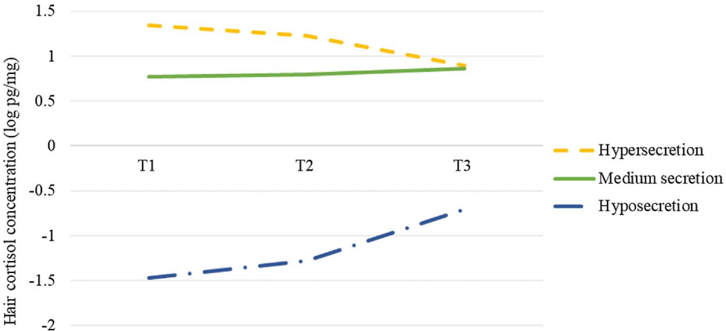
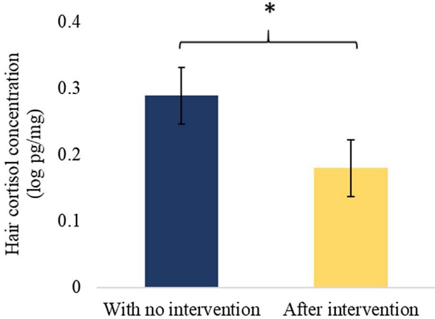
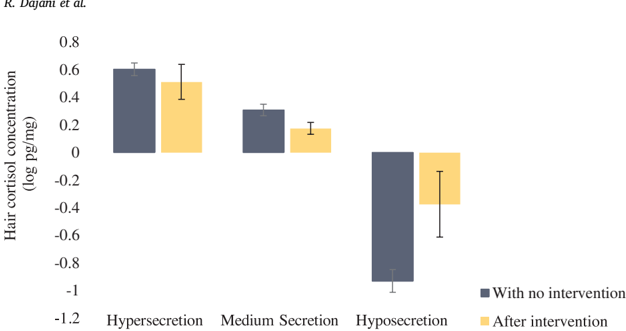
Temporal examinations of the biological signature of stress or trauma in war-affected populations are seldom undertaken. Moreover, few studies have examined whether stress biomarkers track biological sensitivity to brief interventions targeting the improvement of psychosocial wellbeing. Our study is the first to prospectively examine, in war-affected adolescents, the associations between hair cortisol concentrations (HCC) and self-reports of stress, insecurity, posttraumatic reactions, and lifetime trauma. We conducted a randomized controlled trial to test the impact of an 8-week intervention based on profound stress attunement. We collected data for a gender-balanced sample of 733 Syrian refugee (n = 411) and Jordanian non-refugee (n = 322) adolescents (12-18 years), at three time-points. We used growth mixture models to classify cortisol trajectories, and growth models to evaluate intervention impact on stress physiology. We observed three trajectories of HCC: hypersecretion, medium secretion, and hyposecretion (9.6%, 87.5% and 2.9% of the cohort, respectively). For every one percent increase in levels of insecurity, adolescents were 0.02 times more likely to have a trajectory of hypersecretion (95% CI: 1.00, 1.03, p = 0.01). For each additional symptom of posttraumatic stress reported, they were 0.07 times less likely to show hyposecretion (95% CI: 0.89, 0.98, p = 0.01). Indeed, stronger posttraumatic stress reactions were associated with a pattern of within-individual cortisol dysregulation and medium secretion. Overall, HCC decreased by a third in response to the intervention (95% CI: -0.19, -0.03, p = 0.01). While the intervention decreased HCC for youth with hypersecretion and medium secretion, it increased HCC for youth with hyposecretion (95% CI: 0.22, 1.16, p = 0.004), relative to controls. This suggests a beneficial regularization of cortisol levels, corroborating self-reports of improved psychosocial wellbeing. We did not find evidence to suggest that gender, resilience, or posttraumatic stress disorder influenced the strength or direction of responses to the intervention. This robust impact evaluation exemplifies the utility of biomarkers for tracking physiological changes in response to interventions over time. It enhances the understanding of trajectories of endocrine response in adverse environments and patterns of stress responsivity to ecological improvement.
Overview
The claims and statistics of this paper haven’t been checked yet.
Run the check — free, no account needed. It reads the open-access text and checks the sources it cites.
Integrity signals
Registry
Cites
Statistics
Figures

Verification
Claims the paper makes
The claims and statistics of this paper haven’t been checked yet.
Run the check — free, no account needed. It reads the open-access text and checks the sources it cites.
Claims other papers make about this one
Each is checked against this paper’s own text: does it say what the citing paper says it does?
The cited source says what the claim attributes to it.
In the citing paper
“In recent years, HCC has also been used as a secondary outcome of psychological interventions [44, 45].”
Self-check
Percentages, sums and reported differences re-computed from the paper’s own numbers.
The self-check needs the paper’s full text.
Citations
Cites
A Global Measure of Perceived Stress
Cohen, S., Kamarck, T., & Mermelstein, R. (1983) · Journal of Health and Social Behavior · doi:10.2307/2136404 · Cited by 32,807
The Lifelong Effects of Early Childhood Adversity and Toxic Stress
Shonkoff, J. P., Garner, A. S., THE COMMITTEE ON PSYCHOSOCIAL ASPECTS OF CHILD AND FAMILY HEALTH, C. O. E. C., Siegel, B. S., Dobbins, M. I., Earls, M. F., Garner, A. S., McGuinn, L., Pascoe, J., & Wood, D. L. (2012) · Pediatrics · doi:10.1542/peds.2011-2663 · Cited by 5,164
An Introduction to Latent Class Growth Analysis and Growth Mixture Modeling
Jung, T., & Wickrama, K. A. S. (2007) · Social and Personality Psychology Compass · doi:10.1111/j.1751-9004.2007.00054.x · Cited by 3,228
Childhood adversities and adult psychopathology in the WHO World Mental Health Surveys
Kessler, R. C., McLaughlin, K. A., Green, J. G., Gruber, M. J., Sampson, N. A., Zaslavsky, A. M., Aguilar-Gaxiola, S., Alhamzawi, A. O., Alonso, J., Angermeyer, M., et al. (2010) · British Journal of Psychiatry · doi:10.1192/bjp.bp.110.080499 · Cited by 2,640
Miller, G. E., Chen, E., & Zhou, E. S. (2007) · Psychological Bulletin · doi:10.1037/0033-2909.133.1.25 · Cited by 2,467
BOYCE, W. T., & ELLIS, B. J. (2005) · Development and Psychopathology · doi:10.1017/s0954579405050145 · Cited by 2,078
The potential role of hypocortisolism in the pathophysiology of stress-related bodily disorders
Heim, C., Ehlert, U., & Hellhammer, D. H. (2000) · Psychoneuroendocrinology · doi:10.1016/s0306-4530(99)00035-9 · Cited by 1,688
Miller, K. E., & Rasmussen, A. (2010) · Social Science & Medicine · doi:10.1016/j.socscimed.2009.09.029 · Cited by 1,524
The Adaptive Calibration Model of stress responsivity
Del Giudice, M., Ellis, B. J., & Shirtcliff, E. A. (2011) · Neuroscience & Biobehavioral Reviews · doi:10.1016/j.neubiorev.2010.11.007 · Cited by 1,373
Twelve frequently asked questions about growth curve modeling
Curran, P. J., Obeidat, K., & Losardo, D. (2010) · Journal of Cognition and Development · doi:10.1080/15248371003699969 · Cited by 1,246
Research works printed but not linked: 1
- Haushofer, 2017, Peace of mind: health insurance reduces stress and cortisol levels – evidence from a randomized experiment in Kenya, JEL
Cited by
Sorted by citations
Hair cortisol analysis: An update on methodological considerations and clinical applications
Greff, M. J. E., Levine, J. M., Abuzgaia, A. M., Elzagallaai, A. A., Rieder, M. J., & van Uum, S. H. M. (2019) · Clinical Biochemistry · doi:10.1016/j.clinbiochem.2018.09.010 · Cited by 260
Self-citationPosttraumatic Stress Disorder in Refugees
Bryant, R. A., Nickerson, A., Morina, N., & Liddell, B. J. (2023) · Annual Review of Clinical Psychology · doi:10.1146/annurev-clinpsy-080921-080359 · Cited by 82
Why we heal: The evolution of psychological healing and implications for global mental health
Kohrt, B. A., Ottman, K. E., Panter‐Brick, C., Konner, M. J., & Patel, V. (2020) · Clinical Psychology Review · doi:10.1016/j.cpr.2020.101920 · Cited by 88
Self-citationLehrer, H. M., Steinhardt, M. A., Dubois, S. K., & Laudenslager, M. L. (2019) · Psychoneuroendocrinology · doi:10.1016/j.psyneuen.2019.104510 · Cited by 68
Tol, W. A., Ager, A., Bizouerne, C., Bryant, R. A., Chammay, R. E., Colebunders, R., Garcia‐Moreno, C., Hamdani, S. U., James, L. E., Jansen, S., et al. (2020) · Conflict and Health · doi:10.1186/s13031-020-00317-6 · Cited by 75
Self-citationThe Molecular Basis of Resilience: A Narrative Review
Ryan, M., & Ryznar, R. (2022) · Frontiers in Psychiatry · doi:10.3389/fpsyt.2022.856998 · Cited by 65
Minds Under Siege: Cognitive Signatures of Poverty and Trauma in Refugee and Non-Refugee Adolescents
Chen, A., Panter‐Brick, C., Hadfield, K., Dajani, R. B., Hamoudi, A., & Sheridan, M. A. (2019) · Child Development · doi:10.1111/cdev.13320 · Cited by 69
Self-citationde Graaff, A. M., Cuijpers, P., Acarturk, C., Bryant, R., Burchert, S., Fuhr, D. C., Huizink, A. C., de Jong, J., Kieft, B., Knaevelsrud, C., et al. (2020) · European Journal of Psychotraumatology · doi:10.1080/20008198.2019.1694347 · Cited by 57
Prenatal and Postnatal Hair Steroid Levels Predict Post-Partum Depression 12 Weeks after Delivery
Jahangard, L., Mikoteit, T., Bahiraei, S., Zamanibonab, M., Haghighi, M., Bahmani, D. S., & Brand, S. (2019) · Journal of Clinical Medicine · doi:10.3390/jcm8091290 · Cited by 55
Panter‐Brick, C., Eggerman, M., Ager, A., Hadfield, K., & Dajani, R. B. (2020) · Conflict and Health · doi:10.1186/s13031-020-00286-w · Cited by 52
Self-citationJankovic‐Rankovic, J., Oka, R., Meyer, J. S., & Gettler, L. T. (2020) · Social Science & Medicine · doi:10.1016/j.socscimed.2020.113070 · Cited by 52
Hair cortisol levels in posttraumatic stress disorder and metabolic syndrome
van den Heuvel, L. L., Tobias Stalder, A., du Plessis, S., Suliman, S., Kirschbaum, C., & Seedat, S. (2020) · Stress · doi:10.1080/10253890.2020.1724949 · Cited by 47
Shaheen, M., Schindler‐Gmelch, L., Saar‐Ashkenazy, R., Odeh, K. B., Soreq, H., Friedman, A., & Kirschbaum, C. (2018) · Psychophysiology · doi:10.1111/psyp.13271 · Cited by 46
Panter‐Brick, C., Wiley, K. S., Sancilio, A., Dajani, R. B., & Hadfield, K. (2019) · Brain Behavior and Immunity · doi:10.1016/j.bbi.2019.02.015 · Cited by 46
Self-citationSandre, A., Bagot, R. C., & Weinberg, A. (2019) · Biological Psychology · doi:10.1016/j.biopsycho.2019.04.001 · Cited by 51
Smeeth, D. M., McEwen, F. S., Popham, C. M., Karam, E. G., Fayyad, J. A., Saab, D., Rieder, M. J., Elzagallaai, A. A., Uum, S. H. M. V., & Pluess, M. (2022) · Molecular Psychiatry · doi:10.1038/s41380-022-01859-2 · Cited by 54
The Pathways between Cortisol-Related Regulation Genes and PTSD Psychotherapy
Castro-Vale, I., & Carvalho, D. M. (2020) · Healthcare · doi:10.3390/healthcare8040376 · Cited by 39
Nissen, A., Hynek, K. A., Scales, D. A., Hilden, P. K., & Straiton, M. (2022) · BMC Psychiatry · doi:10.1186/s12888-022-04200-x · Cited by 38
Hair cortisol concentrations are associated with hippocampal subregional volumes in children
Keresztes, A., Raffington, L., Bender, A. R., Bögl, K., Heim, C. C., & Shing, Y. L. (2020) · Scientific Reports · doi:10.1038/s41598-020-61131-x · Cited by 34
Mitigating toxic stress in children affected by conflict and displacement
Ataullahjan, A., Samara, M. M., Betancourt, T. S., & Bhutta, Z. A. (2020) · BMJ · doi:10.1136/bmj.m2876 · Cited by 34
Clukay, C. J., Dajani, R. B., Hadfield, K., Quinlan, J., Panter‐Brick, C., & Mulligan, C. J. (2019) · PLoS ONE · doi:10.1371/journal.pone.0219385 · Cited by 33
Self-citationBuchmüller, T., Lembcke, H., Busch, J., Kumsta, R., Wolf, O. T., & Leyendecker, B. (2020) · Stress · doi:10.1080/10253890.2020.1737008 · Cited by 28
Malanchini, M., Engelhardt, L. E., Raffington, L., Sabhlok, A., Grotzinger, A. D., Briley, D. A., Madole, J. W., Freis, S. M., Patterson, M. W., Harden, K. P., et al. (2020) · Molecular Psychiatry · doi:10.1038/s41380-020-0747-z · Cited by 33
Jankovic‐Rankovic, J., Oka, R., Meyer, J. S., Snodgrass, J. J., Eick, G. N., & Gettler, L. T. (2022) · American Journal of Human Biology · doi:10.1002/ajhb.23747 · Cited by 28
Behnke, A., Karabatsiakis, A., Krumbholz, A., Karrasch, S., Schelling, G., Kolassa, I., & Rojas, R. (2020) · Scientific Reports · doi:10.1038/s41598-020-79859-x · Cited by 26
Cortisol changes in healthy children and adolescents during the COVID-19 pandemic
Fung, M. H., Taylor, B. K., Embury, C. M., Spooner, R. K., Johnson, H. J., Willett, M. P., Frenzel, M. R., Badura-Brack, A. S., White, S. F., & Wilson, T. W. (2022) · Stress · doi:10.1080/10253890.2022.2125798 · Cited by 27
Kanan, J., & Leão, T. I. C. (2022) · Journal of Health Psychology · doi:10.1177/13591053221123141 · Cited by 24
Anisman, H., Doubad, D., Asokumar, A., & Matheson, K. (2024) · Neuroscience & Biobehavioral Reviews · doi:10.1016/j.neubiorev.2024.105859 · Cited by 26
Taylor, B. K., Fung, M. H., Frenzel, M. R., Johnson, H. J., Willett, M. P., Badura-Brack, A. S., White, S. F., & Wilson, T. W. (2022) · Research on Child and Adolescent Psychopathology · doi:10.1007/s10802-022-00967-5 · Cited by 25
Refugee mother-child dyads’ hair cortisol, post-traumatic stress, and affectionate parenting
Lembcke, H., Buchmüller, T., & Leyendecker, B. (2019) · Psychoneuroendocrinology · doi:10.1016/j.psyneuen.2019.104470 · Cited by 24
Botschek, T., Hußlein, V., Peters, E. M. J., & Brosig, B. (2023) · Frontiers in Psychiatry · doi:10.3389/fpsyt.2023.1227153 · Cited by 26
Adrenocortical and psychosocial responses of families in Jordan to the COVID-19 pandemic
Hastings, P. D., Partington, L. C., Dajani, R. B., & von Suchodoletz, A. (2021) · Child Development · doi:10.1111/cdev.13662 · Cited by 22
Self-citationEnergizing partnerships in research‐to‐policy projects
Panter‐Brick, C. (2022) · American Anthropologist · doi:10.1111/aman.13776 · Cited by 22
Self-citationPanter‐Brick, C. (2023) · Development and Psychopathology · doi:10.1017/s095457942300113x · Cited by 27
Self-citationResilience Humanitarianism and Peacebuilding
Panter‐Brick, C. (2021) · Oxford University Press eBooks · doi:10.1093/oso/9780190095888.003.0020 · Cited by 21
Self-citationSlesnick, N., Chavez, L., Bunger, A., Famelia, R., Ford, J., Feng, X., Higgins, S., Holowacz, E., Jaderlund, S., Luthy, E., et al. (2021) · Addiction Science & Clinical Practice · doi:10.1186/s13722-021-00237-7 · Cited by 20
Psychological Resilience in Response to Adverse Experiences
Popham, C. M., McEwen, A. F. S., & Pluess, M. (2021) · Oxford University Press eBooks · doi:10.1093/oso/9780190095888.003.0022 · Cited by 20
Nicolson, N. A., & Ponnamperuma, T. (2019) · Psychoneuroendocrinology · doi:10.1016/j.psyneuen.2019.02.012 · Cited by 20
Schindler‐Gmelch, L., Shaheen, M., Saar‐Ashkenazy, R., Odeh, K. B., Sass, S.-H., Friedman, A., & Kirschbaum, C. (2019) · Brain Sciences · doi:10.3390/brainsci9020020 · Cited by 18
Ikram, N., Frost, A., LeMasters, K. H., Hagaman, A. K., Baranov, V., Gallis, J. A., Sikander, S., Scherer, E. M., & Maselko, J. (2022) · BMJ Open · doi:10.1136/bmjopen-2021-052280 · Cited by 24
Petimar, J., Rifas‐Shiman, S. L., Hivert, M., Fleisch, A. F., Tiemeier, H. W., & Oken, E. (2020) · PLoS ONE · doi:10.1371/journal.pone.0228769 · Cited by 16
Lübcker, N., Bloem, L. M., du Toit, T., Swart, P., de Bruyn, P. J. N., Swart, A. C., & Millar, R. P. (2020) · Journal of Chromatography B · doi:10.1016/j.jchromb.2020.122028 · Cited by 16
Biomarkers of stress resilience: A review
Paribello, P., Branchi, I., Viglione, A., Mancini, G. F., Morena, M., Campolongo, P., & Manchia, M. (2024) · Neuroscience Applied · doi:10.1016/j.nsa.2024.104052 · Cited by 17
Love and peace across generations: Biobehavioral systems and global partnerships
Leckman, J. F., Ponguta, L. A., Pavarini, G., Hein, S. D., McCarthy, M. F., Staiti, H., Hanöz-Penney, S., Rubinstein, J., Pruett, K. D., Yazgan, M. Y., et al. (2021) · Comprehensive Psychoneuroendocrinology · doi:10.1016/j.cpnec.2021.100092 · Cited by 15
Self-citationBaranov, V., Frost, A., Hagaman, A. K., Simmons, J. G., Manzoor, M. S., Biroli, P., Bhalotra, S. R., Rahman, A., Sikander, S., & Maselko, J. (2022) · SSM - Mental Health · doi:10.1016/j.ssmmh.2022.100082 · Cited by 15
Jankovic‐Rankovic, J., & Panter‐Brick, C. (2024) · Psychoneuroendocrinology · doi:10.1016/j.psyneuen.2024.107084 · Cited by 16
Self-citationLifetime stressors, hair cortisol, and executive function: Age‐related associations in childhood
DePasquale, C. E., Tyrell, F. A., Kalstabakken, A. W., Labella, M. H., Thibodeau, E. L., Masten, A. S., & Barnes, A. J. (2020) · Developmental Psychobiology · doi:10.1002/dev.22076 · Cited by 13
Papola, D., Prina, E., Ceccarelli, C., Cadorin, C., Gastaldon, C., Ferreira, M. C., Tol, W. A., van Ommeren, M., Barbui, C., & Purgato, M. (2024) · Cochrane Database of Systematic Reviews · doi:10.1002/14651858.cd014300.pub2 · Cited by 18
HUMANITARIAN CRISES AND ADOLESCENT WELL‐BEING: KNOWLEDGE, GAPS, AND PROSPECTS
Cuesta, J., & Leone, M. (2019) · Journal of Economic Surveys · doi:10.1111/joes.12339 · Cited by 12
Gettler, L. T., Jankovic‐Rankovic, J., Gengo, R. G., Eick, G. N., Nash, M. P., Arumah, E. N., Boru, A. M., Ali, S. A., Urlacher, S. S., Meyer, J. S., et al. (2024) · Psychoneuroendocrinology · doi:10.1016/j.psyneuen.2024.107024 · Cited by 13
The predictive role of hair cortisol concentrations for treatment outcome in PTSD inpatients
Hummel, K. V., Schellong, J., Trautmann, S., Kummer, S., Hürrig, S., Klose, M., Croy, I., Weidner, K., Kirschbaum, C., & Steudte‐Schmiedgen, S. (2021) · Psychoneuroendocrinology · doi:10.1016/j.psyneuen.2021.105326 · Cited by 11
Mulligan, C. J., Clukay, C. J., Matarazzo, A., Hadfield, K., Nevell, L., Dajani, R. B., & Panter‐Brick, C. (2022) · PLoS ONE · doi:10.1371/journal.pone.0266509 · Cited by 11
Self-citationRisk and resilience in Syrian refugee children: A multisystem analysis
Smeeth, D. M., May, A. K., Karam, E. G., Rieder, M. J., Elzagallaai, A. A., Uum, S. H. M. V., & Pluess, M. (2023) · Development and Psychopathology · doi:10.1017/s0954579423000433 · Cited by 13
Maier, B. C. L., Zillich, L., Streit, F., Wildenberg, K., Rietschel, M., Hammes, H., Witt, S. H., & Deuschle, M. (2022) · Psychoneuroendocrinology · doi:10.1016/j.psyneuen.2022.105717 · Cited by 9
Merrill, S. M., Konwar, C., Fraihat, Z., Parent, J. M., & Dajani, R. B. (2024) · Med · doi:10.1016/j.medj.2024.11.013 · Cited by 10
Self-citationClukay, Hughes, D. A., Kertes, & Mulligan, C. J. (2019) · Human Biology · doi:10.13110/humanbiology.91.2.04 · Cited by 8
Nazari, S., Fitzgerald, P. B., & Kazemi, R. B. (2025) · Brain and Behavior · doi:10.1002/brb3.70764 · Cited by 7
Bahmani, D. S., Brand, S., Meinlschmidt, G., Tegethoff, M., Kurath, J., Bürki, N., Hösli, I., & Mikoteit, T. (2025) · Biological Psychiatry Global Open Science · doi:10.1016/j.bpsgos.2025.100454 · Cited by 7
Salomon, R. E., Tan, K. R., Vaughan, A., Adynski, H., & Muscatell, K. A. (2019) · International Journal of Nursing Studies · doi:10.1016/j.ijnurstu.2019.103419 · Cited by 9
Voices of refugee children in Korea
Nho, C. R., Yoon, S., & Ko, J. (2018) · Children and Youth Services Review · doi:10.1016/j.childyouth.2018.09.001 · Cited by 7
Understanding the pathology of psychiatric disorders in refugees
Bartlett, R., Sarnyai, Z., Momartin, S., Ooi, L., Schwab, S. G., & Matosin, N. (2020) · Psychiatry Research · doi:10.1016/j.psychres.2020.113661 · Cited by 7
Hagan, M. J., Coccia, M., Rivera, L. M., Epel, E. S., Aschbacher, K., Laudenslager, M. L., Lieberman, A. F., & Bush, N. R. (2021) · Psychoneuroendocrinology · doi:10.1016/j.psyneuen.2021.105389 · Cited by 6
Roos, R., Witteveen, A. B., Ayuso-Mateos, J. L., Barbui, C., Bryant, R. A., Felez-Nobrega, M., Figueiredo, N., Kalisch, R., Haro, J. M., McDaid, D., et al. (2023) · BMC Psychiatry · doi:10.1186/s12888-023-05288-5 · Cited by 7
“In recent years, HCC has also been used as a secondary outcome of psychological interventions [44, 45].”
Nakkash, R. T., Fares, M., Tleis, M., Mugharbil, S., Antaby, M., Masri, H. A., Ghandour, L. A., Halabi, F., Najjar, Y., Louis, B., et al. (2024) · SSM - Mental Health · doi:10.1016/j.ssmmh.2024.100358 · Cited by 5
“Rigorous and Systematic Qualitative Data Analysis in Biological Anthropology”
Wutich, A., Nelson, R., DuBois, L. Z., Astorino, C. M., Knudson, K. J., Reynolds, A. W., Riley, E. P., Smith, R. W. A., VanSickle, C., Carroll, S. R., et al. (2024) · American Journal of Biological Anthropology · doi:10.1002/ajpa.70008 · Cited by 6
Vacaru, S. V., Parenteau, A. M., Yi, S. C., Silvers, J. A., Hostinar, C. E., & de Weerth, C. (2023) · Developmental Psychobiology · doi:10.1002/dev.22438 · Cited by 5
Villanueva-Bonilla, C., & Gallardo, Á. M. R. (2021) · Revista de Psicopatología y Psicología Clínica · doi:10.5944/rppc.26747 · Cited by 6
Uwizeye, G., Rutherford, J. N., & Thayer, Z. M. (2023) · American Journal of Biological Anthropology · doi:10.1002/ajpa.24708 · Cited by 5
Emotional Competences in Adolescents Exposed to Colombian Armed Conflict During Their Childhood
Rodríguez, D. A. L., & Moncaleano, C. (2024) · Journal of Child & Adolescent Trauma · doi:10.1007/s40653-024-00647-0 · Cited by 6
Exploring the epigenetics of resilience
Dajani, R. B. (2022) · Nature Genetics · doi:10.1038/s41588-022-01050-x · Cited by 4
Self-citationSustained Effects of Animal-Assisted Crisis Response on Stress in School Shooting Survivors
Robino, A., Feldman, D., Stein, A. N., Schmaltz, M. A., Fitzpatrick, H. A., Tartar, J. L., Pizzo, F., Friedman, M., & Feldman, O. (2022) · Human-animal interaction bulletin · doi:10.1079/hai.2022.0019 · Cited by 5
Clukay, C. J., Matarazzo, A., Dajani, R. B., Hadfield, K., Panter‐Brick, C., & Mulligan, C. J. (2019) · bioRxiv (Cold Spring Harbor Laboratory) · doi:10.1101/685636 · Cited by 4
Self-citationAssociation Between Hair Cortisol and Psychopathology in Children With a Chronic Physical Illness
Littler, E. A. L., Butt, Z. A., González, A., & Ferro, M. A. (2025) · Stress and Health · doi:10.1002/smi.70087 · Cited by 3
Frost, A., Hagaman, A. K., Baranov, V., Chung, E. O., Bhalotra, S. R., Sikander, S., & Maselko, J. (2022) · Development and Psychopathology · doi:10.1017/s0954579422000773 · Cited by 6
Giesebrecht, J., Reich, H., Weise, C., Nater, U. M., & Mewes, R. (2024) · European Journal of Psychotraumatology · doi:10.1080/20008066.2024.2400835 · Cited by 3
Wiley, K. S., Gouveia, G. R., Camilo, C., Euclydes, V. L. V., Panter‐Brick, C., Matijasevich, A., Ferraro, A. A., Fracolli, L. A., Chiesa, A. M., Miguel, E. C., et al. (2025) · American Journal of Human Biology · doi:10.1002/ajhb.70004 · Cited by 3
Self-citationExploratory study of salivary cortisol levels among Syrian refugee children
Dalou, A. Y. A., Ababneh, L. A., Thum, E., & Flinn, M. V. (2025) · Psychoneuroendocrinology · doi:10.1016/j.psyneuen.2025.107443 · Cited by 3
Biocultural synthesis of adolescence: a roadmap to advance the field
Glass, D. J., & Emmott, E. H. (2025) · Journal of the Royal Anthropological Institute · doi:10.1111/1467-9655.14315 · Cited by 5
Hair hormone data from Syrian refugee children: Perspectives from a two-year longitudinal study
May, A. K., Smeeth, D. M., McEwen, F. S., Moghames, P., Karam, E. G., Rieder, M. J., Elzagallaai, A. A., Uum, S. H. M. V., & Pluess, M. (2024) · Comprehensive Psychoneuroendocrinology · doi:10.1016/j.cpnec.2024.100231 · Cited by 3
Tsai, M.-L., Cheng, T., Yang, Y. K., & Wang, C. (2021) · Healthcare · doi:10.3390/healthcare9101319 · Cited by 6
Usenko, О. Y., Khomenko, I. P., Ae, K., Nehoduiko, V. V., Misyura, K. V., & Zabronskyi, A. V. (2024) · EMERGENCY MEDICINE · doi:10.22141/2224-0586.20.1.2024.1652 · Cited by 2
Positive Cortisol–Testosterone Hormonal Coupling Among Adolescents in Argentina and Jordan
Glass, D. J., Godwin, J., Koehn, J., Bez, E., Corley, M. K., Dajani, R. B., Hadfield, K., Panter‐Brick, C., Valeggia, C. R., & Martin, M. A. (2025) · American Journal of Biological Anthropology · doi:10.1002/ajpa.70134 · Cited by 3
Self-citationFinlay, S., Suvarna, B., Adegboye, O. A., Rudd, D., McDERMOTT, B. M., van Eijk, L., & Sarnyai, Z. (2026) · Psychoneuroendocrinology · doi:10.1016/j.psyneuen.2025.107730 · Cited by 2
Sami, A., Elimairi, I., Ryan, C. A., Ross, R. P., & Stanton, C. (2023) · Steroids · doi:10.1016/j.steroids.2023.109189 · Cited by 4
Nakkash, R. T., Ghandour, L. A., Brown, G., Panter‐Brick, C., Bomar, H., Tleis, M., Masri, H. A., Fares, M., Halabi, F., Najjar, Y., et al. (2024) · Contemporary Clinical Trials Communications · doi:10.1016/j.conctc.2024.101325 · Cited by 2
Self-citationShkreli, L., Woud, M. L., Bergunde, L., Schindler‐Gmelch, L., Blackwell, S. E., Kirschbaum, C., Kessler, H., & Steudte‐Schmiedgen, S. (2025) · European Journal of Psychotraumatology · doi:10.1080/20008066.2025.2457295 · Cited by 2
Child Maltreatment and Global Health: Biocultural Perspectives
Kohrt, B. A., & Juan, C. (2022) · Child maltreatment · doi:10.1007/978-3-030-82479-2_37 · Cited by 2
Changing environments reveal innovative genetic variation in children’s cortisol responsesPreprint
Raffington, L., Malanchini, M., Grotzinger, A. D., Madole, J. W., Engelhardt, L. E., Sabhlok, A., Youn, C., Patterson, M. W., Harden, K. P., & Tucker–Drob, E. M. (2019) · bioRxiv (Cold Spring Harbor Laboratory) · doi:10.1101/856658 · Cited by 2
Hair cortisol and psychiatric symptomatology in children; outcomes of group CBT
Barron-Linnankoski, S. T. A., Raaska, H. K., Bergman, P., Laasonen, M. R., & Elovainio, M. J. (2024) · Comprehensive Psychoneuroendocrinology · doi:10.1016/j.cpnec.2024.100263 · Cited by 1
Meyer, J. S., Markham, J., Scott, L., Valdez, L. A., Robinson, D. E., & Buchanan, D. R. (2025) · Frontiers in Public Health · doi:10.3389/fpubh.2025.1526636 · Cited by 1
Dajani, R. B., Glass, D. J., & Fuentes, A. (2025) · American Journal of Human Biology · doi:10.1002/ajhb.70138 · Cited by 1
Self-citationSkinner, A. T., Павлова, Ю., Godwin, J. W., Reilly, E. B., & Georgiades, A. (2026) · Psychoneuroendocrinology · doi:10.1016/j.psyneuen.2026.107761 · Cited by 1
Ikram, N., Frost, A., LeMasters, K., Hagaman, A., Baranov, V., Gallis, J., Sikander, S., Scherer, E., & Maselko, J. (2021) · Research Square · doi:10.21203/rs.3.rs-403429/v1
Nissen, A., Hynek, K. A., Scales, D. A., Hilden, P. K., & Straiton, M. (2022) · Research Square · doi:10.21203/rs.3.rs-1646083/v1
Sustained Effects of Animal-Assisted Crisis Response on Stress in School Shooting Survivors
Robino, A. E., Feldman, D. M., Stein, A. N., Schmaltz, M. A., Fitzpatrick, H. A., Tartar, J. L., Pizzo, F., Friedman, M., & Feldman, O. (2024) · CABI eBooks · doi:10.1079/9781800626539.0003
Children and War: Perspectives from Developmental Resilience Theory and Research
Masten, A. S., & Hodges, H. R. (2025) · Psychiatry · doi:10.1080/00332747.2025.2530347 · Cited by 1
Amini-Nejad, R., Nater, U. M., & Mewes, R. (2025) · European Journal of Psychotraumatology · doi:10.1080/20008066.2025.2565058
Nissen, A., Hynek, K. A., Scales, D., Hilden, P. K., & Straiton, M. (2022) · Figshare · doi:10.6084/m9.figshare.20624938
Roos, R., Witteveen, A. B., Ayuso-Mateos, J. L., Barbui, C., Bryant, R. A., Félez-Nóbrega, M., Figueiredo, N., Kalisch, R., Haro, J. M., McDaid, D., et al. (2024) · Figshare · doi:10.6084/m9.figshare.24494502
Nissen, A., Hynek, K. A., Scales, D., Hilden, P. K., & Straiton, M. (2022) · Figshare · doi:10.6084/m9.figshare.20624932
Metadata
- Authors
- Dajani, R., Hadfield, K., van Uum, S., Greff, M., & Panter-Brick, C.
- Affiliations
- Harvard University (US)
- Queen Mary University of London (GB)
- Western University (CA)
- Venue
- Psychoneuroendocrinology
- Publisher
- Elsevier BV
- Published
- 2018-03
- Volume
- 89
- Pages
- 138-146
- ISSN
- 0306-4530 (ISSN-L)
- OpenAlex
- W2780117356
- Cited by
- 108
- References
- 59
- Citations by year
- 2026: 7 · 2025: 12 · 2024: 16 · 2023: 9 · 2022: 20 · 2021: 10 · 2020: 17 · 2019: 14 · 2018: 3
- FWCI
- 5.06
- Type
- journal article
- Language
- en
- Open access
- hybrid
- doi.org
- Licence
- Locations
- Psychoneuroendocrinology (publishedVersion, cc-by-nc-nd)
- PubMed (publishedVersion)
- Queen Mary Research Online (Queen Mary University of London) (submittedVersion)
- Funders
- Elrha’s Research for Health in Humanitarian Crises
- Wellcome Trust
- UK Government
- Topics
- Life Sciences › Neuroscience › Behavioral Neuroscience › Stress Responses and Cortisol
- Social Sciences › Psychology › Clinical Psychology › Migration, Health and Trauma
- Social Sciences › Psychology › Clinical Psychology › Posttraumatic Stress Disorder Research
- Keywords
- hair cortisol, Syrian refugees, trauma exposure, post-traumatic stress, hypersecretion, hyposecretion, stress biomarkers, psychosocial well-being, resilience, gender differences, cortisol dysregulation, intervention impact evaluation, Jordanian adolescents, post-traumatic stress disorder
- MeSH terms
- Armed Conflicts, Adolescent, Female, Hair, Humans, Hydrocortisone, Male, Prospective Studies, Refugees, Sex Factors, Stress, Physiological, Stress Disorders, Post-Traumatic, Stress, Psychological, Biomarkers
About these checks
Registry, retraction, Cites and statistics results are computed, not judged, with one exception: a printed reference that no index lists is read once by a model before it counts as a citation error. Claims are extracted by a model and kept only when their quote appears verbatim in the text; each cited source is then checked, with a model’s help, for whether it says what the claim relies on. Those verdicts can be wrong — read the claim’s quote and the cited source before relying on one.
Statistics and arithmetic are recomputed, not judged.
Confidence bands are shown only for fields calibrated on our annotated test set. None is calibrated yet, so no band is shown.
What counts as a claim ›How we measure confidence ›How we check this ›
Are you an author, or do you see a problem with this page? Request a review
