

Late Quaternary environmental change in eastern Beringia
Open accessThe DOI matches its Crossref record; 340 of the 342 references it cites were found in a registry or an index; none of the 399 sources its claims cite is checked for support yet.
Abstract
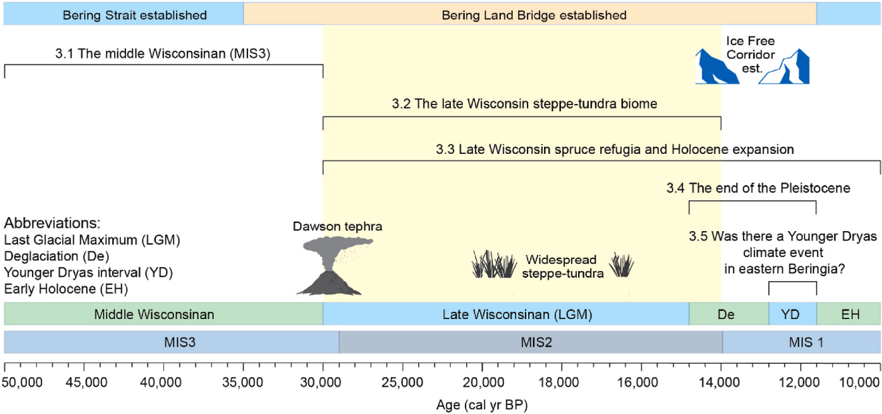
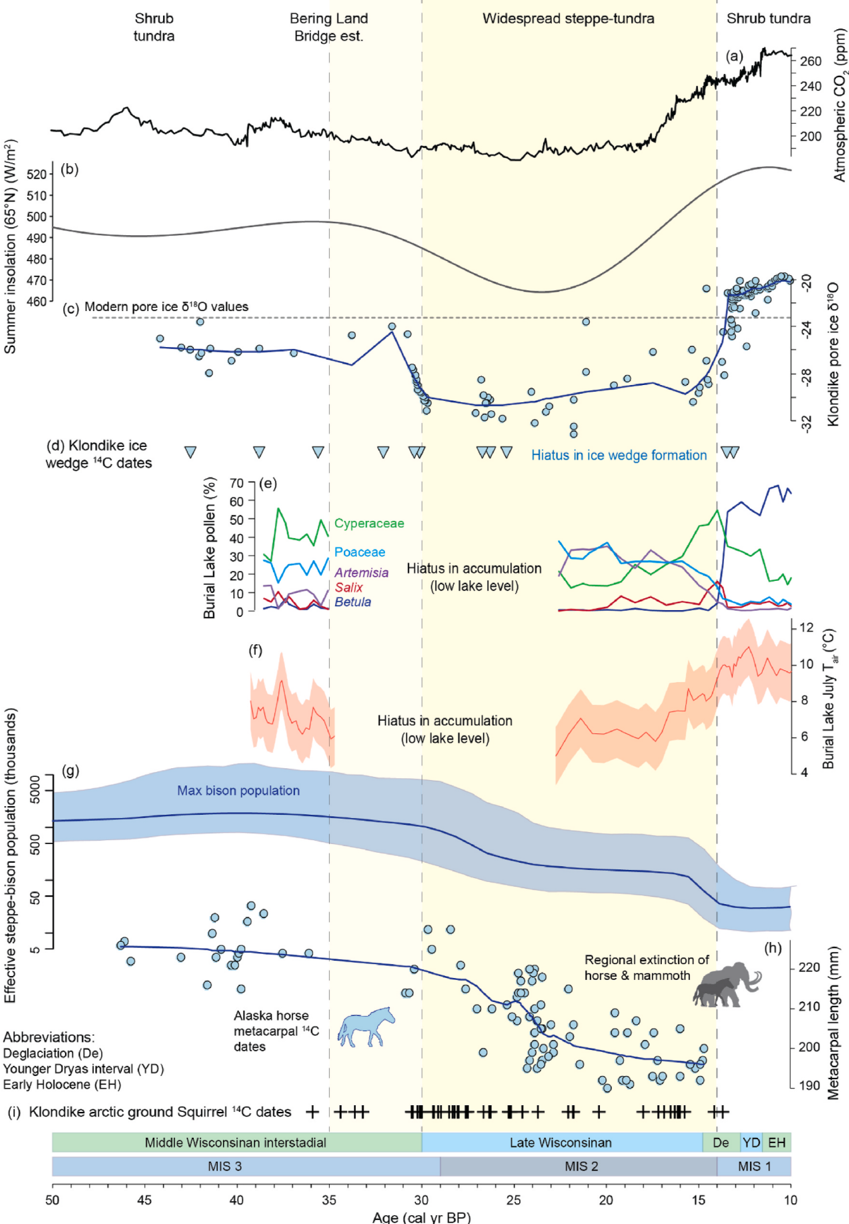
Eastern Beringia (Alaska and western Yukon) is an extensive, high-latitude region of North America that remained largely unglaciated throughout the Quaternary. Consequently, its sedimentary deposits preserve long-term environmental records that have intrigued scientists for nearly a century. Recent advances in palaeoecological proxies and dating methods have proved critical in addressing long-standing questions about regional late Quaternary environmental change. At the same time, they have led to new and sometimes controversial hypotheses. This review covers recent discoveries and unresolved questions focused on the period 57,000–10,000 calendar years before C.E. 1950 (cal yr BP). The middle Wisconsin interstadial (57,000–30,000 cal yr BP) was a period of relative warmth in eastern Beringia, compared with the late Wisconsin (30,000–14,000 cal yr BP). Early in the interstadial occasional Picea woodland was present amongst widespread shrub tundra. Palaeoecological, sedimentary and isotopic data indicate that climate was cooler and drier than the Holocene, with high rates of aeolian activity. Megafauna typically associated with the ‘mammoth steppe’ ecosystem (woolly mammoth [ Mammuthus primigenius ], horse [ Equus ] and steppe-bison [ Bison priscus ]) were present in some abundance. The transition towards late Wisconsin cold-stage conditions (35,000–30,000 cal yr BP) coincided with the establishment of the Bering Land Bridge and featured expansion of spatially varied, herbaceous vegetation, sometimes associated with deep active layers. Sedimentary DNA ( seda DNA) and macrofossil evidence show vegetation was not a prairie-like grassland, and the term “steppe-tundra” is a better descriptor. Permafrost pore-ice isotopic (δ 18 O) records suggest a step change in one or more climate drivers ca. 30,000 cal yr BP, by which time steppe-tundra was established across eastern Beringia. It remains uncertain whether Picea survived cold-stage conditions within isolated refugia, or whether it recolonized from south of the Laurentide-Cordilleran ice sheets. Genetic data suggest that Picea probably survived in situ ; however, there is no definitive fossil evidence to support this. The end-Pleistocene transition from steppe-tundra to shrub tundra began ca. 15,000 cal yr BP and took place within decades at local scales. The expansion of woody taxa coincided with rising sea levels, reduced sea-ice extent and an abrupt shift in atmospheric circulation that enhanced precipitation. During this time, Earth's orbital configuration caused high early-summer temperatures and strong seasonality, creating growing conditions very different from today. The vegetation consisted of Salix and Betula shrub tundra with open areas of herbs and graminoids. During the deglacial warming trend, the Younger Dryas oscillation (12,800–11,700 cal yr BP) was variably expressed. It is generally evident in records affected by adjacent oceans but can be absent at sites in continental areas. These past conditions and paleoenvironmental changes have implications for contemporary issues: hypotheses about Pleistocene mammalian extinction; sensitivity of eastern Beringia to major oceanic reorganizations and high-frequency climate variability; the nature of woody plant expansion with climate warming; grazing, hydroclimate and fire as controls over ecosystems; the efficacy of “Pleistocene rewilding” for carbon capture.
Overview
CoChat Summary
TL;DR
This review synthesizes late Quaternary environmental change in eastern Beringia (Alaska and western Yukon) from ~57,000 to 10,000 cal yr BP, covering the middle Wisconsin, late Wisconsin steppe-tundra, deglaciation, and Younger Dryas. It finds a cooler/drier-than-Holocene middle Wisconsin, a 35,000–30,000 cal yr BP shift to full-glacial steppe-tundra, and a variably expressed Younger Dryas, while unresolved questions remain about Picea refugia and steppe-tundra productivity.
Key findings
- The middle Wisconsin (57,000–30,000 cal yr BP) was relatively warm but cooler and drier than the Holocene; Burial Lake chironomid data indicate summer temperatures ~4°C lower than modern between 40,000–35,000 cal yr BP, and Jan Lake lake-level data suggest a 35–70% reduction in late Wisconsin precipitation vs the Holocene (ca.90–195 mm a−1 vs ca.300 mm a−1 today).
- The transition to late Wisconsin cold-stage conditions occurred 35,000–30,000 cal yr BP; the Bering Land Bridge was established ca.35,000 cal yr BP, and steppe-tundra was established across eastern Beringia by ca.30,000 cal yr BP, with a step change in permafrost pore-ice δ18O ca.30,000 cal yr BP.
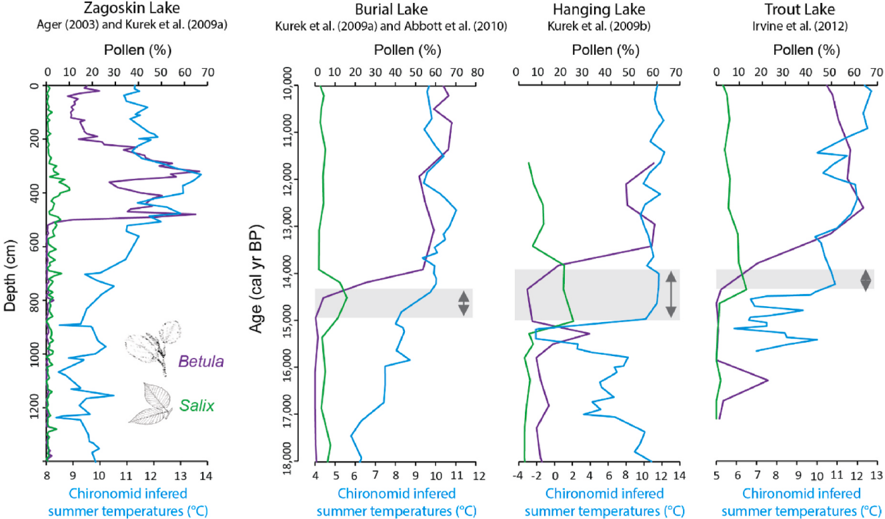
- End-Pleistocene shrub expansion began ca.15,000 cal yr BP and occurred within decades at local scales; Salix generally expanded before Betula, which lagged by 600–1000 years at some sites; atmospheric reorganization ca.14,000 cal yr BP increased moisture, and the Bering Land Bridge was breached ca.11,000 cal yr BP.
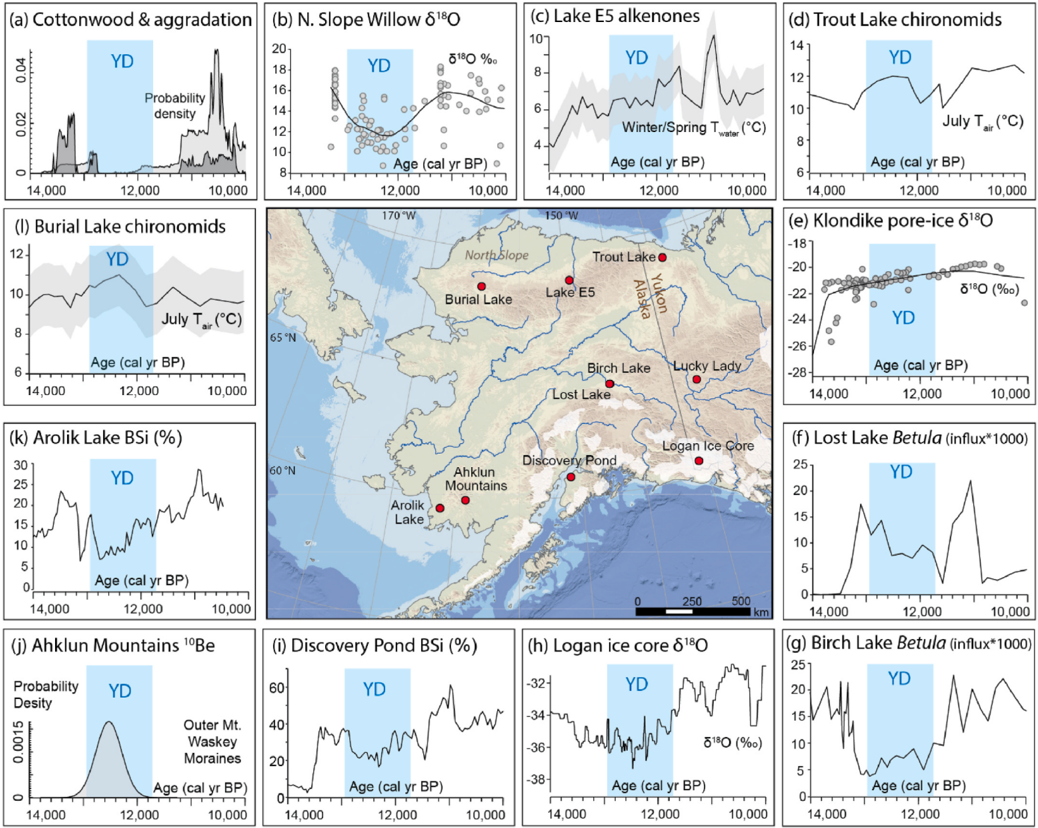
- The Younger Dryas (12,800–11,700 cal yr BP) was variably expressed: evident in southern Alaska, southern Yukon, and north of the Brooks Range, but weak or absent in interior records; whether Picea survived in late Wisconsin refugia remains unresolved, and there are no convincing estimates of steppe-tundra plant or animal biomass.
Methods
- Design: narrative review/synthesis of late Quaternary environmental change in eastern Beringia, with temporal scope ~57,000–10,000 cal yr BP; excludes eastern Beringian archaeology and later Holocene palaeoenvironmental data.
- Data/sample: synthesizes published records from Alaska and western Yukon, including lake sediments, yedoma/permafrost, loess/palaeosols, ice cores, rodent middens, plant macrofossils, pollen, sedaDNA, stable isotopes, fossil insects, and megafauna remains; focuses on records meeting strict chronological criteria.
- Main analysis: qualitative synthesis and comparison of proxies and chronologies; no new data or code are presented.
Limitations
- Paper states: many records lie beyond the reliable limit of radiocarbon dating; early middle Wisconsin records are sparse and imprecisely dated; pollen data are biased by over-representation of Betula/Alnus and long-distance transport of Picea/Pinus; Picea refugia and steppe-tundra productivity remain unresolved; Younger Dryas expression may reflect proxy seasonality, chronological ambiguity, or overriding insolation/continentality.
- Text makes evident: as a review, it does not generate new primary data; conclusions depend on the dating quality and proxy limitations of cited studies; no code is used.
Model-written summary. Check it against the paper before relying on it.
Integrity signals
Registry
Cites
Statistics
Figures
Verification
Claims the paper makes
0 Valid · 7 Not valid · 282 Not checked · 188 Own results and interpretations
A result the paper states — it cites no source for it, so there is none to check. The quote shows it is in the paper.
In the paper
“Well dated temperature estimates are rare for the middle Wisconsin in eastern Beringia.”
§ Late quaternary environmental change in eastern Beringia > 3.1.2.1. Middle Wisconsin climate ca. 45,000-30,000 cal yr BP.
plain- Asserted: passes — The authors put it forward as true.
- Checkable: passes — It can be checked against evidence.
- Load-bearing: unclear — It is unclear whether the paper’s conclusions depend on it.
- Based: passes — The paper gives a reason why it holds.
A result the paper reports from its own data — it cites no other source for it, so there is none to check. The quote shows it is in the paper.
In the paper
“Pollen and insects from near the base of the silt indicate a dry, open meadow that contained herbs and some shrubs (graminoids 61 %, Betula 18 % and Alnus 9 %).”
§ Late quaternary environmental change in eastern Beringia > 3.1.2.
hedged- Asserted: passes — The authors put it forward as true.
- Checkable: passes — It can be checked against evidence.
- Load-bearing: unclear — It is unclear whether the paper’s conclusions depend on it.
- Based: passes — The paper gives a reason why it holds.
None of the sources cited for this claim have been checked yet.
In the paper
“Between 45,000-30,000 cal yr BP, sites at higher elevation and north of the Brooks Range record a form of shrub tundra, albeit one with a lower proportion of Salix and Betula pollen and more herb pollen than is typical for most modern and deglacial (ca.15,000-10,000 cal yr BP) shrub tundra.”
§ Late quaternary environmental change in eastern Beringia > 3.1.2.
plainstates an association- Asserted: passes — The authors put it forward as true.
- Checkable: passes — It can be checked against evidence.
- Load-bearing: passes — The paper’s conclusions depend on it.
- Based: passes — The paper gives a reason why it holds.
In the paper
“At Grand Lake (Elikchan-4), shifts in pollen, mirrored by marked changes in sediment properties (Minyuk and Subbotnikova, 2021), show vegetation varied between open and woody communities”
§ Late quaternary environmental change in eastern Beringia > 3.1.2.2. Climate variability.
What the sources say
- Not checked yetcites Minyuk and Subbotnikova, 2021 matched to “Rock magnetic properties of Grand Lake sediments as evidence of environmental changes during the last 60 000 years in North‐East Russia” (2021) source
plainstates an associationSingle case- Asserted: passes — The authors put it forward as true.
- Checkable: passes — It can be checked against evidence.
- Load-bearing: passes — The paper’s conclusions depend on it.
- Based: passes — The paper gives a reason why it holds.
In the paper
“A chironomid-based temperature reconstruction from the site indicates that summer temperatures were ~4 • C lower than modern values between 40,000-35,000 cal yr BP (Kurek et al., 2009a).”
§ Late quaternary environmental change in eastern Beringia > 3.1.2.1. Middle Wisconsin climate ca. 45,000-30,000 cal yr BP.
What the sources say
- Not checked yetcites Kurek et al., 2009a matched to “Late Quaternary paleoclimate of western Alaska inferred from fossil chironomids and its relation to vegetation histories” (2009) source
hedgedstates an associationSingle case- Asserted: passes — The authors put it forward as true.
- Checkable: passes — It can be checked against evidence.
- Load-bearing: unclear — It is unclear whether the paper’s conclusions depend on it.
- Based: passes — The paper gives a reason why it holds.
236 more claims
Create a free account to see all 477 claims and to verify the 360 references still open.
- It may state two separate claims as one. 190
- Probably not a substantial claim. 69
- The quote only partly states this claim. 1
Self-check
Percentages, sums and reported differences re-computed from the paper’s own numbers.
Each contradiction between two passages listed here was confirmed by an independent check.
Rated minor: it would not touch a result — a value no result rests on, a p-value that stays on the same side of the significance level, or a conflict that is clerical, resolved elsewhere in the paper, or outside its own findings.
In the paper
§ Late quaternary environmental change in eastern Beringia > 5. Conclusions
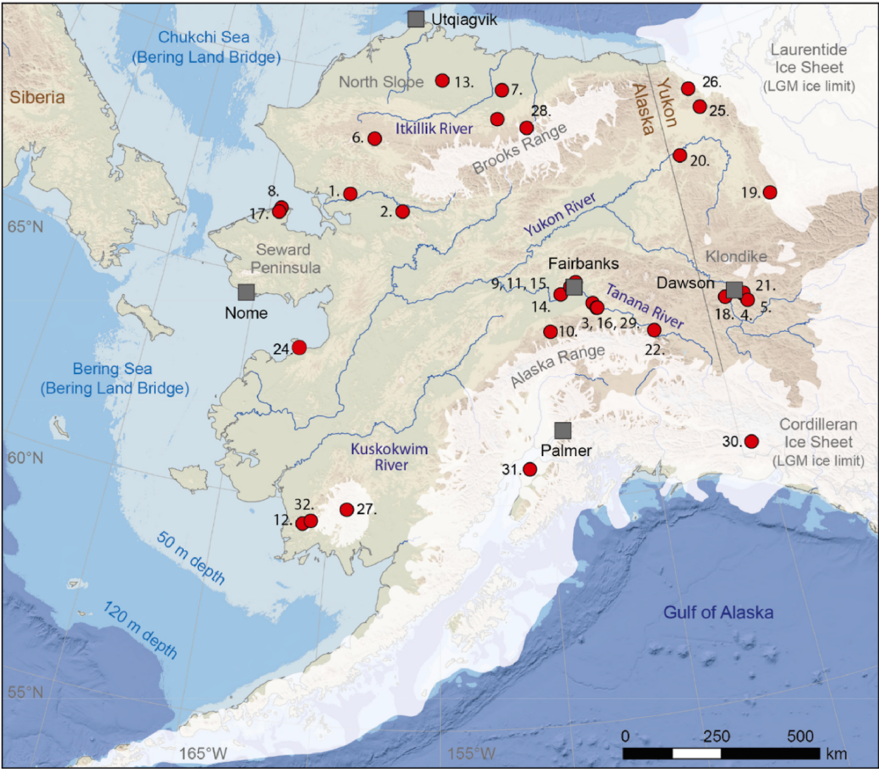
“Study sites are numbered with reference to Table2:”
§ Late quaternary environmental change in eastern Beringia > 3.1.1. Middle Wisconsin environments ca. 57,000-45,000 cal yr BP
“Table 3 Study sites described in the text.Site numbers (n.) correspond with numbering in Fig. 1.”
Rated minor: it would not touch a result — a value no result rests on, a p-value that stays on the same side of the significance level, or a conflict that is clerical, resolved elsewhere in the paper, or outside its own findings.
In the paper
§ Late quaternary environmental change in eastern Beringia > Abstract
“the late Wisconsin (30,000-14,000 cal yr BP)”
§ Late quaternary environmental change in eastern Beringia > 5. Conclusions
“| 30,000-15,000 | Late Wisconsin | MIS2, Last Glacial Maximum |”
Rated minor: it would not touch a result — a value no result rests on, a p-value that stays on the same side of the significance level, or a conflict that is clerical, resolved elsewhere in the paper, or outside its own findings.
In the paper
§ Late quaternary environmental change in eastern Beringia > 1. Introduction
“(22) Jan Lake, (24) Zagoskin Lake”
§ Late quaternary environmental change in eastern Beringia > 3.1.1. Middle Wisconsin environments ca. 57,000-45,000 cal yr BP
“23 Squanga Lake • 28′48.0133 • 38′24.011,000-present Ostracod δ 18 O, Calcite δ 18 O, LOI Lasher et al. (2021)”
Citations
Cites
Items 201–340 of 340
A modern analogue of the Pleistocene steppe‐tundra ecosystem in southern Siberia
Chytrý, M., Horsák, M., Danihelka, J., Ermakov, N., German, D. A., Hájek, M., Hájková, P., Kočí, M., Kubešová, S., Lustyk, P., et al. (2019) · Boreas · doi:10.1111/bor.12338 · Cited by 58
Fordham, D. A., Brown, S. C., Akçakaya, H. R., Brook, B. W., Haythorne, S., Manica, A., Shoemaker, K. T., Austin, J. J., Blonder, B. W., Pilowsky, J., et al. (2021) · Ecology Letters · doi:10.1111/ele.13911 · Cited by 58
Tinner, W., Hu, F. S., Beer, R., Kaltenrieder, P., Scheurer, B., & Krähenbühl, U. (2006) · Vegetation History and Archaeobotany · doi:10.1007/s00334-006-0052-z · Cited by 57
Alaska Terrestrial and Marine Climate Trends, 1957–2021
Ballinger, T. J., Bhatt, U. S., Bieniek, P. A., Brettschneider, B. R., Lader, R. T., Littell, J. S., Thoman, R. L., Waigl, C. F., Walsh, J. E., & Webster, M. A. (2023) · Journal of Climate · doi:10.1175/jcli-d-22-0434.1 · Cited by 57
Mann, D. H., Groves, P., Gaglioti, B. V., & Shapiro, B. A. (2019) · Biological Reviews · doi:10.1111/brv.12456 · Cited by 56
Self-citationThe last interglaciation in Alaska: stratigraphy and paleoecology of potential sites
Hamilton, T. D., & Brigham-Grette, J. (1991) · Quaternary International · doi:10.1016/1040-6182(91)90040-u · Cited by 55
Self-citationAge and significance of the Late Pleistocene Dawson tephra in eastern Beringia
FROESE, D. G., Westgate, J. A., Preece, S. J., & Storer, J. E. (2002) · Quaternary Science Reviews · doi:10.1016/s0277-3791(02)00038-0 · Cited by 55
Self-citationZazula, G. D., Froese, D. G., Elias, S. A., Kuzmina, S., La Farge, C., Reyes, A. V., Sanborn, P. T., Schweger, C. E., Scott Smith, C. A., & Mathewes, R. W. (2006) · Palaeogeography, Palaeoclimatology, Palaeoecology · doi:10.1016/j.palaeo.2006.06.005 · Cited by 54
Self-citationEvidence for a variable and wet Younger Dryas in southern Alaska
Kaufman, D. S., Anderson, R. S., Hu, F. S., Berg, E. E., & Werner, A. (2010) · Quaternary Science Reviews · doi:10.1016/j.quascirev.2010.02.025 · Cited by 54
Pleistocene rewilding, Frankenstein ecosystems, and an alternative conservation agenda
Oliveira‐Santos, L. G. R., & Fernandez, F. A. S. (2010) · Conservation Biology · doi:10.1111/j.1523-1739.2009.01379.x · Cited by 54
Matthews Jr., J. V. (1974) · Canadian Journal of Earth Sciences · doi:10.1139/e74-083 · Cited by 54
Potter, B. A., Chatters, J. C., Prentiss, A. M., Fiedel, S. J., Haynes, G., Kelly, R. L., Kilby, J. D., Lanoë, F., Holland-Lulewicz, J., Miller, D. S., et al. (2022) · PaleoAmerica · doi:10.1080/20555563.2021.1978721 · Cited by 53
Lozhkin, A., & Anderson, P. M. (2011) · Quaternary Science Reviews · doi:10.1016/j.quascirev.2010.12.022 · Cited by 53
Contrasting drivers and trends of coniferous and deciduous tree growth in interior Alaska
Cahoon, S. M. P., Sullivan, P. F., Brownlee, A. H., Pattison, R., Andersen, H., Legner, K., & Hollingsworth, T. N. (2018) · Ecology · doi:10.1002/ecy.2223 · Cited by 52
Insolation and greenhouse gases drove Holocene winter and spring warming in Arctic Alaska
Longo, W. M., Huang, Y., Russell, J. M., Morrill, C., Daniels, W., Giblin, A. E., & Crowther, J. (2020) · Quaternary Science Reviews · doi:10.1016/j.quascirev.2020.106438 · Cited by 52
Berman, D. I., Alfimov, A. V., & Kuzmina, S. (2010) · Quaternary Science Reviews · doi:10.1016/j.quascirev.2010.09.016 · Cited by 52
Reyes, A. V., Jensen, B. J. L., Zazula, G. D., Ager, T. A., Kuzmina, S., Farge, C. L., & FROESE, D. G. (2009) · Quaternary Science Reviews · doi:10.1016/j.quascirev.2009.12.003 · Cited by 52
Self-citationSanborn, P. T., Smith, C. A. S., Froese, D. G., Zazula, G. D., & Westgate, J. A. (2006) · Quaternary Research · doi:10.1016/j.yqres.2006.02.008 · Cited by 51
Self-citationZazula, G. D., MacPhee, R. D. E., Metcalfe, J. Z., Reyes, A. V., Brock, F., Druckenmiller, P. S., Groves, P., Harington, C. R., Hodgins, G. W. L., Kunz, M. L., et al. (2014) · Proceedings of the National Academy of Sciences · doi:10.1073/pnas.1416072111 · Cited by 50
Edwards, M. E., Grosse, G., Jones, B. M., & McDowell, P. F. (2016) · Sedimentary Geology · doi:10.1016/j.sedgeo.2016.01.018 · Cited by 50
Self-citationWooller, M. J., Zazula, G. D., Edwards, M., Froese, D. G., Boone, R. D., Parker, C., & Bennett, B. (2007) · Arctic, Antarctic, and Alpine Research · doi:10.1657/1523-0430(2007)39[318:scicoe]2.0.co;2 · Cited by 49
Self-citationFacies analysis of yedoma thermokarst lakes on the northern Seward Peninsula, Alaska
Farquharson, L., Anthony, K. W., Bigelow, N. H., Edwards, M. E., & Grosse, G. (2016) · Sedimentary Geology · doi:10.1016/j.sedgeo.2016.01.002 · Cited by 49
Self-citationWeevils (Coleoptera: Curculionoidea, Excluding Scolytinae and Platypodinae) of the Yukon.
Anderson, R. S., Danks, H. V., & Downes, J. A. (1997) · Cited by 49
Comprehensive refutation of the Younger Dryas Impact Hypothesis (YDIH)
Holliday, V. T., Daulton, T. L., Bartlein, P. J., Boslough, M. B., Breslawski, R. P., Fisher, A. E., Jorgeson, I. A., Scott, A. C., Koeberl, C., Marlon, J. R., et al. (2023) · Earth-Science Reviews · doi:10.1016/j.earscirev.2023.104502 · Cited by 48
A 31,000 year record of paleoenvironmental and lake-level change from Harding Lake, Alaska, USA
Finkenbinder, M. S., Abbott, M. B., Edwards, M. E., Langdon, C. T., Steinman, B. A., & Finney, B. P. (2014) · Quaternary Science Reviews · doi:10.1016/j.quascirev.2014.01.005 · Cited by 48
Self-citationThe maturing relationship between Quaternary paleoecology and ancient sedimentary DNA
Edwards, M. E. (2020) · Quaternary Research · doi:10.1017/qua.2020.52 · Cited by 48
Self-citationA 40,000-yr record of environmental change from Burial Lake in Northwest Alaska
Abbott, M. B., Edwards, M. E., & Finney, B. P. (2010) · Quaternary Research · doi:10.1016/j.yqres.2010.03.007 · Cited by 47
Self-citationHöfle, C., Edwards, M. E., Hopkins, D. M., Mann, D. H., & Ping, C.-L. (2000) · Quaternary Research · doi:10.1006/qres.1999.2097 · Cited by 47
Self-citationThe Balance of Nature and Human Impact
Rohde, K. (2013) · Cambridge University Press eBooks · doi:10.1017/cbo9781139095075 · Cited by 46
THE LATE QUATERNARY VEGETATION OF THE NORTH YUKON
Ritchie, J. C., & Cwynar, L. C. (1982) · Paleoecology of Beringia · doi:10.1016/b978-0-12-355860-2.50014-4 · Cited by 46
Characteristics of treeline plant communities in Alaska
Viereck, L. A. (1979) · Ecography · doi:10.1111/j.1600-0587.1979.tb01294.x · Cited by 46
Anderson, L., Abbott, M. B., Finney, B. P., & Edwards, M. E. (2005) · The Holocene · doi:10.1191/0959683605hl889rp · Cited by 46
Self-citationLate Pleistocene shrub expansion preceded megafauna turnover and extinctions in eastern Beringia
Monteath, A. J., Gaglioti, B. V., Edwards, M. E., & Froese, D. (2021) · Proceedings of the National Academy of Sciences · doi:10.1073/pnas.2107977118 · Cited by 43
Self-citationKuzmina, S., Elias, S. A., Matheus, P. E., Storer, J. E., & Sher, A. V. (2008) · Palaeogeography Palaeoclimatology Palaeoecology · doi:10.1016/j.palaeo.2008.07.007 · Cited by 43
GLACIATIONS | Late Pleistocene Glacial Events in Beringia
Elias, S. A., & Brigham-Grette, J. (2013) · Encyclopedia of Quaternary Science · doi:10.1016/b978-0-444-53643-3.00116-3 · Cited by 43
Self-citationA Tundra-Steppe Transition on Kathul Mountain, Alaska, U.S.A.
Edwards, M. E., & Armbruster, W. S. (1989) · Arctic and Alpine Research · doi:10.1080/00040851.1989.12002742 · Cited by 43
Self-citationA PLEISTOCENE PHYTOGEOGRAPHICAL SKETCH OF THE PACIFIC NORTHWEST AND ALASKA
Heusser, C. J. (1965) · Princeton University Press eBooks · doi:10.1515/9781400876525-028 · Cited by 42
Sang, Z., Sebastian‐Azcona, J., Hamann, A., Menzel, A., & Hacke, U. G. (2019) · Evolutionary Applications · doi:10.1111/eva.12845 · Cited by 41
150,000 years of loess accumulation in central Alaska
Jensen, B. J. L., Evans, M. E., Froese, D. G., & Kravchinsky, V. A. (2016) · Quaternary Science Reviews · doi:10.1016/j.quascirev.2016.01.001 · Cited by 41
Self-citationWheeler, H. C., & Hik, D. S. (2012) · Mammal Review · doi:10.1111/j.1365-2907.2012.00220.x · Cited by 40
Huston, M. M., Brigham‐Grette, J., & Hopkins, D. M. (1990) · Annals of Glaciology · doi:10.3189/s0260305500008375 · Cited by 40
Self-citationSchweger, C. E., FROESE, D. G., WHITE, J. M., & Westgate, J. A. (2011) · Quaternary Science Reviews · doi:10.1016/j.quascirev.2011.01.020 · Cited by 39
Self-citationWetterich, S., Grosse, G., Schirrmeister, L., Andreev, A. A., Bobrov, A. A., Kienast, F., Bigelow, N. H., & Edwards, M. E. (2012) · Quaternary Science Reviews · doi:10.1016/j.quascirev.2012.01.027 · Cited by 39
Self-citationAbrupt climatic events during the last glacial‐interglacial transition in Alaska
Hu, F. S., Nelson, D. M., Clarke, G. H., Rühland, K. M., Huang, Y., Kaufman, D. S., & Smol, J. P. (2006) · Geophysical Research Letters · doi:10.1029/2006gl027261 · Cited by 38
Gaglioti, B. V., Mann, D. H., Wooller, M. J., Jones, B. M., Wiles, G. C., Groves, P., Kunz, M. L., Baughman, C. A., & Reanier, R. E. (2017) · Quaternary Science Reviews · doi:10.1016/j.quascirev.2017.05.012 · Cited by 38
Self-citationBaldini, J. U. L., Brown, R. J., & Mawdsley, N. (2018) · Climate of the Past · doi:10.5194/cp-14-969-2018 · Cited by 37
Wooller, M. J., Saulnier-Talbot, É., Potter, B. A., Belmecheri, S., Bigelow, N., Choy, K., Cwynar, L. C., Davies, K., Graham, R. W., Kurek, J., et al. (2018) · Royal Society Open Science · doi:10.1098/rsos.180145 · Cited by 37
Self-citationEcology of a steppe‐tundra gradient in interior Alaska
Lloyd, A. H., Armbruster, W. S., & Edwards, M. E. (1994) · Journal of Vegetation Science · doi:10.2307/3236202 · Cited by 37
Self-citationGómez Coutouly, Y. A., & Holmes, C. E. (2018) · American Antiquity · doi:10.1017/aaq.2018.38 · Cited by 36
Meyer, V. D., Hefter, J., Köhler, P., Tiedemann, R., Gersonde, R., Wacker, L., & Mollenhauer, G. (2019) · Environmental Research Letters · doi:10.1088/1748-9326/ab2653 · Cited by 36
Zazula, G. D., Froese, D. G., Elias, S. A., Kuzmina, S., & Mathewes, R. W. (2011) · Quaternary Science Reviews · doi:10.1016/j.quascirev.2010.04.019 · Cited by 36
Self-citationA 130 0-year history of vegetation and environmental change at Jan Lake, east-central Alaska
Carlsonl, L. J., & Finney, B. P. (2004) · The Holocene · doi:10.1191/0959683604hl762rp · Cited by 36
Self-citationLaxton, N. F., Burn, C. R., & Smith, C. A. S. (1996) · ARCTIC · doi:10.14430/arctic1191 · Cited by 35
HISTORY OF THE STEPPE-TUNDRA CONCEPT
Hibbert, D. M. (1982) · Elsevier eBooks · doi:10.1016/b978-0-12-355860-2.50017-x · Cited by 35
Méheust, M., Stein, R., Fahl, K., & Gersonde, R. (2018) · arktos · doi:10.1007/s41063-018-0043-1 · Cited by 34
Expanding beaver pond distribution in Arctic Alaska, 1949 to 2019
Tape, K. D., Clark, J. A., Jones, B. M., Kantner, S., Gaglioti, B. V., Grosse, G., & Nitze, I. (2022) · Scientific Reports · doi:10.1038/s41598-022-09330-6 · Cited by 34
Self-citationKaufman, D. S., Manley, W., Forman, S. L., & Layer, P. W. (2001) · Quaternary Science Reviews · doi:10.1016/s0277-3791(00)00112-8 · Cited by 34
Finkenbinder, M. S., Abbott, M. B., Finney, B. P., Stoner, J. S., & Dorfman, J. M. (2015) · Quaternary Science Reviews · doi:10.1016/j.quascirev.2015.08.031 · Cited by 33
Self-citationVachula, R. S., Huang, Y., Russell, J. M., Abbott, M. B., Finkenbinder, M. S., & O'Donnell, J. A. (2020) · Boreas · doi:10.1111/bor.12449 · Cited by 33
Self-citationRapid retreat of the southwestern Laurentide Ice Sheet during the Bølling-Allerød interval
Norris, S. L., Tarasov, L., Monteath, A. J., Gosse, J. C., Hidy, A. J., Margold, M., & Froese, D. G. (2022) · Geology · doi:10.1130/g49493.1 · Cited by 32
Self-citationHunt, S., Yu, Z., & Jones, M. (2013) · Quaternary Science Reviews · doi:10.1016/j.quascirev.2012.11.019 · Cited by 32
Kurek, J., Cwynar, L. C., & Vermaire, J. C. (2009) · Quaternary Research · doi:10.1016/j.yqres.2009.04.007 · Cited by 32
Berger, G. W., & Anderson, P. M. (2000) · Journal of Geophysical Research: Atmospheres · doi:10.1029/2000jd900018 · Cited by 32
Duk-Rodkin, A., Barendregt, R. W., & WHITE, J. M. (2010) · Canadian Journal of Earth Sciences · doi:10.1139/e10-060 · Cited by 32
Boreal forests are heading for an open state
Rotbarth, R., van Nes, E. H., Scheffer, M., & Holmgren, M. (2024) · Proceedings of the National Academy of Sciences · doi:10.1073/pnas.2404391121 · Cited by 31
Tulenko, J. P., Briner, J. P., Young, N. E., & Schaefer, J. M. (2018) · Quaternary Science Reviews · doi:10.1016/j.quascirev.2018.08.009 · Cited by 31
Harington, C. R., & Cinq-Mars, J. (1995) · ARCTIC · doi:10.14430/arctic1218 · Cited by 31
Hutchings, J. A., Bianchi, T. S., Kaufman, D. S., Kholodov, A. L., Vaughn, D. R., & Schuur, E. A. G. (2019) · Geochimica et Cosmochimica Acta · doi:10.1016/j.gca.2019.03.028 · Cited by 30
Tree line identification from pollen data: beyond the limit?
Binney, H. A., Gething, P. W., Nield, J. M., Sugita, S., & Edwards, M. E. (2011) · Journal of Biogeography · doi:10.1111/j.1365-2699.2011.02507.x · Cited by 30
Self-citationGaglioti, B. V., Berner, L. T., Jones, B. M., Orndahl, K. M., Williams, A. P., Andreu‐Hayles, L., D'Arrigo, R. D., Goetz, S. J., & Mann, D. H. (2021) · Journal of Geophysical Research: Biogeosciences · doi:10.1029/2020jg006009 · Cited by 30
Self-citationLATE PLEISTOCENE VEGETATION OF EASTERN BERINGIA: POLLEN ANALYSIS OF DATED ALLUVIUM
Schweger, C. E. (1982) · Paleoecology of Beringia · doi:10.1016/b978-0-12-355860-2.50013-2 · Cited by 30
The isotopic climatic records in the Alleröd‐Bølling‐Younger Dryas and Post‐Younger Dryas events
Epstein, S. (1995) · Global Biogeochemical Cycles · doi:10.1029/95gb02741 · Cited by 30
Irvine, F., Cwynar, L. C., Vermaire, J. C., & Rees, A. B. H. (2012) · Journal of Paleolimnology · doi:10.1007/s10933-012-9612-7 · Cited by 29
Dorfman, J. M., Stoner, J. S., Finkenbinder, M. S., Abbott, M. B., Xuan, C., & St-Onge, G. (2015) · Quaternary Science Reviews · doi:10.1016/j.quascirev.2015.08.018 · Cited by 29
Self-citationPhylogeographic history of white spruce during the last glacial maximum: uncovering cryptic refugia
Anderson, L. L., Hu, F. S., & Paige, K. N. (2011) · Journal of Heredity · doi:10.1093/jhered/esq110 · Cited by 29
Self-citationMonteath, A. J., Kuzmina, S., Mahony, M., Calmels, F., Porter, T., Mathewes, R., Sanborn, P., Zazula, G., Shapiro, B., Murchie, T. J., et al. (2023) · Quaternary Science Reviews · doi:10.1016/j.quascirev.2022.107878 · Cited by 28
Self-citationWang, Y., Heintzman, P. D., Newsom, L., Bigelow, N. H., Wooller, M. J., Shapiro, B., & Williams, J. W. (2017) · Journal of Biogeography · doi:10.1111/jbi.13010 · Cited by 28
Self-citationAnderson, L., Edwards, M., Shapley, M. D., Finney, B. P., & Langdon, C. T. (2019) · Frontiers in Earth Science · doi:10.3389/feart.2019.00053 · Cited by 28
Self-citationSteppe Vegetation on South-Facing Slopes of Pingos, Central Arctic Coastal Plain, Alaska, U.S.A.
Walker, M. D., Walker, D. A., Everett, K. R., & Short, S. K. (1991) · Arctic and Alpine Research · doi:10.1080/00040851.1991.12002835 · Cited by 28
Constraints on post‐glacial boreal tree expansion out of far‐northern refugia
Edwards, M. E., Armbruster, W. S., & Elias, S. E. (2014) · Global Ecology and Biogeography · doi:10.1111/geb.12213 · Cited by 27
Self-citationYoung, N. E., Briner, J. P., Schaefer, J., Zimmerman, S., & Finkel, R. C. (2019) · Geology · doi:10.1130/g46058.1 · Cited by 27
A female woolly mammoth's lifetime movements end in an ancient Alaskan hunter-gatherer camp
Rowe, A. G., Bataille, C. P., Baleka, S., Combs, E. A., Crass, B. A., Fisher, D. C., Ghosh, S., Holmes, C. E., Krasinski, K. E., Lanoë, F., et al. (2024) · Science Advances · doi:10.1126/sciadv.adk0818 · Cited by 26
Self-citationThe overkill model and its impact on environmental research
Nagaoka, L., Rick, T., & Wolverton, S. (2018) · Ecology and Evolution · doi:10.1002/ece3.4393 · Cited by 25
Aeolian stratigraphy describes ice-age paleoenvironments in unglaciated Arctic Alaska
Gaglioti, B. V., Mann, D. H., Groves, P., Kunz, M. L., Farquharson, L. M., Reanier, R. E., Jones, B. M., & Wooller, M. J. (2018) · Quaternary Science Reviews · doi:10.1016/j.quascirev.2018.01.002 · Cited by 25
Self-citationà 33,000 year record of environmental change from Arolik Lake, Ahklun Mountains, Alaska, USA
Kaufman, D. S., Sheng Hu, F., Briner, J. P., Werner, A., Finney, B. P., & Gregory-Eaves, I. (2003) · Journal of Paleolimnology · doi:10.1023/b:jopl.0000007219.15604.27 · Cited by 25
Self-citationHorseshoe‐based Bayesian nonparametric estimation of effective population size trajectories
Faulkner, J. R., Magee, A. F., Shapiro, B., & Minin, V. N. (2020) · Biometrics · doi:10.1111/biom.13276 · Cited by 24
Early-Holocene warming in Beringia and its mediation by sea-level and vegetation changes
Bartlein, P. J., Edwards, M. E., Hostetler, S. W., Shafer, S. L., Anderson, P. M., Brubaker, L. B., & Lozhkin, A. V. (2015) · Climate of the Past · doi:10.5194/cp-11-1197-2015 · Cited by 24
Self-citationBaughman, C. A., Mann, D. H., Verbyla, D. L., & Kunz, M. L. (2015) · Journal of Geophysical Research: Biogeosciences · doi:10.1002/2015jg002983 · Cited by 24
Correlation of quaternary glacial deposits in Alaska
Hamilton, T. D. (1986) · Quaternary Science Reviews · doi:10.1016/0277-3791(86)90182-4 · Cited by 24
GEOLOGY OF THE USA CRREL PERMAFROST TUNNEL, FAIRBANKS, ALASKA
Sellmann, P. V. (1967) · doi:10.21236/ad0660310 · Cited by 24
Dispersal and fire limit Arctic shrub expansion
Liu, Y., Riley, W. J., Keenan, T. F., Mekonnen, Z. A., Holm, J. A., Zhu, Q., & Torn, M. S. (2022) · Nature Communications · doi:10.1038/s41467-022-31597-6 · Cited by 23
Arctic Beringia and Native American origins
Hoffecker, J. F., Elias, S. A., & Potapova, O. (2020) · PaleoAmerica · doi:10.1080/20555563.2020.1725380 · Cited by 23
Upland Yedoma taliks are an unpredicted source of atmospheric methane
Walter Anthony, K. M., Anthony, P., Hasson, N., Edgar, C., Sivan, O., Eliani-Russak, E., Bergman, O., Minsley, B. J., James, S. R., Pastick, N. J., et al. (2024) · Nature Communications · doi:10.1038/s41467-024-50346-5 · Cited by 23
Clarke, C. L., Heintzman, P. D., Lammers, Y., Monteath, A., Bigelow, N. H., Reuther, J. D., Potter, B. A., Hughes, P. D. M., Alsos, I. G., & Edwards, M. E. (2024) · Quaternary Science Reviews · doi:10.1016/j.quascirev.2024.108672 · Cited by 22
Self-citationKanevskiy, M., Shur, Y., Bigelow, N. H., Bjella, K. L., Douglas, T. A., Fortier, D., Jones, B. M., & Jorgenson, M. T. (2022) · Frontiers in Earth Science · doi:10.3389/feart.2021.758800 · Cited by 21
Permafrost-preserved wood and bone: Radiocarbon blanks from Yukon and Alaska
Torre, H. A. M. D. L., Reyes, A. V., Zazula, G. D., FROESE, D. G., Jensen, B. J. L., & Southon, J. R. (2019) · Nuclear Instruments and Methods in Physics Research Section B Beam Interactions with Materials and Atoms · doi:10.1016/j.nimb.2018.12.032 · Cited by 21
Self-citationWooller, M. J., Zazula, G. D., Blinnikov, M., Gaglioti, B. V., Bigelow, N. H., Sanborn, P., Kuzmina, S., & La Farge, C. (2011) · Journal of Quaternary Science · doi:10.1002/jqs.1497 · Cited by 21
Self-citationBeringia as an Ice Age genetic museum
Shapiro, B., & Cooper, A. (2003) · Quaternary Research · doi:10.1016/s0033-5894(03)00009-7 · Cited by 20
Monteath, A., van Hardenbroek, M., Davies, L. J., FROESE, D. G., Langdon, P. G., Xu, X., & Edwards, M. E. (2017) · Quaternary Research · doi:10.1017/qua.2017.38 · Cited by 20
Self-citationKelly, A., Miller, J. H., Wooller, M. J., Seaton, C. T., Druckenmiller, P., & DeSantis, L. (2021) · Palaeogeography, Palaeoclimatology, Palaeoecology · doi:10.1016/j.palaeo.2021.110394 · Cited by 20
Self-citationAnderson, R. S. (1984) · The Canadian Entomologist · doi:10.4039/ent1161571-11 · Cited by 20
Edwards, M. E., Lloyd, A., & Armbruster, W. S. (2018) · Journal of Systematics and Evolution · doi:10.1111/jse.12307 · Cited by 20
Self-citationGaglioti, B. V., Barnes, B. M., Zazula, G. D., Beaudoin, A. B., & Wooller, M. J. (2011) · Quaternary Research · doi:10.1016/j.yqres.2011.08.004 · Cited by 19
Self-citationA comparison of taiga flora in north‐eastern Russia and Alaska/Yukon
Swanson, D. K. (2003) · Journal of Biogeography · doi:10.1046/j.1365-2699.2003.00901.x · Cited by 18
Mann, D. H., & Gaglioti, B. V. (2024) · Earth-Science Reviews · doi:10.1016/j.earscirev.2024.104782 · Cited by 17
Self-citationKielhofer, J. R., Tierney, J. E., Reuther, J. D., Potter, B. A., Holmes, C. E., Lanoë, F. B., Esdale, J. A., Wooller, M. J., & Bigelow, N. H. (2023) · Quaternary Science Reviews · doi:10.1016/j.quascirev.2023.107979 · Cited by 16
Self-citationCan large animals direct the fate of the vast arctic soil carbon reserves – a review
Ylänne, H., & Stark, S. (2025) · Environmental Research Communications · doi:10.1088/2515-7620/adb7be · Cited by 16
A sedimentary and geochemical record of water-level changes from Rantin Lake, Yukon, Canada
Pompeani, D. P., Steinman, B. A., & Abbott, M. B. (2012) · Journal of Paleolimnology · doi:10.1007/s10933-012-9602-9 · Cited by 16
Self-citationBartlein, P. J., Hostetler, S. W., & Alder, J. R. (2014) · Regional Climate Studies · doi:10.1007/978-3-319-03768-4_1 · Cited by 16
Beringian ferrets: mummies, biogeography, and systematics
Youngman, P. M. (1994) · Journal of Mammalogy · doi:10.2307/1382567 · Cited by 16
Stoker, B. J., Margold, M., Gosse, J. C., Hidy, A. J., Monteath, A. J., Young, J. M., Gandy, N., Gregoire, L. J., Norris, S. L., & Froese, D. (2022) · The Cryosphere · doi:10.5194/tc-16-4865-2022 · Cited by 15
Self-citationMammoth ivory rods in Eastern Beringia: earliest in North America
Wygal, B. T., Krasinski, K. E., Holmes, C. E., Crass, B. A., & Smith, K. M. (2022) · American Antiquity · doi:10.1017/aaq.2021.63 · Cited by 15
Minyuk, P., & Subbotnikova, T. (2021) · Boreas · doi:10.1111/bor.12546 · Cited by 14
A mummified Pleistocene gray wolf pup
Meachen, J., Wooller, M. J., Barst, B. D., Funck, J., Crann, C. A., Heath, J., Cassatt‐Johnstone, M., Shapiro, B., Hall, E., Hewitson, S., et al. (2020) · Current Biology · doi:10.1016/j.cub.2020.11.011 · Cited by 14
Self-citationLong, A., & Pewe, T. L. (1996) · Permafrost and Periglacial Processes · doi:10.1002/(sici)1099-1530(199609)7:3<281::aid-ppp222>3.0.co;2-y · Cited by 14
Sinon, H., Abbott, M., Shelef, E., Rosenheim, B., Firesinger, D., Griffore, M., Finkenbinder, M., Finney, B., & Edwards, M. (2025) · Quaternary Science Reviews · doi:10.1016/j.quascirev.2024.109083 · Cited by 13
Self-citationBrochmann, C., Edwards, M. E., & Alsos, I. G. (2013) · The Balance of Nature and Human Impact · doi:10.1017/cbo9781139095075.015 · Cited by 13
Self-citationLapointe E., L., Talbot, J., Fortier, D., Fréchette, B., Strauss, J., Kanevskiy, M., & Shur, Y. (2017) · Palaeogeography, Palaeoclimatology, Palaeoecology · doi:10.1016/j.palaeo.2017.08.006 · Cited by 13
King, A. L., Anderson, L., Abbott, M., Edwards, M., Finkenbinder, M. S., Finney, B., & Wooller, M. J. (2022) · Journal of Quaternary Science · doi:10.1002/jqs.3368 · Cited by 12
Self-citationPautler, B. G., Sanborn, P. T., Simpson, A. J., & Simpson, M. J. (2013) · Organic Geochemistry · doi:10.1016/j.orggeochem.2013.08.009 · Cited by 12
Ager, T. A., & Phillips, R. L. (2008) · Arctic, Antarctic, and Alpine Research · doi:10.1657/1523-0430(07-076)[ager]2.0.co;2 · Cited by 12
THE VEGETATION OF LAND-BRIDGE BERINGIA
Young, S. B. (1982) · Paleoecology of Beringia · doi:10.1016/b978-0-12-355860-2.50019-3 · Cited by 12
Lucash, M. S., Marshall, A. M., Weiss, S. A., McNabb, J. W., Nicolsky, D. J., Flerchinger, G. N., Link, T. E., Vogel, J. G., Scheller, R. M., Abramoff, R., et al. (2023) · Ecological Modelling · doi:10.1016/j.ecolmodel.2023.110367 · Cited by 11
GEOLOGY AND PROPERTIES OF MATERIALS EXPOSED IN THE USACRREL PERMAFROST TUNNEL
Sellmann, P. V. (1973) · Cited by 11
Circumpolar Arctic Vegetation, Geobotanical, Physiographic Maps, 1982-2003
Cooper, D. J., & Raynolds, M. K. (2016) · Oak Ridge National Laboratory Distributed Active Archive Center for Biogeochemical Dynamics · doi:10.3334/ornldaac/1323 · Cited by 10
Anderson, L., Finney, B. P., & Shapley, M. D. (2018) · Arctic Antarctic and Alpine Research · doi:10.1080/15230430.2018.1496565 · Cited by 9
Self-citationDavid M. Hopkins — an inspiration to multidisciplinary science
Brigham‐Grette, J., & Elias, S. A. (2001) · Quaternary Science Reviews · doi:10.1016/s0277-3791(00)00136-0 · Cited by 9
Self-citationLangeveld, B. W., Mol, D., Zazula, G. D., Gravendeel, B., Eurlings, M., McMichael, C. N. H., Groenenberg, D., van Reenen, G. B. A., Palmeira, M., Vogel, J., et al. (2018) · Quaternary Research · doi:10.1017/qua.2017.93 · Cited by 9
Timing of Cordilleran-Laurentide ice-sheet separation: implications for sea-level rise
Reyes, A. V., Carlson, A. E., Clark, J., Guillaume, L., Milne, G. A., Tarasov, L., Carlson, E. C. B., He, F., Caffee, M. W., Wilcken, K. M., et al. (2024) · Quaternary Science Reviews · doi:10.1016/j.quascirev.2024.108554 · Cited by 8
Wolf, V. G. (2001) · ScholarWorks - UA (University of Alaska System) · Cited by 8
Lasher, G. E., Abbott, M. B., Anderson, L., Yasarer, L. M. W., Rosenmeier, M. F., & Finney, B. P. (2021) · Geophysical Research Letters · doi:10.1029/2021gl092948 · Cited by 7
Self-citationCorrelation of Quaternary glacial deposits in Alaska
HAMILTON, T. (1986) · Quaternary Science Reviews · doi:10.1016/s0277-3791(86)80016-6 · Cited by 7
SynTRACE-21: Synthesis of Transient Climate Evolution of the last 21,000 years
Liu, Z., Otto-Bliesner, B. L., Clark, P. U., Lynch-Stieglitz, J., & Russell, J. M. (2021) · Past Global Change Magazine · doi:10.22498/pages.29.1.13 · Cited by 5
A new perspective on Quaternary land cover in central Alaska
Hopla, E.-J. (2017) · ePrints Soton (University of Southampton) · Cited by 5
Griffore, M., Abbott, M., Shelef, E., Finkenbinder, M., Stoner, J., & Edwards, M. (2025) · Science of The Total Environment · doi:10.1016/j.scitotenv.2025.178440 · Cited by 4
Self-citationA Pleistocene Lasiopogon robber fly (Diptera: Asilidae) subfossil from the Yukon Territory, Canada
Cocker, S. L., Cannings, R. A., & McKnight, T. A. (2025) · The Canadian Entomologist · doi:10.4039/tce.2025.5 · Cited by 4
Self-citation(1937)
Mahony, M. E. (2015) · University of Alberta Library · doi:10.7939/r34t6ff58
(1997) · ScholarWorks - UA (University of Alaska System)
(1975) · OhioLink ETD Center (Ohio Library and Information Network)
Research works printed but not linked: 14
- Colinvaux, P.A., West, F.H., 1984. The Beringian ecosystem. The Quarterly Review of Archaeology 5, 10-16.
- Colinvaux, P.A., 1986. Plain thinking on the Bering Land Bridge vegetation and mammoth populations. The Quarterly Review of Archaeology 7.
- Elias, S.A., 2013. Beetle records/Late Pleistocene of North America. Encyclopaedia of Quaternary Science, second ed., pp. 222-236
- Elias, S., Brigham-Grette, J. (Eds.), 2001. Beringian Paleoenvironments -Festschrift in Honour of D.M. Hopkins. Quaternary Science Reviews, 20.
- Guthrie, R.D., 1984. Mosaics, allelochemics, and nutrients: an ecological theory of late Pleistocene megafaunal extinctions. In: Martin, P.S., Klein, R.G. (Eds.), Quaternary Extinctions. University of Arizona, Tucson, pp. 258-259.
- Guthrie, R.D., 1985. Woolly arguments against the mammoth steppe-a new look at the palynological data. Quarterly Review of Archaeology 6, 9-16.
- Guthrie, R.D., 1990a. New dates in Alaskan Quaternary moose, Cervalces- Alces-Archaeological, evolutionary and ecological implications. Curr. Res. Pleistocene 7.
- Hopkins, D.M., 1967. The Bering Land Bridge. Stanford University Press, Stanford.
- Hopla, E., Edwards, M., Farrell, M., Bunting, J., Fonville, T., Gaillard, M.-J., Sugita, S., 2019. New land cover estimates for late-Quaternary interior Alaska: implications for early human settlement. 20 th INQUA Congress, Dublin 2019. Abstract O-4058.
- Lisiecki, L.E., Raymo, M.E., 2005. A pliocene-pleistocene stack of 57 globally distributed benthic δ18O records. Paleoceanography 20.
- Murray, D.F., Murray, B.M., Yurtsev, B.A., Howenstein, R., 1983. Biogeographic significance of steppe vegetation in subarctic Alaska. In: Proceedings of the IV International Permafrost Conference, Fairbanks. National Academy Press, Washington, D.C., pp. 883-888
- Nakao, K., Ager, T.A., 1985. Climatic changes and vegetational history of the interior of Alaska inferred from drilled cores at Harding Lake. In: Nakao, K. (Ed.), Hydrological Regime and Climatic Changes in the Arctic Circle. Report of the Alaskan Paleohydrology Research Project, Laboratory of Hydrology, Department of Geophysics, Faculty of Science. Hokkaido University, Japan.
- Walter, H., 1979. Vegetation of the Earth, second ed., 274. Springer-Verlag, Heidelberg.
- Zazula, G.D., Telka, A.M., Harington, C.R., Schweger, C.E., Mathewes, R.W., 2006c. New spruce (Picea spp.) macrofossils from Yukon Territory: implications for Late Pleistocene refugia in Eastern Beringia. Arctic 59, 391-400.
Cited by
Hemisphere-wide evidence of Early Paleoindian megaherbivore specialization
Potter, B. A., Chatters, J. C., Prates, L., Pérez, S. I., Surovell, T. A., Politis, G. G., Wooller, M. J., & Kelly, R. L. (2026) · Science Advances · doi:10.1126/sciadv.aef9628 · Cited by 10
Self-citationArctic defaunation initiated a cascade of mammal–plant interaction shifts through dispersal dynamicsPreprint
Liu, S., Stoof‐Leichsenring, K. R., Hütt, M. ‐., Jia, W., Biskaborn, B. K., Diekmann, B., Kaufman, D. S., Meyer, H., Melles, M., Pestryakova, L. A., et al. (2025) · bioRxiv (Cold Spring Harbor Laboratory) · doi:10.1101/2025.06.23.661215 · Cited by 4
Edwards, M. E., Murton, J. B., Huang, M., Monteath, A., Lozhkin, A., Korzun, Y., & Wang, Y. (2026) · Arctic Antarctic and Alpine Research · doi:10.1080/15230430.2025.2593677 · Cited by 3
Self-citationDynamic connectivities of plant metacommunities at a millennial time-scale: the Beringia testbedPreprint
Herzschuh, U., Stoof‐Leichsenring, K. R., Farkas, L. Z., Liu, Y., Liu, S., Böhmer, T., Baisheva, I. A., Biskaborn, B. K., Courtin, J., Diekmann, B., et al. (2025) · bioRxiv (Cold Spring Harbor Laboratory) · doi:10.1101/2025.08.19.671027 · Cited by 3
Latest Pleistocene shrub expansion and steppe-tundra persistence in easternmost Beringia
Cocker, S. L., Francis, E., Wanket, C., Monteath, A., Kuzmina, S., Tirlea, D., Jensen, B. J. L., Heintzman, P. D., Shapiro, B., & FROESE, D. G. (2026) · Quaternary Science Reviews · doi:10.1016/j.quascirev.2026.110081 · Cited by 2
Self-citation
Metadata
- Authors
- Monteath, A. J., Edwards, M. E., Froese, D., Anderson, L., Gaglioti, B. V., Cocker, S. L., Brigham-Grette, J., Wooller, M. J., Finney, B., & Abbott, M. B.
- Affiliations
- British Antarctic Survey (GB)
- University of Alaska Fairbanks (US)
- University of Alberta (CA)
- Geosciences and Environmental Change Science Center (US)
- Idaho State University (US)
- University of Pittsburgh (US)
- Corresponding author
- Monteath, Alistair J.
- Edwards, Mary E.
- ORCID
- Venue
- Quaternary Science Reviews
- Publisher
- Elsevier BV
- Published
- 2025-11
- Volume
- 368
- Pages
- 109527
- ISSN
- 0277-3791 (ISSN-L)
- OpenAlex
- W4412807928
- Cited by
- 13
- References
- 342
- Citations by year
- 2026: 11 · 2025: 2
- FWCI
- 3.51
- Type
- journal article
- Language
- en
- Open access
- hybrid
- doi.org
- Licence
- cc-by
- www.elsevier.com/tdm/userlicense/1.0/ (tdm)
- www.elsevier.com/legal/tdmrep-license (tdm)
- creativecommons.org/licenses/by/4.0/ (vor)
- Locations
- Quaternary Science Reviews (publishedVersion, cc-by)
- NERC Open Research Archive (Natural Environment Research Council) (submittedVersion, cc-by)
- Funders
- National Science Foundation (2310505, ANS-2124824)
- Topics
- Physical Sciences › Earth and Planetary Sciences › Atmospheric Science › Geology and Paleoclimatology Research
- Physical Sciences › Earth and Planetary Sciences › Atmospheric Science › Climate change and permafrost
- Physical Sciences › Earth and Planetary Sciences › Oceanography › Marine and environmental studies
- Keywords
- Late Quaternary environmental change, eastern Beringia, mammoth steppe, steppe-tundra, shrub tundra, Bering Land Bridge, sedimentary DNA, megafauna, Holocene climate, aeolian activity, Pleistocene-Holocene transition
About these checks
Registry, retraction, Cites and statistics results are computed, not judged, with one exception: a printed reference that no index lists is read once by a model before it counts as a citation error. Claims are extracted by a model and kept only when their quote appears verbatim in the text; each cited source is then checked, with a model’s help, for whether it says what the claim relies on. Those verdicts can be wrong — read the claim’s quote and the cited source before relying on one.
A language model drew the claims from the paper on 2026-11-24, under version 3 of the claim definition (model deepseek-v4.1-flash, prompt extract-v3).
A second model labelled each claim on 2026-11-24 (model jev-1.13-20260917, definition revision gold-guideline-v0.2).
Statistics and arithmetic are recomputed, not judged.
Confidence bands are shown only for fields calibrated on our annotated test set. None is calibrated yet, so no band is shown.
What counts as a claim ›How we measure confidence ›How we check this ›
Are you an author, or do you see a problem with this page? Request a review
Data sources
Bibliographic data: Semantic Scholar, OpenAlex, Crossref.
Contains information from the Semantic Scholar Academic Graph Datasets, made available under the ODC Attribution License (ODC-BY 1.0).
Semantic Scholar’s data is described in: Kinney, R., et al. (2023). The Semantic Scholar Open Data Platform. arXiv:2301.10140.
