

Early-Holocene warming in Beringia and its mediation by sea-level and vegetation changes
Published version of a preprint
The DOI matches its Crossref record; 5 of the 5 references it cites were found in a registry or an index.
Abstract
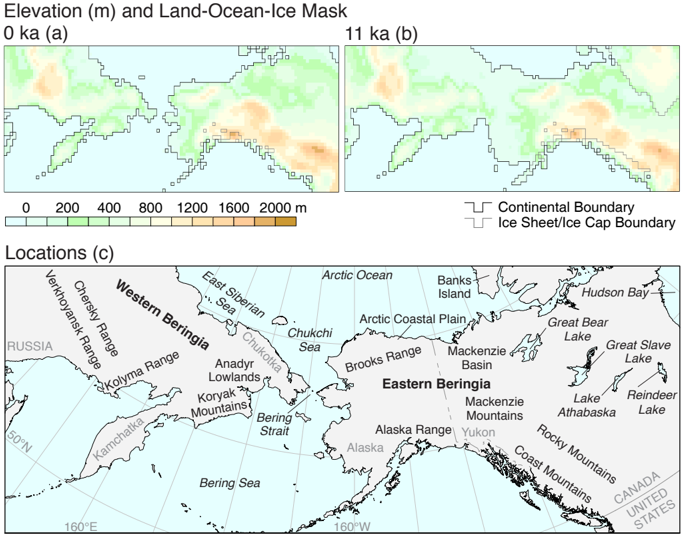
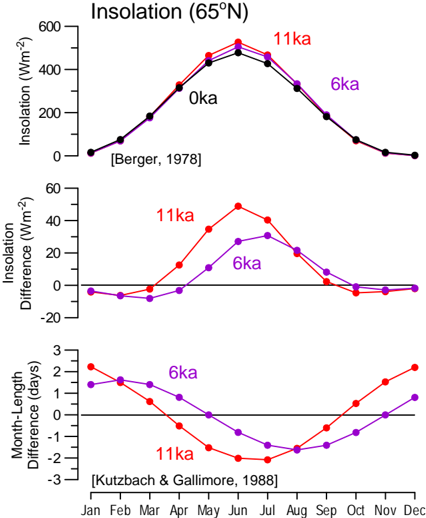
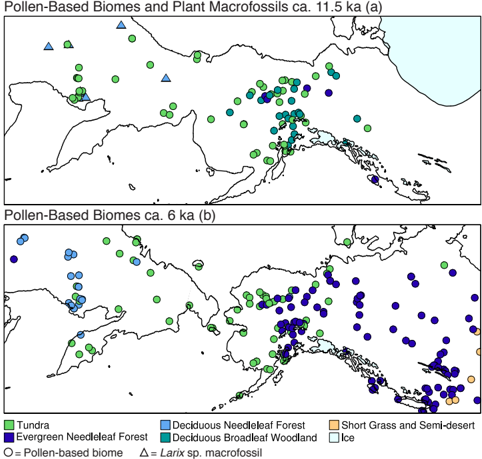
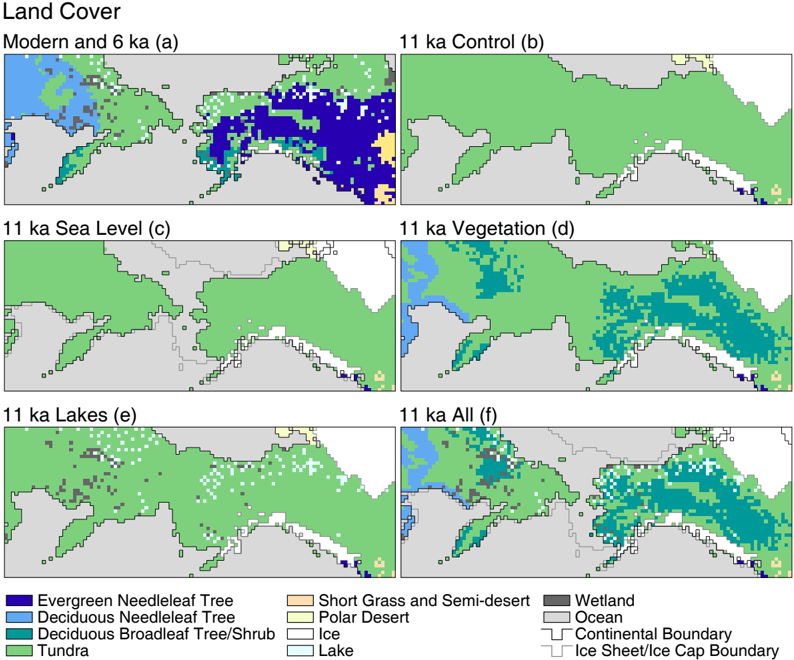
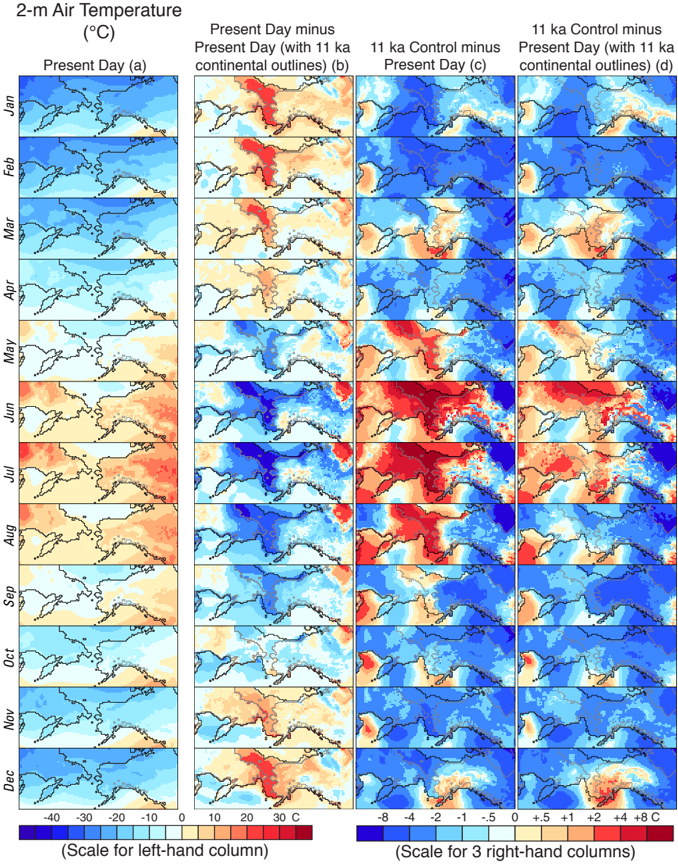
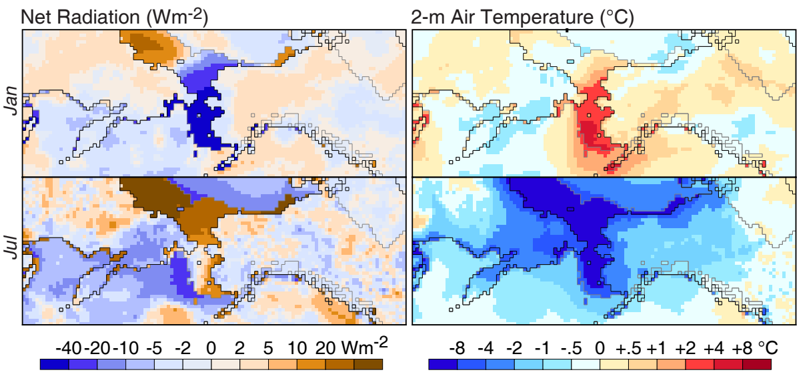
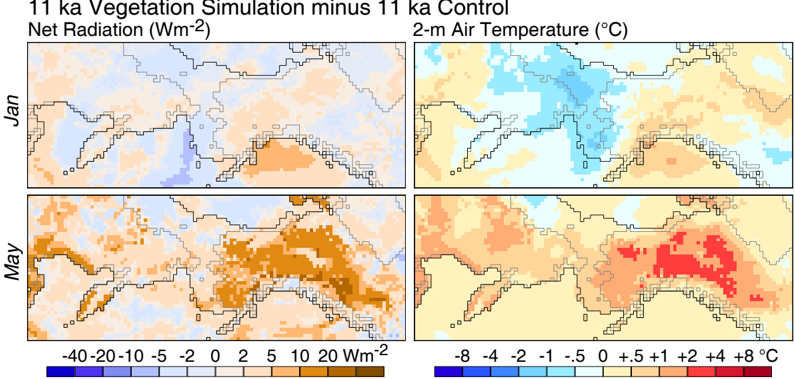
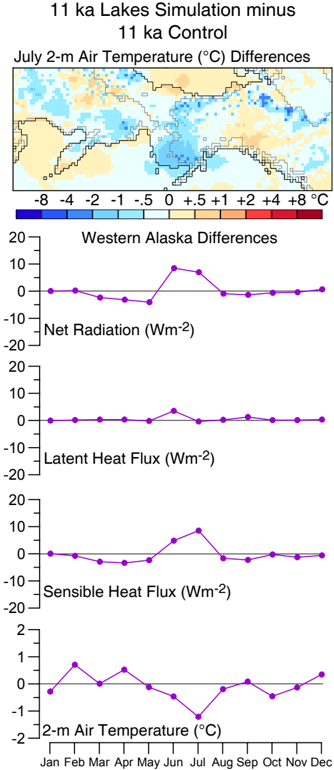
Arctic land-cover changes induced by recent global climate change (e.g., expansion of woody vegetation into tundra and effects of permafrost degradation) are expected to generate further feedbacks to the climate system. Past changes can be used to assess our understanding of feedback mechanisms through a combination of process modeling and paleo-observations. The subcontinental region of Beringia (northeastern Siberia, Alaska, and northwestern Canada) was largely ice-free at the peak of deglacial warming and experienced both major vegetation change and loss of permafrost when many arctic regions were still ice covered. The evolution of Beringian climate at this time was largely driven by global features, such as the amplified seasonal cycle of Northern Hemisphere insolation and changes in global ice volume and atmospheric composition, but changes in regional land-surface controls, such as the widespread development of thaw lakes, the replacement of tundra by deciduous forest or woodland, and the flooding of the Bering–Chukchi land bridge, were probably also important. We examined the sensitivity of Beringia's early Holocene climate to these regional-scale controls using a regional climate model (RegCM). Lateral and oceanic boundary conditions were provided by global climate simulations conducted using the GENESIS V2.01 atmospheric general circulation model (AGCM) with a mixed-layer ocean. We carried out two present-day simulations of regional climate – one with modern and one with 11 ka geography – plus another simulation for 6 ka. In addition, we performed five ~ 11 ka climate simulations, each driven by the same global AGCM boundary conditions: (i) 11 ka Control, which represents conditions just prior to the major transitions (exposed land bridge, no thaw lakes or wetlands, widespread tundra vegetation), (ii) sea-level rise, which employed present-day continental outlines, (iii) vegetation change, with deciduous needleleaf and deciduous broadleaf boreal vegetation types distributed as suggested by the paleoecological record, (iv) thaw lakes, which used the present-day distribution of lakes and wetlands, and (v) post-11 ka All, incorporating all boundary conditions changed in experiments (ii)–(iv). We find that regional-scale controls strongly mediate the climate responses to changes in the large-scale controls, amplifying them in some cases, damping them in others, and, overall, generating considerable spatial heterogeneity in the simulated climate changes. The change from tundra to deciduous woodland produces additional widespread warming in spring and early summer over that induced by the 11 ka insolation regime alone, and lakes and wetlands produce modest and localized cooling in summer and warming in winter. The greatest effect is the flooding of the land bridge and shelves, which produces generally cooler conditions in summer but warmer conditions in winter and is most clearly manifest on the flooded shelves and in eastern Beringia. By 6 ka continued amplification of the seasonal cycle of insolation and loss of the Laurentide ice sheet produce temperatures similar to or higher than those at 11 ka, plus a longer growing season.
Overview
The claims and statistics of this paper haven’t been checked yet.
Free: it reads the open-access text and checks the first 5 claims that cite a source we can check. Create a free account to check every claim.
Integrity signals
Registry
Cites
Statistics
Figures
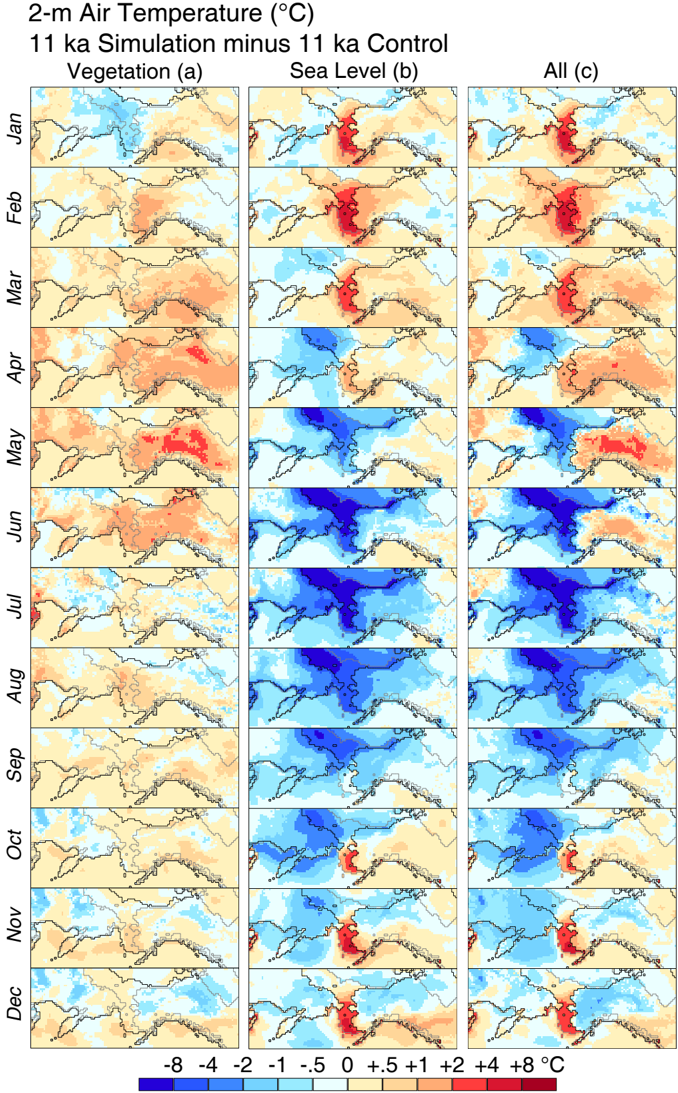
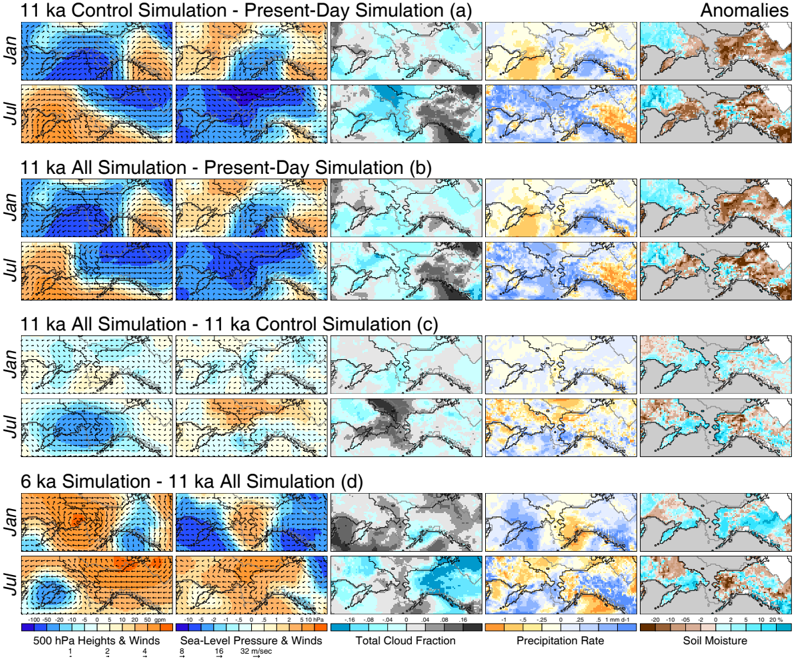
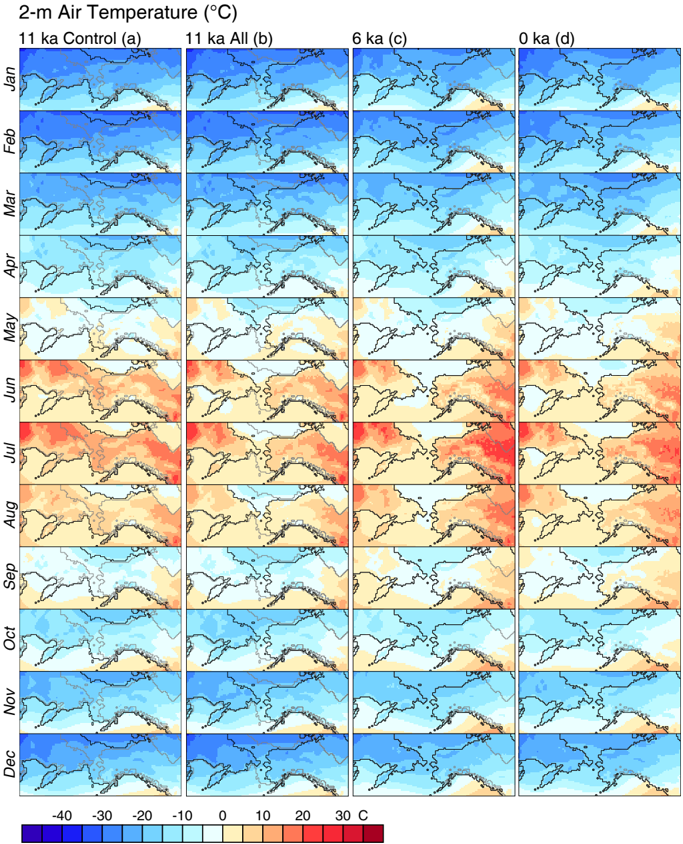
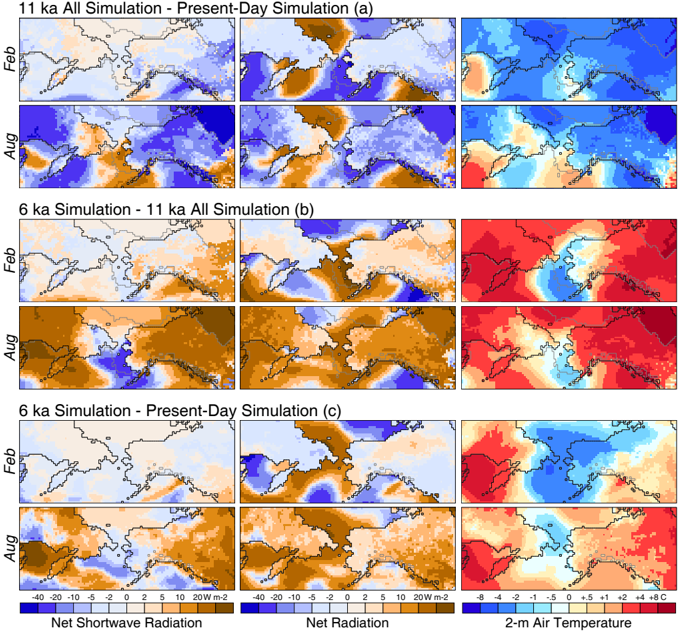
Verification
Claims the paper makes
The claims and statistics of this paper haven’t been checked yet.
Free: it reads the open-access text and checks the first 5 claims that cite a source we can check. Create a free account to check every claim.
Claims other papers make about this one
Each is checked against this paper’s own text: does it say what the citing paper says it does?
In the citing paper
“An equilibrium experiment using a regional climate model showed that under 11,000 cal yr BP boundary conditions the flooding of the Bering Land Bridge markedly reduced seasonality in eastern Beringia, bringing cooler summers and warmer winters (Bartlein et al., 2015).”
From Late Quaternary environmental change in eastern Beringia (2025) · cites this paper as Bartlein et al., 2015
In the citing paper
“Thus, replacement of land by sea in the latest Pleistocene and Early Holocene is implicated as a major climate control in eastern Beringia, though the eastward extent of this effect and the time at which the seaway became a detectable climatic influence are both uncertain (Bartlein et al., 2015;Mann and Gaglioti, 2024).”
From Late Quaternary environmental change in eastern Beringia (2025) · cites this paper as Bartlein et al., 2015
Self-check
Percentages, sums and reported differences re-computed from the paper’s own numbers.
The self-check needs the paper’s full text.
Citations
Cites
Shrub expansion in tundra ecosystems: dynamics, impacts and research priorities
Myers-Smith, I. H., Forbes, B. C., Wilmking, M., Hallinger, M., Lantz, T., Blok, D., Tape, K. D., Macias-Fauria, M., Sass-Klaassen, U., Lévesque, E., et al. (2011) · Environmental Research Letters · doi:10.1088/1748-9326/6/4/045509 · Cited by 1,485
Increasing shrub abundance in the Arctic
Sturm, M., Racine, C., & Tape, K. (2001) · Nature · doi:10.1038/35079180 · Cited by 1,349 · cited 1×
“…changes linked to 20th-century warming in the Arctic and subArctic include the expansion of large shrubs in northern Alaskan and Siberian tundra (Sturm et al., 2001, 2005; Forbes et al., 2010), negative trends in evergreen tree growth20 (Barber et al., 2000; McGuire et al., 2010), and rapidly…”
BackgroundPermafrost and the global carbon budget
Zimov, S. A., Schuur, E. A. G., & Chapin, F. S. (2006) · Science · doi:10.1126/science.1128908 · Cited by 1,034
Dyke, A. S., Moore, A., & Robertson, L. (2003) · doi:10.4095/214399 · Cited by 434
Rapid deglacial and early Holocene expansion of peatlands in Alaska
Jones, M. C., & Yu, Z. (2010) · Proceedings of the National Academy of Sciences · doi:10.1073/pnas.0911387107 · Cited by 243
Research works printed but not linked: 90
- Abbott, M. B., Finney, B. P., Edwards, M. E., and Kelts, K. R.: Lake- level reconstructions and paleohydrology of Birch Lake, central Alaska, based on seismic reflection profiles and core transects, Quaternary Res., 53, 154-166, 2000. · DOI · Paper page
- Abbott, M. B., Edwards, M. E., and Finney, B. P.: A 40 000-yr record of environmental change from Burial Lake in Northwest Alaska, Quaternary Res., 74, 156-165, 2010. · DOI · Paper page
- ACIA: Impact of a Warming Arctic: Arctic Climate Impact Assess- ment, Cambridge University Press, Cambridge, 1020 pp., 2004.
- Ager, T. A.: Late Quaternary vegetation and climate history of the central Bering land bridge from St. Michael Island, western Alaska, Quaternary Res., 60, 19-32, 2003. · DOI · Paper page
- Ager, T. A. and Phillips, R. L.: Pollen evidence for Late Pleistocene Bering land bridge environments from Norton Sound, Northeast- ern Bering Sea, Alaska, Arct. Antarct. Alp. Res., 40, 451-461, 2008. · DOI · Paper page
- Alder, J. R. and Hostetler, S. W.: Global climate simulations at 3000-year intervals for the last 21 000 years with the GEN- MOM coupled atmosphere-ocean model, Clim. Past, 11, 449- 471, doi:10.5194/cp-11-449-2015, 2015. · DOI
- Anderson, L., Abbott, M. B., Finney, B. P., and Edwards, M. E.: Palaeohydrology of the Southwest Yukon Territory, Canada, based on multiproxy analyses of lake sediment cores from a depth transect, Holocene, 15, 1172-1183, 2005. · DOI · Paper page
- Anderson, P. M., Edwards, M. E., and Brubaker, L. B.: Results and paleoclimate implications of 35 years of paleoecological re- search in Alaska, in: The Quaternary Period in the United States, Developments in Quaternary Science, edited by: Gillespie, A. E., Porter, S. C., and Atwater, B. F., Elsevier, New York, 427-440, 2004. · DOI
- Barber, V. A. and Finney, B. P.: Late Quaternary paleoclimatic re- constructions for interior Alaska based on paleolake-level data and hydrologic models, J. Paleolimnol., 24, 29-41, 2000. · DOI
- Barber, V. A., Juday, G. P., and Finney, B. P.: Reduced growth in Alaskan white spruce from 20th century temperature-induced drought stress, Nature, 405, 668-673, 2000. · DOI · Paper page
- Bartlein, P. J., Anderson, P. M., Edwards, M. E., and McDowell, P. M.: A framework for interpreting paleoclimatic variations in eastern Beringia, Quatern. Int., 10-12, 73-83, 1991. · DOI · Paper page
- Bartlein, P. J., Hostetler, S. W., and Alder, J. R.: Paleoclimate, in: Climate Change in North America, Regional Climate Studies, edited by: Ohring, G., Springer, 1-51, doi:10.1007/978-3-319- 03768-4_1, 2014. · DOI · Paper page
- Berger, A. L.: Long-term variations of daily insolation and Quater- nary climatic changes, J. Atmos. Sci., 35, 2362-2367, 1978. · DOI · Paper page
- Bigelow, N. H., Brubaker, L. B., Edwards, M. E., Harrison, S. P., Prentice, I. C., Anderson, P. M., Andreev, A. A., Bartlein, P. J., Christensen, T. R., Cramer, W., Kaplan, J. O., Lozhkin, A. V., Matveyeva, N. V., Murray, D. F., McGuire, A. D., Razzhivin, V. Y., Ritchie, J. C., Smith, B., Walker, D. A., Gajewski, K.,Wolf, V., Holmqvist, B. H., Igarashi, Y., Kremenetskii, K., Paus, A., Pisaric, M. F. J., and Volkova, V. S.: Climate change and Arctic ecosystems: 1. Vegetation changes north of 55 • N between the last glacial maximum, mid-Holocene, and present, J. Geophys. Res., 108, 8170, doi:10.1029/2002JD002558, 2003. · DOI · Paper page
- Binney, H. A., Willis, K. J., Edwards, M. E., Bhagwat, S. A., Ander- son, P. M., Andreev, A. A., Blaauw, M., Damblon, F., Haesaerts, P., Kienast, F., Kremenetski, C. V., Krivonogov, S. K., Lozhkin, A. V., MacDonald, G. M., Novenko, E. Y., Oksanen, P., Sapelko, T. V., Valiranta, M., and Vazhenina, L.: The distribution of late- Quaternary woody taxa in northern Eurasia: evidence from a new macrofossil database, Quaternary Sci. Rev., 8, 2445-2464, 2009. · DOI · Paper page
- Bonan, G. B., Chapin III, F. S., and Thompson, S. L.: Boreal for- est and tundra ecosystems as components of the climate system, Climatic Change, 29, 145-167, 1995. · DOI · Paper page
- Bonfils, C. J. W., Phillips, T. J., Lawrence, D. M., Cameron-Smith, P., Riley, W. J., and Subin, Z. M.: On the influence of shrub height and expansion on northern high latitude climate, Environ. Res. Lett., 7, 015503, doi:10.1088/1748-9326/7/1/015503, 2012. · DOI · Paper page
- Burn, C. R.: Cryostratigraphy, paleogeography, and climate change during the early Holocene warm interval, western Arctic coast, Canada, Can. J. Earth Sci., 34, 912-925, 1997. · doi:10.1139/e17-076
- Chapin III, F. S. and Starfield, A. M.: Time lags and novel ecosys- tems in response to transient climatic change in Arctic Alaska, Climatic Change, 35, 449-461, 1997. · DOI · Paper page
- Chapin III, F. S., Sturm, M., Serreze, M. C., McFadden, J. P., Key, J. R., Lloyd, A. H., McGuire, A. D., Rupp, T. S., Lynch, A. H., Schimel, J. P., Beringer, J., Chapman, W. L., Epstein, H. E., Eu- skirchen, E. S., Hinzman, L. D., Jia, G., Ping, C.-L., Tape, K. D., Thompson, C. D. C., Walker, D. A., and Welker. J. M.: Role of land-surface changes in Arctic summer warming, Science, 310, 657-660, 2005. · DOI · Paper page
- Chase, T. N., Pielke, R. A., Kittel, T. G. F., Nemani, R., and Run- ning, S. W.: Sensitivity of a general circulation model to global changes in leaf area index, J. Geophys. Res.-Atmos., 101, 7393- 7408, doi:10.1029/95JD02417, 1996. · DOI · Paper page
- Collins, M., Knutti, R., Arblaster, J., Dufresne, J.-L., Fichefet, T., Friedlingstein, P., Gao, X., Gutowski, W. J., Johns, T., Krinner, G., Shongwe, M., Tebaldi, C., Weaver, A. J., and Wehner, M.: Long-term climate change: projections, commitments and irre- versibility, in: Climate Change 2013: The Physical Science Ba- sis. Contribution of Working Group I to the Fifth Assessment Re- port of the Intergovernmental Panel on Climate Change, edited by: Stocker, T. F., Qin, D., Plattner, G.-K., Tignor, M., Allen, S. K., Boschung, J., Nauels, A., Xia, Y., Bex, V., and Midgley, P. M., Cambridge University Press, Cambridge, UK, 1032 pp., 2013.
- Dorman, J. L. and Sellers, P. J.: A global climatology of albedo, roughness length, and stomatal resistance for atmospheric gen- eral circulation models as represented by the simple biosphere model (SiB), J. Appl. Meteorol., 28, 833-855, 1989. · DOI · Paper page
- Edwards, M. E., Anderson, P. M., Brubaker, L. B., Ager, T., An- dreev, A. A., Bigelow, N. H., Cwynar, L. C., Eisner, W. R., Harri- son, S. P., Hu, F.-S., Jolly, D., Lozhkin, A. V., MacDonald, G. M., Mock, C. J., Ritchie, J. C., Sher, A. V., Spear, R. W., Williams, J., and Yu, G.: Pollen-based biomes for Beringia 18 000, 6000 and 0 14 · DOI · Paper page
- Edwards, M. E., Bigelow, N. H., Finney, B. P., and Eisner, W. R.: Records of aquatic pollen and sediment properties as indicators of late-Quaternary Alaskan lake levels, J. Paleolimnol., 24, 55- 68, 2000b. · DOI
- Edwards, M. E., Mock, C. J., Finney, B. P., Barber, V. A., and Bartlein, P. J.: Modern-climate analogues for paleoclimatic vari- ations in eastern interior Alaska during the past 14 000 years: atmospheric-circulation controls of regional temperature and moisture responses, Quaternary Sci. Rev., 20, 189-202, 2001. · DOI
- Edwards, M. E., Brubaker, L. B., Lozhkin, A. V., and Anderson, P. M.: Structurally novel biomes: a response to past warming in Beringia, Ecology, 86, 1696-1703, 2005. · DOI · Paper page
- Elias, S. A. and Brigham-Grette, J.: Late Pleistocene events in Beringia, in: Encyclopedia of Quaternary Science, 1057-1066, 2007. · DOI
- Elias, S. A., Short, S. K., and Birks, H. H.: Late Wisconsin environ- ments of the Bering Land Bridge, Palaeogeogr. Palaeocl., 136, 293-308, 1997. · DOI
- Fairbanks, R. G.: A 17 000-year glacio-eustatic sea-level record - influence of glacial melting rates on the Younger Dryas event and deep-ocean circulation, Nature, 342, 637-642, 1989. · DOI · Paper page
- Finney, B. P., Bigelow, N. H., Barber, V. A., and Edwards, M. E.: Holocene climate change and carbon cycling in a groundwater- fed, boreal forest lake: Dune Lake, Alaska, J. Paleolimnol., 48, 43-54, 2012. · DOI
- Foley, J. A., Kutzbach, J. E., Coe, M. T., and Levis, S.: Feedbacks between climate and boreal forests during the Holocene, Nature, 371, 52-54, doi:10.1038/371052a0, 1994. · DOI · Paper page
- Forbes, B. C., Fauria, M. M., and Zetterberg, P.: Russian Arctic warming and "greening" are closely tracked by tundra shrub wil- lows, Glob. Change Biol., 16, 1542-1554, 2010. · DOI · Paper page
- Giorgi, F., Marinucci, M. R., and Bates, G. T.: Development of a second-generation regional climate model (RegCM2), Part I: Boundary-layer and radiative transfer processes, Mon.Weath. Rev., 121, 2794-2813, 1993a. · DOI · Paper page
- Giorgi, F., Marinucci, M. R., and Bates, G. T.: Development of a second-generation regional climate model (RegCM2), Part II: Convective processes and assimilation of lateral boundary con- ditions, Mon. Weath. Rev., 121, 2814-2832, 1993b. · DOI · Paper page
- Harvey, L. D. D.: On the role of high latitude ice, snow and veg- etation feedbacks in the climatic response to external forcing changes, Climatic Change, 13, 191-224, 1988. · DOI
- Hopkins, D. M.: Thaw lakes and thaw sinks in the Imuruk Lake Area, Seward Peninsula, Alaska, J. Geol., 57, 119-131, 1949. · DOI · Paper page
- Hopkins, D. M.: Aspects of the paleogeography of Beringia dur- ing the late Pleistocene, in: Paleoecology of Beringia, edited by: Hopkins, D. M., Matthews, J. J. V., Schweger, C. E., and Young, S. B., Academic Press, New York, 127-150, 1982. · DOI · Paper page
- Hostetler, S. W. and Bartlein, P. J.: Simulation of lake evaporation with application to modeling lake level variations of Harney- Malheur Lake, Oregon, Water Resour. Res., 26, 2603-2612, 1990. · doi:10.1029/90wr01240
- Hostetler, S. W. and Bartlein, P. J.: Response of regional climate and surface processes in Western North America to a canonical Hein- rich event, in: Mechanism of Global Climate Change at Millen- nial Time Scales, edited by: Clark, P. U., Webb, R. S., and Keig- win, L., AGU Monograph Series, American Geophysical Union, Washington, DC, 313-328, 1999. · doi:10.1029/gm112p0313
- Hostetler, S. W., Giorgi, F., Bates, G. T., and Bartlein, P. J.: Lake- atmosphere feedbacks associated with paleolakes Bonneville and Lahontan, Science, 263, 665-668, 1994. · DOI
- Hostetler, S. W., Bartlein, P. J., Clark, P. U., Small, E. E., and Solomon, A. M.: Simulated influences of Lake Agassiz on the climate of central North America 11 000 years ago, Nature, 405, 334-337, 2000. · DOI
- Joussaume, S., Taylor, K. E., Braconnot, P., Mitchell, J., Kutzbach, J. E., Harrison, S. P., Prentice, I. C., Broccoli, A. J., Abe-Ouchi, A., Bartlein, P. J., Bonfils, C., Dong, B., Guiot, J., Herterich, K., Hewitt, C. D., Jolly, D., Kim, J. W., Kislov, A., Kitoh, A., Loutre, M. F., Masson, V., McAvaney, B., McFarlane, N., de Noblet, N., Peltier, W. R., Peterschmitt, J. Y., Pollard, D., Rind, D., Royer, J. F., Schlesinger, M. E., Syktus, J., Thompson, S. L., Valdes, P., Vettoretti, G., Webb, R. S., and Wyputta, U.: Monsoon changes for 6000 years ago: results of 18 simulations from the Paleocli- mate Modeling Intercomparison Project (PMIP), Geophys. Res. Lett., 26, 859-862, 1999. · DOI · Paper page
- Kaufman, D. S., Ager, T. A., Anderson, N. J., Anderson, P. M., An- drews, J. T., Bartlein, P. J., Brubaker, L. B., Coats, L. L., Cwynar, L. C., Duvall, M. L., Dyke, A. S., Edwards, M. E., Eisner, W. R., Gajewski, K., Geirsdóttir, A., Hu, F. S., Jennings, A. E., Ka- plan, M. R., Kerwin, M. W., Lozhkin, A. V., MacDonald, G. M., Miller, G. H., Mock, C. J., Oswald, W. W., Otto-Bliesner, B. L., Porinchu, D. F., Ruhland, K., Smol, J. P., Steig, E. J., and Wolfe, B. B.: Holocene thermal maximum in the western Arctic (0-180 • W), Quaternary Sci. Rev., 23, 529-560, 2004. · doi:10.1016/j.quascirev.2004.06.001
- Keigwin, L. D., Donnelly, J. P., Cook, M. S., Driscoll, N. W., and Brigham-Grette, J.: Rapid sea-level rise and Holocene climate in the Chukchi Sea, Geology, 34, 861-864, 2006. · DOI · Paper page
- Kokorowski, H. D., Anderson, P. M., Mock, C. J., and Lozhkin, A. V.: A re-evaluation and spatial analysis of evidence for a Younger Dryas climatic reversal in Beringia, Quaternary Sci. Rev., 27, 1710-1722, 2008. · DOI · Paper page
- Kutzbach, J. E. and Gallimore, R. G.: Sensitivity of a coupled at- mosphere mixed layer ocean model to changes in orbital forcing at 9000 years BP, J. Geophys. Res.-Atmos., 93, 803-821, 1988. · DOI · Paper page
- Liess, S., Snyder, P. K., and Harding, K. J.: The effects of boreal for- est expansion on the summer Arctic frontal zone, Clim. Dynam., 38, 1805-1827, doi:10.1007/s00382-011-1064-7, 2012. · DOI
- Lozhkin, A. V., Anderson, P. M., Eisner, W. R., Ravako, L. G., Hop- kins, D. M., Brubaker, L. B., Colinvaux, P. A., and Miller, M. C.: Late Quaternary lacustrine pollen records from southwestern Beringia, Quaternary Res., 39, 314-324, 1993. · DOI
- Lozhkin, A. V., Anderson, P., Eisner, W. R., and Solomatkina, T. B.: Late glacial and Holocene landscapes of central Beringia, Qua- ternary Res., 76, 383-392, 2011. · DOI
- Lynch, A. H., Bonan, G. B., Chapin III, F. S., and Wu, W.: Impact of tundra ecosystems on the surface energy budget and climate of Alaska, J. Geophys. Res.-Atmos., 104, 6647-6660, 1999. · DOI · Paper page
- Lynch, A. H., Slater, A. G., and Serreze, M.: The Alaskan Arctic frontal zone: forcing by orography, coastal contrast, and the bo- real forest, J. Climate, 14, 4351-4362, 2001. · DOI
- Lynch, A. H., Rivers, A. R., and Bartlein, P. J.: An assessment of the influence of land cover uncertainties on the simulation of global climate in the early Holocene, Clim. Dynam., 21, 243-256, 2003. · DOI
- McGuire, A. D., Ruess, R. W., Lloyd, A., Yarie, J., Clein, J. S., and Juday, G. P.: Vulnerability of white spruce tree growth in interior Alaska in response to climate variability: dendrochronological, demographic, and experimental perspectives, Can. J. Forest Res., 40, 1197-1209, 2010. · DOI
- Mearns, L. O., Arritt, R., Biner, S., Bukovsky, M. S., McGinnis, S., Sain, S., Caya, D., Correia, J., Flory, D., Gutowski, W., Takle, E. S., Jones, R., Leung, R., Moufouma-Okia, W., McDaniel, L., Nunes, A. M. B., Qian, Y., Roads, J., Sloan, L., and Snyder, M.: The North American regional climate change assessment pro- gram: overview of phase I results, B. Am. Meteorol. Soc., 93, 1337-1362, 2012. · DOI · Paper page
- Miller, G. H., Brigham-Grette, J., Alley, R. B., Anderson, L., Bauch, H. A., Douglas, M. S. V., Edwards, M. E., Elias, S. A., Finney, B. P., Fitzpatrick, J. J., Funder, S. V., Herbert, T. D., Hinzman, L. D., Kaufmann, D. S., MacDonald, G. M., Polyak, L., Robock, A., Serreze, M. C., Smol, J. P., Spielhagen, R., White, J. W. C. Wolfe, A. P., and Wolff, E. W.: Temperature and precipitation history of the Arctic, Quat. Sci. Rev., 29, 1679-1715, 2010. · DOI · Paper page
- Mock, C. J., Bartlein, P. J., and Anderson, P. M.: Atmospheric cir- culation patterns and spatial climatic variations in Beringia, Int. J. Climatol., 18, 1085-1104, 1998. · DOI
- Monnin, E., Indermuhle, A., Allenbach, A., Fluckiger, J., Stauffer, B., Stocker, T. F., Raynaud, D., and Barnola, J. M.: Atmospheric CO 2 concentrations over the last glacial termination, Science, 291, 112-114, 2001. · DOI · Paper page
- Oechel, W. C., Hastings, S. J., Vourlitis, G., Jenkins, M., Riechers, G., and Grulke, N.: Recent change of Arctic tundra ecosystems from a net carbon dioxide sink to a source, Nature, 361, 520-523, 1993. · DOI · Paper page
- Oncley, S. P., Lenschow, D. H., Campos, T. L., Davis, K. J., and Mann, J.: Regional-scale surface flux observations across the boreal forest during BOREAS, J. Geophys. Res.-Atmos., 102, 29147-29154, 1997. · doi:10.1029/97jd00242
- Osterkamp, T. E. and Romanovsky, V. E.: Evidence for warming and thawing of discontinuous permafrost in Alaska, Permafrost Periglac., 10, 17-37, 1999. · DOI · Paper page
- Pal, J. S., Giorgi, F., Bi, X., Elguindi, N., Solon, F., Gao, X., Rausher, S. A., Francisco, R., Zakey, A., Winter, J., Ashfaq, M., Syed, F. S., Bell, J. L., Diffenbaugh, N. S., Karmacharya, J., Konaré, A., Martinez, D., Da Rocha, R. P., Sloan, L. C., and Steiner, A. L.: Regional climate modeling for the develop- ing world: the ICTP RegCM3 and RegCNET, B. Am. Meteorol. Soc., 88, 1395-1409, doi:10.1175/BAMS-88-9-1395, 2007. · DOI · Paper page
- Peltier, W. R.: Ice age paleotopography, Science, 265, 195-201, 1994. · DOI · Paper page
- Pielke, R. A. and Vidale, P. L.: The boreal forest and the polar front, J. Geophys. Res.-Atmos., 100, 25755-25758, doi:10.1029/95JD02418, 1995. · DOI · Paper page
- Pinot, S., Ramstein, G., Harrison, S. P., Prentice, I. C., Guiot, J., Stute, M., and Joussaume, S.: Tropical paleoclimates at the Last Glacial Maximum: comparison of Paleoclimate Modeling In- tercomparison Project (PMIP) simulations and paleodata, Clim. Dynam., 15, 857-874, 1999. · DOI
- Pollard, D. and Thompson, S. L.: Climate and ice-sheet mass bal- ance at the last glacial maximum from the GENESIS version 2 global climate model, Quaternary Sci. Rev., 16, 841-863, 1997. · DOI
- Prentice, I. C. and Webb, T.: BIOME 6000: reconstructing global mid-Holocene vegetation patterns from palaeoecological records, J. Biogeogr., 25, 997-1005, 1998. · DOI · Paper page
- Prentice, I. C., Jolly, D., and BIOME 6000 Participants: Mid- Holocene and glacial-maximum vegetation geography of the northern continents and Africa, J. Biogeogr., 27, 507-519, 2000. · DOI · Paper page
- Ritchie, J. C. and Hare, F. K.: Late-Quaternary vegetation and cli- mate near the arctic tree line of northwestern North America, Quaternary Res., 1, 331-342, 1971. · doi:10.1016/0033-5894(71)90069-x
- Ritchie, J. C., Cwynar, L. C., and Spear, R. W.: Evidence from northwest Canada for an early Holocene Milankovitch thermal maximum, Nature, 205, 126-128, 1983. · DOI · Paper page
- Rivers, A. A. and Lynch, A. H.: On the influence of land cover on early Holocene climate in northern latitudes, J. Geophys. Res.- Atmos., 109, D21114, doi:10.1029/2003JD004213, 2004. · DOI
- Romanovskii, N. N., Hubberten, H. W., Gavrilov, A. V., Tum- skoy, V. E., Tipenko, G. S., Grigoriev, M. N., and Siegert, C.: Thermokarst and land-ocean interactions, Laptev Sea Region, Russia, Permafrost Periglac., 11, 137-152, 2000. · doi:10.1002/1099-1530(200004/06)11:2<137::aid-ppp345>3.3.co;2-c
- Romanovsky, V. E., Smith, S. L., and Christiansen, H. H.: Per- mafrost thermal state in the polar Northern Hemisphere during the International Polar Year 2007-2009: a Synthesis, Permafrost Periglac., 21, 106-116, 2010. · doi:10.1002/ppp.689
- Ruddiman, W. F., Vavrus, S. J., and Kutzbach, J. E.: A test of the overdue-glaciation hypothesis, Quaternary Sci. Rev., 24, 1-10, doi:10.1016/j.quascirev.2004.07.010, 2005. · DOI
- Serreze, M. C., Holland, M. H., and Stroeve, J.: Perspectives on the Arctic's shrinking sea-ice cover, Science, 315, 1533-1536, doi:10.1126/science.1139426, 2007. · DOI · Paper page
- Smith, L. C., Sheng, Y., MacDonald, G. M., and Hinz- man, L. D.: Disappearing Arctic lakes, Science, 308, 1429, doi:10.1126/science.1108142, 2005. · DOI · Paper page
- Smith, T. M. and Shugart, H. H.: The transient response of terres- trial carbon storage to a perturbed climate, Nature, 361, 523-526, 1993. · DOI · Paper page
- Sturm, M., Douglas, T., Racine, C., and Liston, G. E.: Changing snow and shrub conditions affect albedo with global implications, J. Geophys. Res.-Biogeo., 110, G01004, doi:10.1029/2005JG000013, 2005. · DOI · Paper page
- Subin, Z. M., Murphy, L. N., Li, F., Bonfils, C., and Riley, W. J.: Boreal lakes moderate seasonal and diurnal temperature varia- tion and perturb atmospheric circulation: analyses in the Com- munity Earth System Model 1 (CESM1), Tellus, 64, 15639, doi:10.3402/tellusa.v64i0.15639, 2012. · DOI
- Swann, A. L., Fung, I. Y., Levis, S., Bonan, G. B., and Doney, S. C.: Changes in Arctic vegetation amplify high-latitude warm- ing through the greenhouse effect, P. Natl. Acad. Sci. USA, 107, 1295-1300, 2010. · DOI · Paper page
- Tabor, C. R., Poulsen, C. J., and Pollard, D.: Mending Mi- lankovitch's theory: obliquity amplification by surface feed- backs, Clim. Past, 10, 41-50, doi:10.5194/cp-10-41-2014, 2014. TEMPO Members: Potential role of vegetation feedback in the cli- mate sensitivity of high-latitude regions: a case study at 6000 years B.P., Global Biogeochem. Cy., 10, 727-736, 1996. · doi:10.5194/cp-10-41-2014
- TEMPO Members: Potential role of vegetation feedback in the climate sensitivity of high-latitude regions: a case study at 6000 years B.P., Global Biogeochem. Cy., 10, 727–736, 1996. · doi:10.1029/96gb02690
- Thomas, G. and Rowntree, P. R.: The boreal forests and climate, Q. J. Roy. Meteor. Soc., 118, 469-497, 1992. · DOI
- Thompson, S. L. and Pollard, D.: A global climate model (GENE- SIS) with a land-surface transfer scheme (LSX). Part I: Present climate simulation, J. Climate, 8, 732-761, doi:10.1175/1520- 0442(1995)008< 0732:AGCMWA> 2.0.CO;2, 1995. · DOI
- Timm, O., Timmermann, A., Abe-Ouchi, A., Saito, F., and Segawa, T.: On the definition of seasons in paleoclimate sim- ulations with orbital forcing, Paleoceanography, 23, PA2221, doi:10.1029/2007PA001461, 2008. · DOI
- Walsh, J. E., Zhou, X., Portis, D., and Serreze, M. C.: Atmo- spheric contribution to hydrologic variations in the Arctic, At- mos. Ocean, 32, 733-755, 1994. · DOI · Paper page
- Walter, K. M., Zimov, S., Chanton, J. P., Verbyla, D., and Chapin, F. S.: Methane bubbling from Siberian thaw lakes as a positive feedback to climate warming, Nature, 443, 71-75, 2006. · DOI · Paper page
- Walter, K. M., Edwards, M. E., Grosse, G., Zimov, S. A., and Chapin III, F. S.: Thermokarst lakes as a source of atmospheric CH 4 during the last deglaciation, Science, 318, 633-636, 2007. · DOI · Paper page
- Walter Anthony, K. M., Zimov, S. A., Grosse, G., Jones, M. C., Anthony, P. M., Chapin III, F. S., Finlay, J. C., Mack, M. C., Davydov, S., Frenzel, P., and Frolking, S.: A shift of thermokarst lakes from carbon sources to sinks during the Holocene epoch, Nature, 511, 452-456, 2014. · DOI · Paper page
- Yokoyama, Y., Lambeck, K., De Deckker, P., Johnston, P., and Fi- field, L. K.: Timing of the Last Glacial Maximum from observed sea-level minima, Nature, 406, 713-716, 2000. · DOI · Paper page
Cited by
Kaufman, D. S., Axford, Y. L., Henderson, A. C. G., McKay, N. P., Oswald, W. W., Saenger, C., Anderson, R. S., Bailey, H. L., Clegg, B., Gajewski, K., et al. (2016) · Quaternary Science Reviews · doi:10.1016/j.quascirev.2015.10.021 · Cited by 180
Life and extinction of megafauna in the ice-age Arctic
Mann, D. H., Groves, P., Reanier, R. E., Gaglioti, B. V., Kunz, M. L., & Shapiro, B. (2015) · Proceedings of the National Academy of Sciences · doi:10.1073/pnas.1516573112 · Cited by 72
Late Quaternary environmental change in eastern Beringia
Monteath, A. J., Edwards, M. E., Froese, D., Anderson, L., Gaglioti, B. V., Cocker, S. L., Brigham-Grette, J., Wooller, M. J., Finney, B., & Abbott, M. B. (2025) · Quaternary Science Reviews · doi:10.1016/j.quascirev.2025.109527 · Cited by 13
Self-citation
Metadata
- Authors
- Bartlein, P. J., Edwards, M. E., Hostetler, S. W., Shafer, S. L., Anderson, P. M., Brubaker, L. B., & Lozhkin, A. V.
- Venue
- Climate of the Past
- Publisher
- Copernicus GmbH
- Published
- 2015-09-24
- Volume
- 11
- Issue
- 9
- Pages
- 1197-1222
- ISSN
- 1814-9332
- Cited by
- 24
- References
- 5
- Language
- en
- Funders
- Division of Atmospheric and Geospace Sciences (ATM-0001643)
- Division of Polar Programs (OPP-001874, OPP-0218785)
- Russian Academy of Sciences (12-III-A-09-198, 12-II-CO-08-024, 15-I-2-067)
About these checks
Registry, retraction, Cites and statistics results are computed, not judged, with one exception: a printed reference that no index lists is read once by a model before it counts as a citation error. Claims are extracted by a model and kept only when their quote appears verbatim in the text; each cited source is then checked, with a model’s help, for whether it says what the claim relies on. Those verdicts can be wrong — read the claim’s quote and the cited source before relying on one.
Statistics and arithmetic are recomputed, not judged.
Confidence bands are shown only for fields calibrated on our annotated test set. None is calibrated yet, so no band is shown.
What counts as a claim ›How we measure confidence ›How we check this ›
Are you an author, or do you see a problem with this page? Request a review
How to cite
Cite CoChat for the checks on this page, and the paper for its own findings.
- This page
- CoChat. (2026). Citation check: Early-Holocene warming in Beringia and its mediation by sea-level and vegetation changes. https://app.cochat.ai/papers/10.5194/cp-11-1197-2015
- The paper
- Bartlein, P. J., Edwards, M. E., Hostetler, S. W., Shafer, S. L., Anderson, P. M., Brubaker, L. B., & Lozhkin, A. V. (2015). Early-Holocene warming in Beringia and its mediation by sea-level and vegetation changes. Climate of the Past. https://doi.org/10.5194/cp-11-1197-2015
Data sources
Bibliographic data: Semantic Scholar, OpenAlex, Crossref.
Contains information from the Semantic Scholar Academic Graph Datasets, made available under the ODC Attribution License (ODC-BY 1.0).
Semantic Scholar’s data is described in: Kinney, R., et al. (2023). The Semantic Scholar Open Data Platform. arXiv:2301.10140.
