

Effect of social media use on learning, social interactions, and sleep duration among university students
Open accessThe DOI matches its Crossref record; 50 of the 50 references it cites were found in a registry or an index.
Abstract
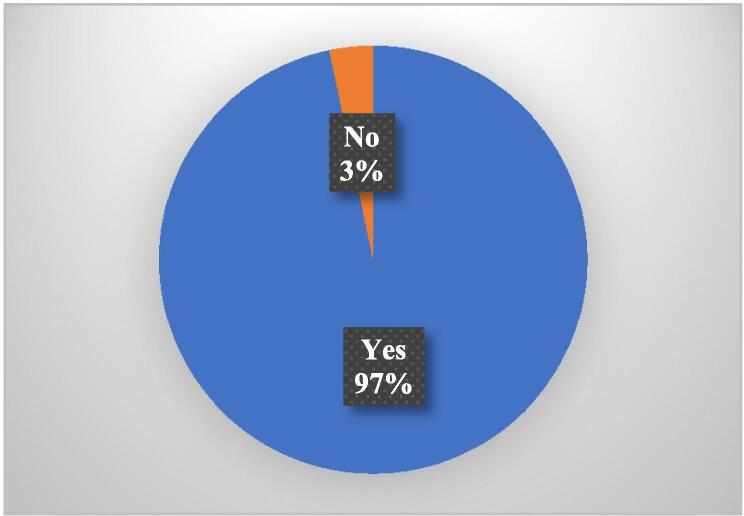
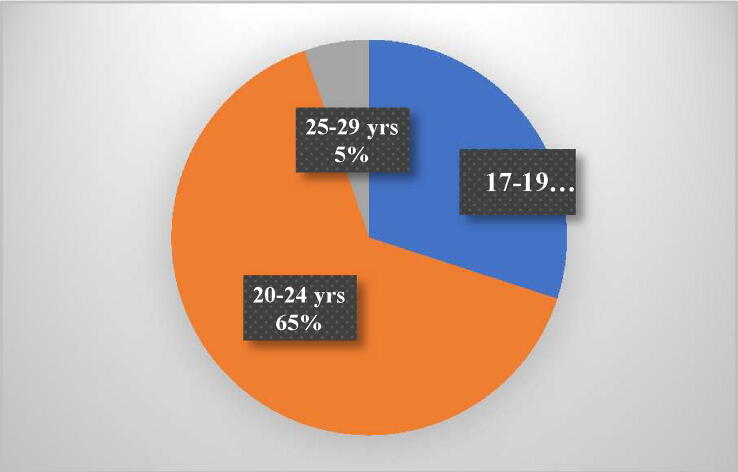
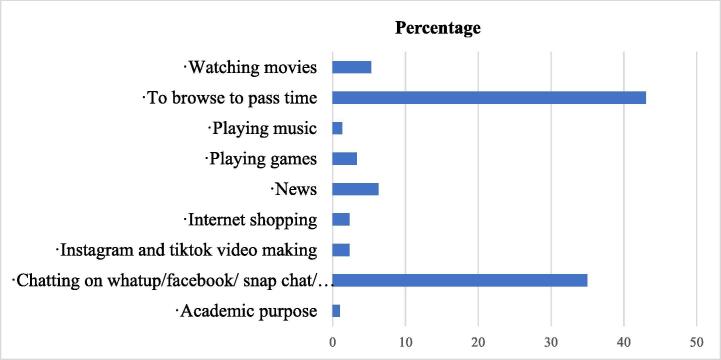
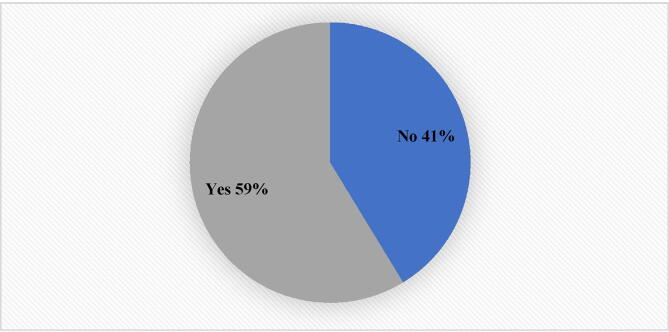
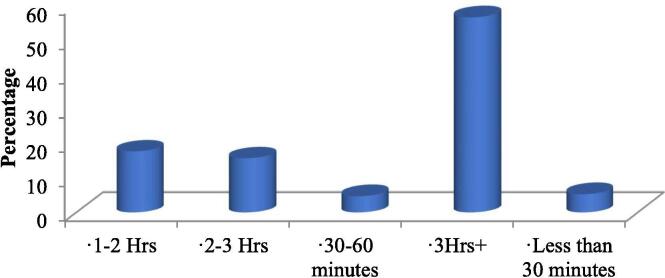
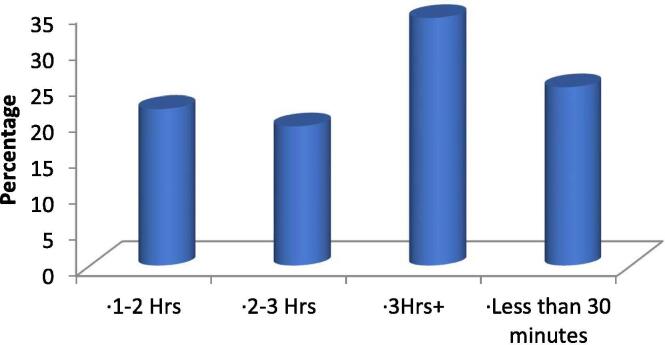
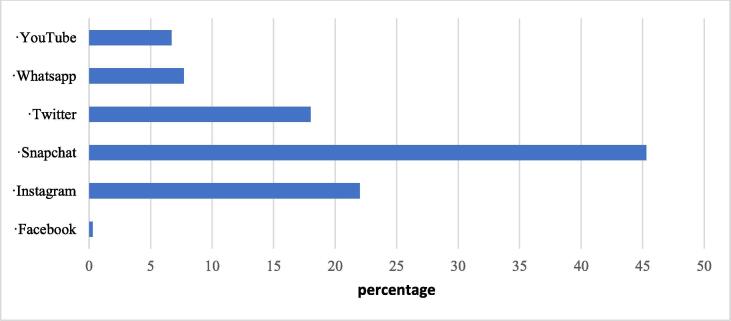
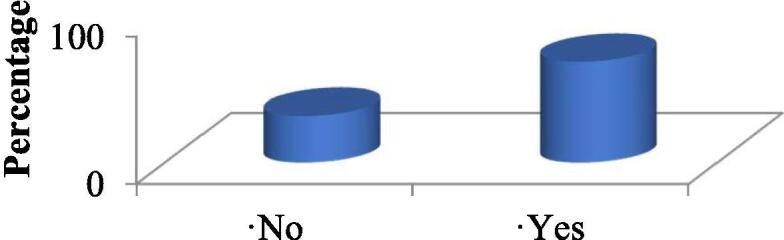
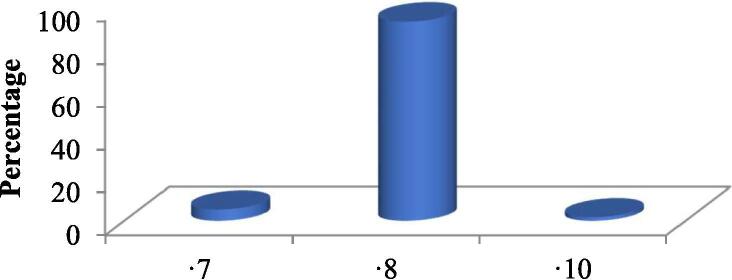
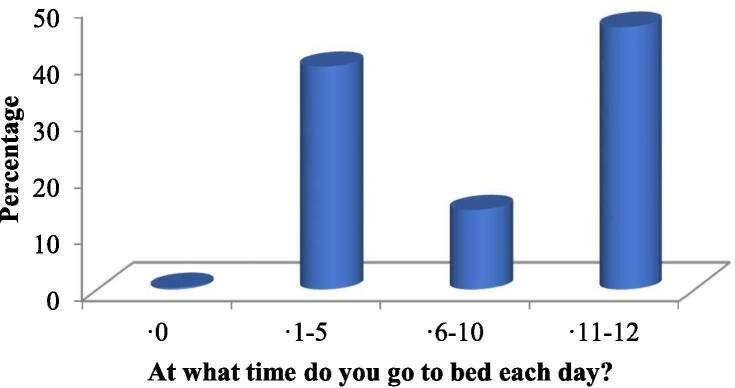
BACKGROUND: Social networking sites are widely used by university students. This study investigated the purposes for which social networking sites are used and their effects on learning, social interaction, and sleep duration. MATERIAL AND METHODS: A cross-sectional study was conducted among 300, 17-29-year-old female students at Prince Sattam bin Abdul Aziz University. A questionnaire was used to collect data. Chi-squared (Fisher's exact test) test was used to analyze the data. RESULTS: The results showed that 97% of the students used social media applications. Only 1% of them used social media for academic purposes. Whereas 35% of them used these platforms to chat with others, 43% of them browsed these sites to pass time. Moreover, 57% of them were addicted to social media. Additionally, 52% of them reported that social media use had affected their learning activities, 66% of them felt more drawn toward social media than toward academic activities, and 74% of them spent their free time on social media platforms. The most popular applications (i.e., based on usage) were Snapchat (45%), Instagram (22%), Twitter (18%), and WhatsApp (7%). Further, 46% and 39% of them reported going to bed between 11 pm and 12 am and between 1 am and 2 am, respectively. Finally, 68% of them attributed their delayed bedtime to social media use, and 59% of them reported that social media had affected their social interactions. CONCLUSIONS: A majority of the participants reported prolonged use of social networking sites for nonacademic purposes. These habitual behaviors can distract students from their academic work, adversely affect their academic performance, social interactions, and sleep duration, and lead to a sedentary lifestyle and physical inactivity, which in turn can render them vulnerable to non-communicable diseases and mental health problems.
Overview
The claims and statistics of this paper haven’t been checked yet.
Free: it reads the open-access text and checks the first 5 claims that cite a source we can check. Create a free account to check every claim.
Integrity signals
Registry
Cites
Statistics
Figures
Verification
Claims the paper makes
The claims and statistics of this paper haven’t been checked yet.
Free: it reads the open-access text and checks the first 5 claims that cite a source we can check. Create a free account to check every claim.
Self-check
Percentages, sums and reported differences re-computed from the paper’s own numbers.
The self-check needs the paper’s full text.
Citations
Cites
Adverse metabolic and cardiovascular consequences of circadian misalignment
Scheer, F. A. J. L., Hilton, M. F., Mantzoros, C. S., & Shea, S. A. (2009) · Proceedings of the National Academy of Sciences · doi:10.1073/pnas.0808180106 · Cited by 2,351
Hu, F. B., Li, T. Y., Colditz, G. A., Willett, W. C., & Manson, J. E. (2003) · JAMA · doi:10.1001/jama.289.14.1785 · Cited by 1,892
Hamilton, M. T., Hamilton, D. G., & Zderic, T. W. (2007) · Diabetes · doi:10.2337/db07-0882 · Cited by 1,655
Paruthi, S., Brooks, L. J., D’Ambrosio, C., Hall, W. A., Kotagal, S., Lloyd, R. M., Malow, B. A., Maski, K., Nichols, C., Quan, S. F., et al. (2016) · Journal of Clinical Sleep Medicine · doi:10.5664/jcsm.5866 · Cited by 1,562
Woods, H. C., & Scott, H. (2016) · Journal of Adolescence · doi:10.1016/j.adolescence.2016.05.008 · Cited by 1,302
Gangwisch, J. E., Heymsfield, S. B., Boden-Albala, B., Buijs, R. M., Kreier, F., Pickering, T. G., Rundle, A. G., Zammit, G. K., & Malaspina, D. (2006) · Hypertension · doi:10.1161/01.hyp.0000217362.34748.e0 · Cited by 1,284
Objectively Measured Sedentary Time, Physical Activity, and Metabolic Risk
Healy, G. N., Wijndaele, K., Dunstan, D. W., Shaw, J. E., Salmon, J., Zimmet, P. Z., & Owen, N. (2008) · Diabetes Care · doi:10.2337/dc07-1795 · Cited by 1,100
Hamilton, M. T., Healy, G. N., Dunstan, D. W., Zderic, T. W., & Owen, N. (2008) · Current Cardiovascular Risk Reports · doi:10.1007/s12170-008-0054-8 · Cited by 854
Physical Activity and Television Watching in Relation to Risk for Type 2 Diabetes Mellitus in Men
Hu, F. B., Leitzmann, M. F., Stampfer, M. J., Colditz, G. A., Willett, W. C., & Rimm, E. B. (2001) · Archives of Internal Medicine · doi:10.1001/archinte.161.12.1542 · Cited by 828
Dunstan, D. W., Barr, E. L. M., Healy, G. N., Salmon, J., Shaw, J. E., Balkau, B., Magliano, D. J., Cameron, A. J., Zimmet, P. Z., & Owen, N. (2010) · Circulation · doi:10.1161/circulationaha.109.894824 · Cited by 825
Research works printed but not linked: 1
- Hanson, J.A., Huecker, M.R., 2019. Sleep deprivation. In: StatPearls [Internet]. StatPearls Publishing. 31613456
Cited by
Wu, P., Feng, R., & Zhang, J. (2024) · BMC Psychology · doi:10.1186/s40359-023-01498-4 · Cited by 135
Landa–Blanco, M., Reyes, Y., Landa-Blanco, A. L., Ramos, A. C., & Paz-Maldonado, E. (2024) · Heliyon · doi:10.1016/j.heliyon.2024.e24384 · Cited by 125
Chowdhury, E. K. (2024) · Journal of Research in Innovative Teaching & Learning · doi:10.1108/jrit-07-2023-0097 · Cited by 107
Purnama, Y., & Asdlori, A. (2023) · Technology and Society Perspectives (TACIT) · doi:10.61100/tacit.v1i2.50 · Cited by 109
Salari, N., Zarei, H., Hosseinian-Far, A., Rasoulpoor, S., Shohaimi, S., & Mohammadi, M. (2025) · Journal of Public Health · doi:10.1007/s10389-023-02012-1 · Cited by 91
Metadata
- Authors
- Kolhar, M., Kazi, R. N. A., & Alameen, A.
- Affiliations
- Prince Sattam Bin Abdulaziz University (SA)
- Corresponding author
- Kolhar, Manjur
- Venue
- Saudi Journal of Biological Sciences
- Publisher
- Elsevier BV
- Published
- 2021-04
- Volume
- 28
- Issue
- 4
- Pages
- 2216-2222
- ISSN
- 1319-562X (ISSN-L)
- PMC
- PMC8071811
- OpenAlex
- W3121805273
- Cited by
- 556
- References
- 49
- Citations by year
- 2026: 117 · 2025: 164 · 2024: 120 · 2023: 89 · 2022: 52 · 2021: 14
- FWCI
- 65.51
- Type
- journal article
- Language
- en
- Open access
- hybrid
- doi.org
- Licence
- cc-by-nc-nd
- www.elsevier.com/tdm/userlicense/1.0/ (tdm)
- www.elsevier.com/legal/tdmrep-license (tdm)
- creativecommons.org/licenses/by-nc-nd/4.0/ (vor)
- Locations
- Saudi Journal of Biological Sciences (publishedVersion, cc-by-nc-nd)
- PubMed (publishedVersion)
- PubMed Central (publishedVersion, cc-by-nc-nd)
- Funders
- Prince Sattam bin Abdulaziz University
- Topics
- Social Sciences › Sociology and Political Science › Impact of Technology on Adolescents
- Social Sciences › Communication › Media and Digital Communication
- Social Sciences › Psychology › Experimental and Cognitive Psychology › Sleep and related disorders
- Keywords
- social media use, social networking sites, university students, academic performance, social interaction, sleep duration, bedtime, social media addiction, sedentary lifestyle, mental health
About these checks
Registry, retraction, Cites and statistics results are computed, not judged, with one exception: a printed reference that no index lists is read once by a model before it counts as a citation error. Claims are extracted by a model and kept only when their quote appears verbatim in the text; each cited source is then checked, with a model’s help, for whether it says what the claim relies on. Those verdicts can be wrong — read the claim’s quote and the cited source before relying on one.
Statistics and arithmetic are recomputed, not judged.
Confidence bands are shown only for fields calibrated on our annotated test set. None is calibrated yet, so no band is shown.
What counts as a claim ›How we measure confidence ›How we check this ›
Are you an author, or do you see a problem with this page? Request a review
Data sources
Bibliographic data: Semantic Scholar, OpenAlex, Crossref.
Contains information from the Semantic Scholar Academic Graph Datasets, made available under the ODC Attribution License (ODC-BY 1.0).
Semantic Scholar’s data is described in: Kinney, R., et al. (2023). The Semantic Scholar Open Data Platform. arXiv:2301.10140.
