

The DOI matches its Crossref record; 45 of the 47 references it cites were found in a registry or an index, and 1 are not checked yet.
Algae as Bio-fertilizers: Between current situation and future prospective
Open accessAbstract
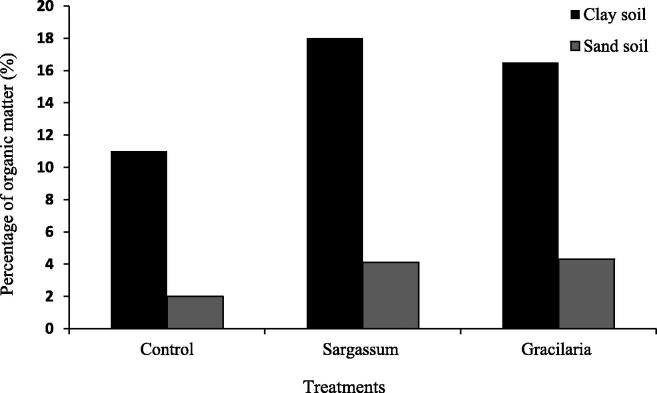
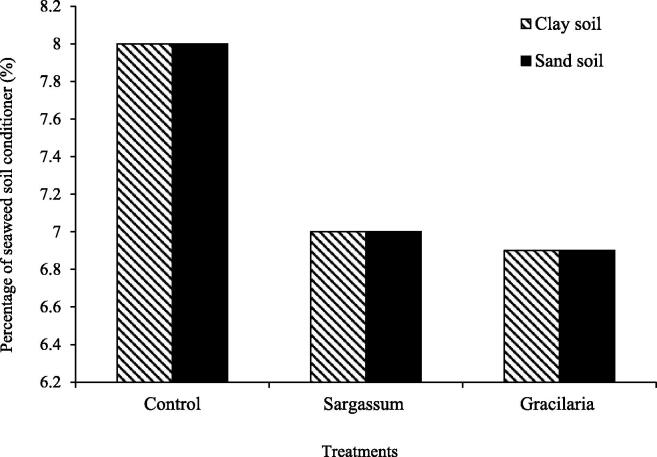
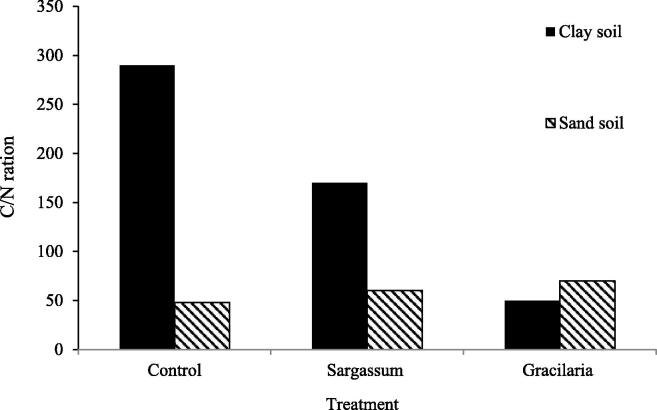
Bio-fertilization is a sustainable agricultural practice that includes using bio-fertilizers to increase soil nutrient content resulting in higher productivity. Soil micro-flora has been exposed to improve soil fertility and increase biomass productivity and identified as a correct environmentally friendly bio-based fertilizer for pollution-free agricultural applies. The majority of cyanobacteria can fix nitrogen from the atmosphere and several species including Anabaena sp., Nostoc sp., and Oscillatoria angustissima is known to be effective cyanobacterial based bio fertilizers. Acutodesmus dimorphus, Spirulina platensis Chlorella vulgaris, Scenedesmus dimorphus, Anabaena azolla, and Nostoc sp. are some of the green microalgae and cyanobacteria species that have been successfully used as bio fertilizers to boost crop growth. Also, Chlorella vulgaris is one of the most commonly used microalgae in bio fertilizer studies. The addition of seaweed species that are Sargassum sp. and Gracilaria verrucosa leads to chemical changes as a soil fertility indicator on clay and sandy soils, and the addition of seaweed conditioner to soil can improve its organic content, return pH to normal, and reduce C/N ratio in both sandy and clay soil. This review provides an effective approach to increase soil fertility via environmentally friendly bio-based fertilizer using micro and macro algae. Instead of the usage of inorganic and organic fertilizers that have polluted impacts to soil as aggregation of heavy metals, in addition to there their human carcinogenic effects.
Overview
The claims and statistics of this paper haven’t been checked yet.
Run the check — free, no account needed. It reads the open-access text and checks the sources it cites.
Integrity signals
Registry
Cites
Statistics
Figures
Verification
Claims the paper makes
The claims and statistics of this paper haven’t been checked yet.
Run the check — free, no account needed. It reads the open-access text and checks the sources it cites.
Claims other papers make about this one
Each is checked against this paper’s own text: does it say what the citing paper says it does?
In the citing paper
“Microalgae-based biofertilizers reduce nutrient losses, enhance soil health, contribute to carbon sequestration [8], promote rice plant development, improve soil fertility, and efficiently adsorb heavy metals, thus making them reliable options in an eco-friendly manner [110, 111].”
From A Holistic Approach to Circular Bioeconomy Through the Sustainable Utilization of Microalgal Biomass for Biofuel and Other Value-Added Products (2024) · cites this paper as [110]
In the citing paper
“Similarly, Scenedesmus and Chlorella strains demonstrated clearance rates of 48% and 31%, respectively, for 20 mg Cr/L [110, 126].”
From A Holistic Approach to Circular Bioeconomy Through the Sustainable Utilization of Microalgal Biomass for Biofuel and Other Value-Added Products (2024) · cites this paper as [110]
Self-check
Percentages, sums and reported differences re-computed from the paper’s own numbers.
The self-check needs the paper’s full text.
Citations
Cites
Seaweed extracts as biostimulants of plant growth and development
Khan, W., Rayirath, U. P., Subramanian, S., Jithesh, M. N., Rayorath, P., Hodges, D. M., Critchley, A. T., Craigie, J. S., Norrie, J., & Prithiviraj, B. (2009) · Journal of Plant Growth Regulation · doi:10.1007/s00344-009-9103-x · Cited by 1,740
Harvesting techniques applied to microalgae: A review
Barros, A. I., Gonçalves, A. L., Simões, M., & Pires, J. C. M. (2015) · Renewable and Sustainable Energy Reviews · doi:10.1016/j.rser.2014.09.037 · Cited by 1,015
Physical control of soil organic matter dynamics in the tropics
Feller, C., & Beare, M. H. (1997) · Geoderma · doi:10.1016/s0016-7061(97)00039-6 · Cited by 925
Microalgal Biostimulants and Biofertilisers in Crop Productions
Ronga, D., Biazzi, E., Parati, K., Carminati, D., Carminati, E., & Tava, A. (2019) · Agronomy · doi:10.3390/agronomy9040192 · Cited by 536
Microbes as Biofertilizers, a Potential Approach for Sustainable Crop Production
Nosheen, S., Ajmal, I., & Song, Y. (2021) · Sustainability · doi:10.3390/su13041868 · Cited by 477
Dhaliwal, S. S., Singh, J., Taneja, P. K., & Mandal, A. (2020) · Environmental Science and Pollution Research · doi:10.1007/s11356-019-06967-1 · Cited by 454
Coppens, J., Grunert, O., Hende, S. V. D., Vanhoutte, I., Boon, N., Haesaert, G., & Gelder, L. D. (2015) · Journal of Applied Phycology · doi:10.1007/s10811-015-0775-2 · Cited by 323
Karthikeyan, S., Balasubramanian, R., & Iyer, C. S. P. (2006) · Bioresource Technology · doi:10.1016/j.biortech.2006.01.010 · Cited by 320
Cyanobacteria as a source of biofertilizers for sustainable agriculture
Chittora, D., Meena, M., Barupal, T., Swapnil, P., & Sharma, K. (2020) · Biochemistry and Biophysics Reports · doi:10.1016/j.bbrep.2020.100737 · Cited by 312
Algae: the world’s most important “plants”—an introduction
Chapman, R. L. (2010) · Mitigation and Adaptation Strategies for Global Change · doi:10.1007/s11027-010-9255-9 · Cited by 281
Gonçalves, A. L. (2021) · Applied Sciences · doi:10.3390/app11020871 · Cited by 280
Biofertilizer, a way towards organic agriculture: A review
Ritika, B., & Utpal, D. (2014) · African Journal of Microbiology Research · doi:10.5897/ajmr2013.6374 · Cited by 253
Fleurence, J., Morançais, M., Dumay, J., Decottignies, P., Turpin, V., Munier, M., Garcia-Bueno, N., & Jaouen, P. (2012) · Trends in Food Science & Technology · doi:10.1016/j.tifs.2012.03.004 · Cited by 236
Impact of seaweeds on agricultural crop production as biofertilizer
Nabti, E., Jha, B., & Hartmann, A. (2016) · International Journal of Environmental Science and Technology · doi:10.1007/s13762-016-1202-1 · Cited by 236
Biodiesel production with microalgae as feedstock: from strains to biodiesel
Gong, Y., & Jiang, M. (2011) · Biotechnology Letters · doi:10.1007/s10529-011-0574-z · Cited by 217
Osório, C., Machado, S., Peixoto, J. A. B., Bessada, S. M. F., Pimentel, F. B., Alves, R. C., & Oliveira, M. B. P. P. (2020) · Separations · doi:10.3390/separations7020033 · Cited by 204
A Review on the Effect of Organic and Chemical Fertilizers on Plants
Sharma, A. (2017) · International Journal for Research in Applied Science and Engineering Technology · doi:10.22214/ijraset.2017.2103 · Cited by 174
Isolation of Industrial Important Bioactive Compounds from Microalgae
Balasubramaniam, V. R. M. T., Rathi, D.-N. G., Mustar, S., Lee, J. C., & Noh, M. F. M. (2021) · Molecules · doi:10.3390/molecules26040943 · Cited by 167
Barone, V., Baglieri, A., Stevanato, P., Broccanello, C., Bertoldo, G., Bertaggia, M., Cagnin, M., Pizzeghello, D., Moliterni, V. M. C., Mandolino, G., et al. (2018) · Journal of Applied Phycology · doi:10.1007/s10811-017-1283-3 · Cited by 165
Plaza, B. M., Gómez-Serrano, C., Acién, F. G., & Jiménez, S. (2018) · Journal of Applied Phycology · doi:10.1007/s10811-018-1427-0 · Cited by 153
Agricultural importance of algae
Abdel-Raouf, N. (2012) · AFRICAN JOURNAL OF BIOTECHNOLOGY · doi:10.5897/ajb11.3983 · Cited by 145
Alobwede, E., Leake, J. R., & Pandhal, J. (2019) · Geoderma · doi:10.1016/j.geoderma.2018.07.049 · Cited by 134
Microalgae as Biofertilizer in Modern Agriculture
Guo, S., Wang, P., Wang, X., Zou, M., Liu, C., & Hao, J. (2020) · Microalgae Biotechnology for Food, Health and High Value Products · doi:10.1007/978-981-15-0169-2_12 · Cited by 102
Role of Algae as a Biofertilizer
Chatterjee, A., Singh, S. P., Agrawal, C., Yadav, S., Rai, R., & Rai, L. C. (2017) · Elsevier eBooks · doi:10.1016/b978-0-444-63784-0.00010-2 · Cited by 99
Novel bioprocess for the cultivation of microalgae in hydroponic growing system of tomato plants
Barone, V., Puglisi, I., Fragalà, F., Piero, A. R. L., Giuffrida, F., & Baglieri, A. (2018) · Journal of Applied Phycology · doi:10.1007/s10811-018-1518-y · Cited by 97
El‐Baky, H. H. A., El-Baz, F. K., & Baroty, G. S. E. (2009) · Journal of the Science of Food and Agriculture · doi:10.1002/jsfa.3815 · Cited by 96
Hashem, H. A., Mansour, H. A., El-Khawas, S. A., & Hassanein, R. A. (2019) · Agronomy · doi:10.3390/agronomy9030146 · Cited by 93
Suleiman, A. K. A., Lourenço, K. S., Clark, C., Luz, R. L., da Silva, G. H. R., Vet, L. E. M., Cantarella, H., Fernandes, T. V., & Kuramae, E. E. (2020) · Resources Conservation and Recycling · doi:10.1016/j.resconrec.2020.104924 · Cited by 90
Guzmán-Murillo, M. A., Ascencio, F., & Larrinaga-Mayoral, J. Á. (2012) · PROTOPLASMA · doi:10.1007/s00709-011-0369-z · Cited by 85
Co-cultivation of Chlorella spp and tomato in a hydroponic system
Zhang, J., Wang, X., & Zhou, Q. (2016) · Biomass and Bioenergy · doi:10.1016/j.biombioe.2016.12.024 · Cited by 83
Biofertilizers from Algal Treatment of Dairy and Swine Manure Effluents
Mulbry, W. W., Kondrad, S. L., & Pizarro, C. (2007) · International Journal of Vegetable Science · doi:10.1300/j484v12n04_08 · Cited by 78
Production of bio-fertilizer from Ascophyllum nodosum and Sargassum muticum (Phaeophyceae)
Silva, L. D., Bahćevandžiev, K., & Pereira, L. (2019) · Journal of Oceanology and Limnology · doi:10.1007/s00343-019-8109-x · Cited by 73
Role of Bioremediation Agents (Bacteria, Fungi, and Algae) in Alleviating Heavy Metal Toxicity
Hassan, Z. U., Ali, S., Rizwan, M., Ibrahim, M., Nafees, M., & Waseem, M. (2017) · Springer eBooks · doi:10.1007/978-981-10-4059-7_27 · Cited by 70
Microalgae in Removal of Heavy Metal and Organic Pollutants from Soil
Priya, M., Gurung, N., Mukherjee, K., & Bose, S. (2014) · Microbial Biodegradation and Bioremediation · doi:10.1016/b978-0-12-800021-2.00023-6 · Cited by 65
Macroalgal Chemical Defenses and Their Roles in Structuring Tropical Marine Communities
Pereira, R. C., & da Gama, B. A. P. (2007) · Springer eBooks · doi:10.1007/978-3-540-74181-7_2 · Cited by 61
Zou, Y., Zeng, Q., Li, H., Liu, H., & Lu, Q. (2020) · Journal of Chemical Technology & Biotechnology · doi:10.1002/jctb.6602 · Cited by 56
Algae-Based Biofertilizers: A Biorefinery Approach
Mahapatra, D. M., Chanakya, H. N., Joshi, N. V., Ramachandra, T. V., & Murthy, G. S. (2018) · Microorganisms for sustainability · doi:10.1007/978-981-10-7146-1_10 · Cited by 51
Effect of extracellular products ofAulosira fertilissima on the growth of rice seedlings
Singh, V. P., & Trehan, K. B. (1973) · Plant and Soil · doi:10.1007/bf00779027 · Cited by 32
Methods for Extraction of Valuable Products from Microalgae Biomass
Salinas‐Salazar, C., García‐Pérez, J. S., Chandra, R., Castillo-Zacarías, C., Iqbal, H. M. N., & Parra‐Saldívar, R. (2019) · Springer eBooks · doi:10.1007/978-981-13-2264-8_11 · Cited by 32
Algal Economics and Optimization
Konur, O. (2015) · CRC Press eBooks · doi:10.1201/b18494-37 · Cited by 29
Seaweeds: Soil Health Boosters for Sustainable Agriculture
Kaur, I. (2020) · Soil biology · doi:10.1007/978-3-030-44364-1_10 · Cited by 27
Macroalgae as Soil Conditioners or Growth Promoters of Pisum sativum (L)
Duarte, I., Álvarez-Hernández, S., Ibañez, A., & Canto, A. R. (2018) · Annual Research & Review in Biology · doi:10.9734/arrb/2018/43272 · Cited by 24
Microalgae: The Multifaceted Biomass of the 21st Century
Kukwa, D. T., & Chetty, M. (2021) · IntechOpen eBooks · doi:10.5772/intechopen.94090 · Cited by 18
Effect of Nitrogen Fertilization on Yield and Quality of Endive
Adamczewska-Sowińska, K., & Uklanska-Pusz, C. M. (2009) · Journal of Fruit and Ornamental Plant Research · doi:10.2478/v10032-009-0019-6 · Cited by 8
Anitha, L., Kalpana, P., & Sai Bramari., G. (2016) · African Journal of Agricultural Research · doi:10.5897/ajar2013.7953 · Cited by 7
Izzati, M., Haryanti, S., & Setiari, N. (2019) · Journal of Physics Conference Series · doi:10.1088/1742-6596/1217/1/012179 · Cited by 7
Bahadori, M. H., Soltani, B., Heidarzadeh, A., et al. (2012) · AFRICAN JOURNAL OF BIOTECHNOLOGY · doi:10.4314/ajb.v11i54 · Cited by 1
Research works printed but not linked: 4
- Carvajal-Muñoz, 2012, Benefits and limitations of biofertilization in agricultural practices, Livest. Res. Rural Dev., 24, 1
- Chekroun K Ben, Baghour M (2013) The role of algae in phytoremediation of heavy metals: A review. J. Mater. Environ. Sci. 4:873–880.
- Guo, 2020, Microalgae as biofertilizer in modern agriculture, Microalgae Biotechnol Food, Heal High Value Prod, 397–411, 10.1007/978-981-15-0169-2_12 · DOI · Paper page
- Nabti, 2016, Impact of seaweeds on agricultural crop production as biofertilizer, Int. J. Environ. Sci. Technol., 145, 1119
Cited by
Sorted by citations
Parmar, P., Kumar, R., Neha, Y., & Srivatsan, V. (2023) · Frontiers in Plant Science · doi:10.3389/fpls.2023.1073546 · Cited by 279
Wang, X., Chi, Y., & Song, S. (2024) · Frontiers in Microbiology · doi:10.3389/fmicb.2024.1347745 · Cited by 177
Osorio-Reyes, J. G., Valenzuela-Amaro, H. M., Pizaña-Aranda, J. J. P., Ramírez-Gamboa, D., Meléndez-Sánchez, E. R., López-Arellanes, M. E., Castañeda-Antonio, D., Coronado-Apodaca, K. G., Araújo, R. G., Sosa‐Hernández, J. E., et al. (2023) · Marine Drugs · doi:10.3390/md21020093 · Cited by 166
Olguín, E. J., Sánchez‐Galván, G., Arias‐Olguín, I. I., Melo, F. J., González‐Portela, R. E., Cruz, L., Philippis, R. D., & Adessi, A. (2022) · Biology · doi:10.3390/biology11081146 · Cited by 140
Arashiro, L. T., Josa, I., Ferrer, I., Hulle, S. W. H. V., Rousseau, D. P. L., & Garfí, M. (2022) · The Science of The Total Environment · doi:10.1016/j.scitotenv.2022.157615 · Cited by 136
Metadata
- Authors
- Ammar, E. E., Aioub, A. A. A., Elesawy, A. E., Karkour, A. M., Mouhamed, M. S., Amer, A. A., & EL-Shershaby, N. A.
- Affiliations
- Tanta University (EG)
- Zagazig University (EG)
- City of Scientific Research and Technological Applications (EG)
- Corresponding author
- Aioub, Ahmed A.A.
- Venue
- Saudi Journal of Biological Sciences
- Publisher
- Elsevier BV
- Published
- 2022-05
- Volume
- 29
- Issue
- 5
- Pages
- 3083-3096
- ISSN
- 1319-562X (ISSN-L)
- PMC
- PMC8961072
- OpenAlex
- W4220722241
- Cited by
- 269
- References
- 45
- Citations by year
- 2026: 57 · 2025: 85 · 2024: 75 · 2023: 40 · 2022: 12
- FWCI
- 3.19
- Type
- journal article
- Language
- en
- Open access
- hybrid
- doi.org
- Licence
- Locations
- Saudi Journal of Biological Sciences (publishedVersion, cc-by-nc-nd)
- PubMed Central (publishedVersion, cc-by-nc-nd)
- PubMed (publishedVersion)
- Topics
- Life Sciences › Agricultural and Biological Sciences › Soil Science › Agricultural Science and Fertilization
- Life Sciences › Agricultural and Biological Sciences › Plant Science › Plant Growth Enhancement Techniques
- Life Sciences › Agricultural and Biological Sciences › Plant Science › Agriculture, Plant Science, Crop Management
- Keywords
- biofertilizers, microalgae, cyanobacteria, soil fertility, nitrogen fixation, Chlorella vulgaris, Anabaena, Nostoc, Spirulina platensis, seaweed, Sargassum, Gracilaria verrucosa, heavy metal contamination, sustainable agriculture, crop growth
About these checks
Registry, retraction, Cites and statistics results are computed, not judged, with one exception: a printed reference that no index lists is read once by a model before it counts as a citation error. Claims are extracted by a model and kept only when their quote appears verbatim in the text; each cited source is then checked, with a model’s help, for whether it says what the claim relies on. Those verdicts can be wrong — read the claim’s quote and the cited source before relying on one.
Statistics and arithmetic are recomputed, not judged.
Confidence bands are shown only for fields calibrated on our annotated test set. None is calibrated yet, so no band is shown.
What counts as a claim ›How we measure confidence ›How we check this ›
Are you an author, or do you see a problem with this page? Request a review
