

The DOI matches its Crossref record; 82 of the 83 references it cites were found in a registry or an index.
Principles of signaling pathway modulation for enhancing human naive pluripotency induction
Open accessPublished version of a preprint
Abstract
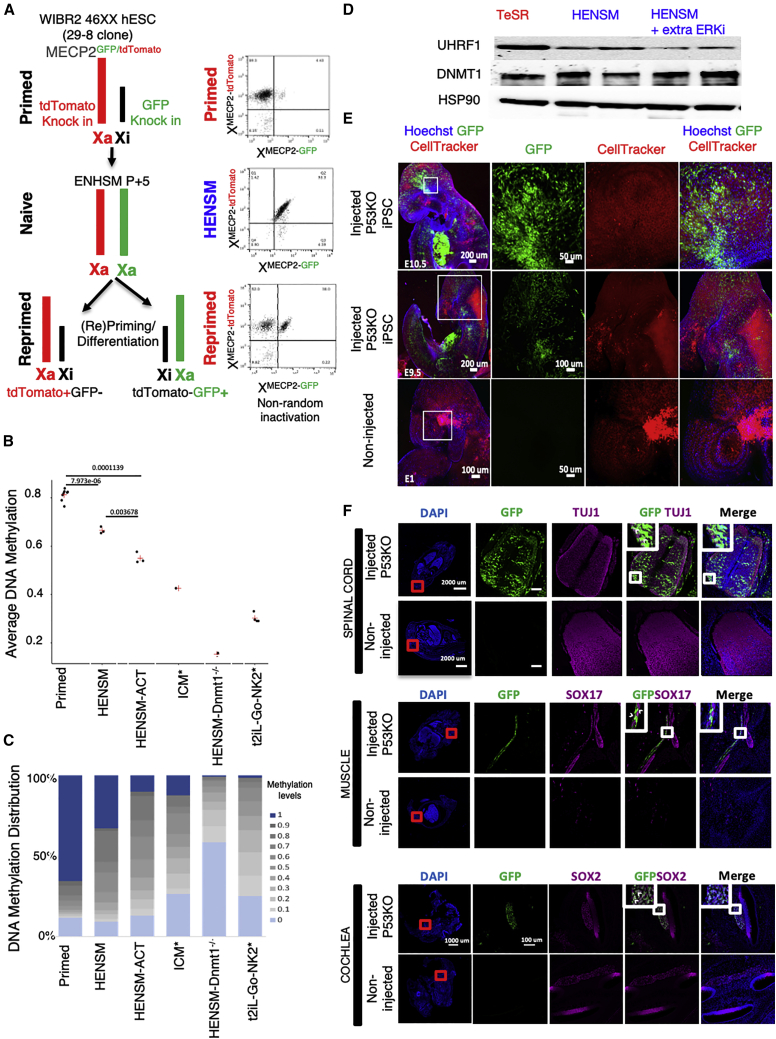
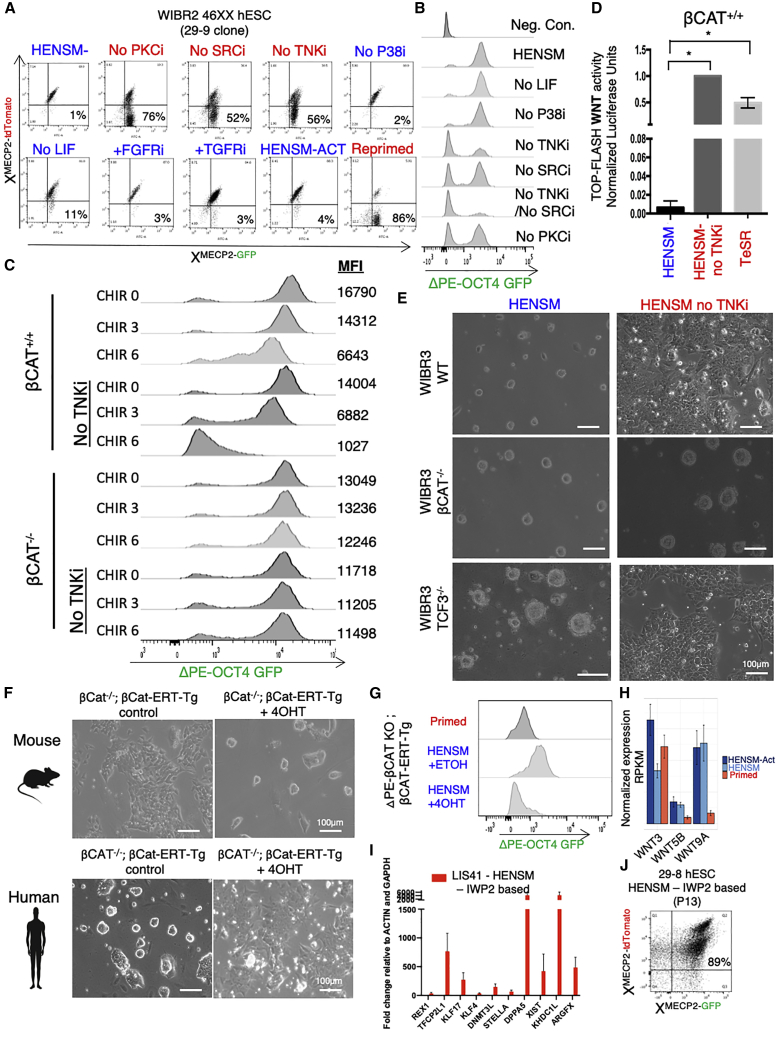
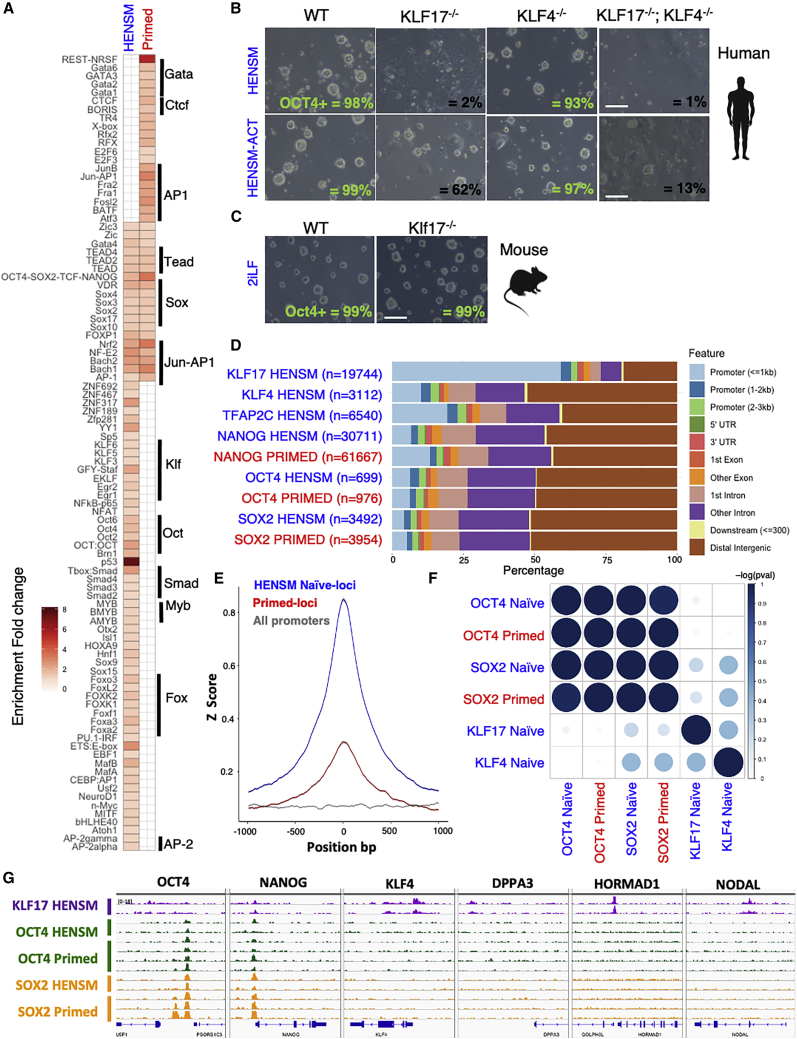
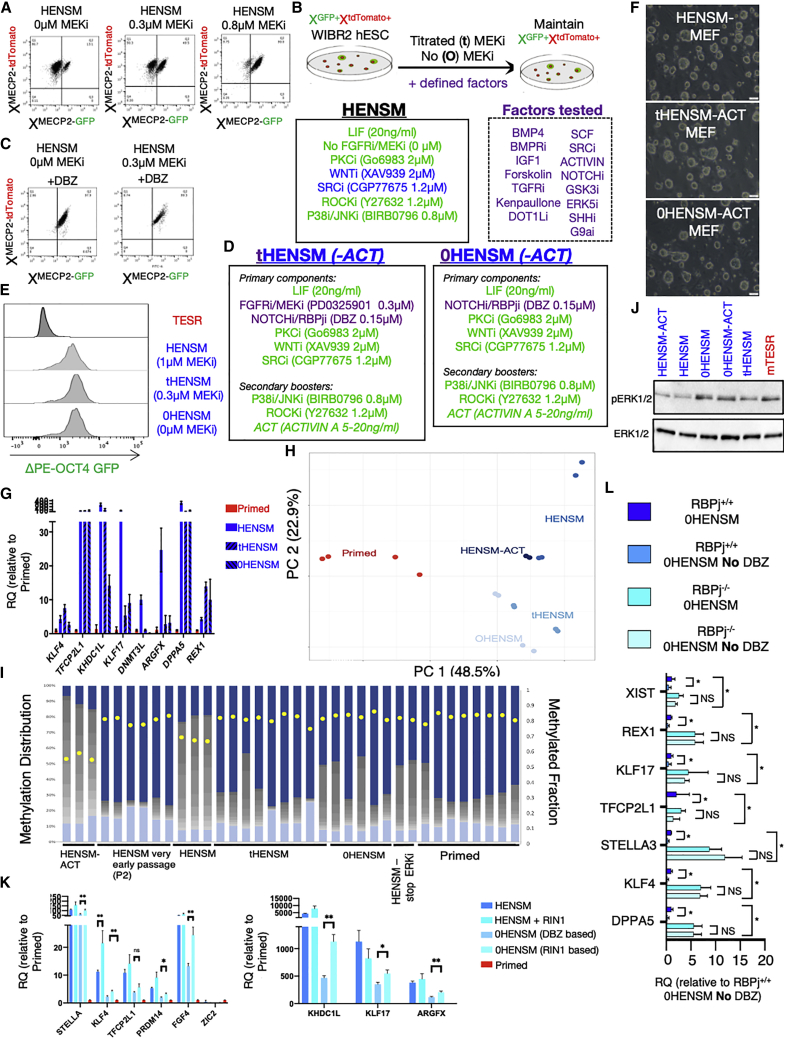
Abstract Different conditions have been devised to isolate MEK/ERK signalling independent human naïve pluripotent stem cells (PSCs) that are distinct from conventional primed PSCs and better correspond to pre-implantation developmental stages. While the naïve conditions described thus far endow human PSCs with different extents of naivety features, isolating human pluripotent cells that retain characteristics of ground state pluripotency while maintaining differentiation potential and genetic integrity, remains a major challenge. Here we engineer reporter systems that allow functional screening for conditions that can endow both the molecular and functional features expected from human naive pluripotency. We establish that simultaneous inhibition of SRC-NFκB, WNT/ßCATENIN and PKC signalling pathways is essential for enabling expansion of teratoma competent fully naïve human PSCs in defined or xeno-free conditions. Divergent signalling and transcriptional requirements for maintaining naïve pluripotency were found between mouse and human. Finally, we establish alternative naïve conditions in which MEK/ERK inhibition is substituted with inhibition for NOTCH/RBPj signalling, which allow obtaining alternative human naïve PSCs with diminished risk for loss of imprinting and deleterious global DNA hypomethylation. Our findings set a framework for the signalling foundations of human naïve pluripotency and may advance its utilization in future translational applications. Highlights of key findings Combined inhibition of SRC, WNT and PKC signaling consolidates human naïve pluripotency Stable expansion of DNA/RNA methylation-independent and TGF/ACTIVIN-independent human naïve PSCs Opposing roles for ACTIVIN and WNT/ßCATENIN signaling on mouse vs. human naive pluripotency 2i and MEK/ERKi independent alternative human naïve PSC conditions via inhibiting NOTCH/RBPj signaling
Overview
The claims and statistics of this paper haven’t been checked yet.
Run the check — free, no account needed. It reads the open-access text and checks the sources it cites.
Integrity signals
Registry
Cites
Statistics
Figures
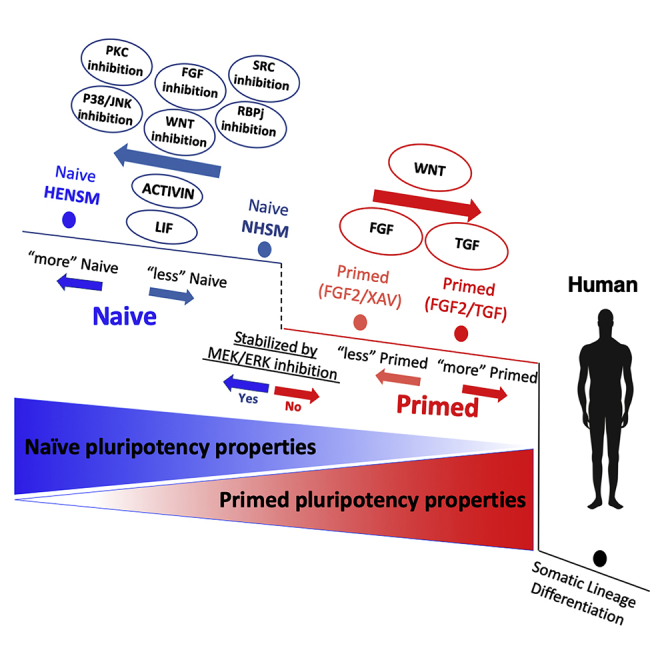
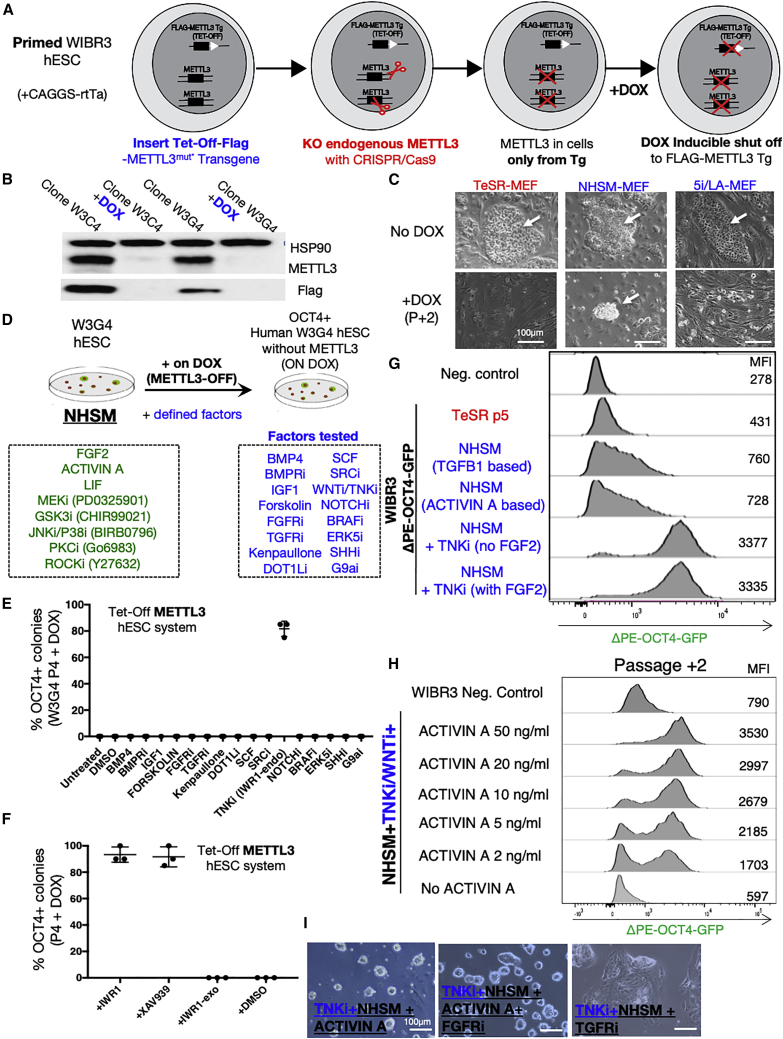
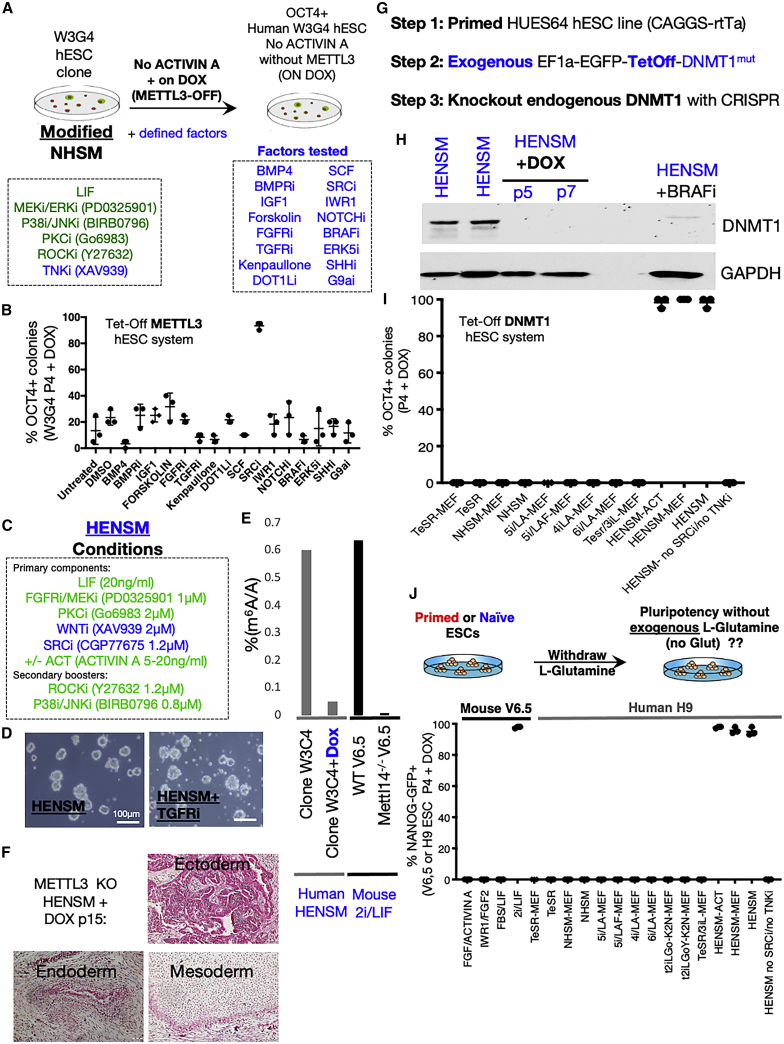
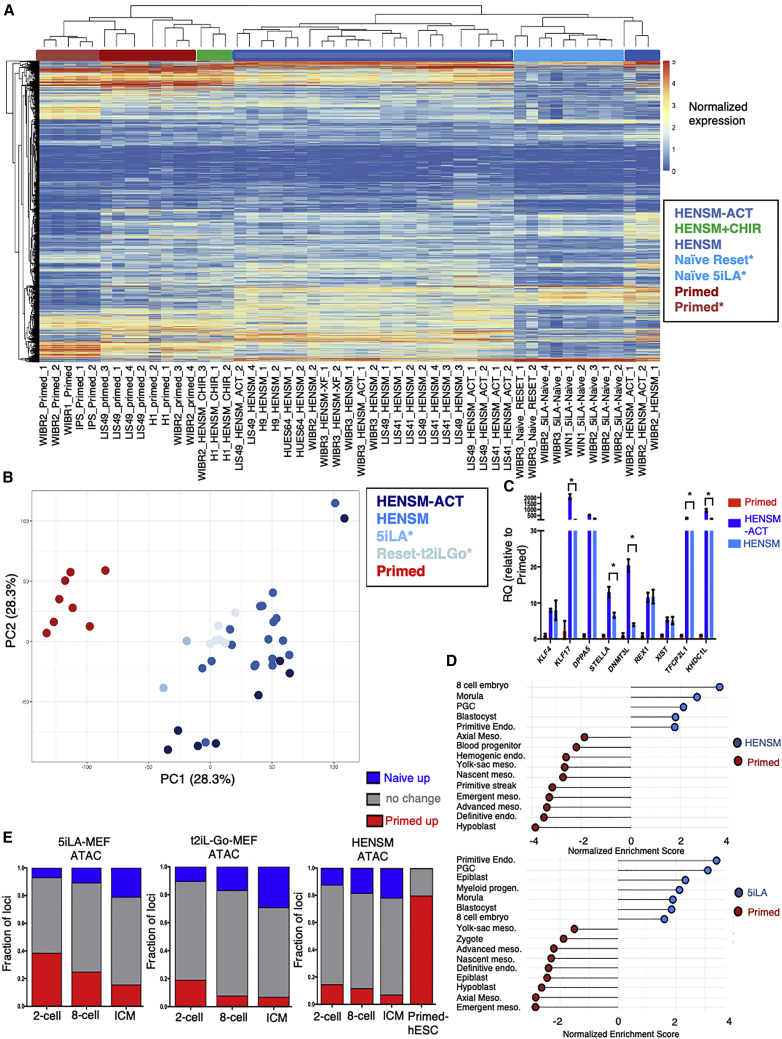
Verification
Claims the paper makes
The claims and statistics of this paper haven’t been checked yet.
Run the check — free, no account needed. It reads the open-access text and checks the sources it cites.
Claims other papers make about this one
Each is checked against this paper’s own text: does it say what the citing paper says it does?
In the citing paper
“TCA cycle activity also varies with PSC identity in human ESCs, which display glutamine independence and increased mitochondrial respiration upon conversion to a more naïve state (215, 216).”
From Regulation and function of the mammalian tricarboxylic acid cycle (2023) · cites this paper as [215]
Self-check
Percentages, sums and reported differences re-computed from the paper’s own numbers.
The self-check needs the paper’s full text.
Citations
Cites
The ground state of embryonic stem cell self-renewal
Ying, Q.-L., Wray, J., Nichols, J., Batlle-Morera, L., Doble, B., Woodgett, J., Cohen, P., & Smith, A. (2008) · Nature · doi:10.1038/nature06968 · Cited by 3,442
Tankyrase inhibition stabilizes axin and antagonizes Wnt signalling
Huang, S.-M. A., Mishina, Y., Liu, S.-M., Cheung, A. K., Stegmeier, F., Michaud, G., Charlat, O., Wiellette, E., Zhang, Y., Wiessner, S., et al. (2009) · Nature · doi:10.1038/nature08356 · Cited by 2,077
Derivation of pluripotent epiblast stem cells from mammalian embryos
Brons, I. G. M., Smithers, L. E., Trotter, M. W. B., Rugg‐Gunn, P. J., Sun, B., Lopes, S. M. C. D. S., Howlett, S., Clarkson, A., Ährlund‐Richter, L., Pedersen, R. A., et al. (2007) · Nature · doi:10.1038/nature05950 · Cited by 2,007
Naive and Primed Pluripotent States
Nichols, J., & Smith, A. G. (2009) · Cell stem cell · doi:10.1016/j.stem.2009.05.015 · Cited by 1,835
Single-cell RNA-Seq profiling of human preimplantation embryos and embryonic stem cells
Yan, L., Yang, M., Guo, H., Yang, L., Wu, J., Li, R., Liu, P., Lian, Y., Zheng, X., Yan, J., et al. (2013) · Nature Structural & Molecular Biology · doi:10.1038/nsmb.2660 · Cited by 1,740
m 6 A mRNA methylation facilitates resolution of naïve pluripotency toward differentiation
Geula, S., Moshitch-Moshkovitz, S., Dominissini, D., Mansour, A. A., Kol, N., Salmon‐Divon, M., Hershkovitz, V., Peer, E., Mor, N., Manor, Y. S., et al. (2015) · Science · doi:10.1126/science.1261417 · Cited by 1,583
Reconstitution of the Mouse Germ Cell Specification Pathway in Culture by Pluripotent Stem Cells
Hayashi, K., Ohta, H., Kurimoto, K., Aramaki, S., & Saitou, M. (2011) · Cell · doi:10.1016/j.cell.2011.06.052 · Cited by 1,413
Single-Cell RNA-Seq Reveals Lineage and X Chromosome Dynamics in Human Preimplantation Embryos
Petropoulos, S., Edsgärd, D., Reinius, B., Deng, Q., Panula, S. P., Codeluppi, S., Plaza Reyes, A., Linnarsson, S., Sandberg, R., & Lanner, F. (2016) · Cell · doi:10.1016/j.cell.2016.03.023 · Cited by 1,063
Derivation of novel human ground state naive pluripotent stem cells
Gafni, O., Weinberger, L., Mansour, A. A., Manor, Y. S., Chomsky, E., Ben‐Yosef, D., Kalma, Y., Viukov, S. V., Maza, I., Zviran, A., et al. (2013) · Nature · doi:10.1038/nature12745 · Cited by 1,058
Intracellular α-ketoglutarate maintains the pluripotency of embryonic stem cells
Carey, B. W., Finley, L. W. S., Cross, J. R., Allis, C. D., & Thompson, C. B. (2015) · Nature · doi:10.1038/nature13981 · Cited by 1,007
Cited by
Sorted by citations
Regulation and function of the mammalian tricarboxylic acid cycle
Arnold, P. K., & Finley, L. W. S. (2023) · Journal of Biological Chemistry · doi:10.1016/j.jbc.2022.102838 · Cited by 535
“TCA cycle activity also varies with PSC identity in human ESCs, which display glutamine independence and increased mitochondrial respiration upon conversion to a more naïve state (215, 216).”
BackgroundRolling back human pluripotent stem cells to an eight-cell embryo-like stage
Mazid, M. A., Ward, C., Luo, Z., Liu, C., Li, Y., Lai, Y., Wu, L. L., Li, J., Jia, W., Jiang, Y., et al. (2022) · Nature · doi:10.1038/s41586-022-04625-0 · Cited by 259
Post-gastrulation synthetic embryos generated ex utero from mouse naive ESCs
Tarazi, S., Aguilera-Castrejon, A., Joubran, C., Ghanem, N., Ashouokhi, S., Roncato, F., Wildschutz, E., Haddad, M., Oldak, B., Gomez-Cesar, E., et al. (2022) · Cell · doi:10.1016/j.cell.2022.07.028 · Cited by 246
Complete human day 14 post-implantation embryo models from naive ES cells
Oldak, B., Wildschutz, E., Bondarenko, V., Comar, M.-Y., Zhao, C., Aguilera-Castrejon, A., Tarazi, S., Viukov, S. V., Pham, T. X. A., Ashouokhi, S., et al. (2023) · Nature · doi:10.1038/s41586-023-06604-5 · Cited by 232
WNT and NOTCH signaling in human trophoblast development and differentiation
Dietrich, B., Haider, S., Meinhardt, G., Pollheimer, J., & Knöfler, M. (2022) · Cellular and Molecular Life Sciences · doi:10.1007/s00018-022-04285-3 · Cited by 141
Metadata
- Authors
- Bayerl, J., Ayyash, M., Shani, T., Manor, Y. S., Gafni, O., Massarwa, R., Kalma, Y., Aguilera-Castrejon, A., Zerbib, M., Amir, H., Sheban, D., Geula, S., Mor, N., Weinberger, L., Naveh Tassa, S., Krupalnik, V., Oldak, B., Livnat, N., Tarazi, S., Tawil, S., Wildschutz, E., Ashouokhi, S., Lasman, L., Rotter, V., Hanna, S., Ben-Yosef, D., Novershtern, N., Viukov, S., & Hanna, J. H.
- Affiliations
- Weizmann Institute of Science (IL)
- Tel Aviv University (IL)
- Rambam Health Care Campus (IL)
- Corresponding author
- Bayerl, Jonathan
- Novershtern, Noa
- Hanna, Jacob H.
- ORCID
- Venue
- Cell stem cell
- Publisher
- Elsevier BV
- Published
- 2021-09
- Volume
- 28
- Issue
- 9
- Pages
- 1549-1565.e12
- ISSN
- 1875-9777 (ISSN-L)
- 1934-5909
- PMC
- PMC8423434
- OpenAlex
- W3159163097
- Cited by
- 165
- References
- 83
- Citations by year
- 2026: 24 · 2025: 36 · 2024: 29 · 2023: 39 · 2022: 26 · 2021: 9
- FWCI
- 8.08
- Type
- journal article
- Language
- en
- Open access
- hybrid
- doi.org
- Licence
- Locations
- Cell stem cell (publishedVersion, cc-by-nc-nd)
- bioRxiv (Cold Spring Harbor Laboratory) (acceptedVersion, cc-by-nc-nd)
- PubMed Central (publishedVersion, cc-by-nc-nd)
- PubMed (publishedVersion)
- Funders
- Israel Cancer Research Fund
- Flight Attendant Medical Research Institute
- Minerva Foundation
- Israel Science Foundation
- New York Stem Cell Foundation
- BSF
- European Research Council (ERC-CoG-2016 726497)
- Topics
- Life Sciences › Biochemistry, Genetics and Molecular Biology › Molecular Biology › Pluripotent Stem Cells Research
- Life Sciences › Biochemistry, Genetics and Molecular Biology › Molecular Biology › Developmental Biology and Gene Regulation
- Life Sciences › Biochemistry, Genetics and Molecular Biology › Molecular Biology › Epigenetics and DNA Methylation
- Keywords
- naive pluripotency, human pluripotent stem cells, MEK/ERK signaling, Wnt/β-catenin signaling, protein kinase C signaling, Src signaling, trophoblast stem cells, extraembryonic endoderm, p53, DNA hypomethylation
- MeSH terms
- Animals, Cell Differentiation, Embryo, Mammalian, Humans, Trophoblasts, Signal Transduction, Pluripotent Stem Cells, Mice
About these checks
Registry, retraction, Cites and statistics results are computed, not judged, with one exception: a printed reference that no index lists is read once by a model before it counts as a citation error. Claims are extracted by a model and kept only when their quote appears verbatim in the text; each cited source is then checked, with a model’s help, for whether it says what the claim relies on. Those verdicts can be wrong — read the claim’s quote and the cited source before relying on one.
Statistics and arithmetic are recomputed, not judged.
Confidence bands are shown only for fields calibrated on our annotated test set. None is calibrated yet, so no band is shown.
What counts as a claim ›How we measure confidence ›How we check this ›
Are you an author, or do you see a problem with this page? Request a review
