

Technological transitions as evolutionary reconfiguration processes: a multi-level perspective and a case-study
Open accessThe DOI matches its Crossref record; 86 of the 94 references it cites were found in a registry or an index; 1 of the 45 sources its claims cite were checked for support.
Overview
CoChat Summary
TL;DR
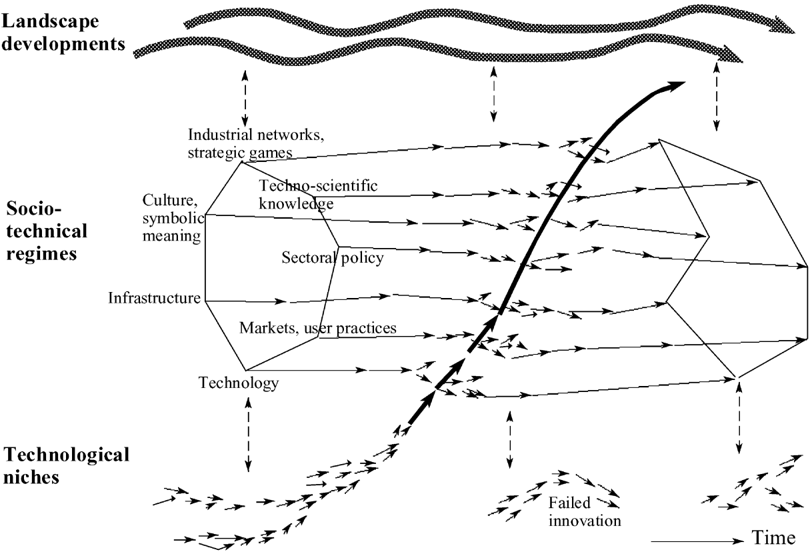
Geels proposes a multi-level perspective on technological transitions, combining evolutionary economics and technology studies around niches, sociotechnical regimes, and landscape. He illustrates it with a qualitative longitudinal case study of the transition from sailing ships to steamships, 1780–1900, identifying niche-cumulation, technological add-on/hybridisation, and riding along with market growth.
Key findings
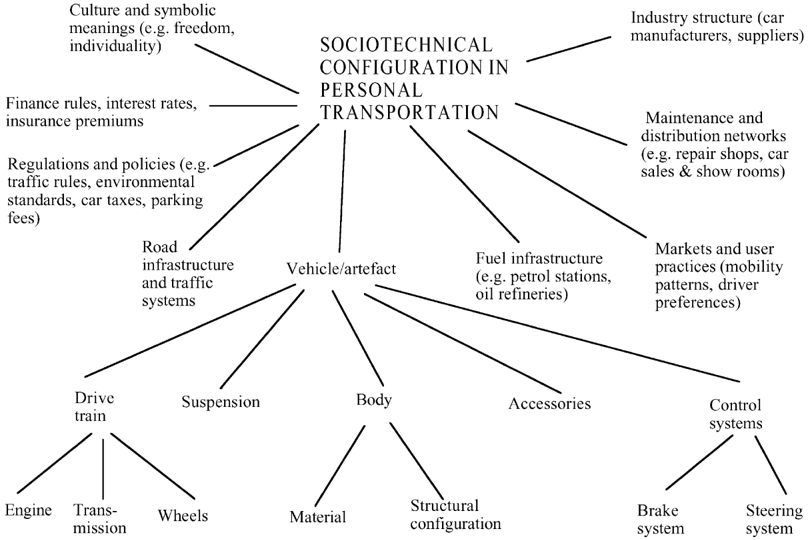
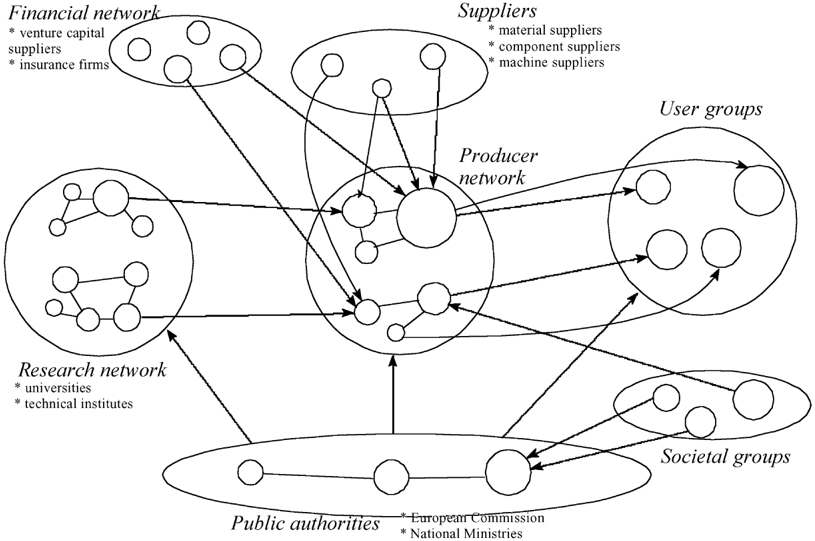
- Technological transitions are major, long-term changes in how societal functions are fulfilled; they involve not only technology but also user practices, regulation, industrial networks, infrastructure, and symbolic meaning or culture.
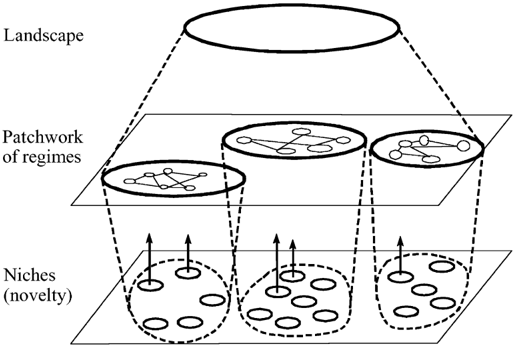
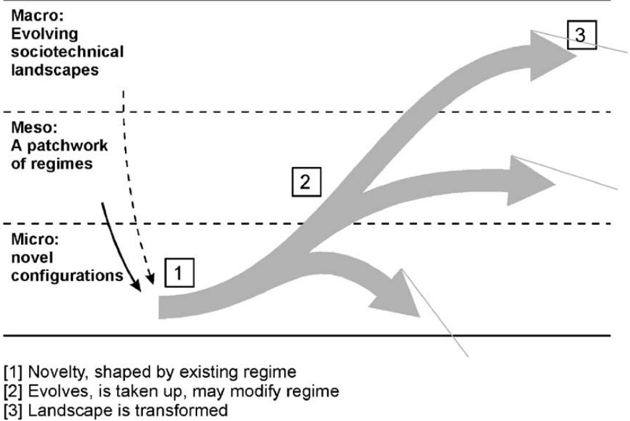
- The multi-level perspective treats niches as loci of radical variety, sociotechnical regimes as selection/retention mechanisms, and the landscape as slower external structure; breakthroughs occur when developments at multiple levels align and create a “window of opportunity.”
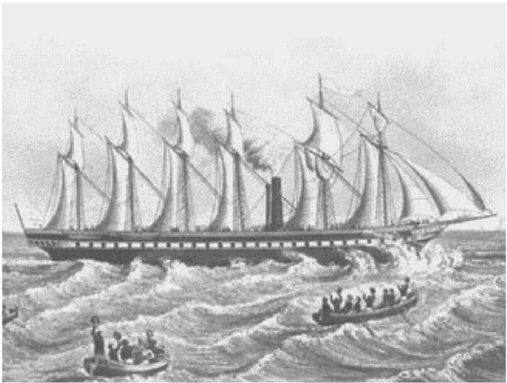
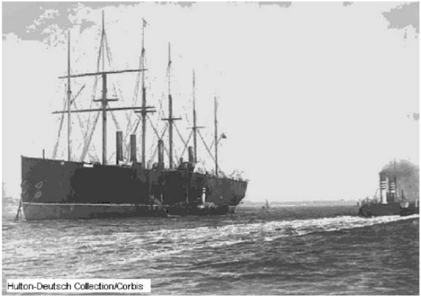
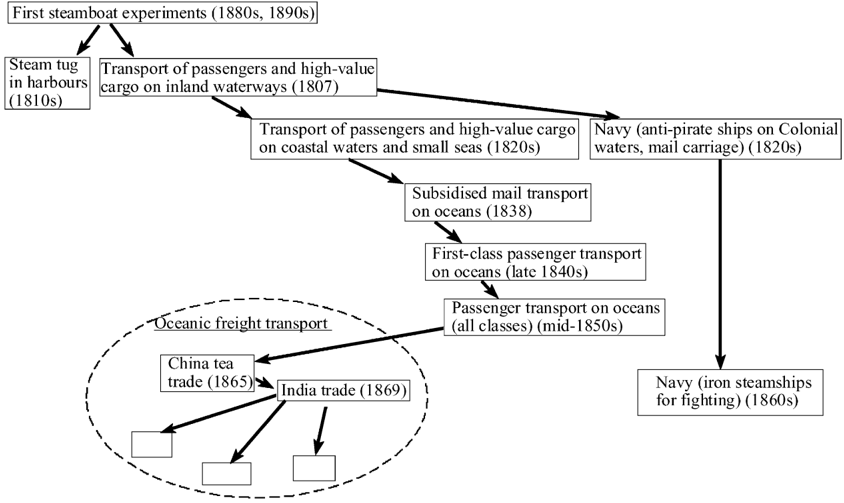
- In the steamship case, breakthrough followed niche-cumulation through inland waterways, coastal routes, mail subsidies, passenger transport, and freight; mechanisms included steam engines as auxiliary add-ons to sailing ships, hybrid sail/steam and iron/wood forms, and riding along with market growth.
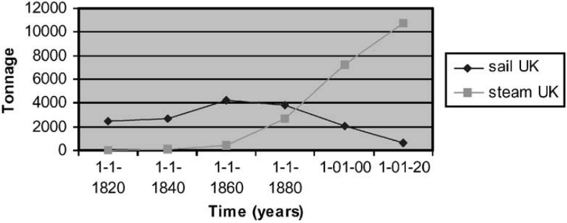
- Reported numbers include: European emigrants travelling by steamer rose from 45% in 1863 to 81% in 1866; compound engines enabled fuel-consumption reductions of 60%; the distance margin where steam was competitive reached 3000–3500 miles by the late 1860s; during the steamship mania (1869–1874), steamers rose from 17% to 31% of British registered tonnage.
Methods
- The paper uses “appreciative theory,” synthesising insights from evolutionary economics and technology studies into a multi-level perspective.
- It presents a qualitative longitudinal case study of the transition from sailing ships to steamships, 1780–1900, focused on Great Britain.
- The case is written in a mosaic style, shifting across markets, ship designs, insurance rules, actor groups, institutions, mail subsidies, persistent/emerging problems, and management practices to illustrate the conceptual framework.
Limitations
- The paper states that the multi-level perspective is fairly complex, requires many data, often qualitative, and that sociotechnical regimes are a broad unit of analysis with difficult-to-draw precise boundaries; boundary work deserves more attention.
- The paper states that the single case study has a drawback because 19th-century craft-based innovation differs from 20th-century science-based innovation, and the perspective would be more robust with more case studies varied over time periods and sectors.
- Evident in the text: the empirical analysis is focused on Great Britain and shipping, and the mechanisms are illustrated through selected historical examples rather than formal comparative or quantitative testing.
Model-written summary. Check it against the paper before relying on it.
Integrity signals
Registry
Cites
Statistics
Figures

Verification
Claims the paper makes
1 Valid · 5 Not valid · 42 Not checked · 63 Own results and interpretations
The cited sources support only part of this claim — read each source’s verdict below.
In the paper
“Aspecific mechanism in the breakthrough of radical innovations is technological add-on and hybridisation . It means that new technologies in their early phase physically link up with established technologies, often to solve particular bottlenecks. Thus, old and new technologies do not immediately compete head on, but form some sort of symbiosis (see also Pistorius and Utterback, 1997).”
What the sources say
- Partly supportedcites Pistorius and Utterback, 1997 matched to “Multi-mode interaction among technologies” (1997) sourceExperimental — accuracy not yet measured
Split into 2 atoms — 0 confirmed, 2 partially supported, 0 disputed, 0 misattributed, 0 unverifiable. Expand the claim to see per-atom verdicts.
plainstates a cause- Asserted: passes — The authors put it forward as true.
- Checkable: passes — It can be checked against evidence.
- Load-bearing: passes — The paper’s conclusions depend on it.
- Based: passes — The paper gives a reason why it holds.
- Partly supported
A result the paper states — it cites no source for it, so there is none to check. The quote shows it is in the paper.
In the paper
“These subsidies created a protective environment for the use and development of oceanic steamships.”
plainstates a cause- Asserted: passes — The authors put it forward as true.
- Checkable: passes — It can be checked against evidence.
- Load-bearing: unclear — It is unclear whether the paper’s conclusions depend on it.
- Based: passes — The paper gives a reason why it holds.
- Rests on an assumption not shown here.
In the paper
“Between 1838 and 1862 a global network of British intercontinental steam companies was created on the basis of imperial mail subsidies (Broeze, 1982).”
What the sources say
- Not matchedcites Broeze, 1982
An author–year citation the paper’s reference list doesn’t settle. We don’t search these by name.
plainstates a cause- Asserted: passes — The authors put it forward as true.
- Checkable: passes — It can be checked against evidence.
- Load-bearing: unclear — It is unclear whether the paper’s conclusions depend on it.
- Based: passes — The paper gives a reason why it holds.
- Rests on an assumption not shown here.
- Not matched
A result the paper states — it cites no source for it, so there is none to check. The quote shows it is in the paper.
In the paper
“Another innovation in the late 18th century shipping regime was the emergence of new social groups: professional shipowners, shipbrokers and insurance companies.”
plain- Asserted: passes — The authors put it forward as true.
- Checkable: passes — It can be checked against evidence.
- Load-bearing: unclear — It is unclear whether the paper’s conclusions depend on it.
- Based: passes — The paper gives a reason why it holds.
- Rests on an assumption not shown here.
A result the paper states — it cites no source for it, so there is none to check. The quote shows it is in the paper.
In the paper
“The emergence of professional shipowners was stimulated by the French Wars (1789-1815) which pushed up freight prices as demand for ships increased.”
plainstates a cause- Asserted: passes — The authors put it forward as true.
- Checkable: passes — It can be checked against evidence.
- Load-bearing: unclear — It is unclear whether the paper’s conclusions depend on it.
- Based: passes — The paper gives a reason why it holds.
- Rests on an assumption not shown here.
24 more claims
Create a free account to see all 111 claims and every source verdict.
- Probably not a substantial claim. 28
- It may state two separate claims as one. 69
- The quote only partly states this claim. 2
Claims other papers make about this one
Each is checked against this paper’s own text: does it say what the citing paper says it does?
In the citing paper
“The model of Geels (2002) describes new technologies as arising and maturing within existing technology systems [18].”
From Lessons Learned From a Living Lab on the Broad Adoption of eHealth in Primary Health Care (2018) · cites this paper as [18]
In the citing paper
“The multi-level perspective (Rip and Kemp, 1998;Geels, 2002;Geels, 2004;Geels and Schot, 2007) is a framework for understanding sustainability transitions that provides an overall view of the multi-dimensional complexity of changes in socio-technical systems.”
From Ontologies, socio-technical transitions (to sustainability), and the multi-level perspective (2010) · cites this paper as Geels, 2002
Citations
Cites
An Evolutionary Theory of Economic Change.
Loasby, B. J., Nelson, R. R., & Winter, S. G. (1983) · The Economic Journal · doi:10.2307/2232409 · Cited by 21,366
(1934) · SSRN Electronic Journal · Cited by 7,609
Technological Discontinuities and Organizational Environments
Tushman, M. L., & Anderson, P. (1986) · Administrative Science Quarterly · doi:10.2307/2392832 · Cited by 6,112
von Hippel, E. (2007) · Das Summa Summarum des Management · doi:10.1007/978-3-8349-9320-5_10 · Cited by 5,098
Technical Change and Economic Theory.
Swann, P., & Dosi, G. (1989) · The Economic Journal · doi:10.2307/2234048 · Cited by 4,041
Shaping Technology, Building Society: Studies in Sociotechnical Change.
Lynch, M., Bijker, W. E., & Law, J. (1993) · Contemporary Sociology · doi:10.2307/2074370 · Cited by 3,540
Technological Discontinuities and Dominant Designs: A Cyclical Model of Technological Change
Anderson, P., & Tushman, M. L. (1990) · Administrative Science Quarterly · doi:10.2307/2393511 · Cited by 3,255
Bijker, W. E., Hughes, T. P., & Pinch, T. (1987) · Cited by 2,957
Kemp, R., Schot, J., & Hoogma, R. (1998) · Technology Analysis & Strategic Management · doi:10.1080/09537329808524310 · Cited by 2,860
Innovation: Mapping the winds of creative destruction
Abernathy, W. J., & Clark, K. B. (1985) · Research Policy · doi:10.1016/0048-7333(85)90021-6 · Cited by 2,791
Research works printed but not linked: 9
- Broeze, F.J.A., 1982. The international diffusion of ocean steam navigation: the myth of the retardation of Netherlands steam navigation to the East Indies. Economisch-en Sociaal-Historisch Jaarboek 45, 77-95.
- Callon, M. (Ed.), 1998. The Laws of the Market. Blackwell, Oxford.
- Garrat, G.R.M., Goodman, D.C., Russel, C.A., 1973. Science and Engineering, Units 14 and 15. Open University Press, Bletchley.
- Jackson, G., 1998. Ports, ships and government in the nineteenth and twentieth centuries. In: Van Royen, P.C., Fischer, L.R., Williams, D.M. (Eds.), Proceedings of the Second International Congress of Maritime History on Frutta di Mare: Evolution and revolution in the maritime world in the 19th and 20th centuries. Amsterdam/Rotterdam, The Netherlands, 5-8 June, 1996. Batavian Lion International, Amsterdam, pp. 161-176.
- Lundvall, B.A., 1988. Innovation as an interactive process: from user-producer interaction to the national system of innovation. In: Dosi, G., Freeman, C., Nelson, R., Silverberg, G., Soete, L. (Eds.), Technical Change and Economic Theory. Pinter, London, pp. 349-369.
- Maddocks, M., 1982. De Grote Oversteek. Time-Life, London. Mayntz, R., Hughes, T.P. (Eds.), 1988. The Development of Large
- Mokyr, J., 1990. The Lever of Riches. Oxford University Press, New York.
- Rip, A., Kemp, R., 1996. Towards a Theory of Socio-Technical Change. Mimeo University of Twente, Report prepared for Batelle Pacific Northwest Laboratories, Washington, DC. (An edited version has been published as book chapter Rip and Kemp 1998).
- Sloan, E.W., 1998. Private enterprise as public utility: the management of capital in two centuries of shipping business. In: Van Royen, P.C., Fischer, L.R., Williams, D.M. (Eds.), Proceedings of the Second International Congress of Maritime History on Frutta di Mare: Evolution and Revolution in the Maritime World in the 19th and 20th Centuries. Amsterdam/Rotterdam, The Netherlands, 5-8 June, 1996. Batavian Lion International, Amsterdam, pp. 89-100.
Cited by
Items 4,901–5,000 of 7,210
Challenges in Implementing Deposit Refund Systems: A Stakeholder Analysis of the Beverage Industry
Folinas, D. K., Rotsios, K. P., Agapitou, C., Folina, M.-T., & Fotiadis, T. A. (2025) · Recycling · doi:10.3390/recycling10060222 · Cited by 1
Kömürden Çıkışta Adil Geçiş: Türkiye İçin Bir Yol Haritası
Demir, M. (2025) · Ankara Hacı Bayram Veli Üniversitesi İktisadi ve İdari Bilimler Fakültesi Dergisi · doi:10.26745/ahbvuibfd.1717439 · Cited by 1
Hofer, M., Lindorfer, M., & Gurgurovci, S. (2025) · Open Research Europe · doi:10.12688/openreseurope.21341.1 · Cited by 2
Kulanovic, A., Nordensvärd, J., & Urban, F. (2025) · Futures · doi:10.1016/j.futures.2025.103755 · Cited by 2
Andrzejewski, S. (2025) · Representation · doi:10.1080/00344893.2025.2599262 · Cited by 1
“This analytical method has been widely used for historical investigations of technological transitions (Geels, 2002, 2005, 2020) and foresight studies in sectors such as agriculture (Deviney et al., 2023; Moradi & Vagnoni, 2018).”
Understanding household biogas failures in Nepal: A socio-technical failure mode analysis
Jha, N. K., & Lohani, S. P. (2025) · Cleaner and Responsible Consumption · doi:10.1016/j.clrc.2025.100335 · Cited by 3
Kulanovic, A., Raghunatha, A., Nordensvärd, J., & Thollander, P. (2025) · Sustainable Futures · doi:10.1016/j.sftr.2025.101387 · Cited by 4
“To understand if such leadership exists, focus is needed on actors, their social constructions of the innovation, and their reasoning within the MLP, applied across different analytical levels [29,20,5,30].”
InfluentialBehind tractor protest: rethinking the CAP and the future of sustainability transition
Dujany, N., & Drury, M. (2025) · British Food Journal · doi:10.1108/bfj-03-2025-0369 · Cited by 1
Mukelabai, M. D., & Blanchard, R. E. (2025) · Energy Research & Social Science · doi:10.1016/j.erss.2025.104484 · Cited by 2
Outcomes of innovative technologies and smart transformation of the energy sector
Chygryn, O., Ziabina, Y., Štreimikienė, D., et al. (2025) · Journal of Innovation & Knowledge · doi:10.1016/j.jik.2025.100910 · Cited by 1
Kaya, H. D., Schraven, D. F. J., Leijten, M., et al. (2025) · IOP Conference Series Earth and Environmental Science · doi:10.1088/1755-1315/1554/1/012140 · Cited by 1
The Triple Bottom Line of Green Finance
Kashyap, S., & Kumar, R. P. (2025) · IGI Global eBooks · doi:10.4018/979-8-3373-8287-6.ch009 · Cited by 1
Coordinating net-zero: Organizational learning as a meta-capability in carbon-intensive Indian firms
Kaushal, P., Sangle, S., & Gedam, V. V. (2025) · Journal of Cleaner Production · doi:10.1016/j.jclepro.2025.147393 · Cited by 5
Martin, P. A., Ding, J., & Hanchard, M. (2025) · Social Science & Medicine · doi:10.1016/j.socscimed.2025.118888 · Cited by 1
Tshimungu, T. B., Mola, B. N., Ishii, K., Mopendo, B. L., & Mava, D. B. (2025) · Energy Sustainable Development/Energy for sustainable development · doi:10.1016/j.esd.2025.101920 · Cited by 2
Evaluating the effectiveness of student-driven waste reduction initiatives in university settings
Uzorka, A., & Olaniyan, A. O. (2025) · Discover Sustainability · doi:10.1007/s43621-025-02496-9 · Cited by 2
“…[2] to interpret individual motivation and agency, Organisational Change Theory (Kotter 23; Schein 2010; Armenakis and Bedeian 1999) to explain institutional dynamics, and Sus-tainability Transition Theory [14], to situate student initiatives as “niche innovations” within broader campus systems.”
InfluentialLiang, N., Song, J., Coral, J. S., Liu, X., & Lan, C. (2026) · CoDesign · doi:10.1080/15710882.2025.2609214 · Cited by 1
Papadopoulou, G. C., Chrysafis, K. A., Theotokas, I., et al. (2026) · Journal of Shipping and Trade · doi:10.1186/s41072-025-00222-2 · Cited by 1
“…water and waste management, and marine ecosystem protection, these have often been examined in isolation (Johnson 2002; Klein 2011) or with a focus mainly on environmental indicators, systematically ignoring the interaction of technological and socio-economic changes (Geels 2002, 2010, 2011).”
Kupper, D., Pennino, S., Deshayes, E., Veskioja, K., & Haseth, R. (2026) · Frontiers in Sustainable Cities · doi:10.3389/frsc.2025.1665973 · Cited by 2
“As investigated in the “co-evolutionary” approaches (Rip and Kemp, 1998; Kemp et al., 2007; Geels, 2002) to understanding technological change, the development of technologies both influences and is influenced by social, economic and cultural settings in which they develop (Rip and Kemp, 1998;…”
Implementing residential parking policy: “It is like foisting a new religion upon them”
Smith, G., & Faxer, A. (2026) · Research in Transportation Economics · doi:10.1016/j.retrec.2025.101703 · Cited by 4
Fang, X., Liu, M., & Li, G. (2026) · Clean Technologies and Environmental Policy · doi:10.1007/s10098-025-03376-6 · Cited by 1
“This study is underpinned by an integrated theoretical framework that combines resource dependence theory (Das and Teng 2000), the Porter hypothesis, and sustainability transition theory (Geels 2002).”
The state of bioenergy research: A bibliometric analysis of review publications
Ng, S. L. (2026) · Energy Strategy Reviews · doi:10.1016/j.esr.2025.102032 · Cited by 2
Fain, E., Lemarié, S., Fugeray-Scarbel, A., & Hervouet, A. (2026) · Journal of Environmental Management · doi:10.1016/j.jenvman.2026.128558 · Cited by 1
Xie, Z., van der Horst, D., & Lane, M. (2026) · Energy Research & Social Science · doi:10.1016/j.erss.2026.104561 · Cited by 1
Lane-Petter’s Pipeline: Why reliably decreasing animal research takes more than replacements
Müller, N. D. (2026) · European Journal for Philosophy of Science · doi:10.1007/s13194-025-00715-8 · Cited by 1
“Understanding the existing environment of scientific work as a “socio-technical regime” (Geels, 2002) comprised of different agents (e.g., scientists, research insti - tutions, funders, journals, regulators, the general public) who stand in more-or-less stable relations, we can think of…”
Women-led sustainable innovation in small island agriculture: challenges and barriers
Nikghadam-Hojjati, S., Marchetti, E., & Barata, J. A. L. (2026) · Humanities and Social Sciences Communications · doi:10.1057/s41599-026-06546-z · Cited by 3
“The transition towards sustainable innovation is not solely a technological endeavour, but a socio-technical shift that necessitates institutional change, stakeholder alignment and knowledge co-production (Geels, 2002).”
Krisch, A., Lampl, C., Schmidt, A. E., & Aigner, E. (2026) · Environmental Innovation and Societal Transitions · doi:10.1016/j.eist.2026.101107 · Cited by 1
Ferloni, A. (2026) · Energy Research & Social Science · doi:10.1016/j.erss.2026.104579 · Cited by 1
Bus Rapid Transit and Paratransit Interactions: A Socio-technical Transition Theory Approach
Messner, L., & Mark‐Herbert, C. (2026) · Emerald Group Publishing Limited eBooks · doi:10.1108/978-1-83662-602-220261007 · Cited by 1
Pratitajati, E., Lestari, Y. D., & Okdinawati, L. (2026) · International Journal of Innovation Science · doi:10.1108/ijis-07-2025-0344 · Cited by 4
Liu, R., & Chen, C. (2026) · SAGE Open · doi:10.1177/21582440261425132 · Cited by 1
“These lexical patterns foreground experimental and transitional technologies, positioning new energy as a technical supplement rather than a systemic alternative, which corresponds to what Geels (2002) classifies as a niche-innovation phase supported within protected policy spaces.”
Sustainability Transitions Research: An Introduction
Hendriks, A., & Wesche, J. (2026) · Cambridge University Press eBooks · doi:10.1017/9781009437318.002 · Cited by 4
Behaviour and the Individual in Sustainability Transitions
Dütschke, E., Upham, P., & Scherrer, A. (2026) · Cambridge University Press eBooks · doi:10.1017/9781009437318.025 · Cited by 7
Multi-system Dynamics in Sustainability Transitions: Introduction and Outlook
Andersen, A. D., & Markard, J. (2026) · Cambridge University Press eBooks · doi:10.1017/9781009437318.014 · Cited by 17
Ji, J., Zhang, X., Chen, H., et al. (2026) · Frontiers in Sustainable Food Systems · doi:10.3389/fsufs.2026.1745382 · Cited by 1
Andrinos, M., Greco, L., Menelaou, A. A., Metaxas, T., Nikolaidis, E., Psatha, E., & Sirakoulis, K. (2026) · Sustainability · doi:10.3390/su18052538 · Cited by 1
Integrating agribusiness and climate-smart agriculture: A global bibliometric review
Erick, S. B., Kanire, E., & Mbasa, B. (2026) · African Quarterly Social Science Review · doi:10.51867/aqssr.3.1.30 · Cited by 1
“This trajectory aligns with the theoretical progression from resilience-oriented frameworks (Folke et al., 2016) toward sustainability transition theory (Geels, 2002), suggesting that the field is moving beyond adaptation toward systemic transformation perspectives.”
The need for speed: mapping a conceptual typology for accelerating transitions toward sustainability
Yang, K., Andersen, A. D., & Sovacool, B. K. (2026) · Sustainability Science · doi:10.1007/s11625-026-01805-z · Cited by 2
“Transitions are generally understood as processes of change in which the core objective is the reconfiguration or replacement of a dominant socio-techni - cal regime, implying a movement from one relatively stable system reconfiguration to another (Geels 2002; Geels and Schot 2007 ).”
Weiss, B. M., Schuebel, S., Rönnbäck, A. Ö., & Laufer, R. (2026) · IOP Conference Series Materials Science and Engineering · doi:10.1088/1757-899x/1342/1/012024 · Cited by 2
“[3 ,4,6,29] Systems thinking shows how misaligned information distribution, vague system boundaries, and disconnected stakeholder goals can lead even well-intentioned interventions to backfire.”
Behavioural Sustainability as the Missing Link in Circular Economy Transitions
Nkiko, C. M. (2026) · Circular Economy and Sustainability · doi:10.1007/s43615-026-00871-w · Cited by 6
“Rather than treating behaviour as a downstream outcome of structural reform, the framework treats it as constitutive of transition trajectories - mediating how socio-technical and institutional change is enabled, stabilised, or constrained [18, 27 ].”
Mgadmi, N., Abidi, A., & Moussa, W. (2026) · Energy Reports · doi:10.1016/j.egyr.2026.109256 · Cited by 1
Prados-Castillo, J. F., Porras, E. R., Navarrete, S. R., & Martínez, J. M. G. (2026) · The Journal of Risk Finance · doi:10.1108/jrf-07-2025-0297 · Cited by 4
Monaco, R., Vilaplana, J. A. L., Bergaentzlé, C., Ackom, E. K., Zerriffi, H., & Nielsen, P. S. (2026) · Energy Research & Social Science · doi:10.1016/j.erss.2026.104652 · Cited by 2
Duchêne, O., Ginot, C., Perrin, J.-A., Peigné, J., Robin, J., & Celette, F. (2026) · Renewable Agriculture and Food Systems · doi:10.1017/s1742170526100349 · Cited by 1
“The step-by-step design process differs from the innovation diffusion model (Geels, 2002; Rogers, 1962) in that design is brought closer to use, and the iterative loops between the two, fostered by learning, are highlighted (Meynard et al., 2023).”
Green finance and energy security in Africa: A panel VAR approach to sustainable development
Damane, M., & Ho, S. (2026) · Energy Policy · doi:10.1016/j.enpol.2026.115263 · Cited by 1
It’s hard (transition) work! A case of a sustainable fashion retail consortium in Finland
Kaivonen, I., & Sulankivi, S. (2026) · The International Review of Retail Distribution and Consumer Research · doi:10.1080/09593969.2026.2650766 · Cited by 2
Kuu-Park, G., & Hyysalo, S. (2026) · CoDesign · doi:10.1080/15710882.2026.2646215 · Cited by 1
Xia, B., Zhao, W., & Zou, Y. (2026) · The Professional Geographer · doi:10.1080/00330124.2026.2640581 · Cited by 2
“The sociotechnical system theory suggests that a system comprise social and technical subsystems (Geels 2002).”
Building industry in 2040: An explorative scenario analysis of alternative sustainability pathways
Rohrbeck, R., & Kulkov, I. (2026) · Futures · doi:10.1016/j.futures.2026.103814 · Cited by 2
“…and methods for understanding long-term socio-technical change, including the multi-level perspective on transitions, typologies of transition pathways and transition management approaches (Bengston, 2016; Geels, 2002; Geels & Schot, 2007; Loorbach, 2010; Markard et al., 2012; Voros, 2003).”
Rabbi, M. F. (2026) · Journal of Open Innovation Technology Market and Complexity · doi:10.1016/j.joitmc.2026.100760 · Cited by 2
Haney, A. B., Calverley, J., Wagle, A., Reinecke, J., & Workman, M. H. W. (2026) · Energy Research & Social Science · doi:10.1016/j.erss.2026.104683 · Cited by 1
Wafi, I., Pamuji, S., & Nasir, M. D. A. (2026) · Indonesian Journal of Innovation Multidisipliner Research · doi:10.69693/ijim.v4i2.448 · Cited by 3
“Recent interdisciplinary research suggests that financial systems should be understood as socio-technical systems, in which technological artifacts co-evolve with regulatory frameworks, organizational practices, user behaviors, and cultural meanings (Geels, 2002).”
Sañudo-Fontaneda, L. Á., Ramírez, R. R., Rodríguez, J. P., Roces-García, J., Hunt, W. F., Allende-Prieto, C., & Coupe, S. J. (2026) · Urban forestry & urban greening · doi:10.1016/j.ufug.2026.129455 · Cited by 2
Rise of the rhizome: Conceptualizing how coastal communities enact change via transition mechanisms
Ounanian, K., Spiering, S., Jacobsen, R. B., et al. (2026) · Environmental Innovation and Societal Transitions · doi:10.1016/j.eist.2026.101138 · Cited by 1
Li, Y., Wang, C., Sun, L. Y. H., et al. (2026) · Applied Spatial Analysis and Policy · doi:10.1007/s12061-026-09836-w · Cited by 1
“…that decarbonization is driven not only by end-of-pipe regulation, but also by production system transformation through inno-vation-led technological change, industrial upgrading, and factor reallocation toward low-carbon activities (Aghion et al., 2016; Geels, 2002; Hu & Jia, 2025; Huang, 2025 ).”
Acquaye, A. A., Patro, P. K., Quaye, E., Yamoah, F. A., Balakrishnan, A. S., & Sammour, A. (2026) · Technology in Society · doi:10.1016/j.techsoc.2026.103359 · Cited by 7
Illuminating the dark sides of innovation: toward an economic geography of controversial innovation
Glückler, J. (2026) · Journal of Economic Geography · doi:10.1093/jeg/lbag026 · Cited by 2
Maheri, A. (2026) · Energy Research & Social Science · doi:10.1016/j.erss.2026.104722 · Cited by 1
Centeno, J. P., Steen, T. P. S., & Müller, A. P. R. (2026) · Technological Forecasting and Social Change · doi:10.1016/j.techfore.2026.124705 · Cited by 1
Uche, E., & Odhiambo, N. M. (2026) · Social Sciences & Humanities Open · doi:10.1016/j.ssaho.2026.102697 · Cited by 1
Sectoral innovation systems: intellectual transformation and emerging research trajectories
Fathollahi, R., & Kashani, E. S. (2026) · Scientometrics · doi:10.1007/s11192-026-05583-4 · Cited by 1
“Foundational studies (Bergek et al., 2008; Carlsson & Stankiewicz, 1991; Carlsson et al., 2002; Geels, 2002) emphasize how institutions, actors, and markets interact to drive innovation and how niche-level technologies challenge established regimes.”
Roberts, C., Rosenbloom, D., & Meadowcroft, J. (2026) · Environmental Innovation and Societal Transitions · doi:10.1016/j.eist.2026.101141 · Cited by 1
Križaj, D. (2026) · Sustainability · doi:10.3390/su18094490 · Cited by 1
Moro, A., & Acerbi, E. (2026) · Lecture notes in civil engineering · doi:10.1007/978-3-032-16695-1_24 · Cited by 2
What stops them? Barriers to institutional investments in transitions and entrepreneurial ecosystems
Schramade, W., Andreoli, J. J., & Kievit, H. (2026) · Industry and Innovation · doi:10.1080/13662716.2026.2662855 · Cited by 1
“To the perspective of niches and socio-technical regimes, Geels (2002) adds a third one, the landscape, which consists of external pressures like cultural trends, economic shifts, or environmental crises.”
InfluentialFrom disclosure to competitiveness: the role of resilience in European firms
Dkhili, H. (2026) · Competitiveness Review: an international business journal · doi:10.1108/cr-09-2025-0328 · Cited by 1
Gupta, E., Agarwal, S., Mukherjee, G., Maheshwari, P., & Ray, A. (2026) · Environmental Research Energy · doi:10.1088/2753-3751/ae69e7 · Cited by 1
User-side regime dynamics and design–use misalignments in circular construction transitions
Najafi, M., Rahimian, F. P., Abdelaziz, Y. Z., Poppe, J., & Rodríguez, S. (2026) · Engineering Construction & Architectural Management · doi:10.1108/ecam-02-2026-0313 · Cited by 1
Vacation untouchable – a deconstruction of the liberal ‘right to tourism’
Vogler, R., Schweiggart, N., & Müller, A. (2026) · Annals of Tourism Research · doi:10.1016/j.annals.2026.104196 · Cited by 2
Hassan, H., Wiwattanakornwong, K., & Sampene, A. K. (2026) · Frontiers in Sustainable Food Systems · doi:10.3389/fsufs.2026.1811675 · Cited by 1
Çayır, B., & Yeni, O. (2026) · Empirica · doi:10.1007/s10663-026-09683-5 · Cited by 2
“However, as explained by the socio-technical transition and technological innovation system approaches, price-based mechanisms and research subsidies alone may not be sufficient to direct innovation toward clean technologies (Geels 2002, 2005; Markard and Truffer 2008; Markard et al. 2012).”
Śledziewska, K., & Łebkowska, W. (2026) · Technology in Society · doi:10.1016/j.techsoc.2026.103396 · Cited by 4
Sennhenn, A., Anderson, J. M., Boße, S., Hoffmann, C., Kirchgessner, O., König, M., Leroy, B. M. L., Lindstädt, B., Mazón, E. R., Sahwan, W., et al. (2026) · Berichte aus der medizinischen Informatik und Bioinformatik/Journal of integrative bioinformatics · doi:10.1515/jib-2025-0049 · Cited by 1
“Community engagement frameworks (CDC [12]) underline the role of participation and empowerment, while socio-technical transition models [13] show that cultural and technical change must co-evolve.”
Pimenow, S., Pimenowa, O., Prus, P., & Zieliński, M. (2026) · Sustainability · doi:10.3390/su18104892 · Cited by 6
From Circular Systems to Circular Behavioural Regimes: Reframing Circular Economy Transitions
Nkiko, C. M. (2026) · Journal of Circular Economy · doi:10.55845/joce-2026-41355 · Cited by 6
“Transition theory, particularly the Multi-Level Perspective, conceptualises socio-technical change as interactions between niches, regimes, and landscapes (Geels, 2002).”
Yang, K., Tan, H., & Shen, W. (2026) · Regional Studies · doi:10.1080/00343404.2026.2657871 · Cited by 1
Comparative Stakeholder Sustainability Dynamics: EU-27 Countries (2015–2024)
Petrov, S. (2026) · Sustainability · doi:10.3390/su18105060 · Cited by 1
Khalifa, Y., Ahmed, S., Hossain, M. S., Milupi, I., Nyanga, P. H., Hossain, R., Yasmin, A., Rasel, S. M., Ferdous, M. Z., Membele, G. M., et al. (2026) · Energy Research & Social Science · doi:10.1016/j.erss.2026.104773 · Cited by 1
Buscher, J. (2026) · Cities · doi:10.1016/j.cities.2026.107189 · Cited by 1
Energy Performance Contracting for Solar PV in the Public Sector: Performance and Carbon Mitigation
Szeląg-Sikora, A., Sikora, J., Akbulut, L., Çoşgun, A., Arinci, Y., Akbulut, A., Komorowska, M., Niemiec, M., Atılgan, A., & Oleksy-Gębczyk, A. (2026) · Energies · doi:10.3390/en19112529 · Cited by 1
Sahar, R., Iqbal, J., Abid, M., & Saad, E. S. M. (2026) · Discover Environment · doi:10.1007/s44274-026-00762-9 · Cited by 2
Data integration as urban transition: regime mediation in Chinese smart urbanism
Zhang, J., Peng, G., Li, S., & Zhang, Z. (2026) · Urban Geography · doi:10.1080/02723638.2026.2678953 · Cited by 1
“Urban critiques of MLP have then pushed further, arguing that transitions are spatially uneven, politically contested, and mediated through specific local institutions rather than unfolding as abstract system dynamics (Hodson & Marvin, 2010; Murphy, 2015; Raven et al., 2012).”
InfluentialWhen should Bitcoin mining qualify as a large, flexible load? A conditional regulatory framework
Llanos, D. R., Perote, J., & Vicente‐Lorente, J. D. (2026) · The Electricity Journal · doi:10.1016/j.tej.2026.107549 · Cited by 1
A Strategic Case Analysis of the U.S. Leather and Hide Industry
Sarker, M. R., LeHew, M., & Vaughan, Y. (2026) · Sustainability · doi:10.3390/su18115583 · Cited by 1
Guo, Y., Bai, Y., Feng, Y., & Li, W. (2026) · Journal of Engineering and Technology Management · doi:10.1016/j.jengtecman.2026.101967 · Cited by 3
Benelli, F. (2026) · Journal of Open Innovation Technology Market and Complexity · doi:10.1016/j.joitmc.2026.100804 · Cited by 6
Gorzka, J., Burda, I. M., & Nyka, L. (2026) · Sustainability · doi:10.3390/su18125966 · Cited by 3
Kuffour, T. A., Akorsu, P. K., & Owusu, P. (2026) · Future Business Journal · doi:10.1186/s43093-026-00884-9 · Cited by 2
“The relationship between climate threats, clean technology and green bonds represents a critical nexus in modern economic and financial markets, particularly through the lens of sustainable transition theory as established by Geels [24].”
Hamilton, S., & D’Ippolito, B. (2026) · Research Policy · doi:10.1016/j.respol.2026.105543 · Cited by 2
Rethinking household energy transition in Tanzania through the lens of poverty and social norms
Kapinga, A. G., Mushi, C. W., & Amanzi, N. (2026) · Discover Sustainability · doi:10.1007/s43621-026-03765-x · Cited by 3
“To address these limitations, this study adopts an integrated framework combining the Multi-Level Perspective (MLP) of socio-technical transitions and Social Practice Theory (SPT) [35, 36].”
Starting points of agroecological transitions in Africa: Why and how farm structure matter
Girard, P., Mercandalli, S., Berre, D., Andrieu, N., Kerr, R. B., Coe, R., Dedieu, B., Madsen, S., Scopel, É., Asnake, W., et al. (2026) · Ecological Economics · doi:10.1016/j.ecolecon.2026.109117 · Cited by 2
Klöcker, P., Pillen, J., Keller, S., & Zimmermann, M. (2026) · Energy Research & Social Science · doi:10.1016/j.erss.2026.104803 · Cited by 1
Pham, T. T., Vu, T. T., Luu, H. D., Pham, M. T., Tran, A. Q., Le, K. D., & Nguyen, M. H. (2026) · Environmental Challenges · doi:10.1016/j.envc.2026.101549 · Cited by 8
Ethnomanagement and Small Enterprises in Georgian Agriculture
Baratashvili, E., & Sharashenidze, A. (2026) · Economic Profile · doi:10.52244/ep.2026.31.05 · Cited by 1
Saadi, S. A., & Davies, A. C. (2026) · International Journal of Project Management · doi:10.1016/j.ijproman.2026.102889 · Cited by 1
The global green shift: More evolution than revolution
Fagerberg, J. (2026) · Journal of Evolutionary Economics · doi:10.1007/s00191-026-00968-3 · Cited by 1
“According to key contributors to this literature (Rip and Kemp 1998; Geels 2002, 2014), important sectors of society, such as the energy sector, are governed by "socio-technical regimes" adapted to dominant technologies and actors, which makes it difficult for new technologies with other…”
Dwaikat, A., Abu-Eisheh, S. A., & Alkhalidi, A. A. T. (2026) · Hydrogen · doi:10.3390/hydrogen7020086 · Cited by 1
“Policy research consistently identifies institutions as critical enablers of energy transitions, though quantification of their effects remains rare [5,6,36–38].”
InfluentialHe, J., Lau, W., Dhar, B. K., & Ng, K. H. (2026) · Technology in Society · doi:10.1016/j.techsoc.2026.103443 · Cited by 3
Santos, E. (2026) · Sustainability · doi:10.3390/su18136579 · Cited by 1
Andrade-Avelino, J., Boutillier, S., Gruescu, C., Le, S. T. K., Rolland, M. B., Laperche, B., & Balloy, D. (2026) · Journal of Cleaner Production · doi:10.1016/j.jclepro.2026.148867 · Cited by 1
Metadata
- Authors
- Geels, F. W.
- Affiliations
- University of Twente (NL)
- Corresponding author
- Geels, Frank W.
- ORCID
- Geels, Frank W.
- Venue
- Research Policy
- Publisher
- Elsevier BV
- Published
- 2002-12
- Volume
- 31
- Issue
- 8-9
- Pages
- 1257-1274
- ISSN
- 0048-7333 (ISSN-L)
- OpenAlex
- W2099330597
- Cited by
- 7,275
- References
- 94
- Citations by year
- 2026: 983 · 2025: 624 · 2024: 502 · 2023: 504 · 2022: 503 · 2021: 598 · 2020: 526 · 2019: 417 · 2018: 493 · 2017: 357 · 2016: 301 · 2015: 293 · 2014: 241 · 2013: 201 · 2012: 204
- FWCI
- 16.68
- Type
- journal article
- Language
- en
- Open access
- bronze
- doi.org
- Licence
- www.elsevier.com/tdm/userlicense/1.0/ (tdm)
- Locations
- Research Policy (publishedVersion)
- Research Explorer (The University of Manchester) (submittedVersion, other-oa)
- University of Twente Research Information (submittedVersion)
- TU/e Research Portal (submittedVersion)
- RePEc: Research Papers in Economics (submittedVersion)
- Figshare (submittedVersion, cc-by)
- University of Twente Research Information (submittedVersion, other-oa)
- Funders
- Nederlandse Organisatie voor Wetenschappelijk Onderzoek
- Topics
- Physical Sciences › Environmental Science › Global and Planetary Change › Sustainability and Climate Change Governance
- Social Sciences › Decision Sciences › Management Science and Operations Research › Innovation Diffusion and Forecasting
- Social Sciences › Economics, Econometrics and Finance › Economics and Econometrics › Economic Theory and Institutions
- Keywords
- technological transition, multi-level perspective, evolutionary economics, technology studies, hybridization, market growth, industrial networks, user practices, regulation, infrastructure
About these checks
Registry, retraction, Cites and statistics results are computed, not judged, with one exception: a printed reference that no index lists is read once by a model before it counts as a citation error. Claims are extracted by a model and kept only when their quote appears verbatim in the text; each cited source is then checked, with a model’s help, for whether it says what the claim relies on. Those verdicts can be wrong — read the claim’s quote and the cited source before relying on one.
The claim verdicts this report counts are experimental: their accuracy is not yet measured.
A language model drew the claims from the paper on 2026-10-10, under version 3 of the claim definition (model deepseek-v4.1-flash, prompt extract-v3).
A second model labelled each claim on 2026-10-10 (model jev-1.13-20260917, definition revision gold-guideline-v0.2).
Cited sources are checked with a language model’s help (gpt-6-sol).
Statistics and arithmetic are recomputed, not judged.
Confidence bands are shown only for fields calibrated on our annotated test set. None is calibrated yet, so no band is shown.
What counts as a claim ›How we measure confidence ›How we check this ›
Are you an author, or do you see a problem with this page? Request a review
Data sources
Bibliographic data: Semantic Scholar, OpenAlex, Crossref.
Contains information from the Semantic Scholar Academic Graph Datasets, made available under the ODC Attribution License (ODC-BY 1.0).
Semantic Scholar’s data is described in: Kinney, R., et al. (2023). The Semantic Scholar Open Data Platform. arXiv:2301.10140.
