

The DOI matches its Crossref record; 31 of the 31 references it cites were found in a registry or an index.
Extended and standard duration weight-loss programme referrals for adults in primary care (WRAP): a randomised controlled trial
Open accessAbstract
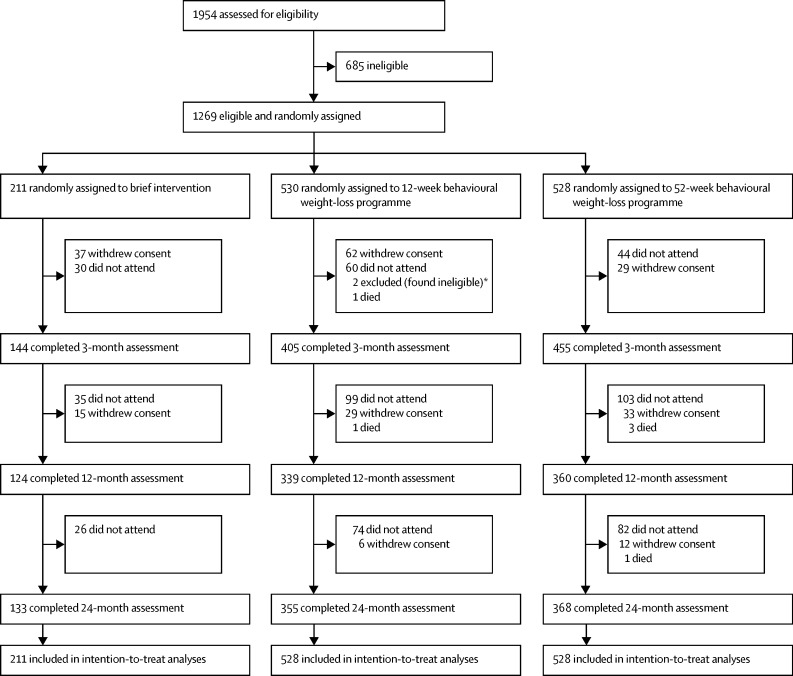
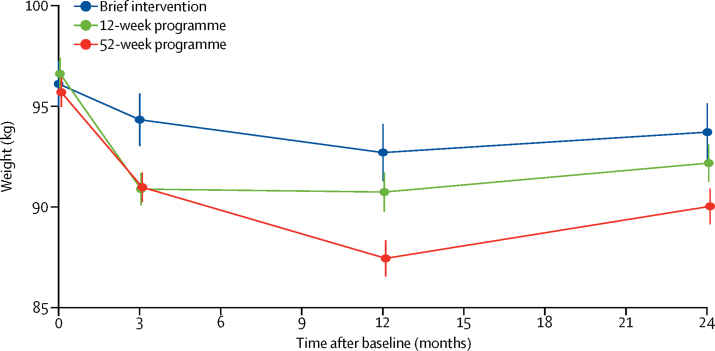
BACKGROUND: Evidence exist that primary care referral to an open-group behavioural programme is an effective strategy for management of obesity, but little evidence on optimal intervention duration is available. We aimed to establish whether 52-week referral to an open-group weight-management programme would achieve greater weight loss and improvements in a range of health outcomes and be more cost-effective than the current practice of 12-week referrals. METHODS: or higher from 23 primary care practices in England. Participants were randomly assigned (2:5:5) to brief advice and self-help materials, a weight-management programme (Weight Watchers) for 12 weeks, or the same weight-management programme for 52 weeks. We followed-up participants over 2 years. The primary outcome was weight at 1 year of follow-up, analysed with mixed-effects models according to intention-to-treat principles and adjusted for centre and baseline weight. In a hierarchical closed-testing procedure, we compared combined behavioural programme arms with brief intervention, then compared the 12-week programme and 52-week programme. We did a within-trial cost-effectiveness analysis using person-level data and modelled outcomes over a 25-year time horizon using microsimulation. This study is registered with Current Controlled Trials, number ISRCTN82857232. FINDINGS: Between Oct 18, 2012, and Feb 10, 2014, we enrolled 1269 participants. 1267 eligible participants were randomly assigned to the brief intervention (n=211), the 12-week programme (n=528), and the 52-week programme (n=528). Two participants in the 12-week programme had been found to be ineligible shortly after randomisation and were excluded from the analysis. 823 (65%) of 1267 participants completed an assessment at 1 year and 856 (68%) participants at 2 years. All eligible participants were included in the analyses. At 1 year, mean weight changes in the groups were -3·26 kg (brief intervention), -4·75 kg (12-week programme), and -6·76 kg (52-week programme). Participants in the behavioural programme lost more weight than those in the brief intervention (adjusted difference -2·71 kg, 95% CI -3·86 to -1·55; p<0·0001). The 52-week programme was more effective than the 12-week programme (-2·14 kg, -3·05 to -1·22; p<0·0001). Differences between groups were still significant at 2 years. No adverse events related to the intervention were reported. Over 2 years, the incremental cost-effectiveness ratio (ICER; compared with brief intervention) was £159 per kg lost for the 52-week programme and £91 per kg for the 12-week programme. Modelled over 25 years after baseline, the ICER for the 12-week programme was dominant compared with the brief intervention. The ICER for the 52-week programme was cost-effective compared with the brief intervention (£2394 per quality-adjusted life-year [QALY]) and the 12-week programme (£3804 per QALY). INTERPRETATION: For adults with overweight or obesity, referral to this open-group behavioural weight-loss programme for at least 12 weeks is more effective than brief advice and self-help materials. A 52-week programme produces greater weight loss and other clinical benefits than a 12-week programme and, although it costs more, modelling suggests that the 52-week programme is cost-effective in the longer term. FUNDING: National Prevention Research Initiative, Weight Watchers International (as part of an UK Medical Research Council Industrial Collaboration Award).
Overview
The claims and statistics of this paper haven’t been checked yet.
Run the check — free, no account needed. It reads the open-access text and checks the sources it cites.
Integrity signals
Registry
Cites
Statistics
Figures
Verification
Claims the paper makes
The claims and statistics of this paper haven’t been checked yet.
Run the check — free, no account needed. It reads the open-access text and checks the sources it cites.
Claims other papers make about this one
Each is checked against this paper’s own text: does it say what the citing paper says it does?
The check wasn’t confident either way, so it gives no verdict — never disputed.
In the citing paper
“Adverse mental burden may lead to emotional eating and decreased physical activity [9, 10, 11, 12, 13, 14] and thus to increases in bodyweight [15].”
From Supporting Weight Management during COVID-19: A Randomized Controlled Trial of a Web-Based, ACT-Based, Guided Self-Help Intervention (2022) · cites this paper as [11]
Experimental — accuracy not yet measured
Self-check
Percentages, sums and reported differences re-computed from the paper’s own numbers.
The self-check needs the paper’s full text.
Citations
Cites
Reduction in the incidence of type 2 diabetes with lifestyle intervention or metformin
(2002) · New England Journal of Medicine · doi:10.1056/nejmoa012512 · Cited by 19,011
Methods for the Economic Evaluation of Health Care Programmes
Drummond, M. E., Sculpher, M. J., Torrance, G. W., O’Brien, B. J., & Stoddart, G. L. (2005) · doi:10.1093/oso/9780198529446.001.0001 · Cited by 13,648
Ng, M., Fleming, T., Robinson, M., Thomson, B., Graetz, N., Margono, C., Mullany, E. C., Biryukov, S., Abbafati, C., Abera, S. F., et al. (2014) · The Lancet · doi:10.1016/s0140-6736(14)60460-8 · Cited by 11,952
EuroQol: the current state of play
Brooks, R. (1996) · Health Policy · doi:10.1016/0168-8510(96)00822-6 · Cited by 5,815
Fuller, N. R., Colagiuri, S., SCHOFIELD, D. J., Olson, A. D., Shrestha, R. N., Holzapfel, C., Wolfenstetter, S. B., Holle, R., Ahern, A. L., Hauner, H., et al. (2012) · International Journal of Obesity · doi:10.1038/ijo.2012.139 · Cited by 2,127
Self-citation(2015) · The Lancet Diabetes & Endocrinology · doi:10.1016/s2213-8587(15)00291-0 · Cited by 1,029
Foresight. Tackling obesities: future choices. Project report.
Butland, B. K., Jebb, S. A., Kopelman, P., McPherson, K., Thomas, S., Mardell, J., & Parry, V. G. (2007) · Cited by 832
Self-citationA social tariff for EuroQol: results from a UK general population surveyPreprint
Dolan, P., Gudex, C. M., Kind, P., & Williams, A. (1995) · RePEc: Research Papers in Economics · Cited by 611
Jebb, S. A., Ahern, A. L., Olson, A. D., Aston, L. M., Holzapfel, C., Stoll, J., Amann-Gassner, U., Simpson, A. E., Fuller, N. R., Pearson, S., et al. (2011) · The Lancet · doi:10.1016/s0140-6736(11)61344-5 · Cited by 422
Self-citationExecutive Summary: FORESIGHT ‘Tackling Obesities: Future Choices’ project
Jebb, S. A., Kopelman, P., & Butland, B. K. (2007) · Obesity Reviews · doi:10.1111/j.1467-789x.2007.00344.x · Cited by 367
Self-citation
Cited by
Sorted by citations
Items 101–200 of 219
Ahern, A. L., Woolston, J., Wells, E. K., Sharp, S. J., Islam, N., Lawlor, E. R., Duschinsky, R., Hill, A. J., Doble, B., Wilson, E., et al. (2020) · BMJ Open · doi:10.1136/bmjopen-2019-035020 · Cited by 10
Self-citationMechanisms of Action in a Behavioral Weight-Management Program: Latent Growth Curve Analysis
Bates, S. E., Norman, P. E., Breeze, P. R., Brennan, A., & Ahern, A. L. (2021) · Annals of Behavioral Medicine · doi:10.1093/abm/kaab019 · Cited by 12
“All participants gave written informed consent [37].”
BackgroundMethodInfluentialSelf-citationLifestyle intervention for obesity: a call to transform the clinical care delivery system in Mexico
Díaz-Zavala, R. G., Candia-Plata, M. D. C., Martínez-Contreras, T. D. J., & Esparza‐Romero, J. (2019) · Diabetes Metabolic Syndrome and Obesity · doi:10.2147/dmso.s208884 · Cited by 13
“26 kg).(69) A more detailed description of these intervention studies can be found in Table 2.”
BackgroundTudor, K., Brooks, J., Howick, J., Fox, R., & Aveyard, P. (2022) · Circulation: Cardiovascular Quality and Outcomes · doi:10.1161/circoutcomes.120.007793 · Cited by 9
Self-citationTudor, K., Tearne, S., Jebb, S. A., Lewis, A. L., Adab, P., Begh, R. A., Jolly, K. B., Daley, A., Farley, A., Lycett, D., et al. (2020) · Clinical Obesity · doi:10.1111/cob.12418 · Cited by 8
“8 kg costing £60 or £195, respectively.(15) Whilst gender-specific programmes may be useful for men who are unwilling to attend existing services, such programmes are not yet widely available.”
BackgroundSelf-citationAhern, A. L., Richards, R., Jones, R. A. P., Whittle, F., Mueller, J., Woolston, J., Sharp, S. J., Hughes, C. A., Hill, A. J., Duschinsky, R., et al. (2022) · BMJ Open · doi:10.1136/bmjopen-2021-058103 · Cited by 9
Self-citationJones, R. A. P., Mueller, J., Sharp, S. J., Griffin, S. J., & Ahern, A. L. (2022) · Obesity · doi:10.1002/oby.23570 · Cited by 9
“Participants assigned to the BI control group received a 32-page printed British Heart Foundation booklet containing self-help weight management strategies [20].”
MethodSelf-citationDaumit, G. L., Janssen, E. M., Jerome, G. J., Dalcin, A., Charleston, J. B., Clark, J. M., Coughlin, J. W., Yeh, H., Miller, E. R., Durkin, N., et al. (2019) · Translational Behavioral Medicine · doi:10.1093/tbm/iby120 · Cited by 9
“examined weight loss among participants who were referred by their primary care provider to a commercial weight loss program for either a 12- or 52-week program [22].”
BackgroundBates, S. E., Bayley, T., Norman, P. E., Breeze, P. R., & Brennan, A. (2019) · Medical Decision Making · doi:10.1177/0272989x19889897 · Cited by 9
“16 BMI units(40); 4 studies did not report this detail.(31,39,45,50) These rates of regain were based on the change observed in individuals over time within trials,(5,70) a meta-analysis,(71) observational studies,(72,73) or NICE guidelines.”
BackgroundAstbury, N. M., Tudor, K., Aveyard, P. N., & Jebb, S. A. (2020) · BMC Medicine · doi:10.1186/s12916-020-01547-4 · Cited by 9
Self-citationFinancial implications of New York City’s weight management initiative
Agrawal, S., Wojtanowski, A. C., Tringali, L., Foster, G. D., & Finkelstein, E. A. (2021) · PLoS ONE · doi:10.1371/journal.pone.0246621 · Cited by 9
Factors associated with food choice among long‐term weight loss maintainers
Young, J., Phelan, S., Alarcon, N., Roake, J., Rethorst, C. D., & Foster, G. D. (2021) · Journal of Human Nutrition and Dietetics · doi:10.1111/jhn.12977 · Cited by 9
Lee, C., Waite, F., Piernas, C., & Aveyard, P. N. (2023) · BMC Psychiatry · doi:10.1186/s12888-023-04517-1 · Cited by 8
“In one RCT of 1267 participants, those assigned to the 12-week behavioural programme WW® (formally WeightWatchers®) lost 4·8 kg at one-year follow-up [10] and 2 kg at five-year follow-up [11].”
BackgroundSelf-citationWalker, L., Smith, N., & Delon, C. (2021) · BMJ Nutrition Prevention & Health · doi:10.1136/bmjnph-2020-000219 · Cited by 9
Effectiveness of a digital weight management program on diet quality: a randomized controlled trial
Palacios, A. M., Lee, A. M., Parker, C., Watts, C. Q., Dickinson, S. L., Henschel, B., Anderson, G., Kersey, J. X., Allison, D. B., Foster, G. D., et al. (2025) · The American Journal of Clinical Nutrition · doi:10.1016/j.ajcnut.2025.06.024 · Cited by 8
Pidd, K., Breeze, P. R., Ahern, A. L., Griffin, S. J., & Brennan, A. (2025) · BMJ Open · doi:10.1136/bmjopen-2024-095046 · Cited by 9
“The dependent variable described change in BMI from baseline to each follow-up point at 6, 12 and 60 months and the independent variables described change in the cardiometabolic risk over the corresponding time point, from baseline to 6, 12 and 60 months.”
Self-citationPrimary care–based interventions for treatment of obesity: a systematic review
Marques, E. S., Interlenghi, G. S., Leite, T. H., Cunha, D. B., Verly, E., Steffen, R. E., & Azeredo, C. M. (2021) · Public Health · doi:10.1016/j.puhe.2021.04.012 · Cited by 10
Newlands, R. S. N., Ntessalen, M., Clark, J., Fielding, S., Hoddinott, P., Heys, S. D., McNeill, G., & Craig, L. C. A. (2019) · Pilot and Feasibility Studies · doi:10.1186/s40814-019-0405-x · Cited by 7
Optimizing the design of time-restricted eating human trials
Varady, K. A., & Chow, L. S. (2024) · Nature Metabolism · doi:10.1038/s42255-024-01073-0 · Cited by 7
Role of Glucagon-Like Peptide-1 Receptor Agonists in People With Infertility and Pregnancy
Finkle, J., & Brost, B. C. (2025) · Obstetrics and Gynecology · doi:10.1097/aog.0000000000005825 · Cited by 7
“37,38 A 5 – 10% body weight reduction is meaningful to improve cardiometabolic risks.”
Heredia, N. I., Lee, M., Hwang, K. O., Reininger, B. M., Fernández, M. E., & McNeill, L. H. (2019) · Contemporary Clinical Trials · doi:10.1016/j.cct.2019.06.006 · Cited by 8
Long-term maintenance of weight loss
O'Neil, P. M. (2022) · The Lancet Public Health · doi:10.1016/s2468-2667(22)00235-3 · Cited by 7
Scaling Science-Based Approaches Beyond the Clinic
Wojtanowski, A. C., & Foster, G. D. (2019) · Springer eBooks · doi:10.1007/978-3-030-25173-4_13 · Cited by 7
Amenyah, S., Waters, D., Tang, W. J., Fenge, L., & Murphy, J. L. (2022) · BMC Public Health · doi:10.1186/s12889-022-14518-6 · Cited by 9
“Factors that reduced the effectiveness of interventions included poor adherence/low compliance [90, 99, 122], lack of specificity and clarity in intervention goals [96, 124], low participation rate [64, 98, 125], short duration of intervention [71, 100], minimal contact, lack of structure and follow-up [56, 63, 97, 11…”
BackgroundMoschonis, G., Karatzi, K., Apergi, K., Liatis, S., Kivelä, J., Wikström, K., Ayala‐Marín, A. M., Mateo‐Gállego, R., Tsochev, Κ., Chakarova, N. Y., et al. (2020) · Nutrients · doi:10.3390/nu12103117 · Cited by 6
Kharmats, A. Y., Wang, C., Fuentes, L. W., Hu, L., Kline, T., Welding, K., & Cheskin, L. J. (2021) · mHealth · doi:10.21037/mhealth-21-3 · Cited by 6
“Recent literature reviews suggest that for weight loss interventions, longer intervention duration and greater tailoring of the intervention as well as the addition of nutritional counseling by a registered dietician and exercise counseling may have produced better outcomes (4,7,37-40).”
BackgroundHeath, L., Jebb, S. A., Stevens, R., Wheeler, G., Ahern, A. L., Boyland, E. J., Halford, J. C. G., & Aveyard, P. N. (2022) · PLoS ONE · doi:10.1371/journal.pone.0263228 · Cited by 7
“In the primary study, the mean weight change at 12 months was −3�26 kg (standard error 0�68) in brief intervention, −4�75 kg (0�35) in the 12-week programme, and −6�76 kg (0�42) in the 52-week programme [22].”
BackgroundInfluentialSelf-citationEnsuring a healthy approach to long‐term weight management: Review of the Slimming World programme
Coe, S., Spiro, A., Lockyer, S., & Stanner, S. A. (2019) · Nutrition Bulletin · doi:10.1111/nbu.12400 · Cited by 6
Whitelock, V., Kersbergen, I., Higgs, S., Aveyard, P. N., Halford, J. C. G., & Robinson, E. (2020) · JMIR mhealth and uhealth · doi:10.2196/16780 · Cited by 6
“Standard dietary advice only for the control group was similar to previous studies [22].”
Self-citationHales, S. B., LaFata, E. M., Turner, T. F., Malcolm, R. J., Wojtanowski, A. C., Rethorst, C. D., Pinto, A. M., Foster, G. D., & O'Neil, P. M. (2021) · Translational Behavioral Medicine · doi:10.1093/tbm/ibab110 · Cited by 7
Cáceres, N. A., Yu, Q., Lauzon, M., Diniz, M. A., Tuckerman, R., Carrillo, A. A., Philipp, M. A., Foster, G. D., Seitz, A. R., & Salvy, S. (2022) · Obesity Science & Practice · doi:10.1002/osp4.617 · Cited by 6
“Both the in‐person and digital WW program have helped users achieve clinically significant weight loss of 5% of initial body weight.(33,34) WW + inhibitory control training (PolyRules!).”
MethodWexler, D. J., Chang, Y., Levy, D. E., Porneala, B., McCarthy, J., Romero, A. R., Goldman, V., Copeland, P. M., Steppel-Reznik, J., & Delahanty, L. M. (2022) · Obesity · doi:10.1002/oby.23508 · Cited by 7
Development and feasibility study of an app (Ladle) for weight loss and behaviour change
Ogden, J., Maxwell, H., & Wong, A. (2019) · PeerJ · doi:10.7717/peerj.6907 · Cited by 6
“These apps are therefore less effective than evidence based face to face programmes (Hartmann-Boyce et al., 2014; Johns et al., 2014; Stubbs et al., 2015; Ahern et al., 2017; Aveyard et al., 2016) yet cost less and can be made available to a wider population.”
BackgroundResultInfluentialTudor, K., Jebb, S. A., Manoharan, I., & Aveyard, P. N. (2020) · British Journal of General Practice · doi:10.3399/bjgp20x708797 · Cited by 6
“Although many people who have an intrinsic motivation to lose weight do pay for weight management services themselves,(20,21) we are not aware of other studies which have examined the willingness of people to pay when prompted by a health professional to do so.”
BackgroundSelf-citationJaccard, A., Retat, L., Brown, M., Webber, L., & Chalabi, Z. (2017) · doi:10.34196/ijm.00190 · Cited by 6
Self-citationWeight management programmes of extended duration
Brindal, E. (2017) · The Lancet · doi:10.1016/s0140-6736(17)31042-5 · Cited by 5
Mueller, J., Breeze, P. R., Fusco, F., Sharp, S. J., Pidd, K., Brennan, A., Hill, A. J., Stephen Morris, A., Hughes, C. A., Bates, S. E., et al. (2025) · Diabetologia · doi:10.1007/s00125-024-06355-6 · Cited by 5
“Commercial open-group behavioural weight management programmes, e.g. Weight Watchers (WW), are scalable and cost-effective in reducing weight and diabetes risk in people with overweight and obesity [6, 7], but have not been widely evaluated in adults with type 2 diabetes.”
Self-citationEvaluating a pre-surgical health optimisation programme: a feasibility study
McLaughlin, J., Scott, L. J., Owens, L., McLeod, H., Rejon, C. S., Reynolds, R., Owen‐Smith, A., Hill, E., Jago, R., Donovan, J., et al. (2022) · Perioperative Medicine · doi:10.1186/s13741-022-00255-2 · Cited by 5
“…for health optimisation patients who interacted with smoking cessation and weight management services were estimated through national routine data sources (NHS Digital, 2018) or relevant literature (Ahern et al., 2017; Better: The feel good place, 2021; Slimming world, 2021; Trueman et al., 2010).”
MethodChudleigh, J. H., Holder, P., Fusco, F., Bonham, J. R., Bryon, M., Moody, L., Stephen Morris, A., Olander, E. K., Simpson, A., Chinnery, H., et al. (2022) · Health and Social Care Delivery Research · doi:10.3310/htxh9624 · Cited by 6
Gavilán‐Carrera, B., Ruiz-Cobo, A., Amaro‐Gahete, F. J., Soriano‐Maldonado, A., & Vargas‐Hitos, J. A. (2023) · Nutrients · doi:10.3390/nu15204424 · Cited by 6
“Reaching changes in body composition is challenging, but seem to be better addressed by frequent and sustained interventions [41], particularly with extended-duration interventions [42].”
BackgroundAhern, A. L., Griffin, S. J., Wheeler, G., Sharp, S. J., Aveyard, P. N., Boyland, E. J., Halford, J. C. G., & Jebb, S. A. (2020) · Diabetes Obesity and Metabolism · doi:10.1111/dom.14123 · Cited by 5
“While men where under-represented, there was a higher proportion (32%) of men in this trial than typically found in trials of weight-management interventions and there was no evidence that sex moderated the effect of the intervention.(9) Over half of the participating practices were in areas with a high index of multi…”
MethodResultSelf-citationPatel, N. V., Beeken, R. J., Leurent, B., Omar, R., Nazareth, I., & Stephen Morris, A. (2018) · BMJ Open · doi:10.1136/bmjopen-2017-017511 · Cited by 5
“Similarly, a recent evaluation in the UK of a primary care-led behavioural programme 30 looked at a brief advice and self-help materials (primary care-led programme) versus Weight Watchers over 12 weeks and over 52 weeks.”
BackgroundWen, J., Wu, Q., Li, S., Liu, Y., & Wen, D. (2025) · Nutrition Reviews · doi:10.1093/nutrit/nuaf094 · Cited by 4
Breeze, P. R., Gray, L. A., Thomas, C., Bates, S. E., & Brennan, A. (2022) · Quality of Life Research · doi:10.1007/s11136-022-03178-z · Cited by 4
“The full protocol and earlier trial results have been reported elsewhere, including the 12 and 24 month change in EQ-5D-3L by randomised group [15].”
BackgroundMethodIntermittent fasting for adults with overweight or obesity
Garegnani, L., Oltra, G. V., Saldías, C., Liquitay, C. M. E., & Eva Madrid, A. (2023) · Cochrane Database of Systematic Reviews · doi:10.1002/14651858.cd015610 · Cited by 4
Guo, J., Sun, Q., Wu, C., & Wu, J. (2022) · Clinical Nutrition ESPEN · doi:10.1016/j.clnesp.2022.08.017 · Cited by 4
“A previous RCT conducted among participants aged 18 years or older and with BMI (cid:1) 28 kg/m 2 reported that participants who were randomly assigned brief advice and self-help materials for losing weight had small reductions in TC (0.31 mmol/l) and TG (0.14 mmol/l) over 1 year [7].”
InfluentialRecovery from weight regain among long‐term weight loss maintainers in WW
Hayes, J. F., Wing, R. R., Phelan, S., Alarcon, N., Cardel, M. I., & Foster, G. D. (2022) · Obesity · doi:10.1002/oby.23573 · Cited by 4
Health Literacy Directed Weight Loss Intervention in Primary Care Clinics
Davis, T. C., Arnold, C. L., Zhang, D., Martin, C. K., Newton, R. L., Myers, C. A., Denstel, K. D., Mire, E. F., Höchsmann, C., Apolzan, J. W., et al. (2024) · HLRP Health Literacy Research and Practice · doi:10.3928/24748307-20240618-01 · Cited by 3
“The most effective interventions lasted 12-24 months; however, all found sustaining weight loss long term was challenging (Ahern et al., 2017; Katzmarzyk et al., 2021; McVay et al., 2019).”
BackgroundArvanitidou, E.-I., Tsofliou, F., Wood, J., & Tsatsani, I. (2024) · Nutrition and Health · doi:10.1177/02601060241291123 · Cited by 3
“Finally, although researchers have not concluded what is the ideal intervention duration for a visible effect on BMI (Ahern et al., 2017; Brindal, 2017), a longer intervention duration can support behavioral change processes that can lead to a reduction in BMI (Samdal et al., 2017).”
Kudlek, L., Mueller, J., Colombo, P. E., Sharp, S. J., Boothby, C. E., Griffin, S. J., Butryn, M. L., Chwyl, C., Forman, E. M., Hagerman, C. J., et al. (2025) · Annals of Behavioral Medicine · doi:10.1093/abm/kaaf039 · Cited by 6
“…include investigating the impact of different ACT components on EBTs but also considering other targeted intervention types 86 and intervention characteristics, such as interventionists’ expertise 66 or intervention duration, 87,88 and exploring approaches to address a combination of distinct EBTs.”
Self-citationJaiswal, N., Gregg, R., Hawkins, N., Sharif, S., Avenell, A., Ells, L. J., Jayacodi, S., Mackenzie, R. M., Simpson, S. A., Wu, O., et al. (2025) · Health Technology Assessment · doi:10.3310/gjjl0404 · Cited by 3
Birch, J. M., Mueller, J., Sharp, S. J., Logue, J., Kelly, M. P., Griffin, S. J., & Ahern, A. L. (2023) · BMJ Open · doi:10.1136/bmjopen-2022-067607 · Cited by 5
Self-citationToon, J., Bennett, S., Lavin, J., Pallister, C., & Avery, A. (2024) · Journal of Primary Care & Community Health · doi:10.1177/21501319241291784 · Cited by 3
“Primary care referral to an open-group behavioral program has been shown to be an effective and healthy strategy for the management of obesity, 8,9 but there is limited data showing 24-month weight outcomes for adults referred for a 12-week program who have different levels of obesity and come from…”
BackgroundJones, R. A. P., Mueller, J., Richards, R., Woolston, J., Stubbings, M., Whittle, F., Hill, A. J., Hughes, C. A., Duschinsky, R., Sharp, S. J., et al. (2025) · Obesity Science & Practice · doi:10.1002/osp4.70048 · Cited by 3
Self-citationKoutoukidis, D. A., Barron, E., Stevens, R., Aveyard, P. N., Valabhji, J., & Jebb, S. A. (2023) · Obesity · doi:10.1002/oby.23762 · Cited by 3
“Weight loss attempts with formal support in a weight management program lead to significantly greater weight loss over the medium term than simple advice [3].”
BackgroundSelf-citationSekizawa, Y. (2024) · Public Health · doi:10.1016/j.puhe.2024.04.024 · Cited by 5
Zhong, Y., Wang, X., Wang, S., Zhong, L., Guo, Y., Zhang, C., He, H., & Wu, Y. (2024) · Diabetes Obesity and Metabolism · doi:10.1111/dom.15919 · Cited by 5
Birch, J. M., Mueller, J., Sharp, S. J., Griffin, S. J., Kelly, M. P., Halford, J. C. G., & Ahern, A. L. (2022) · Obesity Facts · doi:10.1159/000528135 · Cited by 4
Self-citationBirch, J. M., Mueller, J., Damery, S. L., Sharp, S. J., Jones, R. A. P., Kelly, M. P., Anderson, A. S., Astbury, N. M., Aveyard, P. N., Beeken, R. J., et al. (2025) · BMJ Public Health · doi:10.1136/bmjph-2024-001382 · Cited by 3
Self-citationProviding food to patients in primary care to induce weight loss: a systematic literature review
Ball, L., Somerville, M., Crowley, J., Calleja, Z., & Barnes, K. A. (2021) · BMJ Nutrition Prevention & Health · doi:10.1136/bmjnph-2020-000195 · Cited by 2
Kennedy, C., Ali, O., Farnan, R., Stinson, J. C., Gabr, A., Hall, M., O’Connor, P. A., Hennessy, M., & Barry, M. G. (2022) · Irish Journal of Medical Science (1971 -) · doi:10.1007/s11845-021-02870-2 · Cited by 2
Jones, R. A. P., Mueller, J., Sharp, S. J., Duschinsky, R., Griffin, S. J., & Ahern, A. L. (2022) · Obesity Facts · doi:10.1159/000522083 · Cited by 2
Self-citationYin, R., Ahern, A. L., Lafortune, L., Griffin, S. J., Strelitz, J., & Mueller, J. (2024) · Diabetes Research and Clinical Practice · doi:10.1016/j.diabres.2024.111607 · Cited by 2
Self-citationJaiswal, N., Gregg, R., Hawkins, N., Sharif, S., Avenell, A., Ells, L. J., Jayacodi, S., Mackenzie, R. M., Simpson, S. A., Wu, O., et al. (2025) · Health Technology Assessment · doi:10.3310/gjjl0630 · Cited by 2
Team-based “Get-a-Grip” lifestyle management programme in the treatment of obesity
Taurio, J., Järvinen, J., Hautaniemi, E. J., Eräranta, A., Viitala, J. M., Nordhausen, K., Kaukinen, K., Mustonen, J. T., & Pörsti, I. H. (2020) · Preventive Medicine Reports · doi:10.1016/j.pmedr.2020.101119 · Cited by 2
“Referral of overweight adults to an open-group behavioural programme for ≥ 12 weeks was more e ff ective than brief advice and self-help materials (Ahern et al., 2017).”
Tocque, K., & Kennedy, L. (2021) · Maternal and Child Health Journal · doi:10.1007/s10995-021-03204-5 · Cited by 2
Cheng, Y.-C., Liu, H., Hsu, C., & Lee, I. (2022) · Diabetes Metabolic Syndrome and Obesity · doi:10.2147/dmso.s368608 · Cited by 2
“weight losses than 12-week programs based on a randomized controlled trial using life-style modification.(37) Notably, early attrition and drop out, defined as a participant not attending a scheduled visit, were negative predictors of successful weight loss during clinical trials.”
MethodTHE RELATIONSHIP BETWEEN BODY MASS INDEX AND LIFE SATISFACTION AMONG ADULT RUSSIANS
Gromova, D., & Алексеевна, Х. Н. (2023) · Social Aspects of Population Health · doi:10.21045/2071-5021-2023-69-1-5 · Cited by 3
Clina, J. G., Wyatt, H. R., Hill, J. O., Ferguson, C. C., Young, H., & Rimmer, J. H. (2024) · Obesity Science & Practice · doi:10.1002/osp4.750 · Cited by 2
“Typically, weight loss programs range from 12 weeks to 6 months of the active weight loss phase 13–16 and include dietary and exercise components, 17–22 and self ‐ monitoring activities, such as regular self ‐ weighing, 12,18,19 often preventing PWD from fully participating.”
BackgroundMcVay, M. A., Moore, W. S., Deceus, D., Townsend, S. B., Rosenberg, E. I., Muenyi, S., Lou, X., Webb, F. J., Diaz, L. D., Shankar, M. N., et al. (2024) · Contemporary Clinical Trials · doi:10.1016/j.cct.2025.107948 · Cited by 1
MacPhee, M., Howe, J., Habib, H., Piwowarczyk, E., Wong, G., Ahern, A. L., Birdi, G. K., Higgs, S., Oduola, S., Kenny, A., et al. (2025) · Obesity Reviews · doi:10.1111/obr.13962 · Cited by 3
Self-citationImran, R., Kenny, A., Wong, G., & Lee, C. (2025) · BMC Family Practice · doi:10.1186/s12875-025-02929-4 · Cited by 1
“…in 4,305 participants observed that active interventions resulted in more weight loss (mean = −4.37 to + 1 kg at 6 weeks to 18 months follow-up) compared with control groups (−1.64 to + 3.08 kg) [8], which is commensurate with observations in the general population at one-year follow-up [9].”
InfluentialLarsen, S. C., Heitmann, B. L., Wane, S., Wielsøe, S., Lindschou, J., Jakobsen, J. C., Engstrøm, J., Specht, I. O., Christiansen, A.-K. L., Jensen, A. K. G., et al. (2025) · BMJ Open · doi:10.1136/bmjopen-2025-107155 · Cited by 1
Self-citationLong-term management of body weight and physiological mechanisms of weight regain
Hu, T., & Bao, Y. (2026) · Journal of Molecular Cell Biology · doi:10.1093/jmcb/mjaf062 · Cited by 1
“Overall, intensive behavioral interventions can lead to 4%– 9% weight loss at 1 year and 1%–3% at 5–10 years (Ahern et al., 2017 ).”
Hu, R., Yang, Y., Yang, Y., Kong, J., Luo, J., Yang, W., Chen, J., Liu, J., Zeng, H., Zhang, L., et al. (2026) · JMIR Formative Research · doi:10.2196/89077 · Cited by 1
British Nutrition Foundation Annual Lecture 2017 – Diet, obesity and cardiovascular risk
Jebb, S. A., & White, A. (2018) · Nutrition Bulletin · doi:10.1111/nbu.12317 · Cited by 1
“…mean BMI 34.5 kg/m2) from 23 practices around the UK, Professor Jebb has shown that for people seeking support to lose weight, referrals to community based weight loss groups such as WeightWatchers™ leads to significantly greater weight loss than a self-help intervention (Ahern et al. 2017).”
BackgroundInfluentialSelf-citationWeight loss interventions for overweight and obese patients in primary care: A literature review
Woadden, J., & James, J. (2018) · Practice Nursing · doi:10.12968/pnur.2018.29.10.493 · Cited by 1
Sauchelli, S., Bradley, J., Cox, J. S., England, C. Y., & Perry, R. E. (2020) · Systematic Reviews · doi:10.1186/s13643-020-01467-7 · Cited by 1
Tong, J., Duan, R., Li, R., Luo, C., Moore, J. H., Zhu, J., Foster, G. D., Volpp, K. G. M., Yancy, W. S., Shaw, P. A., et al. (2023) · Scientific Reports · doi:10.1038/s41598-023-41853-4 · Cited by 1
“The participants were recruited from WeightWatchers (WW), which is a global weight management program with over 4 million members and is empirically validated (ClinicalTrials.gov Identifier: NCT00702455) 33–35 .”
BackgroundBates, S. E., Breeze, P. R., Thomas, C., Jackson, C., Church, O., & Brennan, A. (2024) · BMC Public Health · doi:10.1186/s12889-024-18134-4 · Cited by 1
“Behavioural weight management programmes have been shown to result in weight loss and reductions in glycaemia [1–3].”
BackgroundJoyce, J. B., Hajizadeh, A., Begh, R. A., Jolly, K. B., Jebb, S. A., & Aveyard, P. N. (2025) · Clinical Obesity · doi:10.1111/cob.70020 · Cited by 1
“…for people with obesity are acceptable and evidence that simple inexpensive weight management programmes are effective and cost-saving for the NHS. 16,17 In 2021, a Nation-ally Enhanced Service (NES) incentive scheme was rolled out in England, in which, weight management services were made…”
Self-citationErfolgreiche Teilnahme an einem interdisziplinären Interventionsprogramm für übergewichtige Kinder
Roschatt, I. S., Kapitzke, K., Sadeghian, E., Ziegler, C., Bokelmann, A., Galuschka, L., Guntermann, K., Danne, T., & Kordonouri, O. (2017) · Kinder- und Jugendmedizin · doi:10.1055/s-0038-1636557 · Cited by 1
Erfolgreiche Teilnahme an einem interdisziplinären Interventionsprogramm für übergewichtige Kinder
Roschatt, I. S., Kapitzke, K., Sadeghian, E., Ziegler, C., Bokelmann, A., Galuschka, L., Guntermann, K., Danne, T., & Kordonouri, O. (2018) · Adipositas - Ursachen Folgeerkrankungen Therapie · doi:10.1055/s-0038-1636969 · Cited by 1
Fogelholm, M. (2019) · Faculty Opinions – Post-Publication Peer Review of the Biomedical Literature · doi:10.3410/f.734229568.793555246 · Cited by 1
Ewe, M. B., Hildingh, C. I., Månsson, J., & Lydell, M. (2020) · doi:10.21203/rs.3.rs-48057/v1 · Cited by 1
“At one PHCC, they had tried to collaborate with Weight Watchers, but the relationship was discontinued because many of the staff felt it was unethical to favour an external actor; this was in contrast to a study in England where they collaborated and found better weight loss results with Weight Watchers than with the…”
ResultPsychological well-being of young people engaged in a group- based weight management programme
Khurram-Aziz, N. (2017) · White Rose eTheses Online (University of Leeds, The University of Sheffield, University of York)
Abspeck-Programm sollte lang dauern
Holzapfel, C. (2017) · MMW - Fortschritte der Medizin · doi:10.1007/s15006-017-0001-z
Bourke, S., Morton, J. M., & Williams, P. T. (2020) · Journal of Obesity · doi:10.1155/2020/8026016
“Aherns et al. defined completers as completing 12 visits or the last observation until a 5-week hiatus in attendance [11].”
BackgroundInfluentialGysling, E. (2017) · pharma-kritik · doi:10.37667/pk.2017.1022
Obesity Management in Primary Health Care: Front-Line Providers’ Experiences and Views
Saâdi, H., Malallah, H., Al-Saadi, J., ALsheala, N., Balushi, A. A., Al-Abri, S., & Al-Saadi, T. D. (2020) · European Journal of Medical and Health Sciences · doi:10.24018/ejmed.2020.2.6.549
The development and initial evaluation of a weight specific quality of life instrument
Jefferson, R. (2020) · CLOK (University of Central Lancashire)
Effectiveness of a Single Physician-led Weight loss Program in Primary Care SettingPreprint
Niranjan, V., Śliwińska, A., Chen, F., Ramanan, S., Maheshwari, N., & Wu, H. (2021) · doi:10.22541/au.161976509.98973914/v1
Development of protocols to identify high hunger and low satiety phenotypes
Elfarssi, H. M. (2019) · Sheffield Hallam University · doi:10.7190/shu-thesis-00370
A Practical Approach to Contemporary Obesity Management
Caterson, I. D., Sweeting, A., & Kopelman, P. G. (2022) · Wiley eBooks · doi:10.1002/9781119695257.ch17
Extended weight-loss programme more cost effective
(2017) · PharmacoEconomics & Outcomes News · doi:10.1007/s40274-017-3994-8
Woolston, J., & Ahern, A. L. (2018) · http://isrctn.com/ · doi:10.1186/isrctn64986150
Self-citation
Metadata
- Authors
- Ahern, A. L., Wheeler, G. M., Aveyard, P., Boyland, E. J., Halford, J. C. G., Mander, A. P., Woolston, J., Thomson, A. M., Tsiountsioura, M., Cole, D., Mead, B. R., Irvine, L., Turner, D., Suhrcke, M., Pimpin, L., Retat, L., Jaccard, A., Webber, L., Cohn, S. R., & Jebb, S. A.
- Affiliations
- MRC Elsie Widdowson Laboratory (GB)
- University of Cambridge (GB)
- University of Oxford (GB)
- University of Liverpool (GB)
- University of East Anglia (GB)
- UK Health Forum (GB)
- London School of Hygiene & Tropical Medicine (GB)
- Corresponding author
- Ahern, Amy L
- ORCID
- Venue
- The Lancet
- Publisher
- Elsevier BV
- Published
- 2017-06
- Volume
- 389
- Issue
- 10085
- Pages
- 2214-2225
- ISSN
- 0099-5355 (ISSN-L)
- 0140-6736
- PMC
- PMC5459752
- OpenAlex
- W2610544411
- Cited by
- 218
- References
- 31
- Citations by year
- 2026: 9 · 2025: 21 · 2024: 22 · 2023: 13 · 2022: 35 · 2021: 21 · 2020: 32 · 2019: 37 · 2018: 19 · 2017: 9
- FWCI
- 25.17
- Type
- journal article
- Language
- en
- Open access
- hybrid
- doi.org
- Locations
- The Lancet (publishedVersion, cc-by)
- Europe PMC (PubMed Central) (publishedVersion, cc-by)
- PubMed Central (publishedVersion, cc-by)
- PubMed (publishedVersion)
- White Rose Research Online (University of Leeds, The University of Sheffield, University of York) (acceptedVersion)
- UEA Digital Repository (University of East Anglia) (acceptedVersion)
- LSHTM Research Online (London School of Hygiene and Tropical Medicine) (acceptedVersion)
- UCL Discovery (University College London) (submittedVersion)
- Spiral (Imperial College London) (submittedVersion, cc-by)
- Apollo (University of Cambridge) (submittedVersion, cc-by)
- Apollo (cc-by)
- Funders
- National Prevention Research Initiative through research (grant MR/J000493/1)
- Topics
- Health Sciences › Medicine › Public Health, Environmental and Occupational Health › Obesity, Physical Activity, Diet
- Health Sciences › Medicine › Public Health, Environmental and Occupational Health › Obesity and Health Practices
- Health Sciences › Medicine › Pharmacology (medical) › Pharmacology and Obesity Treatment
- Keywords
- obesity, weight loss, weight management interventions, intervention duration, primary care referral, behavioural weight management, Weight Watchers, self-help materials, cost-effectiveness, long-term weight maintenance, health-related quality of life, cardiovascular risk, cost-effectiveness analysis, microsimulation
- MeSH terms
- Adult, Aged, Behavior Therapy, Body Weight, Cost-Benefit Analysis, England, Female, Follow-Up Studies, Humans, Male, Middle Aged, Obesity, Primary Health Care, Quality of Life, Referral and Consultation, Socioeconomic Factors, State Medicine, Time Factors, Weight Loss, Health Care Costs, Weight Reduction Programs
About these checks
Registry, retraction, Cites and statistics results are computed, not judged, with one exception: a printed reference that no index lists is read once by a model before it counts as a citation error. Claims are extracted by a model and kept only when their quote appears verbatim in the text; each cited source is then checked, with a model’s help, for whether it says what the claim relies on. Those verdicts can be wrong — read the claim’s quote and the cited source before relying on one.
Statistics and arithmetic are recomputed, not judged.
Confidence bands are shown only for fields calibrated on our annotated test set. None is calibrated yet, so no band is shown.
What counts as a claim ›How we measure confidence ›How we check this ›
Are you an author, or do you see a problem with this page? Request a review
