

Comparative efficacy and acceptability of 21 antidepressant drugs for the acute treatment of adults with major depressive disorder: a systematic review and network meta-analysis
Open accessThe DOI matches its Crossref record; 32 of the 33 references it cites were found in a registry or an index; 15 of the 26 sources its claims cite were checked for support.
Abstract
Summary Background Major depressive disorder is one of the most common, burdensome, and costly psychiatric disorders worldwide in adults. Pharmacological and non-pharmacological treatments are available; however, because of inadequate resources, antidepressants are used more frequently than psychological interventions. Prescription of these agents should be informed by the best available evidence. Therefore, we aimed to update and expand our previous work to compare and rank antidepressants for the acute treatment of adults with unipolar major depressive disorder. Methods We did a systematic review and network meta-analysis. We searched Cochrane Central Register of Controlled Trials, CINAHL, Embase, LILACS database, MEDLINE, MEDLINE In-Process, PsycINFO, the websites of regulatory agencies, and international registers for published and unpublished, double-blind, randomised controlled trials from their inception to Jan 8, 2016. We included placebo-controlled and head-to-head trials of 21 antidepressants used for the acute treatment of adults (≥18 years old and of both sexes) with major depressive disorder diagnosed according to standard operationalised criteria. We excluded quasi-randomised trials and trials that were incomplete or included 20% or more of participants with bipolar disorder, psychotic depression, or treatment-resistant depression; or patients with a serious concomitant medical illness. We extracted data following a predefined hierarchy. In network meta-analysis…
Overview
CoChat Summary
TL;DR
In this systematic review and network meta-analysis of 522 double-blind randomised trials (116,477 participants), all 21 antidepressants were more efficacious than placebo for acute treatment of adults with major depressive disorder, though effect sizes were mostly modest. Some drugs showed more favourable efficacy/acceptability profiles, but many comparative estimates had wide credible intervals and certainty of evidence was moderate to very low.
Key findings
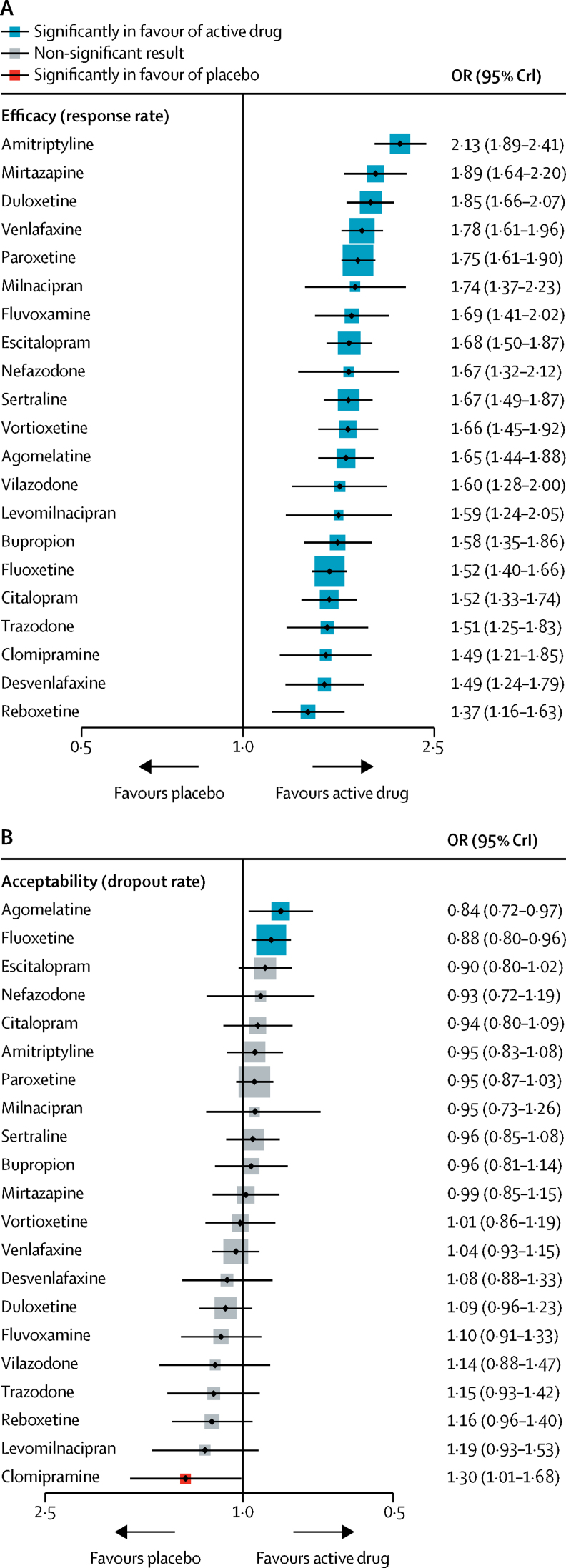
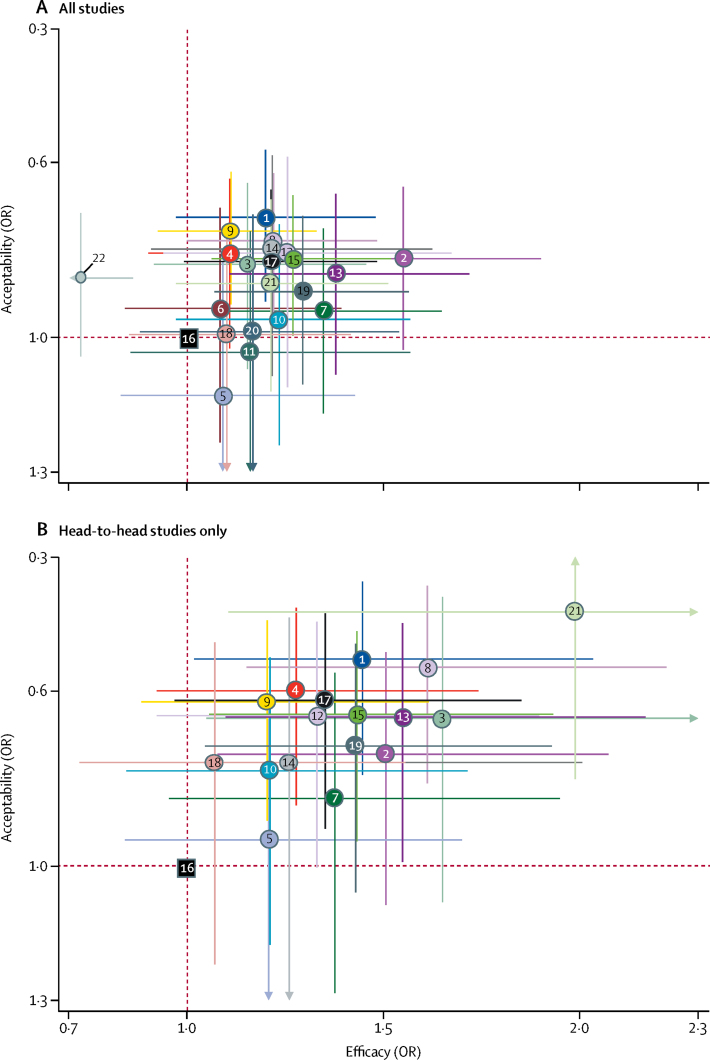
- Across 522 trials and 116,477 participants, all antidepressants were more effective than placebo, with ORs ranging from 2·13 (95% CrI 1·89–2·41) for amitriptyline to 1·37 (1·16–1·63) for reboxetine.
- For acceptability, only agomelatine (OR 0·84, 95% CrI 0·72–0·97) and fluoxetine (0·88, 0·80–0·96) were associated with fewer dropouts than placebo, whereas clomipramine was worse than placebo (1·30, 1·01–1·68).
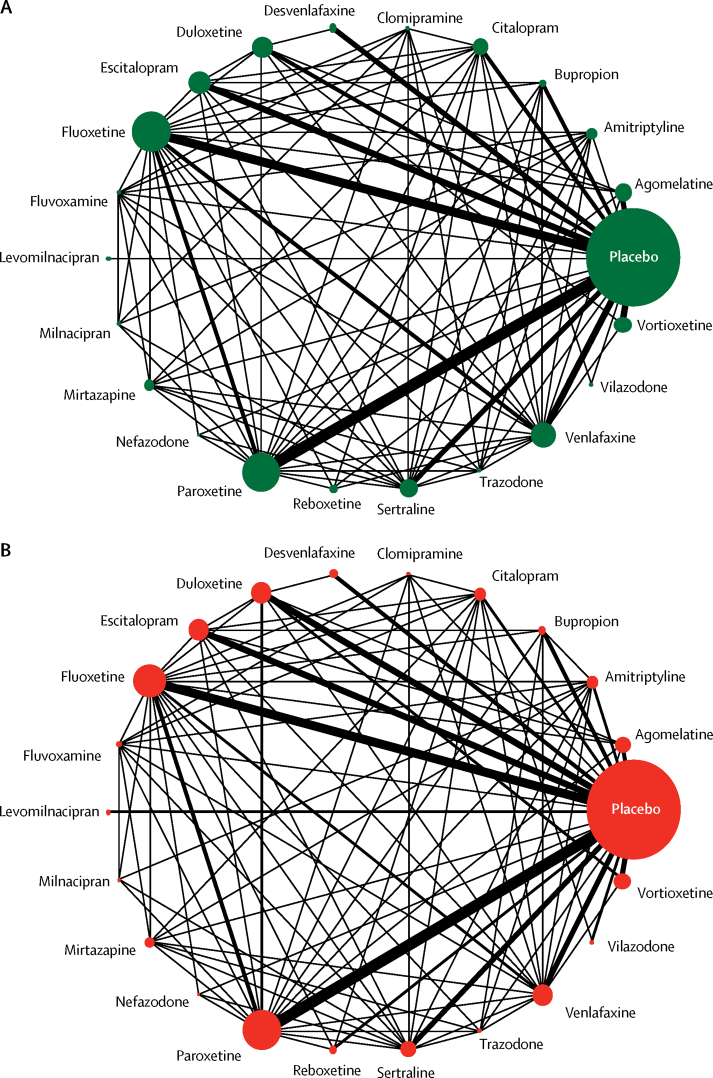
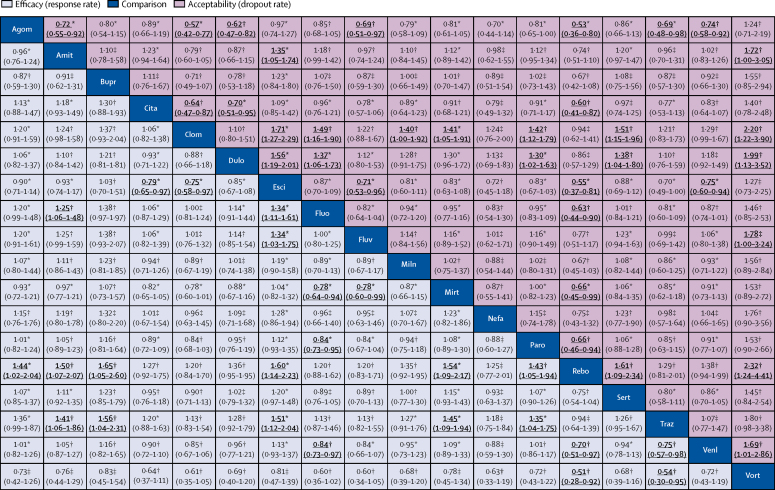
- In head-to-head studies, agomelatine, amitriptyline, escitalopram, mirtazapine, paroxetine, venlafaxine, and vortioxetine were more effective than other antidepressants (ORs 1·19–1·96), while fluoxetine, fluvoxamine, reboxetine, and trazodone were least efficacious (0·51–0·84). For acceptability, agomelatine, citalopram, escitalopram, fluoxetine, sertraline, and vortioxetine were more tolerable (0·43–0·77), while amitriptyline, clomipramine, duloxetine, fluvoxamine, reboxetine, trazodone, and venlafaxine had the highest dropout rates (1·30–2·32).
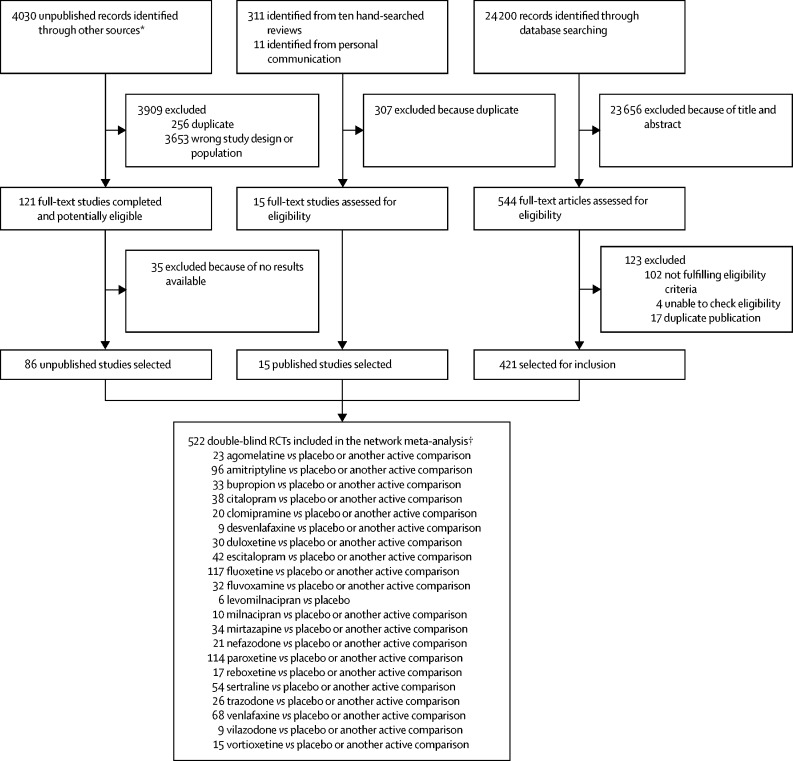
- Risk of bias was high in 46 (9%) of 522 trials, moderate in 380 (73%), and low in 96 (18%); certainty of evidence was moderate to very low, and differences between active drugs ranged from 1·15 to 1·55 for efficacy and 0·64 to 0·83 for acceptability, with wide CrIs on most comparative analyses.
Methods
- Systematic review and network meta-analysis; searched Cochrane Central Register of Controlled Trials, CINAHL, Embase, LILACS, MEDLINE, MEDLINE In-Process, PsycINFO, regulatory agency websites, and international registers from inception to Jan 8, 2016.
- Included double-blind randomised controlled trials of 21 antidepressants or placebo as oral monotherapy for acute treatment of adults (≥18 years, both sexes) with major depressive disorder diagnosed by standard operationalised criteria; excluded quasi-randomised trials and trials with ≥20% bipolar disorder, psychotic depression, treatment-resistant depression, or serious concomitant medical illness.
- Primary outcomes were efficacy (response rate, ≥50% reduction on a standardised observer-rating scale) and acceptability (all-cause treatment discontinuation); estimated summary ORs using random-effects pairwise and network meta-analysis, assessed risk of bias and GRADE certainty, and ranked treatments with SUCRA; PROSPERO CRD42012002291.
Limitations
- Stated by the paper: many comparisons were low or very low certainty (e.g., involving amitriptyline, bupropion, venlafaxine); many trials did not report adequate information about randomisation and allocation concealment; analyses covered only average treatment effects and could not investigate individual-patient modifiers; patients with psychotic or treatment-resistant depression were excluded; trials were short duration; unpublished data were incomplete for some drugs; no formal cost-effectiveness analysis; and results cannot guide next-step choices after first treatment failure.
- Evident from the text: most comparative analyses had wide credible intervals; 9% of trials were high risk of bias and 73% moderate; network meta-analysis depends on transitivity and consistency assumptions; and placebo-controlled versus head-to-head results differed, including a novelty effect favouring experimental drugs.
Model-written summary. Check it against the paper before relying on it.
Integrity signals
Registry
Cites
Statistics
Figures
Verification
Claims the paper makes
15 Valid · 0 Not valid · 10 Not checked · 93 Own results and interpretations
Every source the paper cites for this claim was checked and supports it.
In the paper
“However, there is a long-lasting debate and concern about their efficacy and effectiveness, because short-term benefits are, on average, modest; and because long-term balance of benefits and harms is often understudied.4”
§ Comparative efficacy and acceptability of 21 antidepressant drugs for the acute treatment of adults with major depressive disorder: a systematic review and network meta-analysis > Introduction
What the sources say
- Supportedcites [4] Ioannidis JP Effectiveness of antidepressants: an evidence myth constructed from a thousand randomized trials? Philos Ethics Humanit Med 3 2008 14 18505564 PMC2412901 source
The Abstract explicitly states that the long-term balance of antidepressants’ benefits and harms is understudied. The Background sections on short follow-up and unknown harms explain that trials are typically brief and provide limited information on harms. (LLM, conf=0.95)
plain- Asserted: passes — The authors put it forward as true.
- Checkable: passes — It can be checked against evidence.
- Load-bearing: unclear — It is unclear whether the paper’s conclusions depend on it.
- Based: passes — The paper gives a reason why it holds.
- Supported
The cited sources support only part of this claim — read each source’s verdict below.
In the paper
“We considered only double-blind trials because we included placebo in the network meta-analysis, and because this study design increases methodological rigour by minimising performance and ascertainment biases.7”
§ Comparative efficacy and acceptability of 21 antidepressant drugs for the acute treatment of adults with major depressive disorder: a systematic review and network meta-analysis > Methods > Search strategy and selection criteria
What the sources say
- Partly supportedcites [7] Hróbjartsson A Thomsen AS Emanuelsson F Observer bias in randomized clinical trials with measurement scale outcomes: a systematic review of trials with both blinded and nonblinded assessors CMAJ 185 2013 E201 E211 23359047 PMC3589328 sourceExperimental — accuracy not yet measured
The Abstract says blinding outcome assessors helps avoid ascertainment bias, and the Conclusion reports a high risk of bias when assessors are not blinded in trials with subjective measurement-scale outcomes. The paper does not establish that double-blind design minimises performance bias; it also cautions in the Abstract that “double-blind” is an ambiguous term. (LLM, conf=0.87)
plainstates a cause- Asserted: passes — The authors put it forward as true.
- Checkable: passes — It can be checked against evidence.
- Load-bearing: passes — The paper’s conclusions depend on it.
- Based: passes — The paper gives a reason why it holds.
- Partly supported
A result the paper reports from its own data — it cites no other source for it, so there is none to check. The quote shows it is in the paper.
In the paper
“We found that all antidepressants included in the meta-analysis were more efficacious than placebo in adults with major depressive disorder”
§ Comparative efficacy and acceptability of 21 antidepressant drugs for the acute treatment of adults with major depressive disorder: a systematic review and network meta-analysis > Discussion
plainstates a cause- Asserted: passes — The authors put it forward as true.
- Checkable: passes — It can be checked against evidence.
- Load-bearing: passes — The paper’s conclusions depend on it.
- Based: passes — The paper gives a reason why it holds.
A result the paper reports from its own data — it cites no other source for it, so there is none to check. The quote shows it is in the paper.
In the paper
“Adjusting for this novelty effect diminished the differences between antidepressants.”
§ Comparative efficacy and acceptability of 21 antidepressant drugs for the acute treatment of adults with major depressive disorder: a systematic review and network meta-analysis > Results
plainstates a cause- Asserted: passes — The authors put it forward as true.
- Checkable: passes — It can be checked against evidence.
- Load-bearing: passes — The paper’s conclusions depend on it.
- Based: passes — The paper gives a reason why it holds.
A result the paper reports from its own data — it cites no other source for it, so there is none to check. The quote shows it is in the paper.
In the paper
“In our analyses, funding by industry was not associated with substantial differences in terms of response or dropout rates.”
§ Comparative efficacy and acceptability of 21 antidepressant drugs for the acute treatment of adults with major depressive disorder: a systematic review and network meta-analysis > Discussion
plain- Asserted: passes — The authors put it forward as true.
- Checkable: passes — It can be checked against evidence.
- Load-bearing: unclear — It is unclear whether the paper’s conclusions depend on it.
- Based: passes — The paper gives a reason why it holds.
49 more claims
Create a free account to see all 118 claims and every source verdict.
- Probably not a substantial claim. 39
- It may state two separate claims as one. 33
Claims other papers make about this one
Each is checked against this paper’s own text: does it say what the citing paper says it does?
The source backs part of the claim, not all of it — or backs it for a different population, condition or comparison.
In the citing paper
“Previous findings suggest that escitalopram and vortioxetine have inherently greater efficacy and acceptability than other antidepressants.7”
From A Randomized Controlled Study of Efficacy and Cognitive Function Improvement of Vortioxetine and Escitalopram in Patients with Depression in Chinese Han Nationality (2024) · cites this paper as [7]
Experimental — accuracy not yet measuredThe source backs part of the claim, not all of it — or backs it for a different population, condition or comparison.
In the citing paper
“Antidepressants are more efficacious than placebo in LLD127.”
From Mechanisms and treatment of late-life depression (2019) · cites this paper as [127]
Experimental — accuracy not yet measuredThe source backs part of the claim, not all of it — or backs it for a different population, condition or comparison.
In the citing paper
“It is wellestablished that psychotherapies and pharmaco logical therapies are effective in the treatment of adult depres sion.”
From A network meta‐analysis of the effects of psychotherapies, pharmacotherapies and their combination in the treatment of adult depression (2020) · cites this paper as [6]
Experimental — accuracy not yet measuredThe source backs part of the claim, not all of it — or backs it for a different population, condition or comparison.
In the citing paper
“The primary limitation of all the available evidence on the effects of antidepressants is that the majority of previous trials assessing the effects of antidepressants have been at high or unclear risk of bias.”
From Should antidepressants be used for major depressive disorder? (2020) · cites this paper as [35]
Experimental — accuracy not yet measuredThe source backs part of the claim, not all of it — or backs it for a different population, condition or comparison.
In the citing paper
“Results of a network meta-analysis of adults with acute MDD also revealed that desvenlafaxine, paroxetine, venlafaxine, and vortioxetine had good efficacy and acceptability [8].”
From Antidepressants for the treatment of adults with major depressive disorder in the maintenance phase: a systematic review and network meta-analysis (2023) · cites this paper as [8]
Experimental — accuracy not yet measured
27 more claims about this paper
Create a free account to see every claim other papers make about this one.
Self-check
Percentages, sums and reported differences re-computed from the paper’s own numbers.
Each contradiction between two passages listed here was confirmed by an independent check.
Rated minor: it would not touch a result — a value no result rests on, a p-value that stays on the same side of the significance level, or a conflict that is clerical, resolved elsewhere in the paper, or outside its own findings.
In the paper
§ Comparative efficacy and acceptability of 21 antidepressant drugs for the acute treatment of adults with major depressive disorder: a systematic review and network meta-analysis > Results
“Only levomilnacipran was not directly compared with at least another active drug in any of the networks.”
§ Comparative efficacy and acceptability of 21 antidepressant drugs for the acute treatment of adults with major depressive disorder: a systematic review and network meta-analysis > Results
“Desvenlafaxine, levomilnacipran, and vilazodone were not included in the head-to-head analysis because these three antidepressants had only placebo-controlled trials.”
Citations
Cites
Salanti, G., Ades, A. E., & Ioannidis, J. P. A. (2011) · Journal of Clinical Epidemiology · doi:10.1016/j.jclinepi.2010.03.016 · Cited by 3,766
Self-citationChecking consistency in mixed treatment comparison meta-analysis
Dias, S., Welton, N. J., Caldwell, D. M., & Ades, A. E. (2010) · Statistics in Medicine · doi:10.1002/sim.3767 · Cited by 2,521
Graphical tools for network meta-analysis in STATA
Chaimani, A., Higgins, J. P. T., Mavridis, D., Spyridonos, P., & Salanti, G. (2013) · PLoS ONE · doi:10.1371/journal.pone.0076654 · Cited by 2,473
Self-citationSelective publication of antidepressant trials and its influence on apparent efficacy
Turner, E. H., Matthews, A. M., Linardatos, E., Tell, R. A., & Rosenthal, R. (2008) · New England Journal of Medicine · doi:10.1056/nejmsa065779 · Cited by 2,435
Self-citationThapar, A., Collishaw, S., Pine, D. S., & Thapar, A. K. (2012) · The Lancet · doi:10.1016/s0140-6736(11)60871-4 · Cited by 2,365
Kassebaum, N. J., Arora, M., Barber, R. M., Bhutta, Z. A., Brown, J., Carter, A., Casey, D. C., Charlson, F. J., Coates, M. M., Coggeshall, M., et al. (2016) · The Lancet · doi:10.1016/s0140-6736(16)31460-x · Cited by 2,163
Consistency and inconsistency in network meta-analysis: concepts and models for multi-arm studies
Higgins, J. P. T., Jackson, D., Barrett, J. K., Lu, G., Ades, A. E., & White, I. R. (2012) · Research Synthesis Methods · doi:10.1002/jrsm.1044 · Cited by 2,098
Self-citationMurray, C. J. L., Barber, R. M., Foreman, K. J., Ozgoren, A. A., Abd-Allah, F., Abera, S. F., Aboyans, V., Abraham, J. P., Abubakar, I., Abu-Raddad, L. J., et al. (2015) · The Lancet · doi:10.1016/s0140-6736(15)61340-x · Cited by 1,964
The BUGS project: evolution, critique and future directions
Lunn, D., Spiegelhalter, D., Thomas, A., & Best, N. (2009) · Statistics in Medicine · doi:10.1002/sim.3680 · Cited by 1,876
Cipriani, A., Furukawa, T. A., Salanti, G., Geddes, J. R., Higgins, J. P., Churchill, R., Watanabe, N., Nakagawa, A., Omori, I. M., McGuire, H., et al. (2009) · The Lancet · doi:10.1016/s0140-6736(09)60046-5 · Cited by 1,654
Self-citation
Cited by
Items 3,301–3,400 of 3,536
Bai, A., Pei, C., Li, X., Zhu, X., & Huo, L. (2026) · Translational Psychiatry · doi:10.1038/s41398-026-03857-2 · Cited by 2
Picking Antidepressants—Patient Preferences Beat Biomarkers
Simon, G. E. (2026) · JAMA · doi:10.1001/jama.2026.0816
Su, E., Valencia, N. M. S., Le, J., Liu, E. C., & Wilson, J. L. (2026) · Frontiers in Drug Discovery · doi:10.3389/fddsv.2025.1686789
“PathFX selects high-quality proteins using a weighted interaction network where edges are weighted on the aggregate of published, experimental evidence supported the likelihood of an interaction while controlling for biases associated with highly studied proteins by using protein-specific evidence…”
InfluentialEscitalopram accelerated aging via impaired IIS/autophagy signaling pathway
Chen, Z.-Y., Qi, C.-Y., Ji, F., Xue, K., Quan, H.-B., Zhou, J., Liu, W., & Lu, G.-D. (2026) · GeroScience · doi:10.1007/s11357-026-02190-2 · Cited by 1
Zhao, K., & Liu, J. (2026) · PLoS ONE · doi:10.1371/journal.pone.0340092 · Cited by 1
Depression Updates and Selective Serotonin Reuptake Inhibitor Management
Leveroni, M., Jones, S., & Bell, S. (2026) · Primary Care Clinics in Office Practice · doi:10.1016/j.pop.2026.01.002
Gökçen, O., Karataş, K. S., Akkuş, M., Dönmez, F., & Konak, M. A. (2026) · The Journal of Nervous and Mental Disease · doi:10.1097/nmd.0000000000001871
Wang, H.-N., Huang, C.-K., Huang, Y.-E., Huang, Y.-T., Chan, S.-H., & Tseng, J. (2026) · Revista Española de Medicina Nuclear e Imagen Molecular (English Edition) · doi:10.1016/j.remnie.2026.500341
Antidepressants: perioperative QTc and sodium risks – Authors' reply
Pillinger, T., Arumuhan, A., McCutcheon, R. A., et al. (2026) · The Lancet · doi:10.1016/s0140-6736(26)00130-3
Self-citationVidal, C. (2025) · Champ social eBooks · doi:10.3917/chaso.levy.2025.01.0111
Odagaki, K., Hata, Y., & Sakae, K. (2026) · Case Reports in Psychiatry · doi:10.1155/crps/4382045
Kammerer, M. H., Hasler, G., Hochstrasser, B., Baumann, A., & Sousek, A. (2026) · Clinical Drug Investigation · doi:10.1007/s40261-026-01537-z
Copeland, D. I., Giollabhui, N. M., Foster, S. L., Arnold, C., Wu, Y. ”., Raslan, H., Lind, S., Nagaswami, M. V., Streeter, C. C., Uebelacker, L. A., et al. (2026) · Journal of Affective Disorders · doi:10.1016/j.jad.2026.121647
Azim, L., Al-Ashmori, S., Butcher, C., Cipriani, A., Chew-Graham, C. A., Clare, E., Clark, E., Cole, M., Carella, S., Dixon, L., et al. (2026) · BMJ Open · doi:10.1136/bmjopen-2025-112677
Self-citationZhai, B., Liu, Q., Dong, N., & Xie, J. (2026) · Obesity Surgery · doi:10.1007/s11695-026-08600-w
Li, S., Tan, L., & Yan, W. (2026) · BMC Sports Science Medicine and Rehabilitation · doi:10.1186/s13102-026-01668-y · Cited by 1
“…no high-risk domains and no more than three unclear-risk domains were classified as having a low ROB; those with one high-risk domain, or no high-risk domains but four or more unclear-risk domains, were categorized as having some concerns; all other cases were classified as having a high ROB [35].”
Carminati, M., Tondello, M., Morana, C., Serretti, A., & Zanardi, R. (2026) · International Clinical Psychopharmacology · doi:10.1097/yic.0000000000000625 · Cited by 2
Chang, Y., Hsieh, M., Ju, P., & Chang, C. (2026) · Journal of Affective Disorders · doi:10.1016/j.jad.2026.121696
Lenhard, F., Amnéus, L. W., Viklund, I., Andersson, E. M., & Öst, L. (2026) · Administration and Policy in Mental Health and Mental Health Services Research · doi:10.1007/s10488-026-01499-6
Gellman, J., Zemliana, N. A., Loterstein, Y., Dory, E. K., Matas, D., Shoval, G., Sharon, E., Koman, I. E., Zalsman, G., Koren, L., et al. (2026) · International Journal of Molecular Sciences · doi:10.3390/ijms27073177
Mikola, T., Lehto, S. M., Tolmunen, T., Honkalampi, K. M., Valkonen‐Korhonen, M., Laukkanen, V., Pakarinen, M., Koivumaa-Honkanen, H. T., & Ruusunen, A. A. (2026) · Journal of Affective Disorders · doi:10.1016/j.jad.2026.121709 · Cited by 2
Bracht, T., Borel, P., Dendorfer, S., Soravia, L. M., Adorjan, K., Walther, S., Federspiel, A., Wiest, R., Florineth, G. A., & Denier, N. (2026) · Research Square · doi:10.21203/rs.3.rs-9051588/v1
Xue, L., Farid, T., Moore, K., & Fu, C. H. Y. (2025) · Research Square · doi:10.21203/rs.3.rs-9260871/v1
Potential muscular doping effects of anti-depressants
Tutakhail, A. (2019) · theses.fr (ABES) · doi:10.70675/f3cbba2dza035z4ef0zaebbz68fe16432b48
Oleate : An Atypical Cellular Stress Inducer That Stalls Protein Secretion
Cerrato, G. (2021) · theses.fr (ABES) · doi:10.70675/7e93094ezd3aaz4787z9b5czd43c94f10fe1 · Cited by 1
The organoid revolution to assess mycobacterial pulmonary infections
Leon‐Icaza, S. A. (2022) · theses.fr (ABES) · doi:10.70675/6e135d5fzb953z4ffcz9041z2684784040ad
Coutens, B. (2022) · theses.fr (ABES) · doi:10.70675/7ffbfd7ezefb5z4e4ez82f4z42a6ac0ff754 · Cited by 1
de Oliveira, C. M. (2021) · theses.fr (ABES) · doi:10.70675/7291a4e5z9949z4fd4za27dze7f18385347b · Cited by 2
Dudek, D., Chrobak, A. A., Podkowa, K., Krupa, A. J., Gorostowicz, A., Jaeschke, R. R., Juryk, A., & Siwek, M. (2026) · Frontiers in Pharmacology · doi:10.3389/fphar.2026.1739359
“…adverse effects, although often under-recognized in routine clinical assessments, are consistently reported by patients as particularly burdensome and have been strongly associated with reduced treatment satisfaction, poor adherence, and premature treatment discontinuation (Cipriani et al., 2018).”
A novel approach for visualizing local consistency in network meta-analysis
Wilson, H., Schönstein, A., Robson, S., & Bonofiglio, F. (2026) · Research Synthesis Methods · doi:10.1017/rsm.2026.10082
Saudreau, B., Ilgın, S. E., Maatoug, R., Haddadi, N., Lemoine, A., & Millet, B. (2026) · Journal of Affective Disorders · doi:10.1016/j.jad.2026.121753
Chappell, K. (2023) · theses.fr (ABES) · doi:10.70675/5afa484cz21e5z493azae47ze62ca3553104
Gashi, A., Strippoli, M. F., Szücs, A., Vandel, P., von Gunten, A., Preisig, M., & Schuster, J. (2026) · Journal of Affective Disorders · doi:10.1016/j.jad.2026.121765
Urata, M., Liao, J., Tsuboi, T., Watanabe, K., & Sakurai, H. (2026) · Pharmacopsychiatry · doi:10.1055/a-2839-3461
Behavioral and mental health: Understanding and addressing key issues
Shaktan, A., & Sharma, A. (2026) · Elsevier eBooks · doi:10.1016/b978-0-443-43986-5.00012-6
Klimko, N., Danner, N., Schildt, L., Salo, H., Leinonen, V., & Huttunen, J. (2026) · Spine · doi:10.1097/brs.0000000000005705
Hwang, D.-J., & Cho, J. (2026) · Journal of Applied Physiology · doi:10.1152/japplphysiol.00091.2026
Music listening according to the iso principle in patients with mood disorders
Starcke, K., Gebhardt, S., & von Georgi, R. (2026) · Psychology of Music · doi:10.1177/03057356261427384 · Cited by 2
Baune, B. T., Prabhakaran, A., Patel, M. M., Fromme, S. E., Varma, J. R., Patel, M., & Sn, G. (2026) · Frontiers in Psychiatry · doi:10.3389/fpsyt.2026.1719639
Perić, N., Mayer, S., Helter, T. M., Deckert, J., Gorwood, P. A. P. M., Pérez, V., Reif, A., Ruhé, H. G., Veltman, D. J., van Schaik, A., et al. (2026) · BJPsych Open · doi:10.1192/bjo.2026.11021
Self-citationAdvances in Psychopharmacology: What Clinicians Need to Know
(2026) · FOCUS The Journal of Lifelong Learning in Psychiatry · doi:10.1176/appi.focus.26024109
Hu, M. Q., Lei, Y., Wang, X., He, L., Yang, J., & An, N. (2026) · IEEE Transactions on Computational Social Systems · doi:10.1109/tcss.2026.3670016
Faisal‐Cury, A., Rodrigues, D. M. D. O., Maruyama, J. M., Silotto, A. E. M. R., Heps, A., & Matijasevich, A. (2026) · Ciência & Saúde Coletiva · doi:10.1590/1413-81232026313.10042024
Piksa, M., Cieslik-Starkiewicz, A., & Ryguła, R. (2026) · Psychopharmacology · doi:10.1007/s00213-026-07060-5
Top 50 Cited Articles on the Treatment of Major Depressive Disorder
Albesher, A. A., Muflehi, N. A., Hakami, Y. A., Barnawi, J. A., Softah, R. E., Ghalib, L. H. A., Bukhari, M., Almotiri, R. A. M., Algethami, M. S., Mahboob, S. W., et al. (2026) · Cureus · doi:10.7759/cureus.107337
Takahashi, K., Kurokawa, K., Hiraga, D., Takeda, H., & Tsuji, M. (2026) · Molecular Neurobiology · doi:10.1007/s12035-026-05868-y · Cited by 1
Wang, S., Chen, S., Wu, C., Li, K., Liang, L., & Shen, Y. (2026) · International Journal of Nursing Sciences · doi:10.1016/j.ijnss.2026.04.005
“Pharmacotherapy remains first-line [10,11]; however, age-related declines in hepatic metabolism and renal clearance increase the risk of adverse effects, compounded by high rates of multimorbidity and polypharmacy [12,13].”
Castrillejo, M. J., Velasco, A., Mielgo‐Ayuso, J., Pérez, J., Garrosa, M., Rodríguez-Arias, C. A., & Fernández‐Lázaro, D. (2026) · Pharmaceuticals · doi:10.3390/ph19040645
“Nortriptyline, a prototypical tricyclic antidepressant, has been widely reported in association with orthostatic hypotension, constipation, and xerostomia—effects commonly attributed to its anticholinergic and membrane-stabilizing properties [7,22,23,30,31].”
Pullano, I., Iazzolino, A. M., Landi, S., Vignapiano, A., Monaco, F., & Steardo, L. (2026) · Life · doi:10.3390/life16040698
“Large-scale network meta-analyses have highlighted modest differences in efficacy across antidepressants and substantial limitations in tolerability and acceptability, underscoring the need for novel therapeutic targets [2–5].”
Carmellini, P., Cuomo, A., Rescalli, M. B., Pinzi, M., Dourmas, A., & Fagiolini, A. M. (2026) · Pharmaceuticals · doi:10.3390/ph19050662 · Cited by 1
“Large-scale meta-analyses confirm that SSRIs and SNRIs are effective in alleviating depressive symptoms compared with placebo, although the effect sizes are modest [33].”
Fu, W., Liu, Y., Lin, D., Wang, S., Liang, X., Wu, B., Wan, L., Yuanyuan, L., Wang, T., Liu, H., et al. (2026) · Neuropsychiatric Disease and Treatment · doi:10.2147/ndt.s601078
“3,4 However, antidepressant monotherapy may not provide sufficiently rapid improvement for all patients, and tolerability remains an important consideration in treatment selection.”
Dually Acting Ligands Targeting Serotonin Receptors: Implications in CNS Disorders
Trybała, W., Grychowska, K., Malikowska‐Racia, N., Nikiforuk, A., Popik, P., & Zajdel, P. (2026) · Journal of Medicinal Chemistry · doi:10.1021/acs.jmedchem.5c03094
Kaylor‐Hughes, C., Coe, A., Chondros, P., Densley, K., Fletcher, S. L., Chatterton, M. L., Hoyer, D., Chen, T. F., Ng, C. H., Mangin, D. A., et al. (2026) · JMIR Research Protocols · doi:10.2196/81858
“Antidepressant medications have substantially improved the health and well-being of many people [1], and their success in enabling those experiencing an episode of depression to retain their quality of life has undoubtedly led to their widespread use globally.”
Infante‐Ventura, D., Rodriguez-Díaz, B., García-Bello, M. A., Valcárcel‐Nazco, C., Estupiñán‐Romero, F., Acosta, F. J., de León, B. G., Hurtado, I., & del Pino‐Sedeño, T. (2026) · Depression and Anxiety · doi:10.1155/da/6076326
Yang, L., Yan, P., Xu, Y., Hu, L., Wei, J., Song, M., Liu, W., & Mao, H. (2026) · BMC Psychiatry · doi:10.1186/s12888-026-08060-7
Wei, Y., Liu, L., Gao, A., Ji, X., Kang, Q., Ding, X., Guo, J., Wang, Z., Da, J., Zhang, L., et al. (2026) · Neuropharmacology · doi:10.1016/j.neuropharm.2026.110997
Breitzig, M., He, F., Kong, L., Liu, G., Waschbusch, D. A., Yanosky, J. D., Saunders, E. F. H., & Liao, D. (2026) · International Journal of Psychiatry in Clinical Practice · doi:10.1080/13651501.2026.2649617
Prediction of Adverse Side Effects of Antidepressants Using an Expert System
Becerra-Vivanco, P., Pastrana, L. I. C., & Rosas-Romero, R. (2026) · Communications in computer and information science · doi:10.1007/978-3-032-14893-3_18
Farfan, C. H. V., Manchego, M., Jayo, J., & Tafet, G. E. (2026) · Frontiers in Psychiatry · doi:10.3389/fpsyt.2026.1701803
Task-aligned outcome learning in psychiatry: reducing endpoint dilution
Strobl, E. V. (2026) · Frontiers in Psychiatry · doi:10.3389/fpsyt.2026.1832978 · Cited by 4
Application of escitalopram population pharmacokinetic repository: a step to precision dosing
Liu, L., Chen, J., Ju, G., Qian, C., Xi, X., Song, H., Gong, Y., Luo, Y., Nie, W., Ouyang, D., et al. (2026) · Translational Psychiatry · doi:10.1038/s41398-026-04089-0
Snapir, L., Elazar, M., Cohen, T., Weinberger, R., Schwartz-Lifshitz, M., Taler, M., & Gothelf, D. (2026) · Journal of Child and Adolescent Psychopharmacology · doi:10.1177/10445463261451798
Ivashchenko, D. V., Sobur, V. V., Grass, S. V., Basova, A. Y., Shimanov, P. V., Shubin, A. V., Deitch, R. V., Николаевна, Т. С., Korsakov, I. N., Mirzaev, K. B., et al. (2026) · Annals of the Russian academy of medical sciences · doi:10.15690/vramn18133
Psychotherapy Compared to Pharmacotherapy
Sunzeri, F. (2026) · Springer eBooks · doi:10.1007/978-3-032-14465-2_18
Sunzeri, F. (2026) · Springer eBooks · doi:10.1007/978-3-032-14465-2_16
Leiming, D., Huang, M., Zhang, X., & Liu, Q. (2026) · BMC Sports Science Medicine and Rehabilitation · doi:10.1186/s13102-026-01737-2 · Cited by 1
Clinical evidence on integrated Chinese-Western medicine for depressive disorder
Yu, D. J., Wu, M., Tang, H. T., Chen, S., Sun, L., Yao, Y., Feng, Y., Chen, Y., & Bian, Z. (2026) · Integrative Medicine Research · doi:10.1016/j.imr.2026.101360 · Cited by 1
Chen, X. M., Cao, Y., Zhao, X., Li, Y., Song, Z., Wang, J., & Pan, D. (2026) · Psychopharmacology · doi:10.1007/s00213-026-07085-w · Cited by 1
Psychische und neurokognitive Erkrankungen und Diabetes mellitus (Update 2026)
Abrahamian, H., Kautzky‐Willer, A., Rießland-Seifert, A., Kautzky, A., Brix, J. M., Harb, B. M., Beer, D., Lebherz-Eichinger, D., Fasching, P., & Toplak, H. (2026) · Wiener klinische Wochenschrift · doi:10.1007/s00508-025-02654-z
Muraoka, H., Hashimoto, R., Fukumoto, K., Kodaka, F., Ohi, K., Inada, K., & Yasui‐Furukori, N. (2026) · Psychiatry and Clinical Neurosciences Reports · doi:10.1002/pcn5.70344
Nascimento, M. L., Rodrigues, W. E., Silva, I. C., Santos, V. B., & Oliveira, S. C. B. (2026) · Journal of Electroanalytical Chemistry · doi:10.1016/j.jelechem.2026.120288
Physical activity and mental health
Czyż, P., & Nowobilski, R. (2026) · Psychiatria i Psychologia Kliniczna · doi:10.15557/pipk.2026.0012
Yu, S., Li, J. J., & Fu, Y. (2026) · Asian Journal of Psychiatry · doi:10.1016/j.ajp.2026.105026
Liang, Y., Wei, D.-Y., & Min, S. (2026) · Frontiers in Public Health · doi:10.3389/fpubh.2026.1831073 · Cited by 1
“The power of the NMA method has been demonstrated in landmark psychiatric studies (16), and our application here provides a new level of clarity to the field.”
Rush, S., & Nasrallah, H. A. (2026) · Expert Review of Neurotherapeutics · doi:10.1080/14737175.2026.2675008
Use of Clinically Important Differences in Randomized Controlled Trials for DepressionPreprint
Xiong, R., Wu, J., Wang, Z., Shi, D., & Qin, Z. (2026) · Research Square · doi:10.21203/rs.3.rs-9676507/v1
The influence of selective serotonin reuptake inhibitors on bruxism intensity: a narrative review
Valério, P. (2026) · Jaw Functional Orthopedics and Craniofacial Growth · doi:10.21595/jfocg.2026.26213
(2024) · American Psychiatric Association Publishing eBooks · doi:10.1176/appi.books.9780890427118.bm02
Yakovleva, O. B., Сафарова, Т. П., & Savushkina, O. K. (2026) · Psikhiatriya · doi:10.30629/2618-6667-2026-24-2-15-27
Yang, S., Wang, L. J., Sun, Y., Ma, X. Y., Rong, Y., Fong, T. H., Li, T., Deng, D., Li, X.-X., Zhang, Z., et al. (2026) · bioRxiv (Cold Spring Harbor Laboratory) · doi:10.64898/2026.05.31.727553
Haller, N., Köbel, L. M., Schäffer, L., Overath, J., & Niederer, D. (2026) · Scientific Reports · doi:10.1038/s41598-026-54397-0
Kato, M., Hoshino, T., Kawata, Y., Tokuda, F., & Fujimoto, S. (2026) · Neuropsychopharmacology Reports · doi:10.1002/npr2.70133
“Although certain treatments may have different efficacies for specific symptoms of MDD, the overall differences in efficacy are minimal [12].”
Hu, K., Lo, C. W. H., Awasthi, S., Pain, O., Singh, M., Ahn, Y., Aitchison, K. J., Baune, B. T., Biernacka, J. M., Bondolfi, G., et al. (2026) · medRxiv · doi:10.64898/2026.06.03.26354703 · Cited by 1
Genetic perspectives on the comorbidity of anxiety and mood disorders with cardiovascular disease
de Geus, E. J. C., Treur, J. L., & Penninx, B. W. J. H. (2026) · Nature Cardiovascular Research · doi:10.1038/s44161-026-00822-6 · Cited by 1
Liu, M., Wang, W., Zhang, Y., Yong, J., Jiang, Q., Sun, R., Xiao, H., Han, S., He, L., Yu, H., et al. (2026) · Journal of Ethnopharmacology · doi:10.1016/j.jep.2026.122005
Guo, J., Lu, Z. T., Zhang, Y., Sun, Y., Kang, Z., Sun, J., Zhao, G., Feng, X., Yuan, R., Zhu, Y., et al. (2026) · BMJ Open · doi:10.1136/bmjopen-2025-108754
Zhang, S., Zhang, Z., Li, X., Zhou, J., Li, R., Liu, R., Wang, Y., Chen, X., Feng, Y., Cui, J., et al. (2026) · Depression and Anxiety · doi:10.1155/da/4701907
Paribello, P., Isayeva, U., Lazzardi, S., Pinna, M. A., Contu, M., Meloni, A., Pisanu, C., Squassina, A., Baune, B. T., & Manchia, M. (2026) · Frontiers in Pharmacology · doi:10.3389/fphar.2026.1819237
“…even when considering molecules within the same class (e.g., selective serotonin reuptake inhibitors or tricyclic antidepressants), meaningful differences exist in terms of efficacy and safety profiles (Cipriani et al., 2018), challenging the notion that treatment failures can be directly equated.”
Jajcay, N., Vejmola, Č., Korčák, J., Tylš, F., Viktorinová, M., Viktorin, V., Bravermanová, A., Androvičová, R., Balíková, M., Horáček, J., et al. (2026) · bioRxiv (Cold Spring Harbor Laboratory) · doi:10.64898/2026.06.09.731183 · Cited by 1
Pharmaceutical drug monitoring: the role of oral fluid sampling
Soares, S., Rosado, T., Barroso, M., & Gallardo, E. (2026) · Bioanalysis · doi:10.1080/17576180.2026.2684685
Constantino, J. L., Freimann, T. S., van Dalfsen, J. H., van der Meij, A., Veraart, J. K. E., Smith-Apeldoorn, S. Y., Schoevers, R. A., & Kamphuis, J. (2026) · Journal of Psychiatric Research · doi:10.1016/j.jpsychires.2026.06.013
Bentley, C., Edwards, L., O’Doherty, K. C., Bryan, S., & Austin, J. (2026) · Pharmacogenomics · doi:10.1080/14622416.2026.2686870 · Cited by 1
“However, antidepressants typically take 4–6 weeks to determine efficacy [14], and up to 50% of people prescribed an antidepressant do not respond initially [15–18].”
Rayshan, A. R., & Azman, K. F. (2026) · Biomedicine & Pharmacotherapy · doi:10.1016/j.biopha.2026.119673
Höfs, F. N., Lourenço, D. D. A., Dias, R. S., & Kremer, F. S. (2026) · In Silico Research in Biomedicine · doi:10.1016/j.insi.2026.100454
Frick, A., Blest‐Hopley, G., Grin, M., Erritzøe, D., Nutt, D. J., & Carhart-Harris, R. L. (2026) · Psychopharmacology · doi:10.21203/rs.3.rs-9880403/v1
Liu, X., Wang, H., Tian, S., Guo, X., & Cao, H. (2026) · International Journal of Nursing Studies · doi:10.1016/j.ijnurstu.2026.105622 · Cited by 2
Metadata
- Authors
- Cipriani, A., Furukawa, T. A., Salanti, G., Chaimani, A., Atkinson, L. Z., Ogawa, Y., Leucht, S., Ruhe, H. G., Turner, E. H., Higgins, J. P. T., Egger, M., Takeshima, N., Hayasaka, Y., Imai, H., Shinohara, K., Tajika, A., Ioannidis, J. P. A., & Geddes, J. R.
- Affiliations
- Oxford Health NHS Foundation Trust (GB)
- Kyoto University (JP)
- University of Bern (CH)
- Inserm (FR)
- Warneford Hospital (GB)
- Technical University of Munich (DE)
- Oregon Health & Science University (US)
- University of Bristol (GB)
- Stanford University (US)
- Corresponding author
- Cipriani, Andrea
- ORCID
- Venue
- The Lancet
- Publisher
- Elsevier BV
- Published
- 2018-04
- Volume
- 391
- Issue
- 10128
- Pages
- 1357-1366
- ISSN
- 0099-5355 (ISSN-L)
- 0140-6736
- PMC
- PMC5889788
- OpenAlex
- W2788337440
- Cited by
- 3,541
- References
- 33
- Citations by year
- 2026: 383 · 2025: 472 · 2024: 469 · 2023: 426 · 2022: 399 · 2021: 423 · 2020: 475 · 2019: 322 · 2018: 163
- FWCI
- 40.44
- Type
- journal article
- Language
- en
- Open access
- hybrid
- doi.org
- Licence
- cc-by
- www.elsevier.com/tdm/userlicense/1.0/ (tdm)
- creativecommons.org/licenses/by/4.0/ (vor)
- Locations
- The Lancet (publishedVersion, cc-by)
- FOCUS The Journal of Lifelong Learning in Psychiatry (publishedVersion, cc-by)
- Europe PMC (PubMed Central) (publishedVersion, cc-by)
- PubMed Central (publishedVersion, cc-by)
- PubMed (publishedVersion)
- PubMed Central (publishedVersion)
- Institutional Repositories DataBase (IRDB) (submittedVersion, cc-by)
- Bern Open Repository and Information System (University of Bern) (submittedVersion, cc-by)
- mediaTUM – the media and publications repository of the Technical University Munich (Technical University Munich) (submittedVersion)
- mediaTUM – the media and publications repository of the Technical University Munich (Technical University Munich) (submittedVersion, other-oa)
- Kyoto University Research Information Repository (Kyoto University) (submittedVersion, cc-by)
- Radboud Repository (Radboud University) (submittedVersion)
- Explore Bristol Research (submittedVersion, cc-by)
- Radboud Repository (Radboud University) (submittedVersion, other-oa)
- Funders
- National Institute for Health and Care Research (BRC‐1215‐20005, NF-SI-0617-10145)
- Japan Society for the Promotion of Science (17K19808, 16K09033)
- Topics
- Health Sciences › Medicine › Pharmacology (medical) › Treatment of Major Depression
- Health Sciences › Medicine › Psychiatry and Mental health › Mental Health Treatment and Access
- Social Sciences › Psychology › Clinical Psychology › Psychotherapy Techniques and Applications
- Keywords
- major depressive disorder, antidepressants, acute treatment, antidepressant efficacy, treatment discontinuation, placebo response, amitriptyline, reboxetine, agomelatine, fluoxetine, venlafaxine, escitalopram, mirtazapine, paroxetine, sertraline, bupropion
- MeSH terms
- Antidepressive Agents, Major Depressive Disorder, Double-Blind Method, Humans, Patient Dropouts, Randomized Controlled Trials as Topic, Treatment Outcome, Evidence-Based Medicine
About these checks
Registry, retraction, Cites and statistics results are computed, not judged, with one exception: a printed reference that no index lists is read once by a model before it counts as a citation error. Claims are extracted by a model and kept only when their quote appears verbatim in the text; each cited source is then checked, with a model’s help, for whether it says what the claim relies on. Those verdicts can be wrong — read the claim’s quote and the cited source before relying on one.
The claim verdicts this report counts are experimental: their accuracy is not yet measured.
A language model drew the claims from the paper on 2026-10-10, under version 3 of the claim definition (model deepseek-v4.1-flash, prompt extract-v3).
A second model labelled each claim on 2026-10-10 (model jev-1.13-20260917, definition revision gold-guideline-v0.2).
Cited sources are checked with a language model’s help (gpt-6-sol).
Statistics and arithmetic are recomputed, not judged.
Confidence bands are shown only for fields calibrated on our annotated test set. None is calibrated yet, so no band is shown.
What counts as a claim ›How we measure confidence ›How we check this ›
Are you an author, or do you see a problem with this page? Request a review
Data sources
Bibliographic data: Semantic Scholar, OpenAlex, Crossref.
Contains information from the Semantic Scholar Academic Graph Datasets, made available under the ODC Attribution License (ODC-BY 1.0).
Semantic Scholar’s data is described in: Kinney, R., et al. (2023). The Semantic Scholar Open Data Platform. arXiv:2301.10140.
