

Clinical and biomarker changes of Alzheimer's disease in adults with Down syndrome: a cross-sectional study
Open accessThe DOI matches its Crossref record; 36 of the 37 references it cites were found in a registry or an index.
Abstract
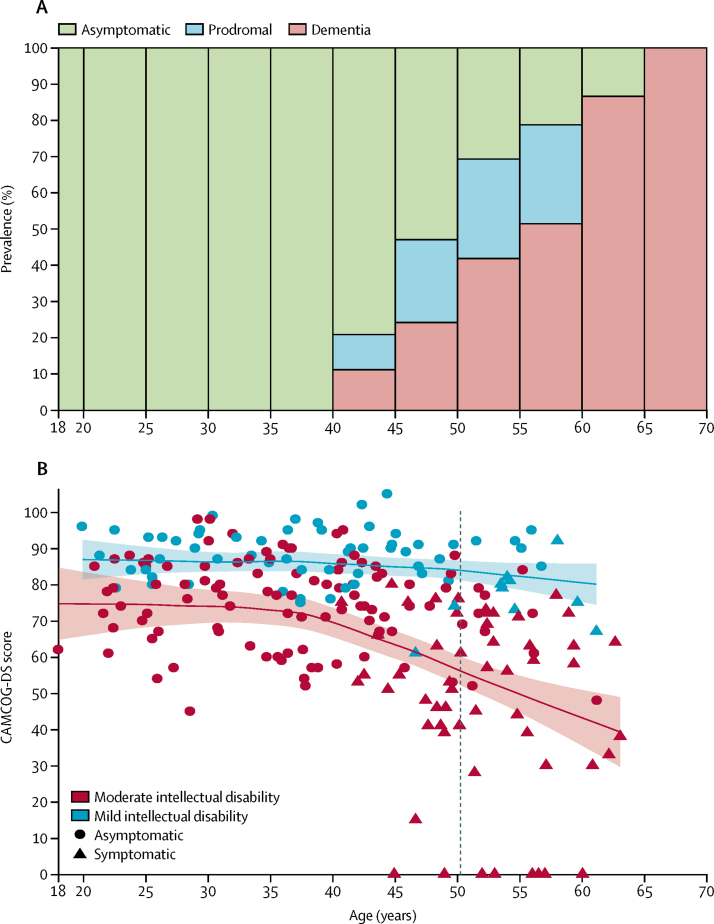
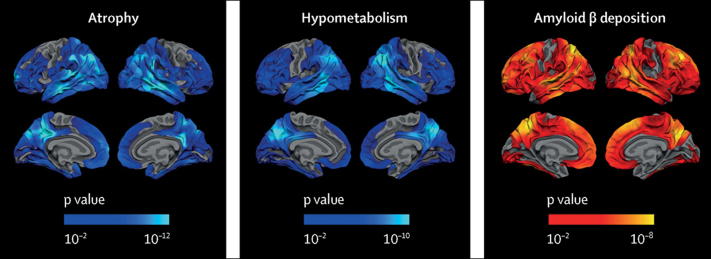
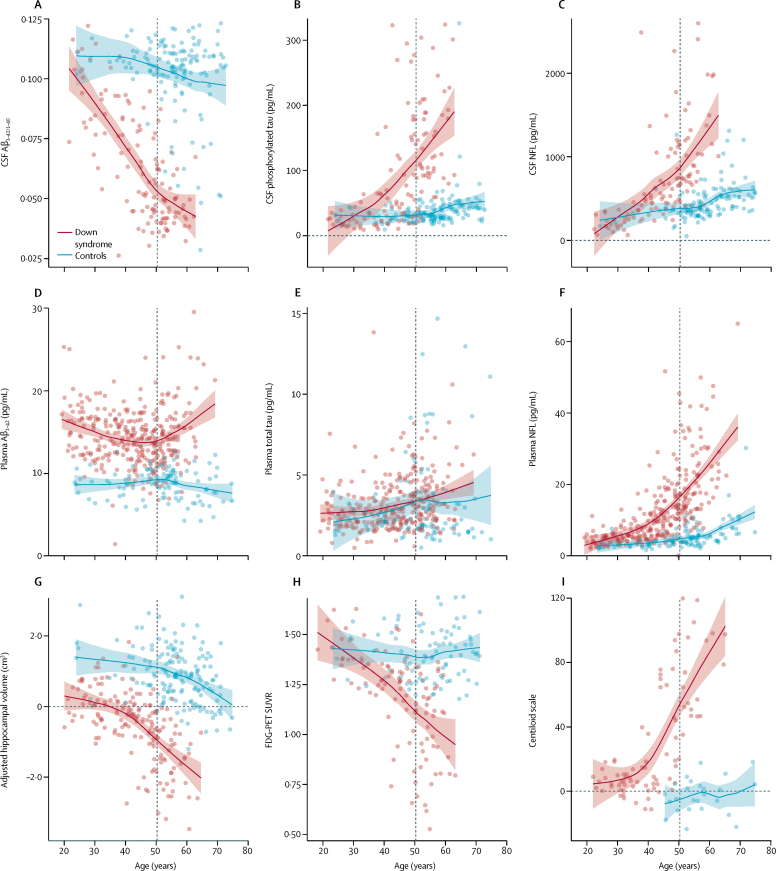
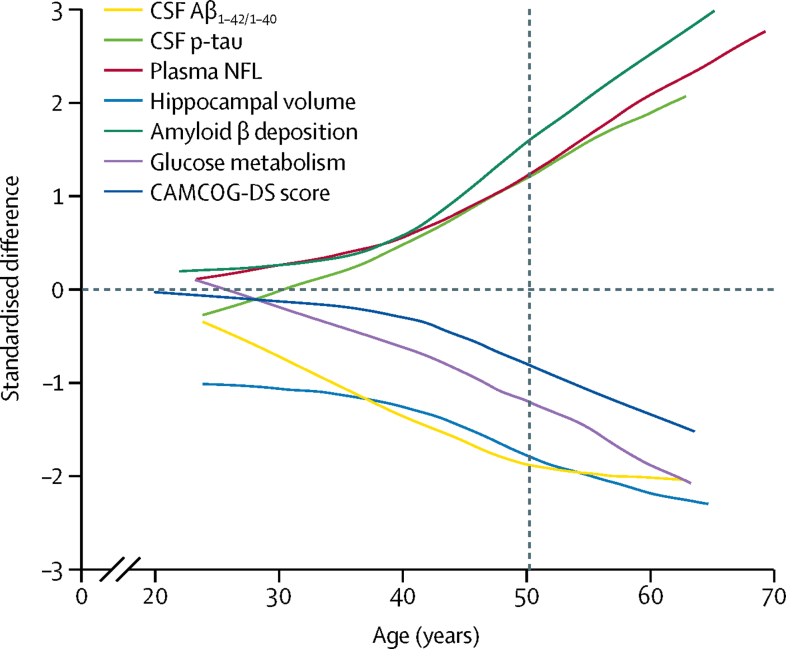
Background Alzheimer's disease and its complications are the leading cause of death in adults with Down syndrome. Studies have assessed Alzheimer's disease in individuals with Down syndrome, but the natural history of biomarker changes in Down syndrome has not been established. We characterised the order and timing of changes in biomarkers of Alzheimer's disease in a population of adults with Down syndrome. Methods We did a dual-centre cross-sectional study of adults with Down syndrome recruited through a population-based health plan in Barcelona (Spain) and through services for people with intellectual disabilities in Cambridge (UK). Cognitive impairment in participants with Down syndrome was classified with the Cambridge Cognitive Examination for Older Adults with Down Syndrome (CAMCOG-DS). Only participants with mild or moderate disability were included who had at least one of the following Alzheimer's disease measures: apolipoprotein E allele carrier status; plasma concentrations of amyloid β peptides 1–42 and 1–40 and their ratio (Aβ 1–42/1–40 ), total tau protein, and neurofilament light chain (NFL); tau phosphorylated at threonine 181 (p-tau), and NFL in cerebrospinal fluid (CSF); and one or more of PET with 18 F-fluorodeoxyglucose, PET with amyloid tracers, and MRI. Cognitively healthy euploid controls aged up to 75 years who had no biomarker abnormalities were recruited from the Sant Pau Initiative on Neurodegeneration. We used a first-order locally estimated scatterplot smoothing curve to determine the order and age at onset of the biomarker changes, and the lowest ages at the divergence with 95% CIs are also reported where appropriate. Findings Between Feb 1, 2013, and June 28, 2019 (Barcelona), and between June 1, 2009, and Dec 31, 2014 (Cambridge), we included 388 participants with Down syndrome (257 [66%] asymptomatic, 48 [12%] with prodromal Alzheimer's disease, and 83 [21%] with Alzheimer's disease dementia) and 242 euploid controls. CSF Aβ 1–42/1–40 and plasma NFL values changed in individuals with Down syndrome as early as the third decade of life, and amyloid PET uptake changed in the fourth decade. 18 F-fluorodeoxyglucose PET and CSF p-tau changes occurred later in the fourth decade of life, followed by hippocampal atrophy and changes in cognition in the fifth decade of life. Prodromal Alzheimer's disease was diagnosed at a median age of 50·2 years (IQR 47·5–54·1), and Alzheimer's disease dementia at 53·7 years (49·5–57·2). Symptomatic Alzheimer's disease prevalence increased with age in individuals with Down syndrome, reaching 90–100% in the seventh decade of life. Interpretation Alzheimer's disease in individuals with Down syndrome has a long preclinical phase in which biomarkers follow a predictable order of changes over more than two decades. The similarities with sporadic and autosomal dominant Alzheimer's disease and the prevalence of Down syndrome make this population a suitable target for Alzheimer's disease preventive treatments. Funding Instituto de Salud Carlos III, Fundació Bancaria La Caixa, Fundació La Marató de TV3, Medical Research Council, and National Institutes of Health.
Overview
The claims and statistics of this paper haven’t been checked yet.
Free: it reads the open-access text and checks the first 5 claims that cite a source we can check. Create a free account to check every claim.
Integrity signals
Registry
Cites
Statistics
Figures
Verification
Claims the paper makes
The claims and statistics of this paper haven’t been checked yet.
Free: it reads the open-access text and checks the first 5 claims that cite a source we can check. Create a free account to check every claim.
Claims other papers make about this one
Each is checked against this paper’s own text: does it say what the citing paper says it does?
The cited source says what the claim attributes to it.
In the citing paper
“Studies suggest that the brain changes of Alzheimer's disease in people with Down syndrome are more common than these percentages indicate.92,93”
From 2023 Alzheimer's disease facts and figures (2023) · cites this paper as [92]
Experimental — accuracy not yet measuredThe cited source says what the claim attributes to it.
In the citing paper
“Emerging research suggests that Alzheimer's brain changes in people with Down syndrome may be even more common than these percentages indicate.”
From 2024 Alzheimer's disease facts and figures (2024) · cites this paper as [99]
Self-check
Percentages, sums and reported differences re-computed from the paper’s own numbers.
The self-check needs the paper’s full text.
Citations
Cites
Diagnostic and Statistical Manual of Mental Disorders
Williams, J. B. W., & First, M. (2013) · Encyclopedia of Social Work · doi:10.1093/acrefore/9780199975839.013.104 · Cited by 109,519
NIA‐AA Research Framework: Toward a biological definition of Alzheimer's disease
Jack, C. R., Bennett, D. A., Blennow, K., Carrillo, M. C., Dunn, B., Haeberlein, S. B., Holtzman, D. M., Jagust, W., Jessen, F., Karlawish, J., et al. (2018) · Alzheimer's & Dementia · doi:10.1016/j.jalz.2018.02.018 · Cited by 10,537
Measuring the thickness of the human cerebral cortex from magnetic resonance images
Fischl, B., & Dale, A. M. (2000) · Proceedings of the National Academy of Sciences · doi:10.1073/pnas.200033797 · Cited by 5,818
Clinical and biomarker changes in dominantly inherited Alzheimer's disease
Bateman, R. J., Xiong, C., Benzinger, T. L. S., Fagan, A. M., Goate, A., Fox, N. C., Marcus, D. S., Cairns, N. J., Xie, X., Blazey, T. M., et al. (2012) · New England Journal of Medicine · doi:10.1056/nejmoa1202753 · Cited by 3,814
Advancing research diagnostic criteria for Alzheimer's disease: the IWG-2 criteria
Dubois, B., Feldman, H. H., Jacova, C., Hampel, H., Molinuevo, J. L., Blennow, K., DeKosky, S. T., Gauthier, S., Selkoe, D., Bateman, R., et al. (2014) · The Lancet Neurology · doi:10.1016/s1474-4422(14)70090-0 · Cited by 3,321
The Centiloid Project: standardizing quantitative amyloid plaque estimation by PET
Klunk, W. E., Koeppe, R. A., Price, J. C., Benzinger, T. L., Devous, M. D., Jagust, W. J., Johnson, K. A., Mathis, C. A., Minhas, D., Pontecorvo, M. J., et al. (2015) · Alzheimer's & Dementia · doi:10.1016/j.jalz.2014.07.003 · Cited by 1,348
Occurrence of neuropathological changes and dementia of Alzheimer’s disease in Down’s syndrome
Wisniewski, K. E., Wisniewski, H. M., & Wen, G. Y. (1985) · Annals of Neurology · doi:10.1002/ana.410170310 · Cited by 1,159
Jack, C. R., Lowe, V. J., Weigand, S. D., Wiste, H. J., Senjem, M. L., Knopman, D. S., Shiung, M. M., Gunter, J. L., Boeve, B. F., Kemp, B. J., et al. (2009) · Brain · doi:10.1093/brain/awp062 · Cited by 1,099
Associations between cognitive, functional, and FDG-PET measures of decline in AD and MCI
Landau, S. M., Harvey, D., Madison, C. M., Koeppe, R. A., Reiman, E. M., Foster, N. L., Weiner, M. W., & Jagust, W. J. (2011) · Neurobiology of Aging · doi:10.1016/j.neurobiolaging.2009.07.002 · Cited by 750
Amyloid deposition, hypometabolism, and longitudinal cognitive decline
Landau, S. M., Mintun, M. A., Joshi, A. D., Koeppe, R. A., Petersen, R. C., Aisen, P. S., Weiner, M. W., Jagust, W. J., & Initiative, F. T. A. D. N. (2012) · Annals of Neurology · doi:10.1002/ana.23650 · Cited by 727
Jack, C. R., Knopman, D. S., Weigand, S. D., Wiste, H. J., Vemuri, P., Lowe, V., Kantarci, K., Gunter, J. L., Senjem, M. L., Ivnik, R. J., et al. (2012) · Annals of Neurology · doi:10.1002/ana.22628 · Cited by 602
Reiman, E. M., Quiroz, Y. T., Fleisher, A. S., Chen, K., Velez-Pardo, C., Jimenez-Del-Rio, M., Fagan, A. M., Shah, A. R., Alvarez, S., Arbelaez, A., et al. (2012) · The Lancet Neurology · doi:10.1016/s1474-4422(12)70228-4 · Cited by 541
Symptom onset in autosomal dominant Alzheimer disease: A systematic review and meta-analysis
Ryman, D. C., Acosta-Baena, N., Aisen, P. S., Bird, T., Danek, A., Fox, N. C., Goate, A., Frommelt, P., Ghetti, B., Langbaum, J. B. S., et al. (2014) · Neurology · doi:10.1212/wnl.0000000000000596 · Cited by 502
The four ages of Down syndrome
Bittles, A. H., Bower, C., Hussain, R., & Glasson, E. J. (2007) · The European Journal of Public Health · doi:10.1093/eurpub/ckl103 · Cited by 492
Cleveland, W. S., Grosse, E., & Shyu, W. M. (2017) · Statistical Models in S · doi:10.1201/9780203738535-8 · Cited by 486
Shining light on motivation, emotion, and memory processes
Ilango, A., & Lobo, M. K. (2015) · Frontiers in Behavioral Neuroscience · doi:10.3389/fnbeh.2015.00001 · Cited by 402
Dementia in Down syndrome: unique insights for Alzheimer disease research
Lott, I. T., & Head, E. (2019) · Nature Reviews Neurology · doi:10.1038/s41582-018-0132-6 · Cited by 383
A prospective 20‐year longitudinal follow‐up of dementia in persons with Down syndrome
McCarron, M., McCallion, P., Reilly, E., Dunne, P., Carroll, R., & Mulryan, N. (2017) · Journal of Intellectual Disability Research · doi:10.1111/jir.12390 · Cited by 295
Ballard, C., Mobley, W., Hardy, J., Williams, G., & Corbett, A. (2016) · The Lancet Neurology · doi:10.1016/s1474-4422(16)00063-6 · Cited by 264
Fortea, J., Carmona-Iragui, M., Benejam, B., Fernández, S., Videla, L., Barroeta, I., Alcolea, D., Pegueroles, J., Muñoz, L., Belbin, O., et al. (2018) · The Lancet Neurology · doi:10.1016/s1474-4422(18)30285-0 · Cited by 201
Self-citationAmygdala and hippocampal volumes in children with Down syndrome: A high-resolution MRI study
Pinter, J. D., Brown, W. E., Eliez, S., Schmitt, J. E., Capone, G. T., & Reiss, A. L. (2001) · Neurology · doi:10.1212/wnl.56.7.972 · Cited by 197
The pattern of amyloid accumulation in the brains of adults with Down syndrome
Annus, T., Wilson, L. R., Hong, Y. T., Acosta–Cabronero, J., Fryer, T. D., Cardenas–Blanco, A., Smith, R., Boros, I., Coles, J. P., Aigbirhio, F. I., et al. (2016) · Alzheimer's & Dementia · doi:10.1016/j.jalz.2015.07.490 · Cited by 182
Self-citationFleisher, A. S., Chen, K., Quiroz, Y. T., Jakimovich, L. J., Gutierrez Gomez, M., Langois, C. M., Langbaum, J. B. S., Roontiva, A., Thiyyagura, P., Lee, W., et al. (2015) · JAMA Neurology · doi:10.1001/jamaneurol.2014.3314 · Cited by 177
Association of Dementia With Mortality Among Adults With Down Syndrome Older Than 35 Years
Hithersay, R., Startin, C. M., Hamburg, S., Mok, K. Y., Hardy, J., Fisher, E. M. C., Tybulewicz, V. L. J., Nizetic, D., & Strydom, A. (2019) · JAMA Neurology · doi:10.1001/jamaneurol.2018.3616 · Cited by 176
Normal ageing in adults with Down's syndrome: a longitudinal study
Devenny, D. A., Silverman, W. P., Hill, A. L., Jenkins, E., Sersen, E. A., & Wisniewski, K. E. (1996) · Journal of Intellectual Disability Research · doi:10.1111/j.1365-2788.1996.tb00624.x · Cited by 171
Predictors of Age of Diagnosis and Survival of Alzheimer’s Disease in Down Syndrome
Sinai, A., Mokrysz, C., Bernal, J., Bohnen, I., Bonell, S., Courtenay, K., Dodd, K., Gazizova, D., Hassiotis, A., Hillier, R., et al. (2017) · Journal of Alzheimer's Disease · doi:10.3233/jad-170624 · Cited by 134
Imaging brain amyloid in nondemented young adults with Down syndrome using Pittsburgh compound B
Handen, B. L., Cohen, A. D., Channamalappa, U., Bulova, P., Cannon, S. A., Cohen, W. I., Mathis, C. A., Price, J. C., & Klunk, W. E. (2012) · Alzheimer's & Dementia · doi:10.1016/j.jalz.2011.09.229 · Cited by 131
Alcolea, D., Clarimón, J., Carmona‐Iragui, M., Illán‐Gala, I., Morenas‐Rodríguez, E., Barroeta, I., Ribosa‐Nogué, R., Sala, I., Sánchez‐Saudinós, M. B., Videla, L., et al. (2019) · Alzheimer's & Dementia: Translational Research & Clinical Interventions · doi:10.1016/j.trci.2019.09.005 · Cited by 119
Self-citationAlzheimer's disease in Down syndrome: an overlooked population for prevention trials
Strydom, A., Coppus, A., Blesa, R., Danek, A., Fortea, J., Hardy, J., Levin, J., Nuebling, G., Rebillat, A., Ritchie, C., et al. (2018) · Alzheimer's & Dementia: Translational Research & Clinical Interventions · doi:10.1016/j.trci.2018.10.006 · Cited by 110
Self-citationCerebral amyloid angiopathy in Down syndrome and sporadic and autosomal‐dominant Alzheimer's disease
Carmona‐Iragui, M., Balasa, M., Benejam, B., Alcolea, D., Fernández, S., Videla, L., Sala, I., Sánchez‐Saudinós, M. B., Morenas‐Rodriguez, E., Ribosa‐Nogué, R., et al. (2017) · Alzheimer's & Dementia · doi:10.1016/j.jalz.2017.03.007 · Cited by 89
Self-citationLao, P. J., Betthauser, T. J., Hillmer, A. T., Price, J. C., Klunk, W. E., Mihaila, I., Higgins, A. T., Bulova, P. D., Hartley, S. L., Hardison, R., et al. (2016) · Alzheimer's & Dementia · doi:10.1016/j.jalz.2015.05.013 · Cited by 88
Neuroimaging and other modalities to assess Alzheimer's disease in Down syndrome
Neale, N., Padilla, C., Fonseca, L. M., Holland, T., & Zaman, S. (2018) · NeuroImage: Clinical · doi:10.1016/j.nicl.2017.10.022 · Cited by 86
Self-citationRafii, M. S., Wishnek, H., Brewer, J. B., Donohue, M. C., Ness, S., Mobley, W. C., Aisen, P. S., & Rissman, R. A. (2015) · Frontiers in Behavioral Neuroscience · doi:10.3389/fnbeh.2015.00239 · Cited by 84
Esteba Castillo, S., Dalmau Bueno, A., Ribas Vidal, N., Vilà Alsina, M., Novell Alsina, R., & García Alba, J. (2013) · Revista de Neurología · doi:10.33588/rn.5708.2013259 · Cited by 62
Neuropathological correlates of amyloid PET imaging in Down syndrome
Abrahamson, E. E., Head, E., Lott, I. T., Handen, B. L., Mufson, E. J., Christian, B. T., Klunk, W. E., & Ikonomovic, M. D. (2019) · Developmental Neurobiology · doi:10.1002/dneu.22713 · Cited by 45
Increase in β-Amyloid Levels in Cerebrospinal Fluid of Children with Down Syndrome
Englund, H., Annerén, G., Gustafsson, J., Wester, U., Wiltfang, J., Lannfelt, L., Blennow, K., & Höglund, K. (2007) · Dementia and Geriatric Cognitive Disorders · doi:10.1159/000109215 · Cited by 38
Cited by
2023 Alzheimer's disease facts and figures
(2023) · Alzheimer's & Dementia · doi:10.1002/alz.13016 · Cited by 3,212
2024 Alzheimer's disease facts and figures
(2024) · Alzheimer's & Dementia · doi:10.1002/alz.13809 · Cited by 2,536
2022 Alzheimer's disease facts and figures
(2022) · Alzheimer's & Dementia · doi:10.1002/alz.12638 · Cited by 2,341
Blood-based biomarkers for Alzheimer's disease: towards clinical implementation
Teunissen, C. E., Verberk, I. M. W., Thijssen, E. H., Vermunt, L., Hansson, O., Zetterberg, H., van der Flier, W. M., Mielke, M. M., & del Campo, M. (2022) · The Lancet Neurology · doi:10.1016/s1474-4422(21)00361-6 · Cited by 1,045
“81,82 ,92,93 These findings in genetically determined Alzheimer’s disease support the potential use of plasma pTau181, pTau217, and NfL for diagnostic, prognostic, and disease monitoring purposes very early in the disease course.”
InfluentialAPOE4 homozygosity represents a distinct genetic form of Alzheimer’s disease
Fortea, J., Pegueroles, J., Alcolea, D., Belbin, O., Dols-Icardo, O., Vaqué-Alcázar, L., Videla, L., Gispert, J. D., Suárez-Calvet, M., Johnson, S. C., et al. (2024) · Nature Medicine · doi:10.1038/s41591-024-02931-w · Cited by 369
Self-citation
Metadata
- Authors
- Fortea, J., Vilaplana, E., Carmona-Iragui, M., Benejam, B., Videla, L., Barroeta, I., Fernández, S., Altuna, M., Pegueroles, J., Montal, V., Valldeneu, S., Giménez, S., González-Ortiz, S., Muñoz, L., Estellés, T., Illán-Gala, I., Belbin, O., Camacho, V., Wilson, L. R., Annus, T., Osorio, R. S., Videla, S., Lehmann, S., Holland, A. J., Alcolea, D., Clarimón, J., Zaman, S. H., Blesa, R., & Lleó, A.
- Affiliations
- Universitat Autònoma de Barcelona (ES)
- Hospital de Sant Pau (ES)
- University of Cambridge (GB)
- NYU Langone Health (US)
- Institut d'Investigació Biomédica de Bellvitge (ES)
- Inserm (FR)
- Corresponding author
- Fortea, Juan
- ORCID
- Fortea, Juan
- Vilaplana, Eduard
- Benejam, Bessy
- Videla, Laura
- Barroeta, Isabel
- Fernández, Susana
- Altuna, Miren
- Pegueroles, Jordi
- Montal, Víctor
- Giménez, Sandra
- Muñoz, Laia
- Belbin, Olivia
- Camacho, Valle
- Wilson, Liam Reese
- Osorio, Ricardo S
- Videla, Sebastián
- Lehmann, Sylvain
- Holland, Anthony J
- Alcolea, Daniel
- Clarimón, Jordi
- Zaman, Shahid H
- Blesa, Rafael
- Lleó, Alberto
- Venue
- The Lancet
- Publisher
- Elsevier BV
- Published
- 2020-06
- Volume
- 395
- Issue
- 10242
- Pages
- 1988-1997
- ISSN
- 0099-5355 (ISSN-L)
- 0140-6736
- PMC
- PMC7322523
- OpenAlex
- W3038008717
- Cited by
- 340
- References
- 37
- Citations by year
- 2026: 43 · 2025: 74 · 2024: 57 · 2023: 43 · 2022: 61 · 2021: 53 · 2020: 9
- FWCI
- 31.31
- Type
- journal article
- Language
- en
- Open access
- hybrid
- doi.org
- Licence
- cc-by-nc-nd
- www.elsevier.com/tdm/userlicense/1.0/ (tdm)
- www.elsevier.com/legal/tdmrep-license (tdm)
- creativecommons.org/licenses/by-nc-nd/4.0/ (vor)
- Locations
- The Lancet (publishedVersion, cc-by-nc-nd)
- PubMed Central (publishedVersion, cc-by-nc-nd)
- PubMed (publishedVersion)
- HAL (submittedVersion, cc-by-nc-nd)
- Dipòsit Digital de Documents de la UAB (Universitat Autònoma de Barcelona) (submittedVersion, cc-by-nc-nd)
- LA Referencia (Red Federada de Repositorios Institucionales de Publicaciones Científicas) (submittedVersion, cc-by-nc-nd)
- Repositori digital de la UPF (Universitat Pompeu Fabra) (submittedVersion, cc-by-nc-nd)
- Apollo (University of Cambridge) (submittedVersion, cc-by-nc-nd)
- Apollo
- Funders
- Fundació la Marató de TV3
- Global Brain Health Institute
- Generalitat de Catalunya
- Centro de Investigación Biomédica en Red sobre Enfermedades Neurodegenerativas
- National Institutes of Health (2013-2016)
- Instituto de Salud Carlos III (2013-2016)
- European Regional Development Fund
- National Institute on Aging (P30AG066512)
- Topics
- Health Sciences › Medicine › Public Health, Environmental and Occupational Health › Down syndrome and intellectual disability research
- Health Sciences › Medicine › Psychiatry and Mental health › Dementia and Cognitive Impairment Research
- Life Sciences › Neuroscience › Cellular and Molecular Neuroscience › Alzheimer's disease research and treatments
- Keywords
- Alzheimer's disease, Down syndrome, biomarkers, natural history (disease), amyloid PET, neurofilament light chain, apolipoprotein E, total tau, cognitive impairment, prodromal Alzheimer's disease, dementia
- MeSH terms
- Adult, Alzheimer Disease, Amyloidosis, Apolipoproteins E, Cross-Sectional Studies, Down Syndrome, United Kingdom, Humans, Magnetic Resonance Imaging, Middle Aged, Spain, Biomarkers, Prevalence, Case-Control Studies, Amyloid beta-Peptides, tau Proteins, Neurofilament Proteins, Fluorodeoxyglucose F18, Positron-Emission Tomography, Cognitive Dysfunction
About these checks
Registry, retraction, Cites and statistics results are computed, not judged, with one exception: a printed reference that no index lists is read once by a model before it counts as a citation error. Claims are extracted by a model and kept only when their quote appears verbatim in the text; each cited source is then checked, with a model’s help, for whether it says what the claim relies on. Those verdicts can be wrong — read the claim’s quote and the cited source before relying on one.
Statistics and arithmetic are recomputed, not judged.
Confidence bands are shown only for fields calibrated on our annotated test set. None is calibrated yet, so no band is shown.
What counts as a claim ›How we measure confidence ›How we check this ›
Are you an author, or do you see a problem with this page? Request a review
Data sources
Bibliographic data: Semantic Scholar, OpenAlex, Crossref.
Contains information from the Semantic Scholar Academic Graph Datasets, made available under the ODC Attribution License (ODC-BY 1.0).
Semantic Scholar’s data is described in: Kinney, R., et al. (2023). The Semantic Scholar Open Data Platform. arXiv:2301.10140.
