

Burden of disease attributable to unsafe drinking water, sanitation, and hygiene in domestic settings: a global analysis for selected adverse health outcomes
Open accessThe DOI matches its Crossref record; 55 of the 58 references it cites were found in a registry or an index; 36 of the 49 sources its claims cite were checked for support.
Abstract
BACKGROUND: Assessments of disease burden are important to inform national, regional, and global strategies and to guide investment. We aimed to estimate the drinking water, sanitation, and hygiene (WASH)-attributable burden of disease for diarrhoea, acute respiratory infections, undernutrition, and soil-transmitted helminthiasis, using the WASH service levels used to monitor the UN Sustainable Development Goals (SDGs) as counterfactual minimum risk-exposure levels. METHODS: We assessed the WASH-attributable disease burden of the four health outcomes overall and disaggregated by region, age, and sex for the year 2019. We calculated WASH-attributable fractions of diarrhoea and acute respiratory infections by country using modelled WASH exposures and exposure-response relationships from two updated meta-analyses. We used the WHO and UNICEF Joint Monitoring Programme for Water Supply, Sanitation and Hygiene public database to estimate population exposure to different WASH service levels. WASH-attributable undernutrition was estimated by combining the population attributable fractions (PAF) of diarrhoea caused by unsafe WASH and the PAF of undernutrition caused by diarrhoea. Soil-transmitted helminthiasis was fully attributed to unsafe WASH. FINDINGS: We estimate that 1·4 (95% CI 1·3-1·5) million deaths and 74 (68-80) million disability-adjusted life-years (DALYs) could have been prevented by safe WASH in 2019 across the four designated outcomes, representing 2·5% of global deaths and 2·9% of global DALYs from all causes. The proportion of diarrhoea that is attributable to unsafe WASH is 0·69 (0·65-0·72), 0·14 (0·13-0·17) for acute respiratory infections, and 0·10 (0·09-0·10) for undernutrition, and we assume that the entire disease burden from soil-transmitted helminthiasis was attributable to unsafe WASH. INTERPRETATION: WASH-attributable burden of disease estimates based on the levels of service established under the SDG framework show that progress towards the internationally agreed goal of safely managed WASH services for all would yield major public-health returns. FUNDING: WHO and Foreign, Commonwealth & Development Office.
Overview
CoChat Summary
TL;DR
Unsafe drinking water, sanitation, and hygiene (WASH) in domestic settings was estimated to account for 1·4 million preventable deaths and 74 million DALYs globally in 2019 across diarrhoea, acute respiratory infections, undernutrition, and soil-transmitted helminthiasis. The analysis uses SDG-aligned safely managed WASH service levels as counterfactual minimum risk-exposure levels and finds the largest burden from diarrhoea.
Key findings
- Across the four outcomes, unsafe WASH was attributable to 1 401 000 deaths (95% CI 1 283 000–1 542 000) and 73 935 000 DALYs (68 248 000–80 186 000) in 2019, representing 2·5% of global deaths and 2·9% of global DALYs from all causes.
- WASH-attributable PAFs were 0·69 (0·65–0·72) for diarrhoea, 0·14 (0·13–0·17) for acute respiratory infections, and 0·10 (0·09–0·10) for undernutrition; soil-transmitted helminthiasis was fully attributed to unsafe WASH (PAF 1·0).
- Diarrhoea accounted for the majority: 1 035 000 deaths (929 000–1 160 000) and 54 590 000 DALYs (50 033 000–59 562 000). Acute respiratory infections accounted for 356 000 deaths (320 000–405 000) and 16 578 000 DALYs (14 257 000–19 481 000).
- Burden varied by income group: 270 000 deaths in LICs, 975 000 in LMICs, 112 000 in UMICs, and 44 000 in HICs, though deaths from unsafe water and sanitation were not estimated for HICs.
Methods
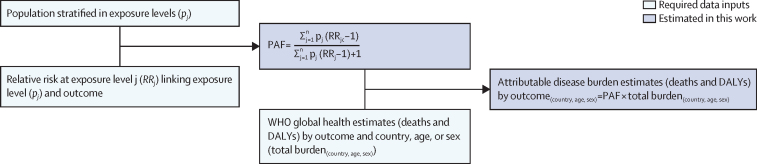
- Comparative risk assessment was used for diarrhoea and acute respiratory infections, combining modelled WASH exposures with exposure–response relationships from two updated meta-analyses; undernutrition was estimated by combining PAFs of diarrhoea attributable to unsafe WASH with PAFs of undernutrition attributable to diarrhoea, and soil-transmitted helminthiasis was fully attributed to unsafe WASH.
- Exposure was estimated using the WHO and UNICEF Joint Monitoring Programme public database, with multilevel modelling for countries lacking sufficient national data; estimates covered males and females of all ages in 183 WHO member states for 2019, representing 99·5% of the global population.
- Analyses were done in Stata version 14, with uncertainty intervals estimated by Monte Carlo simulation; the counterfactual minimum risk-exposure levels aligned as closely as possible with SDG targets 6.1 and 6.2.
Limitations
- The paper states that multiple potentially important health outcomes were excluded due to insufficient data, making underestimation of the true burden probable; the analysis is confined to domestic settings and does not include WASH-attributable burden in schools, health-care facilities, workplaces, detention centres, refugee camps, markets, or other public spaces.
- The paper states that for diarrhoea and acute respiratory infections, most underlying studies were open-label trials with subjective outcomes, risking overestimation of effectiveness, and transportability of tightly controlled intervention results to population-level WASH changes remains uncertain; for undernutrition, the two-step approach captured only the pathway through diarrhoea, and for soil-transmitted helminthiasis, complete attribution assumes all burden could be prevented through safe WASH.
- The paper states that exposure classification relies on nationally representative survey and administrative data that may not fully capture safely managed services, with gaps for higher service levels and some populous countries; adjustments introduce uncertainty and do not adequately account for all aspects such as priority chemicals, wastewater treatment extent, or non-sewered safely managed sanitation. The text also makes evident that the same PAFs were assumed for males and females and across age groups despite documented differences in WASH experiences, and that estimates reflect current climate conditions rather than possible climate-change effects.
Model-written summary. Check it against the paper before relying on it.
Integrity signals
Registry
Cites
Statistics
Figures
Verification
Claims the paper makes
22 Valid · 6 Not valid · 10 Not checked · 92 Own results and interpretations
The cited sources that could be checked couldn’t confirm or dispute this claim.
In the paper
“GBD 20192 used high-quality piped water that is boiled or filtered at point of use as the minimum risk-exposure level for drinking water.”
§ Burden of disease attributable to unsafe drinking water, sanitation, and hygiene in domestic settings: a global analysis for selected adverse health outcomes > Discussion
What the sources say
- Could not verifycites [2] GBD 2019 Risk Factors Collaborators Global burden of 87 risk factors in 204 countries and territories, 1990–2019: a systematic analysis for the Global Burden of Disease Study 2019 Lancet 396 2020 1223 1249 33069327 PMC7566194 sourceExperimental — accuracy not yet measured
The Methods section (‘Determining the TMREL’; page unavailable) explains how GBD 2019 set minimum-risk exposure levels generally, and the risk table lists ‘unsafe water source.’ Neither specifies a drinking-water minimum of high-quality piped water boiled or filtered at point of use. Searches for that description, ‘piped water,’ and ‘boiled’ found no supporting passage in our copy. (LLM, conf=0.74)
plain- Asserted: passes — The authors put it forward as true.
- Checkable: passes — It can be checked against evidence.
- Load-bearing: passes — The paper’s conclusions depend on it.
- Based: passes — The paper gives a reason why it holds.
- Could not verify
Every source the paper cites for this claim was checked and supports it.
In the paper
“Undernutrition can be a consequence of repeated bouts of diarrhoea.5, 13”
§ Burden of disease attributable to unsafe drinking water, sanitation, and hygiene in domestic settings: a global analysis for selected adverse health outcomes > Methods > Undernutrition
What the sources say
- Supportedcites [5] Checkley W Buckley G Gilman RH Multi-country analysis of the effects of diarrhoea on childhood stunting Int J Epidemiol 37 2008 816 830 18567626 PMC2734063 source
The Discussion reports a dose-response relationship between cumulative diarrhoea episodes before age 24 months and stunting at age 24 months. It says this supports the hypothesis that a higher burden of diarrhoea adversely affects nutritional status, consistent with the claim's cautious 'can be' wording. (LLM, conf=0.91)
- Supportedcites [13] Guerrant RL DeBoer MD Moore SR Scharf RJ Lima AAM The impoverished gut—a triple burden of diarrhoea, stunting and chronic disease Nat Rev Gastroenterol Hepatol 10 2013 220 229 23229327 PMC3617052 source
The Introduction says repeated diarrhoeal illnesses progressively altered children's normal growth trajectories. The Stunting section likewise reports that repeated diarrhoeal episodes reduced growth and that heavier diarrhoeal burdens impaired catch-up growth, supporting undernutrition as a possible consequence. (LLM, conf=0.93)
plainstates a possible cause- Asserted: passes — The authors put it forward as true.
- Checkable: passes — It can be checked against evidence.
- Load-bearing: passes — The paper’s conclusions depend on it.
- Based: passes — The paper gives a reason why it holds.
- Supported
Every source the paper cites for this claim was checked and supports it.
In the paper
“Additionally, there remain many millions of people across HICs who do not have safe WASH but who are not adequately captured in official data.56”
§ Burden of disease attributable to unsafe drinking water, sanitation, and hygiene in domestic settings: a global analysis for selected adverse health outcomes > Discussion
What the sources say
- Supportedcites [56] Brown J Acey CS Anthonj C The effects of racism, social exclusion, and discrimination on achieving universal safe water and sanitation in high-income countries Lancet Glob Health 11 2023 e606 e614 36925180 source
The Current trends section states that national statistics overlook millions of people in high-income countries without access to safe water and sanitation services. It explains that surveys can miss some communities and that data on service quality are often too scarce or insufficiently detailed to capture disparities. (LLM, conf=0.95)
plain- Asserted: passes — The authors put it forward as true.
- Checkable: passes — It can be checked against evidence.
- Load-bearing: unclear — It is unclear whether the paper’s conclusions depend on it.
- Based: passes — The paper gives a reason why it holds.
- Supported
Every source the paper cites for this claim was checked and supports it.
In the paper
“As most of the 51 high-income countries (HICs) have near universal access to safely managed drinking water and sanitation services and as the available epidemiological evidence from intervention studies linking drinking water, sanitation, and disease outcomes originates mainly from LMICs,4 we do not estimate the burden of disease attributable to unsafe water and sanitation in HICs.”
§ Burden of disease attributable to unsafe drinking water, sanitation, and hygiene in domestic settings: a global analysis for selected adverse health outcomes > Methods > Study design
What the sources say
- Supportedcites [4] Wolf J Hubbard S Brauer M Effectiveness of interventions to improve drinking water, sanitation, and handwashing with soap on risk of diarrhoeal disease in children in low-income and middle-income settings: a systematic review and meta-analysis Lancet 400 2022 48 59 35780792 PMC9251635 source
The Methods (page unavailable) say the review included drinking-water and sanitation intervention studies from LMIC households, with an exception for low-income settings in high-income countries. This supports the claim that the intervention evidence considered by the review comes mainly from LMICs. (LLM, conf=0.88)
plainstates an association- Asserted: passes — The authors put it forward as true.
- Checkable: passes — It can be checked against evidence.
- Load-bearing: passes — The paper’s conclusions depend on it.
- Based: passes — The paper gives a reason why it holds.
- Supported
The cited sources support only part of this claim — read each source’s verdict below.
In the paper
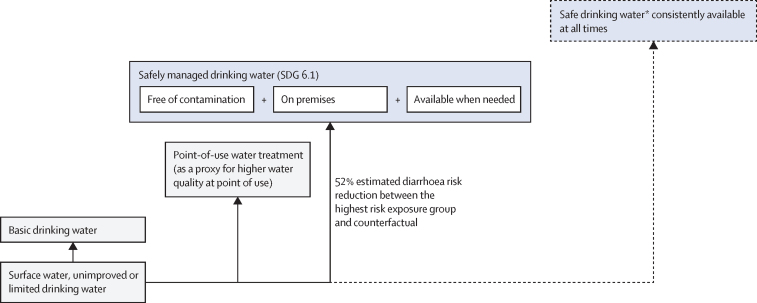
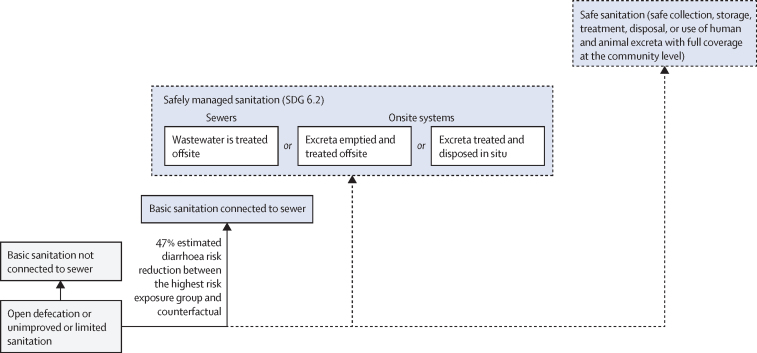
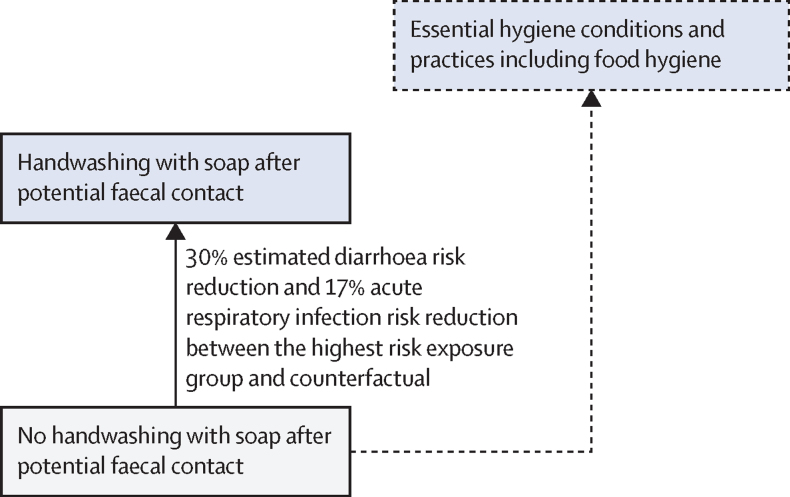
“The exposure–response relationships (figure 1, appendix 1 p 6) linking the different WASH exposure levels (Figure 2, Figure 3, Figure 4) and diarrhoea or acute respiratory infections have been estimated in two meta-analyses.4, 7”
§ Burden of disease attributable to unsafe drinking water, sanitation, and hygiene in domestic settings: a global analysis for selected adverse health outcomes > Methods > Relative risks linking exposure and health outcome (RRj)
What the sources say
- Supportedcites [4] Wolf J Hubbard S Brauer M Effectiveness of interventions to improve drinking water, sanitation, and handwashing with soap on risk of diarrhoeal disease in children in low-income and middle-income settings: a systematic review and meta-analysis Lancet 400 2022 48 59 35780792 PMC9251635 source
The Introduction (Research in context) says this meta-analysis provides updated exposure–response relationships between levels of WASH service and diarrhoea. The Methods (Data analysis) describe analyses by WASH exposure scenario. This source supports the diarrhoea part of the sentence; the acute respiratory infection part is attributed to the other citation. (LLM, conf=0.90)
- Partly supportedcites [7] Ross I Bick S Ayieko P Effectiveness of handwashing with soap for preventing acute respiratory infections in low- and middle-income countries—a systematic review and meta-analysis Lancet 401 2023 1681 1690 37121242 sourceExperimental — accuracy not yet measured
The Data analysis section says the paper pooled relative risks for acute respiratory infection outcomes, supporting its role as one of the cited meta-analyses. But its comparison is handwashing-with-soap promotion versus no handwashing intervention; our copy does not estimate an exposure–response relationship across different WASH exposure levels. Diarrhoea appears to be the subject of the other citation, not a finding attributed to this paper. (LLM, conf=0.86)
hedgedstates an association- Asserted: passes — The authors put it forward as true.
- Checkable: passes — It can be checked against evidence.
- Load-bearing: passes — The paper’s conclusions depend on it.
- Based: passes — The paper gives a reason why it holds.
- Supported
76 more claims · 9 with their cited sources checked
Create a free account to see all 130 claims and to verify the 6 references still open.
- Probably not a substantial claim. 43
- It may state two separate claims as one. 9
Self-check
Percentages, sums and reported differences re-computed from the paper’s own numbers.
Each contradiction between two passages listed here was confirmed by an independent check.
Rated minor: it would not touch a result — a value no result rests on, a p-value that stays on the same side of the significance level, or a conflict that is clerical, resolved elsewhere in the paper, or outside its own findings.
In the paper
§ Burden of disease attributable to unsafe drinking water, sanitation, and hygiene in domestic settings: a global analysis for selected adverse health outcomes > Methods > Study design
“Safely managed drinking water | 37·9% (27·1–49·9)”
§ Burden of disease attributable to unsafe drinking water, sanitation, and hygiene in domestic settings: a global analysis for selected adverse health outcomes > Results
“37·9% (95% CI 29·1–49·9) of the population in LMICs used safely managed drinking water”
Rated minor: it would not touch a result — a value no result rests on, a p-value that stays on the same side of the significance level, or a conflict that is clerical, resolved elsewhere in the paper, or outside its own findings.
In the paper
§ Burden of disease attributable to unsafe drinking water, sanitation, and hygiene in domestic settings: a global analysis for selected adverse health outcomes > Discussion
“This analysis expands upon previous minimum risk-exposure levels by using the SDG ambition of universal access to safely managed WASH services as minimum risk-exposure levels.”
§ Burden of disease attributable to unsafe drinking water, sanitation, and hygiene in domestic settings: a global analysis for selected adverse health outcomes > Methods > Population exposed (pj)
“Instead, using the latest epidemiological evidence,4 we used a counterfactual of basic sanitation connected to sewer networks (figure 3), which is not necessarily equivalent to safely managed sanitation as much of the wastewater collected in sewers is not safely treated.31”
Citations
Cites
GRADE: an emerging consensus on rating quality of evidence and strength of recommendations
Guyatt, G. H., Oxman, A. D., Vist, G. E., Kunz, R., Falck-Ytter, Y., Alonso-Coello, P., & Schünemann, H. J. (2008) · BMJ · doi:10.1136/bmj.39489.470347.ad · Cited by 23,305
Global burden of bacterial antimicrobial resistance in 2019: a systematic analysis
Murray, C. J. L., Ikuta, K. S., Sharara, F., Swetschinski, L., Robles Aguilar, G., Gray, A., Han, C., Bisignano, C., Rao, P., Wool, E., et al. (2022) · The Lancet · doi:10.1016/s0140-6736(21)02724-0 · Cited by 16,316
Lim, S. S., Vos, T., Flaxman, A. D., Danaei, G., Shibuya, K., Adair-Rohani, H., AlMazroa, M. A., Amann, M., Anderson, H. R., Andrews, K. G., et al. (2012) · The Lancet · doi:10.1016/s0140-6736(12)61766-8 · Cited by 11,805
Self-citationMurray, C. J. L., Aravkin, A. Y., Zheng, P., Abbafati, C., Abbas, K. M., Abbasi-Kangevari, M., Abd-Allah, F., Abdelalim, A., Abdollahi, M., Abdollahpour, I., et al. (2020) · The Lancet · doi:10.1016/s0140-6736(20)30752-2 · Cited by 9,854
Self-citationSelected major risk factors and global and regional burden of disease
Ezzati, M., Lopez, A. D., Rodgers, A., Vander Hoorn, S., & Murray, C. J. (2002) · The Lancet · doi:10.1016/s0140-6736(02)11403-6 · Cited by 3,594
Prüss-Ustün, A., Wolf, J., Bartram, J., Clasen, T., Cumming, O., Freeman, M. C., Gordon, B., Hunter, P. R., Medlicott, K., & Johnston, R. (2019) · International Journal of Hygiene and Environmental Health · doi:10.1016/j.ijheh.2019.05.004 · Cited by 1,308
Self-citationPrüss‐Ustün, A., Bartram, J., Clasen, T., Colford, J. M., Cumming, O., Curtis, V., Bonjour, S., Dangour, A. D., De France, J., Fewtrell, L., et al. (2014) · Tropical Medicine & International Health · doi:10.1111/tmi.12329 · Cited by 1,198
Self-citationImpacts of climate change on surface water quality in relation to drinking water production
Delpla, I., Jung, A.-V., Baures, E., Clement, M., & Thomas, O. (2009) · Environment International · doi:10.1016/j.envint.2009.07.001 · Cited by 1,070
Savović, J., Jones, H. E., Altman, D. G., Harris, R. J., Jüni, P., Pildal, J., Als-Nielsen, B., Balk, E. M., Gluud, C., Gluud, L. L., et al. (2012) · Annals of Internal Medicine · doi:10.7326/0003-4819-157-6-201209180-00537 · Cited by 1,049
Over half of known human pathogenic diseases can be aggravated by climate change
Mora, C., McKenzie, T., Gaw, I. M., Dean, J. M., von Hammerstein, H., Knudson, T. A., Setter, R. O., Smith, C. Z., Webster, K. M., Patz, J. A., et al. (2022) · Nature Climate Change · doi:10.1038/s41558-022-01426-1 · Cited by 995
Research works printed but not linked: 2
- Troeger C Colombara DV Rao PC Supplementary appendix to: global disability-adjusted life-year estimates of long-term health burden and undernutrition attributable to diarrhoeal diseases in children younger than 5 years Lancet Glob Health 6 2018 e255 e269 29433665 PMC5861379 · DOI · Paper page
- GBD 2019 Risk Factors Collaborators Global burden of 87 risk factors in 204 countries and territories, 1990–2019: a systematic analysis for the Global Burden of Disease Study 2019 Lancet 396 suppl 1 2020 1223 1249 33069327 PMC7566194
Cited by
Items 101–200 of 341
Mobolaji, J. W., & Akinwumiju, A. S. (2025) · PLoS ONE · doi:10.1371/journal.pone.0330167 · Cited by 11
Monamo, T. T., Keetile, M., & Letamo, G. (2025) · BMC Geriatrics · doi:10.1186/s12877-025-06534-z · Cited by 4
“Access to safe drinking water is essential for preventing hygiene-related diseases [22], while adequate sanitation (e.g., flush toilets versus pit latrines) is especially crucial for individuals with mobility limitations [23].”
Hu, Q., Chao, A., Wang, J., et al. (2025) · Chemical Engineering Journal · doi:10.1016/j.cej.2025.171418 · Cited by 3
Cuellar, J. E. L., Palm, R., Denkenberger, D. C., & Jehn, F. U. (2025) · Water Security · doi:10.1016/j.wasec.2025.100193 · Cited by 5
Building-integrated solar water disinfection system for reliable year-round drinking water safety
PRETORIUS, M., Jeon, I., Martínez-Fausto, M. M., Novelli, N., Arevalo, J. L. G., Ryberg, E. C., Derby, M. M., Kim, J.-H., & Dyson, A. H. (2026) · npj Clean Water · doi:10.1038/s41545-025-00539-2 · Cited by 3
Fejfar, D., Tracy, J. W., Kelly, E., Moffa, M., Bain, R., Bartram, J., Anderson, D. M., & Cronk, R. (2024) · Environmental Science Water Research & Technology · doi:10.1039/d3ew00915g · Cited by 9
Self-citationLy, A. N., McDavid, K., Craig, C., Maheia, D., Gongora, Y., Medley, A., Morey, F., Manzanero, R., Morazan, G. H., Lino, A., et al. (2024) · International Journal of Environmental Research and Public Health · doi:10.3390/ijerph21040470 · Cited by 4
“In 2019, approximately 69% of diarrheal diseases could be attributed to inadequate water, sanitation, and hygiene (WASH) [3].”
BackgroundAlidou, S., Kamassa, H. E., Lack, F. A., Ataba, E., Fleming, F. M., Sossou, E., Hemou, M., Yakpa, K., Tchalim, M., Gnossikè, P., et al. (2025) · BMJ Public Health · doi:10.1136/bmjph-2024-001304 · Cited by 5
Systems thinking for hygiene in settings with high risk of infectious disease transmission
Freeman, M. C., Crocker, J., Chipungu, J., Bagwan, J., Dione, M. M., Dreibelbis, R., Dumlao, M. C., Faruque, A., Flint-O’Kane, M., Gautam, O. P., et al. (2025) · Nature Water · doi:10.1038/s44221-025-00424-9 · Cited by 5
“…low, especially in low-and middle-income countries (LMICs), where 25% of households lacked access to hand hygiene materials in 2022 21 , and only 26.4% of the population is estimated to wash their hands after potential faecal contact 10 , roughly the same as it was a decade earlier 22 .”
InfluentialSelf-citationEnteroviruses in Water: Epidemiology, Detection and Inactivation
Morvan, C., Nekoua, M. P., Mbani, C. J., Debuysschere, C., Alidjinou, E. K., & Hober, D. (2025) · Environmental Microbiology · doi:10.1111/1462-2920.70109 · Cited by 4
Factors associated with rural-urban safe disposal of children stools in Ghana
Agyekum, M. W., Nyieku, F. E., Yeboah, S. B., & Frempong-Ainguah, F. (2024) · BMC Research Notes · doi:10.1186/s13104-024-06701-2 · Cited by 7
“The burden of children’s disease in many low-and middle-income countries is associated with poor sanitation, including unsafe disposal of children’s stool [3].”
BackgroundClimate change–WASH services–health nexus: the Indian case
Sharma, B. M., Basu, A. R., Krishnan, A., Sarkar, S. K., & Bharat, G. K. (2024) · Elsevier eBooks · doi:10.1016/b978-0-443-29240-8.00024-9 · Cited by 3
Yu, Q., Olesen, S. W., Duvallet, C., et al. (2023) · medRxiv · doi:10.1101/2023.05.24.23290486 · Cited by 3
Gallandat, K., Hutchins, C., Malembaka, E. B., Jeandron, A., Saidi, J. M., Rumedeka, B. B., Muhemeri, J. B., Bompangue, D. N., Sewa, G., Seon, A., et al. (2023) · doi:10.31219/osf.io/dpnqh · Cited by 2
Self-citationCaruso, B. A., Mink, T. L., Patrick, M., Ogutu, E. A., Dawkins, C., Bendit, O., Fatima, M., Lustig, I., Macler, A., White, J., et al. (2025) · medRxiv · doi:10.1101/2025.02.12.25322162 · Cited by 3
Self-citationVogel, M., Bergström, M., al Jahjah, R., et al. (2024) · Journal of Environmental Management · doi:10.1016/j.jenvman.2024.123554 · Cited by 2
Water, sanitation and hygiene in rural Greater Letaba Municipality, South Africa
Molewa, M. L., Barnard, T. G., & Naicker, N. (2025) · Health SA Gesondheid · doi:10.4102/hsag.v30i0.2940 · Cited by 2
Disinfection byproducts in low-income communities
Furst, K. E., & Smith, D. W. (2025) · Current Opinion in Environmental Science & Health · doi:10.1016/j.coesh.2025.100683 · Cited by 2
Lebu, S., & Cronk, R. (2026) · Environmental Science Water Research & Technology · doi:10.1039/d5ew00920k · Cited by 3
Roba, K. T., Roba, A. A., Hassen, J. Y., Thompson, G. H., Brewis, A., & Rosinger, A. Y. (2026) · Journal of the Academy of Nutrition and Dietetics · doi:10.1016/j.jand.2026.156303 · Cited by 4
Connecting the dots: the role of WASH in nutritional pathways to childhood stunting in India
Banerjee, A., Sen, S., Ali, A., & Chakma, N. (2026) · Journal of Hunger & Environmental Nutrition · doi:10.1080/19320248.2026.2625697 · Cited by 2
Air pollution in Malaysia: current understanding and future directions
Azi, A. O., Lim, H. S., & Yohanna, E. (2026) · Environmental Geochemistry and Health · doi:10.1007/s10653-026-03221-9 · Cited by 3
“The air quality monitoring across the Southeast Asia region is predominantly monitored by non-governmental bodies.”
InfluentialPeng, L., Zhang, H., Zhou, T., Wang, M., Li, Z., Hou, X., Qin, D., Yi, E., Wang, X., & Lin, L. (2026) · Journal of environmental chemical engineering · doi:10.1016/j.jece.2026.124196 · Cited by 2
Exploring the Barriers to Scaling Up Sanitation Enterprises Using Q-Methodology
Wallock, W., Narayan, A. S., & Thomson, P. (2024) · ACS ES&T Water · doi:10.1021/acsestwater.4c00274 · Cited by 2
Betera, S., Wispriyono, B., & Nunu, W. N. (2024) · BMJ Open · doi:10.1136/bmjopen-2023-082224 · Cited by 4
Aluko, O. O. (2024) · Transactions of the Royal Society of Tropical Medicine and Hygiene · doi:10.1093/trstmh/trae101 · Cited by 3
A comparative life cycle analysis of Sol-Char and anaerobic digestion sanitation systems
Lian, J. Z., Borrion, A. L., Fisher, R. P., Yaman, R., Linden, K. G., Campos, L. C., & Cucurachi, S. (2025) · The Science of The Total Environment · doi:10.1016/j.scitotenv.2025.178622 · Cited by 2
Hansen, A., Day, G. M., Wehrli, M., & Eichelberger, L. (2025) · Journal of Water and Health · doi:10.2166/wh.2025.292 · Cited by 2
Victor, C. P., Garn, J. V., Nalá, R., Manuel, J. L., Mangamela, M., McGunegill, S., Snyder, J. S., Hubbard, S., Fagnant-Sperati, C. S., Brown, J. M., et al. (2026) · Nature Water · doi:10.1038/s44221-026-00624-x · Cited by 4
“In 2022, 37.9% of the population of low-and middle-income countries and 8.8% of the population in sub-Saharan Africa were estimated to have access to safely managed drinking water 3 .”
InfluentialSelf-citationHidden toxins: The effects of water quality on pregnancy and infant health
Damania, R., & Zaveri, E. D. (2023) · BJOG An International Journal of Obstetrics & Gynaecology · doi:10.1111/1471-0528.17628 · Cited by 3
Valencio, N., Valencio, A., Carvalho, G. G., et al. (2024) · Urban Planning · doi:10.17645/up.7048 · Cited by 2
“However, lax regulations on land and water use, coupled with ineffective environmental and health institutions, can lead to adverse consequences for downstream areas, from water scarcity to disasters (Jedd & Smith, 2022; Wolf et al., 2023; World Health Organization, 2019).”
BackgroundChitosan-ricobendazole complex: Synthesis, characterization and anthelmintic activity
Блинов, А. В., Оробец, В., Kastarnova, E. S., Gvozdenko, A. A., Golik, A. B., Рехман, З. А., Вениаминовна, П. А., Askerova, A., Kuznetsov, E. I., & Nagdalian, A. A. (2024) · International Journal of Biological Macromolecules · doi:10.1016/j.ijbiomac.2024.135572 · Cited by 2
Caruso, B. A., Ballard, A. M., Sobolik, J. S., et al. (2023) · Research Square · doi:10.21203/rs.3.rs-3594151/v1 · Cited by 2
Self-citationTomoi, H., Ingumba, B. B., Simiyu, S. N., et al. (2024) · Research Square · doi:10.21203/rs.3.rs-5566267/v1 · Cited by 2
Self-citationNawaz, S., Upoma, T. A., Goshami, A., Podder, B., Akter, J., Hasan, M., Shoaib, D. M., D’Mello-Guyett, L., Kovats, S. R., Alam, M., et al. (2024) · medRxiv · doi:10.1101/2024.12.19.24319192 · Cited by 2
Hilton, S. P., An, N. H., O’Brien, L. A., Snyder, J. S., Rogers, H., Cumming, O., Mills, J. E., Gordon, B. A., Freeman, M. C., Caruso, B. A., et al. (2025) · medRxiv · doi:10.1101/2025.03.12.25323775 · Cited by 2
Self-citationMinimum material requirements for hand hygiene in community settings: A systematic reviewPreprint
O’Brien, L. A., Files, K., Snyder, J. S., Rogers, H., Cumming, O., Mills, J. E., Gordon, B. A., Freeman, M. C., Caruso, B. A., & Wolfe, M. K. (2025) · medRxiv · doi:10.1101/2025.03.12.25323858 · Cited by 2
Self-citationFreeman, M. C., Victor, C. P., Garn, J. V., Kann, R. S., Fagnant-Sperati, C. S., Kowalsky, E., Manuel, J. L., Mangamela, M., McGunegill, S., Miller-Petrie, M. K., et al. (2025) · Research Square · doi:10.21203/rs.3.rs-6697339/v1 · Cited by 6
Self-citationMamonova, I. A., Эрдниев, Л. П., Kosheleva, I. S., et al. (2024) · ЗДОРОВЬЕ НАСЕЛЕНИЯ И СРЕДА ОБИТАНИЯ - ЗНиСО / PUBLIC HEALTH AND LIFE ENVIRONMENT · doi:10.35627/2219-5238/2024-32-1-49-57 · Cited by 1
Melkamu, M., Sitotaw, B., & Tadesse, B. (2024) · Journal of Water Sanitation and Hygiene for Development · doi:10.2166/washdev.2024.182 · Cited by 1
Habib, M. A., Cocciolo, S., Raihan, M. M. A., Bhattacharya, P., & Tompsett, A. (2024) · npj Clean Water · doi:10.1038/s41545-024-00401-x · Cited by 2
“4milliondeathsand 74 million disability-adjusted life-years (DALYs) lost due to inadequate water, sanitation, and hygiene (WASH) 2 .”
A Spatially Explicit Model of the Dynamics of Opisthorchis viverrini Spread
Trevisin, C., Kamber, L., Mari, L., Chitnis, N., Perez‐Saez, J., Sayasone, S., Odermatt, P., Gatto, M., & Rinaldo, A. (2024) · Ecohydrology · doi:10.1002/eco.2754 · Cited by 2
Alemu, Z. A., Girmay, A. M., Collyer, B. S., Weldetinsae, A., Weldegebriel, M. G., Forbes, K., Dinssa, D. A., Adugna, E. A., Kenea, M. A., Mengistu, B., et al. (2025) · Journal of Water Sanitation and Hygiene for Development · doi:10.2166/washdev.2025.293 · Cited by 1
Ly, A. N., Craig, C., Maheia, D., Gongora, Y., Romero, V., Blanco, R., Lino, A., McDavid, K., Stewart, A., Trinies, V., et al. (2025) · International Journal of Environmental Research and Public Health · doi:10.3390/ijerph22060835 · Cited by 3
Jain, A., Kumar, A., Kim, R., & Subramanian, S. V. (2025) · Global Health Action · doi:10.1080/16549716.2025.2511351 · Cited by 5
“Understanding toilet coverage gaps throughout India is crucial given the immense public health implications of inadequate access to safe sanitation in terms of both physical and mental health [10–15].”
Wu, Z., Xia, F., & Lin, R. (2025) · ACS ES&T Water · doi:10.1021/acsestwater.5c00195 · Cited by 2
Lázaro-Salazar, A. S., Ramos, M. T. G., Fargher-Navarro, L. F., & Hoogesteijn-Reul, A. L. (2025) · Frontiers in Education · doi:10.3389/feduc.2025.1470636 · Cited by 1
Lekha, P. P. S., Azeez, E. P. A., Lavanya, B. L., Kalyani, V., Mathew, M., Prasath, S. G., Joshwin, J. L., & Nithyasree, U. (2025) · Health Science Reports · doi:10.1002/hsr2.70811 · Cited by 2
D’Mello-Guyett, L., Sylvester, R. E., Huston, A., Levira, B., Falconer, J., Butterworth, J., Ngai, T. K., Reed, B., Luseka, E., Grisaffi, C., et al. (2025) · PLOS Water · doi:10.1371/journal.pwat.0000411 · Cited by 4
“Globally, 1·4 (95% CI 1·3–1·5) million deaths and 74 (68–80) million disability-adjusted life-years (DALYs) could have been prevented by access to safe WASH services in 2019 [6], disproportionately this has affected rural, poor, and resource-limited communities.”
Self-citationClimate change, hygiene, and health: A research roadmap for climate adaptation
Gerard, J., D’Mello-Guyett, L., Falconer, J., Heylen, C., Kovats, S. R., & Dreibelbis, R. (2026) · PLOS Climate · doi:10.1371/journal.pclm.0000907 · Cited by 3
Okafor, U. C., Eze, C. D., Iloduba, U. S., & Nwachineke, C. E. (2025) · Industrial and Domestic Waste Management · doi:10.53623/idwm.v5i2.727 · Cited by 2
“According to the World Health Organization, approximately 3.2% of global mortality (1.8 million deaths) and 4.2% of Disability-Adjusted Life Years (DALYs) (61.9 million) were directly associated with unsafe water, poor sanitation, and inadequate hygiene [6].”
InfluentialO'Donovan, J., O’Dwyer, J., McKeown, M., & Potito, A. P. (2025) · One Health · doi:10.1016/j.onehlt.2025.101184 · Cited by 1
“In 2019, it was estimated that insufficient water, sanitation and hygiene (WASH) could be attributable to 1.4 million deaths and 74 million disability-adjusted life years (DALYs) globally [8].”
InfluentialHu, J., del Pozo, D. F., Daneshgar, S., et al. (2025) · Water Research · doi:10.1016/j.watres.2025.124522 · Cited by 1
Junaid, K., Kiran, T., Gupta, M., Kishore, K., & Siwatch, S. (2025) · Journal of Health, Population and Nutrition · doi:10.1186/s41043-025-00945-9 · Cited by 1
“This observed disparity aligns with previous studies assessing the burden of water, sanitation, and hygiene-attributable diseases, which underscored higher mortality rates in low-income countries compared to high-income countries [49].”
Human settlement environment and childhood diarrhea in low- and middle-income countries
Yu, W., Geng, M., Li, G., Cao, Y., Lv, X., Zhao, Q., & Yan, J. (2025) · Environmental Research · doi:10.1016/j.envres.2025.123103 · Cited by 3
Making a Planetary Health Case for Whole Person Health
Vatovec, C. M. (2025) · Global Advances in Integrative Medicine and Health · doi:10.1177/27536130251388470 · Cited by 4
“11 Likewise, water contaminated with toxic metals (eg, lead), persistent organic chemicals (eg, per-and poly fl uoroalkyl substances), micro-plastics, pharmaceuticals, and other hazards contribute to a variety of illnesses including neurologic and metabolic disorders.”
Building Sustainable Business Models in the Textile Industry with a Circular Economy Approach
Sharma, A., Raheja, S., Mishra, V., et al. (2025) · Springer eBooks · doi:10.1007/978-3-032-00437-6_8 · Cited by 1
Batikawai, S. M., Osborne, N. J., Do, P. C., Vosataki, T., Deo, V., & Reid, S. A. (2025) · BMC Public Health · doi:10.1186/s12889-025-24826-2 · Cited by 2
“These findings align with the recent WHO evidence establishing the causal relationship between unimproved water, sanitation, and diarrheal disease burden [13, 35].”
Izudi, J., Muchiri, E., Musyoka, D. M., et al. (2025) · BMC Public Health · doi:10.1186/s12889-025-24951-y · Cited by 1
“Most of the diarrheal disease burden is attributed to inadequate Water, Sanita-tion, and Hygiene (WASH), with estimates showing that diarrheal disease accounts for up to 55 million Disability Adjusted Life Years [4].”
Myers, J., Tembe, É., Hutchings, P., Bartram, J., & Evans, B. (2025) · International Journal of Hygiene and Environmental Health · doi:10.1016/j.ijheh.2025.114701 · Cited by 3
Self-citationRoy, C., Sati, V. P., Sharma, M., Banerjee, S., & Kalbalia, P. (2025) · Discover Public Health · doi:10.1186/s12982-025-01205-1 · Cited by 1
“A study performed by Wolf et al. [8] unveiled thatsafe water, sanitation, and hygiene (WASH) services can prevent up to 1.4 million fatalities and 74 million disability-adjusted life-years (DALYs).”
InfluentialYohannes, L., Genet, M., Deme, S., Yirdaw, A. A., & Melaku, M. S. (2025) · BMC Public Health · doi:10.1186/s12889-025-25296-2 · Cited by 2
“In 2019, inadequate water, sanitation, and hygiene (WASH) services contributed to an estimated 2.5% of global deaths and 2.9% of disability-adjusted life years (DALYs) [4], with unsafe sanitation alone causing around 564,000 deaths primarily from diarrheal disease [5].”
InfluentialBetera, S., Nyamandi, V., & Nunu, W. N. (2025) · INQUIRY The Journal of Health Care Organization Provision and Financing · doi:10.1177/00469580251401469 · Cited by 2
Strengthening immunization and health systems to counter effects of climate change
Bhutta, Z. A., Wolff, C., Chopra, M., Checchi, F., Johri, M., Maphosa, T., O’Brien, K. L., & Lemango, E. T. (2025) · Vaccine · doi:10.1016/j.vaccine.2025.128168 · Cited by 1
Yang, X., Fang, M., ZHANG, L., Li, Y., Yichong, C., Jin, D., & Wang, L. (2026) · Dyes and Pigments · doi:10.1016/j.dyepig.2025.113548 · Cited by 2
Xu, Z., Fan, G., Li, Z., Zheng, H., Chen, J., Jia, S., & Zhang, R. (2026) · Journal of Environmental Management · doi:10.1016/j.jenvman.2025.128473 · Cited by 1
Bisimwa, J., Endres, K., Sanvura, P., Williams, C., Thomas, E., Perin, J., Bisimwa, L., Mwishingo, A., Cikomola, C., Bengehya, J., et al. (2026) · Tropical Medicine and Health · doi:10.1186/s41182-026-00901-1 · Cited by 1
“Despite global improvements in water, sanitation and hygiene (WASH), diarrhea remains a significant contributor to morbidity and mortality, and is estimated to contribute to 54 million disability-adjusted life-years and over 1 million deaths each year [1, 2].”
Juma, E. A., Achu, D., Barry, A., Beshah, A. M., Adjami, A. A. G., Kello, A. B., Ebeja, A. K., Jatta, B., Bakajika, D. K., Nduba, D. Y., et al. (2026) · BMC Proceedings · doi:10.1186/s12919-025-00357-x · Cited by 3
Ando, H., & Reynolds, K. A. (2026) · Water Research · doi:10.1016/j.watres.2026.125488 · Cited by 1
Water, sanitation, and depressive symptoms in Indonesia: The mediating role of life satisfaction
Fajri, M., Idaiani, S., Blakemore, A., Gibson, J., Susanti, H., Brooks, H. L., Bee, P., & Maharani, A. (2026) · PLoS ONE · doi:10.1371/journal.pone.0341886 · Cited by 2
“First, unsafe water compromises physical health by increasing the risk of diarrhoea, acute respiratory infections and undernutrition [64], which may indirectly contribute to depression through reduced energy, chronic illness and feelings of hopelessness.”
Owusu, B. A., Salifu, Y., Swaray, S. M., Lasong, J., Alhassan, A., & Salifu, T. (2026) · Frontiers in Public Health · doi:10.3389/fpubh.2026.1712677 · Cited by 1
Howard, G., Beevers, L. C., Charles, K., & Nijhawan, A. (2026) · Current Environmental Health Reports · doi:10.1007/s40572-026-00524-y · Cited by 9
“This contributes substantially to the ongoing high burden of disease attributed to inadequate water, sanitation and hygiene [3, 4]. will be likely to increase the persistence of key waterborne pathogens thus increasing the challenges of ensuring water safety [14].”
Sun, M., Bao, B., Ding, W., et al. (2026) · Journal of Hazardous Materials · doi:10.1016/j.jhazmat.2026.141450 · Cited by 1
Kohlitz, J., Geremew, A., Okurut, K., Poudel, P., Ghimire, A., Nijhawan, A., valenzuela, A. M., Falletta, J., Sherpa, A. M., Willetts, J., et al. (2026) · ACS ES&T Water · doi:10.1021/acsestwater.5c01055 · Cited by 9
Seymour, J. R. (2026) · Microbiology Australia · doi:10.1071/ma26101 · Cited by 1
Cost-effectiveness and benefit-cost analyses of promoting handwashing with soap: A systematic review
Ross, I., Bath, D., Wells, J., Dreibelbis, R., Ejemot-Nwadiaro, R. I., Mills, J. E., Greco, G., Pitt, C., & Cumming, O. (2026) · PLoS Medicine · doi:10.1371/journal.pmed.1004982 · Cited by 1
Self-citationThomas, E. D., Dione, M., Sow, A., Islam, M., Cruz, N. D. L., Li, L., Ouedraogo, H., Dearden, K. A., & Kwong, L. H. (2026) · One Health · doi:10.1016/j.onehlt.2026.101405 · Cited by 1
“Poorly managed human and animal feces in the domestic environment contribute to the burden of enteric infections for young children [1 – 3].”
Bick, S., Ezezew, A., Opondo, C., Leurent, B., Argaw, W., Cumming, O., Allen, E., & Dreibelbis, R. (2026) · Journal of Epidemiology & Community Health · doi:10.1136/jech-2025-225148 · Cited by 1
Self-citationChoi, G., & Unno, T. (2026) · Applied Biological Chemistry · doi:10.1186/s13765-026-01095-0 · Cited by 1
Luo, Z.-N., Zhang, T., He, H., Pan, R.-J., Zeng, Y.-Q., Peng, Z., Shi, J., Fu, Q., Pan, M., Zeng, C., et al. (2026) · Journal of Hazardous Materials · doi:10.1016/j.jhazmat.2026.142500 · Cited by 2
Mazingisa, A. V., Wiysonge, C. S., & Kgware, M. (2026) · Sustainability · doi:10.3390/su18115333 · Cited by 2
Nawaz, S., Upoma, T. A., Goshami, A., Podder, B., Akter, J., Hasan, M., Shoaib, D. M., D’Mello-Guyett, L., Kovats, S. R., Alam, M., et al. (2026) · PLOS Climate · doi:10.1371/journal.pclm.0000922 · Cited by 5
Self-powered floating capsule for decentralized water detection and disinfection
Park, M. J., Lee, D.-M., Huo, Z., Cho, S., Pang, F., Kwak, S. S., Kim, Y., Bowen, C., Xie, M., & Kim, S.-W. (2026) · Nature Water · doi:10.1038/s44221-026-00655-4 · Cited by 5
Resource systems and health: A water–energy–food–health nexus framework for hypertension prediction
Albatayneh, R., Mohtar, R. H., Ashkanani, Z., Daher, B. T., Abu-idhail, J., Salahat, M. A., & Al-Delaimy, W. K. (2026) · Energy Nexus · doi:10.1016/j.nexus.2026.100751 · Cited by 1
Kim, D. Y., Kim, H., Park, J., Yeo, D., Cho, J. K., Js, K., Kang, J., Kim, S., Hwang, H. S., & Yon, D. K. (2026) · Journal of Travel Medicine · doi:10.1093/jtm/taag071 · Cited by 2
WASH and health: from global estimates to whys and hows
Heller, L., & Carneiro, M. (2023) · The Lancet · doi:10.1016/s0140-6736(23)00765-1 · Cited by 1
Holme, F., Kellogg, R., Andu, S., et al. (2024) · Journal of Public Health Management and Practice · doi:10.1097/phh.0000000000002028 · Cited by 1
Provision of Clean Water as a Factor of Epidemiological Transition in Sub-Saharan Africa
Agafoshin, M. M., Gorokhov, S. A., & Dmitriev, R. V. (2024) · Asia and Africa today · doi:10.31857/s0321507524100057 · Cited by 3
Oduro, J. K., & Oduro, M. A. (2025) · Health & Social Care in the Community · doi:10.1155/hsc/5527044 · Cited by 1
“Tis fnding aligns with Wolf et al. study [33], which emphasises the importance of clean water in reducing disease burden and improving quality of life [12].”
MacLeod, C., Mills, J. E., Caruso, B. A., Chase, C., Chidziwisano, K., Chipungu, J., Dreibelbis, R., Ejemot-Nwadiaro, R. I., Gordon, B. A., Thomas, A. M., et al. (2025) · PLOS Water · doi:10.1371/journal.pwat.0000344 · Cited by 7
Self-citationFeodrippe, A. L. O., Aun, M. V., Gagete, E., et al. (2025) · Einstein (São Paulo) · doi:10.31744/einstein_journal/2025rc1534 · Cited by 1
Brouwer, A. F., Zahid, M. H., Eisenberg, M. C., et al. (2022) · medRxiv · doi:10.1101/2022.11.15.22282349 · Cited by 1
Self-citationBrouwer, A. F., Kraay, A. N. M., Zahid, M. H., et al. (2024) · medRxiv · doi:10.1101/2024.03.09.24304020 · Cited by 1
Self-citationEditorial Catalysts: Catalysis for the Removal of Water Pollutants
Palomares, A. E. (2024) · Catalysts · doi:10.3390/catal14040229 · Cited by 1
Morales, D. O., Ramos, K., Jauregui, E., Dueñas, M., Rumaldo, N., Gogia, S., Lecca, L. W., & Shin, S. S. (2024) · medRxiv · doi:10.1101/2024.07.10.24309904 · Cited by 2
Bak, C., Hotopf, I., Wol, Z., & Majorin, F. (2025) · medRxiv · doi:10.1101/2025.02.14.25322287 · Cited by 1
Snyder, J. S., Canda, E., Honeycutt, J. C., O’Brien, L. A., Rogers, H., Cumming, O., Mills, J. E., Gordon, B. A., Wolfe, M. K., Caruso, B. A., et al. (2025) · medRxiv · doi:10.1101/2025.03.11.25323746 · Cited by 1
Self-citationKohlitz, J., Geremew, A., Okurut, K., et al. (2025) · doi:10.12688/verixiv.963.1 · Cited by 1
MacLeod, C., Panulo, M., Wells, J., White, B., Ross, I., Morse, T., Dreibelbis, R., & Chidziwisano, K. (2025) · medRxiv · doi:10.1101/2025.06.12.25329256 · Cited by 3
Chidziwisano, K., MacLeod, C., Panulo, M., White, B., Wells, J., Ross, I., Morse, T., & Dreibelbis, R. (2025) · medRxiv · doi:10.1101/2025.09.30.25336959 · Cited by 1
Metadata
- Authors
- Wolf, J., Johnston, R. B., Ambelu, A., Arnold, B. F., Bain, R., Brauer, M., Brown, J., Caruso, B. A., Clasen, T., Colford, J. M., Mills, J. E., Evans, B., Freeman, M. C., Gordon, B., Kang, G., Lanata, C. F., Medlicott, K. O., Prüss-Ustün, A., Troeger, C., Boisson, S., & Cumming, O.
- Affiliations
- World Health Organization (CH)
- Ethiopian Institute of Water Resources (ET)
- University of California, San Francisco (US)
- United Nations Children's Fund (US)
- University of British Columbia (CA)
- University of North Carolina at Chapel Hill (US)
- Emory University (US)
- University of California, Berkeley (US)
- University of Leeds (GB)
- Christian Medical College, Vellore (IN)
- Vanderbilt University (US)
- University of Washington (US)
- London School of Hygiene & Tropical Medicine (GB)
- Corresponding author
- Wolf, Jennyfer
- ORCID
- Venue
- The Lancet
- Publisher
- Elsevier BV
- Published
- 2023-06
- Volume
- 401
- Issue
- 10393
- Pages
- 2060-2071
- ISSN
- 0099-5355 (ISSN-L)
- 0140-6736
- PMC
- PMC10290941
- OpenAlex
- W4379467249
- Cited by
- 343
- References
- 58
- Citations by year
- 2026: 137 · 2025: 115 · 2024: 73 · 2023: 17
- FWCI
- 59.81
- Type
- journal article
- Language
- en
- Open access
- hybrid
- doi.org
- Licence
- cc-by
- www.elsevier.com/tdm/userlicense/1.0/ (tdm)
- www.elsevier.com/legal/tdmrep-license (tdm)
- creativecommons.org/licenses/by/3.0/igo/ (vor)
- Locations
- The Lancet (publishedVersion, cc-by)
- PubMed Central (publishedVersion, cc-by)
- PubMed (publishedVersion)
- White Rose Research Online (University of Leeds, The University of Sheffield, University of York) (acceptedVersion)
- LSHTM Research Online (London School of Hygiene and Tropical Medicine) (acceptedVersion)
- Carolina Digital Repository (University of North Carolina at Chapel Hill) (submittedVersion, cc-by)
- eScholarship (California Digital Library) (submittedVersion, cc-by)
- UNC Libraries
- Funders
- World Health Organization
- Institute for Health Metrics and Evaluation
- Foreign Commonwealth & Development Office
- Topics
- Health Sciences › Nursing › Nutrition and Dietetics › Child Nutrition and Water Access
- Social Sciences › Health › Occupational Health and Global Justice
- Physical Sciences › Environmental Science › Health, Toxicology and Mutagenesis › Public Health and Environmental Issues
- Keywords
- diarrhea, acute respiratory infections, malnutrition, soil-transmitted helminthiasis, disability-adjusted life years, population attributable fraction, Sustainable Development Goals, global health burden
- MeSH terms
- Global Burden of Disease, Diarrhea, Helminthiasis, Humans, Hygiene, Respiratory Tract Infections, Sanitation, Global Health, Outcome Assessment, Health Care, Cost of Illness, Malnutrition, Drinking Water
About these checks
Registry, retraction, Cites and statistics results are computed, not judged, with one exception: a printed reference that no index lists is read once by a model before it counts as a citation error. Claims are extracted by a model and kept only when their quote appears verbatim in the text; each cited source is then checked, with a model’s help, for whether it says what the claim relies on. Those verdicts can be wrong — read the claim’s quote and the cited source before relying on one.
The claim verdicts this report counts are experimental: their accuracy is not yet measured.
A language model drew the claims from the paper on 2026-10-10, under version 3 of the claim definition (model deepseek-v4.1-flash, prompt extract-v3).
A second model labelled each claim on 2026-10-10 (model jev-1.13-20260917, definition revision gold-guideline-v0.2).
Cited sources are checked with a language model’s help (gpt-6-sol).
Statistics and arithmetic are recomputed, not judged.
Confidence bands are shown only for fields calibrated on our annotated test set. None is calibrated yet, so no band is shown.
What counts as a claim ›How we measure confidence ›How we check this ›
Are you an author, or do you see a problem with this page? Request a review
Data sources
Bibliographic data: Semantic Scholar, OpenAlex, Crossref.
Contains information from the Semantic Scholar Academic Graph Datasets, made available under the ODC Attribution License (ODC-BY 1.0).
Semantic Scholar’s data is described in: Kinney, R., et al. (2023). The Semantic Scholar Open Data Platform. arXiv:2301.10140.
