

Burden of disease attributable to unsafe drinking water, sanitation, and hygiene in domestic settings: a global analysis for selected adverse health outcomes
Open accessThe DOI matches its Crossref record; 55 of the 58 references it cites were found in a registry or an index; 36 of the 49 sources its claims cite were checked for support.
Abstract
BACKGROUND: Assessments of disease burden are important to inform national, regional, and global strategies and to guide investment. We aimed to estimate the drinking water, sanitation, and hygiene (WASH)-attributable burden of disease for diarrhoea, acute respiratory infections, undernutrition, and soil-transmitted helminthiasis, using the WASH service levels used to monitor the UN Sustainable Development Goals (SDGs) as counterfactual minimum risk-exposure levels. METHODS: We assessed the WASH-attributable disease burden of the four health outcomes overall and disaggregated by region, age, and sex for the year 2019. We calculated WASH-attributable fractions of diarrhoea and acute respiratory infections by country using modelled WASH exposures and exposure-response relationships from two updated meta-analyses. We used the WHO and UNICEF Joint Monitoring Programme for Water Supply, Sanitation and Hygiene public database to estimate population exposure to different WASH service levels. WASH-attributable undernutrition was estimated by combining the population attributable fractions (PAF) of diarrhoea caused by unsafe WASH and the PAF of undernutrition caused by diarrhoea. Soil-transmitted helminthiasis was fully attributed to unsafe WASH. FINDINGS: We estimate that 1·4 (95% CI 1·3-1·5) million deaths and 74 (68-80) million disability-adjusted life-years (DALYs) could have been prevented by safe WASH in 2019 across the four designated outcomes, representing 2·5% of global deaths and 2·9% of global DALYs from all causes. The proportion of diarrhoea that is attributable to unsafe WASH is 0·69 (0·65-0·72), 0·14 (0·13-0·17) for acute respiratory infections, and 0·10 (0·09-0·10) for undernutrition, and we assume that the entire disease burden from soil-transmitted helminthiasis was attributable to unsafe WASH. INTERPRETATION: WASH-attributable burden of disease estimates based on the levels of service established under the SDG framework show that progress towards the internationally agreed goal of safely managed WASH services for all would yield major public-health returns. FUNDING: WHO and Foreign, Commonwealth & Development Office.
Overview
CoChat Summary
TL;DR
Unsafe drinking water, sanitation, and hygiene (WASH) in domestic settings was estimated to account for 1·4 million preventable deaths and 74 million DALYs globally in 2019 across diarrhoea, acute respiratory infections, undernutrition, and soil-transmitted helminthiasis. The analysis uses SDG-aligned safely managed WASH service levels as counterfactual minimum risk-exposure levels and finds the largest burden from diarrhoea.
Key findings
- Across the four outcomes, unsafe WASH was attributable to 1 401 000 deaths (95% CI 1 283 000–1 542 000) and 73 935 000 DALYs (68 248 000–80 186 000) in 2019, representing 2·5% of global deaths and 2·9% of global DALYs from all causes.
- WASH-attributable PAFs were 0·69 (0·65–0·72) for diarrhoea, 0·14 (0·13–0·17) for acute respiratory infections, and 0·10 (0·09–0·10) for undernutrition; soil-transmitted helminthiasis was fully attributed to unsafe WASH (PAF 1·0).
- Diarrhoea accounted for the majority: 1 035 000 deaths (929 000–1 160 000) and 54 590 000 DALYs (50 033 000–59 562 000). Acute respiratory infections accounted for 356 000 deaths (320 000–405 000) and 16 578 000 DALYs (14 257 000–19 481 000).
- Burden varied by income group: 270 000 deaths in LICs, 975 000 in LMICs, 112 000 in UMICs, and 44 000 in HICs, though deaths from unsafe water and sanitation were not estimated for HICs.
Methods
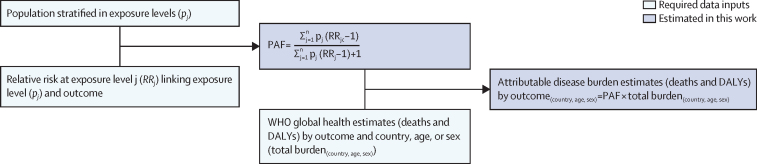
- Comparative risk assessment was used for diarrhoea and acute respiratory infections, combining modelled WASH exposures with exposure–response relationships from two updated meta-analyses; undernutrition was estimated by combining PAFs of diarrhoea attributable to unsafe WASH with PAFs of undernutrition attributable to diarrhoea, and soil-transmitted helminthiasis was fully attributed to unsafe WASH.
- Exposure was estimated using the WHO and UNICEF Joint Monitoring Programme public database, with multilevel modelling for countries lacking sufficient national data; estimates covered males and females of all ages in 183 WHO member states for 2019, representing 99·5% of the global population.
- Analyses were done in Stata version 14, with uncertainty intervals estimated by Monte Carlo simulation; the counterfactual minimum risk-exposure levels aligned as closely as possible with SDG targets 6.1 and 6.2.
Limitations
- The paper states that multiple potentially important health outcomes were excluded due to insufficient data, making underestimation of the true burden probable; the analysis is confined to domestic settings and does not include WASH-attributable burden in schools, health-care facilities, workplaces, detention centres, refugee camps, markets, or other public spaces.
- The paper states that for diarrhoea and acute respiratory infections, most underlying studies were open-label trials with subjective outcomes, risking overestimation of effectiveness, and transportability of tightly controlled intervention results to population-level WASH changes remains uncertain; for undernutrition, the two-step approach captured only the pathway through diarrhoea, and for soil-transmitted helminthiasis, complete attribution assumes all burden could be prevented through safe WASH.
- The paper states that exposure classification relies on nationally representative survey and administrative data that may not fully capture safely managed services, with gaps for higher service levels and some populous countries; adjustments introduce uncertainty and do not adequately account for all aspects such as priority chemicals, wastewater treatment extent, or non-sewered safely managed sanitation. The text also makes evident that the same PAFs were assumed for males and females and across age groups despite documented differences in WASH experiences, and that estimates reflect current climate conditions rather than possible climate-change effects.
Model-written summary. Check it against the paper before relying on it.
Integrity signals
Registry
Cites
Statistics
Figures
Verification
Claims the paper makes
22 Valid · 6 Not valid · 10 Not checked · 92 Own results and interpretations
The cited sources that could be checked couldn’t confirm or dispute this claim.
In the paper
“GBD 20192 used high-quality piped water that is boiled or filtered at point of use as the minimum risk-exposure level for drinking water.”
§ Burden of disease attributable to unsafe drinking water, sanitation, and hygiene in domestic settings: a global analysis for selected adverse health outcomes > Discussion
What the sources say
- Could not verifycites [2] GBD 2019 Risk Factors Collaborators Global burden of 87 risk factors in 204 countries and territories, 1990–2019: a systematic analysis for the Global Burden of Disease Study 2019 Lancet 396 2020 1223 1249 33069327 PMC7566194 sourceExperimental — accuracy not yet measured
The Methods section (‘Determining the TMREL’; page unavailable) explains how GBD 2019 set minimum-risk exposure levels generally, and the risk table lists ‘unsafe water source.’ Neither specifies a drinking-water minimum of high-quality piped water boiled or filtered at point of use. Searches for that description, ‘piped water,’ and ‘boiled’ found no supporting passage in our copy. (LLM, conf=0.74)
plain- Asserted: passes — The authors put it forward as true.
- Checkable: passes — It can be checked against evidence.
- Load-bearing: passes — The paper’s conclusions depend on it.
- Based: passes — The paper gives a reason why it holds.
- Could not verify
Every source the paper cites for this claim was checked and supports it.
In the paper
“Undernutrition can be a consequence of repeated bouts of diarrhoea.5, 13”
§ Burden of disease attributable to unsafe drinking water, sanitation, and hygiene in domestic settings: a global analysis for selected adverse health outcomes > Methods > Undernutrition
What the sources say
- Supportedcites [5] Checkley W Buckley G Gilman RH Multi-country analysis of the effects of diarrhoea on childhood stunting Int J Epidemiol 37 2008 816 830 18567626 PMC2734063 source
The Discussion reports a dose-response relationship between cumulative diarrhoea episodes before age 24 months and stunting at age 24 months. It says this supports the hypothesis that a higher burden of diarrhoea adversely affects nutritional status, consistent with the claim's cautious 'can be' wording. (LLM, conf=0.91)
- Supportedcites [13] Guerrant RL DeBoer MD Moore SR Scharf RJ Lima AAM The impoverished gut—a triple burden of diarrhoea, stunting and chronic disease Nat Rev Gastroenterol Hepatol 10 2013 220 229 23229327 PMC3617052 source
The Introduction says repeated diarrhoeal illnesses progressively altered children's normal growth trajectories. The Stunting section likewise reports that repeated diarrhoeal episodes reduced growth and that heavier diarrhoeal burdens impaired catch-up growth, supporting undernutrition as a possible consequence. (LLM, conf=0.93)
plainstates a possible cause- Asserted: passes — The authors put it forward as true.
- Checkable: passes — It can be checked against evidence.
- Load-bearing: passes — The paper’s conclusions depend on it.
- Based: passes — The paper gives a reason why it holds.
- Supported
Every source the paper cites for this claim was checked and supports it.
In the paper
“Additionally, there remain many millions of people across HICs who do not have safe WASH but who are not adequately captured in official data.56”
§ Burden of disease attributable to unsafe drinking water, sanitation, and hygiene in domestic settings: a global analysis for selected adverse health outcomes > Discussion
What the sources say
- Supportedcites [56] Brown J Acey CS Anthonj C The effects of racism, social exclusion, and discrimination on achieving universal safe water and sanitation in high-income countries Lancet Glob Health 11 2023 e606 e614 36925180 source
The Current trends section states that national statistics overlook millions of people in high-income countries without access to safe water and sanitation services. It explains that surveys can miss some communities and that data on service quality are often too scarce or insufficiently detailed to capture disparities. (LLM, conf=0.95)
plain- Asserted: passes — The authors put it forward as true.
- Checkable: passes — It can be checked against evidence.
- Load-bearing: unclear — It is unclear whether the paper’s conclusions depend on it.
- Based: passes — The paper gives a reason why it holds.
- Supported
Every source the paper cites for this claim was checked and supports it.
In the paper
“As most of the 51 high-income countries (HICs) have near universal access to safely managed drinking water and sanitation services and as the available epidemiological evidence from intervention studies linking drinking water, sanitation, and disease outcomes originates mainly from LMICs,4 we do not estimate the burden of disease attributable to unsafe water and sanitation in HICs.”
§ Burden of disease attributable to unsafe drinking water, sanitation, and hygiene in domestic settings: a global analysis for selected adverse health outcomes > Methods > Study design
What the sources say
- Supportedcites [4] Wolf J Hubbard S Brauer M Effectiveness of interventions to improve drinking water, sanitation, and handwashing with soap on risk of diarrhoeal disease in children in low-income and middle-income settings: a systematic review and meta-analysis Lancet 400 2022 48 59 35780792 PMC9251635 source
The Methods (page unavailable) say the review included drinking-water and sanitation intervention studies from LMIC households, with an exception for low-income settings in high-income countries. This supports the claim that the intervention evidence considered by the review comes mainly from LMICs. (LLM, conf=0.88)
plainstates an association- Asserted: passes — The authors put it forward as true.
- Checkable: passes — It can be checked against evidence.
- Load-bearing: passes — The paper’s conclusions depend on it.
- Based: passes — The paper gives a reason why it holds.
- Supported
The cited sources support only part of this claim — read each source’s verdict below.
In the paper
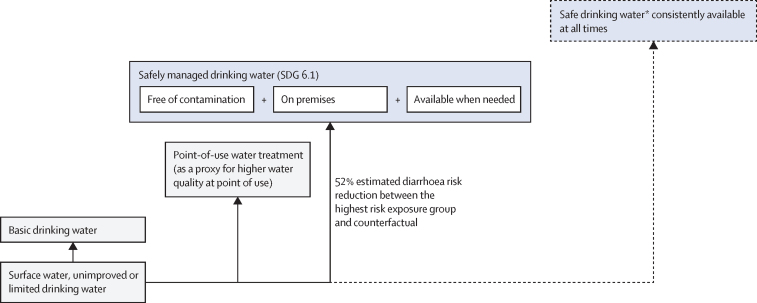
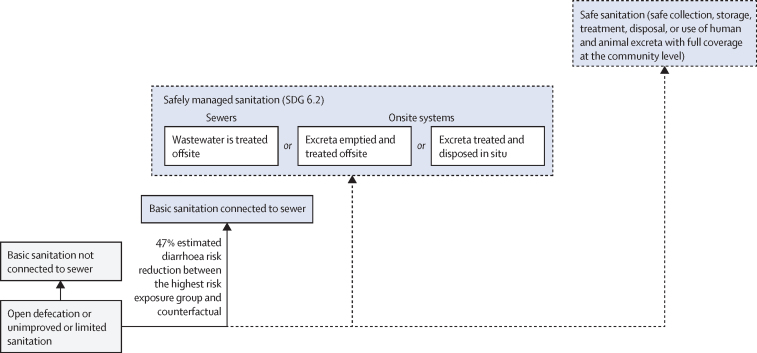
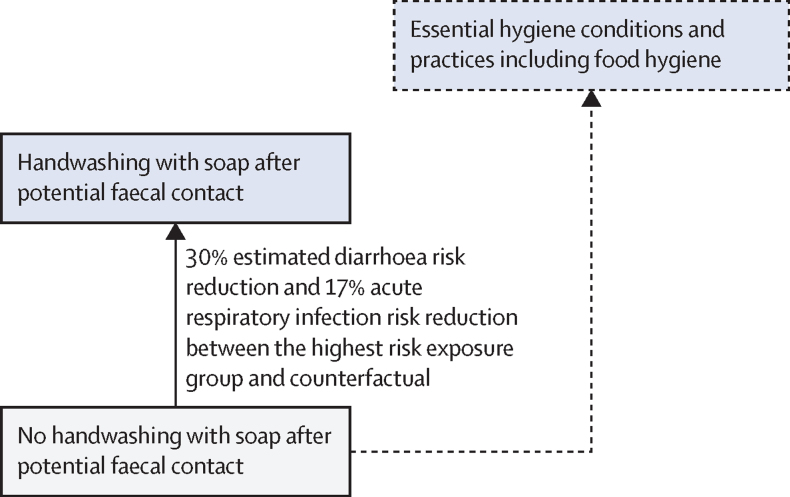
“The exposure–response relationships (figure 1, appendix 1 p 6) linking the different WASH exposure levels (Figure 2, Figure 3, Figure 4) and diarrhoea or acute respiratory infections have been estimated in two meta-analyses.4, 7”
§ Burden of disease attributable to unsafe drinking water, sanitation, and hygiene in domestic settings: a global analysis for selected adverse health outcomes > Methods > Relative risks linking exposure and health outcome (RRj)
What the sources say
- Supportedcites [4] Wolf J Hubbard S Brauer M Effectiveness of interventions to improve drinking water, sanitation, and handwashing with soap on risk of diarrhoeal disease in children in low-income and middle-income settings: a systematic review and meta-analysis Lancet 400 2022 48 59 35780792 PMC9251635 source
The Introduction (Research in context) says this meta-analysis provides updated exposure–response relationships between levels of WASH service and diarrhoea. The Methods (Data analysis) describe analyses by WASH exposure scenario. This source supports the diarrhoea part of the sentence; the acute respiratory infection part is attributed to the other citation. (LLM, conf=0.90)
- Partly supportedcites [7] Ross I Bick S Ayieko P Effectiveness of handwashing with soap for preventing acute respiratory infections in low- and middle-income countries—a systematic review and meta-analysis Lancet 401 2023 1681 1690 37121242 sourceExperimental — accuracy not yet measured
The Data analysis section says the paper pooled relative risks for acute respiratory infection outcomes, supporting its role as one of the cited meta-analyses. But its comparison is handwashing-with-soap promotion versus no handwashing intervention; our copy does not estimate an exposure–response relationship across different WASH exposure levels. Diarrhoea appears to be the subject of the other citation, not a finding attributed to this paper. (LLM, conf=0.86)
hedgedstates an association- Asserted: passes — The authors put it forward as true.
- Checkable: passes — It can be checked against evidence.
- Load-bearing: passes — The paper’s conclusions depend on it.
- Based: passes — The paper gives a reason why it holds.
- Supported
76 more claims · 9 with their cited sources checked
Create a free account to see all 130 claims and to verify the 6 references still open.
- Probably not a substantial claim. 43
- It may state two separate claims as one. 9
Self-check
Percentages, sums and reported differences re-computed from the paper’s own numbers.
Each contradiction between two passages listed here was confirmed by an independent check.
Rated minor: it would not touch a result — a value no result rests on, a p-value that stays on the same side of the significance level, or a conflict that is clerical, resolved elsewhere in the paper, or outside its own findings.
In the paper
§ Burden of disease attributable to unsafe drinking water, sanitation, and hygiene in domestic settings: a global analysis for selected adverse health outcomes > Methods > Study design
“Safely managed drinking water | 37·9% (27·1–49·9)”
§ Burden of disease attributable to unsafe drinking water, sanitation, and hygiene in domestic settings: a global analysis for selected adverse health outcomes > Results
“37·9% (95% CI 29·1–49·9) of the population in LMICs used safely managed drinking water”
Rated minor: it would not touch a result — a value no result rests on, a p-value that stays on the same side of the significance level, or a conflict that is clerical, resolved elsewhere in the paper, or outside its own findings.
In the paper
§ Burden of disease attributable to unsafe drinking water, sanitation, and hygiene in domestic settings: a global analysis for selected adverse health outcomes > Discussion
“This analysis expands upon previous minimum risk-exposure levels by using the SDG ambition of universal access to safely managed WASH services as minimum risk-exposure levels.”
§ Burden of disease attributable to unsafe drinking water, sanitation, and hygiene in domestic settings: a global analysis for selected adverse health outcomes > Methods > Population exposed (pj)
“Instead, using the latest epidemiological evidence,4 we used a counterfactual of basic sanitation connected to sewer networks (figure 3), which is not necessarily equivalent to safely managed sanitation as much of the wastewater collected in sewers is not safely treated.31”
Citations
Cites
GRADE: an emerging consensus on rating quality of evidence and strength of recommendations
Guyatt, G. H., Oxman, A. D., Vist, G. E., Kunz, R., Falck-Ytter, Y., Alonso-Coello, P., & Schünemann, H. J. (2008) · BMJ · doi:10.1136/bmj.39489.470347.ad · Cited by 23,305
Global burden of bacterial antimicrobial resistance in 2019: a systematic analysis
Murray, C. J. L., Ikuta, K. S., Sharara, F., Swetschinski, L., Robles Aguilar, G., Gray, A., Han, C., Bisignano, C., Rao, P., Wool, E., et al. (2022) · The Lancet · doi:10.1016/s0140-6736(21)02724-0 · Cited by 16,316
Lim, S. S., Vos, T., Flaxman, A. D., Danaei, G., Shibuya, K., Adair-Rohani, H., AlMazroa, M. A., Amann, M., Anderson, H. R., Andrews, K. G., et al. (2012) · The Lancet · doi:10.1016/s0140-6736(12)61766-8 · Cited by 11,805
Self-citationMurray, C. J. L., Aravkin, A. Y., Zheng, P., Abbafati, C., Abbas, K. M., Abbasi-Kangevari, M., Abd-Allah, F., Abdelalim, A., Abdollahi, M., Abdollahpour, I., et al. (2020) · The Lancet · doi:10.1016/s0140-6736(20)30752-2 · Cited by 9,854
Self-citationSelected major risk factors and global and regional burden of disease
Ezzati, M., Lopez, A. D., Rodgers, A., Vander Hoorn, S., & Murray, C. J. (2002) · The Lancet · doi:10.1016/s0140-6736(02)11403-6 · Cited by 3,594
Prüss-Ustün, A., Wolf, J., Bartram, J., Clasen, T., Cumming, O., Freeman, M. C., Gordon, B., Hunter, P. R., Medlicott, K., & Johnston, R. (2019) · International Journal of Hygiene and Environmental Health · doi:10.1016/j.ijheh.2019.05.004 · Cited by 1,308
Self-citationPrüss‐Ustün, A., Bartram, J., Clasen, T., Colford, J. M., Cumming, O., Curtis, V., Bonjour, S., Dangour, A. D., De France, J., Fewtrell, L., et al. (2014) · Tropical Medicine & International Health · doi:10.1111/tmi.12329 · Cited by 1,198
Self-citationImpacts of climate change on surface water quality in relation to drinking water production
Delpla, I., Jung, A.-V., Baures, E., Clement, M., & Thomas, O. (2009) · Environment International · doi:10.1016/j.envint.2009.07.001 · Cited by 1,070
Savović, J., Jones, H. E., Altman, D. G., Harris, R. J., Jüni, P., Pildal, J., Als-Nielsen, B., Balk, E. M., Gluud, C., Gluud, L. L., et al. (2012) · Annals of Internal Medicine · doi:10.7326/0003-4819-157-6-201209180-00537 · Cited by 1,049
Over half of known human pathogenic diseases can be aggravated by climate change
Mora, C., McKenzie, T., Gaw, I. M., Dean, J. M., von Hammerstein, H., Knudson, T. A., Setter, R. O., Smith, C. Z., Webster, K. M., Patz, J. A., et al. (2022) · Nature Climate Change · doi:10.1038/s41558-022-01426-1 · Cited by 995
Research works printed but not linked: 2
- Troeger C Colombara DV Rao PC Supplementary appendix to: global disability-adjusted life-year estimates of long-term health burden and undernutrition attributable to diarrhoeal diseases in children younger than 5 years Lancet Glob Health 6 2018 e255 e269 29433665 PMC5861379 · DOI · Paper page
- GBD 2019 Risk Factors Collaborators Global burden of 87 risk factors in 204 countries and territories, 1990–2019: a systematic analysis for the Global Burden of Disease Study 2019 Lancet 396 suppl 1 2020 1223 1249 33069327 PMC7566194
Cited by
Lewnard, J. A., Charani, E., Gleason, A., Hsu, L. Y., Khan, W. A., Karkey, A., Chandler, C. I. R., Mashe, T., Khan, E. A., Bulabula, A. N. H., et al. (2024) · The Lancet · doi:10.1016/s0140-6736(24)00862-6 · Cited by 220
Okesanya, O. J., Eshun, G., Ukoaka, B. M., Manirambona, E., Olaleke, N. O., Adesola, R. O., Okon, I. I., Jamil, S., Singh, A., Lucero‐Prisno, D. E., et al. (2024) · Tropical Medicine and Health · doi:10.1186/s41182-024-00614-3 · Cited by 252
“Undernutrition contributed remarkably to the burden, with 8,000 deaths and 825,000 DALYs, while soil-transmitted helminthia-sis caused 2,000 deaths and 1,942,000 DALYs [11, 12] (Fig.”
BackgroundPega, F., Momen, N. C., Streicher, K. N., Leon-Roux, M., Neupane, S., Schubauer-Berigan, M. K., Schüz, J., Baker, M., Driscoll, T., Guseva Canu, I., et al. (2023) · Environment International · doi:10.1016/j.envint.2023.108226 · Cited by 105
Surface-Water Nitrate Exposure to World Populations Has Expanded and Intensified during 1970–2010
Wang, J., Liu, X., Beusen, A. H. W., & Middelburg, J. J. (2023) · Environmental Science & Technology · doi:10.1021/acs.est.3c06150 · Cited by 104
Radfard, M., Hashemi, H., Baghapour, M. A., Samaei, M. R., Yunesian, M., Soleimani, H., & Azhdarpoor, A. (2023) · Scientific Reports · doi:10.1038/s41598-023-46262-1 · Cited by 99
“The death phase of the disease model incorporated multiple stages that reflect the progressive nature of cancer and its ultimate outcome 46 .”
BackgroundAdvances in point-of-care and molecular techniques to detect waterborne pathogens
Khodaparast, M., Sharley, D. J., Marshall, S., & Beddoe, T. (2024) · npj Clean Water · doi:10.1038/s41545-024-00368-9 · Cited by 91
Li, T., Qiang, N., Bao, Y., Li, Y., Zhao, S., Chong, K. C., Deng, X., Zhang, X., Ran, J., & Han, L. (2024) · Science in One Health · doi:10.1016/j.soh.2024.100075 · Cited by 75
“Therefore, ensuring water security by improving the environment should be considered, particularly in low-income countries [35].”
BackgroundYan, W., Ma, G., Kang, X., Yang, Z., Zhang, F., Wu, D., Song, M. J., Li, M., Xu, D., & Zhu, X. (2024) · Journal of Membrane Science · doi:10.1016/j.memsci.2024.123565 · Cited by 46
Aquatic ecosystem indices, linking ecosystem health to human health risks
Carvalho, F. G. D., Loyau, A., Kelly‐Irving, M., & Schmeller, D. S. (2025) · Biodiversity and Conservation · doi:10.1007/s10531-025-03010-3 · Cited by 60
“In 2019, about 1.4 million people died worldwide due to the lack of safe drinking water, sanitation, and waterborne pathogens (Wolf et al. 2023).”
InfluentialCanary in a Coal Mine: Infant Mortality and Tradeoffs Associated with Mid-20th Century Air Pollution
Clay, K. B., Lewis, J., & Severnini, E. (2022) · The Review of Economics and Statistics · doi:10.1162/rest_a_01218 · Cited by 41
Snousy, M. G., Elshafie, H. M., Abouelmagd, A., Hassan, N. E., Abd-Elmaboud, M. E., Mohammadi, A., Elewa, A. M., El-Sayed, E., & Saqr, A. (2025) · Journal of Hydrology: Regional Studies · doi:10.1016/j.ejrh.2025.102424 · Cited by 36
Caruso, B. A., Ballard, A. M., Sobolik, J. S., Patrick, M., Dsouza, J., Sinharoy, S. S., Cumming, O., Wolf, J., & Ray, I. (2024) · Nature Water · doi:10.1038/s44221-024-00299-2 · Cited by 32
“Recent disease burden estimates suggest that 1.4 million deaths and 74 million disability-adjusted life years were attributable to unsafe WASH in 2019 3 .”
BackgroundInfluentialSelf-citationUnsafe water, sanitation and hygiene: a persistent health burden
Gordon, B. A., Boisson, S., Johnston, R. B., et al. (2023) · Bulletin of the World Health Organization · doi:10.2471/blt.23.290668 · Cited by 26
Self-citationAdeniyi, A. O., & Jimoh, M. O. (2024) · Water · doi:10.3390/w16192725 · Cited by 34
Ogieuhi, I. J., Ajekiigbe, V. O., Aremu, S. O., Okpujie, V. O., Bassey, P. U., Babalola, A. E., Gbolagade-Jonathan, P., Chidera Stanley Anthony, M., & Bakare, I. S. (2025) · Tropical Medicine and Health · doi:10.1186/s41182-025-00722-8 · Cited by 28
“In 2019, the majority of the 1.4 million deaths and 74 million DALYs occurred in LMICs [82].”
InfluentialTomoi, H., MacLeod, C., Moriyasu, T., Simiyu, S. N., Ross, I., Cumming, O., & Braun, L. (2024) · Environmental Science & Technology · doi:10.1021/acs.est.3c06628 · Cited by 22
Self-citationLi, S., Cui, G., Er, Y., Ye, P., Xue, T., Zhang, J. J., Liu, X., Duan, L., Lv, F., & Yao, Y. (2023) · Innovation in Aging · doi:10.1093/geroni/igad121 · Cited by 22
Yu, Q., Olesen, S. W., Duvallet, C., & Grad, Y. H. (2024) · PLOS Global Public Health · doi:10.1371/journal.pgph.0003039 · Cited by 25
Mapping the global, regional, and national burden of diarrheal diseases attributable to unsafe water
Chen, L., Jiao, J., Liu, S., Liu, L., & Liu, P. (2023) · Frontiers in Public Health · doi:10.3389/fpubh.2023.1302748 · Cited by 29
Zeng, H., Gan, H., Liu, Y., & Sun, B. (2024) · Journal of Global Health · doi:10.7189/jogh.14.04162 · Cited by 29
“Wolf et al. [12] estimated that providing universal access to safe WaSH could prevent approximately 1.4 million deaths and 74 million disability-adjusted life years (DALYs), accounting for 2.5% of all global deaths and 2.9% of all DALYs.”
BackgroundInfluentialSuperior water disinfection via ozone micro-bubble aeration: Performance and mechanism
Yang, Z., Peng, L., Jing, Z.-B., Wang, W., Cai, H.-Y., Jiang, Y.-Q., Li, L.-D., Ye, B., & Wu, Q. (2025) · Journal of Hazardous Materials · doi:10.1016/j.jhazmat.2025.138174 · Cited by 23
Microbes Saving Lives and Reducing Suffering
Timmis, K. N., Karahan, Z. C., Ramos, J. L., Koren, O., Pérez‐Cobas, A. E., Steward, K. F., de Lorenzo, V., Caselli, E., Douglas, M., Schwab, C., et al. (2025) · Microbial Biotechnology · doi:10.1111/1751-7915.70068 · Cited by 24
Xi, Z., Nicolas, R., & Wei, J. (2025) · Water · doi:10.3390/w17142065 · Cited by 25
Recent advances in nanocomposites and nano-adsorbents for heavy metal and dye removal from water
Rahman, A., Hasnain, S. M. M., Zairov, R., & Kumar, R. (2026) · Cleaner Water · doi:10.1016/j.clwat.2026.100215 · Cited by 24
Huang, Y., Liu, C., Shao, Y., Ma, Y., Song, S., Dong, F., & Zhang, T. (2025) · Water Research · doi:10.1016/j.watres.2025.123256 · Cited by 17
Weets, C. M., & Katz, R. (2024) · BMJ Global Health · doi:10.1136/bmjgh-2023-013855 · Cited by 20
Wilbur, J., Dreibelbis, R., & Mactaggart, I. (2024) · PLOS Water · doi:10.1371/journal.pwat.0000257 · Cited by 27
Gaiffe, M., Dross, C., Malembaka, E. B., Ross, I., Cumming, O., & Gallandat, K. (2023) · Water Research · doi:10.1016/j.watres.2023.120316 · Cited by 20
Self-citationJain, A., Kumar, A., Kim, R., & Subramanian, S. V. (2023) · Journal of Global Health · doi:10.7189/jogh.13.04082 · Cited by 15
“…the myriad social determinants of sanitation access can help fill these gaps and ensure equitable sanitation coverage throughout India. den of Disease evidence shows that inadequate access to sanitation is significantly associated with increased morbidity and mortality around the world [2].”
BackgroundHow can global guidelines support sustainable hygiene systems?
Mills, J. E., Thomas, A. M., Abdalla, N., Al-Emam, R., Al-Shabi, K., Ashinyo, M. E., Bangoura, F. O., Charles, K., Chipungu, J., Cole, A. O., et al. (2023) · BMJ Global Health · doi:10.1136/bmjgh-2023-013632 · Cited by 14
Self-citationAlterary, S. S. (2024) · ACS Omega · doi:10.1021/acsomega.3c09076 · Cited by 15
Unlocking global rainwater harvesting potential for safe drinking water access
Yuan, Q., Liu, Y., Qie, Y., Hu, C., Meng, Y., & Luan, F. (2025) · Nature Communications · doi:10.1038/s41467-025-66429-w · Cited by 17
Caruso, B. A., Snyder, J. S., Cumming, O., Mills, J. E., Gordon, B. A., Rogers, H., Freeman, M. C., & Wolfe, M. K. (2023) · BMJ Open · doi:10.1136/bmjopen-2023-077677 · Cited by 15
Self-citationTime series forecasting of chlorophyll-a concentrations in the Chesapeake Bay
Gupta, S., & Gupta, S. (2025) · Scientific Reports · doi:10.1038/s41598-025-16352-3 · Cited by 18
Assessing Drought Patterns in Al-Baha: Implications for Water Resources and Climate Adaptation
Ibrahim, H. M., Alghamdi, A. G., & Aly, A. A. (2024) · Sustainability · doi:10.3390/su16229882 · Cited by 13
Advancements in global water and sanitation access (2000–2020)
Ando, H., Kitajima, M., Oki, T., & Murakami, M. (2025) · Scientific Reports · doi:10.1038/s41598-025-90980-7 · Cited by 21
Mineral wealth paradox: health challenges and environmental risks in African resource-rich areas
Sarfo, E. A., & Tweneboah, R. (2024) · BMC Public Health · doi:10.1186/s12889-024-18137-1 · Cited by 17
“The selected IHME variables, which measure reliance on compromised structures, are considered a good metric for evaluating the disease burden attributable to unsafe drinking water, sanitation, and hygiene at the local level [41–43].”
BackgroundExpanding access to water quality monitoring with the open-source WaterScope testing platform
Dabrowska, A., Lewis, G. R., Atlabachew, M., Salter, S. J., Henderson, C. J., Ji, C., Ehlers, A., Stirling, J., Mower, S., Allen, L., et al. (2024) · npj Clean Water · doi:10.1038/s41545-024-00357-y · Cited by 20
“This problem is especially prevalent in low-income countries, where diarrhoeal diseases caused by faecal contamination of water are responsible forapproximately1millionpreventabledeathsperyear 2 – 4 .”
BackgroundA comprehensive health index for India: development, validation, and spatial variation
Sehgal, M., Jatrana, S., & Johnson, L. (2024) · Journal of Population Research · doi:10.1007/s12546-024-09341-2 · Cited by 16
“Recent evidence from the Global Burden of Disease highlights the significant association between unsafe drinking water and inadequate sanitation and increased morbidity and mortality worldwide (Wolf et al., 2023).”
Caruso, B. A., Snyder, J. S., O’Brien, L. A., LaFon, E., Files, K., Shoaib, D. M., Prasad, S. K., Rogers, H., Cumming, O., Mills, J. E., et al. (2025) · BMJ Global Health · doi:10.1136/bmjgh-2025-018927 · Cited by 25
“These diseases not only account for a large burden of disease globally, 4 but they also can result in high health-care costs, 5 burdening both individuals and health systems.”
Self-citationCrocker, J., Ogutu, E. A., Snyder, J. S., & Freeman, M. C. (2024) · International Journal of Hygiene and Environmental Health · doi:10.1016/j.ijheh.2024.114363 · Cited by 12
Self-citationBataliack, S. M., Ebongue, M., Alexandra, S. T. U., & Karamagi, H. C. (2024) · Health Policy OPEN · doi:10.1016/j.hpopen.2024.100121 · Cited by 16
Jepson, W. E., Wutich, A., Pearson, A. L., Beresford, M., Brewis, A., Cooperman, A. D., Osborne-Gowey, J., Rempel, J. L., Rosinger, A. Y., & Stoler, J. B. (2025) · PLOS Water · doi:10.1371/journal.pwat.0000413 · Cited by 14
Mapingure, M. P., Makota, R. B., Chingombe, I., Moyo, E., Dzinamarira, T., Moyo, B. K., Mpofu, A., & Musuka, G. (2024) · IJID Regions · doi:10.1016/j.ijregi.2024.100417 · Cited by 22
“Contaminated water, inadequate sanitation facilities, and improper hygiene habits can all contribute to the spread of diarrheal pathogens [ 5 ].”
BackgroundDubey, D., Kumar, S., & Dutta, V. (2024) · Environmental Sustainability · doi:10.1007/s42398-024-00321-z · Cited by 13
Brouwer, A. F., Zahid, M. H., Eisenberg, M. C., Arnold, B. F., Ashraf, S., Benjamin‐Chung, J., Colford, J. M., Ercümen, A., Luby, S. P., Pickering, A. J., et al. (2024) · Environmental Health Perspectives · doi:10.1289/ehp15200 · Cited by 16
Self-citationInteracting Water Insecurity and Food Insecurity: Recent Advances in Theory and Application
Brewis, A., Jepson, W. E., Rosinger, A. Y., Stoler, J. B., Workman, C. L., Wutich, A., & Young, S. L. (2025) · American Journal of Human Biology · doi:10.1002/ajhb.70052 · Cited by 15
Nexus: Correlation Discovery over Collections of Spatio-Temporal Tabular Data
Gong, Y., Galhotra, S., & Fernandez, R. C. (2024) · Proceedings of the ACM on Management of Data · doi:10.1145/3654957 · Cited by 18
Boafo, Y. A., Ohemeng, F., Ayivor, J., Ayitiah, J. N. A., Yirenya-Tawiah, D. R., Mensah, A. M., Datsa, C., Annang, T. Y., & Adom, L. (2024) · Frontiers in Public Health · doi:10.3389/fpubh.2024.1352275 · Cited by 21
Water and sanitation access shapes cholera burden in low- and middle-income countries
Wen, W., Zhao, W., Zheng, D., Chen, J., Kan, B., Zhou, H., Pang, B., & Lin, H. (2025) · Global Transitions · doi:10.1016/j.glt.2025.06.001 · Cited by 10
Pranjal, Mahapatra, G. C., Chakrabortty, S., Banerjee, S., Chowdhury, S., Khan, M. A., Kumar, R., Jeon, B., Mishra, A., Lundborg, C. S., et al. (2024) · Chemical Engineering Journal · doi:10.1016/j.cej.2024.154670 · Cited by 10
Dietary Live Microbes Intake Associated With Biological Aging and Mortality
Zhu, X., Chen, W., Xue, J., Dai, W., Maimaitituerxun, R., Liu, Y., Hui, X., Zhou, Q., Zhou, Q., Chen, C., et al. (2024) · The Journals of Gerontology Series A · doi:10.1093/gerona/glae202 · Cited by 10
The past, present, and future of Ghana’s WASH sector. An explorative analysis
Abu, T. Z., Achore, M., Irfan, M. T., Musah, I., & Azzika, T. Y. (2024) · Water Security · doi:10.1016/j.wasec.2024.100185 · Cited by 8
Deb, S., Joseph, G., Andrés, L., & Zabludovsky, J. G. (2024) · Journal of Development Economics · doi:10.1016/j.jdeveco.2024.103295 · Cited by 10
MacLeod, C., Mills, J. E., Caruso, B. A., et al. (2024) · medRxiv · doi:10.1101/2024.05.24.24307876 · Cited by 8
Self-citationCaruso, B. A., Snyder, J. S., O’Brien, L. A., LaFon, E., Files, K., Shoaib, D. M., Prasad, S. K., Rogers, H., Cumming, O., Mills, J. E., et al. (2025) · medRxiv · doi:10.1101/2025.03.11.25323561 · Cited by 9
“Hand hygiene interventions are relatively inexpensive to implement 1 and can prevent several infectious diseases, including enteric 2 and respiratory 3 infections, which account for a large burden of disease 4 and high healthcare costs 5 .”
Self-citationZyoud, S. H., & Zyoud, A. H. (2025) · Discover Sustainability · doi:10.1007/s43621-025-01528-8 · Cited by 10
“…female children [166], investigation into inequities in WASH facilities in schools [167], analysis of disease burden assigned to WASH, and exploration of the impact of dissimilar WASH programs and interventions on childhood diarrhea [168, 169] are some of the most noted topics in the WASH sector.”
Morita, T., Bain, R., Mommen, B., Trelles, J., Muianga, A., Nhacume, A., & Cormency, C. (2024) · Groundwater for Sustainable Development · doi:10.1016/j.gsd.2024.101149 · Cited by 9
Self-citationWilbur, J., Ruuska, D., Nawaz, S., & Natukunda, J. (2024) · medRxiv · doi:10.1101/2024.08.21.24312122 · Cited by 8
Gender equality and quality of life must be central to the design and delivery of sanitation
Marphatia, A. A., Simiyu, S. N., O'Kane, M. F., et al. (2025) · BMJ Global Health · doi:10.1136/bmjgh-2024-018238 · Cited by 7
“9 This definition, however, does not account for the full impact of inadequate sanitation on individuals and society and fails to recognise the importance of menstrual hygiene and health.”
Self-citationSnyder, J. S., Canda, E., Honeycutt, J. C., O’Brien, L. A., Rogers, H., Cumming, O., Mills, J. E., Gordon, B. A., Wolfe, M. K., Caruso, B. A., et al. (2025) · BMJ Global Health · doi:10.1136/bmjgh-2025-018929 · Cited by 10
“The key findings indicate that sector policy strategy and capacity development were the most frequently reported measures, with mixed results across studies.”
Self-citationHilton, S. P., An, N. H., O’Brien, L. A., Snyder, J. S., Rogers, H., Cumming, O., Mills, J. E., Gordon, B. A., Freeman, M. C., Caruso, B. A., et al. (2025) · BMJ Global Health · doi:10.1136/bmjgh-2025-018925 · Cited by 13
“1 Handwashing interventions are particularly effective for preventing enteric and respiratory infections—caused by both bacterial and enveloped and non-enveloped viruses—which account for a large burden of disease 2–4 and high health-care costs.”
Self-citationPoor housing quality and the health of newborns and young children
Hajdu, T., Kertesi, G., & Szabó, B. (2024) · Scientific Reports · doi:10.1038/s41598-024-63789-z · Cited by 7
Ibrahim, A. M., Okesanya, O. J., Ukoaka, B. M., Ahmed, M. M., Idris, N. B., Bamilosin, S., Ogaya, J. B., & Lucero‐Prisno, D. E. (2025) · Discover Water · doi:10.1007/s43832-025-00206-0 · Cited by 12
Pang, H., Ben, Y., Zhang, Y., Qu, S., & Hu, C. (2025) · Journal of Cleaner Production · doi:10.1016/j.jclepro.2025.146987 · Cited by 6
The GBD 2021 perspective: COVID-19’s impact on diarrheal mortality and etiological trends, 1990–2021
Sang, S., Qiu, Y., Liu, C., Jiang, L., Zhang, Y., Zheng, J., & Chen, P. (2025) · Frontiers in Cellular and Infection Microbiology · doi:10.3389/fcimb.2025.1668444 · Cited by 9
Bishoge, O. K., Omary, M., Liheluka, E., Mshana, J. M., Nguyamu, M., Mbatia, Y. J., Njee, R. M., & Kafuye, M. Y. (2023) · Journal of Water Sanitation and Hygiene for Development · doi:10.2166/washdev.2023.222 · Cited by 17
Exposure of water purification deficit network in response to nitrogen application intensity
Xu, Z., Zheng, H., Yang, C., Liu, Y., Chen, J., Fan, G., & Peng, J. (2024) · The Science of The Total Environment · doi:10.1016/j.scitotenv.2024.174400 · Cited by 6
Gallandat, K., MacDougall, A. M., Jeandron, A., Saidi, J. M., Rumedeka, B. B., Malembaka, E. B., Azman, A. S., Bompangue, D. N., Cousens, S., Allen, E., et al. (2024) · PLoS neglected tropical diseases · doi:10.1371/journal.pntd.0012265 · Cited by 14
Self-citationImproving Private Well Testing Programs: Experimental Evidence from Iowa
Lade, G., Comito, J., Benning, J., Kling, C. L., & Keiser, D. A. (2024) · Environmental Science & Technology · doi:10.1021/acs.est.4c02835 · Cited by 10
Improving access to urban piped drinking water services in Africa: a scoping review
Weston, S. L., Nijhawan, A., Reddy, O., Kulabako, R. N., Macarthy, J. M., Kayaga, S., & Howard, G. (2024) · Water Science & Technology Water Supply · doi:10.2166/ws.2024.251 · Cited by 9
Tomoi, H., Ingumba, B. B., Simiyu, S. N., Otteng, E., Osewe, J., Majiwa, H., Braun, L., Cumming, O., & Moriyasu, T. (2025) · International Journal of Hygiene and Environmental Health · doi:10.1016/j.ijheh.2025.114595 · Cited by 6
Self-citationPrasad, S. K., Snyder, J. S., LaFon, E., O’Brien, L. A., Rogers, H., Cumming, O., Mills, J. E., Gordon, B. A., Wolfe, M. K., Freeman, M. C., et al. (2025) · BMJ Global Health · doi:10.1136/bmjgh-2025-018928 · Cited by 12
Self-citationDas, R., Hossain, N., Levine, M. M., Kotloff, K. L., Nasrin, D., Hossain, M. J., Omore, R., Sur, D., Ahmed, T., Breiman, R. F., et al. (2025) · The Science of The Total Environment · doi:10.1016/j.scitotenv.2025.178401 · Cited by 8
Self-citationOwiredu, D., Chidwick, H., Kwagala, B., Mensah, D., Osei, L., & Kapiriri, L. (2025) · Dialogues in Health · doi:10.1016/j.dialog.2025.100233 · Cited by 11
“Poor water quality and sanitation contribute to high rates of diarrheal diseases, parasitic infections, and other communicable diseases [33], which remain leading causes of morbidity and mortality in SSA [34].”
Rahim, F. B., Swarnokar, S. C., Roy, S., Rahman, M. M., & Das, T. K. (2025) · Cleaner Water · doi:10.1016/j.clwat.2025.100154 · Cited by 6
Guo, J., Xue, H., Feng, P., & Yang, Y. (2025) · Journal of Cleaner Production · doi:10.1016/j.jclepro.2025.146965 · Cited by 8
Impact of flooding events on waterborne and vector-borne infections: a systematic review
Luangnara, A., Towachiraporn, S., Wiwatkunupakarn, N., et al. (2026) · BMC Infectious Diseases · doi:10.1186/s12879-026-13442-z · Cited by 5
“Consistent with WHO data, diarrheal deaths remain disproportionately high in these regions, with global estimates suggesting that up to 69% of the worldwide diarrheal disease burden is attributable to unsafe WASH conditions [94, 95].”
Galibourg, D., Scott, R. E., Gough, K. V., Drechsel, P., & Evans, B. (2024) · Journal of Water Sanitation and Hygiene for Development · doi:10.2166/washdev.2024.014 · Cited by 7
Self-citationDebarre, L., Motoshita, M., Pfister, S., Boulay, A., & Margni, M. D. (2024) · The International Journal of Life Cycle Assessment · doi:10.1007/s11367-024-02395-7 · Cited by 5
Czapar, A. E., Paul, S., Zulaika, G., Otieno, F., Agingu, W., Chaudhary, A., Bhaumik, R., van Eijk, A. M., Green, S. J., Nyothach, E., et al. (2024) · BMC Infectious Diseases · doi:10.1186/s12879-024-10313-3 · Cited by 6
Quattrochi, J. P., Croke, K. G., Dohou, C. J., Ghib, L. S., Bokasola, Y. L., Coville, A., & Mvukiyehe, E. (2025) · PLoS Medicine · doi:10.1371/journal.pmed.1004524 · Cited by 15
“The most recent estimates of the global burden of morbidity and mortality attributable to unsafe water, sanitation, and hygiene (WASH) are that 1.4 million deaths and 74 million disability-adjusted life years lost could have been prevented in 2019 [1].”
InfluentialGallandat, K., MacDougall, A. M., Jeandron, A., et al. (2023) · doi:10.31219/osf.io/na47d · Cited by 5
Self-citationMinimum material requirements for hand hygiene in community settings: a systematic review
O’Brien, L. A., Files, K., Snyder, J. S., Rogers, H., Cumming, O., Mills, J. E., Gordon, B. A., Freeman, M. C., Caruso, B. A., & Wolfe, M. K. (2025) · BMJ Global Health · doi:10.1136/bmjgh-2025-018926 · Cited by 7
Self-citationTomoi, H., Ingumba, B. B., Simiyu, S. N., Ross, I., Braun, L., Moriyasu, T., & Cumming, O. (2025) · ACS ES&T Water · doi:10.1021/acsestwater.4c01244 · Cited by 8
Self-citationD’Mello-Guyett, L., King, S., Chabi, S. M., Mohamud, F. A., Lamwaka, N. G., Agong, J., Mohamed, M., Koné, K., Gallandat, K., Gose, M., et al. (2025) · Maternal and Child Nutrition · doi:10.1111/mcn.70116 · Cited by 7
Self-citationMacLeod, C., Sidira, G., Kapazga, T., Njolomole, P., Panulo, M., Vigneri, M., Morse, T., Dreibelbis, R., & Chidziwisano, K. (2025) · PLOS Climate · doi:10.1371/journal.pclm.0000721 · Cited by 8
Smith, J. C., Siceloff, A. T., Shirazi, S. M. A. G., Bell, R. L., & Shariat, N. W. (2025) · Applied and Environmental Microbiology · doi:10.1128/aem.01770-25 · Cited by 7
Singh, S., & Mondal, N. C. (2025) · Urban Water Journal · doi:10.1080/1573062x.2025.2597948 · Cited by 4
“Globally, unsafe water and related diseases account for more than 3.57 million deaths annually (Wolf et al. 2023).”
InfluentialCaruso, B. A., Mink, T. L., Patrick, M., Ogutu, E. A., Dawkins, C., Bendit, O., Fatima, M., Lustig, I., Macler, A., White, J., et al. (2025) · PLOS Global Public Health · doi:10.1371/journal.pgph.0004355 · Cited by 7
Self-citationAffordability re-examined: beyond the health burden of safe water and clean cooking
Gill‐Wiehl, A., & Ray, I. (2026) · The Lancet Global Health · doi:10.1016/s2214-109x(25)00528-5 · Cited by 4
Gautam, S., Gechter, M., Guiteras, R. P., & Mobarak, A. M. (2024) · World Development · doi:10.1016/j.worlddev.2024.106791 · Cited by 4
Assefa, E., Jabasingh, S. A., Tadesse, A. M., et al. (2024) · Journal of Water and Health · doi:10.2166/wh.2024.230 · Cited by 4
Gallandat, K., Hutchins, C., Malembaka, E. B., Jeandron, A., Saidi, J. M., Rumedeka, B. B., Muhemeri, J. B., Bompangue, D. N., Sewa, G., Seon, A., et al. (2024) · PLOS Water · doi:10.1371/journal.pwat.0000185 · Cited by 8
Self-citationHolm, R. H., Chigwechokha, P. K., Kinnear, C. J., et al. (2023) · ACS ES&T Water · doi:10.1021/acsestwater.3c00314 · Cited by 4
Prasad, S. K., Snyder, J. S., LaFon, E., O’Brien, L. A., Rogers, H., Cumming, O., Mills, J. E., Gordon, B., Wolfe, M. K., Freeman, M. C., et al. (2025) · medRxiv · doi:10.1101/2025.03.11.25323730 · Cited by 5
Self-citationBlinded by the ‘green-halo’? Equity in financing climate adaptation of urban sanitation
Hyde‐Smith, L., Roelich, K. E., Mdee, A. L., Zhan, Z., & Evans, B. (2024) · Environment and Planning E Nature and Space · doi:10.1177/25148486241287446 · Cited by 12
Self-citationImpact of Water Scarcity on Education Outcomes: Evidence from 26 African Countries
Gyan, K. A., & Duan, H. (2024) · Journal of the Knowledge Economy · doi:10.1007/s13132-024-02215-1 · Cited by 8
Urban water supply risks assessment under tropical climate
Shams, S., Mubarak, N. M., Ismail, N. A. B., et al. (2025) · Scientific Reports · doi:10.1038/s41598-025-88922-4 · Cited by 3
Bhan, T., Caruso, B. A., & Sinharoy, S. S. (2025) · Sustainable Development · doi:10.1002/sd.3495 · Cited by 3
Self-citation
Metadata
- Authors
- Wolf, J., Johnston, R. B., Ambelu, A., Arnold, B. F., Bain, R., Brauer, M., Brown, J., Caruso, B. A., Clasen, T., Colford, J. M., Mills, J. E., Evans, B., Freeman, M. C., Gordon, B., Kang, G., Lanata, C. F., Medlicott, K. O., Prüss-Ustün, A., Troeger, C., Boisson, S., & Cumming, O.
- Affiliations
- World Health Organization (CH)
- Ethiopian Institute of Water Resources (ET)
- University of California, San Francisco (US)
- United Nations Children's Fund (US)
- University of British Columbia (CA)
- University of North Carolina at Chapel Hill (US)
- Emory University (US)
- University of California, Berkeley (US)
- University of Leeds (GB)
- Christian Medical College, Vellore (IN)
- Vanderbilt University (US)
- University of Washington (US)
- London School of Hygiene & Tropical Medicine (GB)
- Corresponding author
- Wolf, Jennyfer
- ORCID
- Venue
- The Lancet
- Publisher
- Elsevier BV
- Published
- 2023-06
- Volume
- 401
- Issue
- 10393
- Pages
- 2060-2071
- ISSN
- 0099-5355 (ISSN-L)
- 0140-6736
- PMC
- PMC10290941
- OpenAlex
- W4379467249
- Cited by
- 343
- References
- 58
- Citations by year
- 2026: 137 · 2025: 115 · 2024: 73 · 2023: 17
- FWCI
- 59.81
- Type
- journal article
- Language
- en
- Open access
- hybrid
- doi.org
- Licence
- cc-by
- www.elsevier.com/tdm/userlicense/1.0/ (tdm)
- www.elsevier.com/legal/tdmrep-license (tdm)
- creativecommons.org/licenses/by/3.0/igo/ (vor)
- Locations
- The Lancet (publishedVersion, cc-by)
- PubMed Central (publishedVersion, cc-by)
- PubMed (publishedVersion)
- White Rose Research Online (University of Leeds, The University of Sheffield, University of York) (acceptedVersion)
- LSHTM Research Online (London School of Hygiene and Tropical Medicine) (acceptedVersion)
- Carolina Digital Repository (University of North Carolina at Chapel Hill) (submittedVersion, cc-by)
- eScholarship (California Digital Library) (submittedVersion, cc-by)
- UNC Libraries
- Funders
- World Health Organization
- Institute for Health Metrics and Evaluation
- Foreign Commonwealth & Development Office
- Topics
- Health Sciences › Nursing › Nutrition and Dietetics › Child Nutrition and Water Access
- Social Sciences › Health › Occupational Health and Global Justice
- Physical Sciences › Environmental Science › Health, Toxicology and Mutagenesis › Public Health and Environmental Issues
- Keywords
- diarrhea, acute respiratory infections, malnutrition, soil-transmitted helminthiasis, disability-adjusted life years, population attributable fraction, Sustainable Development Goals, global health burden
- MeSH terms
- Global Burden of Disease, Diarrhea, Helminthiasis, Humans, Hygiene, Respiratory Tract Infections, Sanitation, Global Health, Outcome Assessment, Health Care, Cost of Illness, Malnutrition, Drinking Water
About these checks
Registry, retraction, Cites and statistics results are computed, not judged, with one exception: a printed reference that no index lists is read once by a model before it counts as a citation error. Claims are extracted by a model and kept only when their quote appears verbatim in the text; each cited source is then checked, with a model’s help, for whether it says what the claim relies on. Those verdicts can be wrong — read the claim’s quote and the cited source before relying on one.
The claim verdicts this report counts are experimental: their accuracy is not yet measured.
A language model drew the claims from the paper on 2026-10-10, under version 3 of the claim definition (model deepseek-v4.1-flash, prompt extract-v3).
A second model labelled each claim on 2026-10-10 (model jev-1.13-20260917, definition revision gold-guideline-v0.2).
Cited sources are checked with a language model’s help (gpt-6-sol).
Statistics and arithmetic are recomputed, not judged.
Confidence bands are shown only for fields calibrated on our annotated test set. None is calibrated yet, so no band is shown.
What counts as a claim ›How we measure confidence ›How we check this ›
Are you an author, or do you see a problem with this page? Request a review
Data sources
Bibliographic data: Semantic Scholar, OpenAlex, Crossref.
Contains information from the Semantic Scholar Academic Graph Datasets, made available under the ODC Attribution License (ODC-BY 1.0).
Semantic Scholar’s data is described in: Kinney, R., et al. (2023). The Semantic Scholar Open Data Platform. arXiv:2301.10140.
