

The adolescent brain and age-related behavioral manifestations
The DOI matches its Crossref record; 641 of the 652 references it cites were found in a registry or an index.
Abstract
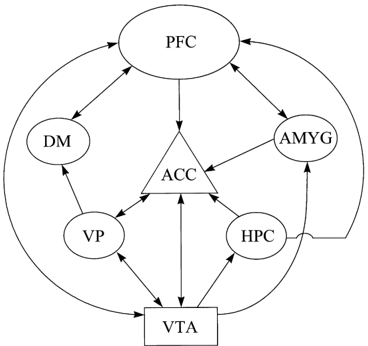
To successfully negotiate the developmental transition between youth and adulthood, adolescents must maneuver this often stressful period while acquiring skills necessary for independence. Certain behavioral features, including age-related increases in social behavior and risk-taking/novelty-seeking, are common among adolescents of diverse mammalian species and may aid in this process. Reduced positive incentive values from stimuli may lead adolescents to pursue new appetitive reinforcers through drug use and other risk-taking behaviors, with their relative insensitivity to drugs supporting comparatively greater per occasion use. Pubertal increases in gonadal hormones are a hallmark of adolescence, although there is little evidence for a simple association of these hormones with behavioral change during adolescence. Prominent developmental transformations are seen in prefrontal cortex and limbic brain regions of adolescents across a variety of species, alterations that include an apparent shift in the balance between mesocortical and mesolimbic dopamine systems. Developmental changes in these stressor-sensitive regions, which are critical for attributing incentive salience to drugs and other stimuli, likely contribute to the unique characteristics of adolescence.
Overview
The claims and statistics of this paper haven’t been checked yet.
Free: it reads the open-access text and checks the first 5 claims that cite a source we can check. Create a free account to check every claim.
Integrity signals
Registry
Cites
Statistics
Figures
Verification
Claims the paper makes
The claims and statistics of this paper haven’t been checked yet.
Free: it reads the open-access text and checks the first 5 claims that cite a source we can check. Create a free account to check every claim.
Claims other papers make about this one
Each is checked against this paper’s own text: does it say what the citing paper says it does?
The cited source doesn’t support the claim as written.
In the citing paper
“An accumulation of evidence suggests an increase in incentive motivation from childhood to adolescence and a decline from adolescence into adulthood (Luciana, Wahlstrom, Porter, & Collins, 2012; Steinberg, 2010).”
From Incentive Motivation, Cognitive Control, and the Adolescent Brain: Is It Time for a Paradigm Shift? (2012) · cites this paper as Spear, 2000
Checked by a reasoning model — may be wrong.
Experimental — accuracy not yet measuredThe source backs part of the claim, not all of it — or backs it for a different population, condition or comparison.
In the citing paper
“However, it should be noted that the time frame of adoles cence in rodents is very short, i.e. from postnatal day 25 -42 (Spear, 2000), which challenges the use of self-administration protocols as they require longer training periods and access to nicotine than forced exposure protocols.”
From Age-dependent Effects of Tobacco Smoke and Nicotine on Cognition and the Brain: A Systematic Review of the Human and Animal Literature Comparing Adolescents and Adults. (2023) · cites this paper as Spear, 2000
Experimental — accuracy not yet measuredThe source backs part of the claim, not all of it — or backs it for a different population, condition or comparison.
In the citing paper
“Thereby, brain development may be responsible for characteristic adolescent traits—uncontrollable mood swings, impulsivity, risk taking, and peer-directed social interactions (Orr and Ingersoll 1995; Spear 2000; Galvan et al. 2007).”
From Short- and Long-Term Consequences of Nicotine Exposure during Adolescence for Prefrontal Cortex Neuronal Network Function (2012) · cites this paper as Spear 2000
Experimental — accuracy not yet measuredThe source backs part of the claim, not all of it — or backs it for a different population, condition or comparison.
In the citing paper
“Compared with adults, adolescents are generally more motivated by rewards, are less averse to risks, and are more easily influenced by peers (Spear 2000; Steinberg 2005; Galvan et al. 2006).”
From Short- and Long-Term Consequences of Nicotine Exposure during Adolescence for Prefrontal Cortex Neuronal Network Function (2012) · cites this paper as Spear 2000
Experimental — accuracy not yet measuredThe source backs part of the claim, not all of it — or backs it for a different population, condition or comparison.
In the citing paper
“Structural and functional MRI data show earlier maturation of reward systems and much slower development of prefrontal cognitive control (Spear 2000; Chambers et al. 2003; Casey et al. 2005; Ernst et al. 2005; Ernst and Fudge 2009).”
From Short- and Long-Term Consequences of Nicotine Exposure during Adolescence for Prefrontal Cortex Neuronal Network Function (2012) · cites this paper as Spear 2000
Experimental — accuracy not yet measured
32 more claims about this paper
Create a free account to see every claim other papers make about this one.
Self-check
Percentages, sums and reported differences re-computed from the paper’s own numbers.
The self-check needs the paper’s full text.
Citations
Cites
Items 601–641 of 641
Antecedents of collegiate drinking
Friedman, J. L., & Humphrey, J. A. (1985) · Journal of Youth and Adolescence · doi:10.1007/bf02088643 · Cited by 17 · cited 1×
“Early onset of alcohol use has been shown in both prospective and retrospective studies to be a powerful predictor of later alcohol abuse and dependence [132,171,179,214,231,436,447].”
Hormones and behavior at puberty: Activation or concatenation?
Coe, C. L., Hayashi, K. T., & Levine, S. (1988) · Cited by 17
Heart Rate and Psychosocial Correlates of Antisocial Behavior in High-Risk Adolescents
Lösel, F. A., & Bender, D. (1997) · Springer eBooks · doi:10.1007/978-1-4757-4648-8_23 · Cited by 16
Adolescence and Mental Illness
FEINBERG, I. (1987) · Science · doi:10.1126/science.236.4801.507-a · Cited by 16 · cited 1×
“[87] and [170] for review and references).”
Davies, N. J. (2012) · Nursing Standard · doi:10.7748/ns2012.06.26.42.43.c9161 · Cited by 16
Enduring effects of periadolescent alcohol exposure on passive avoidance performance in rats
Osborne, G. L., & Butler, A. (1983) · Physiological Psychology · doi:10.3758/bf03326796 · Cited by 16 · cited 1×
“Chronic exposure of adolescent rodents to alcohol has been reported to induce later alterations in emotionality [474] and cognitive functioning [393] as well as to disrupt pubertyassociated increases in reproductive endocrinology in both males [89] and females [118].”
Early, E. (1992) · The San Francisco Jung Institute Library Journal · doi:10.1525/jung.1.1992.11.1.35 · Cited by 16
Raum, W. J., & Swerdloff, R. S. (1986) · Endocrinology · doi:10.1210/endo-119-1-168 · Cited by 15 · cited 1×
“Maturational changes are seen in NE release in the hypothalamus of adolescent rats [81,83], and noradrenergic influences on GnRH release may switch from being largely inhibitory during the prepubertal period in rats to a predominance of NE stimulatory effects at puberty [456].”
The Search for the Determinants of Puberty in the Rat
Moltz, H. (1975) · Springer eBooks · doi:10.1007/978-1-4615-7189-6_3 · Cited by 15 · cited 1×
“[371]) provide appreciable rationale for further exploration of the amygdala of the adolescent.”
Fecundability and its Relation to Age in a Sample of Taiwanese Women
Jain, A. K. (1969) · Population Studies · doi:10.2307/2173237 · Cited by 15
Pubertal and Psychosocial Development: Implications for Pediatricians
Litt, I. F. (1995) · Pediatrics in Review · doi:10.1542/pir.16-7-243 · Cited by 13
Adolescent depression: neuroendocrine aspects
Sokolov, S., & Kutcher, S. (2001) · The Depressed Child and Adolescent · doi:10.1017/cbo9780511543821.010 · Cited by 13
Byne, W. M., & Davis, K. L. (1999) · Biological Psychiatry · doi:10.1016/s0006-3223(99)00012-8 · Cited by 13
Responsiveness of Cortisol and Dehydroepiandrosterone to ACTH in Children
Ranke, M., Rosendahl, W., & Gupta, D. (2008) · Hormone Research · doi:10.1159/000179482 · Cited by 12 · cited 1×
“[22] [454]).”
Behavioral genetics, adolescent deviance, and "d": Contributions and issues.
Rowe, D., & Rodgers, J. L. (1989) · Cited by 12
Pubertal weight gain in female rhesus macaques
Blackwelder, T. L., & Golub, M. S. (1996) · American Journal of Physical Anthropology · doi:10.1002/(sici)1096-8644(199603)99:3<449::aid-ajpa6>3.0.co;2-r · Cited by 12 · cited 1×
“In primates as well, juveniles and adolescents typically spend more time feeding [300] and foraging for food to meet their needs than adults, in part because of potentially lower foraging success [259] as well as the substantial caloric demands of the adolescent-associated growth spurt [46].”
Developmental Psychopathology in the Context of Adolescence
Jeanne Brooks-gunn, B., & Attie, I. (1996) · Oxford University Press eBooks · doi:10.1093/oso/9780195090017.003.0005 · Cited by 12
Boot, A. M., Engels, M. A. M. J., Boerma, G. J. M., Krenning, E. P., & de Muinck Keizer-Schrama, S. M. P. F. (1997) · The Journal of Clinical Endocrinology & Metabolism · doi:10.1210/jcem.82.8.4149 · Cited by 11
Factors Controlling the Onset of Puberty in Primates
Cameron, J. L. (1990) · Oxford University Press eBooks · doi:10.1093/oso/9780195053364.003.0002 · Cited by 11
Adrenal Function in Rats Given PMS Before Puberty: Response to Ether Stress
Ramaley, J. A., & Olson, J. (2008) · Neuroendocrinology · doi:10.1159/000122240 · Cited by 11 · cited 1×
“While similar peak corticosterone responses to stressors have occasionally been observed in weanlings, adolescent and adult rats [23,82,202], stress-induced HPA activation has more consistently been reported to increase ontogenetically following the SHRP in rats to reach an asymptote around adolescence, at least in ma…”
The Physiology of Stress and Behavioral Development
Chrousos, G. P. (2014) · doi:10.4324/9781315808109-7 · Cited by 11
Dietary and Hypothalamic Changes in Δ 4-Androstenedione-Treated Zucker Rats
Hargrave, K. R., Wright, B. E., Svec, F., & Porter, J. R. (1997) · Physiology & Behavior · doi:10.1016/s0031-9384(96)00514-8 · Cited by 10 · cited 2×
“[226] Hargrave KR, Wright BE, Svec F, Porter JR.”
Experience and neuroendocrine parameters of development: Aggressive behavior and competencies.
Susman, E. J., WORRALL, B. K., Murowchick, E., & Frobose, C. A. (1996) · Cited by 10
Shuttlebox avoidance in Norway rats from infancy to maturity
Bauer, R. H. (1980) · Bulletin of the Psychonomic Society · doi:10.3758/bf03329748 · Cited by 9 · cited 1×
“Yet, on less cognitively challenging tasks, performance of adolescent rats may occasionally be enhanced relative to other aged animals, particularly in situations where their tendencies to show increases in activity and exploration might result in improved performance—such as in the radial arm maze [77] and in active…”
Sircar, R. (1995) · Brain Research · doi:10.1016/0006-8993(95)00827-d · Cited by 9 · cited 1×
“Administration of the glutamate agonist NMDA induces precocious puberty in rats and nonhuman primates [57,428], while the antagonists MK-801 [563] and phencyclidine [501] delay puberty.”
Neuromodulatory Role of Opioidergic System on Hypothalamus—Pituitary—Gonadal Axis during Puberty
Genazzani, A. D., Gamba, O., Sgarbi, L., GANDOLFI, A., Corazza, F., Surico, N., & Petraglia, F. (1997) · Annals of the New York Academy of Sciences · doi:10.1111/j.1749-6632.1997.tb52131.x · Cited by 8 · cited 2×
“While opiates inhibit GnRH in intact adults, their role in the pubertal process requires further characterization, with evidence for a pubertal-associated reduction in sensitivity of the hypothalamic gonadostat to opiate inhibition [347] countered by other work reporting an emergence of opiate inhibition at this time…”
Neuroendocrine mechanisms of the formation of adaptive behavior
Shalyapina, V. G., Ordyan, N. E., Пивина, С. Г., & Rakitskaya, V. V. (1997) · Neuroscience and Behavioral Physiology · doi:10.1007/bf02462894 · Cited by 8
Physiological and Pathological Puberty, and Human Behavior
Benson, R. M., & Migeon, C. J. (1975) · Springer eBooks · doi:10.1007/978-1-4615-7189-6_4 · Cited by 8 · cited 1×
“Increases in gonadal hormones stimulate the emergence of many secondary sexual characteristics in human adolescents [40], while increases in both GH and the sex steroids stimulate growth and contribute to the pubertal growth spurt [336].”
Sandstrom, M. I., & Bruno, J. P. (1997) · Developmental Psychobiology · doi:10.1002/(sici)1098-2302(199705)30:4<293::aid-dev3>3.0.co;2-j · Cited by 8 · cited 1×
“While extensive depletion of DA induced by the neurotoxin 6hydroxydopamine (6-OHDA) results in Parkinsonian-like sensorimotor deficits and supersensitivity to antagonists in rats following neurotoxin treatment in adulthood, substantial functional recovery is seen when such damage is incurred early in ontogeny, with ad…”
Retention of response persistence in weanling and adolescent rats.
Brake, S., Burdette, D. R., Chen, J., & Amsel, A. (1980) · Journal of Comparative and Physiological Psychology · doi:10.1037/h0077733 · Cited by 7 · cited 2×
“[56]), but more persistence during extinction of a one-way active avoidance task [378].”
Age-related sensitivity to the acute behavioral effects of cocaine and amphetamine in monkeys
Paule, M. G. (1997) · Neurotoxicology and Teratology · doi:10.1016/s0892-0362(97)82397-5 · Cited by 7 · cited 1×
“Like their rodent counterparts, adolescent rhesus monkeys also have been reported to be considerably less sensitive than adults to stimulants such as amphetamine and cocaine, although in this case sensitivity is even lower in younger juveniles than in adolescents [400].”
Marcus, M. A., Wang, J., Pi-Sunyer, X., Thornton, J. C., Kofopoulou, I., & Pierson, R. N. (1998) · American Journal of Human Biology · doi:10.1002/(sici)1520-6300(1998)10:3<351::aid-ajhb10>3.0.co;2-7 · Cited by 6 · cited 1×
“[323]).”
Enduring behavioral effects of weaning-through-puberty cocaine dosing in the rat
Smith, R. F., Medici, C. N., & Raap, D. K. (1999) · Psychobiology · doi:10.3758/bf03332137 · Cited by 5 · cited 1×
“Weaning through adolescent cocaine exposure has been reported to alter subsequent cocaine-induced open field behavior [505] and to increase the later reinforcing efficacy of cocaine as indexed by greater cocaine-induced conditioned place preferences [506].”
A Comparative Primate Perspective on Adolescence
Rosenblum, L. A. (1990) · Oxford University Press eBooks · doi:10.1093/oso/9780195053364.003.0005 · Cited by 5
Environmental factors and puberty in non‐human primates
Plant, T. M. (1996) · Acta Paediatrica · doi:10.1111/j.1651-2227.1996.tb14309.x · Cited by 4 · cited 1×
“[95] [427]).”
Eleftheriou, B. E., & Sprott, R. L. (1975) · Plenum Press eBooks · Cited by 4
Assessment of Behavior in Primates
Paule, M. G. (1998) · Elsevier eBooks · doi:10.1016/b978-012648860-9/50030-3 · Cited by 4 · cited 2×
“Researchers do not always agree on the timing of the juvenile and adolescent stages among specific primate species (e.g. compare the timing of adolescence in rhesus monkeys presented by Ehardt and Bernstein [150], with that of Paule [399]), perhaps in part because of variations in the indices used to reflect maturatio…”
Marijuana and Tobacco Use Up Again Among 8th and 10th Graders
Mathias, R. (1997) · PsycEXTRA Dataset · doi:10.1037/e313702004-006 · Cited by 4
Chronic cocaine treatment during adolescence stimulates offensive aggression in golden hamsters
Harrison, R. J., Connor, D. F., Nowak, C., & Melloni, R. M. (1998) · PsycEXTRA Dataset · doi:10.1037/e552692012-086 · Cited by 2 · cited 2×
“For instance, voluntary ethanol consumption [494] and chronic cocaine exposure [229] during adolescence both were found to significantly L.”
On the constructive role of problem behavior in adolescence further evidence on alcohol use
Silbereisen, R. Κ., & Reitzle, M. (. U. B. (1987) · OpenGrey (Institut de l'Information Scientifique et Technique) · Cited by 2
(1997) · doi:10.1002/(sici)1098-2302(199711)31:3<193::aid-dev4>3.0.co;2-n · cited 1×
“For example, although by P20, weanling rat pups exhibit the adult-typical repertoire of defensive strategies, these strategies are temporarily replaced by more juvenile tactics of play fighting during adolescence (P30–40) [402] that then diminish as sexual maturity is reached [401].”
Research works printed but not linked: 31
- [68] Byne W, Davis KL. The role of prefrontal cortex in the dopaminer- 20. gic dysregulation of schizophrenia. Biological Psychiatry 1999;45:657-9. -
- [87] Chugani HT. Neuroimaging of developmental nonlinearity and developmental pathologies. In: Thatcher RW, Lyon GR, Rumsey J, Krasnegor N, editors. Developmental neuroimaging: mapping the development of brain and behavior, San Diego, CA: Academic Press, 1996. p. 187-95. -
- [101] Cords M, Aureli F. Patterns of reconciliation among juvenile longtailed macaques. In: Pereira ME, Fairbanks LA, editors. Juvenile primates, New York, NY: Oxford University Press, 1993 (p. 27184, 367-415). -
- [105] Crockett CM, Pope TR. Consequences of sex differences in dispersal for juvenile red howler monkeys. In: Pereira ME, Fairbanks LA, editors. Juvenile primates, New York, NY: Oxford University Press, 1993 (p. 104-18, 367-415). -
- [130] de Waal FBM. Codevelopment of dominance relations and affiliative bonds in rhesus monkeys. In: Pereira ME, Fairbanks LA, editors. Juvenile primates, New York, NY: Oxford University Press, 1993 (p. 259-70, 367-415). -
- [162] Fagen R. Primate juveniles and primate play. In: Pereira ME, Fairbanks LA, editors. Juvenile primates, New York, NY: Oxford University Press, 1993 (p. 182-96, 367-415). -
- [165] Fairbanks LA. Juvenile vervet monkeys: establishing relationships and practicing skills for the future. In: Pereira ME, Fairbanks LA, editors. Juvenile primates, New York, NY: Oxford University Press, 1993 (p. 211-27, 367-415). -
- [166] Fairbanks LA, Pereira ME. Juvenile primates: dimensions for future research. In: Pereira ME, Fairbanks LA, editors. Juvenile primates, New York, NY: Oxford University Press, 1993 (p. 359-66, 367415). -
- [188] Gandia A, Bolufer P, Rodriguez A, Antonio P. Salivary cortisol increases with age in children. Journal of Clinical Chemistry and Clinical Biochemistry 1990;28:655. -
- [265] Kagan J, Moss H. Birth to maturity. New York, NY: Wiley, 1962. -
- [283] Kennedy GC. Ontogeny of mechanisms controlling food and water intake. In: Code CF, editor. Handbook of physiology: alimentary canal, Food and water intake, vol. 1. Washington, DC: American Physiological Society, 1967. p. 337-52 (Section 6). -
- [331] Lipska BK, Weinberger DR. Cortical regulation of the mesolimbic dopamine system: implications for schizophrenia. In: Kalivas PW, Barnes CD, editors. Limbic motor circuits and neuropsychiatry, Boca Raton, FL: CRC Press, 1993. p. 329-49. -
- [352] McCord J. Problem behaviors. In: Feldman SS, Elliott GR, editors. At the threshold: the developing adolescent, Cambridge, MA: Harvard University Press, 1990. p. 414-30. -
- [365] Millstein SG. Perceptual, attributional, and affective processes in perceptions of vulnerability through the life span. In: Bell NJ, Bell RW,editors. Adolescent risk taking, Newbury Park, CA: Sage Publications, 1993. p. 55-65. -
- [370] Mogenson GJ, Brudzynski SM, Wu M, Yang CR, Yim CCY. From motivation to action: a review of dopaminergic regulation of limbic ! nucleus accumbens ! ventral pallidum ! pedunculopontine nucleus circuitries involved in limbic-motor integration. In: Kalivas PW, Barnes CD, editors. Limbic motor circuits and neuropsychiatry, Boca Raton, FL: CRC Press, 1993. p. 193-236. -
- [386] O'Brien TG, Robinson JG. Stability of social relationships in female wedge-capped capuchin monkeys. In: Pereira ME, Fairbanks LA, editors. Juvenile primates, New York, NY: Oxford University Press, 1993 (p. 197-210, 367-415). -
- [404] Pereira ME. Juvenility in animals. In: Pereira ME, Fairbanks LA, editors. Juvenile primates, New York, NY: Oxford University Press, 1993 (p. 17-27, 367-415). -
- [405] Pereira ME. Agonistic interaction, dominance relation, and ontogenetic trajectories in ringtailed lemurs. In: Pereira ME, Fairbanks LA, editors. Juvenile primates, New York, NY: Oxford University Press, 1993 (p. 285-305, 367-415). -
- [407] Pereira ME, Fairbanks LA. What are juvenile primates all about?. In: Pereira ME, Fairbanks LA, editors. Juvenile primates, New York, NY: Oxford University Press, 1993 (p. 3-12, 367-415). -
- [408] Pereira ME, Fairbanks LA. Juvenile primates. New York, NY: Oxford University Press, 1993. -
- [414] Petersen AC, Taylor B. The biological approach to adolescence: biological change and psychological adaptation. In: Adelson J, editor. Handbook of adolescent psychology, New York, NY: Wiley, 1980. p. 117-55. -
- [447] Rachal JV, Guess LL, Hubbard RL, Maisto SA. Alcohol misuse by adolescents. Alcohol Health and Research World 1982;6:61-8. -
- [449] Rajpurohit LS, Sommer V. Juvenile male emigration from natal onemale troops in Hanuman langurs. In: Pereira ME, Fairbanks LA, editors. Juvenile primates, New York, NY: Oxford University Press, 1993 (p. 86-103, 367-415). -
- [483] Savin-Williams RC, Weisfeld GE. An ethological perspective on - adolescence. In: Adams GR, Montemayor R, Gullotta TP, editors. Biology of adolescent behavior and development, Newbury Park, CA: Sage Publications, 1989. p. 249-74. -
- [499] Simmons RG, Burgeson R, Reef MJ. Cumulative change at entry to adolescence. In: Gunnar MR, Collins WA, editors. Development during the transition to adolescence, vol. 21. Hillsdale, NJ: Lawrence Erlbaum Associates, 1988. p. 123-50. -
- [568] van Noordwijk MA, Hemelrijk CK, Herremans LAM, Sterck EHM. Spatial position and behavioral sex differences in juvenile longtailed macaques. In: Pereira ME, Fairbanks LA, editors. Juvenile primates, New York, NY: Oxford University Press, 1993 (p. 7785, 367-415). -
- [570] Vik P, Brown SA. Life events and substance abuse during adolescence. In: Miller TW, editor. Children of trauma, Madison, CT: International Universities Press, 1998. p. 179-204. -
- [581] Watts DP, Pusey AE. Behavior of juvenile and adolescent great apes. 21. In: Pereira ME, Fairbanks LA, editors. Juvenile primates, New York, NY: Oxford University Press, 1993 (p. 148-167, 367-415). -
- [584] Weinberger DR. Schizophrenia as a neurodevelopmental disorder. In: Hirsch SR, Weinberger DR, editors. Schizophrenia, Oxford, UK: Blackwell Science Ltd, 1995. p. 293-323. -
- [601] Worthman CM. Biocultural interactions in human development. In: Pereira ME, Fairbanks LA, editors. Juvenile primates, New York, NY: Oxford University Press, 1993 (p. 339-58, 367-415). -
- [606] Yurgelun-Todd D. Brain and psyche seminar. Whitehead Institute for Biomedical Research, Cambridge, MA, June 11, 1998. -
Cited by
Cryan, J. F., O'Riordan, K. J., Cowan, C. S. M., Sandhu, K. V., Bastiaanssen, T. F. S., Boehme, M., Codagnone, M. G., Cussotto, S., Fulling, C., Golubeva, A. V., et al. (2019) · Physiological Reviews · doi:10.1152/physrev.00018.2018 · Cited by 5,286
Our future: a Lancet commission on adolescent health and wellbeing
Patton, G. C., Sawyer, S. M., Santelli, J. S., Ross, D. A., Afifi, R., Allen, N. B., Arora, M., Azzopardi, P., Baldwin, W., Bonell, C., et al. (2016) · The Lancet · doi:10.1016/s0140-6736(16)00579-1 · Cited by 3,785
A social neuroscience perspective on adolescent risk-taking
Steinberg, L. (2008) · Developmental Review · doi:10.1016/j.dr.2007.08.002 · Cited by 3,644
“Remodeling of the dopaminergic system at puberty Important developmental changes in the dopaminergic system take place at puberty (Chambers, Taylor, & Potenza, 2003; Spear, 2000).”
BackgroundResultInfluentialCasey, B. J., Jones, R. M., & Hare, T. A. (2008) · Annals of the New York Academy of Sciences · doi:10.1196/annals.1440.010 · Cited by 3,345
“Neurochemical evidence indicates that the balance in the adolescent brain between cortical and subcortical dopamine systems begins to shift toward greater cortical dopamine levels during adolescence (Spear 2000).”
BackgroundMethodInfluentialCognitive and affective development in adolescence
Steinberg, L. (2005) · Trends in Cognitive Sciences · doi:10.1016/j.tics.2004.12.005 · Cited by 2,978
Metadata
- Authors
- Spear, L. P.
- Affiliations
- Binghamton University (US)
- Corresponding author
- Spear, L.P.
- ORCID
- Spear, L.P.
- Venue
- Neuroscience & Biobehavioral Reviews
- Publisher
- Elsevier BV
- Published
- 2000-06
- Volume
- 24
- Issue
- 4
- Pages
- 417-463
- ISSN
- 0149-7634 (ISSN-L)
- OpenAlex
- W1985645068
- Semantic Scholar
- 60797b83231d26d3ef631a666f4595e45ecb79cd
- Cited by
- 5,433
- References
- 652
- Citations by year
- 2026: 136 · 2025: 191 · 2024: 205 · 2023: 187 · 2022: 216 · 2021: 286 · 2020: 246 · 2019: 247 · 2018: 258 · 2017: 283 · 2016: 325 · 2015: 301 · 2014: 330 · 2013: 361 · 2012: 249
- FWCI
- 17.02
- Type
- journal article
- Language
- en
- Open access
- closed
- Licence
- www.elsevier.com/tdm/userlicense/1.0/ (tdm)
- Locations
- Neuroscience & Biobehavioral Reviews (publishedVersion)
- PubMed (publishedVersion)
- Funders
- National Institutes of Health (5k02da000140-09, 5r01aa010228-05)
- National Institute on Alcohol Abuse and Alcoholism (R01AA10228, R01AA012150, AA12150)
- National Institute on Drug Abuse (K02DA00140)
- Topics
- Life Sciences › Neuroscience › Cellular and Molecular Neuroscience › Neurotransmitter Receptor Influence on Behavior
- Life Sciences › Neuroscience › Cognitive Neuroscience › Neural and Behavioral Psychology Studies
- Health Sciences › Medicine › Epidemiology › Substance Abuse Treatment and Outcomes
- Keywords
- adolescent brain development, risk-taking, novelty seeking, social behavior, incentive salience, drug use, prefrontal cortex maturation, limbic system, mesolimbic dopamine system, mesocortical dopamine system, cross-species comparison
- MeSH terms
- Psychology, Adolescent, Aging, Animals, Behavior, Brain, Humans
About these checks
Registry, retraction, Cites and statistics results are computed, not judged, with one exception: a printed reference that no index lists is read once by a model before it counts as a citation error. Claims are extracted by a model and kept only when their quote appears verbatim in the text; each cited source is then checked, with a model’s help, for whether it says what the claim relies on. Those verdicts can be wrong — read the claim’s quote and the cited source before relying on one.
Statistics and arithmetic are recomputed, not judged.
Confidence bands are shown only for fields calibrated on our annotated test set. None is calibrated yet, so no band is shown.
What counts as a claim ›How we measure confidence ›How we check this ›
Are you an author, or do you see a problem with this page? Request a review
Data sources
Bibliographic data: Semantic Scholar, OpenAlex, Crossref.
Contains information from the Semantic Scholar Academic Graph Datasets, made available under the ODC Attribution License (ODC-BY 1.0).
Semantic Scholar’s data is described in: Kinney, R., et al. (2023). The Semantic Scholar Open Data Platform. arXiv:2301.10140.
