

The adolescent brain and age-related behavioral manifestations
The DOI matches its Crossref record; 642 of the 652 references it cites were found in a registry or an index.
Abstract
To successfully negotiate the developmental transition between youth and adulthood, adolescents must maneuver this often stressful period while acquiring skills necessary for independence. Certain behavioral features, including age-related increases in social behavior and risk-taking/novelty-seeking, are common among adolescents of diverse mammalian species and may aid in this process. Reduced positive incentive values from stimuli may lead adolescents to pursue new appetitive reinforcers through drug use and other risk-taking behaviors, with their relative insensitivity to drugs supporting comparatively greater per occasion use. Pubertal increases in gonadal hormones are a hallmark of adolescence, although there is little evidence for a simple association of these hormones with behavioral change during adolescence. Prominent developmental transformations are seen in prefrontal cortex and limbic brain regions of adolescents across a variety of species, alterations that include an apparent shift in the balance between mesocortical and mesolimbic dopamine systems. Developmental changes in these stressor-sensitive regions, which are critical for attributing incentive salience to drugs and other stimuli, likely contribute to the unique characteristics of adolescence.
Overview
The claims and statistics of this paper haven’t been checked yet.
Free: it reads the open-access text and checks the first 5 claims that cite a source we can check. Create a free account to check every claim.
Integrity signals
Registry
Cites
Statistics
Figures
Verification
Claims the paper makes
The claims and statistics of this paper haven’t been checked yet.
Free: it reads the open-access text and checks the first 5 claims that cite a source we can check. Create a free account to check every claim.
Claims other papers make about this one
Each is checked against this paper’s own text: does it say what the citing paper says it does?
The cited source doesn’t support the claim as written.
In the citing paper
“An accumulation of evidence suggests an increase in incentive motivation from childhood to adolescence and a decline from adolescence into adulthood (Luciana, Wahlstrom, Porter, & Collins, 2012; Steinberg, 2010).”
From Incentive Motivation, Cognitive Control, and the Adolescent Brain: Is It Time for a Paradigm Shift? (2012) · cites this paper as Spear, 2000
Checked by a reasoning model — may be wrong.
Experimental — accuracy not yet measuredThe source backs part of the claim, not all of it — or backs it for a different population, condition or comparison.
In the citing paper
“However, it should be noted that the time frame of adoles cence in rodents is very short, i.e. from postnatal day 25 -42 (Spear, 2000), which challenges the use of self-administration protocols as they require longer training periods and access to nicotine than forced exposure protocols.”
From Age-dependent Effects of Tobacco Smoke and Nicotine on Cognition and the Brain: A Systematic Review of the Human and Animal Literature Comparing Adolescents and Adults. (2023) · cites this paper as Spear, 2000
Experimental — accuracy not yet measuredThe source backs part of the claim, not all of it — or backs it for a different population, condition or comparison.
In the citing paper
“Thereby, brain development may be responsible for characteristic adolescent traits—uncontrollable mood swings, impulsivity, risk taking, and peer-directed social interactions (Orr and Ingersoll 1995; Spear 2000; Galvan et al. 2007).”
From Short- and Long-Term Consequences of Nicotine Exposure during Adolescence for Prefrontal Cortex Neuronal Network Function (2012) · cites this paper as Spear 2000
Experimental — accuracy not yet measuredThe source backs part of the claim, not all of it — or backs it for a different population, condition or comparison.
In the citing paper
“Compared with adults, adolescents are generally more motivated by rewards, are less averse to risks, and are more easily influenced by peers (Spear 2000; Steinberg 2005; Galvan et al. 2006).”
From Short- and Long-Term Consequences of Nicotine Exposure during Adolescence for Prefrontal Cortex Neuronal Network Function (2012) · cites this paper as Spear 2000
Experimental — accuracy not yet measuredThe source backs part of the claim, not all of it — or backs it for a different population, condition or comparison.
In the citing paper
“Structural and functional MRI data show earlier maturation of reward systems and much slower development of prefrontal cognitive control (Spear 2000; Chambers et al. 2003; Casey et al. 2005; Ernst et al. 2005; Ernst and Fudge 2009).”
From Short- and Long-Term Consequences of Nicotine Exposure during Adolescence for Prefrontal Cortex Neuronal Network Function (2012) · cites this paper as Spear 2000
Experimental — accuracy not yet measured
32 more claims about this paper
Create a free account to see every claim other papers make about this one.
Self-check
Percentages, sums and reported differences re-computed from the paper’s own numbers.
The self-check needs the paper’s full text.
Citations
Cites
Items 201–400 of 641
SKLAR, C. A., KAPLAN, S. L., & GRUMBACH, M. M. (1980) · The Journal of Clinical Endocrinology & Metabolism · doi:10.1210/jcem-51-3-548 · Cited by 245 · cited 1×
“Although adrenarche precedes gonadarche, it does not appear to be necessary for gonadal activation at puberty, given that adrenarche and gonadarche are often dissociated in individuals with clinical disorders of gonadal or adrenal maturation [103,502].”
Addictive Behaviors across the Life Span: Prevention, Treatment, and Policy Issues
Johnson, V (1995) · Journal of Studies on Alcohol · doi:10.15288/jsa.1995.56.253 · Cited by 244
A Behavioral Dimension of Constraint
DEPUE, R. A., & SPOONT, M. R. (1986) · Annals of the New York Academy of Sciences · doi:10.1111/j.1749-6632.1986.tb27885.x · Cited by 243
Besman, M. J., Yanagibashi, K., Lee, T. D., Kawamura, M., Hall, P. F., & Shively, J. E. (1989) · Proceedings of the National Academy of Sciences · doi:10.1073/pnas.86.13.4897 · Cited by 240 · cited 2×
“One possible regulator of the adrenarchespecific stimulation of adrenal androgen production may be the polypeptide diazepam binding inhibitor (DBI), a presumed endogenous GABA A modulator that has been shown to facilitate ACTH-stimulated steroidogenesis in the adrenals of laboratory animals [43,53].”
Differential Effects of Ethanol in Adolescent and Adult Rats
Little, P. J., Kuhn, C. M., Wilson, W. A., & Swartzwelder, H. S. (1996) · Alcoholism: Clinical and Experimental Research · doi:10.1111/j.1530-0277.1996.tb01133.x · Cited by 240 · cited 3×
“[334] Little PJ, Kuhn CM, Wilson WA, Swartzwelder HS.”
Control of the Onset of Puberty.
(1974) · Annals of Internal Medicine · doi:10.7326/0003-4819-81-5-727_2 · Cited by 237
Transitions and turning points: Navigating the passage from childhood through adolescence.
Graber, J. A., & Brooks-Gunn, J. (1996) · Developmental Psychology · doi:10.1037//0012-1649.32.4.768 · Cited by 235
Lidow, M. S., Goldman-Rakic, P. S., & Rakic, P. (1991) · Proceedings of the National Academy of Sciences · doi:10.1073/pnas.88.22.10218 · Cited by 232 · cited 2×
“Receptors of a variety of different neurotransmitter systems (including DA, 5HT, acetylcholine (ACh), and GABA) are overproduced and undergo pruning during infancy and adolescence in primate cortex [325,326].”
Biological-Psychosocial Interactions in Early Adolescence
Lerner, R. M., & Foch, T. T. (2021) · Routledge eBooks · doi:10.4324/9781003217992 · Cited by 228
Tribollet, E., Charpak, S., Schmidt, A., Dubois-Dauphin, M., & Dreifuss, J. (1989) · The Journal of Neuroscience · doi:10.1523/jneurosci.09-05-01764.1989 · Cited by 228 · cited 4×
“[558] Tribollet E, Charpak S, Schmidt A, Dubois-Dauphin M, Dreifuss JJ.”
InfluentialDevelopmental neuroimaging : mapping the development of brain and behavior
Thatcher, R. W. (1996) · Academic Press eBooks · Cited by 225
Adolescent versus adult onset and the development of substance use disorders in males
Clark, D. B., Kirisci, L., & Tarter, R. E. (1998) · Drug and Alcohol Dependence · doi:10.1016/s0376-8716(97)00154-3 · Cited by 223 · cited 1×
“Compared with individuals initiating drug use in adulthood, adolescent-onset individuals had “accelerated dependency courses, with shorter times from first exposure to dependence for alcohol and cannabis and shorter times between their first and second dependencies” ([92], p.”
Connections of the nucleus accumbens
Powell, E. W., & Leman, R. B. (1976) · Brain Research · doi:10.1016/0006-8993(76)90589-8 · Cited by 223 · cited 1×
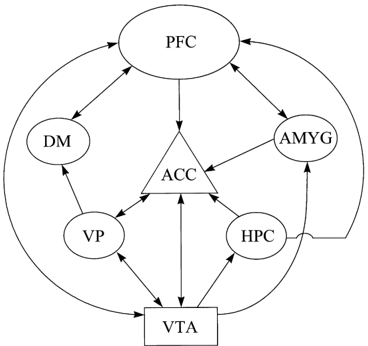
“Potential amygdala involvement Although exploration of the neural instigators of puberty has largely focused to date on influences exerted at the level of the hypothalamic gonadostat, the hypothalamus receives afferent input from a variety of forebrain regions, including PFC and limbic regions such as the ACC and exte…”
Fundamental aspects of normal and malignant growth
Nowinski, W. W. (1960) · doi:10.5962/bhl.title.10245 · Cited by 223
Deutch, A. Y. (1992) · Advances in Neuroscience and Schizophrenia · doi:10.1007/978-3-7091-9211-5_5 · Cited by 221 · cited 1×
“[126,331] for review) as well as nonhuman primates [293,593].”
Farber, N. B., Wozniak, D. F., Price, M. T., Labruyere, J., Huss, J., St. Peter, H., & Olney, J. W. (1995) · Biological Psychiatry · doi:10.1016/0006-3223(95)00046-1 · Cited by 219
Meaney, M. J., Sapolsky, R. M., & McEwen, B. S. (1985) · Developmental Brain Research · doi:10.1016/0165-3806(85)90259-7 · Cited by 218 · cited 3×
“[357] Meaney MJ, Sapolsky RM, McEwen BS.”
Compas, B. E., Howell, D. C., Phares, V., Williams, R. A., & Giunta, C. T. (1989) · Journal of Consulting and Clinical Psychology · doi:10.1037/0022-006x.57.6.732 · Cited by 217 · cited 3×
“[98] Compas BE, Howell DC, Phares V, Williams RA, Giunta CT.”
Initial Anticholinergic Prophylaxis for Neuroleptic-Induced Extrapyramidal Syndromes
Keepers, G. A. (1983) · Archives of General Psychiatry · doi:10.1001/archpsyc.1983.01790090075012 · Cited by 216 · cited 1×
“Finally, akin to the findings of enhanced sensitivity to neuroleptics seen in adolescent rats relative to their adult counterparts [72,513], children and adolescent humans likewise respond to lower doses of neuroleptics than adults and may be more sensitive to neuroleptic-induced extrapyramidal side effects [217,278].”
URBANSKI, H. F., & OJEDA, S. R. (1990) · Endocrinology · doi:10.1210/endo-126-3-1774 · Cited by 213 · cited 2×
“Administration of the glutamate agonist NMDA induces precocious puberty in rats and nonhuman primates [57] [428], while the antagonists MK-801 [563] and phencyclidine [501] delay puberty.”
Scarpa, A., & Raine, A. (2007) · The Cambridge Handbook of Violent Behavior and Aggression · doi:10.1017/cbo9780511816840.008 · Cited by 211
Wagner, B. M., & Compas, B. E. (1990) · American Journal of Community Psychology · doi:10.1007/bf00938114 · Cited by 210 · cited 3×
“For instance, preadolescents and adolescents differ in the types of situations that typically precipitate negative experiences for them, with preadolescents exhibiting a greater proportion of negative events yoked with family matters and activities in the immediate surroundings, early adolescents being more likely to…”
Cognitive Effects of Neonatal Hippocampal Lesions in a Rat Model of Schizophrenia
Chambers, R. (1996) · Neuropsychopharmacology · doi:10.1016/s0893-133x(96)00132-7 · Cited by 210 · cited 2×
“Yet, on less cognitively challenging tasks, performance of adolescent rats may occasionally be enhanced relative to other aged animals, particularly in situations where their tendencies to show increases in activity and exploration might result in improved performance—such as in the radial arm maze [77] and in active…”
Socioendocrinology of primate reproduction
Panksepp, J. (1991) · Trends in Endocrinology & Metabolism · doi:10.1016/1043-2760(91)90032-i · Cited by 205
Plasma Cortisol Levels Following Ethanol in Sons of Alcoholics and Controls
Schuckit, M. A. (1987) · Archives of General Psychiatry · doi:10.1001/archpsyc.1987.01800230022005 · Cited by 204 · cited 1×
“[486]).”
Infancy and developmental psychobiology
Campos, J. J., & Haith, M. M. (1983) · Wiley eBooks · Cited by 203
“Perestroika” in the basal forebrain: Opening the border between neurology and psychiatry
Heimer, L., Olmos, J. D., Alheid, G. F., & Záborszky, L. (1991) · Progress in Brain Research · doi:10.1016/s0079-6123(08)63050-2 · Cited by 203 · cited 2×
“[237] Heimer L, de Olmos J, Alheid GF, Za ́borszky L.”
Imperato, A., Puglisi-Allegra, S., Casolini, P., Zocchi, A., & Angelucci, L. (1989) · European Journal of Pharmacology · doi:10.1016/0014-2999(89)90735-8 · Cited by 203
Lipska, B. K., Jaskiw, G. E., Chrapusta, S., Karoum, F., & Weinberger, D. R. (1992) · Brain Research · doi:10.1016/0006-8993(92)91184-g · Cited by 203 · cited 4×
“Stress-induced elevations in corticosterone may play a critical role in activation of DA transmission, with corticosterone treatment increasing, and adrenalectomy decreasing extracellular DA levels in ACC [416] [421] and PFC [251] of rodents.”
InfluentialPostweaning Development of Negative Feedback in the Pituitary-Adrenal System of the Rat
Goldman, L., Winget, C., Hollingshead, G. W., & Levine, S. (1973) · Neuroendocrinology · doi:10.1159/000122169 · Cited by 202 · cited 3×
“This hypothesis is contrary to results obtained in animal studies where it appears that the delayed post-stress return to basal corticosterone levels seen in juvenile rats [202] may extend into the early- to mid-adolescent period [82,482].”
Pralong, F. P., Roduit, R., Waeber, G., Castillo, E., Mosimann, F., Thorens, B., & Gaillard, R. C. (1998) · Endocrinology · doi:10.1210/endo.139.10.6254 · Cited by 202 · cited 2×
“[434] Pralong FP, Roduit R, Waeber G, Castillo E, Mosimann F, Thorens”
Schizophrenia : scientific progress
Schulz, S. C., & Tamminga, C. A. (1989) · Oxford University Press eBooks · Cited by 200
Knutsson, U., Dahlgren, J., Marcus, C., Rosberg, S., Brönnegård, M., Stierna, P., & Albertsson-Wikland, K. (1997) · The Journal of Clinical Endocrinology & Metabolism · doi:10.1210/jcem.82.2.3769 · Cited by 198
Dillon, K. A., Gross-Isseroff, R., Israeli, M., & Biegon, A. (1991) · Brain Research · doi:10.1016/0006-8993(91)90171-q · Cited by 198 · cited 2×
“Dillon and colleagues [134] reported a significant negative correlation between age and binding to the 5HT1A receptor in male human postmortem brains; although sample sizes were small, the most dramatic decline appeared to occur during the adolescent period (see Fig.”
Subsensitivity to dopaminergic drugs in periadolescent rats: a behavioral and neurochemical analysis
Bolanos, C. A., Glatt, S. J., & Jackson, D. (1998) · Developmental Brain Research · doi:10.1016/s0165-3806(98)00116-3 · Cited by 198 · cited 4×
“Considering first studies in laboratory animals, adolescent rats and mice are less sensitive than younger animals or adults to the psychomotor stimulants such as amphetamine and cocaine when indexed in terms of acute locomotor stimulation and stereotypy [51,308,312,313,355,507,511].”
InfluentialTschann, J. M., Adler, N. E., Irwin, C. E., Millstein, S. G., Turner, R. A., & Kegeles, S. M. (1994) · Health Psychology · doi:10.1037/0278-6133.13.4.326 · Cited by 197 · cited 2×
“Several prospective and retrospective studies have obtained evidence that stress or emotional distress (indexed by negative affect) may in some instances predate initiation of adolescent substance use, suggesting that perceived levels of stress may exacerbate the already elevated propensity of human adolescents to exh…”
Age‐Dependent Inhibition of Long‐Term Potentiation by Ethanol in Immature Versus Mature Hippocampus
Swartzwelder, H. S., Wilson, W. A., & Tayyeb, M. I. (1995) · Alcoholism: Clinical and Experimental Research · doi:10.1111/j.1530-0277.1995.tb01011.x · Cited by 196 · cited 2×
“Swartzwelder and his group found that hippocampal slices from preadolescent (P15–25) and adolescent (P30) rats were more sensitive than adult slices to ethanol disruption of hippocampal long-term potentiation [443,540,541].”
Maturation and development - biological and psychological perspectives
Gordon, N. (1982) · Early Human Development · doi:10.1016/0378-3782(82)90095-0 · Cited by 196
Cocaine sensitization in periadolescent and adult rats.
Laviola, G., Wood, R. D., Kuhn, C., Francis, R., & Spear, L. P. (1995) · The Journal of Pharmacology and Experimental Therapeutics · doi:10.1016/s0022-3565(25)12056-9 · Cited by 195 · cited 7×
“Considering first studies in laboratory animals, adolescent rats and mice are less sensitive than younger animals or adults to the psychomotor stimulants such as amphetamine and cocaine when indexed in terms of acute locomotor stimulation and stereotypy [51,308,312,313,355,507,511].”
InfluentialSelf-citationThree independent lines of evidence suggest retinoids as causal to schizophrenia
Goodman, A. B. (1998) · Proceedings of the National Academy of Sciences · doi:10.1073/pnas.95.13.7240 · Cited by 190
Lipska, B. K., & Weinberger, D. R. (1993) · Developmental Brain Research · doi:10.1016/0165-3806(93)90026-7 · Cited by 189
Swartzwelder, H. S., Wilson, W. A., & Tayyeb, M. I. (1995) · Alcoholism: Clinical and Experimental Research · doi:10.1111/j.1530-0277.1995.tb01509.x · Cited by 188 · cited 2×
“Swartzwelder and his group found that hippocampal slices from preadolescent (P15–25) and adolescent (P30) rats were more sensitive than adult slices to ethanol disruption of hippocampal long-term potentiation [443,540,541].”
Sweetness Intensity and Pleasantness in Children, Adolescents, and Adults
De Graaf, C., & Zandstra, E. H. (1999) · Physiology & Behavior · doi:10.1016/s0031-9384(99)00090-6 · Cited by 187 · cited 2×
“3 of the report [119], adolescents seemed to find low concentrations of sucrose less pleasant than children and adults and to demonstrate a relatively flat curve between these variables, not showing the decline in pleasantness seen at higher concentrations in adults.”
Elster, J. (1999) · Project Muse (Johns Hopkins University) · Cited by 184
Stress‐Related Activation of Cerebral Dopaminergic Systemsa
DUNN, A. J. (1988) · Annals of the New York Academy of Sciences · doi:10.1111/j.1749-6632.1988.tb42106.x · Cited by 184 · cited 2×
“[147]), including regions involved in glucocorticoid negative feedback inhibition of stress-related HPA activation [136,482] as well as those critical for the expression of sensitization to stressors and drugs [268,273,423].”
Handbook of Developmental Neurotoxicology
(2018) · Elsevier eBooks · doi:10.1016/c2015-0-04830-4 · Cited by 182
Conduct problems as predictors of substance abuse.
Robins, L. N., & McEvoy, L. R. (1990) · Cited by 182
The Ecology of Weaning: Parasitism and the Achievement of Independence by Altricial Mammals
Galef, B. G. (1981) · Springer eBooks · doi:10.1007/978-1-4613-3150-6_6 · Cited by 180
Tarazi, F. I., Tomasini, E. C., & Baldessarini, R. J. (1998) · Neuroscience Letters · doi:10.1016/s0304-3940(98)00644-2 · Cited by 179 · cited 2×
“[545] Tarazi FI, Tomasini EC, Baldessarini RJ.”
Progression to regular marijuana involvement: Phenomenology and risk factors for near-daily use.
Kandel, D. B., & Davies, M. (1992) · American Psychological Association eBooks · doi:10.1037/10107-009 · Cited by 177 · cited 3×
“release reported in laboratory animals [29,312,313,497] contribute to the high per occasion level of use of alcohol [33,346] and potentially other drugs [270] seen in human adolescents relative to their more mature counterparts.”
Rosenberg, D. R., & Lewis, D. A. (1994) · Biological Psychiatry · doi:10.1016/0006-3223(94)90610-6 · Cited by 174 · cited 10×
“[283]; Silveri and Spear, unpublished observations), the loss of excitatory amino acid overshoot to PFC (developmental peak in Nmethyl-d-aspartate [NMDA] receptor binding at P28 at levels that are substantially higher than at P60 [253]), and the timing of emergence of rats from the protected nest burrow in the wild (b…”
InfluentialCintra, A., Zoli, M., Rosén, L., Agnati, L. F., Okret, S., Wikström, A.-C., Gustafsson, J.-Å., & Fuxe, K. (1994) · Neuroscience · doi:10.1016/0306-4522(94)90481-2 · Cited by 172
Implications of age of onset for delinquency risk
Tolan, P. H. (1987) · Research on Child and Adolescent Psychopathology · doi:10.1007/bf00916465 · Cited by 171 · cited 1×
“There is even some suggestion that early elicitation of delinquent behavior per se may predict extent of subsequent delinquency in adulthood [555]; this study, however, did not distinguish among different forms of early delinquent behavior, and hence it is possible that this effect might be mediated by the inclusion o…”
Kenny, F. M., PREEYASOMBAT, C., & Migeon, C. J. (1966) · PEDIATRICS · doi:10.1542/peds.37.1.34 · Cited by 171
A neuroendocrine role in cocaine reinforcement
Goeders, N. E. (1997) · Psychoneuroendocrinology · doi:10.1016/s0306-4530(97)00027-9 · Cited by 170 · cited 1×
“Furthermore, given evidence that corticosterone contributes to the rewarding value of drugs [199,201], earlier discussed findings that adolescent rodents exhibit lower drug-induced increases in plasma corticosterone than adults [29,312,313,497] may likewise be of relevance.”
Origins and development of schizophrenia: Advances in experimental psychopathology.
(1998) · American Psychological Association eBooks · doi:10.1037/10305-000 · Cited by 169
Shaham, Y., & Stewart, J. (1994) · Psychopharmacology · doi:10.1007/bf02249346 · Cited by 169
Tarazi, F. I., Tomasini, E. C., & Baldessarini, R. (1999) · Developmental Neuroscience · doi:10.1159/000017365 · Cited by 169 · cited 6×
“[283]; Silveri and Spear, unpublished observations), the loss of excitatory amino acid overshoot to PFC (developmental peak in Nmethyl-d-aspartate [NMDA] receptor binding at P28 at levels that are substantially higher than at P60 [253]), and the timing of emergence of rats from the protected nest burrow in the wild (b…”
InfluentialFrisch, R. E. (1972) · Pediatrics · doi:10.1542/peds.50.3.445 · Cited by 168
King, D., Zigmond, M. J., & Finlay, J. M. (1997) · Neuroscience · doi:10.1016/s0306-4522(96)00421-6 · Cited by 168 · cited 1×
“This increase in DA utilization in ACC is sometimes [227,444] but not necessarily [127] evident in terms of increases in basal DA utilization rates, but is more typically characterized by a notable increase in the sensitivity of DA terminals in ACC to stressors [127,290].”
Involvement of corticosterone in the modulation of ethanol consumption in the rat
Fahlke, C., Engel, J. A., Eriksson, C. J. P., Hȧrd, E., & Söderpalm, B. (1994) · Alcohol · doi:10.1016/0741-8329(94)90031-0 · Cited by 168 · cited 2×
“Likewise, adrenalectomy or pharmacologically induced blockade of glucocorticoid synthesis suppresses alcohol consumption [164] and self-administration of other drugs [200] in laboratory animals.”
Age and Dose-Dependent Effects of Ethanol on the Induction of Hippocampal Long-Term Potentiation
Pyapali, G. K., Turner, D. A., Wilson, W. A., & Swartzwelder, H. S. (1999) · Alcohol · doi:10.1016/s0741-8329(99)00021-x · Cited by 167 · cited 2×
“[443] Pyapali GK, Turner DA, Wilson WA, Swartzwelder HS.”
Rowell, T. E. (1991) · International Journal of Primatology · doi:10.1007/bf02547637 · Cited by 167
Age increases brain complexity
Anokhin, A. P., Birbaumer, N., Lutzenberger, W., Nikolaev, A., & Vogel, F. (1996) · Electroencephalography and Clinical Neurophysiology · doi:10.1016/0921-884x(96)95573-3 · Cited by 167
Effects of age and gender on CNS serotonergic responsivity in normal adults
McBride, P. A., Tierney, H., DeMeo, M., Chen, J.-S., & Mann, J. J. (1990) · Biological Psychiatry · doi:10.1016/0006-3223(90)90051-3 · Cited by 166 · cited 2×
“Psychopharmacologically, however, developmental declines in responsivity to the indirect 5HT agonist fenfluramine were not seen in humans until after adolescence, with individuals in their twenties showing greater fenfluramine-induced prolactin release than those 30 years or age or older [349].”
Psychophysiological indices of cerebral maturation
Hudspeth, W. J., & Pribram, K. H. (1992) · International Journal of Psychophysiology · doi:10.1016/0167-8760(92)90039-e · Cited by 165 · cited 1×
“Adolescence in humans is also associated with a marked increase in the degree to which the two cerebral hemispheres can process information independently [362] and in the amount of hemispheric asymmetry evident in the EEG [19]; independent growth trajectories for different cortical regions likewise emerge at this time…”
Textbook of Adolescent Medicine
McHugh, M. (1993) · JAMA: The Journal of the American Medical Association · doi:10.1001/jama.1993.03510150108049 · Cited by 165
Lancaster, F. E., Brown, T. D., Coker, K. L., Elliott, J. A., & Wren, S. B. (1996) · Alcoholism: Clinical and Experimental Research · doi:10.1111/j.1530-0277.1996.tb01945.x · Cited by 164 · cited 2×
“[307] Lancaster FE, Brown TD, Coker KL, Elliott JA, Wren SB.”
Goeders, N. E., & Guerin, G. F. (1996) · Brain Research · doi:10.1016/0006-8993(96)00206-5 · Cited by 163 · cited 1×
“Likewise, adrenalectomy or pharmacologically induced blockade of glucocorticoid synthesis suppresses alcohol consumption [164] and self-administration of other drugs [200] in laboratory animals.”
Intraadrenal Interactions in the Regulation of Adrenocortical Steroidogenesis
Ehrhart‐Bornstein, M. (1998) · Endocrine Reviews · doi:10.1210/er.19.2.101 · Cited by 162
Self Regulatory Behavior and Risk Taking: Causes and Consequences
Lipsitt, L. P., & Mitnick, L. L. (1991) · Medical Entomology and Zoology · Cited by 161
Schizophrenia and the Hippocampus: The Embryological Hypothesis Extended
Conrad, A. J., & Scheibel, A. B. (1987) · Schizophrenia Bulletin · doi:10.1093/schbul/13.4.577 · Cited by 160 · cited 1×
“In schizophrenic brain, neurons are abnormally located in the innermost cortical layers, findings consistent with a disruption in neuronal migration to neocortex during the second fetal trimester [8,258]; evidence for similar disruptions in migration also have been reported in other brain regions, including hippocampu…”
Dissociation Between Behavioral and Hormonal Responses to the Forced Swim Stress in Lactating Rats
Walker, C., Trottier, G., Rochford, J., & Lavallée, D. (1995) · Journal of Neuroendocrinology · doi:10.1111/j.1365-2826.1995.tb00799.x · Cited by 159 · cited 2×
“[575] Walker C-D, Trottier G, Rochford J, Lavalle ́e D.”
Developmental differences in dopamine synthesis inhibition by (±)-7-OH-DPAT
Andersen, S. L., Dumont, N. L., & Teicher, M. H. (1997) · Naunyn-Schmiedeberg's Archives of Pharmacology · doi:10.1007/pl00005038 · Cited by 159 · cited 17×
“[283]; Silveri and Spear, unpublished observations), the loss of excitatory amino acid overshoot to PFC (developmental peak in Nmethyl-d-aspartate [NMDA] receptor binding at P28 at levels that are substantially higher than at P60 [253]), and the timing of emergence of rats from the protected nest burrow in the wild (b…”
InfluentialCortisol production rate. II. Normal infants, children, and adults.
Kenny, F. M., PREEYASOMBAT, C., & Migeon, C. J. (1966) · PubMed · Cited by 159
INTERACTION OF ETHANOL AND STRESS: RESEARCH WITH EXPERIMENTAL ANIMALS—AN UPDATE
POHORECKY, L. A. (1990) · Alcohol and Alcoholism · doi:10.1093/oxfordjournals.alcalc.a045000 · Cited by 159
The Prefrontal Cortex: Its Structure, Function and Pathology
Damasio, A. (1992) · Journal of Neuropathology & Experimental Neurology · doi:10.1097/00005072-199205000-00011 · Cited by 158
Sapolsky, R. M., Meaney, M. J., & McEwen, B. S. (1985) · Developmental Brain Research · doi:10.1016/0165-3806(85)90261-5 · Cited by 158 · cited 5×
“For instance, corticosterone administration has been shown to reduce corticosterone receptor binding in both hippocampus and amygdala of adult rats [480], but to only down-regulate corticosterone receptors in hippocampus and not amygdala, septum or hypothalamus of their adolescent counterparts [482].”
InfluentialThe Relationship Between Low Resting Heart Rate and Violence
Farrington, D. P. (1997) · Springer eBooks · doi:10.1007/978-1-4757-4648-8_6 · Cited by 158 · cited 1×
“[364] for review) and high-risk behavior [324] in adolescents, and violence in adults ([168]; but see Ref.”
Adolescent alcohol use development and young adult outcomes
Duncan, S. C., Alpert, A., Duncan, T. E., & Hops, H. (1997) · Drug and Alcohol Dependence · doi:10.1016/s0376-8716(97)00137-3 · Cited by 155 · cited 2×
“[146] Duncan SC, Alpert A, Duncan TE, Hops H.”
ALLEN, M. T., & MATTHEWS, K. A. (1997) · Psychophysiology · doi:10.1111/j.1469-8986.1997.tb02403.x · Cited by 155 · cited 1×
“Adolescents show a greater blood pressure (BP) and cardiac output response to various laboratory test procedures than do children, a pattern of findings consistent with an increase inb-noradrenergic reactivity during adolescence, with little evidence of alterations in a-noradrenergic or parasympathetic nervous system…”
Dunn, J. D., & Whitener, J. (2008) · Neuroendocrinology · doi:10.1159/000124442 · Cited by 154
The ontogeny of cannabinoid receptors in the brain of postnatal and aging rats
Belue, R. C., Howlett, A. C., Westlake, T. M., & Hutchings, D. E. (1995) · Neurotoxicology and Teratology · doi:10.1016/0892-0362(94)00053-g · Cited by 153 · cited 2×
“[38] Belue RC, Howlett AC, Westlake TM, Hutchings DE.”
Nottelmann, E. D., Susman, E. J., Inoff‐Germain, G., Cutler, G. B., Loriaux, D. L., & Chrousos, G. P. (1987) · The Journal of Pediatrics · doi:10.1016/s0022-3476(87)80521-8 · Cited by 152 · cited 2×
“[384] Nottelmann ED, Susman EJ, Inoff-Germain G, Cutler Jr.”
Pollock, N. K., & Martin, C. S. (1999) · American Journal of Psychiatry · doi:10.1176/ajp.156.6.897 · Cited by 152 · cited 1×
“Adolescents who use substantial amounts of alcohol may exhibit a variety of alcohol dependence symptoms, including evidence of ethanol tolerance, escalating patterns of use, and difficulty in cutting down or quitting [431].”
Impact of Child Sexual Abuse on Females: Toward a Developmental, Psychobiological Integration
Trickett, P. K., & Putnam, F. W. (1993) · Psychological Science · doi:10.1111/j.1467-9280.1993.tb00465.x · Cited by 152 · cited 1×
“In contrast to these findings, however, some researchers have suggested that stressors occurring prior to adolescence (including parent/child conflict, sexual abuse, and the absence of the father) may in some instances lead to early puberty in humans [519,526,559].”
Increase in meso-prefrontal dopaminergic activity after stimulation of CB1 receptors by cannabinoids
Diana, M., Melis, M., & Gessa, G. L. (1998) · European Journal of Neuroscience · doi:10.1046/j.1460-9568.1998.00292.x · Cited by 152 · cited 1×
“Emergence of an endogenous cannabinoid system during adolescence could potentially facilitate this developmental shift in balance, given evidence (in adult animals at least) for cannabinoid activation of mesocortical DA systems [133] contrasting with indications of negative feedback suppression of DA-induced activatio…”
Biology of Adolescent Behavior and Development
Adams, G. R., Montemayor, R., & Gullotta, T. P. (1989) · Cited by 151
Role of Corticosterone in Intravenous Cocaine Self-Administration in Rats
Goeders, N. E., & Guerin, G. F. (1996) · Neuroendocrinology · doi:10.1159/000127137 · Cited by 150 · cited 2×
“Furthermore, given evidence that corticosterone contributes to the rewarding value of drugs [199,201], earlier discussed findings that adolescent rodents exhibit lower drug-induced increases in plasma corticosterone than adults [29,312,313,497] may likewise be of relevance.”
(1999) · Psychology Press eBooks · doi:10.4324/9781410602954 · Cited by 149
Self-citationHandbook of clinical research and practice with adolescents
Vandereycken, W. (1993) · Kind en adolescent · doi:10.1007/bf03060531 · Cited by 148
Distribution and characterization of diazepam binding inhibitor (DBI) in peripheral tissues of rat
Bovolin, P., Schlichting, J., Miyata, M., Ferrarese, C., Guidotti, A., & Alho, H. (1990) · Regulatory Peptides · doi:10.1016/0167-0115(90)90089-f · Cited by 147 · cited 2×
“[53] Bovolin P, Schlichting J, Miyata M, Ferrarese C, Guidotti A, Alho”
Primus, R. J., & Kellogg, C. K. (1989) · Developmental Psychobiology · doi:10.1002/dev.420220608 · Cited by 146 · cited 5×
“Choi and Kellogg [82] observed greater stress-related increases in NE utilization in rat hypothalamus early in adolescence; this response was blunted later in adolescence (P42), a transition toward the decreases in stress-related NE utilization in hypothalamus seen in adulthood.”
InfluentialWithdrawal and dependency symptoms among adolescent alcohol and drug abusers
Stewart, D. G., & Brown, S. A. (2003) · Addiction · doi:10.1046/j.1360-0443.1995.9056274.x · Cited by 146 · cited 2×
“Adolescent withdrawal is greater than predicted for the length of use of a single drug, and indeed most adolescents met criteria of dependence on more than one drug [521].”
Ramsey, N. F., & van Ree, J. M. (1993) · Brain Research · doi:10.1016/0006-8993(93)91461-z · Cited by 143 · cited 1×
“In this work, both physical as well as psychological stressors have been shown to enhance acquisition of drug selfadministration [316,453] and increase drug reinforcing efficacy (as indexed by the number of operant responses animals are willing to emit before they terminate responding under an escalating response requ…”
Comparing personality constructs of risk-taking behavior
Trimpop, R. M., Kerr, J., & Kirkcaldy, B. D. (1998) · Personality and Individual Differences · doi:10.1016/s0191-8869(98)00048-8 · Cited by 142 · cited 1×
“[560]) (note: these terms are not completely synonymous [24], although their distinctions are not critical for the purpose of discussion here).”
Risky Business: The Paradoxical Meaning of Problem Behavior for Young Adolescents
Maggs, J. L., Almeida, D. M., & Galambos, N. L. (1995) · The Journal of Early Adolescence · doi:10.1177/0272431695015003004 · Cited by 142
Adolescent Stress: Causes and Consequences
Barber, B. K., Colten, M. E., & Gore, S. L. (1992) · Journal of Marriage and the Family · doi:10.2307/353086 · Cited by 142
An Investigation of Lorenz's "Babyness"
Fullard, W., & Reiling, A. M. (1976) · Child Development · doi:10.2307/1128462 · Cited by 142
Family composition, stress, and the timing of human menarche.
Surbey, M. K. (1990) · Cited by 141
Impairment of Semantic and Figural Memory by Acute Ethanol: Age‐Dependent Effects
Acheson, S. K., Stein, R. M., & Swartzwelder, H. S. (1998) · Alcoholism: Clinical and Experimental Research · doi:10.1111/j.1530-0277.1998.tb03932.x · Cited by 141 · cited 2×
“Somewhat similar age-related memory disruptions by ethanol have been reported in humans, with early postadolescent (21–24 year-old) adults showing more ethanolinduced disruption of memory acquisition on both semantic and figural memory tasks than slightly older (25–29 yearold) individuals [2].”
Tarazi, F. I., Tomasini, E. C., & Baldessarini, R. J. (1998) · Developmental Brain Research · doi:10.1016/s0165-3806(98)00111-4 · Cited by 141 · cited 7×
“[283]; Silveri and Spear, unpublished observations), the loss of excitatory amino acid overshoot to PFC (developmental peak in Nmethyl-d-aspartate [NMDA] receptor binding at P28 at levels that are substantially higher than at P60 [253]), and the timing of emergence of rats from the protected nest burrow in the wild (b…”
InfluentialLidow, M. S., & Rakic, P. (1992) · Cerebral Cortex · doi:10.1093/cercor/2.5.401 · Cited by 141 · cited 1×
“Receptors of a variety of different neurotransmitter systems (including DA, 5HT, acetylcholine (ACh), and GABA) are overproduced and undergo pruning during infancy and adolescence in primate cortex [325,326].”
Grobin, A. C., & Deutch, A. Y. (1998) · PubMed · Cited by 141
Steen, R. G., Ogg, R. J., Reddick, W. E., & Kingsley, P. B. (1997) · PubMed Central · Cited by 141
Prenatal cocaine exposure disrupts the development of the serotonergic system
Akbari, H. M., Kramer, H. K., Whitaker-Azmitia, P. M., Spear, L. P., & Azmitia, E. C. (1992) · Brain Research · doi:10.1016/0006-8993(92)90450-n · Cited by 140
Self-citationPostnatal development of dopamine D1 and D2 receptor sites in rat striatum
Gelbard, H. A., Teicher, M. H., Faedda, G., & Baldessarini, R. J. (1989) · Developmental Brain Research · doi:10.1016/0165-3806(89)90065-5 · Cited by 140 · cited 1×
“[195] Gelbard HA, Teicher MH, Faedda G, Baldessarini RJ.”
Knutsson, U. (1997) · The Journal of Clinical Endocrinology & Metabolism · doi:10.1210/jc.82.2.536 · Cited by 140
Anger, worry, and hurt in early adolescence: An enlarging world of negative emotions.
Larson, R. W., & Asmussen, L. (2017) · doi:10.4324/9781315083025-2 · Cited by 139
Louilot, A., Simon, H., Taghzouti, K., & Moal, M. L. (1985) · Brain Research · doi:10.1016/0006-8993(85)91104-7 · Cited by 138 · cited 2×
“DA activity in the ACC is under inhibitory control of the amygdalar DA system [339], with 6-OHDA lesions of DA input to the amygdala facilitating acquisition of amphetamine self-administration in rats [120].”
Leslie, C. A., Robertson, M. W., Cutler, A. J., & Bennett, J. P. (1991) · Developmental Brain Research · doi:10.1016/0165-3806(91)90195-o · Cited by 138 · cited 14×
“[283]; Silveri and Spear, unpublished observations), the loss of excitatory amino acid overshoot to PFC (developmental peak in Nmethyl-d-aspartate [NMDA] receptor binding at P28 at levels that are substantially higher than at P60 [253]), and the timing of emergence of rats from the protected nest burrow in the wild (b…”
InfluentialThe role of pubertal processes.
Jeanne Brooks-gunn, B., & Reiter, E. O. (1990) · Cited by 137
van Eden, C. G., Kros, J. M., & Uylings, H. B. M. (1991) · Progress in brain research · doi:10.1016/s0079-6123(08)62680-1 · Cited by 135 · cited 2×
“[565] van Eden CG, Kros JM, Uylings HBM.”
Growth Hormone Pulsatility and the Endocrine Milieu during Sexual Maturation in Male and Female Rats
Gabriel, S. M., Roncancio, J. R., & Ruiz, N. S. (1992) · Neuroendocrinology · doi:10.1159/000126284 · Cited by 135 · cited 3×
“Release of growth hormone (GH) also increases substantially during the growth spurt of adolescence in humans [336] as in other species [184].”
Postnatal development of cholinergic neurons in the rat: I. Forebrain
Gould, E., Woolf, N. J., & Butcher, L. L. (1991) · Brain Research Bulletin · doi:10.1016/0361-9230(91)90209-3 · Cited by 135 · cited 2×
“Cholinergic innervation of PFC also increases to reach mature levels in adolescence in rats [208] and humans [298].”
Adolescent Behavior and Society: A Book of Readings
Phelan, G. K., & Muuss, R. E. (1973) · The Family Coordinator · doi:10.2307/582987 · Cited by 134 · cited 1×
“Risk taking may allow the adolescent to explore adult behavior and privileges [495], to accomplish normal developmental tasks [377], and to develop and express mastery of hierarchal challenges associated with certain risky behaviors [107].”
Adolescent Risk Factors and the Prediction of Persistent Alcohol and Drug Use into Adulthood
Bates, M. E., & Labouvie, E. W. (1997) · Alcoholism: Clinical & Experimental Research · doi:10.1097/00000374-199708000-00027 · Cited by 134 · cited 1×
“release reported in laboratory animals [29,312,313,497] contribute to the high per occasion level of use of alcohol [33,346] and potentially other drugs [270] seen in human adolescents relative to their more mature counterparts.”
Genetic variation in vulnerability to the behavioral effects of neonatal hippocampal damage in rats.
Lipska, B. K., & Weinberger, D. R. (1995) · Proceedings of the National Academy of Sciences · doi:10.1073/pnas.92.19.8906 · Cited by 134 · cited 2×
“Deficits following excitotoxic lesions of the ventral hippocampus in infant rats become evident only during the adolescent period, effects that are more pronounced than after presumably comparable damage sustained in adulthood [329,330,332].”
Kinney, W. T. M. (1974) · Perspectives in biology and medicine · doi:10.1353/pbm.1974.0044 · Cited by 134
The Relationship of MMPI and Sensation Seeking Scales to Adolescent Drug Use
Andrucci, G. L., Archer, R. P., Pancoast, D. L., & Gordon, R. A. (1989) · Journal of Personality Assessment · doi:10.1207/s15327752jpa5302_4 · Cited by 134 · cited 2×
“High levels of novelty/sensation-seeking are powerful predictors of drug and alcohol use [17,35,597].”
The Role of the Cortex in Play Fighting by Rats: Developmental and Evolutionary Implications
Pellis, S. M., Pellis, V. C., & Whishaw, I. Q. (1992) · Brain, Behavior and Evolution · doi:10.1159/000114124 · Cited by 132 · cited 1×
“As another example, the temporary switch in adolescent rats from adult-typical defense strategies to more juvenile tactics of play fighting (discussed earlier) is not influenced by castration at weaning [503] but is blocked by neonatal decortication [403].”
Ontogeny of ethanol elimination and ethanol-induced hypothermia.
Silveri, M., & Spear, L. (2000) · Alcohol · doi:10.1016/s0741-8329(99)00055-5 · Cited by 132 · cited 2×
“This early attenuation in ethanol sensitivity is evident despite slower rates of ethanol metabolism in younger animals [498,610] and is evident using measures L.”
Self-citationThe development of dependence on smoking in children
McNEILL, A. D. (1991) · British Journal of Addiction · doi:10.1111/j.1360-0443.1991.tb01813.x · Cited by 132 · cited 1×
“Within a year of beginning to smoke cigarettes, most adolescent smokers report trying to quit, but adverse effects from abstinence; 97% of these adolescent smokers are still smoking 2 years later, with most reporting that they are dependent [356].”
Brain Maturation and Cognitive Development: Comparative and Cross-cultural Perspectives
Petersen, A. C. (1991) · Medical Entomology and Zoology · Cited by 130
Adolescence and risk taking: How are they related.
Irwin, & Charles, E. (1993) · Cited by 130
Piazza, P. V., Barrot, M., Rougé-Pont, F., Marinelli, M., Maccari, S., Abrous, D. N., Simon, H., & Le Moal, M. (1996) · Proceedings of the National Academy of Sciences · doi:10.1073/pnas.93.26.15445 · Cited by 129 · cited 4×
“Stress-induced elevations in corticosterone may play a critical role in activation of DA transmission, with corticosterone treatment increasing, and adrenalectomy decreasing extracellular DA levels in ACC [416] [421] and PFC [251] of rodents.”
InfluentialDunn, A. J., & Kramarcy, N. R. (1984) · Springer eBooks · doi:10.1007/978-1-4615-7178-0_8 · Cited by 129 · cited 1×
“As reviewed later, many of the neural systems known to undergo developmental alterations in adolescence are sensitively activated by stressors, including DA projections to PFC as well as to mesolimbic brain regions thought to be critical in modulating the reward value of drugs [1,109,148,251,554].”
Development of regional brain glucose metabolism in relation to behavior and plasticity.
Chugani, H. T. (1994) · Cited by 129
Adolescence : opportunities and challenges
Cicchetti, D., & Toth, S. L. (1996) · University of Rochester Press eBooks · Cited by 128
Leptin: The Voice of the Adipose Tissue
Blum, W. F. (1997) · Hormone Research · doi:10.1159/000191303 · Cited by 128 · cited 2×
“One metabolic signal proposed as a possible “metabolic gate” for the onset of puberty [80] is leptin, a protein product of theobgene released by fat cells that is thought to serve as a satiety signal regulating appetite and weight [48] as well as a regulator of energy balance and growth processes [288].”
Parker, L. N. (1991) · Endocrinology and Metabolism Clinics of North America · doi:10.1016/s0889-8529(18)30282-2 · Cited by 128
Phrenoblysis: Special brain and mind growth periods. I. Human brain and skull development
Epstein, H. T. (1974) · Developmental Psychobiology · doi:10.1002/dev.420070304 · Cited by 128 · cited 1×
“Back in 1974, Epstein suggested that “fairly abrupt changes in behavior are likely to reflect associated changes in the biophysical properties of brains” ([156], p.”
Fetal Neural Development and Adult Schizophrenia
Barr, C. E., Mednick, S. A., Machón, R. A., & Cannon, T. D. (1991) · Springer eBooks · doi:10.1007/978-3-662-02684-7_6 · Cited by 128
Textbook of adolescent medicine
McAnarney, E. R. (1992) · W.B. Saunders eBooks · Cited by 127
Kostović, I. (1991) · Progress in Brain Research · doi:10.1016/s0079-6123(08)62682-5 · Cited by 127 · cited 1×
“Cholinergic innervation of PFC also increases to reach mature levels in adolescence in rats [208] and humans [298].”
The Neurodevelopmental Hypothesis of Schizophrenia
Piper, M., Beneyto, M., Burne, T. H. J., Eyles, D. W., Lewis, D. A., & McGrath, J. J. (2012) · Psychiatric Clinics of North America · doi:10.1016/j.psc.2012.06.002 · Cited by 127
Studying Links Between Hormones and Negative Affect: Models and Measures
Brooks-Gunn, J., Graber, J. A., & Paikoff, R. L. (1994) · Journal of Research on Adolescence · doi:10.1207/s15327795jra0404_2 · Cited by 127 · cited 3×
“Thus, recent research has emphasized potential complex bidirectional associations between gonadal hormones and behavior, and has considered the social environment and psychological factors as additional potential modulatory/mediating variables [61,535].”
MethodThe Dynamics of Self-Esteem and Delinquency
McCarthy, J. D., & Hoge, D. R. (1984) · American Journal of Sociology · doi:10.1086/228085 · Cited by 126 · cited 1×
“Risk taking has sometimes [495] but not always [351] been linked to gains in selfesteem, perhaps via reinforcement provided for such behavior among peers engaged in similar activities [271].”
Leptin Binding Activity Changes with Age: The Link between Leptin and Puberty1
Quinton, N. D., Smith, R. F., Clayton, P. E., Gill, M. S., Shalet, S., Justice, S. K., Simon, S. A., Walters, S., Postel-Vinay, M.-C., Blakemore, A. I. F., et al. (1999) · The Journal of Clinical Endocrinology & Metabolism · doi:10.1210/jcem.84.7.5834 · Cited by 126 · cited 2×
“[445] Quinton ND, Smith RF, Clayton PE, Gill MS, Shalet S, Justice SK,”
Adolescent social behavior and health
Irwin, C. E. (1987) · Jossey-Bass eBooks · Cited by 125
Observations on the ontogeny of feeding behavior in mountain gorillas (Gorilla gorilla beringei)
Watts, D. P. (1985) · American Journal of Primatology · doi:10.1002/ajp.1350080102 · Cited by 125 · cited 1×
“[580] ).”
Debonnel, G., Bergeron, R., & de Montigny, C. (1996) · Journal of Endocrinology · doi:10.1677/joe.0.150s033 · Cited by 124 · cited 2×
“[374,398] for review): (a) inhibitory neuroactive steroids that are positive modulators of GABA A receptors; and (b) excitatory neuroactive steroids that appear to increase overall brain excitability by antagonizing GABA receptors and possibly by potentiating NMDA receptors [117].”
Handbook of clinical research and practice with adolescents
Tolan, P. H., & Cohler, B. J. (1993) · Wiley eBooks · Cited by 123
Raine, A., Brennan, P. A., & Farrington, D. P. (1997) · Springer eBooks · doi:10.1007/978-1-4757-4648-8_1 · Cited by 122
Development of social behavior in free-living nonhuman Primates
Pereira, M. E., & Jeanne Altmann, A. (1985) · Cited by 121
Meaney, M. J., Sapolsky, R. M., & McEwen, B. S. (1985) · Developmental Brain Research · doi:10.1016/0165-3806(85)90260-3 · Cited by 120 · cited 1×
“[358] Meaney MJ, Sapolsky RM, McEwen BS.”
Weinstein, D. D., Diforio, D., Schiffman, J., Walker, E., & Bonsall, R. (1999) · American Journal of Psychiatry · doi:10.1176/ajp.156.4.617 · Cited by 120 · cited 2×
“Turning to basal cortisol levels, increases in basal salivary cortisol have been reported with increases in pubertal status [287] and with increasing age across age spans from 4 to 14 years [188] or from 10 to 18 years [585]; increases in cortisol production have likewise been reported across this age range [285].”
Susman, E. J., Dorn, L. D., Inoff-Germain, G., Nottelmann, E. D., & Chrousos, G. P. (1997) · Journal of Research on Adolescence · doi:10.1207/s15327795jra0701_5 · Cited by 119 · cited 2×
“[528] Susman EJ, Dorn LD, Inoff-Germain G, Nottelmann ED, Chrousos GP.”
Adolescent Drug Use, Psychological Distress, and Physical Symptoms
Hansell, S., & White, H. R. (1991) · Journal of Health and Social Behavior · doi:10.2307/2136809 · Cited by 118 · cited 1×
“[224]).”
Moss, H. B., Vanyukov, M. M., Yao, J. K., & Kirillova, G. P. (1999) · Biological Psychiatry · doi:10.1016/s0006-3223(98)00216-9 · Cited by 118 · cited 2×
“[375] Moss HB, Vanyukov M, Yao JK, Kirillova GP.”
Kenny, F. M., Preeyasombat, C., Spaulding, J. S., & Migeon, C. J. (1966) · Pediatrics · doi:10.1542/peds.37.6.960 · Cited by 117
Cambefort, J. P. (1981) · Folia Primatologica · doi:10.1159/000156000 · Cited by 117 · cited 1×
“Indeed, juvenile primates are often considerably more likely to explore new food sources than adults ([70]; see also discussion of candy eating by 2–3 year-old Japanese macaques in article by Kawamura [275]), although in some species the L.”
Flores, G., Wood, G. K., Liang, J.-J., Quirion, R., & Srivastava, L. K. (1996) · The Journal of Neuroscience · doi:10.1523/jneurosci.16-22-07366.1996 · Cited by 116 · cited 2×
“For instance, deterioration of function emerges over time following early lesions of the PFC in rats [173] and nonhuman primates [203].”
Childhood exposure to alcohol and adolescent drinking patterns
FERGUSSON, D. M., LYNSKEY, M. T., & HORWOOD, L. J. (1994) · Addiction · doi:10.1111/j.1360-0443.1994.tb03360.x · Cited by 116 · cited 3×
“Early onset of alcohol use has been shown in both prospective and retrospective studies to be a powerful predictor of later alcohol abuse and dependence [132,171,179,214,231,436,447].”
SPEAR, L. P., Shalaby, I. A., & Brick, J. (1980) · Psychopharmacology · doi:10.1007/bf00432369 · Cited by 116
Self-citationPsychopharmacological effects of low and high doses of apomorphine during ontogeny
Shalaby, I. A., & SPEAR, L. P. (1980) · European Journal of Pharmacology · doi:10.1016/0014-2999(80)90186-7 · Cited by 116 · cited 2×
“[235,491,566]), neurochemical and behavioral findings originally postulated to reflect a delayed maturation of inhibitory DA autoreceptors in mesolimbic brain regions [490,510].”
Self-citationThe Onset of Maternal Behavior in Rats, Hamsters, and Mice A Selective Review
Noirot, É. (1972) · Advances in the study of behavior · doi:10.1016/s0065-3454(08)60008-x · Cited by 115 · cited 2×
“[183]), nonhuman primates [386,586] and even rodents [348,383].”
The time dimension in stress responses: relevance for survival and health
Eriksen, H. R., Olff, M., Murison, R. C. C., & Ursin, H. (1999) · Psychiatry Research · doi:10.1016/s0165-1781(98)00141-3 · Cited by 115 · cited 2×
“As with the cardiovascular measures discussed earlier, it is likely that responsivity of the HPA axis interacts with environmental context and individual differences in stimulus and response expectancies in predicting subsequent problem behavior [157].”
Cigarettes, alcohol, marijuana, other risk behaviors, and American youth
Merrill, J. C., Kleber, H. D., Shwartz, M., Liu, H., & Lewis, S. R. (1999) · Drug and Alcohol Dependence · doi:10.1016/s0376-8716(99)00034-4 · Cited by 114 · cited 1×
“[363] Merrill JC, Kleber HD, Shwartz M, Liu H, Lewis SR.”
Aggression and Violence: Genetic, Neurobiological, and Biosocial Perspectives
Stoff, D. M., & Cairns, R. B. (1996) · Medical Entomology and Zoology · Cited by 114
Stress, coping, family conflict, and adolescent alcohol use
Baer, P. E., Garmezy, L. B., McLaughlin, R. J., Pokorny, A. D., & Wernick, M. J. (1987) · Journal of Behavioral Medicine · doi:10.1007/bf00846144 · Cited by 112
Debonnel, G., Bergeron, R., & de Montigny, C. (1996) · PubMed · Cited by 112
Fundamental Aspects of Normal and Malignant Growth
(1961) · The Medical Journal of Australia · doi:10.5694/j.1326-5377.1961.tb24360.x · Cited by 112
A Pivotal Role for Glutamate in the Pathogenesis of Schizophrenia, and Its Cognitive Dysfunction
Hirsch, S. R., Das, I., Garey, L. J., & de Belleroche, J. (1997) · Pharmacology Biochemistry and Behavior · doi:10.1016/s0091-3057(96)00428-5 · Cited by 111 · cited 2×
“[242] Hirsch SR, Das I, Garey LJ, de Belleroche J.”
Kolachana, B. S., Saunders, R. C., & Weinberger, D. R. (1995) · Neuroscience · doi:10.1016/0306-4522(95)00246-f · Cited by 111 · cited 3×
“[293] Kolachana BS, Saunders RC, Weinberger DR.”
SPEAR, L. P., & Isaacson, R. L. (1977) · Brain Research · doi:10.1016/0006-8993(77)90610-2 · Cited by 109 · cited 4×
“Considering first studies in laboratory animals, adolescent rats and mice are less sensitive than younger animals or adults to the psychomotor stimulants such as amphetamine and cocaine when indexed in terms of acute locomotor stimulation and stereotypy [51,308,312,313,355,507,511].”
InfluentialSelf-citationCausation of the ontogenetic development of stereotypic digging in gerbils
WIEDENMAYER, C. (1997) · Animal Behaviour · doi:10.1006/anbe.1996.0296 · Cited by 108 · cited 1×
“Digging in novel or other mildly stressful situations is another response that appears to peak in adolescence in gerbils [591] as well as rats (Barron, personal communication).”
Developmental Differences in the Acquisition of Tolerance to Ethanol
Swartzwelder, H. S., Richardson, R., Markwiese, B. J., Wilson, W. A., & Little, P. (1998) · Alcohol · doi:10.1016/s0741-8329(97)00135-3 · Cited by 108 · cited 2×
“[539] Swartzwelder HS, Richardson RC, Markwiese-Foerch B, Wilson”
Role of the vomeronasal organ and prolactin in the acceleration of puberty in female mice
Lomas, D. E., & Keverne, E. B. (1982) · Reproduction · doi:10.1530/jrf.0.0660101 · Cited by 108 · cited 1×
“Other suggested contributors to the pubertal activation of the HPG axis include hormones such as prolactin [337] and insulin growth factor 1 [241].”
The Neuroendocrine Aspects of Reproduction
Sawyer, C. H., Kawakami, M., & Kanematsu, S. (1983) · Elsevier eBooks · doi:10.1016/c2012-0-01611-0 · Cited by 107
Rats orally self-administer corticosterone
Deroche‐Gamonet, V., Piazza, P. V., Deminière, J.-M., Moal, M. L., & Simon, H. (1993) · Brain Research · doi:10.1016/0006-8993(93)90837-d · Cited by 106 · cited 2×
“Corticosterone itself has been shown to be reinforcing, and is intravenously and orally self-administered by rodents [125,417].”
The respiration of the developing brain
Tyler, D. B., & van Harreveld, A. (1942) · American Journal of Physiology-Legacy Content · doi:10.1152/ajplegacy.1942.136.4.600 · Cited by 105 · cited 1×
“Interestingly, similar developmental hypermetabolism is evident in other species as well, with rates of oxygen consumption and glucose utilization greater in 4–7 week-old (adolescent) rats than adult rats [562] and glucose metabolic rates elevated above adult levels in cats until after sexual maturation [86].”
Brain Maturation and Cognitive Development: Comparative and Cross-Cultural Perspectives
Fàbrega, H. (1992) · The Journal of Nervous and Mental Disease · doi:10.1097/00005053-199210000-00015 · Cited by 104
Gonadal hormones during puberty organize environment-related social interaction in the male rat
Primus, R. J., & Kellogg, C. K. (1990) · Hormones and Behavior · doi:10.1016/0018-506x(90)90012-m · Cited by 103 · cited 3×
“For instance, Primus and Kellogg [437] [438] [439] showed that the emergence of novelty-suppression of social interactions in rats depends on gonadal hormones, as does the effect of diazepam in reducing this suppression.”
Double duty for sex differences in the brain
De Vries, G. J., & Boyle, P. A. (1998) · Behavioural Brain Research · doi:10.1016/s0166-4328(97)00192-7 · Cited by 103 · cited 1×
“This perspective is akin to that reached by De Vries and Boyle [129] in their work examining sex differences in brain, where they concluded that some sex-specific neural characteristics contribute to sex differences in function, while others prevent functional sex differences despite considerable physiological and hor…”
Mayer, A. D., Freeman, N. C. G., & Rosenblatt, J. S. (1979) · Developmental Psychobiology · doi:10.1002/dev.420120503 · Cited by 103 · cited 2×
“[183]), nonhuman primates [386,586] and even rodents [348,383].”
McDonald, I. R., Lee, A. K., THAN, K. A., & Martin, R. W. (1986) · Journal of Endocrinology · doi:10.1677/joe.0.1080063 · Cited by 103 · cited 2×
“[353] McDonald IR, Lee AK, Than KA, Martin RW.”
A life-span rational-choice theory of risk taking.
Gardner, W. O. (1993) · Cited by 101
Leptin inhibits norepinephrine and dopamine release from rat hypothalamic neuronal endings
Brunetti, L., Michelotto, B., Orlando, G., & Vacca, M. (1999) · European Journal of Pharmacology · doi:10.1016/s0014-2999(99)00255-1 · Cited by 100 · cited 2×
“[65] Brunetti L, Michelotto B, Orlando G, Vacca M.”
Lahlou, N., Landais, P., De Boissieu, D., & Bougnères, P.-F. (1997) · Diabetes · doi:10.2337/diab.46.6.989 · Cited by 100 · cited 1×
“[304] Lahlou N, Landais P, De Boissieu D, Bougne `res P-F.”
Greater Behavioral Effects of Stress in Immature as Compared to Mature Male Mice
Stone, E. A., & Quartermain, D. (1997) · Physiology & Behavior · doi:10.1016/s0031-9384(97)00366-1 · Cited by 99 · cited 3×
“[479] for discussion), a similar inhibition of growth was recently reported in adolescent (but not adult) mice exposed chronically to stressors [522].”
Adolescent development alters stressor-induced Fos immunoreactivity in rat brain
Kellogg, C. K., Awatramani, G. B., & Piekut, D. T. (1998) · Neuroscience · doi:10.1016/s0306-4522(97)00408-9 · Cited by 99 · cited 4×
“as the anterior olfactory nucleus, anterior cingulate cortex and medial and cortical amygdaloid nuclei that showed notable stress-induced increases in FOS immunoreactivity in adults [281].”
Influential(1989) · Cited by 98
Exercise, Play, and Physical Training in Animals
Fagen, R. M. (1976) · Springer eBooks · doi:10.1007/978-1-4615-7572-6_5 · Cited by 98 · cited 1×
“Social interactions in adolescent rodents help guide their food choices [185] and seemingly also allow for the practice of behaviors in mock form that will later form part of the adult behavioral repertoire (e.g. sexual and aggressive behaviors) [163] [504].”
Postnatal development of the dopamine transporter: a quantitative autoradiographic study
Coulter, C. L., Happe, H. K., & Murrin, L. C. (1996) · Developmental Brain Research · doi:10.1016/0165-3806(96)00004-1 · Cited by 96 · cited 1×
“Weanling rats exhibit only about 70% of adult levels of the DA transporter in PFC, ACC, and olfactory tubercles [102], while binding to the DA and 5HT transporters reach levels not significantly different from adults by early-mid adolescence (P28–35) [545].”
Deviant Peers and Deviant Behavior: Further Elaboration of a Model
Kaplan, H. B., Johnson, R. J., & Bailey, C. A. (1987) · Social Psychology Quarterly · doi:10.2307/2786829 · Cited by 96 · cited 1×
“Risk taking has sometimes [495] but not always [351] been linked to gains in selfesteem, perhaps via reinforcement provided for such behavior among peers engaged in similar activities [271].”
Adolescents' decisions about risks: A cognitive perspective.
Marom, T., & Fischhoff, B. (1997) · Cited by 96
Cocaine-induced behavior in the developing rat
SPEAR, L. P., & Brick, J. (1979) · Behavioral and Neural Biology · doi:10.1016/s0163-1047(79)91410-9 · Cited by 95 · cited 3×
“[511]) and when expressing previously sensitized responses to cocaine induced by chronic exposure prior to adolescence [507], adolescent animals are capable of developing sensitization to the locomotor (but not stereotypy) effects of cocaine following chronic drug exposure during adolescence [4,313].”
Self-citationTeicher, M. H., Barber, N. I., Gelbard, H. A., Gallitano, A. L., Campbell, A., Marsh, E. R., & Baldessarini, R. J. (1993) · Neuropsychopharmacology · doi:10.1038/npp.1993.53 · Cited by 95 · cited 14×
“[283]; Silveri and Spear, unpublished observations), the loss of excitatory amino acid overshoot to PFC (developmental peak in Nmethyl-d-aspartate [NMDA] receptor binding at P28 at levels that are substantially higher than at P60 [253]), and the timing of emergence of rats from the protected nest burrow in the wild (b…”
InfluentialADRENOCORTICAL FUNCTION IN PUBERTY Serum ACTH, Cortisol and Dehydroepiandrosterone in Girls and Boys
APTER, D., PAKARINEN, A., HAMMOND, G. L., & VIHKO, R. (1979) · Acta Paediatrica · doi:10.1111/j.1651-2227.1979.tb05062.x · Cited by 95 · cited 1×
“[22] Apter D, Pakarinen A, Hammond GL, Vihko R.”
Weiner, H., Florin, I., & Murison, R. C. C. (1989) · Cited by 95
Heinrichs, S. C., Cole, B. J., Pich, E. M., Menzaghi, F., Koob, G. F., & Hauger, R. L. (1992) · Peptides · doi:10.1016/0196-9781(92)90044-4 · Cited by 94 · cited 2×
“[239] Heinrichs SC, Cole BJ, Pich EM, Menzaghi F, Koob GF, Hauger”
Pubertal Processes: Methods, Measures, and Models
Graber, J. A., Petersen, A. C., & Brooks-Gunn, J. (2018) · Transitions Through Adolescence · doi:10.4324/9781315789286-2 · Cited by 94
Recovery patterns in adolescent substance abuse.
Brown, S. A. (1993) · Cited by 94
Estrogen or Testosterone Increases Self-Reported Aggressive Behaviors in Hypogonadal Adolescents1
Finkelstein, J. W., Susman, E. J., Chinchilli, V. M., Kunselman, S. J., D’Arcangelo, M. R., Schwab, J., Demers, L. M., Liben, L. S., Lookingbill, G., & Kulin, H. E. (1997) · The Journal of Clinical Endocrinology & Metabolism · doi:10.1210/jcem.82.8.4165 · Cited by 93 · cited 2×
“Moving beyond correlational studies, convincing empirical evidence for an association of gonadal hormones with human behavior has been recently obtained in a randomized, blinded clinical trial that examined hormonally deficit (pubertally deficient) adolescent-aged individuals under hormonally replete and deplete condi…”
Development of the Hypothalamic‐Pituitary‐Ovarian Axis
Apter, D. L. (1997) · Annals of the New York Academy of Sciences · doi:10.1111/j.1749-6632.1997.tb52125.x · Cited by 93 · cited 1×
“Yet, initiation of puberty does not rely on alterations in sensitivity to gonadal steroid feedback; there are species differences in these feedback systems [428], and pubertal activation of pulsatile GnRH release is evident even in patients with gonadal agenesis [21].”
Cirulli, F., Terranova, M. L., & Laviola, G. (1996) · Pharmacology Biochemistry and Behavior · doi:10.1016/0091-3057(95)02169-8 · Cited by 92 · cited 2×
“Gender differences in the corticosterone response to stress begin to emerge late in adolescence, with elevated levels in female rats when compared with males as well as prepubescent females [91,184,451].”
Adolescent Cocaine Abuse: Addictive Potential, Behavioral and Psychiatric Effects
Estroff, T. W., Schwartz, R. H., & Hoffmann, N. G. (1989) · Clinical Pediatrics · doi:10.1177/000992288902801201 · Cited by 92
Comparison of craniofacial features of major human groups
Hanihara, T. (1996) · American Journal of Physical Anthropology · doi:10.1002/(sici)1096-8644(199603)99:3<389::aid-ajpa3>3.0.co;2-s · Cited by 92
Hormonal influences on aspects of psychological development during adolescence
Susman, E. J., Nottelmann, E. D., Inoff‐Germain, G., Dorn, L. D., & Chrousos, G. P. (1987) · Journal of Adolescent Health Care · doi:10.1016/0197-0070(87)90050-7 · Cited by 91 · cited 2×
“[532] Susman EJ, Nottelmann ED, Inoff-Germain G, Dorn LD, Chrousos GP.”
Research works printed but not linked: 31
- [68] Byne W, Davis KL. The role of prefrontal cortex in the dopaminer- 20. gic dysregulation of schizophrenia. Biological Psychiatry 1999;45:657-9. -
- [87] Chugani HT. Neuroimaging of developmental nonlinearity and developmental pathologies. In: Thatcher RW, Lyon GR, Rumsey J, Krasnegor N, editors. Developmental neuroimaging: mapping the development of brain and behavior, San Diego, CA: Academic Press, 1996. p. 187-95. -
- [101] Cords M, Aureli F. Patterns of reconciliation among juvenile longtailed macaques. In: Pereira ME, Fairbanks LA, editors. Juvenile primates, New York, NY: Oxford University Press, 1993 (p. 27184, 367-415). -
- [105] Crockett CM, Pope TR. Consequences of sex differences in dispersal for juvenile red howler monkeys. In: Pereira ME, Fairbanks LA, editors. Juvenile primates, New York, NY: Oxford University Press, 1993 (p. 104-18, 367-415). -
- [130] de Waal FBM. Codevelopment of dominance relations and affiliative bonds in rhesus monkeys. In: Pereira ME, Fairbanks LA, editors. Juvenile primates, New York, NY: Oxford University Press, 1993 (p. 259-70, 367-415). -
- [162] Fagen R. Primate juveniles and primate play. In: Pereira ME, Fairbanks LA, editors. Juvenile primates, New York, NY: Oxford University Press, 1993 (p. 182-96, 367-415). -
- [165] Fairbanks LA. Juvenile vervet monkeys: establishing relationships and practicing skills for the future. In: Pereira ME, Fairbanks LA, editors. Juvenile primates, New York, NY: Oxford University Press, 1993 (p. 211-27, 367-415). -
- [166] Fairbanks LA, Pereira ME. Juvenile primates: dimensions for future research. In: Pereira ME, Fairbanks LA, editors. Juvenile primates, New York, NY: Oxford University Press, 1993 (p. 359-66, 367415). -
- [188] Gandia A, Bolufer P, Rodriguez A, Antonio P. Salivary cortisol increases with age in children. Journal of Clinical Chemistry and Clinical Biochemistry 1990;28:655. -
- [265] Kagan J, Moss H. Birth to maturity. New York, NY: Wiley, 1962. -
- [283] Kennedy GC. Ontogeny of mechanisms controlling food and water intake. In: Code CF, editor. Handbook of physiology: alimentary canal, Food and water intake, vol. 1. Washington, DC: American Physiological Society, 1967. p. 337-52 (Section 6). -
- [331] Lipska BK, Weinberger DR. Cortical regulation of the mesolimbic dopamine system: implications for schizophrenia. In: Kalivas PW, Barnes CD, editors. Limbic motor circuits and neuropsychiatry, Boca Raton, FL: CRC Press, 1993. p. 329-49. -
- [352] McCord J. Problem behaviors. In: Feldman SS, Elliott GR, editors. At the threshold: the developing adolescent, Cambridge, MA: Harvard University Press, 1990. p. 414-30. -
- [365] Millstein SG. Perceptual, attributional, and affective processes in perceptions of vulnerability through the life span. In: Bell NJ, Bell RW,editors. Adolescent risk taking, Newbury Park, CA: Sage Publications, 1993. p. 55-65. -
- [370] Mogenson GJ, Brudzynski SM, Wu M, Yang CR, Yim CCY. From motivation to action: a review of dopaminergic regulation of limbic ! nucleus accumbens ! ventral pallidum ! pedunculopontine nucleus circuitries involved in limbic-motor integration. In: Kalivas PW, Barnes CD, editors. Limbic motor circuits and neuropsychiatry, Boca Raton, FL: CRC Press, 1993. p. 193-236. -
- [386] O'Brien TG, Robinson JG. Stability of social relationships in female wedge-capped capuchin monkeys. In: Pereira ME, Fairbanks LA, editors. Juvenile primates, New York, NY: Oxford University Press, 1993 (p. 197-210, 367-415). -
- [404] Pereira ME. Juvenility in animals. In: Pereira ME, Fairbanks LA, editors. Juvenile primates, New York, NY: Oxford University Press, 1993 (p. 17-27, 367-415). -
- [405] Pereira ME. Agonistic interaction, dominance relation, and ontogenetic trajectories in ringtailed lemurs. In: Pereira ME, Fairbanks LA, editors. Juvenile primates, New York, NY: Oxford University Press, 1993 (p. 285-305, 367-415). -
- [407] Pereira ME, Fairbanks LA. What are juvenile primates all about?. In: Pereira ME, Fairbanks LA, editors. Juvenile primates, New York, NY: Oxford University Press, 1993 (p. 3-12, 367-415). -
- [408] Pereira ME, Fairbanks LA. Juvenile primates. New York, NY: Oxford University Press, 1993. -
- [414] Petersen AC, Taylor B. The biological approach to adolescence: biological change and psychological adaptation. In: Adelson J, editor. Handbook of adolescent psychology, New York, NY: Wiley, 1980. p. 117-55. -
- [447] Rachal JV, Guess LL, Hubbard RL, Maisto SA. Alcohol misuse by adolescents. Alcohol Health and Research World 1982;6:61-8. -
- [449] Rajpurohit LS, Sommer V. Juvenile male emigration from natal onemale troops in Hanuman langurs. In: Pereira ME, Fairbanks LA, editors. Juvenile primates, New York, NY: Oxford University Press, 1993 (p. 86-103, 367-415). -
- [483] Savin-Williams RC, Weisfeld GE. An ethological perspective on - adolescence. In: Adams GR, Montemayor R, Gullotta TP, editors. Biology of adolescent behavior and development, Newbury Park, CA: Sage Publications, 1989. p. 249-74. -
- [499] Simmons RG, Burgeson R, Reef MJ. Cumulative change at entry to adolescence. In: Gunnar MR, Collins WA, editors. Development during the transition to adolescence, vol. 21. Hillsdale, NJ: Lawrence Erlbaum Associates, 1988. p. 123-50. -
- [568] van Noordwijk MA, Hemelrijk CK, Herremans LAM, Sterck EHM. Spatial position and behavioral sex differences in juvenile longtailed macaques. In: Pereira ME, Fairbanks LA, editors. Juvenile primates, New York, NY: Oxford University Press, 1993 (p. 7785, 367-415). -
- [570] Vik P, Brown SA. Life events and substance abuse during adolescence. In: Miller TW, editor. Children of trauma, Madison, CT: International Universities Press, 1998. p. 179-204. -
- [581] Watts DP, Pusey AE. Behavior of juvenile and adolescent great apes. 21. In: Pereira ME, Fairbanks LA, editors. Juvenile primates, New York, NY: Oxford University Press, 1993 (p. 148-167, 367-415). -
- [584] Weinberger DR. Schizophrenia as a neurodevelopmental disorder. In: Hirsch SR, Weinberger DR, editors. Schizophrenia, Oxford, UK: Blackwell Science Ltd, 1995. p. 293-323. -
- [601] Worthman CM. Biocultural interactions in human development. In: Pereira ME, Fairbanks LA, editors. Juvenile primates, New York, NY: Oxford University Press, 1993 (p. 339-58, 367-415). -
- [606] Yurgelun-Todd D. Brain and psyche seminar. Whitehead Institute for Biomedical Research, Cambridge, MA, June 11, 1998. -
Cited by
Cryan, J. F., O'Riordan, K. J., Cowan, C. S. M., Sandhu, K. V., Bastiaanssen, T. F. S., Boehme, M., Codagnone, M. G., Cussotto, S., Fulling, C., Golubeva, A. V., et al. (2019) · Physiological Reviews · doi:10.1152/physrev.00018.2018 · Cited by 5,286
Our future: a Lancet commission on adolescent health and wellbeing
Patton, G. C., Sawyer, S. M., Santelli, J. S., Ross, D. A., Afifi, R., Allen, N. B., Arora, M., Azzopardi, P., Baldwin, W., Bonell, C., et al. (2016) · The Lancet · doi:10.1016/s0140-6736(16)00579-1 · Cited by 3,785
A social neuroscience perspective on adolescent risk-taking
Steinberg, L. (2008) · Developmental Review · doi:10.1016/j.dr.2007.08.002 · Cited by 3,644
“Remodeling of the dopaminergic system at puberty Important developmental changes in the dopaminergic system take place at puberty (Chambers, Taylor, & Potenza, 2003; Spear, 2000).”
BackgroundResultInfluentialCasey, B. J., Jones, R. M., & Hare, T. A. (2008) · Annals of the New York Academy of Sciences · doi:10.1196/annals.1440.010 · Cited by 3,345
“Neurochemical evidence indicates that the balance in the adolescent brain between cortical and subcortical dopamine systems begins to shift toward greater cortical dopamine levels during adolescence (Spear 2000).”
BackgroundMethodInfluentialCognitive and affective development in adolescence
Steinberg, L. (2005) · Trends in Cognitive Sciences · doi:10.1016/j.tics.2004.12.005 · Cited by 2,978
Metadata
- Authors
- Spear, L. P.
- Affiliations
- Binghamton University (US)
- Corresponding author
- Spear, L.P.
- ORCID
- Spear, L.P.
- Venue
- Neuroscience & Biobehavioral Reviews
- Publisher
- Elsevier BV
- Published
- 2000-06
- Volume
- 24
- Issue
- 4
- Pages
- 417-463
- ISSN
- 0149-7634 (ISSN-L)
- OpenAlex
- W1985645068
- Semantic Scholar
- 60797b83231d26d3ef631a666f4595e45ecb79cd
- Cited by
- 5,433
- References
- 652
- Citations by year
- 2026: 136 · 2025: 191 · 2024: 205 · 2023: 187 · 2022: 216 · 2021: 286 · 2020: 246 · 2019: 247 · 2018: 258 · 2017: 283 · 2016: 325 · 2015: 301 · 2014: 330 · 2013: 361 · 2012: 249
- FWCI
- 17.02
- Type
- journal article
- Language
- en
- Open access
- closed
- Licence
- www.elsevier.com/tdm/userlicense/1.0/ (tdm)
- Locations
- Neuroscience & Biobehavioral Reviews (publishedVersion)
- PubMed (publishedVersion)
- Funders
- National Institutes of Health (5k02da000140-09, 5r01aa010228-05)
- National Institute on Alcohol Abuse and Alcoholism (R01AA10228, R01AA012150, AA12150)
- National Institute on Drug Abuse (K02DA00140)
- Topics
- Life Sciences › Neuroscience › Cellular and Molecular Neuroscience › Neurotransmitter Receptor Influence on Behavior
- Life Sciences › Neuroscience › Cognitive Neuroscience › Neural and Behavioral Psychology Studies
- Health Sciences › Medicine › Epidemiology › Substance Abuse Treatment and Outcomes
- Keywords
- adolescent brain development, risk-taking, novelty seeking, social behavior, incentive salience, drug use, prefrontal cortex maturation, limbic system, mesolimbic dopamine system, mesocortical dopamine system, cross-species comparison
- MeSH terms
- Psychology, Adolescent, Aging, Animals, Behavior, Brain, Humans
About these checks
Registry, retraction, Cites and statistics results are computed, not judged, with one exception: a printed reference that no index lists is read once by a model before it counts as a citation error. Claims are extracted by a model and kept only when their quote appears verbatim in the text; each cited source is then checked, with a model’s help, for whether it says what the claim relies on. Those verdicts can be wrong — read the claim’s quote and the cited source before relying on one.
Statistics and arithmetic are recomputed, not judged.
Confidence bands are shown only for fields calibrated on our annotated test set. None is calibrated yet, so no band is shown.
What counts as a claim ›How we measure confidence ›How we check this ›
Are you an author, or do you see a problem with this page? Request a review
Data sources
Bibliographic data: Semantic Scholar, OpenAlex, Crossref.
Contains information from the Semantic Scholar Academic Graph Datasets, made available under the ODC Attribution License (ODC-BY 1.0).
Semantic Scholar’s data is described in: Kinney, R., et al. (2023). The Semantic Scholar Open Data Platform. arXiv:2301.10140.
