

Lesions of the bed nucleus of the stria terminalis block sensitization of the acoustic startle reflex produced by repeated stress, but not fear-potentiated startle
Open accessThe DOI matches its Crossref record; 29 of the 30 references it cites were found in a registry or an index.
Abstract
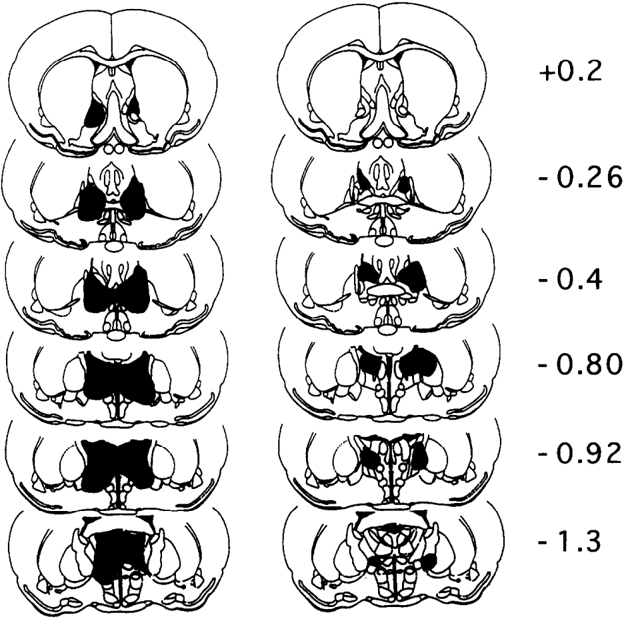
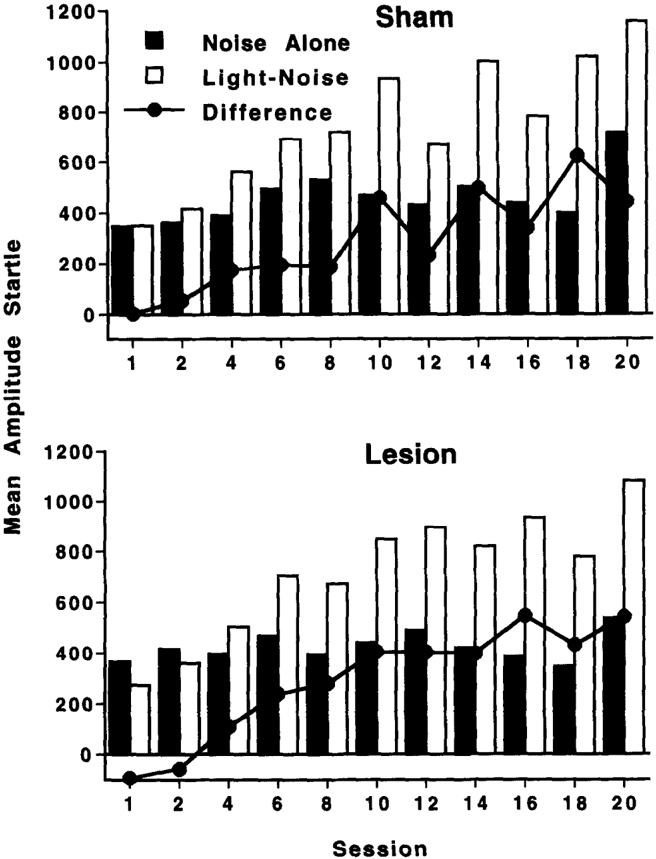
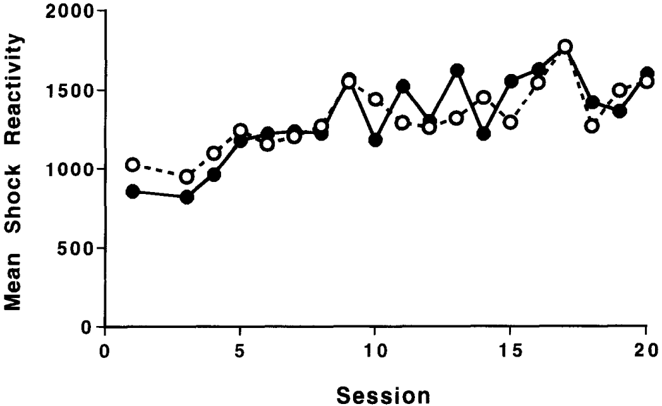
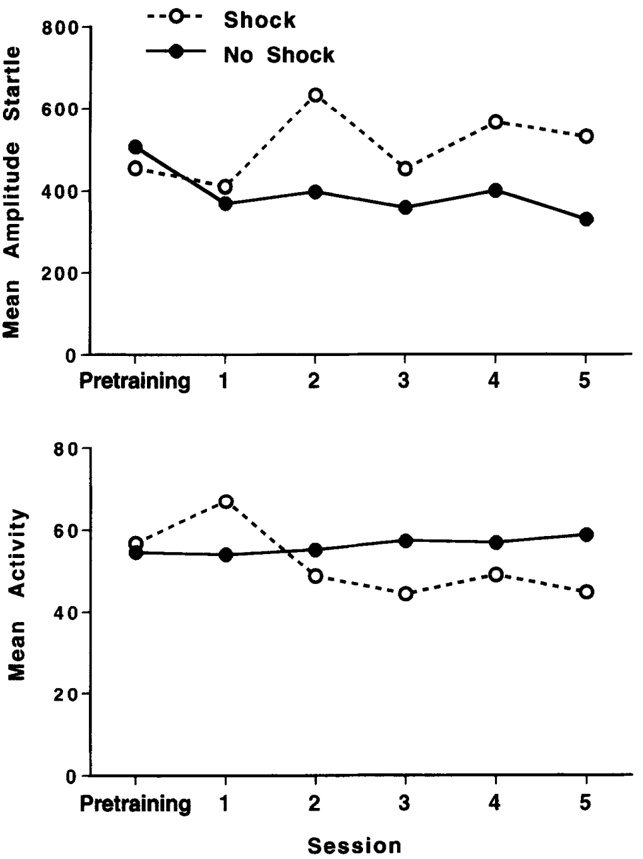
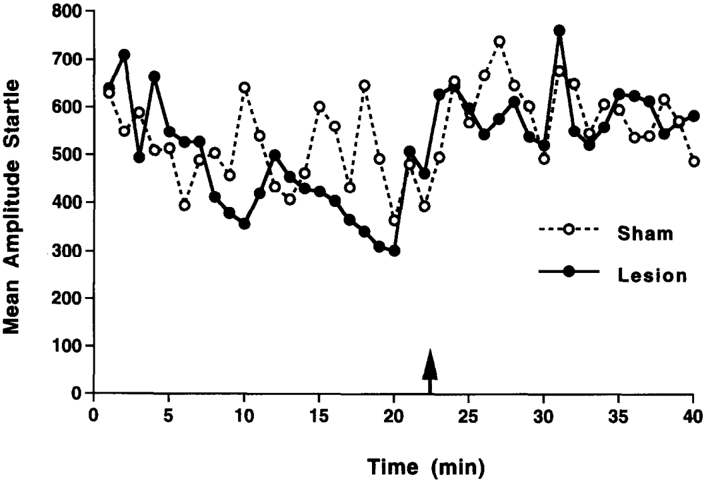
1. The effects of lesions of the bed nucleus of the stria terminalis (BST) on the acquisition of conditioned fear were examined. In Experiment 1, BST lesions did not block acquisition of fear-potentiated startle to an explicit visual conditioned stimulus (CS) over 20 days of training. However, BST lesions blocked a gradual elevation in baseline startle also seen over the course of training. 2. The gradual increase in baseline startle was replicated in Experiment 2 without the presence of an explicit CS, using unoperated subjects. Experiment 2 showed that the elevation was due to repetitive exposure to shock, because unshocked control subjects did not show any elevation over sessions. 3. In Experiment 3, lesions of the BST did not disrupt rapid sensitization of the startle reflex by footshock, showing that different neural substrates underlie sensitization of startle by acute and chronic exposure to footshock. 4. These data indicate that the BST, despite its anatomical continuity with the amygdala, is not critically involved in the acquisition of conditioned fear to an explicit CS. Nevertheless, the BST is involved in mediating a stress-induced elevation in the startle reflex. This suggests that the BST and the CeA, which constitute part of the "extended amygdala" have complementary roles in responses to stress.
Overview
The claims and statistics of this paper haven’t been checked yet.
Free: it reads the open-access text and checks the first 5 claims that cite a source we can check. Create a free account to check every claim.
Integrity signals
Registry
Cites
Statistics
Figures
Verification
Claims the paper makes
The claims and statistics of this paper haven’t been checked yet.
Free: it reads the open-access text and checks the first 5 claims that cite a source we can check. Create a free account to check every claim.
Claims other papers make about this one
Each is checked against this paper’s own text: does it say what the citing paper says it does?
The cited source says what the claim attributes to it.
In the citing paper
“as long-lasting non-associative sensitization also appears to be a BNST-dependent phenomenon (eg, Gewirtz et al, 1998)”
From Phasic vs Sustained Fear in Rats and Humans: Role of the Extended Amygdala in Fear vs Anxiety (2010) · cites this paper as Gewirtz et al, 1998
Self-check
Percentages, sums and reported differences re-computed from the paper’s own numbers.
The self-check needs the paper’s full text.
Citations
Cites
The Rat Brain in Stereotaxic Coordinates
(1982) · Elsevier eBooks · doi:10.1016/c2009-0-63235-9 · Cited by 51,963
The rat brain in stereotaxic coordinates
Palkovits, M. (1983) · Neuropeptides · doi:10.1016/0143-4179(83)90049-5 · Cited by 28,831
Paxinos, G. (1985) · Cited by 3,715
Squire, L. R. (1984) · The Biology of Learning · doi:10.1007/978-3-642-70094-1_32 · Cited by 2,107
LeDoux, J., Iwata, J., Cicchetti, P., & Reis, D. (1988) · The Journal of Neuroscience · doi:10.1523/jneurosci.08-07-02517.1988 · Cited by 1,580
The amygdala: Neurobiological aspects of emotion, memory, and mental dysfunction.
Aggleton, J. P. (1992) · Wiley-Liss eBooks · Cited by 1,536
Nemeroff, C. B., Widerlöv, E., Bissette, G., Walléus, H., Karlsson, I., Eklund, K., Kilts, C. D., Loosen, P. T., & Vale, W. (1984) · Science · doi:10.1126/science.6334362 · Cited by 1,485
The amygdala: Neurobiological aspects of emotion, memory and mental dysfunction
Scheel-Krüger, J. (1993) · Journal of Chemical Neuroanatomy · doi:10.1016/0891-0618(93)90037-5 · Cited by 1,267
Walker, D. L., & Davis, M. (1997) · The Journal of Neuroscience · doi:10.1523/jneurosci.17-23-09375.1997 · Cited by 627
Self-citation(1992) · Cited by 626
Self-citation
Research works printed but not linked: 2
- 4. DARNELL, A., BREMER, J. D., LICINO, J., CRYSTAL, J., NEMEROFF, C. B ., OWENS, M., ERDOS, J. AND CHARNEY, D. S. (1994) CSF levels of
- Davis, 1995, The roles of the amygdala and bed nucleus of the stria terminalis (BNST) in the acquisition of fear potentiated startle using both explicit and contextual cues, Soc. Neurosci. Abst., 21, 1224
Cited by
Items 101–149 of 149
Electrical stimulation of the bed nucleus of the stria terminalis reduces anxiety in a rat model
Luyck, K., Tambuyzer, T., Deprez, M., Rangarajan, J. R., Nuttin, B., & Luyten, L. (2017) · Translational Psychiatry · doi:10.1038/tp.2017.2 · Cited by 29
Bjorni, M., Rovero, N. G., Yang, E. R., Holmes, A., & Halladay, L. R. (2020) · Learning & Memory · doi:10.1101/lm.050807.119 · Cited by 28
“Several past studies have shown that BNST is not necessary for some types of fear learning (Gewirtz et al. 1998, Hammack et al. 2004, Sullivan et al. 2004, Waddell et al. 2006, Duvarci et al. 2009).”
BackgroundResultKiyokawa, Y., Mikami, K., Mikamura, Y., Ishii, A., Takeuchi, Y., & Mori, Y. (2015) · Neuroscience · doi:10.1016/j.neuroscience.2015.04.055 · Cited by 21
“This dogma is based on findings in a variety of experimental models in which electrolytic (Gewirtz et al., 1998; Sullivan et al., 2004; Waddell et al., 2006) or chemical lesions (LeDoux et al., 1988; Duvarci et al., 2009), as well as inactivation (Walker and Davis, 1997), of the BNST did not…”
BackgroundCalixto, A. V., Duarte, F. S., de Moraes, C. E. O., Faria, M. S., & de Lima, T. C. M. (2008) · Behavioural Brain Research · doi:10.1016/j.bbr.2008.01.018 · Cited by 22
Sink, K. S., Davis, M., & Walker, D. L. (2013) · Learning & Memory · doi:10.1101/lm.032482.113 · Cited by 26
“In other studies, effects of BNST manipulations on what appear to be shock-induced nonassociative sensitization have been reported (Gewirtz et al. 1998; Davis and Walker 2013).”
BackgroundSelf-citationPassos, R. B. F., Figueira, I. L. D. V., Mendlowicz, M. V., de Moraes, C. L., & Coutinho, E. S. F. (2012) · Brazilian Journal of Psychiatry · doi:10.1590/s1516-44462012000200007 · Cited by 28
Mirshekar, M., Abrari, K., Goudarzi, I., & Rashidy‐Pour, A. (2013) · Neurobiology of Learning and Memory · doi:10.1016/j.nlm.2013.02.003 · Cited by 19
Weber, M. F., & Richardson, R. (2001) · Behavioral Neuroscience · doi:10.1037/0735-7044.115.6.1273 · Cited by 22
Osuch, E. A., Ursano, R. J., He, L., Webster, M. J., Hough, C., Fullerton, C. S., & Leskin, G. A. (2004) · Psychiatry · doi:10.1521/psyc.67.4.353.56565 · Cited by 21
Daniel, S., Menigoz, A., Guo, J., Ryan, S. J., Seth, S., & Rainnie, D. G. (2019) · Neuropharmacology · doi:10.1016/j.neuropharm.2019.03.013 · Cited by 16
Girardi, C. E. N., Tiba, P. A., Llobet, G. B., Levin, R. R., Abílio, V. C., & Suchecki, D. (2013) · Frontiers in Behavioral Neuroscience · doi:10.3389/fnbeh.2013.00134 · Cited by 17
“PTSD basic research is focused mainly in rodent models in which longterm associative and non-associative behavioral alterations (as conditioned fear, hyperarousal, blunted emotionality and exaggerated startle response) are assessed following a strongly aversive experience that is considered to be traumatic (Charney et…”
BackgroundInfluentialRaz, S., & Berger, B. D. (2010) · Pharmacology Biochemistry and Behavior · doi:10.1016/j.pbb.2010.04.007 · Cited by 16
“It has been also suggested that another structure may play an important role in the startle-enhancing effects of more durable states of stress and anxiety — the bed nucleus of the stria terminalis (BNST) (Davis et al., 1997; Gewirtz et al., 1998; Grillon and Baas, 2003; Koch, 1999).”
InfluentialBasolateral and central amygdala orchestrate how we learn whom to trust
Sladky, R., Riva, F., Rosenberger, L. A., van Honk, J., & Lamm, C. (2021) · Communications Biology · doi:10.1038/s42003-021-02815-6 · Cited by 19
Costanzi, M., Saraulli, D., Cannas, S., Dâ€TMAlessandro, F., Florenzano, F., Rossi‐Arnaud, C., & Cestari, V. (2014) · Frontiers in Behavioral Neuroscience · doi:10.3389/fnbeh.2014.00279 · Cited by 18
“There is evidence that this nonassociative component is dependent on US intensity (Harris, 1943; Kamprath and Wotjak, 2004; Siegmund and Wotjak, 2007a) and largely independent from the associative memory (Gewirtz et al., 1998; Siegmund and Wotjak, 2007b).”
BackgroundStria terminalis microstructure in humans predicts variability in orienting towards threat
Koller, K., Hatton, C., Rogers, R. D., & Rafal, R. D. (2019) · European Journal of Neuroscience · doi:10.1111/ejn.14504 · Cited by 12
“Whereas in unlesioned animals, the startle response increases over time on repeated exposure to foot shock, long-term sensitisation to repeated foot shock does not occur in BNST lesioned animals (Gewirtz, McNish and Davis, 1998).”
Ciriello, J., Caverson, M. M., & Li, Z.-S. (2013) · Neuroscience · doi:10.1016/j.neuroscience.2013.09.032 · Cited by 13
Huhman, K. L., & Jasnow, A. M. (2005) · Oxford University Press eBooks · doi:10.1093/acprof:oso/9780195168761.003.0013 · Cited by 12
Sex differences in BNST signaling and BNST CRF in fear processingPreprint
Hon, O. J., Neira, S., Flanigan, M. E., Roland, A. V., Caira, C. M., Sides, T. R., D'Ambrosio, S. L., Lee, S., Simpson, Y., Buccini, M. C., et al. (2025) · eLife · doi:10.7554/elife.89189 · Cited by 14
“The acoustic startle test serves as a valuable measure of psychomotor arousal, and elevated startle responses are commonly seen in individuals with anxiety disorders ( Johnson et al., 2012 ; Gewirtz et al., 1998 ).”
Efferent projections of Nps ‐expressing neurons in the parabrachial region
Zhang, R., Huang, D., Gasparini, S., & Geerling, J. C. (2024) · The Journal of Comparative Neurology · doi:10.1002/cne.25629 · Cited by 11
“The BST also plays a role in sustained responses to threats (Davis et al., 2010; Gewirtz et al., 1998; Walker et al., 2003) and is implicated in generalized anxiety disorder in humans (Lebow & Chen, 2016; Yassa et al., 2012).”
BackgroundRaz, S. (2013) · Physiology & Behavior · doi:10.1016/j.physbeh.2013.03.009 · Cited by 10
Luyck, K., Nuttin, B., & Luyten, L. (2017) · Brain Structure and Function · doi:10.1007/s00429-017-1591-z · Cited by 9
Luyten, L., Vansteenwegen, D., van Kuyck, K., & Bart (2011) · Acta Neurobiologiae Experimentalis · doi:10.55782/ane-2011-1855 · Cited by 9
“…in the literature, most of these are cued conditioning procedures (training with cue-shock pairings) or ‘classical’ contex- tual conditioning procedures (training with shocks alone or with cue-shock pairings; Fanselow and Helmstetter 1988, Kim and Davis 1993, Gewirtz et al. 1997, 1998, Fendt 2001).”
BackgroundNeural systems involved in fear and anxiety based on the fear-potentiated startle test
Davis, M. (2007) · Elsevier eBooks · doi:10.1016/b978-012372540-0/50013-3 · Cited by 7
Self-citationAgonistic behaviors and neuronal activation in sexually naïve female Mongolian gerbils
Pan, Y., Zhu, Q., Wang, X., Chen, J., Wen, B., Zhang, Z., & Wang, Z. (2020) · Behavioural Brain Research · doi:10.1016/j.bbr.2020.112860 · Cited by 8
Bed nucleus of the stria terminalis regulates fear to unpredictable threat signalsPreprint
Goode, T. D., Ressler, R. L., Acca, G. M., Miles, O. W., & Maren, S. (2018) · bioRxiv (Cold Spring Harbor Laboratory) · doi:10.1101/376228 · Cited by 8
“Early work on this question revealed that BNST lesions in rats impair defensive behaviors 69 evoked by unconditioned threats (Gewirtz et al., 1998).”
Luyck, K., Arckens, L., Nuttin, B., & Luyten, L. (2020) · Progress in Neuro-Psychopharmacology and Biological Psychiatry · doi:10.1016/j.pnpbp.2020.109920 · Cited by 6
Tiermodelle für Angst und Angststörungen
Pawlak, C. R., & Weyers, P. (2006) · Psychologische Rundschau · doi:10.1026/0033-3042.57.3.139 · Cited by 6
Hebb, A. L. O., Zacharko, R. M., Bowie, J. P., & Drolet, G. (2003) · Behavioral Neuroscience · doi:10.1037/0735-7044.117.4.704 · Cited by 4
Valdez, G. R., Zorrilla, E. P., & Koob, G. F. (2005) · Drug Development Research · doi:10.1002/ddr.20024 · Cited by 4
“, 2002], areas believed to mediate the behavioral stress response [Gewirtz et al., 1998; Hatalski et al., 1998; Möller et al., 1997].”
Maren, S. (2017) · Elsevier eBooks · doi:10.1016/b978-0-12-809324-5.21090-0 · Cited by 5
Sex differences in BNST signaling and BNST CRF in fear processing
Hon, O. J., Neira, S., Flanigan, M. E., Roland, A. V., Caira, C. M., Sides, T. R., D’Ambrosio, S., Lee, S., Simpson, Y., Buccini, M. C., et al. (2025) · eLife · doi:10.1101/2023.04.10.535848 · Cited by 3
Maren, S. (2008) · Elsevier eBooks · doi:10.1016/b978-012370509-9.00129-7 · Cited by 6
Potentiation of the Startle Reflex as a Behavioral Measure of Anxiety
Gewirtz, J. C., & Radke, A. K. (2016) · Springer eBooks · doi:10.1007/978-1-4939-3777-6_11 · Cited by 1
Self-citationOsuch, E. A., Ursano, R. J., Li, H., Webster, M. J., Hough, C., Fullerton, C. S., & Leskin, G. A. (2022) · Psychiatry · doi:10.1080/00332747.2022.2068916 · Cited by 1
Hon, O. J., Flanigan, M. E., Roland, A. V., Caira, C. M., Sides, T. R., D’Ambrosio, S., Lee, S., Simpson, Y., Buccini, M. C., Machinski, S. N., et al. (2023) · eLife · doi:10.7554/elife.89189.1 · Cited by 3
Agostini, A. (2013) · Library, Museums and Press - UDSpace (University of Delaware)
Valdez, G. R. (2016) · Springer eBooks · doi:10.1007/978-81-322-2803-5_44
The role of the bed nucleus of the stria terminalis in fear and anxiety
Güngör, N. Z. (2016) · doi:10.7282/t36112n1
“They demonstrated that electrolytic (Hitchcock and Davis, 1991; Gewirtz et al., 1998) and chemical (LeDoux et al.”
Contributions of Genetically Defined Cell Populations in the Extended Amygdala to Emotional Behavior
Mazzone, C. M. (2017) · Carolina Digital Repository (University of North Carolina at Chapel Hill) · doi:10.17615/mn8w-xr58
Predator cognition and the evolution of deimatic displays
Holmes, G. G. (2019)
Computational and Human Learning Models of Generalized Unsafety
Huskey, A. (2020) · VTechWorks (Virginia Tech) · Cited by 1
Sladky, R., Riva, F., Rosenberger, L. A., van Honk, J., & Lamm, C. (2021) · bioRxiv (Cold Spring Harbor Laboratory) · doi:10.1101/2021.05.03.442429
Maximino, C. (2012) · SpringerBriefs in neuroscience · doi:10.1007/978-1-4614-4048-2_1
Hon, O. J., Neira, S., Flanigan, M. E., Roland, A. V., Caira, C. M., Sides, T. R., D’Ambrosio, S., Lee, S., Simpson, Y., Buccini, M. C., et al. (2025) · eLife · doi:10.7554/elife.89189.2
The neural circuitry of fear conditioning : a theoretical account
Angelhuber, M. (2016) · theses.fr (ABES) · doi:10.70675/df1f8188z8908z4025zaa82z92507ac9751b
Looking for trouble: A common threat‐detection mechanism underlying pain, fear, and anxiety
Barlassina, L. (2026) · Mind & Language · doi:10.1111/mila.70021
Effects of chronic variable stress across developmental stages in mice
Stevens, S. (2011) · e-Publications@Marquette (Marquette University)
Metadata
- Authors
- Gewirtz, J. C., Mcnish, K. A., & Davis, M.
- Affiliations
- Yale University (US)
- Corresponding author
- Gewirtz, Jonathan C.
- Venue
- Progress in Neuro-Psychopharmacology and Biological Psychiatry
- Publisher
- Elsevier BV
- Published
- 1998-05
- Volume
- 22
- Issue
- 4
- Pages
- 625-648
- ISSN
- 0278-5846 (ISSN-L)
- OpenAlex
- W1991858949
- Semantic Scholar
- eee820f35e07632c96eddf4e882f4fd314684d15
- Cited by
- 149
- References
- 30
- Citations by year
- 2026: 1 · 2025: 2 · 2024: 1 · 2023: 2 · 2022: 2 · 2021: 4 · 2020: 5 · 2019: 7 · 2018: 5 · 2017: 6 · 2016: 7 · 2015: 2 · 2014: 2 · 2013: 11 · 2012: 4
- FWCI
- 2.76
- Type
- journal article
- Language
- en
- Open access
- hybrid
- doi.org
- Licence
- cc-by-nc-nd
- www.elsevier.com/tdm/userlicense/1.0/ (tdm)
- www.elsevier.com/legal/tdmrep-license (tdm)
- creativecommons.org/licenses/by-nc-nd/4.0/ (vor, 96 d)
- Locations
- Progress in Neuro-Psychopharmacology and Biological Psychiatry (publishedVersion, cc-by-nc-nd)
- PubMed (publishedVersion)
- Funders
- National Institute of Mental Health (MH11370, T32MH019951, MH-19951, MH 47840, MH 00004, F31MH011370)
- Topics
- Life Sciences › Neuroscience › Cognitive Neuroscience › Memory and Neural Mechanisms
- Life Sciences › Neuroscience › Behavioral Neuroscience › Stress Responses and Cortisol
- Life Sciences › Neuroscience › Cellular and Molecular Neuroscience › Neurotransmitter Receptor Influence on Behavior
- Keywords
- bed nucleus of the stria terminalis, acoustic startle response, fear-potentiated startle, footshock, stress, central amygdala, extended amygdala, lesion studies
- MeSH terms
- Acoustic Stimulation, Amygdala, Animals, Conditioning, Operant, Corticotropin-Releasing Hormone, Fear, Male, Reflex, Startle, Rats, Sprague-Dawley, Rats
About these checks
Registry, retraction, Cites and statistics results are computed, not judged, with one exception: a printed reference that no index lists is read once by a model before it counts as a citation error. Claims are extracted by a model and kept only when their quote appears verbatim in the text; each cited source is then checked, with a model’s help, for whether it says what the claim relies on. Those verdicts can be wrong — read the claim’s quote and the cited source before relying on one.
Statistics and arithmetic are recomputed, not judged.
Confidence bands are shown only for fields calibrated on our annotated test set. None is calibrated yet, so no band is shown.
What counts as a claim ›How we measure confidence ›How we check this ›
Are you an author, or do you see a problem with this page? Request a review
Data sources
Bibliographic data: Semantic Scholar, OpenAlex, Crossref.
Contains information from the Semantic Scholar Academic Graph Datasets, made available under the ODC Attribution License (ODC-BY 1.0).
Semantic Scholar’s data is described in: Kinney, R., et al. (2023). The Semantic Scholar Open Data Platform. arXiv:2301.10140.
