

Lesions of the bed nucleus of the stria terminalis block sensitization of the acoustic startle reflex produced by repeated stress, but not fear-potentiated startle
Open accessThe DOI matches its Crossref record; 29 of the 30 references it cites were found in a registry or an index.
Abstract
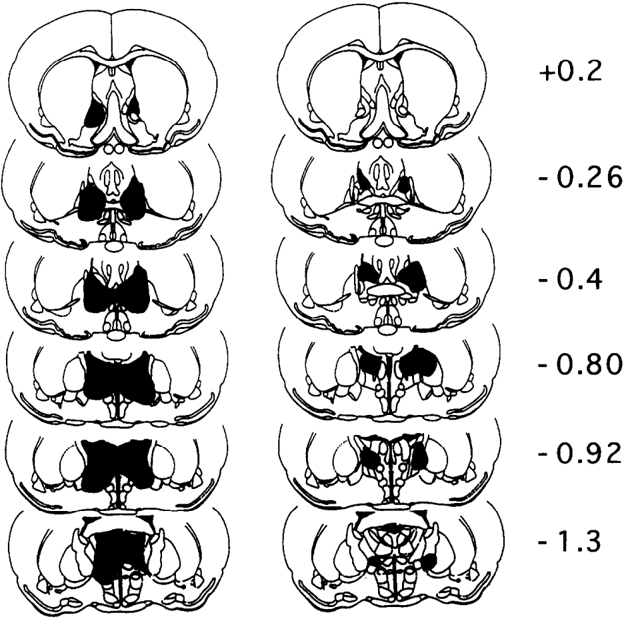
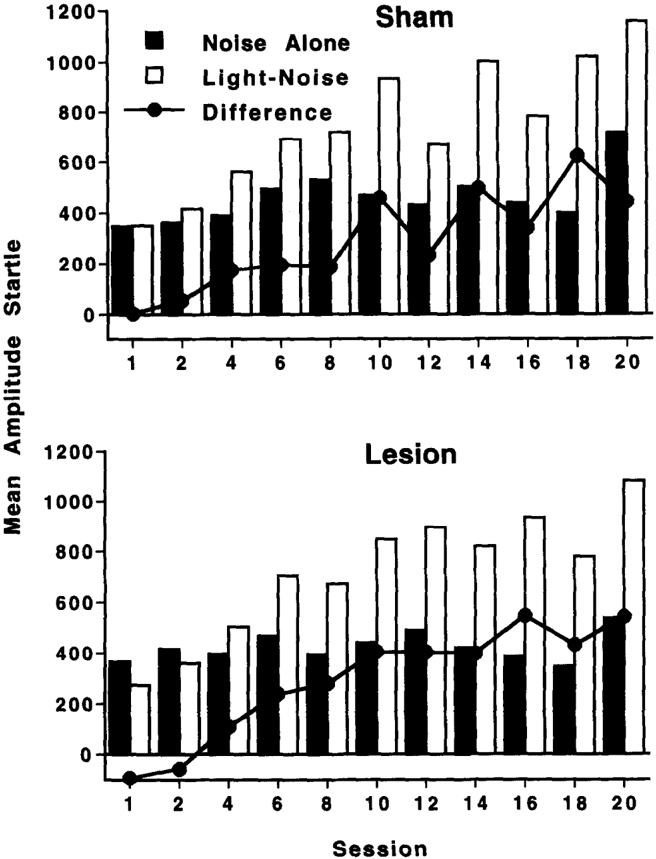
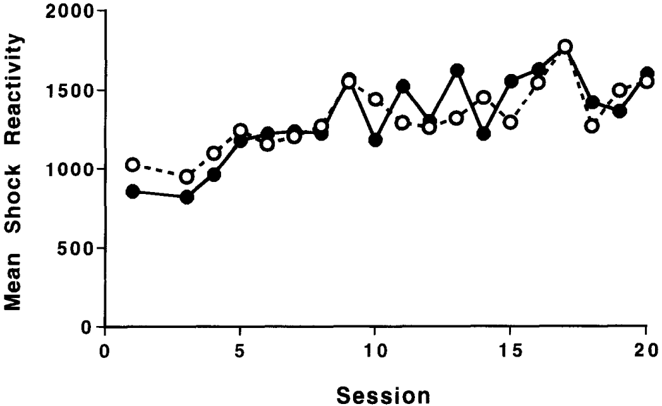
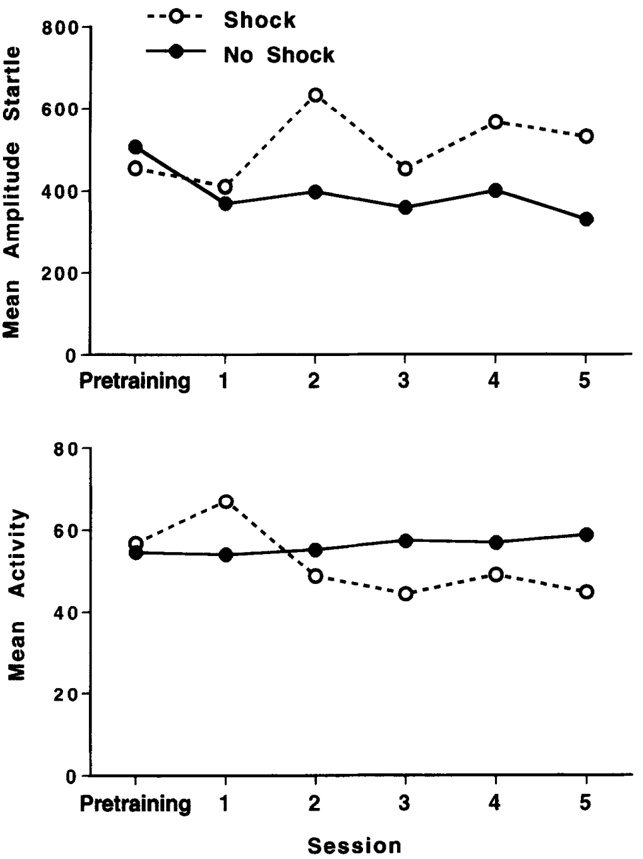
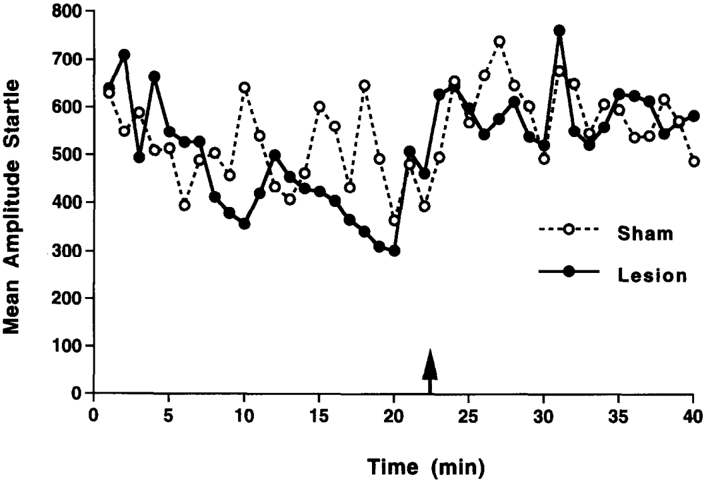
1. The effects of lesions of the bed nucleus of the stria terminalis (BST) on the acquisition of conditioned fear were examined. In Experiment 1, BST lesions did not block acquisition of fear-potentiated startle to an explicit visual conditioned stimulus (CS) over 20 days of training. However, BST lesions blocked a gradual elevation in baseline startle also seen over the course of training. 2. The gradual increase in baseline startle was replicated in Experiment 2 without the presence of an explicit CS, using unoperated subjects. Experiment 2 showed that the elevation was due to repetitive exposure to shock, because unshocked control subjects did not show any elevation over sessions. 3. In Experiment 3, lesions of the BST did not disrupt rapid sensitization of the startle reflex by footshock, showing that different neural substrates underlie sensitization of startle by acute and chronic exposure to footshock. 4. These data indicate that the BST, despite its anatomical continuity with the amygdala, is not critically involved in the acquisition of conditioned fear to an explicit CS. Nevertheless, the BST is involved in mediating a stress-induced elevation in the startle reflex. This suggests that the BST and the CeA, which constitute part of the "extended amygdala" have complementary roles in responses to stress.
Overview
The claims and statistics of this paper haven’t been checked yet.
Free: it reads the open-access text and checks the first 5 claims that cite a source we can check. Create a free account to check every claim.
Integrity signals
Registry
Cites
Statistics
Figures
Verification
Claims the paper makes
The claims and statistics of this paper haven’t been checked yet.
Free: it reads the open-access text and checks the first 5 claims that cite a source we can check. Create a free account to check every claim.
Claims other papers make about this one
Each is checked against this paper’s own text: does it say what the citing paper says it does?
The cited source says what the claim attributes to it.
In the citing paper
“as long-lasting non-associative sensitization also appears to be a BNST-dependent phenomenon (eg, Gewirtz et al, 1998)”
From Phasic vs Sustained Fear in Rats and Humans: Role of the Extended Amygdala in Fear vs Anxiety (2010) · cites this paper as Gewirtz et al, 1998
Self-check
Percentages, sums and reported differences re-computed from the paper’s own numbers.
The self-check needs the paper’s full text.
Citations
Cites
The Rat Brain in Stereotaxic Coordinates
(1982) · Elsevier eBooks · doi:10.1016/c2009-0-63235-9 · Cited by 51,963
The rat brain in stereotaxic coordinates
Palkovits, M. (1983) · Neuropeptides · doi:10.1016/0143-4179(83)90049-5 · Cited by 28,831
Paxinos, G. (1985) · Cited by 3,715
Squire, L. R. (1984) · The Biology of Learning · doi:10.1007/978-3-642-70094-1_32 · Cited by 2,107
LeDoux, J., Iwata, J., Cicchetti, P., & Reis, D. (1988) · The Journal of Neuroscience · doi:10.1523/jneurosci.08-07-02517.1988 · Cited by 1,580
The amygdala: Neurobiological aspects of emotion, memory, and mental dysfunction.
Aggleton, J. P. (1992) · Wiley-Liss eBooks · Cited by 1,536
Nemeroff, C. B., Widerlöv, E., Bissette, G., Walléus, H., Karlsson, I., Eklund, K., Kilts, C. D., Loosen, P. T., & Vale, W. (1984) · Science · doi:10.1126/science.6334362 · Cited by 1,485
The amygdala: Neurobiological aspects of emotion, memory and mental dysfunction
Scheel-Krüger, J. (1993) · Journal of Chemical Neuroanatomy · doi:10.1016/0891-0618(93)90037-5 · Cited by 1,267
Walker, D. L., & Davis, M. (1997) · The Journal of Neuroscience · doi:10.1523/jneurosci.17-23-09375.1997 · Cited by 627
Self-citation(1992) · Cited by 626
Self-citation
Research works printed but not linked: 2
- 4. DARNELL, A., BREMER, J. D., LICINO, J., CRYSTAL, J., NEMEROFF, C. B ., OWENS, M., ERDOS, J. AND CHARNEY, D. S. (1994) CSF levels of
- Davis, 1995, The roles of the amygdala and bed nucleus of the stria terminalis (BNST) in the acquisition of fear potentiated startle using both explicit and contextual cues, Soc. Neurosci. Abst., 21, 1224
Cited by
Phasic vs Sustained Fear in Rats and Humans: Role of the Extended Amygdala in Fear vs Anxiety
Davis, M., Walker, D. L., Miles, L., & Grillon, C. (2010) · Neuropsychopharmacology · doi:10.1038/npp.2009.109 · Cited by 1,513
“However, as longlasting non-associative sensitization also appears to be a BNST-dependent phenomenon (eg, Gewirtz et al, 1998), these findings, by either interpretation, would count as yet another example of BNST-dependent long-duration startle increases susceptible to CRF-R1 blockade.”
BackgroundSelf-citationFear and anxiety: Animal models and human cognitive psychophysiology
Lang, P. J., Davis, M., & Öhman, A. (2000) · Journal of Affective Disorders · doi:10.1016/s0165-0327(00)00343-8 · Cited by 1,162
Self-citationRole of the bed nucleus of the stria terminalis versus the amygdala in fear, stress, and anxiety
Walker, D. L., Toufexis, D. J., & Davis, M. (2003) · European Journal of Pharmacology · doi:10.1016/s0014-2999(03)01282-2 · Cited by 838
“In Gewirtz et al. (1998), the effect developed gradually over many days and persisted for at least 24 h (i.e., the interval between the final shock on the preceding training day and the baseline test on the following day).”
BackgroundMethodInfluentialSelf-citationNeural systems involved in fear and anxiety measured with fear-potentiated startle.
Davis, M. (2006) · American Psychologist · doi:10.1037/0003-066x.61.8.741 · Cited by 592
Self-citationGrillon, C., & Baas, J. (2003) · Clinical Neurophysiology · doi:10.1016/s1388-2457(03)00202-5 · Cited by 563
Are different parts of the extended amygdala involved in fear versus anxiety?
Davis, M. (1998) · Biological Psychiatry · doi:10.1016/s0006-3223(98)00288-1 · Cited by 549
“For example, lesions of the bed nucleus of the stria terminalis blocked long-term sensitization of the startle reflex ( Gewirtz et al 1998 ) or the excitatory effect of the peptide CRH on startle (Lee and Davis 1997 and see below).”
BackgroundSelf-citationStartle reactivity and anxiety disorders: aversive conditioning, context, and neurobiology
Grillon, C. (2002) · Biological Psychiatry · doi:10.1016/s0006-3223(02)01665-7 · Cited by 494
“This elevation is blocked by lesions of the bed nucleus of the stria terminalis but not by lesions of the amygdala (Gewirtz et al 1998).”
BackgroundModels and mechanisms of anxiety: evidence from startle studies
Grillon, C. (2008) · Psychopharmacology · doi:10.1007/s00213-007-1019-1 · Cited by 456
“Both the central nucleus of the amygdala (CeA) and the BNST receive highly processed information from the basolateral nuclei of the amygdala and send similar downstream connections to brain structures that mediate the expression of fear and anxiety (Walker et al. 2003).”
BackgroundResultInfluentialPathways to relapse: the neurobiology of drug- and stress-induced relapse to drug-taking.
Stewart, J. (2000) · PubMed Central · Cited by 418
The role of amygdala glutamate receptors in fear learning, fear-potentiated startle, and extinction
Walker, D. L., & Davis, M. (2002) · Pharmacology Biochemistry and Behavior · doi:10.1016/s0091-3057(01)00698-0 · Cited by 355
“…and Davis, 2000); electrolytic lesions of the BNST disrupt the increase in startle that develops over days in response to daily footshock exposure (Gewirtz et al., 1998); and axon-sparing lesions of the BNST abolish the increase in startle produced by intracerebroventricular administration of the…”
BackgroundSelf-citationErb, S., & Stewart, J. (1999) · The Journal of Neuroscience · doi:10.1523/jneurosci.19-20-j0006.1999 · Cited by 350
“Furthermore, our findings support the view that the BNST is preferentially involved in mediating behavioral responses to unconditioned stress (Walker and Davis, 1997; Gewirtz et al., 1998); in the present experiments, neither the footshock stressor nor the CRF injections had been paired previously with the self-admini…”
BackgroundResultInfluentialWalker, D. L., Miles, L. A., & Davis, M. (2009) · Progress in Neuro-Psychopharmacology and Biological Psychiatry · doi:10.1016/j.pnpbp.2009.06.022 · Cited by 331
“Overall, the results of this series of experiments confirmed those of Gewirtz et al. (1998), extended them by showing a specific disruption of the expression of sensitization by BNST inactivation, and suggested a similar though perhaps weaker involvement of the BLA.”
BackgroundMethodResultInfluentialSelf-citationGrillon, C., & Morgan, C. A. (1999) · Journal of Abnormal Psychology · doi:10.1037/0021-843x.108.1.134 · Cited by 331
“The gradual sensitization of startle over the course of several days of training appears to be an unconditioned response to the cumulative effect of chronic stress (Gewirtz et al., 1998), possibly mediated by the BNST following the release of the stress hormone corticotropin-releasing hormone (CRH; Lee & Davis, 1996).”
BackgroundDAVIS, M., & SHI, C. (1999) · Annals of the New York Academy of Sciences · doi:10.1111/j.1749-6632.1999.tb09273.x · Cited by 328
Self-citationModulation of anxiety circuits by serotonergic systems
Lowry, C. A., Johnson, P. L., Hay-Schmidt, A., Mikkelsen, J., & Shekhar, A. (2005) · Stress · doi:10.1080/10253890500492787 · Cited by 300
“In contrast, exposure to inescapable stress appears to result in an anxiety-like emotional state that lasts for a period of approximately 24-48 h (Maier and Watkins 2005), while other experimental models of anxiety are associated with increased anxiety-related behavioral responses that are sustained for several weeks…”
BackgroundInfluentialSiegmund, A., & Wotjak, C. T. (2007) · Journal of Psychiatric Research · doi:10.1016/j.jpsychires.2006.07.017 · Cited by 269
The Bed Nucleus of the Stria Terminalis Mediates Inter-individual Variations in Anxiety and Fear
Duvarci, S., Bauer, E. P., & Paré, D. (2009) · The Journal of Neuroscience · doi:10.1523/jneurosci.2119-09.2009 · Cited by 251
“BNST lesions, however, do not disrupt conditioned fear to cues but contextual fear (LeDoux et al., 1988; Walker and Davis, 1997; Gewirtz et al., 1998; Sullivan et al., 2004).”
BackgroundOlive, M. F., Koenig, H. N., Nannini, M. A., & Hodge, C. W. (2002) · Pharmacology Biochemistry and Behavior · doi:10.1016/s0091-3057(01)00748-1 · Cited by 237
Role of corticotropin releasing factor in anxiety disorders: A translational research perspective
Risbrough, V. B., & Stein, M. B. (2006) · Hormones and Behavior · doi:10.1016/j.yhbeh.2006.06.019 · Cited by 236
“The extended amygdala (specifically the bed nucleus stria terminalis) is required for both CRFand stress-induced increases in startle (de Jongh et al., 2003;Gewirtz et al., 1998;Lee and Davis, 1997;Toufexis et al., this volume).”
BackgroundBurke, A. R., McCormick, C. M., Pellis, S. M., & Lukkes, J. L. (2017) · Neuroscience & Biobehavioral Reviews · doi:10.1016/j.neubiorev.2017.01.018 · Cited by 225
Lisieski, M. J., Eagle, A. L., Conti, A. C., Liberzon, I., & Perrine, S. A. (2018) · Frontiers in Psychiatry · doi:10.3389/fpsyt.2018.00196 · Cited by 220
“Despite the wide use of anxiety-like behavior as a marker of “PTSD-like” changes following SPS, there are no published reports of the effects of SPS on some brain regions important in anxiety-like behavior (for example, the bed nucleus of the stria terminalis and insula), even though these brain regions have been prev…”
BackgroundRosen, J. B. (2004) · Behavioral and Cognitive Neuroscience Reviews · doi:10.1177/1534582304265945 · Cited by 219
Functional heterogeneity in the bed nucleus of the stria terminalis
Gungor, N. Z., & Pare, D. (2016) · Journal of Neuroscience · doi:10.1523/jneurosci.0856-16.2016 · Cited by 214
“It was first observed that BNST lesions do not affect conditioned fear responses elicited by discrete conditioned sensory cues (CSs) (LeDoux et al., 1988; Hitchcock and Davis, 1991; Gewirtz et al., 1998) (Table 1), unless they were very long ( 8 min) (Waddell et al., 2006; Walker et al., 2009a).”
BackgroundSahuque, L. L., Kullberg, E. F., Mcgeehan, A. J., Kinder, J. R., Hicks, M. P., Blanton, M. G., Janak, P. H., & Olive, M. F. (2006) · Psychopharmacology · doi:10.1007/s00213-006-0362-y · Cited by 207
“…behavioral and endocrine responses to conditioned or unconditioned stressful stimuli (Bangasser et al. 2005; Davis et al. 1997; Fendt et al. 2003; Gewirtz et al. 1998; Gray et al. 1993; Hammack et al. 2004; Henke 1984; Schulz and Canbeyli 1999; Sullivan et al. 2004; Walker and Davis 1997; but…”
BackgroundSmith, R. J., & Aston-Jones, G. (2008) · Brain Structure and Function · doi:10.1007/s00429-008-0191-3 · Cited by 206
“Inactivation of BNST was shown to block modulation of startle related to unconditioned stressors such as light, CRF, and footshock, and inactivation of CeA blocked modulation of startle related to conditioned stressors, such as fear (Gewirtz et al. 1998; Lee and Davis 1997; Walker and Davis 1997).”
BackgroundAbrams, J. K., Johnson, P. L., Hay-Schmidt, A., Mikkelsen, J. D., Shekhar, A., & Lowry, C. A. (2005) · Neuroscience · doi:10.1016/j.neuroscience.2005.03.025 · Cited by 200
Early life experience alters behavior during social defeat: Focus on serotonergic systems
Gardner, K. L., Thrivikraman, K. V., Lightman, S. L., Plotsky, P. M., & Lowry, C. A. (2005) · Neuroscience · doi:10.1016/j.neuroscience.2005.07.042 · Cited by 169
Grillon, C., Baas, J. M. P., Pine, D. S., Lissek, S., Lawley, M., Ellis, V., & Levine, J. (2006) · Biological Psychiatry · doi:10.1016/j.biopsych.2005.11.027 · Cited by 157
“…the NST was responsible for the more sustained form of startle otentiation induced by unpredictable or unconditioned averive stimuli (Davis 1998; Gewirtz et al 1998; Walker and Davis rom the Mood and Anxiety Disorder Program, National Institutes of Mental Health, Bethesda, Maryland. ddress…”
BackgroundYassa, M. A., Hazlett, R. L., Stark, C. E. L., & Hoehn-Saric, R. (2012) · Journal of Psychiatric Research · doi:10.1016/j.jpsychires.2012.04.013 · Cited by 155
“, 2003), such as the gradual elevation in baseline startle seen in animals over the course of training (Gewirtz et al., 1998).”
BackgroundBrain Circuits Involved in Corticotropin‐Releasing Factor‐Norepinephrine Interactions during Stress
DUNN, A. J., SWIERGIEL, A. H., & PALAMARCHOUK, V (2004) · Annals of the New York Academy of Sciences · doi:10.1196/annals.1296.003 · Cited by 155
Dissociation of the morphological correlates of stress‐induced anxiety and fear
Pêgo, J. M., Morgado, P., Pinto, L. G., Cerqueira, J. J., Almeida, O. F. X., & Sousa, N. (2008) · European Journal of Neuroscience · doi:10.1111/j.1460-9568.2008.06112.x · Cited by 151
“Together, these findings highlight the stimulusdependent specificity of the neuronal circuitry responsible for generating anxiety (Gewirtz et al., 1998; Rosen et al., 1998; Dagnino-Subiabre et al., 2005; Miracle et al., 2006).”
BackgroundThe effect of gonadal hormones and gender on anxiety and emotional learning
Toufexis, D. J., Myers, K. M., & Davis, M. (2006) · Hormones and Behavior · doi:10.1016/j.yhbeh.2006.06.020 · Cited by 167
Self-citationValdez, G. R., Inoue, K., Koob, G. F., Rivier, J., Vale, W., & Zorrilla, E. P. (2002) · Brain Research · doi:10.1016/s0006-8993(02)02707-5 · Cited by 158
Neural Correlates of Competing Fear Behaviors Evoked by an Innately Aversive Stimulus
Mongeau, R., Miller, G. A., Chiang, E., & Anderson, D. J. (2003) · The Journal of Neuroscience · doi:10.1523/jneurosci.23-09-03855.2003 · Cited by 142
“However, in contrast to flight, the acoustic startle defense reflex, which was most often observed in S mice or mice placed in a new cage, is positively correlated with freezing behavior (Leaton and Borszcz, 1985) and facilitated by previous foot shock sensitization (Gewirtz et al., 1998).”
BackgroundValdez, G. R., Zorrilla, E. P., Rivier, J., Vale, W., & Koob, G. F. (2003) · Brain Research · doi:10.1016/s0006-8993(03)02971-8 · Cited by 153
Role of the bed nucleus of the stria terminalis in aversive learning and memory
Goode, T. D., & Maren, S. (2017) · Learning & Memory · doi:10.1101/lm.044206.116 · Cited by 162
“Additionally, stress (in the form of extensive footshock exposure) can potentiate acoustic startle in a separate context; lesions of the BNST block this effect (Gewirtz et al. 1998; also, see Hammack et al. 2004; Meloni et al. 2006).”
BackgroundHammack, S. E., Richey, K. J., Watkins, L. R., & Maier, S. F. (2004) · Behavioral Neuroscience · doi:10.1037/0735-7044.118.2.443 · Cited by 130
“Many studies have implicated the BNST in mediating the response to fearful or threatening stimuli (Davis et al., 1997; Fendt et al., 2003; Walker & Davis, 1997), whereas many others have not (Gewirtz et al., 1998; Hitchcock & Davis, 1991; LeDoux et al., 1988; Treit et al., 1998).”
BackgroundThe development of emotion-related neural circuitry in health and psychopathology
Monk, C. S. (2008) · Development and Psychopathology · doi:10.1017/s095457940800059x · Cited by 124
Walker, D., & Davis, M. (2002) · Psychopharmacology · doi:10.1007/s00213-002-1213-0 · Cited by 122
“Also, neither electrolytic (Gewirtz et al. 1998; Hitchcock and Davis 1991) nor chemical (Lee and Davis 1997) lesions of the BNST disrupt fear-potentiated startle to conditioned fear stimuli, and electrolytic BNST lesions also fail to disrupt conditioned freezing (LeDoux et al. 1988).”
BackgroundSelf-citationJasnow, A. M., Davis, M., & Huhman, K. L. (2004) · Behavioral Neuroscience · doi:10.1037/0735-7044.118.5.1052 · Cited by 118
Self-citationEffect of Darkness on Acoustic Startle in Vietnam Veterans With PTSD
Grillon, C., Morgan, C. A., Davis, M., & Southwick, S. M. (1998) · American Journal of Psychiatry · doi:10.1176/ajp.155.6.812 · Cited by 115
Self-citationBed nucleus of the stria terminalis regulates fear to unpredictable threat signals
Goode, T. D., Ressler, R. L., Acca, G. M., Miles, O. W., & Maren, S. (2019) · eLife · doi:10.7554/elife.46525 · Cited by 125
Costanzi, M., Cannas, S., Saraulli, D., Rossi-Arnaud, C., & Cestari, V. (2011) · Learning & Memory · doi:10.1101/lm.2175811 · Cited by 111
“Wotjak 2007b) and seem to involve different neurobiological substrates (Gewirtz et al. 1998).”
BackgroundNeuropeptide Regulation of Signaling and Behavior in the BNST
Kash, T. L., Pleil, K. E., Marcinkiewcz, C. A., Lowery-Gionta, E. G., Crowley, N., Mazzone, C., Sugam, J., Hardaway, J. A., & McElligott, Z. A. (2015) · Molecules and Cells · doi:10.14348/molcells.2015.2261 · Cited by 107
“This is not inconsistent with the data from the Davis group demonstrating that inactivation of the BNST can alter the fear response to a long duration (8 min) cue, suggesting that the BNST plays a role in responding to more diffuse stimuli (Davis and Shi, 1999; Davis and Walker, 2013, Davis et al., 1997a; 1997b; Gewir…”
BackgroundResultChronic Cold Stress Alters Prefrontal Cortical Modulation of Amygdala Neuronal Activity in Rats
Correll, C. M., Rosenkranz, J. A., & Grace, A. A. (2005) · Biological Psychiatry · doi:10.1016/j.biopsych.2005.04.009 · Cited by 121
Stress and the Neuroendocrinology of Anxiety Disorders
Pêgo, J. M., Sousa, J. C., Almeida, O., & Sousa, N. (2009) · Current Topics in Behavioral Neurosciences · doi:10.1007/7854_2009_13 · Cited by 106
Dunn, A. J., & Swiergiel, A. H. (2008) · European Journal of Pharmacology · doi:10.1016/j.ejphar.2007.11.069 · Cited by 106
“This response could be mediated by a disinhibition of the bed nucleus of the stria terminalis or the central nucleus of the amygdala (Gewirtz et al., 1998).”
BackgroundAnatomic and Physiologic Substrates of Emotion in an Animal Model
Davis, M. (1998) · Journal of Clinical Neurophysiology · doi:10.1097/00004691-199809000-00002 · Cited by 87
Self-citationTeneurin proteins possess a carboxy terminal sequence with neuromodulatory activity
Wang, L., Rotzinger, S., Chawaf, A. A., Elias, C. F., Baršytė-Lovejoy, D., Qian, X., Wang, N.-C., Cristofaro, A. D., Belsham, D. D., Bittencourt, J. C., et al. (2004) · Molecular Brain Research · doi:10.1016/j.molbrainres.2004.10.019 · Cited by 102
Dirks, A., Groenink, L., Schipholt, M. L., van der Gugten, J., Hijzen, T. H., Geyer, M. A., & Olivier, B. (2002) · Biological Psychiatry · doi:10.1016/s0006-3223(01)01323-3 · Cited by 90
Levita, L., Hammack, S. E., Mania, I., Li, X.-Y., Davis, M., & Rainnie, D. G. (2004) · Neuroscience · doi:10.1016/j.neuroscience.2004.06.037 · Cited by 84
Self-citationInhibition of the central extended amygdala by loud noise and restraint stress
Day, H. E. W., Nebel, S., Sasse, S., & Campeau, S. (2005) · European Journal of Neuroscience · doi:10.1111/j.1460-9568.2005.03865.x · Cited by 78
“There have recently been several reports dissociating the functional role of the amygdala and BST (Lee & Davis, 1997; Walker & Davis, 1997; Gewirtz et al., 1998), leading to the suggestion that the BST may be”
BackgroundNeuronal correlates of fear conditioning in the bed nucleus of the stria terminalis
Haufler, D., Nagy, F. Z., & Pare, D. (2013) · Learning & Memory · doi:10.1101/lm.031799.113 · Cited by 78
“…et al. 2011) studies suggest that CeA is required for the rapid expression of conditioned fear responses to discrete sensory cues (however, see Koo et al. 2004; Pitts et al. 2009), functions that are left intact by BNST lesions (Walker and Davis 1997; Gewirtz et al. 1998; Sullivan et al. 2004).”
BackgroundSiegmund, A., & Wotjak, C. T. (2006) · Physiology & Behavior · doi:10.1016/j.physbeh.2006.08.032 · Cited by 89
Contextual conditioning in rats as an animal model for generalized anxiety disorder
Luyten, L., Vansteenwegen, D., van Kuyck, K., Gabriëls, L. A., & Nuttin, B. (2011) · Cognitive Affective & Behavioral Neuroscience · doi:10.3758/s13415-011-0021-6 · Cited by 85
Erb, S., Shaham, Y., & Stewart, J. (2001) · Stress · doi:10.3109/10253890109014753 · Cited by 73
Optogenetic strategies to investigate neural circuitry engaged by stress
Sparta, D. R., Jennings, J. H., Ung, R. L., & Stuber, G. D. (2013) · Behavioural Brain Research · doi:10.1016/j.bbr.2013.05.007 · Cited by 72
Vulnerability Factors for Anxiety Disorders in Children and Adolescents
Merikangas, K. R. (2005) · Child and Adolescent Psychiatric Clinics of North America · doi:10.1016/j.chc.2005.06.005 · Cited by 98
Startle potentiation by threat of aversive stimuli and darkness in adolescents: a multi-site study
Grillon, C., Merikangas, K. R., Dierker, L., Snidman, N., Arriaga, R. I., Kagan, J., Donzella, B., Dikel, T., & Nelson, C. (1999) · International Journal of Psychophysiology · doi:10.1016/s0167-8760(99)00002-1 · Cited by 70
Walker, D., Yang, Y., Ratti, E., Corsi, M., Trist, D., & Davis, M. (2009) · Neuropsychopharmacology · doi:10.1038/npp.2008.210 · Cited by 69
Self-citationNeuronal diversity of the amygdala and the bed nucleus of the stria terminalis
(2020) · Handbook of Behavioral Neuroscience · doi:10.1016/b978-0-12-815134-1.00003-9 · Cited by 68
Crown, E. D., King, T. E., Meagher, M. W., & Grau, J. W. (2000) · Behavioral Neuroscience · doi:10.1037//0735-7044.114.3.561 · Cited by 65
Janeček, M., & Dabrowska, J. (2019) · Cell and Tissue Research · doi:10.1007/s00441-018-2889-8 · Cited by 62
“2010) but not too short, discrete cues (LeDoux et al. 1988; Hitchcock and Davis 1991; Gewirtz et al. 1998) but see Luyck et al.”
InfluentialWood, R. I., & Swann, J. M. (2005) · Neuroscience · doi:10.1016/j.neuroscience.2005.05.029 · Cited by 63
Wilson, M. A., Grillo, C. A., Fadel, J. R., & Reagan, L. P. (2015) · Neurobiology of Stress · doi:10.1016/j.ynstr.2015.06.001 · Cited by 66
“Stressors that induce sensitized startle responses include repeated exposure to footshock (Davis and Walker, 2013; Walker and Davis, 1997; Gewirtz et al., 1998), a single prolonged stress paradigm (Yamamoto et al., 2009), predator stress (Adamec et al., 2012; Blundell et al., 2005), predator stress…”
BackgroundSchweimer, J. V., Fendt, M., & Schnitzler, H. (2004) · European Journal of Pharmacology · doi:10.1016/j.ejphar.2004.11.044 · Cited by 61
CHOI, D., Nguyen, M. M. N., Tamashiro, K. L., MA, L., Sakai, R. R., & Herman, J. P. (2006) · Physiology & Behavior · doi:10.1016/j.physbeh.2006.05.046 · Cited by 60
Hebb, A. L. O., Zacharko, R. M., Domínguez, H., Laforest, S., Gauthier, M. S., Levac, C., & Drolet, G. (2003) · Neuroscience · doi:10.1016/s0306-4522(02)00710-8 · Cited by 55
“Acoustic startle was included as a separate anxiogenic measure, distinct from light/dark box behavioral reactivity, responsive to repeated testing (Gewirtz et al., 1998).”
BackgroundHebb, A. L. O., Zacharko, R. M., Domínguez, H., Trudel, F., Laforest, S., & Drolet, G. (2002) · Neuropsychopharmacology · doi:10.1016/s0893-133x(02)00354-8 · Cited by 58
“…rats, lidocaine associated inactivation or electrolytic lesions of the basolateral nucleus of the amygdala prevented consolidation of the emotional learning and conditioning of acoustic startle (Gewirtz et al. 1998) as well as anxiety associated with repeated plus maze exposures (File et al. 1998).”
BackgroundToufexis, D., Davis, C., Hammond, A., & Davis, M. (2005) · The Journal of Neuroscience · doi:10.1523/jneurosci.0127-05.2005 · Cited by 49
“…that is exactly the opposite of that for CRF- or light enhanced-startle, which requires activation of the BNST and not the central nucleus of the amygdala (Hitchcock and Davis, 1986; Hitchcock and Davis, 1987; Kim and Davis, 1993; Lee and Davis, 1997b; Walker and Davis, 1997; Gewirtz et al., 1998).”
BackgroundSelf-citationPhasic and Sustained Fear are Pharmacologically Dissociable in Rats
Miles, L., Davis, M., & Walker, D. (2011) · Neuropsychopharmacology · doi:10.1038/npp.2011.29 · Cited by 47
Self-citationOliveira, M., Rodrigues, A. J., Leão, P., Cardona, D., Pêgo, J. M., & Sousa, N. (2011) · Psychopharmacology · doi:10.1007/s00213-011-2494-y · Cited by 67
“Conversely, inactivation of BNST did not disrupt fearpotentiated startle (Gewirtz et al. 1998; Walker and Davis 1997); however, more recently, it has been suggested that BNSTlat tonically inhibits fear-potentiated startle, probably through projections to the CeA (Meloni et al. 2006).”
Harris, A. C., Hanes, S. L., & Gewirtz, J. C. (2004) · Psychopharmacology · doi:10.1007/s00213-004-1889-4 · Cited by 49
“In addition, startle continues to be a sensitive measure of anxiety when tested repeatedly either within or across test sessions (Gewirtz et al. 1998).”
Self-citationMarkham, C. M., Norvelle, A., & Huhman, K. L. (2009) · Behavioural Brain Research · doi:10.1016/j.bbr.2008.10.022 · Cited by 44
“Additionally, using another Pavlovian-based model (fear potentiated startle) Gewirtz and colleagues [9] demonstrated that pre-training lesions of the BNST failed to block the startle response in rats, although lesions of the amygdala significantly disrupted the startle response [24].”
MethodMoaddab, M., & Dabrowska, J. (2017) · Neuropharmacology · doi:10.1016/j.neuropharm.2017.04.039 · Cited by 43
Güngör, N. Z., & Paré, D. (2013) · Journal of Neuroscience · doi:10.1523/jneurosci.3473-13.2014 · Cited by 46
“Indeed, electrolytic (Gewirtz et al., 1998; Sullivan et al., 2004) or neurotoxic (LeDoux et al.”
BackgroundMartinon, D., Lis, P., Roman, A. N., Tornesi, P., Applebey, S. V., Buechner, G., Olivera, V., & Dabrowska, J. (2019) · Translational Psychiatry · doi:10.1038/s41398-019-0474-x · Cited by 40
Hebb, A. L. O., Zacharko, R. M., Gauthier, M. S., & Drolet, G. (2003) · Brain Research · doi:10.1016/s0006-8993(03)03008-7 · Cited by 48
Immediate and long-lasting effects of chronic stress in the prepubertal age on the startle reflex
Maslova, L. N., Bulygina, V. V., & Popova, N. K. (2002) · Physiology & Behavior · doi:10.1016/s0031-9384(01)00648-5 · Cited by 45
Roman, C., Nebieridze, N., Sastre, A., & Reilly, S. (2006) · Behavioral Neuroscience · doi:10.1037/0735-7044.120.6.1257 · Cited by 43
What is the bed nucleus of the stria terminalis?
Dumont, É. C. (2009) · Progress in Neuro-Psychopharmacology and Biological Psychiatry · doi:10.1016/j.pnpbp.2009.07.006 · Cited by 48
Rasmussen, D. D., Crites, N. J., & Burke, B. L. (2008) · Psychoneuroendocrinology · doi:10.1016/j.psyneuen.2007.11.010 · Cited by 39
“We hypothesize that these overall increases may have been due to the moderate repeated stress associated with the weekly reminder sessions, since there is evidence that baseline startle reflex is gradually elevated in response to repeated stress (Gewirtz et al., 1998).”
BackgroundPelrine, E. R., Pasik, S. D., Bayat, L., Goldschmiedt, D., & Bauer, E. P. (2016) · Neurobiology of Learning and Memory · doi:10.1016/j.nlm.2016.10.008 · Cited by 39
Serotonin and the Neurobiology of Anxious States
Lowry, C. A., & Hale, M. W. (2010) · Handbook of behavioral neuroscience · doi:10.1016/s1569-7339(10)70091-6 · Cited by 40
Davis, M., & Walker, D. L. (2014) · Brain Structure and Function · doi:10.1007/s00429-013-0616-5 · Cited by 35
“Of special relevance to this study, Gewirtz et al. (1998) reported that pre-shock electrolytic lesions of the bed nucleus of the stria terminalis (BNST)— an area closely related to the amygdala (Alheid et al. 1995; Alheid and Heimer 1988; de Olmos and Heimer 1999) but one that may be more involved…”
BackgroundResultInfluentialSelf-citationRat strain-dependent effects of repeated stress on the acoustic startle response
Conti, L. H., & Printz, M. P. (2003) · Behavioural Brain Research · doi:10.1016/s0166-4328(03)00061-5 · Cited by 41
Unrelenting Fear Under Stress: Neural Circuits and Mechanisms for the Immediate Extinction Deficit
Maren, S. (2022) · Frontiers in Systems Neuroscience · doi:10.3389/fnsys.2022.888461 · Cited by 41
Behavioral Expression of Contextual Fear in Male and Female Rats
Russo, A. S., & Parsons, R. G. (2021) · Frontiers in Behavioral Neuroscience · doi:10.3389/fnbeh.2021.671017 · Cited by 44
Shock-induced hyperalgesia: IV. Generality.
Meagher, M. W., Ferguson, A. R., Crown, E. D., McLemore, S., King, T. E., Sieve, A. N., & Grau, J. W. (2001) · Journal of Experimental Psychology: Animal Behavior Processes · doi:10.1037//0097-7403.27.3.219 · Cited by 33
Urien, L., Stein, N. P., Ryckman, A., Bell, L., & Bauer, E. P. (2021) · Neurobiology of Learning and Memory · doi:10.1016/j.nlm.2021.107401 · Cited by 30
“BNST lesions do not typically interfere with conditioned fear responses to discrete sensory cues (Lee and Davis, 1997; Gewirtz et al., 1998) in males.”
BackgroundHantsoo, L. V., Golden, C. E. M., Kornfield, S. L., Grillon, C., & Epperson, C. N. (2018) · Current Psychiatry Reports · doi:10.1007/s11920-018-0906-y · Cited by 33
Long-term behavioral consequences of stress exposure in adolescent versus young adult rats
Saul, M. L., Tylee, D. S., Becoats, K., Guerrero, B. G., Sweeney, P., Helmreich, D. L., & Fudge, J. L. (2012) · Behavioural Brain Research · doi:10.1016/j.bbr.2012.01.022 · Cited by 33
Nagy, F. Z., & Paré, D. (2008) · Journal of Neurophysiology · doi:10.1152/jn.90936.2008 · Cited by 27
Luyten, L., van Kuyck, K., Vansteenwegen, D., & Nuttin, B. (2011) · Behavioural Brain Research · doi:10.1016/j.bbr.2011.03.066 · Cited by 26
Role of the PACAP system of the extended amygdala in the acoustic startle response in rats
Seiglie, M. P., Huang, L., Cottone, P., & Sabino, V. (2019) · Neuropharmacology · doi:10.1016/j.neuropharm.2019.107761 · Cited by 27
“It has been shown that ASR can be increased as an unconditioned effect of an acute stressor (footshock), with potentiation occurring within minutes of administration [54]; this sensitization is also observed following various chronic stress paradigms [41, 55], and it is likely to reflect a heightened state of anxiety…”
BackgroundHarris, A. C., Atkinson, D. M., Aase, D. M., & Gewirtz, J. C. (2006) · Neuroscience · doi:10.1016/j.neuroscience.2006.01.048 · Cited by 25
“Because he BNST and the NAc are less clearly implicated in fear-potentited startle (Lee and Davis, 1997; Walker and Davis, 1997; ewirtz et al., 1998; Schwienbacher et al., 2004; Josselyn et al., 005; Schweimer et al., 2005), a similar assessment in BNST- and Ac-implanted animals was not conducted.”
ResultSelf-citationEffects of BNST lesions in female rats on forced swimming and navigational learning
Pezük, P., Aydin, E., Aksoy‐Aksel, A., & Canbeyli, R. S. (2008) · Brain Research · doi:10.1016/j.brainres.2008.06.071 · Cited by 31
Activation of the septohippocampal system differentiates anxiety from fear in startle paradigms
Veening, J. G., Böcker, K. B. E., Verdouw, P. M., Olivier, B., de Jongh, R., & Groenink, L. (2009) · Neuroscience · doi:10.1016/j.neuroscience.2009.06.064 · Cited by 30
IL-2/15 receptor-β gene deletion alters neurobehavioral performance
Petitto, J. M., Huang, Z. L., Hartemink, D. A., & Beck, R. D. (2002) · Brain Research · doi:10.1016/s0006-8993(01)03393-5 · Cited by 27
Altered responsiveness of BNST and amygdala neurons in trauma-induced anxiety
Rodríguez-Sierra, O. E., Goswami, S., Turesson, H., & Paré, D. (2016) · Translational Psychiatry · doi:10.1038/tp.2016.128 · Cited by 26
Metadata
- Authors
- Gewirtz, J. C., Mcnish, K. A., & Davis, M.
- Affiliations
- Yale University (US)
- Corresponding author
- Gewirtz, Jonathan C.
- Venue
- Progress in Neuro-Psychopharmacology and Biological Psychiatry
- Publisher
- Elsevier BV
- Published
- 1998-05
- Volume
- 22
- Issue
- 4
- Pages
- 625-648
- ISSN
- 0278-5846 (ISSN-L)
- OpenAlex
- W1991858949
- Semantic Scholar
- eee820f35e07632c96eddf4e882f4fd314684d15
- Cited by
- 149
- References
- 30
- Citations by year
- 2026: 1 · 2025: 2 · 2024: 1 · 2023: 2 · 2022: 2 · 2021: 4 · 2020: 5 · 2019: 7 · 2018: 5 · 2017: 6 · 2016: 7 · 2015: 2 · 2014: 2 · 2013: 11 · 2012: 4
- FWCI
- 2.76
- Type
- journal article
- Language
- en
- Open access
- hybrid
- doi.org
- Licence
- cc-by-nc-nd
- www.elsevier.com/tdm/userlicense/1.0/ (tdm)
- www.elsevier.com/legal/tdmrep-license (tdm)
- creativecommons.org/licenses/by-nc-nd/4.0/ (vor, 96 d)
- Locations
- Progress in Neuro-Psychopharmacology and Biological Psychiatry (publishedVersion, cc-by-nc-nd)
- PubMed (publishedVersion)
- Funders
- National Institute of Mental Health (MH11370, T32MH019951, MH-19951, MH 47840, MH 00004, F31MH011370)
- Topics
- Life Sciences › Neuroscience › Cognitive Neuroscience › Memory and Neural Mechanisms
- Life Sciences › Neuroscience › Behavioral Neuroscience › Stress Responses and Cortisol
- Life Sciences › Neuroscience › Cellular and Molecular Neuroscience › Neurotransmitter Receptor Influence on Behavior
- Keywords
- bed nucleus of the stria terminalis, acoustic startle response, fear-potentiated startle, footshock, stress, central amygdala, extended amygdala, lesion studies
- MeSH terms
- Acoustic Stimulation, Amygdala, Animals, Conditioning, Operant, Corticotropin-Releasing Hormone, Fear, Male, Reflex, Startle, Rats, Sprague-Dawley, Rats
About these checks
Registry, retraction, Cites and statistics results are computed, not judged, with one exception: a printed reference that no index lists is read once by a model before it counts as a citation error. Claims are extracted by a model and kept only when their quote appears verbatim in the text; each cited source is then checked, with a model’s help, for whether it says what the claim relies on. Those verdicts can be wrong — read the claim’s quote and the cited source before relying on one.
Statistics and arithmetic are recomputed, not judged.
Confidence bands are shown only for fields calibrated on our annotated test set. None is calibrated yet, so no band is shown.
What counts as a claim ›How we measure confidence ›How we check this ›
Are you an author, or do you see a problem with this page? Request a review
Data sources
Bibliographic data: Semantic Scholar, OpenAlex, Crossref.
Contains information from the Semantic Scholar Academic Graph Datasets, made available under the ODC Attribution License (ODC-BY 1.0).
Semantic Scholar’s data is described in: Kinney, R., et al. (2023). The Semantic Scholar Open Data Platform. arXiv:2301.10140.
