

Lesions of the bed nucleus of the stria terminalis block sensitization of the acoustic startle reflex produced by repeated stress, but not fear-potentiated startle
Open accessThe DOI matches its Crossref record; 29 of the 30 references it cites were found in a registry or an index.
Abstract
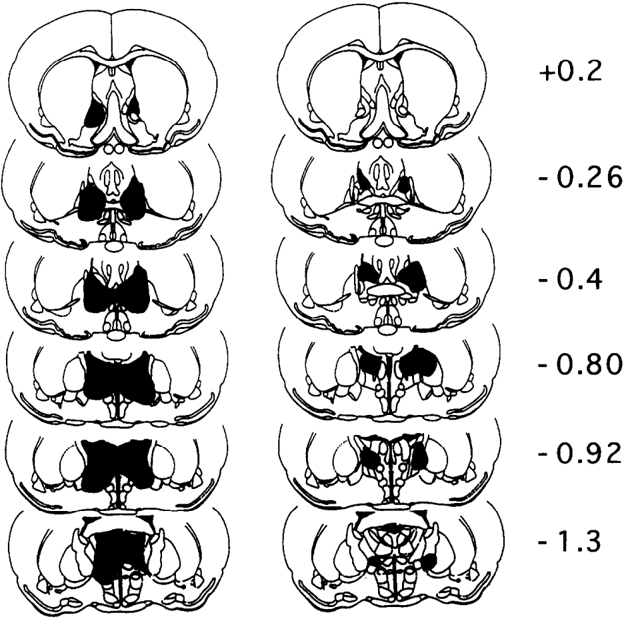
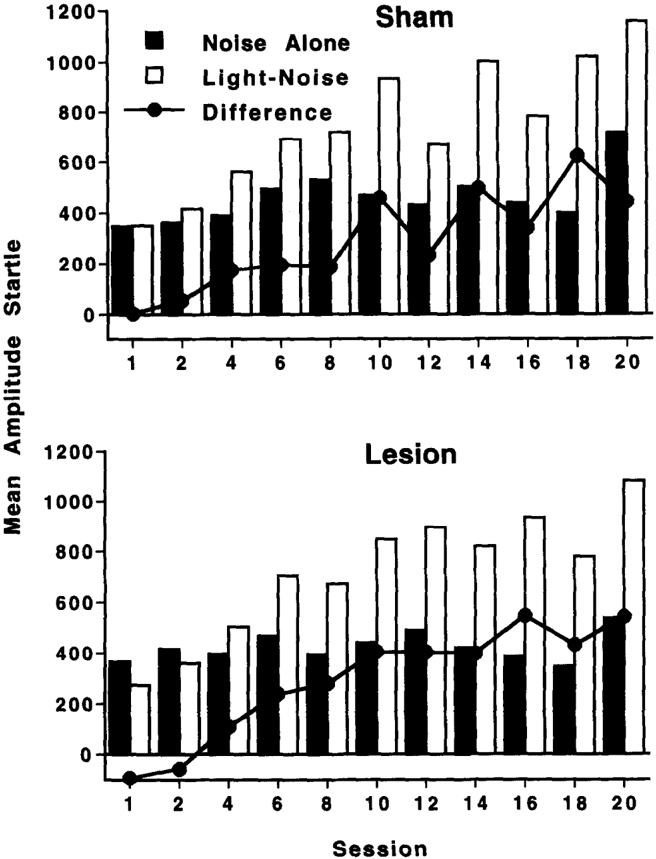
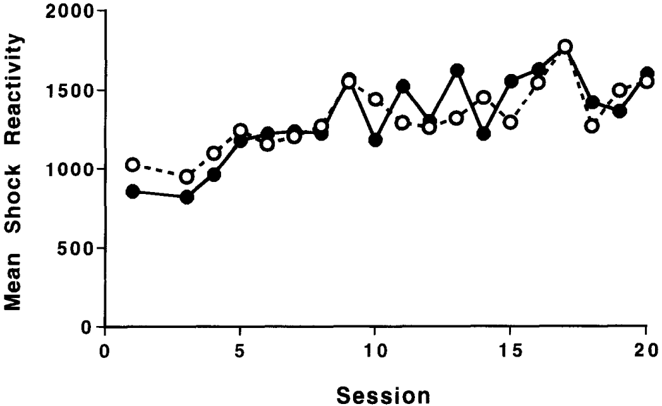
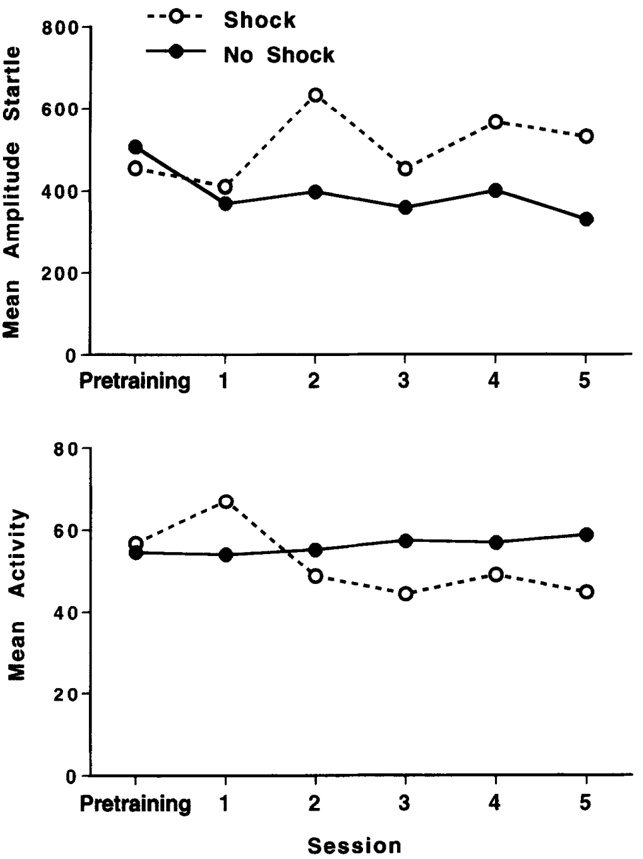
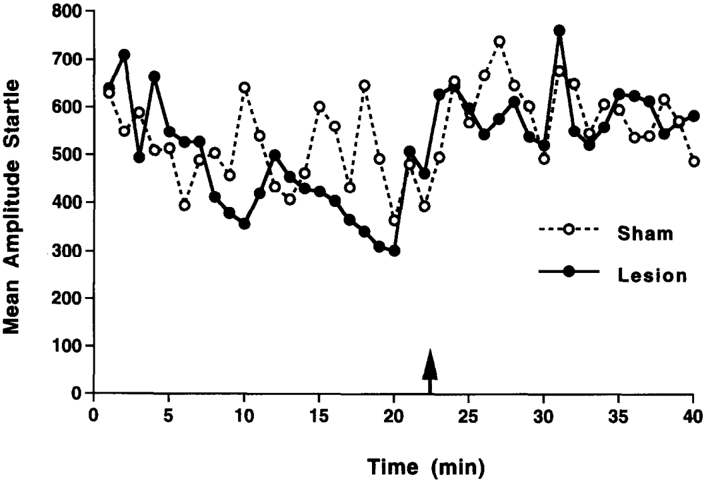
1. The effects of lesions of the bed nucleus of the stria terminalis (BST) on the acquisition of conditioned fear were examined. In Experiment 1, BST lesions did not block acquisition of fear-potentiated startle to an explicit visual conditioned stimulus (CS) over 20 days of training. However, BST lesions blocked a gradual elevation in baseline startle also seen over the course of training. 2. The gradual increase in baseline startle was replicated in Experiment 2 without the presence of an explicit CS, using unoperated subjects. Experiment 2 showed that the elevation was due to repetitive exposure to shock, because unshocked control subjects did not show any elevation over sessions. 3. In Experiment 3, lesions of the BST did not disrupt rapid sensitization of the startle reflex by footshock, showing that different neural substrates underlie sensitization of startle by acute and chronic exposure to footshock. 4. These data indicate that the BST, despite its anatomical continuity with the amygdala, is not critically involved in the acquisition of conditioned fear to an explicit CS. Nevertheless, the BST is involved in mediating a stress-induced elevation in the startle reflex. This suggests that the BST and the CeA, which constitute part of the "extended amygdala" have complementary roles in responses to stress.
Overview
The claims and statistics of this paper haven’t been checked yet.
Free: it reads the open-access text and checks the first 5 claims that cite a source we can check. Create a free account to check every claim.
Integrity signals
Registry
Cites
Statistics
Figures
Verification
Claims the paper makes
The claims and statistics of this paper haven’t been checked yet.
Free: it reads the open-access text and checks the first 5 claims that cite a source we can check. Create a free account to check every claim.
Claims other papers make about this one
Each is checked against this paper’s own text: does it say what the citing paper says it does?
The cited source says what the claim attributes to it.
In the citing paper
“as long-lasting non-associative sensitization also appears to be a BNST-dependent phenomenon (eg, Gewirtz et al, 1998)”
From Phasic vs Sustained Fear in Rats and Humans: Role of the Extended Amygdala in Fear vs Anxiety (2010) · cites this paper as Gewirtz et al, 1998
Self-check
Percentages, sums and reported differences re-computed from the paper’s own numbers.
The self-check needs the paper’s full text.
Citations
Cites
The Rat Brain in Stereotaxic Coordinates
(1982) · Elsevier eBooks · doi:10.1016/c2009-0-63235-9 · Cited by 51,963
The rat brain in stereotaxic coordinates
Palkovits, M. (1983) · Neuropeptides · doi:10.1016/0143-4179(83)90049-5 · Cited by 28,831
Paxinos, G. (1985) · Cited by 3,715
Squire, L. R. (1984) · The Biology of Learning · doi:10.1007/978-3-642-70094-1_32 · Cited by 2,107
LeDoux, J., Iwata, J., Cicchetti, P., & Reis, D. (1988) · The Journal of Neuroscience · doi:10.1523/jneurosci.08-07-02517.1988 · Cited by 1,580
The amygdala: Neurobiological aspects of emotion, memory, and mental dysfunction.
Aggleton, J. P. (1992) · Wiley-Liss eBooks · Cited by 1,536
Nemeroff, C. B., Widerlöv, E., Bissette, G., Walléus, H., Karlsson, I., Eklund, K., Kilts, C. D., Loosen, P. T., & Vale, W. (1984) · Science · doi:10.1126/science.6334362 · Cited by 1,485
The amygdala: Neurobiological aspects of emotion, memory and mental dysfunction
Scheel-Krüger, J. (1993) · Journal of Chemical Neuroanatomy · doi:10.1016/0891-0618(93)90037-5 · Cited by 1,267
Walker, D. L., & Davis, M. (1997) · The Journal of Neuroscience · doi:10.1523/jneurosci.17-23-09375.1997 · Cited by 627
Self-citation(1992) · Cited by 626
Self-citationWertsch, J. V., Luria, A. R., & Haigh, B. (1977) · The American Journal of Psychology · doi:10.2307/1421747 · Cited by 598
Lee, Y., & Davis, M. (1997) · The Journal of Neuroscience · doi:10.1523/jneurosci.17-16-06434.1997 · Cited by 457
Self-citationLeDoux, J. E. (1992) · Cited by 410
Amygdala and extended amygdala
Alheid, G. F. (1995) · Medical Entomology and Zoology · Cited by 385
Ju, G., & Swanson, L. W. (1989) · Journal of Comparative Neurology · doi:10.1002/cne.902800409 · Cited by 358
Hitchcock, J. M., & Davis, M. (1991) · Behavioral Neuroscience · doi:10.1037/0735-7044.105.6.826 · Cited by 345
Self-citationMcNish, K. A., Gewirtz, J. C., & Davis, M. (1997) · The Journal of Neuroscience · doi:10.1523/jneurosci.17-23-09353.1997 · Cited by 284
Self-citationSensitization of the acoustic startle reflex by footshock.
Davis, M. (1989) · Behavioral Neuroscience · doi:10.1037//0735-7044.103.3.495 · Cited by 229
Self-citationInduction of the c-fos proto-oncogene in rat amygdala during unconditioned and conditioned fear
Campeau, S., Hayward, M. D., Hope, B. T., Rosen, J. B., Nestler, E. J., & Davis, M. (1991) · Brain Research · doi:10.1016/0006-8993(91)91669-r · Cited by 228
Self-citationGewirtz, J. C., Falls, W. A., & Davis, M. (1997) · Behavioral Neuroscience · doi:10.1037//0735-7044.111.4.712 · Cited by 219
Self-citationAnxiogenic effects of high illumination levels assessed with the acoustic startle response in rats
Walker, D. L., & Davis, M. (1997) · Biological Psychiatry · doi:10.1016/s0006-3223(96)00441-6 · Cited by 211
Self-citationHitchcock, J. M., Sananes, C. B., & Davis, M. (1989) · Behavioral Neuroscience · doi:10.1037//0735-7044.103.3.509 · Cited by 182
Self-citationServatius, R. J., Ottenweller, J. E., & Natelson, B. H. (1995) · Biological Psychiatry · doi:10.1016/0006-3223(94)00369-e · Cited by 166
Gray, T. S., Piechowski, R. A., Yracheta, J. M., Rittenhouse, P. A., Bethea, C. L., & Van de Kar, L. D. (1993) · Neuroendocrinology · doi:10.1159/000126400 · Cited by 145
The design and calibration of a startle measurement system
Cassella, J. V., & Davis, M. (1986) · Physiology & Behavior · doi:10.1016/0031-9384(86)90032-6 · Cited by 139
Self-citationKim, M., & Davis, M. (1993) · Behavioral Neuroscience · doi:10.1037/0735-7044.107.4.580 · Cited by 139
Self-citationContextual associations in trace conditioning
Marlin, N. A. (1981) · Animal Learning & Behavior · doi:10.3758/bf03209784 · Cited by 109
Leaton, R. N., & Cranney, J. (1990) · Journal of Experimental Psychology: Animal Behavior Processes · doi:10.1037//0097-7403.16.3.279 · Cited by 81
Kiernan, M. J., Westbrook, R. F., & Cranney, J. (1995) · Animal Learning & Behavior · doi:10.3758/bf03198012 · Cited by 53
Research works printed but not linked: 2
- 4. DARNELL, A., BREMER, J. D., LICINO, J., CRYSTAL, J., NEMEROFF, C. B ., OWENS, M., ERDOS, J. AND CHARNEY, D. S. (1994) CSF levels of
- Davis, 1995, The roles of the amygdala and bed nucleus of the stria terminalis (BNST) in the acquisition of fear potentiated startle using both explicit and contextual cues, Soc. Neurosci. Abst., 21, 1224
Cited by
Phasic vs Sustained Fear in Rats and Humans: Role of the Extended Amygdala in Fear vs Anxiety
Davis, M., Walker, D. L., Miles, L., & Grillon, C. (2010) · Neuropsychopharmacology · doi:10.1038/npp.2009.109 · Cited by 1,513
“However, as longlasting non-associative sensitization also appears to be a BNST-dependent phenomenon (eg, Gewirtz et al, 1998), these findings, by either interpretation, would count as yet another example of BNST-dependent long-duration startle increases susceptible to CRF-R1 blockade.”
BackgroundSelf-citationFear and anxiety: Animal models and human cognitive psychophysiology
Lang, P. J., Davis, M., & Öhman, A. (2000) · Journal of Affective Disorders · doi:10.1016/s0165-0327(00)00343-8 · Cited by 1,162
Self-citationRole of the bed nucleus of the stria terminalis versus the amygdala in fear, stress, and anxiety
Walker, D. L., Toufexis, D. J., & Davis, M. (2003) · European Journal of Pharmacology · doi:10.1016/s0014-2999(03)01282-2 · Cited by 838
“In Gewirtz et al. (1998), the effect developed gradually over many days and persisted for at least 24 h (i.e., the interval between the final shock on the preceding training day and the baseline test on the following day).”
BackgroundMethodInfluentialSelf-citationNeural systems involved in fear and anxiety measured with fear-potentiated startle.
Davis, M. (2006) · American Psychologist · doi:10.1037/0003-066x.61.8.741 · Cited by 592
Self-citationGrillon, C., & Baas, J. (2003) · Clinical Neurophysiology · doi:10.1016/s1388-2457(03)00202-5 · Cited by 563
Metadata
- Authors
- Gewirtz, J. C., Mcnish, K. A., & Davis, M.
- Affiliations
- Yale University (US)
- Corresponding author
- Gewirtz, Jonathan C.
- Venue
- Progress in Neuro-Psychopharmacology and Biological Psychiatry
- Publisher
- Elsevier BV
- Published
- 1998-05
- Volume
- 22
- Issue
- 4
- Pages
- 625-648
- ISSN
- 0278-5846 (ISSN-L)
- OpenAlex
- W1991858949
- Semantic Scholar
- eee820f35e07632c96eddf4e882f4fd314684d15
- Cited by
- 149
- References
- 30
- Citations by year
- 2026: 1 · 2025: 2 · 2024: 1 · 2023: 2 · 2022: 2 · 2021: 4 · 2020: 5 · 2019: 7 · 2018: 5 · 2017: 6 · 2016: 7 · 2015: 2 · 2014: 2 · 2013: 11 · 2012: 4
- FWCI
- 2.76
- Type
- journal article
- Language
- en
- Open access
- hybrid
- doi.org
- Licence
- cc-by-nc-nd
- www.elsevier.com/tdm/userlicense/1.0/ (tdm)
- www.elsevier.com/legal/tdmrep-license (tdm)
- creativecommons.org/licenses/by-nc-nd/4.0/ (vor, 96 d)
- Locations
- Progress in Neuro-Psychopharmacology and Biological Psychiatry (publishedVersion, cc-by-nc-nd)
- PubMed (publishedVersion)
- Funders
- National Institute of Mental Health (MH11370, T32MH019951, MH-19951, MH 47840, MH 00004, F31MH011370)
- Topics
- Life Sciences › Neuroscience › Cognitive Neuroscience › Memory and Neural Mechanisms
- Life Sciences › Neuroscience › Behavioral Neuroscience › Stress Responses and Cortisol
- Life Sciences › Neuroscience › Cellular and Molecular Neuroscience › Neurotransmitter Receptor Influence on Behavior
- Keywords
- bed nucleus of the stria terminalis, acoustic startle response, fear-potentiated startle, footshock, stress, central amygdala, extended amygdala, lesion studies
- MeSH terms
- Acoustic Stimulation, Amygdala, Animals, Conditioning, Operant, Corticotropin-Releasing Hormone, Fear, Male, Reflex, Startle, Rats, Sprague-Dawley, Rats
About these checks
Registry, retraction, Cites and statistics results are computed, not judged, with one exception: a printed reference that no index lists is read once by a model before it counts as a citation error. Claims are extracted by a model and kept only when their quote appears verbatim in the text; each cited source is then checked, with a model’s help, for whether it says what the claim relies on. Those verdicts can be wrong — read the claim’s quote and the cited source before relying on one.
Statistics and arithmetic are recomputed, not judged.
Confidence bands are shown only for fields calibrated on our annotated test set. None is calibrated yet, so no band is shown.
What counts as a claim ›How we measure confidence ›How we check this ›
Are you an author, or do you see a problem with this page? Request a review
Data sources
Bibliographic data: Semantic Scholar, OpenAlex, Crossref.
Contains information from the Semantic Scholar Academic Graph Datasets, made available under the ODC Attribution License (ODC-BY 1.0).
Semantic Scholar’s data is described in: Kinney, R., et al. (2023). The Semantic Scholar Open Data Platform. arXiv:2301.10140.
