

Fulvestrant plus anastrozole or placebo versus exemestane alone after progression on non-steroidal aromatase inhibitors in postmenopausal patients with hormone-receptor-positive locally advanced or metastatic breast cancer (SoFEA): a composite, multicentre, phase 3 randomised trial
Open accessThe DOI matches its Crossref record; 23 of the 24 references it cites were found in a registry or an index.
Abstract
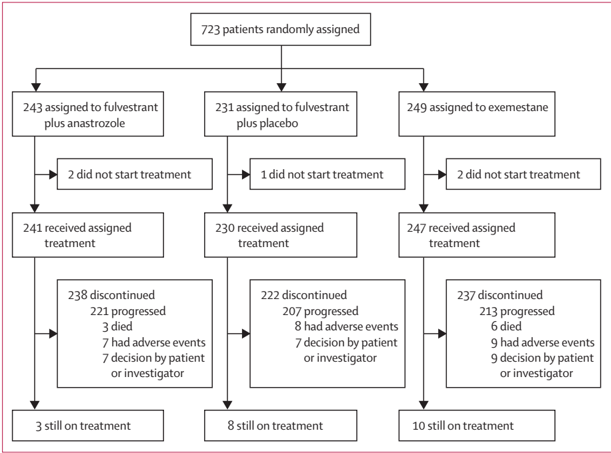
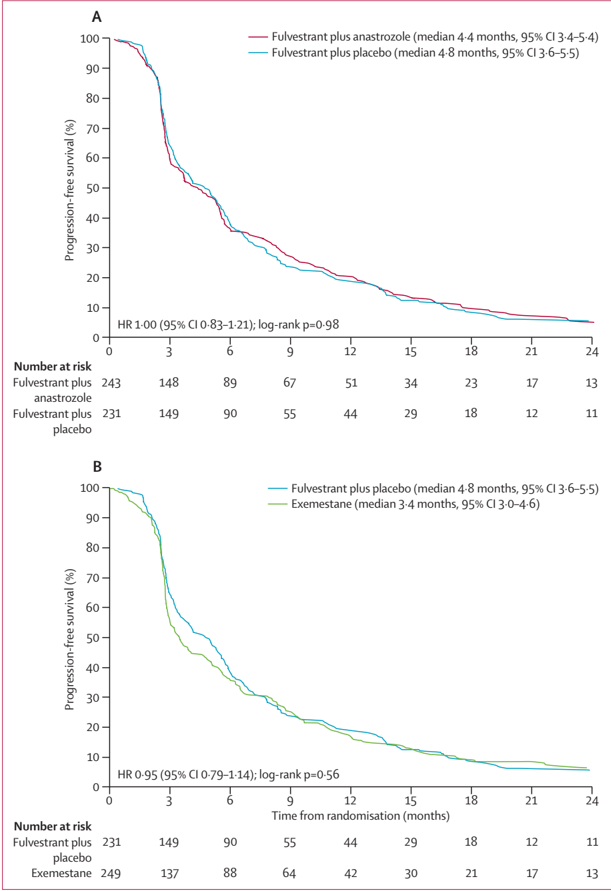
BACKGROUND: The optimum endocrine treatment for postmenopausal women with advanced hormone-receptor-positive breast cancer that has progressed on non-steroidal aromatase inhibitors (NSAIs) is unclear. The aim of the SoFEA trial was to assess a maximum double endocrine targeting approach with the steroidal anti-oestrogen fulvestrant in combination with continued oestrogen deprivation. METHODS: In a composite, multicentre, phase 3 randomised controlled trial done in the UK and South Korea, postmenopausal women with hormone-receptor-positive breast cancer (oestrogen receptor [ER] positive, progesterone receptor [PR] positive, or both) were eligible if they had relapsed or progressed with locally advanced or metastatic disease on an NSAI (given as adjuvant for at least 12 months or as first-line treatment for at least 6 months). Additionally, patients had to have adequate organ function and a WHO performance status of 0-2. Participants were randomly assigned (1:1:1) to receive fulvestrant (500 mg intramuscular injection on day 1, followed by 250 mg doses on days 15 and 29, and then every 28 days) plus daily oral anastrozole (1 mg); fulvestrant plus anastrozole-matched placebo; or daily oral exemestane (25 mg). Randomisation was done with computer-generated permuted blocks, and stratification was by centre and previous use of an NSAI as adjuvant treatment or for locally advanced or metastatic disease. Participants and investigators were aware of assignment to fulvestrant or exemestane, but not of assignment to anastrozole or placebo. The primary endpoint was progression-free survival (PFS). Analyses were by intention to treat. This trial is registered with ClinicalTrials.gov, numbers NCT00253422 (UK) and NCT00944918 (South Korea). FINDINGS: Between March 26, 2004, and Aug 6, 2010, 723 patients underwent randomisation: 243 were assigned to receive fulvestrant plus anastrozole, 231 to fulvestrant plus placebo, and 249 to exemestane. Median PFS was 4·4 months (95% CI 3·4-5·4) in patients assigned to fulvestrant plus anastrozole, 4·8 months (3·6-5·5) in those assigned to fulvestrant plus placebo, and 3·4 months (3·0-4·6) in those assigned to exemestane. No difference was recorded between the patients assigned to fulvestrant plus anastrozole and fulvestrant plus placebo (hazard ratio 1·00, 95% CI 0·83-1·21; log-rank p=0·98), or between those assigned to fulvestrant plus placebo and exemestane (0·95, 0·79-1·14; log-rank p=0·56). 87 serious adverse events were reported: 36 in patients assigned to fulvestrant plus anastrozole, 22 in those assigned to fulvestrant plus placebo, and 29 in those assigned to exemestane. Grade 3-4 adverse events were rare; the most frequent were arthralgia (three in the group assigned to fulvestrant plus anastrozole; seven in that assigned to fulvestrant plus placebo; eight in that assigned to exemestane), lethargy (three; 11; 11), and nausea or vomiting (five; two; eight). INTERPRETATION: After loss of response to NSAIs in postmenopausal women with hormone-receptor-positive advanced breast cancer, maximum double endocrine treatment with 250 mg fulvestrant combined with oestrogen deprivation is no better than either fulvestrant alone or exemestane.
Overview
The claims and statistics of this paper haven’t been checked yet.
Free: it reads the open-access text and checks the first 5 claims that cite a source we can check. Create a free account to check every claim.
Integrity signals
Registry
Cites
Statistics
Figures
Verification
Claims the paper makes
The claims and statistics of this paper haven’t been checked yet.
Free: it reads the open-access text and checks the first 5 claims that cite a source we can check. Create a free account to check every claim.
Claims other papers make about this one
Each is checked against this paper’s own text: does it say what the citing paper says it does?
The cited source doesn’t support the claim as written.
In the citing paper
“as well as impressive median survival to date (63.9 months) among women with HR-positive, HER2-negative advanced breast cancer. 16,20,22-29”
From Overall Survival with Ribociclib plus Letrozole in Advanced Breast Cancer. (2022) · cites this paper as [25]
Checked by a reasoning model — may be wrong.
Experimental — accuracy not yet measured
Self-check
Percentages, sums and reported differences re-computed from the paper’s own numbers.
The self-check needs the paper’s full text.
Citations
Cites
Everolimus in Postmenopausal Hormone-Receptor–Positive Advanced Breast Cancer
Baselga, J., Campone, M., Piccart, M., Burris, H. A., Rugo, H. S., Sahmoud, T., Noguchi, S., Gnant, M., Pritchard, K. I., Lebrun, F., et al. (2012) · New England Journal of Medicine · doi:10.1056/nejmoa1109653 · Cited by 2,863 · cited 2×
“8 However, whether double endocrine targeting would be more eff ective than a partially non-cross-resistant endocrine agent in the setting of acquired resistance is unclear.”
BackgroundDi Leo, A., Jerusalem, G., Petruzelka, L., Torres, R., Bondarenko, I. N., Khasanov, R., Verhoeven, D., Pedrini, J. L., Smirnova, I., Lichinitser, M. R., et al. (2010) · Journal of Clinical Oncology · doi:10.1200/jco.2010.28.8415 · Cited by 636 · cited 1×
“19 The monthly 500 mg intramuscular dose of fulvestrant, with a loading dose schedule, was approved in 2010.”
BackgroundChia, S., Gradishar, W., Mauriac, L., Bines, J., Amant, F., Federico, M., Fein, L., Romieu, G., Buzdar, A., Robertson, J. F. R., et al. (2008) · Journal of Clinical Oncology · doi:10.1200/jco.2007.13.5822 · Cited by 513
Combination Anastrozole and Fulvestrant in Metastatic Breast Cancer
Mehta, R. S., Barlow, W. E., Albain, K. S., Vandenberg, T. A., Dakhil, S. R., Tirumali, N. R., Lew, D. L., Hayes, D. F., Gralow, J. R., Livingston, R. B., et al. (2012) · New England Journal of Medicine · doi:10.1056/nejmoa1201622 · Cited by 371
Osborne, C. K., Coronado-Heinsohn, E. B., Hilsenbeck, S. G., McCue, B. L., Wakeling, A. E., McCleland, R. A., Manning, D. L., & Nicholson, R. I. (1995) · JNCI Journal of the National Cancer Institute · doi:10.1093/jnci/87.10.746 · Cited by 361
Lønning, P. E., Bajetta, E., Murray, R., Tubiana-Hulin, M., Eisenberg, P. D., Mickiewicz, E., Celio, L., Pitt, P., Mita, M., Aaronson, N. K., et al. (2000) · Journal of Clinical Oncology · doi:10.1200/jco.2000.18.11.2234 · Cited by 316
Robertson, J. F. R., Llombart-Cussac, A., Rolski, J., Feltl, D., Dewar, J., Macpherson, E., Lindemann, J., & Ellis, M. J. (2009) · Journal of Clinical Oncology · doi:10.1200/jco.2008.21.1136 · Cited by 310
Martin, L.-A., Farmer, I., Johnston, S. R. D., Ali, S., Marshall, C., & Dowsett, M. (2003) · Journal of Biological Chemistry · doi:10.1074/jbc.m305226200 · Cited by 295
Self-citationWolff, A. C., Lazar, A. A., Bondarenko, I., Garin, A. M., Brincat, S., Chow, L., Sun, Y., Neskovic-Konstantinovic, Z., Guimaraes, R. C., Fumoleau, P., et al. (2013) · Journal of Clinical Oncology · doi:10.1200/jco.2011.38.3331 · Cited by 272
Bergh, J., Jönsson, P.-E., Lidbrink, E. K., Trudeau, M., Eiermann, W., Brattström, D., Lindemann, J. P. O., Wiklund, F., & Henriksson, R. (2012) · Journal of Clinical Oncology · doi:10.1200/jco.2011.38.1095 · Cited by 263
Research works printed but not linked: 1
- Perey L. Fulvestrant (faslodex) as hormonal treatment in postmenopausal patients with advanced breast cancer progressing after treatment with tamoxifen and aromatase inhibitors-update of a phase II SAKK trial. Breast Cancer Res Treat 2004; 88 (suppl 1): 236.
Cited by
Items 201–279 of 279
Forsythe, A., Chandiwana, D., Barth, J., Thabane, M. E., Baeck, J., Shor, A., & Tremblay, G. (2018) · Cancer Management and Research · doi:10.2147/cmar.s162714 · Cited by 6
“95, respectively.(18,19) The addition of BEV to either LET or LET+FUL did not yield consistent results with HRs of 0.”
Fulvestrant in Management of Hormone Receptor-Positive Metastatic Breast Cancer
Shafaee, M. N., & Ellis, M. J. (2018) · Future Oncology · doi:10.2217/fon-2017-0489 · Cited by 5
Huang, H.-W., Huang, L., Xu, Q.-N., Wang, H., Li, X., & Lin, J.-Z. (2019) · Medicine · doi:10.1097/md.0000000000013909 · Cited by 5
Maass, N., Ostermann, H., Possinger, K., Klein, P., Tesch, H., Mühlenhoff, L., & Bauerschlag, D. (2019) · Breast Care · doi:10.1159/000493882 · Cited by 6
Pharmacologic management of HR+/HER2− mBC: a clinically oriented review
Chiru, E. D., Sojak, L., Landin, J., Vetter, M. H. F., & Kuhar, C. G. (2025) · Frontiers in Oncology · doi:10.3389/fonc.2025.1596634 · Cited by 4
Huang, J., Huang, P. C., Shao, X., Sun, Y., Lei, L., Lou, C., Ye, W.-W., Chen, J., Cao, W., Huang, Y., et al. (2020) · Medicine · doi:10.1097/md.0000000000020821 · Cited by 4
Liu, S., Sun, X., Xu, X., & Lin, F. (2020) · Journal of Breast Cancer · doi:10.4048/jbc.2020.23.e55 · Cited by 5
Lambertini, M., Aftimos, P. G., Gombos, A., Awada, A. H., & Piccart, M. J. (2018) · Springer eBooks · doi:10.1007/978-3-319-70253-7_2 · Cited by 4
Yu, J. (2021) · Advances in experimental medicine and biology · doi:10.1007/978-981-32-9620-6_20 · Cited by 5
Gao, C., Su, X., Fangfang, S., Chen, Y., & Gu, X. (2018) · PLoS ONE · doi:10.1371/journal.pone.0204202 · Cited by 4
Gelsomino, L., Gu, G., Rechoum, Y., Beyer, A. R., Pejerrey, S. M., Tsimelzon, A. I., Wang, T., Huffman, K. E., Ludlow, A. T., Andò, S., et al. (2017) · Breast Cancer Research and Treatment · doi:10.1007/s10549-017-4250-4 · Cited by 4
Baek, S. Y., Hong, M., Lee, S. S., Joo, S., Jang, J., Jung, C., Lee, H., Yoo, T.-K., Chung, I. Y., Kim, H. J., et al. (2026) · Frontiers in Oncology · doi:10.3389/fonc.2025.1709317 · Cited by 4
Aghakouchakzadeh, M., Kakavand, H., Goldberg, A. J., Accordino, M. K., Trivedi, M. S., Raikhelkar, J., & Talasaz, A. H. (2026) · Pharmacotherapy The Journal of Human Pharmacology and Drug Therapy · doi:10.1002/phar.70149 · Cited by 3
Barros-Oliveira, M. D. C., Costa-Silva, D. R., de Andrade, D. B., Borges, U. S., Silva, V. C., Borges, R. S., Lopes-Costa, P. V., Alencar, A. P., & da Silva, B. B. (2017) · Gynecological Endocrinology · doi:10.1080/09513590.2017.1290065 · Cited by 3
Ma, F., Liu, B., Yang, Y., Yi, Z., & Guan, X. (2017) · Cancer translational medicine · doi:10.4103/ctm.ctm_10_17 · Cited by 3
Endocrine Therapeutic Strategies for Patients with Hormone Receptor-positive Advanced Breast Cancer
Schmid, P. (2017) · European Oncology & Haematology · doi:10.17925/eoh.2017.13.02.127 · Cited by 3
Overcoming Endocrine Resistance in Breast Cancer
Ferrari, P., & Nicolini, A. (2018) · Elsevier eBooks · doi:10.1016/b978-0-12-811785-9.00029-6 · Cited by 4
Untch, M., Würstlein, R., Lüftner, D., Haidinger, R., Fasching, P. A., Augustin, D., Briest, S., Ettl, J., Forster, F. M. C., Kurbacher, C. M., et al. (2020) · Geburtshilfe und Frauenheilkunde · doi:10.1055/a-1139-9380 · Cited by 3
“However, later studies with a comparable design were unable to confirm this benefit [32,33].”
Respuesta hormonal de las células madre de mama y resistencia a tamoxifeno
Domenici, G., Rábano, M., Piva, M., Iriondo, O., Zabalza, I., López-Ruiz, J. A., & Vivanco, M. D. (2014) · Revista de Senología y Patología Mamaria · doi:10.1016/j.senol.2014.07.006 · Cited by 3
de Placido, S., & Pronzato, P. (2015) · Future Oncology · doi:10.2217/fon.14.245 · Cited by 5
Cyclin-dependent kinase (CDK) inhibitors for hormone receptor-positive advanced breast cancer
Syn, N. L. X., Wee, I. J. Y., Wong, A. L.-A., Goh, R. M., Ow, S. G. W., Lambertini, M., & Lee, S. C. (2018) · Cochrane Database of Systematic Reviews · doi:10.1002/14651858.cd012919 · Cited by 3
Targeted Combinations for Hormone Receptor-Positive Advanced Breast Cancer: Who Benefits?
Johnston, S. (2016) · Journal of Clinical Oncology · doi:10.1200/jco.2015.64.0771 · Cited by 5
Self-citationDefinition of First-Line Endocrine Therapy for Hormone Receptor–Positive Advanced Breast Cancer
Reinert, T., & Barrios, C. H. (2016) · Journal of Clinical Oncology · doi:10.1200/jco.2015.66.0803 · Cited by 3
Rugo, H. S., Majure, M. C., Dragun, A. J., Buxton, M., & Esserman, L. J. (2017) · Wiley eBooks · doi:10.1002/9781119000822.hfcm109 · Cited by 3
He, J., & Jia, Y. (2021) · Translational Breast Cancer Research · doi:10.21037/tbcr-20-66 · Cited by 2
Li, M. C., Xiong, Y., Liao, C., He, Y., Duan, S., Yi, F., Wei, Y., & Zhang, W. (2020) · Breast Cancer Research and Treatment · doi:10.1007/s10549-020-05551-3 · Cited by 2
Review of concepts in therapeutic decision-making in HER2-negative luminal metastatic breast cancer
Álvarez, I., Bezares, S., Dalmau, E., García-Martínez, E., García-Sáenz, J. Á., Gil‐Gil, M., de Dueñas, E. M., Ribelles, N., & Santaballa, A. (2020) · Clinical & Translational Oncology · doi:10.1007/s12094-019-02269-7 · Cited by 2
Shao, B., Li, H., Zhang, J., Liu, X., Song, G., Jiang, H., Yan, Y., Wang, H., Wang, J., & Di, L. (2022) · Annals of Translational Medicine · doi:10.21037/atm-22-3797 · Cited by 2
Grellety, T., Hajjaji, N., Petit, T., & Bailleux, C. (2022) · Bulletin du Cancer · doi:10.1016/j.bulcan.2022.09.007 · Cited by 2
Hao, Y., Lin, P. L., Xie, J., Li, N., Koo, V., Ohashi, E., Wu, E. Q., & Rogerio, J. W. (2015) · Journal of Comparative Effectiveness Research · doi:10.2217/cer.15.25 · Cited by 2
Adjuvant aromatase inhibition: more options for patients
Dirix, L. Y. (2018) · The Lancet Oncology · doi:10.1016/s1470-2045(18)30155-4 · Cited by 2
A role for fulvestrant monotherapy in the first‐line treatment of ER+ metastatic breast cancer?
Mahtani, R. L. (2019) · The Breast Journal · doi:10.1111/tbj.13495 · Cited by 2
participants, O. B. O. T. I., Palmieri, C., Stein, R. C., Liu, X., Hudson, E., Nicholas, H., Sasano, H., Guestini, F., Holcombe, C., Barrett, S., et al. (2017) · Breast Cancer Research and Treatment · doi:10.1007/s10549-017-4539-3 · Cited by 2
Self-citationParsonson, A. O., Sarkar, S., Brown, L., Low, G. K. K., Kiely, B. E., & Vasista, A. (2024) · Asia-Pacific Journal of Clinical Oncology · doi:10.1111/ajco.14096 · Cited by 1
Humphry, N. (2024) · EMJ Oncology · doi:10.33590/emjoncol/yfwe5597 · Cited by 1
Personalization of Endocrine Therapy in Hormone Receptor-Positive Breast Cancer
Fernandes, S., Batra, A., & Pushpam, D. (2024) · Springer eBooks · doi:10.1007/978-981-97-7755-6_24 · Cited by 1
Etessami, J. D., Valenza, C., Giachetti, P. P. M. B., Crimini, E., Ferraro, E., Marra, A., Belli, C., Minchella, I., Zagami, P., Curigliano, G., et al. (2026) · Expert Opinion on Pharmacotherapy · doi:10.1080/14656566.2026.2678481 · Cited by 1
“In contrast, the SoFEA trial showed no significant difference in survival in patients receiving fulvestrant plus AI after progression to prior ET with AI [8].”
Combination endocrine treatments unproven in breast cancer
Buzdar, A. U. (2013) · The Lancet Oncology · doi:10.1016/s1470-2045(13)70364-4 · Cited by 1
Cancer of the Breast: An Overview
Stephens, F. O., & Aigner, K. R. (2015) · Springer eBooks · doi:10.1007/978-3-319-23368-0_12 · Cited by 1
An update on treatment for post-menopausal metastatic breast cancer in elderly patients
Menjak, I. B., Jerzak, K. J., Desautels, D. N., & Pritchard, K. I. (2018) · Expert Opinion on Pharmacotherapy · doi:10.1080/14656566.2018.1454431 · Cited by 3
Kazi, A. A., Goloubeva, O. G., Schech, A. J., Yu, S. L., & Sabnis, G. J. (2020) · The Journal of Steroid Biochemistry and Molecular Biology · doi:10.1016/j.jsbmb.2020.105697 · Cited by 1
Ziobro, M., & Grela-Wojewoda, A. (2023) · Biomedicines · doi:10.3390/biomedicines11020510 · Cited by 3
The power of whole genomic sequencing in biomedical research and clinical applications
Sobhani, N., D’Angelo, A., Conter, F. U., Morris, R. M., & Li, Y. (2023) · Elsevier eBooks · doi:10.1016/b978-0-12-824010-6.00044-7 · Cited by 2
Aromataseinhibitoren: Update 2015
Seifert-Klauss, Rabe, T., Ak, K., & Schneeweiß, A. (2015) · Journal für Kardiologie (Krause & Pachernegg GmbH) · Cited by 1
Endocrine Therapy for Hormone Receptor‐Positive Breast Cancer
Buzdar, A. U., Dawood, S. S., Harvey, H. A., & Jordan, V. C. (2019) · Wiley eBooks · doi:10.1002/9781119000822.hfcm062.pub2 · Cited by 1
Gonzalez, T. L. (2018) · Deep Blue (University of Michigan) · Cited by 1
Sprawozdanie z Advanced Breast Cancer Second International Consensus Conference
Pogoda, K., Sienkiewicz-Kozłowska, R., & Szombara, E. (2014) · Via Medica Journals
New Approaches for Hormone-Receptor Positive Metastatic Breast Cancer
Thanopoulou, E., & Johnston, S. (2013) · Current Breast Cancer Reports · doi:10.1007/s12609-013-0122-z
Self-citationEverolimus: finding its place in the treatment of hormone receptor-positive advanced breast cancer
Johnston, S., & Yeo, B. (2014) · Clinical Practice · doi:10.2217/cpr.14.78
Self-citationOral Pure Antiestrogens as a Solution to Acquired Drug Resistance to Aromatase Inhibitors
Karuturi, M. S., Abderrahman, B., Hortobágyi, G. N., & Jordan, V. C. (2015) · Breast Cancer Management · doi:10.2217/bmt.15.22
Tamoxifen metabolites can target both aromatase and estrogen receptors
Liu, J. (2015) · IUScholarWorks (Indiana University) · doi:10.7912/c2/1899 · Cited by 1
A Case of Breast Carcinoma in an 86-year-old Woman Treated with Fulvestrant
Suehiro, S., Hashimoto, T., Kamei, M., Osoegawa, A., Miyawaki, M., & Sugio, K. (2016) · Nihon Rinsho Geka Gakkai Zasshi (Journal of Japan Surgical Association) · doi:10.3919/jjsa.77.780
The current endocrine therapy for breast cancer
Wang, J., Jian, L., Chai, Y., & Liu, B. (2015)
Endocrine Therapies in the Adjuvant and Advanced Disease Settings
Pagani, O. (2017) · Springer eBooks · doi:10.1007/978-3-319-48848-6_45
Endocrine Therapy of Metastatic Breast Cancer
Şen, F., & Aydıner, A. (2018) · Springer eBooks · doi:10.1007/978-3-319-96947-3_24
Systemic Treatment of HER2-Negative Metastatic Breast Cancer
Bayraktar, S., & Aydıner, A. (2018) · Springer eBooks · doi:10.1007/978-3-319-96947-3_22
Treatment of HER2-Negative Metastatic Breast Cancer: Chemotherapy
Bayraktar, S., & Aydıner, A. (2019) · Springer eBooks · doi:10.1007/978-3-030-16792-9_31
Metastatic Breast Cancer : Efficacy of Bevacizumab-based Chemotherapy and Prognostic Factors
Tiainen, L. (2020) · Tampere University Institutional Repository (Tampere University) · Cited by 1
Королева, И. А., & Валериевич, К. М. (2020) · Meditsinskiy sovet = Medical Council · doi:10.21518/2079-701x-2020-9-62-72
Untch, M., Würstlein, R., Lüftner, D., Haidinger, R., Fasching, P. A., Augustin, D., Briest, S., Ettl, J., Forster, F. M. C., Kurbacher, C. M., et al. (2020) · Senologie - Zeitschrift für Mammadiagnostik und -therapie · doi:10.1055/a-1205-4313
Endocrine Treatment of Breast Cancer
Sheri, A., & Morrison, L. (2022) · doi:10.1093/med/9780198870197.003.0220
Vaid, A. K., Deshmukh, C. D., Rohatgi, N., & Ghosh, J. (2022) · Indian Journal of Cancer · doi:10.4103/ijc.ijc_30_21
Pagani, O., & Condorelli, R. (2016) · Springer eBooks · doi:10.1007/978-3-319-46356-8_19
Tripathy, D., Makhnoon, S., Arun, B. K., Şahin, A. A., Kettner, N. M., Damodaran, S., Keyomarsi, K., Yang, W. T., Hunt, K. K., Clemens, M. W., et al. (2022) · Wiley eBooks · doi:10.1002/9781119000822.hfcm109.pub2
Фролова, М. А., & Stenina, M. B. (2023) · Meditsinskiy sovet = Medical Council · doi:10.21518/ms2023-189
Endocrine Therapy for Hormone Receptor‐Positive Breast Cancer
Buzdar, A. U., Dawood, S. S., Harvey, H. A., & Jordan, V. C. (2017) · Wiley eBooks · doi:10.1002/9781119000822.hfcm062
Agostinetto, E., Gombos, A., & Piccart, M. J. (2023) · Springer eBooks · doi:10.1007/978-3-030-93702-7_2-1
The role of ESR1 gene mutation in therapy selection for HR+/HER2- metastatic breast cancer: A review
Александровна, П. А., Chashnikova, E. P., & Golubeva, S. A. (2025) · Journal of Modern Oncology · doi:10.26442/18151434.2024.4.202990
Cancer du sein métastatique RH+ HER2– : vers une médecine personnalisée ?
Mailly-Giacchetti, L., & Verret, B. (2025) · Bulletin du Cancer · doi:10.1016/j.bulcan.2025.04.002
Was kommt nach CDK4/6-Inhibition? Perspektiven beim fortgeschrittenen Mammakarzinom
Castagnaviz, V., Fenzl, A., Gnant, M., & Bartsch, R. (2025) · Wiener klinische Wochenschrift · doi:10.1007/s00508-025-02582-y
Fulvestrant in the treatment of luminal HER-2-negative metastatic breast cancer
Королева, И. А. (2025) · Meditsinskiy sovet = Medical Council · doi:10.21518/ms2025-253
The role of hormone receptors in breast cancer: New opportunities for treatment and prevention
Parvatikar, P., Ray, S. K., Kugaji, M. S., Sriram, A., & Singh, P. K. (2025) · Elsevier eBooks · doi:10.1016/b978-0-443-33349-1.00013-2
Mechanisms of action of ELF5 in breast cancer
Piggin, C. (2018) · UNSWorks (University of New South Wales, Sydney, Australia) · doi:10.26190/unsworks/3362
Huang, X., Yu, Y., Luo, S., Fu, W., Zhang, J., & 宋传贵 (2024) · Figshare · doi:10.6084/m9.figshare.24934692
Huang, X., Yu, Y., Luo, S., Fu, W., Zhang, J., & 宋传贵 (2024) · Figshare · doi:10.6084/m9.figshare.24934396
Economic value of ribociclib in early breast cancer in the United States
Brufsky, A., Tolaney, S. M., Gadi, V. K., Chai, X., Yang, F., Chen, W., Ma, W., Zhou, Z., Ganapathy, V., Patel, A., et al. (2026) · Journal of Managed Care & Specialty Pharmacy · doi:10.18553/jmcp.2026.32.8.911
Connolly, E., White, M., Siva, S., Bressel, M., See, A., Hunter, K., Tan, J., Panettieri, V., Day, D., Byrne, K., et al. (2026) · BMJ Open · doi:10.1136/bmjopen-2026-119811
Clinical Use of Aromatase Inhibitors in Breast Cancer: History and Present
Cameron, D. (2015) · Resistance to targeted anti-cancer therapeutics · doi:10.1007/978-3-319-17972-8_1
Self-citation
Metadata
- Authors
- Johnston, S. R., Kilburn, L. S., Ellis, P., Dodwell, D., Cameron, D., Hayward, L., Im, Y.-H., Braybrooke, J. P., Brunt, A. M., Cheung, K.-L., Jyothirmayi, R., Robinson, A., Wardley, A. M., Wheatley, D., Howell, A., Coombes, G., Sergenson, N., Sin, H.-J., Folkerd, E., Dowsett, M., & Bliss, J. M.
- Affiliations
- Royal Marsden NHS Foundation Trust (GB)
- Institute of Cancer Research (GB)
- Leeds Teaching Hospitals NHS Trust (GB)
- NHS Lothian (GB)
- Western General Hospital (GB)
- Samsung Medical Center (KR)
- Royal Stoke University Hospital (GB)
- Nottingham University Hospitals NHS Trust (GB)
- Maidstone Hospital (GB)
- Southend Hospital (GB)
- The Christie NHS Foundation Trust (GB)
- Royal Cornwall Hospital (GB)
- Edinburgh Cancer Research (GB)
- AstraZeneca (South Korea) (KR)
- Corresponding author
- Johnston, Stephen RD
- ORCID
- Venue
- The Lancet Oncology
- Publisher
- Elsevier BV
- Published
- 2013-09
- Volume
- 14
- Issue
- 10
- Pages
- 989-998
- ISSN
- 1470-2045 (ISSN-L)
- OpenAlex
- W2138692147
- Semantic Scholar
- 55af30ad07397e98672cf4efc227560d4a40fde6
- Cited by
- 274
- References
- 24
- Citations by year
- 2026: 6 · 2025: 9 · 2024: 6 · 2023: 14 · 2022: 14 · 2021: 18 · 2020: 28 · 2019: 25 · 2018: 28 · 2017: 40 · 2016: 28 · 2015: 29 · 2014: 19 · 2013: 10
- FWCI
- 23.35
- Type
- journal article
- Language
- en
- Update notices
- erratum (2013-09-01)
- Open access
- hybrid
- doi.org
- Licence
- cc-by-nc-sa
- www.elsevier.com/tdm/userlicense/1.0/ (tdm)
- www.elsevier.com/legal/tdmrep-license (tdm)
- creativecommons.org/licenses/by-nc-sa/3.0/ (vor)
- Locations
- The Lancet Oncology (publishedVersion, cc-by-nc-sa)
- PubMed (publishedVersion)
- Research Explorer (The University of Manchester) (publishedVersion)
- Edinburgh Research Explorer (University of Edinburgh) (submittedVersion, cc-by-nc-sa)
- Funders
- Cancer Research UK (C1491/A10962, CRUKE/03/021 and CRUK/09/007)
- Topics
- Health Sciences › Medicine › Oncology › Advanced Breast Cancer Therapies
- Life Sciences › Biochemistry, Genetics and Molecular Biology › Cancer Research › Breast Cancer Treatment Studies
- Life Sciences › Biochemistry, Genetics and Molecular Biology › Endocrinology › Estrogen and related hormone effects
- Keywords
- fulvestrant, anastrozole, exemestane, hormone receptor-positive breast cancer, metastatic breast cancer, locally advanced breast cancer, postmenopausal women, nonsteroidal aromatase inhibitors, endocrine therapy, progression-free survival, estrogen deprivation, aromatase inhibitor resistance
- MeSH terms
- Fulvestrant, Anastrozole, Androstadienes, Antineoplastic Agents, Breast Neoplasms, Estradiol, Estrogen Antagonists, Female, Humans, Neoplasm Metastasis, Nitriles, Receptors, Estrogen, Triazoles, Postmenopause, Disease Progression, Disease-Free Survival, Aromatase Inhibitors
About these checks
Registry, retraction, Cites and statistics results are computed, not judged, with one exception: a printed reference that no index lists is read once by a model before it counts as a citation error. Claims are extracted by a model and kept only when their quote appears verbatim in the text; each cited source is then checked, with a model’s help, for whether it says what the claim relies on. Those verdicts can be wrong — read the claim’s quote and the cited source before relying on one.
Statistics and arithmetic are recomputed, not judged.
Confidence bands are shown only for fields calibrated on our annotated test set. None is calibrated yet, so no band is shown.
What counts as a claim ›How we measure confidence ›How we check this ›
Are you an author, or do you see a problem with this page? Request a review
Data sources
Bibliographic data: Semantic Scholar, OpenAlex, Crossref.
Contains information from the Semantic Scholar Academic Graph Datasets, made available under the ODC Attribution License (ODC-BY 1.0).
Semantic Scholar’s data is described in: Kinney, R., et al. (2023). The Semantic Scholar Open Data Platform. arXiv:2301.10140.
