

Adverse effects of falciparum and vivax malaria and the safety of antimalarial treatment in early pregnancy: a population-based study
Open accessThe DOI matches its Crossref record; 36 of the 36 references it cites were found in a registry or an index.
Abstract
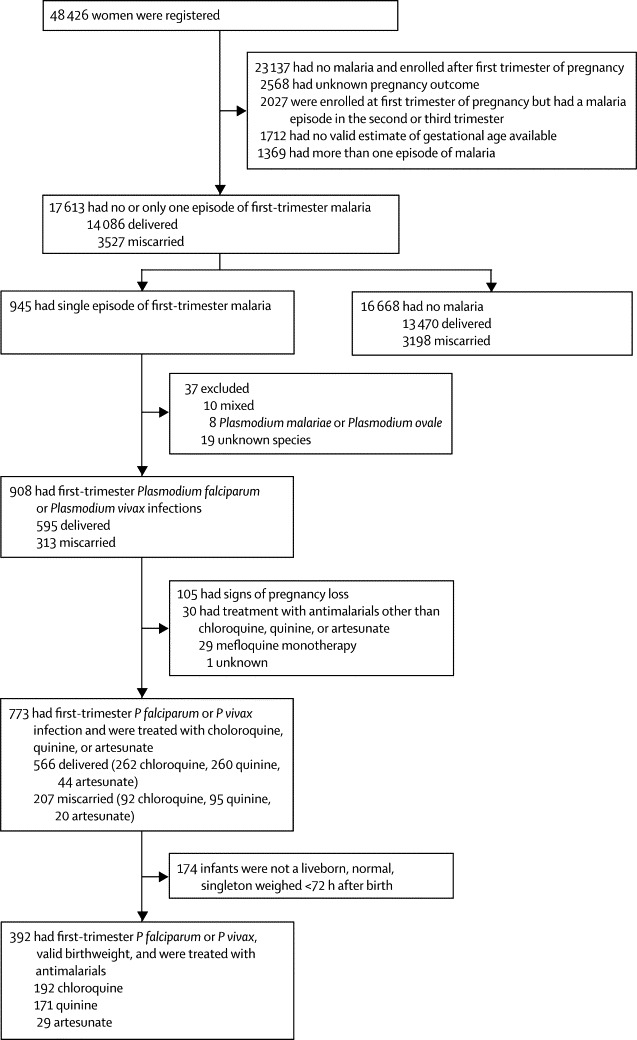
BACKGROUND: The effects of malaria and its treatment in the first trimester of pregnancy remain an area of concern. We aimed to assess the outcome of malaria-exposed and malaria-unexposed first-trimester pregnancies of women from the Thai-Burmese border and compare outcomes after chloroquine-based, quinine-based, or artemisinin-based treatments. METHODS: We analysed all antenatal records of women in the first trimester of pregnancy attending Shoklo Malaria Research Unit antenatal clinics from May 12, 1986, to Oct 31, 2010. Women without malaria in pregnancy were compared with those who had a single episode of malaria in the first trimester. The association between malaria and miscarriage was estimated using multivariable logistic regression. FINDINGS: Of 48,426 pregnant women, 17,613 (36%) met the inclusion criteria: 16,668 (95%) had no malaria during the pregnancy and 945 (5%) had a single episode in the first trimester. The odds of miscarriage increased in women with asymptomatic malaria (adjusted odds ratio 2·70, 95% CI 2·04-3·59) and symptomatic malaria (3·99, 3·10-5·13), and were similar for Plasmodium falciparum and Plasmodium vivax. Other risk factors for miscarriage included smoking, maternal age, previous miscarriage, and non-malaria febrile illness. In women with malaria, additional risk factors for miscarriage included severe or hyperparasitaemic malaria (adjusted odds ratio 3·63, 95% CI 1·15-11·46) and parasitaemia (1·49, 1·25-1·78 for each ten-fold increase in parasitaemia). Higher gestational age at the time of infection was protective (adjusted odds ratio 0·86, 95% CI 0·81-0·91). The risk of miscarriage was similar for women treated with chloroquine (92 [26%] of 354), quinine (95 [27%) of 355), or artesunate (20 [31%] of 64; p=0·71). Adverse effects related to antimalarial treatment were not observed. INTERPRETATION: A single episode of falciparum or vivax malaria in the first trimester of pregnancy can cause miscarriage. No additional toxic effects associated with artesunate treatment occurred in early pregnancy. Prospective studies should now be done to assess the safety and efficacy of artemisinin combination treatments in early pregnancy.
Overview
The claims and statistics of this paper haven’t been checked yet.
Free: it reads the open-access text and checks the first 5 claims that cite a source we can check. Create a free account to check every claim.
Integrity signals
Registry
Cites
Statistics
Figures
Verification
Claims the paper makes
The claims and statistics of this paper haven’t been checked yet.
Free: it reads the open-access text and checks the first 5 claims that cite a source we can check. Create a free account to check every claim.
Claims other papers make about this one
Each is checked against this paper’s own text: does it say what the citing paper says it does?
The source backs part of the claim, not all of it — or backs it for a different population, condition or comparison.
In the citing paper
“Where malaria transmission is unstable, malaria as a cause of miscarriage seems more common, as the majority of infections evolve towards a clinical attack with fever, which may by itself determine miscarriage.”
From Malaria in pregnancy. (2013) · cites this paper as [42]
Experimental — accuracy not yet measuredThe source backs part of the claim, not all of it — or backs it for a different population, condition or comparison.
In the citing paper
“No major adverse event was observed in 377 women with known pregnancy outcome and exposed to artemisinins in the first trimester.42,119–121”
From Malaria in pregnancy. (2013) · cites this paper as [42]
Experimental — accuracy not yet measuredThe source backs part of the claim, not all of it — or backs it for a different population, condition or comparison.
In the citing paper
“Artemisinin derivatives were relatively safe (n=1937) in the first trimester of pregnancy42,118–119 and the cumulative failure rate reported in only one study was 6.6% across all trimesters (n=461).118”
From Malaria in pregnancy. (2013) · cites this paper as [42]
Experimental — accuracy not yet measuredThe cited source says what the claim attributes to it.
In the citing paper
“The use of artesunate in early pregnancy has not led to any additional toxic effects [135, 136].”
From Current update on malaria in pregnancy: a systematic review (2025) · cites this paper as [135]
The cited source says what the claim attributes to it.
In the citing paper
“In women with a single infection of P.vivax or P.falciparum detected and treated in the first trimester, no significant effect on gestation or birth weight was observed compared to women who also attended in the first trimester but who never had malaria detected in pregnancy.42”
From Malaria in pregnancy. (2013) · cites this paper as [42]
1 more claim about this paper
Create a free account to see every claim other papers make about this one.
Self-check
Percentages, sums and reported differences re-computed from the paper’s own numbers.
The self-check needs the paper’s full text.
Citations
Cites
Clinical assessment of gestational age in the newborn infant
Dubowitz, L. M. S., Dubowitz, V., & Goldberg, C. (1970) · The Journal of Pediatrics · doi:10.1016/s0022-3476(70)80038-5 · Cited by 2,241
Rai, R., & Regan, L. (2006) · The Lancet · doi:10.1016/s0140-6736(06)69204-0 · Cited by 1,227
Bloland, P. B., Ringwald, P., & Snow, R. W. (2003) · Cited by 639
Wang, X., Chen, C., Wang, L., Chen, D., Guang, W., & French, J. (2003) · Fertility and Sterility · doi:10.1016/s0015-0282(02)04694-0 · Cited by 590
Nosten, F., van Vugt, M., Price, R., Luxemburger, C., Thway, K., Brockman, A., McGready, R., ter Kuile, F., Looareesuwan, S., & White, N. (2000) · The Lancet · doi:10.1016/s0140-6736(00)02505-8 · Cited by 500
Self-citationQuantifying the Number of Pregnancies at Risk of Malaria in 2007: A Demographic Study
Dellicour, S., Tatem, A. J., Guerra, C. A., Snow, R. W., & ter Kuile, F. O. (2010) · PLoS Medicine · doi:10.1371/journal.pmed.1000221 · Cited by 490
Effects of Plasmodium vivax malaria in pregnancy.
Nosten, F., McGready, R., Simpson, J., Thwai, K., Balkan, S., Cho, T., Hkirijaroen, L., Looareesuwan, S., & White, N. (1999) · The Lancet · doi:10.1016/s0140-6736(98)09247-2 · Cited by 381
Self-citationThe epidemiology of severe malaria in an area of low transmission in Thailand.
Luxemburger, C., Ricci, F., Nosten, F., Raimond, D., Bathet, S., & White, N. J. (1997) · Transactions of the Royal Society of Tropical Medicine and Hygiene · doi:10.1016/s0035-9203(97)90066-3 · Cited by 299
Self-citationMalaria during pregnancy in an area of unstable endemicity.
Nosten, F., ter Kuile, F., Maelankirri, L., Decludt, B., & White, N. J. (1991) · Transactions of the Royal Society of Tropical Medicine and Hygiene · doi:10.1016/0035-9203(91)90205-d · Cited by 294
Self-citationEyes on the present and looking into the future
Piva, J. P., & Garcia, P. C. R. (2001) · Jornal de Pediatria · doi:10.2223/jped.98 · Cited by 279
Cited by
White, N. J., Pukrittayakamee, S., Hien, T. T., Faiz, M. A., Mokuolu, O. A., & Dondorp, A. M. (2014) · The Lancet · doi:10.1016/s0140-6736(13)60024-0 · Cited by 1,123
Self-citationPhillips, M. A., Burrows, J. N., Manyando, C., van Huijsduijnen, R. H., Van Voorhis, W. C., & Wells, T. N. C. (2017) · Nature Reviews Disease Primers · doi:10.1038/nrdp.2017.50 · Cited by 649
(2014) · Tropical Medicine & International Health · doi:10.1111/tmi.12313_2 · Cited by 543
“Severe malaria is an important cause of abortion, stillbirth, premature delivery and fetal death (Desai et al. 2007; McGready et al. 2012b).”
BackgroundResultInfluentialNew developments in anti-malarial target candidate and product profiles
Burrows, J. N., Duparc, S., Gutteridge, W. E., Hooft van Huijsduijnen, R., Kaszubska, W., Macintyre, F., Mazzuri, S., Möhrle, J. J., & Wells, T. N. C. (2017) · Malaria Journal · doi:10.1186/s12936-016-1675-x · Cited by 520
Artemisinins: Pharmacological actions beyond anti-malarial
Ho, W. E., Peh, H. Y., Chan, T. K., & Wong, W. S. F. (2014) · Pharmacology & Therapeutics · doi:10.1016/j.pharmthera.2013.12.001 · Cited by 481
“…numerous clinical toxicity studies of artemisinin and its derivatives in malaria, some patients were spotted to develop slight neurotoxicity (Efferth & Kaina, 2010), otherwise, minimal side effects and resistance were observed (Liang & Albrecht, 2003; Dondorp et al., 2010; McGready et al., 2012).”
BackgroundThe role of infection in miscarriage
Giakoumelou, S., Wheelhouse, N., Cuschieri, K., Entrican, G., Howie, S. E. M., & Horne, A. W. (2016) · Human Reproduction Update · doi:10.1093/humupd/dmv041 · Cited by 464
“The question whether BK virus could be associated with miscarriage requires therefore further investigation.”
BackgroundGlobal Epidemiology of Plasmodium vivax
Howes, R. E., Battle, K. E., Mendis, K. N., Smith, D. L., Cibulskis, R. E., Baird, J. K., & Hay, S. I. (2016) · The American Journal of Tropical Medicine and Hygiene · doi:10.4269/ajtmh.16-0141 · Cited by 418
“9) than for women with no malaria.(99) Data from Indonesia suggested that the trigger of severe outcomes was the symptoms of infection rather than the parasitemia per se,”
Evidence and Implications of Mortality Associated with Acute Plasmodium vivax Malaria
Baird, J. K. (2013) · Clinical Microbiology Reviews · doi:10.1128/cmr.00074-12 · Cited by 398
Global extent of chloroquine-resistant Plasmodium vivax: a systematic review and meta-analysis
Price, R. N., von Seidlein, L., Valecha, N., Nosten, F., Baird, J. K., & White, N. J. (2014) · The Lancet Infectious Diseases · doi:10.1016/s1473-3099(14)70855-2 · Cited by 388
Self-citationInfluence of infection during pregnancy on fetal development
Adams Waldorf, K. M., & McAdams, R. M. (2013) · Reproduction · doi:10.1530/rep-13-0232 · Cited by 319
“Malaria in pregnancy secondary to P. vivax can cause maternal anemia, fetal growth restriction, and miscarriage (Fortunato et al. 1997, McGready et al. 2012, Rijken et al. 2012a, 2012b).”
BackgroundPlasmodium vivax in the Era of the Shrinking P. falciparum Map
Price, R. N., Commons, R. J., Battle, K. E., Thriemer, K., & Mendis, K. (2020) · Trends in Parasitology · doi:10.1016/j.pt.2020.03.009 · Cited by 269
“vivax malaria is associated with miscarriage, premature delivery, stillbirth, and low birth weight [28].”
BackgroundAnstey, N. M., Douglas, N. M., Poespoprodjo, J. R., & Price, R. N. (2012) · Advances in Parasitology · doi:10.1016/b978-0-12-397900-1.00003-7 · Cited by 218
Fried, M., & Duffy, P. E. (2017) · Cold Spring Harbor Perspectives in Medicine · doi:10.1101/cshperspect.a025551 · Cited by 202
“Analyses of first-trimester antimalarial treatment records at Shoklo Malaria Research Unit in Thailand have shown that artesunate is as safe as choloroquine and quinine (McGready et al. 2012).”
InfluentialMalaria in pregnancy in the Asia-Pacific region
Rijken, M. J., McGready, R., Boel, M. E., Poespoprodjo, R., Singh, N., Syafruddin, D., Rogerson, S., & Nosten, F. (2012) · The Lancet Infectious Diseases · doi:10.1016/s1473-3099(11)70315-2 · Cited by 181
Self-citationTakem, E. N., & D'Alessandro, U. (2013) · Mediterranean Journal of Hematology and Infectious Diseases · doi:10.4084/mjhid.2013.010 · Cited by 185
“Indeed, non malarial fevers also independently increase the risk of miscarriage.(18,42) Nevertheless, asymptomatic infections, i.”
BackgroundResultDe Beaudrap, P., Turyakira, E., White, L. J., Nabasumba, C., Tumwebaze, B., Muehlenbachs, A., Guérin, P. J., Boum, Y., McGready, R., & Piola, P. (2013) · Malaria Journal · doi:10.1186/1475-2875-12-139 · Cited by 156
“A similar association between malaria infections with fever and an increased risk of miscarriage has been reported in mothers with a single malaria episode during the first trimester of pregnancy [13].”
BackgroundResultSelf-citationManagement of imported malaria in Europe
Askling, H. H., Bruneel, F., Burchard, G. D., Castelli, F., Chiodini, P. L., Grobusch, M. P., López‐Vélez, R., Paul, M., Petersen, E., Popescu, C. P., et al. (2012) · Malaria Journal · doi:10.1186/1475-2875-11-328 · Cited by 169
“Currently, there is insufficient evidence (154 cases) to recommend dihydroartesmisinin/piperaquine in pregnancy [109], so that artemether/lumefantrine is the only viable ACT option in Europe.”
Background8-Aminoquinoline Therapy for Latent Malaria
Baird, J. K. (2019) · Clinical Microbiology Reviews · doi:10.1128/cmr.00011-19 · Cited by 122
Malaria eradication and elimination: views on how to translate a vision into reality
Tanner, M., Greenwood, B., Whitty, C. J. M., Ansah, E. K., Price, R. N., Dondorp, A. M., von Seidlein, L., Baird, J. K., Beeson, J. G., Fowkes, F. J. I., et al. (2015) · BMC Medicine · doi:10.1186/s12916-015-0384-6 · Cited by 128
“This will be especially important for pregnant women and their foetuses and infants, as they are particularly vulnerable to life threatening complications associated with acute vivax malaria [61].”
BackgroundWhite, N. J., Watson, J. A., Hoglund, R. M., Chan, X. H. S., Cheah, P. Y., & Tärning, J. (2020) · PLoS Medicine · doi:10.1371/journal.pmed.1003252 · Cited by 131
Self-citationMoore, K. A., Simpson, J. A., Wiladphaingern, J., Min, A. M., Pimanpanarak, M., Paw, M. K., Raksuansak, J., Pukrittayakamee, S., Fowkes, F. J. I., White, N. J., et al. (2017) · BMC Medicine · doi:10.1186/s12916-017-0877-6 · Cited by 111
Self-citationMortality attributable to Plasmodium vivax malaria: a clinical audit from Papua, Indonesia
Douglas, N. M., Pontororing, G. J., Lampah, D. A., Yeo, T. W., Kenangalem, E., Poespoprodjo, J. R., Ralph, A. P., Bangs, M. J., Sugiarto, P., Anstey, N. M., et al. (2014) · BMC Medicine · doi:10.1186/preaccept-1460941234140079 · Cited by 119
Baird, J. K., Louisa, M., Noviyanti, R., Ekawati, L., Elyazar, I., Subekti, D., Chand, K., Gayatri, A., Instiaty, Soebianto, S., et al. (2018) · JAMA Network Open · doi:10.1001/jamanetworkopen.2018.1449 · Cited by 94
Dellicour, S., Sevene, E., McGready, R., Tinto, H., Mosha, D., Manyando, C., Rulisa, S., Desai, M., Ouma, P., Oneko, M., et al. (2017) · PLOS Medicine · doi:10.1371/journal.pmed.1002290 · Cited by 90
“The sensitivity analysis examining the effect of removing one study site at a time on the overall aggregated effect estimates showed that the effect estimates were stable, with minimal variation due to exclusion of individual sites (aHRs for first-trimester ACT versus quinine ranged from 0.51 when Thailand data were o…”
InfluentialSelf-citationCampbell, O. M. R., Beňová, L., Gon, G., Afsana, K., & Cumming, O. (2014) · Tropical Medicine & International Health · doi:10.1111/tmi.12439 · Cited by 121
Plasmodium vivax Adherence to Placental Glycosaminoglycans
Chotivanich, K., Udomsangpetch, R., Suwanarusk, R., Pukrittayakamee, S., Wilairatana, P., Beeson, J. G., Day, N. P. J., & White, N. J. (2012) · PLoS ONE · doi:10.1371/journal.pone.0034509 · Cited by 88
“vivax infections in pregnancy also cause abortions [10] and reduce birthweight which”
BackgroundSelf-citationCutts, J. C., Agius, P. A., Lin, Z., Powell, R., Moore, K. A., Draper, B. L., Simpson, J. A., & Fowkes, F. J. I. (2020) · BMC Medicine · doi:10.1186/s12916-019-1467-6 · Cited by 103
Self-citationBoeuf, P., Aitken, E. H., Chandrasiri, U., Chua, C. L. L., McInerney, B., McQuade, L., Duffy, M., Molyneux, M., Brown, G., Glazier, J., et al. (2013) · PLoS Pathogens · doi:10.1371/journal.ppat.1003153 · Cited by 83
“Malaria is a common cause of stillbirth and miscarriage in such settings [47,48], and our study design may have resulted in malaria-affected pregnancies with severe FGR being under-represented in our cohorts.”
Huber, D. H., Curtis, C., Irani, L., Pappa, S. T., & Arrington, L. (2016) · Global Health Science and Practice · doi:10.9745/ghsp-d-16-00052 · Cited by 96
Moore, K. A., Simpson, J. A., Paw, M. K., Pimanpanarak, M., Wiladphaingern, J., Rijken, M. J., Jittamala, P., White, N. J., Fowkes, F. J. I., Nosten, F., et al. (2016) · The Lancet Infectious Diseases · doi:10.1016/s1473-3099(15)00547-2 · Cited by 84
Self-citationUltrasound Evidence of Early Fetal Growth Restriction after Maternal Malaria Infection
Rijken, M. J., Papageorghiou, A. T., Thiptharakun, S., Kiricharoen, S., Dwell, S. L. M., Wiladphaingern, J., Pimanpanarak, M., Kennedy, S. H., Nosten, F., & McGready, R. (2012) · PLoS ONE · doi:10.1371/journal.pone.0031411 · Cited by 80
“falciparum infections, prevention strategies from early pregnancy onwards or even pre-pregnancy interventions should be considered [33,34,49,50].”
BackgroundSelf-citationClinical impact of vivax malaria: A collection review
Phyo, A. P., Dahal, P., Mayxay, M., & Ashley, E. A. (2022) · PLoS Medicine · doi:10.1371/journal.pmed.1003890 · Cited by 114
Self-citationPlacental Histopathological Changes Associated with Plasmodium vivax Infection during Pregnancy
Souza, R. M., Ataíde, R., Dombrowski, J. G., Ippólito, V., Aitken, E. H., Valle, S. N., Álvarez, J. M., Epiphânio, S., & Marinho, C. R. F. (2013) · PLoS Neglected Tropical Diseases · doi:10.1371/journal.pntd.0002071 · Cited by 79
“vivax infections are associated with an increased chances of miscarriage, the occurrence of intrauterine growth restriction [15,16] and the documented effect on birth weight [5,7], little information is available regarding the pathological mechanisms that lead to these adverse effects.”
BackgroundRijken, M. J., De Livera, A. M., Lee, S. J., Boel, M. E., Rungwilailaekhiri, S., Wiladphaingern, J., Paw, M. K., Pimanpanarak, M., Pukrittayakamee, S., Simpson, J. A., et al. (2014) · PLoS ONE · doi:10.1371/journal.pone.0100247 · Cited by 72
“A recent study from the same population suggests that changes in growth can be observed early in gestation (before 24 weeks) [14], highlighting the need to provide adequate prevention of any infection by malaria parasites even in the first trimester [9,30].”
Self-citationBurden and impact of Plasmodium vivax in pregnancy: A multi-centre prospective observational study
Bardají, A., Martínez-Espinosa, F. E., Arévalo-Herrera, M., Padilla, N., Kochar, S., Ome-Kaius, M., Bôtto-Menezes, C., Castellanos, M. E., Kochar, D. K., Kochar, S. K., et al. (2017) · PLOS Neglected Tropical Diseases · doi:10.1371/journal.pntd.0005606 · Cited by 72
Malaria: an update on current chemotherapy
Visser, B. J., van Vugt, M., & Grobusch, M. P. (2014) · Expert Opinion on Pharmacotherapy · doi:10.1517/14656566.2014.944499 · Cited by 81
“Treatment of malaria in humans in the first trimester with artemisinin drugs was fairly safe [145-150].”
BackgroundSharifi‐Mood, B. (2015) · International Journal of Infection · doi:10.17795/iji22992 · Cited by 76
Treating Severe Malaria in Pregnancy: A Review of the Evidence
Kovacs, S. D., Rijken, M. J., & Stergachis, A. (2015) · Drug Safety · doi:10.1007/s40264-014-0261-9 · Cited by 66
“Despite quinine being used for hundreds of years for the treatment of severe malaria in pregnancy, the systematic review identified only ten relevant studies [9, 14, 16, 19, 20, 25, 26, 52, 124, 125] (Tables 2, 3).”
BackgroundInfluentialSelf-citationBurden of Malaria in Early Pregnancy: A Neglected Problem?
Huynh, B.-T., Cottrell, G., Cot, M., & Briand, V. (2015) · Clinical Infectious Diseases · doi:10.1093/cid/ciu848 · Cited by 63
“could be recommended as the first line-treatment for malaria during the entire pregnancy [42].”
BackgroundManyando, C., Kayentao, K., D’Alessandro, U., Okafor, H. U., Juma, E., & Hamed, K. (2012) · Malaria Journal · doi:10.1186/1475-2875-11-141 · Cited by 62
“…[21], Dellicour et al., 2007 [14], McGready et al., 2008 [22], Kaye et al., 2008 [23], Orton et al., 2008 [61], Adam et al., 2009 [24], Tarning et al., 2009 [37], Piola et al., 2010 [25], Manyando et al., 2010 [26], McGready et al., 2011 [29], Sangaré et al., 2011 [27], Wilby and Ensom, 2011 [30].”
ResultSaito, M., Briand, V., Min, A. M., & McGready, R. (2020) · The Lancet Child & Adolescent Health · doi:10.1016/s2352-4642(20)30099-7 · Cited by 61
Self-citationHill, J., Dellicour, S., Bruce, J., Ouma, P., Smedley, J., Otieno, P., Ombock, M., Kariuki, S., Desai, M. R., Hamel, M. J., et al. (2013) · PLoS ONE · doi:10.1371/journal.pone.0064913 · Cited by 65
“However, because most women first attended ANC in their second trimester, these women may not have been sleeping under ITN during the first trimester of pregnancy which has been identified as a high risk period associated with increased risk of LBW, miscarriage and maternal anaemia [49,50].”
BackgroundClinical Focus: Infections in Pregnancy
Adler, H., & Lambert, J. S. (2014) · Hospital Practice · doi:10.3810/hp.2014.04.1109 · Cited by 59
Pincelli, A., Neves, P. A. R., Lourenço, B. H., Corder, R. M., Malta, M. B., Sampaio-Silva, J., de Souza, R. M., Cardoso, M. A., Castro, M. C., Ferreira, M. U., et al. (2018) · The American Journal of Tropical Medicine and Hygiene · doi:10.4269/ajtmh.18-0135 · Cited by 57
“mester was found to increase the risk of miscarriage, although not that of LBW, in a large cohort in Thailand.(38) As previously suggested,(38) these findings are consistent with a relatively efficient growth recovery, over the remaining gestation, by”
BackgroundResultInfluentialSevere Morbidity and Mortality Risk From Malaria in the United States, 1985–2011
Hwang, J., Cullen, K. A., Kachur, S. P., Arguin, P. M., & Baird, J. K. (2014) · Open Forum Infectious Diseases · doi:10.1093/ofid/ofu034 · Cited by 61
“Falciparum and vivax malarias were equally threatening to children in one village in Papua New Guinea [4] and to pregnant women and their fetuses in Indonesia and Thailand [5–7].”
BackgroundOn the pathogenesis of Plasmodium vivax malaria: Perspectives from the Brazilian field
Costa, F. T. M., Lopes, S. C. P., Albrecht, L., Ataíde, R., Siqueira, A. M., de Souza, R. M., Russell, B., Rénia, L., Marinho, C. R. F., & Lacerda, M. (2012) · International Journal for Parasitology · doi:10.1016/j.ijpara.2012.08.007 · Cited by 60
Pathogenicity and virulence of malaria: Sticky problems and tricky solutions
Walker, I. S., & Rogerson, S. J. (2023) · Virulence · doi:10.1080/21505594.2022.2150456 · Cited by 71
“the first trimester are associated with increased risk of miscarriage, and malaria during pregnancy is associated with increased risk of in utero still birth [343,344].”
BackgroundMalaria and immunity during pregnancy and postpartum: a tale of two species
McLean, A. R. D., Ataíde, R., Simpson, J. A., Beeson, J. G., & Fowkes, F. J. I. (2015) · Parasitology · doi:10.1017/s0031182015000074 · Cited by 66
Self-citationKey Knowledge Gaps for Plasmodium vivax Control and Elimination
Bassat, Q., Velarde, M., Müeller, I., Lin, J. T., Leslie, T. J., Wongsrichanalai, C., & Baird, J. K. (2016) · American Journal of Tropical Medicine and Hygiene · doi:10.4269/ajtmh.16-0180 · Cited by 63
Tarning, J., Chotsiri, P., Jullien, V., Rijken, M. J., Bergstrand, M., Cammas, M., McGready, R., Singhasivanon, P., Day, N. P. J., White, N. J., et al. (2012) · Antimicrobial Agents and Chemotherapy · doi:10.1128/aac.01242-12 · Cited by 51
“Vivax malaria rarely causes mortality but is associated with multiple relapses, anemia, abortion, and a reduction in birth weight in pregnant women with malaria (5, 32, 39, 47).”
BackgroundSelf-citationGrigg, M. J., William, T., Menon, J., Barber, B. E., Wilkes, C. S., Rajahram, G. S., Edstein, M. D., Auburn, S., Price, R. N., Yeo, T. W., et al. (2016) · Clinical Infectious Diseases · doi:10.1093/cid/ciw121 · Cited by 52
“Plasmodium vivax causes substantial morbidity due to recurrent infections [3], which are associated with anemia [4], adverse pregnancy outcomes [5], and ability to cause severe disease and death [6–8].”
BackgroundLouchet, M., Sibiude, J., Peytavin, G., Picone, O., Tréluyer, J., & Mandelbrot, L. (2020) · American Journal of Obstetrics & Gynecology MFM · doi:10.1016/j.ajogmf.2020.100159 · Cited by 59
“With regard to pregnancy outcomes including miscarriages, no increased risk has been reported.(87) In humans, studies have not reported any teratogenic or fetotoxic effect in the event after in utero exposure; in particular, no risk for ocular damage in newborns was found in ameta-analysis of 588 infants.”
Poespoprodjo, J. R., Fobia, W., Kenangalem, E., Lampah, D. A., Sugiarto, P., Tjitra, E., Anstey, N. M., & Price, R. N. (2014) · PLoS ONE · doi:10.1371/journal.pone.0084976 · Cited by 48
“However recent evidence from clinical trials has highlighted the adverse impact of even a single episode of malaria in the first trimester of pregnancy and its association with miscarriage [7].”
BackgroundCurrent update on malaria in pregnancy: a systematic review
Minwuyelet, A., Yewhalaw, D., Siferih, M., & Atenafu, G. (2025) · Tropical Diseases, Travel Medicine and Vaccines · doi:10.1186/s40794-025-00248-1 · Cited by 49
Weekly miscarriage rates in a community-based prospective cohort study in rural western Kenya
Dellicour, S., Aol, G., Ouma, P., Yan, N., Bigogo, G., Hamel, M. J., Burton, D. C., Oneko, M., Breiman, R. F., Slutsker, L., et al. (2016) · BMJ Open · doi:10.1136/bmjopen-2016-011088 · Cited by 57
“We have demonstrated the feasibility of conducting a community-based pregnancy cohort in a resource-constrained setting for analysing the outcome of pregnancies with respect to miscarriage risk.”
BackgroundPrevalence of malaria in pregnancy in southern Laos: a cross-sectional survey
Briand, V., Le Hesran, J.-Y., Mayxay, M., Newton, P. N., Bertin, G., Houzé, S., Keomany, S., Inthavong, Y., Vannavong, N., Chindavongsa, K., et al. (2016) · Malaria Journal · doi:10.1186/s12936-016-1492-2 · Cited by 46
“The lack of precise information on the burden of MiP in Southeast Asia, and particularly in Laos, has hampered effective lobbying for the inclusion of malaria preventive strategies during pregnancy [6].”
BackgroundInfluentialSchmiegelow, C., Minja, D., Oesterholt, M., Pehrson, C., Suhrs, H. E., Boström, S., Lemnge, M., Magistrado, P., Rasch, V., Nielsen, B. B., et al. (2013) · PLoS ONE · doi:10.1371/journal.pone.0053794 · Cited by 45
The epidemiology of postpartum malaria: a systematic review
Boel, M. E., Rijken, M. J., Brabin, B. J., Nosten, F., & McGready, R. (2012) · Malaria Journal · doi:10.1186/1475-2875-11-114 · Cited by 45
“This was described nearly a century ago[1], and applies to all malaria regions in the world, regardless of transmission intensity [2,3].”
BackgroundSelf-citationSchramm, B., Valeh, P., Baudin, E., Mazinda, C. S., Smith, R. A., Pinoges, L., Sundaygar, T., Zolia, Y., Jones, J. J., Comte, É., et al. (2013) · Malaria Journal · doi:10.1186/1475-2875-12-250 · Cited by 48
“The only SAE in Study-T was a spontaneous abortion in a 15 years-old patient, for which a potential drug relationship could not be excluded, though abortion is also known to occur frequently in malaria [20].”
BackgroundSelf-citationTiming of malaria in pregnancy and impact on infant growth and morbidity: a cohort study in Uganda
De Beaudrap, P., Turyakira, E., Nabasumba, C., Tumwebaze, B., Piola, P., Boum II, Y., & McGready, R. (2016) · Malaria Journal · doi:10.1186/s12936-016-1135-7 · Cited by 44
“Detailed studies have related the number and timing of malaria infection in pregnancy to the impact on low birth weight [24, 37, 38].”
BackgroundSelf-citationTreatment of uncomplicated and severe malaria during pregnancy
D’Alessandro, U., Hill, J., Tärning, J., Pell, C. L., Webster, J., Gutman, J., & Sevene, E. (2018) · The Lancet Infectious Diseases · doi:10.1016/s1473-3099(18)30065-3 · Cited by 51
Dombrowski, J. G., Souza, R. M. D., Silva, N. R. M., Barateiro, A., Epiphanio, S., Gonçalves, L. A., & Marinho, C. R. F. (2018) · PLOS ONE · doi:10.1371/journal.pone.0199415 · Cited by 43
Artemisinins—a Promising New Treatment for Systemic Lupus Erythematosus: a Descriptive Review
Mu, X., & Wang, C. (2018) · Current Rheumatology Reports · doi:10.1007/s11926-018-0764-y · Cited by 41
Effects of Malaria in the First Trimester of Pregnancy on Poor Maternal and Birth Outcomes in Benin
Accrombessi, M., Yovo, E., Fiévet, N., Cottrell, G., Agbota, G., Gartner, A., Martin‐Prével, Y., Vianou, B., Sossou, D., Fanou‐Fogny, N., et al. (2018) · Clinical Infectious Diseases · doi:10.1093/cid/ciy1073 · Cited by 58
“Few studies have specifically assessed the effect of malaria in the 1 253 trimester of pregnancy, and these found no association between malarial infections in the 1 254 trimester and SGA, PTB or LBW [14–17], although one [14] showed a strong association 255 with miscarriage.”
BackgroundPapanikolaou, X., Johnson, S., Garg, T., Tian, E., Tytarenko, R., Zhang, Q., Stein, C., Barlogie, B., Epstein, J., & Heuck, C. (2014) · Oncotarget · doi:10.18632/oncotarget.1847 · Cited by 42
“In clinical studies for malaria ART was shown to have an excellent toxicity profile [9, 43], with the most significant finding a transient minimal reduction of the reticulocyte count in a phase I dose escalation study [10].”
Baird, J. K., Dewi, M., Subekti, D., Elyazar, I., & Satyagraha, A. W. (2015) · Translational Research · doi:10.1016/j.trsl.2014.09.009 · Cited by 31
“malaria.(38,39) Further, some patients with relatively common mutations to 2D6 cytochrome P-450 may remain partially or fully susceptible to relapse despite primaquine therapy.”
BackgroundBalami, A. D., Said, S. M., Zulkefli, N. A. M., Norsa’adah, B., & Audu, B. M. (2019) · Malaria Journal · doi:10.1186/s12936-019-2676-3 · Cited by 55
Drug treatment and prevention of malaria in pregnancy: a critical review of the guidelines
Al Khaja, K. A. J., & Sequeira, R. P. (2021) · Malaria Journal · doi:10.1186/s12936-020-03565-2 · Cited by 39
Standby emergency treatment of malaria in travelers: experience to date and new developments
Schlagenhauf, P., & Petersen, E. (2012) · Expert Review of Anti-infective Therapy · doi:10.1586/eri.12.42 · Cited by 38
Accrombessi, M., Fiévet, N., Yovo, E., Cottrell, G., Agbota, G., Massougbodji, A., Cot, M., & Briand, V. (2018) · The Journal of Infectious Diseases · doi:10.1093/infdis/jiy009 · Cited by 55
“In other studies, malaria in the first trimester of pregnancy has been reported as an important risk factor for miscarriage in Southeast Asia [21].”
Treatment of Malaria in Pregnancy
Tärning, J. (2016) · New England Journal of Medicine · doi:10.1056/nejme1601193 · Cited by 41
Malaria in Pregnancy Interacts with and Alters the Angiogenic Profiles of the Placenta
Ataíde, R., Murillo, O., Dombrowski, J. G., Souza, R. M., Lima, F. A., Lima, G. F. M. C., Hristov, A. D., Valle, S. C. N., Di Santi, S. M., Epiphanio, S., et al. (2015) · PLOS Neglected Tropical Diseases · doi:10.1371/journal.pntd.0003824 · Cited by 37
Kidima, W. B. (2015) · BioMed Research International · doi:10.1155/2015/451735 · Cited by 36
“This hypothesis is supported by population based study in pregnant womenwhich demonstrated that having malaria infection in the first trimester increased the risk of miscarriage compared to having malaria infection in late gestation [44].”
Ahmed, R., Singh, N., ter Kuile, F. O., Bharti, P. K., Singh, P. P., Desai, M., Udhayakumar, V., & Terlouw, D. J. (2014) · Malaria Journal · doi:10.1186/1475-2875-13-232 · Cited by 35
“In these areas, a detrimental impact has been observed with relatively low-grade and early-pregnancy peripheral P. falciparum and P. vivax infections and placental malaria described in Colombia [14-18].”
BackgroundBaird, J. K. (2013) · Pathogens and Global Health · doi:10.1179/2047772413z.000000000179 · Cited by 41
Saito, M., Gilder, M. E., Nosten, F. H., McGready, R. M., & Guerin, P. J. (2017) · Malaria Journal · doi:10.1186/s12936-017-2135-y · Cited by 35
Self-citationMahamar, A., Andemel, N., Swihart, B., Sidibé, Y., Gaoussou, S., Barry, A., Traoré, M., Attaher, O., Dembele, A. B., Diarra, B. S., et al. (2021) · Clinical Infectious Diseases · doi:10.1093/cid/ciab301 · Cited by 42
Andrew, E. V. W., Pell, C. L., Angwin, A., Auwun, A., Daniels, J., Müeller, I., Phuanukoonnon, S., & Pool, R. (2015) · PLoS ONE · doi:10.1371/journal.pone.0119077 · Cited by 37
Clinical management of Plasmodium knowlesi malaria
Barber, B. E., Grigg, M. J., Cooper, D. J., van Schalkwyk, D. A., William, T., Rajahram, G. S., & Anstey, N. M. (2021) · Advances in Parasitology/Advances in parasitology · doi:10.1016/bs.apar.2021.08.004 · Cited by 44
Kovacs, S., van Eijk, A. M., Sevene, E., Dellicour, S., Weiss, N. S., Emerson, S. S., Steketee, R. W., ter Kuile, F. O., & Stergachis, A. S. (2016) · PLoS ONE · doi:10.1371/journal.pone.0164963 · Cited by 33
Malaria in pregnancy: adverse pregnancy outcomes and the future of prevention
Berhe, A. D., Doritchamou, J. Y. A., & Duffy, P. E. (2023) · Frontiers in Tropical Diseases · doi:10.3389/fitd.2023.1229735 · Cited by 30
Olofin, I. O., Spiegelman, D., Aboud, S., Duggan, C., Danaei, G., & Fawzi, W. W. (2014) · JAIDS Journal of Acquired Immune Deficiency Syndromes · doi:10.1097/qai.0000000000000375 · Cited by 30
Nambozi, M., Tinto, H., Mwapasa, V., Tagbor, H. K., Kabuya, J.-B. B., Hachizovu, S., Traoré‐Coulibaly, M., Valéa, I., Tahita, M. C., Ampofo, G. D., et al. (2019) · Malaria Journal · doi:10.1186/s12936-019-2737-7 · Cited by 31
Clinical and non-clinical safety of artemisinin derivatives in pregnancy
Gomes, C., Boareto, A. C., & Dalsenter, P. R. (2016) · Reproductive Toxicology · doi:10.1016/j.reprotox.2016.08.003 · Cited by 30
Dellicour, S., Desai, M., Aol, G., Oneko, M., Ouma, P., Bigogo, G., Burton, D. C., Breiman, R. F., Hamel, M. J., Slutsker, L., et al. (2015) · Malaria Journal · doi:10.1186/s12936-015-0950-6 · Cited by 28
“Conclusion The results presented here are consistent with two previous observational studies showing an increased risk of miscarriage among women treated for malaria with ACT in the first trimester versus unexposed women, and a similar [13] or lower risk compared to oral quinine [14].”
BackgroundResultEpidemiology of Plasmodium vivax in Indonesia
Surjadjaja, C., Surya, A., & Baird, J. K. (2016) · American Journal of Tropical Medicine and Hygiene · doi:10.4269/ajtmh.16-0093 · Cited by 45
Maestre, A., & Carmona‐Fonseca, J. (2014) · The Journal of Infection in Developing Countries · doi:10.3855/jidc.3777 · Cited by 29
“falciparum infections [31,43].”
Imported malaria in pregnant women: A retrospective pooled analysis
Käser, A. K., Arguin, P. M., Chiodini, P. L., Smith, V. A., Delmont, J. P., Jiménez, B. C., Färnert, A., Kimura, M., Ramharter, M., Grobusch, M. P., et al. (2015) · Travel Medicine and Infectious Disease · doi:10.1016/j.tmaid.2015.06.011 · Cited by 29
“McGready and colleagues suggest that the potential risk of miscarriage with the use of artemisinin antimalarials in early pregnancy may be comparable with pregnant women treated with chloroquine or quinine and women who had no malaria during pregnancy [16].”
ResultBalami, A. D., Said, S. M., Zulkefli, N. A. M., Norsa’adah, B., & Audu, B. M. (2018) · Malaria Journal · doi:10.1186/s12936-018-2518-8 · Cited by 33
Saito, M., Carrara, V. I., Gilder, M. E., Min, A. M., Tun, N. W., Pimanpanarak, M., Viladpai-nguen, J., Paw, M. K., Haohankhunnatham, W., Konghahong, K., et al. (2021) · BMC Medicine · doi:10.1186/s12916-021-02002-8 · Cited by 25
Self-citationTinto, H., Sevene, E., Dellicour, S., Calip, G. S., D’Alessandro, U., Macete, E., Diallo, S. N., Kazienga, A., Valéa, I., Sorgho, H., et al. (2015) · Reproductive Health · doi:10.1186/s12978-015-0101-0 · Cited by 28
“The limited safety data available from human observational studies of artemisinins is reassuring with no adverse effects on infants at birth or through their first birthday reported to-date [12–19].”
BackgroundPlasmodium knowlesi Malaria During Pregnancy
Barber, B. E., Bird, E., Wilkes, C. S., William, T., Grigg, M. J., Paramaswaran, U., Menon, J., Jelip, J., Yeo, T. W., & Anstey, N. M. (2015) · Journal of Infectious Diseases · doi:10.1093/infdis/jiu562 · Cited by 24
“Falciparum malaria during pregnancy is associated with maternal anemia [3], increased risk of severe malaria [4, 5], miscarriage [6], low infant birth weight [7, 8], maternal mortality [9,”
BackgroundAndrejko, K. L., Mayer, R. C., Kovacs, S., Slutsker, E., Bartlett, E., Tan, K. R., & Gutman, J. (2019) · Travel Medicine and Infectious Disease · doi:10.1016/j.tmaid.2019.01.008 · Cited by 27
Milligan, R., Daher, A. B., Villanueva, G., Bergman, H., & Graves, P. M. (2020) · Cochrane Database of Systematic Reviews · doi:10.1002/14651858.cd012656.pub3 · Cited by 31
“P vivax malaria in pregnancy is associated with maternal anaemia, spontaneous abortion, stillbirth, and low birthweight, with especially poor pregnancy outcomes for women with severe infection (McGready 2012; Rijken 2012; Brutus 2013).”
BackgroundRe-orienting anti-malarial drug development to better serve pregnant women
Gaaloul, M. E., Tornesi, B. M., Lebus, F., Reddy, D., & Kaszubska, W. (2022) · Malaria Journal · doi:10.1186/s12936-022-04137-2 · Cited by 24
“However, malaria in the first trimester of pregnancy is associated with miscarriage, and the risk is higher for women with symptomatic and asymptomatic malaria (adjusted odds ratio 4·0 and 2·7, respectively) than for women who did not have malaria in the first trimester [11].”
Fairhurst, R. M., & Wellems, T. E. (2015) · Elsevier eBooks · doi:10.1016/b978-1-4557-4801-3.00276-9 · Cited by 31
Prevalence of the Pfdhfr and Pfdhps mutations among asymptomatic pregnant women in Southeast Nigeria
Esu, E., Tacoli, C., Gai, P. P., Berens‐Riha, N., Pritsch, M., Loescher, T., & Meremikwu, M. M. (2018) · Parasitology Research · doi:10.1007/s00436-018-5754-5 · Cited by 29
“The foetus is at increased risk of premature and stillbirth, intrauterine growth retardation, low birth weight, anaemia and congenital malaria (Brabin 1991; Desai et al. 2007; McGready et al. 2012).”
Genesis of placental sequestration in malaria and possible targets for drugs for placental malaria
Clark, R. L. (2019) · Birth Defects Research · doi:10.1002/bdr2.1496 · Cited by 32
“Malaria in pregnancy is also associated with prenatal, perinatal, and postnatal mortality (McGready et al., 2012; Schantz-Dunn & Nour, 2009) and it has been estimated that 75,000–200,000 infant deaths each year are attributable to malaria in pregnancy (Steketee, Nahlen, Parise, & Menendez, 2001).”
BackgroundEnding preventable maternal and newborn deaths due to infection
Desale, M., Thinkhamrop, J., Lumbiganon, P., Qazi, S., & Anderson, J. (2016) · Best Practice & Research Clinical Obstetrics & Gynaecology · doi:10.1016/j.bpobgyn.2016.05.008 · Cited by 25
Prevention and control of malaria in pregnancy – new threats, new opportunities?
Rogerson, S. J., & Unger, H. W. (2016) · Expert Review of Anti-infective Therapy · doi:10.1080/14787210.2017.1272411 · Cited by 28
Metadata
- Authors
- McGready, R., Lee, S., Wiladphaingern, J., Ashley, E., Rijken, M., Boel, M., Simpson, J., Paw, M., Pimanpanarak, M., Mu, O., Singhasivanon, P., White, N., & Nosten, F.
- Affiliations
- University of Oxford (GB)
- Shoklo Malaria Research Unit (TH)
- Mahidol Oxford Tropical Medicine Research Unit (TH)
- Corresponding author
- McGready, R
- Venue
- The Lancet Infectious Diseases
- Publisher
- Elsevier BV
- Published
- 2012-05
- Volume
- 12
- Issue
- 5
- Pages
- 388-396
- ISSN
- 1473-3099 (ISSN-L)
- PMC
- PMC3346948
- OpenAlex
- W2160756895
- Cited by
- 228
- References
- 36
- Citations by year
- 2026: 3 · 2025: 4 · 2024: 6 · 2023: 8 · 2022: 11 · 2021: 22 · 2020: 19 · 2019: 16 · 2018: 19 · 2017: 16 · 2016: 21 · 2015: 23 · 2014: 25 · 2013: 19 · 2012: 13
- FWCI
- 18.87
- Type
- journal article
- Language
- en
- Open access
- hybrid
- doi.org
- Licence
- cc-by
- www.elsevier.com/tdm/userlicense/1.0/ (tdm)
- www.elsevier.com/legal/tdmrep-license (tdm)
- creativecommons.org/licenses/by/4.0/ (vor, 441 d)
- Locations
- The Lancet Infectious Diseases (publishedVersion, cc-by)
- Europe PMC (PubMed Central) (publishedVersion, cc-by)
- PubMed Central (publishedVersion, cc-by)
- PubMed (publishedVersion)
- Greater South Information System
- Funders
- Wellcome Trust (089275, 093956, 093956/Z/10/Z)
- University of Oxford
- Mahidol University
- Topics
- Health Sciences › Medicine › Public Health, Environmental and Occupational Health › Malaria Research and Control
- Health Sciences › Medicine › Public Health, Environmental and Occupational Health › Pregnancy and Medication Impact
- Health Sciences › Medicine › Pediatrics, Perinatology and Child Health › Global Maternal and Child Health
- Keywords
- malaria in pregnancy, first trimester, miscarriage, Plasmodium falciparum, Plasmodium vivax, chloroquine, quinine, artesunate, adverse pregnancy outcomes, hyperparasitemia, gestational age at infection, Thai-Myanmar border, Shoklo Malaria Research Unit, prenatal care
- MeSH terms
- Abortion, Spontaneous, Adolescent, Adult, Antimalarials, Myanmar, Female, Humans, Middle Aged, Pregnancy, Pregnancy Outcome, Pregnancy Trimester, First, Retrospective Studies, Thailand, Pregnancy Complications, Parasitic, Malaria, Falciparum, Malaria, Vivax, Young Adult
About these checks
Registry, retraction, Cites and statistics results are computed, not judged, with one exception: a printed reference that no index lists is read once by a model before it counts as a citation error. Claims are extracted by a model and kept only when their quote appears verbatim in the text; each cited source is then checked, with a model’s help, for whether it says what the claim relies on. Those verdicts can be wrong — read the claim’s quote and the cited source before relying on one.
Statistics and arithmetic are recomputed, not judged.
Confidence bands are shown only for fields calibrated on our annotated test set. None is calibrated yet, so no band is shown.
What counts as a claim ›How we measure confidence ›How we check this ›
Are you an author, or do you see a problem with this page? Request a review
Data sources
Bibliographic data: Semantic Scholar, OpenAlex, Crossref.
Contains information from the Semantic Scholar Academic Graph Datasets, made available under the ODC Attribution License (ODC-BY 1.0).
Semantic Scholar’s data is described in: Kinney, R., et al. (2023). The Semantic Scholar Open Data Platform. arXiv:2301.10140.
