

Association of tiered restrictions and a second lockdown with COVID-19 deaths and hospital admissions in England: a modelling study
Open accessThe DOI matches its Crossref record; 11 of the 13 references it cites were found in a registry or an index.
Abstract
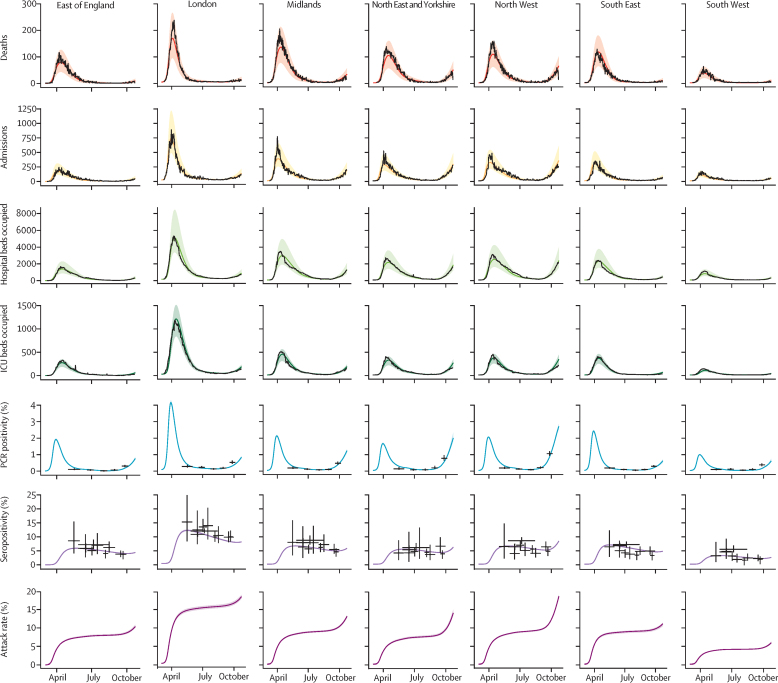
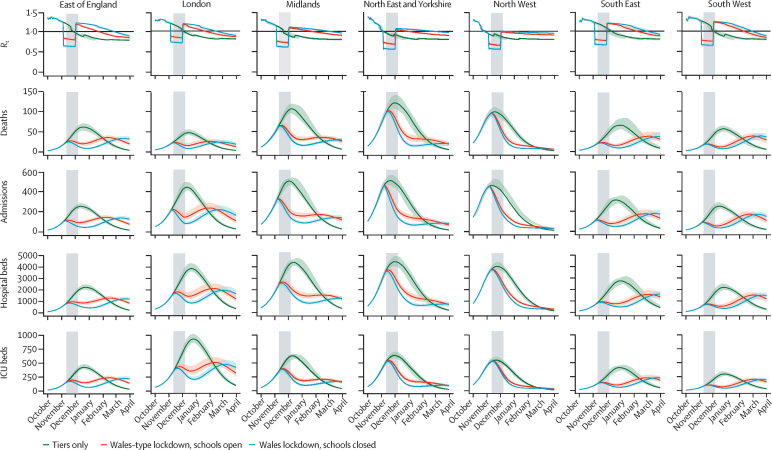
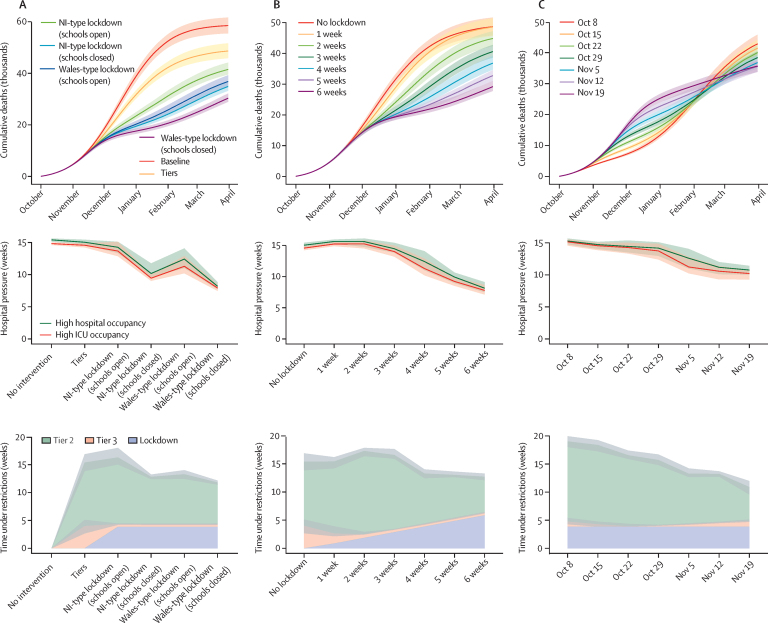
Background A second wave of COVID-19 cases in autumn, 2020, in England led to localised, tiered restrictions (so-called alert levels) and, subsequently, a second national lockdown. We examined the impact of these tiered restrictions, and alternatives for lockdown stringency, timing, and duration, on severe acute respiratory syndrome coronavirus 2 (SARS-CoV-2) transmission and hospital admissions and deaths from COVID-19. Methods We fit an age-structured mathematical model of SARS-CoV-2 transmission to data on hospital admissions and hospital bed occupancy (ISARIC4C/COVID-19 Clinical Information Network, National Health Service [NHS] England), seroprevalence (Office for National Statistics, UK Biobank, REACT-2 study), virology (REACT-1 study), and deaths (Public Health England) across the seven NHS England regions from March 1, to Oct 13, 2020. We analysed mobility (Google Community Mobility) and social contact (CoMix study) data to estimate the effect of tiered restrictions implemented in England, and of lockdowns implemented in Northern Ireland and Wales, in October, 2020, and projected epidemiological scenarios for England up to March 31, 2021. Findings We estimated a reduction in the effective reproduction number ( R t ) of 2% (95% credible interval [CrI] 0–4) for tier 2, 10% (6–14) for tier 3, 35% (30–41) for a Northern Ireland-stringency lockdown with schools closed, and 44% (37–49) for a Wales-stringency lockdown with schools closed. From Oct 1, 2020, to March 31, 2021, a projected COVID-19 epidemic without tiered restrictions or lockdown results in 280 000 (95% projection interval 274 000–287 000) hospital admissions and 58 500 (55 800–61 100) deaths. Tiered restrictions would reduce hospital admissions to 238 000 (231 000–245 000) and deaths to 48 600 (46 400–50 700). From Nov 5, 2020, a 4-week Wales-type lockdown with schools remaining open—similar to the lockdown measures announced in England in November, 2020—was projected to further reduce hospital admissions to 186 000 (179 000–193 000) and deaths to 36 800 (34 900–38 800). Closing schools was projected to further reduce hospital admissions to 157 000 (152 000–163 000) and deaths to 30 300 (29 000–31 900). A projected lockdown of greater than 4 weeks would reduce deaths but would bring diminishing returns in reducing peak pressure on hospital services. An earlier lockdown would have reduced deaths and hospitalisations in the short term, but would lead to a faster resurgence in cases after January, 2021. In a post-hoc analysis, we estimated that the second lockdown in England (Nov 5–Dec 2) reduced R t by 22% (95% CrI 15–29), rather than the 32% (25–39) reduction estimated for a Wales-stringency lockdown with schools open. Interpretation Lockdown measures outperform less stringent restrictions in reducing cumulative deaths. We projected that the lockdown policy announced to commence in England on Nov 5, with a similar stringency to the lockdown adopted in Wales, would reduce pressure on the health service and would be well timed to suppress deaths over the winter period, while allowing schools to remain open. Following completion of the analysis, we analysed new data from November, 2020, and found that despite similarities in policy, the second lockdown in England had a smaller impact on behaviour than did the second lockdown in Wales, resulting in more deaths and hospitalisations than we originally projected when focusing on a Wales-stringency scenario for the lockdown. Funding Horizon 2020, UK Medical Research Council, and the National Institute for Health Research.
Overview
The claims and statistics of this paper haven’t been checked yet.
Free: it reads the open-access text and checks the first 5 claims that cite a source we can check. Create a free account to check every claim.
Integrity signals
Registry
Cites
Statistics
Figures
Verification
Claims the paper makes
The claims and statistics of this paper haven’t been checked yet.
Free: it reads the open-access text and checks the first 5 claims that cite a source we can check. Create a free account to check every claim.
Self-check
Percentages, sums and reported differences re-computed from the paper’s own numbers.
The self-check needs the paper’s full text.
Citations
Cites
Docherty, A. B., Harrison, E. M., Green, C. A., Hardwick, H. E., Pius, R., Norman, L., Holden, K. A., Read, J. M., Dondelinger, F., Carson, G., et al. (2020) · BMJ · doi:10.1136/bmj.m1985 · Cited by 3,481
Self-citationSocial Contacts and Mixing Patterns Relevant to the Spread of Infectious Diseases
Mossong, J., Hens, N., Jit, M., Beutels, P., Auranen, K., Mikolajczyk, R., Massari, M., Salmaso, S., Tomba, G. S., Wallinga, J., et al. (2008) · PLoS Medicine · doi:10.1371/journal.pmed.0050074 · Cited by 2,900 · cited 1×
“To simulate school closure, we reduced contact rates according to the age-specific proportion of contacts made at school, 14 and further reduced all individuals’ contacts by a multiplicative factor we estimated during model fitting that was associated with the reopening of schools in England in…”
Self-citationAge-dependent effects in the transmission and control of COVID-19 epidemics
Davies, N. G., Klepac, P., Liu, Y., Prem, K., Jit, M., CMMID COVID-19 working group, Pearson, C. A. B., Quilty, B. J., Kucharski, A. J., Gibbs, H., et al. (2020) · Nature Medicine · doi:10.1038/s41591-020-0962-9 · Cited by 1,759
Self-citationEstimating the burden of SARS-CoV-2 in France
Salje, H., Tran Kiem, C., Lefrancq, N., Courtejoie, N., Bosetti, P., Paireau, J., Andronico, A., Hozé, N., Richet, J., Dubost, C.-L., et al. (2020) · Science · doi:10.1126/science.abc3517 · Cited by 1,038
Davies, N. G., Kucharski, A. J., Eggo, R. M., Gimma, A., Edmunds, W. J., Jombart, T., O'Reilly, K., Endo, A., Hellewell, J., Nightingale, E. S., et al. (2020) · The Lancet Public Health · doi:10.1016/s2468-2667(20)30133-x · Cited by 848 · cited 2×
“We used this approach both in fitting the model to policy changes over the first wave of the COVID-19 epidemic in England, and in estimating the impact of tiered restrictions in England and of lockdown interventions in Northern Ireland and Wales (appendix pp 1–5).”
Self-citationLevin, A. T., Hanage, W. P., Owusu-Boaitey, N., Cochran, K. B., Walsh, S. P., & Meyerowitz-Katz, G. (2020) · European Journal of Epidemiology · doi:10.1007/s10654-020-00698-1 · Cited by 844 · cited 2×
“The relative age-specific infection fatality risk was adopted from a global meta-analysis, 10 and the relative age-specific infection hospitalisation risk was adopted from a study of the COVID-19 epidemic in France; 11 given these relative age-specific rates, the overall infection fatality risk,…”
Genomic evidence for reinfection with SARS-CoV-2: a case study
Tillett, R. L., Sevinsky, J. R., Hartley, P. D., Kerwin, H., Crawford, N., Gorzalski, A., Laverdure, C., Verma, S. C., Rossetto, C. C., Jackson, D., et al. (2021) · The Lancet Infectious Diseases · doi:10.1016/s1473-3099(20)30764-7 · Cited by 754
Quantifying the impact of physical distance measures on the transmission of COVID-19 in the UK
CMMID COVID-19 working group, Jarvis, C. I., Van Zandvoort, K., Gimma, A., Prem, K., Klepac, P., Rubin, G. J., & Edmunds, W. J. (2020) · BMC Medicine · doi:10.1186/s12916-020-01597-8 · Cited by 720 · cited 2×
“We measured the relationship between anonymised mobility data collected from smart-phone users by Google Community Mobility 12 and fine-grained social-contact survey data from the CoMix study, 13 which has been collecting data on UK residents’ daily interpersonal contacts since late March, 2020.”
Self-citationFour-tier response system and spatial propagation of COVID-19 in China by a network model
Ge, J., He, D., Lin, Z., Zhu, H., & Zhuang, Z. (2020) · Mathematical Biosciences · doi:10.1016/j.mbs.2020.108484 · Cited by 45 · cited 1×
“15 Another study looking at short-term, so-called circuit breaker interventions in the UK found that such interventions have the biggest impact when the growth rate is low.”
Precautionary Breaks: Planned, Limited Duration Circuit Breaks to Control the Prevalence of COVID-19
Keeling, M. J., Guyver‐Fletcher, G., Holmes, A., Dyson, L., Tildesley, M. J., Hill, E. M., & Medley, G. F. (2020) · Epidemics · doi:10.1016/j.epidem.2021.100526 · Cited by 43
Cited by
Features, Evaluation and Treatment Coronavirus (COVID-19)
Cascella, M., Rajnik, M., Cuomo, A., Dulebohn, S. C., & Napoli, R. D. (2020) · StatPearls · Cited by 5,363
Estimated transmissibility and impact of SARS-CoV-2 lineage B.1.1.7 in England
Davies, N. G., Abbott, S., Barnard, R. C., Jarvis, C. I., Kucharski, A. J., Munday, J. D., Pearson, C. A. B., Russell, T. W., Tully, D. C., Washburne, A. D., et al. (2021) · Science · doi:10.1126/science.abg3055 · Cited by 2,581
“The model uses Google mobility data (11), validated by social contact surveys (10), to”
BackgroundMethodInfluentialSelf-citationEstimated transmissibility and impact of SARS-CoV-2 lineage B.1.1.7 in England
Davies, N. G., Abbott, S., Barnard, R. C., Jarvis, C. I., Kucharski, A. J., Munday, J. D., Pearson, C. A. B., Russell, T. W., Tully, D. C., Washburne, A. D., et al. (2020) · doi:10.1101/2020.12.24.20248822 · Cited by 2,557
Self-citationEmerging Variants of SARS-CoV-2 And Novel Therapeutics Against Coronavirus (COVID-19)
Aleem, A., Samad, A., & Slenker, A. K. (2021) · Europe PMC (PubMed Central) · Cited by 637
Sharma, M., Mindermann, S., Rogers-Smith, C., Leech, G., Snodin, B., Ahuja, J., Sandbrink, J. B., Monrad, J. T., Altman, G., Dhaliwal, G., et al. (2021) · Nature Communications · doi:10.1038/s41467-021-26013-4 · Cited by 231
Economic Burden of COVID-19: A Systematic Review
Richards, F., Kodjamanova, P., Chen, X., Li, N., Atanasov, P., Bennetts, L., Patterson, B. J., Yektashenas, B., Mesa-Frias, M., Tronczynski, K., et al. (2022) · ClinicoEconomics and Outcomes Research · doi:10.2147/ceor.s338225 · Cited by 191
Key epidemiological drivers and impact of interventions in the 2020 SARS-CoV-2 epidemic in England
Knock, E., Whittles, L. K., Lees, J. A., Perez‐Guzman, P. N., Verity, R., FitzJohn, R. G., Gaythorpe, K. A. M., Imai, N., Hinsley, W. R., Okell, L., et al. (2021) · Science Translational Medicine · doi:10.1126/scitranslmed.abg4262 · Cited by 148
COVID‐19: Current knowledge in clinical features, immunological responses, and vaccine development
Singh, R., Kang, A., Luo, X., Jeyanathan, M., Gillgrass, A. E., Afkhami, S., & Xing, Z. (2021) · The FASEB Journal · doi:10.1096/fj.202002662r · Cited by 114
Challenges for modelling interventions for future pandemics
Kretzschmar, M., Ashby, B., Fearon, E., Overton, C. E., Panovska‐Griffiths, J., Pellis, L., Quaife, M., Rozhnova, G., Scarabel, F., Stage, H. B., et al. (2022) · Epidemics · doi:10.1016/j.epidem.2022.100546 · Cited by 101
Verelst, F., Hermans, L., Vercruysse, S., Gimma, A., Coletti, P., Backer, J. A., Wong, K. L., Wambua, J., van Zandvoort, K., Willem, L., et al. (2021) · BMC Medicine · doi:10.1186/s12916-021-02133-y · Cited by 83
“demiological parameters by relying on social contact data [9, 10].”
Self-citationLeung, K. S. M., Wu, J. T. K., & Leung, G. M. (2021) · The Lancet Public Health · doi:10.1016/s2468-2667(21)00167-5 · Cited by 85
Herrera, D., & Campos, G. D. L. (2022) · BMC Infectious Diseases · doi:10.1186/s12879-022-07262-0 · Cited by 88
“Our results are highly relevant for aspects of COVID19 modeling, such as estimating the number of unreported infections from hospital and ICU data, allowing to better estimate the present levels of natural immunity [4, 12, 13]; prediction of the effects of public-health policies implemented along the pandemic [14]; ev…”
BackgroundModelling the medium-term dynamics of SARS-CoV-2 transmission in England in the Omicron era
Barnard, R. C., Davies, N. G., Centre for Mathematical Modelling of Infectious Diseases COVID-19 working group, Munday, J. D., Lowe, R., Knight, G. M., Leclerc, Q. J., Tully, D. C., Hodgson, D., Pung, R., et al. (2022) · Nature Communications · doi:10.1038/s41467-022-32404-y · Cited by 68
Self-citationLinking excess mortality to mobility data during the first wave of COVID-19 in England and Wales
Basellini, U., Alburez‐Gutierrez, D., Fava, E. D., Perrotta, D., Bonetti, M., Camarda, C. G., & Zagheni, E. (2021) · SSM - Population Health · doi:10.1016/j.ssmph.2021.100799 · Cited by 72
“, 2020), and it has been employed (alongside social contacts data) to estimate the effect of tiered restrictions in England and the lockdown in Wales implemented in October 2020 (Davies et al., 2020).”
InfluentialArea level deprivation and monthly COVID-19 cases: The impact of government policy in England
Morrissey, K., Spooner, F. E. B., Salter, J. M., & Shaddick, G. (2021) · Social Science & Medicine · doi:10.1016/j.socscimed.2021.114413 · Cited by 54
“This trend was reversed in November and December 2020, with the outbreak of the novel SARS-CoV-2 variant emerged in the South East of England (Davies et al., 2021).”
InfluentialAyoub, H. H., Mumtaz, G. R., Seedat, S., Makhoul, M., Chemaitelly, H. S., & Abu-Raddad, L. J. (2021) · Global Epidemiology · doi:10.1016/j.gloepi.2021.100068 · Cited by 53
Timeliness and completeness of laboratory-based surveillance of COVID-19 cases in England
Clare, T., Twohig, K. A., O'Connell, A.-M., & Dabrera, G. (2021) · Public Health · doi:10.1016/j.puhe.2021.03.012 · Cited by 51
Pearson, C. A. B., Bozzani, F. M., Procter, S. R., Davies, N. G. M., Huda, M., Jensen, H. T., Keogh-Brown, M. R., Khalid, M., Sweeney, S., Rueda, S. T., et al. (2021) · PLoS Medicine · doi:10.1371/journal.pmed.1003815 · Cited by 63
“5, k = 5) [41,42] Contact rates Age-dependent synthetic contact matrix for Pakistan [19]”
BackgroundSelf-citationLung fibrosis: Post-COVID-19 complications and evidences
Hirawat, R., Jain, N., Saifi, M. A., Rachamalla, M., & Godugu, C. (2022) · International Immunopharmacology · doi:10.1016/j.intimp.2022.109418 · Cited by 58
Nowcasting epidemics of novel pathogens: lessons from COVID-19
Wu, J. T. K., Leung, K. S. M., Lam, T. T., Ni, M. Y., Wong, C. K. H., Peiris, M. J. S., & Leung, G. M. (2021) · Nature Medicine · doi:10.1038/s41591-021-01278-w · Cited by 55
Noureddine, F. Y., Chakkour, M., Roz, A. E., Reda, J., Sahily, R. A., Assi, A., Joma, M., Salami, H. A., Hashem, S. J., Harb, B., et al. (2021) · Medical Sciences · doi:10.3390/medsci9020040 · Cited by 52
Liu, Y., Sandmann, F., Barnard, R. C., Pearson, C. A. B., CMMID COVID-19 Working Group, Pastore, R., Pebody, R. G., Flasche, S., & Jit, M. (2021) · The Lancet Regional Health - Europe · doi:10.1016/j.lanepe.2021.100267 · Cited by 45
Self-citationComparison of the 2021 COVID-19 roadmap projections against public health data in England
Keeling, M. J., Dyson, L., Tildesley, M. J., Hill, E. M., & Moore, S. (2022) · Nature Communications · doi:10.1038/s41467-022-31991-0 · Cited by 44
Evolution and implications of SARS-CoV-2 variants in the post-pandemic era
Manirambona, E., Okesanya, O. J., Olaleke, N. O., Oso, T. A., & Lucero‐Prisno, D. E. (2024) · Discover Public Health · doi:10.1186/s12982-024-00140-x · Cited by 45
“Whereas it did not show initial significant changes in hospitalization or mortality risk when compared to other variants, later research demonstrated an increase in disease severity [19].”
Age-Varying Susceptibility to the Delta Variant (B.1.617.2) of SARS-CoV-2
Chun, J. Y., Jeong, H., & Kim, Y. (2022) · JAMA Network Open · doi:10.1001/jamanetworkopen.2022.3064 · Cited by 43
In War Times: Fictionalizing Iraq
Luckhurst, R. (2012) · Contemporary Literature · doi:10.1353/cli.2012.0040 · Cited by 54
Liu, Y., Procter, S. R., Pearson, C. A. B., Montero, A. M., Rueda, S. T., Zegeye, E. A., Uzochukwu, B. S. C., Drake, T. L., Bergren, E., Eggo, R. M., et al. (2023) · BMC Medicine · doi:10.1186/s12916-023-02784-z · Cited by 39
Self-citationFAIR data pipeline: provenance-driven data management for traceable scientific workflows
Mitchell, S., Lahiff, A., Cummings, N., Hollocombe, J., Boskamp, B., Field, R., Reddyhoff, D., Zarebski, K. A., Wilson, A., Viola, B., et al. (2022) · Philosophical Transactions of the Royal Society A Mathematical Physical and Engineering Sciences · doi:10.1098/rsta.2021.0300 · Cited by 58
Knowledge barriers in a national symptomatic-COVID-19 testing programme
Graham, M. S., May, A., Varsavsky, T., Sudre, C. H., Murray, B. A. K., Kläser, K., Antonelli, M., Canas, L. S., Molteni, E., Modat, M., et al. (2022) · PLOS Global Public Health · doi:10.1371/journal.pgph.0000028 · Cited by 37
“Despite increased press coverage, across newspapers, TV, and radio, and a second wave with mitigation intensification [26], recognition of these test-qualifying symptoms in our survey around six months later increased by ~10% and therefore remains alarmingly low.”
BackgroundLiu, Y., Pearson, C. A. B., Sandmann, F., Barnard, R. C., Kim, J., CMMID COVID-19 Working Group, Flasche, S., Jit, M., & Abbas, K. (2022) · The Lancet Regional Health - Europe · doi:10.1016/j.lanepe.2022.100381 · Cited by 37
Self-citationExplaining regional differences in mortality during the first wave of Covid-19 in Italy
Basellini, U., & Camarda, C. G. (2021) · Population Studies · doi:10.1080/00324728.2021.1984551 · Cited by 33
“A growing body of literature is documenting the positive effects of non-pharmaceutical interventions (NPIs)—for example school closures, travel bans, and lockdowns—on reducing the spread and mortality of Covid-19 (see e.g. Flaxman et al. 2020; Davies et al. 2021; Brauner et al. 2021).”
BackgroundSocioeconomic differences and persistent segregation of Italian territories during COVID-19 pandemic
Bonaccorsi, G., Pierri, F., Scotti, F., Flori, A., Manaresi, F., Ceri, S., & Pammolli, F. (2021) · Scientific Reports · doi:10.1038/s41598-021-99548-7 · Cited by 29
An analysis of school absences in England during the COVID-19 pandemic
Southall, E., Holmes, A., Hill, E. M., Atkins, B. D., Leng, T., Thompson, R. N., Dyson, L., Keeling, M. J., & Tildesley, M. J. (2021) · BMC Medicine · doi:10.1186/s12916-021-01990-x · Cited by 27
Chen, Z., & Kong, G. (2020) · Production and Operations Management · doi:10.1111/poms.13702 · Cited by 30
“For example, Davies et al. (2020a) adopt an SEIR model to evaluate the effects of different lockdown policies (including time-window triggering lockdown and the bed’s threshold triggering lockdown) on COVID-19 in the United Kingdom through simulation.”
BackgroundMethodInfluentialZhang, X. N., Owen, G. E., Green, M. A., Buchan, I. E., & Barr, B. (2022) · BMJ Open · doi:10.1136/bmjopen-2021-054101 · Cited by 25
Close contact behaviors of university and school students in 10 indoor environments
Zhang, N., Liu, L., Dou, Z., Liu, X., Yang, X., Miao, D., Guo, Y., Gu, S., Li, Y., Qian, H., et al. (2023) · Journal of Hazardous Materials · doi:10.1016/j.jhazmat.2023.132069 · Cited by 30
Tizzani, M., Gaetano, A. D., Jarvis, C. I., Gimma, A., Wong, K. L., Edmunds, W. J., Beutels, P., Hens, N., Coletti, P., & Paolotti, D. (2023) · BMC Public Health · doi:10.1186/s12889-023-15846-x · Cited by 24
Self-citationCovid-19: Regional policies and local infection risk: Evidence from Italy with a modelling study
Guaitoli, G., & Pancrazi, R. (2021) · The Lancet Regional Health - Europe · doi:10.1016/j.lanepe.2021.100169 · Cited by 28
Trentini, F., Manna, A., Balbo, N., Marziano, V., Guzzetta, G., O’Dell, S., Kummer, A. G., Litvinova, M., Merler, S., Ajelli, M., et al. (2022) · Epidemics · doi:10.1016/j.epidem.2022.100601 · Cited by 23
Dong, J., Chen, R., Zhao, H., & Zhu, Y. (2022) · Advances in Ophthalmology Practice and Research · doi:10.1016/j.aopr.2022.11.001 · Cited by 26
Singh, A., Bartington, S., Song, C., Ghaffarpasand, O., Kraftl, M., Shi, Z., Pope, F. D., Stacey, B., Hall, J. A., Thomas, G. N., et al. (2021) · Environmental Pollution · doi:10.1016/j.envpol.2021.118584 · Cited by 21
Torres, A. R., Rodrigues, A. P., Sousa‐Uva, M., Kislaya, I., Silva, S. P., Antunes, L., Dias, C. M., & Nunes, B. (2022) · Eurosurveillance · doi:10.2807/1560-7917.es.2022.27.23.2100497 · Cited by 24
“Similar results were found in a modelling study from the United Kingdom which projected a reduction of 48,600 COVID-19 deaths and 238,000 hospital admissions with tiered NPIs implemented from October 2020 to March 2021 [20].”
Study Designs to Assess Real-World Interventions to Prevent COVID-19
Digitale, J. C., Stojanovski, K., McCulloch, C. E., & Handley, M. A. (2021) · Frontiers in Public Health · doi:10.3389/fpubh.2021.657976 · Cited by 21
O trabalho remoto de enfermeiros docentes em tempos de pandemia
Araújo, A. R. L., Sousa, L. M. C., Carvalho, R. B. D. S., Oliveira, A. D. D. S., Amorim, F. C. M., Sousa, K. H. J. F., Zeitoune, R. C. G., & Damasceno, C. K. C. S. (2021) · Escola Anna Nery · doi:10.1590/2177-9465-ean-2021-0198 · Cited by 39
“Ainda, identificou que medidas de restrição mais rigorosas são mais eficazes para reduzir as mortes 8 .”
BackgroundInference of epidemic dynamics in the COVID-19 era and beyond
Cori, A., & Kucharski, A. J. (2024) · Epidemics · doi:10.1016/j.epidem.2024.100784 · Cited by 21
Feng, Y., Shao, H., Gong, X., Song, Z., Xie, Y., Qi, S., Shi, L., Hu, Y., Liu, X., Liu, X., et al. (2022) · BMJ Open · doi:10.1136/bmjopen-2022-066359 · Cited by 18
Wang, Z., Whittington, J. D., Yuan, H., Miao, H., Tian, H., & Stenseth, N. C. (2021) · Biosafety and Health · doi:10.1016/j.bsheal.2021.09.002 · Cited by 16
“Conclusions from models are consistent that the control measures were effective [166,167], and lockdown is the most effective way to mitigate the spread of the virus [168].”
Drivers of Household Recycling Behavior in the City of Johannesburg, South Africa
Schoeman, T., & Rampedi, I. T. (2022) · International Journal of Environmental Research and Public Health · doi:10.3390/ijerph19106229 · Cited by 21
Seroprevalence of anti-SARS-CoV-2 total antibody is higher in younger Austrian blood donors
Weidner, L., Nunhofer, V., Jungbauer, C., Hoeggerl, A. D., Grüner, L., Grabmer, C., Zimmermann, G., Rohde, E., & Laner‐Plamberger, S. (2021) · Infection · doi:10.1007/s15010-021-01639-0 · Cited by 19
Li, Y., Wang, X., Campbell, H. J., & Nair, H. (2021) · The Lancet Digital Health · doi:10.1016/s2589-7500(21)00144-8 · Cited by 18
Pearson, C. A. B., Bozzani, F. M., Procter, S. R., Davies, N. G. M., Huda, M., Jensen, H. T., Keogh-Brown, M. R., Khalid, M., Sweeney, S., Rueda, S. T., et al. (2021) · medRxiv · doi:10.1101/2021.02.24.21252338 · Cited by 16
“Latent period Gamma(mean = 2.5, k = 5) (42,43) Contact rates Age-dependent synthetic contact matrix for Pakistan (19) Proportion asymptomatic age-specific posterior from (15) Duration of infectiousness Gamma(mean = 5, k = 4) (42,43) Duration of natural immunity 2.5 years Assumed”
InfluentialSelf-citationAnalysis of SARS-CoV-2 transmission in airports based on real human close contact behaviors
Yang, X., Dou, Z., Ding, Y., Su, B., Qian, H., & Zhang, N. (2023) · Journal of Building Engineering · doi:10.1016/j.jobe.2023.108299 · Cited by 17
Paul, A. K., Basak, N., & Kuddus, M. A. (2024) · Results in Engineering · doi:10.1016/j.rineng.2023.101741 · Cited by 17
Duval, D., Evans, B., Sanders, A., Hill, J., Simbo, A., Kavoi, T., Lyell, I., Simmons, Z., Qureshi, M., Pearce‐Smith, N., et al. (2024) · Journal of Public Health · doi:10.1093/pubmed/fdae025 · Cited by 17
Hassanin, A. A., Raza, S. H. A., Ujan, J. A., ALrashidi, A. A., Sitohy, B., AL-surhanee, A. A., Saad, A. M., Al-Hazani, T. M. I., Atallah, O. O., Syaad, K. M. A., et al. (2021) · Saudi Journal of Biological Sciences · doi:10.1016/j.sjbs.2021.12.020 · Cited by 16
“Patients infected with alphaCoV variant showed an increased intensity of the disease compared to people infected with other forms of SARS-2 variants (Davies et al., 2021; Volz and Mishra, 2021).”
Russo, G., Jesus, T. S., Deane, K. D., Osman, A. Y., & McCoy, D. (2021) · International Journal of Health Policy and Management · doi:10.34172/ijhpm.2021.155 · Cited by 17
Groves-Kirkby, N., Wakeman, E., Patel, S. V., Hinch, R., Poot, T., Pearson, J., Tang, L., Kendall, E., Tang, M., Moore, K., et al. (2022) · Epidemics · doi:10.1016/j.epidem.2022.100662 · Cited by 17
Faherty, L. J., de Lima, P. N., Lim, J. Z., Roberts, D. M., Karr, S., Lawson, E., & Willis, H. H. (2024) · Frontiers in Public Health · doi:10.3389/fpubh.2024.1426992 · Cited by 20
Otter, J. A., Zhou, J., Price, J. R., Reeves, L., Zhu, N., Randell, P. A., Sriskandan, S., Barclay, W., & Holmes, A. H. (2022) · Journal of Hospital Infection · doi:10.1016/j.jhin.2022.11.005 · Cited by 12
“Several epidemic waves have occurred in the UK, resulting in a peak of hospitalizations in April 2020, and a second, larger peak of hospitalizations in January/February 2021 [2,3].”
BackgroundModeling the COVID-19 Epidemic With Multi-Population and Control Strategies in the United States
Sun, D., Long, X., & Liu, J. (2022) · Frontiers in Public Health · doi:10.3389/fpubh.2021.751940 · Cited by 14
Vardavas, C. I., Nikitara, K., Aslanoglou, K., Boon, M. H., Phalkey, R. K., Leonardi‐Bee, J., Magiorkinis, G., Katsaounou, P. A., Pharris, A., Severi, E., et al. (2021) · medRxiv · doi:10.1101/2021.11.11.21266216 · Cited by 12
“, 2021 (24) England (Northern Ireland and Wales) Age-structured mathematical model 01/03-13/10/2020 (projections up to 31/3/2021) 1) Northern Ireland's lockdown: non-essential retail remained open, household bubbles of up to 10 people from 2 households 2) Wales' lockdown: nonessential retail was closed, stay at home,…”
BackgroundAli, S., Li, Z., Moqueet, N., Moghadas, S. M., Galvani, A. P., Cooper, L. A., Stranges, S., Haworth-Brockman, M. J., Pinto, A. D., Asaria, M., et al. (2024) · Medical Decision Making · doi:10.1177/0272989x241280611 · Cited by 15
The evolving proteome of SARS-CoV-2 predominantly uses mutation combination strategy for survival
Patro, L. P. P., Sathyaseelan, C., Uttamrao, P. P., & Rathinavelan, T. (2021) · Computational and Structural Biotechnology Journal · doi:10.1016/j.csbj.2021.05.054 · Cited by 9
Assessing Public Health and Social Measures Against COVID-19 in Japan From March to June 2021
Hayashi, K., Kayano, T., Anzai, A., Fujimoto, M., Linton, N. M., Sasanami, M., Suzuki, A., Kobayashi, T., Otani, K., Yamauchi, M., et al. (2022) · Frontiers in Medicine · doi:10.3389/fmed.2022.937732 · Cited by 15
Tully, P. A. G., & Carr, N. (2021) · Leisure Studies · doi:10.1080/02614367.2021.1933575 · Cited by 9
Gentilini, F., Turba, M. E., Taddei, F., Gritti, T., Fantini, M., Dirani, G., & Sambri, V. (2021) · PLoS ONE · doi:10.1371/journal.pone.0260884 · Cited by 10
Muegge, R., Dean, N., Jack, E., & Lee, D. (2022) · Spatial and Spatio-temporal Epidemiology · doi:10.1016/j.sste.2022.100559 · Cited by 9
Explaining international differences in excess mortality due to Covid-19
Brown, D., Dattilo, M., & Rockey, J. C. (2025) · Scientific Reports · doi:10.1038/s41598-025-92403-z · Cited by 8
Michie, S., POTTS, H. W. W., West, R., Amlôt, R., Smith, L., Fear, N. T., & Rubin, G. J. (2021) · Public Health · doi:10.1016/j.puhe.2021.07.002 · Cited by 6
Edelman, N. L., Witzel, T. C., Samba, P., Nutland, W., & Nadarzynski, T. (2022) · International Journal of Environmental Research and Public Health · doi:10.3390/ijerph19126985 · Cited by 11
“From then onwards, England, Wales, Northern Ireland and Scotland faced intermittent tiered restrictions (where different areas experienced a different intensity of measures) and lockdowns (where entire nations faced the same restrictions) [2,3,5].”
BackgroundDynamic characteristics of a COVID-19 outbreak in Nanjing, Jiangsu province, China
Wang, J., Ma, T., Ding, S., Xu, K., Zhang, M., Zhang, Z., Dai, Q., Tao, S., Wang, H., Cheng, X., et al. (2022) · Frontiers in Public Health · doi:10.3389/fpubh.2022.933075 · Cited by 8
Gountas, I., Quattrocchi, A., Mamais, I., Tsioutis, C., Christaki, E., Fokianos, K., & Nikolopoulos, G. K. (2021) · BMC Public Health · doi:10.1186/s12889-021-11945-9 · Cited by 10
Resilience of the acute sector in recovery from COVID-19 pressures
Bosque‐Mercader, L., Conroy, S., Lasserson, D. S., Mannion, R., Nicodemo, C., & Wittenberg, R. (2025) · Social Science & Medicine · doi:10.1016/j.socscimed.2025.118062 · Cited by 10
Loro, P. A. D., Böhning, D., & Sahu, S. K. (2024) · Journal of the Royal Statistical Society Series C (Applied Statistics) · doi:10.1093/jrsssc/qlae067 · Cited by 19
“Several other authors embarked on the same mission (Flaxman et al., 2020; Davies et al., 2021; Laydon et al., 2021; Pelagatti and Maranzano, 2021; Zhang et al., 2022), but none of them developed a comprehensive framework that describes the underlying epidemiological process and properly propagates…”
Yang, P., Yang, Z., Zhao, C., Li, X., Shao, Z., Liu, K., & Shang, L. (2022) · Frontiers in Public Health · doi:10.3389/fpubh.2022.903511 · Cited by 7
Colomer, M. À., Margalida, A., Alòs, F., Oliva‐Vidal, P., Vilella, A., & Fraile, L. J. (2021) · The Science of The Total Environment · doi:10.1016/j.scitotenv.2021.147816 · Cited by 7
“…to avoid the collapse of national health systems but our model foresees that these measures are not effective in controlling the COVID-19 pandemic over the longer term because the initial course of the disease has continued after the measures were lifted (Davies et al., 2021; Li et al., 2021).”
Steinegger, B., Granell, C., Rapisardi, G., Gómez, S., Matamalas, J. T., Soriano‐Paños, D., Gómez‐Gardeñes, J., & Arenas, À. (2023) · JMIR Public Health and Surveillance · doi:10.2196/40514 · Cited by 7
Central Precocious Puberty During the COVID-19 Pandemic Period: A Systematic Review of Literature
Fanaki, M., Michala, L., Nazari, E., & Daskalakis, G. (2024) · Cureus · doi:10.7759/cureus.71002 · Cited by 9
“Due to the high transmission rate of COVID-19, several countries imposed restrictive policies promoting social distancing and quarantine measures to reduce the spread, the deaths, and the healthcare costs caused by SARS-CoV-2 [36].”
BackgroundLiu, H., Liang, Z., Zhang, S., & Liu, L. (2022) · Journal of Urban Health · doi:10.1007/s11524-022-00639-1 · Cited by 5
“Mathematical modeling and empirical research on aggregated data have supported the effectiveness of these measures [32, 33], but to fully understand how they change the dynamics of COVID-19 transmission, we need more evidence from high-quality contact tracing data.”
BackgroundScott, S., McGowan, V. J., Wildman, J., Bidmead, E., Hartley, J., Mathews, C., James, B., Sullivan, C., Bambra, C. L., & Sowden, S. L. (2024) · BMC Health Services Research · doi:10.1186/s12913-023-10435-5 · Cited by 7
“Nevertheless, modelling studies using general population UK data do suggest that lockdown scenarios are the most stringent way to slow transmission (and thus reduce hospital admissions, disability and deaths) [58– 60].”
BackgroundYang, T., Deng, W., Liu, Y., & Deng, J. (2022) · Annals of Medicine · doi:10.1080/07853890.2022.2060522 · Cited by 9
“Furthermore, the downstream effects of vaccination and non-pharmacological interventions such as social, psychological, and economic costs were not considered and these effects must be considered when performing certain studies on deciding of the appropriate course of action [34].”
BackgroundConstruction and Simulation Analysis of Epidemic Propagation Model Based on COVID-19 Characteristics
Bin, S. (2022) · International Journal of Environmental Research and Public Health · doi:10.3390/ijerph20010132 · Cited by 6
“[21] examined the impact of tiered restrictions and alternatives for lockdown stringency, timing, and duration on SARS-CoV-2 transmission and hospital admissions and deaths from COVID-19 in England.”
BackgroundDomenico, L. D., Bosetti, P., Sabbatini, C. E., Opatowski, L., & Colizza, V. (2026) · Nature Communications · doi:10.1038/s41467-026-68557-3 · Cited by 13
“The synthetic matrices incorporated reductions in workplace attendance derived from mobility data, under the assumption that fewer people at work equated to fewer contacts 36,46 .”
Targeted policies and household consumption dynamics: Evidence from high-frequency transaction data
Bonaccorsi, G., Scotti, F., Pierri, F., Flori, A., & Pammolli, F. (2024) · Journal of Economic Behavior & Organization · doi:10.1016/j.jebo.2024.05.017 · Cited by 8
Ashcroft, T., McSwiggan, E., Agyei‐Manu, E., Nundy, M., Atkins, N., Kirkwood, J. R., Machiri, M. B. S., Vardhan, V., Lee, B., Kubat, E., et al. (2025) · Journal of Public Health · doi:10.1093/pubmed/fdaf017 · Cited by 7
“…39,46,48,49,56,65–67 ; isolation of contacts 30,66–69 ; test and release of cases 70,71 ; test and release of contacts 57,68,72–75 ; NPIs that limit social contacts 42,76–83 ; school-related NPIs 29,30,39,42,58,59,64,84–91 ; work-and retail-related NPIs 37,52,63,92 ; universal lockdown 89, 93–”
Prestige, E., Coletti, P., Backer, J. A., Davies, N. G., Edmunds, W. J., & Jarvis, C. I. (2025) · Epidemics · doi:10.1016/j.epidem.2025.100830 · Cited by 6
Self-citationBarbeito, I., Precioso, D., Sierra, M. J., Vegas-Azcárate, S., Fernández, S., Vitoriano, B., Gómez‐Ullate, D., Cao, R., Monge, S., & Study Group for Non-Pharmaceutical Interventions in Spain (2023) · Frontiers in Public Health · doi:10.3389/fpubh.2023.1061331 · Cited by 8
Dai, Y., Liu, B., Tong, C., Carslaw, D. C., MacKenzie, A. R., & Shi, Z. (2025) · Atmospheric chemistry and physics · doi:10.5194/acp-25-13585-2025 · Cited by 6
Balancing health and economic impacts from targeted pandemic restrictions
Bonaccorsi, G., Scotti, F., Flori, A., & Pammolli, F. (2023) · Journal of Evolutionary Economics · doi:10.1007/s00191-023-00834-6 · Cited by 5
Mégarbane, B., Bourasset, F., & Scherrmann, J. (2021) · Journal of General Internal Medicine · doi:10.1007/s11606-021-06953-9 · Cited by 4
A Study of Morbidity and Mortality from COVID-19 in India
Eissa, D. E., Rashed, E. R., & Eissa, M. E. (2022) · SciMedicine Journal · doi:10.28991/scimedj-2022-0401-03 · Cited by 6
Randall, T., Mellor, C., & Wilkinson, L. L. (2022) · Frontiers in Psychology · doi:10.3389/fpsyg.2022.869510 · Cited by 6
Estimating RSV seasonality from pandemic disruptions: a modelling studyPreprint
Krauer, F., Fjelde, T. E., Koltai, M., Hodgson, D., Treskova, M., Harvey, C. A., Jit, M., Wichmann, O., Harder, T., & Flasche, S. (2022) · medRxiv · doi:10.1101/2022.06.18.22276591 · Cited by 4
Self-citationFinch, E., Nilles, E. J., Paulino, C. T., Skewes-Ramm, R., Lau, C. L., Lowe, R., & Kucharski, A. J. (2023) · medRxiv · doi:10.1101/2023.10.05.23296586 · Cited by 4
“We used covidM, an age-stratified, deterministic, compartmental model originally developed to model the effects of NPIs on SARS-CoV-2 transmission in the UK, and described fully elsewhere (19,24,25).”
MethodResultDomenico, L. D., Reichmuth, M. L., & Althaus, C. L. (2025) · medRxiv · doi:10.1101/2025.03.24.25324502 · Cited by 4
Rahman, A., Kuddus, M. A., Paul, A. K., & Hasan, M. Z. (2024) · Heliyon · doi:10.1016/j.heliyon.2024.e25945 · Cited by 3
Lindskou, T. A., Bogh, S. B., Kløjgaard, T. A., Fløjstrup, M., Folke, F., Væggemose, U., Christensen, H. C., Christensen, E. F., Brabrand, M., & Mikkelsen, S. S. (2024) · Scandinavian Journal of Trauma Resuscitation and Emergency Medicine · doi:10.1186/s13049-024-01267-1 · Cited by 3
“Other papers have reported that a saturation of the public’s willingness to adhere to lock-down measures may have led to unexpected high deaths [44].”
BackgroundNguyen, V. G., Liu, Y., Mumford, R., Flanagan, B., Patel, P., Braithwaite, I., Shrotri, M., Byrne, T., Beale, S., Aryee, A., et al. (2021) · medRxiv · doi:10.1101/2021.06.21.21259237 · Cited by 3
“The UK response to the COVID-19 pandemic has included restrictions on non-essential movement in order to reduce contacts and control transmission (1).”
BackgroundDomenico, L. D., Reichmuth, M. L., & Althaus, C. L. (2025) · Communications Medicine · doi:10.1038/s43856-025-01282-y · Cited by 9
25 Models in the COVID-19 Pandemic
Imai, N., Baguelin, M., & Ferguson, N. M. (2024) · Springer eBooks · doi:10.1007/978-3-031-48408-7_37 · Cited by 2
Metadata
- Authors
- Davies, N. G., Barnard, R. C., Jarvis, C. I., Russell, T. W., Semple, M. G., Jit, M., & Edmunds, W. J.
- Affiliations
- London School of Hygiene & Tropical Medicine (GB)
- University of Liverpool (GB)
- Corresponding author
- Davies, Nicholas G
- ORCID
- Venue
- The Lancet Infectious Diseases
- Publisher
- Elsevier BV
- Published
- 2021-04
- Volume
- 21
- Issue
- 4
- Pages
- 482-492
- ISSN
- 1473-3099 (ISSN-L)
- PMC
- PMC7758181
- OpenAlex
- W3114268739
- Semantic Scholar
- ce997768ca1111e3e81929e59bbdb8d5636b1898
- Cited by
- 142
- References
- 13
- Citations by year
- 2026: 7 · 2025: 13 · 2024: 28 · 2023: 15 · 2022: 37 · 2021: 38
- FWCI
- 3.70
- Type
- journal article
- Language
- en
- Open access
- hybrid
- doi.org
- Licence
- cc-by
- www.elsevier.com/tdm/userlicense/1.0/ (tdm)
- www.elsevier.com/legal/tdmrep-license (tdm)
- creativecommons.org/licenses/by/4.0/ (vor)
- Locations
- The Lancet Infectious Diseases (publishedVersion, cc-by)
- PubMed Central (publishedVersion, cc-by)
- PubMed (publishedVersion)
- LSHTM Research Online (London School of Hygiene and Tropical Medicine) (acceptedVersion)
- Funders
- Horizon 2020 (101003688)
- Seventh Framework Programme (602525)
- Foreign, Commonwealth and Development Office (215091/Z/18/Z)
- Wellcome Trust (206250/Z/17/Z)
- Medical Research Council (MC_PC_19065, MC_PC_19059)
- Department for International Development, UK Government
- Public Health England
- Research Councils UK
- Department of Health and Social Care
- National Institute for Health and Care Research
- National Institute for Health Research Health Protection Research Unit
- Bill and Melinda Gates Foundation (OPP1209135, INV-003174, INV-016832)
- Oxford University (200927, NIHR200908, 200907)
- Economic and Social Research Council (ES/P010873/1)
- Imperial Experimental Cancer Medicine Centre (C18616/A25153, CO-CIN-01, PR-OD-1017-20002)
- Topics
- Physical Sciences › Mathematics › Modeling and Simulation › COVID-19 epidemiological studies
- Social Sciences › Sociology and Political Science › COVID-19 Prevention and Impact
- Health Sciences › Medicine › Infectious Diseases › SARS-CoV-2 and COVID-19 Research
- Keywords
- COVID-19 pandemic, SARS-CoV-2 transmission, alert levels, lockdown, second wave, hospitalization, COVID-19 mortality, effective reproduction number, non-pharmaceutical interventions, school closures, social contact, epidemic projection, England, Northern Ireland, Wales, age-structured transmission model, seroprevalence, hospital bed occupancy
- MeSH terms
- COVID-19, SARS-CoV-2, Communicable Disease Control, England, Forecasting, Hospital Bed Capacity, Hospitalization, Hospitals, Humans, Intensive Care Units, Northern Ireland, State Medicine, Wales, Models, Statistical, Seroepidemiologic Studies, Basic Reproduction Number, Epidemics
About these checks
Registry, retraction, Cites and statistics results are computed, not judged, with one exception: a printed reference that no index lists is read once by a model before it counts as a citation error. Claims are extracted by a model and kept only when their quote appears verbatim in the text; each cited source is then checked, with a model’s help, for whether it says what the claim relies on. Those verdicts can be wrong — read the claim’s quote and the cited source before relying on one.
Statistics and arithmetic are recomputed, not judged.
Confidence bands are shown only for fields calibrated on our annotated test set. None is calibrated yet, so no band is shown.
What counts as a claim ›How we measure confidence ›How we check this ›
Are you an author, or do you see a problem with this page? Request a review
Data sources
Bibliographic data: Semantic Scholar, OpenAlex, Crossref.
Contains information from the Semantic Scholar Academic Graph Datasets, made available under the ODC Attribution License (ODC-BY 1.0).
Semantic Scholar’s data is described in: Kinney, R., et al. (2023). The Semantic Scholar Open Data Platform. arXiv:2301.10140.
