

Genetic determinants of common epilepsies: a meta-analysis of genome-wide association studies
Open accessThe DOI matches its Crossref record; 60 of the 60 references it cites were found in a registry or an index.
Abstract
BACKGROUND: The epilepsies are a clinically heterogeneous group of neurological disorders. Despite strong evidence for heritability, genome-wide association studies have had little success in identification of risk loci associated with epilepsy, probably because of relatively small sample sizes and insufficient power. We aimed to identify risk loci through meta-analyses of genome-wide association studies for all epilepsy and the two largest clinical subtypes (genetic generalised epilepsy and focal epilepsy). METHODS: We combined genome-wide association data from 12 cohorts of individuals with epilepsy and controls from population-based datasets. Controls were ethnically matched with cases. We phenotyped individuals with epilepsy into categories of genetic generalised epilepsy, focal epilepsy, or unclassified epilepsy. After standardised filtering for quality control and imputation to account for different genotyping platforms across sites, investigators at each site conducted a linear mixed-model association analysis for each dataset. Combining summary statistics, we conducted fixed-effects meta-analyses of all epilepsy, focal epilepsy, and genetic generalised epilepsy. We set the genome-wide significance threshold at p<1·66 × 10(-8). FINDINGS: We included 8696 cases and 26 157 controls in our analysis. Meta-analysis of the all-epilepsy cohort identified loci at 2q24.3 (p=8·71 × 10(-10)), implicating SCN1A, and at 4p15.1 (p=5·44 × 10(-9)), harbouring PCDH7, which encodes a protocadherin molecule not previously implicated in epilepsy. For the cohort of genetic generalised epilepsy, we noted a single signal at 2p16.1 (p=9·99 × 10(-9)), implicating VRK2 or FANCL. No single nucleotide polymorphism achieved genome-wide significance for focal epilepsy. INTERPRETATION: This meta-analysis describes a new locus not previously implicated in epilepsy and provides further evidence about the genetic architecture of these disorders, with the ultimate aim of assisting in disease classification and prognosis. The data suggest that specific loci can act pleiotropically raising risk for epilepsy broadly, or can have effects limited to a specific epilepsy subtype. Future genetic analyses might benefit from both lumping (ie, grouping of epilepsy types together) or splitting (ie, analysis of specific clinical subtypes). FUNDING: International League Against Epilepsy and multiple governmental and philanthropic agencies.
Overview
The claims and statistics of this paper haven’t been checked yet.
Free: it reads the open-access text and checks the first 5 claims that cite a source we can check. Create a free account to check every claim.
Integrity signals
Registry
Cites
Statistics
Figures
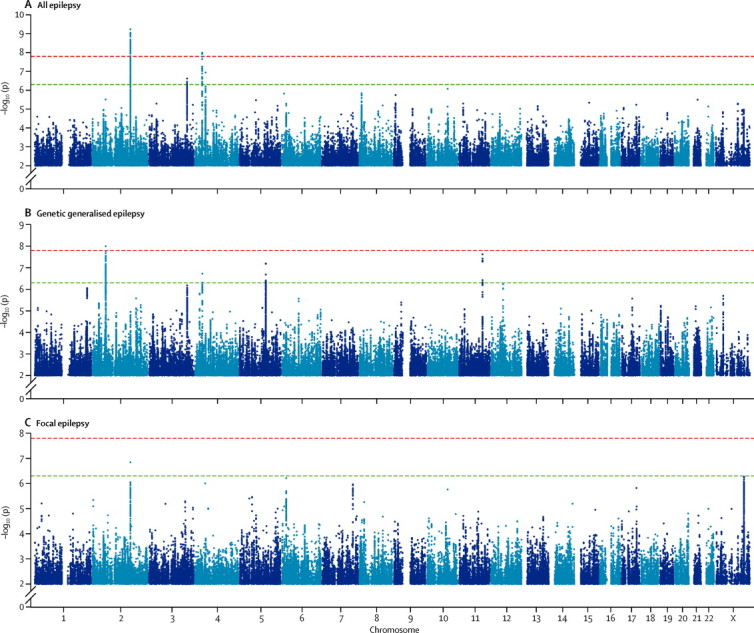
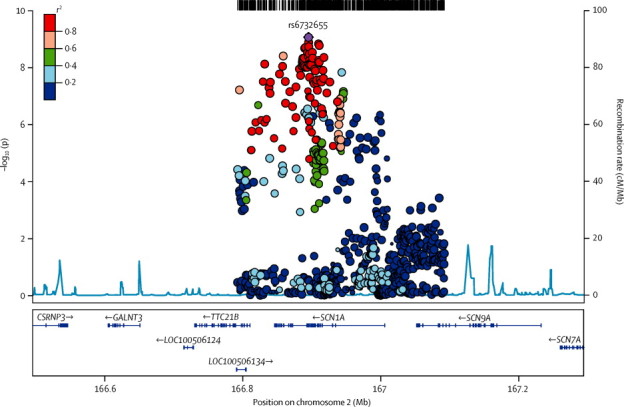
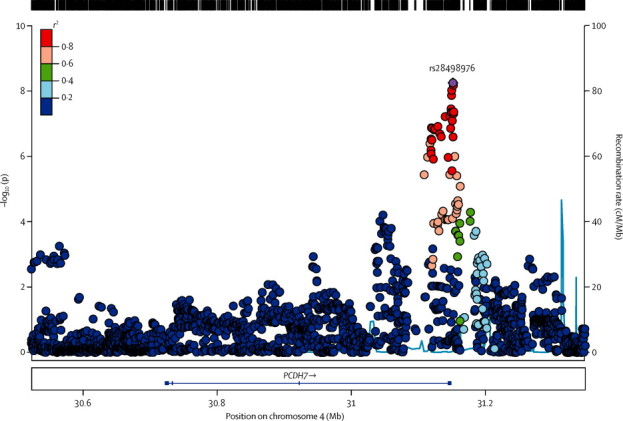
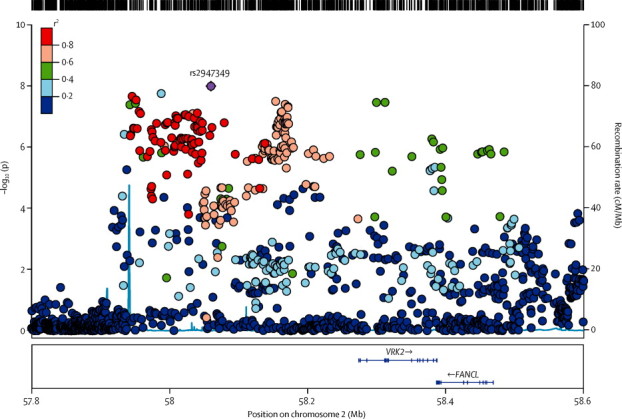
Verification
Claims the paper makes
The claims and statistics of this paper haven’t been checked yet.
Free: it reads the open-access text and checks the first 5 claims that cite a source we can check. Create a free account to check every claim.
Claims other papers make about this one
Each is checked against this paper’s own text: does it say what the citing paper says it does?
The source backs part of the claim, not all of it — or backs it for a different population, condition or comparison.
In the citing paper
“Many SNPs associated with the SCN1A locus map to the first intron46–48.”
From Viral manipulation of functionally distinct interneurons in mice, non-human primates and humans (2020) · cites this paper as [47]
Experimental — accuracy not yet measured
Self-check
Percentages, sums and reported differences re-computed from the paper’s own numbers.
The self-check needs the paper’s full text.
Citations
Cites
PLINK: a tool set for whole-genome association and population-based linkage analyses.
Purcell, S., Neale, B., Todd-Brown, K., Thomas, L., Ferreira, M. A. R., Bender, D., Maller, J., Sklar, P., de Bakker, P. I. W., Daly, M. J., et al. (2007) · The American Journal of Human Genetics · doi:10.1086/519795 · Cited by 34,089
METAL: fast and efficient meta-analysis of genomewide association scans
Willer, C. J., Li, Y., & Abecasis, G. R. (2010) · Bioinformatics · doi:10.1093/bioinformatics/btq340 · Cited by 5,205
Berg, A. T., Berkovic, S. F., Brodie, M. J., Buchhalter, J., Cross, J. H., Van Emde Boas, W., Engel, J., French, J., Glauser, T. A., Mathern, G. W., et al. (2010) · Epilepsia · doi:10.1111/j.1528-1167.2010.02522.x · Cited by 4,363
Genetic risk and a primary role for cell-mediated immune mechanisms in multiple sclerosis
The International Multiple Sclerosis Genetics Consortium & The Wellcome Trust Case Control Consortium 2 (2011) · Nature · doi:10.1038/nature10251 · Cited by 2,697
De novo mutations in epileptic encephalopathies
Epi4K Consortium, & Epilepsy Phenome/Genome Project (2013) · Nature · doi:10.1038/nature12439 · Cited by 1,514
Genome-wide association analysis identifies 13 new risk loci for schizophrenia
Multicenter Genetic Studies of Schizophrenia Consortium, Ripke, S., Psychosis Endophenotypes International Consortium, Wellcome Trust Case Control Consortium 2, O'Dushlaine, C., Chambert, K., Moran, J. L., Kähler, A. K., Akterin, S., Bergen, S. E., et al. (2013) · Nature Genetics · doi:10.1038/ng.2742 · Cited by 1,496
Analysis of immune-related loci identifies 48 new susceptibility variants for multiple sclerosis
International Multiple Sclerosis Genetics Consortium (IMSGC) (2013) · Nature Genetics · doi:10.1038/ng.2770 · Cited by 1,386
De Novo Mutations in the Sodium-Channel Gene SCN1A Cause Severe Myoclonic Epilepsy of Infancy
Claes, L., Del-Favero, J., Ceulemans, B., Lagae, L., Van Broeckhoven, C., & De Jonghe, P. (2001) · The American Journal of Human Genetics · doi:10.1086/320609 · Cited by 1,292
FaST linear mixed models for genome-wide association studies
Lippert, C., Listgarten, J., Liu, Y., Kadie, C. M., Davidson, R. I., & Heckerman, D. (2011) · Nature Methods · doi:10.1038/nmeth.1681 · Cited by 1,209
Cited by
Items 101–200 of 301
Markers in Status Epilepticus Prognosis
Alkhachroum, A. M., Der-Nigoghossian, C. A., Rubiños, C., & Claassen, J. (2020) · Journal of Clinical Neurophysiology · doi:10.1097/wnp.0000000000000761 · Cited by 35
Functional variants in HCN 4 and CACNA 1H may contribute to genetic generalized epilepsy
Becker, F., Reid, C. A., Hallmann, K., Tae, H., Phillips, A. M., Teodorescu, G., Weber, Y. G., Kleefuß‐Lie, A. A., Elger, C. E., Perez‐Reyes, E., et al. (2017) · Epilepsia Open · doi:10.1002/epi4.12068 · Cited by 34
Yousefi, S., Deng, R., Lanko, K., Salsench, E. M., Nikoncuk, A., van der Linde, H. C., Perenthaler, E., van Ham, T. J., Mulugeta, E., & Barakat, T. S. (2021) · Genome Medicine · doi:10.1186/s13073-021-00980-1 · Cited by 32
Shared genetics and causality underlying epilepsy and attention-deficit hyperactivity disorder
Wu, Y., Li, Y., Zhu, J., & Long, J. (2022) · Psychiatry Research · doi:10.1016/j.psychres.2022.114794 · Cited by 31
Gu, B., Shorter, J. R., Williams, L. H., Bell, T. A., Hock, P., Tuite-Dalton, K. A., Pan, Y., Miller, D. R., Shaw, G. D., Cooley, B. C., et al. (2020) · Epilepsia · doi:10.1111/epi.16617 · Cited by 31
Using KASP technique to screen LRRK2 G2019S mutation in a large Tunisian cohort
Landoulsi, Z., Romdhan, S. B., Djebara, M. B., Damak, M., Dallali, H., Kéfi, R., Abdelhak, S., Gargouri, A., Mhiri, C., & Gouider, R. (2017) · BMC Medical Genetics · doi:10.1186/s12881-017-0432-5 · Cited by 31
Liebenthal, J. A., Valerio, J., Ruoff, C. M., & Mahowald, M. W. (2015) · JAMA Neurology · doi:10.1001/jamaneurol.2015.2904 · Cited by 28
Rare variants and de novo variants in mesial temporal lobe epilepsy with hippocampal sclerosis
Wong, J., Gui, H., Kwok, M., Ng, P. W., Lui, C. H. T., Baum, L., Sham, P. C., Kwan, P., & Cherny, S. S. (2018) · Neurology Genetics · doi:10.1212/nxg.0000000000000245 · Cited by 28
Genome-Wide Meta-Analysis Identifies Two Novel Risk Loci for Epilepsy
Song, M., Liu, J., Yang, Y., Lv, L., Li, W., & Luo, X. (2021) · Frontiers in Neuroscience · doi:10.3389/fnins.2021.722592 · Cited by 27
“…previous studies (Claes et al., 2001, 2009; Meng et al., 2013; Parihar and Ganesh, 2013; International League Against Epilepsy Consortium on Complex Epilepsies, 2014; Haigh et al., 2021) have clearly showed that SCN1A represents the most possible causal gene for this risk locus, our TWAS suggested…”
InfluentialRosch, R. E., Burrows, D. R. W., Jones, L., Peters, C. H., Ruben, P. C., & Samarut, É. (2019) · Frontiers in Cellular Neuroscience · doi:10.3389/fncel.2019.00556 · Cited by 28
“This spectrum ranges from some of the most severe developmental DEEs of infancy, to juvenile onset treatable generalized epilepsy syndromes (Johannesen et al., 2016).”
Haigh, J., Adhikari, A., Copping, N. A., Stradleigh, T. W., Wade, A. A., Catta-Preta, R., Su-Feher, L., Zdilar, I., Morse, S. J., Fenton, T. A., et al. (2021) · Genome Medicine · doi:10.1186/s13073-021-00884-0 · Cited by 27
Genetic regulation of gene expression in the epileptic human hippocampus
Mirza, N., Appleton, R. E., Burn, S. C., du Plessis, D., Duncan, R., Farah, J. O., Feenstra, B., Hviid, A. P., Josan, V., Mohanraj, R., et al. (2017) · Human Molecular Genetics · doi:10.1093/hmg/ddx061 · Cited by 26
Smit, D. J. A., Bakker, M., Abdellaoui, A., Hoetink, A. E., Vulink, N. C. C., & Denys, D. A. J. P. (2023) · Frontiers in Neuroscience · doi:10.3389/fnins.2022.971752 · Cited by 29
“On the other hand, these GABA receptor genes are mainly reported to be susceptibility genes for epilepsy (Treiman, 2001; Cossette et al., 2002; ILAE Consortium, 2014; Riaz et al., 2021), where no significant association was found between misophonia and epilepsy, which would refute the mediating…”
Exploring the genetic overlap between psychiatric illness and epilepsy: A review
Campbell, C., Cavalleri, G. L., & Delanty, N. (2019) · Epilepsy & Behavior · doi:10.1016/j.yebeh.2019.106669 · Cited by 25
Guo, M. G., Reynolds, D. L., Ang, C. E., Liu, Y., Zhao, Y., Donohue, L. K. H., Siprashvili, Z., Yang, X., Yoo, Y., Mondal, S., et al. (2023) · Nature Genetics · doi:10.1038/s41588-023-01533-5 · Cited by 27
Evaluation of Presumably Disease Causing SCN1A Variants in a Cohort of Common Epilepsy Syndromes
Lal, D., Reinthaler, E. M., Dejanovic, B., May, P., Thiele, H., Lehesjoki, A., Schwarz, G., Riesch, E., Ikram, M. A., van Duijn, C. M., et al. (2016) · PLoS ONE · doi:10.1371/journal.pone.0150426 · Cited by 23
Polygenic Risk of Epilepsy and Poststroke Epilepsy
Rivier, C. A., Rivier, C. A., Misra, S., Zelano, J., Mazumder, R., Sansing, L. H., de Havenon, A., Hirsch, L. J., Liebeskind, D. S., Gilmore, E. J., et al. (2024) · Stroke · doi:10.1161/strokeaha.124.047459 · Cited by 22
Genomic Discoveries and Personalized Medicine in Neurological Diseases
Zhang, L., & Hong, H. (2015) · Pharmaceutics · doi:10.3390/pharmaceutics7040542 · Cited by 22
Azimi, T., Ghafouri‐Fard, S., Omrani, M. D., Mazdeh, M., Arsang‐Jang, S., Sayad, A., & Taheri, M. N. (2017) · Multiple Sclerosis and Related Disorders · doi:10.1016/j.msard.2017.10.017 · Cited by 22
Epigenome-wide association study of seizures in childhood and adolescence
Caramaschi, D., Hatcher, C., Mulder, R. H., Felix, J. F., Cecil, C. A. M., Relton, C. L., & Walton, E. (2020) · Clinical Epigenetics · doi:10.1186/s13148-019-0793-z · Cited by 23
Gao, Q., Hua, L.-D., Wang, J., Fan, C.-X., Deng, W., Li, B., Bian, W., Shao, C.-X., He, N., Zhou, P., et al. (2016) · Molecular Neurobiology · doi:10.1007/s12035-016-9800-y · Cited by 24
Landoulsi, Z., Laatar, F., Noé, E., Mrabet, S., Djebara, M. B., Achaz, G., Nava, C., Baulac, S., Kacem, I., Gargouri, A., et al. (2018) · Neurogenetics · doi:10.1007/s10048-018-0550-z · Cited by 21
Pathogenic variants identified by whole-exome sequencing in 43 patients with epilepsy
Zhang, L., Gao, J., Liu, H., Tian, Y., Zhang, X., Li, Y., Li, Y., Guo, Y., Yuan, E., Yuan, E., et al. (2020) · Human Genomics · doi:10.1186/s40246-020-00294-0 · Cited by 20
Rahman, M. Z., Hasan, M. T., & Rahman, J. (2023) · Springer eBooks · doi:10.1007/978-981-99-1612-2_2 · Cited by 22
Genetics update: Monogenetics, polygene disorders and the quest for modifying genes
Symonds, J. D., & Zuberi, S. M. (2017) · Neuropharmacology · doi:10.1016/j.neuropharm.2017.10.013 · Cited by 21
Mente, K., Kim, S. A., Grunseich, C., Hefti, M. M., Crary, J. F., Danek, A., Karp, B. I., & Walker, R. H. (2017) · Neuropathology and Applied Neurobiology · doi:10.1111/nan.12403 · Cited by 19
Quantitative magnetic resonance imaging traits as endophenotypes for genetic mapping in epilepsy
Alhusaini, S., Whelan, C. D., Sisodiya, S. M., & Thompson, P. M. (2016) · NeuroImage Clinical · doi:10.1016/j.nicl.2016.09.005 · Cited by 18
Chu, H., Sun, P., Yin, J., Liu, G., Wang, Y., Zhao, P., Zhu, Y. Z., Yang, X., Zheng, T., Zhou, X., et al. (2017) · PLoS ONE · doi:10.1371/journal.pone.0174964 · Cited by 17
Using common genetic variants to find drugs for common epilepsies
Mirza, N., Stevelink, R., Taweel, B. A., Koeleman, B. P. C., Marson, A. G., Abou-Khalil, B. W., Auce, P., Avberšek, A., Bahlo, M., Balding, D. J., et al. (2021) · Brain Communications · doi:10.1093/braincomms/fcab287 · Cited by 19
Li, J., Keller, S. S., Seidlitz, J., Chen, H., Li, B., Weng, Y., Meng, Y., Yang, S., Xu, Q., Zhang, Q., et al. (2022) · Neuropathology and Applied Neurobiology · doi:10.1111/nan.12857 · Cited by 18
“(GWAS) have implicated a number of common genes or loci with GGE [22, 23].”
Progress from genome-wide association studies and copy number variant studies in epilepsy
Leu, C., Coppola, A., & Sisodiya, S. M. (2016) · Current Opinion in Neurology · doi:10.1097/wco.0000000000000296 · Cited by 16
Genetic Correlation Between Schizophrenia and Epilepsy
Vonberg, F. W., & Bigdeli, T. B. (2015) · JAMA Neurology · doi:10.1001/jamaneurol.2015.3480 · Cited by 16
Genetics of human epilepsies: Continuing progress
Szepetowski, P. (2017) · La Presse Médicale · doi:10.1016/j.lpm.2017.10.020 · Cited by 18
Caplan, R., Mefford, H. C., Berl, M. M., Chang, B. S., Lin, J. J., Mazarati, A. M., Fureman, B. E., & Dingledine, R. J. (2016) · Epiliepsy currents/Epilepsy currents · doi:10.5698/1535-7511-16.3.182 · Cited by 16
Ferland, R. J., Smith, J., Papandrea, D., Gracias, J., Hains, L. E., Kadiyala, S. B., O’Brien, B., Kang, E. Y., Beyer, B. S., & Herron, B. J. (2017) · G3 Genes Genomes Genetics · doi:10.1534/g3.117.042234 · Cited by 16
Polygenic risk heterogeneity among focal epilepsies
Gramm, M., Leu, C., Pérez‐Palma, E., Ferguson, L., Jehi, L. E., Daly, M. J., Najm, I., Busch, R. M., & Lal, D. (2020) · Epilepsia · doi:10.1111/epi.16717 · Cited by 15
Koko, M., Motelow, J. E., Stanley, K. E., Bobbili, D. R., Dhindsa, R. S., May, P., Canadian Epilepsy Network, & Epilepsy Phenome/Genome Project (2022) · Epilepsia · doi:10.1111/epi.17166 · Cited by 15
Influence of common SCN1A promoter variants on the severity of SCN1A‐related phenotypes
Lange, I., Weuring, W. J., Slot, R. V. ‘., Gunning, B. W., Sonsma, A. C. M., McCormack, M., de Kovel, C. G. F., van Gemert, L. J. J. M., Mulder, F., van Kempen, M. J. A., et al. (2019) · Molecular Genetics & Genomic Medicine · doi:10.1002/mgg3.727 · Cited by 17
“Genome‐wide association studies (GWAS) have shown a significant association between SCN1A and genetic generalized, focal and unclassified epilepsies in general, and hippocampal sclerosis and febrile seizures (Anney et al., 2014; Kasperavičiute et al., 2013).”
Role of glyoxalase I gene polymorphisms in late-onset epilepsy and drug-resistant epilepsy
Tao, H., Si, L., Zhou, X., Liu, Z., Ma, Z., Zhou, H., Zhong, W., Cui, L., Zhang, S., Li, Y., et al. (2016) · Journal of the Neurological Sciences · doi:10.1016/j.jns.2016.01.052 · Cited by 15
Xu, J., Sun, M., Wang, Y., Xie, A., & Gao, J. (2020) · Cell Transplantation · doi:10.1177/0963689720978722 · Cited by 14
Suzuki, T., Koike, Y., Ashikawa, K., Otomo, N., Takahashi, A., Aoi, T., Kamatani, N., Nakamura, Y., Kubo, M., Kamatani, Y., et al. (2021) · Epilepsia · doi:10.1111/epi.16911 · Cited by 14
Genomics-Guided Precise Anti-Epileptic Drug Development
Delanty, N., & Cavalleri, G. L. (2017) · Neurochemical Research · doi:10.1007/s11064-017-2312-y · Cited by 13
Genetics and Extracellular Vesicles of Pediatrics Sleep Disordered Breathing and Epilepsy
Khalyfa, A., & Sánz-Rubio, D. (2019) · International Journal of Molecular Sciences · doi:10.3390/ijms20215483 · Cited by 15
Genome wide association study of incomplete hippocampal inversion in adolescents
Cury, C., Scelsi, M. A., Toro, R., Frouin, V., Artiges, É., Grigis, A., Heinz, A., Lemaître, H., Martinot, J. L., Poline, J., et al. (2020) · PLoS ONE · doi:10.1371/journal.pone.0227355 · Cited by 13
Investigating rare and ultrarare epilepsy syndromes with Drosophila models
Lasko, P. F., & Lüthy, K. (2021) · Faculty Reviews · doi:10.12703/r/10-10 · Cited by 14
Misra, S., Quinn, T. J., Falcone, G. J., Sharma, V. K., de Havenon, A., Zhao, Y., Eldem, E., French, J. A., Yasuda, C. L., Dawson, J., et al. (2023) · European Journal of Neurology · doi:10.1111/ene.15777 · Cited by 13
Genetic influences on the intrinsic and extrinsic functional organizations of the cerebral cortexPreprint
Zhao, B., Li, T., Smith, S. M., Fan, Z., Yang, X., Yang, Y., Shu, J., Xiong, D., Wang, X., Yang, Y., et al. (2021) · medRxiv · doi:10.1101/2021.07.27.21261187 · Cited by 15
Leitch, B. (2024) · International Journal of Molecular Sciences · doi:10.3390/ijms25189821 · Cited by 13
“Later studies, undertaken by large ILAE consortia in 2014 [136] and in 2018 [137], identified 11 loci associated with the GGEs using genome-wide mega-analyses.”
Genetic Discoveries Drive Molecular Analyses and Targeted Therapeutic Options in the Epilepsies
Dhindsa, R. S., & Goldstein, D. B. (2015) · Current Neurology and Neuroscience Reports · doi:10.1007/s11910-015-0587-4 · Cited by 13
Functional Genomics of Epileptogenesis in Animal Models and Humans
Forero, D. A. (2020) · Cellular and Molecular Neurobiology · doi:10.1007/s10571-020-00927-x · Cited by 12
Buono, R. J., Bradfield, J. P., Wei, Z., Sperling, M. R., Dlugos, D., Privitera, M., French, J. A., Lo, W. D., Cossette, P., Schachter, S. C., et al. (2021) · Genes · doi:10.3390/genes12091441 · Cited by 12
The potential role of DNA methylation as preventive treatment target of epileptogenesis
Berger, T. C., Taubøll, E., & Heuser, K. (2022) · Frontiers in Cellular Neuroscience · doi:10.3389/fncel.2022.931356 · Cited by 12
Single-cell atlas of transcriptomic vulnerability across brain disorders
Lee, D., Koutrouli, M., Masse, N. Y., Hoffman, G. E., Kinrot, S., Wang, X., N. M., P., Pjanic, M., Clarence, T., Tsetsos, F., et al. (2026) · Nature · doi:10.1038/s41586-025-09573-z · Cited by 13
“AD 96 , MS 97 , PD 98 , epilepsy focal (epilepsy) 99 , migraines 100 , stroke 101 , amyotrophic lateral sclerosis (ALS) 102 , SCZ 103 , BD 104 , major depressive disorder (MDD) 105 , autism spectrum disorder (ASD) 106 , attention deficit hyperactivity disorder (ADHD) 107 , insomnia 108 ,…”
Neues auf dem Gebiet der Epilepsien
Rosenow, F., Klein, K. M., Strzelczyk, A., Hamer, H. M., Menzler, K., Bauer, S., & Knake, S. (2014) · Der Nervenarzt · doi:10.1007/s00115-014-4039-1 · Cited by 12
The impact of genetic and experimental studies on classification and therapy of the epilepsies
AVANZINI, G., Mantegazza, M., Terragni, B., Canafoglia, L., Scalmani, P., & Franceschetti, S. (2017) · Neuroscience Letters · doi:10.1016/j.neulet.2017.05.026 · Cited by 12
Santolini, I., Celli, R., Cannella, M., Imbriglio, T., Guiducci, M., Parisi, P., Schubert, J., Iacomino, M., Zara, F., Lerche, H., et al. (2017) · Epilepsia · doi:10.1111/epi.13898 · Cited by 11
Sanchis‐Juan, A., Hasenahuer, M. A., Baker, J. A., McTague, A., Barwick, K. E., Kurian, M. A., Duarte, S. T., BioResource, N., Carss, K., Thornton, J. M., et al. (2020) · Molecular Genetics & Genomic Medicine · doi:10.1002/mgg3.1106 · Cited by 12
Gui, H., Tang, W. H. W., Francke, S., Li, J., She, R., Bazeley, P. S., Pereira, N. L., Adams, K. F., Luzum, J. A., Connolly, T. M., et al. (2023) · Circulation Heart Failure · doi:10.1161/circheartfailure.122.010438 · Cited by 11
Magalhães, P. H. M., de Moraes, H. T., Athié, M. C. P., Secolin, R., & Lopes‐Cendes, Í. (2019) · Epilepsy & Behavior · doi:10.1016/j.yebeh.2019.07.029 · Cited by 10
Ilyas, M., Salpietro, V., Efthymiou, S., Bourinaris, T., Tariq, A., Imdad, M., Ahmad, A., Ahmad, H., & Houlden, H. (2019) · Neurological Sciences · doi:10.1007/s10072-019-04113-w · Cited by 11
Research priorities in epilepsy for the Asia‐Oceanian region
Kwan, P., Cabral‐Lim, L., D'Souza, W. J., Jain, S., Lee, B., Liao, W., Lim, S. H., Otsuki, T., Tan, C., & Wantanabe, M. (2015) · Epilepsia · doi:10.1111/epi.12957 · Cited by 10
Backenroth, D., He, Z., Kiryluk, K., Boeva, V., Pethukova, L., Khurana, E., Christiano, A. M., Buxbaum, J. D., & Ionita‐Laza, I. (2016) · bioRxiv (Cold Spring Harbor Laboratory) · doi:10.1101/069229 · Cited by 11
Genetics of epilepsy: successes, problems and development prospects
Gamirova, R., Gamirova, R. R., & Esin, R. G. (2020) · S S Korsakov Journal of Neurology and Psychiatry · doi:10.17116/jnevro2020120091144 · Cited by 10
Wang, S., Cai, X., Liu, S., Zhou, Q., Wang, T., Du, S., Wang, D., Yang, F., Wu, Q., & Han, Y. (2022) · Frontiers in Molecular Neuroscience · doi:10.3389/fnmol.2022.1010101 · Cited by 9
Feverish prospects for seizure genetics
Sisodiya, S. M. (2014) · Nature Genetics · doi:10.1038/ng.3150 · Cited by 10
Global characterization of copy number variants in epilepsy patients from whole genome sequencingPreprint
Monlong, J., Girard, S., Meloche, C., Cadieux‐Dion, M., Andrade, D. M., Lafrenière, R. G., Gravel, M., Spiegelman, D., Dionne‐Laporte, A., Boelman, C. G., et al. (2017) · bioRxiv (Cold Spring Harbor Laboratory) · doi:10.1101/199224 · Cited by 9
Associations between epilepsy-related polygenic risk and brain morphology in childhood
Ngo, A., Liu, L., Larivière, S., Kebets, V., Fett, S., Weber, C. F., Royer, J., Yu, E., Rodríguez‐Cruces, R., Zhang, Z., et al. (2025) · Brain · doi:10.1093/brain/awaf259 · Cited by 9
Disruption of cell-type-specific molecular programs of striatal spiny projection neurons in autism
Yuan, G., Suresh, V., Wigdor, E. M., Hao, Y., Sun, F. Y., Evans, C., Leonard, R., Fukushima, Y., Steyert, M. R., Griffiths, M., et al. (2026) · Cell · doi:10.1101/2025.11.05.686845 · Cited by 11
Expanding role of GABAA receptors in generalised epilepsies
Mefford, H. C. (2018) · The Lancet Neurology · doi:10.1016/s1474-4422(18)30252-7 · Cited by 8
Jones, L., Peters, C. H., Rosch, R. E., Owers, M., Hughes, E., Pal, D. K., & Ruben, P. C. (2021) · Frontiers in Pharmacology · doi:10.3389/fphar.2021.788192 · Cited by 8
Zhao, X., Ning, H., Wang, Y., Zhao, G., Mei, S., Liu, N., Wang, C., Cai, A., Wei, E., & Kong, X. (2022) · Neurological Sciences · doi:10.1007/s10072-022-05953-9 · Cited by 8
“Dravet syndrome is characterized by the onset of prolonged febrile and a febrile seizure in infancy, progressing toward drug-resistant epilepsy with psychomotor retardation and intellectual disability [26].”
Unraveling the role of non-coding rare variants in epilepsy
Girard, A., Moreau, C., Michaud, J. L., Minassian, B. A., Cossette, P., & Girard, S. (2023) · PLoS ONE · doi:10.1371/journal.pone.0291935 · Cited by 8
eHealth as a Facilitator of Precision Medicine in Epilepsy
Cavalleri, G. L., Petrovski, S., Fitzsimons, M. B., & Delanty, N. (2017) · Biomedicine Hub · doi:10.1159/000481793 · Cited by 8
Case‐control pharmacogenetic study of HCN 1/ HCN 2 variants and genetic generalized epilepsies
Wu, S., Ye, H., Yang, X., Lu, Z., Qu, Q., & Qu, J. (2017) · Clinical and Experimental Pharmacology and Physiology · doi:10.1111/1440-1681.12877 · Cited by 8
Tan, A. L. M., Langley, S. R., Tan, C. F., Chai, J. F., Khoo, C. M., Leow, M. K., Khoo, E. Y. H., Moreno‐Moral, A., Pravenec, M., Rotival, M., et al. (2018) · The Journal of Clinical Endocrinology & Metabolism · doi:10.1210/jc.2018-00309 · Cited by 9
Shafquat, A., Crystal, R. G., & Mezey, J. G. (2020) · BMC Bioinformatics · doi:10.1186/s12859-020-3387-z · Cited by 8
Monogenic Epilepsies in Adult Epilepsy Clinics and Gene-Driven Approaches to Treatment
Clayton, L. M. S., Vakrinou, A., Balestrini, S., & Sisodiya, S. M. (2025) · Current Neurology and Neuroscience Reports · doi:10.1007/s11910-025-01413-x · Cited by 8
The genetics of common epilepsies: common or distinct?
Pal, D. K., & Strug, L. J. (2014) · The Lancet Neurology · doi:10.1016/s1474-4422(14)70124-3 · Cited by 7
Genetics of common forms of epilepsy
Koeleman, B. P. C. (2017) · The Lancet Neurology · doi:10.1016/s1474-4422(16)30400-8 · Cited by 7
Gui, H., Li, M., Sham, P. C., Baum, L., Kwan, P., & Cherny, S. S. (2017) · American Journal of Medical Genetics Part B Neuropsychiatric Genetics · doi:10.1002/ajmg.b.32607 · Cited by 9
Gui, H., Kwok, M., Baum, L., Sham, P. C., Kwan, P., & Cherny, S. S. (2017) · The Pharmacogenomics Journal · doi:10.1038/tpj.2017.11 · Cited by 8
Doyle, G. A. R., Reiner, B. C., Crist, R. C., Rao, A. M., Ojeah, N. S., Arauco‐Shapiro, G., Levinson, R. N., Shah, L. D., Sperling, M. R., Ferraro, T. N., et al. (2021) · Epilepsia · doi:10.1111/epi.16897 · Cited by 7
Gesche, J., Wüstenhagen, S., Krøigård, T., Rubboli, G., & Beier, C. P. (2021) · Clinical Neurophysiology · doi:10.1016/j.clinph.2021.02.405 · Cited by 7
Neuropsychiatric genomics in precision medicine: diagnostics, gene discovery, and translation
Need, A. C., & Goldstein, D. B. (2016) · Dialogues in Clinical Neuroscience · doi:10.31887/dcns.2016.18.3/aneed · Cited by 8
Edging toward breakthroughs in epilepsy diagnostics and care
Lowenstein, D. H. (2015) · Nature Reviews Neurology · doi:10.1038/nrneurol.2015.193 · Cited by 7
Jacobs, S., Wootton, O., Ives-Deliperi, V. L., Tucker, L. M., Stein, D. J., & Dalvie, S. (2024) · The World Journal of Biological Psychiatry · doi:10.1080/15622975.2024.2436866 · Cited by 6
Genome‐Wide Association Study Reveals Genetic Architecture of Common Epilepsies
Thakran, S., Guin, D., Singh, P., Uppili, B., Ramachandran, S., Kushwaha, S. S., & Kukreti, R. (2025) · Clinical Genetics · doi:10.1111/cge.14710 · Cited by 6
Genome‐Wide Insights and Polygenic Risk Scores in Common Epilepsies: A Narrative Review
Mastrangelo, M., Petrucci, S., Lentini, G., Fabiani, M., Piane, M., & Pisani, F. (2025) · American Journal of Medical Genetics Part B Neuropsychiatric Genetics · doi:10.1002/ajmg.b.33040 · Cited by 6
Poduri, A. (2015) · Epiliepsy currents/Epilepsy currents · doi:10.5698/1535-7597-15.3.122 · Cited by 6
Bundalian, L., Su, Y.-Y., Chen, S., Velluva, A., Kirstein, A., Garten, A., Biskup, S., Battke, F., Lal, D., Heyne, H., et al. (2023) · The American Journal of Human Genetics · doi:10.1016/j.ajhg.2023.06.004 · Cited by 6
Novel and large collaborations drive advances in epilepsy
Perucca, P., & O'Brien, T. J. (2015) · Nature Reviews Neurology · doi:10.1038/nrneurol.2014.255 · Cited by 6
Anazi, A. H. A., Ammar, A. S., Al-Hajj, M., Cyrus, C., Aljaafari, D., Khoda, I., Abdelfatah, A. K., Al-Sulaiman, A., Alanazi, F., Alanazi, R., et al. (2022) · Human Genomics · doi:10.1186/s40246-022-00444-6 · Cited by 5
A cross-tissue transcriptome-wide association study identifies new susceptibility genes for insomnia
Li, L., Wu, D., Zhang, C., Lai, X., Zhang, R., Hu, S., & Ye, Y. (2025) · Journal of Neurophysiology · doi:10.1152/jn.00490.2024 · Cited by 6
Isolating the Genetic Component of Mania in Bipolar Disorder
Merola, G. P., Zvrskovec, J., Wang, R., Li, Y. K., Castellini, G., Ricca, V., Coleman, J., Vassos, E., & Breen, G. D. (2026) · Biological Psychiatry · doi:10.1016/j.biopsych.2025.11.008 · Cited by 5
Srivastava, A., Rajput, P., Tripathi, M., Chandra, P. S., Doddamani, R. S., Sharma, M. C., Lalwani, S., Banerjee, J., & Dixit, A. B. (2024) · Molecular Neurobiology · doi:10.1007/s12035-024-04186-5 · Cited by 5
Genetic heterogeneity in familial forms of genetic generalized epilepsy: from mono- to oligogenism
Dahawi, M., Agathe, J. D. S., Elmagzoub, M. S., Ahmed, E. A. A., Buratti, J., Courtin, T., Noé, E., Bogoin, J., Copin, B., Elmugadam, F. A., et al. (2024) · Human Genomics · doi:10.1186/s40246-024-00659-9 · Cited by 5
The BrainDrugs-epilepsy study: A prospective open-label cohort precision medicine study in epilepsy
Marstrand-Joergensen, M. R., Dam, V. H., Vinter, K., Ip, C.-T., Jensen, K. H. R., Jørgensen, M. B., Hoei‐Hansen, C. E., Ozenne, B., Fisher, P. M., Knudsen, G. M., et al. (2023) · Neuroscience Applied · doi:10.1016/j.nsa.2023.101136 · Cited by 5
Widespread, depth‐dependent cortical microstructure alterations in pediatric focal epilepsy
Casella, C., Vecchiato, K., Cromb, D., Guo, Y., Winkler, A. M., Hughes, E., Dillon, L., Green, E., Colford, K., Egloff, A. M., et al. (2023) · Epilepsia · doi:10.1111/epi.17861 · Cited by 5
Fokale genetisch bedingte Epilepsiesyndrome: Neue Erkenntnisse in der Entstehung
Neubauer, B. A., & Hahn, A. (2015) · Clinical Epileptology · doi:10.1007/s10309-015-0032-3 · Cited by 5
Genetic mechanisms of neurodevelopmental disorders
Au, P. Y. B., Eaton, A. J., & Dyment, D. A. (2020) · Handbook of clinical neurology · doi:10.1016/b978-0-444-64150-2.00024-1 · Cited by 5
Metadata
- Authors
- †
- Affiliations
- Filadelfia (DK)
- Corresponding author
- †
- Venue
- The Lancet Neurology
- Publisher
- Elsevier BV
- Published
- 2014-09
- Volume
- 13
- Issue
- 9
- Pages
- 893-903
- ISSN
- 1474-4422 (ISSN-L)
- PMC
- PMC4189926
- OpenAlex
- W2338208255
- Semantic Scholar
- a360ce41fb4bf887b61a3e63992790bf1d887f23
- Cited by
- 293
- References
- 60
- Citations by year
- 2026: 14 · 2025: 16 · 2024: 21 · 2023: 15 · 2022: 14 · 2021: 29 · 2020: 29 · 2019: 31 · 2018: 26 · 2017: 43 · 2016: 26 · 2015: 23 · 2014: 4
- FWCI
- 4.43
- Type
- journal article
- Language
- en
- Open access
- hybrid
- doi.org
- Licence
- cc-by
- www.elsevier.com/tdm/userlicense/1.0/ (tdm)
- www.elsevier.com/legal/tdmrep-license (tdm)
- creativecommons.org/licenses/by/4.0/ (vor)
- Locations
- The Lancet Neurology (publishedVersion, cc-by)
- Europe PMC (PubMed Central) (publishedVersion, cc-by)
- PubMed Central (publishedVersion, cc-by)
- PubMed (publishedVersion)
- Monash University Research Portal (Monash University) (submittedVersion, other-oa)
- UCL Discovery (University College London) (submittedVersion)
- ORCA Online Research @Cardiff (Cardiff University) (submittedVersion)
- The HKU Scholars Hub (University of Hong Kong) (submittedVersion, cc-by-nc-nd)
- CINECA IRIS Institutial Research Information System (University of Genoa) (submittedVersion)
- Site cant be reached (submittedVersion, cc-by)
- University of Birmingham Research Portal (University of Birmingham) (submittedVersion, cc-by)
- University of Southern Denmark Research Portal (University of Southern Denmark) (submittedVersion, cc-by)
- Spiral (Imperial College London) (submittedVersion, other-oa)
- Funders
- Seventh Framework Programme (602102, EpiPGX 279062)
- Royal Melbourne Hospital Neuroscience Foundation
- Eunice Kennedy Shriver National Institute of Child Health and Human Development (N01HD33348)
- Wellcome Trust (084730)
- Health Research Board
- National Health and Medical Research Council (628952)
- NIHR Great Ormond Street Hospital Biomedical Research Centre
- UCB Pharma
- NIHR Sheffield Biomedical Research Centre (P31753)
- National Institute for Health and Care Research (08-08-SCC)
- European Commission (LSHM-CT-2006-037315)
- European Science Foundation (HE5415/3-1, LE1030/11-1, NU50/8-1, SA434/5-1)
- Deutsche Forschungsgemeinschaft (SA434/4-1/4-2)
- Bundesministerium für Bildung und Forschung (01EY1103)
- Fonds De La Recherche Scientifique - FNRS
- Research Grants Council, University Grants Committee (HKU7623/08M)
- Université Libre de Bruxelles (WT066056)
- Helmholtz Zentrum München
- Münchner Zentrum für Gesundheitswissenschaften, Ludwig-Maximilians-Universität München
- Sanofi
- Children's Hospital of Philadelphia
- National Institutes of Health (R01-NS-49306-01, R01NS064154-01, UL1TR001070)
- Topics
- Health Sciences › Medicine › Clinical Neurology › Epilepsy research and treatment
- Life Sciences › Biochemistry, Genetics and Molecular Biology › Genetics › Genetic Associations and Epidemiology
- Health Sciences › Medicine › Pediatrics, Perinatology and Child Health › Pharmacological Effects and Toxicity Studies
- Keywords
- epilepsy, focal epilepsy, genetic susceptibility loci, SCN1A, PCDH7, VRK2, FANCL, protocadherins, genetic architecture, epilepsy subtypes
- MeSH terms
- Epilepsy, Humans, Genome-Wide Association Study
About these checks
Registry, retraction, Cites and statistics results are computed, not judged, with one exception: a printed reference that no index lists is read once by a model before it counts as a citation error. Claims are extracted by a model and kept only when their quote appears verbatim in the text; each cited source is then checked, with a model’s help, for whether it says what the claim relies on. Those verdicts can be wrong — read the claim’s quote and the cited source before relying on one.
Statistics and arithmetic are recomputed, not judged.
Confidence bands are shown only for fields calibrated on our annotated test set. None is calibrated yet, so no band is shown.
What counts as a claim ›How we measure confidence ›How we check this ›
Are you an author, or do you see a problem with this page? Request a review
Data sources
Bibliographic data: Semantic Scholar, OpenAlex, Crossref.
Contains information from the Semantic Scholar Academic Graph Datasets, made available under the ODC Attribution License (ODC-BY 1.0).
Semantic Scholar’s data is described in: Kinney, R., et al. (2023). The Semantic Scholar Open Data Platform. arXiv:2301.10140.
