

Genetic determinants of common epilepsies: a meta-analysis of genome-wide association studies
Open accessThe DOI matches its Crossref record; 60 of the 60 references it cites were found in a registry or an index.
Abstract
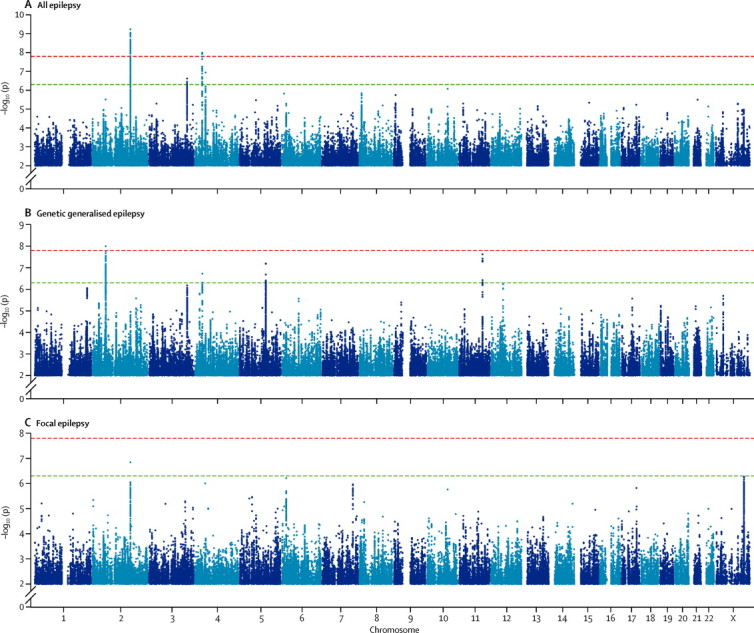
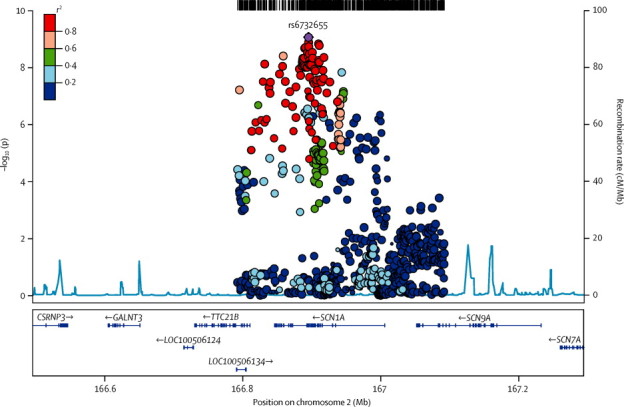
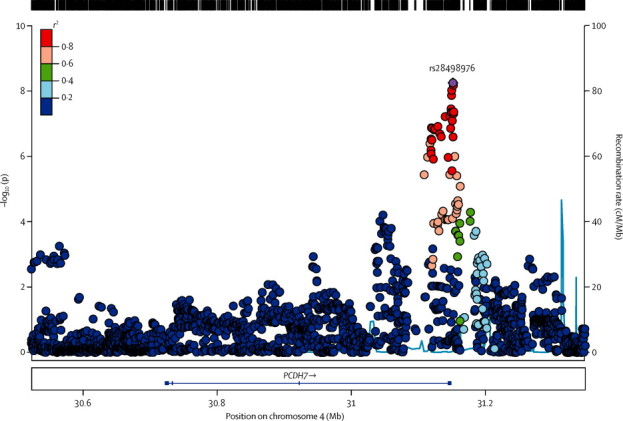
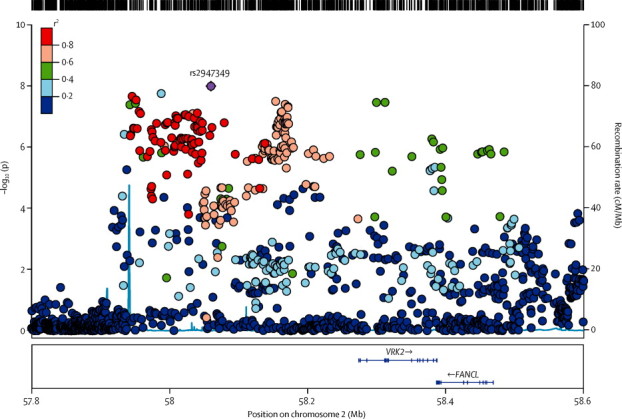
BACKGROUND: The epilepsies are a clinically heterogeneous group of neurological disorders. Despite strong evidence for heritability, genome-wide association studies have had little success in identification of risk loci associated with epilepsy, probably because of relatively small sample sizes and insufficient power. We aimed to identify risk loci through meta-analyses of genome-wide association studies for all epilepsy and the two largest clinical subtypes (genetic generalised epilepsy and focal epilepsy). METHODS: We combined genome-wide association data from 12 cohorts of individuals with epilepsy and controls from population-based datasets. Controls were ethnically matched with cases. We phenotyped individuals with epilepsy into categories of genetic generalised epilepsy, focal epilepsy, or unclassified epilepsy. After standardised filtering for quality control and imputation to account for different genotyping platforms across sites, investigators at each site conducted a linear mixed-model association analysis for each dataset. Combining summary statistics, we conducted fixed-effects meta-analyses of all epilepsy, focal epilepsy, and genetic generalised epilepsy. We set the genome-wide significance threshold at p<1·66 × 10(-8). FINDINGS: We included 8696 cases and 26 157 controls in our analysis. Meta-analysis of the all-epilepsy cohort identified loci at 2q24.3 (p=8·71 × 10(-10)), implicating SCN1A, and at 4p15.1 (p=5·44 × 10(-9)), harbouring PCDH7, which encodes a protocadherin molecule not previously implicated in epilepsy. For the cohort of genetic generalised epilepsy, we noted a single signal at 2p16.1 (p=9·99 × 10(-9)), implicating VRK2 or FANCL. No single nucleotide polymorphism achieved genome-wide significance for focal epilepsy. INTERPRETATION: This meta-analysis describes a new locus not previously implicated in epilepsy and provides further evidence about the genetic architecture of these disorders, with the ultimate aim of assisting in disease classification and prognosis. The data suggest that specific loci can act pleiotropically raising risk for epilepsy broadly, or can have effects limited to a specific epilepsy subtype. Future genetic analyses might benefit from both lumping (ie, grouping of epilepsy types together) or splitting (ie, analysis of specific clinical subtypes). FUNDING: International League Against Epilepsy and multiple governmental and philanthropic agencies.
Overview
The claims and statistics of this paper haven’t been checked yet.
Free: it reads the open-access text and checks the first 5 claims that cite a source we can check. Create a free account to check every claim.
Integrity signals
Registry
Cites
Statistics
Figures
Verification
Claims the paper makes
The claims and statistics of this paper haven’t been checked yet.
Free: it reads the open-access text and checks the first 5 claims that cite a source we can check. Create a free account to check every claim.
Claims other papers make about this one
Each is checked against this paper’s own text: does it say what the citing paper says it does?
The source backs part of the claim, not all of it — or backs it for a different population, condition or comparison.
In the citing paper
“Many SNPs associated with the SCN1A locus map to the first intron46–48.”
From Viral manipulation of functionally distinct interneurons in mice, non-human primates and humans (2020) · cites this paper as [47]
Experimental — accuracy not yet measured
Self-check
Percentages, sums and reported differences re-computed from the paper’s own numbers.
The self-check needs the paper’s full text.
Citations
Cites
PLINK: a tool set for whole-genome association and population-based linkage analyses.
Purcell, S., Neale, B., Todd-Brown, K., Thomas, L., Ferreira, M. A. R., Bender, D., Maller, J., Sklar, P., de Bakker, P. I. W., Daly, M. J., et al. (2007) · The American Journal of Human Genetics · doi:10.1086/519795 · Cited by 34,089
METAL: fast and efficient meta-analysis of genomewide association scans
Willer, C. J., Li, Y., & Abecasis, G. R. (2010) · Bioinformatics · doi:10.1093/bioinformatics/btq340 · Cited by 5,205
Berg, A. T., Berkovic, S. F., Brodie, M. J., Buchhalter, J., Cross, J. H., Van Emde Boas, W., Engel, J., French, J., Glauser, T. A., Mathern, G. W., et al. (2010) · Epilepsia · doi:10.1111/j.1528-1167.2010.02522.x · Cited by 4,363
Genetic risk and a primary role for cell-mediated immune mechanisms in multiple sclerosis
The International Multiple Sclerosis Genetics Consortium & The Wellcome Trust Case Control Consortium 2 (2011) · Nature · doi:10.1038/nature10251 · Cited by 2,697
De novo mutations in epileptic encephalopathies
Epi4K Consortium, & Epilepsy Phenome/Genome Project (2013) · Nature · doi:10.1038/nature12439 · Cited by 1,514
Genome-wide association analysis identifies 13 new risk loci for schizophrenia
Multicenter Genetic Studies of Schizophrenia Consortium, Ripke, S., Psychosis Endophenotypes International Consortium, Wellcome Trust Case Control Consortium 2, O'Dushlaine, C., Chambert, K., Moran, J. L., Kähler, A. K., Akterin, S., Bergen, S. E., et al. (2013) · Nature Genetics · doi:10.1038/ng.2742 · Cited by 1,496
Analysis of immune-related loci identifies 48 new susceptibility variants for multiple sclerosis
International Multiple Sclerosis Genetics Consortium (IMSGC) (2013) · Nature Genetics · doi:10.1038/ng.2770 · Cited by 1,386
De Novo Mutations in the Sodium-Channel Gene SCN1A Cause Severe Myoclonic Epilepsy of Infancy
Claes, L., Del-Favero, J., Ceulemans, B., Lagae, L., Van Broeckhoven, C., & De Jonghe, P. (2001) · The American Journal of Human Genetics · doi:10.1086/320609 · Cited by 1,292
FaST linear mixed models for genome-wide association studies
Lippert, C., Listgarten, J., Liu, Y., Kadie, C. M., Davidson, R. I., & Heckerman, D. (2011) · Nature Methods · doi:10.1038/nmeth.1681 · Cited by 1,209
Cited by
Thijs, R. D., Surges, R., O'Brien, T. J., & Sander, J. W. (2019) · The Lancet · doi:10.1016/s0140-6736(18)32596-0 · Cited by 2,183
Analysis of shared heritability in common disorders of the brain
The Brainstorm Consortium, Anttila, V., Bulik-Sullivan, B., Finucane, H. K., Walters, R. K., Bras, J., Duncan, L., Escott-Price, V., Falcone, G. J., Gormley, P., et al. (2018) · Science · doi:10.1126/science.aap8757 · Cited by 1,924
Genomic Relationships, Novel Loci, and Pleiotropic Mechanisms across Eight Psychiatric Disorders
Lee, P. H., Anttila, V., Won, H., Feng, Y.-C. A., Rosenthal, J., Zhu, Z., Tucker-Drob, E. M., Nivard, M. G., Grotzinger, A. D., Posthuma, D., et al. (2019) · Cell · doi:10.1016/j.cell.2019.11.020 · Cited by 1,381
Finucane, H. K., Reshef, Y. A., Anttila, V., Slowikowski, K., Gusev, A., Byrnes, A., Gazal, S., Loh, P.-R., Lareau, C., Shoresh, N., et al. (2018) · Nature Genetics · doi:10.1038/s41588-018-0081-4 · Cited by 1,097
The genetic architecture of the human cerebral cortex
Grasby, K. L., Jahanshad, N., Painter, J. N., Colodro-Conde, L., Bralten, J., Hibar, D. P., Lind, P. A., Pizzagalli, F., Ching, C. R. K., McMahon, M. A. B., et al. (2020) · Science · doi:10.1126/science.aay6690 · Cited by 876
Structural brain abnormalities in the common epilepsies assessed in a worldwide ENIGMA study
Whelan, C. D., Altmann, A., Botía, J. A., Jahanshad, N., Hibar, D. P., Absil, J., Alhusaini, S., Alvim, M. K. M., Auvinen, P., Bartolini, E., et al. (2018) · Brain · doi:10.1093/brain/awx341 · Cited by 531
A Single-Cell Transcriptomic Atlas of Human Neocortical Development during Mid-gestation
Polioudakis, D., de la Torre-Ubieta, L., Langerman, J., Elkins, A. G., Shi, X., Stein, J. L., Vuong, C. K., Nichterwitz, S., Gevorgian, M., Opland, C. K., et al. (2019) · Neuron · doi:10.1016/j.neuron.2019.06.011 · Cited by 513
Drug development in the era of precision medicine
Dugger, S. A., Platt, A., & Goldstein, D. B. (2018) · Nature Reviews Drug Discovery · doi:10.1038/nrd.2017.226 · Cited by 493
The International League Against Epilepsy Consortium on Complex Epilepsies, Abou-Khalil, B., Auce, P., Avbersek, A., Bahlo, M., Balding, D. J., Bast, T., Baum, L., Becker, A. J., Becker, F., et al. (2018) · Nature Communications · doi:10.1038/s41467-018-07524-z · Cited by 482
Jones, S. E., Tyrrell, J., Wood, A. R., Beaumont, R. N., Ruth, K. S., Tuke, M. A., Yaghootkar, H., Hu, Y., Teder-Laving, M., Hayward, C., et al. (2016) · PLOS Genetics · doi:10.1371/journal.pgen.1006125 · Cited by 388
Advances in the development of biomarkers for epilepsy
Pitkänen, A., Löscher, W., Vezzani, A., Becker, A. J., Simonato, M., Lukasiuk, K., Gröhn, O., Bankstahl, J. P., Friedman, A., Aronica, E., et al. (2016) · The Lancet Neurology · doi:10.1016/s1474-4422(16)00112-5 · Cited by 369
Bryois, J., Skene, N. G., Hansen, T. F., Kogelman, L. J. A., Watson, H. J., Liu, Z., Eating Disorders Working Group of the Psychiatric Genomics Consortium, Adan, R., Alfredsson, L., Ando, T., et al. (2020) · Nature Genetics · doi:10.1038/s41588-020-0610-9 · Cited by 366
Corces, M. R., Shcherbina, A., Kundu, S., Gloudemans, M. J., Frésard, L., Granja, J. M., Louie, B. H., Eulalio, T., Shams, S., Bagdatli, S. T., et al. (2020) · Nature Genetics · doi:10.1038/s41588-020-00721-x · Cited by 358
Ion Channels in Genetic Epilepsy: From Genes and Mechanisms to Disease-Targeted Therapies
Oyrer, J., Maljevic, S., Scheffer, I. E., Berkovic, S. F., Petrou, S., & Reid, C. A. (2018) · Pharmacological Reviews · doi:10.1124/pr.117.014456 · Cited by 315
Manford, M. (2017) · Journal of Neurology · doi:10.1007/s00415-017-8394-2 · Cited by 299
Ultra-Rare Genetic Variation in the Epilepsies: A Whole-Exome Sequencing Study of 17,606 Individuals
Feng, Y.-C. A., Howrigan, D. P., Abbott, L. E., Tashman, K., Cerrato, F., Singh, T., Heyne, H., Byrnes, A., Churchhouse, C., Watts, N., et al. (2019) · The American Journal of Human Genetics · doi:10.1016/j.ajhg.2019.05.020 · Cited by 297
Genetic Control of Expression and Splicing in Developing Human Brain Informs Disease Mechanisms
Walker, R. L., Ramaswami, G., Hartl, C., Mancuso, N., Gandal, M. J., de la Torre-Ubieta, L., Pasaniuc, B., Stein, J. L., & Geschwind, D. H. (2019) · Cell · doi:10.1016/j.cell.2019.09.021 · Cited by 273
SCN1A‐related phenotypes: Epilepsy and beyond
Scheffer, I. E., & Nabbout, R. (2019) · Epilepsia · doi:10.1111/epi.16386 · Cited by 245
Advancing epilepsy genetics in the genomic era
Myers, C. T., & Mefford, H. C. (2015) · Genome Medicine · doi:10.1186/s13073-015-0214-7 · Cited by 244
Viral manipulation of functionally distinct interneurons in mice, non-human primates and humans
Vormstein-Schneider, D., Lin, J. D., Pelkey, K. A., Chittajallu, R., Guo, B., Arias-Garcia, M. A., Allaway, K., Sakopoulos, S., Schneider, G., Stevenson, O., et al. (2020) · Nature Neuroscience · doi:10.1038/s41593-020-0692-9 · Cited by 235
Genetics and epigenetics of autism spectrum disorder—current evidence in the field
Wiśniowiecka-Kowalnik, B., & Nowakowska, B. A. (2019) · Journal of Applied Genetics · doi:10.1007/s13353-018-00480-w · Cited by 231
“…greater numbers of cases (more than 26,000 and 30,000, respectively) (Wang et al. 2009; Weiss et al. 2009; Anney et al. 2010; Anney et al. 2012; International League Against Epilepsy Consortium on Complex Epilepsies 2014; Schizophrenia Working Group of the Psychiatric Genomics Consortium 2014).”
Perucca, P., Bahlo, M., & Berkovic, S. F. (2020) · Annual Review of Genomics and Human Genetics · doi:10.1146/annurev-genom-120219-074937 · Cited by 224
Ultra-rare genetic variation in common epilepsies: a case-control sequencing study
Allen, A. S., Bellows, S. T., Berkovic, S. F., Bridgers, J., Burgess, R., Cavalleri, G., Chung, S.-K., Cossette, P., Delanty, N., Dlugos, D., et al. (2017) · The Lancet Neurology · doi:10.1016/s1474-4422(16)30359-3 · Cited by 221
International League Against Epilepsy Consortium on Complex Epilepsies, Stevelink, R., Campbell, C., Chen, S., Abou-Khalil, B., Adesoji, O. M., Afawi, Z., Amadori, E., Anderson, A., Anderson, J., et al. (2023) · Nature Genetics · doi:10.1038/s41588-023-01485-w · Cited by 214
Ionotropic GABA and Glutamate Receptor Mutations and Human Neurologic Diseases
Yuan, H., Low, C.-M., Moody, O. A., Jenkins, A., & Traynelis, S. F. (2015) · Molecular Pharmacology · doi:10.1124/mol.115.097998 · Cited by 205
A roadmap for precision medicine in the epilepsies
(2015) · The Lancet Neurology · doi:10.1016/s1474-4422(15)00199-4 · Cited by 204
Meng, H., Xu, H.-Q., Yu, L., Lin, G.-W., He, N., Su, T., Shi, Y.-W., Li, B., Wang, J., Liu, X.-R., et al. (2015) · Human Mutation · doi:10.1002/humu.22782 · Cited by 203
Cerebrospinal fluid metabolomics identifies 19 brain-related phenotype associations
Panyard, D. J., Kim, K. M., Darst, B. F., Deming, Y. K., Zhong, X., Wu, Y., Kang, H., Carlsson, C. M., Johnson, S. C., Asthana, S., et al. (2021) · Communications Biology · doi:10.1038/s42003-020-01583-z · Cited by 180
Johnson, M. R., Behmoaras, J., Bottolo, L., Krishnan, M. L., Pernhorst, K., Santoscoy, P. L. M., Rossetti, T., Speed, D., Srivastava, P. K., Chadeau-Hyam, M., et al. (2015) · Nature Communications · doi:10.1038/ncomms7031 · Cited by 177
Traynelis, J., Silk, M., Wang, Q., Berkovic, S. F., Liu, L., Ascher, D. B., Balding, D. J., & Petrovski, S. (2017) · Genome Research · doi:10.1101/gr.226589.117 · Cited by 174
Polygenic burden in focal and generalized epilepsies
Leu, C., Stevelink, R., Smith, A. W., Goleva, S. B., Kanai, M., Ferguson, L., Campbell, C., Kamatani, Y., Okada, Y., Sisodiya, S. M., et al. (2019) · Brain · doi:10.1093/brain/awz292 · Cited by 151
Genetics and educational attainment
Cesarini, D., & Visscher, P. M. (2017) · npj Science of Learning · doi:10.1038/s41539-017-0005-6 · Cited by 140
Epilepsy genetics: clinical impacts and biological insights
Ellis, C. A., Petrovski, S., & Berkovic, S. F. (2019) · The Lancet Neurology · doi:10.1016/s1474-4422(19)30269-8 · Cited by 151
Systems genetics identifies a convergent gene network for cognition and neurodevelopmental disease
Johnson, M. R., Shkura, K., Langley, S. R., Delahaye‐Duriez, A., Srivastava, P. K., Hill, W. D., Rackham, O. J. L., Davies, G., Harris, S. E., Moreno‐Moral, A., et al. (2015) · Nature Neuroscience · doi:10.1038/nn.4205 · Cited by 149
Sodium channelopathies of skeletal muscle and brain
Mantegazza, M., Cestèle, S., & Catterall, W. A. (2021) · Physiological Reviews · doi:10.1152/physrev.00025.2020 · Cited by 133
Willsey, A. J., Morris, M. T., Wang, S., Willsey, H. R., Sun, N., Teerikorpi, N., Baum, T. B., Cagney, G., Bender, K. J., Desai, T. A., et al. (2018) · Cell · doi:10.1016/j.cell.2018.06.016 · Cited by 128
Advances in epilepsy gene discovery and implications for epilepsy diagnosis and treatment
Symonds, J. D., Zuberi, S. M., & Johnson, M. R. (2017) · Current Opinion in Neurology · doi:10.1097/wco.0000000000000433 · Cited by 140
Abnormal Cell Sorting Underlies the Unique X-Linked Inheritance of PCDH19 Epilepsy
Pederick, D. T., Richards, K., Piltz, S., Kumar, R., Mincheva-Tasheva, S., Mandelstam, S. A., Dale, R. C., Scheffer, I. E., Gécz, J., Petrou, S., et al. (2018) · Neuron · doi:10.1016/j.neuron.2017.12.005 · Cited by 132
Understanding Genotypes and Phenotypes in Epileptic Encephalopathies
Helbig, I., & Tayoun, A. N. A. (2016) · Molecular Syndromology · doi:10.1159/000448530 · Cited by 128
De novo variants in GABRA2 and GABRA5 alter receptor function and contribute to early-onset epilepsy
Butler, K. M., Moody, O. A., Schuler, E., Coryell, J., Alexander, J. J., Jenkins, A., & Escayg, A. (2018) · Brain · doi:10.1093/brain/awy171 · Cited by 103
Larivière, S., Royer, J., Rodríguez‐Cruces, R., Paquola, C., Caligiuri, M. E., Gambardella, A., Concha, L., Keller, S. S., Cendes, F., Yasuda, C. L., et al. (2022) · Nature Communications · doi:10.1038/s41467-022-31730-5 · Cited by 116
“Brie fl y, samples from the ILAE Consortium cohort and population-based datasets were genotyped on SNP arrays and quality-controlled 106,107 .”
Genetic and epigenetic mechanisms of epilepsy: a review
Chen, T., Giri, M., Xia, Z., Subedi, Y. N., & Li, Y. (2017) · Neuropsychiatric Disease and Treatment · doi:10.2147/ndt.s142032 · Cited by 126
Genetic Landscape of Common Epilepsies: Advancing towards Precision in Treatment
Thakran, S., Guin, D., Singh, P., Singh, P., Kukal, S., Rawat, C., Yadav, S., Kushwaha, S. S., Srivastava, A. K., Hasija, Y., et al. (2020) · International Journal of Molecular Sciences · doi:10.3390/ijms21207784 · Cited by 118
Genetic generalized epilepsies
Mullen, S. A., Berkovic, S. F., & the ILAE Genetics Commission (2018) · Epilepsia · doi:10.1111/epi.14042 · Cited by 106
Schulz, H., Ruppert, A., Herms, S., Wolf, C., Mirza‐Schreiber, N., Stegle, O., Czamara, D., Forstner, A. J., Sivalingam, S., Schoch, S., et al. (2017) · Nature Communications · doi:10.1038/s41467-017-01818-4 · Cited by 106
Lal, D., Ruppert, A.-K., Trucks, H., Schulz, H., de Kovel, C. G., Kasteleijn-Nolst Trenité, D., Sonsma, A. C. M., Koeleman, B. P., Lindhout, D., Weber, Y. G., et al. (2015) · PLOS Genetics · doi:10.1371/journal.pgen.1005226 · Cited by 99
“An international GWAS meta-analysis including 8,696 epilepsy patients and 26,157 controls highlights PCDH7 as susceptibility gene for epilepsy in general and GGE syndromes in particular [45].”
Sudden unexpected death in epilepsy genetics: Molecular diagnostics and prevention
Goldman, A. M., Behr, E. R., Semsarian, C., Bagnall, R. D., Sisodiya, S. M., & Cooper, P. N. (2016) · Epilepsia · doi:10.1111/epi.13232 · Cited by 103
Primer Part 1—The building blocks of epilepsy genetics
Helbig, I., Heinzen, E. L., Mefford, H. C., & the ILAE Genetics Commission (2016) · Epilepsia · doi:10.1111/epi.13381 · Cited by 102
SCN1A gain of function in early infantile encephalopathy
Berecki, G., Bryson, A., Terhag, J., Maljevic, S., Gazina, E. V., Hill, S. L., & Petrou, S. (2019) · Annals of Neurology · doi:10.1002/ana.25438 · Cited by 92
Recent advances in epilepsy genetics
Orsini, A. A., Zara, F., & Striano, P. (2017) · Neuroscience Letters · doi:10.1016/j.neulet.2017.05.014 · Cited by 105
Delahaye-Duriez, A., Srivastava, P., Shkura, K., Langley, S. R., Laaniste, L., Moreno-Moral, A., Danis, B., Mazzuferi, M., Foerch, P., Gazina, E. V., et al. (2016) · Genome Biology · doi:10.1186/s13059-016-1097-7 · Cited by 86
Recent advances in epilepsy genomics and genetic testing
Hebbar, M., & Mefford, H. C. (2020) · F1000Research · doi:10.12688/f1000research.21366.1 · Cited by 84
Genome-wide analysis of differential RNA editing in epilepsy
Srivastava, P. K., Bagnati, M., Delahaye‐Duriez, A., Ko, J., Rotival, M., Langley, S. R., Shkura, K., Mazzuferi, M., Danis, B., van Eyll, J. M., et al. (2017) · Genome Research · doi:10.1101/gr.210740.116 · Cited by 89
“For controls, we used 1891 nonneurological control samples from seven published studies (Iossifov et al. 2012, 2014; O’Roak et al. 2012; Rauch et al. 2012; Sanders et al. 2012; Xu et al. 2012; Gulsuner et al. 2013).”
Analysis of Shared Heritability in Common Disorders of the Brain
(2016) · doi:10.1101/048991 · Cited by 82
Backenroth, D., He, Z., Kiryluk, K., Boeva, V., Petukhova, L., Khurana, E., Christiano, A. M., Buxbaum, J. D., & Ionita‐Laza, I. (2018) · The American Journal of Human Genetics · doi:10.1016/j.ajhg.2018.03.026 · Cited by 81
Precision medicine in genetic epilepsies: break of dawn?
Reif, P. S., Tsai, M., Helbig, I., Rosenow, F., & Klein, K. M. (2016) · Expert Review of Neurotherapeutics · doi:10.1080/14737175.2017.1253476 · Cited by 79
Integrative genomics approach identifies conserved transcriptomic networks in Alzheimer’s disease
Morabito, S., Miyoshi, E., Michael, N., & Swarup, V. (2020) · Human Molecular Genetics · doi:10.1093/hmg/ddaa182 · Cited by 74
Proteomic differences in the hippocampus and cortex of epilepsy brain tissue
Pires, G., Leitner, D., Drummond, E., Kanshin, E., Nayak, S., Askenazi, M., Faustin, A., Friedman, D. J., Debure, L., Ueberheide, B. M., et al. (2021) · Brain Communications · doi:10.1093/braincomms/fcab021 · Cited by 75
Protocadherins branch out: Multiple roles in dendrite development
Keeler, A. B., Molumby, M. J., & Weiner, J. A. (2015) · Cell Adhesion & Migration · doi:10.1080/19336918.2014.1000069 · Cited by 70
Ademuwagun, I. A., Rotimi, S. O., Syrbe, S., Ajamma, Y. U., & Adebiyi, E. F. (2021) · Frontiers in Neurology · doi:10.3389/fneur.2021.600050 · Cited by 74
Gupta, C., Chandrashekar, P. B., Jin, T., He, C., Khullar, S., Chang, Q., & Wang, D. (2022) · Journal of Neurodevelopmental Disorders · doi:10.1186/s11689-022-09438-w · Cited by 76
Ecker, C., Pretzsch, C. M., Bletsch, A., Mann, C., Schäfer, T., Ambrosino, S., Tillmann, J., Yousaf, A., Chiocchetti, A. G., Lombardo, M. V., et al. (2021) · American Journal of Psychiatry · doi:10.1176/appi.ajp.2021.20050630 · Cited by 75
Genetic generalized epilepsies in adults — challenging assumptions and dogmas
Vorderwülbecke, B. J., Wandschneider, B., Weber, Y. G., & Holtkamp, M. (2021) · Nature Reviews Neurology · doi:10.1038/s41582-021-00583-9 · Cited by 75
Bryson, A., Reid, C. A., & Petrou, S. (2023) · Journal of Neurochemistry · doi:10.1111/jnc.15769 · Cited by 75
“Furthermore, it is now recognised that GAR variants contribute to the complex polygenic risk associated with common forms of IGE and focal epilepsies (Anney et al., 2014).”
Smit, D. J. A., Wright, M. J., Meyers, J. L., Martin, N. G., Ho, Y. Y. W., Malone, S. M., Zhang, J., Burwell, S. J., Chorlian, D. B., de Geus, E. J. C., et al. (2018) · Human Brain Mapping · doi:10.1002/hbm.24238 · Cited by 65
Pereira, A. R. S., Duprat, F., Pousinha, P. A., Loucif, A., Douchamps, V., Regondi, M. C., Ayrault, M., Eugie, M., Stunault, M. I., Escayg, A., et al. (2019) · Neurobiology of Disease · doi:10.1016/j.nbd.2019.01.006 · Cited by 65
Tackling Epilepsy With High-definition Precision Medicine: A Review
Kearney, H., Byrne, S., Cavalleri, G. L., & Delanty, N. (2019) · JAMA Neurology · doi:10.1001/jamaneurol.2019.2384 · Cited by 62
Synaptic processes and immune-related pathways implicated in Tourette syndrome
Tsetsos, F., Yu, D., Sul, J. H., Huang, A. Y., Illmann, C., Osiecki, L., Darrow, S. M., Hirschtritt, M. E., Greenberg, E., Müller‐Vahl, K., et al. (2021) · Translational Psychiatry · doi:10.1038/s41398-020-01082-z · Cited by 63
A systems‐level analysis highlights microglial activation as a modifying factor in common epilepsies
Altmann, A., Ryten, M., Nunzio, M. D., Ravizza, T., Tolomeo, D., Reynolds, R. H., Somani, A., Bacigaluppi, M., Iori, V., Micotti, E., et al. (2021) · Neuropathology and Applied Neurobiology · doi:10.1111/nan.12758 · Cited by 63
“…we recently showed that across a wide range of common human epilepsies, which are known to have both distinct and shared genetic architecture [2, 3, 9, 10], there are also shared, pan-syndrome, and distinct, syndrome-specific, regional patterns of altered cortical thickness and altered…”
Mulligan, M. K., Abreo, T. J., Neuner, S. M., Parks, C., Watkins, C. E., Houseal, M. T., Shapaker, T. M., Hook, M., Tan, H., Wang, X., et al. (2019) · Frontiers in Genetics · doi:10.3389/fgene.2019.00188 · Cited by 66
Kittel-Schneider, S., Arteaga-Henriquez, G., Vasquez, A. A., Asherson, P., Banaschewski, T., Brikell, I., Buitelaar, J., Cormand, B., Faraone, S. V., Freitag, C. M., et al. (2022) · Neuroscience & Biobehavioral Reviews · doi:10.1016/j.neubiorev.2021.10.035 · Cited by 54
Genetic Testing in Pediatric Epilepsy
Sands, T. T., & Choi, H. (2017) · Current Neurology and Neuroscience Reports · doi:10.1007/s11910-017-0753-y · Cited by 59
From next-generation sequencing to targeted treatment of non-acquired epilepsies
Møller, R. S., Hammer, T. B., Rubboli, G., Lemke, J. R., & Johannesen, K. M. (2019) · Expert Review of Molecular Diagnostics · doi:10.1080/14737159.2019.1573144 · Cited by 53
Global characterization of copy number variants in epilepsy patients from whole genome sequencing
Monlong, J., Girard, S., Meloche, C., Cadieux‐Dion, M., Andrade, D. M., Lafrenière, R. G., Gravel, M., Spiegelman, D., Dionne‐Laporte, A., Boelman, C. G., et al. (2018) · PLoS Genetics · doi:10.1371/journal.pgen.1007285 · Cited by 61
Koeleman, B. P. C. (2017) · Neuroscience Letters · doi:10.1016/j.neulet.2017.03.042 · Cited by 60
Temporal variability profiling of the default mode across epilepsy subtypes
Yang, S., Zhang, Z., Chen, H., Meng, Y., Li, J., Li, Z., Xu, Q., Zhang, Q., Fan, Y., Lu, G., et al. (2020) · Epilepsia · doi:10.1111/epi.16759 · Cited by 56
Coexpression patterns define epigenetic regulators associated with neurological dysfunction
Boukas, L., Havrilla, J. M., Hickey, P. F., Quinlan, A. R., Bjornsson, H. T., & Hansen, K. D. (2019) · Genome Research · doi:10.1101/gr.239442.118 · Cited by 54
When Should Genetic Testing be Performed in Epilepsy Patients?
Poduri, A. (2017) · Epiliepsy currents/Epilepsy currents · doi:10.5698/1535-7511-17.1.16 · Cited by 55
Mirza, N., Appleton, R. E., Burn, S. C., Carr, D. F., Crooks, D. A., du Plessis, D., Duncan, R., Farah, J. O., Josan, V., Miyajima, F., et al. (2015) · Human Molecular Genetics · doi:10.1093/hmg/ddv163 · Cited by 49
Mahootchi, E., Homaei, S. C., Kleppe, R., Winge, I., Hegvik, T., Pérez, R., Totland, C., Mogavero, F., Baumann, A., Glennon, J. C., et al. (2020) · Science Advances · doi:10.1126/sciadv.abb3713 · Cited by 52
Lhatoo, S. D., Bernasconi, N., Blümcke, I., Braun, K. P. J., Buchhalter, J., Denaxas, S., Galanopoulou, A. S., Josephson, C. B., Kobow, K., Lowenstein, D. H., et al. (2020) · Epilepsia · doi:10.1111/epi.16633 · Cited by 50
Kompetitive Allele Specific PCR (KASP): A Singleplex Genotyping Platform and Its Application
Majeed, U., Darwish, E., Rehman, S. U., & Zhang, X. (2018) · Journal of Agricultural Science · doi:10.5539/jas.v11n1p11 · Cited by 53
Whelan, C. D., Alhusaini, S., O’Hanlon, E., Cheung, M. A., Iyer, P. M., Meaney, J. F., Fagan, A. J., Boyle, G., Delanty, N., Doherty, C. P., et al. (2015) · Epilepsia · doi:10.1111/epi.13103 · Cited by 45
McCormack, M., Gui, H., Ingason, A., Speed, D., Wright, G. E. B., Zhang, E. J., Secolin, R., Yasuda, C. L., Kwok, M., Wolking, S., et al. (2017) · Neurology · doi:10.1212/wnl.0000000000004853 · Cited by 45
Gain-of-functionHCN2variants in genetic epilepsy
Li, M., Maljevic, S., Phillips, A. M., Petrovski, S., Hildebrand, M. S., Burgess, R., Mount, T., Zara, F., Striano, P., Schubert, J., et al. (2017) · Human Mutation · doi:10.1002/humu.23357 · Cited by 42
Loss of function of PCDH12 underlies recessive microcephaly mimicking intrauterine infection
Aran, A. A., Rosenfeld, N., Jaron, R., Renbaum, P., Zuckerman, S., Fridman, H., Zeligson, S., Segel, R., Kohn, Y., Kamal, L., et al. (2016) · Neurology · doi:10.1212/wnl.0000000000002704 · Cited by 42
VRK2, a Candidate Gene for Psychiatric and Neurological Disorders
Li, M., & Yue, W. (2018) · Complex Psychiatry · doi:10.1159/000493941 · Cited by 44
Hegvik, T.-A., Waløen, K., Pandey, S. K., Faraone, S. V., Haavik, J., & Zayats, T. (2021) · Molecular Psychiatry · doi:10.1038/s41380-019-0540-z · Cited by 39
Tuning of delta-protocadherin adhesion through combinatorial diversity
Bisogni, A. J., Ghazanfar, S., Williams, E. O., Marsh, H. M., Yang, J. Y., & Lin, D. M. (2018) · eLife · doi:10.7554/elife.41050 · Cited by 38
SCN1A variants associated with sudden infant death syndrome
Brownstein, C. A., Goldstein, R. D., Thompson, C. H., Haynes, R. L., Giles, E. K., Sheidley, B. R., Bainbridge, M., Haas, E. A., Mena, O. J., Lucas, J. R., et al. (2018) · Epilepsia · doi:10.1111/epi.14055 · Cited by 37
Sleep duration: A review of genome-wide association studies (GWAS) in adults from 2007 to 2020
Garfield, V. (2020) · Sleep Medicine Reviews · doi:10.1016/j.smrv.2020.101413 · Cited by 38
Bruxel, E. M., Bruno, D. D. C. F., do Canto, A. M., Geraldis, J. C., Godoi, A. B., Martin, M., & Lopes‐Cendes, Í. (2021) · Seizure · doi:10.1016/j.seizure.2021.03.002 · Cited by 37
SCN1A channelopathies: Navigating from genotype to neural circuit dysfunction
Bryson, A., & Petrou, S. (2023) · Frontiers in Neurology · doi:10.3389/fneur.2023.1173460 · Cited by 37
Dwivedi, R., Kaushik, M., Tripathi, M., Dada, R., & Tiwari, P. (2024) · Brain Research · doi:10.1016/j.brainres.2024.149120 · Cited by 38
Heyne, H., Pajuste, F., Wanner, J., Onwuchekwa, J. I. D., Mägi, R., Palotie, A. V., FinnGen, Kälviäinen, R. K., & Daly, M. J. (2024) · Nature Communications · doi:10.1038/s41467-024-50295-z · Cited by 37
Smit, D. J. A., Andreassen, O. A., Boomsma, D. I., Burwell, S. J., Chorlian, D. B., de Geus, E. J. C., Elvsåshagen, T., Gordon, R. L., Harper, J., Hegerl, U., et al. (2021) · Brain and Behavior · doi:10.1002/brb3.2188 · Cited by 38
“These predictive techniques are maturing quickly (Janssen et al., 2018).”
Epilepsy progression is associated with cumulative DNA methylation changes in inflammatory genes
Martins-Ferreira, R., Leal, B., Chaves, J., Li, T., Ciudad, L., Rangel, R., Santos, A., da Silva, A. M., Costa, P., & Ballestar, E. (2021) · Progress in Neurobiology · doi:10.1016/j.pneurobio.2021.102207 · Cited by 37
Genetic control of expression and splicing in developing human brain informs disease mechanisms
Walker, R. L., Ramaswami, G., Hartl, C., Mancuso, N., Gandal, M. J., de la Torre-Ubieta, L., Pasaniuc, B., Stein, J. L., & Geschwind, D. H. (2020) · Cell · doi:10.1016/j.cell.2020.04.016 · Cited by 34
Loss of Protocadherin‐12 L eads to D iencephalic‐ M esencephalic J unction D ysplasia S yndrome
Guemez‐Gamboa, A., Çağlayan, A. O., Stanley, V., Gregor, A., Zaki, M. S., Saleem, S. N., Musaev, D., McEvoy‐Venneri, J., Belandres, D., Akizu, N., et al. (2018) · Annals of Neurology · doi:10.1002/ana.25327 · Cited by 36
Polygenic risk scores of several subtypes of epilepsies in a founder population
Moreau, C., Rébillard, R., Wolking, S., Michaud, J. L., Tremblay, F., Girard, A., Bouchard, J., Minassian, B. A., Laprise, C., Cossette, P., et al. (2020) · Neurology Genetics · doi:10.1212/nxg.0000000000000416 · Cited by 32
Metadata
- Authors
- †
- Affiliations
- Filadelfia (DK)
- Corresponding author
- †
- Venue
- The Lancet Neurology
- Publisher
- Elsevier BV
- Published
- 2014-09
- Volume
- 13
- Issue
- 9
- Pages
- 893-903
- ISSN
- 1474-4422 (ISSN-L)
- PMC
- PMC4189926
- OpenAlex
- W2338208255
- Semantic Scholar
- a360ce41fb4bf887b61a3e63992790bf1d887f23
- Cited by
- 293
- References
- 60
- Citations by year
- 2026: 14 · 2025: 16 · 2024: 21 · 2023: 15 · 2022: 14 · 2021: 29 · 2020: 29 · 2019: 31 · 2018: 26 · 2017: 43 · 2016: 26 · 2015: 23 · 2014: 4
- FWCI
- 4.43
- Type
- journal article
- Language
- en
- Open access
- hybrid
- doi.org
- Licence
- cc-by
- www.elsevier.com/tdm/userlicense/1.0/ (tdm)
- www.elsevier.com/legal/tdmrep-license (tdm)
- creativecommons.org/licenses/by/4.0/ (vor)
- Locations
- The Lancet Neurology (publishedVersion, cc-by)
- Europe PMC (PubMed Central) (publishedVersion, cc-by)
- PubMed Central (publishedVersion, cc-by)
- PubMed (publishedVersion)
- Monash University Research Portal (Monash University) (submittedVersion, other-oa)
- UCL Discovery (University College London) (submittedVersion)
- ORCA Online Research @Cardiff (Cardiff University) (submittedVersion)
- The HKU Scholars Hub (University of Hong Kong) (submittedVersion, cc-by-nc-nd)
- CINECA IRIS Institutial Research Information System (University of Genoa) (submittedVersion)
- Site cant be reached (submittedVersion, cc-by)
- University of Birmingham Research Portal (University of Birmingham) (submittedVersion, cc-by)
- University of Southern Denmark Research Portal (University of Southern Denmark) (submittedVersion, cc-by)
- Spiral (Imperial College London) (submittedVersion, other-oa)
- Funders
- Seventh Framework Programme (602102, EpiPGX 279062)
- Royal Melbourne Hospital Neuroscience Foundation
- Eunice Kennedy Shriver National Institute of Child Health and Human Development (N01HD33348)
- Wellcome Trust (084730)
- Health Research Board
- National Health and Medical Research Council (628952)
- NIHR Great Ormond Street Hospital Biomedical Research Centre
- UCB Pharma
- NIHR Sheffield Biomedical Research Centre (P31753)
- National Institute for Health and Care Research (08-08-SCC)
- European Commission (LSHM-CT-2006-037315)
- European Science Foundation (HE5415/3-1, LE1030/11-1, NU50/8-1, SA434/5-1)
- Deutsche Forschungsgemeinschaft (SA434/4-1/4-2)
- Bundesministerium für Bildung und Forschung (01EY1103)
- Fonds De La Recherche Scientifique - FNRS
- Research Grants Council, University Grants Committee (HKU7623/08M)
- Université Libre de Bruxelles (WT066056)
- Helmholtz Zentrum München
- Münchner Zentrum für Gesundheitswissenschaften, Ludwig-Maximilians-Universität München
- Sanofi
- Children's Hospital of Philadelphia
- National Institutes of Health (R01-NS-49306-01, R01NS064154-01, UL1TR001070)
- Topics
- Health Sciences › Medicine › Clinical Neurology › Epilepsy research and treatment
- Life Sciences › Biochemistry, Genetics and Molecular Biology › Genetics › Genetic Associations and Epidemiology
- Health Sciences › Medicine › Pediatrics, Perinatology and Child Health › Pharmacological Effects and Toxicity Studies
- Keywords
- epilepsy, focal epilepsy, genetic susceptibility loci, SCN1A, PCDH7, VRK2, FANCL, protocadherins, genetic architecture, epilepsy subtypes
- MeSH terms
- Epilepsy, Humans, Genome-Wide Association Study
About these checks
Registry, retraction, Cites and statistics results are computed, not judged, with one exception: a printed reference that no index lists is read once by a model before it counts as a citation error. Claims are extracted by a model and kept only when their quote appears verbatim in the text; each cited source is then checked, with a model’s help, for whether it says what the claim relies on. Those verdicts can be wrong — read the claim’s quote and the cited source before relying on one.
Statistics and arithmetic are recomputed, not judged.
Confidence bands are shown only for fields calibrated on our annotated test set. None is calibrated yet, so no band is shown.
What counts as a claim ›How we measure confidence ›How we check this ›
Are you an author, or do you see a problem with this page? Request a review
Data sources
Bibliographic data: Semantic Scholar, OpenAlex, Crossref.
Contains information from the Semantic Scholar Academic Graph Datasets, made available under the ODC Attribution License (ODC-BY 1.0).
Semantic Scholar’s data is described in: Kinney, R., et al. (2023). The Semantic Scholar Open Data Platform. arXiv:2301.10140.
