

Chronic kidney disease and cardiovascular risk in six regions of the world (ISN-KDDC): a cross-sectional study
Open accessThe DOI matches its Crossref record; 56 of the 56 references it cites were found in a registry or an index.
Abstract
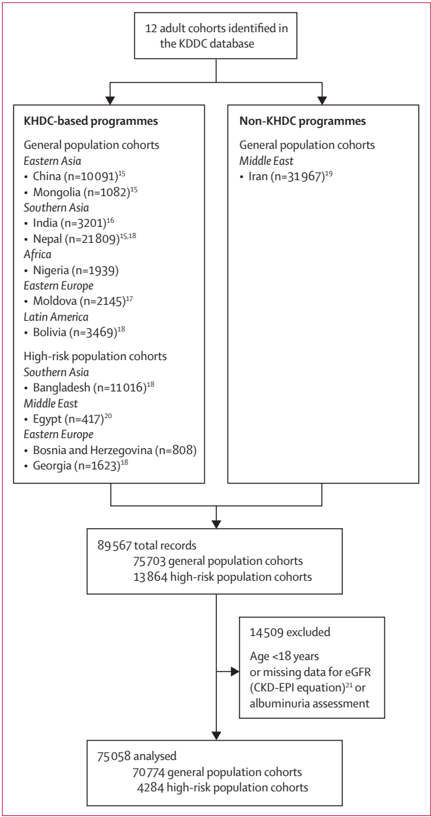
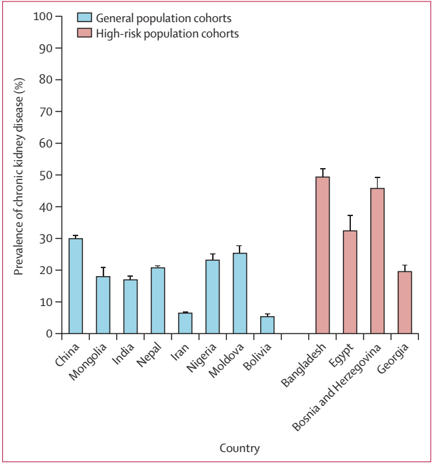
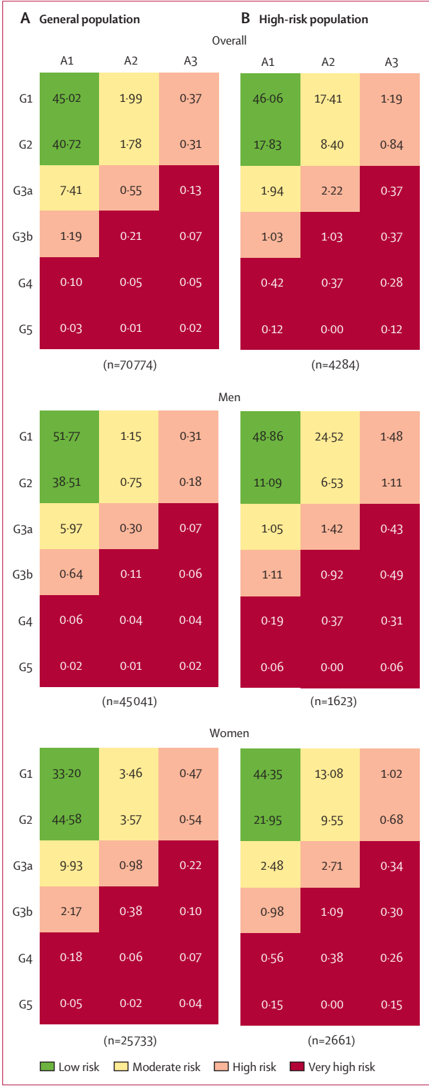
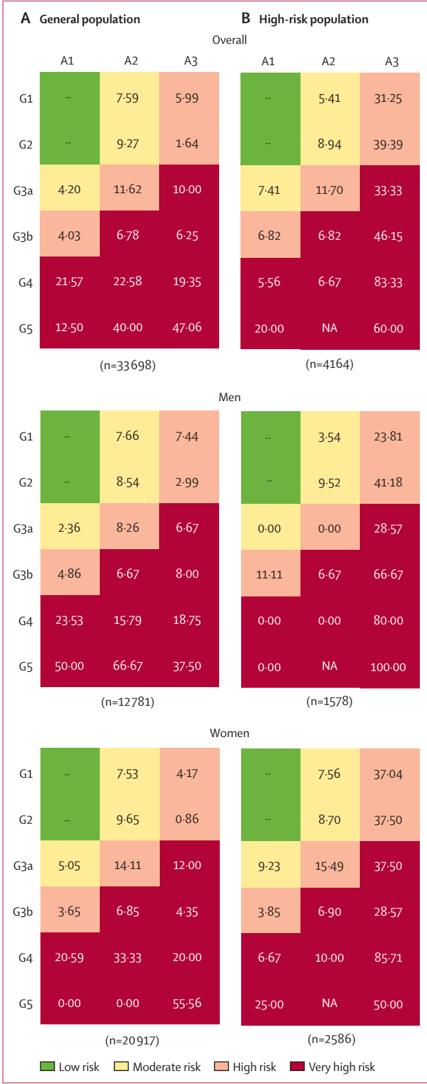
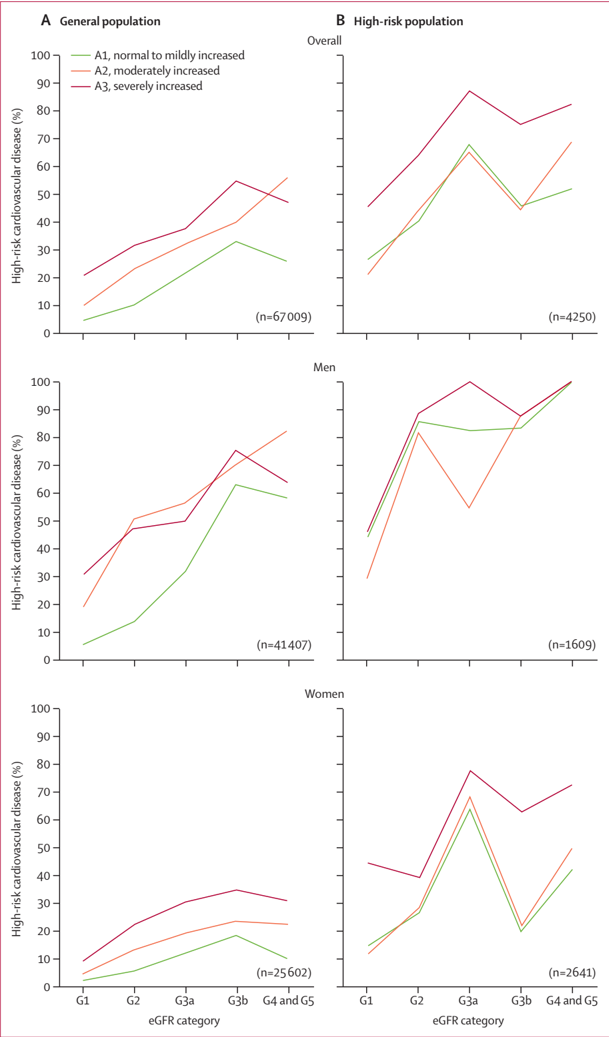
BACKGROUND: Chronic kidney disease is an important cause of global mortality and morbidity. Data for epidemiological features of chronic kidney disease and its risk factors are limited for low-income and middle-income countries. The International Society of Nephrology's Kidney Disease Data Center (ISN-KDDC) aimed to assess the prevalence and awareness of chronic kidney disease and its risk factors, and to investigate the risk of cardiovascular disease, in countries of low and middle income. METHODS: We did a cross-sectional study in 12 countries from six world regions: Bangladesh, Bolivia, Bosnia and Herzegovina, China, Egypt, Georgia, India, Iran, Moldova, Mongolia, Nepal, and Nigeria. We analysed data from screening programmes in these countries, matching eight general and four high-risk population cohorts collected in the ISN-KDDC database. High-risk cohorts were individuals at risk of or with a diagnosis of either chronic kidney disease, hypertension, diabetes, or cardiovascular disease. Participants completed a self-report questionnaire, had their blood pressure measured, and blood and urine samples taken. We defined chronic kidney disease according to modified KDIGO (Kidney Disease: Improving Global Outcomes) criteria; risk of cardiovascular disease development was estimated with the Framingham risk score. FINDINGS: 75,058 individuals were included in the study. The prevalence of chronic kidney disease was 14·3% (95% CI 14·0-14·5) in general populations and 36·1% (34·7-37·6) in high-risk populations. Overall awareness of chronic kidney disease was low, with 409 (6%) of 6631 individuals in general populations and 150 (10%) of 1524 participants from high-risk populations aware they had chronic kidney disease. Moreover, in the general population, 5600 (44%) of 12,751 individuals with hypertension did not know they had the disorder, and 973 (31%) of 3130 people with diabetes were unaware they had that disease. The number of participants at high risk of cardiovascular disease, according to the Framingham risk score, was underestimated compared with KDIGO guidelines. For example, all individuals with chronic kidney disease should be considered at high risk of cardiovascular disease, but the Framingham risk score detects only 23% in the general population, and only 38% in high-risk cohorts. INTERPRETATION: Prevalence of chronic kidney disease was high in general and high-risk populations from countries of low and middle income. Moreover, awareness of chronic kidney disease and other non-communicable diseases was low, and a substantial number of individuals who knew they were ill did not receive treatment. Prospective programmes with repeat testing are needed to confirm the diagnosis of chronic kidney disease and its risk factors. Furthermore, in general, health-care workforces in countries of low and middle income need strengthening. FUNDING: International Society of Nephrology.
Overview
The claims and statistics of this paper haven’t been checked yet.
Free: it reads the open-access text and checks the first 5 claims that cite a source we can check. Create a free account to check every claim.
Integrity signals
Registry
Cites
Statistics
Figures
Verification
Claims the paper makes
The claims and statistics of this paper haven’t been checked yet.
Free: it reads the open-access text and checks the first 5 claims that cite a source we can check. Create a free account to check every claim.
Self-check
Percentages, sums and reported differences re-computed from the paper’s own numbers.
The self-check needs the paper’s full text.
Citations
Cites
A New Equation to Estimate Glomerular Filtration Rate
Levey, A. S., Stevens, L. A., Schmid, C. H., Zhang, Y. (., Castro, A. F., Feldman, H. I., Kusek, J. W., Eggers, P., Van Lente, F., Greene, T., et al. (2009) · Annals of Internal Medicine · doi:10.7326/0003-4819-150-9-200905050-00006 · Cited by 25,603
Chobanian, A. V. (2003) · JAMA · doi:10.1001/jama.289.19.2560 · Cited by 25,386
Obesity : Preventing and managing the global epidemic
Akram, D. S., Astrup, A. V., Atinmo, T., Boissin, J.-L., Bray, G. A., Carroll, K. N., Chitson, P., Chen, C., Dietz, W. H., Hill, J. O., et al. (2000) · Research at the University of Copenhagen (University of Copenhagen) · Cited by 12,945
(2004) · The Lancet · doi:10.1016/s0140-6736(03)15268-3 · Cited by 12,717
KDIGO 2024 clinical practice guideline for the evaluation and management of chronic kidney disease
Stevens, P. E., Ahmed, S. B., Carrero, J. J., Foster, B., Francis, A., Hall, R. K., Herrington, W. G., Hill, G., Inker, L. A., Kazancıoğlu, R., et al. (2024) · Kidney International · doi:10.1016/j.kint.2023.10.018 · Cited by 8,530
Self-citationGeneral Cardiovascular Risk Profile for Use in Primary Care: The Framingham Heart Study
D’Agostino, R. B., Vasan, R. S., Pencina, M. J., Wolf, P. A., Cobain, M., Massaro, J. M., & Kannel, W. B. (2008) · Circulation · doi:10.1161/circulationaha.107.699579 · Cited by 7,491
Vos, T., Barber, R. M., Bell, B., Bertozzi-Villa, A., Biryukov, S., Bolliger, I., Charlson, F., Davis, A., Degenhardt, L., Dicker, D., et al. (2015) · The Lancet · doi:10.1016/s0140-6736(15)60692-4 · Cited by 6,414
Self-citationChronic kidney disease: global dimension and perspectives
Jha, V., Garcia-Garcia, G., Iseki, K., Li, Z., Naicker, S., Plattner, B., Saran, R., Wang, A. Y.-M., & Yang, C.-W. (2013) · The Lancet · doi:10.1016/s0140-6736(13)60687-x · Cited by 4,383
Sarnak, M. J., Levey, A. S., Schoolwerth, A. C., Coresh, J., Culleton, B., Hamm, L. L., McCullough, P. A., Kasiske, B. L., Kelepouris, E., Klag, M. J., et al. (2003) · Circulation · doi:10.1161/01.cir.0000095676.90936.80 · Cited by 3,768
Cited by
Items 201–300 of 663
Willingness to pay for kidney transplantation among chronic kidney disease patients in Ghana
Boima, V., Agyabeng, K., Ganu, V. J., Dey, D. I., Yorke, E., Amissah-Arthur, M.-B., Wilson, A. A., Yawson, A. E., Mate-Kole, C. C., & Nonvignon, J. (2020) · PLoS ONE · doi:10.1371/journal.pone.0244437 · Cited by 13
Framework of Guidelines for Management of CKD in Asia
Pollock, C. A., Moon, J., Ha, L. P. N., Gojaseni, P., Ching, C. H., Gomez, L., Chan, T. M., Wu, M., Yeo, S. C., Nugroho, P., et al. (2023) · Kidney International Reports · doi:10.1016/j.ekir.2023.12.010 · Cited by 16
Pluquet, M., Kamel, S., de Pinho, N. A., Mansencal, N., Combe, C., Metzger, M., Massy, Z. A., Liabeuf, S., & Laville, S. M. (2024) · Clinical Kidney Journal · doi:10.1093/ckj/sfae046 · Cited by 13
“All patients with CKD should be considered to have a high risk of cardiovascular disease ( CVD) , although the underlying pathophysiological mechanisms are not fully understood [2 , 3 ].”
BackgroundSamaan, F., Silveira, R. C., Mouro, A., Kirsztajn, G. M., & Sesso, R. (2024) · BMC Nephrology · doi:10.1186/s12882-024-03597-9 · Cited by 12
“Possibly patients of our study with proteinuria test requests were sicker than the population with serum creatinine dosages.”
BackgroundInfluentialPREVALENCE, Characteristics, and Awareness of Chronic Kidney Disease in Croatia: The EH-UH 2 Study
Jelaković, A., Radunović, D., Josipović, J., Vrkić, T. Ž., Gellineo, L., Domislovic, M., Prelević, V., Živko, M., Fuček, M., Glavić, M. M., et al. (2024) · Journal of Clinical Medicine · doi:10.3390/jcm13226827 · Cited by 12
“This is in line with other reports that only 6% of the general population and 10% of the high-risk population are aware of their CKD [25,43,45].”
Mind the gap in kidney care: translating what we know into what we do
Luyckx, V. A., Tuttle, K. R., Abdellatif, D. A., Correa‐Rotter, R., Fung, W. W., Haris, A., Hsiao, L., Khalife, M., Kumaraswami, L. A., Loud, F. C., et al. (2025) · Kidney Research and Clinical Practice · doi:10.23876/j.krcp.24.100 · Cited by 12
Self-citationLim, L., Fu, A. W. C., Lau, E. S. H., Ozaki, R., Cheung, K. K.-T., Ronald, C. W., Luk, A. O. Y., Chan, J. C. N., & Kong, A. P. S. (2018) · Nephrology Dialysis Transplantation · doi:10.1093/ndt/gfy154 · Cited by 12
“funding, facilities and workforce), large patient volume and poor disease awareness in both patients and health care providers are major barriers in improving care, leading to increased morbidity and premature death, especially in LMICs [9, 10].”
BackgroundKidney health for everyone everywhere - From prevention to detection and equitable access to care
Li, P. K., García-García, G., Lui, S., Andreoli, S. P., Fung, W. W., Hradsky, A., Kumaraswami, L. A., Liakopoulos, V., Rakhimova, Z., Saadi, G. E., et al. (2020) · Indian Journal of Nephrology · doi:10.4103/ijn.ijn_50_20 · Cited by 12
Self-citationEffects of chronic kidney disease on cognitive function and α-klotho expression in hippocampus
Huang, M., Li, G., Tan, J., Huang, M., Huang, F., Ma, R., Xiao, Y., & Wang, J. (2022) · Translational Andrology and Urology · doi:10.21037/tau-22-465 · Cited by 12
“The global prevalence rate of CKD is 14.3% (2).”
InfluentialPalo, S. K., Nayak, S. R., Sahoo, D., Nayak, S., Mohapatra, A. K., Sahoo, A., Dash, P., & Pati, S. (2023) · Frontiers in Medicine · doi:10.3389/fmed.2023.1131900 · Cited by 12
“Whereas CKD is an attributing factor for many other non-communicable diseases such as cardiovascular diseases, hypertension, anemia, bone mineral, volume overload and electrolyte imbalances (5), diseases such as hypertension and diabetes mellitus are risk factors for CKD (8).”
BackgroundYang, M., Yang, Y., Xu, Y., Wu, Y., Lin, J., Mai, J., Fang, K., Ma, X., Zou, C., & Lin, Q. (2023) · Clinical Interventions in Aging · doi:10.2147/cia.s416421 · Cited by 12
“3%.(1) In China alone, CKD affects 132.”
Egli, P., Aeschbacher, S., Bossard, M., Eggimann, L., Blum, S., Meyre, P. B., Bargetzi, L., Estis, J., Todd, J., Risch, M., et al. (2017) · Clinica Chimica Acta · doi:10.1016/j.cca.2017.12.019 · Cited by 12
Genotoxic damage in end-stage renal disease
Gandhi, G., Mehta, T. R., Contractor, P., & Tung, G. K. (2018) · Mutation Research/Genetic Toxicology and Environmental Mutagenesis · doi:10.1016/j.mrgentox.2018.08.005 · Cited by 12
Amadi, C. E., Mbakwem, A. C., Kushimo, O. A., Ajuluchukwu, J. N., & Akinkunmi, M. (2019) · BMC Public Health · doi:10.1186/s12889-019-7328-6 · Cited by 12
“Lower stages of eGFR and higher levels of albuminuria are regarded as high CVD risk state [1, 21].”
BackgroundMethodInfluentialQü, B., He, Y., Wu, L., Lu, H., Wu, H., & Li, M. (2019) · International Urology and Nephrology · doi:10.1007/s11255-019-02350-8 · Cited by 12
Paraoxonase 1 and Chronic Kidney Disease: A Meta-Analysis
Watanabe, J., Kotani, K., & Gugliucci, A. (2023) · Journal of Clinical Medicine · doi:10.3390/jcm12031199 · Cited by 12
Advancements in Amperometric Biosensing Instruments for Creatinine Detection: A Critical Review
Dong, Y., Liu, Y., Lv, J., Yang, L., & Cui, Y. (2023) · IEEE Transactions on Instrumentation and Measurement · doi:10.1109/tim.2023.3279459 · Cited by 12
Prenatal arsenic exposure induces immunometabolic alteration and renal injury in rats
Singh, R. D., Tiwari, R., Sharma, V., Khan, H., Gangopadhyay, S., Singh, S., Koshta, K., Shukla, S., Arjaria, N., Mandrah, K., et al. (2023) · Frontiers in Medicine · doi:10.3389/fmed.2022.1045692 · Cited by 14
Global landscape of kidney health across Indigenous populations
Tungsanga, S., Okpechi, I. G., Bianchi, M. E., Chaturvedi, S., Collister, D., Crowshoe, H., Sosa, N., Galadanci, H., Hedin, E., Ibrahim, K. S., et al. (2025) · Nature Reviews Nephrology · doi:10.1038/s41581-025-01016-2 · Cited by 12
“A study of 14,041 tribal groups in Telangana, India, found kidney dysfunction in 7.9% of participants 173 , compared with 17% of the general population 174 .”
InfluentialNephroprotective Effect of the Herbal Composition BNO 2103 in Rats with Renal Failure
Shebeko, S. K., Черних, В. В., & Zupanets, K. O. (2020) · Scientia Pharmaceutica · doi:10.3390/scipharm88040047 · Cited by 11
“1% in high-risk groups (hypertension, diabetes, cardiovascular disease) [3].”
Zhu, X., Lu, X., Yin, T., Zhu, Q., Shi, S., Cheang, I., Yue, X., Tang, Y., Liao, S., Zhou, Y., et al. (2022) · Frontiers in Cardiovascular Medicine · doi:10.3389/fcvm.2022.802287 · Cited by 11
Protein crotonylation: Basic research and clinical diseases
Li, D., Lin, L., Xu, F., Feng, T., Tao, Y., Miao, H., & Yang, F. (2024) · Biochemistry and Biophysics Reports · doi:10.1016/j.bbrep.2024.101694 · Cited by 13
Zeba, Z., Fatema, K., Sumit, A. F., Zinnat, R., & Ali, L. (2020) · Journal of Preventive Epidemiology · doi:10.34172/jpe.2020.10 · Cited by 11
“Although unlike other studies (5), the association between hypertension and CKD after adjustments were not found significant, our adjusted data revealed that diabetes, smoking, obesity and hypertension increased the chance of developing CKD by 7.”
BackgroundResultInfluentialChen, H., Wang, T., Yang, J., Huang, S., & Zeng, P. (2020) · Frontiers in Genetics · doi:10.3389/fgene.2020.592461 · Cited by 11
“It has been widely observed that CAD and CKD share common pathological and clinical feature (Go et al., 2004; Liu et al., 2012; Tonelli et al., 2012; Ene-Iordache et al., 2016).”
BackgroundResultInfluentialGuo, G., Huang, A., Huang, X., Xu, T., & Yao, L. (2021) · Disease Markers · doi:10.1155/2021/8881393 · Cited by 11
“The increased risk of death is mainly attributed to death from CVD [1, 2, 26].”
BackgroundLi, X., Su, T., Xiao, H., Gao, P., Xiong, C., Liu, J., & Zou, H. (2020) · Diabetes Metabolic Syndrome and Obesity · doi:10.2147/dmso.s265735 · Cited by 11
Self-citationWong, T.-S., Chen, Q., Liu, T., Yu, J., Gao, Y., He, Y., Zhong, Q., Tan, Z., Liu, T., Lu, J., et al. (2024) · Frontiers in Public Health · doi:10.3389/fpubh.2024.1047769 · Cited by 11
Singh, A. K., Das, A. K., Murthy, L. S., Ghosal, S., Sahay, R. K., Kumar, K. V. S. H., Keshava, G. H., Agarwal, M., Vijayakumar, G., Kalra, P., et al. (2024) · Advances in Therapy · doi:10.1007/s12325-024-03037-y · Cited by 10
Zhang, T., Li, T., & Jin, P. (2025) · Renal Failure · doi:10.1080/0886022x.2025.2472039 · Cited by 11
“Globally, nearly 10% of adults are affected by various kidney diseases [8].”
Singh, S., Singh, N., Chauhan, A., Koshta, K., Baby, S., Tiwari, R., Jagdale, P. R., Kumar, M., Sharma, V., Singh, D. P., et al. (2025) · Environmental Science and Pollution Research · doi:10.1007/s11356-025-36229-2 · Cited by 10
“This rapid surge in the prevalence of CKD is attributed by several factors such as diabetes, hypertension, and exposure to nephrotoxins and environmental contaminants (Ene-Iordache et al. 2016).”
Methods to generate and evaluate zebrafish models of human kidney diseases
Fatma, S., Nayak, U., & Swain, R. K. (2021) · The International Journal of Developmental Biology · doi:10.1387/ijdb.210041rs · Cited by 12
“The International Society of Nephrology’s kidney disease data center reported a 16.8% prevalence of CDK among Indian population (Ene-Iordache et al., 2016).”
BackgroundInfluentialSamaan, F., Damiani, B. B., Kirsztajn, G. M., & Sesso, R. (2023) · Diagnostics · doi:10.3390/diagnostics13061146 · Cited by 10
Abdelsalam, M., Demerdash, T. M., Assem, M., Awais, M., Shaheen, M. M., Sabri, A., Alanany, H., Kashgary, A., & Alsuwaida, A. (2020) · Therapeutic Apheresis and Dialysis · doi:10.1111/1744-9987.13492 · Cited by 10
Huan, J.-M., Su, W.-G., Li, W., Gao, C., Zhou, P., Chun-sheng, F., Wang, X., Wang, Y., & Wang, Y.-F. (2021) · Evidence-based Complementary and Alternative Medicine · doi:10.1155/2021/5590743 · Cited by 11
“.e International Cross-Sectional Study [2] of Chronic Kidney Disease (CKD) published by the International Society of Nephrology Kidney Disease Data Center (ISNKDDC) in 2016 showed that hypertension significantly increases the prevalence of CKD (corrected odds ratio (OR) 1.68, 95% confidence interval (CI) 1.60–1.76).”
BackgroundInfluentialConsiderations for the clinical use of stem cells in genitourinary regenerative medicine
Caneparo, C., Sorroza-Martinez, L., Chabaud, S., Fradette, J., & Bolduc, S. (2021) · World Journal of Stem Cells · doi:10.4252/wjsc.v13.i10.1480 · Cited by 10
Roberti, J. E., Alonso, J. P., Blas, L., & May, C. R. (2021) · Social Science & Medicine · doi:10.1016/j.socscimed.2021.114666 · Cited by 10
Samaan, F., Gutierrez, M. M., Kirsztajn, G. M., & Sesso, R. (2022) · Epidemiologia e Serviços de Saúde · doi:10.1590/s2237-96222022000200014 · Cited by 10
A Systematic Review of Screening Tests for Chronic Kidney Disease: An Accuracy Analysis
Yousefi, M., Keshvari-Shad, F., Hajebrahimi, S., Pes, M. P. L., Ahari, A. M., Nouri, M., & Seyednejad, F. (2020) · Galen Medical Journal · doi:10.31661/gmj.v9i.1573 · Cited by 12
Sarker, M. H. R., Moriyama, M., Rashid, H. U., Rahman, M. M., Chisti, M. J., Das, S. K., Jahan, Y., Saha, S. K., Arifeen, S. E., Ahmed, T., et al. (2021) · JMIR Research Protocols · doi:10.2196/30191 · Cited by 10
“In LMIC, most people with kidney failure have insufficient access to lifesaving renal replacement therapy [5].”
InfluentialKidney health for everyone everywhere: from prevention to detection and equitable access to care
Li, P. K., García-García, G., Lui, S., Andreoli, S. P., Fung, W. W., Hradsky, A., Kumaraswami, L. A., Liakopoulos, V., Rakhimova, Z., Saadi, G. E., et al. (2020) · Journal of Nephrology · doi:10.1007/s40620-020-00728-x · Cited by 10
Self-citationHassan, M. B., Siddique, S., Maheshwari, S. K., Neelam, F., Neha, F., Lohana, B. D., Lohana, K., Dar, B. A., Kumari, H., Pawan, R., et al. (2025) · Medicine · doi:10.1097/md.0000000000046189 · Cited by 11
“[11] Marian Goicoechea et al (2005), in a cross-sectional study of 128 patients, identified traditional risk factors including hypertension and dyslipidemia as strong predictors of cardiovascular events in CKD, but did not report adjusted hazard ratios.”
Kidney Health for Everyone Everywhere—From Prevention to Detection and Equitable Access to Care
Li, P. K., García-García, G., Lui, S., Andreoli, S. P., Fung, W. W., Hradsky, A., Kumaraswami, L. A., Liakopoulos, V., Rakhimova, Z., Saadi, G. E., et al. (2020) · Kidney International Reports · doi:10.1016/j.ekir.2020.01.023 · Cited by 9
Self-citationWu, J., Duan, S., Yang, H., Deng, Y., Li, W., He, Y., Ni, Z., Zhan, Y., Lin, S., Guo, Z., et al. (2021) · Journal of Chinese Integrative Medicine · doi:10.1016/j.joim.2021.01.009 · Cited by 9
Genes, environment, and African ancestry in cardiometabolic disorders
Doumatey, A. P., Bentley, A. R., Akinyemi, R., Olanrewaju, T. O., Adeyemo, A., & Rotimi, C. N. (2023) · Trends in Endocrinology and Metabolism · doi:10.1016/j.tem.2023.07.007 · Cited by 9
Firima, E., Fernández, L. G., Khan, M. A., Manthabiseng, M., Sematle, M. P., Bane, M., Khomolishoele, M., Leisa, I., Retselisitsoe, L., Burkard, T., et al. (2023) · Journal of Epidemiology and Global Health · doi:10.1007/s44197-023-00158-5 · Cited by 9
“…and mortality due to target organ damage are rising in low-and middle-income countries as a result of lifestyle change, and the attendant increases in the prevalence of elevated blood pressure, DM and other cardiovascular risk factors which are often under-diagnosed and poorly controlled [15–17].”
BackgroundMethodInfluentialSoares, L. B. M., Soares, A. B., & Ferreira, J. B. B. (2024) · Einstein (São Paulo) · doi:10.31744/einstein_journal/2024rw0519 · Cited by 9
Genetically predicted frailty index and risk of chronic kidney disease
Chen, H., Qiu, J., Guo, Y., & Chen, F. (2024) · Scientific Reports · doi:10.1038/s41598-024-71881-7 · Cited by 10
“Chronic kidney disease (CKD), affecting approximately 10% of the worldwide population, posing a substantial challenge to global health systems due to its high mortality rate 6–8 .”
BackgroundAnimal models of membranous nephropathy: more choices and higher similarity
Pan, Y., Chen, S., Wu, L., Xing, C., Mao, H., Liang, H., & Yuan, Y. (2024) · Frontiers in Immunology · doi:10.3389/fimmu.2024.1412826 · Cited by 9
Hu, J., Mei, G., Tong, C., Gao, C., & Zhang, J. (2022) · International Journal of Clinical Practice · doi:10.1155/2022/6809670 · Cited by 9
“*e prevalence of CKD in the world has reached 14.3% [1] and up to an estimated 160 million CKD in China [2], and the cost to care for patients with end-stage renal disease (ESRD) was substantial [3].”
InfluentialThe relationship between hemodialysis mortality and the Chinese medical insurance type
Yao, X., Chen, S., Lei, W., Shi, N., Lin, W., Du, X., Ping, Z., & Chen, J. (2019) · Renal Failure · doi:10.1080/0886022x.2019.1657893 · Cited by 9
“This is a multicenter, retrospective cohort study, including all incident ESRD patients undergoing MHD between January 2010 and December 2014 from Zhejiang province, a vast province in eastern China.”
BackgroundInfluentialThe role of the poultry industry on kidney and genitourinary health in Pakistan
Imtiaz, S., Alam, A., & Salman, B. (2019) · Pakistan Journal of Medical Sciences · doi:10.12669/pjms.36.icon-suppl.1718 · Cited by 9
El sistema de salud: barreras para los usuarios con insuficiencia renal crónica
Ramírez-Perdomo, C. A., Perdomo-Romero, A. Y., & Rodríguez-Vélez, M. E. (2020) · Avances en Enfermería · doi:10.15446/av.enferm.v38n2.83555 · Cited by 9
Nutritional status and anxiety-depression relationship in hemodialysis patients
CİNDOĞLU, Ç., & Beyazgül, B. (2021) · Journal of Surgery and Medicine · doi:10.28982/josam.802547 · Cited by 9
“CKD patients have a higher mortality rate than the general population [1].”
BackgroundZhao, W., Zhang, Y., Li, X., Mao, Y., Wu, C., Zhao, L., Liu, F., Zhu, J., Cheng, J., Yang, H., et al. (2021) · Aging Pathobiology and Therapeutics · doi:10.31491/apt.2021.09.064 · Cited by 10
“In addition, it is a risk factor of hypertension and cardiovascular diseases, which together constitute a substantial cause of death in most societies [22].”
BackgroundEffects of telemedicine intervention on the management of diabetic complications in type 2 diabetes
Hu, Y., Wen, X., Ni, L., Wang, F., Hu, S., & Fang, F. (2020) · International Journal of Diabetes in Developing Countries · doi:10.1007/s13410-020-00893-6 · Cited by 10
Kronenberg, F., & Schernthaner, G.-H. (2020) · Atherosclerosis · doi:10.1016/j.atherosclerosis.2020.01.022 · Cited by 9
Global prevalence of frailty in hemodialysis patients: a systematic review and meta-analysis
Xiang, Y., Tong, J., Qian, W., & Deng, P. (2025) · Frontiers in Medicine · doi:10.3389/fmed.2025.1722657 · Cited by 8
Advances in the diagnosis and detection of chronic kidney disease
Lees, J. S., Zhang, L., Anandh, U., Kronbichler, A., Fisher, L.-A., Borg, M., Wang, A. Y.-M., & Levin, A. (2026) · The Lancet · doi:10.1016/s0140-6736(26)00702-6 · Cited by 10
Self-citationPrevalence of chronic kidney disease among severely gas-exposed survivors in Bhopal, India.
Soni, K. K., Kalyanasundaram, M., Singh, S. K., Shubham, S., Sabde, Y., Prakash, A., & Tiwari, R. R. (2023) · PubMed · doi:10.252549/nmji_569_20 · Cited by 10
Willingness to pay for haemodialysis among patients with chronic kidney disease in Abuja, Nigeria
Agada-Amade, Y. A., Ogbuabor, D. C., Obikeze, E., Eborieme, E., & Onwujekwe, O. E. (2024) · BMC Nephrology · doi:10.1186/s12882-024-03459-4 · Cited by 8
“The prevalence of CKD in LMICs is 14.3% in the general population and 36.1% in high-risk populations [3].”
BackgroundInfluentialBaghel, K., Khan, A. G., & Kango, N. (2024) · Journal of Dietary Supplements · doi:10.1080/19390211.2024.2340509 · Cited by 11
“The probability of developing diabetic nephropathy (DN) in patients was noticed at about 1.75 (95% CI 1.62-1.89) (Ene-Iordache et al. 2016).”
InfluentialZhou, X., & Zhu, F. (2024) · Risk Management and Healthcare Policy · doi:10.2147/rmhp.s456499 · Cited by 8
Zhao, G., Shang, S., Tian, N., Zhan, X., Peng, F., Wang, X., Wen, Y., Xu, Q., Feng, X., Tang, X., et al. (2024) · Lipids in Health and Disease · doi:10.1186/s12944-024-02275-x · Cited by 8
“The prevalence of chronic kidney disease (CKD) has reached 8–16% globally [1].”
BackgroundKheirandish, M., Eftekhar, E., Azarbad, A., Salarpour, E., Shahmoradi, M., Ghazizadeh, S., Malektojari, A., Nikeghbali, Z., Lengeh, S. K., & Dehghani, A. (2024) · Archives of Iranian Medicine · doi:10.34172/aim.31194 · Cited by 11
“36,38,41,42 Comparing genders using the MDRD equation did not reveal a significant difference in CKD development (OR = 1.05, 95% CI = 0.88‒1.26).”
MethodInfluentialLiang, Y., Xu, F., Guo, L., Jiang, W., Li, J., & Shu, P. (2024) · Nutrition in Clinical Practice · doi:10.1002/ncp.11256 · Cited by 8
Ginger ( Zingiber officinale Roscoe) Bioactive Components: Potential Resources for Kidney Health
Wang, Y., Jiang, Y., Han, C., Zhou, L., Hu, H., Song, H., & Li, W. (2025) · Journal of Food Biochemistry · doi:10.1155/jfbc/2625586 · Cited by 10
Rai, P., Rai, P., & Bedi, S. (2019) · Saudi Journal of Kidney Diseases and Transplantation · doi:10.4103/1319-2442.275488 · Cited by 8
“The reported prevalence of CKD in different Indian regions ranges from <1% to 13%.(22) SEEK India cohort involving 6120 individuals from all over the country also reported similar figures.”
BackgroundKidney Health for Everyone Everywhere – From Prevention to Detection and Equitable Access to Care
Li, P. K., García-García, G., Lui, S., Andreoli, S. P., Fung, W. W., Hradsky, A., Kumaraswami, L. A., Liakopoulos, V., Rakhimova, Z., Saadi, G. E., et al. (2020) · American Journal of Nephrology · doi:10.1159/000506499 · Cited by 8
Self-citationÖznur, S. A. R. I., & Bashir, A. M. (2021) · Turkish Journal of Internal Medicine · doi:10.46310/tjim.899718 · Cited by 10
Rahman, M. A., Shanjana, Y., Ahmed, S., Dhama, K., Fahim, M. H., Mahmud, T., Shuvo, A. A., Milan, Z. H., Rahman, M. S., Roy, A., et al. (2022) · Clinical Pathology · doi:10.1177/2632010x221114807 · Cited by 14
Ruiz‐García, A., Arranz-Martínez, E., Iturmendi-Martínez, N., Fernández-Vicente, T., Rivera-Teijido, M., & García-Álvarez, J. C. (2023) · Clínica e Investigación en Arteriosclerosis (English Edition) · doi:10.1016/j.artere.2023.03.002 · Cited by 12
Supplementing Yogurt with Probiotic Bifidobacteria to Counter Chronic Kidney Disease
Stuivenberg, G. A., Chmiel, J. A., Akouris, P. P., White, J., Wilcox, H., Seney, S. L., Burton, J. P., & Reid, G. (2023) · Fermentation · doi:10.3390/fermentation9040391 · Cited by 8
SDMA attenuates renal tubulointerstitial fibrosis through inhibition of STAT4
Wang, Y., Wu, M., Chen, D., Tan, B., Lin, P., Huang, D., & Ye, C. (2023) · Journal of Translational Medicine · doi:10.1186/s12967-023-04181-9 · Cited by 12
“Background Chronic kidney diseases (CKD) affect more than 10% of world population causing a heavy social and economic burden [1].”
BackgroundFactors associated with quality of life among patients undergoing hemodialysis in Indonesia
Nurbadriyah, W. D., Nursalam, N., Widyawati, I. Y., & Kurniawan, A. W. (2023) · Jurnal NERS · doi:10.20473/jn.v18i3.46280 · Cited by 8
Exploring patient delay in people with chronic kidney disease: A cross-sectional study
Zheng, J., Guo, A.-H., Xue, B.-W., Wu, S., Wang, X.-X., Jing, Y.-J., Zhai, L.-J., & Liu, R. (2024) · Medicine · doi:10.1097/md.0000000000037077 · Cited by 8
“[10] In recent years, research on patient delay behavior has gained prominence in the field of patient management.”
BackgroundTchokhonelidze, I., & Zemchenkov, A. Y. (2019) · Kidney International · doi:10.1016/j.kint.2018.10.039 · Cited by 8
Self-citationKidney health for everyone everywhere— from prevention to detection and equitable access to care
Li, P. K., García-García, G., Lui, S., Andreoli, S. P., Fung, W. W., Hradsky, A., Kumaraswami, L. A., Liakopoulos, V., Rakhimova, Z., Saadi, G. E., et al. (2020) · Hong Kong Medical Journal · doi:10.12809/hkmj198292 · Cited by 8
Self-citationChronic kidney disease: prevalence and risk factors (literature review)
Aringazina, A. M., Narmanova, O. Z., Nuskabayeva, G. O., Tagaeva, Z. A., & Мендыбаев, Е. С. (2020) · Health Risk Analysis · doi:10.21668/health.risk/2020.2.18.eng · Cited by 8
Boiko, O. O., Родіонова, В. В., & Shevchenko, L. (2022) · Cureus · doi:10.7759/cureus.31828 · Cited by 8
“Decreased renal function is usually associated with increased blood pressure, and a steady increase in blood pressure accelerates the decline in renal function [2,3].”
BackgroundMa, H., Hu, M., & Wan, J. (2023) · Frontiers in Public Health · doi:10.3389/fpubh.2023.1027715 · Cited by 8
Chronic kidney disease in the emergency centre: A prospective observational study
Bello, B. T., Ojo, O. E., Oguntunde, O., & Adegboye, A. A. (2018) · African Journal of Emergency Medicine · doi:10.1016/j.afjem.2018.05.004 · Cited by 8
Uvais, N. A., Hafeeq, B., Gopinathan, J. C., Aziz, F., Narayanan, S., Velikkalagath, I., & Aboobacker, I. (2019) · Indian Journal of Public Health · doi:10.4103/ijph.ijph_288_18 · Cited by 8
Latheef, S. A. A., Nagarathnam, M., & Sivakumar, V. (2019) · Indian Journal of Palliative Care · doi:10.4103/ijpc.ijpc_34_19 · Cited by 8
Das, S., Rahman, R., & Talukder, A. (2024) · Medicine · doi:10.1097/md.0000000000040813 · Cited by 7
“[21] 24] Throughout our study, we have tried to identify the risk factors and predict CVD using different ML models.”
Lu, M., Mao, Y., Hui, Z., Xu, Y., Yao, Y., Wu, F. L., & Huang, Z. (2025) · npj Digital Medicine · doi:10.1038/s41746-025-01850-5 · Cited by 9
Recent advances in nephropathy biomarker detections using paper-based analytical devices
Sabarudin, A., Sakti, S. P., Aulanni’am, A., Susianti, H., Samsu, N., Wulandari, I. O., Oktanella, Y., & Anggraeni, D. (2021) · Analytical Sciences · doi:10.2116/analsci.21sar10 · Cited by 7
Zhao, F., Wang, J., Chen, P., & Hu, Y. (2023) · Nursing Open · doi:10.1002/nop2.1639 · Cited by 7
LINCRNA01094 Promotes Renal Interstitial Fibrosis via the Mir-513b-5p/ MELK/Smad3 Axis
Zhang, X., Jia, B., Zhang, Y., Wu, H., & Zhang, S. (2024) · Endocrine Metabolic & Immune Disorders - Drug Targets · doi:10.2174/0118715303306110240820072347 · Cited by 8
Hu, Y., Zhang, B., Hu, Z., Huang, J.-W., Wang, L., Wei, Y., Zheng, B., & Xue, Q. (2024) · Trials · doi:10.1186/s13063-024-08365-6 · Cited by 7
“The early stages of CKD are highly latent, with a high number of cases progressing to irreversible renal failure by the time they are diagnosed [6].”
BackgroundComparison of breath biomarker studies for early diagnosis of chronic kidney disease: a review
Wang, Y., Weng, H., Xu, D., & Zhang, S. (2025) · Journal of Breath Research · doi:10.1088/1752-7163/addc8a · Cited by 7
“A 2016 survey indicated that only 6% of CKD patients in the general population were aware of their condition; even among high-risk groups, this figure was merely 10% [4].”
A Nomogram for Identifying Subclinical Atherosclerosis in Chronic Kidney Disease
Xiong, J., Yu, Z., Zhang, D., Huang, Y., Yang, K., & Zhao, J. (2021) · Clinical Interventions in Aging · doi:10.2147/cia.s312129 · Cited by 7
Cook, S., Solbu, M. D., Eggen, A. E., Iakunchykova, O. P., Averina, M., Hopstock, L. A., Kholmatova, K., Kudryavtsev, A. V., Leon, D. A., Malyutina, S. K., et al. (2022) · BMC Nephrology · doi:10.1186/s12882-022-02738-2 · Cited by 7
Kumar, A., Jain, A., & Rikhari, P. (2023) · Cureus · doi:10.7759/cureus.43267 · Cited by 10
Rajanna, S. K., Sams, L. M., Arulappan, J., & Alharbi, H. F. (2023) · International journal of Nutrition Pharmacology Neurological Diseases · doi:10.4103/ijnpnd.ijnpnd_68_22 · Cited by 7
Lai, S., Lin, C., & Liao, K. (2017) · European Journal of Clinical Investigation · doi:10.1111/eci.12793 · Cited by 7
Thapa, D., Koirala, P., Chaulagain, D. D., Kafle, T. K., Belbase, D., & Bhagat, S. (2021) · Birat Journal of Health Sciences · doi:10.3126/bjhs.v6i1.37563 · Cited by 7
Self-citationPrastiwi, D., Martyastuti, N. E., Isrofah, I., & Alisyahbana, B. (2022) · Media Keperawatan Indonesia · doi:10.26714/mki.5.1.2022.28-32 · Cited by 7
“[1] Ene-Iordache B, Perico N, Bikbov B, Carminati S, Remuzzi A, Perna A, et al.”
BackgroundDeng, G., Yang, F., Sun, N., Liang, D., Cen, A., Zhang, C., & Ni, S. (2023) · Frontiers in Pharmacology · doi:10.3389/fphar.2023.1126714 · Cited by 8
Plasma levels of endothelin-1 and renal function among young and healthy adults
Fischer, A., Bossard, M., Aeschbacher, S., Egli, P., Cordewener, C., Estis, J., Todd, J., Risch, M., Risch, L., & Conen, D. (2017) · Clinical Chemistry and Laboratory Medicine (CCLM) · doi:10.1515/cclm-2016-0920 · Cited by 9
“In this context, one needs to take in account that the prevalence of chronic kidney disease continuously increases with advancing age, affecting more than 20% of all individuals older than 60 years and 35% of those older than 70 years [1, 3, 4].”
BackgroundKidney Health for Everyone Everywhere – From Prevention to Detection and Equitable Access to Care
Li, P. K., García-García, G., Lui, S., Andreoli, S. P., Fung, W. W., Hradsky, A., Kumaraswami, L. A., Liakopoulos, V., Rakhimova, Z., Saadi, G. E., et al. (2020) · Kidney Diseases · doi:10.1159/000506528 · Cited by 7
“The overall CKD awareness among the general population and even high cardiovascular risk groups across 12 low-income and middle-income countries was 10% 22 .”
Self-citation
Metadata
- Authors
- Ene-Iordache, B., Perico, N., Bikbov, B., Carminati, S., Remuzzi, A., Perna, A., Islam, N., Bravo, R. F., Aleckovic-Halilovic, M., Zou, H., Zhang, L., Gouda, Z., Tchokhonelidze, I., Abraham, G., Mahdavi-Mazdeh, M., Gallieni, M., Codreanu, I., Togtokh, A., Sharma, S. K., Koirala, P., Uprety, S., Ulasi, I., & Remuzzi, G.
- Affiliations
- Mario Negri Institute for Pharmacological Research (IT)
- Russian University of Medicine (RU)
- University of Bergamo (IT)
- North East Medical College (BD)
- Third Affiliated Hospital of Southern Medical University (CN)
- Peking University (CN)
- General Organization For Teaching Hospitals and Institutes (EG)
- Tbilisi State Medical University (GE)
- University of Milan (IT)
- B.P. Koirala Institute of Health Sciences (NP)
- University of Nigeria (NG)
- ORCID
- Venue
- The Lancet Global Health
- Publisher
- Elsevier BV
- Published
- 2016-05
- Volume
- 4
- Issue
- 5
- Pages
- e307-e319
- ISSN
- 2214-109X (ISSN-L)
- OpenAlex
- W2337136207
- Semantic Scholar
- fcc19f7c1ca48bb34f94c8045226d18c5dff37fe
- Cited by
- 627
- References
- 56
- Citations by year
- 2026: 34 · 2025: 72 · 2024: 94 · 2023: 97 · 2022: 63 · 2021: 61 · 2020: 90 · 2019: 42 · 2018: 34 · 2017: 31 · 2016: 8
- FWCI
- 38.56
- Type
- journal article
- Language
- en
- Open access
- gold
- doi.org
- Licence
- cc-by-nc-nd
- www.elsevier.com/tdm/userlicense/1.0/ (tdm)
- creativecommons.org/licenses/by-nc-nd/4.0/ (vor)
- Locations
- The Lancet Global Health (publishedVersion, cc-by-nc-nd)
- PubMed (publishedVersion)
- Bushehr University of Medical Sciences Repository (Bushehr University of Medical Sciences) (acceptedVersion)
- Archivio Istituzionale della Ricerca (Universita Degli Studi Di Milano) (submittedVersion, other-oa)
- Aisberg (University of Bergamo) (submittedVersion, cc-by-nc-nd)
- DOAJ (DOAJ: Directory of Open Access Journals) (submittedVersion)
- Funders
- International Society of Nephrology
- Topics
- Health Sciences › Medicine › Nephrology › Chronic Kidney Disease and Diabetes
- Health Sciences › Medicine › Nephrology › Dialysis and Renal Disease Management
- Health Sciences › Medicine › Cardiology and Cardiovascular Medicine › Blood Pressure and Hypertension Studies
- Keywords
- chronic kidney disease, cardiovascular risk, prevalence, disease awareness, hypertension, diabetes mellitus, Framingham risk score, KDIGO criteria, low- and middle-income countries, cardiovascular disease, screening programs, vulnerable populations, risk underestimation, global health disparities, blood pressure, urinary biomarkers, morbidity
- MeSH terms
- Adult, Aged, Awareness, Bangladesh, Bolivia, Cardiovascular Diseases, China, Cross-Sectional Studies, Diabetes Mellitus, Egypt, Female, Georgia (Republic), Humans, Hypertension, India, Iran, Health Knowledge, Attitudes, Practice, Male, Mass Screening, Middle Aged, Moldova, Mongolia, Nepal, Nigeria, Surveys and Questionnaires, Risk Factors, Cohort Studies, Prevalence, Bosnia and Herzegovina, Renal Insufficiency, Chronic
About these checks
Registry, retraction, Cites and statistics results are computed, not judged, with one exception: a printed reference that no index lists is read once by a model before it counts as a citation error. Claims are extracted by a model and kept only when their quote appears verbatim in the text; each cited source is then checked, with a model’s help, for whether it says what the claim relies on. Those verdicts can be wrong — read the claim’s quote and the cited source before relying on one.
Statistics and arithmetic are recomputed, not judged.
Confidence bands are shown only for fields calibrated on our annotated test set. None is calibrated yet, so no band is shown.
What counts as a claim ›How we measure confidence ›How we check this ›
Are you an author, or do you see a problem with this page? Request a review
Data sources
Bibliographic data: Semantic Scholar, OpenAlex, Crossref.
Contains information from the Semantic Scholar Academic Graph Datasets, made available under the ODC Attribution License (ODC-BY 1.0).
Semantic Scholar’s data is described in: Kinney, R., et al. (2023). The Semantic Scholar Open Data Platform. arXiv:2301.10140.
