

Chronic kidney disease and cardiovascular risk in six regions of the world (ISN-KDDC): a cross-sectional study
Open accessThe DOI matches its Crossref record; 56 of the 56 references it cites were found in a registry or an index.
Abstract
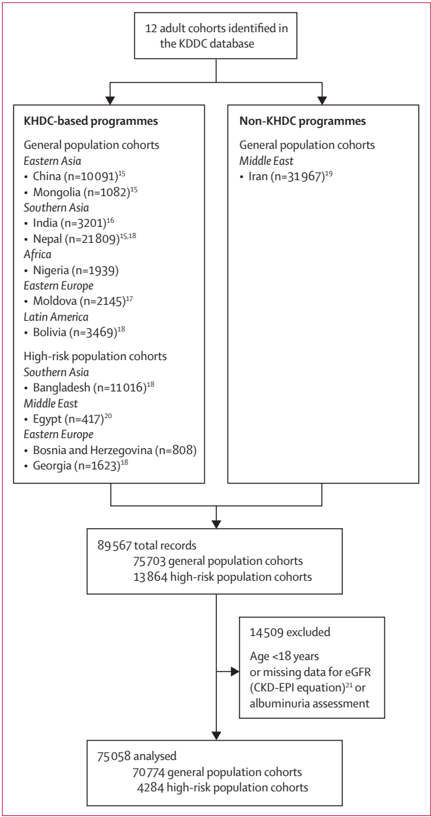
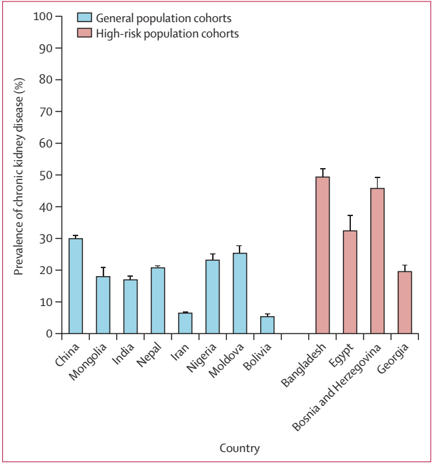
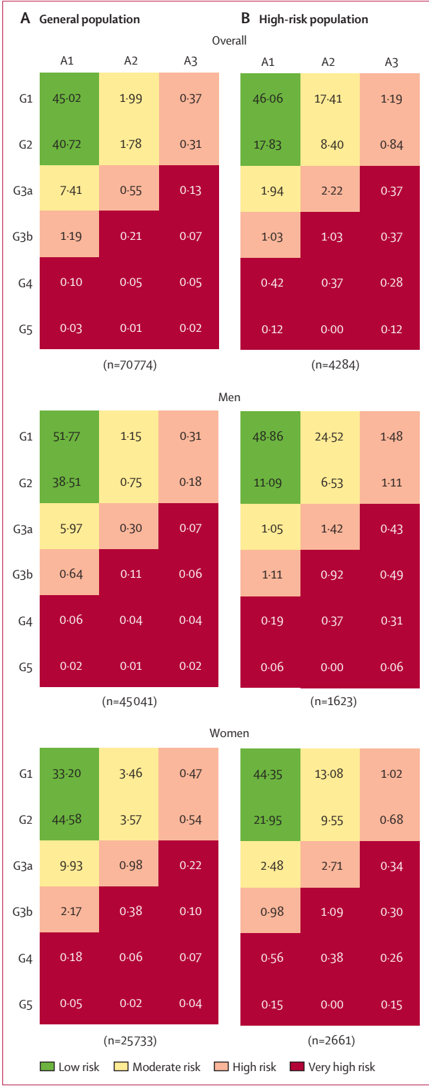
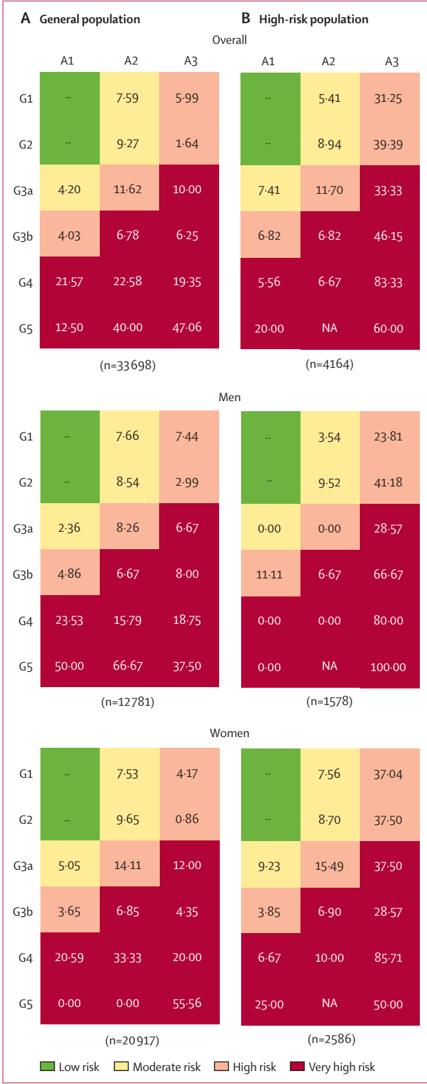
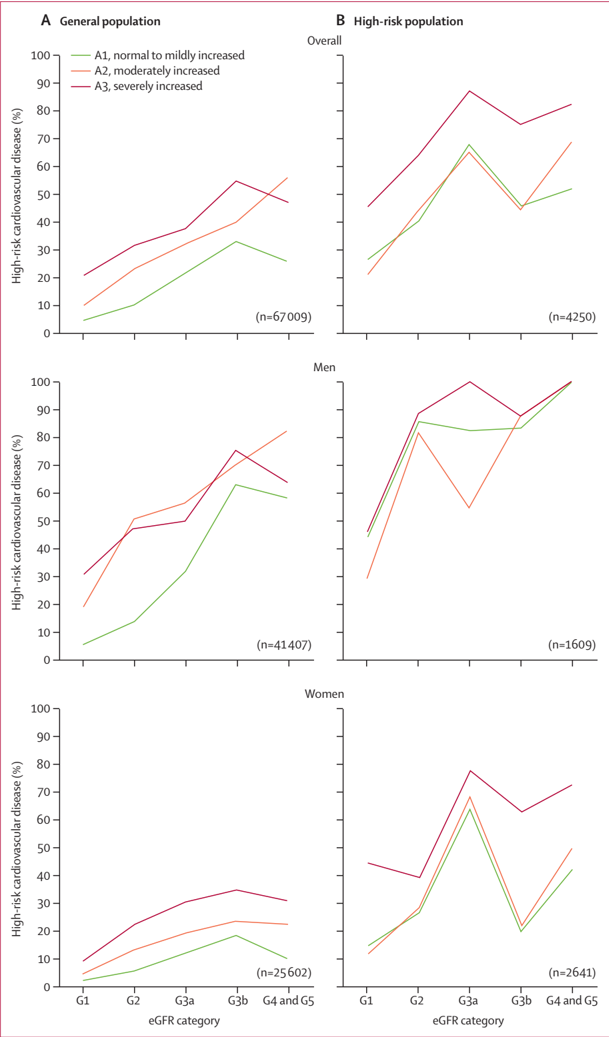
BACKGROUND: Chronic kidney disease is an important cause of global mortality and morbidity. Data for epidemiological features of chronic kidney disease and its risk factors are limited for low-income and middle-income countries. The International Society of Nephrology's Kidney Disease Data Center (ISN-KDDC) aimed to assess the prevalence and awareness of chronic kidney disease and its risk factors, and to investigate the risk of cardiovascular disease, in countries of low and middle income. METHODS: We did a cross-sectional study in 12 countries from six world regions: Bangladesh, Bolivia, Bosnia and Herzegovina, China, Egypt, Georgia, India, Iran, Moldova, Mongolia, Nepal, and Nigeria. We analysed data from screening programmes in these countries, matching eight general and four high-risk population cohorts collected in the ISN-KDDC database. High-risk cohorts were individuals at risk of or with a diagnosis of either chronic kidney disease, hypertension, diabetes, or cardiovascular disease. Participants completed a self-report questionnaire, had their blood pressure measured, and blood and urine samples taken. We defined chronic kidney disease according to modified KDIGO (Kidney Disease: Improving Global Outcomes) criteria; risk of cardiovascular disease development was estimated with the Framingham risk score. FINDINGS: 75,058 individuals were included in the study. The prevalence of chronic kidney disease was 14·3% (95% CI 14·0-14·5) in general populations and 36·1% (34·7-37·6) in high-risk populations. Overall awareness of chronic kidney disease was low, with 409 (6%) of 6631 individuals in general populations and 150 (10%) of 1524 participants from high-risk populations aware they had chronic kidney disease. Moreover, in the general population, 5600 (44%) of 12,751 individuals with hypertension did not know they had the disorder, and 973 (31%) of 3130 people with diabetes were unaware they had that disease. The number of participants at high risk of cardiovascular disease, according to the Framingham risk score, was underestimated compared with KDIGO guidelines. For example, all individuals with chronic kidney disease should be considered at high risk of cardiovascular disease, but the Framingham risk score detects only 23% in the general population, and only 38% in high-risk cohorts. INTERPRETATION: Prevalence of chronic kidney disease was high in general and high-risk populations from countries of low and middle income. Moreover, awareness of chronic kidney disease and other non-communicable diseases was low, and a substantial number of individuals who knew they were ill did not receive treatment. Prospective programmes with repeat testing are needed to confirm the diagnosis of chronic kidney disease and its risk factors. Furthermore, in general, health-care workforces in countries of low and middle income need strengthening. FUNDING: International Society of Nephrology.
Overview
The claims and statistics of this paper haven’t been checked yet.
Free: it reads the open-access text and checks the first 5 claims that cite a source we can check. Create a free account to check every claim.
Integrity signals
Registry
Cites
Statistics
Figures
Verification
Claims the paper makes
The claims and statistics of this paper haven’t been checked yet.
Free: it reads the open-access text and checks the first 5 claims that cite a source we can check. Create a free account to check every claim.
Self-check
Percentages, sums and reported differences re-computed from the paper’s own numbers.
The self-check needs the paper’s full text.
Citations
Cites
A New Equation to Estimate Glomerular Filtration Rate
Levey, A. S., Stevens, L. A., Schmid, C. H., Zhang, Y. (., Castro, A. F., Feldman, H. I., Kusek, J. W., Eggers, P., Van Lente, F., Greene, T., et al. (2009) · Annals of Internal Medicine · doi:10.7326/0003-4819-150-9-200905050-00006 · Cited by 25,603
Chobanian, A. V. (2003) · JAMA · doi:10.1001/jama.289.19.2560 · Cited by 25,386
Obesity : Preventing and managing the global epidemic
Akram, D. S., Astrup, A. V., Atinmo, T., Boissin, J.-L., Bray, G. A., Carroll, K. N., Chitson, P., Chen, C., Dietz, W. H., Hill, J. O., et al. (2000) · Research at the University of Copenhagen (University of Copenhagen) · Cited by 12,945
(2004) · The Lancet · doi:10.1016/s0140-6736(03)15268-3 · Cited by 12,717
KDIGO 2024 clinical practice guideline for the evaluation and management of chronic kidney disease
Stevens, P. E., Ahmed, S. B., Carrero, J. J., Foster, B., Francis, A., Hall, R. K., Herrington, W. G., Hill, G., Inker, L. A., Kazancıoğlu, R., et al. (2024) · Kidney International · doi:10.1016/j.kint.2023.10.018 · Cited by 8,530
Self-citationGeneral Cardiovascular Risk Profile for Use in Primary Care: The Framingham Heart Study
D’Agostino, R. B., Vasan, R. S., Pencina, M. J., Wolf, P. A., Cobain, M., Massaro, J. M., & Kannel, W. B. (2008) · Circulation · doi:10.1161/circulationaha.107.699579 · Cited by 7,491
Vos, T., Barber, R. M., Bell, B., Bertozzi-Villa, A., Biryukov, S., Bolliger, I., Charlson, F., Davis, A., Degenhardt, L., Dicker, D., et al. (2015) · The Lancet · doi:10.1016/s0140-6736(15)60692-4 · Cited by 6,414
Self-citationChronic kidney disease: global dimension and perspectives
Jha, V., Garcia-Garcia, G., Iseki, K., Li, Z., Naicker, S., Plattner, B., Saran, R., Wang, A. Y.-M., & Yang, C.-W. (2013) · The Lancet · doi:10.1016/s0140-6736(13)60687-x · Cited by 4,383
Sarnak, M. J., Levey, A. S., Schoolwerth, A. C., Coresh, J., Culleton, B., Hamm, L. L., McCullough, P. A., Kasiske, B. L., Kelepouris, E., Klag, M. J., et al. (2003) · Circulation · doi:10.1161/01.cir.0000095676.90936.80 · Cited by 3,768
Cited by
Vos, T., Lim, S. S., Abbafati, C., Abbas, K. M., Abbasi, M., Abbasifard, M., Abbasi-Kangevari, M., Abbastabar, H., Abd-Allah, F., Abdelalim, A., et al. (2020) · The Lancet · doi:10.1016/s0140-6736(20)30925-9 · Cited by 19,358
Bikbov, B., Purcell, C. A., Levey, A. S., Smith, M., Abdoli, A., Abebe, M., Adebayo, O. M., Afarideh, M., Agarwal, S. K., Agudelo-Botero, M., et al. (2020) · The Lancet · doi:10.1016/s0140-6736(20)30045-3 · Cited by 6,648
“Different research groups have reviewed the prevalence of and mortality from CKD in Africa, 6 Asia, 7–10 Australia, 3 Europe, 11 Latin America, 12 North America, 13 and several geographically dispersed dev el-oping countries, 14 and confirmed the high burden of this disease.”
BackgroundSelf-citationKalantar-Zadeh, K., Jafar, T. H., Nitsch, D., Neuen, B. L., & Perkovic, V. (2021) · The Lancet · doi:10.1016/s0140-6736(21)00519-5 · Cited by 1,461
Romagnani, P., Remuzzi, G., Glassock, R., Levin, A., Jager, K. J., Tonelli, M., Massy, Z., Wanner, C., & Anders, H.-J. (2017) · Nature Reviews Disease Primers · doi:10.1038/nrdp.2017.88 · Cited by 996
Self-citationA catalog of genetic loci associated with kidney function from analyses of a million individuals
Study, L. C., Wuttke, M., Program, V. A. M. V., Li, Y., Li, M., Sieber, K. B., Feitosa, M. F., Gorski, M., Tin, A., Wang, L., et al. (2019) · Nature Genetics · doi:10.1038/s41588-019-0407-x · Cited by 846
The Global Epidemiology of Diabetes and Kidney Disease
Koye, D. N., Magliano, D. J., Nelson, R. G., & Pavkov, M. E. (2018) · Advances in Chronic Kidney Disease · doi:10.1053/j.ackd.2017.10.011 · Cited by 686
The global burden of chronic kidney disease: estimates, variability and pitfalls
Glassock, R. J., Warnock, D. G., & Delanaye, P. (2017) · Nature Reviews Nephrology · doi:10.1038/nrneph.2016.163 · Cited by 511
Evans, M., Lewis, R. D., Morgan, A. R., Whyte, M. B., Hanif, W., Bain, S. C., Davies, S., Dashora, U., Yousef, Z., Patel, D. C., et al. (2022) · Advances in Therapy · doi:10.1007/s12325-021-01927-z · Cited by 310
“Worldwide, only 6% of the general population and 10% of the high-risk population are aware of their CKD statuses [1].”
BackgroundSabanayagam, C., Xu, D., Ting, D. S. W., Nusinovici, S., Banu, R., Hamzah, H., Lim, C., Tham, Y.-C., Cheung, C. Y., Tai, E. S., et al. (2020) · The Lancet Digital Health · doi:10.1016/s2589-7500(20)30063-7 · Cited by 279
Kidney damage causally affects the brain cortical structure: A Mendelian randomization study
Chen, X., Kong, J., Pan, J., Huang, K., Zhou, W., Diao, X., Cai, J., Zheng, J., Yang, X., Xie, W., et al. (2021) · eBioMedicine · doi:10.1016/j.ebiom.2021.103592 · Cited by 267
“Chronic kidney disease (CKD) affects approximately 10% of the global population and has a high mortality rate [1-3], thereby imposing a great burden on global health [4,5].”
BackgroundGlobal Cardiovascular and Renal Outcomes of Reduced GFR
Thomas, B., Matsushita, K., Abate, K. H., Al-Aly, Z., Ärnlöv, J., Asayama, K., Atkins, R., Badawi, A., Ballew, S. H., Banerjee, A., et al. (2017) · Journal of the American Society of Nephrology · doi:10.1681/asn.2016050562 · Cited by 266
Self-citationAshuntantang, G., Osafo, C., Olowu, W. A., Arogundade, F., Niang, A., Porter, J., Naicker, S., & Luyckx, V. A. (2017) · The Lancet Global Health · doi:10.1016/s2214-109x(17)30057-8 · Cited by 251
Bikbov, B., Perico, N., Remuzzi, G., & on behalf of the GBD Genitourinary Diseases Expert Group (2018) · Nephron · doi:10.1159/000489897 · Cited by 259
Self-citationRomagnani, P., Agarwal, R., Chan, J. C. N., Levin, A., Kalyesubula, R., Karam, S., Nangaku, M., Rodríguez-Iturbe, B., & Anders, H.-J. (2025) · Nature Reviews Disease Primers · doi:10.1038/s41572-024-00589-9 · Cited by 184
Sustainable Development Goals relevant to kidney health: an update on progress
Luyckx, V. A., Al-Aly, Z., Bello, A. K., Bellorin-Font, E., Carlini, R. G., Fabian, J., Garcia-Garcia, G., Iyengar, A., Sekkarie, M., van Biesen, W., et al. (2021) · Nature Reviews Nephrology · doi:10.1038/s41581-020-00363-6 · Cited by 221
Self-citationChronic kidney disease in low-income to middle-income countries: the case for increased screening
George, C., Mogueo, A., Okpechi, I., Echouffo-Tcheugui, J. B., & Kengne, A. P. (2017) · BMJ Global Health · doi:10.1136/bmjgh-2016-000256 · Cited by 223
“There is therefore already an opportunity to implement community-based CKD screening as a by-product of existing programmes for chronic infectious diseases, or to use such programmes to inform those of CKD.”
BackgroundInfluentialMurton, M., Goff-Leggett, D., Bobrowska, A., Garcia Sanchez, J. J., James, G., Wittbrodt, E., Nolan, S., Sörstadius, E., Pecoits-Filho, R., & Tuttle, K. (2021) · Advances in Therapy · doi:10.1007/s12325-020-01568-8 · Cited by 182
“These numbers are broadly consistent with those of a recent cross-sectional study that evaluated the global prevalence of CKD stratified by the KDIGO 2012 categories based on the results of general population CKD screening programmes performed in China, Mongolia, India, Nepal, Iran, Nigeria, Moldova and Bolivia [39].”
ResultPrevalence of chronic kidney disease in South Asia: a systematic review
Hasan, M., Sutradhar, I., Gupta, R. D., & Sarker, M. (2018) · BMC Nephrology · doi:10.1186/s12882-018-1072-5 · Cited by 176
“However, awareness on different non-communicable diseases like diabetes, hypertension and CKD is very little among South Asian people and people usually do not seek health care until any sign or symptom of CKD appears [44, 45, 51].”
BackgroundCoresh, J. (2017) · Journal of the American Society of Nephrology · doi:10.1681/asn.2016121374 · Cited by 172
The Impact of Kidney Development on the Life Course: A Consensus Document for Action
The Low Birth Weight and Nephron Number Working Group (2017) · Nephron · doi:10.1159/000457967 · Cited by 164
Lee, H.-J., & Son, Y. (2021) · International Journal of Environmental Research and Public Health · doi:10.3390/ijerph18073471 · Cited by 174
Diabetic kidney disease: An overview of prevalence, risk factors, and biomarkers
Hussain, S., Jamali, M. C., Habib, A., Hussain, M. S., Akhtar, M., & Najmi, A. K. (2020) · Clinical Epidemiology and Global Health · doi:10.1016/j.cegh.2020.05.016 · Cited by 207
Prevalência de doença renal crônica em adultos no Brasil: revisão sistemática da literatura
Marinho, A. W. G. B., Penha, A. D. P., Silva, M. T., & Galvão, T. F. (2017) · Cadernos Saúde Coletiva · doi:10.1590/1414-462x201700030134 · Cited by 282
Roberti, J. E., Cummings, A. J., Myall, M., Harvey, J. M., Lippiett, K. A., Hunt, K. J., Cicora, F., Alonso, J. P., & May, C. R. (2018) · BMJ Open · doi:10.1136/bmjopen-2018-023507 · Cited by 181
“Worldwide, about 500 million people are affected by CKD; about 80% of these live in low-income and middle-income countries (LMIC); an estimated 3 million people with end-stage kidney disease (ESKD) receive renal replacement therapy (RRT) with either dialysis or transplantation.(1) 7 8 The number of people receiving RR…”
BackgroundKidney health for everyone everywhere—from prevention to detection and equitable access to care
Li, P. K.-T., Garcia-Garcia, G., Lui, S.-F., Andreoli, S., Fung, W. W.-S., Hradsky, A., Kumaraswami, L., Liakopoulos, V., Rakhimova, Z., Saadi, G., et al. (2020) · Kidney International · doi:10.1016/j.kint.2019.12.002 · Cited by 110
Self-citationChronic Kidney Disease in India: A Clarion Call for Change
Varughese, S., & Abraham, G. (2018) · Clinical Journal of the American Society of Nephrology · doi:10.2215/cjn.09180817 · Cited by 145
“The reported prevalence of CKD in different regions ranges from ,1% to 13%, and recently, data from the International Society of Nephrology’s Kidney Disease Data Center Study reported a prevalence of 17% (4).”
BackgroundSelf-citationKidney Organoids: A Translational Journey
Morizane, R., & Bonventre, J. V. (2017) · Trends in Molecular Medicine · doi:10.1016/j.molmed.2017.01.001 · Cited by 138
“adult population and the six regions of the world [8, 9].”
BackgroundThe Biological Role of Klotho Protein in the Development of Cardiovascular Diseases
Olejnik, A., Franczak, A., Krzywonos‐Zawadzka, A., Kałużna‐Oleksy, M., & Bil‐Lula, I. (2018) · BioMed Research International · doi:10.1155/2018/5171945 · Cited by 146
“It has become clear that CKD is associated with the cardiovascular episodes, so the repletion of Klotho synthesis could provide renal protection and thus counteracts the accidents of cardiovascular mortality [78, 79].”
BackgroundLi, J., Lin, Q., Shao, X., Li, S., Zhu, X., Wu, J., Mou, S., Gu, L., Wang, Q., Zhang, M., et al. (2023) · Cell Death and Disease · doi:10.1038/s41419-023-05587-5 · Cited by 146
Flavonoids on diabetic nephropathy: advances and therapeutic opportunities
Hu, Q., Qu, C., Xiao, X., Zhang, W., Jiang, Y., Wu, Z., Song, D., Peng, X., Ma, X., & Zhao, Y. (2021) · Chinese Medicine · doi:10.1186/s13020-021-00485-4 · Cited by 139
Joshi, U., Subedi, R., Poudel, P., Ghimire, P. R., Panta, S., & Sigdel, M. R. (2017) · International Journal of Nephrology and Renovascular Disease · doi:10.2147/ijnrd.s136522 · Cited by 148
Chronic kidney disease epidemic: How do we deal with it?
Ng, J. K., & Li, P. K. (2018) · Nephrology · doi:10.1111/nep.13464 · Cited by 121
“The overall CKD awareness among general population and even high cardiovascular risk groups across 12 low-income and middle-income countries was less than 10%.(15) In Hong Kong, we found that less than half of citizens were aware that hypertension and diabetes, the major causes of ESRD, could damage kidney function.”
BackgroundJha, V., Arıcı, M., Collins, A. J., García-García, G., Hemmelgarn, B. R., Jafar, T. H., Pecoits‐Filho, R., Solá, L., Swanepoel, C. R., Tchokhonelidze, I., et al. (2016) · Kidney International · doi:10.1016/j.kint.2016.09.009 · Cited by 114
Self-citationComparative Analysis for Prediction of Kidney Disease Using Intelligent Machine Learning Methods
Ifraz, G. M., Rashid, M. H., Tazin, T., Bourouis, S., & Khan, M. M. (2021) · Computational and Mathematical Methods in Medicine · doi:10.1155/2021/6141470 · Cited by 113
“Gazi Mohammed Ifraz ,1 Muhammad Hasnath Rashid ,1 Tahia Tazin ,1 Sami Bourouis ,2 and Mohammad Monirujjaman Khan 1 1Department of Electrical and Computer Engineering, North South University, Bashundhara, Dhaka 1229, Bangladesh 2Department of Information Technology, College of Computers and Information Technology, Taif…”
BackgroundInfluentialRetractedHouben, E., Penne, E. L., Voskuyl, A. E., van der Heijden, J. W., Otten, R. H. J., Boers, M., & Hoekstra, T. (2017) · Rheumatology · doi:10.1093/rheumatology/kex338 · Cited by 97
Chronic Kidney Disease Burden in Low-Resource Settings: Regional Perspectives
Ulasi, I., Awobusuyi, O., Nayak, S., Ramachandran, R., Musso, C. G., Depine, S. A., Aroca, G., Solarin, A. U., Onuigbo, M. A. C., Luyckx, V. A., et al. (2022) · Seminars in Nephrology · doi:10.1016/j.semnephrol.2023.151336 · Cited by 95
Self-citationFeng, X., Hou, N., Chen, Z., Liu, J., Li, X., Sun, X., & Liu, Y. (2023) · BMJ Open · doi:10.1136/bmjopen-2022-064540 · Cited by 100
Mind the gap in kidney care: translating what we know into what we do
Luyckx, V. A., Tuttle, K. R., Abdellatif, D. A., Correa‐Rotter, R., Fung, W. W., Haris, A., Hsiao, L., Khalife, M., Kumaraswami, L. A., Loud, F. C., et al. (2024) · Kidney International · doi:10.1016/j.kint.2023.12.003 · Cited by 99
Self-citationFilippatos, G. S., Anker, S. D., Pitt, B., Rossing, P. R., Joseph, A., Kolkhof, P., Lambelet, M., Lawatscheck, R., Bakris, G. L., Ruilope, L. M., et al. (2022) · JACC Heart Failure · doi:10.1016/j.jchf.2022.07.013 · Cited by 95
Suriyong, P., Ruengorn, C., Shayakul, C., Anantachoti, P., & Kanjanarat, P. (2022) · PLoS ONE · doi:10.1371/journal.pone.0264393 · Cited by 100
Global health inequalities of chronic kidney disease: a meta-analysis
Duff, R., Awofala, O., Arshad, M. T., Lambourg, E. J., Gallacher, P. J., Dhaun, N., & Bell, S. (2024) · Nephrology Dialysis Transplantation · doi:10.1093/ndt/gfae048 · Cited by 88
“Five studies [2 , 24 , 39 , 109 , 122 ] had divided their population, and the separate populations were included as separate estimates, resulting in 127 estimates, comprising 29 159 948 participants.”
Incorporating neglected non-communicable diseases into the national health program—A review
Bhattacharya, S., Heidler, P., & Varshney, S. (2023) · Frontiers in Public Health · doi:10.3389/fpubh.2022.1093170 · Cited by 85
Dialysis Care and Dialysis Funding in Asia
Tang, S. C. W., Yu, X., Chen, H. C., Kashihara, N., Park, H. C., Liew, A., Goh, B. L., Nazareth, M. G. C., Bunnag, S., Tan, J. C., et al. (2019) · American Journal of Kidney Diseases · doi:10.1053/j.ajkd.2019.08.005 · Cited by 77
Self-citationPreventing CKD in Low- and Middle-Income Countries: A Call for Urgent Action
Ameh, O. I., Ekrikpo, U. E., & Kengne, A. P. (2019) · Kidney International Reports · doi:10.1016/j.ekir.2019.12.013 · Cited by 79
“Unlike in high-income countries where prevalence rates are relatively homogeneous, rates are rather heterogeneous in LMICs, varying as widely as between 5.5% in Bolivia and 29.9% in China.8 Although variability in prevalence can be explained by different sample population characteristics as well as a nonuniform defini…”
BackgroundInfluentialIatridi, F., Carrero, J. J., Gall, É. C.-L., Kanbay, M., Luyckx, V. A., Shroff, R. C., & Ferro, C. J. (2024) · Nephrology Dialysis Transplantation · doi:10.1093/ndt/gfae209 · Cited by 91
“European health-care systems, as in other parts of the world, are affected by a severe under-recognition of CKD [5 , 31 –34 ].”
The Landscape of Diabetic Kidney Disease in the United States
Duru, O. K., Middleton, T. R., Tewari, M. K., & Norris, K. C. (2018) · Current Diabetes Reports · doi:10.1007/s11892-018-0980-x · Cited by 82
Wang, W., Liang, S., Zhu, F.-L., Liu, J., Wang, S., Chen, X., & Cai, G. (2019) · Clinical Interventions in Aging · doi:10.2147/cia.s203186 · Cited by 83
“5%, or use of antidiabetic drugs.(26) This study was conducted in accordance with the Declaration of Helsinki.”
ResultLimited Knowledge of Chronic Kidney Disease among Type 2 Diabetes Mellitus Patients in India
Hussain, S., Habib, A., & Najmi, A. K. (2019) · International Journal of Environmental Research and Public Health · doi:10.3390/ijerph16081443 · Cited by 80
“A global cross-sectional study done in six regions (Eastern Asia, Southern Asia, Middle East, Africa, Eastern Europe, and Latin America) found only 6% of the public to be aware of CKD [26].”
Backgroundthe Ilorin Renal Study Group, Olanrewaju, T. O., Aderibigbe, A., Popoola, A. A., Braimoh, K. T., Buhari, M., Olanrewaju, T. O., Kuranga, S. A., Biliaminu, S. A., Adindu, C., et al. (2020) · BMC Nephrology · doi:10.1186/s12882-020-02126-8 · Cited by 82
Pascoe, M. C., Thompson, D. R., Castle, D. J., McEvedy, S. M., & Ski, C. F. (2017) · Frontiers in Psychology · doi:10.3389/fpsyg.2017.00992 · Cited by 75
“The worldwide prevalence of CKD is 8–16% (Ene-Iordache et al., 2016).”
BackgroundAlaini, A., Malhotra, D. K., Rondon‐Berrios, H., Argyropoulos, C., Khitan, Z. J., Raj, D. S., Rohrscheib, M. R., Shapiro, J. I., & Tzamaloukas, A. H. (2017) · World Journal of Methodology · doi:10.5662/wjm.v7.i3.73 · Cited by 75
Mesoamerican Nephropathy (MeN): What We Know so Far
Polo, V. S., Gárcía-Trabanino, R., Rodriguez, G., & Madero, M. (2020) · International Journal of Nephrology and Renovascular Disease · doi:10.2147/ijnrd.s270709 · Cited by 68
Prevalence of chronic kidney disease in Bangladesh: a systematic review and meta-analysis
Banik, S., & Ghosh, A. (2020) · International Urology and Nephrology · doi:10.1007/s11255-020-02597-6 · Cited by 82
Unmet Needs of CKD in Latin America: A Review from Expert Virtual Working Group
Correa‐Rotter, R., Durán, A. M., Vallejos, A. C., Rico-Fontalvo, J. E., Cusumano, A. M., Rosa-Diez, G. J., Polo, V. S., Helmuth Goecke, S., Arango, J. J., Villavicencio-Cerón, V., et al. (2023) · Kidney International Reports · doi:10.1016/j.ekir.2023.02.1082 · Cited by 79
“Worldwide, only 6% of the general population and 10% of the high-risk population are aware of their CKD status.(16) In LatAm, CKD is one of the fastest-growing noncommunicable diseases.”
BackgroundTalukdar, R., Ajayan, R., Gupta, S., Biswas, S., Parveen, M., Sadhukhan, D., Sinha, A., & Parameswaran, S. (2025) · Nephrology · doi:10.1111/nep.14420 · Cited by 80
“Out of the 18 studies, 16 used a single equation in GFR estimation: MDRD—eight studies [40, 41, 45–48, 50, 51] and CKD-Epi—nine studies [36, 37, 42–44, 49, 52, 53].”
Prevalence of hypertension in older people in Africa: a systematic review and meta-analysis
Kaze, A. D., Schutte, A. E., Erqou, S., Kengne, A. P., & Echouffo-Tcheugui, J. B. (2017) · Journal of Hypertension · doi:10.1097/hjh.0000000000001345 · Cited by 56
“Moreover, in Africa, life expectancy at birth has increased by approximately 20 years between 1980 and 2015 and is projected to reach 69 years by 2050 [10].”
Hernández, D., Alonso-Titos, J., Armas-Padrón, A. M., Esteban, P. R., Cabello, M., López, V., Fuentes, L., Jironda, C., Ros, S., Jiménez, T., et al. (2018) · Kidney & Blood Pressure Research · doi:10.1159/000487684 · Cited by 65
Bradshaw, C., Gracious, N., Narayanan, R., Narayanan, S., Safeer, M., Nair, G. M., Murlidharan, P., Sundaresan, A., Santhi, S. R., Prabhakaran, D., et al. (2018) · Kidney International Reports · doi:10.1016/j.ekir.2018.12.007 · Cited by 66
“Missing 83 (23) 7 (8) 22 (14) 22 (9) 134 (16)”
InfluentialKidney organoids in translational medicine: Disease modeling and regenerative medicine
Miyoshi, T., Hiratsuka, K., Saiz, E. G., & Morizane, R. (2019) · Developmental Dynamics · doi:10.1002/dvdy.22 · Cited by 60
Game of Attitudes: educational gerontotechnology for the elderly undergoing haemodialysis
Lucca, D. C., Hammerschmidt, K. S. D. A., Girondi, J. B. R., Fernandez, D. L. R., de Carvalho, A. A., Rosa, S. D. S. D., & Martins, B. D. (2020) · Revista Brasileira de Enfermagem · doi:10.1590/0034-7167-2018-0694 · Cited by 55
“In developing countries, prevalence data are limited and heterogeneous(6-7).”
BackgroundJafar, T. H., Ramakrishnan, C., John, O., Tewari, A., Cobb, B. T., Legido‐Quigley, H., Sungwon, Y., & Jha, V. (2020) · BMC Nephrology · doi:10.1186/s12882-020-1702-6 · Cited by 57
Broadening horizons in mechanisms, management, and treatment of diabetic kidney disease
Petrazzuolo, A., Sabiu, G., Assi, E., Maestroni, A., Pastore, I., Lunati, M. E., Montefusco, L. B., Loretelli, C., Rossi, G., Nasr, M. B., et al. (2023) · Pharmacological Research · doi:10.1016/j.phrs.2023.106710 · Cited by 56
“The probability of developing CKD in patients with diabetes, including both type 1 (T1D) and type 2 (T2D) diabetes, is estimated to be approximately 1.75 (95% CI: 1.62 – 1.89) [3], with a resulting mortality risk rising to 30% [4].”
InfluentialHe, P., Ye, Z., Liu, M., Li, H., Zhang, Y., Zhou, C., Wu, Q., Zhang, Y., Yang, S., Liu, C., et al. (2023) · Journal of Cachexia Sarcopenia and Muscle · doi:10.1002/jcsm.13180 · Cited by 55
Peng, S., Lu, T., Liu, Y., Li, Z., Liu, F., Sun, J., Chen, M., Wang, H., & Xiang, H. (2022) · Chemosphere · doi:10.1016/j.chemosphere.2022.133570 · Cited by 49
The Association Between Smoking and Renal Function in People Over 20 Years Old
Fu, Y., Xu, Z., Zhao, M., & Xu, K. (2022) · Frontiers in Medicine · doi:10.3389/fmed.2022.870278 · Cited by 57
Ma, Q., Gao, Y., Lu, J., Liu, X., Wang, R., Shi, Y., Liu, J., & Su, H. (2022) · Frontiers in Physiology · doi:10.3389/fphys.2022.901164 · Cited by 57
“It is a marker of kidney injury and a predictor of the disease process in CKD (Ene-Iordache et al., 2016).”
BackgroundThe global burden of reduced GFR: ESRD, CVD and mortality
Sharma, S., & Sarnak, M. J. (2017) · Nature Reviews Nephrology · doi:10.1038/nrneph.2017.84 · Cited by 56
Self-citationPoudyal, A., Karki, K. B., Shrestha, N., Aryal, K. K., Mahato, N. K., Bista, B., Ghimire, L., Dirghayu, K. C., Gyanwali, P., Jha, A. K., et al. (2022) · BMJ Open · doi:10.1136/bmjopen-2021-057509 · Cited by 62
Self-citationFan, J., Wang, L., Yang, T., Liu, J., Ge, W., Shen, J., & Wang, L. (2024) · Therapeutic Apheresis and Dialysis · doi:10.1111/1744-9987.14226 · Cited by 46
ABCDE to identify and prevent chronic kidney disease: a call to action
Ferro, C. J., Wanner, C., Luyckx, V. A., Stevens, K., Cerqueira, S. A., Darwish, R. A., Fernández‐Fernández, B., Fiel, D., Filev, R., Grieger, M., et al. (2025) · Nephrology Dialysis Transplantation · doi:10.1093/ndt/gfaf057 · Cited by 55
Wang, W., Liang, S., Zhu, F.-L., Liu, J., Chen, X., & Cai, G. (2019) · Annals of Palliative Medicine · doi:10.21037/apm.2019.10.12 · Cited by 48
Chronic kidney disease in Cameroon: a scoping review
Aseneh, J. B., Kemah, B., Mabouna, S., Njang, E., Ekaney, D. S. M., & Agbor, V. N. (2020) · BMC Nephrology · doi:10.1186/s12882-020-02072-5 · Cited by 45
“Chronic kidney disease disproportionately affects lowincome and middle-income countries (LMICs) with a prevalence that is 15% higher than that in high-income countries [3].”
BackgroundZhang, S., Ren, H., Du, R.-X., Sun, W.-L., Fu, M.-L., & Zhang, X.-C. (2023) · BMC Public Health · doi:10.1186/s12889-023-16130-8 · Cited by 53
“Nearly 10% of adults globally are being influenced by a variety of kidney diseases, however, firstly, as a “silent killer”, KD is often hardly detected at its early stage but can cause the lethal kidney failure in its late stage in both developed and developing countries [6, 7], besides, KD is diagnosed through bioche…”
BackgroundMonocyte lymphocyte ratio predicts the new-onset of chronic kidney disease: A cohort study
Zhang, M., Wang, K., Zheng, H., Zhao, X., Xie, S., & Liu, C. (2019) · Clinica Chimica Acta · doi:10.1016/j.cca.2019.11.021 · Cited by 48
Disease burden of chronic kidney disease due to hypertension from 1990 to 2019: a global analysis
Chen, A., Zou, M., Young, C. A., Zhu, W., Chiu, H.-C., Jin, G., & Tian, L. (2021) · Frontiers in Medicine · doi:10.3389/fmed.2021.690487 · Cited by 42
New Insights into Molecular Mechanisms of Chronic Kidney Disease
Frąk, W., Kućmierz, J., Szlagor, M., Młynarska, E., Rysz, J., & Franczyk, B. (2022) · Biomedicines · doi:10.3390/biomedicines10112846 · Cited by 48
“Unfortunately, both public and clinical awareness remains low [2,3].”
BackgroundDehghani, A., Alishavandi, S., Nouri-Majalan, N., Fallahzadeh, H., & Rahmanian, V. (2022) · BMC Nephrology · doi:10.1186/s12882-022-02832-5 · Cited by 47
“4% of low- and middle-income countries and the global population, respectively [2].”
BackgroundResultInfluentialClinical Application of Machine Learning Models for Early-Stage Chronic Kidney Disease Detection
Iftikhar, H., Hashem, A. F., Qureshi, M., & Rodrigues, P. C. (2025) · Diagnostics · doi:10.3390/diagnostics15202610 · Cited by 49
DASH and Mediterranean Diets as Nutritional Interventions for CKD Patients
Gallieni, M. A., & Cupisti, A. (2016) · American Journal of Kidney Diseases · doi:10.1053/j.ajkd.2016.09.001 · Cited by 47
Self-citationACE and SGLT2 inhibitors: the future for non-diabetic and diabetic proteinuric renal disease
Perico, N., Ruggenenti, P. L., & Remuzzi, G. (2017) · Current Opinion in Pharmacology · doi:10.1016/j.coph.2017.03.006 · Cited by 44
Self-citationShafi, S., & Shafi, T. (2017) · Pakistan Journal of Medical Sciences · doi:10.12669/pjms.334.12656 · Cited by 40
Orlandi, P., Huang, J. Y., Fukagawa, M., Hoy, W. E., Jha, V., Oh, K., Solá, L., Cockwell, P., Levin, A., Feldman, H. I., et al. (2019) · Kidney International · doi:10.1016/j.kint.2019.07.024 · Cited by 42
Kidney health for everyone everywhere – from prevention to detection and equitable access to care
Li, P. K., García-García, G., Lui, S., Andreoli, S. P., Fung, W. W., Hradsky, A., Kumaraswami, L. A., Liakopoulos, V., Rakhimova, Z., Saadi, G. E., et al. (2020) · Brazilian Journal of Medical and Biological Research · doi:10.1590/1414-431x20209614 · Cited by 48
Self-citationArtificial intelligence for early detection of diabetes mellitus complications via retinal imaging
Sobhi, N., Sadeghi-Bazargani, Y., Mirzaei, M., Abdollahi, M., Jafarizadeh, A., Pedrammehr, S., Alizadehsani, R., Tan, R.-S., Islam, S. M. S., & Acharya, U. R. (2025) · Journal of Diabetes & Metabolic Disorders · doi:10.1007/s40200-025-01596-7 · Cited by 39
Brazilian public policy for chronic kidney disease prevention: challenges and perspectives
Silva, P. A. B., Silva, L. B., Santos, J. F. G., & Soares, S. M. (2020) · Revista de Saúde Pública · doi:10.11606/s1518-8787.2020054001708 · Cited by 53
Analysis of malnutrition factors for inpatients with chronic kidney disease
Xi, W., Wu, C., Liang, Y.-L., Wang, L., & Cao, Y. (2023) · Frontiers in Nutrition · doi:10.3389/fnut.2022.1002498 · Cited by 38
Overcoming Barriers to Implementing New Therapies for Diabetic Kidney Disease: Lessons Learned
Neumiller, J. J., Alicic, R. Z., & Tuttle, K. R. (2021) · Advances in Chronic Kidney Disease · doi:10.1053/j.ackd.2021.02.001 · Cited by 43
Goncalves, G. M. R., & da Silva, E. N. (2018) · PLoS ONE · doi:10.1371/journal.pone.0203992 · Cited by 38
Abdissa, D. (2020) · International Journal of Nephrology and Renovascular Disease · doi:10.2147/ijnrd.s283161 · Cited by 37
Kitzler, T. M., & Chun, J. (2023) · Canadian Journal of Kidney Health and Disease · doi:10.1177/20543581231154185 · Cited by 35
Action plan for determining and monitoring the prevalence of chronic kidney disease
Coresh, J., Hu, J., Bello, A. K., Feldman, H. I., Fogo, A. B., Ganji, M. R., Harris, D. C. H., Levey, A. S., Okpechi, I. G., Stengel, B., et al. (2017) · Kidney International Supplements · doi:10.1016/j.kisu.2017.07.002 · Cited by 34
“Second, to improve CKD monitoring of underrepresented populations, it will be critical to establish registries of chronic dialysis and transplantation in all countries, and to establish registries for special CKD groups, such as children, patients with rare diseases, and patients with special etiologies of CKD.”
BackgroundInfluentialWang, M., Yang, L., Yang, J., & Wang, C. (2019) · BMC Complementary and Alternative Medicine · doi:10.1186/s12906-019-2524-6 · Cited by 40
Shi, L., Xue, Y., Yu, X., Wang, Y., Hong, T., Li, X., Ma, J., Zhu, D., & Mu, Y. (2024) · JMIR Public Health and Surveillance · doi:10.2196/54429 · Cited by 37
Serum Klotho, Cardiovascular Events, and Mortality in Nondiabetic Chronic Kidney Disease
Yang, K., Yang, J., Bi, X., Yu, Z., Xiao, T., Huang, Y., Liu, Y., Xiong, J., & Zhao, J. (2020) · Cardiorenal Medicine · doi:10.1159/000506380 · Cited by 36
Yang, L., Wu, X., Wang, Y., Wang, C., Hu, R., & Wu, Y. (2020) · BMC Nephrology · doi:10.1186/s12882-020-01816-7 · Cited by 36
The Potential Impact of Public Health Interventions in Preventing Kidney Disease
Joshi, R., John, O., & Jha, V. (2017) · Seminars in Nephrology · doi:10.1016/j.semnephrol.2017.02.004 · Cited by 42
Validation of the kidney failure risk equation for end-stage kidney disease in Southeast Asia
Wang, Y., Nguyen, F. N. H. L., Allen, J. C., Lew, J., Tan, N. C., & Jafar, T. H. (2019) · BMC Nephrology · doi:10.1186/s12882-019-1643-0 · Cited by 33
Dietary knowledge-attitude-practice status in hemodialysis patients: a latent profile analysis
Chen, Z., Xu, N., Chen, X., Zhang, X., Yin, S., Xiao, G., Luo, L., Liu, Q., & Su, C. (2024) · BMC Public Health · doi:10.1186/s12889-024-18066-z · Cited by 35
Chronic Kidney Disease of Unknown Origin: A Mysterious Epidemic
Paidi, G., Jayarathna, A. I., Salibindla, D. B. A. M. R., Amirthalingam, J., Karpinska-Leydier, K., Alshowaikh, K., & Ergin, H. E. (2021) · Cureus · doi:10.7759/cureus.17132 · Cited by 31
“The prevalence of CKD is disproportionately high in lower and middle-income economically developing countries as compared to high-income developed countries (>15% higher) [3].”
BackgroundSex differences in chronic kidney disease prevalence in Asia: a systematic review and meta-analysis
Hockham, C., Bao, L., Tiku, A., Badve, S. V., Bello, A. K., Jardine, M., Jha, V., Toyama, T., Woodward, M., & Jun, M. (2022) · Clinical Kidney Journal · doi:10.1093/ckj/sfac030 · Cited by 34
Metadata
- Authors
- Ene-Iordache, B., Perico, N., Bikbov, B., Carminati, S., Remuzzi, A., Perna, A., Islam, N., Bravo, R. F., Aleckovic-Halilovic, M., Zou, H., Zhang, L., Gouda, Z., Tchokhonelidze, I., Abraham, G., Mahdavi-Mazdeh, M., Gallieni, M., Codreanu, I., Togtokh, A., Sharma, S. K., Koirala, P., Uprety, S., Ulasi, I., & Remuzzi, G.
- Affiliations
- Mario Negri Institute for Pharmacological Research (IT)
- Russian University of Medicine (RU)
- University of Bergamo (IT)
- North East Medical College (BD)
- Third Affiliated Hospital of Southern Medical University (CN)
- Peking University (CN)
- General Organization For Teaching Hospitals and Institutes (EG)
- Tbilisi State Medical University (GE)
- University of Milan (IT)
- B.P. Koirala Institute of Health Sciences (NP)
- University of Nigeria (NG)
- ORCID
- Venue
- The Lancet Global Health
- Publisher
- Elsevier BV
- Published
- 2016-05
- Volume
- 4
- Issue
- 5
- Pages
- e307-e319
- ISSN
- 2214-109X (ISSN-L)
- OpenAlex
- W2337136207
- Semantic Scholar
- fcc19f7c1ca48bb34f94c8045226d18c5dff37fe
- Cited by
- 627
- References
- 56
- Citations by year
- 2026: 34 · 2025: 72 · 2024: 94 · 2023: 97 · 2022: 63 · 2021: 61 · 2020: 90 · 2019: 42 · 2018: 34 · 2017: 31 · 2016: 8
- FWCI
- 38.56
- Type
- journal article
- Language
- en
- Open access
- gold
- doi.org
- Licence
- cc-by-nc-nd
- www.elsevier.com/tdm/userlicense/1.0/ (tdm)
- creativecommons.org/licenses/by-nc-nd/4.0/ (vor)
- Locations
- The Lancet Global Health (publishedVersion, cc-by-nc-nd)
- PubMed (publishedVersion)
- Bushehr University of Medical Sciences Repository (Bushehr University of Medical Sciences) (acceptedVersion)
- Archivio Istituzionale della Ricerca (Universita Degli Studi Di Milano) (submittedVersion, other-oa)
- Aisberg (University of Bergamo) (submittedVersion, cc-by-nc-nd)
- DOAJ (DOAJ: Directory of Open Access Journals) (submittedVersion)
- Funders
- International Society of Nephrology
- Topics
- Health Sciences › Medicine › Nephrology › Chronic Kidney Disease and Diabetes
- Health Sciences › Medicine › Nephrology › Dialysis and Renal Disease Management
- Health Sciences › Medicine › Cardiology and Cardiovascular Medicine › Blood Pressure and Hypertension Studies
- Keywords
- chronic kidney disease, cardiovascular risk, prevalence, disease awareness, hypertension, diabetes mellitus, Framingham risk score, KDIGO criteria, low- and middle-income countries, cardiovascular disease, screening programs, vulnerable populations, risk underestimation, global health disparities, blood pressure, urinary biomarkers, morbidity
- MeSH terms
- Adult, Aged, Awareness, Bangladesh, Bolivia, Cardiovascular Diseases, China, Cross-Sectional Studies, Diabetes Mellitus, Egypt, Female, Georgia (Republic), Humans, Hypertension, India, Iran, Health Knowledge, Attitudes, Practice, Male, Mass Screening, Middle Aged, Moldova, Mongolia, Nepal, Nigeria, Surveys and Questionnaires, Risk Factors, Cohort Studies, Prevalence, Bosnia and Herzegovina, Renal Insufficiency, Chronic
About these checks
Registry, retraction, Cites and statistics results are computed, not judged, with one exception: a printed reference that no index lists is read once by a model before it counts as a citation error. Claims are extracted by a model and kept only when their quote appears verbatim in the text; each cited source is then checked, with a model’s help, for whether it says what the claim relies on. Those verdicts can be wrong — read the claim’s quote and the cited source before relying on one.
Statistics and arithmetic are recomputed, not judged.
Confidence bands are shown only for fields calibrated on our annotated test set. None is calibrated yet, so no band is shown.
What counts as a claim ›How we measure confidence ›How we check this ›
Are you an author, or do you see a problem with this page? Request a review
Data sources
Bibliographic data: Semantic Scholar, OpenAlex, Crossref.
Contains information from the Semantic Scholar Academic Graph Datasets, made available under the ODC Attribution License (ODC-BY 1.0).
Semantic Scholar’s data is described in: Kinney, R., et al. (2023). The Semantic Scholar Open Data Platform. arXiv:2301.10140.
