

Chronic kidney disease and cardiovascular risk in six regions of the world (ISN-KDDC): a cross-sectional study
Open accessThe DOI matches its Crossref record; 56 of the 56 references it cites were found in a registry or an index.
Abstract
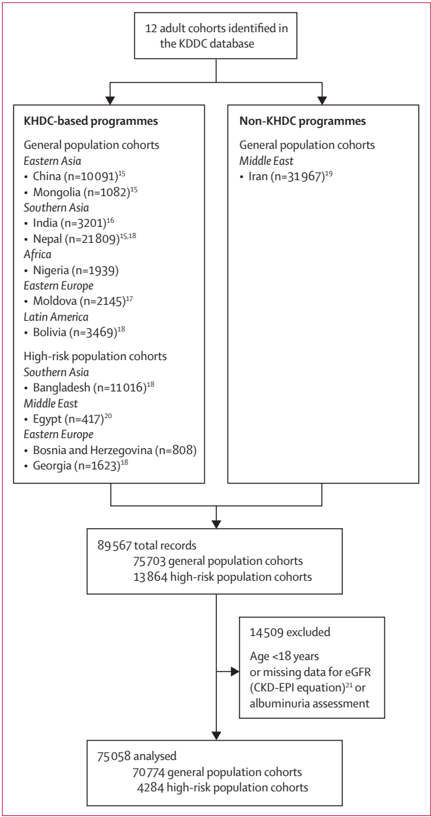
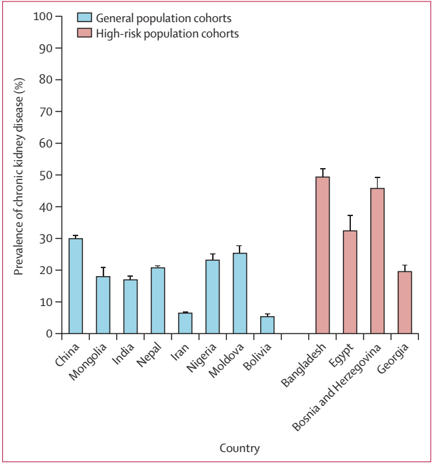
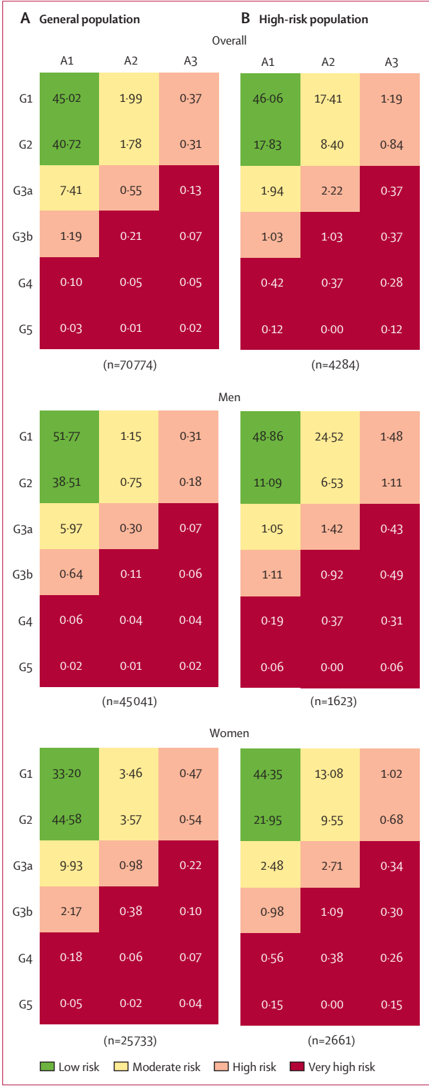
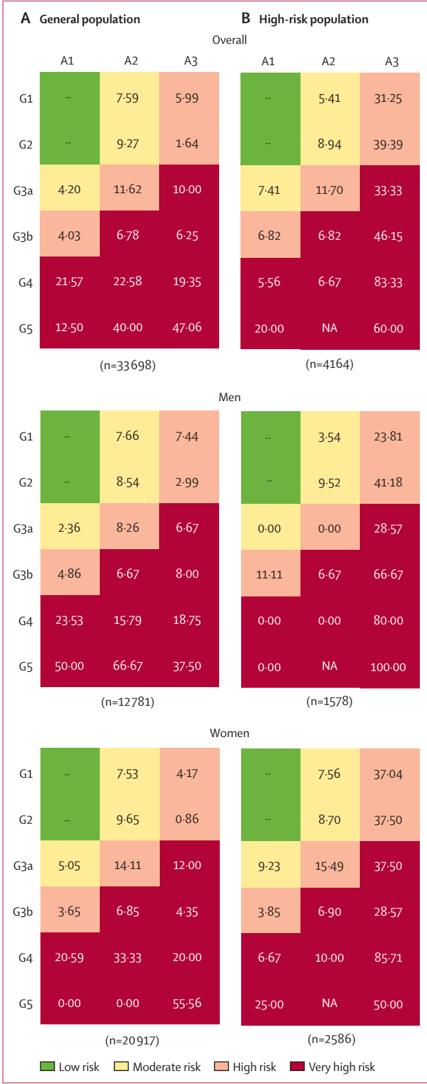
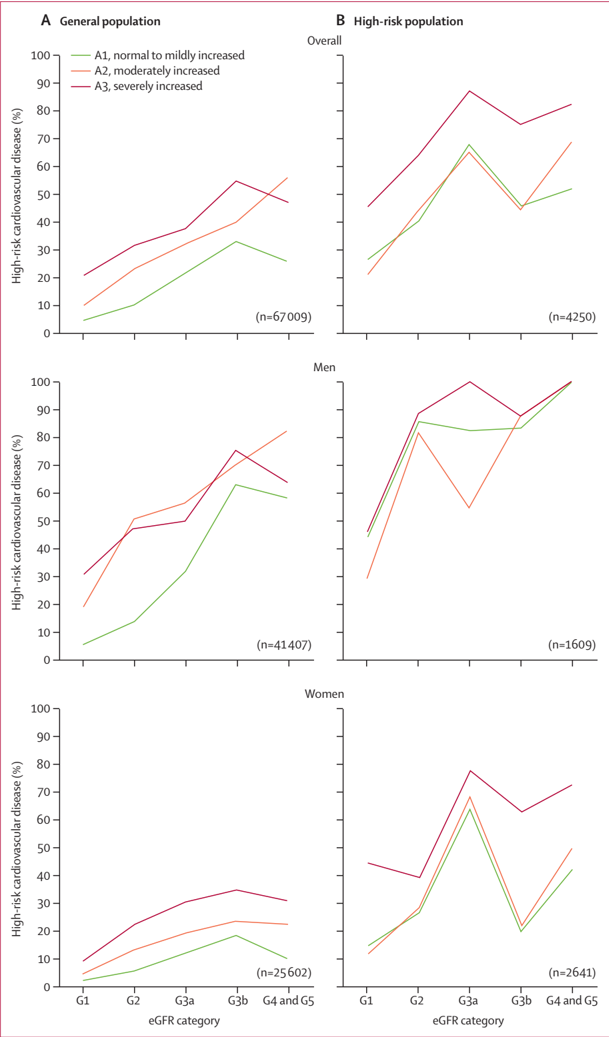
BACKGROUND: Chronic kidney disease is an important cause of global mortality and morbidity. Data for epidemiological features of chronic kidney disease and its risk factors are limited for low-income and middle-income countries. The International Society of Nephrology's Kidney Disease Data Center (ISN-KDDC) aimed to assess the prevalence and awareness of chronic kidney disease and its risk factors, and to investigate the risk of cardiovascular disease, in countries of low and middle income. METHODS: We did a cross-sectional study in 12 countries from six world regions: Bangladesh, Bolivia, Bosnia and Herzegovina, China, Egypt, Georgia, India, Iran, Moldova, Mongolia, Nepal, and Nigeria. We analysed data from screening programmes in these countries, matching eight general and four high-risk population cohorts collected in the ISN-KDDC database. High-risk cohorts were individuals at risk of or with a diagnosis of either chronic kidney disease, hypertension, diabetes, or cardiovascular disease. Participants completed a self-report questionnaire, had their blood pressure measured, and blood and urine samples taken. We defined chronic kidney disease according to modified KDIGO (Kidney Disease: Improving Global Outcomes) criteria; risk of cardiovascular disease development was estimated with the Framingham risk score. FINDINGS: 75,058 individuals were included in the study. The prevalence of chronic kidney disease was 14·3% (95% CI 14·0-14·5) in general populations and 36·1% (34·7-37·6) in high-risk populations. Overall awareness of chronic kidney disease was low, with 409 (6%) of 6631 individuals in general populations and 150 (10%) of 1524 participants from high-risk populations aware they had chronic kidney disease. Moreover, in the general population, 5600 (44%) of 12,751 individuals with hypertension did not know they had the disorder, and 973 (31%) of 3130 people with diabetes were unaware they had that disease. The number of participants at high risk of cardiovascular disease, according to the Framingham risk score, was underestimated compared with KDIGO guidelines. For example, all individuals with chronic kidney disease should be considered at high risk of cardiovascular disease, but the Framingham risk score detects only 23% in the general population, and only 38% in high-risk cohorts. INTERPRETATION: Prevalence of chronic kidney disease was high in general and high-risk populations from countries of low and middle income. Moreover, awareness of chronic kidney disease and other non-communicable diseases was low, and a substantial number of individuals who knew they were ill did not receive treatment. Prospective programmes with repeat testing are needed to confirm the diagnosis of chronic kidney disease and its risk factors. Furthermore, in general, health-care workforces in countries of low and middle income need strengthening. FUNDING: International Society of Nephrology.
Overview
The claims and statistics of this paper haven’t been checked yet.
Free: it reads the open-access text and checks the first 5 claims that cite a source we can check. Create a free account to check every claim.
Integrity signals
Registry
Cites
Statistics
Figures
Verification
Claims the paper makes
The claims and statistics of this paper haven’t been checked yet.
Free: it reads the open-access text and checks the first 5 claims that cite a source we can check. Create a free account to check every claim.
Self-check
Percentages, sums and reported differences re-computed from the paper’s own numbers.
The self-check needs the paper’s full text.
Citations
Cites
A New Equation to Estimate Glomerular Filtration Rate
Levey, A. S., Stevens, L. A., Schmid, C. H., Zhang, Y. (., Castro, A. F., Feldman, H. I., Kusek, J. W., Eggers, P., Van Lente, F., Greene, T., et al. (2009) · Annals of Internal Medicine · doi:10.7326/0003-4819-150-9-200905050-00006 · Cited by 25,603
Chobanian, A. V. (2003) · JAMA · doi:10.1001/jama.289.19.2560 · Cited by 25,386
Obesity : Preventing and managing the global epidemic
Akram, D. S., Astrup, A. V., Atinmo, T., Boissin, J.-L., Bray, G. A., Carroll, K. N., Chitson, P., Chen, C., Dietz, W. H., Hill, J. O., et al. (2000) · Research at the University of Copenhagen (University of Copenhagen) · Cited by 12,945
(2004) · The Lancet · doi:10.1016/s0140-6736(03)15268-3 · Cited by 12,717
KDIGO 2024 clinical practice guideline for the evaluation and management of chronic kidney disease
Stevens, P. E., Ahmed, S. B., Carrero, J. J., Foster, B., Francis, A., Hall, R. K., Herrington, W. G., Hill, G., Inker, L. A., Kazancıoğlu, R., et al. (2024) · Kidney International · doi:10.1016/j.kint.2023.10.018 · Cited by 8,530
Self-citationGeneral Cardiovascular Risk Profile for Use in Primary Care: The Framingham Heart Study
D’Agostino, R. B., Vasan, R. S., Pencina, M. J., Wolf, P. A., Cobain, M., Massaro, J. M., & Kannel, W. B. (2008) · Circulation · doi:10.1161/circulationaha.107.699579 · Cited by 7,491
Vos, T., Barber, R. M., Bell, B., Bertozzi-Villa, A., Biryukov, S., Bolliger, I., Charlson, F., Davis, A., Degenhardt, L., Dicker, D., et al. (2015) · The Lancet · doi:10.1016/s0140-6736(15)60692-4 · Cited by 6,414
Self-citationChronic kidney disease: global dimension and perspectives
Jha, V., Garcia-Garcia, G., Iseki, K., Li, Z., Naicker, S., Plattner, B., Saran, R., Wang, A. Y.-M., & Yang, C.-W. (2013) · The Lancet · doi:10.1016/s0140-6736(13)60687-x · Cited by 4,383
Sarnak, M. J., Levey, A. S., Schoolwerth, A. C., Coresh, J., Culleton, B., Hamm, L. L., McCullough, P. A., Kasiske, B. L., Kelepouris, E., Klag, M. J., et al. (2003) · Circulation · doi:10.1161/01.cir.0000095676.90936.80 · Cited by 3,768
Cited by
Items 301–400 of 663
Jiang, J., Zheng, D., Li, Y., Liu, G., Zhou, H., & Liu, Y. (2018) · Europe PMC (PubMed Central) · Cited by 7
Chen, L., Wang, J., Huang, X., Wang, F., Liang, W., He, Y. L., Liao, Y., Zhang, L., Zhao, M., Xiong, Z., et al. (2020) · Health and Quality of Life Outcomes · doi:10.1186/s12955-020-01519-5 · Cited by 7
Self-citationDisparities in Health Outcomes with Dialysis in the United States Vary by Race
Briggs, D. L. (2019) · Clinical Journal of the American Society of Nephrology · doi:10.2215/cjn.13881119 · Cited by 7
Wainstein, M., Tiv, S., Arruebo, S., Caskey, F. J., Damster, S., Donner, J., Gouda, Z. E., Jha, V., Levin, A., Nangaku, M., et al. (2024) · Kidney360 · doi:10.34067/kid.0000000651 · Cited by 6
Self-citationChronic Kidney Disease of Unknown Origin, a Tubulointerstitial Disease
Madero, M., & Parameswaran, S. (2025) · Advances in Kidney Disease and Health · doi:10.1053/j.akdh.2025.06.004 · Cited by 6
Jawed, I., Feroze, A., Zahid, M., Ahmad, M. M., Kaleem, S. H., Saadia, S., Salman, M., Khan, M. K., Mehmood, M., Rashid, S., et al. (2025) · Annals of Medicine and Surgery · doi:10.1097/ms9.0000000000003822 · Cited by 6
“Despite this, CKD awareness remains critically low, with only 6% of the general public and 10% of high-risk individuals globally being aware of their CKD status [ 13 ] .”
Wen, F., Wang, J., Yang, C., Wang, F., Li, Y., Zhang, L., & Pagán, J. A. (2025) · The Lancet Regional Health - Western Pacific · doi:10.1016/j.lanwpc.2025.101493 · Cited by 11
Self-citationMeng, X., Chen, X., Zhang, B., & Wang, J. (2025) · Renal Failure · doi:10.1080/0886022x.2025.2540565 · Cited by 6
“…edema, hypertension, and a reduced glomerular filtration rate (GFR) [1]. as a significant global public health issue, the prevalence of CKd has been steadily rising, with epidemiological studies estimating that approximately 10% of adults worldwide are affected by varying degrees of CKd [2,3].”
Adhikari, C., Dhakal, R., Adhikari, L. M., Parajuli, B., Subedi, K. R., Aryal, Y., Thapa, A. K., & Shah, K. H. (2022) · Frontiers in Cardiovascular Medicine · doi:10.3389/fcvm.2022.898225 · Cited by 7
Kidney health within the broader non-communicable disease agenda
Slama, S., Luyckx, V. A., & Hemmingsen, B. (2024) · Nature Reviews Nephrology · doi:10.1038/s41581-024-00847-9 · Cited by 8
“Among those at high risk of CKD in low-and middle-income countries, only one in ten people with CKD are aware of their disease 11 .”
BackgroundBae, S., Yun, D., Lee, S. W., Jhee, J. H., Lee, J. P., Chang, T. I., Oh, J., Kwon, Y. J., Kim, S. G., Lee, H., et al. (2024) · BMC Nephrology · doi:10.1186/s12882-024-03578-y · Cited by 6
“With diabetes affecting 10.5% of individuals aged 20 to 79 years (approximately over 530 million people) worldwide, its association with an approximately twofold risk of CKD compared to patients without diabetes highlights the importance of addressing DKD [2, 3].”
BackgroundInfluentialGuo, S., Wang, Y., Zou, C., Liu, L., He, T., Sun, C., Gan, X., Tian, X., & Yuan, L. (2025) · Renal Failure · doi:10.1080/0886022x.2025.2500665 · Cited by 7
“Chronic Kidney disease (CKd) has emerged as a significant global public health issue, with a prevalence of 14.3% in the worldwide population [1]. this condition is marked by a high incidence, low awareness, poor prognosis, and substantial healthcare costs [2]. the insidious onset of early symptoms…”
Influentialon behalf of the GBD Genitourinary Diseases Expert Group, Bikbov, B. T., Perico, N., & Remuzzi, G. (2018) · BMC Medical Research Methodology · doi:10.1186/s12874-018-0569-8 · Cited by 6
Self-citationGhimire, M., Vaidya, S., & Upadhyay, H. P. (2020) · Journal of Nepal Medical Association · doi:10.31729/jnma.4972 · Cited by 6
Norris, K. C., Williams, S. F., Nicholas, S. B., & Agodoa, L. Y. C. (2017) · Elsevier eBooks · doi:10.1016/b978-0-12-804311-0.00019-4 · Cited by 8
Latheef, S. A. A., Nagarathnam, M., & Sivakumar, V. (2021) · Indian Journal of Palliative Care · doi:10.4103/ijpc.ijpc_117_20 · Cited by 6
Huang, Y., Shi, K., Zhu, X., Yuan, S., Chen, X., Fu, X., Li, Z., Wang, C., Sun, L., & Liu, H. (2022) · PubMed Central · doi:10.11817/j.issn.1672-7347.2022.210487 · Cited by 8
Zhang, L., Sang, X., Han, Y., Abulitibu, A., Elken, M., Mao, Z., Kang, S., Yang, W., & Lu, C. H. (2022) · Frontiers in Genetics · doi:10.3389/fgene.2022.1004610 · Cited by 7
“It is another disease seriously endangering human health after cardiovascular and cerebrovascular diseases, diabetes and malignant tumors (Hwang et al., 2012; Ene-Iordache et al., 2016).”
BackgroundSelf-citationXie, N., Li, X., Zhong, Q., Zhou, D., Cai, A., Zhang, Y., Zhou, Y., & Feng, Y. (2018) · Archives of Medical Science · doi:10.5114/aoms.2018.77727 · Cited by 6
“Another study also showed that blood pressure levels correlate significantly with MAU in hypertensive patients [22].”
BackgroundRisk factors for chronic kidney disease in the community: A decade of outreach in Kenya
Kabinga, S. K., McLigeyo, S. O., Twahir, A., Ndungu, J. N., Wangombe, N. N., Nyarera, D. K., Ngaruiya, G. W., Chege, R. K., Ochieng, P., Ogutu, M. O., et al. (2024) · Clinical Epidemiology and Global Health · doi:10.1016/j.cegh.2024.101823 · Cited by 5
“17 More than 10 % of patients who were diabetic reported family history of overt CKD.”
Miao, Y., Luo, Y., Zhao, Y., Wang, H., & Wu, Y. X. (2025) · Annals of Medicine · doi:10.1080/07853890.2025.2537916 · Cited by 5
“Instead, it reflects extremely weak management capacity for hypertension and CKD. Fewer than 10% of CKD patients in developing countries are aware of their condition [32].”
Kawakami, S., Yasuno, T., Kotoku, K., Kawakami, S., Ito, A., Fujimi, K., Matsuda, T., Nakashima, S., Masutani, K., Uehara, Y., et al. (2023) · Clinical and Experimental Nephrology · doi:10.1007/s10157-023-02381-7 · Cited by 5
“Therefore, similar research should be conducted in non-dialysis CKD patients in the future.”
BackgroundPhysical and psychosocial burden experienced by women on maintenance hemodialysis
George, S., Nalini, M., Kumar, S., D’silva, F., & Shenoy, P. (2023) · Journal of Education and Health Promotion · doi:10.4103/jehp.jehp_1449_22 · Cited by 5
Mind the Gap in Kidney Care: Translating What We Know Into What We Do
Luyckx, V. A., Tuttle, K. R., Abdellatif, D. A., Correa‐Rotter, R., Fung, W. W., Haris, A., Hsiao, L., Khalife, M., Kumaraswami, L. A., Loud, F. C., et al. (2024) · American Journal of Hypertension · doi:10.1093/ajh/hpae056 · Cited by 7
“…with kidney dysfunction, with ≈ 80% to 95% of patients being unaware of their diagnosis across world regions (Figure 2) (Chu et al., 2021; Ene ‐ Iordache et al., 2016; Gummidi et al., 2020; Kidney Disease: Improving Global Outcomes KDIGO Diabetes Work Group, 2022; Nicholas et al., 2023;…”
Self-citationLv, X., Shi, T., Bai, X., Guan, Z., Wang, H., Jiang, R., Zhou, L., & Chen, H. (2024) · Plasmonics · doi:10.1007/s11468-024-02510-2 · Cited by 5
“Kidney disease has been one of the leading causes of death worldwide [1], but less than 10% of patients with early renal dysfunction are diagnosed and treated in a timely manner [2].”
Modelling Adverse Events in Patients Receiving Chronic Oral Corticosteroids in the UK
Gibson, D., Branscombe, N., Martin, N., Menzies-Gow, A. N., Jain, P., Padgett, K., & Yeates, F. (2024) · PharmacoEconomics - Open · doi:10.1007/s41669-024-00520-8 · Cited by 5
Bai, J., Zhang, L., Zhang, M., Hao, Y., Yi, Z., & Zhou, Y. (2025) · BMC Public Health · doi:10.1186/s12889-025-22188-3 · Cited by 5
“The prevalence of CKD is significantly higher among both the general population and high-risk groups in low-and middle-income countries [6].”
Self-citationYu, W., Zhang, X., Ni, M., & Chen, T. (2025) · BMC Nutrition · doi:10.1186/s40795-025-01128-9 · Cited by 5
“Chronic Kidney Disease (CKD) affects approximately 14.3% of the global population [1] and around 10.8% in China [2].”
InfluentialKidney health for everyone everywhere from prevention to detection and equitable access to care
Li, P. K., García-García, G., Lui, S., Andreoli, S. P., Fung, W. W., Hradsky, A., Kumaraswami, L. A., Liakopoulos, V., Rakhimova, Z., Saadi, G. E., et al. (2020) · Nephrology (Saint-Petersburg) · doi:10.36485/1561-6274-2020-24-2-9-21 · Cited by 5
Self-citationKidney Health for Everyone Everywhere: From Prevention to Detection and Equitable Access to Care
Li, P. K., García-García, G., Lui, S., Andreoli, S. P., Fung, W. W., Hradsky, A., Kumaraswami, L. A., Liakopoulos, V., Rakhimova, Z., Saadi, G. E., et al. (2020) · American Journal of Hypertension · doi:10.1093/ajh/hpz184 · Cited by 5
Self-citationWang, Z., Huang, Y., Zhu, M., Cao, J., & Xiong, Z. (2023) · Biochemical and Biophysical Research Communications · doi:10.1016/j.bbrc.2023.05.038 · Cited by 5
Shih, H.-M., Tsai, W., Wu, P., Chiu, L.-T., & Kung, P. (2023) · Scientific Reports · doi:10.1038/s41598-023-43513-z · Cited by 5
“Next, patients with diabetes reportedly have a 1.75–5-times higher risk of developing chronic kidney disease compared with the general population 24,25 .”
BackgroundMethodInfluentialCarlesso, R., Cappellari, Y. L. R., Boeff, D. D., Pereira, A. C. C., Rusch, E. S., Claudino, T. D. S., Ritter, M. R., & Konrath, E. L. (2025) · Plants · doi:10.3390/plants14050648 · Cited by 7
“Renal diseases are common global causes of morbidity and mortality that cause an increasing socioeconomic burden on public health programs, particularly in low-and middle-income countries [1].”
Chen, Y., Zheng, L., Zhou, Y., Hou, Y., Zhou, Y., & Shen, H. (2025) · Scientific Reports · doi:10.1038/s41598-025-00359-x · Cited by 5
Han, X., Li, F., Wen, Z., Ma, Y., Wang, L., & Cheng, Z. (2019) · Clinical and Experimental Pharmacology and Physiology · doi:10.1111/1440-1681.13078 · Cited by 6
“In the tissue distribution assay, MFD and fluorofenidone (in‐ ternal standard) were separated with an Agilent TC‐C18(2) column (4.”
MethodInfluentialIs an Environmental Nephrotoxin the Primary Cause of CKDu (Mesoamerican Nephropathy)? Commentary
Madero, M. (2020) · Kidney360 · doi:10.34067/kid.0003412020 · Cited by 5
Morsy, S. M., Mansour, M. F., Abdo, M., & El-Wazir, Y. M. (2022) · Physiological Reports · doi:10.14814/phy2.15448 · Cited by 5
Cardiovascular Risk Factor Burden and Association With CKD in Ghana and Nigeria
Olanrewaju, T. O., Osafo, C., Raji, Y. R., Mamven, M., Ajayi, S. O., Ilori, T. O., Arogundade, F. A., Ulasi, I., Gbadegesin, R., Parekh, R. S., et al. (2022) · Kidney International Reports · doi:10.1016/j.ekir.2022.11.021 · Cited by 5
Self-citationSong, W., Wu, L., Sun, C., Kong, X., & Wang, H. (2024) · Frontiers in Cardiovascular Medicine · doi:10.3389/fcvm.2024.1386304 · Cited by 5
Sevak, V., Chinniah, R., Pandi, S., Sampathkumar, K., & Balakrishnan, K. (2021) · Research Square · doi:10.21203/rs.3.rs-309738/v1 · Cited by 5
“The incidence of CKD was varying from different regions ranges from 1% to 17% which is reported recently from the International Society of Nephrology’s Kidney Disease Data Center [8].”
BackgroundWeng, W., Li, Y., Lin, Y., Wang, J., Chen, X., & Zhou, T. (2025) · Current Pharmaceutical Design · doi:10.2174/0113816128321721241118171041 · Cited by 4
Sun, X., Guan, S., Wu, L., Zhang, T., & Ying, L. (2025) · Displays · doi:10.1016/j.displa.2025.102998 · Cited by 4
Zhou, B., Zhou, H., Huang, X., & Liu, S. (2025) · Frontiers in Cell and Developmental Biology · doi:10.3389/fcell.2025.1627355 · Cited by 4
National Prevalence, Regional Distribution, and Risk Factors for CKD in Taiwan
Ang, M.-D., Cheng, C.-Y., Tsai, W., Tsai, P., Hsu, L., Ko, M., Chien, K., Hung, K., & Wu, H. (2025) · Clinical Journal of the American Society of Nephrology · doi:10.2215/cjn.0000000892 · Cited by 5
Sandal, S., Wazze, S. E., Stigant, C. E., Chanda, T., Berry, W. J., Éthier, I., Pederson, K., Finkle, N., Samanta, R., Gagnon, M., et al. (2025) · Canadian Journal of Kidney Health and Disease · doi:10.1177/20543581251391277 · Cited by 4
EPI-CKD Brazil: point-of-care screening for chronic kidney disease during World Kidney Day
Cálice-Silva, V., Abreu, P. F., Pinheiro, M. E., Lopes, A. K. D. C. D., Israel, K. C. P., Marinho, A. W. G. B., Moura, A. F., Neves, F. C., de Oliveira, C. M. C., Costa, S. D., et al. (2026) · Brazilian Journal of Nephrology · doi:10.1590/2175-8239-jbn-2025-0298en · Cited by 4
“%) among those affected by the disease 25 .”
InfluentialChronic Kidney Disease in Disadvantaged Populations
Madero, M., & Aguilar-Ramirez, D. J. (2022) · Wiley eBooks · doi:10.1002/9781119105954.ch6 · Cited by 5
High prevalence of albuminuria among adult males living with HIV in Botswana
Mosepele, M., Ponatshego, P., Molebatsi, K., Williams, C. G., Mokgatlhe, L., Lockman, S., Youssouf, N. F., Gross, R., Jarvis, J. N., Wang, D., et al. (2024) · Scientific Reports · doi:10.1038/s41598-024-65099-w · Cited by 4
Analysis for Predicting Chronic Kidney Disease with the Application of Machine Learning Models
Verma, N., Sharma, T., & Kaur, B. (2024) · International Conference on Data Intelligence and Cognitive Informatics (ICDICI) · doi:10.1109/icdici62993.2024.10810875 · Cited by 5
Nephroprotective Effect of the Herbal Composition BNO 2103 in Rats with Renal Failure
Shebeko, S. K., Черних, В. В., & Zupanets, K. O. (2021) · Health of Man · doi:10.30841/2307-5090.4.2021.252396 · Cited by 4
Caracterización de la enfermedad renal crónica subclínica en Chile
Castillo, A., & Castillo-Montes, M. (2022) · Revista Colombiana de Nefrología · doi:10.22265/acnef.9.2.585 · Cited by 4
“[1] Ene-Iordache B, Perico N, Bikbov B, Carminati S, Remuzzi A, Perna A, et al.”
BackgroundGhimire, C., Baral, N., Vinjam, T., Mathews, S. M., Baral, N., Acharya, B., Savarapu, P. K., Bashyal, K. P., Kunadi, A. R., & Mitchell, J. D. (2022) · Nephrology · doi:10.1111/nep.14138 · Cited by 4
Predictive value of serum d -serine level for hearing impairment in uremic patients
Li, J., Yuan, D., Yang, Q., Huang, J., Zhou, Z., Li, R., & Li, Q. (2023) · Renal Failure · doi:10.1080/0886022x.2023.2194448 · Cited by 4
“3% [1], thereby increasing the number of uremia patients and thus the economic burden.”
BackgroundHuan, J.-M., Ma, X.-T., Li, S., Hu, D.-Q., Chen, H.-Y., Wang, Y., Su, X., Su, W.-G., & Wang, Y. (2023) · Frontiers in Pharmacology · doi:10.3389/fphar.2023.1126972 · Cited by 4
Urinary peptidome analysis in CKD and IgA nephropathy
Li, Z., Zeng, N., Zhao, X., Chen, X., Liang, G., Liu, H., Lin, J., Zheng, P., Lin, X., Zhou, H., et al. (2023) · Clinical Kidney Journal · doi:10.1093/ckj/sfad211 · Cited by 4
“The prevalence of CKD has risen dramatically in aging societies and CKD has become a burden on human health and economies [ 2 , 3 ].”
BackgroundKumar, S. M., Essakky, S., Rajasulochana, S. R., Kar, S. S., Sivanatham, P., Anandraj, J., Parameswaran, S., Soman, B., Rajsekhar, K., & Stanley, A. (2023) · International Journal of Technology Assessment in Health Care · doi:10.1017/s0266462323002623 · Cited by 4
“3percentin2017 (4)andtheprevalenceofCKDrangedbetween 1and17percentin2013(5).”
Li, H., Liu, X., Huang, S., & Wen, Y. (2024) · International Wound Journal · doi:10.1111/iwj.14697 · Cited by 4
“12 15 Hence, addressing pain stress and negative emotions during HD treatment is critical for ensuring its continued efficacy.”
BackgroundRetractedLuo, X., Xiao, S., Huang, D., Guo, E., Yu, Y., Qiu, X., Wang, X., Qian, Z. M., Vaughn, M. G., Bingheim, E., et al. (2024) · Journal of Trace Elements in Medicine and Biology · doi:10.1016/j.jtemb.2024.127461 · Cited by 4
Pluquet, M., Metzger, M., Jacquelinet, C., Combe, C., Fouque, D. P., Laville, M., Frimat, L., Massy, Z. A., Liabeuf, S., & Laville, S. M. (2024) · Frontiers in Pharmacology · doi:10.3389/fphar.2024.1375838 · Cited by 4
Migrant Work and Kidney Health in Nepal: Prevention is Better than Cure
Sharma, S. K., & Upadhyaya, M. K. (2024) · Kidney360 · doi:10.34067/kid.0000000000000550 · Cited by 4
Self-citationZeng, G., Wang, H., Cao, P., Zhao, J., Liu, L., & Guo, H. (2025) · BMC Public Health · doi:10.1186/s12889-024-21183-4 · Cited by 4
Organoids for modeling kidney disease
Morizane, R., & Bonventre, J. V. (2018) · Elsevier eBooks · doi:10.1016/b978-0-12-812636-3.00012-2 · Cited by 6
Kidney Health for Everyone, Everywhere—from prevention to detection and equitable access to care
Li, P. K., García-García, G., Lui, S., Andreoli, S. P., Fung, W. W., Hradsky, A., Kumaraswami, L. A., Liakopoulos, V., Rakhimova, Z., Saadi, G. E., et al. (2020) · Nephrology Dialysis Transplantation · doi:10.1093/ndt/gfz283 · Cited by 4
Self-citationVascular accesses for hemodialysis in Ceará-Brazil
Lima, J. K. T., Lima, S. R. T., Júnior, A. L. D. L., de Abreu, A. C. G., & Corrêa, J. A. (2022) · Journal of Human Growth and Development · doi:10.36311/jhgd.v32.13318 · Cited by 5
Srivastava, A. K., Ghosh, I., & Sonawane, S. (2022) · Medical Journal Armed Forces India · doi:10.1016/j.mjafi.2022.05.001 · Cited by 4
Global Dialysis Perspective: Georgia
Tchokhonelidze, I. (2022) · Kidney360 · doi:10.34067/kid.0000772022 · Cited by 4
Self-citationCheng, Y., Lu, Z., Cao, X., Ding, X., Zou, J., & Jin, H. (2023) · BMC Nephrology · doi:10.1186/s12882-023-03076-7 · Cited by 4
Li, Q., Nishi, H., Inoue, R., Ueda, S., & Nangaku, M. (2023) · Nephrology · doi:10.1111/nep.14164 · Cited by 4
Lekuu, A., & Yidana, A. (2023) · Journal of Advances in Medicine and Medical Research · doi:10.9734/jammr/2023/v35i205175 · Cited by 4
Renal Disease in Bangladesh Perspective
Mostafi, M., & Jabin, M. (2023) · Bangladesh Journal of Medicine · doi:10.3329/bjm.v34i3.68418 · Cited by 4
Mind the gap in kidney care: Translating what we know into what we do
Luyckx, V. A., Tuttle, K. R., Abdellatif, D. A., Correa‐Rotter, R., Fung, W. W., Haris, A., Hsiao, L., Khalife, M., Kumaraswami, L. A., Loud, F. C., et al. (2024) · Journal of Family Medicine and Primary Care · doi:10.4103/jfmpc.jfmpc_518_24 · Cited by 4
Self-citationYang, W., Li, M., Song, L., Xu, B., Chen, Q., Yang, Z., Liu, W., Zhang, A., Wang, H., & Wang, Z. (2024) · Brain Imaging and Behavior · doi:10.1007/s11682-024-00897-4 · Cited by 4
Pokhrel, K. M., Lamichhane, P., & Mulmi, U. (2023) · International Journal of Surgery Global Health · doi:10.1097/gh9.0000000000000196 · Cited by 3
Liu, X.-H., Huang, Q., Chen, Y., Wang, X., Zhong, Y.-S., & Wang, J. (2024) · Eye · doi:10.1038/s41433-024-03482-7 · Cited by 3
Ksiazek, S. H., Windpessl, M., Zitt, E., Rudnicki, M., Eller, K., Schwarz, C., Antlanger, M., Schmaldienst, S., Cejka, D., Oberbauer, R. W., et al. (2025) · Wiener klinische Wochenschrift · doi:10.1007/s00508-025-02590-y · Cited by 3
Ruszkowski, J., Borchet, J., Stencelewski, D., Kapiszka, P., Urban, D., Pancewicz, M., Błach, A., Mańkowska, A., & Dębska-Ślizień, A. M. (2026) · Journal of Primary Care & Community Health · doi:10.1177/21501319261422888 · Cited by 3
Cálice-Silva, V., Abreu, P. F., Pinheiro, M. E., Lopes, A. K. D. C. D., Israel, K. C. P., Marinho, A. W. G. B., Moura, A. F., Neves, F. C., de Oliveira, C. M. C., Costa, S. D., et al. (2026) · Brazilian Journal of Nephrology · doi:10.1590/2175-8239-jbn-2025-0298pt · Cited by 3
Kidney disease in disadvantaged populations: An unconquered challenge
Norris, K. C., Prabhakar, K. S., Agodoa, L. Y. C., & García-García, G. (2016) · Clinical Nephrology · doi:10.5414/cnp86s100 · Cited by 3
“In fact, the ISN-KDDC recently reported a 14.3% prevalence of CKD in the general population and 36.1% in high-risk populations in over 75,000 persons in 12 low-mid income countries from six world regions including Bangladesh, Bolivia, Bosnia and Herzegovina, China, Egypt, Georgia, India, Iran, Moldova, Mongolia, Nepal…”
BackgroundInfluentialToma de decisiones en hemodiálisis crónica: estudio cualitativo en adultos mayores
Catoni, M. I., Salas, S. P., Roessler, E., Valdivieso, A., Antonio Vukusich, C., & Rivera, M. (2020) · Revista médica de Chile · doi:10.4067/s0034-98872020000300281 · Cited by 3
“Tiempo en HDC: mediana (rango en años) 6 (1-27)”
BackgroundMartínez-Alanís, M., Calderón‐Juárez, M., Martínez-García, P., González-Gómez, G. H., Infante, Ó., Pérez‐Grovas, H., & Lerma, C. (2022) · Sensors · doi:10.3390/s23010260 · Cited by 3
Hemodiyalize Giren Kronik Böbrek Hastalarının Yaşam Kalitelerinin Değerlendirilmesi
Okuyan, C. B., Kerkez, M., Emir, T., & Turgut, F. H. (2023) · Journal of Innovative Healthcare Practices · doi:10.58770/joinihp.1334386 · Cited by 3
Sequira, L., Prabhu, R., Mayya, S. S., Nagaraju, S. P., & Nayak, B. S. (2024) · F1000Research · doi:10.12688/f1000research.123787.3 · Cited by 3
Mind the Gap in Kidney Care: Translating What We Know into What We Do
Luyckx, V. A., Tuttle, K. R., Abdellatif, D. A., Correa‐Rotter, R., Fung, W. W., Haris, A., Hsiao, L., Khalife, M., Kumaraswami, L. A., Loud, F. C., et al. (2024) · Kidney International Reports · doi:10.1016/j.ekir.2024.04.019 · Cited by 3
Self-citationPredicting renal function using fundus photography: role of confounders
Park, H., Kim, H.-R., Nam, K. Y., Kim, B. J., & Kang, T.-S. (2025) · The Korean Journal of Internal Medicine · doi:10.3904/kjim.2024.076 · Cited by 3
“Considering the pivotal role of kidneys in waste filtration, fluid and electrolyte balance, and blood pressure regulation, regular screening of renal function is essential, particularly in the general population and high-risk groups including those with diabetes mellitus and hypertension [4,5].”
Wang, Y., Kang, H., Yang, F., & Hu, H. (2025) · Seminars in Dialysis · doi:10.1111/sdi.70002 · Cited by 3
Duong, T. V., Wu, P.-Y., Yang, E., Lin, Y., Chiou, H., & Yang, S. (2019) · International Journal of Environmental Research and Public Health · doi:10.3390/ijerph16245093 · Cited by 5
“Moreover, awareness of the disease and its risk factors is low in general populations in 12 countries from six world regions [5], and in Taiwan as well [7,10].”
BackgroundKidney health for everyone everywhere - from prevention to detection and equitable access to care
Li, K.-T., García-García, G., Lui, S., Andreoli, S. P., Fung, W. W., Hradsky, A., Kumaraswami, L. A., Liakopoulos, V., Rakhimova, Z., Saadi, G. E., et al. (2020) · Archivos Argentinos de Pediatria · doi:10.5546/aap.2020.eng.e148 · Cited by 3
Self-citationKidney health for everyone everywhere - from prevention to detection and equitable access to care
Li, P. K., García-García, G., Lui, S., Andreoli, S. P., Fung, W. W., Hradsky, A., Kumaraswami, L. A., Liakopoulos, V., Rakhimova, Z., Saadi, G. E., et al. (2020) · Saudi Journal of Kidney Diseases and Transplantation · doi:10.4103/1319-2442.284004 · Cited by 3
Self-citationDada, S. A., Ajayi, D. D., Raimi, T. H., Thomas, A., & Dele-Ojo, B. F. (2020) · Saudi Journal of Kidney Diseases and Transplantation · doi:10.4103/1319-2442.284019 · Cited by 4
Alex, D. M., & Chandy, D. A. (2020) · Current Medical Imaging Formerly Current Medical Imaging Reviews · doi:10.2174/1573405616666200923162600 · Cited by 3
Xiong, J., He, T., Yu, Z., Yang, K., Chen, F., Cheng, J., Shi, Y., Huang, Y., Qiao, Y., Li, H., et al. (2021) · Trials · doi:10.1186/s13063-020-04992-x · Cited by 3
“CKD patients have more severe atherosclerosis than age- and sex-matched controls from the general population [6].”
BackgroundModeling Metabolic Diseases with Organoids: A Review
Bustos, J., Alvarado-Gonzalez, J. C., de Abreu, D., Liebisch-Rey, H., Silva, A. R., Ortiz, D., Ramírez, L., Ortega, J. F. M., & Regalado, L. C. (2021) · Journal of Biomedical Research & Environmental Sciences · doi:10.37871/jbres1224 · Cited by 3
“…of the nephrons and the continuous fi brosis of the tubular and interstitial system allow the develop and progression of the disease, resulting in a disbalanced regulation of fl uid electrolytes, accumulation of uremic toxins and an unsatis fi ed excretion of metabolic waste products [34].”
State of the Care, Definition, and Epidemiology of Chronic Kidney Disease
Zhang, J. (2021) · Springer eBooks · doi:10.1007/978-3-030-83082-3_2 · Cited by 3
Japan's Abenomics: So Far So Good, But Will It Prevail?
Patrick, H. T. (2014) · PubMed Central · doi:10.7916/d8jw8cjq · Cited by 7
Xiao-jia, W., Li, J., Bingwen, Z., He, X., Yanmei, D., & Wang, L. (2022) · Evidence-based Complementary and Alternative Medicine · doi:10.1155/2022/2646022 · Cited by 3
“3% [2], and the number of patients with CKD worldwide has reached 697.”
BackgroundPrevalence of chronic kidney disease in a city of Northwestern China: a cross-sectional study
Kang, L. V., Liu, Y., Zhang, X., Wang, M., Feng, K., Bai, Y., Yin, C., & Zheng, S. (2023) · International Urology and Nephrology · doi:10.1007/s11255-023-03515-2 · Cited by 3
Clinico-pathological correlation study in chronic kidney disease patients undergoing hemodialysis
Pavan Kumar, M. (2023) · Indian Journal of Pathology and Oncology · doi:10.18231/j.ijpo.2023.030 · Cited by 3
Szulimowska, J., Zalewska, A., Taranta‐Janusz, K., Trocka, D., Żendzian‐Piotrowska, M., Tomasiuk, R., & Maciejczyk, M. (2023) · Medical Science Monitor · doi:10.12659/msm.942230 · Cited by 4
Psychological profile of Chinese peritoneal dialysis patients during the Omicron pandemic in 2022
Qiu, J. F., Zhang, C., Xie, J., Lin, S., Ren, H., Huang, X., & Xu, T. Y. (2024) · BMC Psychology · doi:10.1186/s40359-024-01615-x · Cited by 3
“Epidemiological investigations have shown that the prevalence of CKD worldwide is approximately 14.3% [1] and that in China, it is approximately 10.8% [2].”
BackgroundInfluentialA risk scoring system for the decreased glomerular filtration rate in Chinese general population
Gu, Y. H., Chen, M., Zhu, B. L., Pei, X., Yong, Z., Li, X., Zhang, Q., & Zhao, W. (2019) · Journal of Clinical Laboratory Analysis · doi:10.1002/jcla.23143 · Cited by 4
Metadata
- Authors
- Ene-Iordache, B., Perico, N., Bikbov, B., Carminati, S., Remuzzi, A., Perna, A., Islam, N., Bravo, R. F., Aleckovic-Halilovic, M., Zou, H., Zhang, L., Gouda, Z., Tchokhonelidze, I., Abraham, G., Mahdavi-Mazdeh, M., Gallieni, M., Codreanu, I., Togtokh, A., Sharma, S. K., Koirala, P., Uprety, S., Ulasi, I., & Remuzzi, G.
- Affiliations
- Mario Negri Institute for Pharmacological Research (IT)
- Russian University of Medicine (RU)
- University of Bergamo (IT)
- North East Medical College (BD)
- Third Affiliated Hospital of Southern Medical University (CN)
- Peking University (CN)
- General Organization For Teaching Hospitals and Institutes (EG)
- Tbilisi State Medical University (GE)
- University of Milan (IT)
- B.P. Koirala Institute of Health Sciences (NP)
- University of Nigeria (NG)
- ORCID
- Venue
- The Lancet Global Health
- Publisher
- Elsevier BV
- Published
- 2016-05
- Volume
- 4
- Issue
- 5
- Pages
- e307-e319
- ISSN
- 2214-109X (ISSN-L)
- OpenAlex
- W2337136207
- Semantic Scholar
- fcc19f7c1ca48bb34f94c8045226d18c5dff37fe
- Cited by
- 627
- References
- 56
- Citations by year
- 2026: 34 · 2025: 72 · 2024: 94 · 2023: 97 · 2022: 63 · 2021: 61 · 2020: 90 · 2019: 42 · 2018: 34 · 2017: 31 · 2016: 8
- FWCI
- 38.56
- Type
- journal article
- Language
- en
- Open access
- gold
- doi.org
- Licence
- cc-by-nc-nd
- www.elsevier.com/tdm/userlicense/1.0/ (tdm)
- creativecommons.org/licenses/by-nc-nd/4.0/ (vor)
- Locations
- The Lancet Global Health (publishedVersion, cc-by-nc-nd)
- PubMed (publishedVersion)
- Bushehr University of Medical Sciences Repository (Bushehr University of Medical Sciences) (acceptedVersion)
- Archivio Istituzionale della Ricerca (Universita Degli Studi Di Milano) (submittedVersion, other-oa)
- Aisberg (University of Bergamo) (submittedVersion, cc-by-nc-nd)
- DOAJ (DOAJ: Directory of Open Access Journals) (submittedVersion)
- Funders
- International Society of Nephrology
- Topics
- Health Sciences › Medicine › Nephrology › Chronic Kidney Disease and Diabetes
- Health Sciences › Medicine › Nephrology › Dialysis and Renal Disease Management
- Health Sciences › Medicine › Cardiology and Cardiovascular Medicine › Blood Pressure and Hypertension Studies
- Keywords
- chronic kidney disease, cardiovascular risk, prevalence, disease awareness, hypertension, diabetes mellitus, Framingham risk score, KDIGO criteria, low- and middle-income countries, cardiovascular disease, screening programs, vulnerable populations, risk underestimation, global health disparities, blood pressure, urinary biomarkers, morbidity
- MeSH terms
- Adult, Aged, Awareness, Bangladesh, Bolivia, Cardiovascular Diseases, China, Cross-Sectional Studies, Diabetes Mellitus, Egypt, Female, Georgia (Republic), Humans, Hypertension, India, Iran, Health Knowledge, Attitudes, Practice, Male, Mass Screening, Middle Aged, Moldova, Mongolia, Nepal, Nigeria, Surveys and Questionnaires, Risk Factors, Cohort Studies, Prevalence, Bosnia and Herzegovina, Renal Insufficiency, Chronic
About these checks
Registry, retraction, Cites and statistics results are computed, not judged, with one exception: a printed reference that no index lists is read once by a model before it counts as a citation error. Claims are extracted by a model and kept only when their quote appears verbatim in the text; each cited source is then checked, with a model’s help, for whether it says what the claim relies on. Those verdicts can be wrong — read the claim’s quote and the cited source before relying on one.
Statistics and arithmetic are recomputed, not judged.
Confidence bands are shown only for fields calibrated on our annotated test set. None is calibrated yet, so no band is shown.
What counts as a claim ›How we measure confidence ›How we check this ›
Are you an author, or do you see a problem with this page? Request a review
Data sources
Bibliographic data: Semantic Scholar, OpenAlex, Crossref.
Contains information from the Semantic Scholar Academic Graph Datasets, made available under the ODC Attribution License (ODC-BY 1.0).
Semantic Scholar’s data is described in: Kinney, R., et al. (2023). The Semantic Scholar Open Data Platform. arXiv:2301.10140.
