

Global and regional causes of maternal deaths 2009–20: a WHO systematic analysis
Open accessThe DOI matches its Crossref record; 16 of the 16 references it cites were found in a registry or an index.
Abstract
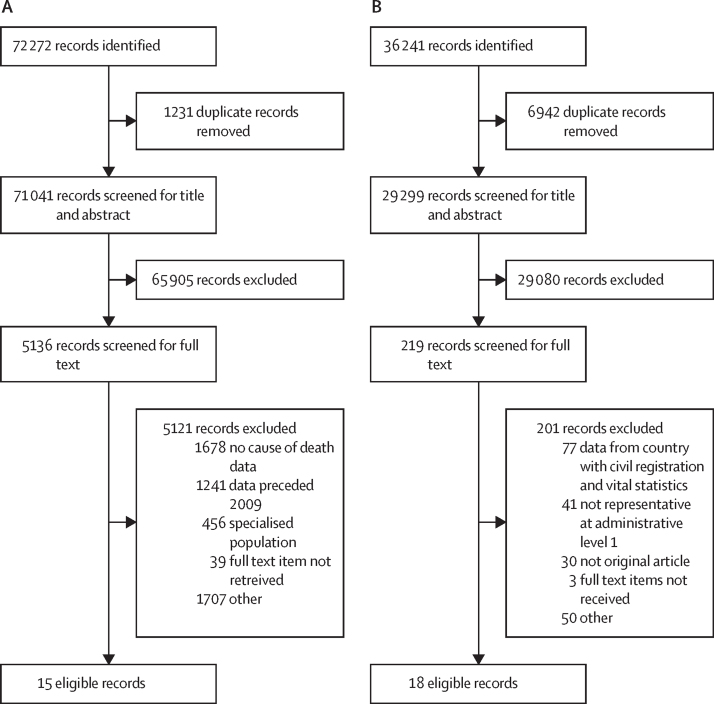
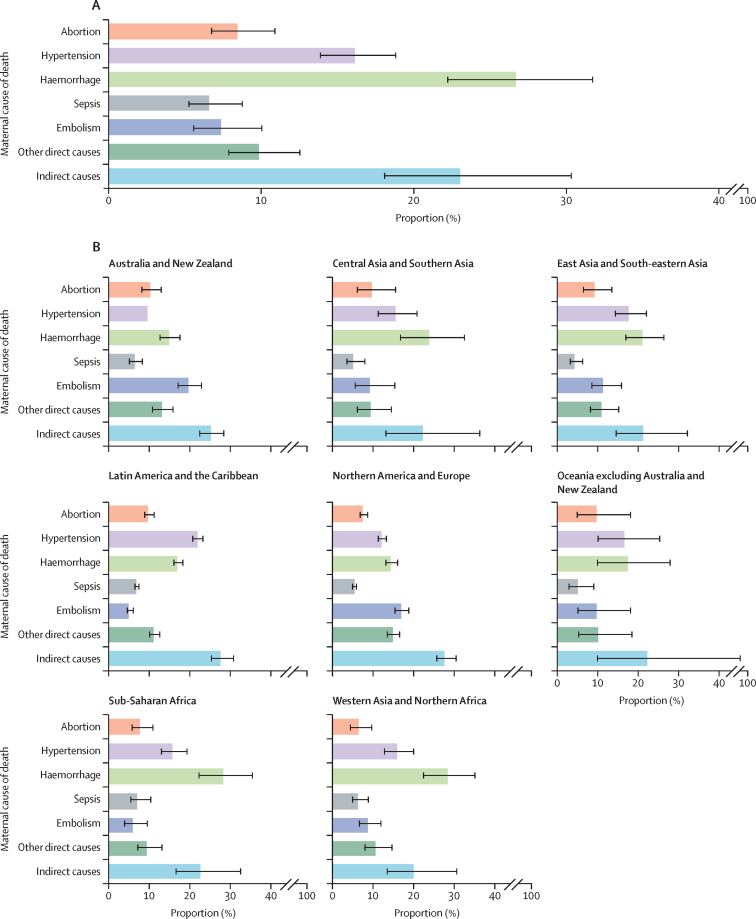
BACKGROUND: Maternal mortality is not on track to meet Sustainable Development Goal (SDG) target 3.1 of a global maternal mortality ratio below 70 per 100 000 livebirths by 2030. Updated evidence on causes of death is needed to accelerate progress. METHODS: We conducted a multi-strategy systematic review to identify causes of maternal deaths occurring in 2009-20. Data sources included civil registration and vital statistics systems data from the WHO Mortality Database, reports published by Member States, and national and subnational journal articles identified via bibliographic databases. We used a Bayesian hierarchical model to estimate the maternal cause of death distribution by SDG regions and worldwide. Given the paucity of data on maternal suicide and late maternal deaths occurring beyond 42 days postpartum, additional analyses were conducted to estimate the proportion of maternal deaths from suicide and the ratio of maternal to late maternal deaths (all cause). FINDINGS: Globally, the most common cause of maternal death was haemorrhage (27%; 80% uncertainty interval 22-32), followed by indirect obstetric deaths (23%, 18-30), and hypertensive disorders (16%, 14-19). The proportion of haemorrhage deaths varied substantially by region and was highest in sub-Saharan Africa and Western Asia and Northern Africa. The proportion of maternal deaths from hypertensive disorders was highest in Latin America and the Caribbean. Most maternal deaths from haemorrhage and sepsis occurred during the postpartum period. Only 12 countries recorded one or more maternal suicides; of those countries, the proportion of deaths from suicide ranged from below 1% to 26% of maternal deaths. For countries reporting at least one late maternal death (ie, deaths that occur more than 42 days but less than 1 year after the termination of pregnancy), the ratio of late maternal deaths to maternal deaths up to 42 days ranged from <0·01 to 0·07. INTERPRETATION: Haemorrhage remains the leading cause of death, despite the existence of effective clinical interventions, emphasising the need for improved access to quality health care. The timing of most deaths in the postpartum period demands renewed commitment to improving the provision of postpartum care in addition to intrapartum care. Indirect causes of death require health system approaches to integrate obstetric and non-obstetric care. FUNDING: USAID; US Fund for UNICEF via the Bill & Melinda Gates Foundation; and UNDP-UNFPA-UNICEF-WHO-World Bank Special Programme of Research, Development, and Research Training in Human Reproduction (HRP).
Overview
The claims and statistics of this paper haven’t been checked yet.
Free: it reads the open-access text and checks the first 5 claims that cite a source we can check. Create a free account to check every claim.
Integrity signals
Registry
Cites
Statistics
Figures
Verification
Claims the paper makes
The claims and statistics of this paper haven’t been checked yet.
Free: it reads the open-access text and checks the first 5 claims that cite a source we can check. Create a free account to check every claim.
Self-check
Percentages, sums and reported differences re-computed from the paper’s own numbers.
The self-check needs the paper’s full text.
Citations
Cites
Global causes of maternal death: a WHO systematic analysis
Say, L., Chou, D., Gemmill, A., Tunçalp, Ö., Moller, A.-B., Daniels, J., Gülmezoglu, A. M., Temmerman, M., & Alkema, L. (2014) · The Lancet Global Health · doi:10.1016/s2214-109x(14)70227-x · Cited by 6,582
Self-citationWHO analysis of causes of maternal death: a systematic review
Khan, K. S., Wojdyla, D., Say, L., Gülmezoglu, A. M., & Van Look, P. F. (2006) · The Lancet · doi:10.1016/s0140-6736(06)68397-9 · Cited by 3,978
Self-citationBennett, J. E., Stevens, G. A., Mathers, C. D., Bonita, R., Rehm, J., Kruk, M. E., Riley, L. M., Dain, K., Kengne, A. P., Chalkidou, K., et al. (2018) · The Lancet · doi:10.1016/s0140-6736(18)31992-5 · Cited by 1,336
Souza, J. P., Gülmezoglu, A. M., Vogel, J., Carroli, G., Lumbiganon, P., Qureshi, Z., Costa, M. J., Fawole, B., Mugerwa, Y., Nafiou, I., et al. (2013) · The Lancet · doi:10.1016/s0140-6736(13)60686-8 · Cited by 757
Self-citationBoerma, T., Requejo, J., Victora, C. G., Amouzou, A., George, A., Agyepong, I., Barroso, C., Barros, A. J. D., Bhutta, Z. A., Black, R. E., et al. (2018) · The Lancet · doi:10.1016/s0140-6736(18)30104-1 · Cited by 517
Self-citationA global analysis of the determinants of maternal health and transitions in maternal mortality
Souza, J. P., Day, L. T., Rezende-Gomes, A. C., Zhang, J., Mori, R., Baguiya, A., Jayaratne, K., Osoti, A., Vogel, J. P., Campbell, O., et al. (2024) · The Lancet Global Health · doi:10.1016/s2214-109x(23)00468-0 · Cited by 398
Self-citationThe scale, scope, coverage, and capability of childbirth care
Campbell, O. M. R., Calvert, C., Testa, A., Strehlow, M., Benova, L., Keyes, E., Donnay, F., Macleod, D., Gabrysch, S., Rong, L., et al. (2016) · The Lancet · doi:10.1016/s0140-6736(16)31528-8 · Cited by 307
Vogel, J. P., Jung, J., Lavin, T., Simpson, G., Kluwgant, D., Abalos, E. J., Díaz, V., Downe, S. M., Filippi, V., Gallos, I. D., et al. (2023) · The Lancet Global Health · doi:10.1016/s2214-109x(23)00454-0 · Cited by 161
A framework for healthcare interventions to address maternal morbidity
Firoz, T., McCaw‐Binns, A., Filippi, V., Magee, L. A., Costa, M. L., Cecatti, J. G., Barreix, M., Adanu, R., Chou, D., Say, L., et al. (2018) · International Journal of Gynecology & Obstetrics · doi:10.1002/ijgo.12469 · Cited by 127
Self-citationLate maternal deaths: a neglected responsibility
Sliwa, K. S., & Anthony, J. (2016) · The Lancet · doi:10.1016/s0140-6736(16)30391-9 · Cited by 67
Research works printed but not linked: 2
- Alexander M Chong MYC Pejcinovska M Estimating causes of maternal death in data-sparse contexts http://arxiv.org/abs/2101.05240 2021 39189680 · arXiv
- WHO WHO recommendations on maternal and newborn care for a positive postnatal experience https://www.who.int/publications/i/item/9789240045989 March 30, 2022 35467813
Cited by
Singer, M., Angus, D., Annane, D., Bauer, M. W., Kalil, A. C., Klompas, M., Machado, F. R., Martin, G. S., Randolph, A. G., Shankar‐Hari, M., et al. (2026) · The Lancet · doi:10.1016/s0140-6736(25)02422-5 · Cited by 84
Brazilian Guidelines of Hypertension – 2025
Brandão, A. A., Rodrigues, C. I. S., Bortolotto, L. A., Armstrong, A. D. C., Mulinari, R. A., Feitosa, A. D. M., Gomes, M. A. M., Barbosa, E. C. D., Moura-Neto, J. A., Neves, M. F., et al. (2025) · Arquivos Brasileiros de Cardiologia · doi:10.36660/abc.20250624 · Cited by 156
McClements, L., Kautzky‐Willer, A., Kararigas, G., Ahmed, S. B., & Stallone, J. N. (2025) · Biology of Sex Differences · doi:10.1186/s13293-025-00714-7 · Cited by 54
“It remains a significant concern in developing countries, responsible for an estimated 50,000 deaths annually, accounting for around 10% of direct maternal fatalities [24].”
InfluentialSelf-citationXiong, Y., Chen, J., Wu, Y., Zhao, P., Liao, M., Guo, J., Liu, C., Zheng, M., Ren, Y., Zou, K., et al. (2025) · EClinicalMedicine · doi:10.1016/j.eclinm.2025.103395 · Cited by 36
Hormonal Contraceptive Formulations and Breast Cancer Risk in Adolescents and Premenopausal Women
Hadizadeh, F., Koteci, A., Karlsson, T., Ek, W. E., & Johansson, Å. (2025) · JAMA Oncology · doi:10.1001/jamaoncol.2025.4480 · Cited by 25
Hoseini, R., Hoseini, Z., & Kamangar, A. (2025) · Cellular and Molecular Life Sciences · doi:10.1007/s00018-025-05836-0 · Cited by 22
“According to the World Health Organization, NCDs account for approximately 74% of all global deaths, with over 41 million people dying annually, primarily due to CVDs, cancer, chronic respiratory diseases, and diabetes [1, 2 ].”
Mafirakureva, N., Cartledge, A., Bradshaw, I., Bekker, A., Salazar‐Austin, N., Meehan, S., Myer, L., Odayar, J., Rangaka, M. X., & Dodd, P. J. (2026) · The Lancet Global Health · doi:10.1016/s2214-109x(25)00431-0 · Cited by 23
Gallos, I. D., Williams, C. R., Price, M. J., Tobías, A., Devall, A., Allotey, J., Althabe, F., Cresswell, J. A., Durocher, J., Gülmezoglu, A. M., et al. (2025) · The Lancet · doi:10.1016/s0140-6736(25)01639-3 · Cited by 25
Self-citationAhmed, S., Ali, M., Shah, I., & TSUI, A. O. (2025) · The Lancet Global Health · doi:10.1016/s2214-109x(25)00409-7 · Cited by 16
“6,28,29 The reduction of unwanted pregnancies through fertility reduction with contraceptive use and safe abortion directly and indirectly contributes to reducing maternal mortality.”
Self-citationFang, P., Sun, T., Liang, Z., Liu, L., Zhang, Z., & Yang, Y. (2025) · BMC Public Health · doi:10.1186/s12889-025-23738-5 · Cited by 20
“Several national and regional data sources corroborate aspects of our findings, offering external validation for the trends identified using GBD 2021 data [6, 62, 63].”
InfluentialWei, Y. G., Luo, H., Liu, X., Sun, G., Liu, J., Wei, X., Cao, C., & Zheng, Y. (2025) · BMC Pregnancy and Childbirth · doi:10.1186/s12884-025-08456-5 · Cited by 26
“Marked regional variations exist: haemorrhage is more prevalent in sub-Saharan Africa and parts of Asia, whereas hypertensive disorders are relatively more prominent in Latin America and the Caribbean [6].”
Expanding the scope of non-invasive prenatal screening
Stanley, K. E., Thienpont, B., & Vermeesch, J. R. (2025) · Nature Genetics · doi:10.1038/s41588-025-02377-x · Cited by 12
“117 , preterm birth (PTB) 118 , intrauterine growth restriction (IUGR) 119 and GDM (based on the IADPSG criteria) 120 .”
Prepregnancy Care and Counseling: A Review
Cooper, K. M., Szymanski, L. M., David, P. S., Allen, S. V., & Breitkopf, D. M. (2026) · JAMA · doi:10.1001/jama.2026.2888 · Cited by 12
Sun, G., Wang, Z. B., Guo, X. Y., Sun, H., Teng, T., & Shi, B. (2025) · Microbiome · doi:10.1186/s40168-025-02317-1 · Cited by 12
“According to World Health Organization modelling, global maternal mortality from pregnancy complications is projected to reach 70 per 100,000 by 2030 [10].”
The economics of investing in women and health
Essue, B. M., Danforth, K., Langer, A., Acharya, P., & Knaul, F. M. (2025) · Nature Medicine · doi:10.1038/s41591-025-03864-8 · Cited by 13
“…of global maternal deaths (defined by World Health Organization (WHO) as the death of a woman during pregnancy or within 42 days of its end) result from causes not directly tied to the pregnancy, including HIV/AIDS, cardiovascular disease, diabetes, cancers, mental illnesses and obesity 99 .”
Wei, J., Yang, Y., Li, X., Xu, Y., Fan, L., & Huang, H. (2025) · BMC Pregnancy and Childbirth · doi:10.1186/s12884-025-08353-x · Cited by 10
“Previous studies had found that maternal hemorrhage imposes a disproportionately heavy burden in low-resource regions, for instance, in Sub-Saharan Africa, maternal hemorrhage is attributable to over 28% of maternal mortality, whereas less than 15% in high SDI regions [1].”
Five decades of advancing global maternal and newborn health and rights: Milestones and initiatives
Moller, A., Patten, J. H., Hanson, C., Essén, B., & Jacobsson, B. (2025) · International Journal of Gynecology & Obstetrics · doi:10.1002/ijgo.70344 · Cited by 26
Self-citationChallenges and opportunities in developing integrated sexual and reproductive health programmes
Mayer, K. H., Beyrer, C., Cohen, M. S., El‐Sadr, W., Grinsztejn, B. G. J., Head, J. M., Keuroghlian, A. S., Miller, V., Phanuphak, N., Rees, H., et al. (2025) · The Lancet · doi:10.1016/s0140-6736(25)01246-2 · Cited by 16
Global, regional and national estimates of obstetric fistula prevalence
Ahmed, S., Genadry, R. R., Asiamah, B., Liang, M., Tripathi, V., & Anastasi, E. (2025) · BMJ Global Health · doi:10.1136/bmjgh-2025-020877 · Cited by 16
Self-citationChaillet, N., Dubé, É., & Dumont, A. (2026) · American Journal of Obstetrics and Gynecology · doi:10.1016/j.ajog.2025.08.006 · Cited by 15
Tran, P. N. T., Wannakittirat, A., Luyckx, V. A., Wiles, K., Yadla, M., Chakravarthi, R. M., Ostermann, M., Wu, V., Mehta, R. L., & Srisawat, N. (2025) · Bulletin of the World Health Organization · doi:10.2471/blt.24.293077 · Cited by 8
Kostov, S. G., Kornovski, Y. D., Yordanov, A. D., Slavchev, S. H., Ivanova, Y., Alkatout, İ., & Watrowski, R. (2025) · Journal of Clinical Medicine · doi:10.3390/jcm14207207 · Cited by 8
A Multicomponent Intervention to Improve Maternal Infection Outcomes
Lissauer, D. M., Gadama, L. A., Waitt, C. J., Whyte, S., Burnside, G., Anilkumar, A., Makuluni, R., Okwaro, P., Yang, L., Waitt, P. I., et al. (2025) · Obstetric Anesthesia Digest · doi:10.1056/nejmoa2512698 · Cited by 13
Gardner, J. J., da Silva, R. D. N. O., Bradshaw, J. L., Mabry, S., Wilson, E. N., Hula, N., Tucker, S. M., Gorham, I. K., Escalera, D., Lopez, L., et al. (2025) · American Journal of Physiology-Cell Physiology · doi:10.1152/ajpcell.00446.2025 · Cited by 9
Therapeutic potential of extracellular vesicles for treating human pregnancy disorders
Zheng, S., Georgiou, H. M., Kokkinos, M. I., Colafella, K. M. M., Brennecke, S. P., & Kalionis, B. (2025) · Extracellular Vesicles and Circulating Nucleic Acids · doi:10.20517/evcna.2025.07 · Cited by 8
Integrating urine metabolomic biomarkers and machine learning algorithms to predict preeclampsia
Chen, Q., Qian, Y. F., Feng, M., Zhang, H., & Xie, H. (2025) · European journal of medical research · doi:10.1186/s40001-025-03337-1 · Cited by 7
“According to World Health Organization statistics, PE and associated complications account for over 50,000 maternal deaths annually [3, 4].”
Maternal mortality rates due to abortion in Brazil: A 10-years analysis of national databases
Barbalho, D. D. M. G., Veiga-Junior, N. N., Baccaro, L. F., & Guida, J. P. D. S. (2025) · Women & Health · doi:10.1080/03630242.2025.2587048 · Cited by 6
“Globally, it is estimated that it is responsible for 6 to 8 percent of maternal deaths (Cresswell et al. 2025; Lawrence, Klein, and Beyuo 2022; Muriithi et al. 2025).”
Ibrahim, A., Ismail, E. H. E., Khoo, M. I., Yusuf, L. A., Hussain, N. H. N., Zin, A. A. M., Noordin, L., Abdullah, S., Mahdy, Z. A., & Lah, N. A. Z. N. (2026) · Frontiers in Reproductive Health · doi:10.3389/frph.2025.1743504 · Cited by 9
Costa, M. L., & Cecatti, J. G. (2025) · The Lancet Global Health · doi:10.1016/s2214-109x(25)00069-5 · Cited by 8
Accounting for stillbirths in maternal health metrics: a cross-country analysis
Gazeley, U., Eilerts-Spinelli, H., Wilde, J., Blencowe, H. K., Liu, L., Graham, W., & Filippi, V. (2025) · EClinicalMedicine · doi:10.1016/j.eclinm.2025.103303 · Cited by 4
Self-citationReducing post‐cesarean sepsis: Current best practice in prevention and treatment
Lazzaro, A., Karandikar, G., Martins, M. L., Saidi, F., Aronoff, D. M., do Amaral, E. M. S., Boucoiran, I., Megh, M., Jacobsson, B., Lizcano, E. I. O., et al. (2025) · International Journal of Gynecology & Obstetrics · doi:10.1002/ijgo.70500 · Cited by 7
Harvey, S. A. (2025) · JAMA · doi:10.1001/jama.2025.16352 · Cited by 5
Karagün, Ş., Nessar, A. Z., Dal, Y., Karaca, S. G., Kıllı, M. Ç., Yıldız, H., & Coşkun, A. (2025) · Medicine · doi:10.1097/md.0000000000046370 · Cited by 6
“[1] The reported prevalence of PE in Turkey is comparable to global estimates, with an incidence of approximately 3.2%.”
InfluentialDiagnostic criteria for postpartum haemorrhage treatment: a cost-effectiveness study
Scott, N., Gallos, I. D., Walsh, T., Williams, C. R., Allotey, J., Borovac‐Pinheiro, A., Devall, A., Festin, M., Goudar, S. S., Haslinger, C., et al. (2025) · The Lancet Global Health · doi:10.1016/s2214-109x(25)00446-2 · Cited by 5
Muriithi, F. G., Ameh, C., Gakuo, R. W., Williams, C. R., Devall, A., Coomarasamy, A., & Fawcus, S. (2025) · BJOG An International Journal of Obstetrics & Gynaecology · doi:10.1111/1471-0528.18342 · Cited by 9
Ridout, A. E., Moses, F., Herm-Singh, S., Beoku-Betts, C., Businge, E., Turienzo, C. F., Goodhart, V., Hurrell, A., Kamara, D., Kamara, J., et al. (2025) · The Lancet Obstetrics Gynaecology & Women s Health · doi:10.1016/j.lanogw.2025.09.003 · Cited by 6
Mothers deserve better: evidence-based strategies to address maternal mortality
Langlois, É. V., Reid, A., & Khosla, R. (2025) · The Lancet Global Health · doi:10.1016/s2214-109x(25)00149-4 · Cited by 5
Hossain, M. M., Nayan, N. M., & Kashem, M. A. (2026) · BMC Medical Informatics and Decision Making · doi:10.1186/s12911-026-03343-1 · Cited by 6
Yelleti, G., Maripini, N., & Suryakanth, V. B. (2026) · Current Zoology · doi:10.1093/eep/dvag001 · Cited by 4
“De-Received spite advances in obstetric care, PE accounts for an estimated 46 000 maternal deaths and up to half a million stillbirths and neonatal deaths each year, with disproportionate impact in low-and middle-income countries where diagnostic and treatment resources are limited [ 4 ].”
Tesfa, G. A., Getnet, A., & Seboka, B. T. (2025) · Frontiers in Public Health · doi:10.3389/fpubh.2025.1497606 · Cited by 5
“About 75 % of all maternal deaths are caused by the following primary implications: infections, heavy bleeding, pregnancy-related high blood pressure, complications from pregnancy, and unsafe abortion (4).”
Influentialda‐Costa‐Santos, J., Reis, V. V. L., Japecanga, R. R., Seabra, M., Carvalho, M. A., Oliveira, A. J. G., Vinchi, L. C., Righi, A. B. P., Mayrink, J., Guida, J. P. D. S., et al. (2025) · International Journal of Gynecology & Obstetrics · doi:10.1002/ijgo.70434 · Cited by 4
“20 In Brazil, despite improvements in general maternal and perinatal health indicators before the pandemic, numbers related to hypertension did not decrease: the estimated prevalence of pre-eclampsia in the country is 6.7%, 21 and pre-eclampsia is responsible for around 25% of the maternal deaths,…”
InfluentialToward consensus: a Delphi study on the core principles and indicators of respectful maternity care
Roga, E. Y., Moti, G., Chaka, E. E., Gabriel, L., Tickle, N., Creedy, D. K., & Hastie, C. R. (2025) · Reproductive Health · doi:10.1186/s12978-025-02143-6 · Cited by 4
“…of care (characterised by disrespect and abuse, as evidenced by women’s reported experience measures [WREM]), a shortage of adequately trained providers, and broader systemic challenges (such as climate and humanitarian crises), significantly contribute to low skilled birth attendance [3–5].”
collaborators, P. S., Blackburn, K., Sultana, S., Bohren, M. A., Mahar, R. K., Chinery, L., Fluerent, A., Oppong, S. A., Swarray‐Deen, A., Adu‐Bonsaffoh, K., et al. (2025) · Reproductive Health · doi:10.1186/s12978-025-02156-1 · Cited by 4
“Pre-eclampsia remains a leading cause of maternal mortality globally, and 99% of these deaths occur in LMICs [1, 3].”
Kodakadath, H., Dillane, S., Griggs, J., Greenhalgh, R., Clarke, S., Tucker, H., & Sussex, A. A. C. K. S. (2025) · Scandinavian Journal of Trauma Resuscitation and Emergency Medicine · doi:10.1186/s13049-025-01495-z · Cited by 4
“While recent work by Cresswell et al. (2025) examined 6 PPH patients receiving blood components [9], evidence for optimal pre-hospital transfusion protocols in obstetric emergencies remains limited.”
Karataş, E., Özkavak, O. O., Orhan, N., Aktaş, B. A., Ozcan, N. N., Tanaçan, A., Kara, Ö., & Sahin, D. (2025) · BMC Pregnancy and Childbirth · doi:10.1186/s12884-025-08457-4 · Cited by 4
“The maternal mortality rate resulting from sepsis is approximately 6.6%, with the majority of these deaths occurring in the postpartum period [4].”
InfluentialSurgical management of complex cesarean delivery
Fox, K. A., Nieto‐Calvache, A. J., Aryananda, R. A., Hussein, A. N., Morel, O., & Hobson, S. R. (2026) · American Journal of Obstetrics and Gynecology · doi:10.1016/j.ajog.2025.04.018 · Cited by 8
Campbell, M., Koegl, J., Bone, J. N., Nicolls, S., Lyons, J., Mayer, C., Lim, K. I., van Schalkwyk, J., Joseph, K. S., Lisonkova, S., et al. (2025) · BJOG An International Journal of Obstetrics & Gynaecology · doi:10.1111/1471-0528.18351 · Cited by 3
Han, H., Li, H., Yuan, Q., Zou, L., Fang, J., Hu, N., & Luo, Q. (2025) · ACS Nano · doi:10.1021/acsnano.5c08157 · Cited by 3
Metzler, M., Stationwala, M., Mukumbayi, P. M., Kibonge, S., Doi, N., & Coffey, P. S. (2025) · BMJ Open · doi:10.1136/bmjopen-2024-095521 · Cited by 3
Chen, M., Tingting, J. I., Wedlock, P. T., Bwire, V., Nyanchama, E., Mbelesia, J. A., Wandei, S., Kalbarczyk, A., Nimako, K. T., Subramanian, S., et al. (2026) · BMJ Global Health · doi:10.1136/bmjgh-2024-018240 · Cited by 4
Bandeira, D. B., Santos, G. D. A., Glezer, A., Machado, M. C., Boguszewski, C. L., & Nogueira, V. D. S. N. (2026) · Reviews in Endocrine and Metabolic Disorders · doi:10.1007/s11154-026-10016-x · Cited by 5
“In the general population, hypertension occurs in 8–10% of pregnancies, while the prevalence of preeclampsia varies between 2% and 8% [ 55 –57].”
Yoseph, A., Berego, Y. S., Belayneh, M., & Guillén‐Grima, F. (2026) · Health Informatics Journal · doi:10.1177/14604582261428317 · Cited by 5
“37 Hemorrhage, hypertensive disorders, and sepsis are consistently reported as leading contributors to adverse maternal outcomes.”
Faith, J., Martopullo, I., Arndt, M. B., Letourneau, I. D., Aalruz, H., Abaraogu, U. O., Abbastabar, H., Razeq, N. M. I. A., Aziz, J. M. A., Abdulah, D. M., et al. (2026) · The Lancet Obstetrics Gynaecology & Women s Health · doi:10.1016/s3050-5038(26)00047-6 · Cited by 12
Suzuki, D., Yamaji, N., Nishimura, E., Suzuki, H., Ishikawa, K., Rahman, O., Makama, M., Vogel, J. P., & Ota, E. (2025) · Cochrane Database of Systematic Reviews · doi:10.1002/14651858.cd016211 · Cited by 3
Tran, N. T., Talbi, N., Hildebrand, M., Cornier, N., Khosla, R., & Schulte‐Hillen, C. (2026) · Conflict and Health · doi:10.1186/s13031-025-00743-4 · Cited by 3
“Sexual and reproductive health (SRH) issues are leading causes of illness and death among these women and girls, with 60% of preventable maternal and 50% of child deaths occurring in crisis-affected countries [2].”
Turigye, B., Ngonzi, J. N. J., Kajjimu, J., Kamugisha, A., & Mulogo, E. M. (2025) · Cureus · doi:10.7759/cureus.89581 · Cited by 2
A new era for Africa's leadership: driving health sovereignty, financing, and equity
Touré, K., Langlois, É. V., & Lakew, D. (2025) · The Lancet Global Health · doi:10.1016/s2214-109x(25)00274-8 · Cited by 2
Shaon, M. A., Farhana, F. Z., Sikder, R., Shrestha, K. P., Haque, F., Tantu, M. T., Manjur, O. H. B., Aktar, S., Koo, K. M., Ross, A. G., et al. (2025) · ACS Nano Medicine · doi:10.1021/acsnanomed.5c00056 · Cited by 5
Adewuyi, E. O., Auta, A., Omonaiye, O., Adewuyi, M. I., Olutuase, V. O., Adefemi, K., Odeyemi, O. A., Zhao, Y., Tessema, G. A., & Pereira, G. F. (2025) · PLoS ONE · doi:10.1371/journal.pone.0337438 · Cited by 5
Nartey, B. A., Irani, S., Buxton, C., Beyuo, T. K., Lori, J. R., Moyer, C. A., Oppong, S. A., & Lawrence, E. R. (2025) · Women and Birth · doi:10.1016/j.wombi.2025.102140 · Cited by 3
Mekonnen, B. D., Vasilevski, V., Geleto, A. B., & Sweet, L. P. (2026) · Sexual & Reproductive Healthcare · doi:10.1016/j.srhc.2026.101187 · Cited by 2
Adelabu, Y. A., Saalu, T. T., Afolabi, B. B., Banke-Thomas, A. O., & Beňová, L. (2026) · Reproductive Health · doi:10.1186/s12978-026-02269-1 · Cited by 2
“Haemorrhage and hypertensive disorders are the leading direct causes of maternal mortality, with significant contributions from indirect causes, such as pre-existing hypertensive disorders and diabetes complicating pregnancy [4].”
Over the edge: Empirical evidence for the cliff‐edge model of obstetric selection
Watson, L., Frémondière, P., Staub, K., Mitterœcker, P., Fischer, B., Haeusler, M., & Webb, N. M. (2026) · The Anatomical Record · doi:10.1002/ar.70159 · Cited by 3
Owusu, F. O., Konadu, E., Addai-Manu, H., Karikari, J. K., Agbedinu, E. S., Ibrahim, N., Asenso, L., Addae, M., Osarfo, J., Akpaloo, B. E., et al. (2026) · Global Epidemiology · doi:10.1016/j.gloepi.2026.100253 · Cited by 4
“…pregnancy outcomes, including low birth weight (LBW), preterm birth (PTB), maternal and neonatal morbidity and mortality globally, its burden is still high in low-and middle-income countries (LMICs) [1 – 4], with the latter accounting for 92% of the global 260,000 maternal deaths in 2023 [3].”
Global maternal mortality ratios: Trends and strategic approaches to making an impact
Ganeshan, M., & Arulkumaran, S. (2026) · Die Gynäkologie · doi:10.1007/s00129-026-05472-0 · Cited by 4
Jia, W. N., Wang, W., Zhang, B., Wang, C., & Huang, X. (2026) · Scientific Reports · doi:10.1038/s41598-026-38411-z · Cited by 2
“Reactive oxygen species Preeclampsia (PE) is a pregnancy-specific hypertensive disorder characterized by new-onset hypertension and proteinuria or end-organ dysfunction after 20 weeks of gestation 1–3 .”
Haase, I., Brockmann, A., Stuebiger, N., Fisel, P., Röhrle, J., Kötter, I., Janneck, M., Verlohren, S., & Krusche, M. (2026) · Rheumatology · doi:10.1093/rheumatology/keag111 · Cited by 3
Nájera-Segura, N. S., Hernández‐Huerta, M. T., Perez-Campos, E. L., González, E. E. J., Martínez-Vargas, A., Mayoral, L. P.-C., González, W. R., Trejo, U. J. R., Rodríguez, S. P., Bulluck, H., et al. (2026) · Frontiers in Pharmacology · doi:10.3389/fphar.2026.1792375 · Cited by 2
“Preeclampsia affects approximately 3%–8% of pregnancies worldwide (Cresswell et al., 2025; W.H. Organization, 2025) and remains a major contributor to maternal and perinatal morbidity and mortality, with important short-and long-term health consequences for both mother and offspring (Conley, 2024;…”
Sahin, S. K., & Ali, N. S. (2026) · PLoS ONE · doi:10.1371/journal.pone.0352451 · Cited by 2
“Pre-eclampsia is a pregnancy-specific hypertensive disorder that affects an estimated 2–8% of pregnancies worldwide [1].”
Lee, K. Z. X., Por, C. L. S., Lim, T. Y., Dashraath, P., Teo, W. W., King, C., Ng, S. W. B., Ramlal, H., Shen, L., Biswas, A., et al. (2026) · Acta Obstetricia Et Gynecologica Scandinavica · doi:10.1111/aogs.70334 · Cited by 2
Li, C., Ming, P., Fan, C., Chen, J., & Yang, J. (2025) · Biomedicines · doi:10.3390/biomedicines13061268 · Cited by 2
“In addition to hypertension and renal dysfunction, PE can result in severe complications, including endothelial dysfunction, cardiovascular abnormalities, and multiorgan failure, posing significant risks to both mothers and fetuses [2].”
Nist, M. D. (2025) · MCN The American Journal of Maternal/Child Nursing · doi:10.1097/nmc.0000000000001129 · Cited by 2
Vaping in Pregnancy: Unraveling Molecular Drivers of Preeclampsia and Fetal Growth Restriction
Chou, A., Hiatt, O., Davidson, B., Reynolds, P. R., Pickett, B. E., & Arroyo, J. A. (2025) · International Journal of Molecular Sciences · doi:10.3390/ijms262010009 · Cited by 2
“Affecting 2–8% of pregnancies worldwide, PE contributes to over 45,000 maternal deaths annually [2,3].”
Obstetric anesthesia in Latin America: a workforce and clinical practice survey (2025)
Lacassie, H. J., de la Fuente, R., Ramírez, M. V., & Siaulys, M. M. (2025) · International Journal of Obstetric Anesthesia · doi:10.1016/j.ijoa.2025.104818 · Cited by 4
World postpartum hemorrhage day: Renewing the global call to end deaths from postpartum hemorrhage
PPH Roadmap Advocacy Working Group (2025) · International Journal of Gynecology & Obstetrics · doi:10.1002/ijgo.70550 · Cited by 2
Gudsoorkar, P., Dudhbhate, A., Klabak, J., Klabak, S., & Nolan, R. (2025) · Frontiers in Oral Health · doi:10.3389/froh.2025.1644013 · Cited by 1
Malhamé, I., Seymour, R. J., Ashraf, R., Gehrke, P., Beyene, J., Seedu, T., Ahmed, R. J., Dzakpasu, S., Thorne, S., Fell, D. B., et al. (2025) · Public Health in Practice · doi:10.1016/j.puhip.2025.100650 · Cited by 2
“…that have successfully reduced mortality and morbidity from obstetric causes through the establishment of national surveillance systems, and are now reporting indirect (non-obstetric) conditions, such as cardiovascular disease, as the leading causes of maternal morbidity and mortality [17, 18].”
Circulating Plasma Syncytin-1 mRNA in Preeclampsia—A Pilot Study
Lorenz-Meyer, L. A., Bührer, C., Verlohren, S., & Endesfelder, S. (2025) · International Journal of Molecular Sciences · doi:10.3390/ijms26189015 · Cited by 1
Sabaz, M. S., Çukurova, Z., Hergünsel, G. O., & Sabaz, N. (2025) · BMC Anesthesiology · doi:10.1186/s12871-025-03366-7 · Cited by 1
“Approximately 15% of all pregnant women experience potentially life-threatening complications requiring skilled care, and some may require major obstetric interventions to survive [3].”
Ni, J., Zhang, D., Ding, Y., Ding, H., Munemo, Z. P. R., & Zhang, H. (2025) · International Journal of Women s Health · doi:10.2147/ijwh.s544623 · Cited by 2
“14,15 A recent Lancet Global Health analysis, 16 highlighted the urgent need for targeted interventions to address preventable causes of maternal death, with intrapartum fever representing a modifiable risk factor.”
Point-of-care visco-elastic testing for postpartum haemorrhage: A narrative review
Vandersmissen, H., Roofthooft, E., Devroe, S., Thiessen, S., & Stragier, H. (2025) · European Journal of Anaesthesiology · doi:10.1097/eja.0000000000002293 · Cited by 2
Kikula, A. I., Ramaiya, K. L., Sirili, N. S., Mkonyi, M. A., Msumi, R. J., Macha, J., Pembe, A. B., Peñalvo, J. L., & Beňová, L. (2025) · PLOS Global Public Health · doi:10.1371/journal.pgph.0004696 · Cited by 1
Whole Blood in the Management of Postpartum Hemorrhage
Ambía, A. M., Burns, R. N., White, A. M., Warncke, K., Gorman, A., Duryea, E. L., & Nelson, D. B. (2025) · O&G Open · doi:10.1097/og9.0000000000000130 · Cited by 1
“Patients who received WB received less crystalloid than those who received component therapy (median [quartile 1, quartile 3] 862 [225, 1,896] mL vs 1,899 [1,200, 3,170]”
Association between dietary choline intake and odds of preeclampsia: a case–control study
Zhu, J., Bo, Y., Ma, R., Jiang, Z., Wang, J., Yuan, Z., Zhao, X., Cao, Y., Duan, D., Dou, W., et al. (2025) · Frontiers in Nutrition · doi:10.3389/fnut.2025.1703117 · Cited by 1
Ciaravolo, L. C. F., Oliveira, T. M., Guida, J. P. D. S., Moreira, A. P. A., Matozinhos, F. P., & da Silva, T. P. R. (2025) · Rev Rene · doi:10.36517/2175-6783.20252695738 · Cited by 3
Reproductive health characteristics among women living in severe poverty in urban Haiti
Alexandre, W., Ogyu, A., Sufra, R., Yan, L. D., Deschamps, M., Bennett, C., Pape, J. W., Alonso, L. C., Rouzier, V., & McNairy, M. L. (2025) · Reproductive Health · doi:10.1186/s12978-025-02219-3 · Cited by 1
“A total of 16.0% of maternal mortality in LMICs has been attributed to hypertensive disorders of pregnancy [57].”
InfluentialAltered PCSK9 plasma levels after preeclampsia in the PERLA-Brazil study
Costa, I. M., da Silva, T. E. M., Silva, L. G., Ferreira, A. P. S., da Costa, T. S., Ferreira, C. N., Dusse, L. M. S., Mayrink, J., & Alpoim, P. N. (2025) · Clinica Chimica Acta · doi:10.1016/j.cca.2025.120743 · Cited by 1
Zeng, X., Yang, D., Li, S., Hua, X., Wang, Y., Zhang, J., & Liu, Z. (2025) · PLoS Medicine · doi:10.1371/journal.pmed.1004837 · Cited by 3
Samworth, A. G., Battrell, J. R., Lange, E. M. S., Bhat, A. D., McCarthy, R. J., & Peralta, F. M. (2025) · International Journal of Obstetric Anesthesia · doi:10.1016/j.ijoa.2025.104833 · Cited by 1
Noor, S. T. A., Islam, R. B., Yeasar, S., & Siddique, S. (2025) · Array · doi:10.1016/j.array.2025.100666 · Cited by 2
Cheng, X., Gao, L., Ai, Q., Wang, R., Hao, S., Yang, Q., Zhang, Y., Lou, Y., Li, J., Zhang, L., et al. (2025) · Environmental Science & Technology · doi:10.1021/acs.est.5c12937 · Cited by 1
Ramesh, S., Nagpal, J., Rawat, S., Chakravorty, S., McFadden, A., Jha, P., Sharma, B., Thota, S., Singh, N., Marshall, J. L., et al. (2026) · Indian Journal of Community Medicine · doi:10.4103/ijcm.ijcm_629_24 · Cited by 1
Baykemagn, F. T., Abreha, G. F., Zelelow, Y. B., & Kahsay, A. B. (2026) · Journal of International Medical Research · doi:10.1177/03000605251411670 · Cited by 1
Postpartum hemorrhage treatments: A bibliometric and bibliographic review, 2016 to 2024
Vilcahuaman, J. M., Olivares, T. S. G., Meza, M. I., Cáceres, C. R. Z., la Cruz-Ramos, Z. F. D., & de la Torre, R. J. M. (2026) · Multidisciplinary Science Journal · doi:10.31893/multiscience.2026428 · Cited by 1
“In this context, South Sudan, the Central African Republic, Chad, and Nigeria have the highest PHH mortality rates (Cresswell et al., 2025).”
Rao, P. T., & Dennis, A. T. (2026) · British Journal of Anaesthesia · doi:10.1016/j.bja.2026.01.007 · Cited by 4
Ageron, F., Ker, K., Prowse, D., Steyerberg, E. W., Balogun, E., Shakur‐Still, H., Bello, F. A., Madar, H., Deneux-Tharaux, C., Chaudhri, R., et al. (2026) · The Lancet Global Health · doi:10.1016/s2214-109x(25)00488-7 · Cited by 1
Makuwani, A., Dominico, S. A., Ng’weshemi, S. K., Masika, G. M., Mpembeni, R. N. M., Ameh, C., Nassoro, M. M., Sospeter, P., Ismail, H., Nagu, T. J., et al. (2026) · PLoS ONE · doi:10.1371/journal.pone.0344858 · Cited by 1
“Still, it generally aligns with global, regional and national causes of MDS, where obstetric haemorrhage and pre-eclampsia are the leading causes [5,6,28].”
Risk factors for postpartum hemorrhage in a tertiary hospital in Afghanistan
Ezadi, Z., Nadi, A. S., Naziri, F., Behroz, F. A., Rahimi, R., & Stanikzai, M. H. (2026) · Discover Public Health · doi:10.1186/s12982-026-01756-x · Cited by 1
Second‐trimester multimetabolite panel for early preeclampsia rule‐out
Martins, M. S., Kaihara, J. N. S., Salgueiro, D. F. D. S., Cardoso, V. C., Quintana, S. M., Cavalli, R. D. C., Baraúna, V. G., & Sandrim, V. C. (2026) · International Journal of Gynecology & Obstetrics · doi:10.1002/ijgo.70983 · Cited by 1
Teichmann, P. D. V., Guida, J. P. D. S., Costa, M. L., Katz, L., Amorim, M. M., Mayrink, J., Tondello, G. C., Costa, S. H. D. A. M., & Ramos, J. G. L. (2026) · International Journal of Gynecology & Obstetrics · doi:10.1002/ijgo.70989 · Cited by 1
Metadata
- Authors
- Cresswell, J. A., Alexander, M., Chong, M. Y. C., Link, H. M., Pejchinovska, M., Gazeley, U., Ahmed, S. M. A., Chou, D., Moller, A.-B., Simpson, D., Alkema, L., Villanueva, G., Sguassero, Y., Tunçalp, Ö., Long, Q., Xiao, S., & Say, L.
- Affiliations
- World Health Organization (CH)
- University of Toronto (CA)
- London School of Hygiene & Tropical Medicine (GB)
- Monash University (AU)
- University of Massachusetts Amherst (US)
- Cochrane (GB)
- Duke Kunshan University (CN)
- Peking University (CN)
- Corresponding author
- Cresswell, Jenny A
- ORCID
- Venue
- The Lancet Global Health
- Publisher
- Elsevier BV
- Published
- 2025-04
- Volume
- 13
- Issue
- 4
- Pages
- e626-e634
- ISSN
- 2214-109X (ISSN-L)
- PMC
- PMC11946934
- OpenAlex
- W4408249334
- Semantic Scholar
- 3f0e3f4e6e8808ce4bba9d36a912981a01ea9c36
- Cited by
- 401
- References
- 16
- Citations by year
- 2026: 266 · 2025: 134
- FWCI
- 605.67
- Type
- journal article
- Language
- en
- Open access
- gold
- doi.org
- Licence
- cc-by
- www.elsevier.com/tdm/userlicense/1.0/ (tdm)
- www.elsevier.com/legal/tdmrep-license (tdm)
- creativecommons.org/licenses/by/3.0/igo/ (vor)
- Locations
- The Lancet Global Health (publishedVersion, cc-by)
- Europe PMC (PubMed Central) (publishedVersion, cc-by)
- PubMed Central (publishedVersion, cc-by)
- PubMed (publishedVersion)
- Funders
- USAID
- Topics
- Health Sciences › Medicine › Pediatrics, Perinatology and Child Health › Global Maternal and Child Health
- Health Sciences › Medicine › Pediatrics, Perinatology and Child Health › Maternal and fetal healthcare
- Health Sciences › Medicine › Pediatrics, Perinatology and Child Health › Maternal and Neonatal Healthcare
- Keywords
- maternal mortality, causes of maternal death, hemorrhage, hypertensive disorders of pregnancy, sepsis, postpartum period, maternal suicide, postpartum care, Sustainable Development Goal 3.1, maternal health policy, sub-Saharan Africa, West Asia
- MeSH terms
- Bayes Theorem, Cause of Death, Female, Humans, Maternal Mortality, Pregnancy, Global Health, World Health Organization, Maternal Death
About these checks
Registry, retraction, Cites and statistics results are computed, not judged, with one exception: a printed reference that no index lists is read once by a model before it counts as a citation error. Claims are extracted by a model and kept only when their quote appears verbatim in the text; each cited source is then checked, with a model’s help, for whether it says what the claim relies on. Those verdicts can be wrong — read the claim’s quote and the cited source before relying on one.
Statistics and arithmetic are recomputed, not judged.
Confidence bands are shown only for fields calibrated on our annotated test set. None is calibrated yet, so no band is shown.
What counts as a claim ›How we measure confidence ›How we check this ›
Are you an author, or do you see a problem with this page? Request a review
Data sources
Bibliographic data: Semantic Scholar, OpenAlex, Crossref.
Contains information from the Semantic Scholar Academic Graph Datasets, made available under the ODC Attribution License (ODC-BY 1.0).
Semantic Scholar’s data is described in: Kinney, R., et al. (2023). The Semantic Scholar Open Data Platform. arXiv:2301.10140.
